Posts Tagged ‘Human Worth’

Human Worth – 15th November 2024

Christopher Nosnibor

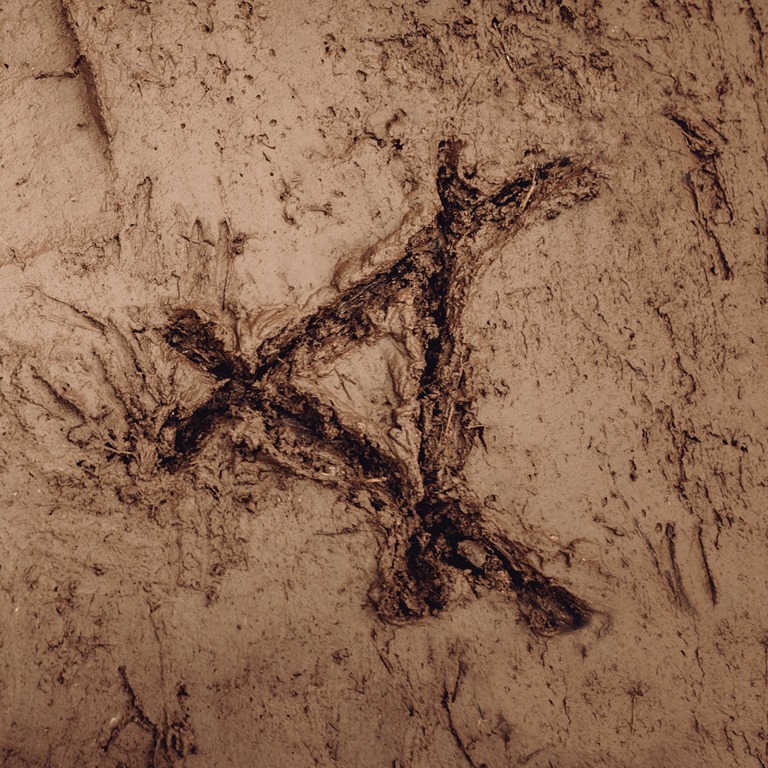
They’ve been around for a while now, but as yet, there hasn’t been another act quite like Sly and The Family Drone. They’re one of those acts that straddle so many different boundaries and function on so many different levels, they’re impossible to pigeonhole and impossible to pin down. They make serious art delivered with a quirky, tongue-in-cheek sense of humour, and their live performances are celebrations of community and whacky while simultaneously being genius performance art improvisations. I’m by no means being superior when I suggest that a lot of people simply won’t ‘get’ them, and it’s obvious as to why they’re very much a cult thing. But that they’ve managed to sustain a career operating on a DIY basis, booking their own tours, etc., for well over a decade is testament to both the appreciation there is for them on a cult level, and to their sheer persistence and insanity. And their last release was a lathe-cut album containing a single twenty-minute jazz odyssey released via The Quietus.

Moon is Doom Backwards – a wheeze of a title which is factually inaccurate, and of course they know it – is a classic example of the absurd humour which is integral to their being, and it’s a joy to see that they’ve come together with Human Worth, a label I’ve filled many a virtual column inch praising, for this release. And because it’s on Human Worth, a portion of the proceeds from this release are going to charity.

The album, we learn, was recorded ‘exactly three years ago at Larkins Farm’. That’s quite a lag, but this does often seem to be the case when it comes to homing works of avant-jazz noise-drone. They describe it as ‘a patient, stalking, lurking thing. A properly noir thing, as notable for its long stretches of quiet atmosphere as it is for its pummeling skronk. Sly’s is a strange sort of quietude, though. A “drums heard through the wall”, “disquieting electrical hum” kind of quiet. An “eavesdropping PI”, “solo sax on rooftop” sort of quiet. An attention-grabbing kind of quiet so engrossing that, when our fave neo-jazz wrecking crew actually gets to wrecking – and they still wreck real good – we’re caught off guard, wrong-footed, defenseless. We get run the hell over by The Family Drone’s quintet of bulldozers.’

None of this should come as a surprise to anyone who’s been acquainted with them for any period of time. Because whatever one expects from Sly and the Family Drone, they’ll probably deliver, but simply not in the way one expects it.

Containing seven pieces, mostly around the three-to-five-minute mark, Moon is Doom Backwards is more conventionally ‘albumy’ – whatever conventional means when it comes to any format now. And there is, indeed, a lot of quiet on this album, much hush. There are many segments where not a lot happens, or simply a solo sax rings out into a slow-blowing wind of reverb.

‘Glistening Benevolence’ is underpinned by a mesmeric, tribal beat and crooning sax and wiffle of woodwind, at least until the percussion rises into storm-like crashes and the percussion surges around the mid-point, before it tapers, and then splashes to a halt. And then there is quiet, for quite some time, until the drums blast back and there is a sound like an elephant braying in pain. So far, so Sly. It’s pummelling percussion and frenzied honks and toots, parping and tooting in all directions which blast from the speakers on single cut and shortest track ‘Going In’, after which darkness descends. The inexplicably-titled ‘Cuban Funeral Sandwich’ has too much percussion and it too overtly jazzy to be ambient, but it’s a low-key, meandering piece that feels far too improvised to qualify as a composition and it certainly brings the atmosphere – a dark, oppressive one, which gradually builds and horns hoot like ship’s horns and clattering cans rattle with increasing urgency – before another abrupt halt.

If ‘Joyless Austere Post-war Biscuits’ may seemingly allude to some kind of Hovis-like cobbled-street and open-fire nostalgia, the actuality is altogether darker, as more sax flies into the sky on an upward spiral of infinite echo and the drums – building, building, to a crazed frenzy, but at a distance – create a palpitation-inducing tension, before ‘The Relentless Veneration of Bees’ – something which really should be a thing, along with the outlawing of pesticides – wanders absent-mindedly into an arena or ambient jazz, where the drums hang around in the distance somewhere.

There are shooting stars and percussive breakdowns amidst truly tempestuously frenzies jazz experimentation, and ‘Guilty Splinters’ is the perfect soundtrack to this. The closer, ‘Ankle Length Gloves’ is perhaps the most unstructured and uncomfortable of all here: amidst wheezes and drones, it’s the sound of creaking floors and subdued wailing utterances… and nothing but a buffeting breeze.

Moon is Doom Backwards is certainly their sparsest, most atmospheric, and least percussion-heavy album to date, but it really explores in detail and depth the relationship of dynamics, and pushes out into new territories. And while it’s still jazz, it’s jazz exploded, fragmented, dissected, and reimagined.

AA

AA

HW038_Sly&TheFamilyDrone_DigiCoverArtwork

Human Worth – 18th October 2024

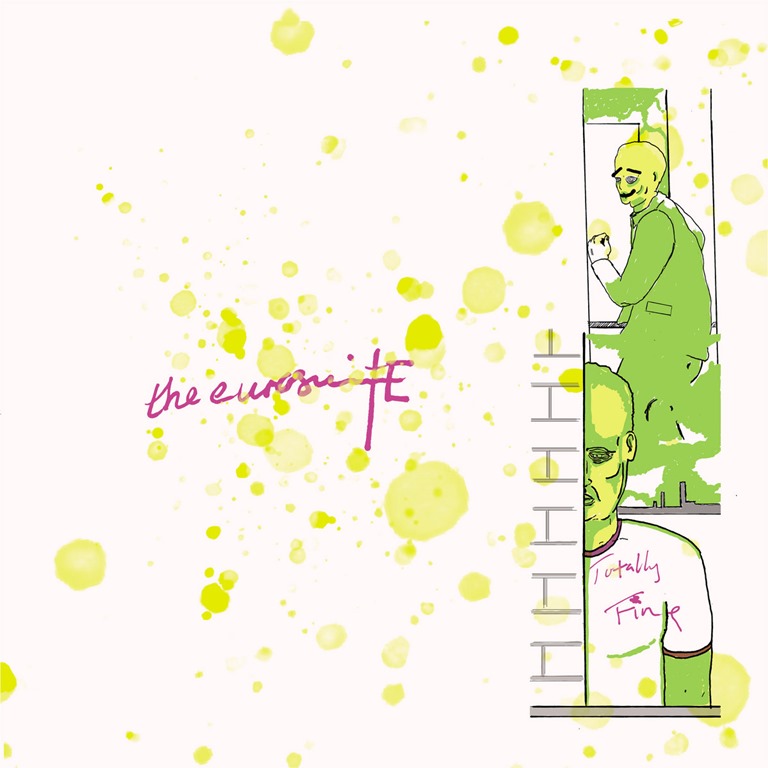
Sorry, not sorry, as they say. In the spring of 2023, off-the-wall supergeroup collaboration featuring members of USA Nails, Nitkowski and Screen Wives, The Eurosuite, released their third album, through Human Worth. They were so sorry, they’ve done another. Only this time, they promise, it’s different.

As the accompanying notes explain, ‘Produced by Wayne Adams (Petbrick / Big Lad) at Bear Bites Horse Studios, the band have taken a different approach from their maximalist output on their second LP Sorry – do less. Where the songs on Sorry were built from a variety of jams, band member ideas, traded demos and looped phone recordings, the 10 songs within Totally Fine were all built and mercilessly edited from a full band improvisations, with individualism, indulgence and egos set aside to better serve the songs… That spirit of minimalism is threaded through each track, which veer from sinewy post punk (‘Crustacean Blue’), throbbing death disco (‘Antimatter’) and something between driving krautrock, surf rock freakouts and an evil version of the B52s (‘12 Diphthongs’, ‘Houseplants’)’.

Sorry was a cracking album: that’s essentially a fact. It still is. But it was seeing them live that they really clicked for me: something about that manic energy in the room, the way each member of the band bounced off one another, if felt as if there was something happening in real-time that went beyond the recorded work.

Here, all of the same elements are present: fizzling synths, jerky guitars, sudden thundering bass runs, changes of tempo, blasts of noise, beats that flit from disco to industrial pounding, and vocals which swing from half-spoken to shouty – and that’s only in the first couple of songs, with a combined running time of less than five minutes. But there’s a newfound focus and intensity, and well as, perhaps a greater separation of instruments which lays the components elements more evident.

There seems to be an emerging subgenre of weird, quirky, jerky noisy shit that’s a bit mathy but with some fried electronics and simply prone to exploding in any direction without a moment’s notice, and it’s noteworthy that both The Eurosuite and Thank, prime exponents of this wide-eyed demented frenzied kind of racket have both found homes at Human Worth. The label’s always had its ear to the ground and its tendrils out for noisy stuff with something different about it, and this feels like an emergent form.

Somewhere in the recesses of my overcrowded memory, there’s a vague recollection of an interview with a band sometime in maybe the late eighties – it may have been a grebo act like Gaye Biker on Acid on how the future of music might be weird, like ‘people playing bits of toast or whatever’ (the quote is from memory, since I’m buggered if I can find it on the Internet and don’t have a month spare to look through books and press cuttings for the sake of fact-checking a detour in a review for an album due out next week). Anyone who’s seen Territorial Gobbing will likely agree we’ve reached that point. But with the likes of Thank and The Eurosuite, they may not be quite that far out, but they’re pretty damn far out in terms of the way their compositions leap and lurch all over, and are simply so far removed from more conventional song structures with verses, choruses, mid-sections, even bridges and pre-choruses or whatever that song forms are being pushed to new limits. And this is exciting and brain-bending in equal portions.

Perhaps this is the culmination of everything that’s preceded it. Perhaps it’s a reaction to the crazy, overstimulated world we live in. Perhaps it’s the soundtrack to emerging from the other side of postmodernism. After all, postmodernism was deemed a ‘schizophrenic’ culture by Deleuze and Guattari in their seminal work, Anti-Oedipus¸ suggesting that schizophrenia is the only sane response to a deranged world. And perhaps this is the proof.

Totally Fine as a title intimates a breeziness, but the kind of airy offhand response which often masks a darker truth. Not that Totally Fine is a showcase of frenetic flailing and pedalling in all directions, and as such has a groundlessness to it. It’s the sound of searching, of grappling with reality, and the very concept of reality.

Some of the songs are barely a minute long: ‘Crustacean Blue’ brings a stuttering blast of a riff that lasts for a mere fifty-five seconds, electronic squeals adding that all-essential eye-popping dimension, and only ‘Reflection Monster’ runs past three minutes. ‘Bellyache’ is one of the most ‘conventional’ songs on the album, and comes on a bit like Suicide and early Cabaret Voltaire with a hint of Throbbing Gristle.

Somehow, by stripping things back, they’ve cranked up the claustrophobia and amped the intensity. There are some dark, low, grinding grooves and some manic hollering vocals on display here, and they do define the album – but that defines it more is the audacious racket, the wild anti-structures, the sheer imagination.

Clawing my way through ‘Bagman’ ‘Earworm’ I can feel my blood pressure increasing as the manic noise amps up… and up. But I’m totally fine. Really, I am. Totally Fine.

AA

a0485217786_10

Human Worth – 5th July 2024

Christopher Nosnibor

Almost four years on, and still the shadow of the pandemic hangs over us. The way in which this manifests varies widely, and it feels as if it could yet take considerably more time yet to unravel the traumatic aftereffects. During the time people were forced to stay inside, many found themselves looking inside, too – inside themselves – and finding darkness and demons, and a whole lot more besides. Many were forced to face these alone, without the usual support mechanisms – support mechanism which may no longer be accessible, or even exist. The new normal in which we find ourselves is nothing like the one which seemed possible at the time, and that vague hope people clung to of emerging in a better world has been utterly devastated since, not only by global wars and accelerating climate change, but in the everyday, which simply feels like a battle for survival so much of the time, with the cost of gouging crisis, a mental health crisis, a collapsing NHS, decimated public services… the list goes on. Things have changed radically, but not for the better.

Pascagoula’s second album, For Self Defence, is a thorny thing which grew over the pandemic years and has taken some time to reach fruition. It’s not unusual in itself for an album to take four years from conception to release, but as we learn of this particular album, the circumstances and timing unquestionably influenced the end result:

‘The title of the band’s second album For Self Defence was decided upon in 2020 – It seemed fitting considering what was happening in the world then, and remains bitterly relevant now. Pascagoula remained in their secret tin-foil prefab shelter in Brighton (near Europe) and reflected the tightening chaos and hardship of the world outside. The nine songs on their second album are sharper and more barbed, more violent and vitriolic, and more cruelly calculated than before. Songs about past traumas, regrets, anxieties, damaging relationships, mental illness, the bad choices we make in life, and their consequences. It’s no easier in here than it is out there.’

Perhaps unsurprisingly, then, For Self Defence is hard-hitting, harrowing. The title tracks opens the album and its slow and heavy, but not in a raging deluge of distortion way, but more glacial math rock in the vein of Kowloon Walled City, and the tone of For Self Defence is very much in the vein of the slow, thick-timbred, gritty, granular metal with a really earthy, organic feel of Neurosis and a number of other Neurot bands.

Then again, ‘Insecurity Breach’ is a straight-up shouty noise song with lumbering bass and grungy guitars, evoking the sound of the underground in the early 90s – not grunge, but all of the mangled noisy shit you’d find in tiny venues and released on microlabels that only managed a handful of releases, and the album seems to get darker and denser and dirtier as it progresses. ‘Valve Kilmer’ is a title worthy of those niche 90s acts, too, or the numerous post-millennium noise acts emerging from Leeds.

And while such a title hints at there being humour to be found here, the off-the-cuff flippant wordplay is at odds with the overall mood. In keeping with the way in which For Self Defence shares much commonality with that early 90s scene, so it is that what the album conveys is inner turmoil, conflict, and yes, angst, articulating emotions which words alone cannot convey via the medium of churning guitars and a howl of anguish. ‘Consultants of Swing’ (boom boom) mines a seam that carves its way from the Jesus Lizard to Blacklisters, tossing in some noddlesome proggy post-rock elements into the gnarly noisy math metal mix. The result is dense, tense, and claustrophobic. This isn’t music that’s intended to make you feel at ease, and it doesn’t. You feel that knot in your chest tighten and the tension in your shoulders grow to a persistent ache, as if carrying a heavy load.

Since seemingly forever, there have been those who have decried the death or guitar music, who have declared it redundant, insisted that rock’s dead, grunge is dead, that metal is passé. Nothing could be further from the truth. These instruments, and these genres, are where people turn when looking to vent these most difficult emotions, when seeking release, catharsis. For Self Defence is pure catharsis, rabid in its intensity, foaming in its fury, exhausting in its weight: ‘Mournography’ brings the slugging monotony of early Swans, and Godflesh, and by the time we arrive at ‘Eternity Leave’, we’re ready for it. Relentless, raw, For Self Defence is quite simply a monster.

AA

HW035_Pascagoula_ForSelfDefence_CoverArtwork

Human Worth – 20th July 2024

Christopher Nosnibor

Exciting times always abound with Human Worth, and while the summer has up to now been a truly dismal washout, and it’s hard not to be sceptical about the hype around an imminent heatwave in a couple of weeks, July is almost guaranteed to be a scorcher in the environs of our favourite boutique London Label, with an album from Brighton supergroup Pascagoula, and this, the debut long player from Newcastle electro-disco-riot noisemakers Fashion Tips. The fact that the initial run of fifty ‘vibrant’ pink cassettes sold out in forty-eight hours, leading to an immediate second batch, indicates the level of buzz around this band – one might even say they’re pretty hot right now, and it’s not hard to understand why.

They only coalesced in late 2022, with the founding members of bass player Liam Slack and guitarist Jorden Sayer subsequently being joined by Esme Louise Newman who had established a name for herself with black metal duo Penance Stare. Fashion Tips signify quite a departure for her, but she seems well-suited and to be enjoying the change of style – pardon the pun. With opening slots for the mighty Mclusky and a tour with cult Leeds wonky noisemongers Thank, not to mention a well-received (and not just by us) debut EP.

For I Wish You Every Success, they’ve managed to get Anthony Chapman (Collapsed Lung, Mclusky, Bis, Skinned Teen) to work production duties – and a fine job he’s done, too.

The title may be a little less stunned – and stunning – than predecessor Fucking Hell, but is interesting and amusing, given that it’s a phrase you most commonly encounter on leaving cards or other notes of departure. One has to hope that this is knowingly ironic, given that the Tips (as at some point they should come to be known by an ardent and substantial fanbase) are very much still warming up here.

The album’s eight songs are cumulatively impactful, a sharp-edged, pointy-cornered assault of back-and-forth oscillating synths and thudding beats dominated by booming basslines which often threaten to submerge the abrasive, antagonistic vocals, which swing between sneer and squawk. ‘Radio Song’ – a song designed for the moshpit rather than the radio – is thee perfect opener, a raw blast of antagonism, a sonic middle finger to pretty much everything, and at the same time. That Bikini Kill have recently made a powerful and triumphant return suggests that now is the time for a riot grrrl revival after everything lese has been trawled over, but it’s the stabbing electronics and hard-edged synths which render Fashion Tips quite distinct.

‘The Lovers’ emerges in a blast of noise and locks into a frenetic groove before going wild disco, and it’s a proper hard slap around the face, electropunk cranked up to eleven.

They pack three songs’ worth of ideas into each composition, the majority of which clock in at around three minutes. It crackles and fizzes and bends the brain. Buzzing, bleeping, pumping single cut ‘Don’t Call Me’ is entirely representative of the blistering attack that I Wish You Every Success delivers. Hyped-up and hyperactive, it leaves you dizzy, dazed, punchdrunk even before the bratty drum ‘n’ bass blast of ‘Steve Lamaq’ crashes in and absolutely slays with two minutes of pure frenzy.

Grinding bass and laser-like blasts dominate the hi-NRG punk attack of ‘Hot Problems’, and Fashion Tips pack ‘em in tight and hard. There is quite literally no respite, not a moment to regain breath while listening to I Wish You Every Success, and you’re moshing in your head to some utterly punishing riffs.

Fashion Tips are the band we need right now. They are all the energy, and I Wish You Every Success is a massive rush from beginning to end.

They’ll probably be onto the third pressing by the time you read this. I certainly hope so. There ought to be a CD and vinyl edition, too. And, simply, taking quality to the next level, this album needs to be everywhere. I really do wish them every success – because they deserve it. And not in the leaving card sense.

AA

AA

a1197341982_10

Human Worth – 20th May 2024

Christopher Nosnibor

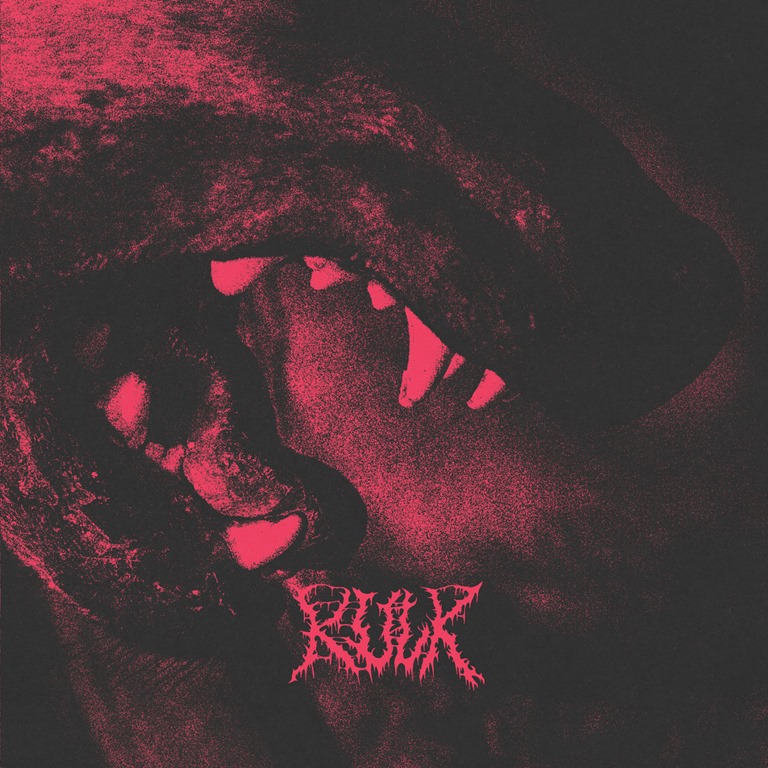
The latest album from Norwich based two-piece Kulk, It Gets Worse, arrives two and a half years after the release of We Spare Nothing, described as ‘thunderous and experimental’, and honing their ‘unique and monolithic brand of heavy doom and sludge’.

The timing – and the title – couldn’t be more apt. Just when you were probably thinking we’d endured the absolute worst of life on this planet – from Brexit and Trump via a global pandemic and insane inflation and everything money-related being utterly screwed and still getting more painful by the day after 14 years of a Conservative government – it continues to get worse – half the world is at war, the other half the world is either flooded or in flames, and there are mass killings practically every other week. It’s not, then, simply a nihilistic strapline to grab the attention, but pretty much a demonstrable fact. Things never get better – only worse.

The band articulate both the circumstances and the mood when they frame the album thus: “This album is about the universal suffocating weight of hoping for more while navigating a climate where the apparatus for seeking it is being consistently undermined. What it feels like to not only struggle keeping your head above water but to try jumping out from the deep end without losing your trunks. It is selfish guilt and misplaced woe, desire is a distraction from the world at our feet”.

Bookended by short instrumental intro and outro tracks, ‘More’ and ‘Less’, It Gets Worse packs back-to-back balls-out riff-fests, where the bottom end sounds like a bulldozer and the beats sound like bombs. Whereas a lot of stuff on the doom and sludge spectrum is simply plain slow, Kulk are masters of the tempo shift. ‘A Heavy Sigh’ comes on at pace and builds a real groove, before hitting the breaks around two thirds in, at which point it becomes reminiscent of Melvins. The reason Melvins have endured is that – perhaps despite the popular perception – they’ve showcased a remarkable versatility and an urge to experiment, and it’s here that the comparison stands strongest with Kulk: they’re not just big, dirty riffs and shouting, although they do a first-class job of putting those things up front and centre. ‘Out of Reach’ is a pounding, raging roar of frustration amped up and overdriven to the max, hitting that perfect pitch at which blasting out a repetitive riff at skull-splitting decibels is the ultimate catharsis and the only practical and sane response to the world in which we find ourselves.

Things take a turn with ‘Mammoth’ showcasing a more hardcore bent initially, before descending into a howl of feedback, a noise-rock quasar delivered with the most brutal force. The vocals are barely audible, and then things get ever harder and harsher on ‘Beyond Gone’ which goes full industrial, hammering away at a simple, repetitive chord sequence with murderous fury. You feel your adrenaline pumping as they thunder away, combining pure precision with absolute chaos as feedback swirls and squalls all around like an ear-shattering cyclone.

The slower ‘Fountain’ shows considerable restraint and makes for an oppressive four minutes: it brings a bleak mood, and the hit lands late but hard when the distortion slams in. Getting Adam Sykes of Pigsx7 to play on ‘Life Will Wait’ is a major coup, and the track is a belter, built around a hypnotic three-chord riff – because all the best riffs have three chords – and really works the quiet/loud dynamic to the max.

Often, when people – particularly people in my demographic – write of the music of the 90s, it’s with a dewy-eyed nostalgia for their lost youth. Sure, I have my moments, but when I say that It Gets Worse takes me back to the 90s, I’m recalling the excitement of discovering endless obscure little bands cranking out major racket in pubs and tiny venues, some of whom managed to either get records or CDs released by shoestring labels, or otherwise scrape together funds to record and release a 7” or CD – and many of whom didn’t, and only exist in hazy recollections. The point is that these were exciting times. The only positive about living in shit times is that shit times make for good music, as people need an outlet to channel their pain, anguish, frustration, and rage. It Gets Worse is saturated with pain, anguish, frustration, and rage. And because of that, it’s very much a product of our times, and it’s absolutely essential.

AA

AA

a2498304630_10

Human Worth – 1st February 2024

Christopher Nosnibor

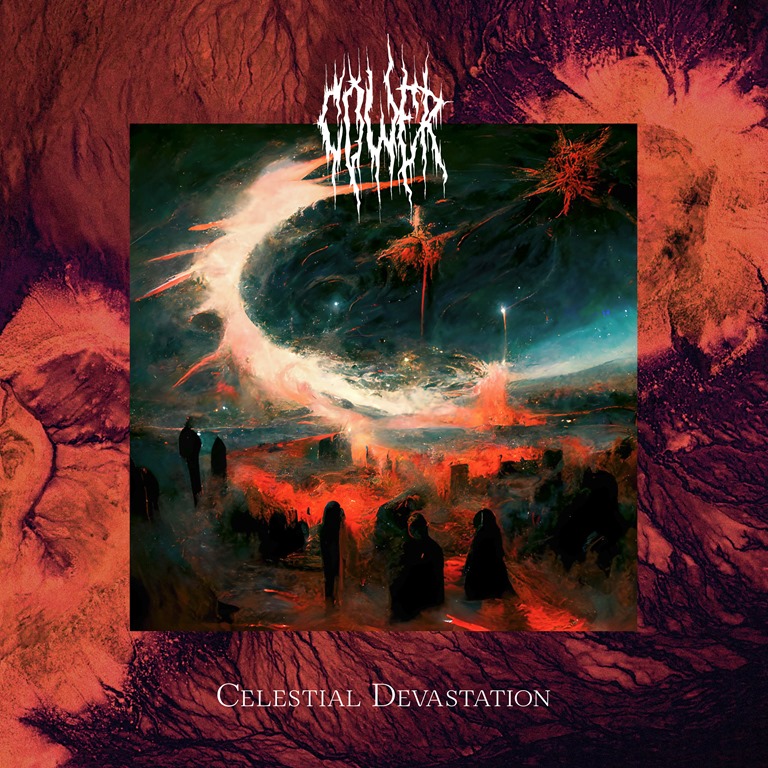
Anyone familiar with the works of William Burroughs will likely be aware of the so-called ‘23 enigma’, which essentially centres around the auspicious frequency of the occurrence of the number 23. It may be a case of confirmation-bias, but once attuned, it’s impossible not to notice, and the fact it’s filtered into mainstream consciousness via the KLF and the 2007 Jim Carey movie The Number 23 is worthy of note, if nothing else. So the fact that catalogue number HW023 has been assigned to the second album by supergroup COWER, featuring members of The Ghost of a Thousand, Petbrick, USA Nails, Yards, The Eurosuite and JAAW is something that may be of no real significance, but then again…

Few would necessarily expect the album to begin with a soft, gentle piano ballad with ‘We Need to Have the Talk’. It’s contemplative, and even if the talk is direct at times lyrically, the mood is low-key and lulls the listener into a sense of false calm. Immediately, ‘Summoner’ crashes in with pounding drums, a snare like smashing a bin lid, and a bass so thick and grimy as to churn your very guts. This broad shift is precisely what you expect from COWER, as they push parameters and do things different; this is what you want from COWER, and this is what they deliver. It’s a rambunctious roar, with an elevated artful tone and all the rage. They pack a lot into a mere three and a quarter minutes – and a lot of what they pack is beefy riffage and furious noise. It’s an instant rush, and at the same time, your muscles tense.

‘Hard-Coded In the Souls of Men’ presents as a downtempo slice of brooding electropop with hints of Depeche Mode, even down to the soulful baritone croon and spacious sound with soft synth interludes. In a parallel universe, this song would get played all over on Radio 1 and would make all of the mainstream radio and Spotify recommended playlists, and people in their tens and hundreds of thousands would love it. And then they would arrive at the album, and wonder ‘what the fuck?’ as they simultaneously shat their pants. This would be the perfect outcome, but is of course, highly unlikely, because acts on small labels just don’t have those opportunities.

The funny thing is that back in the 80s, major labels would back all kinds of bands and would promote – and shift mega-units of – an album based on a largely unrepresentative single. Back then, you couldn’t hear the album online, so would head down to Boots or Woolworths or WHS, or add it to your selection with Britannia Music, and you might love it or you might hate it, but they’d shifted the unit either way and because you only had a handful of records or tapes, you’d play it enough times there was probably a 50% chance you’d come to like it even if you hated it at first.

COWER succeed by being unpredictable, and whichever way they turn, be it noise or electropop, what they deliver is top quality. ‘Buffeted by Solar Winds’ boasts a stalking bassline and brooding vocal, as well as some synths and some circuit-melting overload that shows Nine Inch Nails how it’s done. ‘Deathless & Free’ is pure Depeche Mode circa Songs of Faith and Devotion: soulful, dark, and sonically immense, with percussion that utterly blasts you away. How is this right? And how does it work, when songs like ‘False Flag’ bring the most raging, sinewy punk, half fired-up post-punk, half incendiary grunge, entirely raw, ragged antagonism. The end result is New Model Army meets Big Black, with some wild sax tossed in for good – or crazy – measure.

The tile track is a slow, slow groover, driven by immense, industrial beats. What a contrast the energetic, intense and ultra-tense ‘Bury Me in the Lawless Lands of the West’ which really exploits the tropes of early 80s goth with is throbbing bass and fractured mesh of lattice-like guitars. Celestial Devastation;, however you pitch it, is hefty.

There are many so-called supergroups who aren’t especially super, who seem to trade on their main projects as the selling point. COWER amplify the intensity of their individual main projects to the power of three. Balancing mangled guitar noise and some pretty harsh electronics from beyond, Celestial Devastation is as good as it gets. Celestial Devastation is special.

AA

HW023_Cower_CelestialDevastation_CoverArtwork

Human Worth – 8th December 2023

Christopher Nosnibor

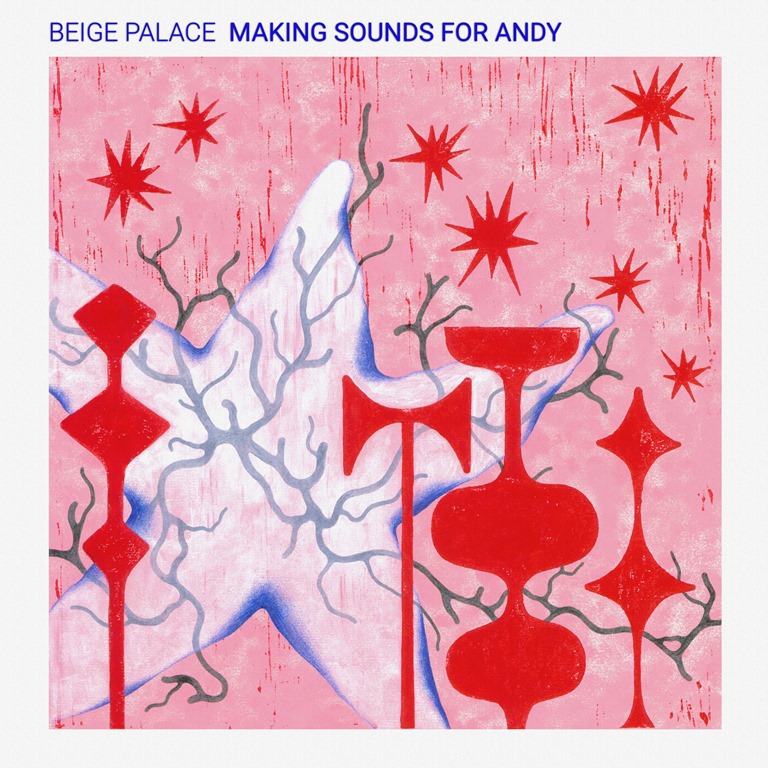
It’s only a bit of a brag – and a collateral one, at that – to say I’ve followed the Human Worth label since its inception. There’s a contextual reason to mention it, namely that while I’ve long raved about their being consistent in their selection of all things noisy, Human Worth isn’t a label with a ‘house’ style devoted to any one strain of music of an overdriven guitar nature. One need look no further than then recently-released angular indie noise-rock hybrid of Beige palace’s Making Sounds for Andy for evidence of that. It’s most definitely an ‘alternative’ record, in that it’s a million miles from the mainstream, but it’s not particularly noisy.

A. L. Lacey’s mid-bill placing on the label’s recent eight-act extravaganza in Leeds was an inspired one, as her graceful tunes provided the perfect respite from predominantly noisy guitar-based acts, and her performance set my level of anticipation for her album, Lesson.

It’s a landmark release for both Alice and Human Worth: having long established herself as a contributor to numerous acts in her locale of Bristol, Alice explains how “there was a frustrating sense of unfinished business. In that, my piano parts and ideas were being restricted to someone else’s’ vision – a vision which was often ‘less is more’ – a tasteful afterthought… A huge part of this project therefore became the need to challenge myself and to see what I could achieve or lessons I could learn, if I did things my own way – a bit of a journey towards autonomy – a predominant theme in most of my songs, along with finding purpose from confusion, and strength in your weaknesses.”

Lesson, then, is Lacey’s statement of identity, as she steps out from the shadows of other people’s work to present herself and her own musical ideas. And what’s striking is just how eclectic the album’s nine songs are.

‘Sewn’ opens up with rolling piano propelled by a vintage drum machine sound that’s pure late 70s/early 80s. But if this evokes the lo-fi sparseness and simplicity of Young Marble Giants, her vocals, swathed in reverb and strong yet delicate, are equal parts folk and shoegaze. And yet for all these elements, Lacey creates a maximal expansiveness with minimal instrumentalism. With swells of energy, it’s a soaring, uplifting piece, which hooks the listener immediately into the unique world she conjures with her magical fingers and tuneful voice.

It paves the way for eight further slices of creatively crafted musicality that combines elements of neoclassical, folk, and experimentalism. ‘Complaint’ is exemplary: the instrumentation is sparse, subtle, a soft wash of thrumming, droning synths underpinned by an insistent but understated beat. Incidental sounds weave in and out, creating depth, while Lacey’s multi-tracked voice is simultaneously trad folky and otherworldly.

There’s an energy and pace to many of the songs on Lesson which are far from the kind of bland, plodding fare common to many singer-songwriter types: ‘Memo’ may be but a brief note, but has the vintage pop vibes of Stereolab as it breezes on through and makes its mark. Elsewhere, the title track is wistful, swooning, without being remotely twee, and ‘Home’ brings post-rock dramatics to the proceedings. Bold yet understated, ‘Paper’ is worthy of all the airplay, and would sit comfortably on soundtracks and being performed at arena shows alike, being accessible, easy on the ear, hooky, emotive, and –

AA

Perhaps because she’s been doing this for a lot longer than the arrival of a debut would imply, Alice’s accomplishment as both a musician and a composer shine through every moment of this spellbinding collection of songs: the attention to detail the nuances of the playing and the production only accentuate the multi-faceted qualities of her songwriting and performance. It all adds up to a uniquely special album.

AA

HW026_ALLacey_Lesson_CoverArtwork

Human Worth – 10th November 2023

Christopher Nosnibor

I know it’s not really cool to make that you’re cool because you’re in the know or whatever. A few years ago, it was the way of the hipster, but after what felt like forever, they seems to have disappeared, probably because everyone grew beards during lockdown, so the hipsters had to shave and resort to telling people they were wearing a beard before the pandemic or something. Nevertheless, I can’t help but take some satisfaction from having observed Beige Palace from their very dawn, at their first show in the now-lost CHUNK rehearsal space-cum-gig venue way back in the spring of 2016. The place was a bugger to get to from the train station, being practically in the middle of nowhere you’d actually want to go, and to describe it as basic would be polite. But what CHUNK provided was a place where anything went. It was BYOB, pay what you can, and it was a hub of creativity which lay at the heart of the DIY scene in Leeds. And so it was that Beige Palace – perhaps not quite a supergroup at the time, but simply people in other bands (Freddy Vinehill-Cliffe (Thank), Kelly Bishop (Gloomy Planets) and Ant Bedford (Cattle)) doing something different together – came to be.

They’ve come a way since then, notably with slots at The Brudenell supporting Mclusky and also Shellac, with a personal thumbs-up from god himself, Steve Albini. There’s likely a number of reasons for this, apart from the simple fact that Beige palace are bloody good, a major one being that they make angular noise without being overly abrasive, preferring instead to push sounds that are slated, skewed, imbalanced, jarring, jolting. This is right up front at the start of this, their second long-player, with ‘Not Waving’, a scuzzy collision of Shellac, The Fall, early Pavement, and Truman’s Water. The bass is right up in the mix, the vocals down low, and everything about it is absolutely wrong in terms of conventional sound. You can imagine sound engineers all around the country shaking their heads and saying “but that bass is just booming… it’s drowning out the vocals… and the guitar, maybe you should take the treble down a bit?” But Beige palace’s sound isn’t conventional, and they’re not going for radio-friendly pop tunes.

The album’s title appears to make a nod to XTC, and calls to mind the band’s hit ‘Making Plans for Nigel’ (surely one of the greatest snappy tunes of the New wave era) and the fact that Andy Partridge was co-frontman of XTC. Coincidence? Am I joining dots and identifying references which simply don’t exist? Possibly, but then again, for all the wrongness, the off-key and the off-kilter, there are some neat hooks to be found leaping out from the rumbling basslines and loping drums. ‘Local Sandwich’ is representative: the rhythm section strolls along kicking a loose groove where the bass and drums are seemingly playing alternate to one another, the discordant sprechgesang vocals of the verses overlap one another, making for a tense combination – and then out of nowhere, pow! Hook! And then a squalling climax.

The genius of the songwriting lies in its unpredictability: for as much as the compositions are largely built around repetitive motifs, hammering away at the same nagging loop for minutes at a time, adding and subtracting elements such as keyboard or guitar, they’re prone to veer off somewhere else or otherwise change tempo or burst into a scratchy blast of noise at precisely the moment you least expect – and just when you expect something unexpected, a song like ‘My Brother Bagagwaa’ doesn’t do it. They’re as keen to explore the space in between the notes as the notes themselves, and there are numerous passages on Making Sounds for Andy where they pull things back to stark minimalism. This makes the crackling bursts of distortion and clattering drums all the more impactful.

Leeds has a habit of birthing weird bands who are nosy but not noise, with the legendary Bilge Pump and the should-have-been-legendary Bearfoot Beware providing a brace of examples – but Beige Palace are very much their own band. Making Sounds for Andy is a bold celebration of ramshackle lo-fi, delivered in such a way as to hit hard. It’s got ‘underground classic’ all over it.

AA

HW025_BeigePalace_MakingSoundsForAndy_CoverArtwork

Human Worth – 13th October 2023

Christopher Nosnibor

From the moment Modern Technology blasted in with their eponymous debut EP, simultaneously launching the Human Worth label, it was clear that they were special. The duo made the most fucking incredible, low-slung, dense mean-ass noise going. The lyrics were social, political, and sharp, paired down to stark one-line declarations dissecting with absolute precision the fucked-up situation in which we find ourselves. And with a percentage of proceeds of every Human Worth release going to charity, they’ve put their money where their mouth is. It’s not done in some crass, virtue-signalling way: this is their model, and they just get on and do it. And through Human Worth they’ve released some – no, many – absolutely incredible records, rapidly establishing HW as purveyors of quality product with a keen ear for quality noise. In an increasingly fragmented and challenging musical market, the trick for any label is to find a niche and excel within it. And that’s precisely what these guys have done.

And all the while, as a band, Modern Technology just get better and better. Any concerns that they had said all they had to say following the EP and debut album Service Provider (as if there ever were any!) are allayed with the arrival of Conditions of Worth.

Lead single ‘Dead Air’ opens it up with dense, grinding anguish. Chris Clarke’s bass and vocals seem to have got heavier. Then again, so does Owen Gildersleeve’s drumming. But it’s more than just brutal abrasion. In the mid-track breakdown, things go clean and the tension in that picked bass note is enough to spasm the muscles and clench the brain. It’s brutal start to a brutal album.

‘Lurid Machines’ begins in a squall of feedback and wracked, anguished vocals, and it’s harrowing, the sound of pain. The lyrics are comparatively abstract, and all the more powerful for it. Written out in all block caps, they’re in your face but wide open to interpretation and elicit the conjuring of mental images:

WHY ARE THEY SO ALONE?

THE LIES THEY ALL SHARE

LET GO

INSIDE NOTHING GLOWS

BENEATH A SHADOWED PHONE

The drums and bass crawl in and grind out a low, slow dirge, Clarke’s vocals are down in the mix and you feel yourself being dragged into a chasm of darkness.

These are harrowing times, and if the pandemic seemed like a living nightmare, it seems it was only the preface. The ‘new normal’ is not the utopia some commentators suggested it may be. For a moment, it looked as though we would achieve the golden goal of the work/life balance, that we may abandon the commute and save hours a week for ourselves and slash our carbon emissions in the process. But no. Fuck that. Get back to the office, tough shit that fuel prices are rocketing and bollocks to the anxiety you developed in lockdown and bollocks to the environment because power trumps everything. Government power, corporate power, media power… we are all fucked and have no hope of breaking this. And this is the backdrop to Conditions of Worth.

They pick up the pace and start ‘Salvation’ with an uncharacteristically uptempo stoner rock vibe, but around the midpoint they flip things, slowing the pace and opening up towering cathedrals of sound as a backdrop to painting a stark depiction of life on earth.

WIDESPREAD

FAMINE

WIDESPREAD

CONFLICT

WIDESPREAD

PANIC

WIDESPREAD

SHADOW

The song ends with just a spare, fragile but earthy bass that calls to mind Neurosis and Kowloon walled City. It’s this loamy, organic texture which defines the altogether more minimal ‘The Space Between’, the first of the album’s two longer pieces, with the second being the ten-minute title track. It’s here that their evolution is perhaps most evident, as they stretch the parameters of their compositions to forge such megalithic works and really push the limits of their two-piece arrangement. In contrast, there’s the super-concise ‘Fully Detached’, , and the last track, ‘ Believieer’, which are absolute hardcore ragers, clocking in with short running times, the former just making a minute and fourteen seconds. And the variety on display here only adds to the album’s impact. While each track hits hard, the overall impact is obliterating.

They crank up the volume and the shades of distortion in the explosive choruses of ‘Lane Control’ – because you can never have too many effects when it comes to bass played like guitar and blasting screaming noise to articulate feelings, and as for the title track… it’s an absolute beast, with heavy hints of latter-day Killing Joke in the mix as they flay mercilessly at a pulverising riff. The noise builds and the vocals sink beneath it all and you’re left feeling dazed.

But more than that, there’s something about the production on Conditions of Worth that’s deeply affecting. There’s a skull-crushing sonic density, but also simultaneously, remarkable separation and sonic clarity. These elements only make it his harder.

Conditions of Worth is more than just heavy. It leaves you feeling hollowed out, drained, weak. This is life, and this album is the perfect articulation.

AA

HW031_ModernTechnology_ConditionsOfWorth_CoverArtwork