On Friday, April 3rd, 2026, sunn O))) will release their eponymously titled first full-length album for Sub Pop.
sunn O))) was co-produced & mixed by the band and Brad Wood (Hum, Tar, Sunny Day Real Estate, Liz Phair), and was recorded at Bear Creek Studios in Woodinville, Washington, January 2025. You can now listen to the album’s closing track, ‘Glory Black.’
AA
Framing the album visually are two paintings by the late American artist Mark Rothko – one on the front cover and one on the back cover, with the art reversed for UK & European pressings. And, within the CD and LP package are expansive liner notes by author Robert Macfarlane, whose 2025 novel Is a River Alive? is one of many sources of inspiration for the album. And, illustrations by French artist Elodie Lesourd are also featured on the inner LP sleeves and accompanying album merch.
AA
sunn O)) will tour in support of the album. Tickets for the below shows will go on sale to the general public on Friday, January 16th at 10am (local).
Wed. Apr. 01 – Phoenix, AZ – The Van Buren Sat. Apr. 04 – Austin, TX – Emo’s Sun. Apr. 05 – Houston, TX – White Oak Music Hall Mon. Apr. 06 – New Orleans, LA – Civic Theatre Tue. Apr. 07 – Atlanta, GA – The Goat Farm Thu. Apr. 09 – Columbus, OH – The Bluestone Sat. Apr. 11 – Philadelphia, PA – Union Transfer Mon. Apr. 13 – Montreal, QC – Le National Tue. Apr. 14 – Toronto, ON – 131 McCormack Thu. Apr. 16 – Chicago, IL – Salt Shed Sat. Apr. 18 – Iowa City, IA – Englert Theatre Sun. Apr. 19 – Omaha, NE – The Waiting Room
Every year this happens. My social media and every website, every mag, every paper is publishing its end of years round-ups. There’s the annual circular at work sent around a few friends for best / worst gigs of the year, most-listened to albums… and here I am, on 19th December, with at least one more gig to attend – which could as easily be a contender for the best, or the worst, or most surprising gig, or whatever – sifting through my inbox and discovering albums released in October still. Albums that might blow me away, at that.
How on earth did I miss an album pitched as ‘For fans of: Old Man Gloom, Cult of Luna, Kowloon Walled City, Big Business, Neurosis, Russian Circles, Torche, Pelican, Isis, Hey Colossus’? I mean, this is an instant grab! This is emblematic of a fairly modern issue, in that there is too much music. It’s not a complaint. But it is a fact that even the most devoted fan of even the most niche genre won’t have the vaguest hope of keeping up with all of the year’s releases in that field. It’s a double-edged sword: listeners are spoiled for choice, and it’s a boon time. There is always something new, and likely of an extremely high standard, whatever you’re after. If you’re a band, how do you get heard, when there are more albums released each week now than there was in the whole of 1988 or whenever? Being good, even being fucking awesome isn’t going to cut it. And hiring a PR – even a good one – doesn’t mean your release won’t languish in reviewers’ inboxes for a nearly three months – especially when reviewers are likely on the lookout for covering acts that will bring their blog hits: in other words, acts that already have some traction, moderate coverage… and so on.
Holy fuck. This… this is what some may call ‘the shit’. And it’s heavy. At this juncture, it’s perhaps unpacking the concept of ‘heavy’: the general perception of ‘heavy’ music seems to focus on distortion, overdrive, sounds associated broadly with metal. But weight and distortion are not necessarily synonymous.
Vandampire is a post-metal band from South West England who have been going since 2018, and they’ve very much learned the power of dynamic, and the strength of detail. They do hard-hitting riffs, but show a clear appreciation of the impact not only of clean, but of clang. Cited influences Neurosis and Kowloon Walled City are prime exponents of creating crushing weight and brutal, bludgeoning force with minimal distortion, and Vandampire have very much embraced their stylistic approach.
The title track is exemplary. It’s low-tempo, hard-crushing, doom-weight, and starts out menacing but relatively quiet, bar the thunderous percussion… and then it hits. Hard. It’s not outright metal, but it hits like a slow punch to the gut as the cacophony rages. And it’s LOUD and it’s raging, but it’s not all that big on distortion. I find the clean or moderately overdriven guitar sound in a heavy context hits hard in many respects, and the arrival of ‘Ultralow’ is nausea-inducing. This is loud and heavy on every level, with chugging guitar and bass that grinds slow and dingy it’s almost enough to make you shit your pants. But in its finale, it offers near-transcendence, a magnificent and majestic soaring climax that is nothing short of skyward. ‘Ultralow’ hits as a bludgeoning blast of fury, and the sinewy guitars, grinding bass and blankly nihilistic vocal leans heavily on the style and sound of Kowloon Walled City. I should be annoyed by this level of stylistic appropriation, but then they lunge into a low, grinding riff and… it’s clear they’ve got something as the song disappears intro a squall of feedback. ‘A Promise Main’ rages equally hard, blending elements of post-rock and post-metal, with soaring guitars and an obliterative rhythm section, not to mention some gut-churning chug and howling vocals to forge a monster cut that, in places, invites positive comparisons to Amenra.
When they do pair it back as on ‘In Ascension’, the vibes border on expansive ambience, with some rich textures and rippling melodic elements which contrast with the majority of the album. ‘I Will Miss Everything I Forgot’ is an achingly evocative acoustic-led track which sounds like nothing else on the album and demonstrates their range extends far beyond anguish and rage.
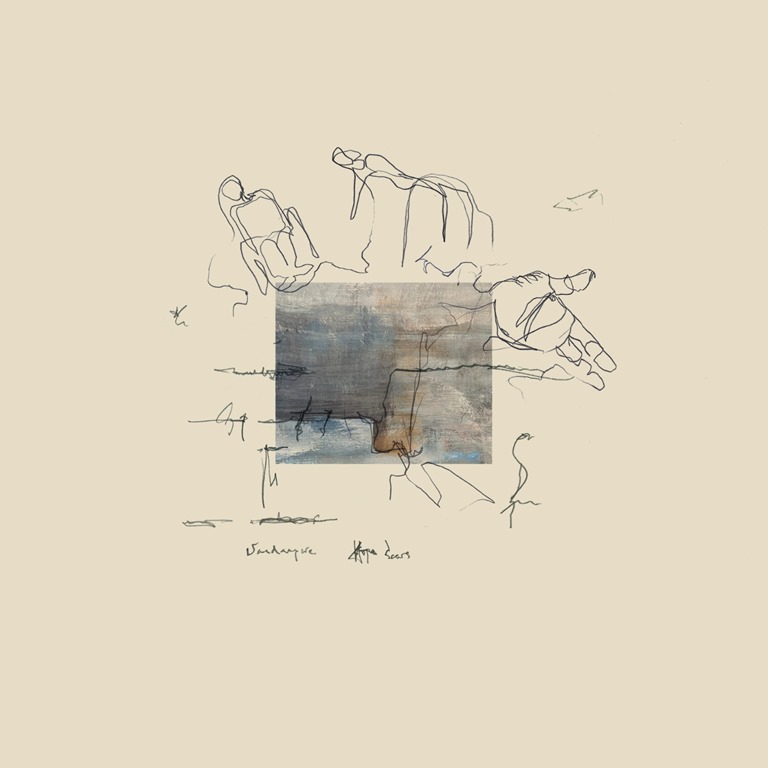
It’s clear that they’ve made optimal use of the recently-added second guitarist here. Hope Scars is richly textured, and there’s some magical musical interplay on display here. They bring all of this together on the colossal twelve-minute closer, ‘Let Ruin End Here’, a piece which is nothing short of devastating in impact, while at the same time offering intimations of a spiritual journey. And it is ALL the riff. It’s nothing short of monumental.
I don’t do end-of-year lists for numerous reasons, and if I did, I’d have missed this. This would have likely been a strong top twenty contender if I was going to make a list though: and since I’ve posted over three hundred reviews this year, that speaks of its quality. Yeah: this is one killer album, alright.
Born in the shadow of Oxford’s dreaming spires and forged in a haze of down-tuned amplifiers, UK heavyweights Indica Blues return in 2026 with their most ambitious and apocalyptic work to date. Their long-awaited new album, Universal Heat Death, will be released on January 31 via digital platforms and CD, marking the band’s first full-length since their critically acclaimed second album We Are Doomed.
To herald the album’s arrival, Indica Blues unveil their new single ‘The Raven’, a towering slab of blues-soaked doom that captures the band at their most urgent and expansive. Driven by crushing riffs, haunting dual-guitar interplay, and a foreboding atmosphere, the track sets the tone for an album obsessed with collapse, consequence, and the slow grind toward oblivion.
AA
Since forming in 2014, Indica Blues have carved out a formidable reputation as one of the UK’s most compelling psychedelic doom-stoner hybrids, once described as “bong-filling rock that is platinum heavy, but blessed with a melodic sensibility underneath it all.” Their sound, a molten blend of fuzz-drenched blues, doom, sludge, and psychedelic melancholy has earned them devoted fans worldwide and praise from both underground tastemakers and major publications.
Their previous album, We Are Doomed, received 4 stars in Kerrang!, reached No. 4 in the Doom Charts, and proved eerily prophetic: an apocalypse-themed record released just as the first wave of the global pandemic brought the world to a halt.
“We’re looking forward to touring Universal Heat Death*, and hope no cataclysmic world events stop us this time,” laughs bassist Andy Haines.
In the last few years, CD box sets have become quite a thing. And I for one am a real fan. It’s not just about ‘fuck Spotify’ or the realisation that stuff has a tendency to disappear from streaming services at no notice – something true of Netflix and other TV streaming services, too. But, it is a fact that if you don’t have something physically, in some form or another, even if it’s only a digital file, you don’t have it, and you certainly don’t own it. But not all CD box sets are equal, and not all serve the same purpose. Much as I’ve come to appreciate the ’five albums’ sets and the like as instant collection fillers when it comes to acts I’ve previously managed to skip for whatever reason, they’re beyond stingy on bonus material. When it comes to releases for fans, releases like the monster boxes with all B-sides and bonuses galore, such as those by Fields of the Nephilim and The March Violets have been far more exciting.
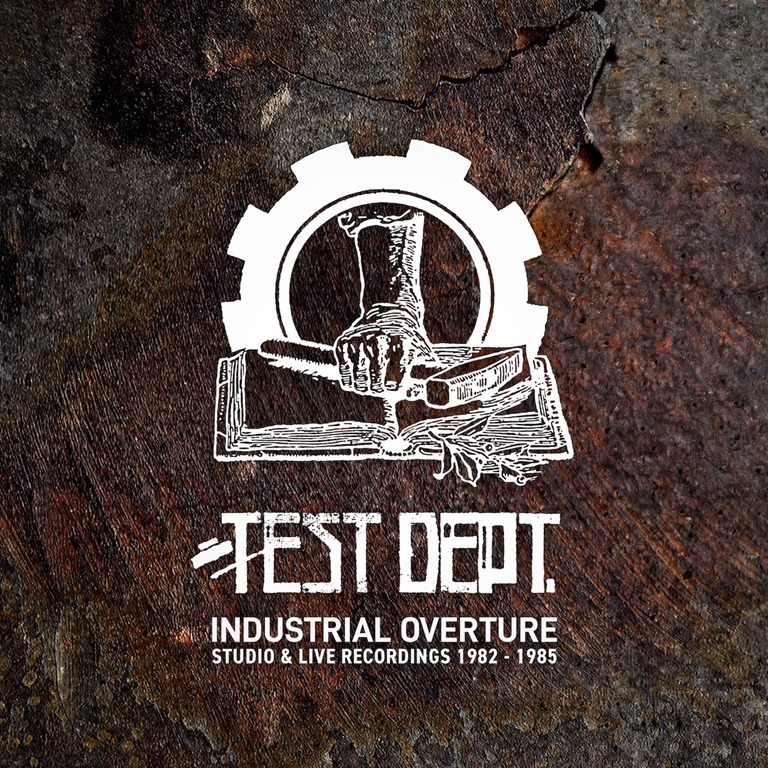
Industrial Overture: Studio & Live Recordings 1982-1985 is definitely exciting. It’s no simple repackage of the albums, and the chances are most people – even the staunchest fans of Test Dept – don’t own the majority of the material on this one, consisting as it does primarily of scarce material, outtakes, and Peel Sessions.
Industrial Overture: Studio & Live Recordings 1982-1985 consists of 42 tracks across 4 CDs and also available digitally. It’s a document of their earliest, most abrasive period – not that they exactly mellowed in the years after, as perhaps their most commercially successful album, The Unacceptable Face of Freedom (1986) attests, and includes a first ever reissue of the group’s 1983 cassette-only debut album Strength Of Metal In Motion, the classic Ecstasy Under Duress and Atonal & Hamburg albums (both unavailable for over three decades), plus a disc of hitherto unreleased studio recordings that incorporate two sessions recorded for the John Peel show on BBC Radio 1.
As the notes inform, ‘In total, 26 tracks are new to CD and digital formats, of which 12 have never been previously available at all. All contents have been compiled by Test Dept and are newly remastered by Paul Lavigne (Kontrast Mastering)’.
Disc one gives us Strength Of Metal In Motion – a collection of raw live recordings. The first five were recorded at Albany Empire, Deptford, in August ’82, and it’s fucking brutal. Even remastered, it has something of a bootleg sound quality about it, that muddiness that’s particular to 80s recordings. In many respects, this adds to the appeal here. It opens with the dissonant blasts of harping faux-brass blasts of ‘Last Rites’ – heraldic, but askew – before giving way to the pummelling percussion and shouting of ‘Shockwork / Workshock’, which is brief but brutal. ‘Prokofiev’s Dream’ is a full-on assault of clanking percussions with occasional horns, before ‘Drum and Body’ drops a shard of industrial punk noise, with rabid vocals-riding a wave of the most relentlessly aggressive beats. The dark ambience of ‘Death of God’ is nothing short of purgatorial, and showcases a different side of the band. Four more of the thirteen tracks were recorded at Temperance Hall, Newbury, four months earlier, and with samples, synths, and drum machines flashing in all directions, their debt to Cabaret Voltaire is clear there – as is the sense of their future direction. That said, ‘Kindergarten’ is pure Throbbing Gristle, laced with heavy hints of Suicide and the bibbling synths of Whitehouse. But the wayward experimental jazz elements are also strong. Overall, this is the sound of punk in a head-on collision with Throbbing Gristle and drumming that sounds like they’re battering the shit out of sheet metal. Unless you were actually there, one can only imagine what it must have been like to witness any of these early shows.
Ecstacy Under Duress was initially released in 1984 and is another (largely) live compilation consisting of recordings which again were captured in ’82 an ‘83, although this time featuring future debut single ‘Compulsion’. The compositions feel more evolved, and perhaps as a consequence, more honed in their attack. ‘Hunger’ builds to a punishing climax and sets the tone. The aforementioned ‘Compulsion’ is relentless. Samples and crashing percussion dominate the stark industrial landscape, and the intensity of these performances translates well despite the separation of time and medium. I suppose it’s here we can really identify the point at which Test Dept carved a path which departed from their industrial predecessors and peers in their pursuit of the most punishing percussion. Only Einstürzende Neubauten really compare, but even they’re not quite as up-front with the hammering beats, despite their love of sledgehammers and metallic objects. The twelve-minute ‘Efficiency’ takes the percussive assault to a whole other level, leaving the listener feeling pounded, pummelled, bewildered.
The third disc offers some respite by virtue of being studio-based and therefore not having that muffled 80s live sound to the recording – although it’s marginal. ‘Blood and Sweat’ – one of three demos from 1982 – is primitive and raw and very, very drum-orientated: the vocals are relegated to the back of the mix, anguished shouting buried in a barrage of noise. It’s cruel and it’s harsh and it’s heavy, and the demo version of ‘Shockwork’, recorded during the same session is similarly hard on the ear, with its combination of machine-gun drumming and squalling avant-jazz tones.
The two Peel Sessions, recorded in ’82 and ’85 shows a honing of the sound: between the two sessions, they would release their debut album proper, Beating the Retreat, which included contributions from F M Einheit and Genesis P. Orridge, as well as Shoulder to Shoulder, with the striking miners choir, and which would finally see the release of an official studio version of ‘Shockwork’ – another version of which featured in the 1983 Peel Session, which comes on as heavy and mercilessly brutal as Swans on Filth – which was released the same year and channels the pain of life enduring the crushing slog of capitalism.
AA
Of the four discs, this perhaps has the greatest impact, and not just sonically. Atonal, anguished-sounding vocals reverberate vast sonic swamps dominated by the ever-present barrage of industrial-strength percussion. It’s relentless in intensity, and the effect is cumulative. Between the pulverizing six-and-three quarter minute ‘Efficiency’ (which feels in some way to be their answer to Throbbing Gristle’s ‘Discipline’), and the six-and-a-half-minute ‘Red Herrings’ version of ‘Gdansk’, with the disorientating mutter of ‘State of Affairs’ in between, this is a sustained assault that hammers blows from every direction.
AA
Disc four, which contains the Atonal & Hamburg album – released in 1992, but documenting two live performances from 1985 marks a significant shift from the earlier live shows. Containing material drawn predominantly from Beating the Retreat and The Unacceptable Face of Freedom, the punishing volume translates well, and the force is more controlled. There is structure, too, building from dirge-like crawls – again comparable with Swans around this time – quickening the pace and the all-encompassing ferocity of the percussion.
Those familiar will likely already know, but in addition to providing a truly magnificent document of Test Dept at their most uncompromising early best, Industrial Overture shows how they were right at the heart of an emerging zeitgeist spawned in the wake of Throbbing Gristle, as represented by the likes of Neubauten, Cabaret Voltaire, Swans… this was not a scene or a movement, but a disparate array of artists channelling frustration at the dark underside of a time when the charts were dominated by the likes of Duran Duran and Culture Club. In pop culture, the early 80s is presented and remembered as being glitzy, aspirational, fun. But that was not the lived reality of many. Test Dept may have been underground not least of all because their racket was largely unpalatable to the majority. But as Industrial Overture evidences, they were providing the soundtrack of the grim realities of working life, drudgery and trudgery. Essential listening.
Before we arrive at the present, let’s rewind a bit. Everyone likes some backstory, a hint of prequel, right? So we’re going back to 2018, and the arrival of the Crusts EP by Pak40, a band named after a German 75 millimetre anti-tank gun, and a review which I started by saying that ‘I practically creamed my pants over Pak40’s live show in York, just up the road from my house, a few months back. I didn’t exactly know what to make of them, which was part of the appeal – they didn’t conform to any one style, but they were bloody good.’ 2021 brought the arrival of debut album Bunker, a heavy slugger by any standards.
They’ve always been a band devoted to sonic impact, and since guitarist Leo Hancill paired up with Cat Redfern to form Teleost and then relocated to Glasgow, Pak40 have been resting – but not giving up or growing tame. And more than anything, that time out has been spent in contemplation over intensifying their sound.
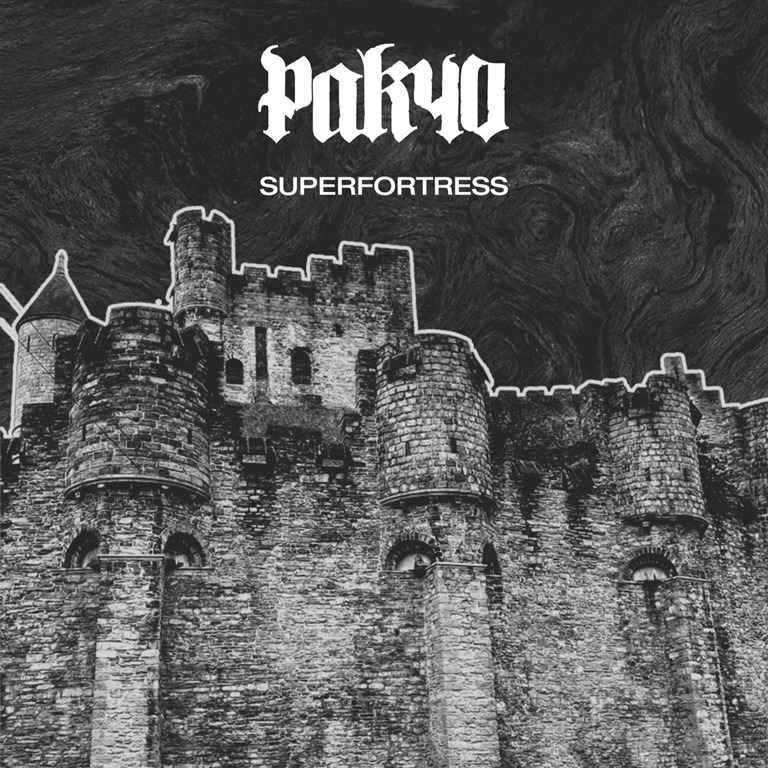
It may be that production plays a part, but Superfortress goes far beyond anything previous in terms of density and intensity. This is not to diminish the potent stoner riffery of Bunker, which contained some mammoth tracks with some mammoth riffs, but Superfortress is a major step up. Sure, Bunker was all the bass, but here, they elevate the volume and intensity in a way which replicates the thunderous, ribcage-blasting, ear-flapping force of the live show.
Four years on from Bunker, Superfortress very much solidifies the Sabbath-influenced aspect of their hefty doom / drone sound with the reverb-laden vocals, but also ratchets up the monstrous weight of previous releases by some way.
The first track, the ten-minute megalith that is ‘Old Nomad’ is as heavy as it gets. The drumming is relentless in its weight and thunderous force, but the bass… Hell, the bass. It lands like a double-footed kick to the chest, even through comparatively small speakers, replicating the impact of the live sound on the current tour. ‘Crushing’ may be a cliché but Pak40 deliver a density of sound that just may smash your ribs and smash your lungs. The title track begins tentatively, the riff only forming at first, before the drums and distortion kick in and from then on it’s massive, even before the vocals, bathed in a cavernous reverb arrive. Its low and it’s slow and it’s doomy, but it’s also earthy and rich in that vintage folk horror doom vibe, and it’s the slowed-down Black Sabbath inspired riffing that dominates the third and final cut, the feedback-squalling instrumental ‘Ascend’.
There’s something wonderfully old-school about this – but at the same time, it pushes things further in terms of weight and volume. And in those terms, Superfortress sees Pak40 push those things to an extreme. This is a monster.
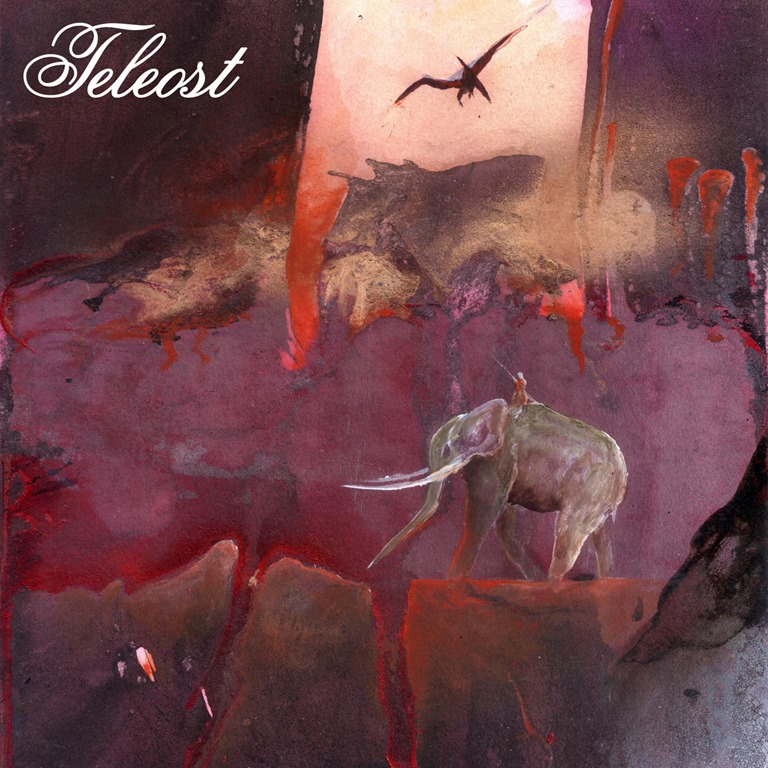
Since relocating to Glasgow, Teleost have been forging ahead, first with the release of the Three Originals EP at the start of the year, and now, bookending 2025 – which has seen the duo venturing out live more often – with their full-length debut. And it’s definitely got length: five tracks spanning a full fifty minutes. But it’s got girth, too. Atavism is everything they promised from their early shows – amplified. In every way. With five tracks, and a running time of some fifty minutes, Teleost have really explored the epic space they conjure with their monolithic, crawling riffery, pushing out further than ever before – and with more gear than ever before.
Despite there only being two of them, you have to wonder how they fit all that kit into a studio, let alone a van. They’re not quite at the point of Stephen O’Malley – who had to play to the edge of the stage at the Brudenell when playing solo in Leeds some years ago because the backline barely fit – but at the rate they’re amassing equipment, it’s probably only a matter of time. But this isn’t the accumulation of stuff for the sake of it: this is a band obsessed with perfecting its sound, and then going beyond and taking it to the next level. Volume is integral to that, in the way that it is for Sunn O))) and Swans – and again, not for its own sake, but for the purpose of rendering the sound a physical, multisensory experience. And also because volume facilitates the creation of tones and frequencies simply not possible at lower volumes.
The challenge for any band who rely on these quite specific conditions live is to recreate not only the sound, but the sensory experience, the full impact, when recorded. Recording compresses, diminishes, boxes in and packages something immense, compacting it to something… contained, confined, in a way that a live show simply isn’t. Live, there is movement, there is the air displaced from the speakers, there are vibrations, there is an immediacy and margin for error, all of which are absent from that ‘definitive’ documented version.
‘Volcano’ conjures atmosphere in spades, a whistling wind and tinkling cymbals delicately hover around a softly-picked intro, before a minute or so in, BAM! The pedals go on and the riff lands, and hard – as do the drums. Slow, deliberate, atomic detonations which punctuate the laval sludge of the guitar, which brings enough low-end distortion to bury an entire empire. The vocals are way down in the mix and bathed in reverb, becoming another instrument rather than a focal point. The pulverizing weight suddenly takes an explosive turn for the heavier around the mid-point, and you begin to fear for your speakers. How is this even possible? They do pair it back in the final minutes, and venture into the earthy, atmospheric, timbre-led meanderings of Neurosis. By way of an opening, this twelve minute track is beyond monumental.
They may have accelerated their work rate, but certainly not the tempos of their tunes: ‘Bari’ – which may or may not hark back to the band’s genesis, when they performed as Uncle Bari – rides in on a wall of feedback and then grinds low and slow. They really take their time here, with ten full minutes of jarring, jolting riffery that’s as dense as osmium. Turn it u and you can feel the hairs in your ears quiver and your cells begin to vibrate.
Where Teleost stand apart from other purveyors of slow, droning doom is in their attention to those textures which are grainy, thick, and each chord stroke hits like a tsunami making land reach, a full body blow that almost knocks you off your feet.
But for all of the annihilative volume and organ-bursting weight, Atavism is not an angry or remotely violent record: these are compositions concerned with a transcendent escape, and this is nowhere more apparent than on the mid-album mellow-out, ‘Life’, which offers strong parallels to more recent Earth releases. A slow, hypnotic guitar motif is carried by rolling cymbal-dominated drums. I find myself yawning, not through boredom, but relaxation – until four and a half minutes in when they bring the noise once more, and do so with the most devastating force.
AA
Penultimate track, ‘Djinn’ is contemplative, reflective at first and then goes on an all-out blow-out, seemingly more intense and more explosive than anything before it. While growling droning rumbling is the album’s defining feature, there does very much feel like there’s an arc of growing intensity over its course. Here, the vocals feel more skywardly-tilted, more uplifting in their aim to escape from the planet, and closer, ‘Canyon’ returns to the mesmeric, slow-creeping Earth-like explorations before slamming all the needles into the red. The result is twelve minutes of magnificent calm juxtaposed with earth-shattering riff heaven.
The fidelity is fantastic, the perfect realisation of their head-blastingly huge live sound captured. The chug and trudge cuts through with a ribcage-rattling density, and there is nothing else but this in your head. You mind is empty, all other thought blown away. It’s a perfect escape. And this is – at least in its field – a perfect album.
You know you’re in ‘epic’ territory when an album contains just two tracks (or one, depending on the edition). With a running time of thirty-two minutes, The Between is inching into the bracket of monster works that includes Earth 2, Sleep’s Dopesmoker, or much of Sunn O)))’s output – or Swans for that matter – but still. What they promise is ‘a long-form suite of experimental metal that runs the gamut of their whole discography’, described by the band as “a guided meditation through death and dying”, which ‘takes liberal doses of ancient Eastern philosophies on life and death and pairs them with a modern existential despair.’
And so it is that the vinyl release features the half-hour long ‘The Between’ split across two sides, while the digital version features the track unbroken, and paired with a ‘bonus’ track in the form of ‘Remember Death’, which has a running time of over twenty minutes. In short, this is an absolute fucking behemoth.
And it doesn’t stop there: this material was recorded with a twelve-piece lineup. Yes, you read that right. Said lineup features contributions from Oli Genn-Bash (Codex Serafini) on saxophone, virtuosic guitar solos from Alexander Brown (Infected Dead), sound design by new recruit Jack D’Arcy and notably, the return of Dane Cross (Sacred Son) on vocals. No wonder they pitch it as ‘Dawnwalker’s most ambitious work yet.’
I feel a degree of preparation is required for this experience. Candles are lit, whisky is poured. And I’ve brought the bottle up to my office because I suspect that I’ll be needing a refill before the album’s over, and I don’t feel like breaking the spell by pausing it and heading downstairs.
‘The Between’ begins with a bell chime. It rings on… and on… hushed spoken word and hovering tones conjure a rich atmosphere. There’s a magical mysticism about it, as well as a slow-build as rolling cymbals swell and drones hang, thickening the air. Over time, the instrumentation shifts, and doomy folk transitions towards post-rock, then towards cinematic progressive soundscapes. Four minutes in, it goes large… and there’s no looking back from here. It twists and turns, and takes myriad unexpected paths, with a sudden lurch into sludgy guttural metal. With dark, growly noise sharing space with huge progginess, and the riffs lurching this way and that, there’s a schizophrenic feel which begins to take hold after about five minutes. Nine minutes in, a wild solo simply explodes, and POW! Moments later, there’s a sax break. It’s simply too much to process rationally.
Ambitious isn’t the word, really. We’re talking about an album – A SONG – that veers more or less between Black Sabbath and Radiohead. It’s nicely produced, but where does that sit when you’re confronted with such extreme contrasts? ‘The Between’ is a head-spinning, brain-bending experience.,
The same is true of ‘Remember Death’. It begins with haunting, post-rock picked guitar and spoken word, and introduces the idea of years and life itself being cyclical: it’s gentle, its calm, and it’s human. Lyrically, it’s deep, deep, deep… ‘I know it’s an uncomfortable subject, but it shouldn’t be’, says the speaker. And it’s true. Death in our society remains a taboo subject. But why? That as a species we are afraid of death is one thig, but our avoidance of the topic is simply wrong, and the words of ‘Remember Death’ articulate all of this magnificently.
The simple fact is that death is inevitable and we all shall die. Preparing a will or something is good, but simply an acknowledgement of the inevitable rather than fully facing it. Facing it is to live every day like it’s your last. And the fact is, it may be, because you never know.
Things start getting particularly brain-bending around four minutes in. by this point, the atmosphere is hypnotic. You’re invested. You’re open, vulnerable. “The existence that we have now is not real. It’s an illusion. What we see as existence is fundamentally mistaken. What we see and perceive and taste and touch and feel is all filtered by subjective elements… and thus, we do not see reality.” And there is some truth in this: we each experience our own reality. We see colours differently, and our reality is simply our individual experience. It’s why eye-witness accounts of an event vary so. Wildly different as they may be, they will all be true for the person recounting the event. “Through a perfect death, we regain that perception of what is real…” the narrative continues. And this is where it really starts to get difficult, and strange. It is a very, very difficult listen. It continues in this vein, expounding the principles of Gnosticism, while the guitars gradually ebb and flow. The instrumental shifts are subtle, and ‘Remember Death’ contrast dramatically with ‘The Between’.
This would have worked well as a double album, but equally ‘Remember Death’ would have worked as a standalone album. Then again, they’d probably prefer that it was situated as a satellite work, being so far removed from the main release and their other work.
However you approach it, this release documents the work of immensely imaginative band at a creative peak, and it provides much food for thought.
Cold in Berlin have come a long way over the course of fifteen years and now – after a six-year wait – five albums. Give Me Walls was sharp, defined by an angular post-punk sound which crackled with nihilistic fury. You wouldn’t exactly say they’ve mellowed over time, but they’ve become heavier, darker, and have evolved the ways in which they articulate themselves, musically, and lyrically.
January 2024 saw the release of the EP The Body is the Wound, which introduced the thematics of a new and significant project, and indicated where they were heading, and came with references to an album to follow later in the year. The year came and went, and here we are, at the dark end of 2025. But as lead single ‘Hangman’s Daughter’ and follow-up ‘The Stranger’ foreshadowed, Wounds was worth the wait. Perfection takes time, and that’s what Cold in Berlin have delivered here.
But more than that, this is an album which wrestles with difficult stuff. As the band explain, “Wounds is a series of songs about the different ways people live with and process ‘the wounds’ of their lives… A strange celebration of that formative pain we have all experienced in some way. The loss and joy of survival – the celebration of finding others like us, the gift of knowing life comes after fire.” For all the noise of how we need to talk more about mental health, the fact of the matter is that it’s really just that. There is still real stigmatisation surrounding the subject in real terms, with reactions to attempts at open dialogue tending to range from diminishment, to dismissal, to awkwardness and paralysis before moving on with an embarrassed cough. And yes, I’ve learned this from painful experience. Raise the subject of mental health, anxiety, and dealing with bereavement while adjusting to life as a single parent with a teenage daughter… it’s amazing how many people go quiet, how many friends seemingly vaporize. The simple fact is that the majority of people are afraid to touch on dark topics, to venture to dark places. They can’t handle it, and so… these are my personal wounds, and why this album reaches parts other albums don’t get close to.
It’s ‘Hangman’s Daughter’ that raises the curtain on the dark drama which will infold over the course of nine songs. The big riffery that’s become their signature – and nowhere more apparent on predecessor, 2019’s Rituals of Surrender – is very much present, but there’s a lot happening here, in terms of detail and dynamics and arrangement, with pulsating electronics which owe considerably more to Krautrock than glacial gothy / post punk traditions prominent in the mix, and some thunderous drumming (which does belong more to the post-punk lineage) and some spindly lead guitar work that’s classic trad goth – and at the same time, the song’s imagery leans more toward folk-horror. It’s a potent mix which sets the tone – and standard – for a phenomenally powerful album.
Piling straight in hard and rather faster, ’12 Crosses’ is another showcase of stylistic eclecticism: the tense, cyclical guitar straddles post-punk and noise rock, and creates a claustrophobic, airless atmosphere – then, seemingly from nowhere, there’s brass, which, in context, introduces something of a post-rock feel, which is a sharp contrast with the spiky, Siouxsie-like stylings of the song’s second half. It’s fierce, but there’s more than straight attack.
A mere two songs and ten minutes in, and I find myself reeling by just how much they’ve packed in, in terms of range and depth, and the attention to detail is superlative.
‘Messiah Crawling’ provides… not respite as such, but some headspace to be carried along by a thick, doomy, Sabbathesque riff. ‘They Reign’ marks a change of pace, bringing down the tempo and volume, leading by a more narrative lyrical form. After a slow-build, rolling drums and swathes of synth conjure a cinematic sonic expanse which is transportative. It makes you feel, on a spiritual, perhaps even primal level. Landing mid-album, ‘The Stranger’ is rather sparser and it’s the synths which take the lead on this shimmering prog-pop cut, which grows and twists as it progresses towards a surging climax. Final song, ‘Wicked Wounds’ is nagging, and somehow antagonistic and more overtly punk in its delivery
Throughout, Maya’s vocals are powerful, commanding, but equally, rich and emotive. Not only has she never sounded better, but never more suited to the music her vocals are paired with, running the gamut of emotions from anguish and torment to reflective and vulnerable.
With Wounds, Cold in Berlin have stepped up to another level – and in every aspect. It didn’t seem possible they could keep getting better… but here, they’ve surpassed expectations, and once again exploded beyond the walls of genre to deliver an album which is something else.
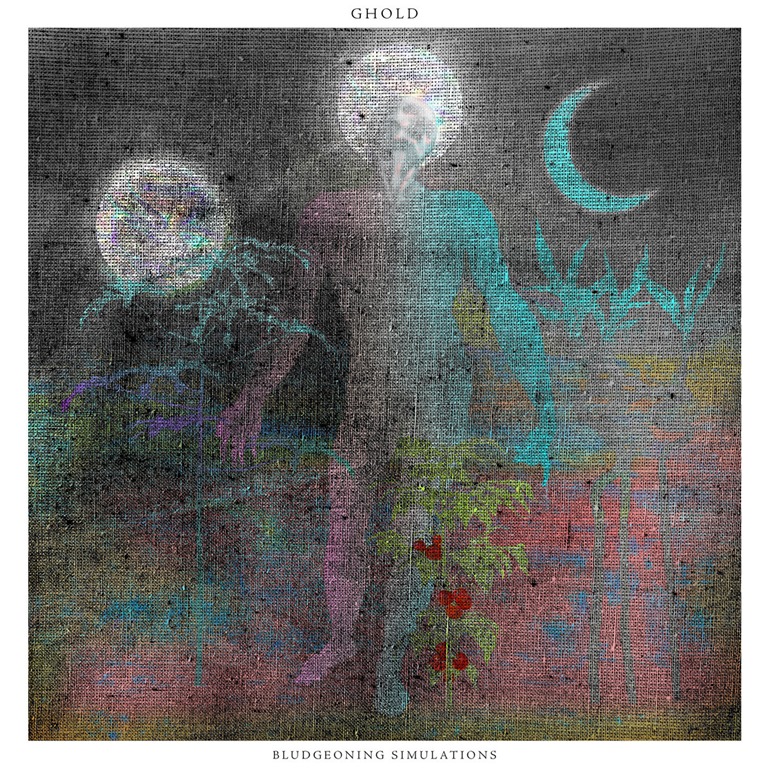
Human Worth seems like a comfortable place for the latest album by sludge behemoths GHOLD. The band has forged a remarkable career to date, with each album showing development and progression, building on previous works – and as they’ve been going for some thirteen years now, that’s some significant expansion. PYR (2016) saw the duo expand to a trio, and Stoic explored the potentials of the three-way interplay in much greater depth. INPUT>CHAOS took the band in a rather different direction, fully embracing the avenues of straight-up noise while bringing, at times, almost accessible shades to the monstrous riffery that defines the GHOLD sound. So many bands spend their entire career recreating their first and second albums because they’re so desperate to appease their fanbase, and while that might be alright for acts who’ve sold their soul and their lives to major labels and likely have no say in the matter, any act who has artistic freedom who peruses such a creatively limiting course is likely doing it for the wrong reasons.
GHOLD’s unpredictability, then, is a strong positive. And Bludgeoning Simulations is bursting with surprises, and none greater than the tremulous piano opening on the first track, ‘Cauterise’. It’s tense and dissonant, but at the same time, soft, reflective… and then the monstrous, churning riff crashes in and lays waste to everything which stands before it. The guitar and bass are welded together tight to forge a solid wall of sound, and it’s delivered with attack., a raw, barrelling intensity. You don’t just hear the volume from the speakers: you feel it.
Without a moment’s pause, a thick, lumbering bass riff crashes in hard, and leads ‘Lowest’ into spectacularly Sabbath territory – it’s hard and heavy, but also captures both raw contemporary feel and that vintage 70s sound. Sabbath as played through a filter of Melvins goes some way to explaining where they’re at. It sound like abrasive hardcore played slow.
The ridiculously long and sludgy single cut, ‘Place to Bless a Shadow’ s a beautiful slow-burner, expanding everything they’ve ever done to a new and remarkable breadth. There’s detail here, and deep, dark, whispering atmosphere, before ultimately, after some sparse, slow-building tribal beats and simmering tension, not to mention vocals that start gently but gradually come to resemble the rage of Trent Reznor on The Downward Spiral, they finally go full Melvins sludge mania just after seven and a half minutes. It’s heavy, and it’s wild. And – alright, sit down and take it – it’s solid GHOLD.
‘Fallen Debris’ is a fast-paced, buzz driven blast, and a contrast in every way – hard, driving, it’s a tabid blast of a punk / gunge / metal hybrid that hits like a kick in the stomach. Whipping up a stomach-churning maelstrom in the last couple of minutes, we find GHOLD hitting peak energy, before the slow-churning Sunn O))) ‘inspired ‘Leaves’ drifts in and drives hard. It’d s heavy as fuck. And it hurts.
There are no simulations here: this real bludgeoning, from beginning to end. Bludgeoning Simulations is heavy, and make no mistake, there are no simulations here: this is fucking REAL. The album’s second monumental beast of a track is the groaning, droning, nine-minute monster that is ‘Leaves’, and it’s nine minutes of sepulchral doom fully worthy of Sunn O))). It’s heavy shit, alright, but the reason it hits so hard is because of the context: Bludgeoning Simulations is remarkably nuanced, inventive, a questing work that seeks new pathways, new avenues, and shows no interest in genre boundaries of conformity. ‘Rude, Awaken’ brings the dingy riffs that will satisfy thirsty ears, but again, there’s a stylistic twist that’s truly unique, in a way that’s not even easy to pinpoint. It’s simply something different.
Bludgeoning Simulations is inspired, and inspiring, and finds GHOLD conjuring sonic alchemy with a visionary take on all things doomy, sludgy, low, slow, and heavy.
‘The Preacher’ is the new single from Gothenburg’s Hollow Ship, recorded and produced together with tape wizard Don Alsterberg. Leaving the noisy compressed sound that defined their acclaimed debut LP Future Remains behind and entering a rich new sonic texture while unmistakably still the heavy hitting Hollow Ship.
‘The Preacher’ arrives after a summer during which the band found themselves topping Spotify’s viral charts in the US, UK, their native Sweden and many other territories with ‘Magic Mountain’ from the cult classic Future Remains. With the band set to head out on tour in Europe later this year ‘The Preacher’ also serves as a first taste of new music with their second full-length due next spring.
‘The Preacher’ arrives together with a video by Freddy Wallin and is out now digitally via PNKSLM Recordings.



 Aural Aggravation