Posts Tagged ‘Doom’

Christopher Nosnibor

And yet again, after a soaking on my way to see Interpol in Leeds a fortnight ago, the heavens open to deliver a truly tropical downpour, a torrent of fair biblical proportions in stepping out of the station. It’s way to wet to have my phone out to sat-nav to the pub I’ve arranged to meet a mate in, so I take hasty refuge in The Scarboro Hotel.

It’s not hyperbole or dramatic scaremongering to say that this is climate change in effect. It’s been stiflingly hot, we’ve experienced high winds – which is why I left my umbrella at home: Poundland brollies and strong gusts don’t go together – and light showers and some flash downpours. But this precipitation isn’t so much a cloudfall as a monsoon, and as frustrating and mood-despoiling the soaking is, the bigger picture is that this is a sign of things to come. JG Ballard’s 1962 post-apocalyptic sci-fi novel The Drowned World is rapidly looking like future reportage rather than speculation.

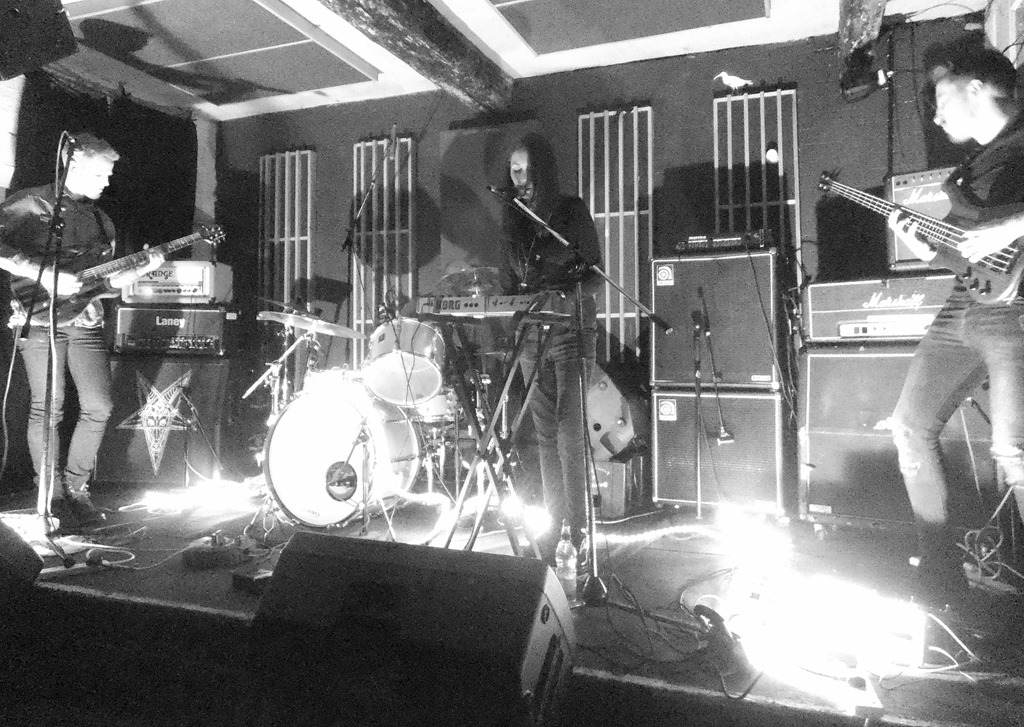
It’s a good thing I’m heading to Temple of Boom in my drenched state. Live music invariably proves itself to be a mod-lifter, or at least the best conduit to a window of escapism, and never more than a night of full-throttle metal. It’s a genre I’ve come to appreciate almost exponentially over the last decade after spending years completely disinterested and dismissive. The irony that I considered metal somehow juvenile and primitive isn’t lost as I realise I’ve grown to grasp the sheer diversity of the – infinitely fragmented – genre, as well as the benefits of untrammelled catharsis as a form of therapy.

The tip I’d had ahead of the show suggested Vonnis were pedlars of fairly standard grindy thrash, and musically, this is fundamentally true. It’s all in the delivery, and I’m wondering a day on if their front-man’s antics were the result of drunkenness, insanity, or a combination of the two. Their Facebook bio records a history of ‘dislocated shoulders or open leg fractures’ and a ‘disregard for any kind of personal safety’, and they deliver on that. Tonight’s set found this guy piling up (and falling off) monitors, stumbling wildly, stripping from his boiler suit to socks and boxers and ending the set on the flor in front of the stage with his head in a bin. The whole thing was demented, and was a real horrorshow car-crash of a performance – but it was utterly compelling.

DSC_0057[1]

Vonnis

Bismuth are compelling for all the right reasons, bashing out some monumental noise with drums and bass. By which I mean BASS. Arsequaking bass. Head-shredding bass. Immense bass drones that sound like Sunn O))) and Earth circa Earth 2. Simultaneously. Bass channelled through a pedal board the size of a cruise liner to the point it no longer sounds like bass. An age separates the trike of every chord, every explosive, punishing beat. Bismuth grind it out, low, slow and heavy, but with the full frequency spectrum: bass that sounds like a full band lineup with everything up to eleven, or even twelve.

DSC_0061[1]

Bismuth

Tanya Byrne’s vocals range from a delicate and emotionally-charged melodic to full-blooded howl of pain: it’s all integral to Bismuth’s sound and intensity, and the set concludes with Tanya out in the audience, on her knees, shrieking and howling into a wall of feedback. It feels like the purest catharsis, and the entire room is on edge and close to breaking to bring down a devastating finish.

Whereas Bismuth’s sound is textured, detailed, and atmospheric, Moloch go all out for blunt force trauma. Lumbering riffage provides the backdrop to rasping guttural anguish. There’s something about the vocals, which register in the higher regions, and the way they contrast with the shuddering downtuned sludgefest. There’s also the complete lack of pretence or even any real kind of show involved.

“Hiya, we’re Moloch,” says Chris Braddock as he takes the mic. Cue a wail of feedback before everything crashes in and continues to grind away at a gut-churning crawl for the next forty punishing minutes.

DSC_0067[1]

Moloch

With three guitars dominating the six-piece’s instrumentation, Thou have texture and density completely covered. And despite the fact they’ve been going some fourteen years with only two changes to the lineup, they still appear remarkably youthful. The ever-informative Encyclopaedia Metallum locates them in the bracket of ‘Sludge/Drone/Doom Metal’ and lists their lyrical themes as ‘Despair, Revolution, Societal collapse, Death.’ This does nothing to convey the intensity of their albums or the kind of performance they deliver – or, moreover, the nonchalance with which Bryan Funck – wild-eyed and grey-bearded – delivers his velociraptor vocal scream.

DSC_0070[1]DSC_0078[1]

Thou

It should be harrowing, hellish, but is precisely the opposite. To witness a band so finely-honed, channelling everything into a powerful and relentless piledriving assault is a beautiful and uplifting thing: elating, life-affirming. As they thunder through an immaculate set, I find I’m no longer in the room and everyone else has melted away. There is nothing but this moment, in which I find my mind is empty and I am floating, detached, wired into the music alone. Time stops and the sound becomes everything.
Southern Lord – 10th May 2019

Christopher Nosnibor

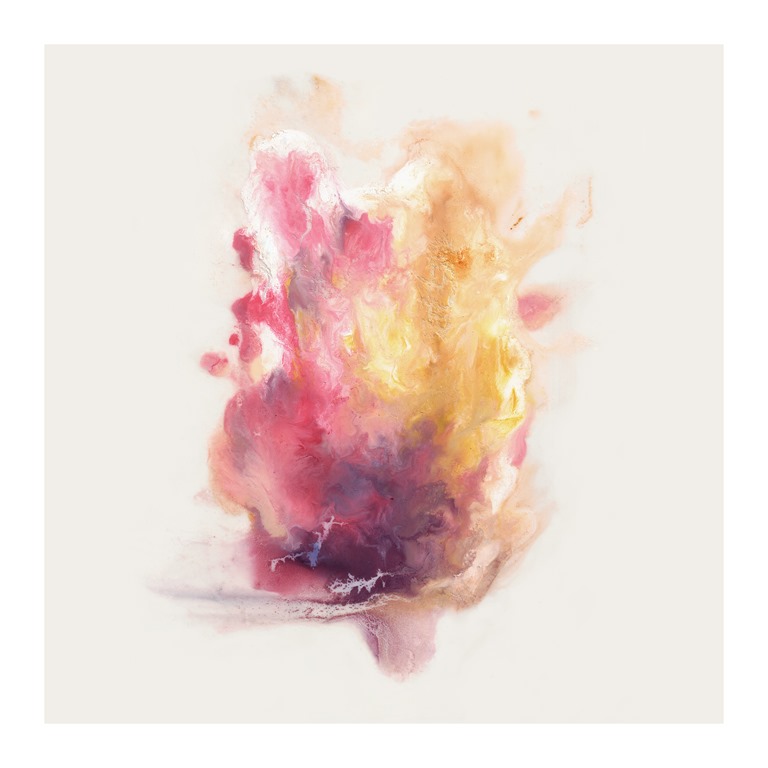
BIG | BRAVE continue their journey by revisiting their roots – as much in terms of principles as sonically. Consequently, A Gaze Among Them is exploratory and dynamic above all else, and herein lies both its strength and appeal: it’s the work of a band pushing themselves, in all aspects of the creative process. and the band pushing themselves pushes the listener, too, leading them through the sweeping vistas imbued with a significant emotional heft. Of course, that’s difficult to quantify, because it’s about the individual. And yet… BIG | BRAVE commutate immediately, transcendentally, and on the basis of their own agenda

Apparently, the album’s creation began with the question “How do we take very little and make something bigger than what we actually have?” Vocalist and guitarist Robin Wattie explains further, “the biggest challenge was to not do what is easiest. i.e. what we knew worked for the last albums or what is, for us, easy to write. With A Gaze Among Them, Mathieu and I put ourselves through the ringer [sic]– I did not want to do what seemed to me to be a ‘logical next step’ in what we could do musically. I wanted to go back to our original concepts and work from there – space, tension, minimalism and voice (finding melody and musicality in pieces that consist of one note for longer than ten minutes, for example) were the primary concentrations I wanted to push.”

The result is – as anyone familiar with their work to date would expect – immense. The emotional power is every bit as impactful as the crushing power chords, which are but punctuation to expansive passages deep in atmosphere.

There is much space and tension to be found both binding and pushing apart the sonic elements that make up the album’s five immense tracks as the drums pound into infinity while the overdriven low-end yawns and surges into peaks and troughs on a scale of a galactic tide.

The nine-minute opener, ‘Muted Shifting of Space’ has all the hallmarks of post-punk melded with shoegaze but performed with the density of hefty sludge, and the raging tempest that explodes in a blistering crescendo at the mid-point of ‘Holding Pattern’ is sublime.

‘Monolithic’ is one of those words that’s slipped into overuse when critiquing music in this field, but it’s apposite in context of the toweringly immense, dense sonic sculptures BIG | BRAVE forge and which cast long, looming shadows into the psyche. There are passages when they sound like a bad, but mostly they sound like something else, something so much greater than the parts. Wattie’s voice is the key defining feature, simultaneously forceful and fragile, calling to mind Cranes’ Alison Shaw as she ambulates and fills the ever-shifting space. It’s a sound that’s haunted, lost, detached, frantic, and other-worldly.

‘Body Individual ’expands that territory, starting sparsely with little more than Wattie; voice ringing out and wrought with an array of conflicting emotions, before a churning mess of noise that builds like latter-day Swans. But the build knows no end: the sound builds, and builds, until it’s all consuming, all-encompassing. It’s something else, and then something else again.

‘This Deafening Verity’ is but an interlude, three minutes of atmospheric organ drone punctuated by distant rumbles of thunder. Robin mewls plaintively, the words unintelligible. It matters not: it conveys so much on its own, inviting the listener to place themselves into the blank spaces, before ‘Sibling’, which prefaced the album’s release grinds its way to the close, a monotonous distorted pulse providing a rhythmic core around which the layers swell from stark to swirling, erupting in dense clouds of nebulous noise around the mid-point. Descriptions and comparisons fall to futility when presented with something this enormous this powerful, particularly when that power stems from a place that’s invisible and impossible to pinpoint.

AA

257800

Southern Lord – 26th April 2019

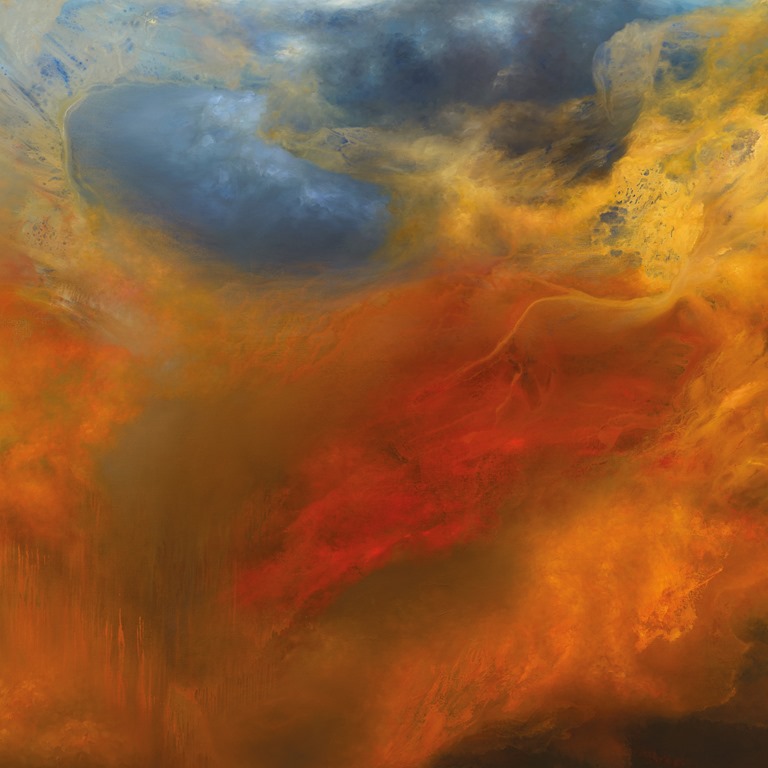
A new Sunn O))) album is still an event, even after all these years as the leading exponents of droning doom, a field now crowded with imitators and influences. The sense of ceremony is a major factor: Sunn O))) appreciate and command ceremony in every aspect of their exitance. As good as so many who have emerged to follow in their wake may be, there really is only one Sunn O))). The thing with Sunn O))) is that while they very much do mine deep into their self-made seem, each release offers something different, a variation on that consistent sameness.

And so it is on Life Metal that co-founders Stephen O’Malley and Greg Anderson set themselves a production-orientated goal for realising their immense sound, namely to have their playing captured by god himself, Steve Albini. The story goes that Steve took the call, and said ,“Sure, this will be fun. I have no idea what is going to happen.”

The resulting four tracks, which evolved through time in rehearsal, and with collaborative input from Anthony Pateras, Jóhann Jóhannsson collaborator Hildur Guðnadóttir, guitarist / bassist Tim Midyett, and live mainstay T.O.S bringing Moog action, were laid at Albini’s legendary Electrical Audio studio, and the end product (at least on vinyl) is pure analogue, with an AAA rating.

And it certainly brings the band’s earthy qualities to the fore: the richness, the density of the speakers vibrating in their cabs as displaced air emerges as sound in its most overtly physical manifestation is all captured in a way that conveys the immersive, all-enveloping experience of being a room with the band. As is also the case with Swans and A Place to Bury Strangers, the intense volume isn’t a gimmick but a necessary part of the sound and the experience. Some frequencies simply don’t exist at lower volume, and tones resonate against one another in a certain and quite different way when everything is turned up to eleven and then maximum gain applied. And the effect is transcendental. And whereas its predecessor, Kannon was comparatively concise, with its three tracks clocking in around the half-hour mark, Life Metal goes all out on the expansive, the four pieces running for a fill seventy minutes.

It begins with a distant rumble, before, after just a matter of seconds, the first chord crashes in: thick, dense, so distorted and low-registering as so almost collapse under its own density. But from the slow-crawling swamp-heavy ooze emerges individual notes, the makings of a melodic lead guitar line, and from the darkness radiates a gleam of light. Feedback… soaring notes… grandeur on a galactic scale. And then… Guðnadóttir’s voice. Detached and somehow simultaneously clinical yet emotive, assured yet utterly lost, it possesses an other-worldliness as it drapes dimensions across a simmering drone forged from a lattice of layers reminiscent of sections of Earth on Earth 2.

‘Troubled Air’, which features Pateras’ pipe organ work heightens the impact of volume as well as the ceremonial, ritual undertones which run through every Sunn O))) composition. By turns beauteous and beastly, shifting between moments of monumental grace and churning discord.

The nineteen-minute ‘Aurora’ goes low and slow, a single chord hanging in the thick, muggy air for an eternity until it twists out of shape and becomes a whine of feedback. And then it goes lower and slower still. The suspense builds between each chord, which elongates out to a droning sustain, and when the next lands, it’s with the force of an imploding black hole. Because Sunn O))) don’t do things on a small scale or in light: instead, they amplify darkness until it goes beyond critical mass to become all-consuming.

It ends abruptly in a peak of feedback before a deluge of grinding guitar, overdriven and distorted to a point beyond devastation hits like a tsunami to open the twenty-five-minute closer, ‘Novae’. Again taking clear cues from Earth 2, it’s a heavy drone that occupies the full sonic spectrum as howling strains of feedback whine over bowel-rupturing lower frequencies. Nothing much happens: it doesn’t need to. This is about taking a concept and pushing it as far beyond its logical end as possible, something Sunn O))) have effectively made a career of. And it still works.

And if ever a single album encapsulated the fundamental concept of Sunn O))), Life Metal would be a strong contender.

AA

919042

BIG | BRAVE share the first full track ‘Sibling’ from their incoming album, A Gaze Among Them (Southern Lord, 10th May) by way of a brilliant video by Mathieu Ball & Robin Wattie.

Since their inception in 2012, BIG|BRAVE have explored terrains of experimental rock with a clear focus on the key principles; space, volume, and raw emotion. The essence of BIG | BRAVE’s magic has always been the way they balance these dynamics, and particularly how much sheer power comes from the beautifully quiet moments.

The same principles are the starting point for the new album, only the approach is different, beginning with the question "How do we take very little and make something bigger than what we actually have?" vocalist and guitarist Robin Wattie explains further "the biggest challenge was to not do what is easiest. i.e. what we knew worked for the last albums or what is, for us, easy to write. With A Gaze Among Them, Mathieu and I put ourselves through the ringer – I did not want to do what seemed to me to be a ‘logical next step’ in what we could do musically. I wanted to go back to our original concepts and work from there – space, tension, minimalism and voice (finding melody and musicality in pieces that consist of one note for longer than ten minutes, for example) were the primary concentrations I wanted to push."

In the process of revisiting their early intentions, BIG | BRAVE have boldly evolved, emerging with a thrilling new body of work that is all at once refreshingly new, explosively heavy, dynamically loud, beautifully minimal, carefully repetitive, and totally and utterly cathartic. 

A Gaze Among Them features Robin Wattie (vocals, electric guitar, guitar amp, bass amp), Mathieu Ball (electric guitar, guitar amps) and Loel Campbell (drums) with guest appearances from Thierry Amar (Godspeed You! Black Emperor, Thee Silver Mt Zion) on Contrabass and Seth Manchester‘s synth overdubs. The album was recorded with Seth Manchester at Machine with Magnets in Pawtucket Rhode Island.

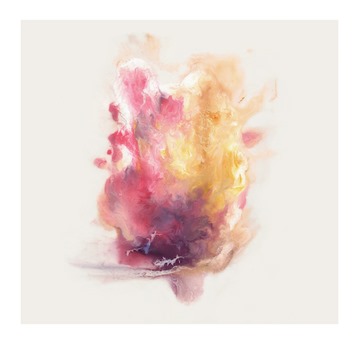
The beautiful image adorning the cover (created by Robin Wattie) further demonstrates that BIG | BRAVE have blossomed. The trio sound rejuvenated and confident, and A Gaze Among Them is the sound of a band truly honing their craft, and feeling totally satisfied with it.  Compelling. Necessary. Important.

Watch the video here:

AA

BIG | BRAVE LIVE DATES WITH MYDISCO:

16/05 DE Nurnberg Kantine *venue change

17/05 DE Berlin Urban Spree

18/05 PL Poznan LAS

19/05 CZ Prague Altenburg 1964

21/05 NL Haarlem Patronaat

22/05 BE Antwerp Kavka

23/05 FR Lille La Bulle Café

24/05 UK Bristol Rough Trade

25/05 UK London Raw Power

26/05 UK Glasgow Stereo *new addition

27/05 UK Newcastle The Cluny

28/05 UK Brighton East Street Tap *new addition

29/05 FR Paris Instants Chavirés

30/05 BE Brussels Magasin 4

31/05 DE Mannheim JUZ *new addition

01/06 CH Winterthur Gaswerk

03/06 DE Wurzburg Cairo

04/06 DE Hamburg Schute

05/06 SWE Malmo Plan B *new addition

07/06 SWE Gothenborg Skjul Fyra Sex *new addition

08/06 SWE Stockholm Slaktkyrkan *new addition

Details of US tour dates with Dreadnought & Primitive Man can be found here.

Big Brave

New Heavy Sounds – 1st March 2019

Christopher Nosnibor

There aren’t many Welsh-language bands who’ve made much progress beyond the border: Catatonia only really broke through when they switched to English, and they were pedalling accessible indie-pop tunes, not pulverizingly heavy sludgy doom metal.

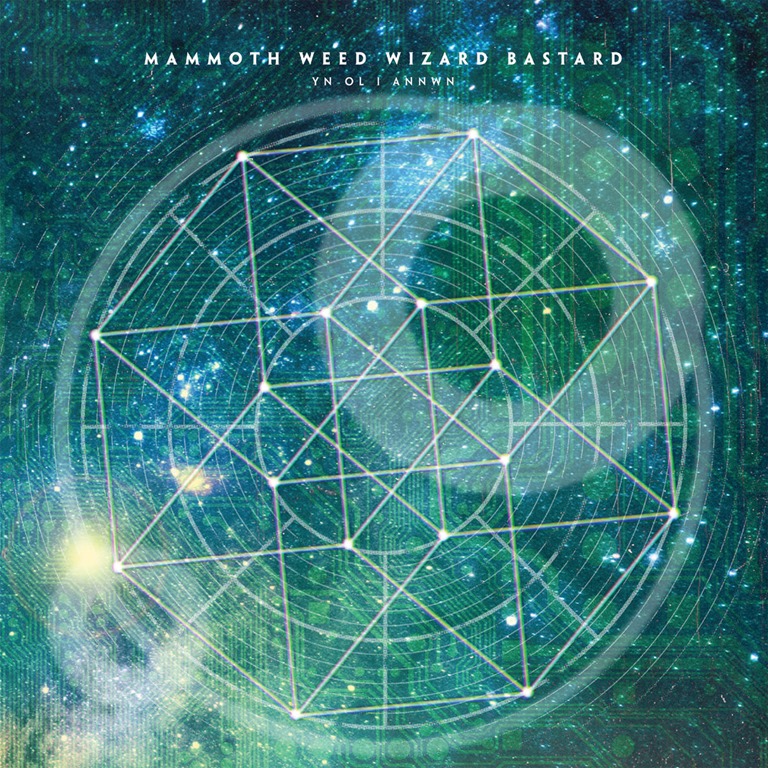
And so it seems very much against the odds, that the absurdly (and most certainly not mainstream-media-friendly-monikered) Mammoth Weed Wizard Bastard broke into chart territory on the release of Yn Ol I Annwn (Welsh for ‘Return To The Underworld’) the third part of the trilogy of albums that began with Noeth Ac Anoeth in 2015 and 2017s Y Proffwyd Dwyll, and is pitched as ‘the final phase of the band’s first intergalactic voyage.’

And ‘intergalactic’ is a fitting description. The band’s intention was to move even further from the standard doom tropes without losing sight of their origins: this involves pulsating, gloopy synths and rippling waves which introduce the album, before a wibbling waft of retro-futuristic analogue wobbles give way to the album’s first megalithic lumbering riffage on ‘The Spaceships of Ezekiel’. It’s every bit as preposterously huge and epic as the title suggests; galactic and of biblical proportions, with fizzing lasers firing left, right, and centre, all framing Jess Balls dreamy, melodic, almost folksy vocals to create something that’s out of this world, but also has clear ties to vintage Hawkwindian space rock.

‘Fata Morgana’ pursues the folksy aspect further, and colours it with picked guitar that’s pure vintage gothy post-punk and wouldn’t sound out of place on a Sisters of Mercy record circa 1984/85 before the power-chords crash in at the mid-point – from which point it builds, and builds, to a sustained crescendo propelled by pounding percussion.

It’s all in the detail on Yn Ol I Annwn. For all the devastating grind, the ribcage-crushing, heart-stopping heaviness, there are layers and details that make it an album to listen to. The nuance doesn’t reduce the force, but simply makes this an album with more points of interest than your average in its field. The spiralling synth incidentals should sound corny but work incredibly well; it’s perhaps because it’s delivered with both conviction and panache, meaning MWWB rise above pretence to drive it home not only sincerely, but artfully.

Significantly, for all the synth and cello, there’s no shortage of repetitive, grinding riffage, with the thirteen-minute ‘Katyusha’ bringing all the overdrive as the band up the pace and really rock out while synthy fireworks blossom and bloom all around. It bleeds into the slow, heavyweight trudge of ‘The Majestic Clockwork’, and the closer, the ten-minute ‘Five Days in the Abyss’ is a full-weight doom crusher of a climax.

With each release, MWWB have broadened the scope of doom, and Yn Ol I Annwn sees them forge another immense expansion, and further solidify their unique place as trailblazing innovators in the genre.

AA

MWWB

Midira Records

Christopher Nosnibor

The press release informs us that Four Movements Of A Shade is the second solo album by Sarram, and that it ‘features four haunting tracks, that move through different genres like doom, drone, ambient and somehow minimal post-rock, played with just a guitar and some synths. The idea behind that album was to go to the studio without having tracks, just an idea and the mood he had in mind to play an improvisational session. The result was recorded in one day and turned out as a very dark and intense soundjourney. You can feel the temper of the recording session by listening to that record. Sarram recommends very loud volume.’

I can’t recall an album that mentions volume which actually recommends playing at a reduced level, although increased volume can definitely increase or even optimise the level of impact and appreciation, depending on context. Music played and recorded at high volume is definitely best heard at the volume intended: there’s a distinct relationship between volume and frequency, and certain frequencies and notational interplays only occur with the amps up. Many of the bands which stand out as purveyors of dangerous decibels – MBV, Sunn O))), Swans, A Place to Bury Strangers – simply wouldn’t work quiet: and I say that as having witnessed Swans’ show at Leeds Cockpit (no longer in existence) a few years ago. At regular gig volume, they sounded like a band rather than a transcendental sonic force capable of shattering atoms.

Listening to Four Movements of a Shade, the benefits of increased amplification soon becomes clear. It’s got some heft, and while these are countered by extended quieter passages which are often delicate and nuanced, and chime along nicely at ordinary levels, it’s when the crescendos climax that Sarram’s music really needs to be felt vibrationally as well as sonically.

The first movement begins quietly, rising to a bowel-trembling wall of low and mid-range dark ambient droning sonic cloud. Big, barbed, sonorous swells of sound scrape sharp edges, while other aspects of the resonant whirling blackness cast sinister shadows, long and deep: hints of the billowing drone of Sunn O))) build into tempestuous thunder and rumbling, grating storms that cast unsettling atmospherics into the psyche and resonate around the gut, but this is very much a composition of ebb and flow. Nevertheless, while the underlying menace remains undiminished, around the mid-point the darkness yields to dappled sunlight and soft strings, hinting and optimism and freedom. For a fleeting moment, one actually feels somehow lighter, despite the inescapable sense that it’s only the calm before the next storm – an instinctive drag that proves – of course – to be correct. It’s always a matter of when, rather than if….

The album’s second half – comprising the megalithic, fifteen-minute third movement and the final, eight-minute forth – focus on the atmospheric layers and the drifting clouds of drone on drone, occasionally straying into expansive post-rock territory.

If it feels like the grip of darkness is being released, the dying minutes swirl into a deep, dark vortex that leave the listener drained, shattered.

The success – and ultimate power – of Four Movements lies in Sarram’s attention to detail and the compositional awareness: it’s not just the way the crushing weight contrasts with the graceful levity, but the timing of the transitions. Everything is exquisitely poised and placed to yield the greatest effect – cerebral, emotional, physical – and that effect is most moving.

AA

Sarram – Four Movements of a Shade

Christopher Nosnibor

It may only be nine minutes on foot from the station according to Google Maps, but despite having probably been maybe twenty or even thirty times, I still find myself struggling to find it, even with GPS assistance. I have no idea why: it’s like I have some kind of mental block, or the venue has some kind of cloaking device that blocks my internal geographical radar. And so I’m disproportionately pleased when I find myself within yards of the venue without taking a single wrong turn. And then I remember the bar doesn’t take cars, and despite having intended to get cash at York station, then Leeds station, then en route, I’ve sailed past all of the cashpoints and only have about four quid on me. Even with beer at £2.80 a pint, I might be a bit thirsty at the end of the night.

I still make it back, with cash, before doors, and they’re not quite done soundchecking. The fact I’m considering plugging up just for the soundcheck brings a small buzz of anticipation: we’re here for some hefty riffage, and it’s best experienced at an appropriate volume. If it doesn’t hurt, it’s not loud enough.

Leeds drums and bass duo Calm are an interesting proposition on paper, consisting of John Sutcliffe from Canvas, Humanfly, Kings, Natterers, and Paul Handley from The Plight, Kings and Ladies Night. In the flesh they’re interesting, too: at the opening, oscillating sequenced synth lines bubble along beneath woozy bass before the distortion crashes I like a tidal wave of sludge. The drums are more energetic than the low-BPM grind of the chords. Structurally, the compositions are segmented and almost sound like three or four pieces glued together, but the transitions make for a set that holds the attention well, and as Sutcliffe, on drums, intones mystical droning incantations into a sea of reverb against a wall of low-end that sends vibrations through my steel-toed boots, the experience takes on an almost spiritual quality.

Calm

Calm

A Headless Horse bring a much more sedate atmosphere with mellow female vocals and delicately layered, meticulously structured songs. Their songs are keenly focused on texture and melody. In contrast to Calm and the rest of the lineup, there’s significantly less weight, and less emphasis on volume overall: that isn’t to say they’re quiet, but when they bring in the riffs, they’re not obliterative, but simply denser. Comparisons aren’t everything, but The Cure and Cranes provide fair touchstones here, and Headless Horse demonstrate that they’re capable of delivering mathy post-rock with emotional resonance. Given that this is only their second outing, they show a lot of promise.

A Headless Horse

A Headless Horse

There’s a proliferation of beards tonight, and Dystopian Future Movies are very much a beard band (singer / guitarist Catherine Cawley clearly excepted). They’re also a very much an atmospheric band, and a band who exploit the dynamics of volume to optimal effect, as abundantly demonstrated by the choppy stop/start lumbering riff of ‘Dulled Guilt’ which opens the set powerfully. Their description of themselves as ‘taking a Sonic Youth approach but arriving at some dark place between Neurosis and Chelsea Wolfe’ is pretty accurate, and they pull the listener in with slow-burning ethereality that yields to punishing riffery, without at any time falling into the trap of formula.

Dystopian Futuere Movies

Dystopian Future Movies

This four-date joint tour sees DFM and Grave Lines unveil a collaborative / split EP, and they’re joined on stage by Jake Harding for a killer rendition of ‘Beholden, which begins a brooding whisper, almost folky in feel, before erupting into thunderous power chords The vocal duet is magnificent: the two singers intertwine with Hardin’s baritone croon underpinning Cawley’s graceful, evocatively gothic intonation to conclude a mesmerising set.

Grave Lines stand out as being very much different from their peers by virtue of the exploration of extended quiet passages that are as much dark folk as post-anything, while exploiting tropes commonly associated with post-rock. This imbues the songs with a palpable emotional depth, and when they crash in with the u-to-eleven distortion, it hits hard.

With ragged hair and beard, wrists and shoes wrapped in grubby shreds of bandage, and a dingy off-white vest, Jake Harding cuts a dramatic and tortured figure as he spews anguish and nihilistic fury, his body tense and wracked, over low, slow sludginess; then again, guitarist Oli, with Alan More hair and beard and sporting a torso so tatood as to appear to be wearing a heavily patterned shirt brings a stoic intensity that’s in stark contrast to the laid-back drumming of Julia Owen, who has an airy style of playing that belies the force with which she delivers stick on skin.

Grave Lines 2Grave Lines

Grave Lines

And yet it’s when Harding ceases words and spits a guttural ‘urrggh’ that most succinctly articulates all the pain and frustration the band channels.

Caroline from Dystopian Future Movies returns the favour of providing additional vocals on Grave Lines’ contribution to the new EP, the epic ‘False Flame’, and they take things right down for the penultimate track of a remarkably concise – but suitably hard-hitting – set with the minimal ‘Loathe / Disgrace’, pairing a droning organ sound which quavers against a vulnerable, melancholic vocal performance.

My notes blur to nothing as the band drive the set home with crushing force with ‘The Greave’. And in this high-volume release lies the uplifting joy of catharsis.

Exile On Mainstream – 22nd February 2019

Christopher Nosnibor

I hear this a lot, at work, at home. People tell me that I must relax. I disagree, of course. It’s not healthy to get too comfortable. To relax is to be vulnerable. You make yourself vulnerable, you’re open to attack, and also emotions. Who needs any of that? It’s not that sensitivity is undesirable in these times of dehumanised capitalist culture, as much as it’s dangerous, a risk to self-preservation. Taking a cynical view, relaxation and wellbeing are avenues which pave the way to exploitation. No, better maintain a hard exterior even while you’re breaking on the inside. Never relax.

There’s absolutely nothing relaxing about the squeal of feedback and distorted, tortured vocals that shred the speakers in the opening moments of the album’s first cut, ‘Hollywood 2001/Rollrost’. The closest comparison I can draw is to early Whitehouse: shards of treble and humming lower-end feedback provide a brutal, unstructured backdrop to vocals designed to inflict maximum pain.

Things to become overtly rock thereafter, with the grinding sludge riffery of ‘Old Overholt’ bringing maximum gnarly grind. The repetitive, barrelling bass trudges on remorselessly, while thunderous drumming explodes amidst a wall of obliterative guitar noise that’s very much about the texture rather than the tune. Ten minutes later, it bleeds into the title track, which sounds more or less the same, but half as slow again. The bass is so low and murky as to vibrate the bowels. The vocals are warped, distorted, a demonic howl from the pits of fiery hell. But it’s not unbearable; the heavy psychedelic leanings give both a kind of context and bring a certain groove. As whiplash whirls of flange fire in and it transmogrifies into some raging beast that’s half Hawkwind, half Sabbath on Ketamine, samples begin to echo around in the murk, adding further layers of suffocating sound on sound.

And as the album progresses, so the songs get longer and gnarlier, the riffs more cyclical and tightly wound and packed with a greater intensity. By the time they piledrive into the eighteen-minute finale, the volcanic assault of ‘CBD/Herinunder’, the earth has shifted on its axis under the sheer weight of the thunderous riffery, guitars so dense as to have created their own gravitational force.

There’s an agonising eternity between each beat, each driving power-chord, the grainy blast of distortion channelling down and re-emerging as a howl of feedback sustain. And on and on it grinds. And in its own perverse way, with its dense, rich wall of overdrive crawling at a tectonic pace, ‘CBD/Herinunder’ brings a certain cannabinoid comfort. It’s not the stoner mellowness of HTC, but the quiet delivery of a more settled underlying state.

It’s still by no means relaxing, but it is a superlative example of no-messing, slow-churning monster riffing.

AA

Bellrope

Uneasy listening trio Under have unveiled their new video for latest single ‘Malcontent’.

When asked on the theme behind the song, the band stated: “Andy (Preece – drums, vocals) came up with this suitably grinding, droning riff while bored out of his mind waiting outside a changing room. As we arranged the overall tine, adding Mayo’s signature noise and our usual uneasy rhythmic approach, we tried to accentuate that feeling of anxious horror and discomfort as much as we could. To reflect this feeling I wrote the lyrics to invoke that sickly desperation apparent in anybody hungry for power.

Their new album, Stop Being Naïve, is available now from APF Records.

Under are a trio from Stockport, Greater Manchester. Formed in 2016. Though rooted in the blueprints of Sludge and Doom Metal, their sound is harder to pin down with elements of Prog, Noise and Avant Garde creeping in. Under play with jagged, slow, off kilter riffs that tease the listener into a false sense of security with dark and abstract lyricism evoking a trippy and sinister unease. The trio cite the likes of Swans, Mr. Bungle, The Melvins and Radiohead as prime influences.

Watch the video for ‘Malcontent’ here:

AA

Under Oct 2018