Posts Tagged ‘dark’

16th July 2021

Christopher Nosnibor

One of my mates enjoys expounding on the opinion that all band names are inherently and fundamentally crap, at least when taken on face value and interrogated for their meanings and connotations. He invariably takes it back to The Beatles – a shockingly bad pun if ever there was one, and I would have to say that point is hard to argue. It’s not even especially clever.

Any band with a one-word name prefixed with ‘the’ is, unquestionably terrible (even allowing for the fact that The Melvins is purposefully bad), and existing and acts who’ve added a definite article have gone rapidly downhill on doing so – take The Offspring, for example. But maybe not so much The Verve, because they were gash to begin with, with their overblown, flappy indie shoegaze flailings.

Recently, we discussed Death by Unga Bunga and Ender Bender, and unanimously agreed that they were both terrible names. But then, objectively, pretty much every band name – even your favourite – is poor and difficult to defend.

But we were divided over Weston Super Maim, which he deemed a bit shit, and which, objectively, is based on a terrible half pun that only UK residents and only then a percentage will grasp. But, despite knowing this, I can’t help but find amusement and a certain admiration for it and the audacity.

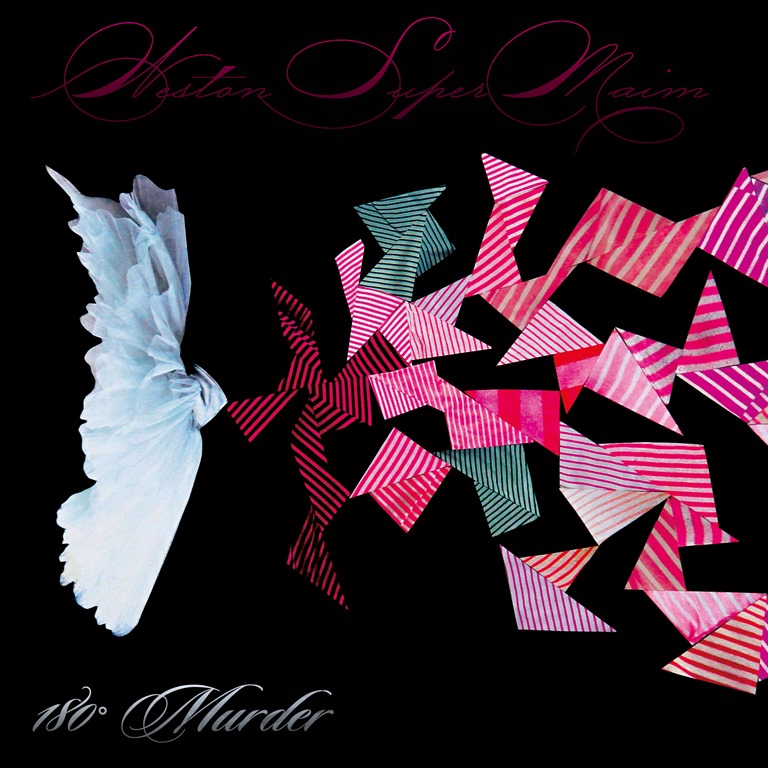
Their latest offering, the 180-Degree Murder EP isn’t so much a source of amusement, but more of a brutal industrial battering. Tom Stevens (All Of Space, Brown Stratos) teams up with US-based Seth Detrick of Los Angeles thrash outfit PDP to handle vocal duties. It’s an EP in the 80s tradition, where two tracks too long for a 7” would make up a 12” release. The two tracks on offer here both extend beyond the six-minute mark and pack all the punch.

It’s been a long time in the making, as the press release details: ‘Written as a single track, 180-Degree Murder traverses caveman heaviness, tech-driven grooves and shifting melodic patterns to create an immersive experience that rewards multiple listens. The writing process for the EP began in 2019. By the time the pandemic hit, an early instrumental draft had already been recorded, but it wasn’t until Detrick joined the project in June 2020 that things really began to take shape. Making use of extra time at home in London during the first UK lockdown, Stevens retracked instruments for the EP at his home studio while Detrick developed lyrical ideas and vocal patterns from his home in Eugene, Oregon. Vocal tracking was completed in early 2021, and the mix not long thereafter.’

‘180 Degree Murder’ is a cacophony of hard slabs plus squalling bleeping fretwork, roaring, ground-razing vocals and an air of explosive violence as guttural roars set against the most pulverising of riffs. Strapping Young Lad is the comparison that comes to mind, but then there’s also the relentless mechanised industrial blast of Wiseblood and Swans that’s also hard to ignore. Oh yes, this is hard and heavy, alright.

‘We Need to Talk About Heaven’ offers a graceful intro and the breaks are remarkably light and melodic in context, but the chug never stops, and cuts loose into violent distortion-driven fury at precisely those crucial points, and it’s not for wimps. In fact, it may only be some fifteen-and-a-bit minutes in duration, but 180 Degree Murder is a savage and brutal affair.

AA
236758

Gates of Hypnos  – 4th July 2021

Christopher Nosnibor

This is a split release by, as the title suggests, Sado Rituals and Mass Grave, who each bring approximately twenty minutes of harsh noise wall to the dark, antisocial party.

Sado Rituals’ ‘Funeral Pile of the Nameless’ is a murky cloud of tearing, rumbling devastation.

As I listen, I contemplate whether they mean pile or pyre, but conclude it maters little, especially not least of all to the couple of hundred people who will even ever hear it. We’re in ultra-niche territory here, and no mistake. But it’s a niche filed with a truly hardcore following.

It’s deep, dark, dank, a rumbling morass of formless darkness that billows and rumbles, and over the course of its precise twenty minutes, it sucks the fucking soul from you as it churns away at the guts without shift and without mercy. It feels like standing beneath the rotors of a helicopter, or on the edge of a cyclone spiralling down and drawing all matter into the pits of hell, the sonic equivalent of a black hole. A vortex of bleakness, of dense matter without form. And then, bang on the twenty-minute marks, it stops.

As purveyors of self-labelled ‘blackened noise wall’, Mass Grave’s nineteen-minute gut churner sounds like the tail end of a piano being rolled down a flight of stairs, a rolling crash of dissonance. It’s even darker and dinger than Sado Rituals’ contribution, a low rumble reduced to a slow, low drone that gradually warps as it billows like smoke from a fire on a wrecker’s yard, all types burning and cars slowly melting in the suffocating black smog.

The lack of treble on these two pieces tempers the harshness, in many ways: it’s a real gut-rumbler but neither track feels particularly attacking or abrasive: it’s a noise wall, and no mistake, but one which is more designed to smoother and suffocate than penetrate the flesh and the psyche with its harsh intensity. It’s still punishing, and it’s still gnarly as fuck, and its power lies in just how oppressive, stifling, the two pieces are.

AA

a3190939614_16

5th June 2021

Christopher Nosnibor

The only way to remain sane through all of this madness is to embrace it, or at least some of it. Then again, ( kröter ) have been ahead of the curve in the madness stakes for some time, as the conveyor-belt of releases over the last couple of years have shown, since they were all culled from some epic sessions around 2018.

*f is their third album of 2021, and the sixth album to be culled from these sessions. Remarkably, rather than a random collection of offcuts and flow-sweepings, it contains some of the most outstanding material yet, and one has to wonder how much did they actually record?

They’ve spent a lot of time sifting through the material and chopping it into tracks and sequencing them into albums – with varying degrees of cohesion – but as they note, ‘as usual, there are no second takes in this pond. All is nutritious, spiraling and slowly growing legs.’ These legs are long and hairy, and the sprawling eleven-minute ‘Trajectory’ is a dingy, dirgy grind dominated by a crunchy, dirty bass groove and plodding beat. It’s kinda post-punk, kinda no-wave, kinda noise-rock, and if there are moments when Mr Vast’s vocals hint at a Jim Morrison-esque swagger, the whole thing reminds me most of Terminal Cheesecake, for those who can handle an obscure reference point.

‘The Letter’ is swampy, minimal, meandering, while ‘The Rock’, another low-oscillating slab of dark industrial-leaning synth is propelled by clattering percussion and features snarling, growling manic vocals. Vast is a versatile vocalist, even if on this set his delivery isn’t particularly angled towards melody, as he drones and yelps and drawls and yowls all kinds of atonality over repetitive electronic grooves.

It all comes together on the eighteen-minute ‘casper hauser in the mirror’, a thumping, humping, ketamine-paced motoric industrial jazz odyssey. Vast sounds utterly deranged as his voice wanders lost, aimless, as he half speaks, shouts, raps and yawns out abstract lyrics that drift out in a drift of reverb. Again, around the six minute mark, it sounds like Kraftwerk fronted by Jim Morrison circa LA Woman, and yes, it’s a pretty fucked-up experience, and the atmosphere is not only intense, but also dizzying, bewildering in its hypnotic pull. It transports the listener to another place, out of mind if not out of body, conjuring an almost trance-like experience. It may be some kind of woozy, weirdy, hippy shit, but it’s also affecting. There’s much to be said for the power of repetition, and this just goes on, and on… and on. It’s not nightmarish as such, but it is trippy and disorientating.

This is a fair summary of the album as a whole: *f really does pack in the weird shit, and if the initial tone is one of quirky, oddball fun, the overarching experience is rather darker. The disorientation it creates is less kaleidoscopic joy and more the nausea of excess, and a kind of unsettled bewilderment. ( kröter ) depart from Hunter S. Thompson’s adage that when the going gets weird, the weird turn pro, and instead forge their own path, whereby when the going gets weird, the weird gets even weirder, and a few shades darker, too. Which is cool, because who wants their weirdness to be predictable, after all?

AA

a2240317846_10

Empty Quarter – 1st June 2021

Christopher Nosnibor

The latest instalment in the reissue series of albums by oddballs Photographed by Lightning is something of a departure from its predecessors – but then, each album marks a different departure, and if one thing this contemporary appraisal of their back catalogue highlights is that they never stated still or retrod ground, which each release existing in a completely different realm from those which came before.

Recorded in 2002 and released in 2004 and considered by the band to perhaps be their strangest offering (and it’s got some tough competition), it lists as its inspirations the works of Kenji Siratori, Friedrich Nietzsche, Suehiro Mauro, Georges Bataille, J G Ballard. I’m often particularly intrigued when a band’s citations are literary, or otherwise non-musical, perhaps because in some respects, while there is naturally much crossover between all creative disciplines, literary influences tend to be more cerebral, ideas or concept-based over sonic. When a bands say they’re influenced by Led Zeppelin, you can probably hear certain stylistic elements in the composition: but you’re not going to hear elements of Ballard in the guitar technique of any band – although with a substantial catalogue of releases to his credit, Kenji Siratori is a notable exception to the rule, particularly as the experimental Japanese polyartist’s forays into extreme electronica and harsh noise in the vein of Merzbow actually do very much resemble his literary works also as a brain—shredding sensory overload.

This is certainly a fair summary of the experience of this album: the title track, a mere intro at under two minutes, is a blend of scratchy, synthy noise with extraneous elements collaged here and there.

‘The Embryo Hunts in Secret’ and ‘Putrid Night’ are both a sort of psychedelic new wave collision, and with the wandering basslines that veer up, down, and everywhere amidst treble-soaked chaos, the effect is disorientating dissonant, as if everything is slowly melting or collapsing in on itself. Everything is murky, dingy, kinda distant-sounding and discordant. Take ‘Kundalini Butterly’ – a spiralling kaleidoscopic mess or scrawling feedback and a bass that sounds like an angry bee bouncing around inside an upturned glass, coming on like Dr Mix covering Cabaret Voltaire’s ‘Nag Nag Nag’.

Blood Music is noisy, but it’s not straight-ahead guitars noisy: instead, it’s a mangled menage of bits and bobs hurled together – not clumsily, but then, not delicately, either, with pulsing washes of rhythm throbbing and crashing all around. It gets weirder and darker as they plunge into ‘My Hole’, where the bass bubbles and throbs beneath a continuous stream of trilling distortion, synth whistles and wails, and there’s a lot of overloading, whupping distortion that derails the helicotoptoring synths and froth and foam that sloshes around at the lower end of the sonic spectrum. ‘Dark Sun’ goes kind of industrial with a hefty, thunking beat, with a relentless, distorted snare, low-slung, booming bass and heavily treated vocals, and there’s chaotic piano all over the place: the emphasis is very much on the dark here.

Dave Mitchell’s lyrics are, we’re led to believe, to have been inspired by whatever he was reading, but buried low in the mix, bathed in reverb and given a grating metallic edge, he sounds like a malfunctioning Dalek chanting incantations. To be clear, that’s by no means a criticism.

Final track, ‘Frame’ is more overtly ambient, but dark, with a certain industrial hue as it shifts to pound out a relentless beat against braying sax and a whirlpool of aural chaos: I’m not about to suggest that PBL were going through any kind of NIN phase, but there are hints of parallels with The Fragile in places here.

Everything about Blood Music is seemingly designed to challenge, to present the music in the least accessible way possible – and it’s far from accessible to begin with, for the most part. The dark density of the sound is heavy, and there’s something quite deranged about the album as a whole, in a way that’s hard to define… but deranged it is. Which seems a pretty fitting summary of the band’s catalogue as a whole: the only thing you can really predict is their unpredictability.

AA

a3521472505_16

Glasgow based darkwave/post-punk duo Hanging Freud have just unveiled their sixth full-length album Persona Normal. The band states:  "We were living between the UK and Brazil, going back and forth. These were two societies going through extreme change. The whole world was changing in a way that felt scary."

Some themes of Persona Normal deal with detachment, dissociation, what it means to be human, political issues and about strong, irrational cults. These are approached in tracks like “I beg you” and “We don’t want to sleep”. Persona Normal is also a record about transformation, and growth, accepting losses and coming to terms with the loss of innocence.

Persona Normal is available now in physical and digital formats on HANGING FREUD’s label, Tiny Box. Persona Normal was written produced and recorded by the duo with mastering duties from James Plotkin (Khanate).

They’ve released a video for ‘Antidote/Immune’ by way of a taster for the album: watch it here:

AA

2a713878-401e-8f16-2ae7-681be464c5d6

Tartarus Records – 28th May 2021

Christopher Nosnibor

Then a release comes pitched as ‘FFO Gnaw their Tongues, Lustmord, Haxan Cloak, etc’, you know it’s going to be pretty fucking gnarly and pretty fucking heavy, not to mention dark. The band describe themselves as ‘a vessel of auditory violence whose sole purpose is to exist in this place and moment in time. It is an overwhelming form of aural terror conveyed through primal and mechanical means, conjoining visceral matter of an organic origin with that of an abiotic one. These together fabricate an entity focused on the seething aspects of interminable dread and the humiliation of flesh’. Holy fuck. I’m simultaneously quaking and on the edge of my seat for this.

I’m not entirely sure what ‘larynge’ is, and even the Internet has been of minimal assistance, and the connotations of ‘golden dirges’ in my mind says probably more about me than a band whose name in the current climate makes me think of blood clots. In other words, none of the prefatory encounter is anything but bleak in the way it sets expectations for the album, and Golden Dirges, Molten Larynges is, indeed, a challenging work.

It’s harsh, it’s noisy, it’s hellish, a purgatorial racket that combines extraneous noise, guttural snarls, and ritual beats. It’s fucking nasty, the soundtrack to the most torturous horror imaginable. Imagine being skinned alive and flayed with torches as flames rise all around, and you’re being watched by razor-toothed beasts, pale, emaciated, and brutal, s pat of the most gruesome ritual you can conceive. Your eyes are stretched open and you’re forced to watch your own chest being torn open and your ribcage prised apart as your exposed heart quivers and pulsates in its cavity. Your halfway to experiencing Golden Dirges, Molten Larynges.

Harsh blasts of noise surge like a tide at the start of ‘Devour their Bodies Saturated with Brine’, before an explosion of demonic noise simply shreds everything as the ritual ceremony builds to its most brutal climax as chthonic entities revel in the bloodshed.

And there is absolutely no respite, no retreat, no light. Most of the tracks are under five minutes, but they each feel like an eternity. ‘Our Torches Soaked in Oil’ conjures a descent into an abyss both in title and sonically, but the clunking percussion, cutting through a dank morass of swirling noise is disconcerting, before the vortex of dark noise yields to a spitting demon spewing venom from an unexpectedly gentle piano. It’s but a brief respite before the industrial churn of ‘Rattling Mutter’ brings a wall of noise and anguish that redefined punishing.

Golden Dirges, Molten Larynges is a different kind of heavy: it’s certainly not metal, and nor is it industrial or power electronics. It’s also blacker than black. This is beyond. It’s

the sound of the earth being pulled apart – not by horses, but by Satan’s slaves. It’s like being dragged by barbed hooks buried into the chest and back over rough terrain if burning coals. It is all the torture, all the pain, the soundtrack to the catalogue listing of atrocities that make up the second half of 120 Days of Sodom. As the gut-hammering percussion resonates against a grumble of anguished muttering and screaming agonies on ‘A Thicket of Abrasions and Broken Wounds’, it becomes fully apparent the sheer extent of this album’s relentless abrasion and its capacity to plunder previously unseen depths. There is no preparation for this: it redefines torture.

AA

a2071770922_10

13th April 2021

Christopher Nosnibor

I love an album that carries a warning. In the case of SINthetik Messiah’s full-length debut, Ambient Noize, we’re advised ‘Caution: When listening to the album with headphones the music may cause a form of psychosis, listen with caution’ (although we’re also advised that ‘All music on this album is meant to be listened to through headphones’. Is the Messiah wanting to fuck people up? Or just warn off the kind of people who may not appreciate an album ‘inspired by Ambient and Drone music from around the world’?

The album’s eighteen tracks are simply numbered, AN01-AN18, and due to the multitudinous influences absorbed within its fabric, while all existing within the broad sphere or dark ambient and drone, there is a considerable diversity on offer here. It’s rich in atmosphere, deep, dark, and dense.

If the title seems perhaps like a contradiction, the pieces tend to be either one of the other, and sometimes a collision of both, and while the ambience is often of a darker, rather more eerie persuasion, the noise is dense, abstract, and sometimes harsh.

‘AN01’ arrives with a low, sonorous drone and a crackle of degraded samples, and slowly throbs and eddies in a cloud-like drift, and the tracks run through in a seamless sequence that feels like a continuum. ‘AN03’ slithers and slides, the rasping breath of a dragon that rumbles and bursts before diminishing slowly to silence. ‘AN04’ plunges cavernously deep, dark depths, while a sing-song vocal sample collides with billowing harsh noise on ‘AN05’, while ‘AN06’ gyrates in slow-mo around a deliberate beat, and while there’s a speculative, shifting aspect of the album, there’s also a certain trajectory, and it’s downwards and into darkness from hereon in, as dank rumblings dominate the ever-more oppressive soundscape.

‘AN09’ marks a shift, with something of a folksy element, and with brooding strings alluding almost to a ‘Black Sails’ shipwreck pirate folk vibe, spun in with something more Japanese in origin, and it’s here that the album begins to develop new layers of interest.

And so it goes.

But what of process? It wasn’t perhaps as mystical as all that, when we learns that ‘the album’s creation, by Cajun front man Bug Gigabyte used vst synthesizers, field recordings and Garageband’s Electronic instruments on the Iphone’. Guess it just goes to show you don’t need the best kit and a full studio to capture something intense or professional-sounding. But then, ‘Grammy – nominated engineer, Joe Haze (The Banishment) then mastered the album by recording every track onto tape at 30 IPS (inches per second) and then mastered the audio through analogue gear.’ This isn’t turd-polishing, but an indication of the way some pro finishing can make all the difference. Then again, I’m not sure of the difference to be made to this…

Ambient Noize is challenging, as it’s intended to be. It has some great moments, and also moments that drag you down into dark places…

AA

a2627592000_10

Clicks are now releasing a video clip for the track ‘Dropdead’, which once again stresses the sharp ironic humour of the Polish electro project. ‘Dropdead’ is the third single taken from the forthcoming new full-length "G.O.T.H.", which has been scheduled for release on April 16.

Watch the video here:

AA

CLICKS_00_album_cover

Christopher Nosnibor

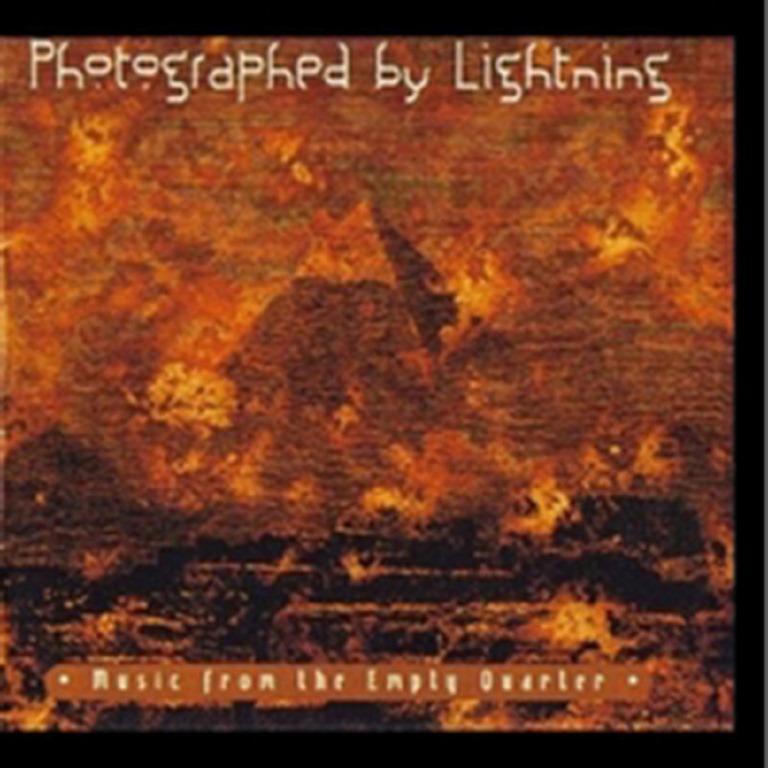
Originally released in 1999, Music from the Empty Quarter was Photographed by Lightning’s fifth album. The band described it as ‘their Troutmask Replica, their Tago Mago’, forewarning the listener that it’s ‘a monstrous slice of avant jazz, musique concrete Lovecraftian horror and should under no circumstances be listened to while under the influence of ‘substances’, and it’s immediately clear why. Like Trout Mask, it seems to be an album intended to be as difficult and challenging as possible, the sound of four musicians playing four different tunes in different keys and time signatures at the same time.

A strolling bassline stops and starts, runs and halts against a thunking beat. Everything’s up to the max, resulting in a slightly fuzzed-out sound, murky with the edges frayed by distortion. And over all of it, horns honk and parp, weaving weird patterns. This is the first of the four parts of ‘Al Azif’, scattered at strategic points across the album, with the same nagging bass motif recurring on each, as if in some attempt to give some sense of structure or cogency to the deranged, sprawling mass of weirdy noise. While three of the four parts are comparatively short, ‘Al Azif 4’ is a colossal twenty-one minutes in duration, but there’s a hell of a lot to wade through before – namely the whole of disc one.

‘Reptiles Invent The Amniotic Egg’ is a slow-trudging grind, somewhere between Justin Broadrick and Kevin Martin’s GOD, and SWANS, and ‘Foehn’ occupies similarly dark, weighty territory. Meanwhile, ‘Pop Song’ stands out as the most accessible track here, a snappy number with an actual semblance of a tune that’s reminiscent of early Public Image – but after a minute and a bit, they’re done, and back to making the most chaotic racket going with the frenzied discord of ‘The Assembly of Membranes’, and taking things up a notch on ‘Timing of Cellularisation’ which sounds like The Fall playing next door to Merzbow, and they’ve both left the door open and you’re standing in the corridor between the two.

By the time you’ve been battered by the murky wasteland that is the noodling delirium of ‘Mosses Invade the land’, with its impenetrable vocals, and the unexpectedly folksy lo-fi indie of Sugar Fist – part Silver Jews, part Syd Barrett, you arrive dizzied and dazed at ‘Al Azif 3’ with a strange sense of déjà-vu, before disc two arrives with more of the same – literally. That sensation of being on an endlessly recurring loop is a headfuck almost on a par with Rudimentary Peni’s Pope Adrian 37th Psychristiatric, but perhaps more realistically an approximation of The Fall’s ‘Bremen Nacht’ repetitions on The Frenz Experiment and accompanying 7”.

The demented, snarling vocals, that gibber and gnash away into the drifting fade of horns is most unsettling as disc two gets dubby and deranged on the fourth instalment, and after the brief interlude that is ‘Hypoxia’, the fifteen-minute title track is a yawning, droning swirl of somnambulance, a ritualistic swell and groan with laser rockets arcing over its bubbling, swampy expanse.

This is fucking heavy stuff: not heavy in the metal sense, but in the sense that’s it’s relentlessly oppressive and lasts an eternity. It’s absolutely bloody great, but it’s also probably the soundtrack to life in purgatory. You have been warned.

AA

a1100566683_10

ant-zen – 18th February 2021

Christopher Nosnibor

Dotla finds ‘accidental one-man project’ kojoohar reunited with purveyors of experimental hip-hop ködzid goo to deliver a follow-up to their 2019 collaborative EP, ‘Дотла’.

The blurb promises ‘heavy lyrics spiked with solemn images and numerous literary references’; and a work of ‘dark, dystopic angst pop with deep aesthetic lyrics and unrelenting vocals… delivered in a blank monotone.’

Now, I’ve long maintained that how and why we respond the way we do to certain music is subconscious, subliminal, psychologically or even genetically embedded. I’ve never found myself able to connect with disco or funk, but music that’s chillingly bleak and inhuman resonates to my very core. And shit, is this bleak and inhuman.

My inability to even vaguely comprehend the actual lyrics is completely immaterial: the characteristically hard-edged Slavic consonants lend themselves perfectly to that detached, monotone delivery, in a similar way to that in which Germanic languages do, and that harshness is much of the appeal of bands like DAF and X-Mal Deutschland (bit not Rammstein, because they always sound like a parody of that Germanic strain of industrial to my ears. I’m not saying I need my Industrial to be po-faced, far from it, but one should be able to take serious music seriously – and kojoohar × ködzid goo are seriously serious, in the best possible way).

Dotla is all the monotone, all the monochrome, thudding industrial beats hammer slow and hard through murky sonic wastelands. It’s unforgiving, relentless: there’s not much light or variation in mood here, and that’s the beauty of it: this is not an album designed to entertain. By the fourth track, the mangled droning trudge of ‘burelom’, you already feel the walls closing in and the light growing dim.

Whereas there’s a popular perception that the heaviest, most oppressive music exists within the domain of metal, electronic music at its darkest, sparsest and most monotonous is, if anything, more intensely claustrophobic.

The production on dotla is also a factor: there’s a lot of low end, rumbling, droney bass, but more than that, there’s a lot of murk. Dotla applies the values of black metal to industrial hip-hop. The drums and vocals are muffled, and there’s, a thick haze that hangs over the whole thing, and cumulatively, it’s almost suffocating. There’s no space or air between the instruments or the notes: everything condenses to form a thick, noxious cloud and a sound so thick and impenetrable it’s nigh on impossible to penetrate and separate the component parts.

The result is like the suction or air from the lungs, the endless battering of blunt objects, and the slow, wading through sludge trudge of ‘typh’ is exemplary. It’s not pleasurable – in fact it slowly grinds the life out of you – but successfully articulates in sonic from every last ounce of the life-sapping oppression of the drudgery of corporate conditioning and governmental oppression, of life. ‘plot’ is the sound of defeat, of self-loathing, of emptiness, of dehumanisation. Feel the pain. Immerse yourself in it. You deserve it.

AA

a0292046476_10