Posts Tagged ‘Cinematic’

Christopher Nosnibor

Bite the Boxer is unquestionably an unusual and intriguing name for a musical project: my mind immediately leaps to the infamous ‘bite fight’ between Mike Tyson and Evander Holyfield in 1997, where Tyson lost through disqualification after biting off a chunk of Holyfield’s ear in one of sport’s most shocking moments.

In combining an eclectic range of elements spanning industrial, alt-pop, trip-hop, and ambient lo-fi, there’s nothing about Matt Park’s music which indicates any connection to this moment in sporting history. The same is true of his objective to create music imbued with ‘he feeling of impending doom but with just a glimmer of hope’, which is inspired by ‘horror video games and dystopian, post-apocalyptic films’.

‘Venom Test’ is haunting – at first ambient, before bursting with an expansive, cinematic feel, then plunging into darker territory. Even without the aid of a beautifully-shot and remarkably stylish video, the rack leads the listener through an evocative sequence of sonic transitions. Although never harsh, the distant drums are weighty, powerful, and the overall experience feels like a juxtaposition of must and decay with rays of shining hope breaking through cloud. The listener feels as if they’re being pulled in opposite directions, the suspenseful end offering no conclusion, but instead, leaving a sense of emotional quandary, an uncertainty. ‘Venom Test’ creates a tension, and provides no closure or conclusion, only a sense of a door being left ajar. It’s a deftly woven piece, and one which feels very much like it belongs to a much larger project – which it does, being a taster (which doesn’t remotely have the flavour of bloodied ear, to the best of my knowledge) for the forthcoming album, Haunted Remains Pt.2. As a choice of single, it’s a good one, leaving us in suspense to hear it in the context it was intended.

AA

AA

92e42d4c-6d54-911b-d615-4a752d4ebad6

17th October 2025

Christopher Nosnibor

Raoul Sinier first caught my attention with the release of Guilty Cloaks, although he had already built a substantial catalogue of strange and surreal works in the preceding years, notably Brain Kitchen (2008) and Tremens Industry (2009). After Welcome to My Orphanage (2013) and Late Statues (2015), I rather lost track – something which is clearly to my detriment – and then he fell silent following Death, Love and Despair in 2018. Perhaps that title was a revelation beyond any of the contents or accompanying notes. It’s not anyone’s business, regardless.

What matters is that the arrival of Army of Ghosts is a welcome one, and one which is heralded in the accompanying press release with the fanfare that ‘Raoul Sinier is back — more hybrid and unpredictable than ever’. We go on to learn that ‘His new album is a bold fusion of everything that made electronic music iconic, layered with sample work straight out of hip-hop’s golden age. Add in overdriven guitars, throbbing bass, flashes of rock, prog, and funk, and you’ve got a sonic landscape that’s as explosive as it is unique. Floating above it all is Sinier’s signature ethereal voice, a haunting counterpoint to the beautiful chaos below.

Melancholic yet sharp, lyrical yet raw, his music walks the line between introspection and confrontation.’

The appeal of Sinier’s work is its inventiveness – although with Guilty Cloaks, I will admit that I was drawn by a certain post-punk vibe, too – and Army of Ghosts is certainly inventive.

The album’s first song, ‘Phony Tales’ switches between Phantom of the Opera theatrical verses and brutal industrial choruses worthy of Trent Reznor. It’s not just the surge of sound, but the crashing, metallic bin-lid snare that dominates the mix and completely spins your head. It may only last two minutes and ten seconds, but it’s intense.

Much of Army of Ghosts is intense, but in different ways. The drums are uncommonly dominant, and Sinier’s vocals often invite parallels with A-Ha’s Morten Harket, but crucially, said vocals are wrapped in a broad range of forms. ‘Brace Yourself’ offers a lethal cocktail of this, and that, and the other, led by some trip-hop drumming and proggy guitar work, before tapering out with a dark, sonorous bass. It’s that same insistent, baggy beat and Bauhaus-meets-metal explosion which shapes ‘Disperse’, a word which has enhanced implications and resonance of late.

In its eclecticism, Army of Ghosts comes up trumps. ‘Walking Through Walls’ offers springy post-punk energy in the vein of Bauhaus at their best, while the title track straddles post-punk and Nu-Metal, and then post-rock, with sludgy bursts of low-end distortion and…piano. Unexpectedly, it calls to mind the stylistic swathe of Bowie’s 1: Outside, an album which knows no borders.

Sinier knows how to spring surprises, and the wild intro to ‘Spectral Ocean’ is indeed wild, a furious flurry of violin, layered and awash in echo abruptly giving way to a low-slung thunderous bass groove that’s got goth stamped all over it and would have been perfectly at home on the new Rosetta Stone album – and that’s before we get to the brittle, picked guitar and sturdy mechanical drumming that pumps away relentlessly. After the widescreen expanse of the moody ‘Distant Wildlife’, which builds to a dark, slow-burning climax, driven by a dense, throbbing bass, the final track, ‘Neon Sign’ pairs things back and goes all out on the haunting atmosphere, with serrated guitars cutting through drifting synths and a contemplative vocal performance – before suddenly closing with a blast of drone metal straight off Earth 2.

The thing about Army of Ghosts is that it is both detailed and direct, sometimes simultaneously, but it is never predictable. The song titles do not offer a clear overarching theme, but the ghostly and paranormal hover in every shadowy corner of this theatrical and imaginative set of songs – a set that’s wildly varied, but consistent in its quality. Raoul Sinier is most definitely back, and this is very much a good thing.

AA

WXFDSWXCXII front

The Hangnails have certainly evolved. Recent releases have been a very far cry from the raw garage blasts of their early works, starting out almost fifteen years as a full-throttle garage duo.

There was something of a fallow spell after the release of DOG in 2017, after which Martyn Fillingham and Steven Reid made an understated return, the dropping of the ‘…and the’ signifying their shift towards different territories.

‘Come On Outside’ may be their most different yet. Stripped back, mellow, atmospheric, and synthy, it boasts epic, cinematic qualities – and they still make sound that you’d think impossible for a two-piece.

The visuals for the video are pretty striking, too.

AA

557129847_1385194123607392_9211412401179351774_n

‘Darkest Day’ is the opening track from Rhys Marsh & Mandala’s new album, Until The End Of Time — a dark, expansive and cinematic journey that explores themes of loss and love, along with the notion that when you lose someone you love, you still love them until the end of time.

With songs ranging from ten to eighteen minutes in length, the album’s soundscape is largely dominated by majestic analogue synthesisers and led by Mandala’s trademark dynamics — ranging from whisper-quiet to wall-of-sound. Until The End Of Time will be available on all streaming and download platforms, alongside a strictly limited-edition CD, available exclusively from Burning Shed, on November 14.

Rhys Marsh has released eleven albums in the past — both solo, and as the singer-songwriter in bands — and this is the third Mandala album. It was decided to call this a Rhys Marsh & Mandala album, as thematically and stylistically it follows on from Marsh’s previous solo album, Towards The West, which was a direct refection on the loss of his Dad.

Formed in London in 1997, Mandala have toured the UK, Scandinavia and North America over the years, playing at iconic venues such as CBGB’s in NYC and The Marquee Club in London. Their blend of folk-noir, progressive rock, psychedelia — all wrapped in Marsh’s atmospheric and dynamic melodies — has garnered acclaim and airplay across multiple countries, with singles A-listed on Radio Caroline, and chart success on iTunes in the UK and Canada.

Critics have called Mandala’s sound “a kaleidoscope of prog, psychedelia, and folk”, and praised their “knife-edge atmospheres and Eastern-tinged melodies” (The Independent), with The Guardian describing their music as “folk-noir”, and Time Out highlighting their “melancholy laden melodies”.

Until The End Of Time is the kind of album that needs to be listened to from start to end. The songs are long, and the themes expand and unfold gradually. There are elements of post-rock with the long build-ups, progressive rock with the sweeping Mellotrons, and a deep sense of melancholy.

The album features spoken word in three languages: English, Norwegian and Welsh. Marsh says that this verse can sum up the overall feeling of the album:

“The kingdoms of eternity

Will bring you here

Until the end of time

Where nothingness

Leads us into forever”

AA

Mandala_ 2025. Photo by Silje Marsh

Dark-electro artist, MARIE ANN HEDONIA has unveiled her new cinematic video, ‘Eve Had the Metallic Shine of Summer’.

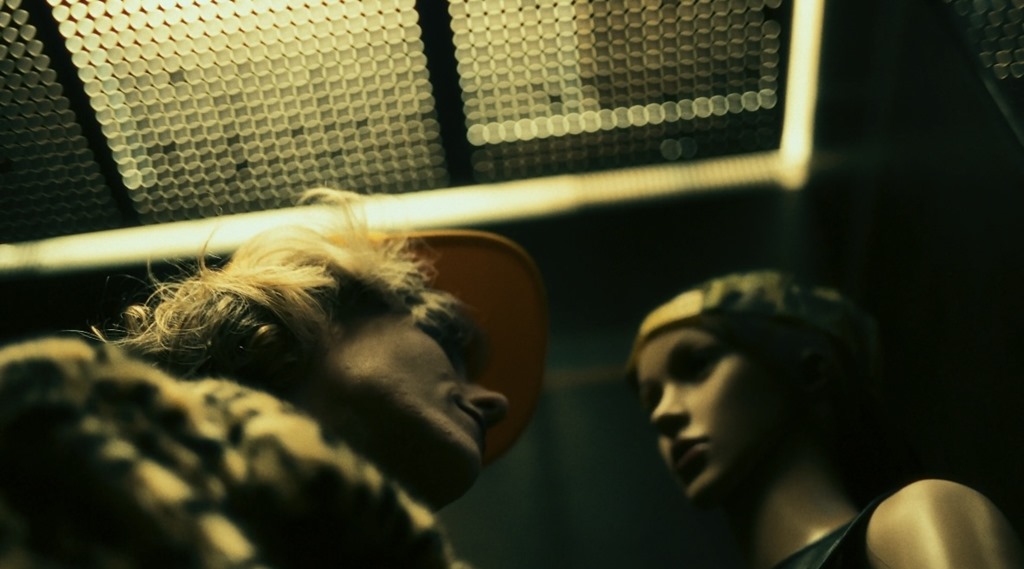
The video concept was inspired by Ingmar Bergman’s film, Persona. Eve, our mannequin represents a toxic relationship. Eve is a person we pour our whole self into, a person who takes all of our energy, time, money, soul, and gives nothing back.

MARIE ANN HEDONIA’s collaborator, BLACK KITE, states, “This song is about the potency and allure of destructive, codependent relationships and how they require us to self-abandon. It speaks to both addiction and toxic relationships that masquerade as love or comfort, but are actually antithetical to both.” The ending is completely dependent on the viewer’s point of view: Do I go mad? Am I the bad guy? Am I free now?

The video was shot over a period of 13 to14 hours during one day of “guerrilla” style film making, all over Baltimore city and county. Director Alex Shaak was pivotal in creating the striking visuals seen throughout the video, bringing the concept to life. The weather was completely coincidental. The energy of the thunderstorm very much translates the powerful ending of the video.

AA

43e9626f-77df-e124-7ba6-09dbb18ce542

21st July 2025

Christopher Nosnibor

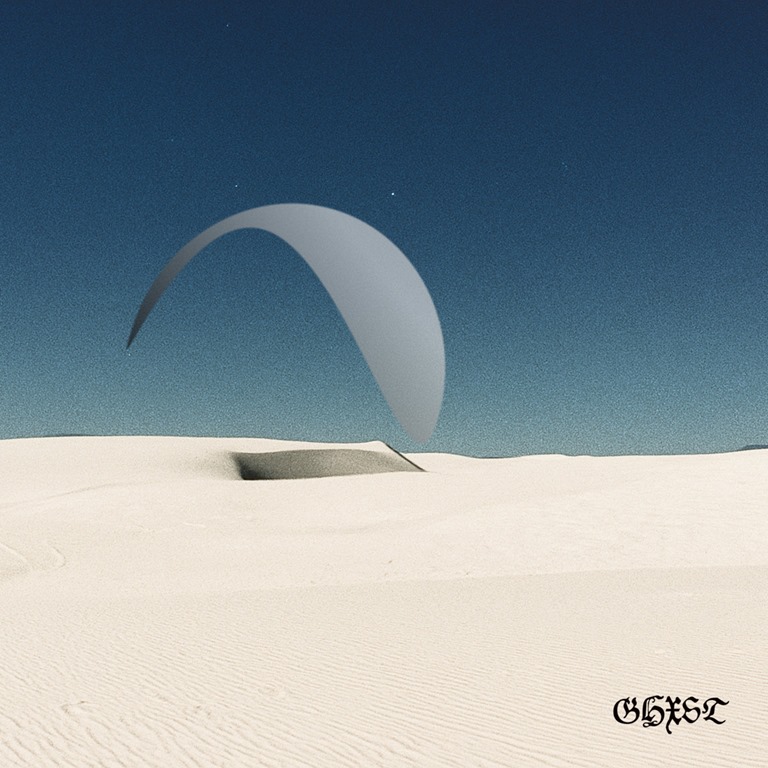
I’ve been digging GSXT for a whole decade now and shouting about it whenever the opportunity arises. I’m not sure how many people have been paying attention, but anyone who hasn’t has been missing out. They took their timing building up to their debut album, released in 2022, with half a dozen EPs preceding it. ‘Cosmic’ is the first material since Admire, three years ago, and this new single continues their trajectory of extending their repertoire, taking the form of a slow-building expansive brooder.

A cinematic piece of post-punk desert rock, and with hints of recent releases by Earth ‘Cosmic’ tones down the snarling overdrive that’s the duo’s signature sound in favour of something more hypnotic, in the vein of ‘Sonores’. It suits them well, as it happens: Shelly X’s voice drifts and aches through the bass-led verses, floating in a growing swirl of guitars in the chorus before a straight-up rock guitar solo swoops in.

To describe ‘Cosmic’ as commercial would be rather misleading, because it’s certainly no sell-out. But it does mark a significant step. What’s more, it’s absolutely huge, and immediately accessible, making it the cut which has the broadest appeal yet. Maybe now they’ll listen up, eh?

AA

a1762628991_10

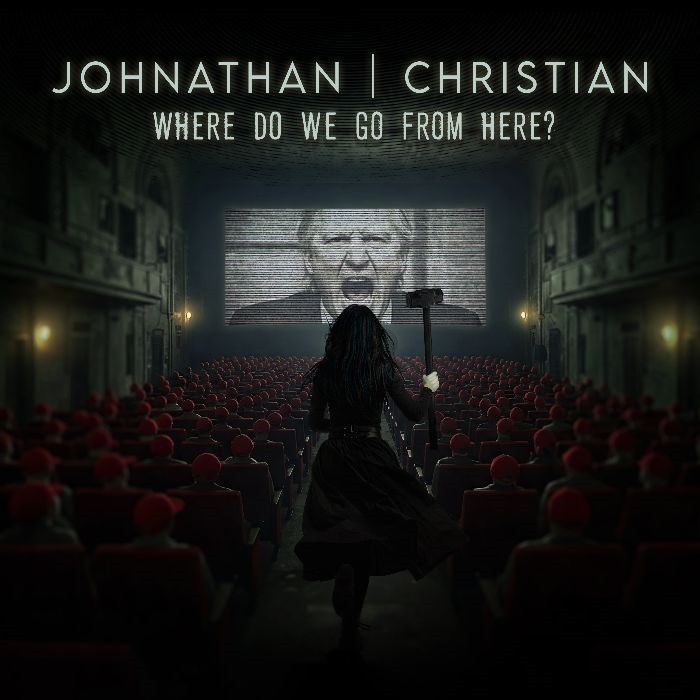
Darkwave duo, Johnathan|Christian return with ‘Where Do We Go From Here’—a brooding, cinematic post-election anthem that captures the emotional wreckage of a divided nation. The track opens in hushed reflection (90 BPM) and erupts into a 125 BPM pulse of unrest and reluctant clarity. No slogans. Just aftermath.

The video integrates footage from Maya Deren’s At Land—a woman lies on a beach, disoriented yet unbroken, before rising with quiet resolve. What begins in poetic isolation transforms into documentary collapse: flickering headlines, divided families, shuttered classrooms, and hands reaching—but not always finding. It opens with: “We Still Remain.” It ends with: “WE STILL RISE.”

“We didn’t want spectacle—we wanted aftermath,” says the band. “No fire. No fury. Just a reckoning in the ruins.”

Included in the release are: a 125 BPM DJ Edit for live mixing and DJ sets, and remixes by industrial supergroup, The Joy Thieves and Stoneburner’s Steven Archer. Also included is the track, ‘Fall from Grace’ – a short, ghostly instrumental layered with static and decay; a requiem for what was, and a reflection on what remains.

For fans of Peter Murphy, Human Drama, Laibach, New Order, and politically-driven dance stompers.

AA

8bbee6f4-172e-2102-2c5c-e9987acdebda

Norwegian post-rock outfit Korean Cars return with ‘Magalomaniac’, the second single from their debut mini-album #1, set to be released on May 23 via Mas-Kina Recordings.

Following the haunting and immersive lead single ‘Drömtorp’, this new single turns the dial from introspection to tension as “Magalomaniac” is a slow-burning eruption of cinematic builds, distorted beauty, and emotional urgency.

Blending melancholic post-rock with melodic post-hardcore, Korean Cars create a dynamic soundscape where atmospheric depth meets raw emotional release. Drawing from the alternative and post-hardcore scenes of the ’90s and 2000s, the band’s sound fuses soaring melodies, jagged noise, and unpredictable shifts into a captivating experience.

Formed by members of Rumble in Rhodos, Infidels Forever, Arms on Fire, and Insense, Korean Cars combine seasoned musicianship with a shared passion for layered, emotionally charged songwriting. Their sound echoes the cinematic textures of Explosions in the Sky and the emotional punch of Trail of Dead — a beautiful chaos of melody and intensity.

ae6e6c38-22a9-c9f6-b12a-e4fd0cffa219

Bearsuit Records – 30th April 2025

Christopher Nosnibor

It’s been a couple years since we last heard new material from Harold Nono, enigmatic purveyor of weirdy electronica, and platformed by the go-to label for weirdy folky worldy electronica, Bearsuit Records. And Faro is suitably strange, and, well, Bearsuity.

It doesn’t start out so: ‘Raukar’ is primarily sedate, piano-led, sedate, strolling, and overall, feels quite calming, despite jangles and scrapes of dissonance whispering away in the background. As the ambience trickles its way into balmy abstraction, we feel a sense of discomfort, and while the expansive ‘Sketch for Faro’ is soothing, expansive, cinematic, and feels like it could easily be an excerpt from Jurassic Park or another sweeping passage from a big-budget family-friendly movie, there are undercurrents which are subtle but nevertheless discernible which add an element of ‘otherness’ to it, particularly the abstract, almost choral vocal which rises near the end.

An EP consisting of only four tracks, Faro is a brief document, but Nono brings together many elements within this succinct work. Besides, it’s not all about length, right? Faro is sonically rich, imaginative, and ambitious in scope and scale. It feels expansive, transporting the listener over huge landscapes of trees and hills and field and planes, and you kinda feel carried away on it all in a largely pleasant way, despite the niggles of tension which creep in. And during ‘The Hour of The Wolf’ everything begins to explode and expand like some kind of galactic simulation, and suddenly, from nowhere, there are beats are blasts of distortion and everything somehow crumbles, and as silence falls, you find yourself standing, dazed, amidst rubble and ruins wondering what just happened.

While many of the elements common to Nono’s work are present here, Faro does seem like something of a development, expending in the direction of 2023’s ‘Sketch for Strings’ and moving further from the more disjointed, collagey compositional forms of earlier works. It’s less overtly jarring, less conspicuously weird, but don’t for a second think that Nono has gone normal on us – because Faro is subtle in the way it unsettles, and the last couple of minutes completely rupture the atmosphere forged gently and carefully over the rest of the EP. And this is why it’s both classic Nono and quintessential Bearsuit – because whatever your expectations, it is certain to confound them.

AA

a0171664628_10

‘Mars On A Half Moon Rising’ is the first video from The Sound, the solo debut of much-travelled musician / producer / arranger / painter Knox Chandler. This project is a musical / visual memoir depicting the shift in his surroundings from the urban to the rural, specifically the Connecticut shoreline off the Long Island Sound and the impact of this dramatic change of environment on his consciousness and the art-work that leads to.

At The Sound’s core is Chandler’s “Soundribbon” style of meditative, powerfully cinematic instrumental performance on guitar, accompanied by upright bass and percussion which comprises the audio component of the release. The visual portion is a book of paintings, photographs, sketches and written meditations, interpreting nature through technology. The blending of these mediums is Knox’s attempt to make the diaristic intent of his music explicit. The Sound is being released on Knox’s new label Blue Elastic on May 30. The album is available on digital download and on streaming platforms on its own, or the book comes with a download code. I hope you’ll consider covering Knox with an interview, feature, news story or album review.

Knox Chandler’s career has spanned for over four decades including long stints as a member of The Psychedelic Furs, Siouxsie and the Banshees and the Cyndi Lauper band, extraordinary experiences in recording and performing live around the world. Chandler’s also performed, recorded, arranged and produced, working with acts such as REM, Depeche Mode, Grace Jones, Marianne Faithful, Natalie Merchant, Tricky, The Creatures, Dave Gahan Paper Monsters and The Golden Palominos etc.

Knox spent a decade residing in Berlin, Germany, while he explored sound-scaping. He developed a technique he calls “Soundribbons”, which he recorded and performed in its own right as well as applying it to different genres and mediums . He composed, recorded, toured, produced, and wrote string arrangements for Herbert Grönemeyer, Jesper Munk, Pure Reason Revolution,The Still, TAU, Miss Kenichi and the Sun, Mars William’s Albert Ayler Xmas, Rita Redshoes, Them There, The Night, etc. While living in Germany received a Post Graduate certification in education and was the head of the guitar department at BIMM College.

AA

Knox Chandler