Posts Tagged ‘Brooding’

Projekt Records – 9th December 2025

Christopher Nosnibor

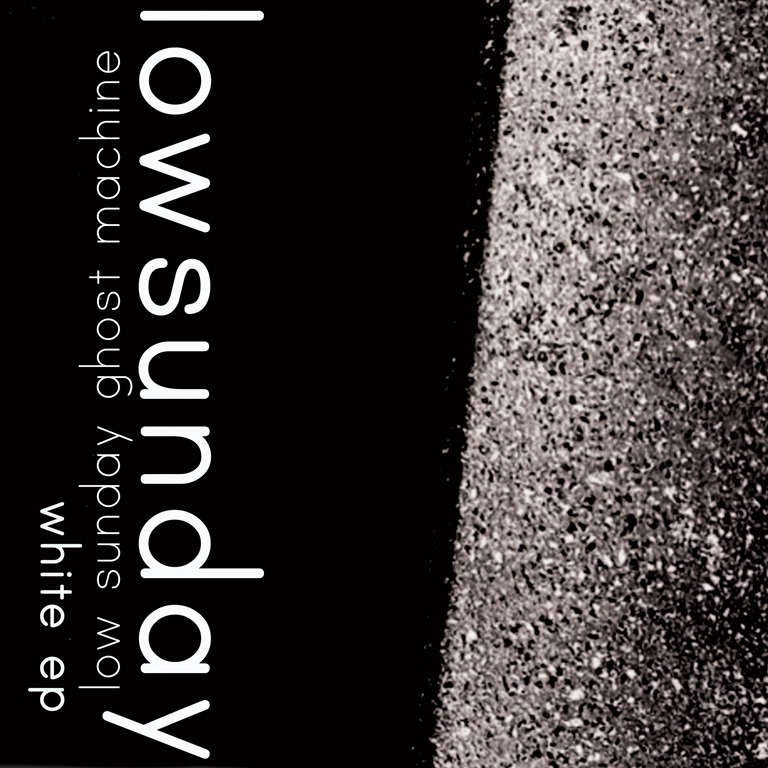
Woah, wait. 1999 is more than 25 years ago? Logically, I can grasp this. But the fact that lowsunday have existed for some thirty years and have been dormant since 1999 meaning this is their first material in over twenty-five years is still difficult to comprehend. It does very much seem to be a more common occurrence in recent years that bands who existed comparatively briefly in the 80s or 90s are reuniting and returning with not only new material, but strong new material. It may be a rather different league, but the last thing I expected last year was a new album by the Jesus Lizard, and that my first gig of 2025 would involve David Yow flopping off the stage and directly onto my face in the opening thirty seconds of the set. Lowsunday formed in 1994: the year Kurt Cobain died, the year I started university, the year of my first job as a reviewer. It feels like another lifetime. It probably does for them, too.

It may be pitched as a blurring post-punk, shoegaze, dreampop, and darkwave, and also as being for fan of The Chameleons, ACTORS, The Cure, Modern English, Clan of Xymox, Then Comes Silence, TRAITRS, but that thumping bass groove and pumping mechanoid drum beat on the EP’s opener, ‘Nevver’ is as trad goth as it comes. But the squalling noise that envelops the vocals – swathed in echo and low in the mix and taking direct cues from The Cure circa Faith and Pornography – is something else, a melding of My Bloody Valentine and The Jesus and Mary Chain with a dose of early New Order, Danse Society, and The Chameleons swirling around in there. And out of this swampy post-punk soup cocktail emerges a song of quality which really recreates that early eighties dark groove.

‘Call Silence’ goes straight for the sound of The Cure circa ’83, the singles on Japanese Whispers. And that’s cool: if you’re going to lift from early 80s gothy pop, you could certainly do far worse than ‘Let’s Go to Bed’ and early New Order as an inspiration – the bassline is pure Peter Hook. The production – and the strolling high-fretted bass work – really hits the spot, although it should be perhaps noted that they really do sound like a band born in 1982 rather than 1994. I guess they were retro before their time.

Paired with chiming guitars, it’s the monster snare smash that really leads – and grabs the attention on ‘Soft Capture’, a song that unashamedly draws on Ride and My Bloody Valentine, and pairs that wash of sound and monotone vocals with a drum sound straight from 1984. The fall from favour of the dominant snare feels like a loss, but there’s no time for lamentations as they pile in with another claustrophobic read goth groover in the shape of ‘You Lost Yourself’. Here., I can’t help but feel the vibes of late 90s goth acts like Suspiria and the scene around that time. It’s well-executed, with fractal guitars tripping over pumping drum machines and throbbing bass.

Closing with single cut ‘Love language’ sees the band strive for low-key anthemic with dreamiest and most overtly shoegaze song of the set. With the vocals drowning in a sea of reverb amidst a swirl of guitars, its detachment is its emotional power, perversely enough. And then, unexpectedly, it stops.

Everything about the White EP is simply magnificent – the way the songs are composed and played, the production, the overall feel. And while retro is all the rage – and has been for a while now, since postmodernism has eaten itself and the entire world has collapsed into endless recycling and nostalgia for ersatz reimaginings of golden bygone times. But sometimes a release will appear, seemingly from nowhere, that radiates a rare authenticity, and reaches the part others don’t. Lowsunday’s White EP is one of those.

AA
756671

8th August 2025

Christopher Nosnibor

The seventh single released by the Papillon de Nuit project / collective / ensemble centred around Stephen Kennedy is perhaps the most ambitious yet. It’s clear that Kennedy, who has for a number of years, operated as a live music promoter under the guise of The Velvet Sheep, is an irrepressible creative, a restless spirit never content to do or be any one thing. In Papillon de Nuit, he’s songwriter, arranger, vocalist and multi-instrumentalist, bringing to this track vocals, found-sounds, additional percussion, additional piano. And here, in just three and a half minutes, he and his collaborators have produced a song which is many things at once. They’ve also got Steve Whitfield, known for his work with The Cure and The Mission (admittedly, some of my least favourite works by The Mission, but that’s more a matter of material than production) in as producer again.

Being drawn to certain names because of songs is, I suppose, only natural: favourite songs create images and associations which in some way we use to orientate ourselves within the world, internally. And there’s no doubt that Charlotte, like Alice, is a name with special resonance to those with musical tastes which lean towards the gothier domains. That Robert Smith’s inspiration for ‘Charlotte Sometimes’ was inspired by Penelope Farmer’s haunting 1969 novel of the same title was reason enough for me to track down and read a copy of the book, and in context, the doubling / overlapping of the vocals can be seen to represent the parallel / interchangeable lives of the lead character.

‘Frozen Charlotte’ is also a work of a historical persuasion, described as ‘a dark Victorian morality tale about the folly of vanity.’ And it is, indeed, dark. It arrives with a sharp squeal of feedback and the crunch of feet on gravel, before a low but springy – classic goth – and ultimately stealthy bass strolls in and completely shapes the song’s framework. Rolling drums – a minimal, Mo Tucker style, which adds to the stark, brooding atmosphere. The addition of cello and piano builds things further ahead of the arrival of the vocals. It is all about the intro and the build here, but Kennedy gives a magnificent performance. It’s not the overdone booming baritone goth cliché, but a rich, soulful delivery which imbues the lyrics with meaning, in what I can perhaps best describe as a ‘literary’ sense. What I mean by this that while studying English literature at university, some lecturers had the ability to get you completely hooked in a writer because the way they delivered the quotations had impact: they felt the words, and could convey them in a way that opened your eyes to the fact the word on the page contained so much more depth when orated with passion.

The chorus here is understated, the emphasis very much on the dark atmosphere, although the vocal melody does still provide a clear and vital hook, and the ultimate result is alchemical.

AA

AA

Frozen Charlotte artwork

Negative Gain Productions – 25th July 2025

Christopher Nosnibor

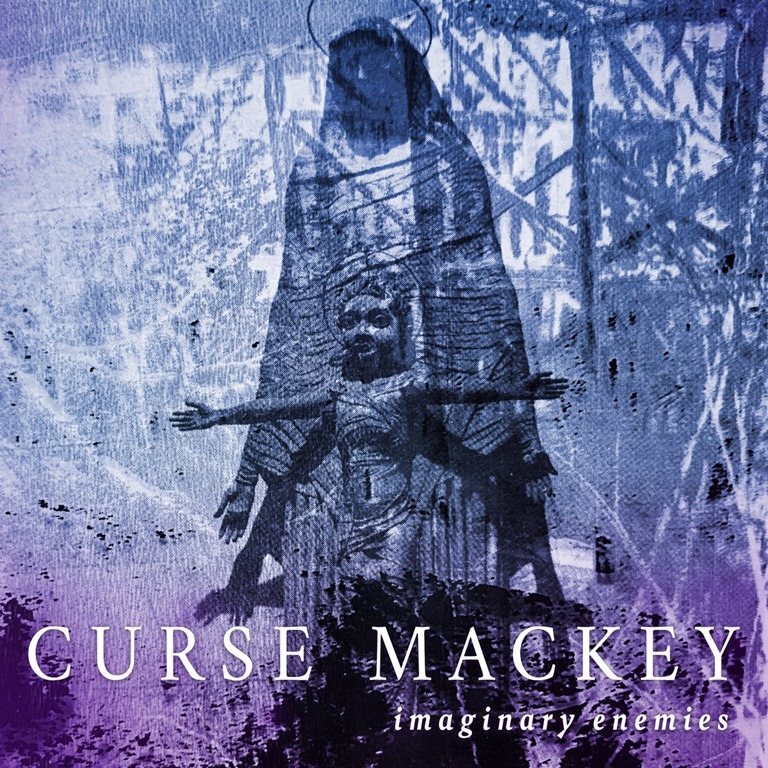
It’s been three years since Curse Mackey delivered Immoral Emporium. Three years may not be a long time, but a lot can happen in three years – and it has. And very little of it has been good. There has always something about industrial music – something I’ll unpick in a moment – which has displayed a sense of the apocalyptic, to the extent that at times it seems to almost bask in it. And that is not a criticism. The end is nigh, and while it’s always a question of ‘when’ rather than ‘if’, we seem to be ever closer to the brink of total annihilation. These are dark times, which call for dark music.

Industrial has come to mean many things, in terms of musical forms over the years, while Throbbing Gristle were the progenitors of all things industrial, technological advances saw acts more interested in pursuing more structured works with tape loops and drum machines, eventually giving us the more electro-orientated strain of industrial that became synonymous with Wax Trax!, and, subsequently, industrial metal, not least of all due to Ministry’s evolution from one to the other. Curse Mackey’s work very much belongs to that late 89s / early 90s Wax Trax! domain.

Concluding the trilogy which began with 2019’s Instant Exorcism, Imaginary Enemies promises to be ‘his most intense and intimate album to date… A bleak, beautiful meditation on paranoia, grief, and the ghosts we conjure from within’.

And so it is that the listener is lead into the album by route of looped samples, layering across one another, before a pounding beat crashes in, and Mackey, accompanied by a low, thumping synth bass groove, sets out his stall with ‘pressure points’, ‘psychosis’, and ‘decay’ delivered with a processed growl. There are many layers to the arrangements, creating simultaneously an expansive and claustrophobic feel. Single cut ‘Vertigo Ego’ swiftly plunges into darker, denser territories: brooding and ominous, Mackey’s vocals are a barely audible whisper. It sounds tormented, stressed, anguished.

AA

If ‘Discoccult’ and ‘Time Comes Clean’ (which calls to mind early (electropop) Ministry and Trudge era Controlled Bleeding) find us in fairly familiar industrial territory, something about the production imbues the material with a suffocating intensity. More often than not, there’s a brightness, a crispness, something of a ‘digital’ cleanness about the genre. In contrast, the sound here is murkier, more ‘analogue’ in feel, alluding to eighties synth music – something I’ve never been quite able to pinpoint as a listener and critic rather than a producer.

One can reasonably assume that album centrepoint ‘Blood Like Love’ makes a reference to Killing Joke’s ‘Love Like Blood’, even if only in title, but sees Curse lean towards gothier territories, stark, brooding, yet ultimately layered, graceful, with synth melodies and dramatic piano weaving around the samples and mechanised beats.

AA

The second half of the album locks into an atmosphere that’s less aggressive and attacking, and more brooding, moody, and introspective, and as such, marks a clear departure from its predecessors. What’s more, it works well, with the more uptempo title track marking a high point in the album, sitting comfortably alongside some of the more contemporary goth classics with its nagging, reverb-heavy guitar line and pulsating bass all held together by that classic, relentless, drum machine sound.

For my money, it’s Curse Mackey’s best release to date.

AA

a1263141378_10

Saccharine Underground – 1st July 2025

Christopher Nosnibor

This one hell of a hybrid. Just when you think post-punk has been explored to the point at which it has been hollowed out, exhausted, and has only well-worn and instantly recognisable tropes to offer, along come Washington DC’s Zabus, purveyors of avant-garde post-punk with an EP which is something of a ‘best of’ with tracks from their two recent albums, Automatic Writhing (September 2024) and Floodplain Canticles (January 2025), plus a new track which paves the way for their next offering Whores of Holyrood (due in August).

With its immense, reverb-laden sound and expansive, drifting desert-like soundscape ‘Grafhysi Fyrir Alla’ makes four and a quarter minutes feel like a hypnotic span of double that duration. The shuffling bass and big, booming bass are pure dub. The guitar chimes and floats into the ether as everything swashes around in a huge echoic pool.

Of ‘Grafhysi Fyrir Alla’, lifted from last year’s Automatic Writhing, project founder and focal member Jeremy Moore says it’s about “the societal imposition of unobtainable standards of beauty, and our obsession with physical perfection at the expense of true happiness”. This is certainly not a case of style over substance, but a coming together of musical inventiveness with a level of intellect which is rare. “Psychopathologies like body dysmorphic disorder, at the extreme, can lead to a path of ruin, if most of your life is spent chasing a ghost—what you believe the world wants you to be. Death doesn’t discriminate. The end is always the same.”

This is some pretty heavy – and dark – philosophy on offer here, and it’s welcome: as much as there is much to be said for the benefits of the escapism music can offer, there’s equal solace to be found in art which articulates one’s own world view. And so it that that Zabus portray contemporary dystopia from a range of camera angles.

‘Orphalese’ is more uptempo and is decidedly cinematic with its broad-sweeping layers of synths driven by propulsive, rolling drums. There’s no verse / chorus structure, but instead a hypnotic expanse of sound, the aural equivalent of standing on a summit and looking out at a three-sixty horizon through a heat haze. It’s immersive, utterly absorbing, and transportative.

The first of the tracks lifted from Floodplain Canticles is the six-minute ‘Tearful Symmetries’, which is low and slow, Jeremy Moore’s reverb-drenched baritone croon approximating the late, great, Mark Lanegan against a dubby backdrop punctuated the clangs and scrapes of guitar drones and sculpted feedback. ‘This is the end….’ He reflects, but not with sadness or panic, but a sense of inevitability.

‘Golden-rot’ goes all out for the theatrically gothic experience: it’s as big on drama as it is on sound, as an insistent mechanised drum beat pounds away, cutting through a smog of murky guitar and thick, booming bass, and if I wasn’t already perspiring hard from the humidity and thirty-degree heat, this would make me sweat, with its tension and crackling energy.

And so we come to the title track, the first taste of Whores of Holyrood. It’s different again, although the cavernous reverb is a constant. This cut is a brooding piece that borders on country, once more evoking the spirit of Lanegan. It’s spacious, but its intensity brings an almost suffocating weight.

Shadow Genesis provides a perfect introduction to Zabus, and at the same time whets the appetite for what’s to come. And let me tell you, it’s something to get excited about.

Zabus - Shadow Genesis cover art

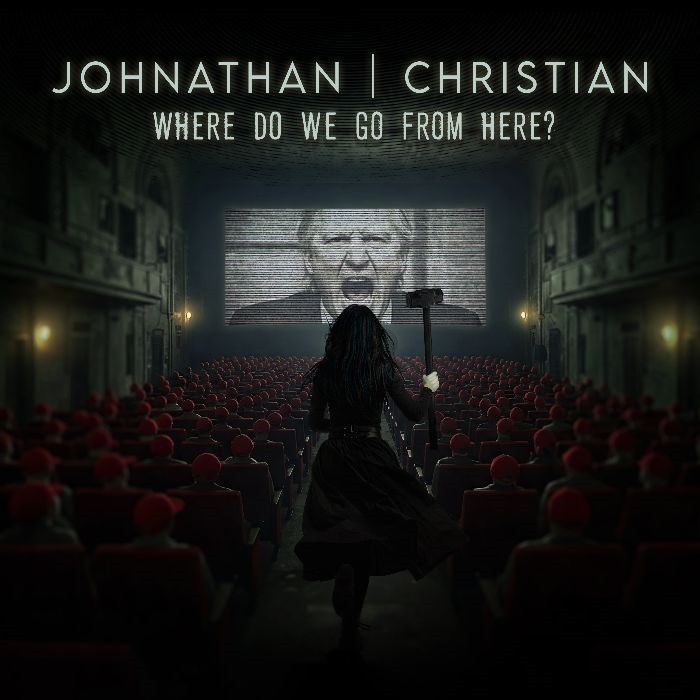
Darkwave duo, Johnathan|Christian return with ‘Where Do We Go From Here’—a brooding, cinematic post-election anthem that captures the emotional wreckage of a divided nation. The track opens in hushed reflection (90 BPM) and erupts into a 125 BPM pulse of unrest and reluctant clarity. No slogans. Just aftermath.

The video integrates footage from Maya Deren’s At Land—a woman lies on a beach, disoriented yet unbroken, before rising with quiet resolve. What begins in poetic isolation transforms into documentary collapse: flickering headlines, divided families, shuttered classrooms, and hands reaching—but not always finding. It opens with: “We Still Remain.” It ends with: “WE STILL RISE.”

“We didn’t want spectacle—we wanted aftermath,” says the band. “No fire. No fury. Just a reckoning in the ruins.”

Included in the release are: a 125 BPM DJ Edit for live mixing and DJ sets, and remixes by industrial supergroup, The Joy Thieves and Stoneburner’s Steven Archer. Also included is the track, ‘Fall from Grace’ – a short, ghostly instrumental layered with static and decay; a requiem for what was, and a reflection on what remains.

For fans of Peter Murphy, Human Drama, Laibach, New Order, and politically-driven dance stompers.

AA

8bbee6f4-172e-2102-2c5c-e9987acdebda

5th March 2025

Christopher Nosnibor

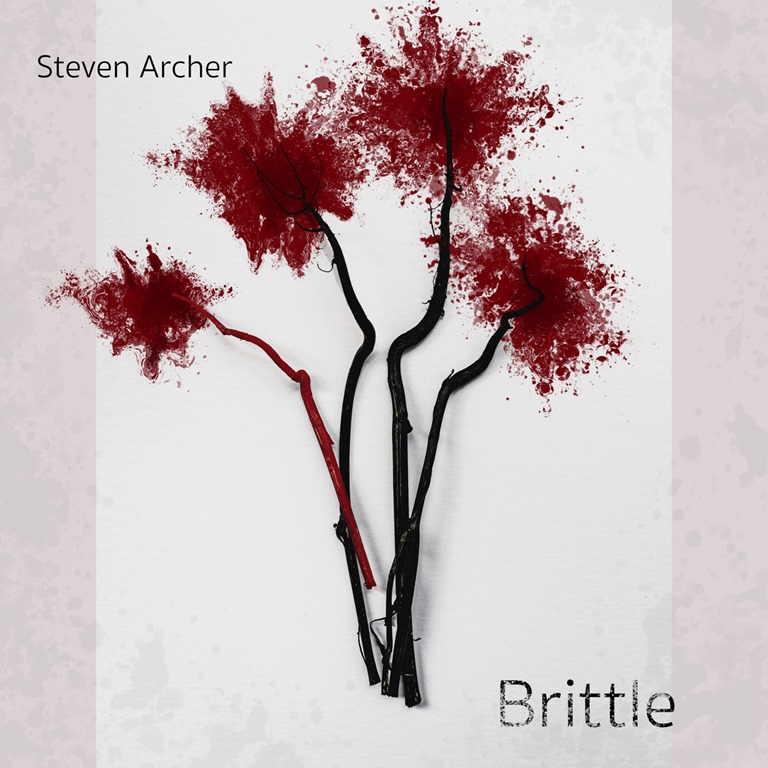
Steven Archer has been keeping busy: it’s barely three months since he landed the latest Stoneburner release, with its glorious Foetus-inspired cover art, not to mention a brace of EPs late last year, and a and lo, we have an album of steaming-hot brand new material. I often marvel at artists like this, who are so prolific. Do they even sleep? I do get that creativity is something that, more often than not, simply hits and you have to run with it, but…

Brittle is a twisted mix of all sorts. First and foremost, it’s an electronic album, and one which leans toward darker territories – not in an aggressive or overtly industrial way, but more given to brooding, introspection, haunting reflection and melancholia.

‘Our Past is a Wasteland’ is a track which transitions and evolves as it progresses: initially, it’s kinda smooth, a bit epic, sedate in in its musical form, with soft synths and mellow beats presenting a low-temp dance vibe, but along the way it begins to develop a darker, harder edge, gets a bit more Depeche Mode. The gentle drift of ‘Tenuous Place’ steps into expansive mode toward the end, exuding anguish and pangs of pain. ‘Only the Young Die Good’ is decidedly heavier: a droning organ gives way to a twitchy drum ‘n’ bass beat and serrated synths that saw deep into the psyche.

With its piano-led instrumentation and popping drums, ‘The Human Void’ is bleak and expansive, dark electropop rubbing and against drifting ambience with sinister industrial undercurrents as the backdrop to a vocal that switches from almost spoken word to hypnotic repetition. Elsewhere, ‘Tiger Longitues’ shares borders with the kind of smoky trip-hop of Portishead, only heavier, bassier, beatier.

The vocals on Brittle are heavily processed, and there’s a strong technogoth feel to the album as a whole. There’s something of a juxtaposition here, in that lyrically, emotional turmoil and troubling psychological situations are the main focus. Yet, in contrast to the intense and personal nexus of the words, the processed feel, which diminishes the human aspect of the vocal delivery, renders a clear separation. Perhaps this is a part of a necessary distancing: it’s certainly easier to manage challenging personal matters by creating layers of separation, and a deliberate detachment. ‘A Love Song for Monsters’ is exemplary: it’s a straight-up stomping banger, with robotix vocals and a slick production, but there’s so much more beneath the surface.

On the surface, Brittle sounds anything but: with sturdy beats and throbbing basslines, it’s a set which concentrates on delivering dark bangers. But however much we lay ourselves bare, we tend to need for there to be some kind of buffer, some space in between, in the interests of self-preservation. Most of us are more fragile, more delicate, more brittle, than we are comfortable to admit, even through the most forthright of art.

Brittle is uncomfortable, pulling in different directions, the undercurrent dragging against the main current on the surface. But the tension at its core is what renders it so compelling. Take in the tension, let it course through you.

AA

a4203216124_10

14th January 2025

Christopher Nosnibor

They only released their debut single on 1st December last year, and here we are, not quite halfway through January and we’re being presented with single number three.

While Argonaut’s track-a-month schedule for their ‘open-ended’ album Songs from the Black Hat, matching only that of The Wedding Present in 1992, seemed like the pinnacle of prolific – not to mention the ultimate advertisement for the DIY approach – three singles in six weeks must surely have the makings of a record (pun partly intended). As of this moment, though, we don’t know what their longer-term aim is, or even if there is one, beyond releasing new songs as soon as they’re ready, and if that is their MO, it’s admirable. Without the need to work to the schedules – or budgets – or a label, their only limitation is their own time and energy.

I had initially noted, following ‘Scarlet’, and ‘Amber’, a theme of colours linking their songs, but perhaps it’s female names. Or perhaps it’s pure coincidence, and they have simply plucked one-word titles to denote their songs.

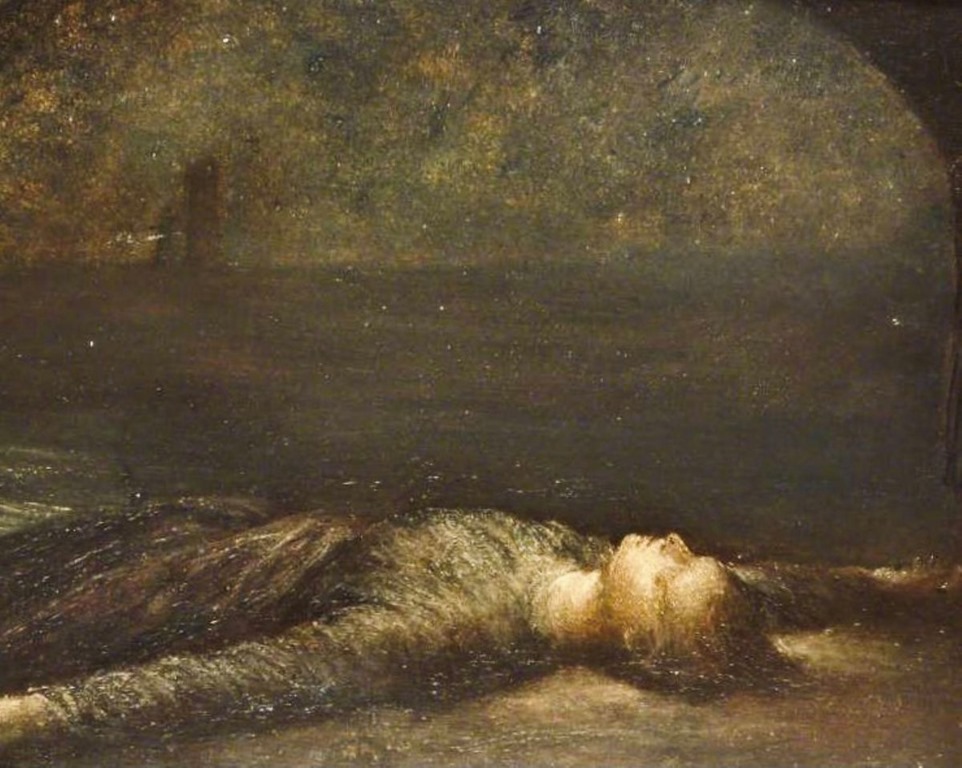
‘Jude’ – which comes with appropriately dramatic artwork, somewhere between swooning gothic drama and pre-Raphaelitism, the source of which I haven’t been able to identify – once again features the voice of poet Monica Wolfe, here whispering, and, as credited, ‘breathing’. These contributions are significant in rendering an atmospheric composition, particularly in the introduction, before the arrival of the piano – of which there are, in fact, two, adding layers to the brooding theatricality of the song, and Stephen Kennedy’s voice.

The feel – particularly in his delivery, with some quavering intonation, and enveloped in a spacious reverb – is very much gothic folk, as he casts introspection, while chasing ghosts.

‘Will the world miss me?’ I whisper

And sigh, as my life drifts away.’

It’s moving, poetic, and powerful, presenting a straight-ahead contemplation on mortality – not in some cheesy ‘romantic’ gothic style, and not in a crass emo way, but a rare sincerity.

Somewhat ironically, in our teens and twenties, we tend to agitate about death, while also treating it with a flippancy, because it’s what happens to old people, but as we grow older, we go out of our way to avoid thinking or talking about it, because as we begin to lose parents, uncles, aunts, and even – increasingly – peers, shit gets more real than we can handle. Invariably, we bury our heads in the sand, shrug off life insurance and toss making wills into the distant future along with pensions, laughing darkly how we never expect to retire anyway.

In the final minute, the song swerves into more electropop territory as the rippling piano combines with a crisp, insistent drum beat. It’s a magical, ethereal moment, which is but fleeting, like dappling sunlight through the branches of trees in a woodland on a breezy day. In many ways, this captures the essence of the song and its sentiment, in its fleeting ephemerality, a metaphor for life itself.

It ends suddenly, with only inaudible whispers fading to the close, and again the metaphor stands. This is perhaps their strongest and deepest release to date, and best absorbed by candlelight, with a large measure of something intoxicating.

AA

a0763472052_10

Venamoris, the duo of Paula and Dave Lombardo, has signed with Ipecac Recordings, prepping a 2025 sophomore release, with a glimpse of what’s to come with today’s release of the entrancing track, ‘In The Shadows’.

“’In The Shadows’ is a song that arose from real-life feelings,” Paula Lombardo shares. “The pulsating drum wholly evocative of marching forward even when internal unrest is still close-at-hand. It is a call for self-acceptance with the heaviness of a life well lived.”

“Venamoris is such an intimate project for the two of us,” adds Dave Lombardo. “To have our sophomore album in Ipecac’s exceptionally skilled hands is a dream realised. We are ecstatic to be a part of this audacious label.”

Venamoris captures the essence of a sound that is alluring and deeply emotional, blending sultry vocals with mesmerising instrumentation to create an enveloping experience that is as hypnotic as it is emotionally charged. Like a whispered secret, there’s something seductive yet provocative about the noir-tinged songs they create. Brooklyn Vegan, describing an earlier single, adeptly said Venamoris has “Portishead meets David Lynch vibes."

Watch the video here:

AA

PhotoNov292022105426PM-99028a079e04513c

8th June 2024

Christopher Nosnibor

This release is as intriguing – and strange – as its enigmatic and beautifully-crafted handmade packaging.

Music for Strangers continues the reissue programme for releases from underground experimental duo Photographed By Lightning, and arrives on the heels of NO, Not Now, never which represented their first new material in twenty years. For this one, we dive back twenty years, to 2004, the most prolific year of their career, until, suddenly, it halted.

While Blood Music (also 2004) consisted of a large number of comparatively brief pieces, Music for Strangers is a very different proposition, featuring as it does four longform tracks, with a couple around the ten-minute mark and a couple around the twenty. Each simply bears a numerical title.

The original release – produced in a CD edition of 100 – was disseminated not for sale on line or anywhere, but by covert means, with copies being left at random in public places. This was quite a thing in avant-garde circles for a time in the years after the turn of the millennium, particularly when MySpace was at its peak, and something that I myself participated in, leaving various pamphlets in pubs and the like, and slipping A5 leaflets various books in WHS and Waterstones. Why? Because.

Dave Mitchel and Syd Howells – aka Photographed by Lightning – are very much part of that avant-garde milieu. Something has been lost over time, and now there’s a certain nostalgia for it, meaning that the arrival of this reissue carries a certain resonance beyond the thing in itself.

There are bits of vocals interspersed here and there – abstract enunciations and discombobulous jabberings – and they emerge for fleeting moments amidst sprawling expanses of strange, otherworldly instrumental passages.

‘One’ (denoted as ‘I’ on the CD version) combines swampy abstraction and space-rock bleeepery to disorientating and atmospheric effect, which descends into dense murk in the final minutes before silence descends for a full minute. The silence is even more disconcerting than the sound which preceded it. The truth is, silence unsettles us, scares us even. It’s the reason some people can’t stand to be alone, and the reason many simply can’t shut the fuck up for a moment: they can’t handle silence, and find silence more terrifying than darkness. I suppose that while both are forms of sensory deprivation, in the modern world, while darkness still feels like a natural phenomenon – if your blinds or curtains blank out light pollution and you switch off your electricals – silence is almost beyond comprehension. There is always traffic, a distant siren, a phone vibration, the wind, rain, the babble of one’s own internal monologue. When was the last time you can honestly say you experienced true silence? That isn’t to say that with the hum of the hard-drive and my laboured hayfevery breathing, in connecting with this album I did, but the abrupt end of sound emanating from the speakers, in a time when a minute feels like an eternity, really struck me, left me feeling… what?

But at thirteen minutes, this is merely a prelude to the second track, a plunge into the subterranean swamps which drags the listener deeper into suffocating darkness for an immersive but uncomfortable nineteen minutes. There’s dadaist quirky playfulness in evidence here, the sonic equivalent of shooting water pistols and throwing overripe windfall berries at random passers-by, which redresses the balance against the backdrop of tetchy, grumbling noise created first and foremost to antagonise – which is course it does. It tests the patience and challenges the senses, with bubbles and ripples echoing as if from within a cave – for extended periods, as the sounds gradually mutate. For a spell, it sounds like water-filled lungs laboriously respiring, which makes for more difficult listening than it may appear on paper, drifting into something resembling the relentless rock of nodding donkeys at an oil drill site, and creeping into ‘Three’, it’s like sneaking down into the sewers to escape one threat only to be confronted with another.

Music for Strangers is certainly their darkest, most suffocating work, stretching dark throbs and abstract sound to the absolute limits and nudging beyond.

The bonus disc which is part of the physical release, containing Music from Nowhere, offers further insight into their prolific and prodigious experimentalism at the time, providing jut short of an hours’ worth of additional material. That it’s essentially more of the same only heightens the effect.

Given the varied and experimental nature of their output, there isn’t really a definitive release which encapsulates the work of Photographed By Lightning, and Music for Strangers isn’t really an entry-level release – but this does very much encapsulate their experimental spirit, their singularity – their awkwardness – and knack for creating difficult soundscapes.

AA

a0888861779_10