Posts Tagged ‘Zabus’

Saccharine Underground – 9th June 2026

Christopher Nosnibor

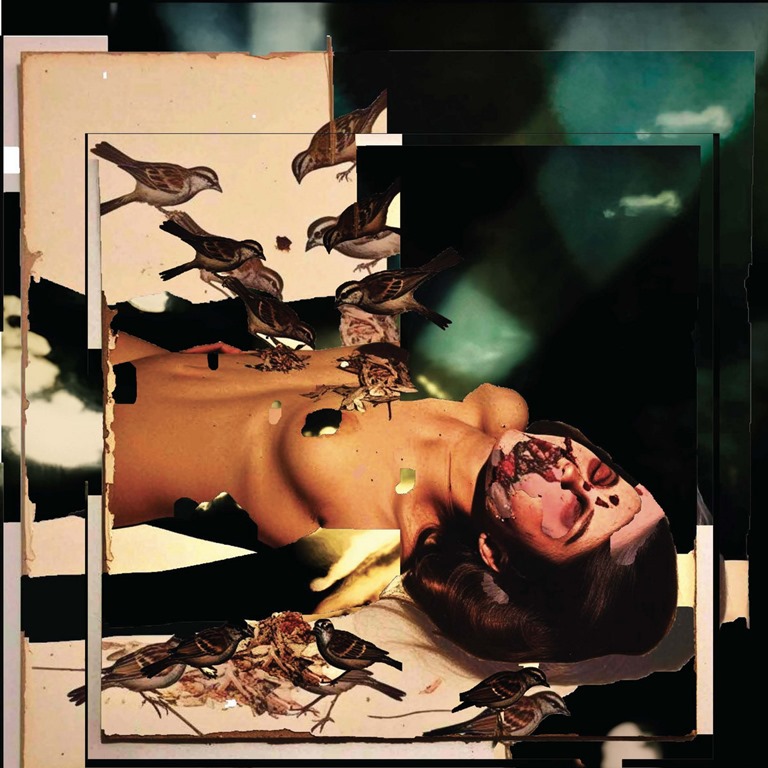
I like my shit weird and experimental, and so it is that AD Ozium’s In the Style of Dead Sparrows is both weird and experimental, and needless to say I like it – but with the caveat that listening to it is an experience akin to being dragged through an near-endless nightmare, and every time you think you’ve woken up, you discover that you’re simply in another level of this multi-faceted anxiety dream.

The pitch is that ‘In the Style of Dead Sparrows is the latest transmission from the outer edge of instrumental music – a fractured, hallucinatory convergence of freak folk textures and no wave dissonance that dissolves the boundary between sound and psyche. Created by Washington D.C.-based solo musician Jeremy Moore (Zabus, Zero Swann, Bell Barrow) under the name AD Ozium, the album operates at the intersection of freak folk, no wave, avant-garde drone and experimental instrumental music.’

But this barely scratches the lumpy, irregular, alien, fog-covered surface of this album. The first composition, ‘Lifespring’ is exemplary in its exploratory nature. It begins subtly, some desert rock twang in a drift of breeze and warping ambience. With tweets and yawns, it feels as if the tape is stretched in places, and there’s a crackle and hiss reminiscent of that old four-track tape noise and plunging synth rumbles. Discord builds as the sound swells, unsettlingly. It continues in this way for the first six minutes or so, until the nerve-jangling tension and suspense breaks into a brief but thunderous rupture.

The ten-minute ‘Tender Loving Seed’ is swampy, straggly, churny, a mangled mess of broken-sounding country guitar and fractured electronics, not so much a whistle of feedback as the sound of circuitry melting amidst a swell of distortion. It sounds like fucked-up flamenco, it sounds like dialling through radio stations and managing to tune into none of them, it sounds like a cerebral spasm. It’s a slow unwinding of discordant chaos.

I’ll take a stab that ‘Whore of Sound’ is perhaps a reference to ‘Whorle of Sound’ by Throbbing Gristle, which appeared on their First Annual Report, and was subsequently reprised in a radically altered but altogether more brutal form as Walls of Sound on DOA: The Third and Final Report of Throbbing Gristle. Certainly, the sonic parallels are apparent: this is seven minutes of gnarly noise which swells to head-shredding intensity with hints of Lou Reed’s Metal Machine Music.

‘Faith is a Hole’ brings new layers of discomfort, the overloading low frequencies creating mic distortion and the most hellish vibrations, making for a long seven and a quarter minutes, before ‘Portents of the Terminal Mind’ ripples and reverberates a whirlpool of the wrongest confusion.

Confusion, contusion… ‘The Nazarene Distortion’ is gentle at first, but again, discord and chaos and blasting lasers reign… and all the while, there is a background rumble, a tape his that never stops. The background noise at times reminds me of Rudimentary Peni’s Pope Adrian 37th Psychristiatric – not because its similar in musical terms, but that endless, nagging background sound gnaws away at your ears and your brain. It’s not the most abrasive or attacking nine minutes of noise, but it’s a heavy slog of the most difficult atonality. It’s stomach-lurchingly messy. At times, you just want it all to stop.

This is challenging. It’s woozy, head-spinning. It simply sounds wrong. It’s not some Beefheart-style cacophony. It’s darker, the lo-fi leanings and atonality only amplifying the tension. Drones and buzzes, hums and fleeting phases are interspersed with annihilative blasts of noise, and the guitar notes simply echo out into the void.

In the Style of Dead Sparrows isn’t simply weird or experimental – it’s harsh and abrasive, and it will assail your intestines and hollow you out.

AA
a0516470554_10

24th February 2026

Christopher Nosnibor

Jeremy Moore – aka Zabus – continues his phenomenal creative run with the release of Avoidance Moon, another wildly inventive melding of myriad forms. And with Avoidance Moon, Moore pushes the established elements of the Zabus sound still further, cranking up the distortion and reverb to insane levels. It’s gothic, but it goes beyond. The theatricality is off the scale, but the feel is also very, very old school, and while it evokes the spirit of Dance Society and early X-Mal Deutschland and the like, it also calls to mind early Christian Death, and The Damned, with a bit of The Jesus and Mary Chain tossed into the blender for extra feedback spice.

The title track, which opens the album, is sparse and lo-fi, as quavering analogue synths hover their way through a crashing tube-crunched guitar, the gruff vocal and extraneous noise which runs in the background all bouncing around in a cavernous reverb with additional layers of murk. But something about it carries a certain, indefinable emotional resonance.

‘Theoretical Jesus’ brings reverb-soaked shoegaze and thunderous percussion – and splintering discord in the vein of A Place to Bury Strangers. Elsewhere, the heavy vibe with all the reverb is reminiscent of Modern Technology, perhaps because the baritone vocals share a common ground, too.

Avoidance Moon presents an uncompromising sonic swamp: on ‘Baited Idyll’, the thick, murky sound is cut through by the sharpest cymbal splashes, harsh treble clashes which strike like blades. ‘Punishment to Extinction’ melts together the warping wall of noise of My Bloody Valentine with the drama of Nick Cave: amidst the chaos, Moore casts his dark, theatrical incantations.

Avoidance Moon is a riot of late 70s / early 80s post punk, dark, attacking, dingy, lo-fi, analogue to the end. It’s likely too primitive for many ears, but it’s precisely the primitive nature of it all that appeals. So many acts pretend to draw inspiration from post-punk, but Zabus lives it. Avoidance Moon, then, is dense, suffocating, intense.

AA

cover

12th August 2025

Christopher Nosnibor

Zabus have been on fire lately, as their recent EP, Shadow Genesis, released in June. It’s not only the prolific output which is noteworthy – some acts spunk out new material every other week, but the quality simply isn’t there – but we’re looking at a creative purple patch of innovation and ideas flowing in full spate. Whores of Holyrood is their fifth full-length album in less than two years, and while Zabus is ordinarily a collective centred around project founder Jeremy Moore, Whores of Holyrood is the first ostensibly solo release by Moore under the moniker, and it’s also pitched as ‘one of the most overtly political statements from Zabus to date.’

This matters. Anyone with an outlet, or a platform, right now, has, a duty to state their position. Silence is complicity. We know this from history. Individually, there is next to nothing we can do to stop Trump’s fascistic march, or halt the genocide in Gaza, or stop the wat in Sudan. But fucking hell, we are witnessing hell on earth right now. To take a line from William Burroughs’ Exterminator, ‘There are no innocent bystanders … what are they doing there in the first place?’ I don’t necessarily entirely agree with the stance, but it’s worth unpacking a bit, particularly in the context of 2025, when people are more likely to film the most horrific events on their phones and post them on social media than to intervene. I know, people are scared and all the rest, but… something is deeply wrong.

The title, Whores of Holyrood, immediately made me think of the Scottish parliament, but it would appear that there is no connection or implication intended. Instead, the album ‘explores the positive feedback loop between fascist authoritarian rule and societal inaction, apathy and resignation. Holyrood is a metaphor for the established classist hierarchy which derives its strength and influence from our subjugation.’

As an aside, ‘rood’ is a middle English term with its origins in Saxon for the cross, and a rood screen was a feature of medieval churches, a carved wooden partition depicting the crucifixion. Whores of Holyrood may not have any direct or specific connection to these historical roots, but they still seem somewhat relevant, albeit tangentially.

It’s ‘Shadow Genesis’, the lead track from the recent EP that launches the album with its reverb-heavy blues guitar and gothic stylings, and it’s dark, brooding, but it’s nothing to the snarling lo-fo post-punk goth epic that is ‘Burn to Your Own Destruction’: six and a half minutes of echo-soaked guitar swirling beneath bombastic baritone vocals, while the tile track is commanding, archly gothic, but with murky black metal production values. The same is true of ‘A-YA Bullet V’, which brings the driving funk groove of Bauhaus at their best, while also pushing the experimentalism to the fore.

‘Cremation Psalm’ is a murky swagger, equal parts Nick Cave and The Volcanoes, and every track on this album is pure gold. The muffled, echo-heavy production is not a detriment, but an asset, accentuating the old-school vibe which is s integral to the experience.

‘Sod Martyr’ is dark, dark, dark, and sparse, and something about it calls to mind The Honolulu Mountain Daffodils, while ‘Strangers of Non-Being’ brings together goth and heavy psychedelia with the addition of low, slow drone

If the Shadow Genesis EP showcased a keen experimentalism, and a broad range of stylistic touchstones, then Whores of Holyrood takes it all to the next level. Zabus keep pushing forward, outward, onward. Right now, it seems there is no stopping them.

AA

a1395699222_10

Saccharine Underground – 1st July 2025

Christopher Nosnibor

This one hell of a hybrid. Just when you think post-punk has been explored to the point at which it has been hollowed out, exhausted, and has only well-worn and instantly recognisable tropes to offer, along come Washington DC’s Zabus, purveyors of avant-garde post-punk with an EP which is something of a ‘best of’ with tracks from their two recent albums, Automatic Writhing (September 2024) and Floodplain Canticles (January 2025), plus a new track which paves the way for their next offering Whores of Holyrood (due in August).

With its immense, reverb-laden sound and expansive, drifting desert-like soundscape ‘Grafhysi Fyrir Alla’ makes four and a quarter minutes feel like a hypnotic span of double that duration. The shuffling bass and big, booming bass are pure dub. The guitar chimes and floats into the ether as everything swashes around in a huge echoic pool.

Of ‘Grafhysi Fyrir Alla’, lifted from last year’s Automatic Writhing, project founder and focal member Jeremy Moore says it’s about “the societal imposition of unobtainable standards of beauty, and our obsession with physical perfection at the expense of true happiness”. This is certainly not a case of style over substance, but a coming together of musical inventiveness with a level of intellect which is rare. “Psychopathologies like body dysmorphic disorder, at the extreme, can lead to a path of ruin, if most of your life is spent chasing a ghost—what you believe the world wants you to be. Death doesn’t discriminate. The end is always the same.”

This is some pretty heavy – and dark – philosophy on offer here, and it’s welcome: as much as there is much to be said for the benefits of the escapism music can offer, there’s equal solace to be found in art which articulates one’s own world view. And so it that that Zabus portray contemporary dystopia from a range of camera angles.

‘Orphalese’ is more uptempo and is decidedly cinematic with its broad-sweeping layers of synths driven by propulsive, rolling drums. There’s no verse / chorus structure, but instead a hypnotic expanse of sound, the aural equivalent of standing on a summit and looking out at a three-sixty horizon through a heat haze. It’s immersive, utterly absorbing, and transportative.

The first of the tracks lifted from Floodplain Canticles is the six-minute ‘Tearful Symmetries’, which is low and slow, Jeremy Moore’s reverb-drenched baritone croon approximating the late, great, Mark Lanegan against a dubby backdrop punctuated the clangs and scrapes of guitar drones and sculpted feedback. ‘This is the end….’ He reflects, but not with sadness or panic, but a sense of inevitability.

‘Golden-rot’ goes all out for the theatrically gothic experience: it’s as big on drama as it is on sound, as an insistent mechanised drum beat pounds away, cutting through a smog of murky guitar and thick, booming bass, and if I wasn’t already perspiring hard from the humidity and thirty-degree heat, this would make me sweat, with its tension and crackling energy.

And so we come to the title track, the first taste of Whores of Holyrood. It’s different again, although the cavernous reverb is a constant. This cut is a brooding piece that borders on country, once more evoking the spirit of Lanegan. It’s spacious, but its intensity brings an almost suffocating weight.

Shadow Genesis provides a perfect introduction to Zabus, and at the same time whets the appetite for what’s to come. And let me tell you, it’s something to get excited about.

Zabus - Shadow Genesis cover art