Posts Tagged ‘beats’

Cruel Nature Records – 12th September 2025

Christopher Nosnibor

Postmodernism, emerging primarily as a product of post-war America was defined by hybridity, the demolition of parameters and distinctions between different cultures, genres, and was, in many respects, tied to the accelerating pace of technological development, in particular the globalisation of communications and beyond. But postmodernism also not only recognised, but celebrated, the fact that originality has finite scope, and that anything ‘new’ will by necessity involve the reconfiguration of that which has gone before. Shakespeare had all the ground to break in terms of the advent of modern literature, and one might say the same of Elvis and The Beatles with the advent of rock ‘n’ roll and pop respectively. The reason the 80s were such a watershed was because technology revolutionised the potentials for music-making, and while this saw a huge refraction in terms of creative directions, from industrial to electropop, one could reasonably argue that the next leap in music after 1985 came with house and techno.

Post-millennium, it feels like there is no dominant culture, no defining movement, underground or overground: the mainstream is dominated by a handful of proficient but in many ways unremarkable pop acts, and notably, it’s largely solo artists rather than bands, and while there are bands who pack out stadiums, they tend to be of the heritage variety. At the other end of the spectrum, the underground is fragmented to the point of particles. There are some pros about this, in that there is most certainly something for everyone, but the major con is that unlike, say, in the mid- to late-noughties, when post-rock was all the rage, there’s no sense of zeitgeist or unity, and right now, that’s something we could really do with.

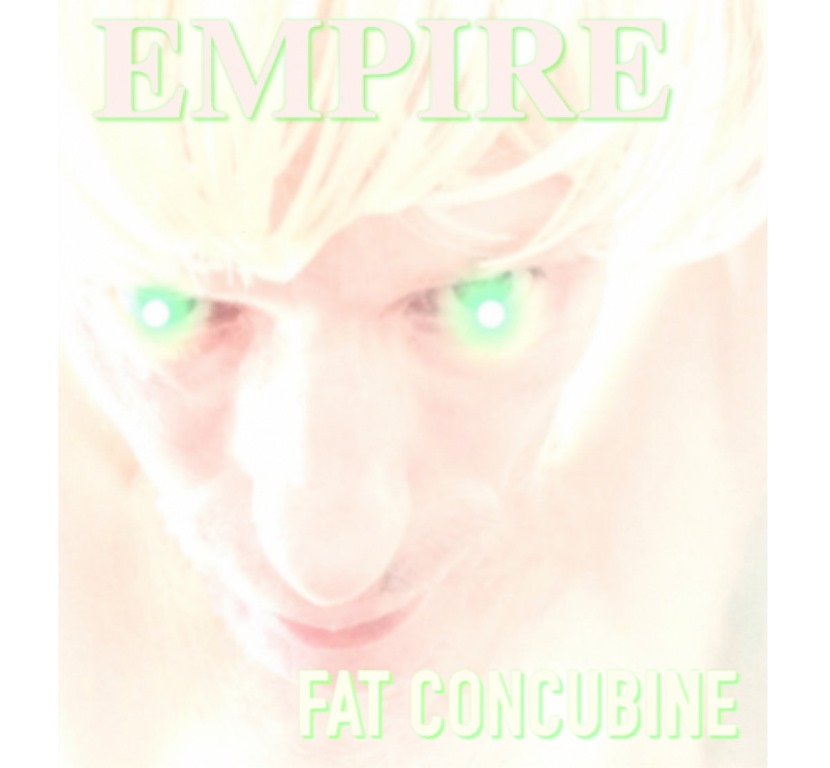
Fat Concubine are most certainly not representative of any kind of zeitgeist movement. With a name that’s not entirely PC, the London acts describe themselves as purveyors of ‘unhinged dance music’, and Empire is their debut EP, following a brace of singles. The second of those singles, ‘for Whom the Fools toll’ (with its irregular capitalisation, which is a bit jarring), is featured here, along with four previously unreleased tracks. This is a positive in my view: so many bands release four, five, or six tracks as singles, and then put them together as an EP release, which feels somewhat redundant, apart from when there’s a physical release.

And so it is, in the spirit of wild hybridisation, that they’re not kidding when they say their thing is ‘unhinged dance music’, or as quoted elsewhere, ‘unhinged no wave ravers’. ‘Feeding off the dogs’ pounds in melding angular post-punk in the vein of Alien Sex Fiend with thumping hardcore techno beats, and it’s not pretty – although it is pretty intense. The snare drum in their first thirty seconds of ‘for Whom the Fools toll’ takes the top of your head off, and the rest of the ‘tune’… well, tune is a stretch. It’s brash, sneering punk, but with hyperactive drum machines tripping over one another and a stack of synthesized horns blaring Eastern-influenced motifs.

There are hints of late 80s Ministry about ‘When we kick Their front door’, another synth horn-led tune that begins as a flap and a flutter before a kick drum that’s hard enough to smash your ribs thuds in and pumps away with relentless force. If the notes didn’t mention that it was a perversion of ‘These Boots We’re Made for Walking’, I’d have probably never guessed. As the song evolves, layers and details emerge, and the vibe is very much reverby post-punk, but with an industrial slant, and a hint of Chris and Cosey and a dash of The Prodigy. If this sounds like a somewhat confused, clutching-at-straws attempt to summarise a wild hotch-potch of stuff, to an extent, it is. But equally, it’s not so much a matter of straw-clutching as summing up a head-spinning sonic assault.

‘tiny pills’ is a brief and brutal blast of beat-driven abrasion, with a bowel-shaking bass and deranged euphoric vocals which pave the way for a finale that calls to mind, tangentially, at least, Cabaret Voltaire’s ‘Nag Nag Nag’.

The version of ‘O so peaceful’ was recorded live, and builds to an abstract chanting drone work. It offers a change of angle, but is no less attacking, its percussion-heavy distorted, shouting racket reminiscent of Test Department and even Throbbing Gristle, particularly in the last minute or so, and you can feel the volume of the performance, too. This is some brutal shit.

Empire is pretty nasty, regardless of which angle you approach it from. It’s clearly meant to be, too. Harsh, heavy, abrasive, messed-up… these are the selling points for this release. And maybe having your head mashed isn’t such a bad thing if you’re wanting to break out of your comfort zone and really feel alive.

AA

a1581875889_10

Mortality Tables – 11th July 2025

Christopher Nosnibor

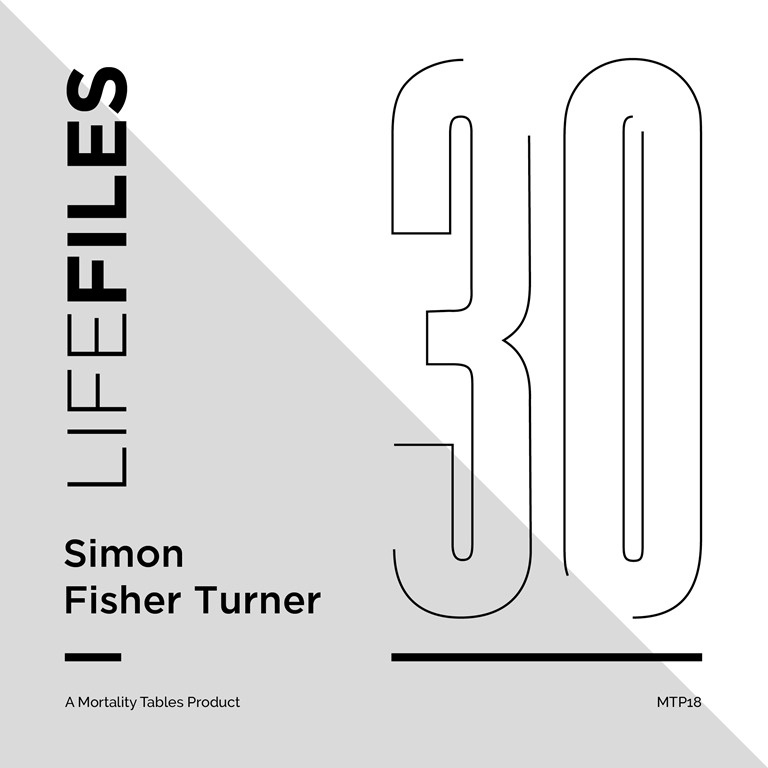
And so it is that the third season of Mortality Tables LIFEFILES series – and, indeed, LIFEFILES as a project, closes as it began just over two years ago, with its thirtieth instalment coming courtesy of Simon Fisher Turner. As such, this release is appropriately titled.

The premise of the series, which we’ve covered quite extensively here over the course of its running, is that curator and Mortality Tables label owner, Mat Smith, furnishes an artist with a field recording for them to more or less do as they please. Some of the reworkings and manipulations have been quite radical; others, less so. But what each has offered is a snapshot of a particular place at a specific time, reimagined and retold at distance by a third party. If this sounds rather absurd, it’s worth considering that this is essentially how history is formed – by the interpretation and re-presentation of primary source material to create a linear narrative. But how much can we trust the narrator? Even that primary source recording is just that – a recording. It is not the actual event. Therefore, with each revision, there is a move further away from the actual event. There evolves a certain historical layering, not so much akin to the degradation of a photocopy of a photocopy, but a drawing of a drawing, subject to ever-increasing distortions, deviations, corruptions.

As the accompanying notes inform us – quite factually – ‘The LIFEFILES series commenced in March 2023 with a piece by Simon Fisher Turner made using sounds recorded at an exhibition of works by the Memphis collective at Milton Keynes Gallery. The series concludes with a final piece from Fisher Turner, again using sounds recorded at Milton Keynes Gallery, this time at an Andy Warhol exhibition.’

This piece is only a little over eleven minutes long: a single or EP rather than an album – but Simon Fisher Turner packs a lot into that time. It begins with the slow-echoing of voices, a low mutter, the sound of voices, perhaps, chattering in a gallery – slowed and distorted, there’s a sense of discomfort, of the unheimlich, before a mid-range chimes in and hovers. So far, so ambient – but then some crushing percussion batters in and from nowhere things go a bit Test Dept. Trudging industrial beats slog away relentlessly, and they’re multi-layered and multitracked and hammer away from all angles in surround sound. There are some lulls, some drops in pitch and volume, occasional rests in tempo, even – but this is first and foremost a full-on beat assault. The speakers crunch and crackle and the beats thump and stomp.

Glitching, grinding bass enters the fray around the mid-point, albeit briefly, before swiftly vanishing, replaced instead by a subsonic sonar – and then things really get ugly. There’s a violence to this beat-driven blast, which even during the moments where it’s taken down a notch or three, there’s a sense of menace, something underlying that’s uncomfortable. The delicate chiming of a singing bowl or somesuch in the last couple of minutes, even when it yields to a quiet, low rumble, does little to dissipate the tension which has built – and built. But in the end, as is always the case, the ultimate end is silence. And so it is that the circle finally closes.

AA

AA

cover

The German dark electro-pop duo Rotersand have released a new single entitled ‘Sexiness Of Slow’. The second to be issued ahead of Don’t Become The Thing You Hated, their long-awaited new album out on 8th August, the song is a slow-burning club anthem that oozes tension and desire. With thick beats, seductive synths and an atmosphere so charged it could short circuit the dancefloor, it is electronic sensuality in its most powerful form.

Announced via its first single ‘Private Firmament (I Fell For You)’ Don’t Become the Thing You Hated sees the Hamburg based act (comprised of Rascal Nikov and Krischan Jan-Eric Wesenberg) return with an album that is as much a cultural critique as it is a musical statement. In a world increasingly defined by division, alienation and existential anxiety, the duo cast a sharp eye on the psychological toll of our times and issue a warning. The message is clear: in fighting what we oppose, we risk becoming it ourselves.

Musically, the album is a masterclass in synthesis, melding sonic sophistication with visceral emotional impact. Navigating seamlessly between intricate sound design and tightly constructed rhythmic frameworks, these are layered with melodic hooks that are as intellectually engaging as they are dancefloor-ready. The album soundscape is dark yet resolutely hopeful and explores a dynamic spectrum of styles, from propulsive electro with surgically crisp beats and brooding industrial textures to anthemic, almost dreamlike interludes. Each track reveals itself as a meticulously crafted entity, constantly surprising the listener yet never straying from its emotional nucleus.

AA

e6b2f1c20d901f654ccef6258ce9218446f422e1

16th June 2025

Christopher Nosnibor

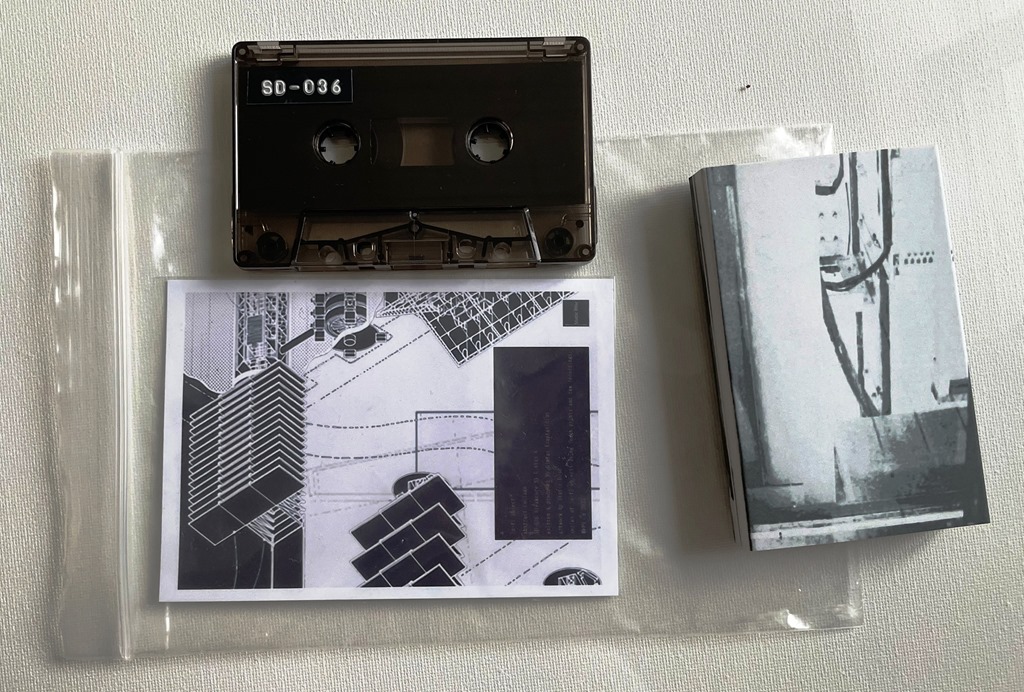
Gintas K’s latest offering was recorded live, using computer, midi keyboard and controller in January 2025, and first released by Japanese label Static Disc in May.

It’s worth perhaps mentioning that ‘Breakcore’ is – and I shall shamefully quote from Wikipedia here – ‘is a style of electronic dance music that emerged from jungle, hardcore, and drum and bass in the mid-to-late 1990s. It is characterized by very complex and intricate breakbeats and a wide palette of sampling sources played at high tempos.’ In the main, not really my personal field of expertise, or particularly within the remit of Aural Aggravation.

But this is a Gintas K album, and the nine pieces are typical of his style, combining experimentalism and the application of software and midi / laptop setup, producing a range of glitchy, frothy, gurgly sounds which stop and start intermittently, unpredictably. His live and improvised works always come with a sense of unpredictability, of spontaneity, while bearing his distinctive sounds. One of the key focuses within K’s work is on detail, zooming in on microtonality, granularity. When I say it sounds ‘bubbly’ or ‘frothy’, I mean it’s the sound one might consider the equivalent of the visual experience of slowly swirling a latte or a pint of ale, or hyperfixating on the bubbles in a bath. This is not, however, the gentle swill and flow of currents, but a frenzied effervescence, like the reaction between bicarbonate of soda and vinegar. And look long enough and hard enough, and patterns begin to emerge.

Listening to the bubbling blitzkrieg of digital clicks, beeps, and fizzing of any work by Gintas K can be stimulating to the point of eye-popping discombobulation. It’s almost too much – and this is nevermore true than the experience that is Breakcore. There are beats present – but they’re composed not of beats in the conventional sense, being neither rhythmic nor percussive, either from an analogue source or a digital sampled source or emulation. These are flickers, pulses, rapidfire stutters, hard sounds which replicate the essence of a beat without being a beat, per se. For example, those of a certain age may recall the successive ‘pink-pink-pink’ chattering digital babble of dial-up. Few would necessarily consider those sounds beats in context, but… yes, they have a certain beat-like quality. And this is how the beats often emerge from the clicks and pops, moans and drones or another quintessential Gintas K demonstration of circuit meltdown as an artform.

I had never considered his work in a ‘dance’ context before, and still wouldn’t: one feels as if the title is perhaps a shade ironic. But the tempo is certainly high and the beats are complex and intimate, emerging as they do from the thrum of what sounds like a revving engine, the whirr of an old hard-drive, the click of a CD driver whirring into action. Every second of this release sounds like some kind of digital or mechanical malfunction, as tempos whirl and blur, drawl and slow. Scrunching, crunching, twanging, springing, stammering and stuck, it’s a relentless attack of wrong sounds. But emerging from all of it, there are erratic beats, like a succession of deliberately jarring jazz fills and simply wild judders.

It is relentless, and it’s complete overload. The nine tracks run for a total of twenty-nine minutes: its intensity is such that you feel as if your brain is starting to melt after the first ten. In short, Breakcore is truly wild, and it’s not remotely easy or accessible – but it absolutely encapsulates everything that defines what Gintas K’s does.

AA

AA

cover

Negative Gain Productions – 6th June 2025

Christopher Nosnibor

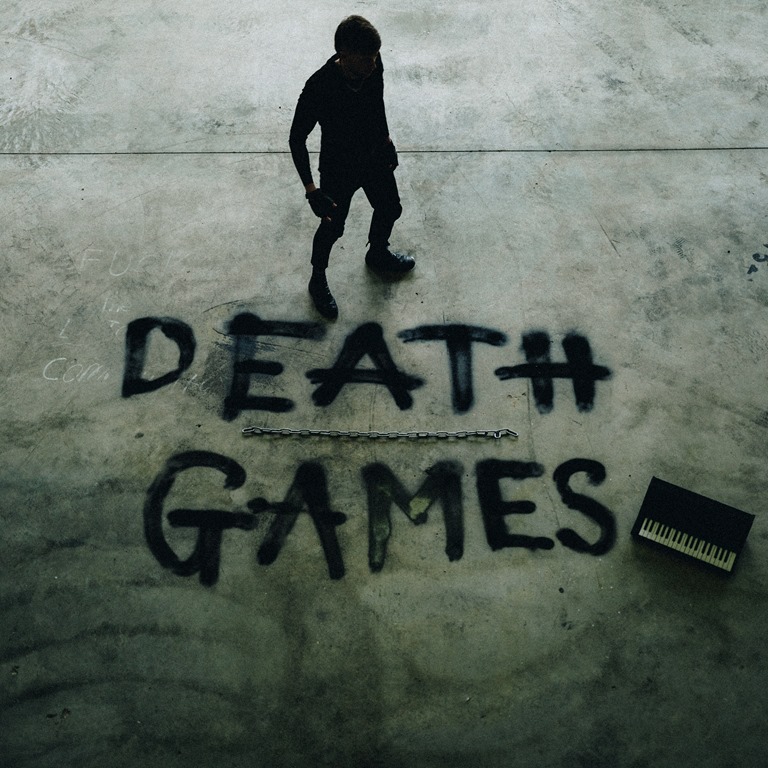
Just as the birds of prey from which they take their name are creatures of the night, so this Irish act – essentially one guy – who draw inspiration from the darker realms of postpunk, goth, and synth-based music are very much dwellers of the dark hours, as debut album Death Games attests, with titles such as ‘Perfect Nightmare’, ‘Tombs’, and ‘Send Me to My Grave’. The album’s themes are timeless and classic, offering ‘a haunting exploration of love, mortality, and the fragile nature of existence,’ while casting nods to touchstones such as Lebanon Hanover, Boy Harsher, and Black Marble.

Lead single ‘Give Me Your Stare’ opens the album in style with a disco beat and throbbing bass giving this bleak, echo-soaked song a dancefloor-friendly groove. The vocals are backed off but ring clear through a haze of reverb, offering a hint of The Cure’s Seventeen Seconds in terms of production values.

AA

The compositions on Death Games are pretty direct: there’s not a lot of detail or layers, and it’s the electronic beats and pulsating basslines which not only define the sound but drive the songs. The sonorous synths which twist and grind over the top of these predominantly serve to create atmosphere more than melody, although haunting, repetitive motifs are commonplace, and the vocals, too, being low in the mix and with a fairly processed feel, are more a part of the overall sound than the focal point.

‘Skin on Skin’ brings a wibbly, ghosty synth that sounds a bit like a theremin quivering over a minimalist backing of primitive drum machine and bass synth, and the likelihood is that they’re going for early Depeche Mode, but the end result is more like a gothed-up Sleaford Mods, although, by the same token, it’s not a million miles away from She Wants Revenge around the time of their electro-poppy debut, and that’s perhaps a kinder and more reasonable comparison. ‘Fevr 2’ brings an increased sense of urgency with skittering bleeps skating around the reverberating drums: it has both an 80s movie soundtrack vibe and a vintage goth disco feel, and despite its hectic percussion and busy bass, ‘Tombs’ conjures a haunting, requiem-like atmosphere.

The ‘death’ thematic may not always be literal, and as much concerned with the death of love and the ends of relationships, but the duality the theme offers serves OWLS well. There’s no denying that it’s both a stereotype and a cliché that an obsession with death is such a goth thing, and OWLS fulfil these unashamedly – but then, why should there be shame? Why is it only goth and some strains of metal which embrace life’s sole inevitability, and explore mortality and the finite nature of existence? Even now, after millennia, we aren’t only afraid of death, but, particularly in Western cultures, we’re afraid to think or talk about it. People passing in their eighties and nineties still elicits a response that it’s a tragedy or that they should have had more time, and I’ve seen it said of people departing in their sixties or even seventies that it’s ‘no age’. We seem to have a huge blind spot, a blanketing case of denial when it comes to death, as if it shouldn’t happen, that it’s an injustice, and that no-one deserves it. But nothing is forever, be it love or life, and while loss – any loss – is painful, it comes attached to inevitability, being a matter of when, not if.

The stark and sombre ‘Send Me to My Grave’ commences a trilogy of dark, downbeat, funereal songs, which grow progressively darker, more subdued, the vocals more swallowed by evermore cavernous reverb. Even when the beats kick in and the bass booms, things warp, degenerate, and seem to palpably decay and degrade. There’s a weight to it, a claustrophobic heaviness, and the kick drum thwocks away murkily as if muffled by earth and six feet under sods. ‘This Must be the End’ is brittle, delicate, the calm that comes with the acceptance of… of what? What comes after the end? It feels like the song, and the album, leave this question hanging with an ellipsis, a suspense mark. It seems fitting, since we simply don’t know. But it does very much leave the door ajar for OWLS’ follow up, and that is something to look forward to.

AA

AAlbum CoverA

10th January 2025

Christopher Nosnibor

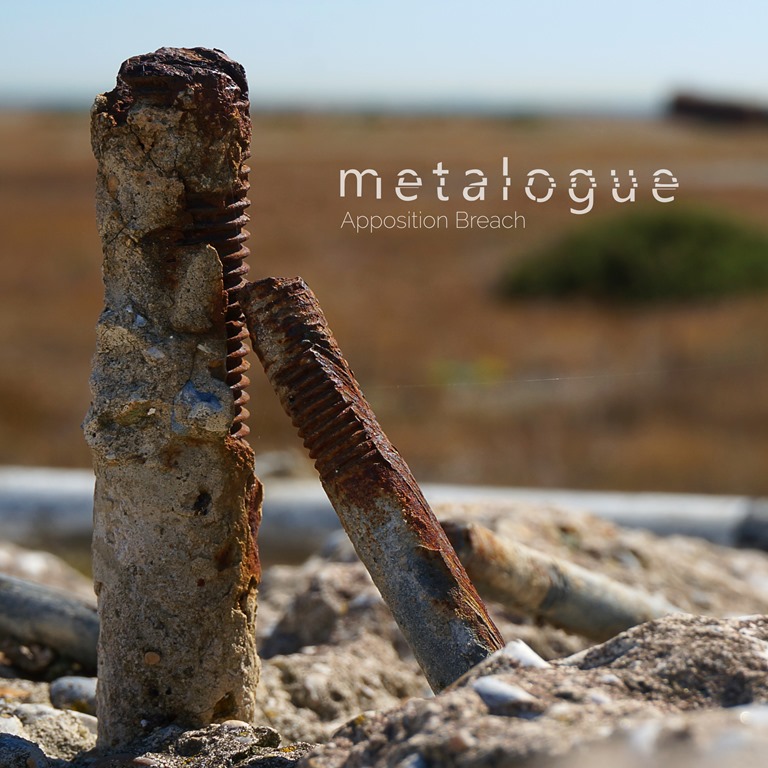
Metlaogue’s Bandcamp pitches the project as ‘Industrial/IDM/breakcore with cinematic tendencies’, while the notes for Apposition Breach note how it ‘explores the threshold of geography and inner world – where landscape becomes the medium for emotion’. This, for me, seems to carry almost Ballardian connotations, the idea of inner geographies, the way in which the geometry of a landscape can slide between the literal and the metaphorical, how one can become an analogue of the other. The inner and outer worlds exist almost separate of one another, and the only point at which they intersect is in the mind as one processes the physical world as experienced through the shading of the emotional state. A sunny day may be a joy to behold, but may not bring joy in the face of a trauma. How we respond to our surroundings is influenced by not only circumstance, but the way we react to it. Yet rarely do we pause to consider these variables. Why did you have a shit day at work? Was the work itself shit, or did you arrive carrying the burden of something else which made something comparatively minor a catastrophe? You may walk the same route daily for a year, but it will never be the quite the same experience. The variables are infinite, and on Apposition Breach, Metalogue interrogates those variables and the reflex of memory and their complex relationship on a nuanced suite of compositions, some six years in the making.

The atmospheric ‘Threshold’ draws the listener into that fluid space, where soft ambience wraps itself around hard mechanical drones, and the percussion shifts in pace and intensity, at first muted, subtle, but firing forth in explosive bursts to become the dominant feature, and in doing so marking a dynamic shift in mood. It’s somewhat akin to climbing a gentle hill and suddenly finding a sharp crag just as the wind picks up and clouds darken the sky. The temperate changes with the change in tone.

While the images which accompany the release are illustrative, the soundscapes themselves evoke rusted machinery, dilapidated mills and farming equipment gradually yielding to the elements. As much as it’s industrial, Apposition Breach offers haunting echoes of industry, once-thriving communities and factories abandoned – not the collapse of civilisation, but the decline which comes with ‘progress’. Wraith-like synths wisp and envelop pulverising beats on ‘Triangulation’, a composition which builds and transitions through a series of different forms. The pieces tend to be on the longer side, in excess of six minutes and pushing to almost twelve on ‘Outer Margin’. This gives them time and space in which to evolve at a pace which feels natural and necessary.

‘Ilira’ is ominous, scraping drones create an eerie fog of tension which is punctured by hard, violent beats. Between the snarling mechanical grind of ‘Reflection’ and the dark, pulsating title track, Metalogue conjures an array of sonic sceneries which present a journey of sorts. Not a linear journey whereby one travels from A to B, B to C, but one which seers the retinas and scours the mind with a succession of scenes, flashbacks, rapid cuts, with the effect being not dissimilar to the way memory skips here and there in time and space when triggered by seemingly unconnected and unrelated prompts – a word, a sound, a smell, nothing at all – or a dream, in which one suddenly finds themselves in a different location or setting seemingly apropos of nothing. Just as William Burroughs remarked of his discontinuous narratives that he was not concerned with explaining how characters get from one place to the next, so it is that we, as participants in the immersive experience that is Apposition Breach, find ourselves effectively teleported.

There’s the hard attack of ‘Redoubt’ and the echoing mystery of the swampy but hypnotic ‘Day Marker’, and in between, all shades of hefty percussion and cold, razor-edged synths shiver and scrape kneed and throb to render an altogether uncomfortable experience. Apposition Breach is expansive, ambitious, and meticulously realised.

AA

cover

Metropolis Records – 6th December 2024

Christopher Nosnibor

The pitch:

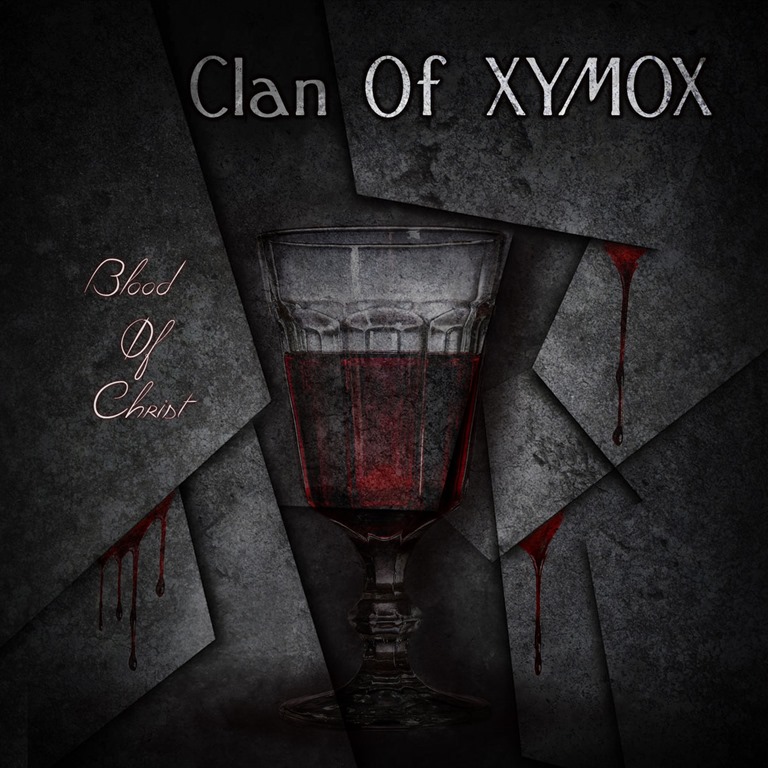
Clan Of Xymox will release a new EP entitled ‘Blood of Christ’ on 6th December. The title song is also included on ‘Exodus’, the current album by the dark wave wizards released in June 2024, with the EP also including the brand new ‘You’re The One’ plus six remixes of each track for a total running time of 64 minutes.

The reaction:

EP? EP??!! Well, yes, I suppose with fourteen tracks and a running time in excess of an hour, its play is certainly extended. What kind of duration would qualify for a long player, I wonder? On vinyl, this would be a double album at 33rpm. Available as a download only, Blood of Christ retails at the same price as the album which spawned it, Exodus, released in the summer.

Carping and pedantry aside, this is an ambitious project for a single, with the album track accompanied by a non-album B-side – something which is always welcome – and, as advertised, six remixes of each. Does anyone really need six remixes of any song, even the most diehard fan? It’s debatable, although not a debate I’m about to open to the floor.

I suppose electronic music does lend itself more readily to remix treatment than more rock-orientated stuff. The 80s and early 90s witnessed the rise of the remix via the extended 12” mix and then over time, we began to see 12” and CDs with different remixes, which were all about milking fans in order to boost sales and chart positions

As a choice of single, ‘The Blood of Christ’ is a strong one: pumping beat and pulsating bass underpin a solid tune with stacks of atmosphere and a huge, theatrical chorus, straddling the boundaries of both classic and contemporary goth. ‘You’re the One’ is a bit popper, but still driven by those all-essential dark undercurrents.

And so, onto the remixes: the album’s remaining twelve tracks alternate between the two songs, the obvious benefit being that you don’t get back-to-back takes of the same track for half an hour. However, by presenting the same two tracks alternately, it’s a little like the old days of flipping a 7” over and over, only hearing differences and new details with each play, and over the course of an hour and a bit it becomes quite mind-addling, and with both tracks employing similar stabby, undulating synths and tempos, the sameness starts to dull the senses after a while.

Too much of a good thing? Perhaps. And perhaps there’s a time commitment involved in distinguishing between the different versions and finding your favourites, preserved for the serious fan. Individually, the tracks are great, although I’m not convinced any of the remixes really improve on the originals, but presented together in such quantity, it feels like overkill.

AA

a1318500700_10

26th November 2024

Christopher Nosnibor

Deborah Fialkiewicz has been keeping busy – as usual. Composer of contemporary classical, ambient, and dark noise works both as a solo artist and in various collaborative permutations and guises, she’s back with a new BLOOM release in collaboration with Daniel James Dolby. And it’s a Christmas single.

I’ve never been rabid about Christmas, and the last three years have seen a succession of difficult Christmases for me personally. In December 2021, my wife was diagnosed with stage 4 breast cancer. We weren’t even sure if she would be home for Christmas. She was, but was incredibly weak after three weeks in hospital, and that she was able to sit at the table for Christmas dinner felt like a miracle. We were in shock, and she was clearly unwell. Having made substantial improvements in rebuilding her strength through 2022, she deteriorated with the onset of winter, and again was weak and struggling over Christmas. It still doesn’t seem real that she only had another three weeks. And so Christmas 2023 was the first with just me and my daughter, aged twelve. We made the best of it, but it wasn’t the same. I detail this not for sympathy, but purely for context. It means that while around this time of year it becomes nigh on impossible to avoid festive fervour, with adverts depicting happy couples and radiant nuclear families, all the usual Christmas tunes and an inbox busting with new ones clamouring for coverage, and Facebook friends and work colleagues are dizzy with excitement over getting their decorations up, sorting secret Santa and planning social activities, I’m not feeling much enthusiasm, concerned primarily with getting through it and hoping distant relatives don’t think I’m rude or twatty for not sending cards out for the second year in succession.

When writing about music, I am often – and perhaps increasingly – aware that how we engage with it, how it affects us, is intensely personal and involves multitudinous factors. Sometimes, it’s something as arbitrary as the mood we’re in when we hear a song that will determine our response. And the chances are – and I’m no doubt not alone in this – hearing chirpy tunes when I’m down isn’t going to cheer me up, it’s going to really piss me off, or set me off. It’s impossible to predict. To be safe, I tend to try to avoid Christmas songs, which involves avoiding TV and radio – which is surprisingly easy if you spend large chunks of your time in a small room reviewing obscure music – avoiding shops – manageable – tacky pubs – easy – and ignore review requests for Christmas singles.

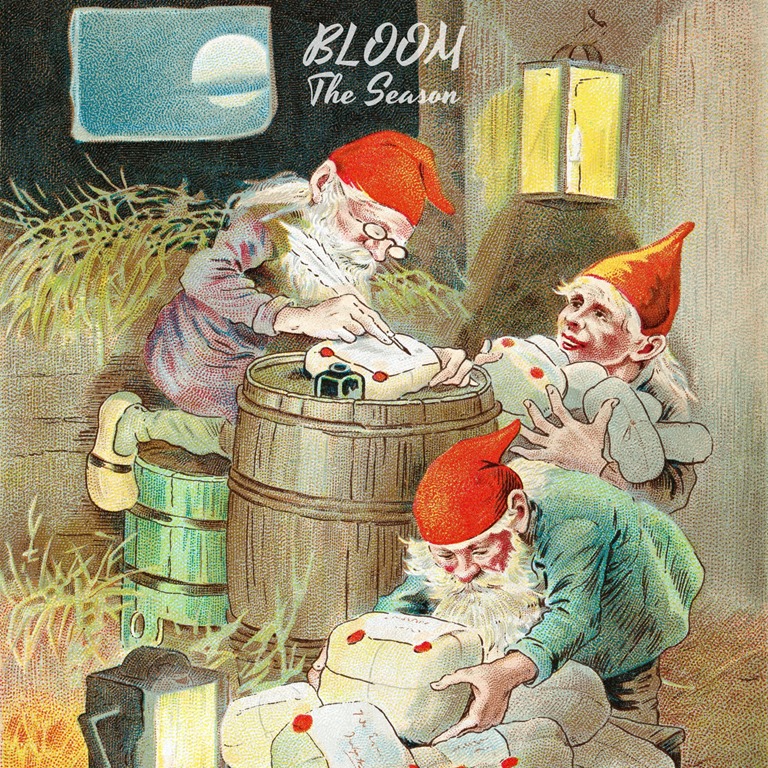
But there is always space for an exception, and Bloom’s ‘The Season’ is it. Deborah may have been posting pics on Facebook of the ‘festive mouse’ in the studio to mark this release, but said mouse is looking over a piece of kit called ‘Psychosis Lab’ made by Resonance Circuits. The cuddly cartoon cover art for this release is misleading, and for that, I am grateful.

It’s five minutes of deep, hefty beats melded to a throbbing industrial synth bass. Atop this thumping dance-orientated rhythm section, there are synths which bring a dark 80s synthpop vibe. In combination, the feel is in the vein of a dance remix of Depeche Mode circa ‘85 or ’86, around the point they began making the transition from bouncy pop toward altogether darker territories. It’s repetitive, hypnotic, pulsating, big on energy. But there are eerie whispers which drift through it all, distant wails like spirits rising from their graves. These haunting echoes are more evocative of Halloween than Christmas – and this is a significant part of the appeal. It’s a curious combination of ethereal mists and hefty, driving dance groove, which is simultaneously uplifting, tense, and enigmatic. It is not schmaltzy, cheesy, twee, or saccharine. It’s the season, alright. The season to be weird, to be unconventional, to accept those darker moods and remember that they will pass. It’s a Christmas anthem for those who aren’t feeling festive. And I will most certainly drink to that.

AA

a3458409831_10

Mind Altering Records – 13th November 2023

Christopher Nosnibor

Back at the start of 2021, I penned a pretty positive review of the solarminds album Her Spirit Cracked the Sky. The combination of ambience and extreme weight was a thrilling proposition. And it was – and still is – monumentally epic. It feels a long time ago already, and much has happened in the interim. If emerging from the pandemic was trailed for a long time by the release of myriad ‘lockdown’ projects, we’ve subsequently trickled into a ‘world’s turned to shit’ phase, and like the pandemic, it feels like there’s no end in sight. Trump may be out of office, but he still looms large and continues to pose a threat in the arena of world politics, and it’s a world at war, and a world where alternately wild fires and floods decimate swathes of land. Slowly but surely, the planet is becoming less inhabitable. And yet, still, people jet off on skiing holidays and bemoan the lack of snow despite being the cause of the lack of snow, and whenever it rains, people take to their cars to make five-minute journeys to avoid getting wet, thus ensuring it will rain an awful lot more in the time to come.

And since the release of Her Spirit Cracked the Sky, after more than a decade, Chris Miner has put the project to bed. But, like the proverbial phoenix rising from the ashes, he now returns with Sun Colour Sound, and the first in a projected trilogy of releases. On the evidence of this first one, it will be something special.

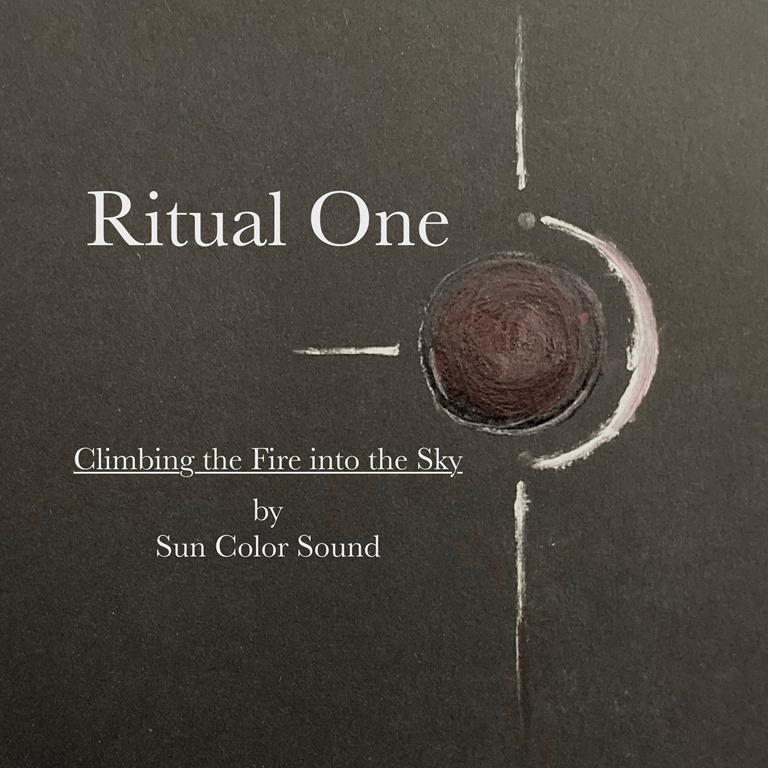
Ritual One (Climbing the Fire into the Sky) consists of a single piece, which runs just short of half an hour, and it shares many elements with solarminds – namely a fair bit of noise, some hefty guitars and punishing percussion, at least in the first two thirds, and it’s heavy, harsh, noisy, and it crashes straight in with some grating, heavy drone, twisting feedback and thudding drums.

This is one of those tracks which stars like the end of many sets, and it feels like it’s winding down from the offing. This is by no means a criticism, simply an observation that what in the context of many works is a climactic, tempestuous crescendo finale, is simply the start of a ferocious sonic storm. It does very much call to mind Sunn O))) and the epic, swirling instrumental passages of contemporary Swans, although the guitars are very much geared towards generating howling feedback rather than crushing, clashing chords that sound like buildings being demolished. Therte’s something of a psychedelic twist in the spacey delivery, too. As whining, whistling notes ring out, the percussion builds from the occasional roll to a relentless thunder. The combination is immensely powerful, and assails the senses with a real physicality. Buy around the thirteen-minute mark, it’s reached wall-of-sound levels, a dense, shimmering sonic force which shimmers and ripples while coming on like a bulldozer, at the same time as hand drums fly at a frantic pace and evoking something spiritual in the midst of a hypnotic frenzy. And still, it goes on, surging forwards.

The shift in the final third occurs subtly: the percussion continues to clatter away, but the guitar abrasion tapers away, to be replaced by altogether softer strings.

Ritual One (Climbing the Fire into the Sky) is more than just a really long piece of music: it’s an ambitious piece in every way, and its scope and scale are immense. There is so much depth and detail here, and it takes repeated listens to really appreciate just how much is happening, especially given that the first reaction is simply to bow to its sheer sonic force.

But the last ten minutes belong to a different world from the first portion. Hypnotic, soothing, graceful, the tension dissipates and Eastern vibes radiate through the gauze-like layers which drift and float over the busy but altogether more subdued percussion.

So while it is an ambitious work, it also delvers far above any expectations, and it’s both unique and special.

AA

Version 3

Louisiana’s renowned Industrial Bass artist, SINthetik Messiah has just unveiled a new single titled ‘Der Anfang’.

The heart of ‘Der Anfang’ beats with the story of a multi-dimensional being embarking on a cosmic odyssey in search of answers that transcend the boundaries of space and time. This immersive track delves deep into the mysteries of the multiverse, inviting listeners to explore the intricate layers of existence and consciousness.

Bug Gigabyte, the talented Cajun songwriter and sound designer behind SINthetik Messiah, is the creative force responsible for the creation, composition, production, and mixing of ‘Der Anfang.’ The track’s undeniable prowess is further amplified by the mastering expertise of Plasma Pool Records, solidifying it as a groundbreaking addition to SINthetik Messiah’s illustrious discography.

SINthetik Messiah has garnered worldwide recognition with radio play and critical acclaim from industry peers. The release of ‘Der Anfang’ is poised to add another layer of complexity to the project’s extensive repertoire and push the boundaries of what industrial music can achieve.

‘Der Anfang’ was released under the banner of Plasma Pool Records, one of Germany’s leading dance record labels The single is available on all major digital platforms including Beatport, Itunes and Bandcamp.

Check the video here:

AA

c67a1141-3ba5-af97-47cd-d4f1e2795bc4