Archive for the ‘Singles and EPs’ Category

7th January 2019

Christopher Nosnibor

I like Modern Technology before I’ve even heard a note. Drummer Owen approached me through Facebook having clocked Aural Aggravation with a link to the East London duo’s debut EP. Most bands starting out want to get on the radar, and get some cash back for the hard graft they’ve put in trying to get to the point of putting music out into the public domain, especially as a physical release – and this comes in limited-to-200 clear vinyl in addition to the digital version – but they’re donating all profits between Mind and Shelter, perhaps two of the most vital charities in the age of austerity.

I may not have written much about the plight of the homeless, although the fact we have a massive problem here in Britain right now requires no qualification, but I have touched on mental health on more than one occasion here in the past. The oft-shared statistics are just statistics, but in my day-job (yes, I work for a multinational who deal in insurance and investments, because, incredibly reviewing bands no-one’s heard of and writing books no-one reads doesn’t pay the bills) I’m often required to step out of my role to help people and to listen to people. They all have trouble. They’re all stressed. They’re all anxietised. Some are depressed. I know how they feel, and they know it. It really is good to talk. No, not just good: vital. This is my daily reality. So the fact that the bulk of CD I get sent for review which I don’t choose to keep end up at my local Mind charity shop is just something I do. Because it’s important to do what you can, right?

According to their bio, Modern Technology formed through ‘a shared frustration of the post-truth society and political unrest that is currently suffocating our global conscious’. The one positive of political turbulence is the spur to creativity: it’s no coincidence that that post-punk emerged during the Thatcher era, and it’s fair to say that the parallels between then and now are strong. One major difference now, however, is that it’s practically impossible to sign on and form a band: zero-hours contracts and the benefits system mean that even looking for work is a full-time job, and the economics of making music simply don’t stack favourably. But regardless of economics, all that shit has to go somewhere. You need to process. You need to vent. Modern Technology sound like a band who are doing this not for fun, but because they need to.

The EP’s opener provides a theme tune of sorts: entitled ‘Modern Technology’, it launches with an ear-shredding blast of splintering noise, before pulverizing drums, grating bass and squalling feedback hammer out a sonic landslide of a backdrop to a hollering vocal, half-lost in an avalanche of reverb. Christ! They’ve got the savagery of early Head of David coupled with the goth-noise mania of The Birthday Party.

It certainly sets the tone and tempo: ‘Project Fear’ is two minutes of overloading, distorted fury that makes optimal use of lo-fi production values for maximum impact. It hits like a punch in the guts. Deciphering the lyrics isn’t easy and at times is pretty much impossible, but the sentiment is more than adequately conveyed by the medium. Besides, the titles speak for themselves in many respects, as they take the most mundane aspects of contemporary capitalist living and attack them with shuddering sonic barrages. Shades of psych filter through the scuzzed-up tumult of no-wave noise. And deep from within that sonic cyclone screams the painful truth: everything is fucked.

When they do slow it down, as on the grinding ‘Select Retail’, they bring out the brooding theatricality and highlight the depthlessness and superficiality of consumerism with the blank slogan / refrain ‘Select retail / reject detail’. But then they also do choppy, bass-led Shellac-tinged angularity on ‘Queue Jumper’. Closer ‘Modern Detritus’ distils every last ounce of frustration and compresses it into a dense roar of thunder.

Modern Technology are the real deal: this isn’t music being made with one eye on a commercial ticket, but music that’s born out of compulsion, the urge to purge. It’s art. It’s raw, it’s visceral, it’s painful. And in expressing the agony of frustration, it’s perfect.

AA

cover

Silber Records – 6th December 2018

Christopher Nosnibor

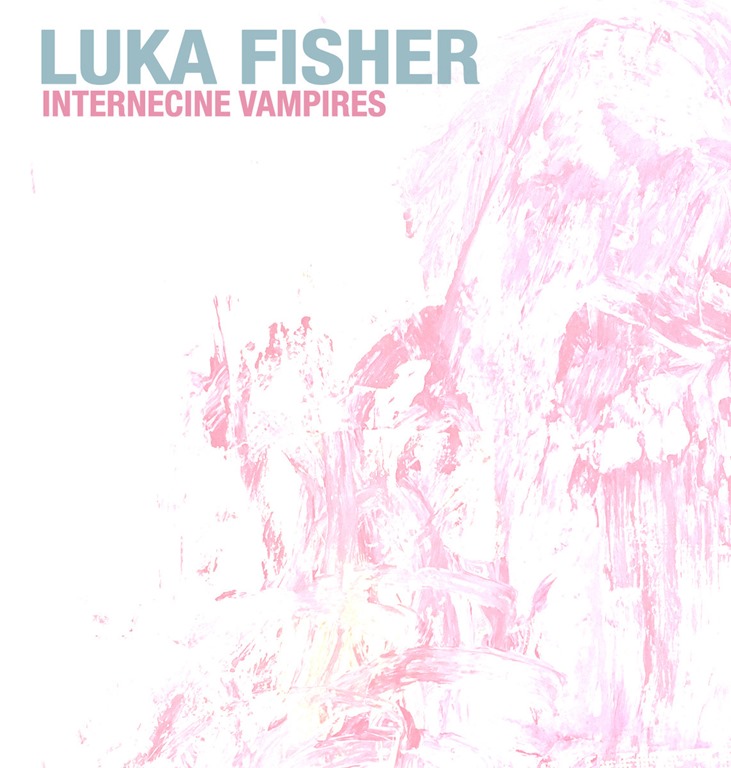
The five soundscapes on Internecine Vampires are exploratory and carry an air of the vague and tentative. That isn’t to say indecisive or uncertain: Fisher has a clear sense of purpose here, and this mellifluous ambient work ventures into some interesting sonic territories, not least of all in the juxtapositions of texture and tone.

The liner notes describe the EP as ‘a free wheeling exploration of un-winnable situations & social conflict that drew inspiration from everything from chess, Star Trek, & Timothy Leary to considering the ways in which social groups too often fail to connect in meaningful ways’, and explain how ‘Fisher was also thinking about how queer & trans individuals are too often placed in the unwinnable situation of being evaluated on their ability to “pass” & considered inauthentic in relation to the “authentic” dominant culture… The unwinnable situation is an invitation to redefine the terms of success; to imagine different ways of being & of relating to the world & those around you; to reject simple binaries & to reject the internecine vampires that lurk within ourselves & our culture. Individuals are meant to be recognized as just that, individuals.’

I may have a doctorate in English literature, but ‘internecine’ is a new entry in my vocabulary. Meaning ‘destructive to both sides in a conflict’, it’ a strong addition and it’s the perfect selection for describing the gender wars which are currently raging in all directions, wreaking havoc with destructive infighting around what very much ought to be a common cause. The wider narrative is that gender conflict is a convenient distraction from everything else, particularly given that those battling it out tend to be left-leaning individuals. While I’m not about to suggest which battles anyone should choose, I do have a certain personal interest in the lines marked out between the sides, for reasons I’m disinclined to retread and labour here. Individuality should be a given right: what the world needs is for those individuals to unite against the enemy of governmental tyranny, etc., etc, etc.

On ‘Maps Of Loss And Longing’, soft xylophonic notes hover in a mist of reverb and slowly twist and warp. It’s subtle, but tangible. ‘Maru’ offers elongated, scraping drones of feedback and low, sonorous hums below, which twist together and twist apart. It’s delicate, graceful, sans form, and undirected. ‘Zugzwang’ brings a mournful violin, a banjo picked in a sparse, mournful fashion, against a dolorous, funereal beat and the occasional blurt of extraneous noise, while closer ‘Soon’ is a slow-turning sonic drift, a soft, supple cloud that changes form slowly, almost subliminally. It’s perhaps analogous to the EP and its message, in that it works as a piece of music, but its intent isn’t necessarily apparent. Objectively, this is no obstacle to the appreciation of what is a neatly-gathered and carefully-poised ambient instrumental assemblage that flows naturally and fluidly to form a cohesive piece of work.

AA

Luka Fisher – Internecine Vampires

7"/DL – Not on label – 16th November 2018

Christopher Nosnibor

Pharoah Chromium’s Gaza was one of the most remarkable, and incredibly powerful releases of 2016: an audio collage constructed primarily with audio captured during during operation Protective Edge in Palestine in July and August 2014, it was a document of life in a war zone.

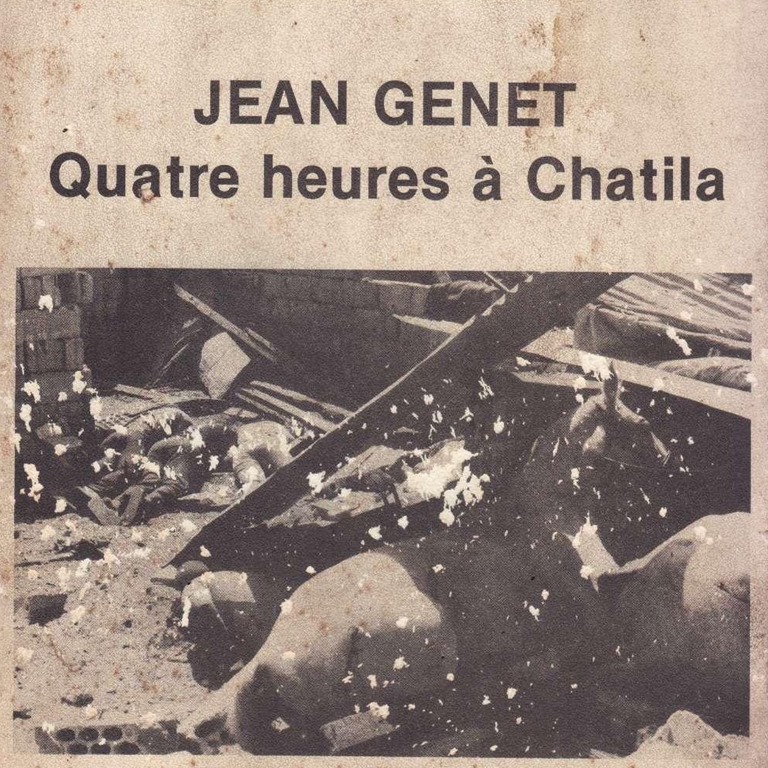
The press release which accompanies this 7” vinyl-only release, described as ‘a spoken word record with a sonic background’ explains that ‘Quatre heures à Chatila’ is a continuation of the Gaza project’, although this time the focus is on ‘the massacres that took place in the refugee camps Sabra and Shatila over the course of three days in September 1982, in Beirut, Lebanon’.

Of the Gaza LP, I suggested that context was everything, and this is also true here, as the accompanying text explains: ‘In an eerie twist of fate, one the most talented and subversive writers of the 20th century happened to be visiting Beirut at the time these gruelling events occurred. He was one of the first foreigners to enter the camps and witness the carnage. His text “4 hours in Shatila” is a minutious and poetic account of the war crimes Genet’s eyes encountered and endured for 4 hours that day’.

As such, the release – culled from the Eros & Massacre album project – features Elli Madeiros reading two segments of Jean Genet’s text against an electronic backdrop of elongated drones and a drifting wave of overlays from buzzing top-end and extraneous intrusions that bend and twist forged by Ghazi Barakat (aka Pharoah Chromium), and augmented by guitar courtesy of Osman Arabi on ‘Une Photographie a Deux Dimensions’ on side 1, and whispers courtesy of Rahel Preisser on ‘Saint Genet à Chatila’ on side 2.

‘Une Photographie a Deux Dimensions’ creates a creepy, unsettling atmosphere, flickering sonic shadows skitter this way and that behind the narrative, and while perhaps it’s best appreciated in its native tongue and without the encumbrance of text or the need to engage in activity which distracts from the listening experience as intended, the availability of an English translation of Genet’s text on-line does help in fleshing out the context. It also serves to render the full horror of the experience explicit.

The shorter ‘Saint Genet à Chatila’ is built – at least at first – around a looped, cascading motif. The vocal is delivered close-mic and with a certain urgency as digital diddles flit every which-way, spider-like across stop-start surges of bass that start sparse but echo to rolling thunder. It’s spine-tingling and uncomfortable, although one suspects something is lost in translation – or lack of.

Fittingly, as much as Genet’s depiction of the gruesomeness streets littered with bloodied corpses is horrific, it’s the pains he goes to to articulate the limitations of any given medium which render his account so powerful:

‘A photograph doesn’t show the flies nor the thick white smell of death. Neither does it show how you must jump over bodies as you walk along from one corpse to the next. If you look closely at a corpse, an odd phenomenon occurs: the absence of life in this body corresponds to the total absence of the body, or rather to its continuous backing away. You feel that even by coming closer you can never touch it. That happens when you look at it carefully. But should you make a move in its direction, get down next to it, move an arm or a finger, suddenly it is very much there and almost friendly.’

As such, Barakat must necessarily accept that the medium of sound can only convey so much, and while the composition and recital evoke the bewildering scenes and the effect of witnessing them first-hand, they can never truly convey that lasting traumatic impact.

AA

Chatila_front

Armalyte Industries – 7th December 2018

Christopher Nosnibor

However dark, gritty and sleazy <PIG> have gone over the course of their lengthy (try 30 year) if sporadic career, there’s always been both a wry humour and an appreciation of pop in evidence. This has been thrust to the fore in the latest releases in the shape of the grimy but shiny glam of ‘Risen’ and Raymond Watts’ most recent collaboration with Sasha Grey for a cover of KC and the Sunshine Band’s ‘That’s the Way (I Like It)’ which was pure pop and pure filth in equal measure.

The three covers on offer here – Wham’s ‘Last Christmas’, Elvis’ ‘Blue Christmas’ and ‘Happy Xmas (War Is Over)’ (John Lennon) – are quite surprising in their straightness, but that isn’t to say there isn’t a twist. That is to say, it sounds like <PIG> covering some Christmas classics. Of course, the instrumentation is a little different, and Watts’ gravelly, low-throated style is distinctive to say the least – meaning that George Michael’s heartbroken lament is transformed into a leery come-on with more than a hint of Tom Waits about it, not to mention guitars that sounds like a Status Quo 45 played at 33.

‘Blue Christmas’ trudges and grinds, with Watts delivering his best snarling, sneering JG Thirlwell imitation against a backdrop of Bryan May guitars and soaring chorals. The incongruity is both genius and magic. Wrapping things up with ‘Happy Xmas (War Is Over)’, Watts backs off the irony, the sleaze, and the bombast. There’s no knowing wink behind the gravelly croon here, and it’s genuinely touching. And with all of the profits from this release going to

International Rescue Committee, the purpose of which is to ‘reunite refugee families torn apart by war, persecution or harmful policies’, we get to see a different side to <PIG>: for all of the theatricality, for all of Watt’s near-preposterous showmanship, there’s a real sense of humanity not even a scratch beneath the surface. With Black Mass Watts proves he’s not only the God of Gammon but a decent human being, spreading the real spirit of Christmas in these particularly bleak, Trump and Brexit-dominated times.

AA

Pig - Black Mass

Solemn Wave Records – 6th December 2018

Christopher Nosnibor

We’re inching into winter and again my inbox seems to be getting darker and gothier in its content – or perhaps it’s just my SAD-attuned headspace. Either way, this is one extremely welcome arrival.

As a prelude to the album ‘Black Light, White Dark’, Evi Vine have given us ‘Sabbath’ as a single release, featuring The Cure’s Simon Gallup on bass, along with guitar by Peter Yates of Fields of the Nephilim. It’s a slow burner, and it’s epic and then some: fully nine brooding minutes of slow, smouldering atmosphere and hauntingly evocative melodies which burst into dazzlingly kaleidoscopic curtains of sound.

It’s one of those songs that lures you in with its grace and delicacy: Evi’s nuanced, emotionally rich and moving vocal, reminiscent by turns of Jarboe, Chelsea Wolfe and – perhaps at a short stretch – Julianne Reagan (she can swoop and soar, and I suspect her choice as backing singer by The Mission is no coincidence) is alluring, ethereal, simultaneously creating a sense of vulnerability and otherness. And as the sonic storm swells into a dense and richly-layered mass, the effect is intensified, until finally, the surging sound is all there is… nine minutes simply isn’t enough. Allowing the hypnotic bass and deliberate groove to take over and transport me downstream as the guitars build and build, deeper, louder, more and more, until I’m drifting, I find this is a song to loop, and loop…

The six-minute single edit is even more not long enough, and probably isn’t short enough to get much radio play either – even though it absolutely deserves all the audience it can reach. The fact mainstream audiences aren’t likely equipped to handle the intensity is their loss, but also a sad reflection on things. Because this is music to embrace, and be blown way by.

AA

Evi Vine

16th November 2018

Christopher Nosnibor

The latest offering from gothy New York duo GHXST is appropriately titled. That said, ‘gloom’ carries connotations of moping, listlessness, and the six tracks here are anything but mopey or listless: the downcast, foreboding bleakness of atmosphere is matched by a crackling tension which provides a more complex dynamic.

It begins with a dark pulsating throb and a heartbeat bass drum, distant, buried. Guitar excess howls over the top before settling to a dirge-like crawl of spindly, echo-soaked twang reminiscent of latter-day Earth with hints of Neurosis-inspired post-metal. Shelly X croons and whispers, a combination of ethereal longing and menace as shoegazey washes of sound carry her disembodied voice through the clouds towards the stratosphere.

‘Ocean is a Desert’ is still atmospheric, and combines searing country an psychedelia into the mix to create something epic and immersive Moreover, it brings a greater sense of solidity and a more obvious structure as they start getting riffy and the mechanised drums kick through the murk, and things grow denser still on ‘Vaquero’, which invites comparisons to Chelsea Wolfe and Esben and the Witch at their most sonically dynamic with its brooding drama.

Samples and strings and quivering synths pave the way for the 80s-shaded synth-goth of ‘Bad Blood II’, a chilly, steely grey song that’s both graceful and tense and calls to mind Curve at their best. Single cut ride is dark and dense, taking cues from The Jesus and Mary Chain’s ‘Mushroom’ and offering hints of A Place to Bury Strangers to deliver a deep, dark buzzing throb of mid-tempo droning guitar noise, before ‘Ride’, unveiled in advance of the release, is a gritty, grainy, mess of low-slung low-end riffage swamped in reverb and dirty distortion. And that’s the appeal of GHXST right there. Music to get lost in and to drag you down into the undertow of those dark, deep currents.

AA

GHXST - Gloom

26th October 2018

Christopher Nosnibor

‘Dramatic and bold’… ‘driven and experiential’… songs which deliver ‘a perfectly executed sense of tension and release’… I’m No Chessman promise a lot with this, their second release. Do they deliver all of it? Well, it’s a matter of taste as much as opinion.

When I relaunched my reviewing ‘career’ such as it is a decade ago this month, I thought it would be neat to make providing objective reviews my signature. Over time, I’ve come to revise this ambition, having realised that the way one responds to music has precisely nothing to objective matters like technical competence. Granted, poor production can ruin a great set of songs, but the best production in the world won’t transform songs that are technically proficient in terms of musicianship but otherwise predictable and lacking in emotional resonance exhilarating.

Music is intensely personal, and how an individual responds to a composition isn’t purely about the recipient or their tastes, but their headspace and the precise context in which they first hear it.

All of which is to say that this EP is well executed, and despite what the title may suggest, is decidedly not the work of amateurs (just as it has nothing to do with John Niven’s debut novel, which is about golf. And wanking. Well, maybe it’s about wanking. Some of it is a bit Fall Out Boy). It’s that combination of poppy, up-tempo guitar-driven punk with spitting angst that will enthuse or antagonise dependent on your politic.

But yes, throwing in bouncy pianos and widdly guitar breaks in between big, hooky choruses, it’s impossible to deny that they do bring elements of ‘riven and experimental’ and ‘(melo)dramatic and bold’ with their expansive theatricality. All of which is t say that objectively, the band’s appeal is clear. Subjectively… I’m probably not the right demographic.

AA

Im No Chessman

Movement-2 Records – 31st October 2018

Some things shouldn’t be rushed. And some things just take time, because. When it comes to the Gaa Gaas’ career and release schedule, both statements apply. 15 years on from their inception, they’re finally on the brink of the release of their debut album, and to build momentum, they’re throwing out a few tasters / reminders. Following a brace of EPs, V.O.L.T.A.I.R.E. was the band’s first single release back in 2010. And finally, it’s received a vinyl reissue, with a limited amount sold exclusively for Record Store Day 2018 prior to the official release date in October.

The physical format matters. For bands – anyone who was born pre-millennium, at least, I would say – the dream is to release music and be able to hold, as well as hear it. Music-making is a multi-media, multi-sensory practise, and how it’s presented is an integral part of the experience where consuming music is concerned. And for fans – the object is the gateway to the sonic experience, the tangible form to which the attachment to the music itself forms, presenting the band and their music and firing an infinite array of subliminal triggers and associations. The black-and-white cover art and labels say budget, independent, underground – and it’s all in the detail, like the hand-stamped number on the label. It gives a sense of artefact, of something to be treasured.

And rightly so: the single itself, it’s a stormer. The drums snake out of a screed of feedback and nagging, off-kilter, shrieking guitar that’s got a bit of Bauhaus about it before the bass cuts in with a funksome groove that again hints at Bauhaus’ ‘Kick in the Eye’ but equally hints at Gang of Four and Radio Four. It’s tense, dark, reverby post-punk with a twisted psychedelic edge that’s claustrophobic, desperate, anguished, the trebly, echoey production capturing the essence of early March Violets and at the same time offering an infectious hookiness.

Flipside – and yes, it’s a genuine, literal, flipside here – ‘Hypnoti(z)ed follows a similar trajectory, with a dense, throbbing bass groove and metronomic, mechanised doom disco drumming providing the skeleton over which they stretch a skin of spindly guitars and echo-soaked yelping vocals. Skeletal Family and The Danse Society’s early work comes to mind, but The Gaa Gaas bring a manic edge that’s uniquely their own, and Gavin Tate’s vocal only accentuates the fevered unpredictability of the skewed, clanging guitars.

The post-punk revival that spawned the likes of Interpol predates the emergence of The Gaa Gaas, meaning they don’t sit within that bracket in terms of timing, but then again, The Gaa Gaas don’t sit within that bracket stylistically, either. While Interpol, White Lies, et al feel somewhat studied, controlled, and produced even in their more formative stages, there’s something warped, unhinged, dangerous about this. And eight years on from its initial release, it feels more vital than ever.

AA

Gaa Gaas

Bearsuit Records – 1st November 2018

James Wells

This one seemingly pinged in from nowhere finds BBC (that’s Black Bear Catapult, which consists of Ippu Mitsui and Jimmy Finlayson) deliver a slice of strangeness that combines hyperactive electropop backing of spacey synths which wibble and warp against a drum machine which flitters and stutters frenetically as if its programmer is on a rush of sugar and caffeine, bursting into double-time seemingly on a whim. Jittery, jumpy, overenergised, this release positively twitches with a stroboscopic kineticism.

There’s a nice strolling bassline that emerges here and there during ‘Leopold Checks In At The Laughing House’, and while the overall tone is playful and a little bit daft, it’s something you can groove to. And I’m down with that!

AA

BBC - Laughing

16th November 2018

Christopher Nosnibor

Salvation Jayne are going from strength to strength at the moment, and kicking off with lead single ‘Cortez’ which drives hard with an amalgam of grunge guitars, solid, hard-rock riffage and pop-tinged rock-solid vocal sass their eponymous six-tracker sees the band take stock, refocus and capitalise on their work to date to mark the trajectory of the next stage of their emerging career.

‘Juno,’ which surfaces as a standalone track a year ago showcases a poppier groove in the med-section, but is primarily about the hefty, bass-driven, riff-centric chorus, and at the risk of reductionism, it’s the riff and the rock vocals that define the EP as a whole. There’s no lack of heft to ‘Black Heart’, either, which is propelled by some attacking drumming and thickly overdriven guitar, while Chess belts out the lyrics with full lung.

If the verses of ‘Tongue Tied’ suggest a slight lifting of the foot from the pedal with its layered, chorused guitar and easy disco beat, the chorus kicks it back up a notch or two. The slide guitar and strolling bass of ‘The Art of Falling’ marks the biggest shift as they slip comfortably into country grunge that expands into stadium space-filling emotionally-charged rock epic territory. It may be vaguely template and conventional, but it’s got a captivating sincerity, it’s well-placed and works well, and more importantly, it’s what you might reasonably call a ‘big’ tune that indicates the band’s mass-market potential

Yes, the Salvation Jayne EP is on the more accessible side of whatever: it’s not nasty or gnarly or dirty or fucked. But is does pack some riffy, guitar-based punch, at least for the most part: the ‘stripped’ version of ‘Juno’, with its aid-back, sultry beats is pleasant enough but my views on remixes and alternative versions are strewn about the Internet for those who remotely give a fuck. Suffice it to say that while it’s actually quite nice, it still feels like quite nice filler, and perhaps five tracks would have done the job just as well.

That said, it’s a fair inclusion and not a terrible addition to an EP that’s got some guts and showcases a band with game.

AA

EP GOLD large