Archive for the ‘Reviews’ Category

27th August 2024

Christopher Nisnibor

Just read that bio, and reflect for a moment:

Beige Palace was a band from 2016 to 2024. During that time we released two albums, an EP, a split 7" and some other miscellaneous bits. We toured the UK a bunch, we managed to play shows in France and Belgium, and we opened for some of our favourite bands like Shellac, Mclusky and Dawn of Midi. It has been lovely!

These are no small achievements. But for all of them, Leeds’ leading exponents of low-key lo-fi have been humble and kept it DIY throughout their eight-year career. Fans inevitably feel a sense of loss at the demise of any band, but as someone who was present at their first ever show and having followed their progress through the years, this feels like a particularly sad moment. It shouldn’t: the members have moved on to become Solderer, with the addition of Theo Gowans, a Leeds luminary, gig promoter, purveyor of mad noise as Territorial Gobbing, and one-time member of Thank, another of Freddy Vinehill-Cliffe’s vehicles, and of course, they’ve all received coverage here along the way.

So we shouldn’t feel sad. Instead, we should celebrate the achievements of a band who seemingly set out with no ambitions other than to make music for themselves. But still… I was in attendance at their first show, and as I documented at the time, and as I’ve mentioned in subsequent reviews, they were ace. Unassuming, a shade awkward, perhaps, but warm, human, and appealing in the way they presented their set of sparse, minimal tunes, Young Marble Giants were my first-choice reference point.

How YMG, a band whose album was released on Rough Trade and who have been the subject of a number of articles, not to mention being referenced and covered by the likes of Hole, remain obscure, I will never comprehend. But no matter: Beige Palace picked up their baton and, er, hid it under the settee.

In contrast to the wildly flamboyant dayglo-sporting Thank, Beige Palace were always the introspective, introverted musical counterpart who hung back, heads down as they looked at their shoes. Beige Palace’s successes happened almost in spite of the band themselves. That’s no criticism. They were a great live band, and they released some great music, too. I’m reminded of one of the other great DIY Leeds – via Bradford – bands, That Fucking Tank, who bookended their career with recordings of their first and last shows. Without the documents, the events would be but myths and legends.

This looks like being the first of two retrospective releases, and as a recording of their last live show – which neatly bookends my experience of the band, having attended their first – makes my case about the quality of their performances.

LIVE For The Very Last Time (2016-2024) presents a career-spanning set, with opener ‘Mum, Tell Him’, ‘Dr Thingy’, and ‘Illegal Backflip’ representing their 2019 debut album, Leg, and a fair few cuts from Making Sounds for Andy packing out a varied set, which culminates in single ‘Waterloo Sublet’.

But there are a handful of unreleased songs here, too: like Thank, Beige Palace were always focused on the next project, the next release, and as the very naming of ‘Waterloo Sublet’ illustrates, irreverence was their thing. ‘Local Sandwich’ is a perfect illustration of their quirky irreverence, as Vinehill-Cliffe rants about, yes, a local sandwich shop.

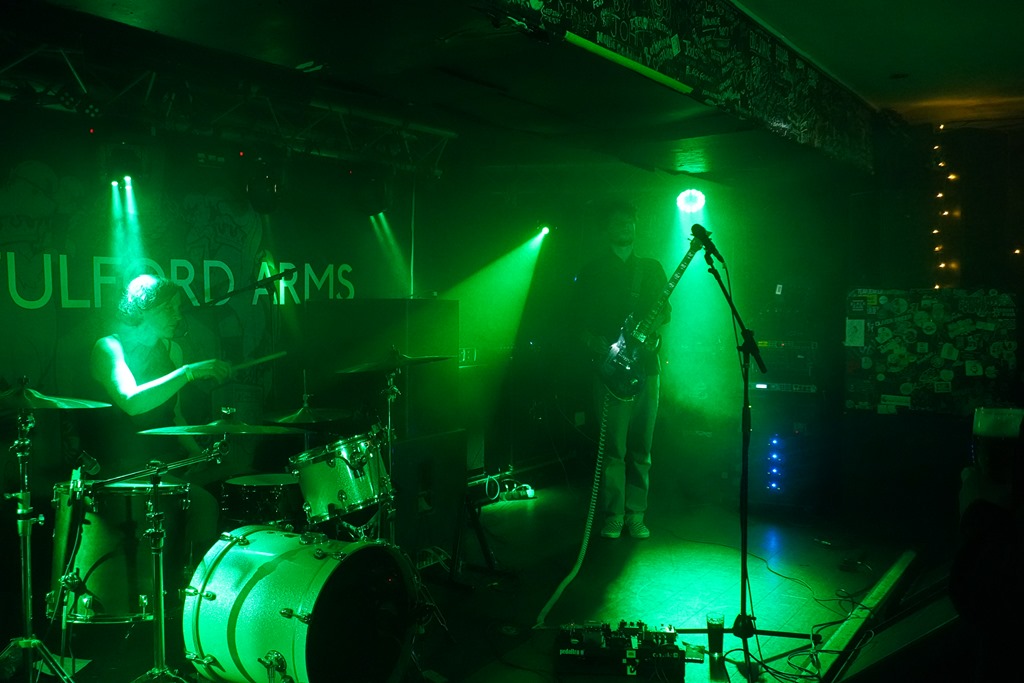
LIVE For The Very Last Time (2016-2024) captures everything that was great about this trio. Awkward, honest, slightly disconnected between-song chat is integral to the experience, and there’s plenty of that – including comments on someone’s wind – on this warts-and-all, as-it-happened recording, captured in Leeds in the intimate but awesome grassroots venue, Wharf Chambers, where the sound is always good – and loud – the audiences are friendly, and the beer is cheap.

There are no overdubs, there’s no polish or pretence, and LIVE For The Very Last Time (2016-2024) is all the better for the fact. The mix isn’t always balanced – the vocals are half-buried and times and the guitars are way loud at times, but what you get is a feel for being in the room.

The music is gloriously wonky, skewed, angular math-rock with some valiant forays into noise. The vocals and guitar both veer wide of melody; it’s the lumbering, loping, rhythm section that keeps everything together: without them, it would be a complete disaster. But this is how some bands work, and Beight Palace always sounded like a band on the brink of falling apart, in the same way Trumans Water always sounded like they may or may not make it to the end of the song as they jerk and jolt their way through waves of chaos.

‘Update Hello Blue Bag Black Bag’ which lands mid-set making its debut and final appearance is unexpectedly evocative, and the eleven-and-a-half-minute ‘Dinner Practice’, also unreleased, hints at the trajectory they might have taken on their next album.

Beige Palace were never going to be huge: they were cut out for cult fandom, and comfortable with that, being one of those bands who made music for fun first and foremost. It’s the sense of fun that come across here. Even in the most downtempo songs, what comes across is that they’re enjoying playing. They will be missed, but we look forward to their next incarnation.

AA

a3696456151_10

ENCI Records

Christopher Nosnibor

It’s taken me a while to get around to this one. It happens, and happens often: I’m simply overwhelmed by the sheer quantity of new – and exciting – releases that land with me on a daily basis. Of all the things to be overwhelmed by (and I will confess that I often find myself overwhelmed by many other things, too, from parenting challenges to DIY, budgeting and the prospect of driving to the supermarket), I do realise that I’m extremely fortunate. But there’s a specific reason I’ve selected this album to post a review of today. Why today? For those who live in a vacuum – and at this moment, I truly envy you – today is the day Oasis announced their reunion and a fourteen-date UK tour. ‘The news the world has been waiting for’, people frothed on FaceBook. Fuck me: judging by the reaction and the blanket press coverage, you’d think world peace and a handout of million quid for every person on the planet had just been announced simultaneously. But no. Just a couple of gobshites have decided that for a few hundred million quid they can bare to be in one another’s presence for a bit. It’s not even looking like it’s the full or original band reuniting.

For many, Oasis were, and remain, the best band on the planet in the whole of history. For anyone with ears, they were purveyors of lumpen, lifeless, plodding, derivative pub rock. A great many of the people who are going absolutely fucking apeshit at the news are broadly in my demographic, who were in their twenties in the nineties, and who, on hitting thirty, found their cultural clock stalled, and they’ve spent the last twenty years or so bemoaning the fact that there’s no been any decent new music since the 90s and how they miss Chris Evans and TFI Friday.

Just as age tends to have a correspondence with increasing political conservatism, so the same is true of musical tastes. It’s why parents of every generation gripe about the music their kids listen to and dismiss it as being shite, without appreciating that they’re not supposed to like or even understand it, because they’re not the target audience. Do I get K-Pop? No, no more than Skibidi Toilet makes any sense or provides any amusement to me. It would be weird if I was down with the kids at the age of 48, and my daughter would likely find me even more embarrassing if I was than being the dinosaur she perceives me as. BUT – and it’s a massive but, a but so massive Sir Mix-A-Lot would die for, that doesn’t mean that there’s no new music of interest any more.

Certified, the debut album by San Diego-based Los Saints, is a perfect illustration of this fact. They describe themselves as an alternative rock band. Various other sources, in their coverage, have referred to them as showcasing a ‘bold indie rock sound’, ‘indie’, and even ‘Chula Vista’s version of Cage the Elephant’, alongside numerous comparisons to The Strokes. I’m not a fan of either The Strokes or Cage the Elephant, but that’s beside the point: both of these acts have produced music far more exciting than anything Oasis mustered during their career spent serving up half-baked bollocks and right now, in the present, amidst the endless wanking over the announcement that after fifteen years a couple of overrated has-beens are going to reheat their tedious, tepid stodge in the name of nostalgia and the interest of payola, we have Los Saints giving us Certified.

There are rib-rattling basslines aplenty, which give the songs – which tend to be on the shorter side, with only a couple of the album’s ten tracks running over three and a half minutes – a really beefy sound and a certain dynamism, an urgency (the likes of which you’ll hardly ever find in an Oasis song). Lead single ‘Faded’, which kick-starts the album with a lively two-minute stomp not only gets things off to a cracking start, but sets the tone, too – dreamy, slightly fuzzy, psychedelic vocals and mellow guitars contrast with the stonking rhythm section, and if anything, ‘Where We Goin’, which follows it is even better, and then again, the punky, poppy, melodic guitar driven indie of ‘Hard’, which lands perfectly between Asylums and Pixies. Even if the rest of the album was shit, after this opening run, you wouldn’t grumble. But no, they keep on delivering joyous tunes with the grungy pop nouse of DZ Deathrays crossed with the driving tones of Darklands era Jesus and Mary Chain and a dash of A Place to Bury Strangers. The title track pairs a nagging guitar with another chunky-as-anything bass before blasting into a breezy but sturdy chorus, and there simply isn’t a dud here.

The production isn’t overly polished, giving the album a live-sounding energy, and this only enhances its appeal, because you feel the band are really in the music, feeling the playing of the songs. Yes, some of the touchstones may be from some mythical golden era – as identified by people of a certain age – but Los Saints show that they can write songs – rather than rip them off – and deliver them with a contagious vibrance.

Bollocks to nostalgia: Certified is proof that not only is there some great new music around, but that a lot of stuff that’s held up as being ‘classic’ is objectively underwhelming and its status is tied to a period in time – and popularity is no measure of anything other than popularity itself – or, more probably, good marketing.

AA

Certified_-_Album_Cover_Resized

Slaughterback – 22nd August 2024

Christopher Nosnibor

Dallas Kent might sound like a fictional cowboy, or possibly a made-up American town in a made-up state, but it’s actually the name bestowed upon the collaboration between London-based composer/producer Ian Williams (originally from Canterbury, Kent) and singer Crystal Brown (from Dallas, Texas). In that context, the moniker makes sense, of course.

As their bio explains, ‘It started in the late 2010s when Williams was looking for a singer to work with on some of his dark electronic pop songs, with Brown happening to live one street away from his studio in Hackney, East London… They swiftly recorded a considerable amount of material, but had to shelve the project when Brown relocated to the USA. The duo continued to discuss their options until finally, with Crystal settled in San Francisco and the pandemic giving everyone time to pause their normal lives, they decided to complete what they had begun so many years before.’

There’s no question that the pandemic changed a lot, if not, in some ways, everything. While many suffered with extreme alienation and the traumas of isolation and separation, it also forced a realisation of what was achievable, creatively, despite separation, and proved that the idea that ‘distance is no object’, which had long been embedded within the channels opened by The Internet was not merely a concept, but something which was more than simply a conceptual matter.

I suppose I realised this around the turn of the millennium, when I experienced something akin to a lockdown situation of sorts, albeit for very different reasons. I had relocated to Glasgow around Easter 2000 under difficult personal circumstances. I didn’t really know anyone. I was yet to make friends in my new job there. And I was so fucking broke I could barely afford to eat – a situation not particularly conducive to socialising and building new friendships. A friend I had known in York, who had subsequently moved to Sheffield, introduced me to Hole’s chatroom, and, stuck at home and unable to sleep, I found myself spending my nights online chatting to people from around the world at all hours, at least until, with dial-up Internet costing a penning a minute, I racked up a phone bill I couldn’t pay, and had my phone cut off. Then along came MySpace, and again, the possibilities for communication and collaboration across continents were immediately apparent. People who missed the age of the chatroom and MySpace were perhaps less predisposed to these potentialities, and consequently, the pandemic lockdowns hit them harder: they had to learn these things anew.

Anyway. This single entitled ‘Ghost Highway’, which, their bio tells us, ‘is redolent of Massive Attack and Ennio Morricone’ is the first fruits of their collaboration, ahead of ‘a full album that promises to be a mash-up of cinematic downtempo sounds, Americana, French disco and anything else they can throw into the mix.’

‘Ghost Higheway’ is very much a spacious trip-hop-influenced piece, with haunting vocals and a thick, dubby bass rolling low under a slow, deliberate, nod-along beat. Its magnificence lies in its sparse simplicity, and the fact it’s over almost as soon as it begins, and you find yourself yearning to delve deeper, to keep moving into this atmospheric world they’re presenting… it’s like the opening pages of mysterious, mystical novel, drawing you in and then…

The accompanying video is similarly compelling but without resolution: they describe it as ‘David Lynch-ian’ and explain how it was ‘filmed by Brown on her phone before being edited as psychedelically as possible by Williams.’

That they’ve kept this all in -house and simple and delivered something so compelling, so strong, is testament to their imagination and capacity for innovation, proving just how much can be achieved with minimal tech and over distance, given the drive and determination.

AA

37a5cb68f0cdad3a9a9e149ada8a125c052e391b2f9e5cde7010f1832fba7bd5751f2e8bee6f60fe

DALLAS KENT | Crystal Brown (photo by Ian Williams) & Ian Williams (photo by Damien de Blinkk)

Metropolis Records – 23rd August 2024

Christopher Nosnibor

Even at their commercial peak, PIG releases weren’t all that easy to come by, at least here in the UK, despite some of them being on big labels with big distribution. PIG – the project of London-born Raymond Watts – is an act which can legitimately claim to be big in Japan while largely unknown at home.

My own first encounter was seeing them support Nine Inch Nails on The Downward Spiral Tour in Wolverhampton in 1994. I was in the middle of my A-level exams, but no way was I going to miss NIN. I didn’t even know who the support were, but witnessing the heavy grind of PIG, with pigs’ heads on poles at the sides of the stage, as their lanky singer writhed his way through a gritty set was an absolute revelation. The set’s opening song stuck with me, but it was some years before I would actually source a copy of Red Raw and Sore, on this new site called eBay. The debut album, A Poke in the Eye…. With a Sharp Stick and the ‘Sick City’ 12” were fairly easy to find at record fairs around 1994, as Wax Trax! vinyl was available in abundance, and often cheaply, too, but anything else? Pretty much impossible to find. And so it was that PIG felt like a near-mythical act, and despite having played these big shows with NIN, still no-one was really aware of them.

Sinsation was released first in Japan in 1995, and a year later in the US, and on learning of its existence, I got my local record shop to order it in, but had to wait literally months for it to arrive on import. Oh, but it was worth the wait. It delivered all of the theatrical pomp that defined A Stroll in the Pork, but cranked up the dirty industrial guitars and found Raymond Watts in top form with his extravagant wordplay. In short, it reset the bar, not just for PIG, but for what ‘industrial’ music could be. This wasn’t just hard and heavy, but also playful, witty, intelligent, and still dark, seething.

The cover alone is striking. Watts’ image is a standard feature on all PIG releases, but whereas more often than not he is depicted looking buff or brooding, the sickly green hue is unsettling – and slamming in with a series of orchestral strikes and a low, grumbling bass before hitting full-on industrial anthem mode on the first track, the six-minute ‘Serial Killer Thriller’ (the chorus of which provides the album’s title), it’s immediately apparent that Sinsation is something special (and not something sad…).

Admittedly, despite this being an album I’ve played to death over the last thirty years, apart from a few tracks being a few seconds different in their duration, I can’t discern any huge differences between this remastered version and the original: there are, perhaps, more details revealed in the mix, but then, the production on the original was impressive, and again, I’ll come back to that word, ‘detail’. There’s a lot happening; samples, snippets of bits and bobs, strings, multi-layered vocals… A touring member of Foetus early in his career, with JG Thirlwell involved in the early singles and debut album, Watts clearly learned much from Thirlwell, as well as his early involvement with KMFDM. Sinsation felt like the point at which he brought these two aspects together in perfect balance while simultaneously realising his own unique sonic vision. The result was a set of hefty, driving songs, exploding with ideas and noise, and so many layers, so much going off all over the place. It was bold, audacious, and while it’s easy enough to say that it’s a bit Foetus, a bit KMFDM, it goers so far beyond these points that comparisons are a diminishment of Watt’s achievements here.

Sinsation is certainly the first PIG album to showcase the full range of styles and compositional aspects Watts has in his locker, and as such, represents something of a creative peak.

While nominal single ‘Painiac’ (an early version of which was the lead track on a Japanese-only EP, and a video for which got a few spins on MTV on the album’s release) is a throbbing industrial beast of a tune, ‘Golgotha’ is a dark, semi-ambient interlude which sits between the driving snarl of ‘Hamstring on the Highway’ and the swaggering industrial-strength glam-tinged gospel-infused dark pop of ‘The Sick’, which would provide the blueprint for the PIG renaissance which started with The Gospel in 2016. ‘Analgesia’ is a magnificently atmospheric piano-led instrumental which incorporates elements of ambient and electronica and extraneous noise ‘Volcano’ is serpentine and sleazy, with some audacious orchestral work in the mid-section which take the bombast of Foetus’ Nail to another level, while ‘Hot Hole’ drives hard and heavy with pulsating electronics colliding with hefty chugging guitars and ferocious beats.

For the many who likely missed this the first time, this re-release provides the opportunity to make acquaintance with one of the definitive PIG albums, and for those already familiar, it’s a timely reminder of the incredible journey that has been PIG’s career to date, while offering the first chance to get it on vinyl. Almost thirty years on from its first release, Sinsation still sounds phenomenal – insanely ambitious, utterly deranged, and in a league of its own, quite unlike anything else before or since, even within the PIG catalogue.

AA

a2059987689_10

23rd August 2024

Christopher Nosnibor

I’ve been enthusing over Eville for a while now. This is no small thing: in the main, I’m not really big into Nu-Metal. Back in the late 90s, the emergence of Limp Bizkit and KORN didn’t so much leave me cold as cause me to wilt inside, and as time progressed, the emergence of more, ever lamer and more cliché exponents of the genre pushed me deeper into the realms of despondency. Anyone who’s read anything I’ve written over the last decade will know that I’m not one of those middle-aged sad-sacks who bemoans the fact that there hasn’t been any new music worth listening to released since I turned 30. I’m not frozen in time, and I don’t believe that any genre is completely and irredeemably shit. Even Nu-Metal.

Eville are a case in point. One reason Nu-Metal was shit back in the day is because it was so overtly the domain of white blokes. So the prospect of a female-fronted Nu-Metal band changes things for a start, and having seen this ad recently, I have witnessed first-hand their capacity to whip up a frenzy.

And ‘Blood’ sure whips up a frenzy alright. It captures Eville at their absolute best: massive, slugging guitar riffs that punish, and hard, on every level, paired with poppy autotuned vocals and keen, earworm melodies. ‘Blood’ strikes the perfect balance between gut-punching riffage and strong melodic tunage. It does not get better than this, and you really need Eville in your life.

aa

eblR0q3w

Room40 – 6th September 2024

Christopher Nosnibor

For an album that’s based solely on the sounds of the guitar, Dust Resonance sounds distinctly unlike a guitar album. As the title, Dust Resonance, suggests, this is a work of extended, drifting drones, a set that’s predominantly ambient in nature.

But as Norman Westberg’s recent solo releases – also released on ROOM40 – have demonstrated, it is quite possible to take the guitar into this territory, and to create expansive, subterranean drones with just six strings and some distortion pedals, and perhaps some reverb thrown in.

As Zimoun himself explains, he was interested in the guitar as a sound source for some time and have explored it on previous editions including Guitar Studies I-III. “On this work,” he says, “I’ve experimented with different methods and materials, specifically a Magnatone tube amplifier from the 1960s, and various speaker membranes covered with dust, soil, or small stones. The friction of these materials on the vibrating speaker membranes produced slight distortions and irregularities in the sounds, alongside the warm tube tones of the vintage amp.”

As such, the dust is rather more literal than metaphorical here, but the title and the substance of the sound presents a work that functions on multiple levels, with the connotations of dust settling as time elapses and the idea of dust and drones hazing together working alongside the physical interference of organic material with the mechanics of the recording process.

Zimoun’s approach, then, like Westberg’s, is similarly simple and sparse, but at the same time, adds an edge of experimentalism which is quite unique. The addition of materials to create friction and alter the texture of his guitar may take its cues from the ‘prepared piano’ pioneered by John Cage and taken forward as a career choice by Reinhold Friedl. I can’t think of so many examples of the guitar being twisted and mangled in such a way, or an artist taking such an organic, earthy approach to breaking down the fundamentals of the sound of their instrument of choice. It does, however, create the context for an album which features nine dronescapes which creep into one another to forge a continuous hum, scratching, scraping, quite literal earthworks. The thought of earthworks draws me to a place where I find myself reflecting on hut circles, tumuli, and the landscape of the iron age, something I was fascinated by in my early teens and have once again become drawn to having resumed, after a lengthy period, walking moorlands and studying the details of OS maps. And so it’s purple-hued heather-covered moors and outdoor expanses which occupy my mind as I listen to this, a work which evokes similarly vast and barren spaces.

The album contains nine numbered pieces, which hover low and heavy and segue into one another to create one single, monolithic work, and one of immense density. The colossal ‘DR Part 2’, which grinds on for almost nine minutes is exemplary.

I recently wrote on the experience of listening to the instrumental ambient release Ambient Short Stories by Bistro Boy, which slotted firmly into the ‘background’ ambient slot: soft, gentle, undemanding. This is most definitely not background: the dense, buzzing tones and uncomfortable frequencies of Dust Resonance place it firmly in the foreground. It’s impossible to settle back and let this drift over as you yawn and slowly relax into a space of tranquillity. Dust Resonance makes you squirm, sends tension down your spine. Throughout, there is a sense of unease, discomfort, of wrong, which rumbles in the guts.

Dust Resonance is a work which, beneath its smooth surface ambience, is grinding, rough-hewn, slow, and dragging, with billows of cloud accompanying the low-level churn. Something about this, paired with the slow-building spin, starts to feel a shade disorienting. You might sleep, but you may not sleep comfortably.

AA

a0068423991_10

Self-released – 23rd August 2024

Christopher Nosnibor

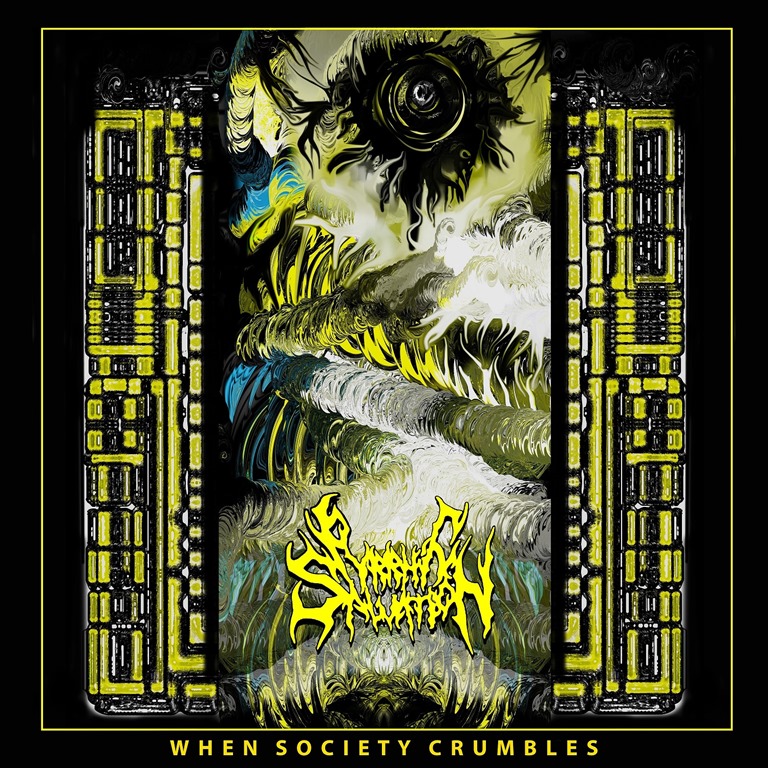
Violent and Murderous Thoughts is the second EP from ‘Horror-themed death metal act Morgue Terror’, and this one is all about ‘chronicling the atrocities of four sadistic serial killers and a debauched, abusive sect’ across its five tracks. In this sense, it broadly represents a thematic continuation of its predecessor, their eponymous debut, which was ‘all about the murders and characters in the Terrifier movies’. Nerds. However, it also marks something of a departure, being their first release ‘to have an actual drummer, with Dustin Klimek (ex-Full of Hell) behind the kit’.

His presence has certainly brought a new dynamic to the sound, with (full of) hell-for-leather pedalwork bringing relentlessly powerful beats to propel the furious fret frenzy and guttural grunting vocals. I mean, it’s impossible to determine by ear who any of the sadistic serial killers might be, and serial killers really have been done to death – if you’ll pardon the pun – and have, thanks to Channel 5 and Netflix, become completely mainstream. Still, in terms of revelling in gore and death metal tropes, Morgue Terror deliver everything they promise, and this EP sounds exactly the way you’d expect it to based on the bloody, gruesome cover art. Sure, it’s puerile and way over the top – the cover and the music – but it works.

‘Chessmaster’ (inspired by Claude Bloodgood, perhaps?) showcases some well-conceived dynamics, with tempo changes and breakdowns aplenty and some interesting chord progressions, packing a lot of action into only a little more than three minutes. ‘Bludgeoned_Brutalized’, the longest of the songs and running past four minutes conveys the sentiment of the title as an aural manifestation, relentlessly battering the listener with punishing force. The vocals sound as if they’re being coughed through a cascade of blood while the guy’s entrails are being torn out through his abdomen. Make no mistake, this is nasty, and single cut ‘Neanderthal’, which features guest vocalist Cheney Crabb is punishing from beginning to end, three devastating minutes of raw intensity.

There is simply no let-up across the duration of Violent and Murderous Thoughts, and while the whole EP may only have a duration of around eighteen minutes, it’s a blunt forced trauma in musical form: hard-hitting and harrowing, it leaves you feeling battered, bruised and borderline concussed.

AA

397796

Möller Records – 9th September 2024

Ambient Short Stories is the tenth album by Frosti Jonsson, who records as Bistro Boy. As selected monikers go, this isn’t one of the best in terms of what it connotes, at least for me. While I accept that there’s an element of personal perception involved here, there’s little escaping the fact that there’s a strong whiff of middle-class superiority in the mix here, a late-nineties / turn of the millennium snobbery with a hint of contemporaneous IKEA-tinged cool.

Cut back to 1997, my then girlfriend and I bought our first flat, a cardboardy newbuild with magnolia walls and magnolia carpets, which we stuffed with pine units and furnished the dining part of the open-plan kitchen-dining space with a trendy bistro-style circular table and chairs. On the other side of the same room, we’d sit on the IKEA sofa and watch Friends. I’ve actually got no beef with Friends, but fuck me, talk about cliché. We actually thought we were cool, and our friends did, too.

Ambient Short Stories contains eleven instrumental – and as the title suggests – ambient works, which are pleasant, mellow, easy on the ear. Fair enough. The compositions aren’t the sort of thing you’d actually hear in a bistro, or any other social setting for that matter, although the style is very much background when it comes to the level of attention the album demands. From amidst the generally gentle drifts and rippling waves pipe up some unexpected incidental bits and bobs, and these interjections – whether they’re woodwind or some dominant lead synth or something else – feel a bit out of place, a fraction loud in the mix, a bit wrong, and also a bit dated, a bit post-Tubular Bells 80s / 90s New Age.

Ambient Short Stories isn’t bad, by any stretch: in fact, as a gentle ambient work, it brings almost exactly what you’d probably want: it’s slow, supple, soothing, spacious, and quite soporific, to the point that it almost feels like AI has conjured the perfect balance of light and dark. It isn’t particularly gripping, but I don’t think it’s intended to be, instead sowing seeds of ponderousness.

AA

Ambient Short Stories - Ambient Short Stories - Bistro Boy

Cruel Nature Records – 11th September 2023

Christopher Nosnibor

For those unfamiliar with ShitNoise, their bio describes them as ‘a noise punk band hailing from Monte-Carlo (Monaco). Formed in February 2022, the band has undergone several lineup changes. Currently, it consists of Aleksejs Macions on vocals and guitar, Vova Dictor on guitar, and Paul Albouy on drums.’ What’s more, they reckon their third album, I Cocked My Gun And Shot My Best Friend, ‘showcases their most energetic and mature work to date… Departing from their previous noise-centric style, the band blends grungy guitar riffs, metal-influenced double-kick drums, and a more polished production. The album explores themes of confronting the harsh realities of society and the lasting psychological impact of traumatic events. Through gritty soundscapes and stream-of-consciousness lyrics, it paints a raw portrait of present-day existence and the enduring human spirit in the face of adversity.’

I’m often wary of bands and artists who claim to have matured: all too often it means they’ve gone boring, that they’ve lost their fire and whatever rawness, naivete, edge, that made them stand out, drove them to make music in the first place. But these things are relative, and ShitNoise isn’t just a gimmicky moniker, but a fair summary of what they do. Here, they’ve stepped up from no-fi racket to lo-fi racket and evolved from the trashy punk din with dancey and electronic elements that at times sounded like a Girls Against Boys rehearsal recorded on a Dictaphone, toward a more wide-ranging and experimental approach to noisemaking. As for the album’s title… well. Was the act an accident, one of stupidity, gross negligence, or intentional? Either way, as the adage goes, with friends like these… ShitNoise are certainly not the friend of sensitive sensibilities, or eardrums.

So sure, they’ve ‘matured’ inasmuch as they’ve broadened their palette, but in doing so, they’ve discovered new ways of creating sonic torture.

‘Ho-Ho! (No More)’ launches the album with shards of shrill feedback and distortion: it’s two and a quarter minutes of nails-down-a-blackboard tinnitus-inducing frequencies and deranged yelping that’s somewhat reminiscent of early Whitehouse, minus the S&M / serial killer shit. Not that I have a fucking clue what they are on about, and the noise is so mangled it’s impossible to differentiate any of the sound sources from one another – guitars sound like screaming synths, and there’s so much dirty mess in the mix everything sounds so broken you begin to wonder if your speakers are knackered.

Proving just how much they’ve ‘matured’, ‘Brown Morning’ barrels into churning noise driven by thunderous beats as the backdrop to a rappy / spoken word piece, after which the arrival of the fairly straightforward punk tune ‘Gum Opera’ feels like not only light relief, but somewhat incongruous. But then, in the world of ShitNoise, anything goes, as long as it’s noisy shit. And keeping on with the noisy shit, there’s the gnarly Jesus Lizard meets Melvins gone rockabilly slugging sludgepunkfest of the oxymoronic ‘Pleasant Guff’ to go at, and it’s abundantly clear that they’re absolutely revelling in following their curiosity in every direction when it comes to exploring any and all avenues of racketmongering. I Cocked My Gun is wild, and wildly divergent, stupid, chaotic, and fun.

If the off-kilter grunge of ‘X-Ray Phantom’, with its incidental piano tinkling along behind crunchy guitars hints at something approaching a kind of sensitivity – and a closet ability to write songs – ‘Endless Void’ demonstrates their capacity to step back from noise completely, and venture into near-ambient territories, and with remarkable dexterity.

But mostly, these deviances only serve to bolster the impact of the manic racketmaking which dominates the album, which brings us to the epic penultimate track, ‘Hashish (The Yelling Song)’ – a ball-busting seven-and-a-half-minute stoner-doom slammer that slaloms its way through some heavy drone and some explosive psychotic episodes… and we’re immensely proud to be able to present an exclusive premier of the video which accompanies this mammoth slab of sonic derangement right here:

Get it in your lugs. Let it permeate every cell. Bask in the insanity. With I Cocked My Gun And Shot My Best Friend, ShitNoise have really gone out on a limb, and while teetering on a precipice of madness, have proved that artistic fulfilment lies on the other side of mania. It’s a far more enjoyable place than the everyday in which we find ourselves of late, so why not dive on in?

AA

a2752328939_10

Rare Vitamin Records – 23rd August 2024

Christopher Nosnibor

Ramping up the anticipation for their upcoming album, hot on the heels of ‘O God’, The Battery Farm slam down a second single in the form of ‘Hail Mary’. One of the physical formats happens to be a rather nifty mini-CD. I’m rather partial to these as objects – so much so that I released a double-pack of EPs on 3” CD recently. Back when CDs singles were a standard format – and more often than not as a standard and limited edition, alongside a 7”, 12”, and cassette single, back in the early 90s at the peak of releasing as many formats as was humanly conceivable in order to milk fans and maximise copies sold for chart placement – the mini CD offered a format that was both practical and novel: with a capacity of around twenty-three minutes, they provided just the right amount of playing surface and so not only seemed less wasteful than a 5” disc with its seventy-odd minutes space, but they looked dinky, too. The challenge was always how to package them, though: I have 3” singles by The Sisters of Mercy from the late 80s in 5” jewel cases, complete with plastic adaptors for those whose CD player trays didn’t have a 3” divot, although this sort of seemed to defeat the object of the object, if you get my point, while the ‘battery pack’ style limited editions of the singles from the second album by Garbage were as stupid as they were cool, inasmuch as to play the things, you had to trash the packaging – which was probably the idea as an artistic wheeze, presenting fans and collectors with the dilemma of whether to play or preserve it (or buy two).

Of course, while presentation matters, it’s ultimately the content that counts, and with ‘Hail Mary’, The Battery Farm continue the trajectory of ‘O God’, with some sparse, jittery, slightly mathy instrumentation providing a tension-building lead-in before things kick in hard with a fat, buzzing bass around the mid-point.

‘Get this thing the fuck away from me,’ Benjamin Corry snarls with in a thick northern accent, dripping with vitriol, his throat full of phlegm and gravel, and in no time at all, the anguished vocals are spluttering out through a whirling cacophony of noise. It hits like a punch in the guts, and every spittle-flecked syllable feels like it’s being coughed up from the furthermost recesses of Corry’s soul. And yet, amidst it all, there’s a nagging riff, thumping beat you can really get down to, and even a snippet of backing vocal adding a bit of harmony.

For The Battery Farm, B-sides represent an opportunity to explore and experiment, and ‘2 Shackwell Road’ is no exception, with a collage of vocal samples looping across a stammering drum ‘n’ bass beat which gives way to a low-end rumble and occasional blasts of industrial noise. The result is strange and disturbing.

Taken together, the two singles thus far likely give us a fair indication of what we can expect from the album, Dark Web, due in November. It threatens something stark, uncomfortable, a psychologically demanding set of songs which go deep into dark territories, and promises to be their strongest work to date.

AA

Battery Farm - Hail