Archive for the ‘Reviews’ Category

Peaceville – 19th July 2024

James Wells

Since their inception as Our Haunted Kingdom in 1995, before transitioning to Orange Goblin and releasing their debut album, Frequencies From Planet Ten in ’97, OG have established themselves as leading exponents of heavy metal thunder.

Science, Not Fiction, explores, as the press pitch puts it, ‘the world as seen through the three fundamental factors; Science, Spirituality, & Religion and how they determine and affect the human condition.’

On the one hand, this is very much hoary old-school metal, with monster riffage cranked up and driving hard with gruff vocals giving it some. But on the other, it’s hoary old-school metal that’s very much more in the Motorhead vein than, say, Iron Maiden. It’s got the heavy swagger of the best of stoner, the monstrous density of slugging, sludgy doom. Fretwanking is kept in check while ball-busting riffery is cranked up to eleven. No shit, this is how it should be done.

‘(Not) Rocket Science’ is exemplary, and brings both the riffs and the cowbell. They sling in some sampled speech on ‘Ascend the Negative’, which offers a solid sense of positivity pushed on by a pounding riff and thunderous percussion. ‘The rich inflate their egos while the poor just foot the bills’, Ben Ward growls on ‘False Hope Diet’, clearly establishing their political position. This enhances my personal appreciation of the band, for certain – but as much as anything because of their up-front engagement with issues, rather than just pumping fists about birds or relationships. That shit just gets tired and has been done to death, as has mystical bollocks for that matter. It ain’t the 70s anymore, man.

Orange Goblin by no means strive to subvert or place a spin on well-established genre tropes: if anything, quite the opposite is true: Science, Not Fiction absolutely revels in them. But, at the same time, in terms of subject matter, Science, Not Fiction is bang-on contemporary and on point.

There’s simply no arguing with this album: Science, Not Fiction is all the meat, there’s no let-up from beginning to end: nothing but riff after riff, delivered with confidence and brute force. Good shit.

AA

a2836724414_10

Sacred Bones – 23rd August 2024

Christopher Nosnibor

You know that when the bio for an album’s release is prefaced by a trigger warning, this is going to be some pretty powerful stuff. But this being a Uniform album, it almost goes without saying. Since their inception, they have gone all-out on every level, with the harshest noise providing the backdrop while Michael Berdan strips his skin to make the most brutal, unbridled, rawest expositions of the human condition, invariably born out of his own personal traumas.

I’ve often wheeled out the line that in the personal lies the universal, and even where there’s no direct correlation in terms of shared experience, the articulation of extreme emotions often provides a vessel whereby the outpouring of an individual’s catharsis offers a chalice into which others may pour the flow of their own emotional stigmata. If the metaphor seems a shade overwrought, bear with me.

Uniform is, unquestionably, a vehicle through which Berden vents endless pain and anguish. He’s a troubled person, and he’s open about this, to the extent that it’s more than just a but uncomfortable. But this isn’t some kind of trauma porn ride: the appeal of Uniform is this raw honesty, the absence of filter. You know – and feel – this is real. It’s not a case of manipulating the listener’s emotions, but an example of creativity as a vital outlet, a survival mechanism, even. It doesn’t exist for anyone’s entertainment. And with each release, Uniform, seem to find new heights of intensity, and new levels of sonic brutality, while dredging new emotional depths.

Shame felt like a gut-wrenching pinnacle which would be difficult, if not impossible, to surpass – but then, so did The Long Walk. In this context, it should come as only small surprise that American Standard goes even harder and harsher, but the simple fact is it would hardly seem possible. But here we are.

In the run-up to the release, Berden has spoken / written openly and in detail about his struggles with bulimia, and the fact that over many years of managing alcoholism and having come to a point whereby this is no longer a taboo topic, breaking down this particular wall has felt altogether harder.

Even the preceding singles, ‘Permanent Embrace’ and ‘This is Not a Prayer’, could not have provided anything like adequate forewarning of the intensity of the album as a whole.

I shall quote, while I take a moment and steel myself for this:

“The following songs are about a lifetime of making myself vomit,” Berdan writes in the personal essay that accompanies the album. His pain is so apparent, so immediate, that it feels like hearing someone scream for the very first time. “There’s meat on my face, that hangs off my face, sweats like I sweat, cries like I cry.” The music finally begins with those words, not in a glorious crash and clatter but in the tones of a gurgling drain. This is the sound of liquid moving through pipes that are full to the point of bursting with things usually hidden inside of stomachs and behind mental walls.

It all starts with an admission. Beneath the harrowing screams, there’s the pain of bulimia nervosa. There’s the pain of a sickness that is as physical as it is psychological. This is a kind of coming out. This is a kind of emergence. A far cry from edgy provocation or high school level transgression, this is something truly unacceptable.

As one might fear, this is just the beginning. As Don Delillo once wrote, “There are stories within stories.”

American Standard contains only four tracks, but the first, the title track, is fully twenty-one minutes long is the definition of harrowing. It’s a massive departure, in that with perhaps the exception of their 2015 debut, their compositions have conformed to the fairly defined structures, often with verse and chorus structures built around chord sequences and the arrangement of the percussion.

After an intro that can only be described as a scream of pain, ‘American Standard’ lurches into life as a churning throb of noise, and Berden’s bonne-rattling roar is only just audible amidst the pulverising fizz. When the power chords kick in, they’re like a full-on slam to the guts. Around the nine-minute mark, some keys enter the mix and there’s almost a redemptive tone, at least in the music, but Berden’s vocals continue to articulate the upper reaches of anguish. This is a different kind of purging from the subject matter – a flaying, emotional purging, a release of all of the years of torture and self-flagellation, distilled to the highest potency. It’s the barely human sound of breaking, breaking, emptying, over and over. The lyrics may not be easy to decipher, but the excruciating pain Berden articulates in their delivery is unmistakeable as he howls his larynx to bleeding shreds amidst a thunderous cacophony worthy of Swans live performances. If it’s not the heaviest shit you’ve heard all year… well. Just making it to the end of the title track is a thoroughly draining experience that leaves you feeling utterly spent.

The pounding machine-gun drumming, squalling, atonal synths and booming bass blasts of ‘This is Not a Prayer’ offer no respite, the layers of vocals, all screaming in pain, is beyond punishing: you feel your chest tightening and breath growing shorter with each intake, your throat clenching. The sheer physicality of the piece – which they sustain for a relentless six and a half minutes – is a panic attack in a can.

If the introduction to ‘Clemency’ swirls into ambience, it’s a bilious, nauseating brew of sulphur and fumes that festers just long enough to unsettle before the hardest percussion and the dirtiest guitars lurch in and everything becomes intensely claustrophobic. Again, there’s no oxygen, you’re constructed by the density and sheer relentlessness of it all. And it slams away like a lump hammer for almost eight minutes. The arrival of ‘Permanent Embrace’ feels like relief, of only for its brevity. There are some uplifting synths in the mix, but it’s the most savage finale they could have mustered.

The last time a record affected me this intensely in a physical way was over thirty years ago, when at the age of fifteen or thereabouts, having been introduced to Swans by way of Children of God, I picked up a copy of Cop at a record fair. I found it hard to conceive the record was actually revolving at 33rpm: it felt more like three, as time stood still and I felt my body being compressed by its crushing weight.

American Standard is certainly anything but standard. It goes beyond – way beyond – harrowing, or heavy, in any sense that words can easily convey. It’s the hardest listen. It simply hurts. But you know that this was the album they had to make. Forget your discomfort, and feel the pain.

AA

a2313479398_10

Southern Lord – 19th July 2024

Christopher Nosnibor

Southern Lord have once again excavated a long-lost release from the California underground scene, with a particular emphasis on hardcore and metal from the late 80s and early 90s, this time with a reissue of Excel’s 1995 album Seeking Refuge.

For context, while saving myself typing some inferior paraphrased recap, here’s the summary from the bio: ‘From the dark alleys and dead ends of Los Angeles, EXCEL have been delivering maximum crossover since crossover first crossed over. Their classic albums Split Image (1987) and The Joke’s On You (1989) remain linchpins of the genre decades after their release… Originally released in 1995 while grunge dominated airwaves and MTV, Seeking Refuge offers a glimpse at an EXCEL many have never heard before. Out of print for decades, Seeking Refuge will finally get its due, complete with a guest shot from H.R. of Bad Brains (on “Take Your Part Gotta Encourage”) and a video starring Tony Alva for the anthemic single ‘Unenslaved.’’

This is clearly one for fans first and fore most, but equally, one assumes its purpose is to bring the band, and the release, to a new audience, namely the many who missed it the first time around. And there will likely be many – like me – who simply hadn’t encountered the band previously. On the basis of the above, I suspect this isn’t really the optimal point of entry, but then, that’s how it often goes. I came to The Fall by Kurious Oranj and Swans via Children of God: arguably not the most representative of releases, but then again, comparatively accessible. I figure this is a fair summary of Seeking Refuge. It’s certainly an odd fish, and one that sounds solidly rooted in the early 90s.

Opener ‘Unenslaved’ is a bit hair rock meets late 80s thrash for the most part, and reminds me why I was never really into either; there’s just something about the guitar posturing, paired with the clean vocals trying to sound a bit tough that’s kind lame to my ear and to my way of thinking. But it goes a bit acoustic Alice in Chains in the middle, and the idea that ‘crossover’ may actually be represented by a stylistic switch mid-song.

There are some monster, churning, grungy riffs across the album: ‘Take Your Part Gotta Encourage’ is exemplary, not least of all because the chuggeracious thunder is topped with some really showy and extravagant soloing which isn’t afraid of hurtling headlong into the realms of excess.

In terms of composition, the songs are tightly structured, often making sharp turns or tempo changes midway through: ‘Drowned Out’’ suddenly slams on the breaks and drops to a slow Sabbath-esque riff that’s more of a head-nodder than a headbanger, and kicks the pace up again for a big riff finish – but again, there’s some epic fretwork that just feels that bit too much like the worst of 70s rock excess.

For all the context that suggests that Seeking Refuge was lost on account of its being out of step with the zeitgeist, it seems to overlook just how much grunge stuff was quite in thrall to 70s rock and this isn’t a million miles from Soundgarden, unless people are really going to bicker over the details. Don’t get me wrong: there are some proper metal moments: ‘Riptide’ really cuts hard, but still takes cues from Sabbath’s ‘Supernaut’, while ‘Overview’ sounds for all the world like a Rage Against the Machine rip. Seeking Refuge is solid, but not incendiary, and the endless fretwanking does get tired after a time.

With secondhand prices for the original vinyl sitting at around £35, and for the CD around a fiver, I do wonder just how badly the world is itching for this, but then, perhaps this reissue will spark renewed interest more broadly.

AA

a2959660533_10

Cruel Nature Records – 26th July 2024

Christopher Nosnibor

Who’s got guts nowadays? Who even talks about guts nowadays? When I was growing up, guts was a big deal. Succeeding or achieving against adversity took guts and the papers would applaud. Now, you’ll occasionally hear of artists giving gutsy performances, but it’s rare.

But Downtime – ‘the dynamic duo of Dave Sneddon and Mike Vest’ – yeah, they’ve got guts. But then, Mike Vest clearly has restless guts, his monumental and ever-evolving CV listing Guitar Oblivions, BONG, Drunk In Hell, Blown Out, Haikai No Ku, Modoki, Depth Charms, Brain Pills, Hollow Eyes, Lush Worker, and 11Paranoias. Collaborations include Mitsuru Tabata (Acid Mothers, Boredoms), Aoki Tomoyuki (UP-Tight), Fred Laird (Earthling Society, Artifacts & Uranium). When does this guy actually sleep?

Anyway: the naming of this project is likely ironic, and Vest’s concept of downtime differs from that of the rest of the world. He calls it downtime: we call it having a night off to sleep after finally taking a piss.

On Guts, Downtime immerse themselves in long, long, guitar and rum noise workouts, exploiting textures to the max.

The album contains but two tracks, each stretching out to the twenty minute mark.

‘Black Cherry Soda’ goes deep into a psychedelic groove, but it’s dominated by layers of feedback and blistering noise. I’m reminded of Head of David’s HODICA unofficial live album, which captured the band intentionally sabotaging a showcase gig that would have landed them a record contract by playing none of the songs and instead blasting out an ear-shredding wall of noise ;aced with a slew of uncleared samples. As middle fingers to the industry go, this stands, even now, as one of the best. The track drives forward and crashes through every fence and gate standing in its way, picking up pace and volume as it careers, out of control, onwards, ever onwards, on a heartstopping collision course towards its final resting place – smouldering in wreckage having slammed headlong against a wall, feedback and howling tones still spewing forth from the calamitous chaos. But we’re still only seven minutes in… and then shir really goes off the rails in a tempest of truly shattering noise. Every minute sounds and feels like the end, and every second is pulverising. The mess of noise, underpinned by a deep, strolling bass, is a chaos of discord, but also a spectacular document of collaborative musical capability. And this sounds like the work of more than two people.

Colossal noise is an understatement, and ‘Blue Dream’ fades in where ‘Black Cherry Soda’ tapers out, on a tidal wave of feedback before locking into a hefty psychedelic groove with thumping percussion, a foot-to-the-floor bass thunder and a blistering guitar racket that’s truly tranportative.

Downtime have no such specific agenda here, but the bottom line is that that they’ve no interest in the machinations of bigger labels and are quite content to have their staunchly uncommercial noise released to a small sliver of ‘the masses’ by a label who actually cares about what they do. If you dig noisy psychedelia, you need this.

AA

a0740017337_10

Room40 – 9th August 2024

Christopher Nosnibor

Reinhold Friedl was one of the composers / musicians who provided an introduction to new musical forms to me when I started doing this ‘properly’ late in 2008. I’d done bits and bobs of reviewing in local and regional inkies in the mid- to late-nineties, but at that time, I was very much preoccupied with a fairly narrow spectrum, not that I realised at the time.

While I had got into the likes of Throbbing Gristle and Cabaret Voltaire at that point, it was while researching my PhD on William Burroughs’ cut-ups that I came to appreciate John Cage and the prepared piano, meaning that when I was introduced to the work of Reinhold Friedl, I was finally ready.

I certainly don’t want to perpetuate a sense of elitism around this kind of music or art; quite the opposite. I feel that comprehension grows from exposure, and that what’s needed is wider exposure to art which is considered niche. Anyone who has studied the avant-garde will have likely come to understand that much of what is mainstream has evolved from the avant-garde, the underground, before being repurposed, repackaged, commodified and marketed. This is the nature off the avant-garde; this is the nature of capitalism.

But like Burroughs, like Cage, Friedl has remained fringe, underground. The same is true of Gwennaëlle Roulleau, whose biographical details seem rather more obscure.

strata & spheres is a quintessentially experimental collaborative work, which brings together the elements of both contributors in equal measure, with squelchy, microtonal rivulets running through the channels which lay open between slow, ponderous chimes of almost piano notes. Surges and scrapes, like factory workings or excavations, rub against glitchery insectoid flickerings and harsh polar winds.

More often than not, albums such as this, even when released as a download, tend to feature compositions of a similar length, broadly corresponding with sides of vinyl, be it two or four. This seems to be something that many avant-gardists have ingrained in their creative psyche, a certain connection to physical formats – which is rather strange, when one considers the function of the avant-garde, and, simultaneously, the way in which physical formats are now inherently entwined with nostalgia. But strata & spheres is unevenly weighted, and conspicuously so, with ‘Papillon’ having a duration barely over five minutes after the ten-minute ‘Tectonique’, before the two ‘side two’ pieces each spanning a solid fifteen minutes.

In context, the discordant scrape, the buzzing discord, the rattle and crash of piano abuse and broken mic distortion of ‘Papillon’ feels like a mere interlude – albeit a chaotic, violent one. But then, the elongated drones and sighs of ‘Entre les vides’ and ‘Frottements’ are far from mellow; these are difficult, disjointed compositions, full of twangs and scrapes and sounds which simply set the teeth and lungs on edge, and you find yourself, on the edge of your seat, neck muscles tense. The former flits between doomy drones and hyperkinetic movements like liquid mercury rolling as if shaken around a maze.

Clattering, clanking, chiming, and slow liquid bubbling conclude the track before heavy drones and fracturing, snapping strings split apart the arrival of the woozy, droney, fragmented ‘Frottements’. Twangs and scratches pass through low hums and hovering feedback, creating a haunting, atmospheric effect.

While violence and chaos breaks out around the country, strata & spheres may be far from an exercise on calmness and blissful relaxation, but it is immersive and a work which offers a certain escape from reality and the every day. The fact that it’s sonically quite weird at times is welcome.

AA

a3688775077_10

4Bit Productions – 19th July 2024

Christopher Nosnibor

Ulrich Troyer’s output this year has taken an interesting turn. While he’s often favoured comparatively short-form releases (NOK 2020, released in 2020, surprisingly enough, featured six tracks originally released on a 3” CD twenty years earlier, bolstered by additional material to render a full-length album, while other albums in his catalogue contain only four tracks, or more very short ones). But ‘Autostrada del Brennero’ represents this third seven-inch release of the year after four years of silence. However, while ‘Moments’, which we covered here in March was a standalone release, ‘Autostrada del Brennero’ is a companion to ‘Echoes’, released in May, and both are prefatory pieces to the forthcoming album, Transit Tribe, slated for release later this year.

As with Echoes, Troyer has brought on board guest to feature here, with reggae luminary Diggory Kenrick contributing his signature flute to the lead track, and Taka Noda bringing melodica to flipside ‘Brennerautobahn’.

Continuing his pursuit of some deep dubby vibes, as formed the basis of Dolomite Dub, and the Songs for William trilogy, ‘Autostrada del Brennero’ is four and a half minutes of spacious, echo-drenched rimshots which crack out from shuffling drums and cut through spectacularly swampy bass. It’s got groove, but it’s low, slow, and mellow, with Kenrick’s flute adding an almost trippy folk aspect, which is a perfect counterpoint to the fizzling space-rock synth details which burst like laser-beam Catherine wheels.

Either my ears are deceiving me, or ‘Brennerautobahn’, which has exactly the same running time, is the same track but with the flute substituted with the melodica, and as such, this release follows the format of the previous two, where an alternative version occupies the B-side.

This was, of course, common practice on old reggae releases, whereby the B-side would contain a dub version – often simply as a ‘version’ – of the A-side. Here, there’s a certain irony in maintaining this tradition when the A-side is already essentially a dub version, and one doubts this irony will be lost on the artist.

Both cuts are solid – sparse yet dense, confident experiments in bass frequencies and massive echo and reverb it’s difficult to resist the urge to nod along to, slow, heavy-headed, mellow to the max. Good vibes, for sure.

AA

a2643141048_10

12th July 2024

James  Wells

This may be Lanna’s debut single, but she’s by no means new to the industry, and has featured a couple of times here at Aural Aggravation with her band Miss Kill, who have garnered some thumbs up for their feisty grungy / alt rock sound.

Initially, I felt a sense of disappointment, assuming – erroneously, as it turns out – that the duo had parting and would never fulfil the early promise and future potential. It came as a relief to discover that Miss Kill are thriving, and have an album out soon, but in the meantime, Alanna is launching a parallel solo career. It’s a twofer!

But what’s interesting about Lanna’s debut single is that while her bio indicates a continuation of Miss Kill’s energetic flight, their emotive grunge stylings, again referencing inspiration from ‘Alternative, Garage and Pop artists like The Kooks, Hole, Cherry Glazerr, Chris Isaak, Placebo & Pearl Jam’, this feels like quite a departure. The premise is that, ‘rather than whine about breakups and having your heart broken’, ‘Forever’ ‘is all about the amazing feeling you get when you’ve found your special one.’

But for a song that’s so much about an effervescent emotional state, it’s remarkably subdued, with a soft, delicate piano, introspective vocal and backed-off drums with a hushed rimshot keeping slow and steady time. It may be a million miles wide of the mark, but this debut sounds for all the world like Lanna is pining for the thing she’s lost, a sad celebration for the loss of a special one as she finds herself bereft and alone.

That doesn’t mean that ‘Forever’ isn’t true to those principles of grunge and alternative rock, but probably feels more like a mid-album slowie than a lead single, and is more Chris Isaak than Pearl Jam or Hole. Still, it’s a well-realised song with an emotional weight that’s conveyed with sincerity, and leaves many doors open for future releases.

AA

Lanna image 1

Metropolis Records – 7th June 2024

Christopher Nosnibor

Oi, Nosnibor? Call yourself a goff? Well, yes… and no. Y’see, much as many people scoff at Andrew Eldritch insisting The Sisters of Mercy aren’t goth despite displaying so many of the trappings of goth, he does have a point, and one I’m willing to defend when it comes to my own musical preferences.

The Sisters, The Cure, Siouxsie, Bauhaus, bands I came to quite early in the formation of my musical tastes in my teens, are all largely considered exponents of ‘goth’, but were well-established long before the label existed. Tony Wilson said in an interview that there was something ‘gothic’ about Joy Division, and while they were contemporaries, and similarly dark, and – like the aforementioned acts – emerged from the post-punk scene, along with the likes of Alien Sex Fiend, The March Violets, The Danse Society, but somehow manage to avoid the goth tag. Ultimately, the whole thing was a media construct based largely on a false perception of a bunch of disparate acts who shared a fanbase. Just how much bollocks this was is evidenced by the fact the likes of All About Eve, New Model Army, and Fields of the Nephilim – again, bands who shared nothing but a fanbase, in real terms – came to be lobbed into the ‘goth’ bracket.

But then bands started to identify as ‘goth’ themselves, most likely as a way of pitching themselves in press releases, and things started to head south rapidly thereafter.

Having formed in 1981 and being signed to 4AD, home of The Cocteau Twins, and releasing their debut album in 1985 – the same year The Sisters released their seminal debut First and Last and Always – Clan of Xymox belong to the initial wave of proto-goth, in the same way X-Mal Deutschland do. Yet for some reason, they’ve bypassed me. Seventeen albums in, I’m perhaps a bit late to the party, and while I can’t claim to be fashionably late, it’s better late than never, right?

This does mean that I’m approaching Exodus with no benchmark in terms of their previous albums, and with the weight of recently-jettisoned preconceptions and prejudices. Perhaps not a strong standpoint for objectivity, but it’s worth getting these issues out of the way first.

It’s amusing to read how retrospective reviews of their debut criticised the fact it sounded cliché and dated, not least of all because of the synth sounds which dominate. What goes around comes around and vintage synths and drum machines, however tinny, fuzzy, basic, are all the rage once more, with people willing to pay crackers prices for the precise purpose of recreating those sounds.

Exodus sounds like an early-to-mid-eighties dark electro album, showcasing all of the elements of goth before it solidified, before the cliches became cliches. The drum machine programming is quintessentially mid-80s, a relentless disco stomp with a crisp snare cracking hard and high in the mix.

They slow things swiftly, with the brooding, moody ‘Fear for a World at War’ – a timely reflection on the state of humanity – landing as the second track. It’s moving, haunting, but drags the pace and mood down fast, samples and twinkling synths hovering and scrapping over a hesitant beat and reflective vocals.

‘The Afterglow’ combines chilly synths and fractal guitar chimes to forge a cinematic song. It’s unquestionably anthemic, and has the big feel of an album closer. Where can they possibly go from here? Well, by pressing on with more of the same… Much of Exodus is reflective, darkly dreamy, vaguely shoegazy, very Cocteau Twins – at least sonically, being altogether less whimsical in content. It’s undeniably a solid album, and one steeped in the kind of sadness and melancholy that’s quintessential brooding gothness. ‘X-Odus’ hits a driving techno goth sound that borders on industrial, but equally owes as much to The Sisterhood’s Gift, which is really the point at which ‘goth’ intersected with dark disco.

Eighteen albums in Exodus sounds predominantly like the work of a contemporary dreamwave / goth act plundering the old-school with some heavy dashes of late eighties Cure, and while many fans will be hard into it, to my ears, it’s good – really good – but much of its appeal is nostalgia and familiarity, and objectively, it’s just a shade predictable and template.

AA

064556

33.3 – 24th July 2024

Christopher Nosnibor

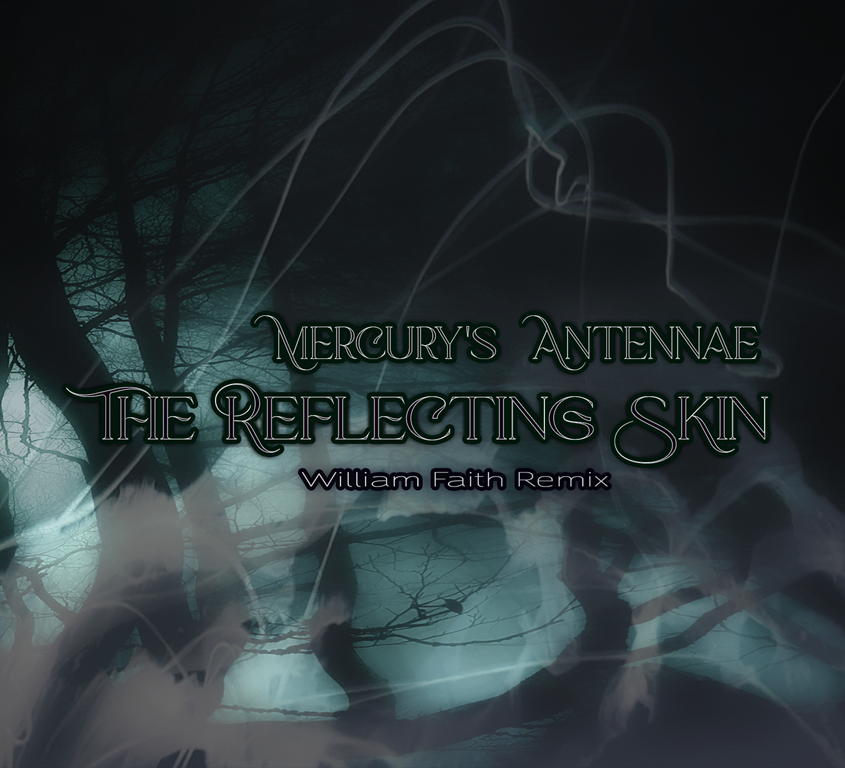
Since their inception and debut album Finding Beauty in Chaos in 2018, the project helmed by Human Drama and Gene Loves Jezebel guitarist Michael Ciravolo has presented a staggering array of collaborators and contributors. Not so much a band as an open music collective, they return with Dancing With Angels, which promises appearances by ‘luminaries from The Mission, The Bellwether Syndicate, Holy Wars, Kommunity FK, The Awakening & Strangelove.’ Indeed, Wayne Hussey has been a regular contributor, and he, and wife, Cynthia return this time around to appear on the dreamy, Cure-esque single cut ‘Diving for Pearls’, with chiming guitars and bulbous bass sound reminiscent of ‘Pictures of You’.

Each of the album’s eight atmospheric gothy post-punk hued songs features a different vocalist or vocalists, with duties shared by William Faith and Sarah Rose Faith of The Bellwether Syndicate on opener ‘Present Tense’, a cut that harks back to the sound of the alternative scene circa 1986, when The Mission were taking their first steps and Gene Loves Jezebel were at their commercial peak. Given Ciravolo’s other work, this isn’t entirely surprising – but what is welcome, and impressive, is the extent to which the sonic blueprint is expanded to incorporate a broad range of styles, stretching out to the shimmery shoegaze dream pop of ‘The Devil You Know’ at one end of the spectrum, and the brooding anthem that is ‘Echoes and the Angels’ via the crackling guitar-driven indie of ‘Kiss Me (Goodbye)’.

With its rippling piano and swooning vocals, courtesy of Cynthia Isabella of Lost Gems (and formerly of Silence in the Snow’, ‘Hollow’ is delicate and emotive, while ‘Holy Ground’ brings soaring lead guitars to a solid rockin’ tune. It may be because it’s sandwiched between ‘Hollow’ and the slow-burning closer, ‘Made of Rain’ (featuring Ashton Nyte making a fifth appearance with Beauty in Chaos), but it feels like the weakest of the songs here.

Whether or not Ciravolo wrote the songs with the singers in mind, or if they evolved around them once they were on board, the fact each guest brought their own lyrics means they feel like they’re in their natural environment, and each songs sounds like it belongs to them. The end result has something of a mixtape feel to it, while retaining that essential coherence.

Nevermore has the project’s moniker felt more apposite: conjured from a whirlwind, an effervescent creative froth of a diverse range of creative minds, Dancing With Angels stands as testament to the power of collaboration.

AA

551286

Christopher Nosnibor

Being restricted to live shows within walking distance of one’s house really does change one’s perspective and selections. As much as it also significantly limits my options, I’m fortunate to have no fewer than three venues within this range, and spotting that The Royal Ritual – a band I’ve long been aware of but have never witnessed live – were playing at one of them provided more than enough of a poke to get out.

It’s not exactly heaving. That is to say, come 8:15, it’s still pretty quiet, even for a Wednesday night. But then, I noticed that York was conspicuously quiet all day today: driving almost empty roads to a near-dead Tesco was as welcome as it was strange earlier in the day. The first week of the school summer holidays, and it seems everyone has buggered off – apart from the tourists clogging the town centre, which was far from quiet in the afternoon. But tourists tend not to seek out relatively unknown alternative bands playing a mile or two out of town. They should. Live music is as integral to a city’s nightlife as its pubs and bars and so on. I once ditched a conference dinner in favour of a gig when visiting Stirling, having clocked that maybeshewill were playing, and in the process, discovered And So I Watch You from Afar, who absolutely blew me away, plus I got to explore a new venue. It was a memorable event, and one which has stuck with me. It’s unlikely the alternative would have had quite the same impact – and while I’ll never know, as someone who’s uncomfortable dining with strangers and making small talk, I’m as comfortable with my choice now as then.

Comfortable isn’t really my default, and caving crawled out of my bunker, this is an evening I’m quite content to hide in a dark corner with a pint and observe.

Material Goods are a last-minute replacement for Dramalove. It’s a solid, blank name which suits the duo’s style, which comprises some heavy, complex synth work paired with live percussion – and quite outstanding live percussion at that. The processed vocals are a bit muffled, but overall, the sound is dark and dense and the drums really cut through it with energy and force. Essentially, their palette is 90s alt rock, a bit NIN but with a vague dash of nu metal, and a bit Filter, too. Multitasking and a vast amount of gear affords the singer limited scope for movement on stage, but the sound has a really good, strong energy, despite the songs being pretty downtempo and downbeat.

IMG_20240724_200808IMG_20240724_200818

Material Goods

With Material Goods overrunning and Neon Fields also possessing an immense amount of flash-looking tech which needed setting up, we’re fifteen minutes behind time when they take to the stage. Sonically, they’re astonishing. Playing a hundred-and-twenty-five-capacity pub venue, they sound like half a million quid’s worth of gear in an arena. And the songs match it. They sound like they look: black clad, tattoo bands, neatly-trimmed beards, big, soaring emotional outpourings… And completely lacking in soul. Christ, this guy’s level of emotional trauma is enough to raise the blood pressure to induce a heart attack. Wracked with anguish and all of the pain of the lovelorn, the love-torn… And yet it’s all articulated so blandly, everything is so slick, and so one-level. The theatre soon wears thin, and I start to forget I’m listening to it while I’m listening to it. It doesn’t help that there’s a group of four people bang in front of me gabbing on and pricking around, pulling faces, play-fighting, the guys trying to impress the birds by demonstrating their strength by lifting one another up… they get shushed by a fan but even the absence of their distraction doesn’t really improve the experience. There’s some earnest, meaningful falsetto, and the penultimate song had some cliché tribal drumming, and they wrapped up their bombastic set ten minutes after the headliner was due on.

IMG_20240724_21083420240724_210849

Neon Fields

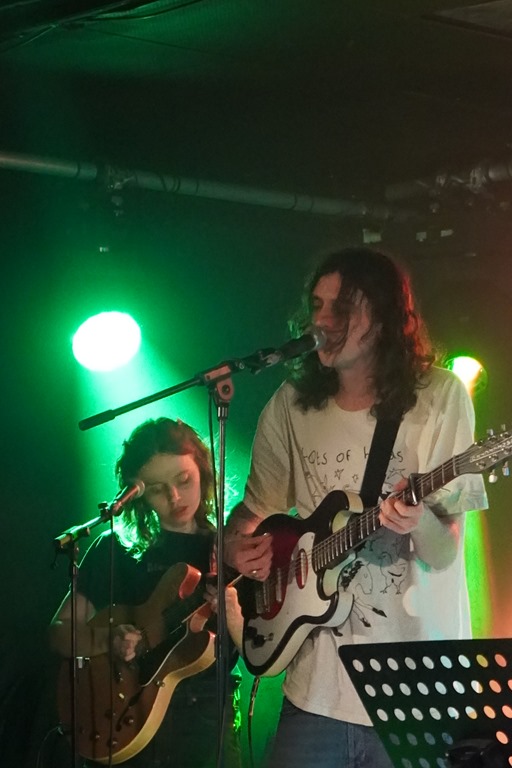
The Royal Ritual are also a duo who have an extremely ‘produced’ sound. But their approach to production owes more to the methods of Trent Reznor as pioneered in the early 90s on Broken and The Downward Spiral, balancing gritty live guitars with synths and fucked-up distortion and harnessing their tempestuousness in a way that creates a balanced yet abrasive sound. David Lawrie plays live electronic drum pads in addition to the sequenced beats, adding dynamics and live energy to proceedings, and flitting between the drum pads, synths, and mic stand, he’s incredibly busy throughout the set. But something about Lawrie’s delivery highlights everything that was absent on Neon Fields, and just carries so much more weight: the whole package brings a rush of adrenaline propelled by that emotional heft and solid force.

Objectively, the feel is very Stabbing Westward, and goes hard NIN at times in its combination of guitar, synths, and sequenced and live electronic drums. The Royal Ritual are strong on dynamics and atmosphere, and Lawrie is an intense and compelling performer.

IMG_20240724_22045120240724_22154320240724_220550

The Royal Ritual

He does break out of the moody persona to thank other bands and plug merch, but what do you do? In the current climate, bands sadly need to plug the stall. The fact that David steps out of broody tortured soul for two minutes of affable chap may seem hard to reconcile, but then, this perhaps speaks more of the human condition than remaining ‘in character’; people are complex and conflicted, multifaceted and inconsistent. And this is what truly lies as the heart of tonight’s performance by The Royal Ritual. Digging deep into the complexities of the psyche, there’s something about the duo’s performance that gouges into the flesh and demands contemplation.