Archive for the ‘Reviews’ Category

25th July 2024

Christopher Nosnibor

The art world is not so much a desert as a breakers’ yard, stacked to the sky with abandoned and aborted projects, works which were commissioned and shelved or otherwise dropped, canned, kicked into touch. The endless hours spent on projects which have never seen the light of day hardly bear thinking about. A career in the arts is likely to be one dominated by failure over success, even for a successful creator. But what is success? Artistic success and commercial success exist in different spheres, and while the world at large seems to judge more or less anything by the measures of the latter, one should ask why this us. Units shifted, radio plays, streams on Spotify, these are the metrics of success, based on the monetisation of art. Something is simply not right.

Ian Williams’ latest release is a product of failure. Le Mystère Lucie (Dossier Secret) (that’s Codename Lucy (Spies Against Nazism)’, a companion piece to the recently-released Le Mystère Lucie (Des Espions Contre Le Nazisme), his recent soundtrack album of music for the 2023 French documentary Le Mystère Lucie (Des Espions Contre Le Nazisme) / Codename Lucy (Spies Against Nazism).

As the accompanying blurb expounds, ‘it features music composed for but ultimately not used in the documentary, which was originally conceived as a 75 minute film but eventually released as a 52 minute TV broadcast. It seemed a pity not to make these additional themes and sketches available, so here they are, another collection of World War II spy music – melodic, electronic, orchestral, tuneful, abrasive, with both releases showcasing Williams’ knack of fusing big tunes with occasional blasts of industrial noise.’

Grand, bold, epic, expansive… these adjectives give a hint of the cinematic compositions n offer here. Being designed as a soundtrack, the album’s seventeen compositions are brief – largely under three minutes – and gentle, employing smooth synth bass and conjuring an atmosphere which is accessible to the ear. The tracks blur into one another with great rapidity, as one would expect for a soundtrack, where the segments flow with the scenes.

Le Mystère Lucie (Dossier Secret) is rich in mood and atmosphere, as befits its subject. There’s not much industrial noise present here but string-soaked cinematic sweep abound. Le Mystère Lucie (Dossier Secret) feels filmic, it builds drama and layers of simmering tension, as well as lakes of brooding darkness and ripples of uneasiness. It’s an accomplished score, and one which most certainly was too good to go to waste.

AA

a2382814546_10

Rare Vitamin Records – 26th July 2024

Christopher Nosnibor

The accompanying blurb informs us that “‘O God’ is the 13th single from Manchester Doom Punks The Battery Farm’, and promises that ‘The single marks a bold expansion of the band’s signature Gutter Punk sound, adding elements of UK Garage and Metal to an already potent mix to create something dark, heavy, taut and unhinged.’

It’s quite phenomenal that they’ve racked up thirteen singles in what feels like a fairly short time. But this is a band who are absolutely driven, driven to make music and get it out there. They’ve grafted hard, and scoring increasingly high-profile support slots has done a lot in terms of reaching a wider audience, and it’s richly deserved. And I don’t mean it’s deserved simply because they’ve worked hard: they wouldn’t deserve it if they sucked! But they kick serious ass, and possess the one thing no amount of effort and luck or songwriting skill or musicianship can get you, and that’s authenticity. And with Rare Vitamin Records, they’ve found a label who are more than happy to provide a platform to their high-volume output, with this being the fifth single on the label (and it looks like the 7” has sold already, so hard luck vinyl enthusiasts, and CDs are running low already, too).

Unlike many acts from the punkier end of the spectrum, they’re by no means anti-intellectual, or given to base anti-establishment sloganeering (as my introduction to the band, ‘A Shropshire Lad’ abundantly evidenced. It’s a rare position they occupy, balancing poeticism and introversion, and deep reflection, with brute sonic force. On this front, ‘O God’ is exemplary.

As they explain, ‘O God explores the idea of being alone in a universe of chaos, with no guiding hand to stop you plummeting into a hell of someone else’s making. We always ask why, and we always search for meaning. ‘O God’ reflects starkly on the idea that there is no why and there is no meaning. Just one action leading to the next, merciless and unfeeling. Is that a thought infinitely more terrifying than the guidance of His healing hand? Or is it just life?’

The timing of this release couldn’t be better: half of America seems to be frothing at the mouth over the ‘divine intervention’ which saved Donald Trump from a sniper’s bullet just the other week, proclaiming that he has been ‘chosen by God’ to lead America and the world, while at the same time, the IDF continues to pulverise every inch of the Gaza Strip, reducing buildings to rubble under the pretext of revenge, of rescuing hostages, and eliminating terrorists. But ultimately, it’s about reclaiming land some see as having been God-given. And where is God in all this? He seems strangely silent, yet those of a certain mindset are absolutely convinced this is all God’s will. For those of us not of this mindset, it seems deranged, and that humanity is off the rails, and we live in disturbing, and truly terrifying times.

This renders the sentiment of ‘O God’ remarkably prescient.

It pairs a nagging, vaguely mathy, snaking bass groove with guitars that sounds like a bulldozer, atop which Benjamin Corry delivers a quivering, tremulous vocal in the verses, and then swings between menacing and absolutely bruising in the explosive choruses. It all adds up to a blindingly intense two-and-three-quarter minutes which conveys the complexities of internal conflict and existential anguish with a rare – and raw – power.

Flipside, the acoustic, ‘Find’ showcases a far gentler side of the band, and its intimate, tranquil feel is genuinely pleasant.

Once again – and again – The Battery Farm have excelled themselves and delivered something immensely powerful and uniquely their own.

AA

a0550612995_10

Unifaun Records – 26th July 2024

Christopher Nosnibor

Vamberator’s debut single, ‘Sleep the Giant of Sleeps’ (26th July 2024) is from the forthcoming album Age of Loneliness (Unifaun Records). And? Well, Vamberator is a new musical duo of some pedigree – namely Jem Tayle of Shelleyan Orphan and Boris Williams of The Cure.

This is far from a joyful reuniting: Williams had also contributed to Shelleyan Orphan, until the band’s demise following the death of Caroline Crawley in 2016.

Jem describes his transition from Shelleyan Orphan to Vamberator as follows: “After Caroline’s passing, I had been offered the chance to make a solo album. I had been writing on and off without a focus and not having someone to bounce off was new to me. Boris is family, and we have played together with Shelleyan Orphan live and in the studio on and off for years, so it felt very natural for us to work on this together. I am extremely fortunate to have a drummer of his calibre pounding out the rhythms on this album.”

Grief has a habit of manifesting and finding its channels via unexpected routes and channels, and – from painful personal experience – creative outlets can be incredibly beneficial, a form of therapy, even, and so there’s a clear sense in Tayle’s wanting to push through on this new project. And the first fruits are pretty tasty.

‘Sleep the Giant of Sleeps’ is a mega-hybrid of alt-rock, post-punk, and psyche. I mean it with no malice when I observe that many artists who reach a certain age lose some of their edge and start putting out kinds middle of the road rock that’s like Chris Read without the guitar breaks. There are some elements of that underpinning the form of ‘Sleep the Giant of Sleeps’; standard guitar chord progressions tied to a fairly mid-pace rhythm. But there’s much to set this apart, too, in particular a certain sense of playfulness and experimentalism. There are some unexpected twists to the percussion, some savvy instrumental switches from guitar to piano to the fore, and some spacey whizzes and whirrs. The arrangement is layered, bold, orchestral. The video is a bit nuts.

They reference Lou Reed, and he’s clearly in the mix, but this whips together a visionary sonic cocktail which is impossible to pin down. But more significant than the wide-ranging elements and dazzling sonic experience, is the fact that ‘Sleep the Giant of Sleeps’ is a top tune with hooks and soul and passion.

AA

Vamberator - Sleep the Giant of Sleeps

1st May 2024

Christopher Nosnibor

Once again, I’m late on this one, but also, once again, not nearly as late as the artist. This album has been a long, long, long time in coming. And that’s an understatement. As the bio details, ‘Janet Feder plays mostly baritone guitars and analogue, hand-made sounds; Colin Bricker (aka Brokerclinic) is an electronic musician and record producer known for his cutting-edge computer music, characterized by beautiful, twisted, broken soundscapes and skittering rhythms. This is their first new album in 19 years.’

19 years! Consider that for a moment. Almost two decades: there will be people who have been born, gone through school, got married and have started families of their own in this time. After such a protracted time out, it feels perhaps likes less of a return and more like starting afresh. Not that Janet has been creatively dormant during this time by any stretch (I recently covered the reissue of See It Alone by Sorry For Laughing, on which she features, and there have been numerous other releases in recent years, but collaborating with different people inspires different approaches and Break it Like This sounds and feels fresh, inspired and invigorated.

Break it Like This is brimming with ideas and range. The first composition, the appropriately-titled ‘Opening’ introduces the album’s manifold varied elements – scratchy guitar scraped and manipulated more often than picked or strummed intersect with extraneous noise and stuttering electronic beats. The volume see-saws and things suddenly break down at the most unexpected moments, disrupting any emerging flow.

Then again, there are some folksy runs of picked notes, and some heavily treated vocals, as on ‘Angles & Exits’, a crackling collision of disparate elements. Gentle guitar and clattering percussion joust it out as if two songs are overlaid in a sonic palimpsest, and what could be a beautiful pastoral tune is rendered as wreckage.

There are tangles of notes and serpentine rhythms which clamour, clatter, and crack from every whichway, and the mix is such that details spring from left and right, from the back of the room, from above your head and around your ankles, adding to the extreme disorientation of jarring pieces like ‘Blue State’. There are so many hints of songs and melodies which exist in a potential state; there are moments where something threatens to take shape, but simply never emerges. ‘Plan to Live’ offers haunting echoes of something atmospheric, splintered by rapid-fire beats which seem completely at odds with it. ‘Banjo’ reconfigures hillbilly wanderings into a postmodern, post-apocalyptic, post-everything soundscape which evokes visions of broken down cars and broken down society, a fatigued scraping out of making music after there’s nothing left but desolation, the notes ringing out into ruins and rubble, a theme which continues through the desolate flamenco-tinged ‘Heater’, before it swings into a psychopathic dance groove. It feels like the soundtrack to a bleak, Ballardian tale set amongst drifting sands, rusting vehicles, and dilapidated buildings, while the only survivors are the deranged.

A deep-running sense of ‘otherness’ runs through Break it Like This. Familiar elements, twisted and misshapen to a point that they no longer feel so familiar, and instead take on a more curious and uncomfortable form, abound. So many moments feel so close, and yet so far, in their proximity to the things we know and are comfortable with. But twisted, distorted, mangled, they take on more sinister forms, shadowy, strange.

Break it Like This is testing, nudging at the senses, piling up the discord and the irregularities of the structures and stoking a sense of bewilderment. This is experimentalism and collaboration at its best, excavating new terrain and forging something unexpected and challenging – while retaining a musicality which keeps it within the realms of listenability.

AA

a0587584873_10

Christopher Nosnibor

Forty-five years on from the release of their debut album, The Crack, The Ruts – or Ruts DC as they subsequently became – as still going, and perhaps unexpectedly, they’ve been more prolific in the second half of their career than the first.

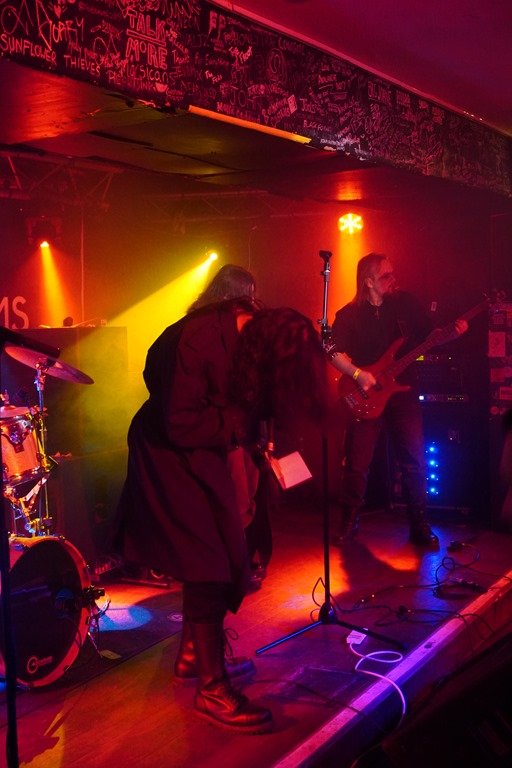
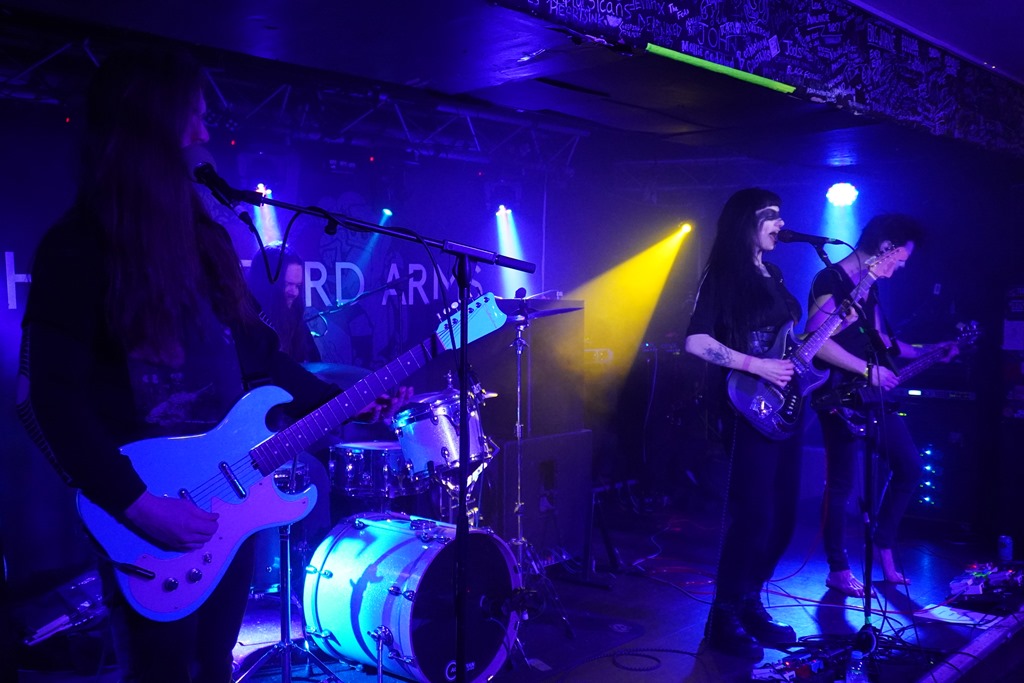
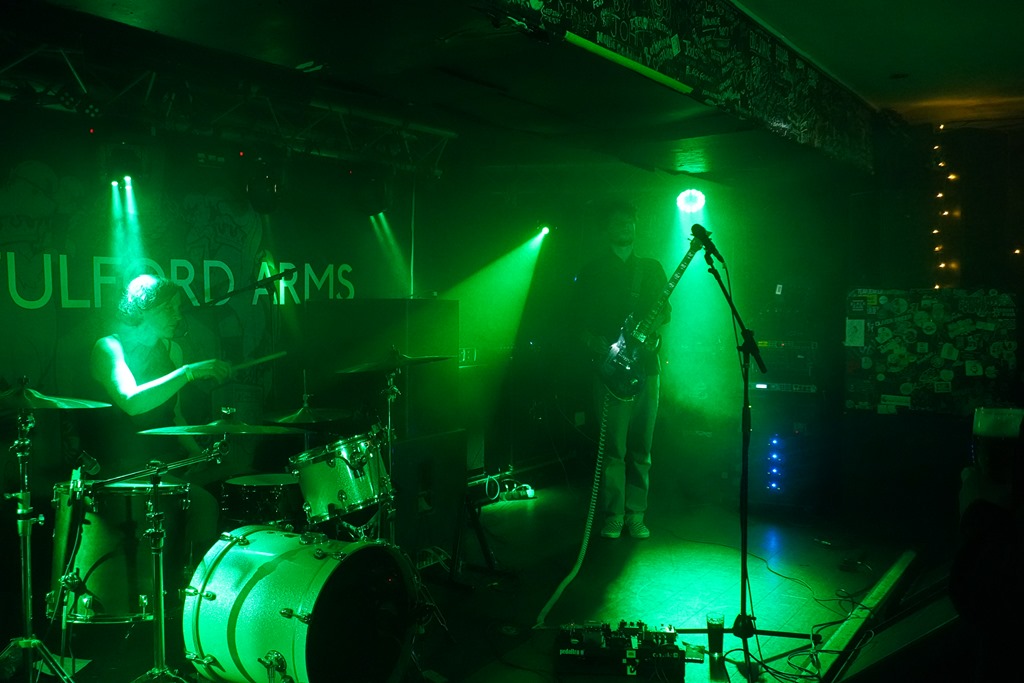
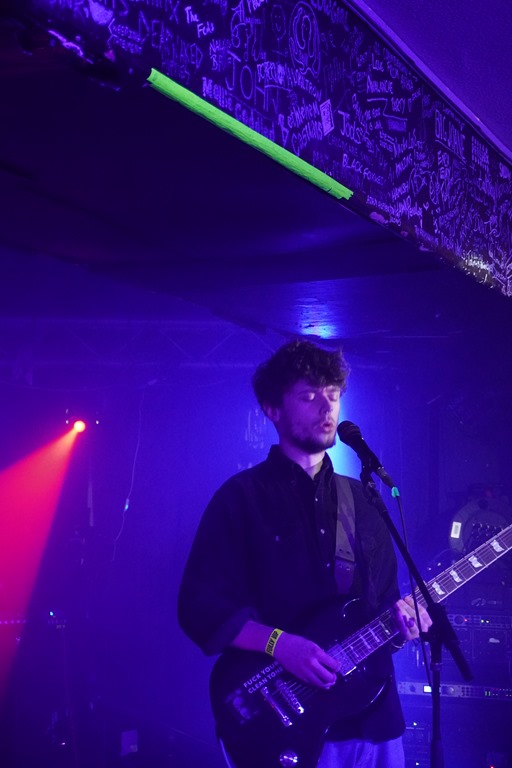
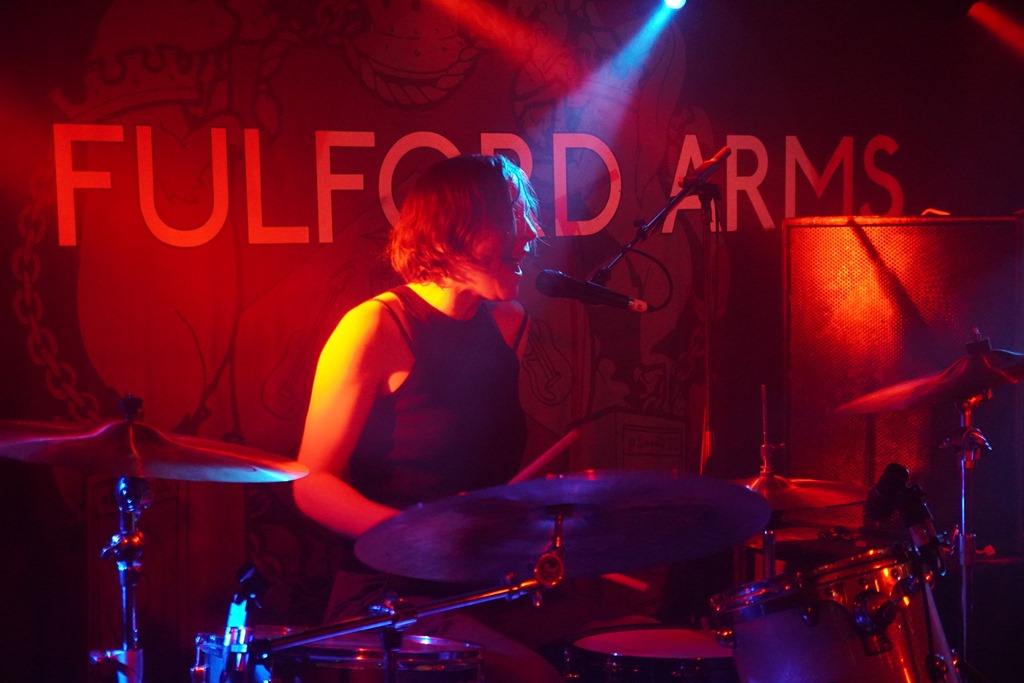
Having released two Electracoustic albums – stripped back versions of material from their back catalogue, they’re back on the road with this format, too. The trio seated in a line on the stage befits a band whose members are in their late sixties / early seventies. They’re done being ‘cool’ or staying ‘punk’: “punk’s dead”, Segs shrugs at one point during tonight’s set. It’s striking just how honest and open they are during the lengthy intros and meandering anecdotes which seem to spring spontaneously, often without punchlines or clear endings. These are off-the-cuff, unrehearsed, down the pub type chats, which provide some real insight into the workings of the band and its members. Unpretentious, grounded, it’s a joy to feel this kind of intimacy with a band of such longstanding who truly qualify – and it’s not a word I use often – as legends.

They’re a band at ease with one another and the audience, Ruffy particularly happy to be back in his home town and regaling us with a lengthy tale about his early life, his father, and shoplifting out of necessity.

Not being able to get out so much lately, I have to pick my nights out carefully and strategically, and I had been in two minds about this one, for a number of reasons. But within minutes, it became apparent that coming down had been the right decision. Y’see, music can reach parts that practically nothing else can. Once comes to associate songs, bands, albums, with people, places, life experiences. They become indelibly connected, for better or worse. And The Ruts are a band who carry substantial emotional, reflective weight for me on a personal level. Of course, this is about me rather than the band, but this is a contemplation on how we engage with music and how songs and bands, become the soundtrack to our lives, and it’s something we only really realise in hindsight. And I feel that sharing the details of this complex and intimate relationship with a band is part of a dialogue we need to open up.

I was around thirteen or fourteen when I began hanging round the second-hand record shop where I would subsequently become the Saturday / holiday staff. The owner was – to me, being fifteen years my senior – an old punk, and he introduced me to a shedload of bands, and would air-bass around the shop to ‘In a Rut’, a song he would also cover with his band. This song – indubitably one of THE definitive punk singles – would become an anthem to me in my life, a song I always play to remind myself to get my shit together when times are tough. If punk has a solid link with nihilism, ‘In a Rut’ provides a counterpoint, as a rare positive kick up the arse. It’s a song I play when I need to remind myself that I need to get my shit together. It must surely be one of the greatest songs of all time. And what a debut! And that was even before ‘Babylon’s Burning’…

The first time I met my (late) wife’s dad – who died in 2003 at the age of 50 – he was blasting The Ruts and Rage Against the Machine on his car stereo, and I knew immediately we’d get on well. And we did. He was a grumpy fucker who hated anything establishment, and had great taste in music.

And so The Ruts and Ruts DC are a band who run a thread through my life. I find it hard to hear them without a pang of sadness, but ultimately, they’re an uplifting experience, and this is so, so true of tonight’s show.

‘Music Must Destroy’ makes for a strong opener and provides an opening for a not-quite anecdote about number-one fan Henry Rollins (another hero of mine and my wife’s, we got to see The Rollins and numerous spoken word performances, including one which included an expansive tale of his obsession with The Ruts and how he came to front the band at their reunion fundraiser for guitarist Paul Fox in 2007), who provided additional vocals to this, the title track of their 2016 album. It provides an early reminder of the fact that they’re more than merely a heritage band, and that they’ve always been, and continue to be, political.

‘West One’ and ‘Love in Vain’ land early, and the range and quality of the material stands out a mile. The set spans punk, reggae, rockabilly, anthems… and they have songs that mean something, too.

20240718_202740

One thing that sets Ruts DC’s acoustic(ish) sets apart isn’t that the lead guitar has some pedals and tweaks and that it’s not a straightforward acoustic strum, but the fact the arrangements rightly bring the details to the fore. Listen to The Crack and it’s apparent that the basslines are special. And paired down, you can really hear everything that’s going on. Their material is so much more than the lumpen three-chord thud of regular pub-rock derivative punk. They switch slickly into dub mode, with echoed rimshots and booming heavy bass, and the sound – and musicianship – is outstanding.

‘Something That I Said’ arrives as the penultimate song of set one, before closing with a new song, ‘Bound in Blood’ that’s a strong new wave cut. And suddenly, with the introduction of an electric guitar, it’s louder, too.

The second set is more electric, but still minimal in terms of arrangement, and stripped back: ‘Dope for Guns’ shows the song’s solid structure. It’s a rapturous experience to hear them powering through ‘Staring at the Rude Boys’ and ‘Babylon’s Burning’ towards the end of the set, and then to hear them segue ‘In a Rut’ with a full-lunged rampant chorus of Neil Young’s ‘Rockin’ in the Free World’ was truly rapturous. Again, there’s a personal element here: a song I associate with my wife, and a song she in turn inherited from her dad, I found myself shedding a tear at hearing a great song well-played. It wasn’t just a token gesture to enhance and pad the set: they meant it and felt the power of the sentiment. And right now, we need to cling to that. These are dark and fucked-up times.

They ramped things up to slam in a fully electric, fully punk rendition of ‘Criminal Mind’ to draw the curtain on the night. And what a night. And what a band.

20240718_215617

While they do still thrive on their early material, and do it justice, they have so much more to offer, too, and significantly, they’re not attempting to recreate the experience of the late 1970s with some sad old punk nostalgia trip. They’re clearly happy onstage – that is to say, loving the fact they’re up there, still going, and playing these songs. They’ve every reason to be: tonight, they deliver solid gold.

May 2024 / July 2024

Christopher Nosnibor

Gintas K is possibly one of the most-featured artists here at Aural Aggravation, and I’ve written about his work elsewhere, prior to establishing this site. I’ve often commented – sometimes flippantly, sometimes in sheer awe – at his rate of output, but it seems appropriate to make the observation once again, since a little while ago I found myself simply swamped and a shade overwhelmed by the volume of submissions I was receiving. Electroacoustic Space Drumming landed in my inbox and I failed to so much as open it, let alone download it. Then, Outsider’s appeared, reminding me I was behind on things, only to discover that a split tape release with Jacob Audrey Taves had come out in between the two.

The first of the releases, Electroacoustic Space Drumming, comes courtesy of London label Anticipating Nowhere Records, as a download and limited cassette (in an edition of 20, more than half of which have gone already).

The titles are incomprehensible to me, but I very much doubt this will make any difference to my appreciation of this jangling, bleeping glitchfest. The six tracks do very much sound like a circuit meltdown, the digital xylophonic cadences interrupted by sudden jolts or sound and stuttering microbeats like an Action Man marching band trapped inside a jam jar half-full of water. Creaks, groans, and splashes abound and contrive to create a complex and layered work.

It’s difficult – if not impossible – to unpick everything that’s going on, and consequently, you simply sit back and let it wash over you. But that doesn’t mean it’s comfortable, or easy to do so.

And then there is Outsider’s, with its questionably-placed apostrophe in the title. Outsider’s what, precisely? And with twenty-three tracks, released digitally and as a colossal five disc CD work, it’s an absolute beast.

The five CDs make sense in a way which is less apparent on the digital release, as there are essentially five segments or suites, with the tracks belonging to each names with a suitable prefix: jazz, crunchy, noise, drones, and piano stuff. Each contains between three and six pieces, effectively an EP’s worth apiece.

In truth, the track titling isn’t especially helpful: the six tracks of the first set, ‘jazz’, and entitled ‘jazz good’, ‘jazz also good, jazz prolongation’, ‘jazz’, ‘jazz’, and ‘jazz.’ Spoiler alert: there’s nothing especially jazzy about the ‘jazz’ cuts, but there’s electronic percussion that cuts through foamy bubbling washes and a disarray of oddness that sounds like machine gun fire, and glitches aside, it almost feels co-ordinated. And no-one needs a jazz prolongation, although this decidedly unjazz cut, we can forgive.

The four ‘crunchy’ cuts are riots of bleeps and squips, a riot of sound that’s no more vigorous than on the first, ‘crunchy.geras greit.’ The two pieces simply entitled ‘crunchy’ combine haunting, hovering tones, and collapsing circuits and lurching synaptic stutters, like exposed wires sparking as they swing, and things become increasingly scratchy, scrapy, a frenzied buzz of fractured, fizzing, fucked electronics.

The three ‘noise’ pieces build in their noisiness, but at heart aren’t all that dissimilar from the ‘crunchy’ pieces, although perhaps quieter and less overwhelming, and overwhelming it is. Then again, the ‘drone’ pieces aren’t especially droney, and more represent explosions of frothing discord, and the final suite, ‘piano stuff’ is a cacophonous conglomeration of bubbling noise down a drain.

These recordings remind me of my early days of reviewing, back in 2018 or so as my introduction to truly avant-garde, experimental electronic works, and Gintas K – perhaps one of the first acts I discovered as an exponent of dripping, bleeping, weppling, weirdness. All this time later. he’s still proving to be a rare master of electronica. Come 2024, and Gintas K is still right there at the forefront.

a1621189998_10a2101315344_10

12th July 2024

Christopher Nosnibor

As genre crossovers go, Post-Punk/Alt Hip Hop is quite a rare one. Perhaps not as radical or as extreme as the kind of crossovers with alternative and metal bands and hip-hop acts that took place on the groundbreaking Judgement Night soundtrack in the early 90s, but at this point in time, where pretty much anything goes, this is unusual. Actually, I’d like to step back from that for a moment. Not so long ago, it felt as if anything went, that postmodernism had truly reached its peak and you could have grindcore with a kazoo and not be too surprised. More recently, while pockets of weirdness are strongly entrenched – as the recent Guardian article on Nerdcore, which managed to mention Petrol Hoers and BxLxOxBxBxY, both vehicles for beardy, ferret-keeping, pant-wearing York legend Dan Buckley (disclosure – Noisenibor performed a one-off collaboration with him in his guise as Danny Carnage, which was everything you’d expect) – things seems to have become more siloed, more set, more fixed, when it comes to genre parameters. Fluidity and crossovers remain, but wild invention seems to have given way to something of a return to convention.

‘Imagine Beck meets Sleaford Mods, meets Slowthai’ the bio says. Only, listening to this, you don’t have to imagine.

What’s noteworthy about these touchstones is that two are very white, and two are very British, the British acts both being overtly political, while all three draw on elements of hip-hop in their work. None of this is to denigrate anything about Oscar Mic or ‘Sun Star’, and nor is it a criticism to comment that it’s a hip-hop tune which is overtly white, as delivered by a pale guy with a vaguely gingery moustache. It’s a true testament to multiculturalism and artistic cross-pollination, and what’s more, ‘Sun Star’ boasts some truly sinister bass frequencies which strike way low and hit hard like subsonic torpedoes beneath the shuffling beat that clatters away nonchalantly all the way. Toss in some Beastie Boys and you’re getting a sense of where this is at.

Then there’s the really melodic indie break, and the thing has something of a quirk / arty / studenty vibe, while the video bursts with experimental oddness. And when you piece it all together… it’s gloriously mismatched and off-kilter. And we should celebrate its non-conformity.

AA

SUN STAR COVER ART

2nd July 2024

Christopher Nosnibor

Unless I’m looking in all the wrong places, one genre you don’t seem to find many emerging acts coming through in is hardcore punk. Reissues of vintage bands – even minor cult acts who were criminally overlooked in their time – are coming (back) to light with releases on Southern Lord and the like, but new true hardcore punk acts are few and far between, with many presenting a more metal

This is raw, fast, gritty, and angry. And political. ‘Realise’ is a fist-pumping roar of rage, positively foaming at the mouth with the fury of betrayal. Told from the position of the punter for whom the penny’s dropping that they’ve been lied to and done over, ‘Realise’ rails against the system and the way in which politics serves politicians rather than the people. As they put it, ‘Writing with the credo “Shit’s fucked – call it out”, the song highlights that politics doesn’t, and cannot, happen only once every five years. Obviously, these guys get it, but it still shocks me that there’s such a thing as working-class Tories. They seem to proliferate in run-down rural areas, places like Lincolnshire, North Yorkshire, Norfolk, and Suffolk. Many of these regions are agricultural, and the (ageing) populations have bought the myth that the migrant workers picking and sorting veg for minimum wage – the same migrant workers who serve them their coffees and also service their health in evermore dilapidated hospitals – are stealing their jobs. Those would be the jobs they’re retired from, and would never have done on account of the pay and conditions being poor. But this is the way of capitalism – blaming the most vulnerable for your own plight while aspiring to higher things and buying into the idea of trickle-down economics is simply pissing on the head of the person on the next rung down because the person on the rung above is pissing on you, and because they’re on the higher rung, it must be right. It is, of course, a complete con. Shit is, indeed, fucked.

The bass-rattling blast of ‘Grindstone,’ which first surfaced a few years ago, finally makes it to an EP, and it perfectly summarises the wearying, dulling, life-robbing effects of drudge labour and the living hell of working all hours and multiple shit jobs to make ends not even meet. ‘I got my nose to the grindstone every day / I’m grinding so hard I grind my face away / I leave blood on the floor wherever I go / If I grind much more I’ll be grinding bone’ paints a visceral picture and take the notion of working one’s finger to the bone to its logical conclusion. This is precisely what proponents of capitalism and governments who support it want. A people too busy killing themselves with work just to stay alive hasn’t the time or the energy to protest, to uprise, to vote. Notably, the main parties all spoke of rewards for ‘hard-working families’, reinforcing the idea that both families and hard work are both normal and desirable goals. This is clearly false: not everyone is suited to family life, and rewards should not be based on one’s level of conformity, and a question I have asked elsewhere is why should work be hard? It should be enough to simply work, to earn a day’s pay, and still have the energy – physical and mental – to have a life outside it. Promoting the idea that hard work is something we should want to spend our lives on is simply another means of oppression. And yes, making art is work: art and culture are essential, and the existence of cave paintings is testament to the fact that the need for art is in our DNA. So fuck the pitch that work has to be long hours grinding out shit earning a pittance to fund the CEO’s multi-million pound package as if it’s somehow noble. It’s not: it’s exploitation, pure and simple.

This brings us to the final cut, ‘We’re All Going to Hell’, is a full-throttle rabble rouser with a strong chorus. It’s simple, direct, unpretentious. Much as I admire poeticism in songwriting, every form has its time and place, and Hearse Pileup are agitators, looking to shake people awake. You might think their fanbase would be young and left-leaning, but so many who have grown up under the last government are prematurely world-weary, dead on their feet, and apathetic to the whole circus. These are the people Hearse Pileup are reaching out to. And for this purpose, they don’t need to be subtle, but instead deliver a sonic slap round the chops. And with this EP, that’s precisely what they deliver.

AA

AA

Hearse Pileup Artwork

Distortion Productions – 5th July 2024

Christopher Nosnibor

Released to coincide with the start of their US tour to promote the album HEX, released in March, HEXPLAY offers up remixes of three tracks from the album, by artists including Leaether Strip and Red Lokust.

Remix albums and EPs do tend to be a bit of a mixed bag, and my cynical side says they’re an easy way of milking maximum product from the material an act has – and the fact that the Grendel remix of ‘Veridia’ already appeared as a bonus track on the digital version of HEX does little to dispel this notion with this release (the album contained seven new tracks including lead single ‘Witch Lit’ released the year before, expanded with three remixes, and there was previously a standalone Stabbing Westward remix of the title track).

There are two further mixes of ‘Veridia’ here. Of these, the Leaether Strip reworking which opens this set is the most radical, transforming the dark electrop of the original – which clocks in at just over two minutes – into a sprawling five-minute exploration of brooding esotericism, with a hint of Eurovision-friendly groove. Pushing the bass up in the mix, it’s darker and denser than the original, and adds new depths and dimensions. Placing it up front was a sound decision, as for my money, it’s the strongest track here.

In the hands of Third Realm, the contemplative mid-tempo ‘Raining Roses’ is transformed into a cinematic anthem, and it’s a triumphant reworking – not a huge stretch in terms of imagination, but it simply makes the song so much bigger.

SPANKTHENUN take ‘Witchlit’ in a darker, murkier direction, straddling stuttering techno and ambience. It’s quite a departure from the original, unexpectedly tense and claustrophobic, and if it lacks the magical, haunting nature of the original its quite brutal treatment is big on impact and shows the song in quite a different light.

The last couple of tracks are solid enough, but perhaps a shade predictable, and certainly lacking the impact or imagination of those which precede. This is what I mean when I say that remix releases are a mixed bag, but I’m equally aware that this is a question of taste, and some will likely prefer the versions I’m less enamoured with.

Here, the source material is strong, which definitely gives the remixers a head start, and while I’ll often find myself asking ‘why mess with perfection?’ credit is due on this occasion for offering versions which, if not improving on the originals, certainly bring something different and worthwhile.

AA

a2135998688_10

Drek Skivor – 5th July 2024

Christopher Nosnibor

It’s been a little over a year since we last heard from Fern. Previous release, Deformed, was, as I put it, ‘appropriately titled’ and ‘some mangled shit.’ Such is Fern’s approach to music-making, it would seem, seeing damage as potential, an opening, a possibility. It may be a perverse pleasure, but it can be a pleasure nonetheless, to hark at the sound of breakage and malfunction. Perhaps because it’s noise which possesses an honesty that’s rare in so many musical recordings, where the more common ambition is to create the best, most polished, or otherwise superior version of something, be it a song in the conventional sense, or a live recording of something perhaps less conventional. It’s a rational and valid objective, but the reason I suggest that the sound of something broken is honest is because it feels rather truer to life’s lived experience.

How many obstacles must one surmount to achieve that polished definitive version? Moreover, how many obstacles must one surmount to simply get through the days? Life has a habit of throwing shit at you. Just when you think you’re having a good day, an ok week, something breaks – and it nearly always costs money. Your laptop dies, your phone screen cracks or your charger cable breaks. The shower starts leaking or there’s a power cut. Some days – and weeks, and months – it simply feels like everything is against you. Something goes awry at every turn. Life, then, is imperfect, an endless succession of glitches and breakages, against a backdrop of noise and distortion and shouting and frustration and confusion and just a whole load of shit in general.

I arrive at Error having recently had a couple of posts removed by Facebook having been flagged by their bots as ‘spam’ due to my attempts to artificially gain likes by tagging people. Those people specifically being the Aural Aggravation page, the band, and their PR and / or label. Somehow, this is spammier than sponsored links to shit I have no interest in that repeatedly crop up every time I return to the site and spammier than the relentless porn links and so on posted in groups. And so I arrive at Errors frustrated, antagonised, feeling that systems are against me, and feeling – in some way – persecuted, as if this is some deliberate obstruction to my efforts to promote obscure music. Music like this.

‘Is this music the result of a degaussing error? Or is it a long gone and forgotten tape shaped and distorted by time and a chewing cassette deck, still here for us to experience……’ This is the way the release is famed on Bandcamp. And I find that Errors isn’t as messed up as all that. It’s not exactly easy listening, but…

The first track, ‘slip ‘n’ slide’ is a fairly standard work of glitchy minimal electronica: a bit dark, a bit stark, bit trip-hop. ‘abrupt morning’ hums and crackles, and something about the production renders everything muffled, distant, in the way The Cure’s Seventeen Seconds feels simultaneously claustrophobic and distant. It is not a comfortable sensation. It is a work of sonic wizardry, to create a sound which stands at such polarity.

‘mellow dream’ is a more conventional ambient work, a buffeting sonic cloud carried by the wind, although there are some less mellow moments where darkness enters the equation and unsettling undercurrents rumble disquietingly.

‘ignite interlude’ goes all-out on deep bass hip-hop, but sounds like listening to a Wu-Tang side-project from the pavement as it plays from a car pulled up at traffic lights with the windows up, before ‘c’mon intro’ hits a slamming industrial dance seam – but again, it sounds as if it’s bleeding through the wall from next door. The album takes a solid turn towards the dancefloor in its second half, although the insistently percussive ‘bits and pieces’ is more reminiscent of Throbbing Gristle. ‘generative form’ feels like something of a collapse into a formlessness defined only by a looping repetition, emanating a kind of fatigue that paves the way for the suffocating collage of loops and electronica of ‘lambs’ – where they sound as if they’re being tortured and strangled. It’s a scrambled melange of sounds collaged from wherever, which brings the album to a suitably dark and unsettling conclusion.

I’m not quite sure what I’ve heard here, or whether I like it or not, but that, I feel, is the desired effect – and it’s certainly a desirable one.

a2358833930_16