Archive for the ‘Reviews’ Category

5th July 2024

Christopher Nosnibor

Sometimes, I really do feel as if my brain is my enemy. Word association and wordplay are a particularly frequent and annoying curse. Oftentimes, I keep this to myself, but midway through listening to this, it struck me, completely at random, that Killzones isn’t a million miles away from Calzone, at least when written down. So why share this? A problem shared, and all that, for one. But as much as anything, I felt the urge to purge, or moreover to crack open the challenges that present themselves as part of the creative process. Writing – and finding something new and interesting to say – about music, day in, day out, is a challenge in itself, without other factors.

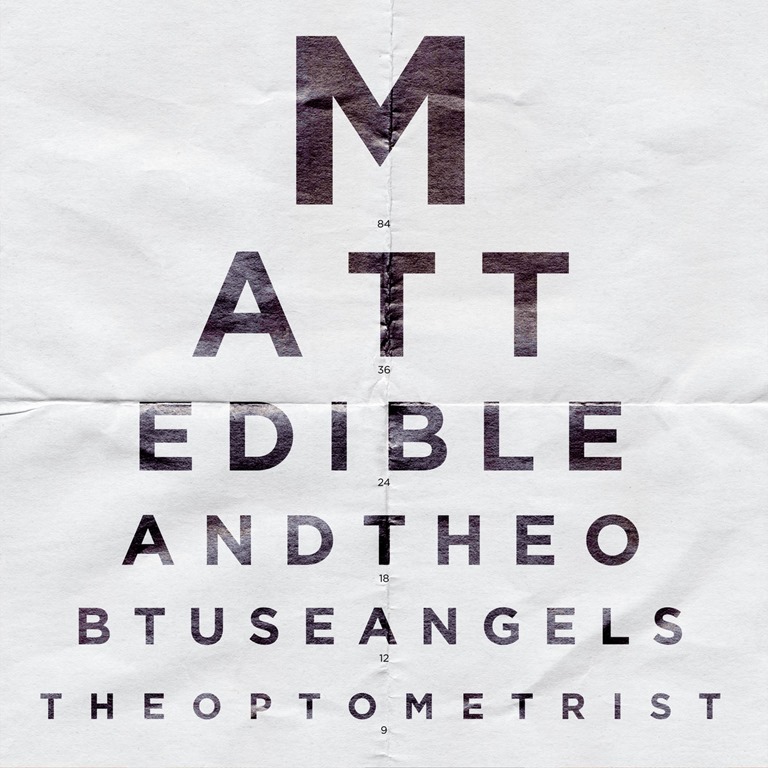
Seemingly, the recording of this EP proved rather less challenging for its makers, who came together and developed it swiftly and fluidly –although the same can’t be said for listening to it. That’s by no means a criticism. In a climate where the airwaves are jammed solid with anodyne sameness and slickly-produced beige sonic slop disguised as raw or edgy on account of some explicit content and some choice language that requires beeps or asterisks in the mainstream media, anything that does something different offers a welcome challenge in the way many pit themselves against the Great North Run or similar. We’ve grown accustomed to everything being delivered neatly-packaged and pre-digested, and feeling like following a recipe from Hello Fresh makes us a Michelin chef. Collectively, we’ve forgotten how to chew – meaning that this will either kick-start your metabolism or simply make you spew if you’re unaccustomed to anything that’s this high-fibre. Just look at that cover art. It’s dark, grainy, uncomfortable. It’s the perfect encapsulation of the music it accompanies.

Machine Mafia is quite the collaborative paring: Adam Stone of gritty northern grimsters Pound Land and Jase Kester of ever-evolving experimental noisemakers Omnibael / Omnibadger have come together to do something different. Very different.

As Jase explained to me, the EP features ‘no live instruments, leaning into the way dub reggae was so embraced by punk right in the early days.’ And there’s no question that it has both – simultaneously – the spaciousness of The Ruts (D.C) and the density of early PiL. It’s a formidable combination, that’s for sure.

The title track assembles sampled snippets as its foundation, drawing parallels with the collaging methods of Cabaret Voltaire and Throbbing Gristle, evolved from William Burroughs and Brion Gysin’s late-50s tape experiments – in turn a progression from the cut-ups on paper. Atop of this slice ‘n’ splice selection of political speeches and an almost subsonic, floor-shaking bass, Stone delivers a mumbling, drawling semi-spoken spiel. It’s like Sleaford Mods on Ketamine, a heavy trudge of ever-degenerating sound which eventually collapses to a low-end buzz and a crisp sample that makes the pair’s political position clear through antithesis.

On ‘Faces’, scrapes of discord, distortion, and a thudding beat half-submerged in the mix grinds out the opening before a dark, dense bass groove starts a gut-shaking growl. The drawling, atonal vocals, too, are distorted and low in the mix, and I’m reminded of some of the more obscure Ministry offshoots witch Chris Connelly – the vibe is dingy, sleazy industrial, a bit early Pigface, and sounds like it was recorded in a damp mould-stained basement on a salvaged reel-to-reel.

The songs get slower and heavier – and longer – as the EP progresses. ‘I Am Not You’ comes on as if Dr Mix and The Remix had done dub, while ‘Lecture 0.3B’ goes all out on transforming a simple spoken-word piece into a cut-up tape experimental headfuck with loops and delays and effects galore, all laced with crackles of distortion and sonic degradation fuzzing and fading the edges. It lands somewhere between the JAMS, Max Headroom, and Throbbing Gristle’s ‘Hamburger Lady’ – weird, unsettling, dystopian, with near-familiar elements twisted and recontextualised in an ugly mash-up collage work.

Conceptually, Killzones is far from new – but then, there’s no claim to innovation here, explicitly drawing a line from the past. But the kind of reference points and influences in evidence here are not the ones you find often, if ever – independently, perhaps, but the whole point of intertextuality as a method of creating is the nexus of divergent touchstones and the way in which they’re combined. With Killzones, Machine Mafia deliver a crash course in experimental music 1976-1994. It’s a mangled, messy cognitive assault. It’s knowingly, and purposefully, difficult, unpleasant, and a complete creative success.

AA

a0890048129_10

5th July 2024

Christopher Nosnibor

The trajectory of the career of The Virginmarys has been an unexpected one. Starting out as a classic punk-rock power trio, they seemed to really seemed to find their niche and hit their stride when paired back to a two-piece. If the duo configuration has grown in popularity in recent years, there have equally been duos expanding their lineups.

For many acts, the cost of touring has rendered the minimal setup a necessity, but for many, it’s proved beneficial in other ways, too, compelling artists to really focus on their compositions. There is absolutely no space for a weak link or any slacking in a two-piece: there is simply nowhere to hide, and no space for skulking low in the mix adding the odd but of layering or texture.

To compensate for the lack of additional members, the strongest two-piece acts play louder, harder, determined to fill the space, and both players need to bring one hundred percent and combine to deliver something more than the sum of the parts.

The Virginmarys may not look or sound like an obvious choice of support act for The Sisters of Mercy, but The Sisters have a long history of selecting interesting and contracting tour buddies, from Public Enemy for an aborted US tour, to I Like Trains and Cubanate via Oceansize and drum-machine-driven grunge act La Costa Rasa. But contrasts tend to work well: who needs a goth band ripping off The Sisters supporting The Sisters? Conceivably one of the most cringe supports I ever had the excruciating agony of witnessing was Broken Bone, spectacularly wanky and 100% cliché industrial noise duo supporting Whitehouse. So. The Viringmarys aren’t goth and aren’t about to swerve that way, either, but no doubt they’ll have made some new fans along the way on their recent travels, and deservedly so. And those fans – and the older ones – won’t be disappointed by this new single offering.

‘Northwest Coast’ is the first single from their first album since becoming a two-piece, and it captures force of The Macclesfield power duo’s live performances, bringing a crunching riff and spadefuls of northern grit – without being dour and po-faced about chips and beans and tea, with cans of Boddingtons featuring in the video. Yep, for all of their travels, they’ve not lost sight of where they’ve come from, and this is certainly not a case of a band spending a week in the US and coming back singing in American accents. If anything, there’s an overt pride in their geographical roots, and they’re keeping it real. And it all works: it’s authentically and unapologetically rock ‘n’ roll, it’s got some swagger but arrives without any sense of superiority or arrogance. And it’s a proper, solid, stomping rock tune that kicks arse.

AA

The Virginmarys Band image

à La Carte Records – 23rd June 2023

Christopher Nosnibor

Perfection is a thing so rare it’s practically mythological. And yet LA post-punk act appear to have achieved it with ‘Never Say Forever’. While reprints of their bio abound, evidence of a back catalogue or previous work is impossible to locate, so it does appear that this is their debut single, which makes it all the more remarkable.

‘Never Say Forever’ is pure vintage in every respect – stylistically, it captures the essence of 1981-85, and I have no shame in saying that I’m an absolute sucker for that era which saw post-punk give birth to goth and dark pop. Sonically, too, they’ve got it down. There’s a certain sound, something that comes not only from the production but from the equipment of the time. Technology was advancing apace – it was around this time that drum machines and synths became widely available – and while the last forty years have seen substantial further developments, I can’t help but feel that something has been lost. That crystal-clear digital fidelity we’ve become accustomed to lacks something, a certain soul, perhaps, but also the sonic haze that defined the sound of the early 80s was absolutely integral to the music itself, and while many contemporary acts have tried to emulate it, they’ve simply fallen short. Not so Mirror of Venus: ‘Never Say Forever’ sounds completely authentic, to the point that it sounds like an archive recording. How have they done it? I don’t know. Time travel, perhaps.

Promo and visuals have increasingly become key to success. People of a certain age, in particular – that would often be people my age (and above) – bemoan the advent of style over substance and how it’s all snazzy videos and shit now, while conveniently forgetting that this came to pass in the 80s. But of course, the difference between major-label 80s and independent acts 80s was immense, and this was perhaps the time when capitalism and money really changed the shape of things: the majors would chuck megabucks at the big acts, which led to the slickness and ubiquity of the like of Duran Duran (who I do happen to like) and the low-budget values of all of the bands who weren’t signed to the likes of EMI. The video which accompanies ‘Never Say Forever’ captures the vibe of the era, and how we view them now, also: once affecting slick but now looking faded, it’s a perfect recreation of the VHS era, the pre-digital age. And yes, when I say a ‘perfect’ recreation, I really do mean it.

Everything about ‘Never Say Forever’ feels like it’s been cracked out of a time capsule. But none of this counts for anything if the material isn’t up to scratch, and that’s where ‘Never Say Forever’ really shines. It’s crisp, it’s catchy, it’s moody, broody, hooky, and nothing short of sheer shimmering magnificence. In other words, perfect.

Will they ever match this moment again? One would hope so – of course. It makes you crave more, so much more. But whatever the future holds, with ‘Never Say Forever’, Mirror of Venus have achieved more than almost any band ever does. Perfection.

AA

a1525440547_10

The Helen Scarsdale Agency – 14th June 2024

Christopher Nosnibor

For some time now, The Helen Scarsdale Agency has homed some quite challenging experimental noise and industrial-orientated releases. It seems somewhat incongruous, the name suggesting they’re a stuffy literary agency or something.

The notes which accompany this latest offering from Ekin Fil are instructive and informative, in terms of expectation and context, and as such, worth reproducing here:

‘The drone-pop consternations of Ekin Fil emerge through vaporous tone and forlorn, distant song, as if plucked from a dream. These exist on their own accord, moving with their own internal logic of an emotion heaviness that belies any the passing observation of this as mere shoegazing ambience. Her songs, her compositions find themselves adjacent the fragmented etherealization of Elisabeth Fraser’s voice from a forgotten scene of a particular David Lynch film, as a ASMR trigger for Proustian recollection. Something profound. Something hidden. Something desolately sad.’

Do I want to feel something sad? This is a question I asked myself in all seriousness. Everyone has felt deep, desolate, profound sadness at some point, to varying depths and degrees, and while wading through the mires of a recent bereavement I find I can be set off easily and unexpectedly. But sadness is necessary, and is sometimes something to be embraced. To embrace sadness is not the same as to wallow, and to face sadness squarely is to accept its presence, and perhaps begin to make peace with it. And only in making peace with it is it possible to begin to move on.

The album’s first piece, ‘Sonuna Kadar’ is a billowing cloud of thick ambience, suffocating, disorientating. Occasional chimes do little to light the way, and the vocals drift, lost, lonely through this tentative space. Things grow darker still with ‘Stone Cold’: long noes echo out like sirens, and soft, fizzy-edged notes ripple before being absorbed by cruising waves of thick, heavy sound. The organ is almost without question the heaviest of sounds, a droning, wheezing sound that has the capacity to be uplifting, but, more often than not, is slow a d mouthful. It’s a synthesized organ drone with slowly throbs away on ‘Reflection’, too lugubrious, soporific effect.

Vocals echo as if reverberating in caverns, cathedrals, while the instrumentation is abstract, its direction unfathomable. ‘Sleepwalkers (Version 2)’ is heavy with atmosphere, and the experience is haunting.

The absence of percussion or structure renders these pieces formless, rootless, shapeless, and consequently they hang like heavy cloaks which drag the head down to the ground, and, staring at your feet you contemplate the weight of the world.

Sleepwalkers is one of those albums which seems to build in effect cumulatively over its duration, and wile it’s not overtly heavy with, say, distortion or volume, it brings a weight that drags you down, and the final composition, the ten-minute ‘Gone Gone’ pulls the shoulders down.

Listening to Sleepwalkers doesn’t fill me with sadness, as much as a sense of unease. It does unquestionably bring a sense of weight, but on listening I feel a sense of uneasiness and uncertainty more than anything. But music presents much of what you pitch in and bring to it. With Sleepwalkers, Ekin Fill presents music with open doors. What will you bring?

AA

a0105911352_10

Roulette Records – 19th July 2024

Christopher Nosnibor

“I fucking hate how lame we’ve all become” yells Peter Chisholm by way of a hook which is almost guaranteed not to get this single mainstream radio airplay – as if it was ever likely in the first place. But the best music rarely on mainstream radio anyway. Nirvana, Therapy?, RATM breaking the singles charts at a certain point in the early 90s was a revolutionary moment in cultural terms, but ultimately, it was but a brief incursion which represented a mere moment in time, and whatever you may read about grunge taking over the world and breaking down walls, you’d never catch Tad or Mudhoney or Nymphs on the airwaves. This is not how the world works, and you’re never going to hear LiVES on R1 – especially not now.

Much as I loathed that sycophantic blowhard Zane Lowe, his show was pretty much the last bastion of alternative on mainstream radio, and while we do still – fortunately, and for now – have 6Music, it’s not the same, and 6Music really isn’t what it was, either. It’s not simply me being a miserable, nostalgic old sod: we’ve lost something, culturally, and that’s a fact.

But I digress – but not without justification. Because LiVES deserve to be heard, far and wide. ‘Cancelled’ is no right-wing supporting rant or moan about being cancelled. In fact, it’s quite the opposite. So you won’t find LiVES bleating about how right-on acts stole their slots or how being edgy has deprived them of a platform, in the way the likes of Ricky Gervais and John Cleese do, completely, and bewilderingly, without irony.

Chisholm states: “‘Cancelled’ is about my feeling of disenfranchisement of online and political society, my total despondence and hatred of the right AND the left… far right and postmodernism attitudes. They claim to be decent whilst being indecent, tolerant whilst being intolerant… always outraged, self righteous, aggressive, violent…they are swimming in hypocrisy and can’t see it. Meanwhile the real elite destroy the world around us, seemingly unnoticed whilst we fight amongst ourselves. I hate them all!!”

The frankly dismal turnout at this week’s election in the UK is a signifier of massive disinterest in politics as a whole, and Chisholm’s loathing of both sides is commonplace. ‘They’re all as bad as each other’, people moan. It doesn’t help that it’s become increasingly difficult to differentiate between the two, especially where the main parties are concerned. But cause for concern is not that Reform bagged five seats in parliament, but the fact they scored 14% of the vote, evidencing a massive surge in right-wing sentiment in the country.

‘Our final hour is a shitshow shower’ he spits as he calls out the calls out hypocrisy over a monster churning riff as cartoon images of Trump, Johnson, and Farage drift in and out of shape in the accompanying video. And if ‘Cancelled’ is the 2024 howl of disaffected nihilism that marks parallels with 1994, then it should also be seen as an awakening, a call a neglected generation to come together with a single voice and call for something better. And ‘Cancelled’ is nihilistic, and it’s angry. The guitars buzz and grind, and the rhythm section is monster-weighty and it’s the perfect backdrop to a snarling dissection of the world as is and just how hard it is to navigate. I’m drowning…. I’m drowing…’

It’s hard to argue that the right have surged forward, or that they’re a bunch of cunts, and it’s hard to ignore that the left have made a significant shift to the right. It’s also hard to deny, for anyone with ears, that this is a big gutsy riff-driven tune. Dig it.

AA

LPJ1200S

Regenerative Productions – 7th June 2024

Christopher Nosnibor

The last couple of years – and 2024 in particular – has seen a huge upturn in acta reconvening after lengthy breaks. Anticipation for the Autumn drop of the first album from the Jesus Lizard in over two decades is immense, but then only this week I wrote – extremely favourably – on the new album by The March Violets, released eleven years on from its predecessor, and From Fire I Save The Flame by Three Second Kiss – twelve years down the line from their last album. They all have their reasons for pausing, and for the timing being now, but as much as its perhaps coincidental, it makes for exciting times for fans who had little to no expectation of ever hearing new material. And what’s more, and perhaps most remarkable, is that these albums have been proving to be GOOD – not some damp squib, reheated soufflé reunions which sully their catalogues and make you wish they hadn’t bothered (in the way Bauhaus’ Go Away White was such a monumental let-down).

And so here we have Norwegian death-metal outfit Okular with their first full-length release in eleven years since their 2013 second album Sexforce.

I will confess to being unfamiliar with their previous work, which means I’m unqualified to comment on how the aptly-titled Regenerate stands in comparison. But I do feel able to consider Regenerate on its own merits.

Blasting in with ‘Back to Myself and Beyond’ the sound is dirty, murky, dingy as fuck, snarling, gnarled vocals spewing venom and gargled gasoline over churning guitars, from which emerge the occasional squealy note before flicking into a quickly-woven blanket or fretwork wizardry. Underneath it all, the bass and drums thump and thud away at a hundred miles an hour, muffled, muddy, and manic.

The two-and-a-half-minute title track follows this five-minute titan, and it’s a fast-and-furious fretfest, on which the vocals switch between menacing growl, strangled rasp, and raw deep-throated demonic howl.

All of the requisite tropes are in place: a hefty percussive barrage and super-fast fingerwork provide the backdrop to ugly, bowels-of-hell vocals, with some rapid drops and sudden breakdowns, and when it comes to genres, missing these elements is case for disappointment. That said, there is still scope for invention, and ‘A New Path’ brings what its title proffers, opening with a soft acoustic almost country-tinged grunge intro, before doom-laden power chords crash in, an unstoppable chuggernaut – and the two elements play off one another to forge a really interesting dynamic.

The album’s shortest track, ‘Debauchery’ surprises again, with another almost folky acoustic flavour to start, before simmering up to a boil to deliver what it promises in the shape of some spectacular soloing, preceding the album’s longest track, the six-and-a-half-minute epic what is ‘Another Dimension of Mind’. It’s a delicate, lilting, layered acoustic segment – which is really quite technical and borders on a blend of folk and neoclassical – which plays out on the album’s closer, ‘Elevate’, and it’s really quite nice. Of course, everything blasts in at double the standard intensity for the final minute, and it’s positively incendiary, a ground-scorching flame-thrower assault that hits like a tsunami before an abrupt and unexpected end.

Regenerate is a smart album. By its nature, technical prowess and musicianship is portrayed almost extravagantly, but, as is the law, it’s contrasted with the dirtiest, hardest, fastest riffs. But Regenerate offers so much more – more texture, more stylistic diversity, more range, a really ambitious approach to songwriting that goes beyond the confines of genre.

AA

a2807309953_10

Metropolis Records – 19th July 2024

Christopher Nosnibor

Metropolis Records – 19th July 2024

Cut back to not so long ago – in real terms – and the prospect of a new album from The March Violets was simply not something you’d imagine. 1987/88: The Sisters of Mercy had broken through in a major (label) way with ‘This Corrosion’ and Floodland; The Mission’s ‘Tower of Strength’ almost reached the UK Top 10 before Children scaled the heights of number two in the album charts, and this was the commercial heyday of goth… and one-time peers, The March Violets were a footnote in the genre’s history, having gone pop and signed to a major, only to go nowhere far and call it a day. They were fondly remembered by those who did, and compilation The Botanic Verses documented their body of work in the early 90s, but… Rosie was busy doing poetry and the like and Si was hiding behind smog as Nurse to Dr Avalanche as part of The Sisters of Mercy’s touring crew.

Then, in 2007, twenty years after they vanished, the band reconvened for a show in Leeds at what was then still the Met. It was a glorious celebration, not only of The Violets and their career, but also the heritage of the Leeds scene, with The Chris Reed Unit representing one of the city’s most singular and longstanding acts, and Merciful Release stalwart James Ray presenting thee magnificently eccentric ambient dance grooves of 25 Men.

Health issues stalled things for a while, but miraculously, 2013 saw the eventual release of Made Glorious – which was in fact their debut album, since the three previous long-players had all been compilations (I’m including the US-only Electric Shades among these). And now, after further setbacks – notably Denbeigh’s departure from the band following a stroke, but also some not insignificant touring under their belts – they deliver album number two, Crocodile Promises a mere eleven years later.

No-one could, or should, expect a band who’ve been going for so long and undergone so many changes – both personnel and personal – to sound exactly the same as they did when they started out. And nor should anyone want a band to exist in a state of suspension or arrested development. Here’s where The March Violets are a rare thing: a band which has evolved, expanded, grown, but equally has never lost sight of their roots. As their Bandcamp bio summarises it neatly, ‘Original Post Punk Drum Machine Band From Leeds. Started at the Beginning, Imploded, Reborn for the 21st Century. Play Loud Play Purple.’ Yes, they’ve even retained their original slogan. And it still works, too.

Whereas Made Glorious was a sprawling beast of a release, comprising sixteen tracks – a double album, effectively, Crocodile Promises is a taut, succinct nine-song document.

Single release ‘Hammer the Last Nail’ kicks the album off in classic style with a snaking drum-machine groove and twangy gothy guitar interweaving behind Rosie’s sultry, vampy vocals.

Where Made Glorious felt a tad slick, Crocodile Promises returns to the pumping, gritty sound that made the band one of the greatest first-generation post-punk acts. ‘Bite the Hand’ is a tangle of metallic, trebly, chorus-hazed guitar against a thrumming bassline and pumping mechanised drum machine, and it’s got the hunger and edge they displayed back in ’83. It’s likely a coincidence that the title is a phrase which featured in a quote from Andrew Eldritch when commenting on the Violets’ departure from Merciful Release… right?

‘Virgin Sheep’ maintains the angular energy, and once again recaptures blistering force of their first iteration, calling to mind the frenzy of ‘Radiant Boys’. ‘Mortality’, the title track from the album-in-progress which was shelved on account of Denbeigh’s stroke is another classic Violets cut, and what becomes apparent while listening to Crocodile Promises is that feels natural, comfortable, not a struggling, forced effort to recreate the past. Of course, the timing is beneficial: the next generation of new music-makers are discovering grunge, post-punk, shoegaze, and goth, and suddenly, the bands who were the progenitors of these styles are finding new audiences, and instead of sounding dates, the styles feel fresh once more.

Of course, great songs are timeless, and great songs are a feature of Crocodile Promises. ‘Crocodile Teeth’ is perhaps more fractal dream pop than goth or post-punk, but it’s got that late-80s Siouxsie vibe that gives the dreaminess a serrated edge. Its inclusion brings balance and space to the album, too.

It would be wrong to say that The March Violets are quite the same band they were without Denbeigh’s snarling interjections, but it would equally be a mistake to criticise the current iteration on account of this. The March Violets are survivors – and a great band. Ever-present co-founder Tom Ashton continues to prove pivotal in defining their sound, and, equally, their attitude. As much as they were a part of that early 80s Leeds milieu, The Violets stood apart, and that slightly wonky, sharp-edged, skewed guitar was, and remains, integral. And moreover, Crocodile Promises is a great album. Its strength lies not only in its consistency, but also its energy and its atmosphere, both of which it brings in abundance. But best of all, this is a true return to form. There isn’t a dud cut here, and every song is up there with the singles up to ’86. It’s incredible that a band at this stage in their career could drop a definitive album – but that’s exactly what The March Violets have done.

a2052340793_10

A-Zap Records – 23rd August 2024

Christopher Nosnibor

There is truly only one Melt-Banana. And Melt-Banana boldly encapsulate all of the craziness that makes Japanese music so peculiar and unlike the music to emerge from any other place. Here in the west, we can, in truth, only marvel at it – all of it. Because it makes no sense. It’s a country of extremes, with hyper-pop culture dominating, and a sense of plasticness and artifice defining the mainstream. But then, Japan is also the home of the most extreme noise – Merzbow, Masonna, for example. It’s not just extreme sonically, but beyond words in terms of performance.

The pitch for this, their eighth album, informs us that ‘3 + 5’ synthesizes elements of a variety of Extreme Musics, Hyper-Pop, classic Punk, vintage Metal, and Noise. It’s informed by Japanese culture in general, and the subcultures of gaming, anime and homegrown underground music in particular. The album’s nine tracks have been crafted to maximize the independent appeal of each song (since so many listeners will be streaming and playlisting these songs). Each selection boasts its own unique charm and ideas that beg for repeated listening.’

I had the good fortune to witness their live spectacle here in York not so long ago, and they were everything anyone even vaguely aware of their work would expect: intense, noisy, crazy, and wildly entertaining.

They create music that fits with the bizarre incongruity of their name – abstract, humorous, combining elements that don’t – or shouldn’t – really sit together – somewhat surreal, patently absurd, but also perhaps a shade Pop Art. Put another way, everything all at once, tossed in a blender and blitzed, the output being like a bubbling hot smoothie or something.

They do have a tendency to favour short and fast, as recent taster track ‘Flipside’ reminded us, clocking in at a minute and fifty-six. It does happen to be the album’s shortest track, but then, the longest is under three-and-a-half, and the majority of the nine songs are around the two-and-a-half minute mark. That means that with a running time of around twenty-seven minutes, the album would comfortably fit on a 10” record.

For a moment, ‘Code’ hints at something spacious, experimental and electronic to open the album – before seconds later, all kinds of sonic mayhem erupt and chipmunk yelping vocal squeak over something that resembles Metal Machine Music played at double speed, before it takes a turn into space rock territory, but again, at twice the pace, with some prog flourishes and a bunch or bleeps and widdly synths all criss-crossing over one another at two hundred miles an hour. For anyone for whom this is their introduction to Melt-Banana, they’ll likely find themselves dizzy and completely bewildered as to wat the fuck they’ve just heard. It is, unquestionably, utterly deranged, and at doesn’t get much more quintessentially Japanese than this.

‘Puzzle’ is kind of a high-octane rock tune, at least at first – but then someone hits the accelerator and in a blink you’re on ‘Rainbow Road’ on the N64 Mario Kart after eating three bags of Skittles and you’re totally wired.

Hyper doesn’t really cut it. Even the more expansive instrumental segments of ‘Case D’ happen at about 600bpm, and it’s like listening to a prog album at 45rpm.

As I listen, I find myself typing faster and faster, as if I’ve sunk six cans of Red Bull while chomping on a whole packet of Pro Plus. My fingers are pale blurs against my black illuminated keyboard, and they’ve seemingly run away from my brain and are just frothing out words in response to the frantic mania pouring into my ears – no, not pouring, but being injected by 10,000-volts of electrical current into my brain via my eardrums.

‘Scar’ slams big guitar rock and skittish melodic pop together like a banging of heads. It sounds like music from a computer game or an animated movie. It sounds like music made in a fictional context. Because in real life, music like this couldn’t exist. And in the main, it doesn’t. Only Melt-Banana are demented enough to actually make it.

Penultimate track ‘Whisperer’ goes big on dance / rock crossover and actually slows to a pace that doesn’t feel like a synaptic twitch or a seizure, before ‘Seeds’ closes the album with a two-and-a-half minute frenzy which chucks everything into the mix.

The whole experience leaves you feeling giddy, dazed, amazed. 3 + 5 may not bring anything radical, new, or revelatory to the Melt-Banana oeuvre, but stands as a classic example of what they do – and it’s as ace as it is nuts.

AA

MB 3 5

Pythies–Toy

Posted: 29 June 2024 in Reviews, Singles and EPs

I was sold by the opening line of their bio, which tells me that ‘Pythies is a witchy grunge band from Paris’. Goth and grunge? I’m in!

Pythies is the vehicle led by Lise.L, formed – at least conceptually – late in 2022 and based on a concept of an all-female band in the vein of L7, 7 year bitch, Babes in Toyland, Hole, with her taste for witchcraft bringing that essential unique slant.

Come January 2023, as we learn, ‘she meets through social media the guitar player Thérèse La Garce and the drummer Anna B. Void: the alchemy between these three is undeniable and Pythies is born.’

‘Toy’ is culled from their forthcoming EP, and this new song, Lise.L ‘depicts a friendship that has been wasted over by the constant objectification and over sexualisation of women, a hard and disgusting reality’.

As such, ‘Toy’ pulls no punches, and there can be no debate that this is a good thing. Something is seriously wrong that in 2024, women are having to speak out since for years now, they’ve been speaking out and so little has changed. But the only way change will ever come is if women continue to speak out, and men actually get behind them in adding their voices of support. But, more significantly still, men need to change their shitty behaviours, once and for all. Is it that hard? And does it really need explaining? It does, sadly, but it shouldn’t, and it makes me feel ashamed of my gender. And the ones who decry ‘yes, but not all men!’ are embarrassments, too, outing themselves as apologists for the fact that while it may not be all men, it’s the majority, and to make no defence of the fact it’s far too many. Because there is no defence.

With ‘Toy’, Pythies slam their message home hard, driven by a monster riff. Launching with a crisp, solid, four-four bassline – something common to both post-punk ‘origins’ goth and the 90s bands which followed in its wake, and grunge, drums and blistering guitar blast and scrape away.

Where ‘Toy’ succeeds – above and beyond being a belting tune with masses of guts and gritty guitars – is that it doesn’t go all-out on male alienation, but instead depicts the grim realities – while the video depicts the perfect revenge.

AA

Pythies artwork

28th March 2024

It’s that time of year again, when, in the UK, you may be forgiven for thinking that the entire music industry is camped out at Glastonbury. This, however, is a chronic misrepresentation, and all around the world, there are quite literally hundreds of thousands of music-makers who have absolutely no connection with the event, no currency, and no interest.

Seeing a few brief snippets on BBC news, with grinning attendees being asked for their views on their experience so far and who they’re looking forward to, I was stuck by just how middle class – and / or middle-age – a lot of those taking heads are. These are the type of people who can afford the £350+ tickets on a punt for ‘the experience’ and the increasingly limited off chance of some decent or interesting acts. The headliners are so safe, predictable, bland, and there’s not much to be said of much of the lower orders, either: the only acts worth seeking out are probably those you’ve never heard of playing in the minor tents who’ve probably had to pay a heap to get in.

Despite the immense coverage and the vast audience, it’s not representative of the majority of the music scene, industry or beyond, and for that majority, things go on as normal. And so it is that we have a new single from Brighton’s brightest, brashest metal new hopes, Eville, hot on the heels of whipping up some crowds on tour with Glitchers, and likely winning new fans in the process.

Anyone who discovered them on this tour will not be disappointed, and having followed them from their very incarnation, I’m not, either.

This latest offering, co-written and produced by Harry Winks of South Arcade, pulls everything that makes Eville an exciting act together and blasts it out hard. With their roots and influences firmly in early noughties nu-metal, they’re as much, if not more about Deftones and Pitch Shifter than Limp Bizkit or Korn, exploring the darker terrains of a genre which came to be maligned as it mutated into sports metal.

As is typical of the genre but also a defining feature of what Eville have come to own as their sound, ‘Dead Inside’ pitches clean melody and rabid growling vocals against one another over a backdrop of guitars denser than lead. It’s the perfect balance of accessible levity and monstrous heaviness.

But they also embrace contemporary pop tropes, with the overt and sometimes quite wince-inducing application of autotune. In this respect, they’re quite the conundrum, and products of our confusing, conflicted, incoherent times. They are the very manifestation of the widening generation gap, appropriating from their parents’ generation while staunchly representing their own. There are no limits.

It’s both musically and emotionally articulate, and represents another flawless entry to their killer catalogue.

AA

Eville - Band shot 2