Archive for the ‘Reviews’ Category

The Helen Scarsdale Agency – 23rd May 2025

Christopher Nosnibor

The pitch alone is harrowing: ‘“Don’t be scared by death,” Alice Kundalini (aka She Spread Sorrow) calmly instructs at the beginning of her collaborative Grimorian Tapes with partner Luca Sigurtà. Her words slither from her lips with a subtle, sinister unease, compounded by the unsettling quality of her whisper. The fear of death, this most profound condition, has long been a subject of philosophical, spiritual, and existential inquiry. To fear death is undeniably human; to transcend that fear is often seen as reaching a higher plane of existence. At least, that’s the intention behind the rituals, the spells woven into the fabric of The Grimorian Tapes.”

I myself have spent a lot of time contemplating death, and the fear of death, especially of late. We are all scared of death, particularly in Western culture. When my wife was diagnosed wit stage 4 breast cancer, where it had spread to her bones, I was terrified, not only of losing her, but of waking up to find her dead in the bed beside me. What do you do in that situation? I did not want to see her dead, and she did not want me to see her dead. Thankfully, she made it to a hospice for her last day, but I lived for a year under the shadow of that ‘what if…?’

You might think that her passing brought peace, but it did not: instead, I have spent many mornings twitching and drenched in sweat lest I should die and leave our daughter an orphan, being thirteen. This is not a call for sympathy – simply as summary. It’s hard not to be scared by death, inevitable as it is.

For additional context, it’s worth delving into the details of the album’s inspiration, a large portion of which comes form The Black Pullet, ‘an 18th-century French grimoire filled with instructions for making talismans and magical artifacts’. We learn that ‘Kundalini weaves her own take on the book’s esoteric themes into the shadowy tape loops that comprise The Grimorian Tapes. The Black Pullet is a detailed guide into alchemy, divination, and occult practices, with a particular focus on harnessing hidden forces through the construction of specific objects imbued with magical power. Though Kundalini doesn’t practice these rituals per se, she finds a deep, poetic resonance with these ancient teachings. The allure isn’t in the performative aspect of these rituals but in the seductive power of its symbols and ideas, which speak to a long-forgotten language of metaphysical mystery. It’s this sense of transmutation, hidden knowledge, and occult wisdom that lends The Grimorian Tapes its dark, ritualistic intensity.’

And so it is that ‘grimoire’ introduces the album with a dark etherality, whispered vocals, the words indecipherable. Echoing amidst rumbles and a persistent drone which ebbs and flows. It’s compelling, and enticing, but at the same time, unsettling. It’s the fear of the unknown, of course: the esoteric and other-worldly and anything that speaks of a realm beyond one’s ken is always difficult to assimilate. This, in a nutshell, is the appeal of horror, because a lot of us find entertainment in being scared. It’s the same reason people go on rollercoasters. Being scared half to death reminds you that you’re alive. And The Grimorian Tapes is pretty scary, in the suspense and horror sense.

‘initiatory’ rumbles and hovers dark and murky, sonically entering the domains of Throbbing Gristle, and again, the whispered vocals are menacing, and reminiscent of Prurient’s Cocaine Death, while ‘the stairs’ brings a hint of disturbing playground, psychological derangement, the other ‘other side’ we’re all so afraid of due to a lack of comprehension. And the further this album progresses, the more uncomfortable and unsettling it becomes, the further it extends beyond the domains of the ordinary, the mainstream comprehension.

‘babele’ is a dank, muddy morass of sound over a slow thudding heartbeat rhythm, while ‘kirtan’ brings flickering, stuttering beats, while again leading the listener through hair-prickling terrain, with triffid-like stem-clattering and gloomy swirls and abstract vocals. ‘we worship you’ plunges deeper into a darker space, with sputtering electrostatic sparking, and gargled vocals, deep and robotic, growling, threatening and emanating from another place, another world, one beyond reach. ‘me and I’ churns like slow machinery, and is industrial in the primitive sense. Again, the way we have come to understand ‘industrial’ has evolved: Foetus is a far cry from Throbbing Gristle, and both are a world away from NIN and Ministry. But The Grimorian Tapes takes us right back to the origins of the genre.

This is one dark and difficult album, heavy and suffocating and uncomfortable from beginning to end. Two thumbs up. And now I need to lie down.

AA

a0844152259_10

Sonic Pieces – 30th May 2025

Christopher Nosnibor

Five years is quite some time, and a lot has happened in the last five, that’s for certain. Although the fact so much has happened means that the last five years have been something of a void for many. And so it is that Reverie, recorded in October of 2024, sees Otto A Totland (piano) and Erik K Skodvin (guitar, cello, electronics, and processing) reunited in concert for the first time since 2019.

It’s pitched as ‘a follow up to 2014’s Recount, which saw two pieces of music created around their live-sets in different periods. This time, we are treated with a contemporary, raw live performance from October 2024 in Rabih Beaini’s studio, Morphine Raum in Berlin, during the 15th anniversary celebration of Sonic Pieces.’

The two longform pieces which make up Reverie were recorded live, and as if to prove the point, there’s the sound of a light cough just as the first piano note hits, then hangs in the air. They could have dubbed it out, I’m sure, but to have done so would be against the spirit of this work – spontaneous, improvised, in the moment. The recording is not only about capturing the music, but the moment itself.

The seventeen-minute ‘Rev’ is delicate, built primarily around Totland’s graceful, nuanced piano work, and considerable reverb, which may well be natural from the room, but however the sound is achieved, the sense of space is integral to the atmosphere. Skodvin’s contribution is magnificently understated: the slow scrapes of strings and subtle sonic details may seem secondary or additional because they’re not the focal point, but without them, the effect would be diminished by more than half. A great musician is not necessarily the one who dominates or demonstrates virtuosic talents, but the one who understands their contribution to the work as a whole, and appreciates that less is more. And so it is that elongated notes quiver and quail, wailing tones and sonorous drones swirl about and bring so much depth and texture, an as the piece progresses, the piano and extraneous incidentals achieve an equilibrium, and it’s utterly mesmerising.

‘Erie’ turns the tables, and it’s Skodvin’s strings which take the lead initially, before trepidatious piano creeps in. Trilling tones hang hauntingly like distant memories and displaced ghosts, and there’s a melancholia to this piece which is difficult to define, but lingers amidst the brooding lower notes. The slow piano is soft, and sad, while tremulous strings evoke a sense of something lost, somehow.

Without words, Reverie paints a picture, and hints that memories and reveries are inherently tinged with sadness. For even to recall a happy time is to remember a moment which has passed, and will be relived. However many times one may return to a particular place which is imbued with fond memories, however many times one may listen to that favourite song which carries such joyous connotations, that moment, that time will forever continue to recede into the past, never to be experienced again. The past is forever past, and will become further past with each day that goes by. Summers will never be as long, or as carefree as in childhood. The exhilaration of new experiences will never provide the same buzz, however hard you chase it. And with this realisation comes the slow fade, and a sense of acceptance. Bask in the reverie, and hold those times dear as the years slip away.

AA

ReveriePATTERN013 front

Photo: Alex Kozobolis

Christopher Nosnibor

What do you do as a touring band over here from the US with a night off in between stadium shows supporting Guns ‘n’ Roses? Night off to unwind, maybe do a spot of tourism, rest up ahead of the next one? If you’re Rival Sons, you squeeze in an extra headline date in a city that is absolutely nowhere on the way between Birmingham and London. I suppose travel logistics in terms of getting about the UK of rather different from what they’re used to at home, but still – between Villa Park and Wembley Stadium, at relatively short notice, they decided to swing by York.

Music is so often interconnected with memories, times, people, places, events: it provides the backdrop and the sound track to our lives. And so it is with Rival Sons. My late wife purchased a copy of head down, which received heavy rotation in the car. She liked her old-school rock. It may not be the standard Aural Aggravation material, but when I saw they were coming to York, I decided my daughter and I should go – not out of any great love for the band, but for her, in absentia. She was, no doubt, with us in spirit. And I always write a review, for posterity, for the record, if nothing else. I am aware that I will forget things, in time. This is a document.

The demographic is very much slanted towards the more senior end of the spectrum: as my daughter put it loads of old white dudes, but also lots of couples clearly 55 plus, all dressed in such a way that says they don’t go to many gigs each year, and when they do it’s this time of a venue. I’m acutely aware that I’m rapidly approaching this demographic, but I’m mindful of trying to avoid being one of the annoying ones.

The metal detectors tickets scanners and £8.25 pints are something of a culture shock to me, more accustomed than I am to attending shows and venues with capacities under 400 more often than not, and where I can just give my name on the door – or not, as happens when you go to places often enough over a number of years.

Support act Creeping Jean are from Brighton but wish they were from America fifty years ago. They’re solid and adhere to the 70s rock template, down to the haircuts and the guitarist’s flared white suit (no doubt sourced from frontman Olly Tooze’s vintage clothing shop) . They’re decent enough, apart from the irritating tambourine guy (he does some backing vocals and plays acoustic guitar on one or two songs, but his main purpose seems to be to bring energetic posing and some tambourine action) and the fact that while the clean bass sound was nice and dense, the distorted sound reduced it to a horrible scratchy buzz.

20250624_200832

Creeping Jean

From the off, it’s clear that Rival Sons are a cut above. The sound is loud and clear, and they have that essential swagger, which is justified when the musicianship is this good. Jay Buchanan struts on, barefooted, and they’re straight into ‘End of Forever’. And the band completely fill the stage with sound, and with presence. The hirsute Buchanan embodied the essence of Robert Plant, and Scott Holiday provides the perfect foil to his flamboyance with an equally dominant stage presence while wielding a multitude of guitars. He is a joy to watch, though, and his approach is innovative, playing with a host of effects and tunings that are anything but conventional. To describe him as the Tom Morello of blues rock may be a bit of a stretch, but you get the idea. He certainly pushes things out a way – and a fair way at that.

While most of the set is lifted from the two most recent albums, they always seem to ensure that all of the albums are represented during the course of a set. With ‘Keep on Swinging’ being the usual song taken from Head Down, I had next to no expectation of hearing what is by far my personal favourite track, ‘Manifold Destiny’ – but lo, they pulled it out around halfway through and played the full-ten-minute epic midsection.

Sure, the guitar solos are often overdone, over long, and indulgent (for context, they play for around an hour and forty-minutes, packing five songs back to back at the front end of the set and there’s no encore, but they still only play fifteen songs) and the vocal gymnastics are at times way over the top, but to complain of these things about a band so solidly cast in the Led Zeppelin mould would be to completely miss the point.

20250624_21590720250624_215913

Rival Sons

Towards the end, Jay thanks us not just for supporting their band and live music, but also rock music, and it’s an important distinction: this is rock music in the classic sense, and when it comes to classic rock they do everything which meets the essential criteria, and they do it well, and deliver it with panache. Rock music by nature is over the top, and if you’re going to go over the top, it’s best to go way over the top, with the flashiest longest guitar solos the most extravagant delivery, the most showmanship. Rival Sons recognise this and revel in it, and it’s impossible to deny their quality.

I reckon my wife would have enjoyed it. And rightly so. They play hard and put on a show, and will likely piss all over G’n’R at Wembley.

Mortality Tables – 20th June 2025

Christopher Nosnibor

Lunar Forms is Rupert lally’s second release on Milton Keynes label Mortality Tables, following his Interzones album, released in November last year, and forms part of the latest ongoing project by the label, dubbed The Impermanence Project (which so happened to feature a tense but lugubrious ambient work by some guy called Nosnibor a short while ago).

Sometimes, while I try to work through my review pile in a broadly systematic way, I have to reshuffle my priorities according to mood. And right now, my mood is jittery, jumpy, tense, unfocused, meaning that what I need is something fairly gentle, somewhat abstract, if not necessarily ambient. But also something which feels relevant, in some adjacent fashion. And so here we are: bombs are dropping and missiles are flying, and it’s maybe easy to dismiss it as taking place at a safe enough distance away…. But is any distance truly safe enough?

And so, it’s necessary to seek solace in distraction, solace in abstraction, something that offers layers and textures that draw you in, captivate the attention… but at the some time, offers something more to reflect on while listening to the glitches and echoes, woozy, skitty fragments of analogue pull my attention in different directions.

Impermanence… as polyartist and the innovator of the cut-up method, Brion Gysin said, ‘we’re all here to go’. And we are. We fear it, but it’s impossible to escape the inevitable. It’s not a question of if, but when.

Lunar Forms transitions between stuttering, glitching minimal techno and slowcore EDM, and more expensive, cinematic instrumental sounds which are overtly ambient. Electronic fuzzed and buzzes spark over swirling soundscapes, and at times we’re led into Tangerine Dream territory, while at others, we find ourselves adrift. The fact that, including bonus tracks, Lunar Forms features eighteen pieces, and has a running time of some seventy-four minutes, is significant. It’s a vast and expansive work, and one which is easy to get lost in, since the tracks are distinguished only numerically, ad those numerical titles are not tagged sequentially.

There is a lot of dark atmosphere, a lot of rumbling. There is much haunting reverb, considerable space, a great deal of bubbling, blipping, hovering. The deeper it plunges into spacious, cloud-like disturbance, the more immersive and simultaneously the more the power of this work increases. Breathe deep… and feel everything this represents. ‘313’ May be sparse, but it also edges its way into the space between dance music and the BBC Radiophonic Workshop, while ‘325’ pitches jittery microtonal beats against sonorous strong-like sound. It’s simultaneously tense and introverted, and outward-facing through cloud. The beats of ‘303’ are like the dripping of a tap amidst synthesizer drones and swirls. And it goes on. As such, Lunar Forms is more than varied: it straddles boundaries in a way which renders it almost impossible to place.

AA

cover

Distortion Productions – 20th June 2025

Christopher Nosnibor

Ahead of their new full-length album release, Haunted Hearts, slated for an autumn release, Metamorph have served up the Harlot EP, which offers their usual blend of glistening electropop with a dark gothy, witchy flavour, and promises to be ‘your summer soundtrack—sweat, stilettos, and seduction.’

Living in the north of England, the last thing I would have expected to be doing was writing this at what is, with any luck, the tail-end of a heatwave – but is does mean that while I’m short on the stilettos and seduction, I have more than enough sweat to make up for it. But it does remind me of the difference in where UK goth – particularly the early stuff – and US goth comes from in terms of its geography and broader environs. As the phrase goes, ‘it’s grim up north’. It rains a lot. It’s often cloudy, windy, and cold. Until recent years, if it went over 20ºC, even in the summer, it was hot, and you’d be forced to remove the leather jacket. These conditions, coupled with generally poor conditions of low wages, high unemployment, and social deprivation, meant that dark music articulated the experience of the world as is.

America has always had its own problems, of course, but summer has always been a bit different from on this side of the pond – inasmuch as the US tended to have summers. Anyway. ‘Harlot’ is classic Metamorph: uptempo. HI-NRG, somewhat sultry, gothy electropop, and concise, clocking in at a fraction over two and a half minutes. With pounding beats and a throbbing bass, it’s got that late 80s eurodisco / technogoth vibe, with a hint of KMFDM but popped up. In terms of singles, it delivers everything you’d want.

The five remixes are solid, in particular – and I’ve amazed myself in writing this – the dance mix, which really places the bass and the beats to the fore, and the expansive Allie Frost Remix is really quite special, adding a well-suited 80s spin to the sound, led by a dominant snare which is just perfect.

But my awkwardness with remix-led releases remains, and this EP gives us the same song, six times. It’s a good song, and some of the remixes are great, but… Bring on the album.

AA

229878

16th June 2025

Christopher Nosnibor

Gintas K’s latest offering was recorded live, using computer, midi keyboard and controller in January 2025, and first released by Japanese label Static Disc in May.

It’s worth perhaps mentioning that ‘Breakcore’ is – and I shall shamefully quote from Wikipedia here – ‘is a style of electronic dance music that emerged from jungle, hardcore, and drum and bass in the mid-to-late 1990s. It is characterized by very complex and intricate breakbeats and a wide palette of sampling sources played at high tempos.’ In the main, not really my personal field of expertise, or particularly within the remit of Aural Aggravation.

But this is a Gintas K album, and the nine pieces are typical of his style, combining experimentalism and the application of software and midi / laptop setup, producing a range of glitchy, frothy, gurgly sounds which stop and start intermittently, unpredictably. His live and improvised works always come with a sense of unpredictability, of spontaneity, while bearing his distinctive sounds. One of the key focuses within K’s work is on detail, zooming in on microtonality, granularity. When I say it sounds ‘bubbly’ or ‘frothy’, I mean it’s the sound one might consider the equivalent of the visual experience of slowly swirling a latte or a pint of ale, or hyperfixating on the bubbles in a bath. This is not, however, the gentle swill and flow of currents, but a frenzied effervescence, like the reaction between bicarbonate of soda and vinegar. And look long enough and hard enough, and patterns begin to emerge.

Listening to the bubbling blitzkrieg of digital clicks, beeps, and fizzing of any work by Gintas K can be stimulating to the point of eye-popping discombobulation. It’s almost too much – and this is nevermore true than the experience that is Breakcore. There are beats present – but they’re composed not of beats in the conventional sense, being neither rhythmic nor percussive, either from an analogue source or a digital sampled source or emulation. These are flickers, pulses, rapidfire stutters, hard sounds which replicate the essence of a beat without being a beat, per se. For example, those of a certain age may recall the successive ‘pink-pink-pink’ chattering digital babble of dial-up. Few would necessarily consider those sounds beats in context, but… yes, they have a certain beat-like quality. And this is how the beats often emerge from the clicks and pops, moans and drones or another quintessential Gintas K demonstration of circuit meltdown as an artform.

I had never considered his work in a ‘dance’ context before, and still wouldn’t: one feels as if the title is perhaps a shade ironic. But the tempo is certainly high and the beats are complex and intimate, emerging as they do from the thrum of what sounds like a revving engine, the whirr of an old hard-drive, the click of a CD driver whirring into action. Every second of this release sounds like some kind of digital or mechanical malfunction, as tempos whirl and blur, drawl and slow. Scrunching, crunching, twanging, springing, stammering and stuck, it’s a relentless attack of wrong sounds. But emerging from all of it, there are erratic beats, like a succession of deliberately jarring jazz fills and simply wild judders.

It is relentless, and it’s complete overload. The nine tracks run for a total of twenty-nine minutes: its intensity is such that you feel as if your brain is starting to melt after the first ten. In short, Breakcore is truly wild, and it’s not remotely easy or accessible – but it absolutely encapsulates everything that defines what Gintas K’s does.

AA

AA

cover

Christopher Nosnibor

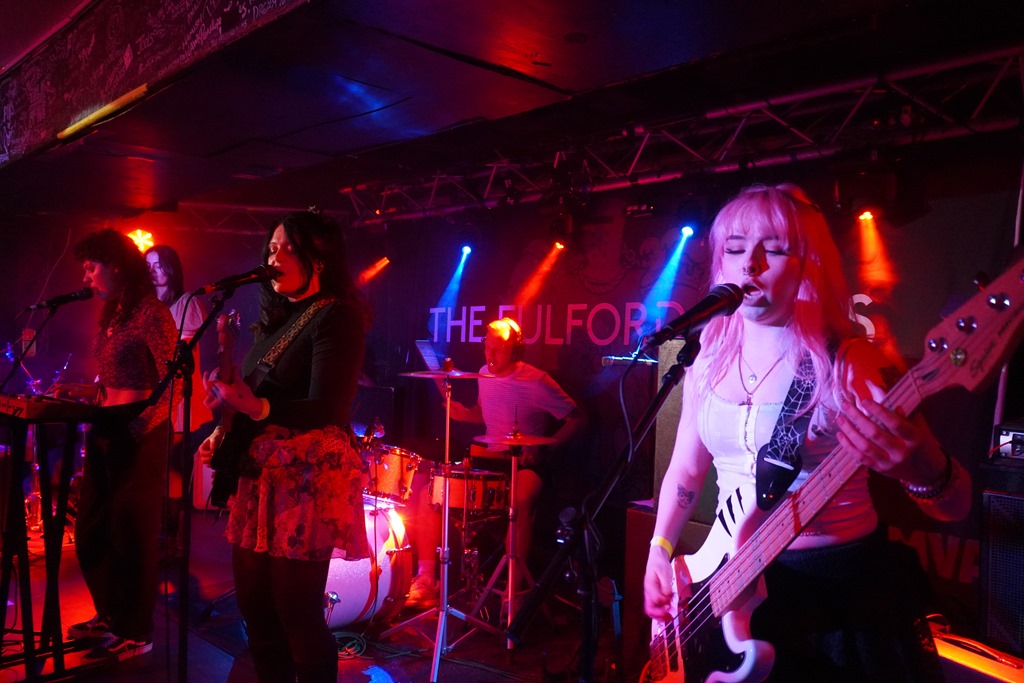
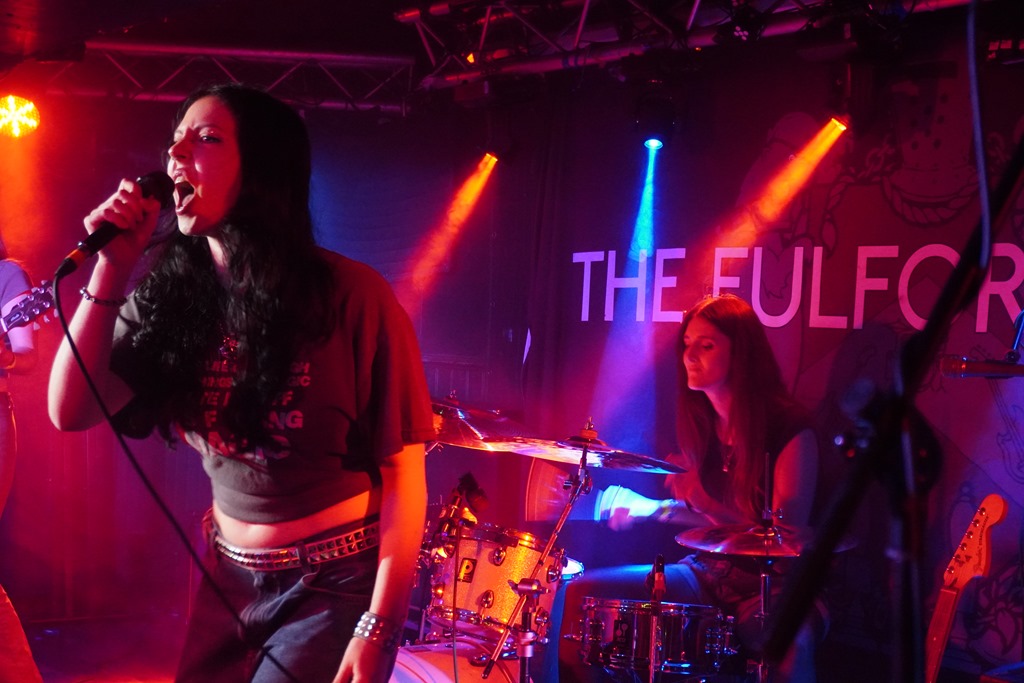
Last night, I spotted a post on Facebook from the Fulford Arms bearing the caption ‘hot day / sold out show = sweat dripping from the ceiling… f*cling awesome!’

And the gentrification of the grassroots venues we have left mean such occasions are a lot rarer than they used to be. And while for some punters it’s likely seen as a good thing, I personally do miss the sweaty mess aspect of packed-out pub venues, not because I necessarily enjoy being a sweaty mess, but because it was a part of the live experience, and you knew you’d been to a proper show if you came out absolutely drenched and having lost about 3lbs through perspiration.

And so it is that here we are at The Fulford Arms on the hottest day of the year so far. The thermometer in my back yard was showing 34°C earlier in the day. I found myself thinking ‘at least it can’t be as hot as The Mission at The Crescent, right? Or DZ Deathrays at the 50-capacity Woolpack in 2013… Surely?’ And it wasn’t. And not just in terms of temperature.

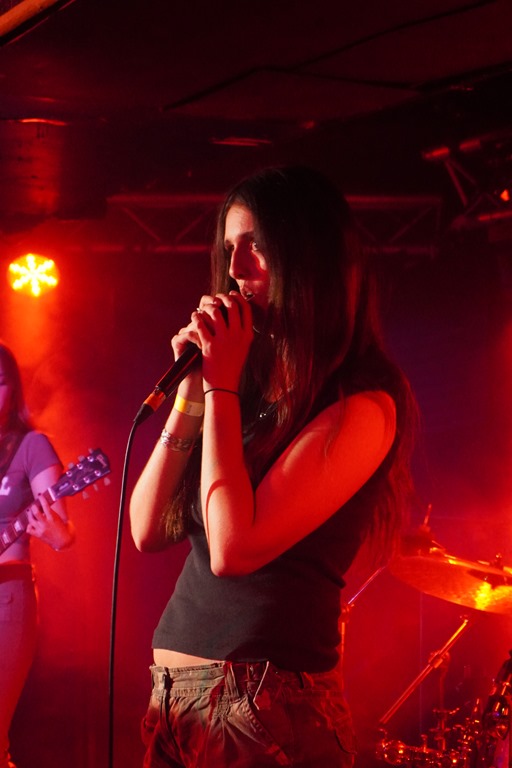
Cogas are a blackened death metal three-piece, with guitar, drums and vocals, plus face paint, chains, studs and random props. The seven-string guitar brings frenzied fretwork and some solid low end, and rapid fire kick drum action ensures the sound isn’t thin despite that lack of numbers. The singer looks really angry for the entirety of the set, and it works in terms of character, but it may be because of the amount of time he spends adjusting his mic stand. Towards the end of the set he wields an inverted cross of bones. Its relevance is unclear, but it’s an interesting visual.

DSC02351DSC02352

Cogas

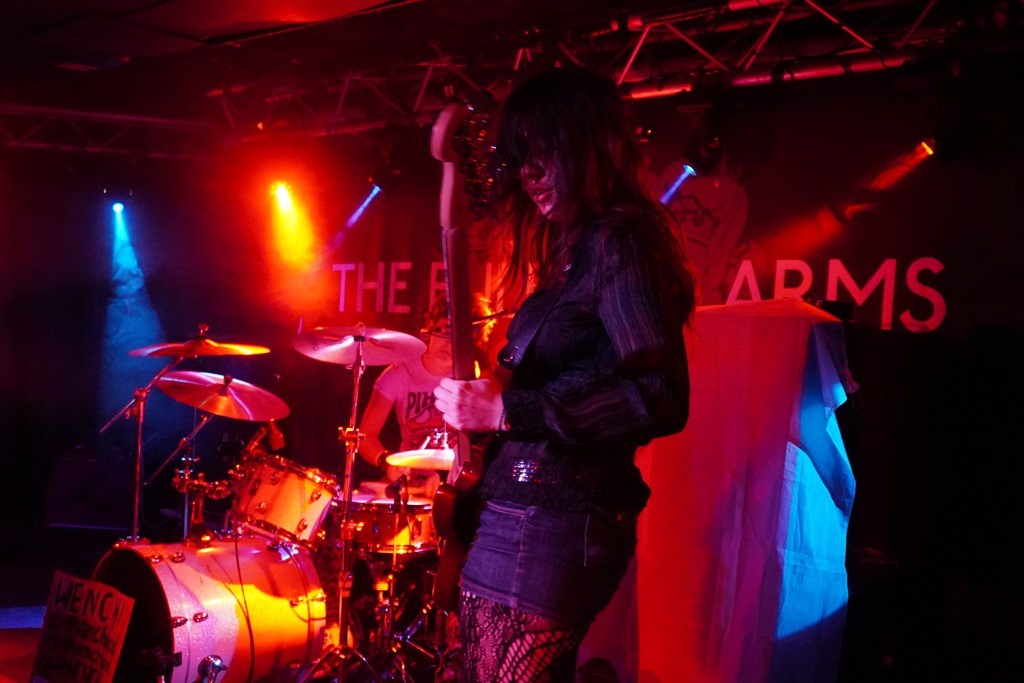
Blasfeme have more and bigger spikes, more black face paint and more guitars: two plus a five-string bass. This combination ratchets up both the volume and density. They play hard and fast, the vocals are a demonic shriek. By a few songs in, half their makeup has disappeared, and with his office haircut the vocalist is transformed back to a more daytime look, but guitarist Vermin flails his hair furiously and they pound their way through a set of highly structured songs, predominantly culled from their latest album, delivered with a rare tightness, and there’s no denying their quality.

DSC02368DSC02378

Blasfeme

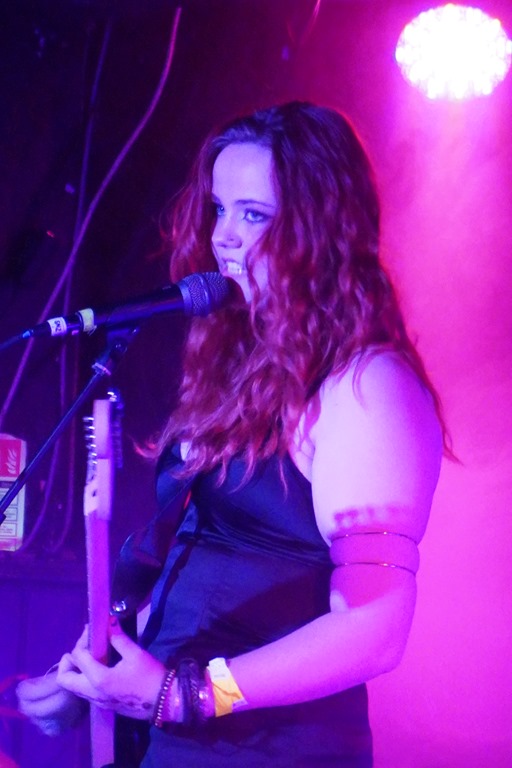
Thy Dying Light go darker still, with iron cross patches and black cymbals and shiny Spandex trews – plus a candelabra and a selection of horns and sheep skulls in front of the drum kit. the smoke seems to make the room even hotter, and by the end of the set, even the skulls looks like they’re sweating. The guitar/ drums duo – self-professed purveyors of “Cumbrian Black Metal” – deliver a set that’s raw and murky and true to the principles of black metal, seemingly have spent as long on their makeup as writing the songs. A big bearded guy in a Sunn O))) t-shirt emits a guttural growl between each song instead of applause.

DSC02388

Thy Dying Light

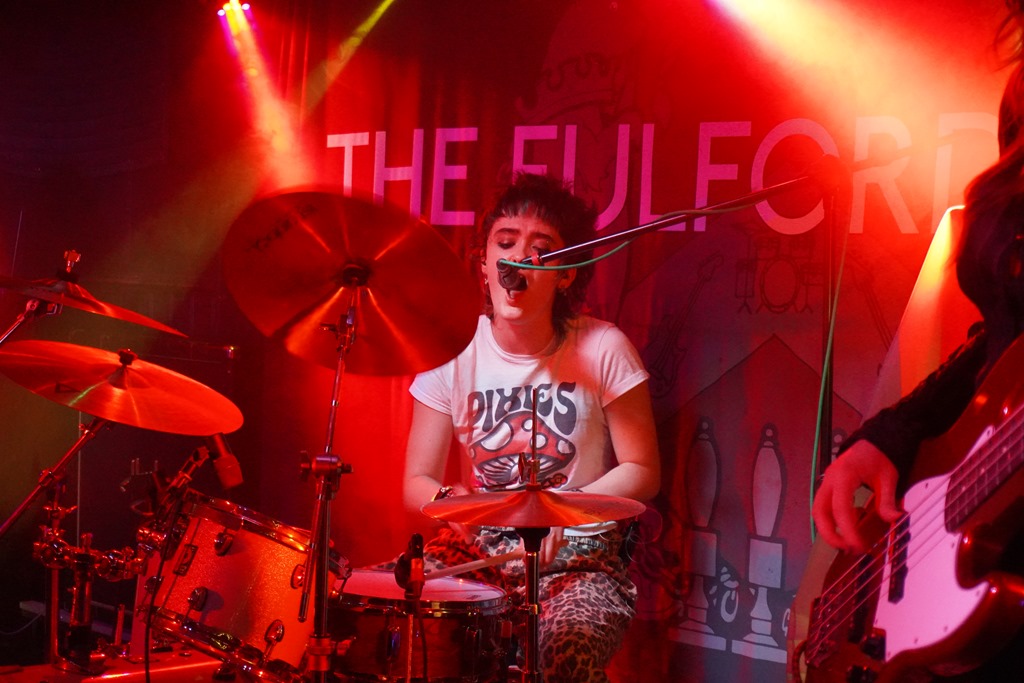
Burial bring beards and shaved heads, and t-shirts with cut-off sleeves. Their sound is as burly as they look, meaning that sonically they’re solid, but the fact their inter-song chat can be summarised as “how are you doing York, you soft wankers” and “fuck off you sexy cunts”, I’d have preferred more songs and less bantz. There seems to be a lot of in-jokes, which the faithful are in on, calling for them to get their tits out, but it rather falls flat for the casual observer.

DSC02421DSC02433

Burial

Perhaps the heat was a factor – certainly, the moshing was minimal and the crowd were keener to rush the bar and get air between the bands than go nuts during their sets – but something about the lineup simply failed to ignite on the night. None of the bands were duds, by any stretch, but there were no explosive cathartic peaks, making for a night that would sit in the ‘middling’ bracket overall. And that’s fine: four bands for a tenner means £2.50 a band, and it’s hard to begrudge that, and as a showcase of a breadth of metal, it delivered.

Panurus Productions – 20th June 2025

Christopher Nosnibor

You’d think that cassette labels would be not only niche, but few and far between, and in the main, they are, but Newcastle is home to not one, but two labels who provide a near-endless supply of releases to satiate the need for weird shit the world over, with Cruel Nature Records being one, and Panurus Productions being the other. The labels have a considerable amount in common, too, not least of all in that they both favour music that’s of a quality, rather than a style.

The latest Panurus release is a perfect case in point. The label’s previous offering, a split release from Belk and Casing was a raw blast of guitar overdrive. In contrast, the third album from M-G Dysfunction is of an altogether more experimental bent, leaning toward hip-hop and beat-driven electronics, but once again marking the close connection between the scenes in Leeds and Newcastle, both of which have become significant spawning grounds for the offbeat, the difficult, the wilfully obscure.

According to the blurb, ‘Mista Self-Isolation is the fullest realisation of the M-G Dysfunction project to date – a record of trepidation and humour, of lopsided passion and warped poetics. This album is about surveying the wreckage of monoculture and navigating the act of making music amidst a land-grab of rights, melodies and rhythms by people who never liked music in the first place. It’s about properly honest artistic expression – what “keeping it real” looks like, sounds like, feels like in 2024. It’s about getting some official beats and saying fly shit over them.’

That it’s quirky may be obvious, but it’s a necessary headline observation. On the one hand, it’s white rap, so there’s an awkwardness, but on the other, there’s some dirty experimental electronic noise layered over the beats, and this is an act that shared a stage with Benefits, a band who may have made their reputation by being angry, shouty, and noisy, but who aren’t without humour or an appreciation of nuance.

As tracks like ‘Roger Daltrey (Permanent Record)’ illustrate, M-G Dysfunction are multifaceted – something likely to leave many quite nonplussed. How can they do jokey, daft, a bit random and be serious at the same time? In truth, the answer is simple: because human beings are complex creatures, capable of a vast range of emotions and infinite ways of expressing them. It’s something we seem to have lost sight of in recent years, when everything has been boiled down to binaries, and everything is a conflict because the lines have been marked in such either / or terms. It’s no longer possible to be a woolly socialist: suggest that, I dunno, people on disability benefits are right to receive free prescriptions, and you’re labelled a left-wing extremist, a communist, and by the way, disabled people should get back into work or die. Something is severely fucking wrong with this picture.

Back in the early 90s, genre crossovers were all the rage, and the Judgement Night soundtrack was a real watershed moment that took the idea of rock / rap crossover, first witnessed in the mainstream when Run DMC and Aerosmith did ‘Walk This Way’ to the next level. At that time, it felt like a new future was emerging, and perhaps, even a future where boundaries and differences were dismantled. But here we are, and times are bleak.

But with Mista Self-Isolation – an album which is by no means an exercise in buoyant pop tunes – M-G Dysfunction show that in 2025, there is still scope to create something that speaks of what it is to be human.

The structured, beat-led songs are interspersed with self-reflective spoken word segments, spanning CBT meditation and contemplations on experiences and life in general. It is truly impossible to predict the twists and turns this album takes.

’50 Words for Blow’ comes on like a hip-hop-inspired barber’s shop quartet, while ‘John Wick’ is a critical memo, and the title track is abstract, minimal, dreamy but quietly intense. ‘Junglists Only’ is a perfectly executed pseudo-banger which knows it’s absurd and works because of it. The last song, ‘All that is Solid Melts into Deez Nuts’ evokes both humour and at the same time draws attention to M-G Dysfunction’s hip-hop credentials. If you know, you know, as cunts say, but for those who don’t, it’s a reference to Dr Dre’s ‘Deeez Nuuuts’ from The Chronic in 1992.

Postmodernism is alive and well after all, at least in some quarters, and it’s very well in the world of M-G Dysfunction. There is a lot going on on Mista Self-Isolation – and it’s all good.

AA

cover

Criminal Records – 20th June 2025

Christopher Nosnibor

If I didn’t know this was the new single by The Kut, I would never have guessed in a million years. ‘Sevens’ certainly sound different – very different… Beloved by Kerrang, Download veteran, with a debut album that reached number seven in the UK Rock Charts, The Kut is rock music. ‘Sevens’ however, is distinctly pop. Yes, really. But when you pick it apart, just how different really?

From their very inception, Princess Maha’s songs demonstrated a pop nouse, a knack for a hook, a nagging guitar line, a keen melody. It’s easy to overlook these components when it comes to many of the acts which have provided inspiration and comparison, the likes of Hole, Nirvana, Placebo. But all the raw energy in the world won’t translate to commercial success if there’s nothing that sticks in the mind. And so it is that all of these things are very much present on ‘Sevens’. Where it depart from previous offerings is not only that it’s sunny ad sultry, but the beats are backed off and everything is clean, smooth, the guitars are there but off in the background while a remarkably groovy bass flexes and bounces about in a way that’s not quite funky but certainly noddable. Landing in the middle of a heatwave and ahead of some festival appearances, it feels incredibly fitting. But, more to the point, if switched around to be recorded differently, with the guitars up in the mix and the vocals less compressed-sounding it would still be a solid rock tune. Done this way, it’s a solid pop tune with a post-punk flavour.

At heart it’s still The Kut, but with a new spin.

Ideologic Organ – 20th June 2025

Christopher Nosnibor

In his liner notes, Robert Barry suggests that ‘Brace for Impact might just be the first album of post-internet organ music’, and goes on to explain that ‘it is a record weaned on networked processes and algorithmic thinking, a suite of tracks which build their own systems then push them to the point of collapse. Lindwall is not a programmer, but he will wield whatever technology is ready to hand much as Chopin made use of the richer, fuller sound of an Erard piano. From the software subtly weirding the interior textures of ‘Swerve’ and ‘Piping’ to the juddering, kernel panic of ‘AFK’ and ‘À bruit secret’, these are works of music unthinkable without the ubiquitous experience of life lived online. Imparting that hypermodern aesthetic sensibility through the austere sound of a baroque organ only heightens the anachronistic sense of temporal disjuncture characteristic of days spent rabbit-holing through ever-multiplying stacks of browser windows. The vernacular of Web 2.0 is here re-transcribed in the ornate script of a medieval illuminated manuscript.’

As Barry also suggests, the organ has been undergoing something of a renaissance in recent years, and cites a number of significant organs which have been recently restored, including the grand organs at the cathedrals of St John the Divine and Notre-Dame (New York and Paris respectively, and, not so much closer to home but on my very doorstep, York Minster, which ‘heralded a “once-in-a-century” refurbishment of its own 5,000-plus pipe instrument’.

It marks something of a shift from an album I reviewed around maybe fifteen years ago, the details of which elude me now, which was recorded on a series of broken-down and dilapidated organs from around Europe which wheezed and groaned as if gasping out the last breaths from their collapsed lungs.

Brace for Impact is an altogether more vibrant work, although as much as it celebrates the organ and the instrument’s sonic magnitude, it also reaches far further into exploratory sonic territories over the course of these five compositions.

The title track features ‘a highly saturated and distorted electric guitar, performed by collaborator and SUNN O))) founding member, Stephen O’Malley’ – and ranges from tectonic crunches, machine-gun rattles and alienated whines rising from the kind of dissonant dronescape only O’Malley can conjure. And so we brace… and then we swerve. The collision fails to materialise during the ten-minute dark ambient swirl of the second track, spreading ominous overtones and watery, echo-heavy plips and plops. The muffled beats are akin to listening to a minimal techno set overlayed with a piece from the BBC Radiophonic Workshop, performed in the Blue John Cavern, and it shimmers accordingly, slipping into off-kilter fairground trilling in the final minutes.

The final diptych of compositions rally ventures out: both ‘AFK’ and ‘Piping’ extend beyond twelve minutes. The former brings jolting discord and drama, lurching stabs that manage to bring a crazed dance feel to the sound of the organ before swinging into a circus-type jive. It stands out as perhaps the most playful track on the album. There is a playfulness to ‘Piping’, too, but it feels more like it belongs to a film soundtrack or theatre performance, and it whirls and winds and spins and pirouettes it way to a pretty but perhaps confused conclusion.

Brace For Impact is very much a non-linear work, and one which stands, uncertain of where it’s going next. But is it unquestionably interesting, not to mention disorientating, and it’s a work which seems to bend time as well as notes. It’s an album to lose yourself in.

AA

SOMA062_3mmCover