Archive for the ‘Reviews’ Category

Transnational Records – 10th April 2025

James Wells

War San is the musical vehicle for Kim Warsen, an artist given to experimentalism and combining a range of genre elements. To date, he’s released four albums and an EP since starting out in 2019, and The Miraculous Life of Stella Maris is album number five. That’s quite a work rate.

Warsen himself points toward a ‘diverse range of genres, including alternative rock, electronic, and world music.’ The concept of ‘world’ music is very much a Western one, whereby Western music presents an infinite spectrum of styles, where there’s pop, electropop, EDM, EBM, rock, alternative rock, indie, indie rock, indie pop, punk, post-punk, heavy metal, thrash metal, folk, country, jazz, while the rest of the world is represented by ‘world’ music, a determination which suggests an otherness, a separation, and something of a dismissal that puts ‘everything else’ ‘over there’. I do not blame Kim Warsen for any of this: it’s simply how our (western) world works, and we use compartmentalising genre distinctions which are widely recognised as short-cuts in order to pitch works in a culture where attention is limited at best.

The first of the seven tracks, ‘The Drunken Thief’, delivers on the promise, as Warsen croons in a Leonard Cohen-esque tone over a shuffling beat, and a conglomeration of mournful strings, which surge on ‘The Sanctuary of Wonders’ amidst busy hand-percussion, while there’s a dash of David Bowie to be found on ‘Rise Rebel, Rise’, which I suspect is intentional, and if anything is even more pronounced on ‘The Iberian Oracle’. The title track is hushed and intimate, in contrast to the expansive ‘Celestial Doorway’.

Overall, The Miraculous Life of Stella Maris has a magnificently fuzzy feel, a blurry haze which clings to all aspects of the sound and the overall production lends the album a sense of mystique, and of there being something behind or beneath what you hear that’s just out of reach.

AA

STELLA_2400Photo_Pablo_Zapata

Christopher Nosnibor

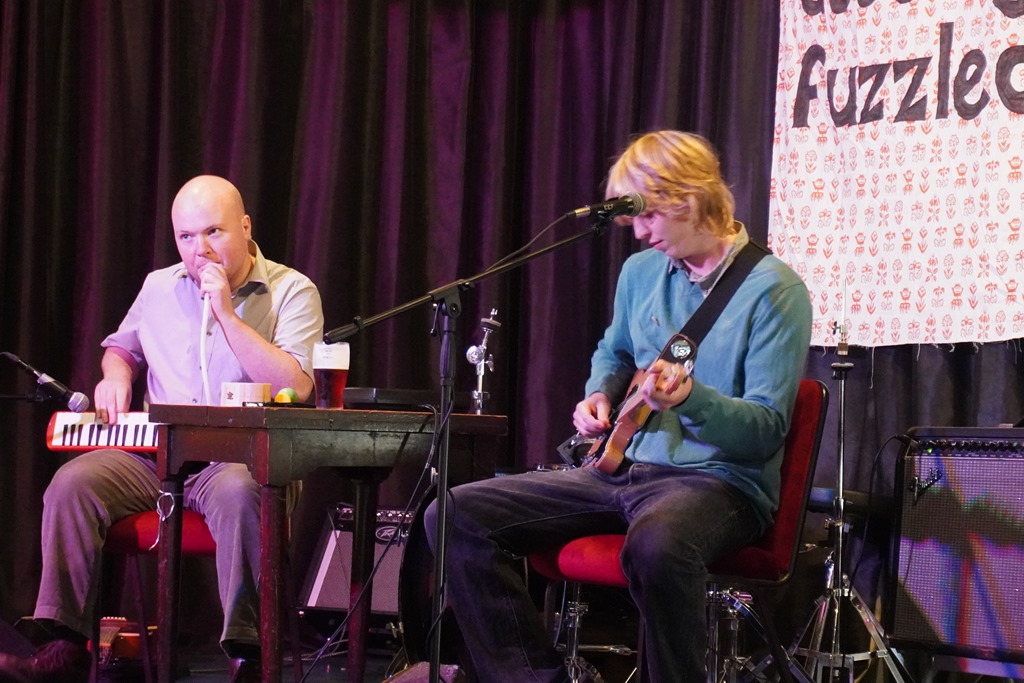
This isn’t one of the three bands for six quid efforts I’ve been raving about, but three bands from out of town for eleven quid is hardly extortion, even on a Tuesday night, and Gans might have much social media presence, but they definitely have some traction building. Bearing in mind that it’s the Easter break and many students at both of the universities have gone home, the place is noticeably busy, and there’s a conspicuous number of really tall bastards in tonight, young and old. And while I’m inching towards being an old bastard myself, I shall never be tall, but will be eternally aggravated by the towering twats who step to the front row in a venue with a stage that’s barely a foot high. That’s just a personal peeve, and there’s not much you can do about biology.

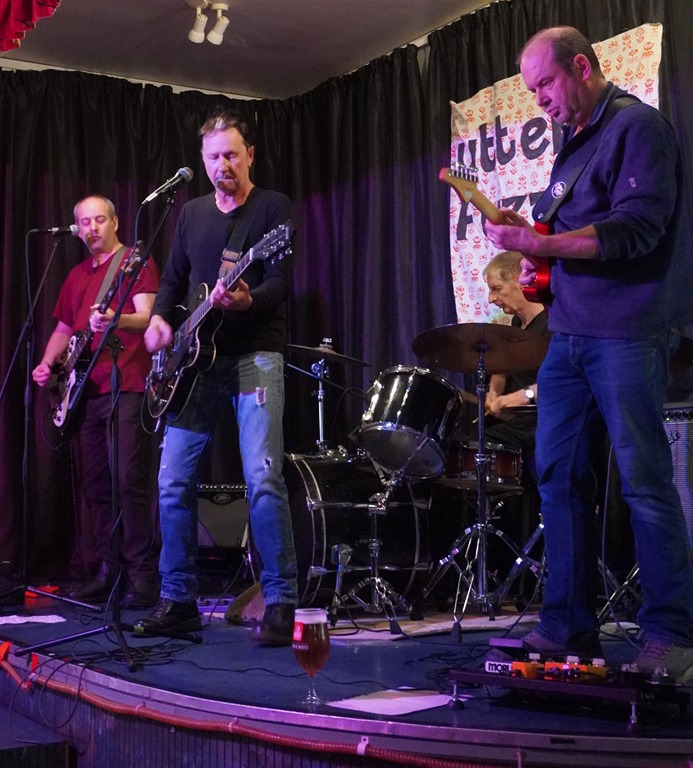
But there is something you can do about being a decent band, and I’ll admit my expectations are pretty low at the start of the set by the Richard Carlson Band, from Sheffield. It’s not the sax per se, but the slightly awkward presentation, the smooth jazzy leanings, my instinct to summarise this as ‘nice; and move on… but while their set is jazzy in part, it’s also varied, in places evoking Ian Dury, in others Duran Duran circa Seven and the Ragged Tiger… ‘Barrymore’s Pool Party’ goes darker and calls to mind Girls Vs Boys and The Fall, only with sax. They’re a five-piece with two – or three guitars, the third guitarist sometimes does keyboard, and they’ve no bass, instead finding the second guitar being run through a pedal that turns it into a bass. It’s unusual, and their set is both interesting and well-played.

DSC01597.edit

Richard Carlson Band

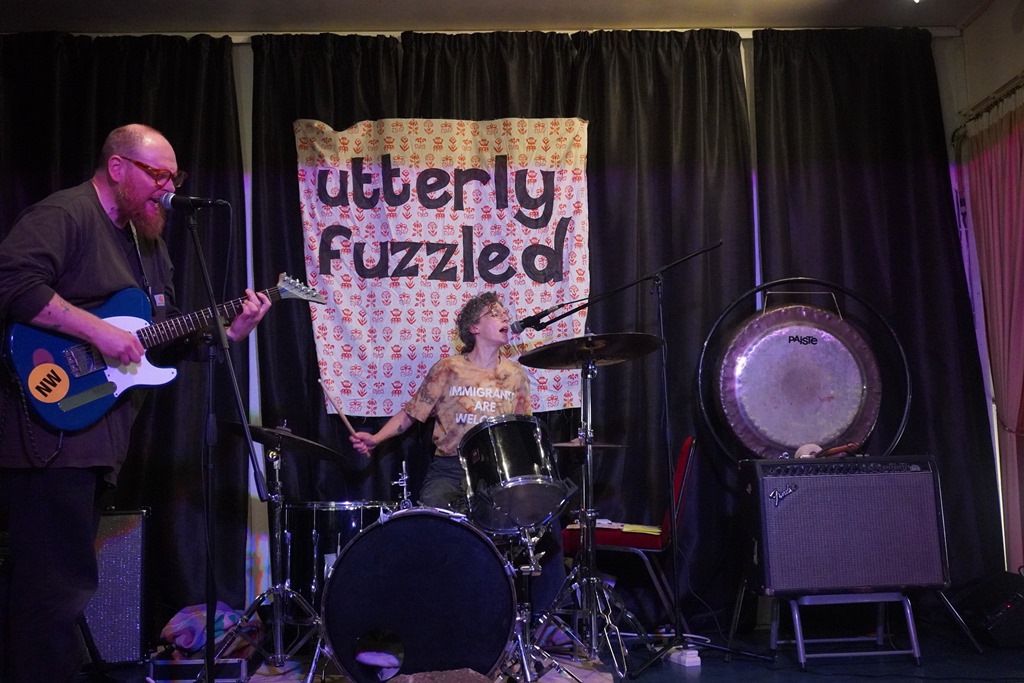
Mince, from Leeds, are also a quintet, and appropriate for their name, serve up some fairly standard meat and two veg punky fair. In fairness, they do at least do it with some energy. A few songs in the whip out a choppy guitar that’s pure Gang of Four and for a moment they’re ace. Then it’s back to sounding like The Godfathers crossed with generic indie / punk. The pace picks up as the set progresses: the standard doesn’t, descending into shit shouty indie. The last song, their upcoming single, is the best they have by a mile. It’s solid, but they’ve set the bar low.

DSC01607.edit

Mince

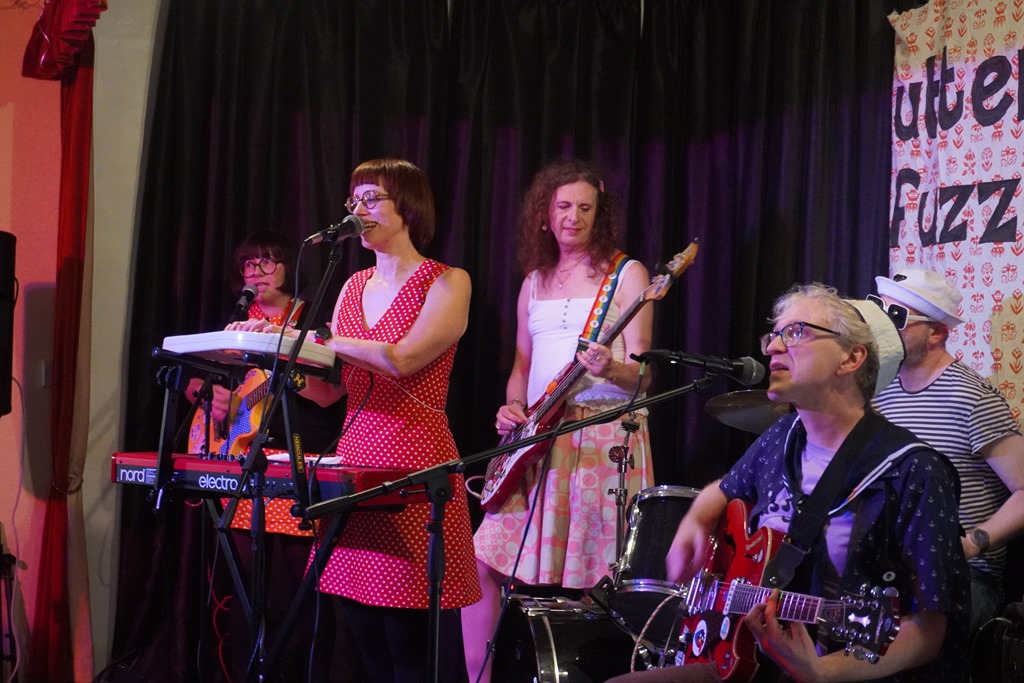
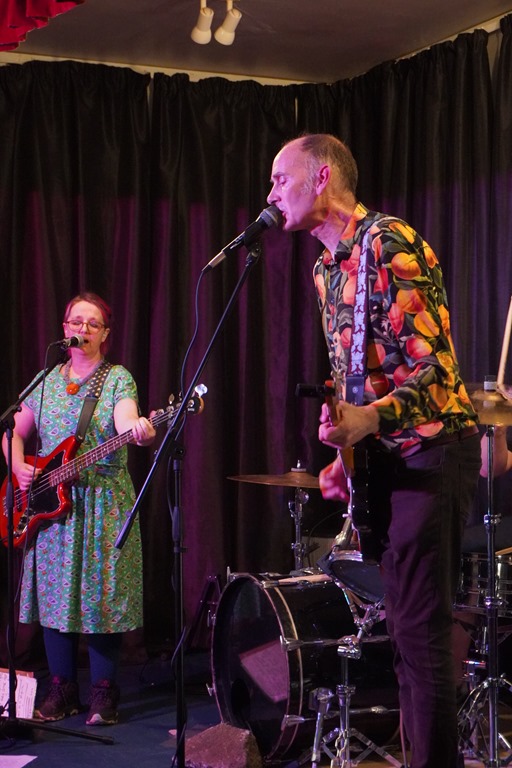
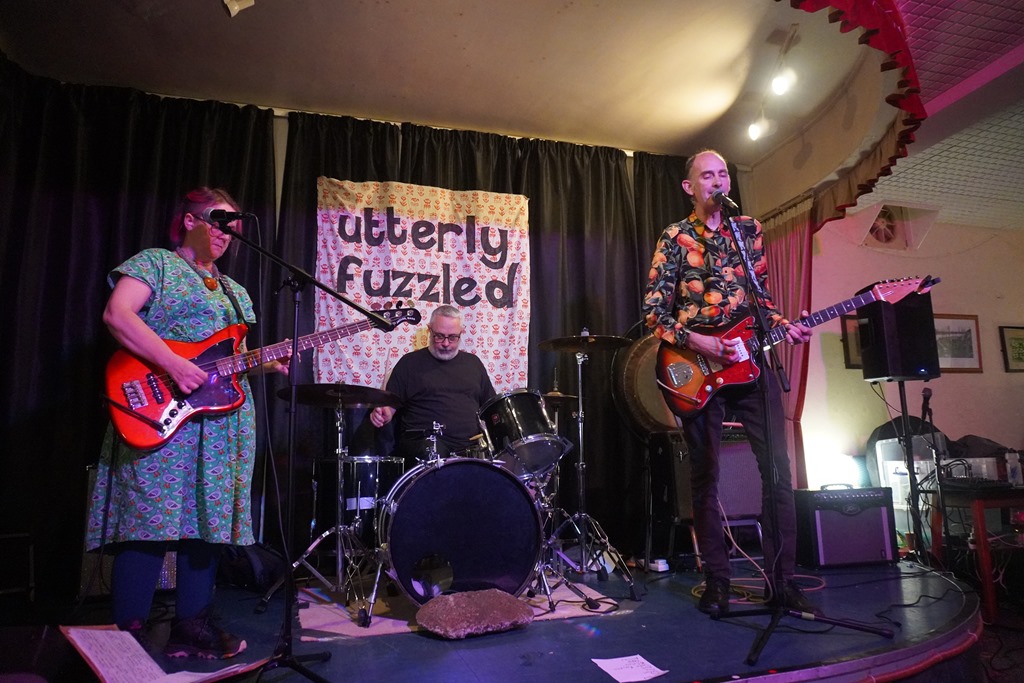
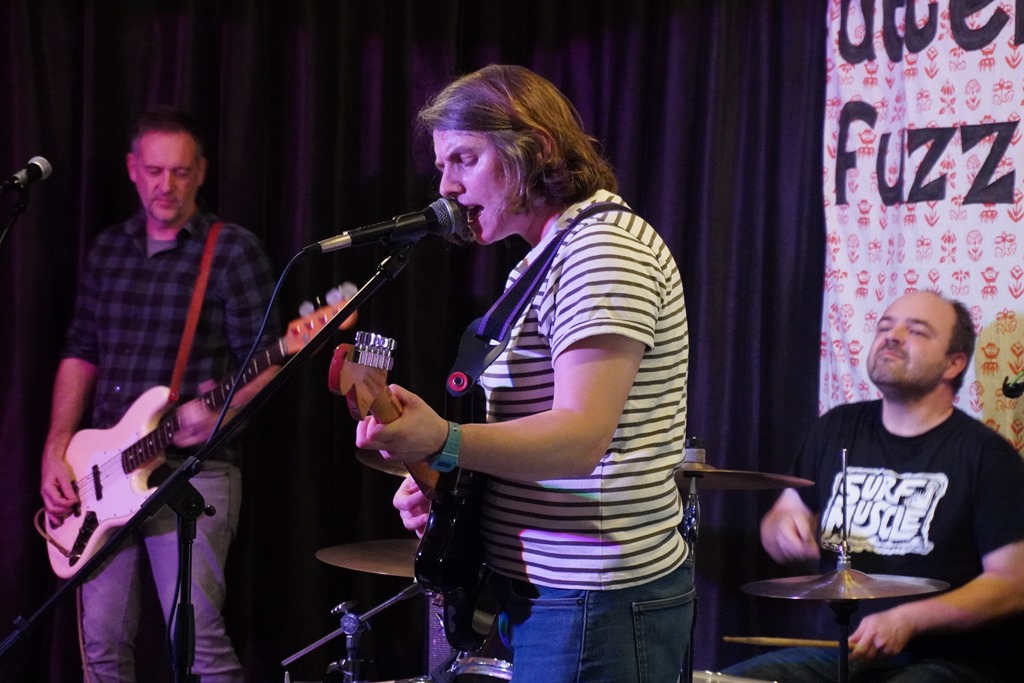
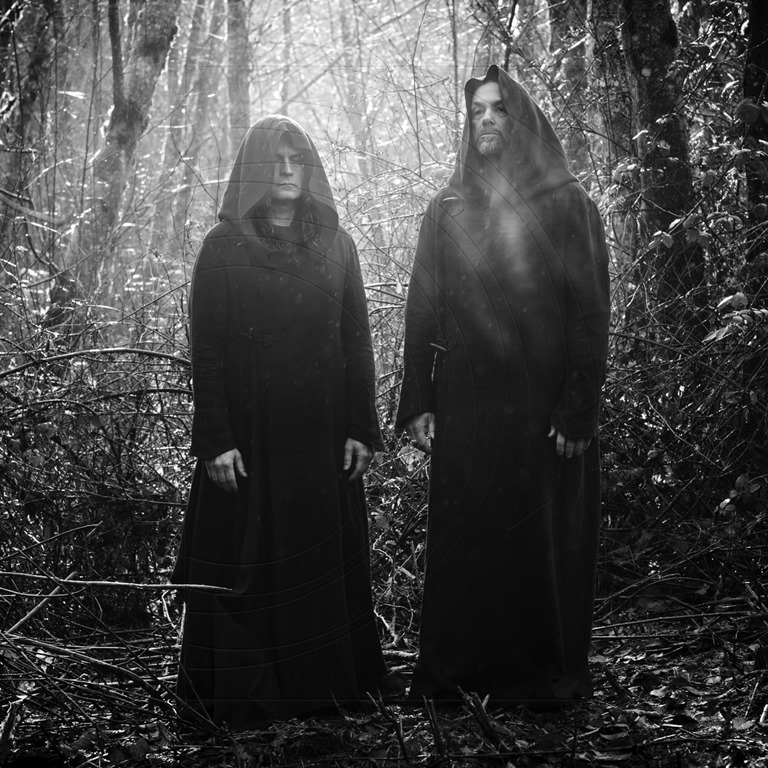
Gans are something else, and that something is superlative. Hard-hitting two-piece acts have become a prominent feature of the rock scene in the last decade, with Royal Blood blowing open a fair few doors before blowing their cool in spectacular fashion. Being rather less preoccupied with classic rock and more about raw punk energy, Gans are more reminiscent of Slaves before they sold out to the Man and became Soft Play. Gans set out to entertain, and absolutely give it their all, making a massive bloody racket in the process, with only bass and drums. I say ‘only’, but that bass sound is immense, and the bassist can’t keep still for a second: he positively vibrates with energy, while the drummer… kicking out rolling rhythms that have the glammy swagger of Adam and the Ants and The Glitter Band, he plays hard and with style: watching him, I continually return to the question ‘how does the man breathe, let alone sing while doing this?’

DSC01620DSC01643.editDSC01645DSC01649

Gans

Although they’ve only released five songs to date, they’ve got plenty more in the bag, and there’s no filler to be found here. They are truly a joy to watch, and they maintain the energy from start to finish throughout their high-intensity forty-minute set. Catch them in a small venue while you still can.

Negative Gain Productions – 21st April 2025

James Wells

Sometimes, an album really slaps you round the face with its sheer force and brutal intensity. Boom! Sauerstoff, the latest from Hasswut is one of those albums. No two ways about it: this one is a real face-melter.

Technoindustrial acts in the vein of KMFDM are ten a penny, and while Europe has long been a hotbed for this kind of thing, it’s in the US that it really seems to have take off in the last decade, and something that was once predominantly the domain of the Wax Trax! label in the late 90s and early 90s is now ubiquitous. And that’s cool, but it’s no longer ‘edgy’ like it was, because it’s simply become so commonplace, an endless conveyor belt of bands with distorted vocals snarling over pumped-up techno and some gritty sampled-sounding guitars.

Then Hasswult come along and absolutely piss on the majority of their peers by taking it to the next level. It’s more metal, for a start, and less processed. And it’s brutal. Sure, there are beats you can go nuts to, but the abrasion is intense, and hits so hard you’ll see stars.

It’s overtly European to my ears – if I didn’t know they were Spanish I’d think they were German, and not just on account of the lyrics being in German, which presents an unexpected, unusual, and interesting twist – and proper, full-on aggressive, a complete melding of aggrotech, technoindustrial, and industrial metal. Sure, the obligatory KMFDM nods are on display, and in the mix there’s a whole load of Rammstein, and Ministry circa Psalm 69. It’s hard, it’s heavy, and it’s seriously potent.

Click image to view video:

243266

AA

Ant-Zen – 7th April 2025

Christopher Nosnibor

Kadaitcha’s Urban Somnambulistics was originally released on cassette in 2017, and was lauded for its dark atmospherics and rumbling narrative, spoken in Russian. A lot has happened since then, and the Ukrainian duo have, against all odds, remained active, releasing Tramontane in September 21023, and now a new version of Urban Somnambulistics, with the vocals in English. It’s not only the urban landscape of Ukraine which has changed since the album’s initial release, but the cultural landscape also, and the decision to re-record the lyrics in English was in some ways a reaction to the cultural and political context which has evolved, with Andrii explaining to me that, for him, Russian has become ‘a language of occupancy’.

There had been a shift following the annexation of Crimea in 2024, with some people switching from speaking Russian to Ukrainian, something which became more prevalent following Russia’s invasion in February 2022.

It’s hard to really grasp, from a position of comfort and safety, what it truly means to be an artist in a country which is not only at war, but has now been so for more than three years. The idea of making art under such circumstances seems completely wild, but at the same time, something we’ve learned from the long history of war – and indeed, history as a long thread, riven with tribulation – is that art has always been something we’ve made. It seems as if it’s almost a part of our survival mechanism, and that in difficult times, it’s a compulsion within the human psyche that there’s an absolute necessity to document, to create.

Urban Somnambulistics is dark and intense, and while it’s devoid of beats, it’s far too noisy and gnarly and bears the hallmarks of Throbbing Gristle at their darkest, most experimental best, abrasive, and anything but ‘very friendly’. The vocal on ‘hiding the angel’, while clean but reverby on the original version, is thick with distortion this time around, and significantly darker and more menacing in tone. ‘bushmeat’ is nine minutes of blown-out distortion and fizzing electronics, snapped cables and firing sparks, and it’s not only tense, but intense, not to mention unsettling. It’s a messy noise drift that would work as part of a soundtrack to Threads, a post-apocalyptic drone with the whistle of a bleak wind cutting across a desolate landscape. There is shredding noise, too, metallic devastation: you can almost picture ruined farm buildings hanging on their frames beside cropless fields.

Things really step up with ‘symbiote’, five minutes of oppressively dark industrial grind, before the rather more airy expanse of ‘paninsecta’, a piece that groans and drones, clanks and clatters, cut through with snarls and burrs, distorted vocal utterances just beneath the level of audibility adding an unsettling layer of discomfort. The eleven-minute title track provides the finale, and again, it’s very much in the vein of Throbbing Gristle’s more experimental works – menacing, uncomfortable, unpredictable, and noisy, collaged overlays enmeshing with crunching metal, melting circuitry, harsh drones rising up, a surging sonic tempest.

It’s remarkable that this is an album which was recorded before life in Ukraine changed beyond all recognition, because Urban Somnambulistics appears to convey all the tension and all the devastation of conflict in its presentation of sonic extremities, and its embracing of noise that hits like… like… It has significant impact, and that’s a fact.

AA

cover

28th February 2025

Christopher Nosnibor

I’ve had a few interesting conversations about Shoegaze in the last couple of weeks. Largely – and massively – maligned in the UK music press at the time, many of the leading exponents of the style in the 90s – Ride, Slowdive, Chapterhouse – had all formed in the late 80s and had petered out by the mid-90s. What goes around comes around, and both Ride and Slowdive have been enjoying second careers following a significant shoegaze renaissance spearheaded by younger, up-and-coming acts like Pale Blue Eyes and BDRMM. But I learned that amongst my friends and peers, the genre remains divisive, perceived by some as wishy-washy, and described by one of my friends as ‘music for people too lazy to have a wank’. Personally, I find I’m too busy, rather than too lazy, and have been enjoying the resurgence, while aware that there is a danger that the next couple of years could see Shoegaze reaching the kind of saturation we saw with Post-Rock in 2006. Because it is possible to have too much of a good thing, especially when bills contain three or even four bands who all sound more or less identical.

But it transpires that this is not necessarily the same outside of the UK, and while Pale Blue Eyes and BDRMM are packing out venues of increasing sizes with each tour, over in Turkey, remains a marginal interest, although it is starting to gain traction. And at the forefront of this are Plastic Idea, formed in Istanbul in 2019.

Afterglow is their second album, following Bakiyesi Belirsiz Ömrüm (My Life With an Obscure Remainder) released in 2022. Like its predecessor, Afterglow was recorded, mixed and mastered completely by Berkan Çalışkan in his bedroom, although this time around, five of the album’s eight tracks bear titles in English.

The band write that ‘although there is a general melancholy throughout the album, brief moments of hope are also evident,’ pointing to the title track, as well as ‘bedroom-poppy vibes like in ‘Some Days’ and post-punky feels like in ‘Yıldızlar Düştü Gökyüzünden’. The album’s cover bears all the hallmarks of a reference to My Bloody Valentine’s Loveless, and there’s no doubt some influence here.

It’s the title track which launches the album, beginning with chiming, picked, clean guitar before a cascade of overdrive crashes in simultaneous with bass and drums. The song continues to exploit the quiet / loud dynamic between verses and choruses, the vocals floating in a wash of reverb. It’s pleasant, but nothing particularly remarkable, but that changes with ‘I Wanna Fall In Love’, which is altogether darker, more haunting, with some undefinable blend of desperation and menage in the vocal delivery which reverberates amidst fractal, crystalline guitars. It’s as much post-punk, even shaded with hues of gith, as it is shoegaze.

‘Some Days’ drips with downtempo melancholy and echoes of early Ride, while ‘Kolay Mı Yaşamak; is a real standout, with a snaking psyche-hued guitar shimmering through the verses before a full-blooded grunge blast of a chorus, and ‘Yıldızlar Düştü Gökyüzünden’, too, delivers a surging finale with an attack that’s more the sound of angst than floppy moping, and the six-minute closer, ‘Don’t Let Them Bring You Down’ goes epic, and if the solo’s overplayed, it still works in context.

While I’m personally a fan of the genre, pitching Afterglow as a shoegaze album may deter some from exploring an album that’s wide-ranging and pretty gutsy in parts. Afterglow offers edge and dynamics, and is a far cry from the wishy-washy vagueness that’s often synonymous with shoegaze.

AA

a1581589784_10

Gizeh Records – 4th April 2025

Christopher Nosnibor

Returning for their eighth album, A-Sun Amissa, purveyors of drone-centric ambience centred around founder Richard Knox pull back from the rather larger avant-rock sound of 2024’s Ruins Era to concentrate once more on ‘unsettling drones and claustrophobic atmospheres’. Knox is joined for the third successive release by Luke Bhatia and Claire Knox, indicating that this is a fairly stable lineup, and perhaps this has been a factor in the album’s exploratory, evolutionary approach.

The promise is that the record’s ‘washed out and ethereal sound drags electric guitar, clarinet, voice and piano through pillows of reverb and distortion to build heaving, desolate dronescapes. Moving through dense, oppressive passages of sound and diffusing into sections of gloomy, haunting restraint. We Are Not Our Dread is filled with majestic, textural detail. It envelops and, at times, smothers you before releasing just at the right moment, resolving in a billowing, melancholic, distorted reverie.’

The first thing that strikes me – as is often the case with any project centred around Knox – is the evocative nature of the title. Perhaps I’m feeling uncommonly sensitive right now, but this one in particular lands with an unexpected impact, and as much as the implication is one of positivity – no, we are not our dread, our dread does not define us or dictate our lives – there is equally the emphasis on the fact that we have that dread. And not you, or I, but us, together, collectively. And so it is that dread become the focus, that thing which looms large over not only the title or the album, but our lives. Why do we have this dread? It would not be an overstatement that the pandemic changed everything: the world that we knew lurched on its axis and no-one knew how to handle it. And since then, insanity has run free. 9/11 may have rattled the rhythm of life for a time, but not it seems that the entire world spent the pandemic years just waiting to wage war, and now nothing is safe or predictable – not your job, your home, your ability to post stuff online. You don’t need to be a prominent protestor or social agitator to attract the wrong kind of attention. The dread hangs over every moment now. We thought we had seen the worst when COVID swept the globe and lockdowns dominated our lives, and began to breathe a collective sight od relief when things began to retract, as we looked with optimism toward the ‘new normal’. But who ever anticipated this today as the new normal the future held?

We Are Not Our Dread consists of four fairly lengthy instrumental compositions, and ‘Electric Tremble’ arrives in a dense cloud of ominous noise which immediately builds tension, and if the rolling piano which drifts in shortly afterwards is gentle, even soothing, the undercurrents of rumbling discord and distant thunder which persist maintain a sense of discomfort which is impossible to ignore.

Ever since his early days with Glissando, melding post-rock with ambient tropes, Knox has had an ear for the unsettling, deftly manoeuvring elements of the soft and gentle with the spine-tingling. And while the eleven-minute ‘All The Sky Was Empty’ is a quintessential work of epic post-rock abstract ambience, rich in texture as it turns like a heavy cloud billowing and building but without an actual storm breaking, instead dispersing to offer breaking light and a sense of hope, the wandering clarinet brings a vaguely jazz element to the sound.

‘Sings Death or Petals’ arrives on trails of feedback and rumbling guitar noise, and is immediately darker, and those dark undercurrents continue with crackles and rumbles and elongated drones which persist beneath the ghostly, ethereal voices and reverb-heavy piano and picked guitar notes. At times, this bears the hallmarks of latter-day Earth, but at the same time there’s a less structured, less motif-oriented approach to the composition, which leaves much open space. I still can’t choose between death or petals here. It builds to a churning whorl, before the final track, ‘Our Hearts Bent As Crooked Lightning’ stirs from a rippling array of simmering noise and evolves into a colossus of rumbling drones, and, over the course of ten-and-a-half minutes, grows supple with softer waves of expansive synth which remind you to breathe again. For all the fuzz and broad swells of abstract, buzzing noise that’s equal parts gripping and soothing, the overall effect is sedative, and welcome.

We Are Not Our Dread leads the listener through some challenging moments, and as each listener experiences works differently, as I hear the final soaring strains of ‘Our Hearts Bent As Crooked Lightning’ this strikes me personally as dark and challenging. The intentions may be quite different, but this is undeniably a work which is sonically ambitious, spacious, resonant. Even as the tension lifts, the mood remains, like a dream you can’t shake, like the paranoia that persists even when you’ve dome nothing wrong.

That We Are Not Our Dread is true, and so is the fact that, to quote from Fight Club, you are ‘not your job. You’re not how much money you have in the bank. You’re not the car you drive. You’re not the contents of your wallet. You’re not your fucking khakis.’ And you are not your dread. It may at times possess you, but this, this is not it. This, however, is a great album.

AA

a1068739543_10

Cruel Nature Records – 4th April 2025

Christopher Nosnibor

Machine Mafia may be largely unknown, but the duo’s members have some pedigree, being Adam Stone of Pound Land and Jase Kester (Omnibadger/Omnibael/Don’t Try/Plan Pony), all regulars at Aural Aggravation. Jase joined Pound Land’s ever-shifting lineup as the (then) sixth member in 2023 for a handful of live shows, and contributing additional noise to Mugged (because it needed more noise). Deciding to collaborate in early 2024, they slipped out a couple of self-released EPs, which as the notes which accompany Zoned observe, ‘more or less went under the radar at the time’ – which is why they’re getting a second go here, with Zoned being a compilation of those EPs plus four new tracks, or a new EP packaged with the previous ones, depending on your perspective. The tracks aren’t in their original order of release, and have bene resequenced, presumably for the purpose of creating a flow that’s sonic rather than chronological. And so it is that the album starts with ‘Killzones’, arguably the most overtly Pound land-like track on the album, which eases fans of Pound Land into the world of Machine Mafia nicely, or will otherwise alienate pretty much everyone else, unless they’re on the market for something that sounds like Sleaford Mods in collaboration with PiL while monged on Ketamine.

They describe themselves as ‘a voice/electronics duo in the grand tradition of Suicide, Silver Apples, Soft Cell, Pet Shop Boys etc.’ And it is indeed a grand tradition, to which one would reasonably add Sparks, Air, and Erasure, and even the final incarnation of Whitehouse, although what this list ultimately achieves is to demonstrate just how wide-ranging the electronic duo format stretches in terms of style. I very much doubt you’d find these guys donning big hats or flamboyant costumes and kicking out a set of brassy dancefloor-friendly pop bangers, at least on the evidence of the thirteen tracks on offer here. They recount that their first gig was ‘in a small craft ale bar in the Staffordshire town of Leek, receiving a ban for high decibel levels and foul language’. This sets the bar of expectation, and in this context, Zoned does not disappoint.

As I suggested in my write-up of the Killzones EP, the electronic duo they share the most common ground with is Cabaret Voltaire in their early years, mashing up samples and noise in a Burroughsian cut-up style, and churning out gnarly noise that sits between Suicide and Throbbing Gristle. This is particularly true of the collage chaos of ‘Lecture 0.3B’,

But then, ‘F.O.S’, is a blast of uptempo, lo-fi, bass driven drum-machine propelled hardcore punk strewn with feedback and snarling aggression, and ‘Where’s The Money Gone?’, from the Money Gone EP is a filthy racket with massive blasting beats which lands in the space between The Fall and Big Black, powering away at a motorik groove for the best part of six minutes while Stone hollers thickly and ever-more desperately ‘where’s the money gone?’ Well, we know it’s not gone into public services, but there some mega-rich cunts swanning around and jetting into space. And has anyone seen Michelle Mone since she sailed off on her multi-million quid yacht?

‘England’, originally released on Industrial Coast’s ‘Rock Against Racism’ compilation is very Throbbing Gristle, in the (pulsating) vein of ‘Very Friendly’.

Of the four new cuts, ‘Crabclaw’ invites comparisons to Selfish Cunt’s ‘Britain is Shit’, and this may not be entirely accidental, a stinking snarling assault on culture and the senses, with an overloading gritty bass and vitriolic vocals ranting in a mess of distortion and reverb over the murky morass of a musical backing. It’s the sound of frustration, it’s the sound of anger mashed together with despair. ‘Jackpot’, meanwhile, is like John Cooper Clarke spouting over a segment of Metal Machine Music. All the while, a drum machine and throbbing bass pulse away relentlessly: this is Sleaford Mods for real punks. ‘Human Like’ revisits the dubby tendencies first explored with ‘Killzones’, and it’s a dark, sprawling cavernous hell of reverb atop an organ-shaking bass, again bringing together PiL (think ‘Theme’) and Throbbing Gristle (think ‘What a Day’). It’s meaty, and then some, and crunches and grinds away for a full six echo-soaked minutes. Closing with the eight-and-a-half-minute megalith that is ‘Outside My House’, they go full Whitehouse, with a booming bass that’s positively weapons-grade density, over which Stone delivers a rabid, drawling rant from the perspective of a crabby right-wing old-timer while electronic extranea bubble and eddy around. It’s utterly brutal, and completely uncomfortable, and this is the brilliance of Machine Mafia. Gnarly, nasty, uncompromising, Zoned is not friendly, and it will leave you feeling drained, harrowed, punished. Mission accomplished. You’re not supposed to like this.

AA

a2183471837_10

Impossible Ark Records – 4th April 2025

Christopher Nosnibor

The jazzosphere has a way of throwing surprises, and in the most unexpected ways. Ledley’s eponymous debut, which sees acclaimed electroacoustic improvisational musicians Raph Clarkson (trombone, FX), Chris Williams (saxophone, FX) and Riaan Vosloo (electronics, post-production), is – let me check this – yes, a tribute to legendary Spurs footballer, Ledley King. You didn’t see that one coming, did you?

My knowledge of football is scant: I was born in Lincoln and so feel obliged to follow The Imps – by which I mean check on the scores on the BBC when I remember, and I sometimes watch England international, when I have time and can bear to – but clearly, this does not make me a football fan. But I do have a deep interest in music that’s out of the ordinary, the weirder the better. And this is pretty weird.

Ledley is pitched as ‘is a celebration of improvisation, friendship, and shared passions, blending music and sport into an exploration of community, belonging, and resilience – one of the most extraordinary tributes ever paid to a footballer.’

Although split into eleven tracks digitally, the album is essentially two longform compositions, corresponding with the two sides of the vinyl release, which contain loosely-defined segments, or passages, which flow into one another. Some of these are dramatic, film-score like, with the trappings of bold orchestral bursts, only without the full spectrum of instruments, lending these pieces the feel of somewhat stunted reimaginings of John Williams scores. But then there are the meandering straight-up jazz meanderings, trilling, tooting woodwind, and moments that sound more like some kind of noir soundtrack excerpt – you can envisage some old black and white movie version of something by Raymond Chandler – and then the more extravagant, indulgent moments, which are, it must be stressed, brief and infrequent, evoke the spirit of Kerouac and The Beats. The association with The Beat Generation is something I’ll park here, as The Beats were as stylistically diverse in their writing as The Romantics, and there was nothing jazz about Burroughs. I digress, but to do so feels appropriate: while it does have a musical flow to it Ledley is not a narrative album, and it in no way presents a sense of sequentiality.

The second half is most definitely more sedate, and more prone to abstract wanderings, as the instruments criss-cross, snake, and interweave through and around one another, before tapering down into spacious, semi-ambient, almost drone-line expanses which yawn and stretch in one direction and swoon and glide in the other. Towards the end, it feels as if the batteries are slowly winding down to a low drone. There are bird-like squawks and slow, heraldic horns ringing out, but it’s more the sound of mournful defeat than triumph and celebration. Perhaps this is intentional, and perhaps an understanding of the context is beneficial here Or maybe not: hearing the final tapering tones fade over the horizon, Ledley could as easily be a hymnal to seabirds as it is to a football player, and the beauty of music, particularly instrumental works, is that regardless of their intent, there is ultimately a sense of interpretation which lies with the receiver. Personal experiences, life in the moment, these things come to weigh on how we receive and interpret, and determine not only pour reaction and response but the relationship we have with a given work of art.

Having a knowledge of Ledley King and his career may, or may not, be beneficial when it comes to this album. Sonically, it’s interesting, it slides between moods and spaces, pulling the listener along through them. No naff sporting analogy is required in creating a punchline for this one: it’s simply intriguing, and the musicianship is of an undeniable quality.

AA

LEDLEY – Ledley artwork cover 1000px

For the first single from Marc Urselli’s Best of Ramones Redux that will be released parallel to the forthcoming MER Redux Series instalment Marc Urselli’s Ramones Redux, Canadian space metal legends VOÏVOD have teamed up with no less legendary Australian post-punk vocalist JG THIRLWELL (FOETUS) to pay a mind-blowing tribute to the most fitting RAMONES’ classic ‘Zero Zero UFO’. The original of the song was released on the US punk rockers’ eleventh full-length Brain Drain (1989).

VOÏVOD comment: “One of the proudest moments of my life was when Joey Ramone gave a shout-out to Voïvod on stage in Montreal in 1994”, drummer Michel “Away” Langevin reminisces. "I’ve been a fan of the Ramones since their first LP, so you can imagine my excitement when Marc Urselli approached us to cover a song for this album. When he mentioned that collaborations were part of the concept, I immediately thought of JG Thirlwell who has been a good friend since the ’80s. While we could have recorded any of their songs, I’ve always dreamed of playing ‘Zero Zero UFO’. I was so excited about the opportunity that I might have played it a bit fast, making it challenging for Snake and Jim to fit every word in. Fortunately, Marc’s production really makes the track shine, and we’re thrilled with the final result. Enjoy!”

VOÏVOD have written metal history since their founding in Jonquière, Quebec in 1982. The Canadians starting out as a thrash band with strong hardcore punk leanings that was considered “experimental” or “progressive” right from the start. Their highly unique sound somehow survived multiple changes and shifts in style as well as changes in the line-up that have left drummer Michael “Away” Langevin as the remaining original member. There could hardly be a better choice for a homage to the RAMONES and the track ‘Zero Zero UFO’ than VOÏVOD. The Canadians were early adopters of a bizarre futuristic space style in artwork and lyrics, and they have already stunned the world with their daring and successful cover of PINK FLOYD’s ‘Astronomy Domine’.

Australian vocalist James George “JG” Thirlwell has become a most influential artist after moving to London, UK in 1978, where he founded FOETUS as the first of many musical projects with a broad stylistic range that includes post-punk, industrial, and trip hop. Under a variety of pseudonyms such as Clint Ruin and Frank Want, he collaborated with artists such as Marc Almond, THE THE, and Nick Cave among many others.

Check their rendition of ‘Zero Zero UFO’ here:

AA

74345a73-f87c-b660-11db-79eb86528cee

28th March 2025

Christopher Nosnibor

In the early days of the Internet, although graphics were basic and the majority of sites were predominantly text, weird shit proliferated in a different way from the way it does now. Sites like rotten.com, active from 1996 to 2012, homed the kind of gruesome, graphic, morbid stuff that had the potential to traumatise a person for life, although there were very few videos online in the late 90s. However, one video which achieved notoriety was the ‘Traingirl’ footage, in which a woman is seen stepping onto a train track directly in front of a speeding train. And yes, on seeing the title of this new release from Hull noisemongers Bug Facer, that was almost immediately where my mind went.

The EP’s title perfectly encapsulates the unstoppable sonic squall of the music it contains: three wild, jolting, jarring sonic blasts that hit hard.

The band say of the release: “On this EP, we tried to emulate the energy we have at our live shows – like a big wall of noise and chaos. By recording everything in one room, all playing together at the same time, you can capture that energy of a live show & the chemistry unlike when you’re getting into overdubs. Compared to our 1st EP Triple Death, we’ve changed a lot as a band & finally we feel people can experience the energy of our live shows on record”.

Having witnessed one of their live performances late last year, I can vouch for this. The production is unpolished, bringing the immediacy of the live show, and the volume, too. Man Killed by Train FEELS loud.

They’ve certainly had an eventful journey to arrive at this point: starting out in 2022 as a duo, they subsequently expanded to a quartet, yielding the Triple Death EP and Lord of the Rings-inspired single cut ‘Fiery Demon Attacks Old Man on Bridge’ – and now they’re down to a three-piece following the departure of co-founder James Cooper. But this has seemingly resulted in a newfound focus, and as is often the case with the power trio format, the individual members play harder and louder to compensate the absence of that second guitar or whatever it may be.

‘Coke Cola Shop’ tears out of the speakers to deliver two minutes of discordant sonic chaos with crunchy bass, screaming guitar, and frenetic percussion. There’s some shouting going on in the middle of all of it, too.

‘Spinosaurus’ may be mellower at first, hinting at a swirling psychedelic space-rock groove, but it never really settles, instead lurching restlessly here and there and ultimately coming on more like Fugazi than Hawkwind. And then they really let fly for the finale: ‘Sweat Pea’ is simply explosive, with tom-heavy rolling drums driving a serrated buzz of guitar. The bass is so immense, so dense, it makes your stomach lurch. It’s a full-on pileup where punk, noise rock, sludge, and dirty metal collide, and petrol tanks explode and there’s broken glass and broken bodies and carnage all over. It’s raw, savage, completely without compromise – or a chorus in sight – and without question their strongest statement to date.

AA

BugFacer_ManKilledByTrain_artwork_1080sqr