Archive for the ‘Reviews’ Category

11th April 2025

Christopher Nosnibor

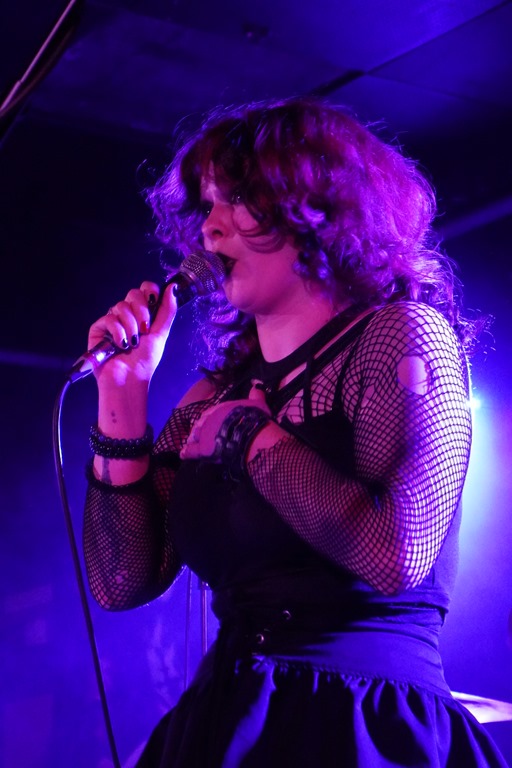
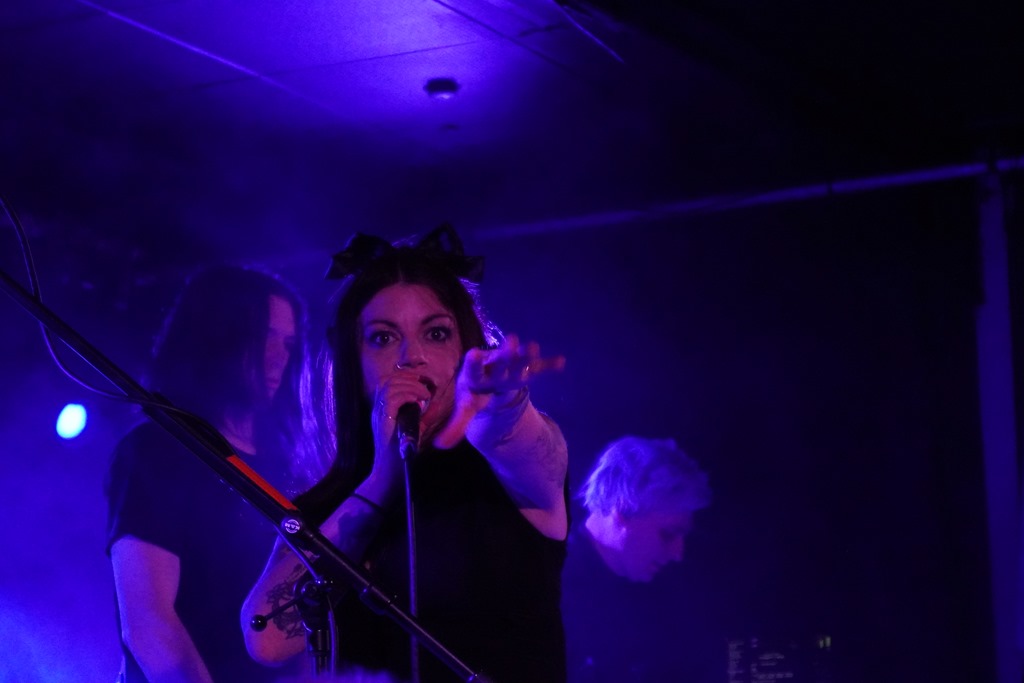
It’s still early days for London alternative / progressive metal quartet DAVAAR, formed in the summer of 2024 and with just five shows behind them, but they’ve wasted no time in venturing beyond London in their quest to build a fan-base, or in committing a chunk of their repertoire to tape (so to speak) for the release of this, their debut EP.

Although State of Feeling features four tracks, the title track is an instrumental introduction which is barely a minute long. This is a practice within metal circles that’s become so common as to be predictable and formulaic. It seemed to rise to prominence with the explosion of metalcore’s popularity in the 2010s, and often seemed to be an attempt to cover all bases for the purpose of a wider audience, as if to say ‘listen, we can play, we can do atmospheric and moody and gentle as well as WAAAAUUUGHHHHHH!’. But in doing so, it would often undermine the power of the attacking rage parts.

In fairness, it’s a little different in context of this EP, in that as much as DAVAAR trade in big riffs, their sound is cinematic, melodic, expansive, with clean vocals all the way. And so it is that this opening cut is softly atmospheric, bordering on ambient. A distant beat echoes through the drifting sonic mist. ‘Impulse’ arrives, not on a tidal wave of slugging riffery, but a ripple of picked, reverby guitar, and it’s only after some carefully-crafted build-up does the distortion kick in and the first of the big riffs hits. Even then, everything stays balanced, and the melody remains the focal point, and it’s easy to observe the parallels in their sound with those of their influences and acts they suggest sharing common ground with, including Sleep Token, Tesseract, Leprous, and Deftones.

There’s a lot of attention to detail in the song structures and the overall composition, with high levels of technical adeptness on display. There’s also a lot of polish here, with the end result being that State of Feeling feels fully formed, and DAVAAR’s potential to attain a substantial following is clear.

AA

AA

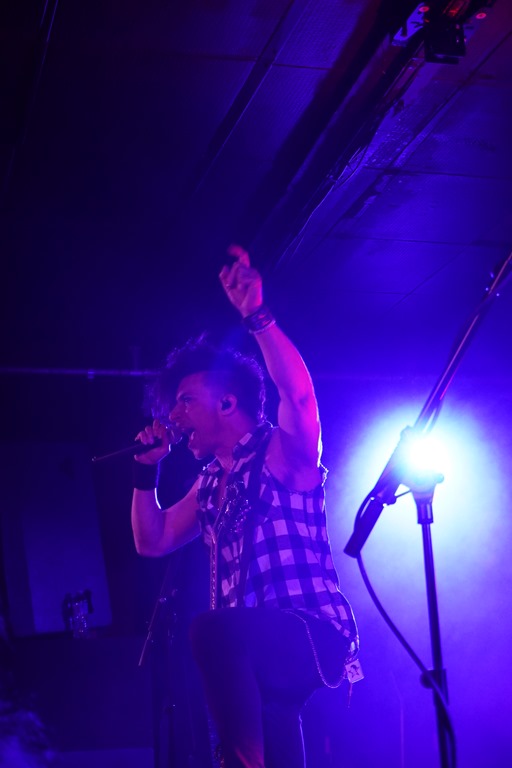
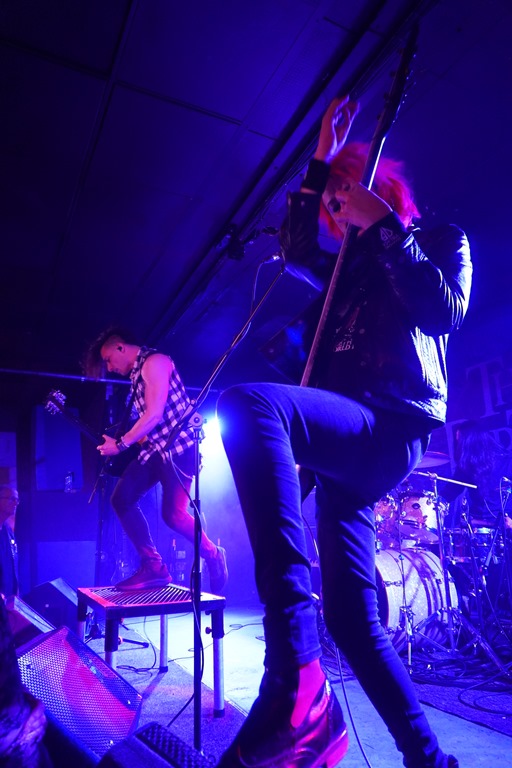
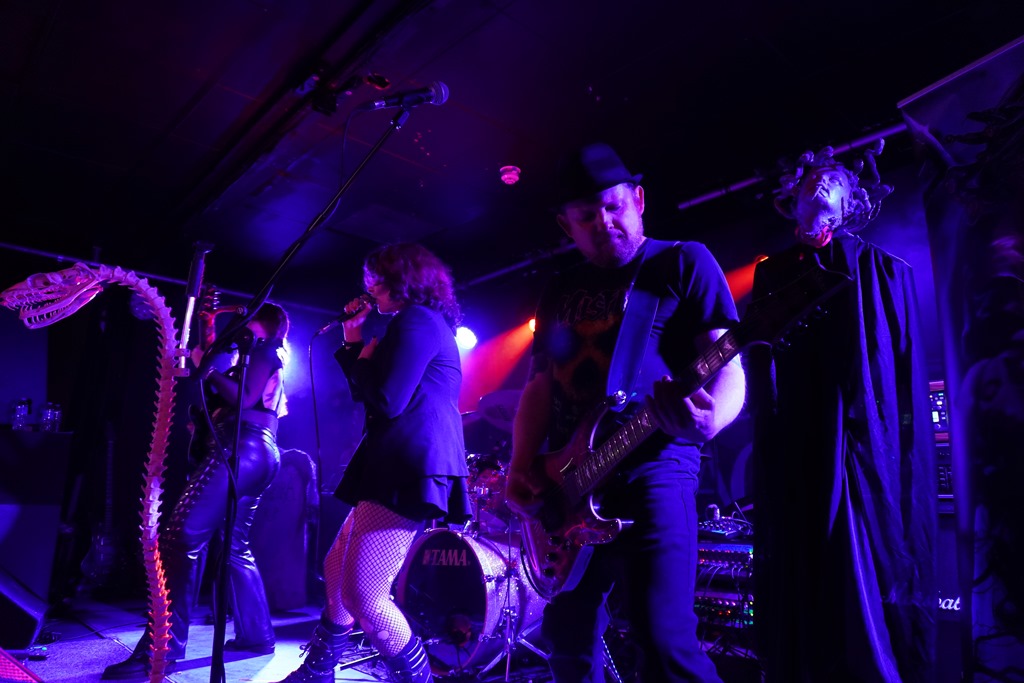
Davaar Band shot 1

Eiga – 11th April 2025

Christopher Nosnibor

Bound To Never Rest follows 2022’s The Fall of Europe and for this, their second release as RAMM (formerly know as Il Radioamatore), core member Valerio Camporini F. and Roberta D’Angelohe are joined by Filippo De Laura who brings percussion and cello, and Caroline Enghoff, who provides voice and lyrics on ‘Hanging Rock’

Here, they promise to takes us ‘to a very contemporary feeling scape – of being constantly on the verge of seeing your world collapse – but it does so through very a unfamiliar sonic landscape, so different that we struggle to put a label on it… The core of this work is to represent this ‘permanent state of flux’, a paradoxical condition we’re all experiencing now, when being unsettled is the constant in our lives.’

They go on to explain that ‘To achieve this purpose RAMM started with a scribbled set of compositional rules, with the idea of building a living organism, in constant evolution, some rules were abandoned along the way, some were retained.What comes through at the end is the sensation of being swept away by meandering, random, river. Trying to hold on to something, only to have to adjust to a new setting. It’s a compass with its needle forever trying to find its north.’

This, it seems, is like life itself. Even periods of apparent monotony, where it seems that life has been consumed by the treadmill of working, eating, and sleeping, and running just to stay still, the likelihood is that it’s your ability to see beyond the blinkers that’s been stolen rather than it being the case that there’s nothing else happening. In fact, the world about us is an eternal maelstrom. However, the last few years have witnessed the turbulence increase to a roar that’s beyond deafening, and it’s little wonder that there’s a mental health crisis assailing western society, and people are immersing themselves in more or less anything mindless in order to avoid news.

The title ‘Disturbed Tea Time’ somehow captures the way we often crave normality and routine in our lives as a means of having a sense of grounding, a sense of control over our lives. But when those familiar routines are disturbed, it can often feel catastrophic. And the more precariously balanced our safety is, the harder it becomes to deal with those disruptions calmly and objectively. Many of us experienced the destabilising effect of a rapidly-changing situation and contradictory guidance and (mis)information during the pandemic, and the ’shock and awe’ strategy being employed by the Trump administration right now is a perfect – and terrifying – example. People become more fragile, more sensitive, more susceptible, more fearful and less able to cope even with small changes when the entire world around them ceases to provide the comfort of familiarity. Sonically, this first track it’s a deft, almost soothing, minimal electronic composition at first, before doomy, overloading guitars rupture the tranquillity. And so it continues, smooth, airy vistas of serenity float in an easy, linear fashion, unexpectedly dashed and smashed by roiling distortion. The metaphor may be fairly straightforward in terms of concept, but it’s executed in such a way that when the blasts of noise to explode, you feel the tension through your whole body.

‘Permanent State Of Flux’ washes in on delicate strings, subsequently joined by piano, and a persistent pulsation, and as the piece progresses, the layers, textures – and moments of dissonance – build, while ‘Good Morning Ansa’ takes the form of a more darkwave synth piece with a flickering beat in the background. But this, too, changes midway through, with both the instrumentation and mood making a shift.

The only piece with lyrics and vocals, ‘Hanging Rock’ is tense, dark, and discordant. But none of the works are any one thing for their duration, and in this way, the structure of not only the individual pieces and the album as a whole come to represent the overarching theme.

There is a perfect restlessness about this album, and while for the most part volume, harsher textures, and discord are used only sparingly, rendering it a comparatively subtle work, the fact that any emerging flows are swiftly disrupted make it something that holds the focus and keeps the listener alert and just that bit on edge for its duration.

AA

a1036422041_16

Human Worth – 18th April 2025

Christopher Nosnibor

Given the event it supposedly commemorates, Good Friday has always seemed like a rather strange choice of name to give to the day – although I suppose for Christians it’s good because without it the religion probably wouldn’t exist. But this year, Good Friday actually lives up to its name, with the ever-dependable Human Worth dropping its second new release in a fortnight, this time in the form of TOTAAL TECHNIEK by KLAMP.

KLAMP first emerged in 2020, with the upfront Hate You, and since then, they’ve evolved considerably. Less a band and more of a fluid and ever-expanding collective, the original trio consisting of Jason Stoll (Sex Swing / Mugstar / JAAW), Lee Vincent (Pulled Apart by Horses) and Greg Wynne (Manatees) has now swelled to a lineup of seven performers, with Adam Devonshire (IDLES), Matthew Parker (Tall Ships), Rachael Morrison and Wayne Adams (Petbrick / Big Lad) having joined their ranks, along with a host of others who have contributed to this second album while passing through.

When approached in the right way – that is to say, with an open mind – collaboration can yield not only works which are greater than the sum of the parts, but unexpected results, as fresh input and different perspectives can throw wide open the doors to new ideas and possibilities. The converse of this is when a collaboration finds those involved arriving with egos fully inflated and preconceived ideas, and they simply stifle one another into playing to form. It’s abundantly clear that KLAAMP foster a spirit of experimentalism, a willingness to try things out, and see what transpires. The list of genres and influences, direct or implicit, noted in the liner notes is immense, and a reminder of why genres are not really the friend of artists who go with the flow of whatever happens creatively. But rather that dwell on that excessively, I’m simply going to replicate the ‘FFO’ list which accompanies the release, because it not only illustrates the stylistic range TOTAAL TECHNIEK offers, but also sets the scene in terms of expectation: ‘Swans / Sonic Youth / Black Sabbath / Godspeed You Black Emperor / Mark Lanegan / Einstürzende Neubauten / The Fall / Sunn O))) / Wire / Aphex Twin / Portishead / Godflesh / Earth / My Bloody Valentine / Gnod / Anna Von Hausswolf / The Bug and more… ‘ In other words, while there’s a lot of heavy and noisy stuff happening, there’s a whole lot more besides.

This means that the appropriately-titled ‘The First Song’ commences the set not with skull-crushing heavyweight riffery, but a subtle sense of ambience. Drones hover ominously, while chittering extranea evoke almost jungle-like sounds while distant beats flicker and echo like a collapsed synapse before they strickle into a drifting, psychedelic indie dream. There may be hints of later Earth about it, but ultimately it’s mellow and shoegazy, and while the pedals kick in just shy of the five minute mark, it’s steering hard in the vein of desert rock with an easy-going vibe, even with the raging vocals which are practically submerged in the mix. As it carries you along on its warm currents, there’s no frustration that this isn’t the heavy shit they’d promised. It’s simply good music, and has atmosphere and texture.

‘Zpine’ brings motorik drumming, a hint of Pavement crossed with Stereolab, with some noisy guitars slashing and splashing cross the solid, sequenced groove, while the vocals are harsh and ragged. The mid-section goes full Hawkwind, and the weirder and more wide-ranging it gets, the better it gets, too.

The album’s shortest song, ‘Wet Leather’ is a bass-led Krautrock-influenced psych-hued droner that bounces along nicely, and while it does kick off heavy a minute or so in, it mostly kinda comes on like The Fall circa Code: Selfish but with guitars from early Ride swirling all over.

‘Leprozenkapel’, the fourth track – which marks the end of side one – brings the rage and the noise and the throbbing noise, and it’s dark and heavy, and in some respects calls to mind late 80s Ministry as it pounds and snarls. Those drums, totally overloading with distortion and a metallic crunch… this is mean and brutal, while the eight-and-a-half-minute ‘The Crying Towel’ is different again, and altogether kinder. This is good: we need more kindness right now. And at some point a couple of minutes in, the ball-busting, super-weighty riff comes in, and there it is. But there are layers, texture, elements of shoegaze and more atop the lumbering rockout riffery. There is a lot happening here, and KLAAMP balance e it all perfectly.

Things shift towards menacing, doomy black metal on ‘Evil Pipe’, but the album ends – with another epic track in the form of the seven-and-a-half-minute title track, that comes on like a meshing of Joy Division or early New Order – particularly with the drumming – and Doves, before going full Melvins. And it somehow works. Of course, Human Worth would never release a crap album, but TOTAL TECHNITECH is truly outstanding. It’s not just the concept,  but in the delivery, and it’s all killer.

AA

HW044_KLAMP_TOTAAL TECHNIEK_CoverArtwork

Human Worth – 11th April 2025

Christopher Nosnibor

Name three great but seemingly disparate acts for a collaboration, and the chances are that no-one, but no-one would pick Ghold, Bruxa Maria, and Test Dept. But here we are with the arrival of Ohm by Deadpop, which promises ‘Hard hitting & riff heavy sludge rock’ out of London.

It’s a pretty far-out work, it has to be said. Riding in on a siren-like wave of noise, ‘Saboteur’ announces the album’s arrival loudly and intensely, and it makes you sit up, alright, and your eyes pop when the guitars slam in after some forty seconds – which is a long time when it comes to listening to twitching, glitching feedback. The bass and drums meld together in a thick sludge of overdrive.

I’m not sure what the two parts of ‘Tomahawk’ are about – although it’s probably more likely to be a punk thing or the missile than expensive steak, and they bleed together for forge six minutes of thunderous racket which takes me back to circa 2009 when bands like Pulled Apart by Horses, Blacklisters, Chickenhawk (later rebranded as Hawk Eyes), and These Monsters were exploding on the Leeds scene. Sure, there’s been noisy shit in circulation forever, and grunge may have opened the doors to a wider, more mainstream, audience, but the indie charts and John Peel’s radio show was chock-solid with wayward guitar-driven racket. Human Worth have championed big noise from day one, but have perhaps leaned toward a different shade – or perhaps there hasn’t been anything quite of this nature released recently. And am I really feeling nostalgia for circa 2009? Well, actually, perhaps I am. It was sixteen years ago, after all. Kids doing their GCSE exams weren’t even born then.

I digress – as usual – but it’s relevant when positioning this release, an album that brings the kind of big sonic mayhem that feels less common now, and in context, feels quite different from anything else that’s been released recently. ‘Tomahawk II’ adds the percussive frenzy of Test Dept to the party, calling to mind early releases like the ‘Compulsion’ 12” and Beating the Retreat.

‘Third Metal Wheel’ is a lurching cacophony of lumbering guitars, layers of echoed vocals, and thunderous drumming, the outcome being something akin to Melvins current releases, and while the monster riffology of ‘Dirt Cheap Rage’ provides but an interlude at under two minutes, it’s well placed ahead of the experimental oddity of ‘Disgrace’, which straddles sludge rock, heavy psychedelia, and punk.

The six-and-a-half-minute ‘Yesterday’ summarises the album, really: a thick, full-heft riff slogalong that pounds away, relentlessly, it calls to mind Melvins, but also encapsulates the spirit of all that is stoner, sludge, and doom in a capsule.

The album’s final track, ‘Skygrave’ delivers a driving finish, a blistering blast of full-on, speaker-shredding distortion, with some brief warping samples and disturbances thrown in for good measure, and it’s a truly brain-melting occurrence. If on the surface, Ohm is just another sludgy / stoner noise, the actuality is so much more: this is an album that brings a certain experimental bent, on top of all the riffs. And yes, it does bring all the riffs. And that’s a fact. Ohm is a heavyweight riff-slugger – and that’s a fact, too. This album is a beast.

AA

a3570033219_10

18th April 2025

Christopher Nosnibor

Eric Quach has been making music – or perhaps more accurately sculpting sound on the fringes of music – as thisquietarmy for over twenty years, amassing a substantial body of work as a solo artist, with an expanded band lineup, and with various collaborations, the most recent being Cîme, his second with Tom Malmendier

We learn that Langue Hybride was written and arranged in less than 4 weeks during thisquietarmy’s music residency at Centre d’Expérimentation Musical (CEM) in the region of Saguenay—Lac-St-Jean, Québec.

The album consists of five longform tracks, which range from seven and a half to sixteen minutes in duration. It’s the shortest work, ‘Les Rayons Cosmiques’ which lifts the curtain the album, with droning, dolorous strings and distant, delicate percussion conjuring evocative atmospherics, coloured with both a simmering tension and an underlying sense of sadness, which, while hard to define, is palpable. Around the midpoint, that distant percussion builds to stand front and centre and a groove emergers, suddenly and unexpectedly, and the whole feel changes towards something that’s a cinematic hybrid of folk and space rock.

‘Respirer l’instabilité’ crashes into altogether darker territory, a gloomy, doomy trudge of slow, deliberate drumming and a low, grinding bass, over which discordant sonic mayhem plays out. After a lull of calm around the mid-point, a pulsating rhythm merges, and things evolve into a strolling wig-out with some strong jazz-funk leanings and already, a pattern is beginning to emerge in terms of compositional structure, in that around halfway, the trajectory shifts, and the piece ends in a completely different place from the one in which it started.

This is confirmed by the pivot which takes place around five minutes into the third track. Reminiscent of latter-day Swans, ‘Les radicaux libres’ is woozy and weird, expansive and haunting, and begins to pick up pace and volume six minutes in, building to a bursting sustained crescendo that’s both hypnotic and tense, and if ‘Organismes en aérobiose’ starts out soothing, the sound of dappled sun through leaves on a summer’s day, it transitions to a fist-waving stomper and concludes as a skyward-facing surge of sonic exultation, via the detour of a post-rock tidal wave, while fifteen-minute closer ‘Solastalgie impalpable’ rides a wave of thick riffage and strings reminiscent of the long play-out on ‘Layla’ – only this is arguably more successful, as it always felt like an epic and overlong anti-climax in the wake of that guitar-line. True to form, ‘Solastalgie impalpable’ does make a shift, tapering into some elongated swirling drones which reverberate and rattle the ribs and taunt the senses, before suddenly bursting into life with a driving rock riff by way of a climactic finale.

Langue Hybride is a wild ride, and while claims for acts producing ‘genre-defying’ works are not just tedious and predictable but usually completely spurious, there’s no neat way of categorising this schizophrenic hybrid, where each track is a work of two halves, presenting almost oppositional styles and characteristics .But this stylistic polarity makes for exciting – if challenging – listening: given that the only thing that’s predictable is that each piece will fly in a different direction at some point, there’s no way one could call this album predictable. The vision – and its execution – are superb, and with Langue Hybride, thisquietarmy offer something which is quite different, and rather special.

AA

a1481414249_10

Christopher Nosnibor

Ultha have been going for over a decade now, and have amassed an impressive catalogue of releases, but this is the German black metal band’s first UK tour. They’re out with Ante-Inferno as touring buddies, and tonight offers an impressive five-act lineup with early doors. And what could be better than back-to-back blistering metal on a Sunday evening? Some may suggest pretty much anything, but for many metal fans, this is the ultimate escape before the return to work. And with an early start and an early finish, this is gig perfection in terms of planning.

It’s not far off in terms of bands, either. Back-to-back black metal may sound like a slog, but tonight’s showcase presents the full spectrum of an increasingly diverse genre, with much to be excited about.

The venue is pretty busy from the start, and Oneiros make for a solid opening act, with atmospheric passages giving way to big, throbbing riffs. In terms of guitar work, apart from a bit of Brian May flourishing at the start of the second song, there’s nothing particularly flashy on display here, instead focusing on bold heavy chugs, and the songs evolve through movements defined by some deft tempo changes. There are some slower, trudging grooves which work nicely, and the front man doesn’t use his growly singing voice in between songs, which is a bonus. Sometimes, theatre is a stretch too far. They’re decent, for sure.

DSC01749

Oneiros

Power trio Terra arrive in a wall of feedback and then blast in with some bowel-shredding bass. And they bring power to the max, with dual vocals and a maximalist sound. The bassist has obviously nabbed his stance from Lemmy as he leans back and raises his head up to the elevated mic. This is fierce. These guys have all the hair and all the beards and deliver a devastating wall of noise, with lengthy instrumental passages plugging away at expansive, repetitive riffs: they’re something like a black metal Hawkwind. The set’s five listed songs were performed as a single, continuous thirty-minute piece, and it was truly immense. For a band of this calibre to be so low on the bill speaks volumes about the quality of the lineup here.

DSC01762DSC01766

Terra

Wolvencrown are rather more clean-cut, but still bring beards, albeit trimmed ones (apart from the drummer). The quartet also bring the evening’s first synths and a whiff of Deep Heat. Their sound is crisper, cleaner, more cinematic, with rolling piano and soaring strings in the mix amidst their wide-screen compositions, which are overtly more technical in their bent, the lineup boasting seven-string guitar and five-string bass. The vocals hit the higher range, which adds a certain tension. Expansive, emotive, and highly polished, they’re hard to fault technically, and offer some immersive noise, too.

DSC01782

Wolvencrown

Ante-Inferno bring the face paint. Not corpse paint, but dark smears, extending to arms and chests, too. With imposing candelabras positioned either side of the drum kit and smouldering incense smoke drifting from the stage, we’re in dark pagan territory here, and dressed in black and smeared in black, they’re barely visible in the low-level lighting. The sound is as filthy as their skins, scorched by the flames of hell as they create a sonic blanket that evokes pure purgatory. Heavy isn’t even close. It’s brutal and relentless, and there is no let-up at any point during their forty-five minute set.

 DSC01789DSC01806

Ante-Inferno

Ultha’s lighting of choice is red, and red only. The stage is bathed in a bloodlike hue as they unleash their relentless fury. Their kit has two bass drums, and they’re blasted hard throughout. The vocals are a rabid squawk, pitching down to a guttural growl, and the interplay between the two vocals is perfect. Apart from the drums, which are up in the mix and clear as day, the instruments mesh into a dense squall of noise. This meshing creates a wall of noise that borders on shoegaze, only with thundering percussion and everything coming at a thousand miles per hour. It’s a full-throttle raging racket and they play primarily under red lighting, but seem remarkably affable between songs, even laid back, unflustered by a bust snare as they borrow one from another band. Theirs is a confidence that only comes from experience, and it shines through in the solidity of the performance.

DSC01816DSC01834

Ultha

For anyone who is of the opinion that all black metal sounds the same, tonight’s lineup abundantly disproves such a misconception, and while it may sound perverse to many, there’s something, if not necessarily soothing, then escapist about extreme metal shows. Mostly, the fans immerse themselves in the barrage of noise, nodding along in their own worlds.

Even having worn earplugs, I leave with my ears screaming, but feeling ultimately calm and uplifted.

Metropolis Records – 11th April 2025

Christopher Nosnibor

For some of us, at least, 1999 feels pretty recent still, but the depressing fact of the matter is that the 90s are as far behind us now as the 60s were in the 90s. And I write as someone who, growing up in the 80s, would watch things like The Golden Oldies Picture Show with my parents on an evening. The premise of this particular show was to play 60s hits with naff reimagined contemporary promo videos, many of which were absolutely heinous – a cartoon of a ball bouncing around as an accompaniment to Bobby Vee’s 1960 hit ‘Rubber Ball’ stands out as a particularly excruciating example. Things have – thankfully, when it comes to this – progressed, but the point here is that it’s been twenty-six years since The Birthday Massacre came into the world. At that time, it felt like the interesting in goth was diminishing and both cybergoth and technoindustrial had kinda had their day, too. But as is often the case, and to paraphrase Throbbing Gristle, I think it may have been, if you stick around long enough you’ll come into favour. No doubt someone will correct me on this, and that’s fine: the point remains valid.

That The Birthday Massacre have sustained a career for more than a quarter of a century is impressive, and testament to both their perseverance and their capacity to connect with a niche audience. It’s often the way that a cult act which never really achieves commercial success or comes into fashion will retain the kind of hardcore fanbase trendy acts will only ever be able to dream of, and while there’s much scoffing about so-called ‘one-hit-wonders’, many no-hit acts enjoy far more consistent careers.

And consistency is the word here: The Birthday Massacre have become dependable for the consistency of their output. And if Pathways sounds like a quintessential cut from The Birthday Massacre, well that sounds good to me, and likely will to fans, too. It packs a hard edge, but balances it with some magical melodies. It has poppy, commercial tendencies, but then, the same is true of 2022’s Fascination.

The album careens in on a bluster of feedback before hefty industrial guitar grinds in hard on ‘Sleep Tonight’, a track that bangs with such energy that it guarantees you most certainly won’t sleep tonight or even maybe for a week. It’s a magnificent blend of hypnotic, ethereal electropop and grating industrial metal. KMFDM and PIG immediately spring to mind, particularly in the execution of the hefty, chugging riffs and expansive, discordant mid-sections, but equally, Pathways presents glorious gothic grandeur and, by way of a more commercial reference, the emotive arena rock of Evanescence.

The title track is a contemporary goth-rock stomper, anthemic, with crystalline lead guitar meshing atop a driving bass and pumping percussion. It’s accessible and tuneful, and casting aside genre distinctions for a moment, a cracking rock / pop song delivered with some power, and with ‘Whisper’ they pack another anthem and once again demonstrate their consistency.

‘Wish’ may be a shade lighter, a bit more 80s radio rock / pop, but it’s delivered deftly, and the final song, ‘Cruel Love’, which stretches out for almost five and a half minutes is suitably anthemic, in the most 80s pop way. It’s quite a shift from the opener, but there’s a trajectory which is traceable through Pathways, as The Birthday Massacre lead the listener toward the light – and it works nicely.

AA

a0088031338_10

Transnational Records – 10th April 2025

James Wells

War San is the musical vehicle for Kim Warsen, an artist given to experimentalism and combining a range of genre elements. To date, he’s released four albums and an EP since starting out in 2019, and The Miraculous Life of Stella Maris is album number five. That’s quite a work rate.

Warsen himself points toward a ‘diverse range of genres, including alternative rock, electronic, and world music.’ The concept of ‘world’ music is very much a Western one, whereby Western music presents an infinite spectrum of styles, where there’s pop, electropop, EDM, EBM, rock, alternative rock, indie, indie rock, indie pop, punk, post-punk, heavy metal, thrash metal, folk, country, jazz, while the rest of the world is represented by ‘world’ music, a determination which suggests an otherness, a separation, and something of a dismissal that puts ‘everything else’ ‘over there’. I do not blame Kim Warsen for any of this: it’s simply how our (western) world works, and we use compartmentalising genre distinctions which are widely recognised as short-cuts in order to pitch works in a culture where attention is limited at best.

The first of the seven tracks, ‘The Drunken Thief’, delivers on the promise, as Warsen croons in a Leonard Cohen-esque tone over a shuffling beat, and a conglomeration of mournful strings, which surge on ‘The Sanctuary of Wonders’ amidst busy hand-percussion, while there’s a dash of David Bowie to be found on ‘Rise Rebel, Rise’, which I suspect is intentional, and if anything is even more pronounced on ‘The Iberian Oracle’. The title track is hushed and intimate, in contrast to the expansive ‘Celestial Doorway’.

Overall, The Miraculous Life of Stella Maris has a magnificently fuzzy feel, a blurry haze which clings to all aspects of the sound and the overall production lends the album a sense of mystique, and of there being something behind or beneath what you hear that’s just out of reach.

AA

STELLA_2400Photo_Pablo_Zapata

Christopher Nosnibor

This isn’t one of the three bands for six quid efforts I’ve been raving about, but three bands from out of town for eleven quid is hardly extortion, even on a Tuesday night, and Gans might have much social media presence, but they definitely have some traction building. Bearing in mind that it’s the Easter break and many students at both of the universities have gone home, the place is noticeably busy, and there’s a conspicuous number of really tall bastards in tonight, young and old. And while I’m inching towards being an old bastard myself, I shall never be tall, but will be eternally aggravated by the towering twats who step to the front row in a venue with a stage that’s barely a foot high. That’s just a personal peeve, and there’s not much you can do about biology.

But there is something you can do about being a decent band, and I’ll admit my expectations are pretty low at the start of the set by the Richard Carlson Band, from Sheffield. It’s not the sax per se, but the slightly awkward presentation, the smooth jazzy leanings, my instinct to summarise this as ‘nice; and move on… but while their set is jazzy in part, it’s also varied, in places evoking Ian Dury, in others Duran Duran circa Seven and the Ragged Tiger… ‘Barrymore’s Pool Party’ goes darker and calls to mind Girls Vs Boys and The Fall, only with sax. They’re a five-piece with two – or three guitars, the third guitarist sometimes does keyboard, and they’ve no bass, instead finding the second guitar being run through a pedal that turns it into a bass. It’s unusual, and their set is both interesting and well-played.

DSC01597.edit

Richard Carlson Band

Mince, from Leeds, are also a quintet, and appropriate for their name, serve up some fairly standard meat and two veg punky fair. In fairness, they do at least do it with some energy. A few songs in the whip out a choppy guitar that’s pure Gang of Four and for a moment they’re ace. Then it’s back to sounding like The Godfathers crossed with generic indie / punk. The pace picks up as the set progresses: the standard doesn’t, descending into shit shouty indie. The last song, their upcoming single, is the best they have by a mile. It’s solid, but they’ve set the bar low.

DSC01607.edit

Mince

Gans are something else, and that something is superlative. Hard-hitting two-piece acts have become a prominent feature of the rock scene in the last decade, with Royal Blood blowing open a fair few doors before blowing their cool in spectacular fashion. Being rather less preoccupied with classic rock and more about raw punk energy, Gans are more reminiscent of Slaves before they sold out to the Man and became Soft Play. Gans set out to entertain, and absolutely give it their all, making a massive bloody racket in the process, with only bass and drums. I say ‘only’, but that bass sound is immense, and the bassist can’t keep still for a second: he positively vibrates with energy, while the drummer… kicking out rolling rhythms that have the glammy swagger of Adam and the Ants and The Glitter Band, he plays hard and with style: watching him, I continually return to the question ‘how does the man breathe, let alone sing while doing this?’

DSC01620DSC01643.editDSC01645DSC01649

Gans

Although they’ve only released five songs to date, they’ve got plenty more in the bag, and there’s no filler to be found here. They are truly a joy to watch, and they maintain the energy from start to finish throughout their high-intensity forty-minute set. Catch them in a small venue while you still can.

Negative Gain Productions – 21st April 2025

James Wells

Sometimes, an album really slaps you round the face with its sheer force and brutal intensity. Boom! Sauerstoff, the latest from Hasswut is one of those albums. No two ways about it: this one is a real face-melter.

Technoindustrial acts in the vein of KMFDM are ten a penny, and while Europe has long been a hotbed for this kind of thing, it’s in the US that it really seems to have take off in the last decade, and something that was once predominantly the domain of the Wax Trax! label in the late 90s and early 90s is now ubiquitous. And that’s cool, but it’s no longer ‘edgy’ like it was, because it’s simply become so commonplace, an endless conveyor belt of bands with distorted vocals snarling over pumped-up techno and some gritty sampled-sounding guitars.

Then Hasswult come along and absolutely piss on the majority of their peers by taking it to the next level. It’s more metal, for a start, and less processed. And it’s brutal. Sure, there are beats you can go nuts to, but the abrasion is intense, and hits so hard you’ll see stars.

It’s overtly European to my ears – if I didn’t know they were Spanish I’d think they were German, and not just on account of the lyrics being in German, which presents an unexpected, unusual, and interesting twist – and proper, full-on aggressive, a complete melding of aggrotech, technoindustrial, and industrial metal. Sure, the obligatory KMFDM nods are on display, and in the mix there’s a whole load of Rammstein, and Ministry circa Psalm 69. It’s hard, it’s heavy, and it’s seriously potent.

Click image to view video:

243266

AA