Archive for the ‘Reviews’ Category

Nocturnal Rainbow Recordings – 5th September 2025

Christopher Nosnibor

One significant downside to digital music formats is that is reduces the dimensions of the experience. With a record, and even a CD, there is a physicality which is in many ways integral to the experience. I’m not here to sell the whole multi-sensory experience and tactility of vinyl line: yes, I grew up with vinyl, and in the 90s, a new LP was maybe £7.50 while a CD was £11, so I would often buy vinyl simply because I could get more music for my money. And records do scratch, sleeves get bent, and generally, vinyl requires more care than a CD, so I’m as much a fan of 5” silver discs as I am 12” black ones. And now, vinyl has become something of a fetishised luxury item: as much as there’s still pleasure to be had from sliding a thick chunk of wax cast in whatever hues from a glossy, heavy card sleeve, there’s sometimes a sense that they’re all trying too hard, and the £30 price tag takes some of the shine off the experience. There are a few exceptions – recent Swans releases have been works of art in every sense, and the physical formats have added essential dimensions to music which is something more than just some songs, recorded.

Had Ran Slavin’s latest offering been given a vinyl release, it would have been a triple LP, containing as it does thirty tracks, with a running time of almost two hours. It would have been epic. But despite having released previous albums on esteemed labels including Mille Plateaux, Cronica, and Sub Rosa, it’s unlikely that Ran Slavin has the kind of fan base that could justify, from a label perspective, a triple-vinyl release. But what Nocturnal Rainbow Recordings have done here is interesting, and utilises the digital format in a novel way, by offering alternative artwork in recognition of the album’s multi-faceted nature. Yes, it’s been done by major artists who’ve released physical albums with variant covers, with a view to enticing hardcore fans to buy multiple copies and thus increase sales and enhance the chart position (The Rolling Stones’ Hackney Diamonds probably wins the award for the pinnacle of pisstake on this score), but the idea of buying an alternative digital cover for a nominal price isn’t something I’ve seen before.

As the notes on the Bandcamp page explain, ‘Just as the music migrates across genres, the visuals migrate across states of being, extending the album into a network of parallel identities. Together, they construct a fragmented yet coherent cosmos, where each image is both an entrance and a deviation, multiplying the ways Neon Swans can be seen, heard, and inhabited.’

Appropriately, Neon Swan doesn’t quite sound like anything I’ve heard before, either. To unpack that, it contains many elements which are common and familiar. There’s sparse techno, minimal dance cuts with sped-up vocals and swathes of space between low-key beats and glitchy grooves, as represented by single release and album opener ‘tell///me///now’ – one of many titles which reflect the sense of fragmentation and juxtaposition which define the album (‘s4dert1ac’ and ‘d3xr3rity’ provide other examples, but then there are the likes of which also disrupt the conventions of language in the same way Slavin disrupts the language of genre tropes).

‘audio ease my pain’ plunges into darker territory, while introducing rap vocals atop heavy hip-hop beats (although there’s an instrumental version as well further on, which offers a different perspective again on the same material). Elsewhere, ‘c-r-i-m-s-o-n-schema’ brings spacey, spaced-out bleeps, heavy percussion that has a late 90s feel, a blend of The Judgement Night soundtrack’s melding of rap and rock, and the Wu-Tang Clan.

For all of the space, the reverb, the minimalism, something about tracks like ‘searching_heart’ is quite claustrophobic: the intense repetition and synthetic feel, paired with crackling fizz, brain-melting glitches and some grinding bass tones. It may be constructed using the fundamental elements of dance music, but this is not dance music. Electronic music to induce uncontrolled spasms and twitches isn’t a genre, but if it was, Ran Slavin would be a leading exponent.

It’s a long album, with a lot to digest, and as it thumps and wobbles and glitches away, snippets and fragments collaged across one another, there are times it all feels a but much, a bit bewildering. At times it’s draining, exhausting, at times you simply zone out, and often, I find myself questioning the wisdom of persisting with it. The vibe is that of the kind of underground clubs I never got on with in the 90s and early 00s, and I’m particularly reminded of the time Whitehouse played an Optimo night in Glasgow in 2003: I was there for Whitehouse, who played for forty minutes starting around midnight, and the music being played was rather in the vein of the more groove-centric cuts on here. The people there for the DJs weren’t happy for the low-key electro pulsations to be paused for the noise and antics of Bennett and Best, but for my part, I struggled to get into the low-key electro pulsations. But the other reason I recount this experience, challenging in its incongruousness, is that in places, Neon Swans feels incongruous with itself, an album riven with unreconciled contradictions.

The execution of Neon Swans is hard to fault, and it does cover considerable ground, with range, over its expansive duration. But it is sprawling in its scope, its focus is variable, and it is very long. And it’s maybe better with drugs.

AA

NRR38 art 1

5th September 2025

Christopher Nosnibor

Bandcamp Friday or nay, September is always a busy month for releases, presumably in no small part due to the fact that the festival season is over, and artists can get to the job of plugging material to fans they may have picked up along the way, while music listeners are back home rather than in fields in front of stages, or on holiday, so are placed to listen to, and maybe purchase new music.

Sometimes, it can take a while to sift through it all, and there’s a real danger that some great stuff will slip through the cracks, especially from lesser-known artists. This, in many respects, is where the music press, such as it is these days, has not only a role, but a duty, an obligation, to seek out and highlight the acts who aren’t going to be pushed into the ears of the masses by algorithms, or by labels with hods of cash for promo (who aren’t necessarily averse to insidious campaigns claiming a ‘grass-roots’ story for an unknown group of middle-class posers who’ve barely played a gig or had more than a handful of streams / likes before landing airplay, huge support slots and going stratospheric overnight… and there are a fair few of these).

Moons in Retrogtrade is Kara Kuckoo, a German artist who does a nice line in dark alternative / gothic electronic rock, and who isn’t likely to be getting algorithmic / big label backing any time soon, not because her work isn’t good, but because, well, it’s a bit arty, and in the current climate of anti-intellectualism, it’s a hard sell to the mass market.

Take, for example, this, the lead single from her upcoming debut album The Third Side of the Coin. Released as a video single, the song is accompanied by highly stylised visuals, which feature an almost Tim Burton-esque ‘Mad Hatter’s Tea Party’ scene. It’s fitting that this shimmering dark pop gem should present images offering a twisted alternative reality, given the subject matter (again, a hard sell for commercial channels), as Kuckoo explains the concept behind the single:

“Carl Jung said, ‘Everything that irritates us about others can lead us to an understanding of ourselves.’ ‘Mirror Obscura’ is about facing one’s own darkness through the infinite mirrors of other people… The video portrays the perceived duality of black and white and the madness within us as we avoid our own darkness. The elements of color are glimpses into the spectrum of wholeness… I especially wanted to shoot at sunrise because those moments of dusk and dawn are the magical spaces between day/light and night/dark.”

On the project’s broader intent, she adds: “Moons in Retrograde is about digging up and reflecting on buried emotions… MIR weaves a soundscape which shines a light into the deepest corners of the mind and exposes the truth about the dark side of humanity while simultaneously discovering the core of the human soul.”

It’s one of those tracks which takes its time with a slow build (another thing which goes against the grain in our attention-deficient world, where intros and verses have got shorter and shorter to the point that most chart pop is seventy-five percent chorus), building atmosphere, Kuckoo’s vocals emerging through cavernous reverb and washing waves to arrive by stealth to an meet with an enticing beat and subtle instrumentation before a strong chorus that goes big on the final run, a burst of bold, even epic proportions.

You’re welcome.

AA

AA

Moons in Retrograde - Rotten Tree Still

5th September 2025

Christopher Nosnibor

Bandcamp Friday may be a regular occurrence, but it is an event, and one which surpasses Records Store Day in terms of its tangible benefits – namely, that artists get paid. Who would have thought that this should have become such a topic for discussion? The sad fact is, artists haven’t been receiving fair recompense for a long time, but the Internet was supposed to herald the arrival of a new age of egalitarianism. But then the corporatisation of the Internet put paid to that. While the world was focussed on vilifying Napster and Soulseek and the like, streaming machines like Apple and Spotify erupted like Godzilla from the depths and created a new model whereby artists got paid, but by nowhere near enough, and only of they were already raking it in.

I’ve digressed already, but the flipside of Bandcamp Friday is that there are more releases in a day than I could listen to in a month, and my inbox is battered and overloaded with updates. Sometimes, I feel inclined to simply go and lie down rather than approach their contents.

But some releases remind me why I do, and it’s worth quoting here:

After much teasing and anticipation, US goth rock veterans Sunshine Blind at last release their first new songs in over twenty years: two driving goth rock bangers, ‘Ghost of You’ and the especially rousing anthem, ‘Unsinkable’. The new tracks are released together as the Scarred but Fearless single for Bandcamp Friday, 5 September 2025.

Twenty years. Twenty years! Time does, indeed, fly. People my age struggle to accept that the 90s were thirty years ago, or that when they were 21 was anything other than the definitive bygone era. Then again, Sunshine Blind’s sound was always very much rooted in the sound of 90s goth / post punk revival, when The Sisters of Mercy unleashed the altogether more rock-orientated Vision Thing, and acts like Sunshot were taking drum-machine driven gothy goodness in new and invigorating directions. It’s not just Caroline Bland’s vocals which invite favourable comparisons to Sunshot: Sunshine Blind’s catalogue is bursting with effervescent energy, and this new brace of tunes make a most welcome addition.

The janglesome intro to ‘Ghost of You’ calls to mind The Psychedelic Furs during their 80s pop phase, and there’s certainly a melodic accessibility to the song. However, it’s countered by a thunderous, driving bass sound and screeding feedback filling out the sound at the back, and captures the vibe of The March Violets, another classic act newly invigorated. What goes around comes around, and with certain parallels between now and the early 80s, it very much feels like this is the time for a goth revival, including crimped hair and hats. ‘Ghost of You’ brings the vibe, and well as guts and hooks in equal measure.

‘Unsinkable’ ups the rock leanings still further, with a brittle guitar chiming through the verses before going full tube crunch on the bold chorus, propelled by some sturdy drumming and another solid bassline. The sentiment is the perfect analogy for the band here, too. You can’t keep talent down, or buried forever.

With both songs of a standard, this is very much an AA-side single, making Scarred but Fearless a triumphant return.

AA

cover

29th August 2025

Christopher Nosnibor

When I was a child, I used to suffer anxiety – often when I was unable to sleep (my complex relationship with insomnia began at the age of five) – that my memories were stored in the vast eighteen-volume encyclopaedia my family owned, and I would be unable to access them because I couldn’t remember which volume they were stored in. Not that it was recognised as anxiety at the time: my parents would tell me to stop padding downstairs and bothering them, and to go to sleep. There’s a (sort of) valid reason for this (the anxiety, not the parental dismissal, but that’s an essay for another time): said encyclopaedia was made up from weekly magazines string-bound in identical hardback covers – a precursor to those infinite volume magazines devoted to knitting or whatever, or where you would build a Death Star in 300 instalments, that would likely cease publication before the collection was complete – and there were issues missing, including segments of the index, and topics were not arranged alphabetically like a conventional encyclopaedia. I couldn’t even find my favourite illustrations of dinosaurs fighting a lot of the time.

Things have only become more difficult since the advent of the Internet, and while spent my youth and even my early twenties in a pre-Internet world, there are many now who have never known anything else. Kids have existed online even pre-cognisance thanks to parents posting endless pics of them growing up on social media, and YouTube and Netflix have replaced conventional TV for anyone born in the last twenty years now.

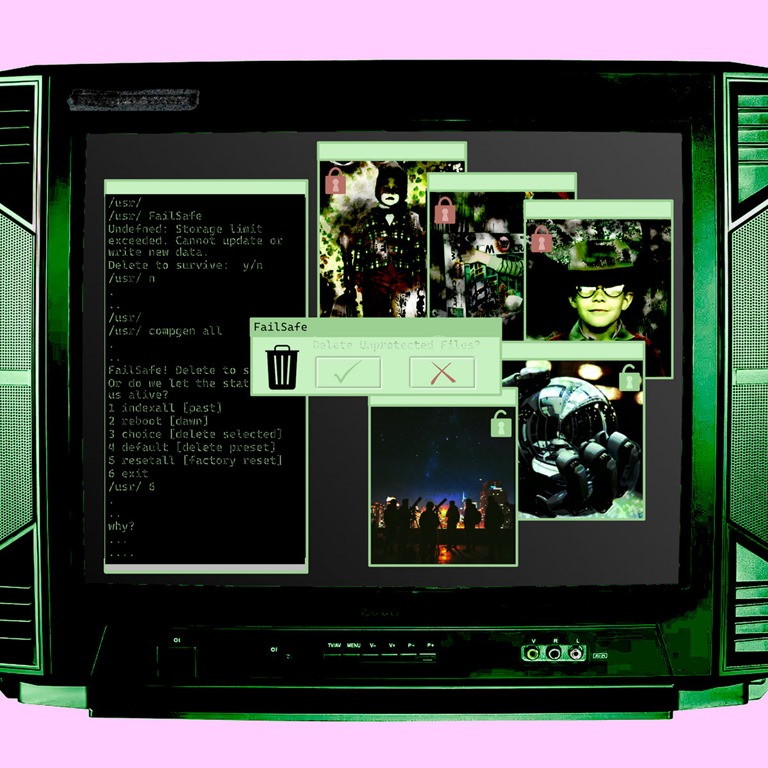
Memory, identity, and their changing nature of both under the conditions of lives lived permanently online, are primary subjects of exploration for solo artist Will N, songwriter, performer, engineer, admin, and the man behind industrial / darkwave act Solid State Sunlight. These topics provided the focus of the ExoAnthro EP last year, and ‘Failsafe’ continues that trajectory, ‘address[ing] the realization that the more we develop our own identity, the less memory remains for experiencing life moving forward. Does it delete previous memory to make space for ongoing growth? What memories are disposable? What are the consequences if it fails?’

I hadn’t considered this, or the idea of what he refers to as ‘data-poisoning’ before, having come to view the mind as a recording device, which captured and archived every single experience, every thought, e very book read, movie seen, but stored them in such a way that it accessing those archives was often a random process – Random Access Memory in the most literal sense.

But we scroll, and we scroll, and we troll, and we troll, and personalities become fragmented, real-life and online personas and experiences partitioned off from one another. Who are you? As AI takes over, the lines are becoming increasingly blurred.

‘FailSafe’ is a gnarly, glitchy technoindustrial stomp through melting circuitry that collides Depeche Mode and Nine Inch Nails with Twitch-era Ministry, with crunching beats dominating jolting electronics and raspy vocals. The intro is a grating bass throb, emerging from an abstract crackle – and then the beat kicks in. And it kicks hard.

If the autotune / robotix breakdown in the middle sounds a shade retro or corny, it works in context, reminding us of how the visions of the future portrayed not so long ago have been replaced by a truly dystopian present. The future was exciting. Computers would make life easier, give us more leisure time and infinite knowledge: that was the promise. Now look where we are. The corporate takeover of the Internet was where it all started to sour, and it was inevitable, but still somehow came as a surprise.

With ‘FailSafe’, Solid State Sunlight draw together a host of references and points of discussion, directly or otherwise, through the savvy hybrid formulation of the composition. It’s hard, and it hits with some attack. This is the vibe of the late eighties and early nineties updated to poke the paranoia of the now. We live in troublesome – by which I mean hellish, fucked-up – times, and with ‘FailSafe’, Solid State Sunlight poke that nerve.

AA

a1907026816_10

Christopher Nosnibor

Pub gigs provided me with my first experiences of live music, back in the early 90s. Often, pubs with upstairs rooms would pop bands on, and other still would simply pack bands somewhere in the bar. At some point, there seemed to be a shift away from this, with pubs seeming to be only really interested in solo performers and acoustic duos. Gigs in pubs stopped being such a thing. But now, pubs are dying. And grassroots venues are dying. Let me be more blunt they’re not so much dying, as being killed off in the interest of capitalist greed.

As I wrote recently on the repurposing of working men’s clubs – also suffering from a severe decline – as gig venues, so the return of the pub gig seems to solve two problems at once, namely how to bring punters into pubs, and providing bands with a place to play. This certainly seems to be happening in York.

The Black Horse used to be a Tap and Spile, and has always been a solid Yorkshire boozer – real ale and bar snacks, and a weekly quiz. But clearing the top part of the room – more a raised area than a mezzanine per se – creates a fairly generous stage space, and not being a massive space, means a basic setup whereby the bands play straight through their amps with only the vocals going through the house PA, simplifying soundchecks and making switchovers straightforward.

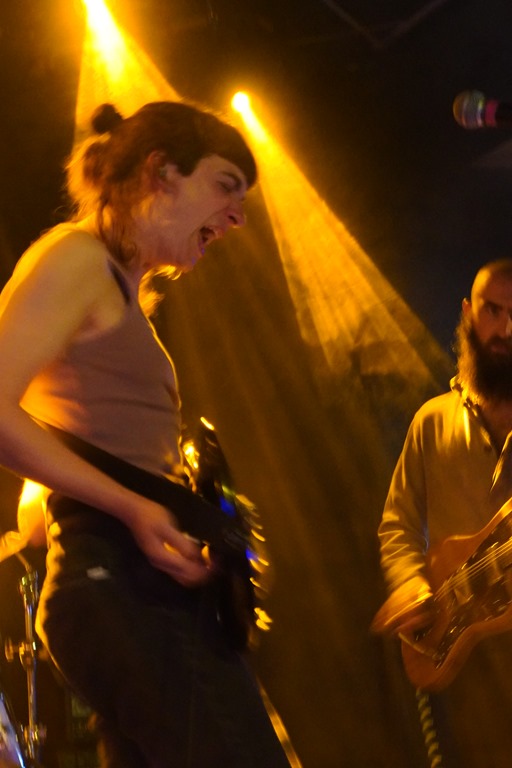
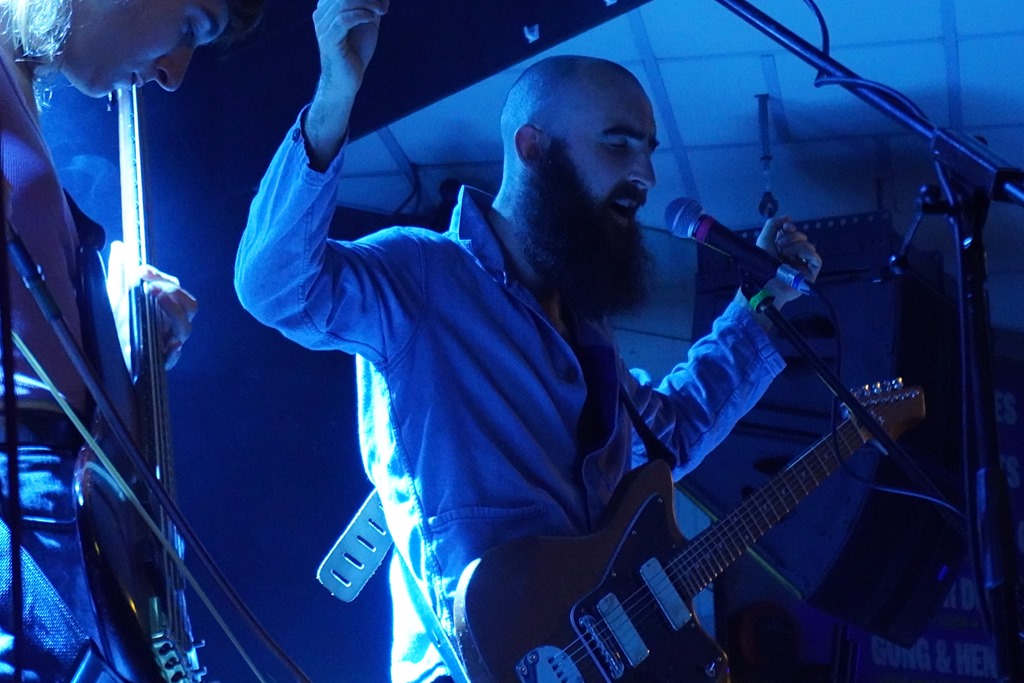
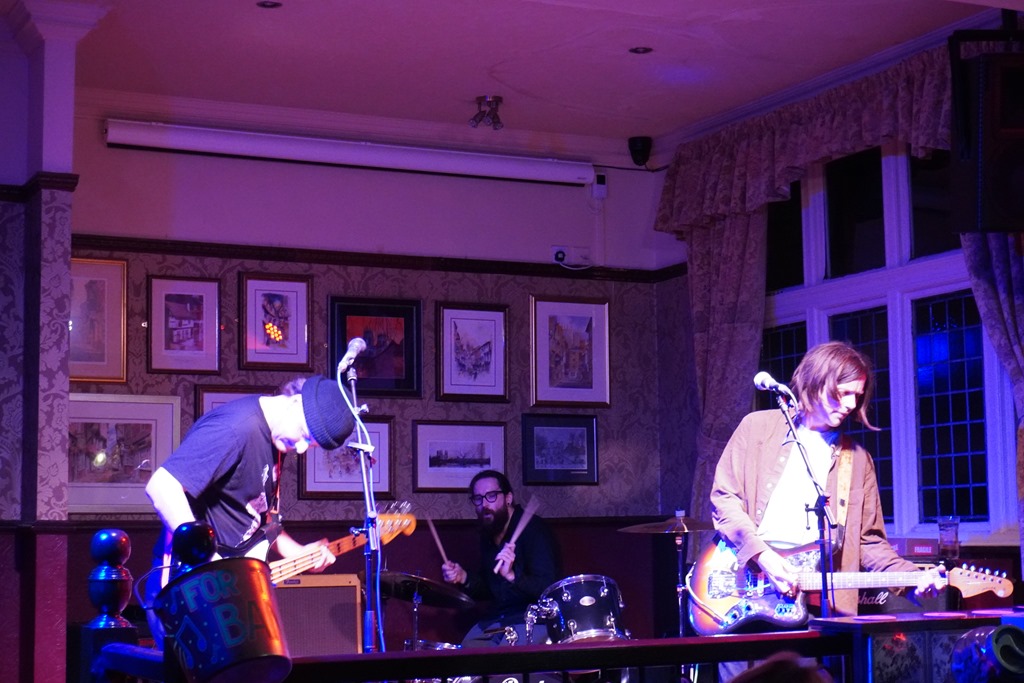
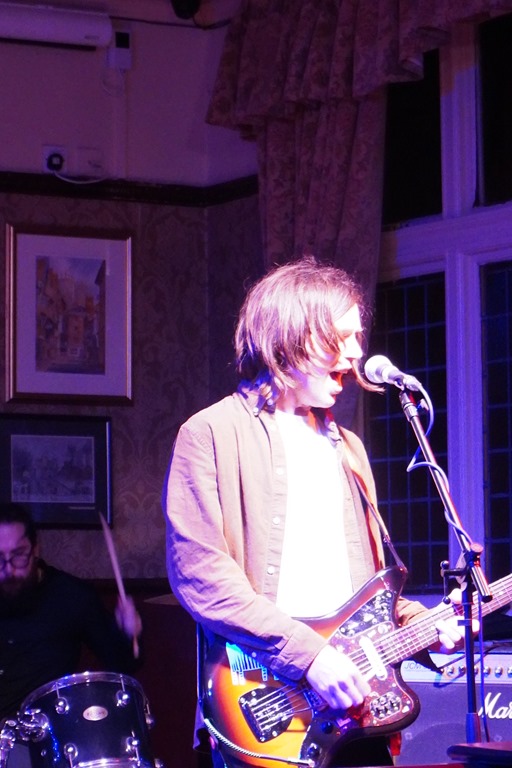
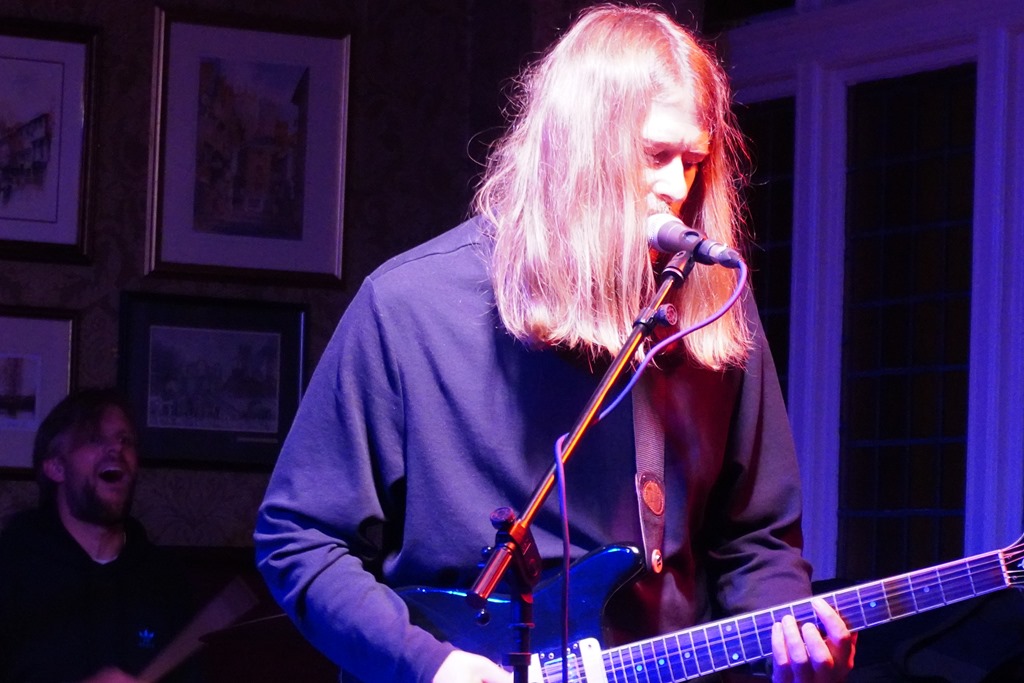
When this show was first announced, Strange Pink were an unknown quantity, but the release of their debut EP changed that, and the Hull-based power-trio-cum-supergroup consisting of Sam Forrest (Nine Black Alps, Sewage Farm), Eddie Alan Logie, and Dom Smith (whose resume is a feature in itself) make for a cracking opening act. They manage to be loose but tight at the same time, and it suits their 90s slacker rock stylings. As the EP attests, their approach is varied, and so, accordingly, is their set. They seem to grow in confidence as the set progresses, the sound coming clearer and brighter, too, and by the end of the set, they’re on fire. They close with ‘Boys Club’, the lead single from EP. It’s a clear standout and possibly their best song, with a strong hook, making for the perfect way to leave the crowd with something to remember.

DSC03153DSC03159

Strange Pink

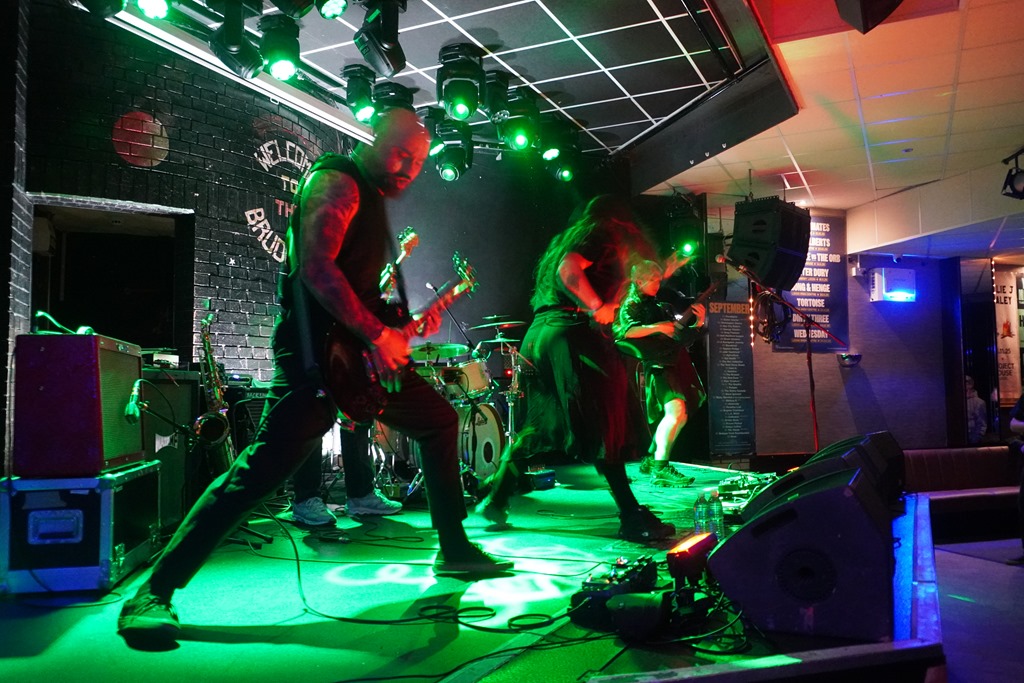
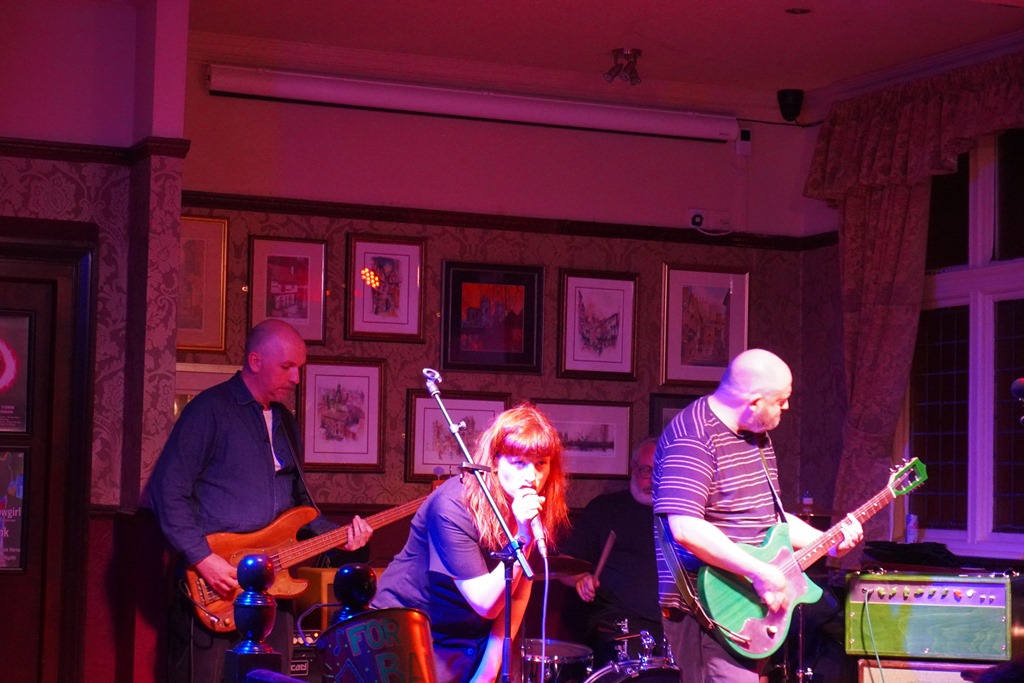
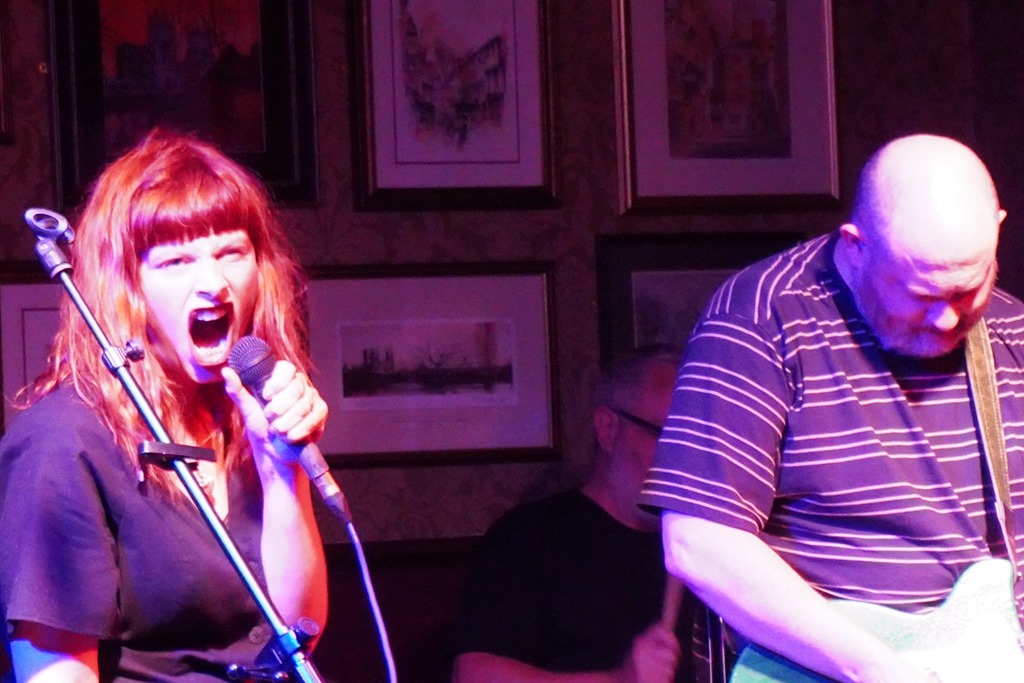
The Bricks have become Aural Aggravation staples, and are a band I will always go and see whenever possible, for two simple reason: they have great tunes, and they’re a great live band – always. During their brief soundcheck, I began to wonder if their run of infallibility might come to and end tonight, but I needn’t have worried, because they were firing on all cylinders from beginning to end. In fact, they seem incredibly at home in tiny venues such as this, and flame-haired Gemma cranks up the wild, eyes-wide, lung-busting intensity, as if relishing the proximity. By the end of a fierce set, her fringe is swept away and plastered to her forehead. The band play relentlessly hard, too, and I try to analyse what it is about them that’s so compelling, why they work so well. The songs are fairly simple, both structurally and in terms of musical complexity – simple lead parts, four-chord riffs, classic (post-)punk, built around solid rhythms, with most songs two or three minutes long and strong hooks. Simple proves effective, especially when played with precision and passion.

DSC03160DSC03168

The Bricks

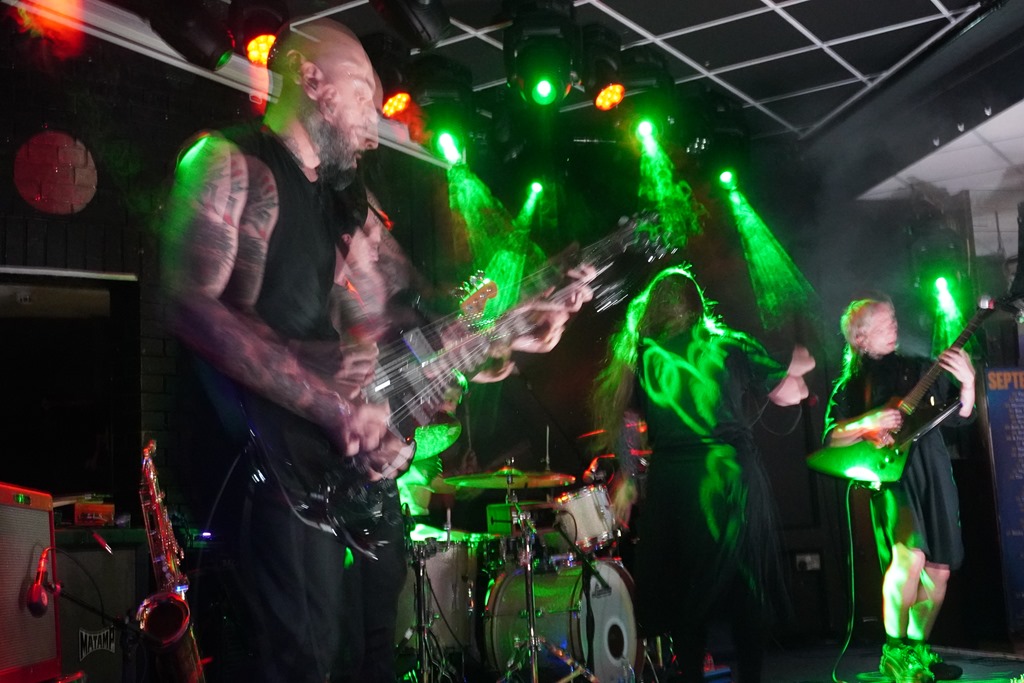
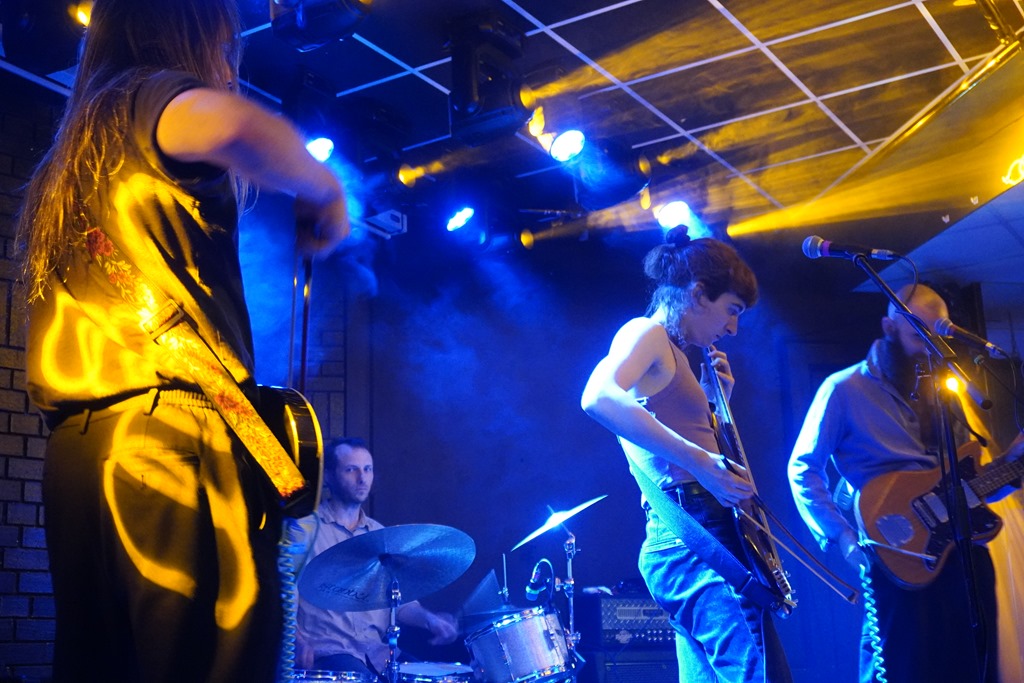
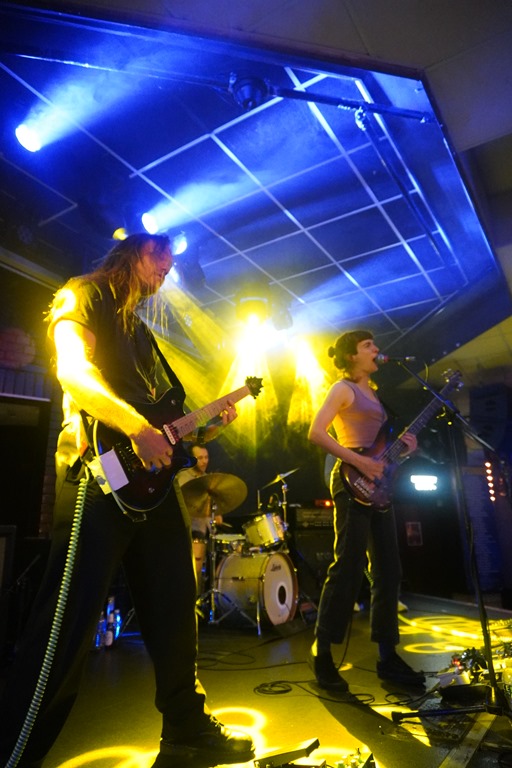
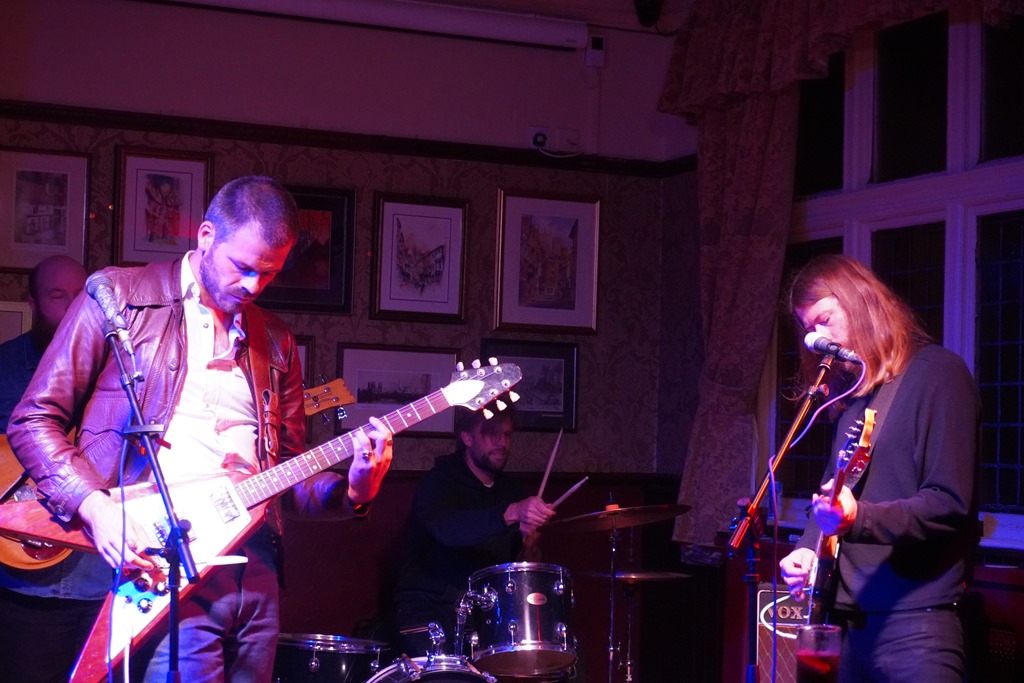
This does mean that Cowgirl have a tough act to follow. But they’re super-seasoned professionals. Danny Barton (guitar and vocals) plays bass in Sewage Farm, previously played bass with White Firs with former Federals drummer James Holdstock (who’s also drummed with Cowgirl), and has, in short, played in more bands in and around York than I’ve had hot dinners, and the same is true of Sam Coates (also guitar and vocals), who’s been pretty much ubiquitous on the scene for years now.

Looking around the room – it’s standing room only, and there’s plenty of beer being drunk, and I bet they’ve not sold this much on a Thursday night in a long time – half the people here are in other bands, or are otherwise recognisable as gig-going regulars, highlighting what a close-knit scene the city has, but also that this lineup has brought people out on a night that’s not exactly a popular one for gigs or pubs. The free entry and donations bucket may be a factor (although a facility to take card donations would likely have seen more contributions), but still, it’s proof that a quality lineup is a definite draw, and the fact a small venue can be filled more easily creates a sense of buzz, which is definitely the case here.

DSC03173DSC03177

Cowgirl

Early on in their set, a friend remarked that they sound like Oasis. He’s completely wrong, but the comment got me thinking. Some of the elements are there… some of the jangle, a bit of the swagger, but with a keen American indie influence. Perhaps his opinion was influenced by the fact that their sound is decidedly more ‘rock’ on this occasion than previous times I’ve seen, them, likely on account of the backline / PA setup, resulting in a sound dominated by blistering guitars. But they have actual melodies and a psychedelic hue, and once again, it’s a set that builds in every way – confidence, cohesion, and volume. The final brace of songs is segued together to form a ten-minute melting wall of sound, an epic psych-wig out that’s nothing short of a brain-cleansing blast that leaves you dazed as the final strains of feedback taper away.

Everything about tonight feels like a win. I may have had one more than was wise – easily done when it’s hot because it’s packed and all hand-pulled beers are a fiver and there’s half a dozen to choose from – and I may be a touch emotional at having attended my last live music of my forties – but stepping into the night, I feel like I’ve experienced something life-affirming and positive in the bleakest of times.

25th August 2025

Christopher Nosnibor

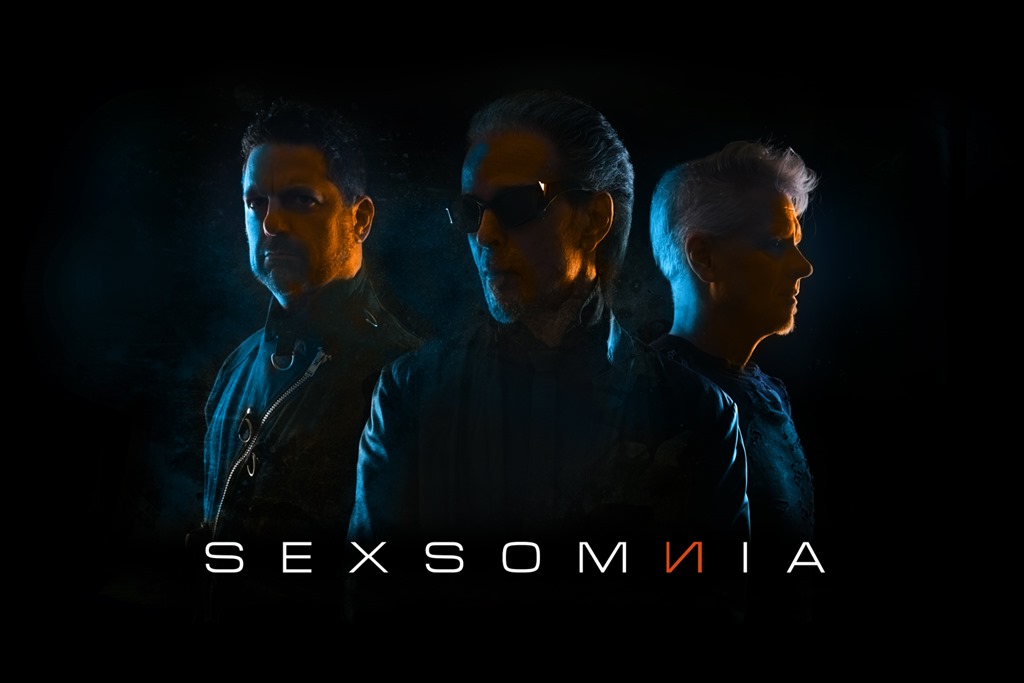
SEXSOMNIA is a name which is both evocative and provocative. Sex certainly sells, but somnia is concerned with sleep-related conditions, including hypersomnia, insomnia, and apnoea, so the implication of combining the two is something to ponder while we pile into this EP from the Canadian darkwave / electro / post-punk hybrid act, joined here by special guest Marita Volodina of Poland’s Stridulum on vocals.

The title track kicks it off and does so in fine style, too, combining all the best elements of synth-oriented darkwave, brooding post punk, and goth, combining a shadowy atmosphere with a throbbing bass groove and pulsating beat that’s perfectly matched to the themes of seduction and desire, the dark allure of ‘forbidden love’. The instrumentation – and vocal delivery – on ‘Vapour’ is, fittingly, more ethereal, a piano snaking through the mix against a brush of an acoustic guitar, but the beats are straight-up stompers, and thoroughly relentless. The interplay between Philip Faith’s baritone croon and the sultry contributions of another guest vocalist, Isabelle Young, are key to the way it draws the listener in beyond the pounding dance percussion.

The ‘shadow mix’ of ‘Forbidden’, which they describe as ‘a deconstructed version of the original track, made for dancefloors’, was, in fact, released first, and it’s quite different. Fully twenty seconds longer, more overtly electronic, the vocals are louder and clearer in the mix, more lascivious-sounding, and paired with the rippling synths and pumping beats, it’s one to raise the pulse and work up a sweat to.

ATTRITION’s remix of ‘Nigrum Viduadm’, which featured on last year’s debut album, Transcendent is altogether sparser, darker, more ominous, more overtly gothic with what one might perhaps describe as vampiric overtones. It works well here because it showcases a very different side of the band, even if all of their sides are dark in intent.

This EP doesn’t break new ground, but does draw together the elements with a rare precision and panache, which sets SEXSOMNIA apart from their peers. As for the band’s name… there’s no danger of falling asleep while listening to their work, but you might just wake up feeling horny afterwards.

AA

AA

23d0d588-ad67-e34c-296b-ae10ed9f2e34

Vinter Records – 5th September 2025

Christopher Nosnibor

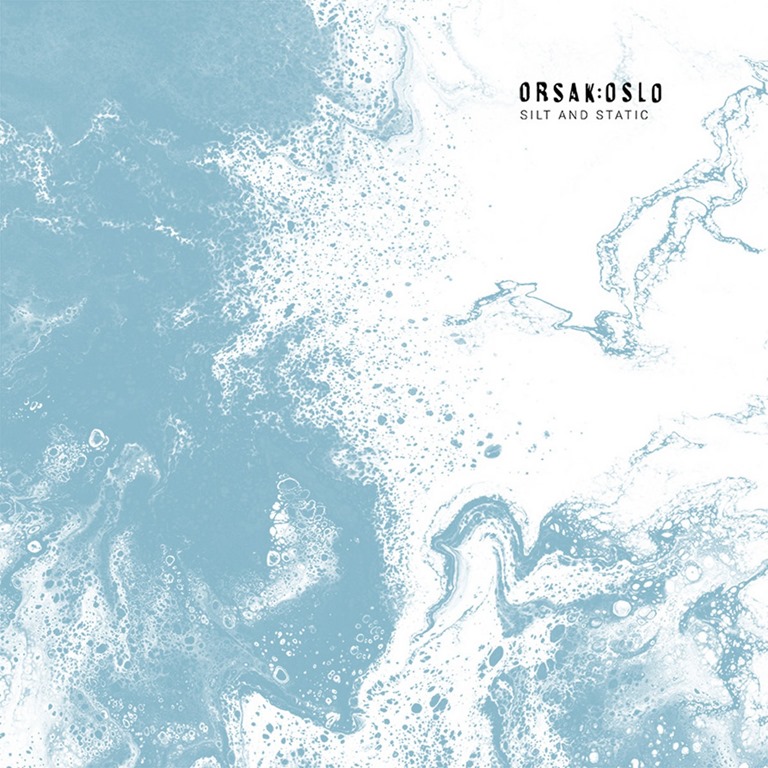
The post-rock boom feels like a long, long time ago now. Perhaps because it was: realistically, we’re talking about nearly twenty years since Explosions in The Sky and Her Name is Calla were super-hot topics. I discovered HNIC supporting iLiKETRAiNS on tour circa 2007, and Maybeshewill via their split 12” with Her Name is Calla, before seeing them playing with AndSoIWatchYouFromAfar… There are always chains and sequences, but the post-rock bubble burst in a tidal wave of oversaturation maybe around 2009. It all got a bit samey. But there was – and still is – always room for a band that take a genre template and take it somewhere else, offering something different, instead of a template-based rehash. Enter Osak:Oslo, who most certainly offer something different. Silt and Static is nuanced, but at the same time forceful.

There’s nothing like going all-out epic on an opening track, and that’s what precisely what Osak:Oslo do here, with the eight-minute forty ‘Biting In’, which begins with some enticing, chiming guitar that’s quintessential post-rock in every way, but then the rhythm section kicks in, and it drives along straight ahead, riding a solid motorik groove for a bit. After taking it down in the mid-section, they come back in, driving harder than before, a sprawling desert-rock soundscape expanding like a straight road headed to the horizon. Hell yes! You feel this. Exhilarating is the word.

They take things slower and bring more weight on ‘Days Adrift’, but still conjure rich layers of atmosphere, and bring things together with a chunky, chugging, bass-driven groove. In contrast, ‘Salt Stains’ is altogether more jangly, indie, at least to begin, and then, less than a minute in, a solid riff powers in, topped by soaring lead guitar work.

Over the course of the album’s nine expansive tracks, Osak:Oslo demonstrate a real knack for beefy riffery – nothing overloading, hugely overdriven, distorted or gritty, but just big, bold, solid and defined by a sense of forward trajectory, and what’s most remarkable is the way the band arrived at this work:

Recorded spontaneously, Silt and Static captures the band at their most stripped-down and unfiltered, balancing atmospheric fragility with crushing depth. With tape rolling and no roadmap, the album emerged naturally, giving shape to a sound that’s both deeply personal and bleak yet beautiful.

‘Bleak yet beautiful’ is a fair summary, but establishing, or unravelling, precisely what’s personal on an instrumental work is not easy, or sometimes even possible, although it is clear that certain elements, sounds, structures, transitions, which hit in a particular way are deeply evocative, often moving. But as a listener, those moments feel personal and are rooted in one’s own experience, one’s own individual response. I write this as someone who has sat with friends, playing songs saying, as I practically burst with enthusiasm, “Wait… there! That’s the key change!” or “That’s where the distortion comes in!” or “There! There!”, to be met with… mixed results. Is that moment which floors me the same one which the creators feel is the pivotal point in the song, the one which articulates, through the medium of sound alone, that deep-seated, complex emotion which has been tormenting your psyche for months, or even years? I suppose it doesn’t really matter. What matters – for artists and listener alike – is that connection, achieving that vital emotional resonance, where the music speaks.

‘Resonance in Ash’ slips into shoegazey territory, but also offers the most potent swell of noise that threatens the eardrums, bursting into a ragged explosion of noise, bordering on post-metal and racing to a blistering crescendo, and despite being one of the album’s shortest songs, ‘The Onward Strike’ feels like one of the most immense. Then again, there’s ‘Break and Sink’, which goes all-out to crush… It’s riffy, it’s heavy, and it lands hard. The bass… it grinds, alright.

The beauty – and creative success – of Silt and Static is that it succeeds on both levels. Because of the bold riffery – never succumbing to the post-rock cliché of the slow-build and epic crescendo, but instead forging these strong, cinematic, rock-orientated bursts of energy which are immersive, transportative, and reach far beyond genre confines. Silt and Static is an imaginative, inspired work, and the circumstances of its creation make it even more remarkable. It’s the work of a band operating with a rare level of cohesion, and it’s pretty special.

AA

a1841796365_10

False Door Records – 5th September 2025

Christopher Nosnibor

More than five years on from the onset of the pandemic, and still pandemic projects are emerging. The arrival of this release provides a timely reminder of a time which already many seem to have moved on from, forgotten. More than likely, there was a collective keenness to return to normal as quickly as possible, to bury the trauma and make like it never happened. There are many, of course, who will never forget, for a host of reasons. Many lost loved ones, but still many more suffered mentally, from isolation, from being trapped in abusive situations, or simply – I say ‘simply’ as if it’s something minor – the fear of the virus and the way the entire situation was managed and messaged by governments and media – not to mention the bewildering effusions of misinformation on social media.

In between home schooling, struggling to work as key workers, or struggling financially due to reduced furlough incomes, the idea that we were all in it together was essentially a myth – but people found ways of coping, and for those of a creative bent, new ways of creating became the focus.

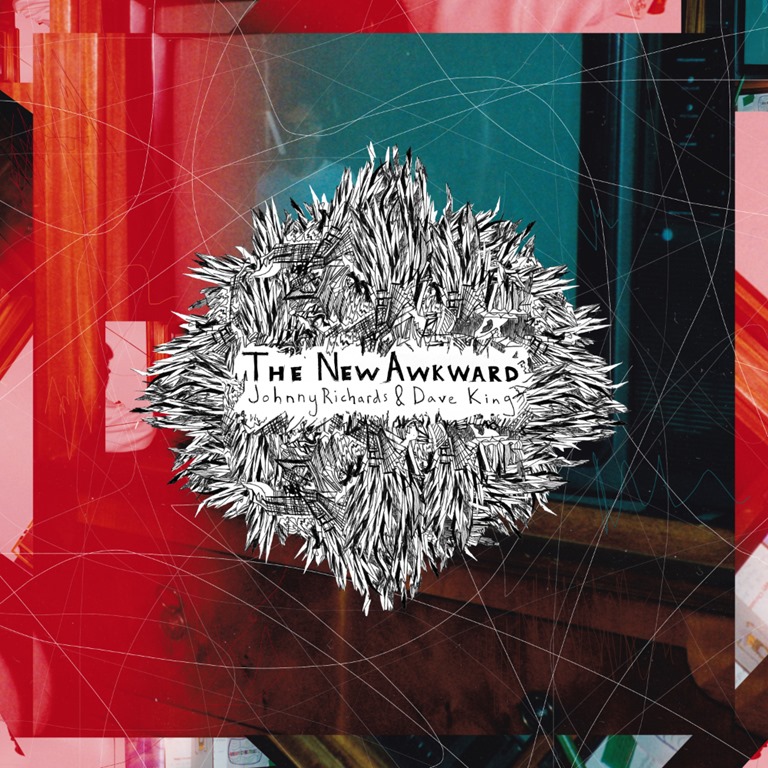
For Johnny Richards and Dave King, this new way of creating involved emailing digital files across the world to one another: as the bio explains, ‘Richards recorded piano parts, some prepared, some using the piano as an explicitly percussive instrument, then sent King the files to the US for him to record his drum parts. Richards would then record further piano parts and overlay them, in response to King’s parts.’

At the time, there was much talk, many virtual column inches, devoted to the discussion of ‘the new normal’. Fleetingly, there was optimism, a hope for a kinder world, a world where we consumed less fossil fuels, where work / life balance was more evenly distributed… but since the end of the pandemic, it’s been hell, as if people pent up all their hatred and fury and have been unleashing it in war and antagonism and making up for lost time.

And so it is that The New Awkward reminds us of that fleeting spell of optimism, and as they reflect, ‘It could have happened at no other time. With its multiple layers percussion and piano, treated and untreated, it would be impossible to recreate live.’

Awkward is an appropriate choice of word for the title of this album. There is something almost feverish about the compositions, which are bursting with complex – and often irregular, contrasting, even conflicting – time signatures. At times, drums and piano happen upon coincidental timing, but for the most part, they seem to be duelling one another – not in an aggressive or antagonistic way, but playfully. On ‘The Chance Would be a Fine Ting’, there are moments where the parts intersect to forge a groove that almost has a swing, a swagger, albeit a slightly off-kilter, drunken one that staggers a little, the tempo changing as if the crank handle of an organ is slowing, then picking up pace again.

It’s a little disorientating, but ultimately fun, as titles like ‘Sleepless in Settle’ suggest – a title which only really makes sense in the context of Johnny’s being based in Leeds, or, more broadly, the north of England. The best jokes are always puns, especially when they’re super niche.

AA

The seven-and-a-half-minute ‘Memory Man’ has something of a vintage film feel to it, as well as a strong swing, and it’s easy to forget that this album features only piano and drums while listening to what, for all intents and purposes, sounds like a busy bassline leading a full band. The title track twists and twangs, is a bit noir, a bit late-night jazz café, but weird and woozy. ‘Gene Heard Wrong’ is another busy piece, the drums, played quietly but shuffling rapidly around the kit, as it twitching with anxiety, while the piano… the piano chinks and rolls with a nervous energy. ‘Darts’ strolls and stutters, while the last track, ‘Climbing on Mirrors’ builds slowly from dark atmospherics through softly loping beats with jarring discordant piano, and it sounds like everything is winding down… down… down.

From my own experience of lockdown – balancing working from home and home schooling a primary-school-aged daughter while my wife also worked from home, converting the living room sideboard into a desk until she installed a desk in our bedroom – devoting time – or stealing time, carving cracks in time late at night – for creative output was about the only thing that kept me even half sane. The fact that The New Awkward is far from straightforward makes sense in this context: I can relate to becoming so immersed, so invested in a project that it becomes its own world, and that its creation closes the door on the madness outside, all the texts and other messages, the screaming social media frenzy.

The New Awkward brings a lot back, and does so with mixed emotions. But throughout, it buzzes with a tense creative energy, urgent but also immersive and upbeat, the sound of unadulterated creative freedom.

AA

Johnny Richards & Dave King – The New Awkward cover 1000px