Archive for the ‘Reviews’ Category

New Heavy Sounds – 7th November 2025

Christopher Nosnibor

Cold in Berlin have come a long way over the course of fifteen years and now – after a six-year wait – five albums. Give Me Walls was sharp, defined by an angular post-punk sound which crackled with nihilistic fury. You wouldn’t exactly say they’ve mellowed over time, but they’ve become heavier, darker, and have evolved the ways in which they articulate themselves, musically, and lyrically.

January 2024 saw the release of the EP The Body is the Wound, which introduced the thematics of a new and significant project, and indicated where they were heading, and came with references to an album to follow later in the year. The year came and went, and here we are, at the dark end of 2025. But as lead single ‘Hangman’s Daughter’ and follow-up ‘The Stranger’ foreshadowed, Wounds was worth the wait. Perfection takes time, and that’s what Cold in Berlin have delivered here.

But more than that, this is an album which wrestles with difficult stuff. As the band explain, “Wounds is a series of songs about the different ways people live with and process ‘the wounds’ of their lives… A strange celebration of that formative pain we have all experienced in some way. The loss and joy of survival – the celebration of finding others like us, the gift of knowing life comes after fire.” For all the noise of how we need to talk more about mental health, the fact of the matter is that it’s really just that. There is still real stigmatisation surrounding the subject in real terms, with reactions to attempts at open dialogue tending to range from diminishment, to dismissal, to awkwardness and paralysis before moving on with an embarrassed cough. And yes, I’ve learned this from painful experience. Raise the subject of mental health, anxiety, and dealing with bereavement while adjusting to life as a single parent with a teenage daughter… it’s amazing how many people go quiet, how many friends seemingly vaporize. The simple fact is that the majority of people are afraid to touch on dark topics, to venture to dark places. They can’t handle it, and so… these are my personal wounds, and why this album reaches parts other albums don’t get close to.

It’s ‘Hangman’s Daughter’ that raises the curtain on the dark drama which will infold over the course of nine songs. The big riffery that’s become their signature – and nowhere more apparent on predecessor, 2019’s Rituals of Surrender – is very much present, but there’s a lot happening here, in terms of detail and dynamics and arrangement, with pulsating electronics which owe considerably more to Krautrock than glacial gothy / post punk traditions prominent in the mix, and some thunderous drumming (which does belong more to the post-punk lineage) and some spindly lead guitar work that’s classic trad goth – and at the same time, the song’s imagery leans more toward folk-horror. It’s a potent mix which sets the tone – and standard – for a phenomenally powerful album.

Piling straight in hard and rather faster, ’12 Crosses’ is another showcase of stylistic eclecticism: the tense, cyclical guitar straddles post-punk and noise rock, and creates a claustrophobic, airless atmosphere – then, seemingly from nowhere, there’s brass, which, in context, introduces something of a post-rock feel, which is a sharp contrast with the spiky, Siouxsie-like stylings of the song’s second half. It’s fierce, but there’s more than straight attack.

A mere two songs and ten minutes in, and I find myself reeling by just how much they’ve packed in, in terms of range and depth, and the attention to detail is superlative.

‘Messiah Crawling’ provides… not respite as such, but some headspace to be carried along by a thick, doomy, Sabbathesque riff. ‘They Reign’ marks a change of pace, bringing down the tempo and volume, leading by a more narrative lyrical form. After a slow-build, rolling drums and swathes of synth conjure a cinematic sonic expanse which is transportative. It makes you feel, on a spiritual, perhaps even primal level. Landing mid-album, ‘The Stranger’ is rather sparser and it’s the synths which take the lead on this shimmering prog-pop cut, which grows and twists as it progresses towards a surging climax. Final song, ‘Wicked Wounds’ is nagging, and somehow antagonistic and more overtly punk in its delivery

Throughout, Maya’s vocals are powerful, commanding, but equally, rich and emotive. Not only has she never sounded better, but never more suited to the music her vocals are paired with, running the gamut of emotions from anguish and torment to reflective and vulnerable.

With Wounds, Cold in Berlin have stepped up to another level – and in every aspect. It didn’t seem possible they could keep getting better… but here, they’ve surpassed expectations, and once again exploded beyond the walls of genre to deliver an album which is something else.

AA

Wounds_Cover_3000x3000

New Reality Records – 7th November 2025

Christopher Nosnibor

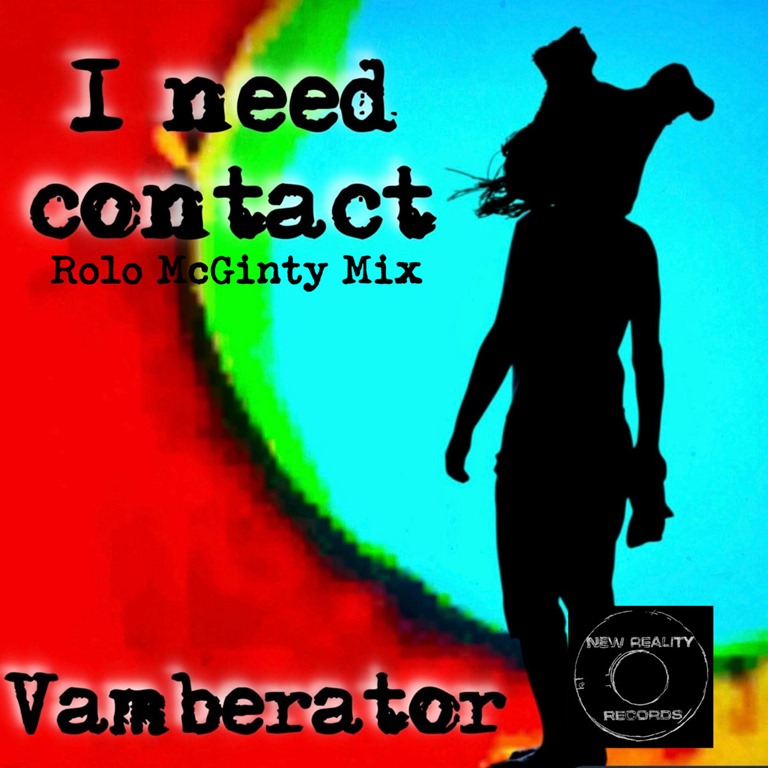
Almost a year to the week on from the release of their dark, emotionally powerful album, Age of Loneliness, Vamberator – the duo consisting of Jem Tayle, formerly of Shelleyan Orphan, and former drummer with The Cure, Boris Williams – have given a welcome poke to remind us of their existence with the release of a new single, in the form of a remix of ‘I Need Contact’, courtesy of Rolo McGinty of The Woodentops. The pedigree is rich here, and so is the quality.

McGinty’s reworking is sensitive, subtle, and what is adds is very much attenuated to the themes and underlying concept of the song, and, indeed, the album as a whole. Yes, the title renders these concepts self-evident, and while the project was spawned during the pandemic, when solitude and loneliness reverberated around the lives of so many in ways which had been hitherto unimaginable, where we find ourselves now often feels little better, with social fragmentation, social division, and the whole equation of work / life balance and all the other endless shit raining down day after day, maintaining connections – real connections, not those false connections of yelling into the void on social media – has never been more difficult. The things which were supposedly designed to bring people together – from open-plan workspaces to instant messaging and social media – have, in reality, trashed the threads of real-life social interaction. Millennials no longer meet down the pub after work or on a Friday night, and kids watch YouTube Shorts instead of going down the park. Gen X and older… who knows? We’re all lost, drifting.

‘I Need Contact’ captures that sense of desperate anguish, and McGinty adds something else – not least of all an enhanced sense of sadness and poignancy, with the addition of cellist Asakura Momoka and a field recording of an old diesel train engine. These add, respectively, shades of brooding and nostalgia (and who would have thought, not so long ago, that a diesel train would be a source of nostalgia? Time marches on, and at pace, and leaves us all behind eventually). But these additions are made subtly, keeping the soulful vocal to the fore of a minimal arrangement.

AA

The release is augmented by another Rolo McGinty remix, also lifted from the album. Here, ‘Creature in my House’ is stretched from its original five-and-a-half-minute duration to closer to double that. Pumped along by a retro ‘baggy’ beat (I can’t but be transported back to the 90s, as well as being reminded of the vibe of The Cure’s Mixed Up), and it does offer up a very different side of Vamberator. While the original version blends a mid-pace glammy stomp with hints of The Cure at their more playful, this lifts both the tempo and the spirits, and slings in some zany guitar breaks. Funky isn’t quite the word, but groovy might well be, and one might add ‘buoyant’, too, although it ventures into more experimental, and even dubby territory during its second half.

These are quite different versions, and make for a great single in the classic sense of A and B-side contrasting. They work well, and provide a well-timed reminder that the album’s out and well worth investigating – or giving another spin.

AA

AA

a1213871652_10

Dret Skivor – 7th November 2025

Christopher Nosnibor

Dave Procter is / has been involved in more musical projects than your mum’s had hot dinners. Having left Leeds for Sweden, not least of all on account of Brexit, he’s currently paying the UK a visit with a tour which features performances by no fewer than five of them – last night’s set in York was one of two halves, featuring the polite extreme electronica of Trowser Carrier and the whacked-out post-punk infused racket that is Loaf of Beard. So about these ‘Brexit benefits’… and the fear of taxing the rich for fear they’ll leave the country. Since they’re not paying much tax anyway, where’s the loss there? Meanwhile, we’re losing migrant workers who keep the NHS operating, who harvest crops, and flip burgers, AND we’re killing creative industries by making it harder for artists to tour here. A few years ago, there was considerable coverage given in the media about the country’s so-called ‘brain-drain’; there’s been rather less coverage given to the slow murder of the arts. The Guardian and The Independent have raised their hands in quite anguish over the killing off of arts degrees, degrees which are being targeted as not providing a route to a well-paying career, but in the main, this is happening quietly. What’s painful is that there’s so much raving about ‘small boats’, hardly anyone is noticing, and even fewer care because they’re too busy buzzing over the Oasis reunion or Taylor Swift. I’ve got no specific beef with Taylor Swift and her sonic wallpaper, but the point is that there is so much life and art and creativity beyond the mainstream. There is an extremely diverse array of subcultures, an underground that’s as big as the overground, only more diverse, eclectic, fragmented, and this is what’s suffering.

To return to topic, somehow, amidst all this activity and while in transit, Procter’s managed to launch both a new release and a new project via his Dret Skivor label, in the form of OSC, the debut – and likely one-off – album by the imaginatively titled oscillator.

The accompanying notes are unusually explanatory for a Dret release, forewarning of ‘Glitch, ambient and toy keyboard experiments. Play through decent speakers and headphones, the lows are LOW!!!’ The tracks were created during some free studio time in Copenhagen in October 2024, and, as ever, the CD run is minuscule, with just 6 copies. This, of course, is typical of the DIY cottage industry labels, particularly around noise circles. It’s not only a sign of an awareness of just how niche the work is – and it very much is that: no point doing 50 CDs or tapes when it’ll probably take a year to sell four – but also indicative of a certain pride in wilful obscurity. Just think, if the bigtime ever did beckon, those spare copies sitting under the bed may actually acquire some value. Just look at how much early Whitehouse albums go for, for example.

OSC is very much an overtly experimental work, featuring six numbered pieces – the significance of said numbers remains unclear, if there even any significance, although notably, they’re all zeros and ones, or binary – which range from a minute and twenty seconds to just over eight and a half minutes.

‘01’ is a trilling electronic organ sound skittering over long drone notes, and abruptly stops before the bouncing primitive disco of ‘10’ brings six and a half minutes of minimal techno delivered in the style of Chris and Cosey. It’s monotonous as hell, but it’s intended to be, hypnotic and trance-inducing. Zoning out isn’t only acceptable, but a desirable response. ‘100’ is seven and a half minutes of dense, wavering low-end drone, the kind which slows the heart rate and the brain waves. As the piece progresses, the rumbling oscillations become lower and slower and begin to tickle the lower intestines, while at the same time some fizzy treble troubles the eardrums. Nice? Not especially, but it’s not supposed to be. Sonically, it’s simple, but effective.

‘101’ is so low as to be barely audible: not Sunn O))) territory, so much as the point at which the sun has sunk below the horizon and the blackness takes on new dimensions of near-subliminal torture. The final track, the eight and a half minute ‘110’ is a classic example of primitive early industrial in the vein of Throbbing Gristle, with surging oscillations which crackle and fizz, a thrumming low-end pulsation. It ain’t easy, but it’s magnificent.

Procter loves his frequencies, just as he loves to be eternally droney, and at times Kraut-rocky. OSC reaches straight back to the late 70s and early 80s. OSC is unpredictable, and tends not to do the same thing twice. It’s in this context that OSC works. Embrace the experimental.

AA

a2917884968_10

Human Worth – 14th November 2025

Christopher Nosnibor

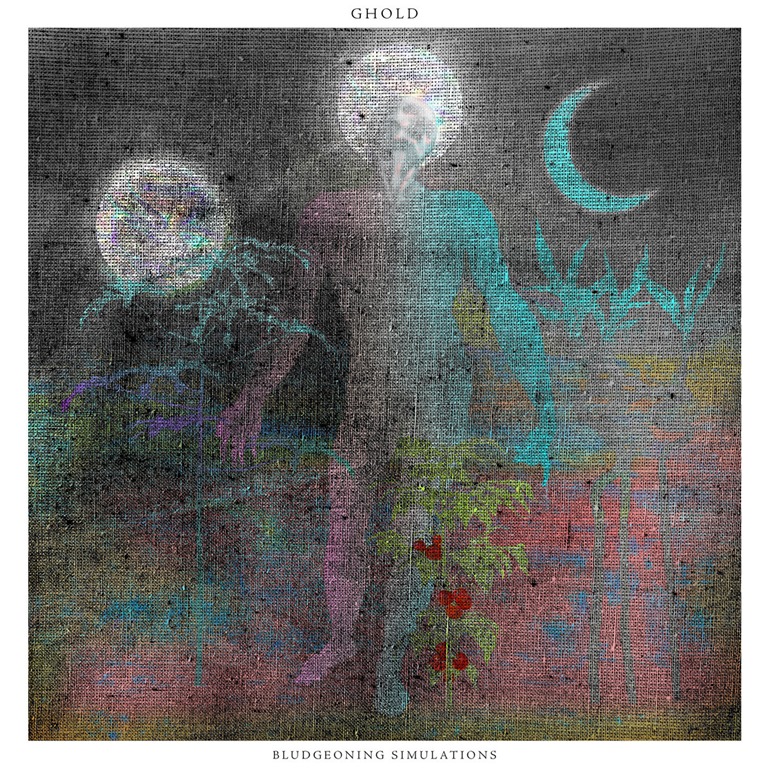
Human Worth seems like a comfortable place for the latest album by sludge behemoths GHOLD. The band has forged a remarkable career to date, with each album showing development and progression, building on previous works – and as they’ve been going for some thirteen years now, that’s some significant expansion. PYR (2016) saw the duo expand to a trio, and Stoic explored the potentials of the three-way interplay in much greater depth. INPUT>CHAOS took the band in a rather different direction, fully embracing the avenues of straight-up noise while bringing, at times, almost accessible shades to the monstrous riffery that defines the GHOLD sound. So many bands spend their entire career recreating their first and second albums because they’re so desperate to appease their fanbase, and while that might be alright for acts who’ve sold their soul and their lives to major labels and likely have no say in the matter, any act who has artistic freedom who peruses such a creatively limiting course is likely doing it for the wrong reasons.

GHOLD’s unpredictability, then, is a strong positive. And Bludgeoning Simulations is bursting with surprises, and none greater than the tremulous piano opening on the first track, ‘Cauterise’. It’s tense and dissonant, but at the same time, soft, reflective… and then the monstrous, churning riff crashes in and lays waste to everything which stands before it. The guitar and bass are welded together tight to forge a solid wall of sound, and it’s delivered with attack., a raw, barrelling intensity. You don’t just hear the volume from the speakers: you feel it.

Without a moment’s pause, a thick, lumbering bass riff crashes in hard, and leads ‘Lowest’ into spectacularly Sabbath territory – it’s hard and heavy, but also captures both raw contemporary feel and that vintage 70s sound. Sabbath as played through a filter of Melvins goes some way to explaining where they’re at. It sound like abrasive hardcore played slow.

The ridiculously long and sludgy single cut, ‘Place to Bless a Shadow’ s a beautiful slow-burner, expanding everything they’ve ever done to a new and remarkable breadth. There’s detail here, and deep, dark, whispering atmosphere, before ultimately, after some sparse, slow-building tribal beats and simmering tension, not to mention vocals that start gently but gradually come to resemble the rage of Trent Reznor on The Downward Spiral, they finally go full Melvins sludge mania just after seven and a half minutes. It’s heavy, and it’s wild. And – alright, sit down and take it – it’s solid GHOLD.

‘Fallen Debris’ is a fast-paced, buzz driven blast, and a contrast in every way – hard, driving, it’s a tabid blast of a punk / gunge / metal hybrid that hits like a kick in the stomach. Whipping up a stomach-churning maelstrom in the last couple of minutes, we find GHOLD hitting peak energy, before the slow-churning Sunn O))) ‘inspired ‘Leaves’ drifts in and drives hard. It’d s heavy as fuck. And it hurts.

There are no simulations here: this real bludgeoning, from beginning to end. Bludgeoning Simulations is heavy, and make no mistake, there are no simulations here: this is fucking REAL. The album’s second monumental beast of a track is the groaning, droning, nine-minute monster that is ‘Leaves’, and it’s nine minutes of sepulchral doom fully worthy of Sunn O))). It’s heavy shit, alright, but the reason it hits so hard is because of the context: Bludgeoning Simulations is remarkably nuanced, inventive, a questing work that seeks new pathways, new avenues, and shows no interest in genre boundaries of conformity. ‘Rude, Awaken’ brings the dingy riffs that will satisfy thirsty ears, but again, there’s a stylistic twist that’s truly unique, in a way that’s not even easy to pinpoint. It’s simply something different.

Bludgeoning Simulations is inspired, and inspiring, and finds GHOLD conjuring sonic alchemy with a visionary take on all things doomy, sludgy, low, slow, and heavy.

AA

a0166716374_10

Christopher Nosnibor

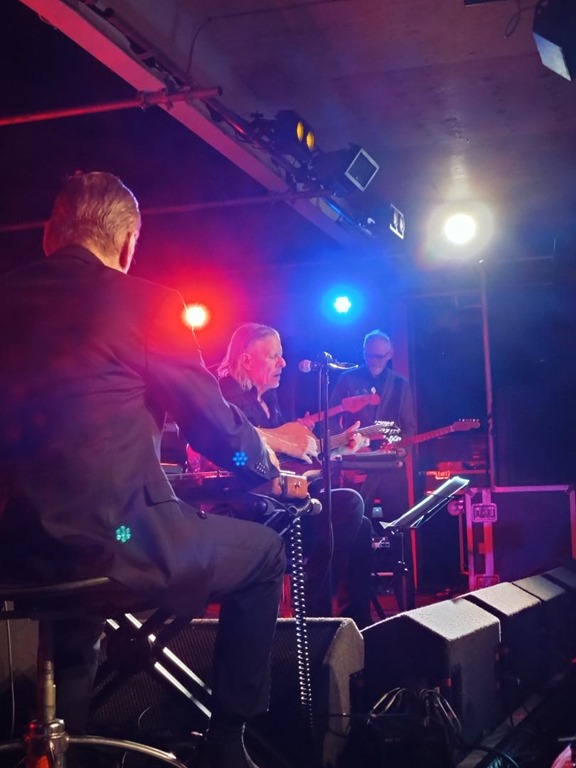
The last tour of Swans’ current iteration, drawing the curtain on a succession of albums – and tours – which have been truly immense in every way: the build-up felt like the end of an era. The event itself, perhaps less so. At one point, someone calls out a request. “We don’t do that,” Gira explains, in a kindly manner. He seems pretty relaxed tonight, and smiles a fair bit. No-one in the band gets bollocked or scowled at, and they all seem to be having a pretty good time.

But no, they certainly don’t do ‘that’. You don’t go to see Swans expecting to hear choice guts from their extensive back catalogue. You don’t even go expecting to hear songs, at least not in any recognisable form. The versions of recorded songs bear only limited resemblance to their studio counterparts, twisted, stretched, and otherwise evolved while on the road to a point whereby they’re almost new songs entirely. Recent shows have seen the band playing sets spanning a full two and a half hours, while only featuring six songs.

Before we come to Swans, Jessica Moss, who, amidst an extensive catalogue of work over the course of a lengthy career, is best known for her contribution to Thee Silver Mt. Zion Memorial Orchestra and being part of the whole Godspeed You! Black Emperor milieu. Tonight, she plays a rendition of her latest album, An Unfolding, in its entirety, and it’s breathtaking. Her nuanced violin and vocal work is augmented with booming, resonant bass tones. There’s a lot of yakking at the bar and further back in the 1,000 capacity, sold-out venue, where the house light stay up toward the rear of the room for the duration of the night, but for those of us in the front two-thirds, it’s a spellbinding experience, which perfectly sets the tone for the main event.

Moss’ half-hour set is over by around 8:40, and Swans, after a few brief checks, take to the stage around ten minutes later. Gira politely asks that there are no cell phones – “at least not where I can see them”, before he begins strumming a monotonous at two strings. He does so for what feels like an eternity. Or perhaps not. When Swans play, time takes on a different meaning, and it’s been a feature of this current iteration that the songs evolve and elongate over the course of the extensive tours, transforming and transmogrifying over the weeks and months on the road. They’ve been touring Birthing and this ‘farewell’ for a fair while now, although the set on the most recent leg has only featured ‘The Merge’ from said album. With ‘Paradise is Mine’, from The Beggar, and ‘A Little God in My Hands’, from To Be Kind, this is as close to a retrospective set as you’re likely to get, but none of these songs much like the studio versions, and half the set therefore features material which is either new or so far removed that it’s been retitled as well as restructured. But as I say, you don’t come to a Swans show for the songs. You come for the experience. And what an experience it is.

S1

It’s fair to say that there is simply no other band like Swans. Their reputation for extreme volume is only part of the story, a piece of the equation. Older fans who saw them in the 80s love to regale with tales of people throwing up, passing out, and so on, and that they’re pretty tame these days, and I have no reason to believe that these are purely apocryphal. Gira just can’t do quiet: even his solo acoustic sets playing smaller venues circa 2003 / 2004 were fucking punishing.

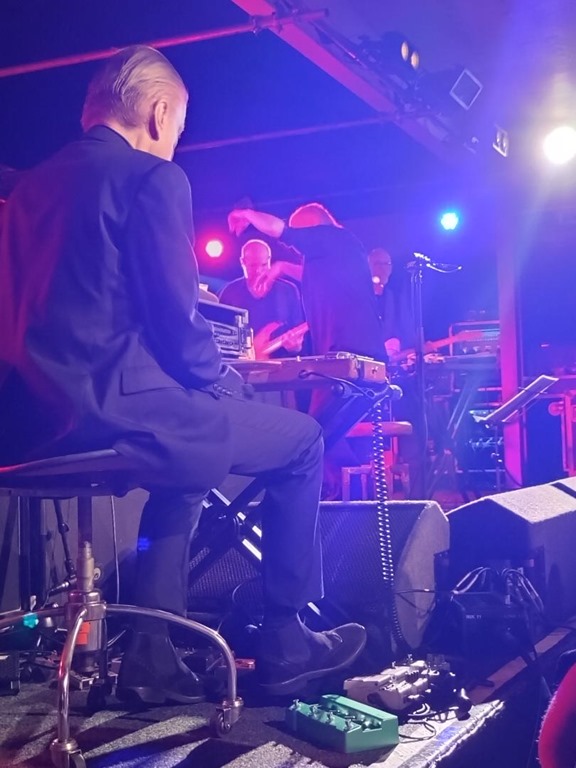
Some time in, Gira downs his guitar and stands up, turning to face the band, and flails his arms as if experiencing some kind of rapture or episode. But every gesture is a signal, from which the band members – there are six of them, plus Gira – and his near-psychotic choreography guides them through ebbs and flows, to ever greater, more intense crescendos. It’s maybe half an hour before the full drum kit kicks in, and I feel my nostrils vibrate with the sheer quantity of air displaced from the speakers. It’s transcendental, euphoric.

S2S3

A number of people who had started the set near me in the front row dissolved. I didn’t really notice when: like almost everyone else, I was simply transfixed. And yet, this was by no means loud by Swans standards: while I can’t claim to have witnessed the nauseating brutality of their early years, or the notorious punishment of the Burning World tour (ironic that their gentlest album, released on a major label, should have been served by a tour of such infamous volume… or perhaps not, perhaps it was a statement to prove that they hadn’t sold out), their shows at Leeds Stylus in 2016 and 2017 were something else – something so intensely physical, it hard to find the words. Then again, on their last visit to Leeds, playing at The Belgrave, I found myself thinking ‘this isn’t so loud’ but before long finding myself dizzy and wondering quitter where that immense noise had grown from. And this is perhaps an indication of how they’ve evolved. The bludgeoning force is still very much present, not least of all with two basses and the return of Norman Westberg to the lineup – surely one of the world’s most patient and understated guitarists, content to stand, not playing for ten to fifteen minutes, before battering away at one or two chords and thirty BPM for the next fifteen minutes, creating noise and texture rather than doing the conventional ‘guitarist’ thing – but now it’s more subtle, growing building, slowly, so slowly. A tweak here and there, another player adds a later, and while you’ve been watching the dynamics of the two bassist and Gira’s windmilling, the volume has increased threefold and your ribcage is rattling and your brain is slowly scrambling. Kristof Hahn does things with lap-steel that is beyond comprehension, cranking out squalling, screaming walls of noise – but there isn’t a weak element in the lineup. They each bring something unique, and the collective output is something else.

If this is the end of Swans doing big band, big noise stuff, then they have certainly delivered a finale of spectacular proportions. And whatever comes next, we look forward with bated breath.

Aumeta Records – 7th November 2025

Christopher Nosnibor

The ever-accelerating pace of life, and the endless noise of not just the Internet, but absolutely everything, seems to have given rise to an increasing popularity in the sphere of ambient works. It can’t simply be my perception: post-pandemic, everything has got louder, busier, there’s more traffic, the driving is worse and more aggressive, there are people everywhere at all times of day, and even country paths and lanes are chocca with cyclists, runners, and dog walkers even at 2pm on a Wednesday afternoon. Never mind the fact that the entire world is at war, is flooded, is burning, rioting… fuck! Just make it all stop!

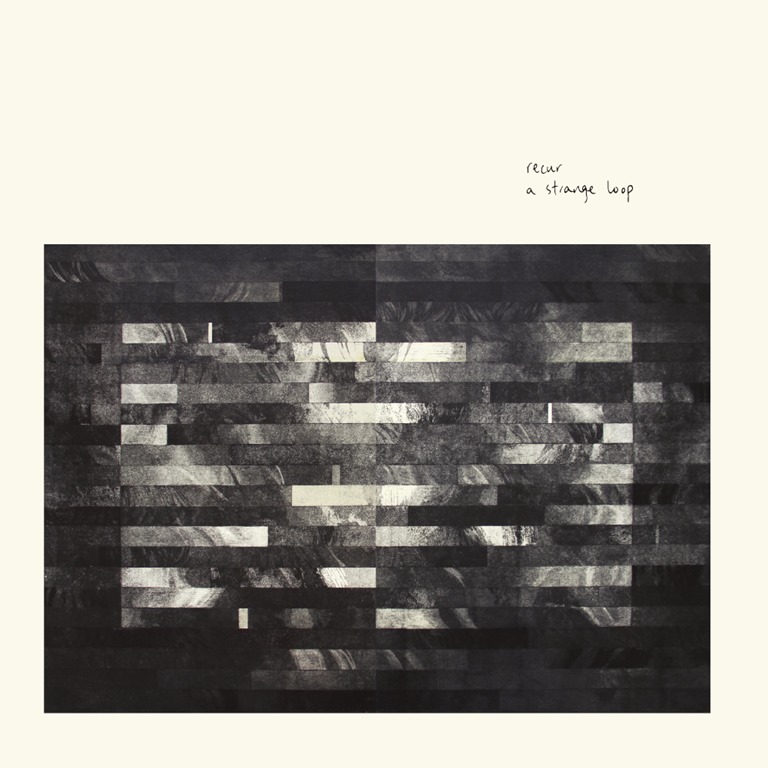
A Strange Loop may be Recur’s debut album, but the project’s lead, Tim Harrison, is by no means new to this, being a BIFA-winning composer, and for this excursion into analogue explorations, he’s joined by Richard Jones, the Ligeti Quartet, Jack Wyllie and the album was created using unique instruments crafted by Chase Coley. It’s not really ambient, not by a long way, and at times it’s quite dramatic, but it is immersive, in a way which leads the listener away from the turbulence of the everyday and into calmer waters, a sheltered cove where the tides are diminished, and there is respite, time and space to simply breathe slowly and regroup at distance from the noise, the constant disruption, the endless agitation and consternation. We simply don’t get anywhere hear enough time to breathe. When was the last time you properly relaxed your shoulders, filled your lungs to full inflation, and exhaled, slowly? When was the last time you truly felt ok?

The eight here pieces are slow, hazy-edged, abstract, immersive. Calming. ‘Oscillate’ delivers on its title, the volume surging and sliding unpredictably, creating a trick of the ear at times, with smooth, silken saxophone drifting in and out through delicate piano and washes of sound without any definite sound source. ‘Id Etude’ veers toward a chamber orchestra feel with picked strings and gliding notes.

It’s simultaneously focused and free: you very swiftly appreciate that this is a work where each composition is complex, detailed, the instrumentation varied, and the interplay between the instruments is both integral and remarkable. There are no fewer than thirteen players credited here, including four marimbas, two violins, two vibraphones, viola, cello, piano, and a host of more obscure instruments.

‘Nocturne’ brings the percussion to the fore to forge a hypnotic, beat-driven sway, before ‘Hieroglyph’ brings slow chimes, clumping trudging beats, and unsettling scrapes which evoke a mysterious, ominous sensation. This is Recur at their best: for all of the people playing here, they manage to create sparse, minimal, ominous, sombre works, pieces which are delicate, elegant, soft, supple, pieces which evolve, which shift gradually between places and moods, which make you feel… That’s it, really: they make you feel. From tension to emotion, from ease to unease, the scraping strings and swelling … ‘Iridescent’ is exemplary. It’s gentle. It surges and swells, there are moments of near-silence… and these moments are uplifting in a strange way, perhaps because moments of near-silence are so rare in all the babble.

Recur are unafraid of the silence, and, indeed, embrace it. We all need to embrace the silence.

AA

Recur – A Strange Loop  album cover 1000px

Magnetic Eye Records – 28th November 2028

Christopher Nosnibor

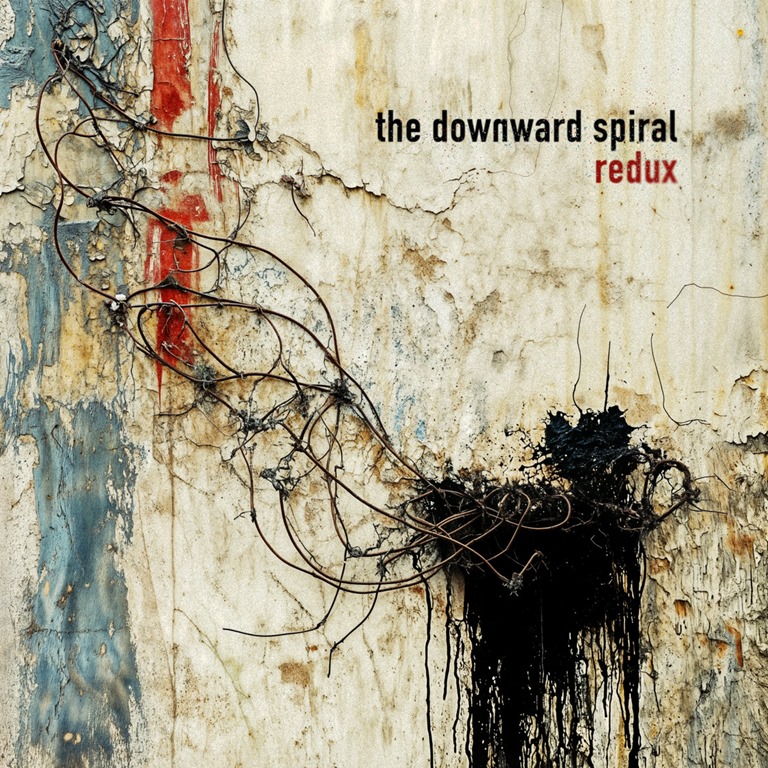
Magnetic Eye Records’ ‘redux’ series continues with another inspired choice in the form on Nine Inch Nails’ seminal release The Downward Spiral. The premise of the series is fairly straightforward – namely that a bunch of artists contribute versions of songs from a significant album to create a tribute rendition of said album from beginning to end. And then each release is accompanied by a ‘best of’ collection of covers of songs by the same band, where the contributors pick favourites ranging from greatest hits to obscure tracks lifted from the deeper territories of the catalogue. What’s impressive is that while many of the contributors to these releases tend to be relatively obscure, the standard of the interpretations tends to be high, which is testament to the curatorial skills of the guys at MER.

As a teen in the late 80s / early 90s, I was by no means alone in feeling like this was an exciting time for music, at a time of life when music comes to mean everything. Here in the UK, Pretty Hate Machine had created some minor ripples, and it was clear from ‘Head Like a Hole’ that Nine Inch Nails had something, even if that something did sound a bit like a harder-edged Depeche Mode. Landing just after my seventeenth birthday, The Broken EP was the most devastatingly brutal shock I had ever encountered. The thing is, it wasn’t metal – a lot of it wasn’t even guitars. And then, while the world was still recovering from that, Reznor delivered The Downward Spiral. It was – and in many ways, remains – the most fully realised, most expansive articulation of not only Nine Inch Nails, but of the human condition, in all its twisted, ugly complexity. It had everything, including vast emotional range.

The Downward Spiral landed at the perfect time for me, and as such, it’s an album I have a strong affection for now. Listening to this tribute version, it’s clear that the same is true of the artists who’ve contributed to it. That doesn’t mean that they’ve all delivered carbon-copy covers, and in many ways, it’s all the better for it. Kicking off the album, Black Tusk’s raging hardcore / thrash metal attack on ‘Mr Self Destruct’ is illustrative, in that it captures the nihilistic brutality of the original, and while it’s faithful to the structure, it’s very much about them channelling the raw emotion of the song in a way that they feel.

Grin’s take on ‘Heresy’ is dense and murky, dominated by a thick bass, and it’s solid. The chorus may not explode in a wall of rampant treble noise in the way the original does, but nothing could, so the fact they don’t even attempt to replicate it was a wise move. ‘March of the Pigs’ was one of the wildest single choices for a major-label release, and Sandrider’s version captures the song’s mania, while Daevar’s crawling sludge take on ‘Closer’ may lack the sleazoid groove of the original, but with the harmonic female vocals pitched against a wall of churning guitars, it’s still enough to bring on a bit of a sweat.

Author & Punisher – one of only a few of the acts I was familiar with in advance – present a stark, snarling rendition of ‘Reptile’. It’s an anguish-laden electro-industrial grind which captures the claustrophobic intensity of the original nicely, and credit to Between the Buried and Me for bringing more dark electronics and atmosphere to their rendition of ‘Hurt’ which is otherwise a pretty straight take – but what else is there to do? You can’t mess with perfection, and nor should you. The execution of the chorus is perhaps a bit emo, but it’s one of those songs that just hits so hard as long as you don’t try anything too radical. I don’t suppose Trent loses much sleep over the fact that the majority of people don’t even know that the Johnny Cash version was actually a cover.

a1197718638_10

The counterpart Best of set packs quality from beginning to end, too, with notable names including Thou and Evi Vine. The latter’s choice is interesting, being ‘This Isn’t The Place’, culled from the 2017 EP Add Violence, and it’s dark and atmospheric, woozy and somewhat unsettling, making for a perfect homage and well-placed reminder that as much as NIN are a ‘songs’ band, their catalogue is bursting with cinematic, atmospheric instrumental works. And this is where this ‘best of’ set comes into its own: while there are, almost by necessity, takes on ‘Head Like a Hole’ (here presented as a stark, rolling, post-metal piece by Blue Heron) and ‘Terrible Lie’ (Orbiter actually taking it poppier in a 90s alt-rock way), there’s a leaning towards post-Downward Spiral material, from ‘Every Day is Exactly the Same’ (a song I really felt in my early years of corporate drudge) by Chrome Ghost and ‘The Perfect Drug’ (a song that felt a bit flimsy to my ears at the time but one I’ve grown to appreciate) by Nonexistent Night. Bees Made Honey in the Vein Tree tackle ‘Over and Out’ from Bad Witch… Then there’s Thou’s savage version of ‘Suck’… woah.

What this showcases is not just how Nine Inch Nails have broken so much ground over the course of their career, and how significant a band they are for so many, but also how they have evolved over their time in existence. Trent Reznor is an artist who has often been imitated, but rarely matched, in terms of songwriting or production, switching his angle every time other show signs of catching up. The esteem in which he is held by fans and other artists is entirely justified.

Taken together, these two releases go a long way to reflect and represent just why Nine Inch Nails ae so revered. Credit is, of course, due to every contributor on both of these albums, and to the label for its curatorial work – but ultimately, it all serves as a reminder of just how essential Nine Inch Nails have been in the evolution of music over the last thirty-five years and more. This makes for a timely and fitting tribute to a truly pivotal band.

AA

a1767921004_10

17th October 2025

Christopher Nosnibor

…and still, the COVID pandemic continues to yield new offerings, even if some are repackaged, or otherwise documents of events which took place during that strange, strange time. Real live music events were, during those dark days, simply things of memory, which we could only dream of happening again – because, for a while which felt like an eternity, there was no end in sight. Live streaming events were as close as we got. I watched a few, participated in a handful, too, but like having beers on Zoom, as much as they went some way towards filling the gaping chasm that was social life, these things were countered by a certain pang of sadness and consternation, reminding us as they did of what we were being deprived of, highlighting the fact that there is truly no substitute for the experience of live music. I write this as a fairly ardent misanthrope who will sometimes go to quite exceptional lengths to avoid other people. But sharing a room with musicians and people who seek to become one with the sound and the experience is something altogether different. Unless it’s one of those gigs where casuals turn up and yack at one another in loud voices for the duration, of course. I find that this happens less in proportion to the obscurity – and / or extremity – of the music. The more difficult, the more abrasive, the further from the mainstream the artist, the cooler the audience. In this context, Orphax’s audience must be bordering on godlike.

Embraced Imperfections features ‘two live performances recorded during a live video streaming event during the early covid-19 pandemic’, originally released as Embraced Imperfections and Live in your living room, now, remastered, they come as a two-disc release. The title reflects the nature of the recordings – both performances were improvised ‘with various synths, organs, and effects’, and as such are inevitably imperfect. But… how would we know? Artists – musicians in particular – are commonly their own harshest critics. They kick themselves for the most minor flaws that simply no-one else on the planet would notice in a million lifetimes. But still, making peace with and embracing imperfections is a significant step.

The first disc – Embraced Imperfections I – offers forty-one minutes of slow-sweeping organ drone which subtly undulates and quivers, humming on, ebbing and flowing, but in the minutest of microtonal shifts. Above all, it’s a continuous sonic flow, and the shifts in its sounds and structure are made at an evolutionary pace. You don’t listen to music like this to be affected, to feel impact, but instead to be carried along, to feel it envelop you, to wash over you, to experience full immersion. It isn’t that nothing happens… so much as very little happens, and does so incredibly slowly. If listening requires patience, so does the making. It is not easy to hold a single note for long minutes at a time without feeling a certain pressure to ‘do’ something. As this performance evidences, Orphax possesses the Zen-like ability to resist any urge to increase the pace of movement – so much so that time itself seems to stall and sit in suspension here. Even the first fifteen minutes feels like a lifetime, and the secret to appreciating this is to stop listening and simply let it become the backdrop as you slow our breathing and allow yourself to relax. Remember what it is to relax?

The shorter Embraced Imperfections II, which clocks in at just over thirty-six minutes, is less overtly organ-driven and more constructed around an electronic hum, and it’s dark, claustrophobic. It also feels more low-key, and more ominous. It’s still another extended dronework, the sound of which is absolutely the immersive dronescape, the hovering hum that feels like nights drawing in and claustrophobic depression descending on the dense darkness. It’s a dense, scraping, soporific endless polytone that scratches and hums for what feels like all eternity. While far from accessible or easy listening, it does make for an immersive journey. And cat pics always win… embracing impurrfection.

AA

AA

a0536185753_10

Christopher Nosnibor

Bite the Boxer is unquestionably an unusual and intriguing name for a musical project: my mind immediately leaps to the infamous ‘bite fight’ between Mike Tyson and Evander Holyfield in 1997, where Tyson lost through disqualification after biting off a chunk of Holyfield’s ear in one of sport’s most shocking moments.

In combining an eclectic range of elements spanning industrial, alt-pop, trip-hop, and ambient lo-fi, there’s nothing about Matt Park’s music which indicates any connection to this moment in sporting history. The same is true of his objective to create music imbued with ‘he feeling of impending doom but with just a glimmer of hope’, which is inspired by ‘horror video games and dystopian, post-apocalyptic films’.

‘Venom Test’ is haunting – at first ambient, before bursting with an expansive, cinematic feel, then plunging into darker territory. Even without the aid of a beautifully-shot and remarkably stylish video, the rack leads the listener through an evocative sequence of sonic transitions. Although never harsh, the distant drums are weighty, powerful, and the overall experience feels like a juxtaposition of must and decay with rays of shining hope breaking through cloud. The listener feels as if they’re being pulled in opposite directions, the suspenseful end offering no conclusion, but instead, leaving a sense of emotional quandary, an uncertainty. ‘Venom Test’ creates a tension, and provides no closure or conclusion, only a sense of a door being left ajar. It’s a deftly woven piece, and one which feels very much like it belongs to a much larger project – which it does, being a taster (which doesn’t remotely have the flavour of bloodied ear, to the best of my knowledge) for the forthcoming album, Haunted Remains Pt.2. As a choice of single, it’s a good one, leaving us in suspense to hear it in the context it was intended.

AA

AA

92e42d4c-6d54-911b-d615-4a752d4ebad6

Blaggers Records – 2nd October 2025

Christopher Nosnibor

Continuing the thread of my review of the new Eville EP, which sees a young band push hard on the forward trajectory of a nu-metal revival, I find myself basking in the retro sound of ‘Anything,’, the latest offering from JW Paris, trashy indie / alternative trio from London. This isn’t some kind of nostalgia wank, whereby the 90s is largely misrepresented through the prism of Britpop (or grunge), but a cut that reminds us just how eclectic the 90s – particularly the first half of the decade – was. It was a melting pot of skewed guitar-led bands which were often lo-fi, ramshackle, bands who would grace the pages of Melody Maker but rarely play outside Camden, and the only way you’d ever hear any of their music would be by tuning in to John Peel, where they’d be wedged in between some weird dancy shit and the filthiest grindcore going, alongside something jangly on Sarah Records and something else entirely on Rugger Bugger records. And something by The Fall, of course.

‘Anything’, the lead track from their forthcoming EP, packs the essence of that period into just shy of three and a half energetic minutes. As much as it’s 90s indie / Britpop in its attitude, it’s the early Wonderstuff that comes through most strongly here. Before they became the beloved band of every cherry-red DM wearing sixth former, and way before the Gallagher brothers came onto the scene, Miles Hunt swaggered forth with colossal confidence, and songs that sizzled with snappy wordplay and hooks, and while I never really dug much after The Eight-Legged Groove Machine, they were exhilarating and fresh, and it’s this that JW Paris recreate here. The woo-ooh-wooooh backing vocals are a bit dandy Warhols, and there’s a lot going on, a lot of ideas and energy compressed into this neatly crafted nugget of a tune.

Bad Song Single (3000 x 3000 px) - 7