Archive for the ‘Reviews’ Category

Inverted Grim-Mill Recordings – 4th December 2025

Christopher Nosnibor

Before we arrive at the present, let’s rewind a bit. Everyone likes some backstory, a hint of prequel, right? So we’re going back to 2018, and the arrival of the Crusts EP by Pak40, a band named after a German 75 millimetre anti-tank gun, and a review which I started by saying that ‘I practically creamed my pants over Pak40’s live show in York, just up the road from my house, a few months back. I didn’t exactly know what to make of them, which was part of the appeal – they didn’t conform to any one style, but they were bloody good.’ 2021 brought the arrival of debut album Bunker, a heavy slugger by any standards.

They’ve always been a band devoted to sonic impact, and since guitarist Leo Hancill paired up with Cat Redfern to form Teleost and then relocated to Glasgow, Pak40 have been resting – but not giving up or growing tame. And more than anything, that time out has been spent in contemplation over intensifying their sound.

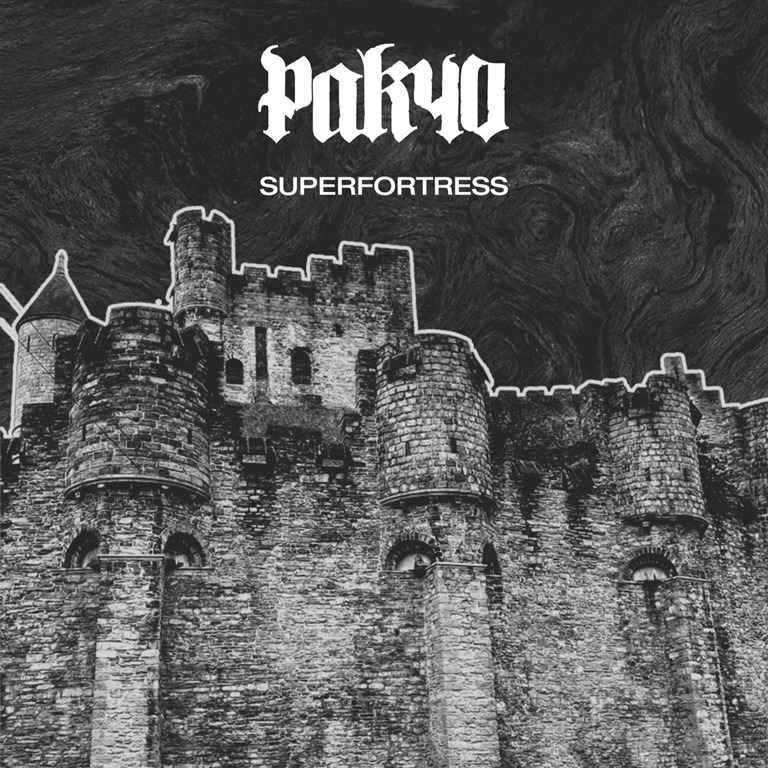
It may be that production plays a part, but Superfortress goes far beyond anything previous in terms of density and intensity. This is not to diminish the potent stoner riffery of Bunker, which contained some mammoth tracks with some mammoth riffs, but Superfortress is a major step up. Sure, Bunker was all the bass, but here, they elevate the volume and intensity in a way which replicates the thunderous, ribcage-blasting, ear-flapping force of the live show.

Four years on from Bunker, Superfortress very much solidifies the Sabbath-influenced aspect of their hefty doom / drone sound with the reverb-laden vocals, but also ratchets up the monstrous weight of previous releases by some way.

The first track, the ten-minute megalith that is ‘Old Nomad’ is as heavy as it gets. The drumming is relentless in its weight and thunderous force, but the bass… Hell, the bass. It lands like a double-footed kick to the chest, even through comparatively small speakers, replicating the impact of the live sound on the current tour. ‘Crushing’ may be a cliché but Pak40 deliver a density of sound that just may smash your ribs and smash your lungs. The title track begins tentatively, the riff only forming at first, before the drums and distortion kick in and from then on it’s massive, even before the vocals, bathed in a cavernous reverb arrive. Its low and it’s slow and it’s doomy, but it’s also earthy and rich in that vintage folk horror doom vibe, and it’s the slowed-down Black Sabbath inspired riffing that dominates the third and final cut, the feedback-squalling instrumental ‘Ascend’.

There’s something wonderfully old-school about this – but at the same time, it pushes things further in terms of weight and volume. And in those terms, Superfortress sees Pak40 push those things to an extreme. This is a monster.

AA

AA
a4105998785_10

Christopher Nosnibor

Back in September, Navigator Art and Performance hosted ‘A Gig for Gaza’ to raise funds for MAP (Medical Aid for Palestine) and PCRF (Palestinian Children’s Relief Fund). At the time, I wrote, ‘I shouldn’t be here. This event shouldn’t be happening. No, I don’t mean there shouldn’t be a bunch of York acts performing a packed bill on a Sunday evening in front of around two hundred people, but the reason it’s happening, the circumstances meaning we need a gig for Gaza’. But here we are again. The genocide continues. And as the government continue to stifle protest against the genocide– which for some reason they find more problematic than the mass killing of civilians, largely by arresting pensioners with placards, events such as this show that support and solidarity exists in ways which may be less headline-grabbing, but no less significant.

This time around, it’s the curators of the consistently wonderful Utterly Fuzzled events who are doing their bit, this time with a fundraiser for Medical Aid for Palestinians. It can often feel like that as artists, or individuals, we’re powerless in the face of this, and in many ways, we are, but these are the ways we use our platforms and what capacity we have to do something – because something, however, small, is infinitely better than nothing.

It’s a cold and very wet Saturday night in December. The kind of night that would validate the narrative that music venues go bust because they’re not supported, and people want to see bands they know over local acts and so on… yes, it’s been cold and wet in York for a solid month now, and every time I leave the house to go to an event I experience a depressing sense of déjà vu.

One thing that will never engender a sense of déjà vu is the range of acts on offer at a typical Fuzzled event, and this is no exception.

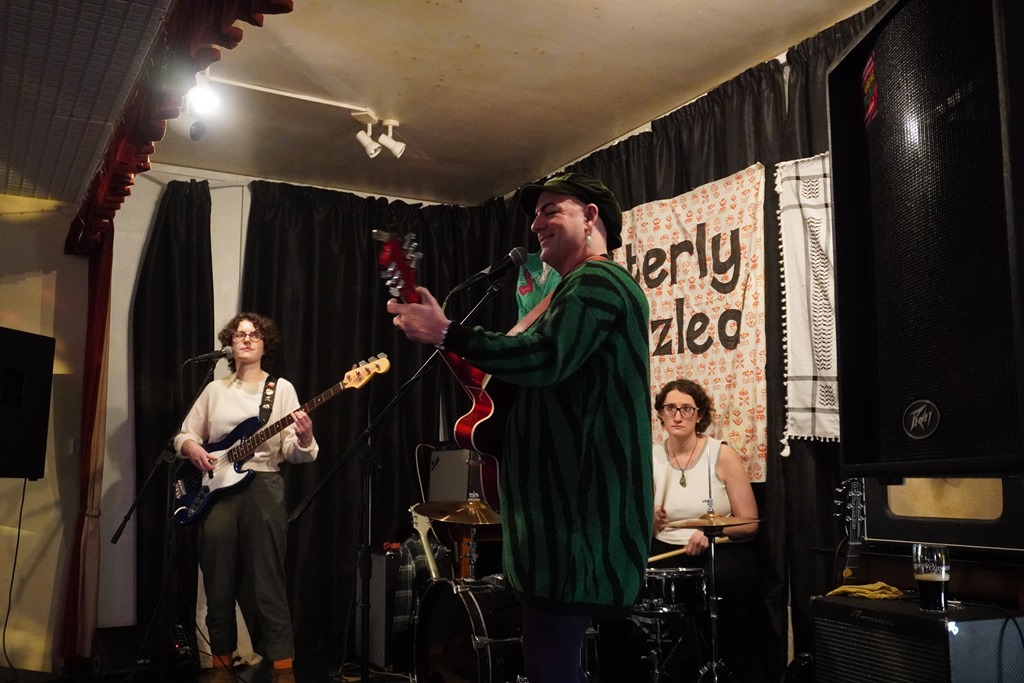
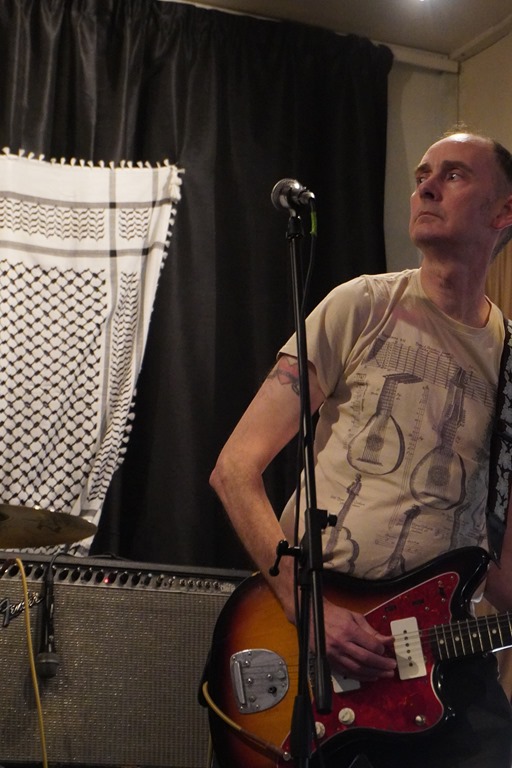
Efemel should have been further up the bill, but the demands of parenting young children don’t sit so easily with being in a band – meaning that anyone who wasn’t down early doors missed out on a treat. On the surface, they’re an indie rock act, who play sad but optimistic and heartfelt songs, with a dash of country in the mix. But that’s only half the story: fairly ordinary on paper, but on stage, they’re rich in quality, with nuanced and well-considered arrangements and a high level of technical proficiency, with a lead guitarist who demonstrates a rare understanding that less is more.

DSC05330

Efemel

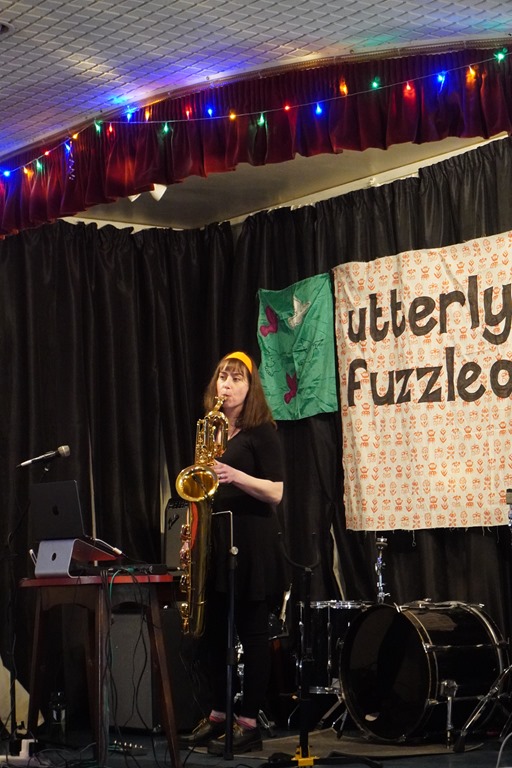
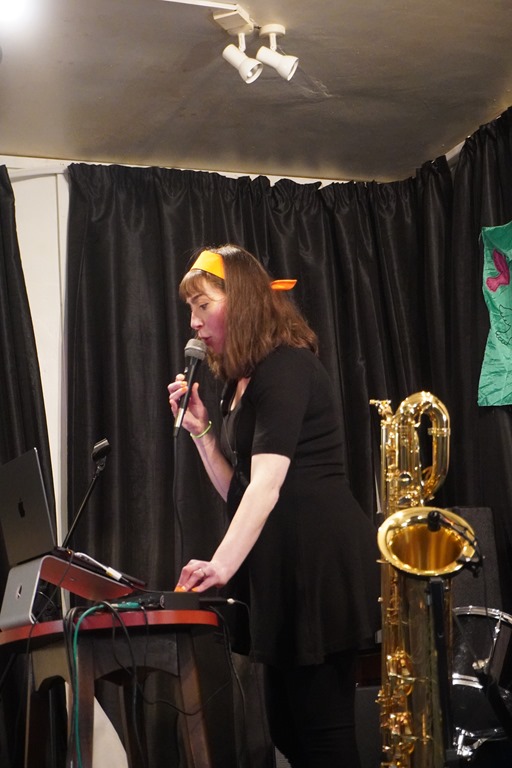
Kar Pouzi proved to be an absolute revelation – at least to me. Anyone who is a regular reader will know where I’m coming from here, and I felt a buzz of excitement from early on in her unashamedly strange and arty set. Switching between baritone saxophone and unusual microphone technique, Helen Papaioannou offers a performance that’s captivating – for me – and perplexing for many. Her setup involved laptop and pedals, with undulating oscillators and drum machines accompanying her unconventional approach to music-making. There’s a lot of breath and discord here, and – at times – some blasting noise. Kar Pouzi sits on the fringes of jazz, with the saxophone and vocals channelled through various processors and loops resulting in music that belongs to the early, evolutionary stages of industrial as represented by Cabaret Voltaire and some of Throbbing Gristle’s work.

DSC05335DSC05347

Kar Pouzi

Landing in the middle of the bill, Raucous Dorks are a bit ramshackle, with their set marred somewhat by a very trebly guitar sound and, despite spending some considerable time passing the tuner back and forth, some serious tuning issues. There were moments which offered glimmers of entertainment, but they really didn’t seem to be firing on all cylinders on this outing.

DSC05354

Raucous Dorks

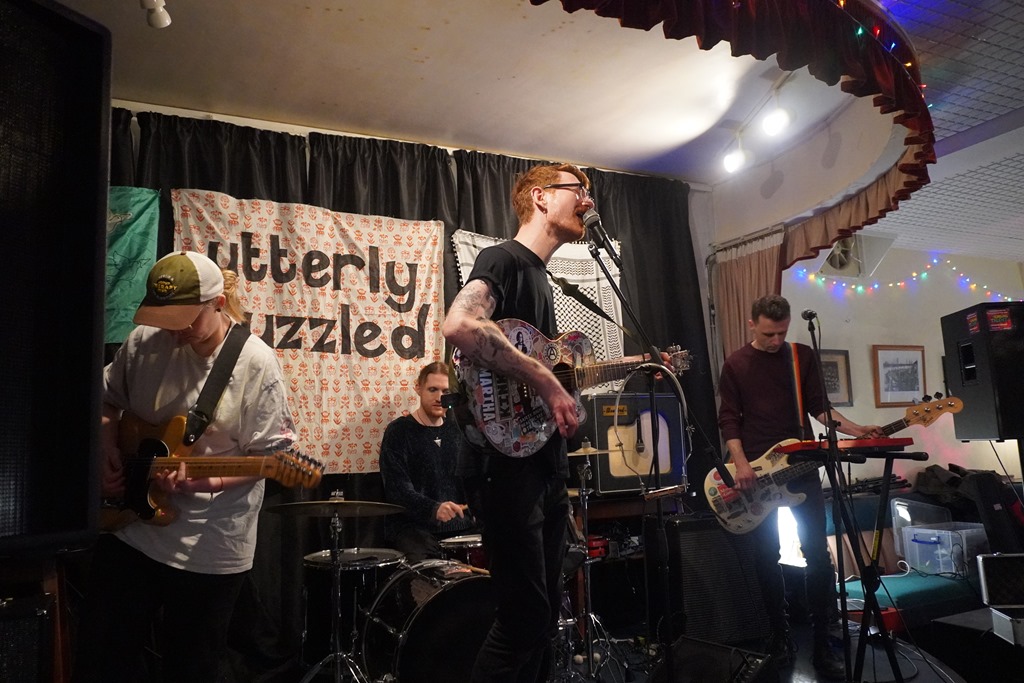
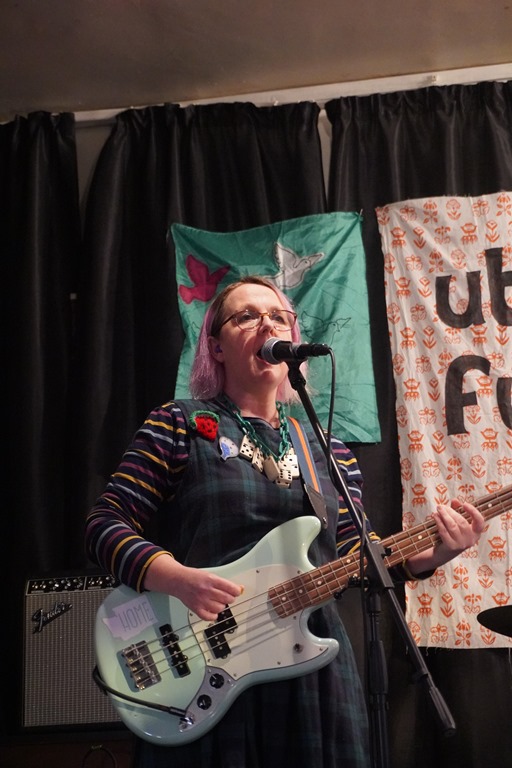
In contrast, Knitting Circle never fail to deliver, and seemingly find additional cylinders to fire every time they play. Even though reduced to a three-piece in recent months, they charge forth, sonically undiminished, Pete Dale’s choppy Andy Gill / Wilko Johnson influenced guitar slicing across Jo’s strolling basslines. Their songs are songs which touch on a swathe of sociopolitical issues and – now (semi) famously, after a BBC feature – issues rarely broached, such as the menopause, the topic of ‘Losing My Eggs’. Because things are running behind time, their set is abridged, but they still manage to open with a new song, closed their set with the rousing and apposite ‘Safe Routes’ and pack in no shortage of established corkers along the way. They’re raising awareness of menopause, they’re anti-fox hunting, they’re opposed to genocide and war in general, and are clearly a menace to society. They absolutely get my backing, and are without question among the finest of the city’s representatives, at a time when York is spawning some fantastic bands.

DSC05390DSC05379

Knitting Circle

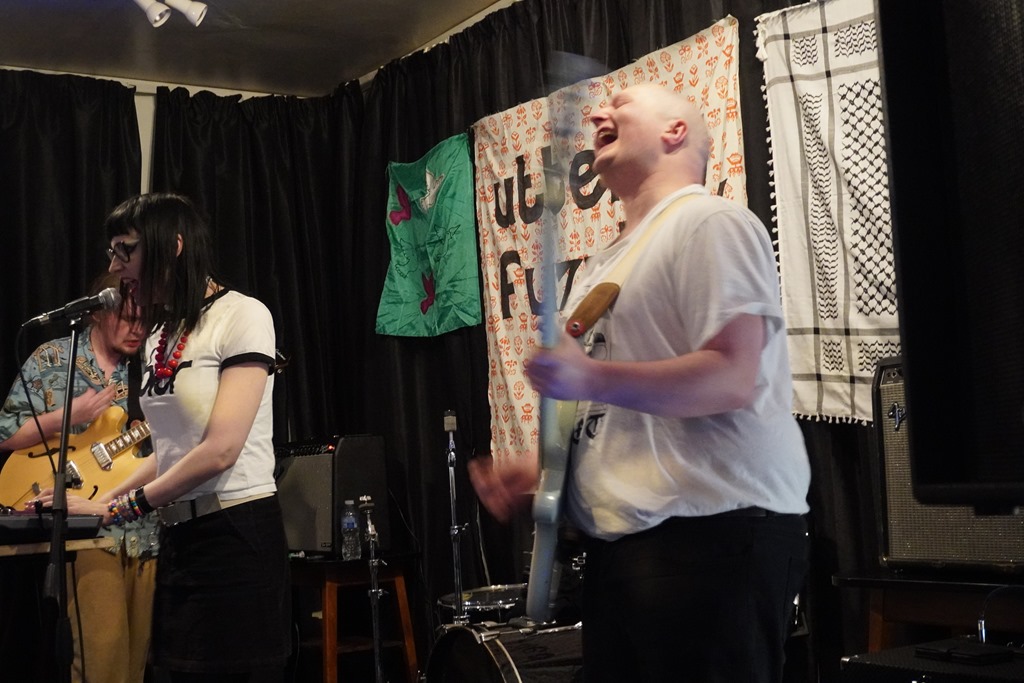
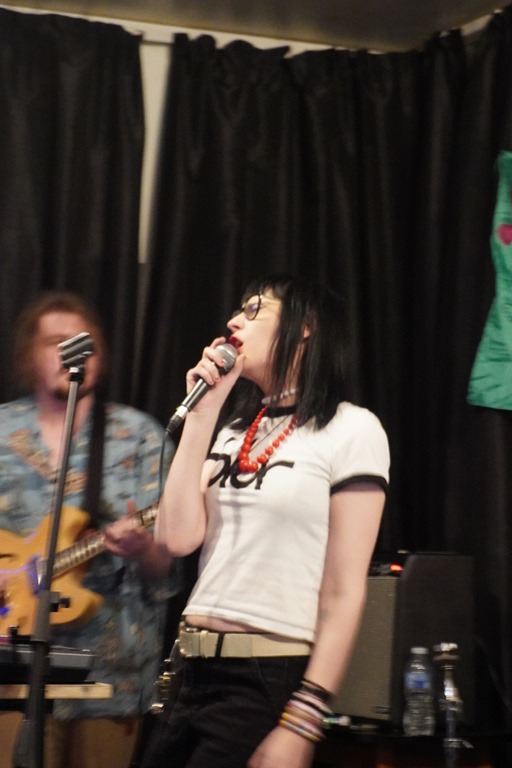
Headliners Fashion Tips aren’t from York, but they’re pretty fucking special, as my coverage of their releases and their last York appearance supporting Thank in April last year attests. They’re presenting a different lineup here, and are stripped back to a three-piece. And tonight’s headlining set is barely half an hour in duration, but it’s a brain-frying frenzy of explosive electronica and instruments that sound plain wrong at times – by which I mean the bass sounds like brain-whizzing scribbling synth overloading with treble on minute before switching to gut-blasting low-end the next while the guitar delivers both shards of trebly distortion and weirdy noises more commonly associated with analogue synths. The chaotic, cacophonous racket is all driven by the most frenetic, spasmodic blasts of drum machine. The band positively crackle with energy, and look like they’re having a blast as they pack the songs so tight there’s absolutely no time to catch a breath. The effect is a short, sharp shock, and makes for a dizzying climax to a stacked lineup – and all in a good cause, too. Free Palestine!

DSC05422DSC05438DSC05463

Fashion Tips

Dret Skivor – 5th December 2025

Christopher Nosnibor

This last week or so has been good for noisy, weird, abstract, experimental stuff. It’s pure coincidence, but these things to very much arrive in waves. There’s no thyme nor reason to it: Some weeks I’ll find my inbox abrim with guttural metal – and I’m by no means complaining – but sometimes I will crave noise, and there is none. Not proper noise, anyway. That said, this isn’t abrasive, full-on noise, but a work of abstract ambience dominated by field recordings, mostly of birds and billowing winds.

The last klôvhôvve release, which came out in the spring of 2024, was recorded live in Nottingham just a few weeks previous, and similarly this one was recorded live in November of this year. That’s about all you’re likely to learn with a dret release, although the accompanying notes are generous in their praise to the album’s contributors: ‘Thanks go to the wonderful animals and nature of Hammarö whose sounds you can hear being manipulated by klôvhôvve’. This is laudable: we don’t thank or celebrate nature nearly enough. There are gulls aplenty here, among other creatures less obvious by their calls (at lest to me).

It begins with the rumble of thunder, and it grows closer and more menacing. And then comes the rain. I assume it’s the rain. I’ve heard enough of it in the last couple of months. It feels like it will never stop raining. Again. Öljud rumbles and creaks and billows: a lot of this sounds like heavy rain and high winds, conditions which simply make me want to hibernate rather than reconnect with nature. There are quack and quarks, and all kinds of trilling sounds. Nothing much happens – if anything, really. It doesn’t need to.

Is it ok to drift off to an ambient work? I would have to argue that when listening to a studio work that’s particularly tranquil, it’s a compliment rather than an insult. Öljud is subtle, rumbling. Not a lot happens, and what does happen takes place slowly. Very slowly.

AA

a2852538014_10

Christopher Nosnibor

It’s a cold and very wet Thursday night in December. The kind of night that would validate the narrative that music venues go bust because they’re not supported, and people want to see bands they know over local acts and so on – if the place had been quiet. But there’s nothing quiet about tonight., in terms of turnout or decibels. Ok, it’s not rammed, but it’s respectably busy, and as for the volume… These guys take it all the way to eleven.

The promoter’s strategy of booking a local / student / uni band to open up is one that rarely fails, and there’s a significant turnout early doors for ATKRTV. It helps that they’re good, albeit an acquired taste and not your average uni band. Operating in the classic power trio format, their primary inspirations are clearly US noise rock and grunge – there’s a bit of the Jesus Lizard here, a dash of Sonic Youth and Shellac there – as well as UK 90s noise that makes nods to the likes of Fudge Tunnel and Terminal Cheesecake – but there’s a lot going on, with hints of avant jazz in the blend, too. They’re a bit rough round the edges, but there is a musical style which is forgiving of this, and the jagged jarring juxtapositions of squalling guitar work with some meaty bass work evidences a technical ability beneath the surface of the feedback-strewn tempest. And while the banter might need some work, the songs are a glorious angular explosive racket, and they give them a hundred percent. And this is why it’s always worth getting down early doors. Every headliner was a support act once, after all.

DSC05224DSC05185

In my recent review of that debut album, Atavism, I commented on how the challenge would be for them to replicate the live sound in the studio. This is because their life sound is simply immense. There really is no other word for it. And this is not volume simply for the sake of it: this is volume as an expression, volume which renders the music physical, volume without which certain frequencies and tonalities, so integral to their sound, would not be achievable. Their performance in this same venue back in February was spellbinding, and I came tonight in the hope of replicating that experience. And oh yes, I did, and then some: Teleost seemed to take things to the next next level tonight.

Theirs is a subtly different take on the whole droning doom / stoner form, incorporating almost folky elements in the way that more recent Earth albums do. And instead of being solely about bludgeoning riffery – and hell, there’s plenty of that – there’s a rare attention to detail, not just in the delicate picking and soft cymbal splashes in the quieter moments, but in the full-spectrum sonic experience they conjure. And yes, conjure is the word: this is a world of magic made with a mystical blend of musicianship, amps, pedals, and something else quite indefinable. The way Leo Hancill uses a standard guitar, played through a substantial but not extravagant pedal set and two amps, to cover the range of both guitar and bass is spectacular in itself, but what really makes their sound unique, and it’s so easy to lose yourself in the timbre and texture, the way the sounds reverberate against one another to create this sensurround experience.

DSC05272DSC05244DSC05267

Teleost

Once again, I find myself truly mesmerised by Cat Redfern’s ultra slow drumming. What’s most remarkable is how effortless she makes it appear. Granted, her sticks are batons, but she is still an immensely hard hitter please with absolute precision. Yet she plays with an order of serenity, her expression calm, almost a smile, although it’s clear that’s behind this is intense concentration, and perhaps an element of telepathy between herself and Leo. Certainly the intuition between pair is remarkable, and no amount of rehearsal alone can achieve this level of tightness. The way they navigate the peaks and troughs, spinning elongated quiet passages, where they reduce everything to a hushed hum and the tinkle of a cymbal before bringing in a cataclysmic riff with pinhead precision is nothing short of phenomenal. And for all the noise, the experience is remarkably calming.

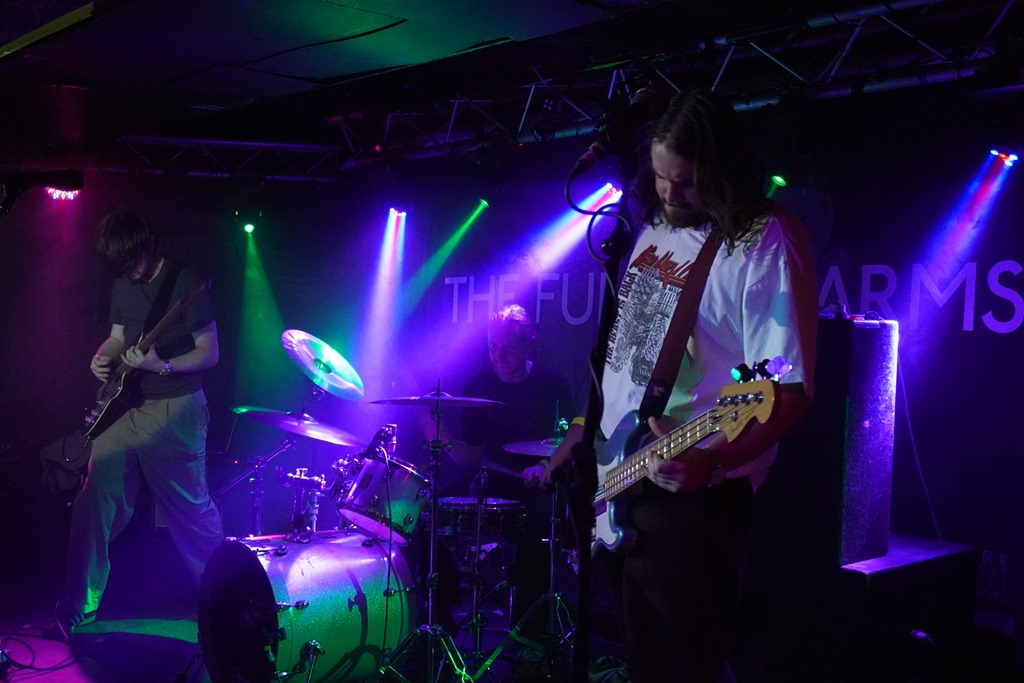
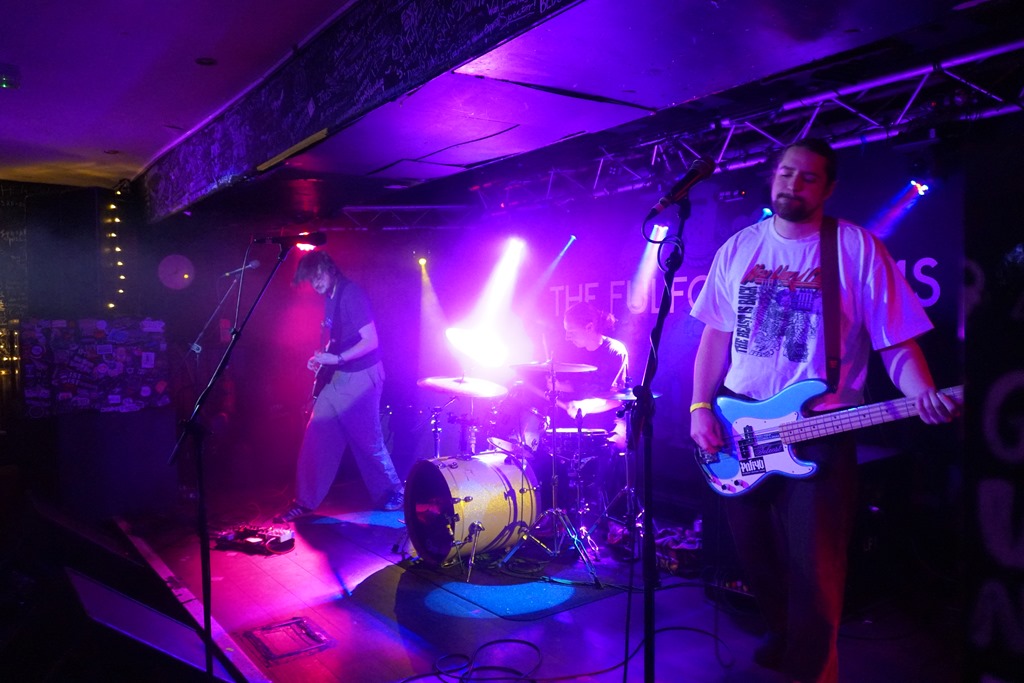
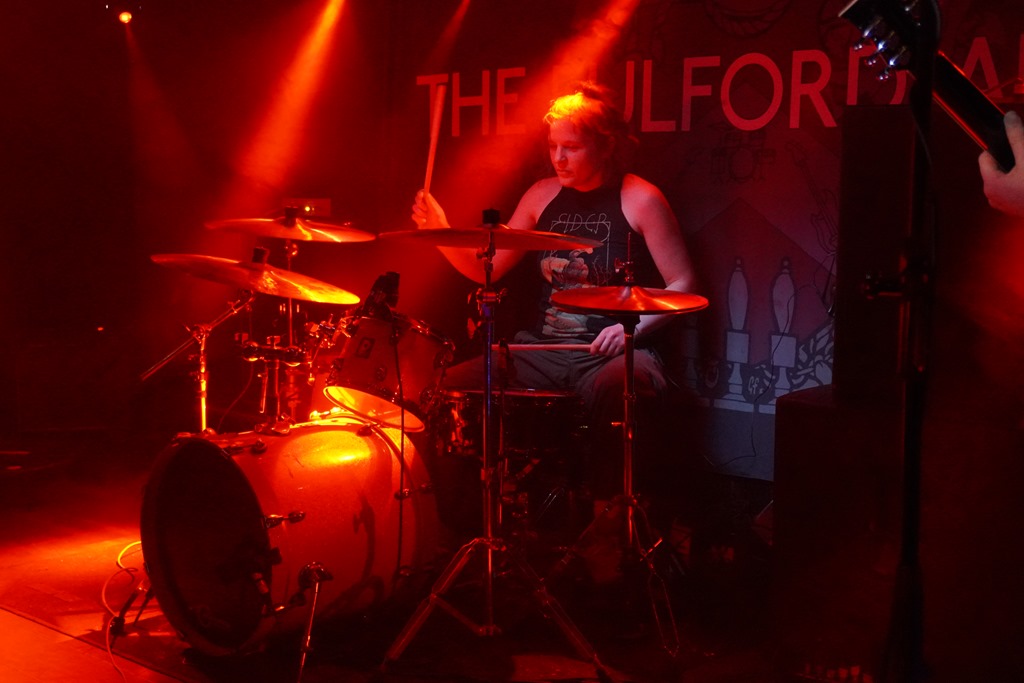
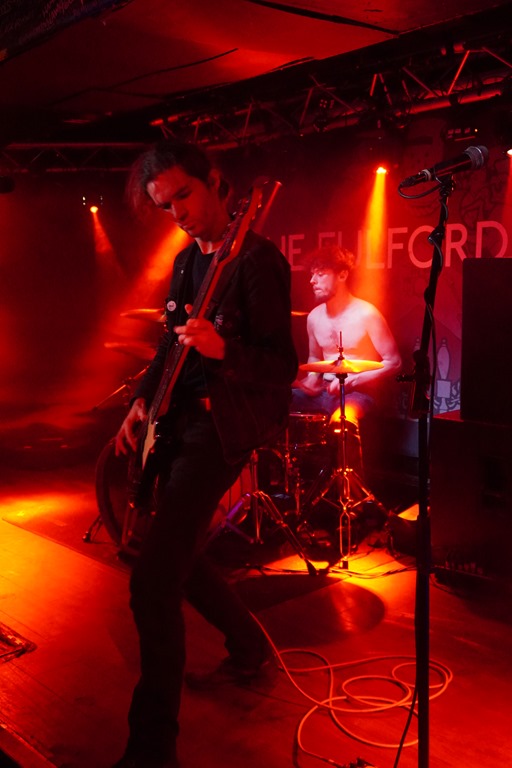
Before Teleost, there was PAK40. But with basis / vocalist Andy Glen now resident in Germany, and Leo Hancill living in Glasgow, activity from this former York duo is now extremely rare. That they’re touring with Teleost, having released a new EP simultaneous with the Teleost album makes economical sense, but also represents a significant feat of co-ordination.

It’s not difficult to identify the origins of Teleost when listening to pack 40. They’re certainly slow and heavy. But their style draws more overtly on the Sabbath-based doom sludge template, and there much more overtly metal. In places, they present a sort of blackened New Age metal hybrid. There’s also something more direct about their drum / bass combination. But oh, that bass. The thick, tearing distortion when the riffs kick in are agonisingly close to brown note territory: you feel your ribs rattle and your skin quivering.

In contrast to Cat Redfern’s zen drumming, Leo drums with his face, and in contrast to Hanclil’s slow nodding guitar style, Andy Glen goes all out with some unrestrained headbanging as he unleashes the most pulverising bass riffs. PAK40 are harder, and more abrasive. And this is why the double-header works: for all of their similarities, the two bands bring different shades of heavy. And they’re both intense, physical forces.

DSC05300DSC05280

PAK40

I babble some shit to people on the way out. I think I got away with it, because everyone is equally dazed. We’ve been blitzed, blown out of our minds and shaken out of our skins tonight by a musical experience that borders on transcendental. It’s a cut above your average wet Thursday night in December, for sure.

29th November 2025

Christopher Nosnibor

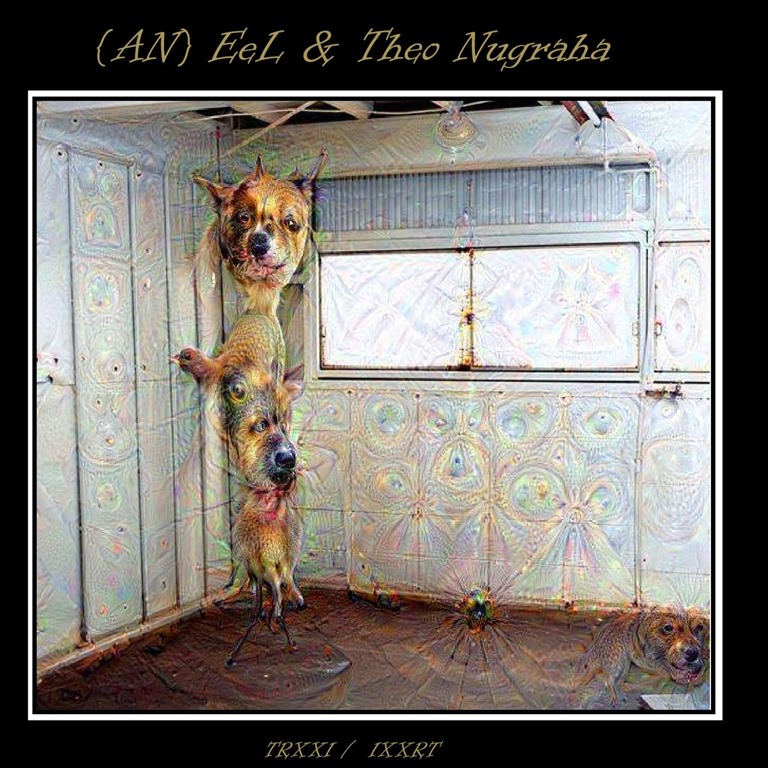
It’s not a good thing to feel nostalgia for something from the recent past which wasn’t even any good to begin with. But on seeing the cover for this split release by Theo Nugraha and {AN} EeL, I’m reminded that Google DeepDream was actually quite fun for about five minutes in 2015. Ah, hindsight… The results DeepDream produced were weird, psychedelic, trippy, and resembled no dream or subconscious thoughts I’ve ever known, its hallucinatory aspects were oft said to share qualities with LSD. But this was part of the appeal: it was novel, silly, with dog faces emerging from inanimate objects, whappy wallpaper, and the like. How many of us knew that it would be a precursor to the AI hell we now find ourselves in? Ten years is not such a long time in the scheme of things, but in the context of the now, it feels like another lifetime. A lifetime when doing daft stuff with digital tools wasn’t annihilating the environment, when it wasn’t stealing the work of writers and artists, when it wasn’t rendering jobs obsolete while creating billionaires at the expense of those losing their livelihood. Arguably, the golden age of The Internet was in the first years post-millennium, when applet-based chatrooms first made it possible to connect in real-time with people around the globe and MySpace was a wild melting pot where people came together through shared interest and communities evolved. This isn’t just some nostalgia wank: these were exciting times, and the world truly began to open up in ways hitherto unseen. These were times when The Internet offered freedom, where, as Warren Ellis’ novel Crooked Little Vein expounded, anything goes and if you could imagine it, you’d find it online. Godzilla Bukkake? You got it.

Everything changed when major corporations realised that they could really, really make on this. But major corporations being major corporations, they didn’t want to participate – they wanted to take over and own it, to wring every penny of profit from every last keystroke. And so now, while Napster and Soulseek were the equivalent of home taping, which didn’t kill music, Spotify and most other major streaming services really are damaging artists’ livelihoods – because unlike small-time peer-to-peer file sharing, this is a multi-billion dollar industry which siphons off pretty much all of the money for owners and shareholders rather than artist – and then you have scums like Daniel Ek using those proceeds to fund war. Something has gone seriously wrong.

Theo Nugraha’s contribution, 1XXTR is a longform work – seconds short of thirty minutes – and while it’s perhaps not quite Harsh Noise Wall, it’s most definitely harsh noise, and there’s not a lot of variation. It may even be that any variation is in the imagination as the mind struggles to process the relentless barrage of sound and seeks tonal changes, details within the texture. It doesn’t so much sound like a cement mixer – more like being in a cement mixer with half a ton of rocks, at the heart of an atomic blast. There are squalls of feedback and mutterings beneath the blitzkrieg, and around ten minutes in, the tempest suddenly begins to rage even harder and it’s like being hit by a train. Twenty minutes in, the relentless roar drops to merely the blast of a jet engine and the sensation is like huge pressure drop, or a fall. It’s impossible to discern what’s going on inside this swirling vortex of noise (there does sound like a vast amount of collaging and random things floating in and out), but it’s a full-on physical assault that vibrates every cell in the body. By the end of this most brutal half hour, you feel battered, bruised, damaged.

‘TRXX1’ by {AN} EeL, which runs for a second over the half-hour mark, is altogether less abrasive, but it’s no more comfortable. At first, it’s a clattering, metallic rattle, like an aluminium dustbin rolling down the street in a gale, accompanied by rattles and chimes. Extraneous noises – twangs and scrapes – enter the mix, and the sound starts to build, like the wind growing stronger at the front-end of a storm. But soon, from nowhere, a squall of static – or rainfall – begins to swell and while off-tune notes reverberate in the background, and a scan of radio stations yields alternately cut-up fragments and random noise, and while it may not possess the same physical force as Nugraha’s piece, ‘TRXX1’presents a disturbing array of frequencies and makes for a particularly tense listen. There’s a thunderous ripple like a freight train a mile long barrelling along, while disjointed voices echo here and there, and as bhangra and old-time brass fade in and out, the collage approach to the track’s creation, harking back to William Burroughs’ tape experiments, and early Throbbing Gristle become increasingly apparent. The Police’s ‘Can’t Stand Losing You’ cuts through what sounds like a snippet from lecture or interview. The repetition of the same fragments becomes difficult to deal with after a time, and you begin to feel like you’re cracking up. The it’s back to the sound of metal buckets being dragged down a cobbled street, with random busts of discordant noise jabbing in for extra discomfort. The final segment is a cacophony of abstract drones and crashing, calamitous racketry – a combination which is uncomfortable and unsettling.

The two pieces are quite different, but equally difficult in their own ways, and as such compliment one another. And if you’re seeking an album that really tests your capacity for abrasion and nauseating noise, 1XXTR / TRXX1 hits the spot like a fist to the stomach.

AA

a2950925012_10

12th November 2025

Christopher Nosnibor

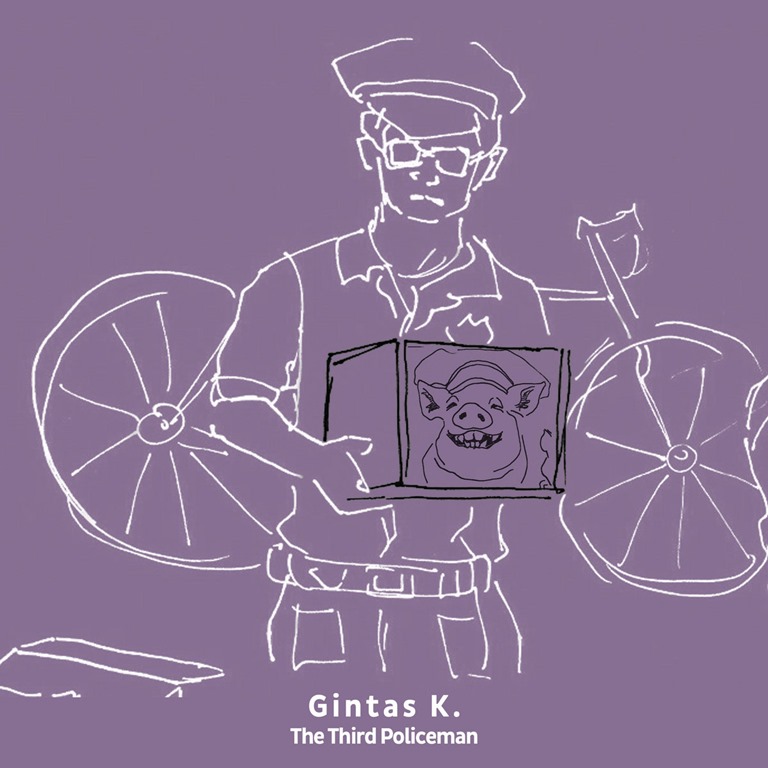
While the approach to recording his latest album is pretty much standard for Lithuanian sound artist Gintas K – that is to say, ‘recorded live, without any overdubs, using computer, MIDI keyboard, and controller’, the inspiration and overall concept is a little different this time around, with Gintas explaining that ‘The album is a subtle allusion to Flann O’Brien’s absurdist novel The Third Policeman, reflecting its surreal and enigmatic atmosphere through sound. In itself, this is quite ambitious – not quite the musical equivalent of interpretive dance, but nevertheless.

And, in contrast with many of his other albums, which tend to be relatively concise and often contain some shorter, almost fragmentary pieces, this one is a whopper, with thirty-one tracks and a running time of over two hours.

Initially, it’s display of K at his most manic, with ‘black box#1’leading the first four-track suite more frenzied and kinetic than ever, the sound of an angry hornet the size of a cat trapped in a giant Tupperware container. There aren’t always discernible spaces between the individual pieces, and after just the first eight minutes of wild bleeps and buzzes, I’m already feeling giddy. ‘black box#1 – 4’ is a quintessential Gintas K blizzard of noise which starts out like trickling digital water tinkling over the rim of a virtual glass bottle and rapidly evolves into an effervescent froth of immolating circuitry.

The second suite of pieces, ‘black box inside#2 Dog Hoots’ is made up of eight chapters – compositions feels like a bit of a stretch – and while there are a couple of sub-two-minute blasts, the fifth is a colossal nine minutes and forty in duration. This marks distinct segment of the album, in that it sounds a little more structured, like the sounds of a toy keyboard or a mellotron, rewired and then tortured mercilessly. It grinds and drones, hums and yawns, it bubbles and glitches and whirrs and it fucking screams. Before long, your brain will be, too.

The third segment, a set of six pieces labelled ‘black box inside… Calmness’ is anything but calm: in fact, it’s more likely to induce a seizure, being more of the same, only with more mid-range and muffled, grainy-sounding murk. There are more saw-like buzzes and crackles and pops and lasers misfiring in all directions. It’s not quite the soundtrack which played in my head as I read the book, but the joy of any art is that it affords room for the audience to engage and interpret on a personal, individual level.

The nine-part ‘rolling’ (or, to give it’s full title ‘black box iside#4 Rolling’ is more fragmented, more distorted, more fucked-up and broken. The pace is slower, the tones are lower, and it’s the sound of a protracted digital collapse. It’s unexpected to feel any kind of emotional reaction to messy noise, but this conveys a sense of sadness. By ‘Rolling – 4’ it feels like the machine is dying, a breathless wheeze of a thick, low-end drone, an attempts to refire the energy after this are reminiscent to trying to start a car with a flat battery. It’d messy and increasingly uncomfortable and wrong-sounding as it descends into gnarly distorted mess. ‘Rolling 7’ is creaking bleats, woodpecker-like rattles. and warping distortion, with additional hum and twang. The last of these is no more than roiling, lurching distortion, without shape or form.

Arriving at the four pieces tagged as ‘omnium – The Fourth Policeman’, its feels like you’re surrounded by collapsing buildings and the exhaustion is not just physical. Gintas K has really pushed the limits with this one. The is an arc, a trajectory here, which can be summarised as ‘gets messier and more horrible as it progresses’. Artistically, this is a huge work, a work of patience, and a work of commitment and focus. As a listening experience, it’s intense, and will likely leave even the most adventurous listener feeling like their head’s been used as a cocktail shaker and that their brain has been churned to a pulp. Outstanding.

AA

a3200436950_10

Christopher Nosnibor

13th September 2025

It is impossible to escape AI now, and its ubiquity has arrived at a shocking pace, its acceleration seemingly exponential. You can avoid social media, but can you avoid computers or mobile phones for even more than a few hours? The news – beyond the main headlines, at least – is abrim with reports on how it’s affecting us as individuals, as a species, and the environmental impact. I watch a training video at work: it’s presented by AI actors who move their arms in strange ways and occasionally mispronounce a word in the worst way. Meanwhile, management want us to save time on report-writing by using Copilot. Drained by all of this, I go to the pub for soe decompression time, and the talk is of how jobs are being undermined by AI, and some guy’s got a video AI made using just a photograph. Why? Why do we need this? We don’t, of course, but it’s novel, mindless entertainment that can be created in seconds. Increasingly, it feels like we’re volunteering ourselves for virtual lobotomies. Despite the fact that the current technoscape is every sci-fi dystopia playing out exactly as told in real-time, it seems the majority of people are more than happy to embrace AI. Even writers, artists, and the like, present themselves as ‘curious’ and will engage with AI for prompts or to brush up something they’ve done. But the fact it that it’s a slippery slope, which gets steeper and steeper and further down is an abyss that plunges straight to hell. The worst of it is that it’d becoming increasingly difficult to separate real life.

One of the issues I have personally is that just as every significant technological advancement since the Industrial Revolution brought the promise of more leisure time by making work lighter, the opposite is true – unless you consider unemployment and life on the breadline to be leisure. AI isn’t saving time by vacuum cleaning the house, hanging up the laundry, putting the bins out or doing the school run: it’s simply devaluing creative skills. Anyone who has read an AI-generated article, heard an AI-assisted song, or seen some AI-created art will know that there’s something ‘off’ about it, that it’s soulless and vaguely alien. Meanwhile, the world seems to be spiralling into a cesspit of animosity, hatred, and division. Something happened during the pandemic which meant that when we all emerged from lockdown, war and rage and unspeakable cuntiness exploded on a scale beyond articulation. It’s no wonder people are struggling with life right now.

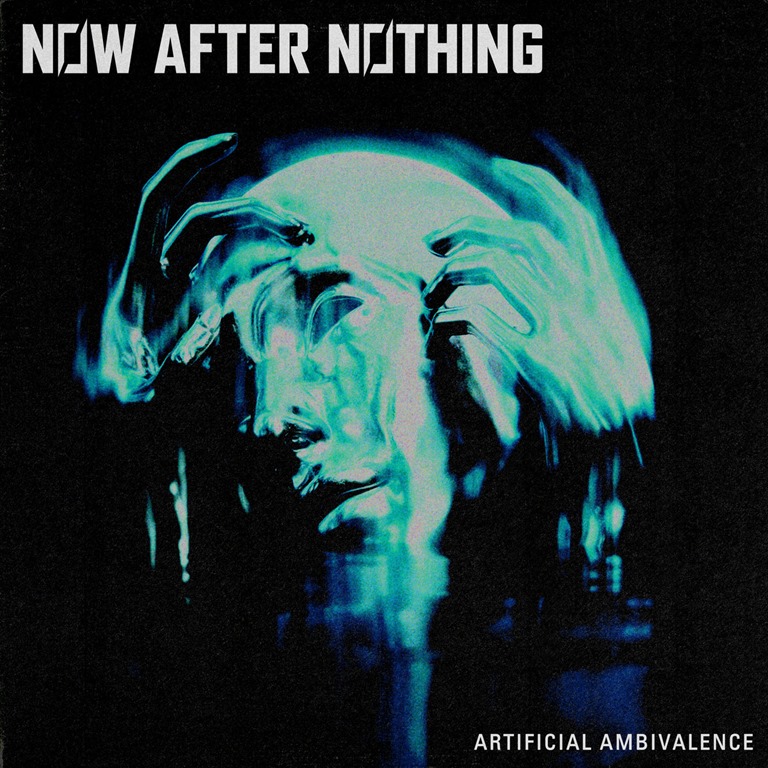
Now After Nothing is, in some respects, a therapeutic escape from all the shit. Multi-instrumentalist Matt Spatial paired with Michael Allen after what he describes as ‘a relatively difficult time in my life [where] I had become lost and depressed without a creative outlet with which to express myself’. There’s much to say that creativity – and exercise, both physical and mental – are the best self-maintenance. Listening to this EP, it’s clear that Spatial is really pouting everything into this.

His comments on the EP are worth quoting: “Artificial Ambivalence, as a concept, to me represents the state of feeling lost and/or the ‘shutting down’ from the negativity and toxicity around each of us,” Spatial explains. “They say ‘ignorance is bliss’, but in the (mis-)information age we seem to have reached a point of being pummeled into exhaustion from the constant barrage of negativity. For some, while the desire is stronger than ever to make positive change in the world, we might get derailed by feelings of helplessness, hopelessness, and being powerless in a society that seems to increasingly favor only one set of values. For others, it’s the choice to conveniently ignore the inhumane atrocities happening in our society when those atrocities don’t directly impact that individual.”

Of the music, there are references to ‘goth-glam grooves slick with sweat, raw enough to leave a mark’ and a nod to the fact that ‘fans have called it “S&M disco,” a sinister shimmer of punk, industrial grind, and nocturnal new wave.’

The first thing that strikes on the first listen of this EP is the energy. Everything is up-front and it lands like a proper punch in the face. Big, gutsy riffs underpin some sinewy lead guitar parts, driven by some explosive percussion and sturdy, throbbing bass. Straight out the traps, ‘Sick Fix’ blends post-punk and grunge to create a hard-hitting blast, and one that’s got hooks and melody in spades, too, with hints of Big Black in the background. It sets the bar high, but ‘Criminal Feature’ hurdles it effortlessly.

Slowing the pace and changing not only the tempo but the mood, the piano-led ‘Holly’ broods hard and is unashamedly mid-80d goth in its vibe, but also incorporates more post-millennial post-punk and goth in its genetics. The result is – to wheel out a cliché – anthemic. And it is, of course, the perfect mid-set slowie, which sets things up for the chugging, bass-driven beast that is ‘Fixation Fantasy’, a track that’s more 90s alt-rock than post punk or goth. More than anything, I’m reminded of psychedelic grunge also-rans Eight Storey Window in the ear for melody and the emotional heft delivered by some achesome riffs delivered at an intense volume.

‘Dare’ brings some dark pop intimations paired with some searing guitar work which lands like a post-rock Placebo crossed with Salvation – that is to say, it’s richly immersed in that mid-80s Leeds sound. It’s inspired stuff, and then some. Closing off, single release ‘Entangled’ offers glorious shoegaze gentility before breaking into a magnificent slice of synthy post-punk with some massive guitar. Artificial Ambivalence is better than ‘all killer’ (which it is) – it’s next-level solid quality and absolute gold.

AA

a3532593873_10

25th October 2025

Christopher Nosnibor

As the blurbage explains, ‘The Third Side Of The Coin is a split, 2 part album which includes 2 sides of one coin, Anima and Animus. They are separate entities but together they create a bridge between dark and light, outer identity to inner truth and form a union of opposites that gives birth to universal truth. They are the gatekeepers of transformation.’

Well that’s two sides, but what about the third? Of course, this is where the truly conceptual aspect of the work comes in – the part which goes beyond the recordings themselves – and which only really makes sense in context of the following explication:

The Third Side Of The Coin is about the natural but paradoxical dualistic state of the universe. This split album explores both sides of a polarized world by peering over the precipice of the coin only to see a reflection staring back from the other side. It is a surreal mirror showing that what you fear and what you hate is living within the unconscious parts of yourself, both sides being parts of a whole. As you look into the familiar and uncomfortable reflection the coin spins, dissolving duality and revealing a clear image of the third side.
Dissolve the duality! The magic is in the middle!’

Taken literally, this suggests that the magic resides in the space between track five and track six, but I don’t think that’s what they’re meaning. Similarly, although I’m reminded of how William Burroughs and Brion Gysion expounded the concept of ‘the third mind’ as how two minds in collaboration can create a work greater than the sum of the parts, as if there’s a ‘third mind’ at work between them, I don’t feel that this quite first with the concept Moons in Retrograde are offering here.

To delve into the album itself is to venture into a world of thumping beats and deep emotional exorcism: single cut ‘Mirror Obscura’ launches the set in classic style, forging a dark, industrial-infused, goth-hued slice of dark electropop – mid-tempo, atmospheric, anthemic, and completely enthralling. The tracks which follow feel rather more generic, particularly ‘Eternalgia’: it’s a solid electrogoth stomper, and while the synths are sweeping, layered, rich in texture, everything is centred around the hard kick drum, which cuts through it all and really slams. The final song on the ‘Anima’ side is a supple exercise in dreampop, with the emphasis on the pop, a quintessential anthemic mid-tempo ballad.

While the atmosphere is overtly darker during the second half of the album – the ‘Animus’ side – it doesn’t seem so radically different at first. ‘The Edge of Entropy’ very much employs the same instrumentation and approach to composition, and ‘The Rotten Tree’ is a classic, processed dark pop cut. But closer listening reveals more twangy guitar in the mix, and a more claustrophobic and subdued style of songwriting. ‘Taxidermy Mouse’ may sound like a rather humorous title, but it’s a slow, deliberate pulsating piece which goes full aggrotech stomper at the mid-point, drawing on elements of metal while pumping out technogoth grooves. And by the time we arrive at the heaving churn of ‘Biological’, with its rampant, frenetic nu-metal percussion and gargling noise, it’s clear that this is very much an album of two halves, and at times the second half feels like a goth Prodigy.

For the most part, The Third Side Of The Coin feels a shade too clinical to really hit the mark on the emotional scale. It packs some bangers, for sure, but there’s some distance between pumping beats and emotional intensity which has a resonant, moving impact. And perhaps, stripping away the concept and taking the album as it is is the best way to approach this…

AA

a1338474138_10

27th November 2025

Christopher Nosnibor

Richard Rouka is… an unusual man. He’s existed around the Leeds scene since the emergence of the goth scene, and he documented it back in the day, in real time, but to describe his own musical output as ‘adjacent’ would be generous, to say the least. The mid-to-late eighties saw his label, Rouska, release a stack of stuff, predominantly by The Cassanda Complex and Dustdevils, bands with strong Leed connections.

His own works, released under the guise of WMTID aka Well Martin This Is Different! draws on the post-punk vibe of that period, but is predominantly primitive electropop with a distinctly bedroom / four-track vibe. WMTID has been a thing for over forty years, but Rouska’s output has skyrocketed in recent year.

One way of pitching it would be early Depeche Mode as performed by Young Marble Giants, but this wouldn’t really convey the ways in which these elements – played and tossed together in the most ramshackle of ways coalesce. But what it hopefully would convey was the fact that this is steeped in early eighties analogue experimentalism, the time when synths were breaking through as emerging technology and the Musician’s Union was shitting itself about how this would herald the death of ‘real’ music – particularly on account of the increasing popularity of drum machines, which they feared would end the need for drummers. Just as home taping didn’t kill music – and if anything it meant that music sharing exposed more people to new acts (I know I discovered countless new bands because people gave me mix tapes), so synths and drum machines broadened musical horizons instead.

Silica Bombs revels in the primitive: ‘Fool Moon’ is simple, sparse, in its arrangement, synths quavering around a persistent piston-pushing drum machine beat. With its stark, minimal production, paired with a fairly flat, monotone vocal delivery, ‘If It Happened Anywhere Else’ very much channels the spirit of Joy Division. The bleak, synth-led ‘Walk With Me (Into the Sea) sounds like a demo for New Order’s Movement. And yes, the recording quality is pretty rough, and it very much captures the spirit and sound of the late 70s and early 80s.

It’s different, alright, but above all, it feels like a magnificent anachronism. The eighties revival had been ongoing for at least a decade now, and so many acts have sought to replicate the sound and feel they’ve largely failed. Maybe you needed to there. Maybe you need the right kit.

But the weird, trilling organ sound of ‘Good Mourning’ brings a dark weight and fizzed-put production which are incompatible with contemporised production values. ‘Crushing Bore; brings a certain humous to proceedings, while coming on like Cabaret Voltaire. ‘Opposites Attract’ brings some heavy drone which contrasts with the sing-song vocal melody, and in may ways this is typical of the way in which WMTID explore polarities with a shameless eighties naiveté. By this, I mean that the 80s was really the last decade of real innovation. The 90s were exciting, and that’s a fact – I was there – but the 80s witnessed the arrival of synths, of electronica, and marked a real turning point in the trajectory of music. And Silica Bombs doesn’t replicate that era so much as live there. With its thumping beats and swirling synth sound, ‘Rouge Planet’ has a strong club vibe. That vibe gets stronger and harder, with the pulsating groove of ‘Sweet Jesus’, which Rouska tells us ‘I’ve got a friend in Jesus’. Yeah. The Jesus and Mary Chain, perhaps. ‘Personal Jesus’ maybe. It drives hard fir a relentless five and a half minutes.

This is an album which wears its influences on its sleeve and shows no signs of shame in that. And why should it? Rouska is very much of that era and played a part. The fact that his musical output over the last few years is indicative of a person who doesn’t go for meetups with former colleagues. More than its predecessor, Finding the A.I. G-Spot, Silica Bombs feels significantly beat-orientated, and more hard-hitting. It’s retro, and its catchy. It’s retro and it’s weird in that it has no specific identity… it’s just what it is. And it’s a groove.

AA

AA

AA

a2195822840_10

1st December 2025

Christopher Nosnibor

Since relocating to Glasgow, Teleost have been forging ahead, first with the release of the Three Originals EP at the start of the year, and now, bookending 2025 – which has seen the duo venturing out live more often – with their full-length debut. And it’s definitely got length: five tracks spanning a full fifty minutes. But it’s got girth, too. Atavism is everything they promised from their early shows – amplified. In every way. With five tracks, and a running time of some fifty minutes, Teleost have really explored the epic space they conjure with their monolithic, crawling riffery, pushing out further than ever before – and with more gear than ever before.

Despite there only being two of them, you have to wonder how they fit all that kit into a studio, let alone a van. They’re not quite at the point of Stephen O’Malley – who had to play to the edge of the stage at the Brudenell when playing solo in Leeds some years ago because the backline barely fit – but at the rate they’re amassing equipment, it’s probably only a matter of time. But this isn’t the accumulation of stuff for the sake of it: this is a band obsessed with perfecting its sound, and then going beyond and taking it to the next level. Volume is integral to that, in the way that it is for Sunn O))) and Swans – and again, not for its own sake, but for the purpose of rendering the sound a physical, multisensory experience. And also because volume facilitates the creation of tones and frequencies simply not possible at lower volumes.

The challenge for any band who rely on these quite specific conditions live is to recreate not only the sound, but the sensory experience, the full impact, when recorded. Recording compresses, diminishes, boxes in and packages something immense, compacting it to something… contained, confined, in a way that a live show simply isn’t. Live, there is movement, there is the air displaced from the speakers, there are vibrations, there is an immediacy and margin for error, all of which are absent from that ‘definitive’ documented version.

‘Volcano’ conjures atmosphere in spades, a whistling wind and tinkling cymbals delicately hover around a softly-picked intro, before a minute or so in, BAM! The pedals go on and the riff lands, and hard – as do the drums. Slow, deliberate, atomic detonations which punctuate the laval sludge of the guitar, which brings enough low-end distortion to bury an entire empire. The vocals are way down in the mix and bathed in reverb, becoming another instrument rather than a focal point. The pulverizing weight suddenly takes an explosive turn for the heavier around the mid-point, and you begin to fear for your speakers. How is this even possible? They do pair it back in the final minutes, and venture into the earthy, atmospheric, timbre-led meanderings of Neurosis. By way of an opening, this twelve minute track is beyond monumental.

They may have accelerated their work rate, but certainly not the tempos of their tunes: ‘Bari’ – which may or may not hark back to the band’s genesis, when they performed as Uncle Bari – rides in on a wall of feedback and then grinds low and slow. They really take their time here, with ten full minutes of jarring, jolting riffery that’s as dense as osmium. Turn it u and you can feel the hairs in your ears quiver and your cells begin to vibrate.

Where Teleost stand apart from other purveyors of slow, droning doom is in their attention to those textures which are grainy, thick, and each chord stroke hits like a tsunami making land reach, a full body blow that almost knocks you off your feet.

But for all of the annihilative volume and organ-bursting weight, Atavism is not an angry or remotely violent record: these are compositions concerned with a transcendent escape, and this is nowhere more apparent than on the mid-album mellow-out, ‘Life’, which offers strong parallels to more recent Earth releases. A slow, hypnotic guitar motif is carried by rolling cymbal-dominated drums. I find myself yawning, not through boredom, but relaxation – until four and a half minutes in when they bring the noise once more, and do so with the most devastating force.

AA

Penultimate track, ‘Djinn’ is contemplative, reflective at first and then goes on an all-out blow-out, seemingly more intense and more explosive than anything before it. While growling droning rumbling is the album’s defining feature, there does very much feel like there’s an arc of growing intensity over its course. Here, the vocals feel more skywardly-tilted, more uplifting in their aim to escape from the planet, and closer, ‘Canyon’ returns to the mesmeric, slow-creeping Earth-like explorations before slamming all the needles into the red. The result is twelve minutes of magnificent calm juxtaposed with earth-shattering riff heaven.

The fidelity is fantastic, the perfect realisation of their head-blastingly huge live sound captured. The chug and trudge cuts through with a ribcage-rattling density, and there is nothing else but this in your head. You mind is empty, all other thought blown away. It’s a perfect escape. And this is – at least in its field – a perfect album.

AA

a0002754035_10