Posts Tagged ‘Post-Punk’

12th July 2024

Christopher Nosnibor

As genre crossovers go, Post-Punk/Alt Hip Hop is quite a rare one. Perhaps not as radical or as extreme as the kind of crossovers with alternative and metal bands and hip-hop acts that took place on the groundbreaking Judgement Night soundtrack in the early 90s, but at this point in time, where pretty much anything goes, this is unusual. Actually, I’d like to step back from that for a moment. Not so long ago, it felt as if anything went, that postmodernism had truly reached its peak and you could have grindcore with a kazoo and not be too surprised. More recently, while pockets of weirdness are strongly entrenched – as the recent Guardian article on Nerdcore, which managed to mention Petrol Hoers and BxLxOxBxBxY, both vehicles for beardy, ferret-keeping, pant-wearing York legend Dan Buckley (disclosure – Noisenibor performed a one-off collaboration with him in his guise as Danny Carnage, which was everything you’d expect) – things seems to have become more siloed, more set, more fixed, when it comes to genre parameters. Fluidity and crossovers remain, but wild invention seems to have given way to something of a return to convention.

‘Imagine Beck meets Sleaford Mods, meets Slowthai’ the bio says. Only, listening to this, you don’t have to imagine.

What’s noteworthy about these touchstones is that two are very white, and two are very British, the British acts both being overtly political, while all three draw on elements of hip-hop in their work. None of this is to denigrate anything about Oscar Mic or ‘Sun Star’, and nor is it a criticism to comment that it’s a hip-hop tune which is overtly white, as delivered by a pale guy with a vaguely gingery moustache. It’s a true testament to multiculturalism and artistic cross-pollination, and what’s more, ‘Sun Star’ boasts some truly sinister bass frequencies which strike way low and hit hard like subsonic torpedoes beneath the shuffling beat that clatters away nonchalantly all the way. Toss in some Beastie Boys and you’re getting a sense of where this is at.

Then there’s the really melodic indie break, and the thing has something of a quirk / arty / studenty vibe, while the video bursts with experimental oddness. And when you piece it all together… it’s gloriously mismatched and off-kilter. And we should celebrate its non-conformity.

AA

SUN STAR COVER ART

à La Carte Records – 23rd June 2023

Christopher Nosnibor

Perfection is a thing so rare it’s practically mythological. And yet LA post-punk act appear to have achieved it with ‘Never Say Forever’. While reprints of their bio abound, evidence of a back catalogue or previous work is impossible to locate, so it does appear that this is their debut single, which makes it all the more remarkable.

‘Never Say Forever’ is pure vintage in every respect – stylistically, it captures the essence of 1981-85, and I have no shame in saying that I’m an absolute sucker for that era which saw post-punk give birth to goth and dark pop. Sonically, too, they’ve got it down. There’s a certain sound, something that comes not only from the production but from the equipment of the time. Technology was advancing apace – it was around this time that drum machines and synths became widely available – and while the last forty years have seen substantial further developments, I can’t help but feel that something has been lost. That crystal-clear digital fidelity we’ve become accustomed to lacks something, a certain soul, perhaps, but also the sonic haze that defined the sound of the early 80s was absolutely integral to the music itself, and while many contemporary acts have tried to emulate it, they’ve simply fallen short. Not so Mirror of Venus: ‘Never Say Forever’ sounds completely authentic, to the point that it sounds like an archive recording. How have they done it? I don’t know. Time travel, perhaps.

Promo and visuals have increasingly become key to success. People of a certain age, in particular – that would often be people my age (and above) – bemoan the advent of style over substance and how it’s all snazzy videos and shit now, while conveniently forgetting that this came to pass in the 80s. But of course, the difference between major-label 80s and independent acts 80s was immense, and this was perhaps the time when capitalism and money really changed the shape of things: the majors would chuck megabucks at the big acts, which led to the slickness and ubiquity of the like of Duran Duran (who I do happen to like) and the low-budget values of all of the bands who weren’t signed to the likes of EMI. The video which accompanies ‘Never Say Forever’ captures the vibe of the era, and how we view them now, also: once affecting slick but now looking faded, it’s a perfect recreation of the VHS era, the pre-digital age. And yes, when I say a ‘perfect’ recreation, I really do mean it.

Everything about ‘Never Say Forever’ feels like it’s been cracked out of a time capsule. But none of this counts for anything if the material isn’t up to scratch, and that’s where ‘Never Say Forever’ really shines. It’s crisp, it’s catchy, it’s moody, broody, hooky, and nothing short of sheer shimmering magnificence. In other words, perfect.

Will they ever match this moment again? One would hope so – of course. It makes you crave more, so much more. But whatever the future holds, with ‘Never Say Forever’, Mirror of Venus have achieved more than almost any band ever does. Perfection.

AA

a1525440547_10

Metropolis Records – 19th July 2024

Christopher Nosnibor

Metropolis Records – 19th July 2024

Cut back to not so long ago – in real terms – and the prospect of a new album from The March Violets was simply not something you’d imagine. 1987/88: The Sisters of Mercy had broken through in a major (label) way with ‘This Corrosion’ and Floodland; The Mission’s ‘Tower of Strength’ almost reached the UK Top 10 before Children scaled the heights of number two in the album charts, and this was the commercial heyday of goth… and one-time peers, The March Violets were a footnote in the genre’s history, having gone pop and signed to a major, only to go nowhere far and call it a day. They were fondly remembered by those who did, and compilation The Botanic Verses documented their body of work in the early 90s, but… Rosie was busy doing poetry and the like and Si was hiding behind smog as Nurse to Dr Avalanche as part of The Sisters of Mercy’s touring crew.

Then, in 2007, twenty years after they vanished, the band reconvened for a show in Leeds at what was then still the Met. It was a glorious celebration, not only of The Violets and their career, but also the heritage of the Leeds scene, with The Chris Reed Unit representing one of the city’s most singular and longstanding acts, and Merciful Release stalwart James Ray presenting thee magnificently eccentric ambient dance grooves of 25 Men.

Health issues stalled things for a while, but miraculously, 2013 saw the eventual release of Made Glorious – which was in fact their debut album, since the three previous long-players had all been compilations (I’m including the US-only Electric Shades among these). And now, after further setbacks – notably Denbeigh’s departure from the band following a stroke, but also some not insignificant touring under their belts – they deliver album number two, Crocodile Promises a mere eleven years later.

No-one could, or should, expect a band who’ve been going for so long and undergone so many changes – both personnel and personal – to sound exactly the same as they did when they started out. And nor should anyone want a band to exist in a state of suspension or arrested development. Here’s where The March Violets are a rare thing: a band which has evolved, expanded, grown, but equally has never lost sight of their roots. As their Bandcamp bio summarises it neatly, ‘Original Post Punk Drum Machine Band From Leeds. Started at the Beginning, Imploded, Reborn for the 21st Century. Play Loud Play Purple.’ Yes, they’ve even retained their original slogan. And it still works, too.

Whereas Made Glorious was a sprawling beast of a release, comprising sixteen tracks – a double album, effectively, Crocodile Promises is a taut, succinct nine-song document.

Single release ‘Hammer the Last Nail’ kicks the album off in classic style with a snaking drum-machine groove and twangy gothy guitar interweaving behind Rosie’s sultry, vampy vocals.

Where Made Glorious felt a tad slick, Crocodile Promises returns to the pumping, gritty sound that made the band one of the greatest first-generation post-punk acts. ‘Bite the Hand’ is a tangle of metallic, trebly, chorus-hazed guitar against a thrumming bassline and pumping mechanised drum machine, and it’s got the hunger and edge they displayed back in ’83. It’s likely a coincidence that the title is a phrase which featured in a quote from Andrew Eldritch when commenting on the Violets’ departure from Merciful Release… right?

‘Virgin Sheep’ maintains the angular energy, and once again recaptures blistering force of their first iteration, calling to mind the frenzy of ‘Radiant Boys’. ‘Mortality’, the title track from the album-in-progress which was shelved on account of Denbeigh’s stroke is another classic Violets cut, and what becomes apparent while listening to Crocodile Promises is that feels natural, comfortable, not a struggling, forced effort to recreate the past. Of course, the timing is beneficial: the next generation of new music-makers are discovering grunge, post-punk, shoegaze, and goth, and suddenly, the bands who were the progenitors of these styles are finding new audiences, and instead of sounding dates, the styles feel fresh once more.

Of course, great songs are timeless, and great songs are a feature of Crocodile Promises. ‘Crocodile Teeth’ is perhaps more fractal dream pop than goth or post-punk, but it’s got that late-80s Siouxsie vibe that gives the dreaminess a serrated edge. Its inclusion brings balance and space to the album, too.

It would be wrong to say that The March Violets are quite the same band they were without Denbeigh’s snarling interjections, but it would equally be a mistake to criticise the current iteration on account of this. The March Violets are survivors – and a great band. Ever-present co-founder Tom Ashton continues to prove pivotal in defining their sound, and, equally, their attitude. As much as they were a part of that early 80s Leeds milieu, The Violets stood apart, and that slightly wonky, sharp-edged, skewed guitar was, and remains, integral. And moreover, Crocodile Promises is a great album. Its strength lies not only in its consistency, but also its energy and its atmosphere, both of which it brings in abundance. But best of all, this is a true return to form. There isn’t a dud cut here, and every song is up there with the singles up to ’86. It’s incredible that a band at this stage in their career could drop a definitive album – but that’s exactly what The March Violets have done.

a2052340793_10

‘Paint It All in Blue’ is the second taster from Norwegian band Mayflower Madame’s highly anticipated third album Insight, out on 1st November via Night Cult Records/ Up In Her Room/Icy Cold Records.

Following first single A Foretold Ecstasy’, which refined their signature blend of post-punk, shoegaze and psychedelia into a sharper soundscape, the new offering instantly puts a spell on you with its throbbing bass lines, motorik drums and hypnotic guitars, until it opens up midway, leaving you drifting in a sea of dreamy melancholia.

The emotional intensity is heightened by frontman Trond Fagernes’ deeply reverberating lyrics about addiction and escapism when love is experienced as a drug. Combining the rhythmic grooves of krautrock and post-punk with the dazzling atmospherics of shoegaze and neo-psychedelia, ‘Paint It All in Blue’ is a profoundly dynamic song unfolding layer by layer.

Watch the video here:

AA

Over the past years, Mayflower Madame have gained a reputation far beyond their hometown of Oslo, Norway. Following the release of their debut album Observed in a Dream in 2016, which received rave reviews and earned them tours across Europe and North America, their 2020 sophomore album Prepared for a Nightmare firmly established their position as one of the continent’s leading purveyors of cinematic psych-gaze swathed in 1980s dark romanticism.  

In 2022, the band returned to touring the UK and Europe, while last year it focused on writing and recording new music and releasing a Deluxe Version of Prepared for a Nightmare containing 5 new bonus tracks.  

Their upcoming album has been mixed and mastered by renowned Italian engineer Maurizio Baggio (The Soft Moon, Boy Harsher, The Vacant Lots). It will be released digitally via their label Night Cult Records (Norway), on vinyl via Up In Her Room (UK) and on CD via Icy Cold Records (France).

Mayflower Madame is Trond Fagernes (vocals, guitar, bass) and Ola J. Kyrkjeeide (drums). On studio recordings, they are joined by Kenneth Eknes (synths). "Paint It All in Blue" also features Rune Øverby (guitar).

5tqs_CoverartMayflowerMadamePaintItAllinBlue650

Christopher Nosnibor

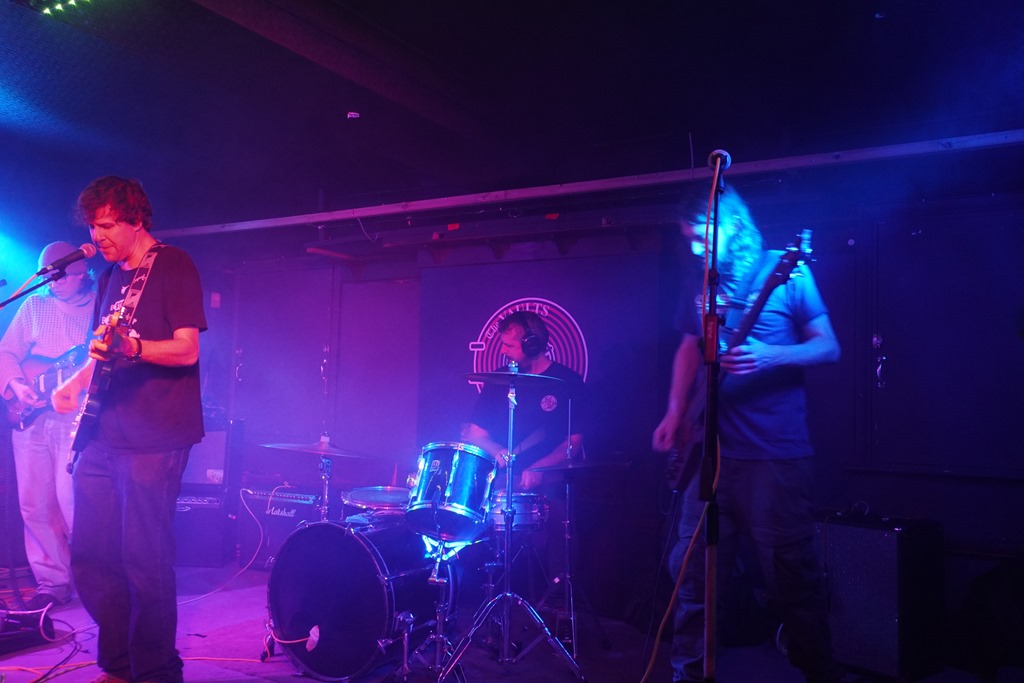
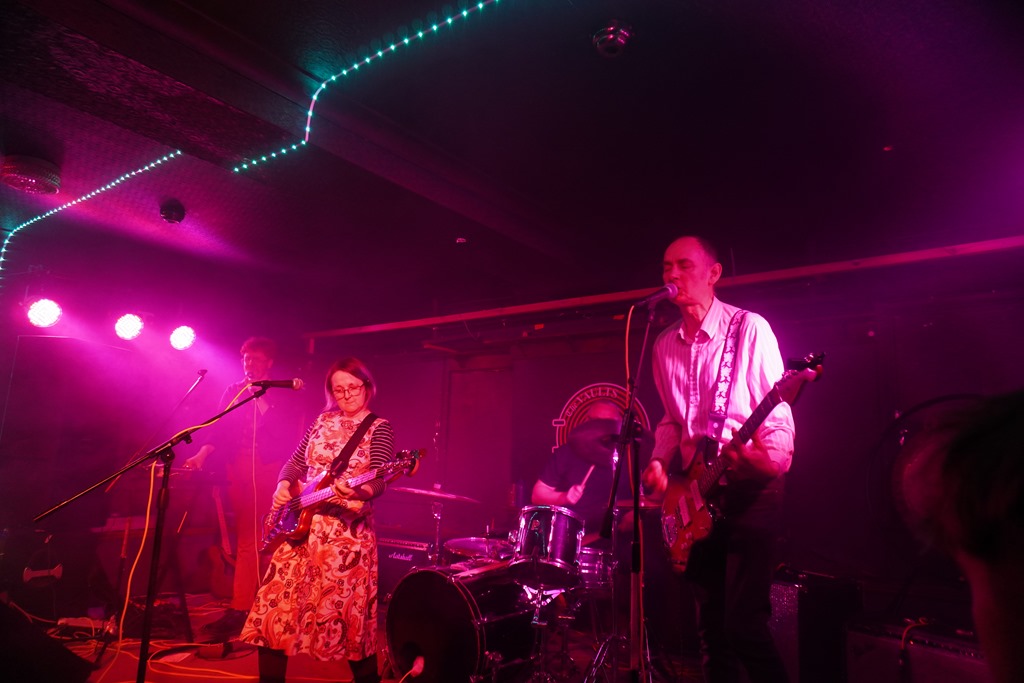
The prospect of Objections making a return to York was incentive enough to snaffle a ticket for this some time in advance, without even paying too much attention to the rest of the lineup initially, but Teleost and The Bricks provided two strong reasons to get down early, and a fair few others clearly thought the same.

All-dayers tend to have a couple of acts people aren’t especially fussed about at the bottom of the bill, often newer acts cutting their teeth, so kicking off with a brace of well-established local talents proved to be a combination of coup, genius programming, and an indication of the quality of the bill – which, in the event, didn’t include a single weak or dud act from beginning to end.

Another rare – and impressive – thing about this lineup is that it features just one all-male act. When you hear so many promoters responding to accusations of gender inequality and a lack of representation by whining about how they struggle to find and book bands with women, it feels like a massive cop-out. And here’s the proof. Eight bands, and only one that slots into the stereotypical white male bracket – and then again, they possibly get an exemption on account of their age bracket (that is to say, they’re probably about my age bracket). Anyway.

The last time I saw them, supporting Part Chimp, Leo Hancill and Cat Redfern were playing as Uncle Bari. Now they’re Teleost, and they’ve totally nailed their slow, sludgy sound. The guitar sounds like a bass, the drums sound like explosions, and it’s a mighty, mighty sound. Slow drumming is always impressive to watch, and hear, and Cat it outstanding, in every way, a hard-hitter who makes every single slow-mo cymbal crash count. They’re properly slow and heavy, with a doomy heft, but with folky vocals. The contrast is magnificent and makes Teleost a unique proposition.

It’s been a few months since I’ve seen The Bricks, and yet again they seem to have upped their game. Their set is punchy and forceful, led by a fierce vocal performance from Gemma Hartshorn. As a band, they’ve really hit their stride, and having got a fair few gigs under their belts now, they’re super-tight.

IMG_20240615_161143

The Bricks

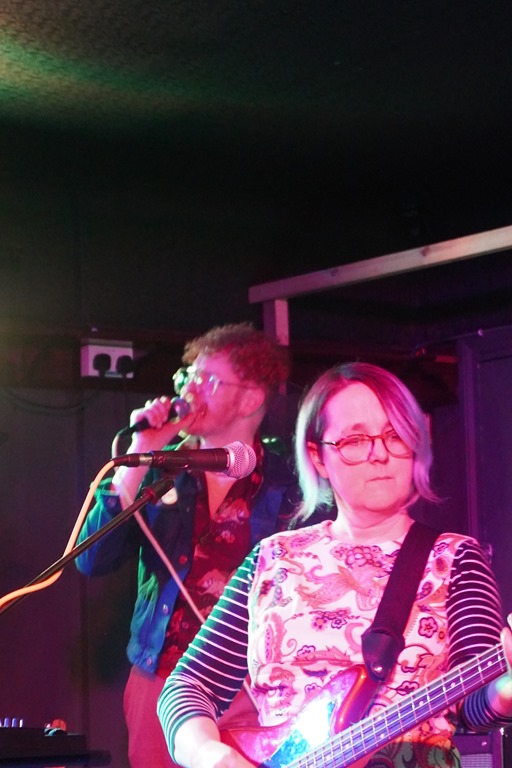
Instant Bin are a busy-sounding indie duo who knock out short songs packed tightly, and they’re good entertainment, while Knitting Circle are very unlike the somewhat twee, whimsical and fluffy indie band their name suggests. They offer up some tense, mathy, angular noise with a hint of The Fall and Gang of Four, and are very much about tackling issues, with a strong anti-war song, and a song about menopause (‘Losing My Eggs’) while ‘I am the Fox’ which about fox hunting (and no, they’re not in favour) which takes its stylistic cues from Gang of Four’s ‘Not Great Men’.

IMG_20240615_180602

The Knitting Circle

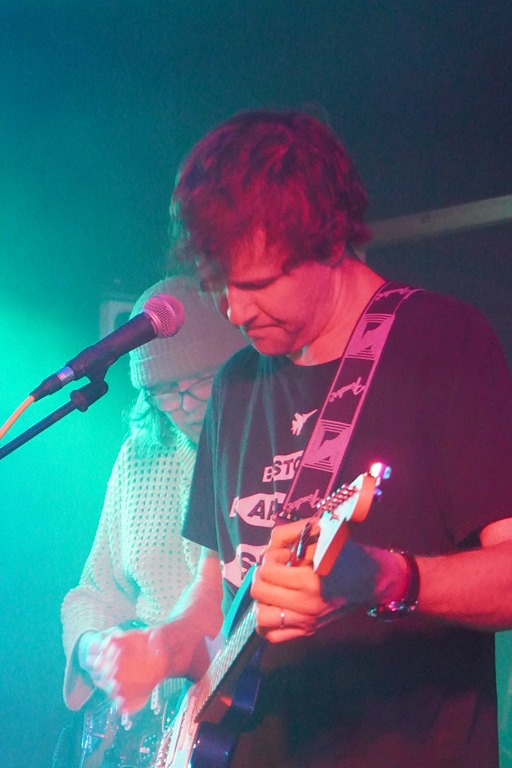
Objections – who I also last saw supporting Part Chimp, but on a different occasion – are out hot on the heels of the release of their debut album. As you’d expect from a band with their pedigree, they’re seriously strong. A tight set of noise played with precision, propelled by some magnificently crisp jazz drumming and busy baselines that nag away, they’ve got everything nailed down. The three of them each bring something unique as performers, and they’re simply great to watch in terms of style and technique. Joseph O’Sullivan’s guitar work is so physical, lurching and bouncing here there and everywhere, and working magic with an oscillator on top; Neil Turpin looks like he’s in another world, a drummer who seemingly feels the groove instead of counting time, while Claire Adams is intently focused – seemingly on the vocals, while the fast fretwork on the bass seems to happen subconsciously. They are, in so many ways, a quintessential Leeds act, both sonically and in terms of cult status. They’d have made worthy headliners, but public transport dictated their much earlier slot. Then again, there seems to be a lot of merit to spreading the quality more evenly.

20240615_192316

Objections

After a clattering avant-jazz intro, The Unit Ama launch into some sinewy math rock with some serious blasts of abrasion interspersed with some meandering jazz discordance. They’re certainly the most unexpected act of the night. Despite having been around some twenty-three years, having played around the north and north-east quite extensively in that time, even opening for Fugazi in their early years, and releasing music on a label that also gave us music by That Fucking Tank, they’re still completely new to me. Their set is wildly varied and intriguing: deep prog with an experimental jazz element – showcasing the kind of shudder and judder, rattle and crash cymbal breaks that you’re more likely to hear in Café Oto than a pub in York on a Saturday evening, whereby it’s hard to determine at times if they’re highly technical or just tossing about like chimps messing about to see what noise they can make. It’s expansive work which makes for a compelling and intriguing set.

20240615_201511

The Unit Ama

Wormboys are again interesting, and varied, but in a completely different way. The four-piece present a broad range of indie stylings with some strikingly athletic vocals. In places, they’re atmospheric, haunting, moving. Elsewhere, there are some motorik sections and big blasts of noise, and visually. they’re striking, with an imposing and lively bassist centre stage with the two guitarists, who also share vocals, either side.

20240615_211624

Wormboys

The crowd had thinned a little by the time Cowtown took the stage, meaning a few missed out on their brand of buoyant synthy indie with good energy. Another frequent-gigging stalwart act on the Leeds scene, they provide another reminder of the quality of the scene between Leeds and York, and this magnificently-curated event showcased that quality.

IMG_20240615_220738

Cowtown

That a number of the bands took time out during their sets to speak out on political issues, from giving praise for bands pulling out of Download, espousing people power, encouraging people to vote, and trans rights  – to use their voices, in any capacity, and even simply providing a ‘fuck the Tories’ call of disenfranchisement, it’s heartening to feel that we have bands who are politically engaged and using their platforms for more than mere entertainment. In bleak times, that there is a real sense of artistic community among such disparate acts gives a sense of hope. That hope may be misplaced, but to just step sideways from all of the shit for a few hours, immersed in a bubble, with beer and live music is the perfect escape. We should do this again sometime.

Metropolis Records – 14th June 2024

Their Bandcamp bio presents a pretty fair an honest summary of the band’s career: ‘Original Post Punk drum machine band from Leeds. Started at the beginning, imploded, reborn for the 21st Century.’

They really were there at the start of that fermentation of post-punk that frothed its way out of Leeds, propelled by drum machines and a fuckload of attitude and came to define what would come to be defined as ‘goth’. The labelling was bollocks, but that’s the press for ya. The Violets may have been – for a short time – taken under the wing of Andrew Eldritch, who produced their first couple of records and put them out on his Merciful Release label, established for the purpose of disseminating The Sisters of Mercy’s releases, but also – equally briefly – home to fellow Leeds act Salvation, and much, much later, La Costa Rasa – but apart from the drum machine and attitude, you couldn’t really say that they sounded alike.

There were reports in the press of a falling out, although Violets front man Simon Denbeigh, who went on to front The Batfish Boys after the Violets, would later become a touring member of The Sisters as Nurse to the Doktor, before ill health curtailed any kind of musical activity.

But to backtrack a small way in a messy history, 2007 saw The March Violets reconvene, seemingly out of nowhere, with a reunion show at Leeds Beckett (which used to be the Polytechnic) and an EP and, not long after, an album. And they’ve been busy ever since.

The arrival of ‘Hammer the Last Nail’ is exciting because their first new material in a long time, and it’s a cracking tune in the vein of their later 80s works as well as the post-return releases. And it’s good, too. It SOUNDS like The March Violets. It sounds gothy, sultry. Rosie’s vocals are as strong as ever, and she’s still got so much charisma. The Violets minus Simon aren’t quite the same, and there’s no escaping that: the dynamic of the dual vocal defined their sound to begin with.

But… bands evolve, and shift lineups. This is a ripping tune and a great addition to their catalogue.

AA

AA

96eb4167e4e26bda21d6ad05bfab3c4a9fe69f8e

Christopher Nosnibor

Goths are the most knit-picking pedants and harshest critics of their favourite bands of any genre’s fans I know. Actually, that’s not quite true: fans of The Sisters of Mercy are the worst knit-picking pedants and harshest critics of their favourite bands. I preface this review with this observation as a Sisters fan first and foremost, and contestably as a goth second.

Y’see, most of the bands which emerged after that initial post-punk crop which included The Sisters, Siouxsie, The Cure, Bauhaus – disparate bands who have little in common sonically and stylistically beyond reverb, dyed hair, and studded belts – and sure, The March Violets, The Danse Society, UK Decay, and a handful of others, were toss. By the time ‘goth’ was formalised as a ‘genre’ it had gone to shit, mostly with every other band ripping off the guitar and bass for ‘Walk Away’ and diluting it to a pissweak rehash, and all too often with ghastly theatrical booming vocals. And they all started wearing waistcoats and frilly cuffs and appropriating ‘gothic’ imagery to boot. That was circa 86, by which time – that’s which time, not witch time – The Sisters and The Cure and Siouxsie had very much evolved, so we can probably as much blame The Mission for the start of the rather more naff second wave. By the 90s, derivative cack like Every New Dead Ghost was crawling out of the woodwork, amplifying the cliches on top of simply being laughably bad.

It so happens that Disjecta Membra have been going 30 years, emerging from that early 90s milieu of corny goth revivalism – presumably pining for 1985 and sobbing into their baggy sleeves when The Sisters went cock-rock with Vision Thing. This release is a career-spanning retrospective, which they’re giving away free on their Bandcamp. And this is the first I’ve heard of them.

I kinda wish it had stayed that way. It starts off with the single version of ‘Whakataurangi Ake’, which features Rob Thorne, and it’s a preposterous, pretentious semi-ambient new-age effort with over-the-top dramatic vocals. I mean, fair enough in that it draws on their New Zealand heritage, but it’s pretty obvious and cheesy as. And it’s all downhill from there.

‘Lilitu’ might actually be quite exciting if X-Mal Deutschland had never existed. But as it is, it might as well be a cover of ‘In Der Nacht.’ Talking of covers, there are a few here. And again, after The Sisters broke the ground of taking songs that didn’t obviously sit with the style – like ‘Jolene’, and disco faves ‘Gimme Gimme Gimme’, and Hot Chocolate’s ‘Emma’ and made it their schtick, every other goth band thereafter just had to toss in some quirky covers… and lo, we get a take on Boney M’s ‘Rasputin’ and covers of other goth bands, because they obviously add so much more. ‘Rasputin’ sounds like you’d imagine, of course: drum machine with a head-splitting snare and spindly guitars. It’s cack, but the worst thing is that it doesn’t really bring anything new and doesn’t even sound like it’s done vaguely ironically, meaning it’s neither cool nor funny.

And while we’re in the realms of cliche, what’s the obsession with marionettes in contemporary goth? ‘Antoinette Marionette’ is as obvious as it is lame as wordplay goes., and with its crashing snare and chilly synths and spindly guitars, the best that can be said for it is that it’s uptempo. I did kinda wish that ‘Skin Trade’ was a Duran Duran cover instead of the po-faced and predictable goth-by-numbers that it actually is.

Apparently, ‘Madeline! Madeline!’ and ‘Death by Discotheque’ are both good enough to warrant two versions on a thirteen-track compilation. They aren’t, and it suggests a lack of material of a quality to fill a single album over the course of thirty years. The latter, especially is a derivative disappointment, a stab at rambunctious goth-country in the vein of Fields of the Nephilim while attempting to create their own take on Suspiria’s ‘Allegedly, Dancefloor Tragedy’- one of the few decent songs to come out of the early 90s revival. This isn’t a patch on it, and just seems to think it’s amusing bashing cybergoths. I mean, they have a point, in that cybergoth was a ridiculous thing, but of all the audiences to alienate in their position.

The last track, ‘Walking in Light’ is quite interesting, marking a shift in tone towards droning guitar ambience, at least initially, but then it descends into a glam-infused rock stomp which turns out to be a cover anyway.

30 years, and this is the best they’ve got.

AA

a0980357481_10

Invada Records – 28th May 2024

Christopher Nosnibor

Well, this one landed out of the blue. A boon for fans, a shock to everyone, necessitating a reshuffle of review diaries for the likes of me.

It’s been six years since the last Beak> album. There are good reasons for this, as they explain: “After playing hundreds of gigs and festivals over the years we felt that touring had started to influence our writing to the point we weren’t sure who we were anymore. So we decided to go back to the origins of where we were at on our first album. With zero expectations and just playing together in a room.”

This is a remarkable slice of honesty about the effects of touring on the creative process, and band relationships. Most bands start at home – in some sense – with writing songs and the aspiration of touring those songs. But the dynamics change with success, and when touring relentlessly, time to write new material is squeezed. Over time, particularly with a pandemic interfering with, well, everything, many bands evolve their methods to operate over distance, and there’s always a risk that some of the dynamic is lost and stuff gets dialled in. It’s true that it’s now possible for bands to operate at distance, intercontinentally, even, but that’s not the Beak> way. They thrive on that instant interplay, the interaction, and without it, there’s simply no Beak>.

When they do come together they work fast. Single ‘Oh Know’ was ‘recorded on the only day the band could physically get together during the winter lockdown’ and released in October 2021. They really do make the most of their time, and their music – particularly this latest effort – froths with the urgency of pressured time. The urgency which has always permeated their music is banged up a couple of gears here, and as a result, >>>> is a frenzied explosion, with perhaps a desperate edge.

This being a Beak> album, it’s brimming with experimentalism, oddness, woozy psychedelia and persistent Krautrock pulsations, relentless beats. This being a Beak> album, it’s bloody great, and a lot of fun.

But that said, much of >>>> actually feels pretty bleak. Yes, Beak> turn bleak. It’s like a band having a blast while staring into the abyss, conscious that the end is near, but carrying on because at some point…

Of the album’s sudden and unexpected release, the band say in their statement, “At its core we always wanted it to be head music (music for the ‘heads’, not headphone music), listened to as an album, not as individual songs. This is why we are releasing this album with no singles or promo tracks.”

‘Oh Know’ isn’t included here, but the album does, however, include flipside ‘Ah Yeh’, and it does slot in nicely with its downtempo, lo-fi Pavement on sedatives vibe. It’s kinda loose, with rattling drums and drags out with a quivering organ drifting over a tense bassline, and it works something of a trance-inducing spell over the course of six minutes. You get the sense that however long and far part these guys are, they share a magical intuition, and whenever they do manage to get into a room together, creative sparks fly.

The band continues, “the recording and writing initially began in a house called Pen Y Bryn in Talsarnau, Wales in the fall out from the weirdness of the Covid days. Remote and with only ourselves and the view of Portmeirion in the distance we got to work.”

“With the opening track, ‘Strawberry Line’ (our tribute to our dear furry friend Alfie Barrow, who appears on the album’s cover) as the metronomic guide for the album, we then resumed recording, as before, at Invada studios in Bristol, whilst still touring around Europe and North/South America.”

‘Strawberry line’ makes for fairly a low-key opener, with a trilling organ and psychedelic reverby-drenched vocals rippling atop a bubbling bass before a shuffling beat enters the scene. But it stands as an eight-minute statement of intent, with that statement being that >>>> packs density to equal its melody. ‘The Seal’ delves into Krautrock, with a relentless groove centred around the rhythm section dominating. It grows dark. It grows tense. It’s sparse, minimal, but it persists, and four and a half minutes in, there’s a taut, jangling Joy Division guitar part.

Chilly synths and a robotic, rolling, repetitive bassline dominate the slow-melting ‘Denim’, a hazy psychedelic downer which delivers delayed gratification with the bursting of a monster riff. ‘Hungry Are We’ is delicate, reflective, post-rocky, with vocal harmonies which again allude to 60s pop and perhaps a bit of prog.

‘Bloody Miles’ marks a stylistic shift towards groovier territory, with a nagging bassline that borders on funk, but the tone remains doggedly downbeat, without getting depressing. With one foot firmly in the early 80s new wave sound, there’s no shortage of weirdness and warpy, brain-bending discord here, not least of all in the shadowy vintage-sounding electropop of ‘Secrets’, that brings together elements of Soft Cell and The Associates with the atmosphere and production of New Order’s Movement.

>>>> is often stark and claustrophobic (and nowhere more so on the eight-minute closer), and it’s always intense and brilliant. Beak> have surpassed themselves – again.

AA

a3178303801_10

Adios MF is a musical collective spearheaded by Nathan Keeble carving fresh dark wave and electronica sound the underground of Sheffield. Their latest single, ‘They,’ was recorded between Brooklyn and Brixton, serves as a sonic manifesto of what’s to come. Their music defies categorisation, blending elements of post-punk, electronica, and avant-garde into a sonic tapestry that’s uniquely their own.

With sleek production by Nathan Saoudi and Richard Wilson yet coursing with enough detail and character to set it apart, with this impish 80s beat, sinewy guitars, metallic dapping keyboards, and sample loops, it forges a uniquely futuristic sound that’s at once both familiar and yet mirrors the churn of the cityscape.

With a sound that hints at the influence of acts like Human League, Depeche Mode, Kraftwerk and Molly Nilsson, the vocals are addictive and almost mechanical, driven with hooky melodic ticks that sink their nails into and won’t let go, and yet the lyrics reside with a disquiet at the creeping gentrification of urban redevelopment “They built a Starbucks on my street” and reference to shadowy figures who might take you away. It hints at a dark underbelly and Sci-fi dystopia where your every action is being watched.

ADIOS MF say “’They’ is a Kitsch byproduct of existence amid the constant churn of urban development and the persistent buzz of drilling. It was written as a tonic to the realisation that resistance is futile; you must simply acquiesce to the world of urbanism and let it carry you along on its unpredictable journey, set to a naughty 80s beat.”

We dig it here at Aural Aggro, and you can get your lugs round it here…

10ft Records – 24th May 2024

Christopher Nosnibor

Percy have been going since the mid-90s, but didn’t get to release an album till 2013. They’ve maintained a steady flow since then, particularly since the solidification of their current lineup in 2017 with New Phase being their fifth album in and their fourth in six years.

‘Workmanlike’ isn’t a criticism when it comes to certain bands, when their solid and consistent output and regular gigging is central to their way of working and to their identity, and while it’s not an exclusively northern thing, The Fall and The Wedding Present are bands which immediately spring to mind as acts who deliver albums like it’s a job. Said albums may all share a certain commonality, but push those tight parameters each time, and if Percy can be guaranteed to sound like Percy, then it’s all to the good.

New Phase is an apt title for an album which sees them take a lunge into darker territory, both sonically and lyrically. A fair few of the songs have featured in their live setlist over the last year or two, giving a fair indication of the direction they were heading with the new material, but to hear these songs all together and as full-realised studio recordings has a different kind of impact. On New Phase, they sound invigorated, vivified, but also tense, paranoid, embattled. Colin Howard’s lyrics are less given to social critique and instead present scenes of horror, of personal torment and heightened anxiety. Whatever the fuck’s been going down in his life or neighbourhood, or whatever grim stuff he’s been streaming on Netflix, the resultant art is powerful. The musical accompaniment captures the same uneasy mood of high tension and darkness.

‘Sink Estate Agents Satanic Rites’ is – remarkably – their most Fall-like track to date, a jagged paranoid spasm that’s dragged from the space between Grotesque and Slates. It’s tense, uncomfortable, and there’s something weird about the production that pulls in different directions and renders it even more difficult, and vaguely gothic in the early post-punk sense, too.

‘Blackout’ has hints of early Arctic Monkeys lurking amidst its clanging mess of guitars and panic-filled lyrics which narrate a bleak tale of alcoholic excess ‘there’s bloodstains on the floor / there’s bloodstains on the wall / and someone’s banging on the door… and then it hit me’.

Narrative is a strong feature of the lyrics, as is nowhere more evident than on the nightmarish ‘I Can Hear Orgies’. Are these auditory hallucinations or is weird shit going down round Colin’s way? Or is it a side effects of the meds?

The title track is raw, ragged, angular, more Shellac or Bilge Pump or even Part Chimp than The Fall, bringing a new level of aggression and noise to Percy’s repertoire.

More conventional Percy territory is covered in ‘Thinking of Jacking It In Again’, ‘Do You Think I’m on the Spectrum?’ and ‘Last Train to Selby’, delving back into the world of work and sociopolitical matters and delivered with powerhouse drumming and choppy, clanging Gang of Four guitars – and of course a dash of Fall-like rockabilly, because it’s Percy. ‘Wah-wah-wah-wah’ Howard signs off. ‘Greedy People’ is a classic Percy swipe at an obvious target, but as Colin spits ‘It’s not about the money / it’s about the principle’, there’s a palpable anger, articulated as much though discordant guitar.

New Phase marks a step up for Percy, and in many ways. They sustain the tension across the duration of the album’s ten tracks, with only the six-minute closer, ‘Afterlife’ calming down and taking a more synth-led dimension, but still presenting a bleakness and heavy melancholy that fits with the album as a whole. The production is tight and solid, bringing to life the album’s sonic and lyrical tensions.

New Phase is a magnificently awkward, challenging, angular set, and perhaps Percy’s least commercial, least overtly ‘indie’ album to date. But for my money, it’s also their best-realised, most authentic, and most exhilarating album yet.

AA

a0857077590_10