From Interpol to Editors to White Lies and far beyond, including, at present IST IST, dark-edged post-punk acts displaying strong Joy Division influence have been emerging for the last twenty years now, and more. Some are better than others, some capture the mood more effectively than others.
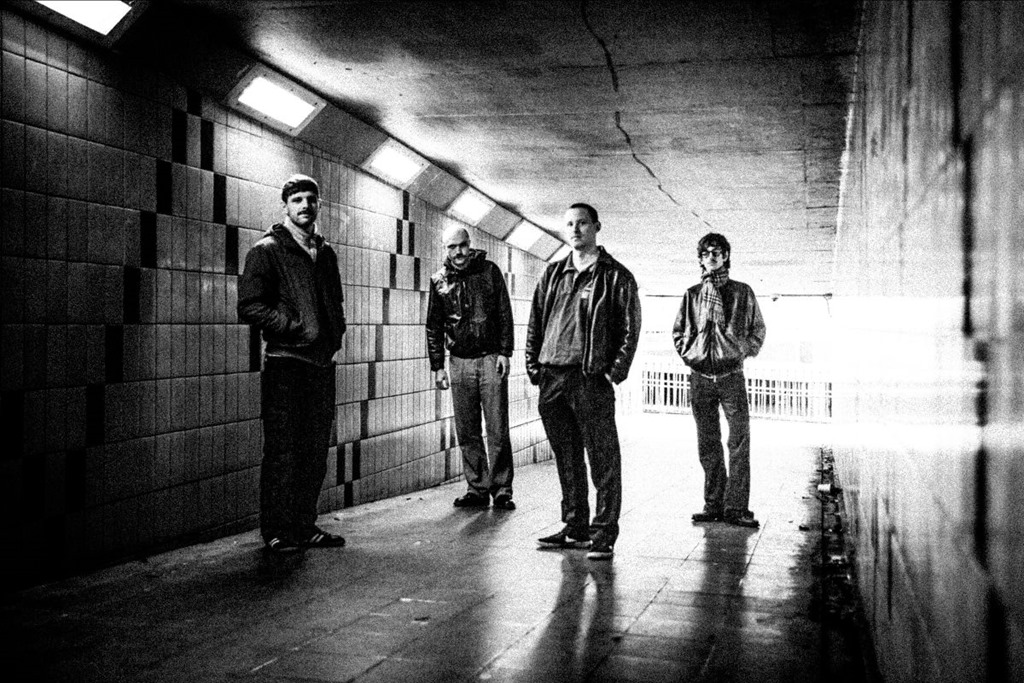
It’s perhaps because they’re from Leeds that The 113 are particularly good at capturing the mood: the spawning ground of goth in the 80s, the Leeds scene has always stood apart from not only the mainstream, but other major cities of the north, particularly Manchester and Sheffield, which in turn have always had their own identities: in the early 00s Leeds was hotbed for innovative post-rock, and has, over the last decade, yielded ever noisier, ever more angular, ever weirder bands, but also bands of quality who simply do – or did – their own thing, from Hawk Eyes and These Monsters to Castrovalva and I Like Trains, Thank, Post War Glamour Girls, Beige Palace, Black Moth, BELK, Irk, and of course, the mighty Blacklisters.
The 113 aren’t nearly as abrasive or far-out as many of these acts with whom they share turf, but their debut EP, To Combat Regret, released last March packed some blustering urgency to the familiar post-punk template. Both ‘Scour’ and previous single ‘Leach’ continue the same trajectory – lean, dark post-punk vibes, driven by dense bass, insistent percussion and some sinewy guitar work, creating tension and using it to powerful effect – but if anything, this is tauter, tenser, and more nuanced: the melodic, shoegaze mid-section adds significant impact to the song’s explosive conclusion.
This, in conjunction with ‘Leach’ says that the forthcoming EP, TheHeadonist (out April 17th) will be killer, and the upcoming tours in April and May look like something to get excited about, too.
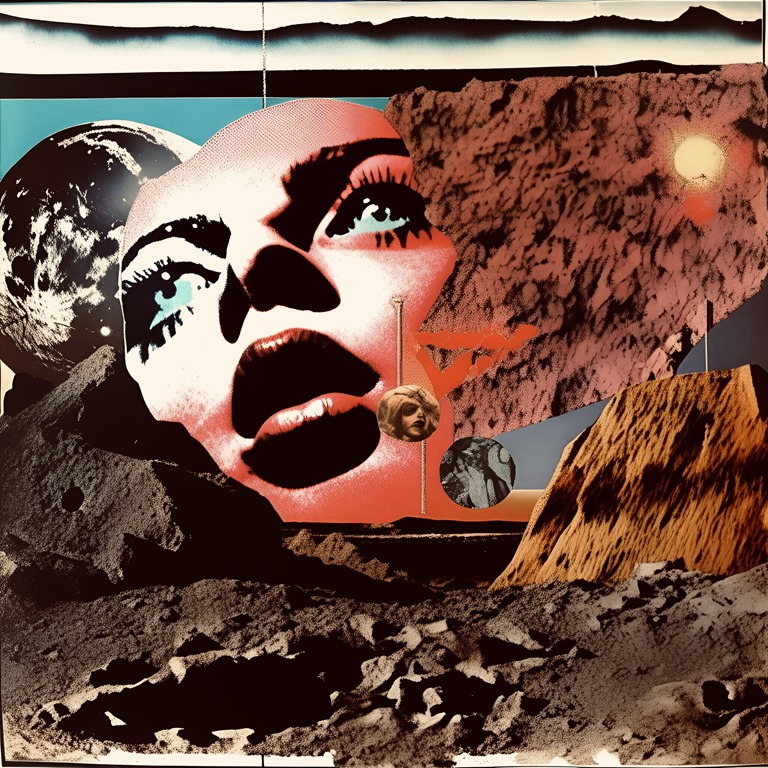
Jeremy Moore – aka Zabus – continues his phenomenal creative run with the release of Avoidance Moon, another wildly inventive melding of myriad forms. And with Avoidance Moon, Moore pushes the established elements of the Zabus sound still further, cranking up the distortion and reverb to insane levels. It’s gothic, but it goes beyond. The theatricality is off the scale, but the feel is also very, very old school, and while it evokes the spirit of Dance Society and early X-Mal Deutschland and the like, it also calls to mind early Christian Death, and The Damned, with a bit of The Jesus and Mary Chain tossed into the blender for extra feedback spice.
The title track, which opens the album, is sparse and lo-fi, as quavering analogue synths hover their way through a crashing tube-crunched guitar, the gruff vocal and extraneous noise which runs in the background all bouncing around in a cavernous reverb with additional layers of murk. But something about it carries a certain, indefinable emotional resonance.
‘Theoretical Jesus’ brings reverb-soaked shoegaze and thunderous percussion – and splintering discord in the vein of A Place to Bury Strangers. Elsewhere, the heavy vibe with all the reverb is reminiscent of Modern Technology, perhaps because the baritone vocals share a common ground, too.
Avoidance Moon presents an uncompromising sonic swamp: on ‘Baited Idyll’, the thick, murky sound is cut through by the sharpest cymbal splashes, harsh treble clashes which strike like blades. ‘Punishment to Extinction’ melts together the warping wall of noise of My Bloody Valentine with the drama of Nick Cave: amidst the chaos, Moore casts his dark, theatrical incantations.
Avoidance Moon is a riot of late 70s / early 80s post punk, dark, attacking, dingy, lo-fi, analogue to the end. It’s likely too primitive for many ears, but it’s precisely the primitive nature of it all that appeals. So many acts pretend to draw inspiration from post-punk, but Zabuslives it. Avoidance Moon, then, is dense, suffocating, intense.
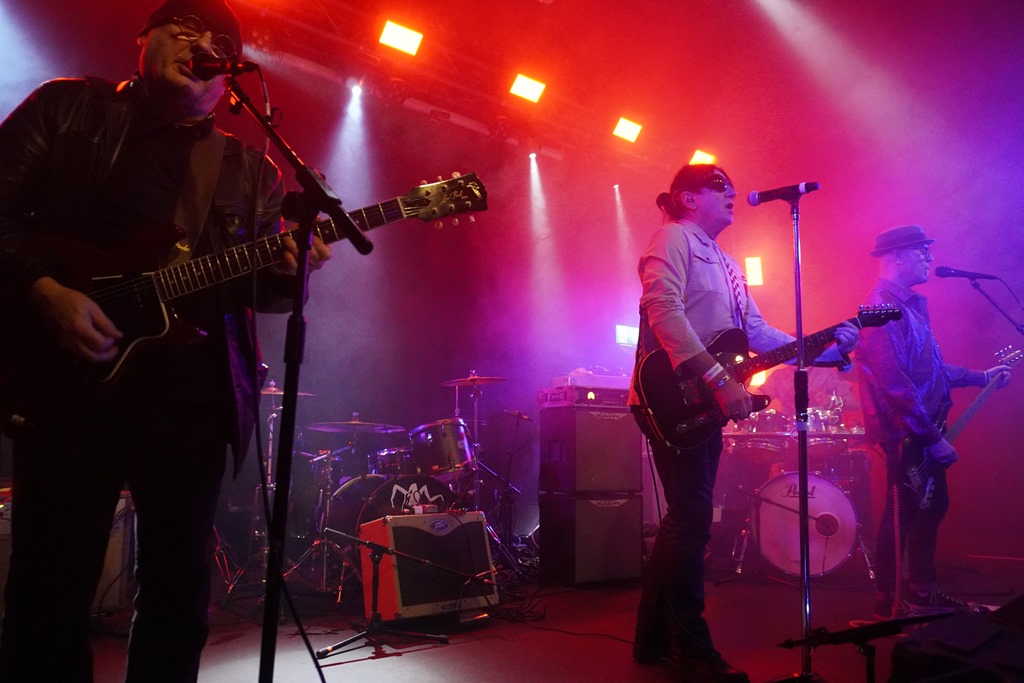
It might have been a result of the inclement conditions, but setting foot in Huddersfield for the first time in my life, I’m struck by how incredibly quiet the streets are for a Friday night, and it’s far from packed in the upstairs room at The Parish when The Shakes take to the stage at 8:15. Now, I am a strong advocate of checking out support acts, and have discovered some outstanding bands by getting down early doors. This isn’t one of them. Musically, they’re competent players, but the material is very middling rock, the kind that’s easy to take or leave, but the singer thinks he’s some kind Bono meets Michael Hutchence rock star. It’s not a good look, and even if it were, it would require some serious charisma and immense talent to pull it off, and this fella has neither. The No Great Shakes, you might say. The room is considerably busier half an hour later. It’s almost as if people knew.
The Shakes
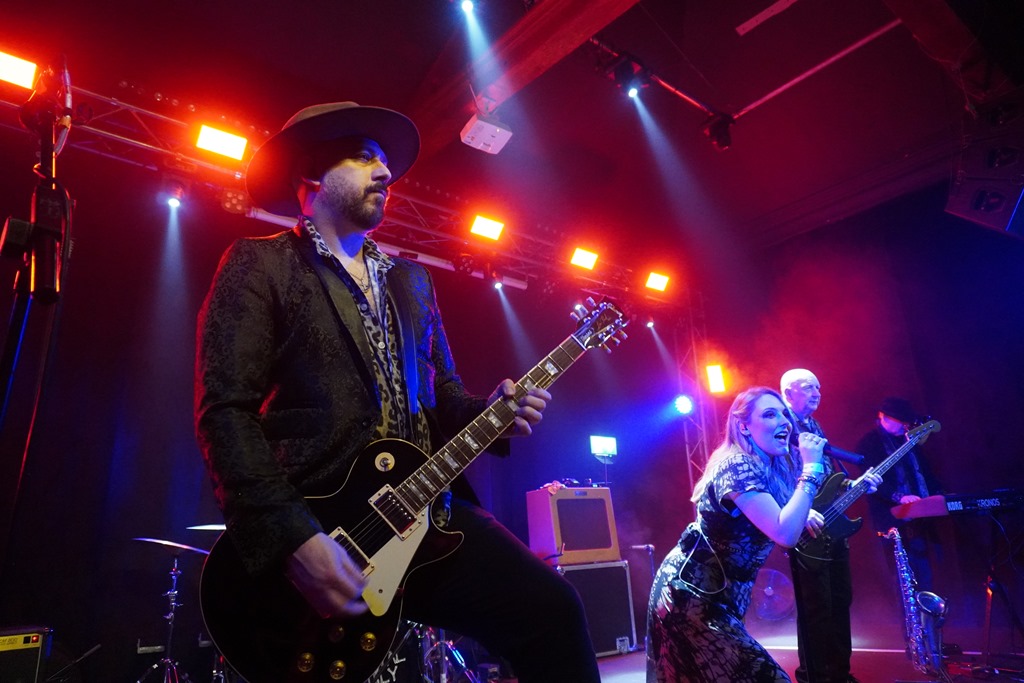
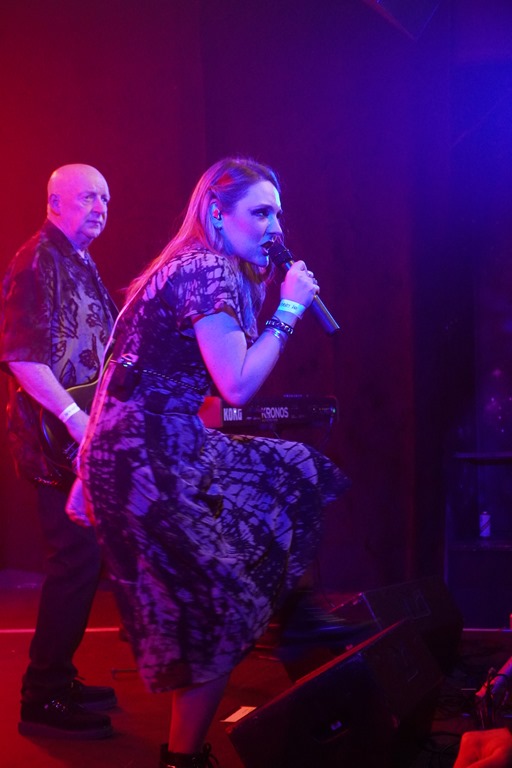
Having joined Skeletal Family in 2021, replacing Hannah Small after a brief tenure, and making her the band’s fourth vocalist, Anneka Latta has not only settled in nicely, but brings her own presence and a wonderful dynamic to the unit. Having recorded Light From Dark, released in 2023, their first album since 2009’s Songs of Love, Hope & Despair, her place feels not just solidified, but integral.
Skeletal Family
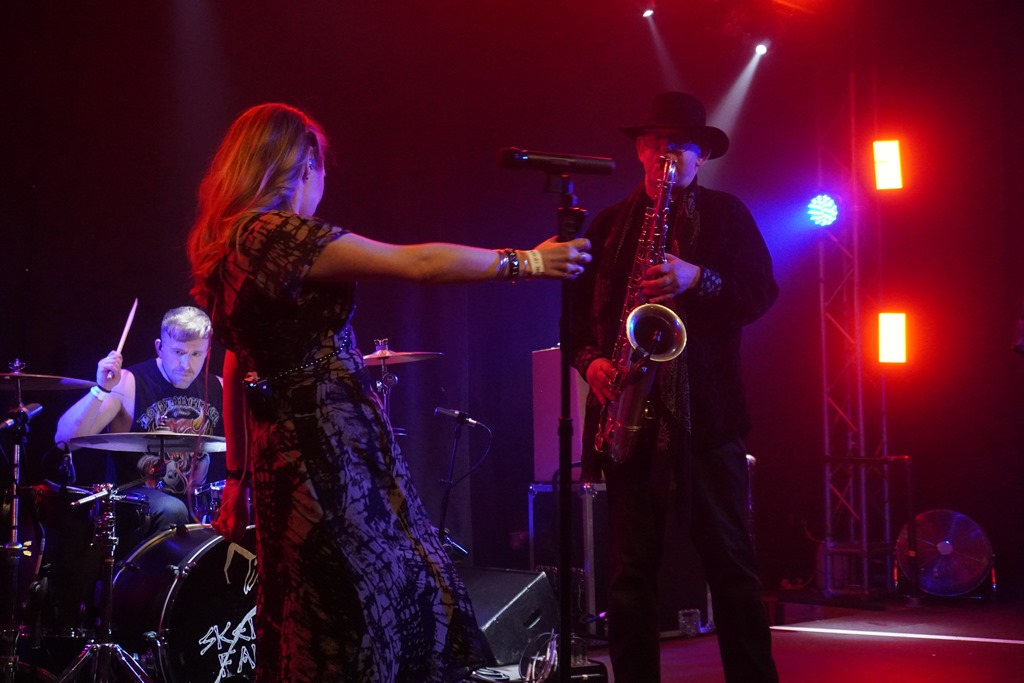
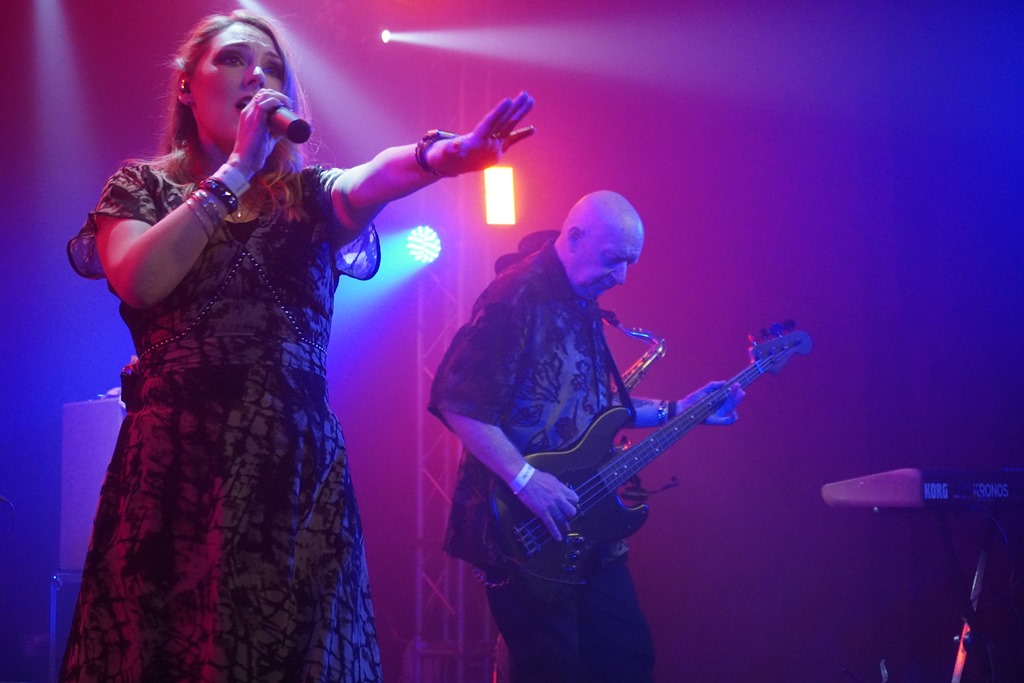
Tonight’s set draws substantially on Light From Dark, as well as featuring a new and unreleased song, which they’re planning to record in the coming months, indicating that as much as they’re a ‘heritage’ band, they’re still very much creatively active as well as keeping busy on the live circuit. And not only are they sounding fantastic, but there’s a real energy about their performance tonight. Anneka is all the energy, relentlessly bouncing, bounding, swinging and swaying about the stage, but the rest of the band are well animated, too: Ian “Karl Heinz” Taylor is particularly ambulant when switching synths for sax and adding some nice groove to the solid rhythm section, with stand-in drummer doing a superb job of delivering those quintessential rolling tribal rhythms paired tightly with Trotwood’s solid, urgent basslines. It’s all topped with Stan Greenwood’s spindly guitar lines – very much a defining feature not only of the Skeletal Family sound, but representative of that early northern goth sound. It’s clear they’re having a great time, and their collective enthusiasm is infectious.
Skeletal Family
And as much as the set showcases their current creativity, it does, essentially, contain a respectful share of their definitive early 80s back-catalogue, busting out the rambunctious sax-blasting ‘Move’ up front and an extended ‘She Cries Alone’ landing in the first third of the set. Non-album single ‘Just A Minute’ gets an airing, too, representing their poppier mid-80s sound (as was the direction of the scene around Leeds at the time, as output from this period by The March Violets evidences, and one can’t help but feel that major labels picking up the top-selling ‘alternative’ acts may have been a factor). The sole cut from debut Burning Oil is ‘Someone New’, meaning the spiker, punkier songs like ‘So Sure’ don’t make the set, but might not have been such a good fit with the rest of the songs or Anneka’s more conventionally ‘rock’ vocal style. That, and the fact they keep it tight with a punchy set of around fifteen songs, packed into a little over an hour, with no encore.
They leave us with ‘Promised Land’, which is without doubt one of the best singles of that ‘first wave’ of goth era, with its nagging guitar and driving bass. They perform it with gusto, and it sounds as fresh and exciting now as ever, topping off a set that’s both entertaining and exhilarating.
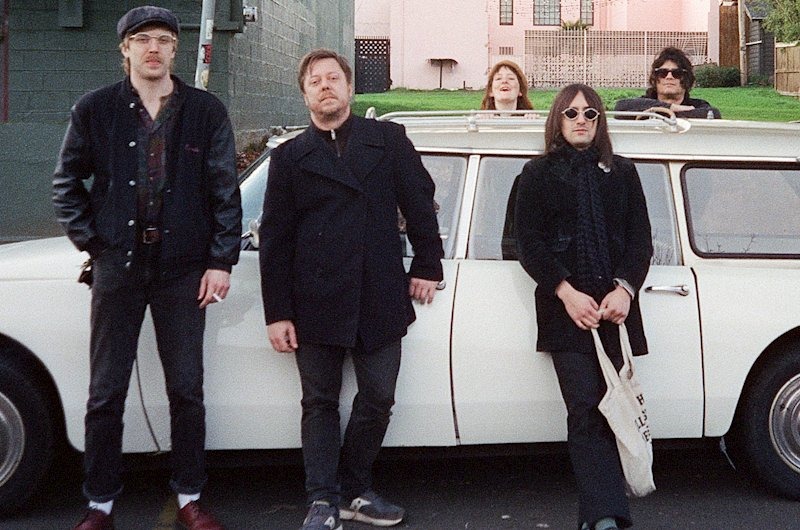
Portland alt-rock / post-punk outfit Rayon present their latest single ‘Running, a propulsive exploration of the anxiety that comes with watching loved ones struggle with cycles of addiction that they can’t shake – and the sound of a tape echo that’s about to stop working. Intentionally preserving the noise of pausing, rewinding, and fast-forwarding to heighten the song’s frantic pace, its sound can be considered a study in tension and tape, the video conveying a sense of lo-fi capers involving a Citroen Wagon.
Found on the flip side of the single ‘Shopping / Running’ (also available on 7” vinyl via Little Cloud Records), ‘Running’ is perhaps even more stunning than the whacky A-side ‘Shopping’, a tongue-in-cheek ode to consumerism and travel, written by someone who happens to travel and consume a bit.
Founded by long-time North Portland resident and Detroit-area native Eric Sabatino, Rayon now also involves members of other notable Portland bands – Sun Atoms, Yuvees, Pastilla and Martha Stax – namely Anna Sabatino, Riley McLaughlin, Eric Rubalcava and Derek Longoria-Gomez.
‘Running’ is based on a relentless bass and drum groove that lived in Sabatino’s head for months before finally taking shape in the studio. To capture the song’s unsettled emotional landscape, the band leaned into the mechanical unpredictability of a dying Dynacord tape echo. By funneling guitars and vocals through the aging machine, they achieved a haunting, warped soundscape where the pitch and speed constantly bend and shift. Feeling as though it is physically straining under its own weight, this song mirrors the very themes of instability it describes.
“’Running’ was built around a bass and drum groove I was kicking around in my head for months. The guitars and vocals are the sound of a tape echo called ‘dynacord’ that’s barely working, bending and moving the speed and pitch of everything we run through it. Those parts wouldn’t have come out like that if I wasn’t trying to write a guitar part while plugged into that machine.” says Eric Sabatino.
The video for ‘Running’ offers a gritty, nostalgic look at the band’s world, captured entirely on a vintage Handycam, following the band in their meticulously restored Citroen wagon. Embracing the track’s jerky energy, their journey concludes with a grainy, evocative sequence of freeway signs leading into Seattle—a slow-burn outro that grounds the video’s high-energy antics in a sense of place and movement.
“The video was shot on an old handycam camcorder we found in the back of a closet. The battery miraculously held a charge. It came with a tape of someone’s school play, which we taped over (sorry to whoever’s family that was). It features the Citroen wagon from the ‘Shopping’ video. I worked on that car for months. So glad it didn’t break down during these two long video shoots,” says Eric Sabatino.
“We drove around all day picking everyone up at their home, work, local bar, favorite little shop, and went to band practice. We filmed the antics and capers along the way. Sometimes we let friends and strangers hold the camera and film us. I transferred and edited it over 2 late nights, trying to capture as much pause, rewind, and fast-forward noise as I could, timing the cuts to capture the jerky energy of the song. I love the outro and the slow noisy shots of the freeway signs leading to Seattle.”
Based in the Texan city of San Antonio, darkwave/synth punk artist Night Ritualz (aka Vincent Guerrero IV) weaves deep Latin influences into his songs, blending English and Spanish lyrics with music that combines atmospheric soundscapes suffused with pulse-pounding beats to tell stories that are both deeply personal and universally relatable. New single ‘Brown Skin’ is the first track to be teased from a new album out in early 2026. An unapologetic expression of identity, struggle and survival, the song blends personal storytelling with social commentary, confronting feelings of displacement, family separation and the weight of heritage. The song lyric is sharp and direct, carried by a vocal delivery that makes every word hit like a protest chant.
“This song is about resilience – working hard every day, facing systems that try to erase you and still standing strong with pride in where you come from,” explains Night Ritualz. “The repetition of the hook and the outro were designed to channel frustration into power, making it both deeply personal and universally relatable.”
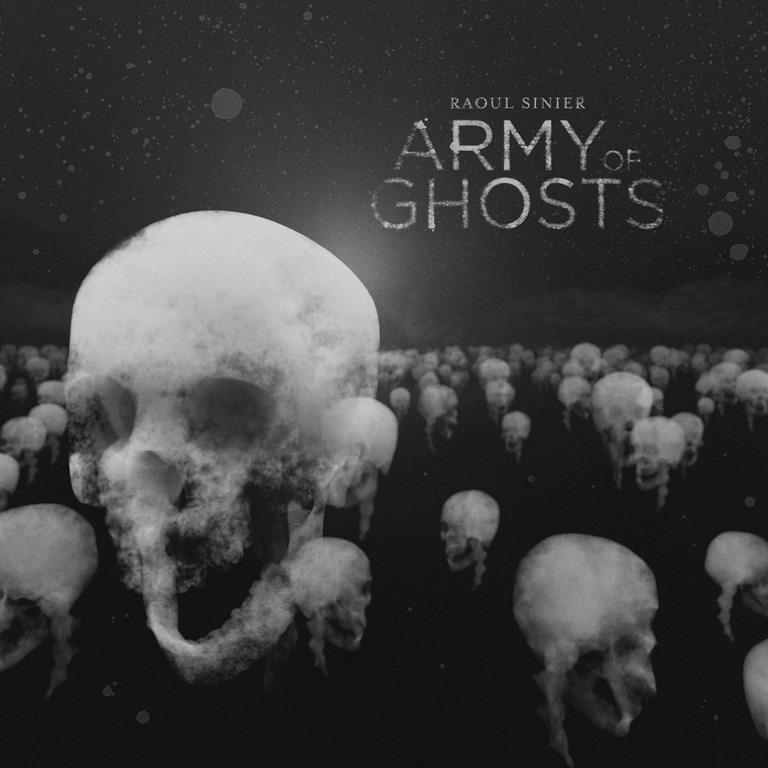
Raoul Sinier first caught my attention with the release of Guilty Cloaks, although he had already built a substantial catalogue of strange and surreal works in the preceding years, notably Brain Kitchen (2008) and Tremens Industry (2009). After Welcome to My Orphanage (2013) and Late Statues (2015), I rather lost track – something which is clearly to my detriment – and then he fell silent following Death, Love and Despair in 2018. Perhaps that title was a revelation beyond any of the contents or accompanying notes. It’s not anyone’s business, regardless.
What matters is that the arrival of Army of Ghosts is a welcome one, and one which is heralded in the accompanying press release with the fanfare that ‘Raoul Sinier is back — more hybrid and unpredictable than ever’. We go on to learn that ‘His new album is a bold fusion of everything that made electronic music iconic, layered with sample work straight out of hip-hop’s golden age. Add in overdriven guitars, throbbing bass, flashes of rock, prog, and funk, and you’ve got a sonic landscape that’s as explosive as it is unique. Floating above it all is Sinier’s signature ethereal voice, a haunting counterpoint to the beautiful chaos below.
Melancholic yet sharp, lyrical yet raw, his music walks the line between introspection and confrontation.’
The appeal of Sinier’s work is its inventiveness – although with Guilty Cloaks, I will admit that I was drawn by a certain post-punk vibe, too – and Army of Ghosts is certainly inventive.
The album’s first song, ‘Phony Tales’ switches between Phantom of the Opera theatrical verses and brutal industrial choruses worthy of Trent Reznor. It’s not just the surge of sound, but the crashing, metallic bin-lid snare that dominates the mix and completely spins your head. It may only last two minutes and ten seconds, but it’s intense.
Much of Army of Ghosts is intense, but in different ways. The drums are uncommonly dominant, and Sinier’s vocals often invite parallels with A-Ha’s Morten Harket, but crucially, said vocals are wrapped in a broad range of forms. ‘Brace Yourself’ offers a lethal cocktail of this, and that, and the other, led by some trip-hop drumming and proggy guitar work, before tapering out with a dark, sonorous bass. It’s that same insistent, baggy beat and Bauhaus-meets-metal explosion which shapes ‘Disperse’, a word which has enhanced implications and resonance of late.
In its eclecticism, Army of Ghosts comes up trumps. ‘Walking Through Walls’ offers springy post-punk energy in the vein of Bauhaus at their best, while the title track straddles post-punk and Nu-Metal, and then post-rock, with sludgy bursts of low-end distortion and…piano. Unexpectedly, it calls to mind the stylistic swathe of Bowie’s 1: Outside, an album which knows no borders.
Sinier knows how to spring surprises, and the wild intro to ‘Spectral Ocean’ is indeed wild, a furious flurry of violin, layered and awash in echo abruptly giving way to a low-slung thunderous bass groove that’s got goth stamped all over it and would have been perfectly at home on the new Rosetta Stone album – and that’s before we get to the brittle, picked guitar and sturdy mechanical drumming that pumps away relentlessly. After the widescreen expanse of the moody ‘Distant Wildlife’, which builds to a dark, slow-burning climax, driven by a dense, throbbing bass, the final track, ‘Neon Sign’ pairs things back and goes all out on the haunting atmosphere, with serrated guitars cutting through drifting synths and a contemplative vocal performance – before suddenly closing with a blast of drone metal straight off Earth 2.
The thing about Army of Ghosts is that it is both detailed and direct, sometimes simultaneously, but it is never predictable. The song titles do not offer a clear overarching theme, but the ghostly and paranormal hover in every shadowy corner of this theatrical and imaginative set of songs – a set that’s wildly varied, but consistent in its quality. Raoul Sinier is most definitely back, and this is very much a good thing.
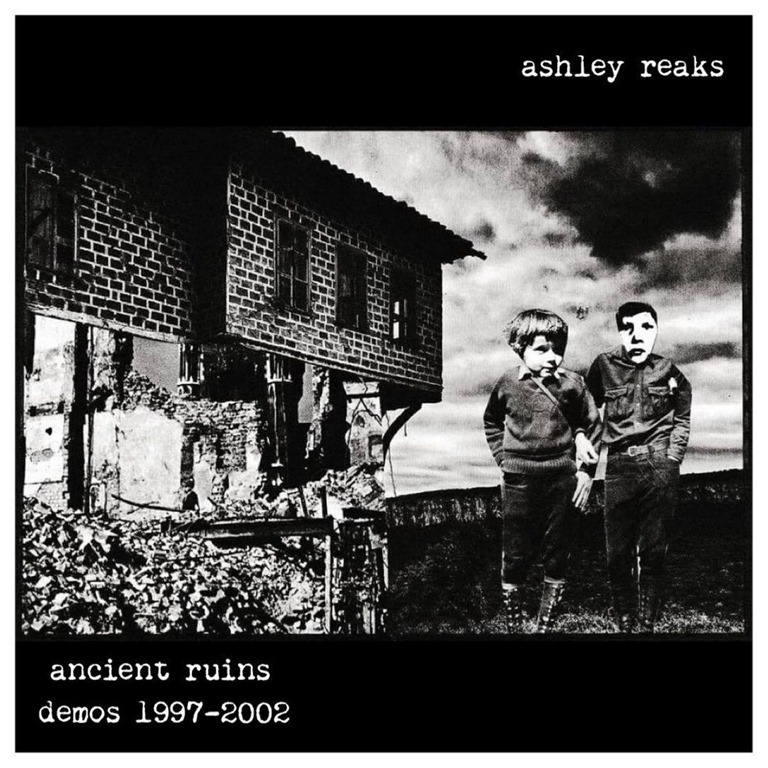
Ashley Reaks first came to the public’s attention under the guise of Joe Northern, fronting promising turn-of-the-millennium dark synthpop act Younger Younger 28s, a head-on collision between The Human League and Clock DVA, who released their sole LP, Soap in 1999. Since then, the Harrogate-based Reaks has expanded his field and is now as known for his disturbing collages as he is for his eclectic musical output, which spans dub, postpunk, and whatever other genre concepts come his way. Reak’s creative diversity, while very much an artistic strength, has likely been an obstacle to his achieving more commercial success, because the sad fact is that polyartists who venture into the domains of oddness are extremely difficult to market, because, well, how to you pigeonhole or genre categorise someone who works not only in a host of media, but does stuff which is, at times, quite disturbing and impossible to place in a given bracket? Of course, another likely, and more obvious, obstacle to commercial success is that the fact that a lot of his work is what a lot of people would likely consider plain fucking weird.
But even before Younger Younger 28s, Reaks – whose appreciation of The Sisters of Mercy and the like is widely-stated on his social media – was dabbling with the gothier aspects of post-punk, and would continue to do so for some time. His decision to release Ancient Ruins may only be for the sake of posterity, as a document, but here it is, and it’s not bad either.
Because this is Ashley Reaks, it’s not a set of songs which adhere to straight-up genre conformity, as is immediately apparent from the first track, ‘A God in the Devil’s World’, which has a certain swagger and a swing to it, the female vocals not only providing a counterpoint to the growling baritone Reaks adopts, but also a pop shimmer that’s still more Human League than The March Violets.
‘No Man’s Land’ offers picked guitar and jittery synths melded to an insistent drum machine, and comes on with the trappings of mid-80s rock, and a bit Prefab Sprout. ‘Disconnected’, however, plunges into darker territories, an echo-heavy bass-driven blast of angst that’s more the sound of the underground circa 1983. And it’s good, but then you realise how anachronistic it is for the time it was recorded.
Between 1997 and 2002, Britpop died a slow and painful death and Nu-Metal exploded. The post-punk revival was still some time off, and simply no-one was making, or listening to, anything that evoked the spirit of The Batcave. But then, they weren’t really digging 80s synth pop, other than the original stuff in a kitsch or nostalgic way, and the much-touted 80s revival hadn’t really gained any traction. To top it, in keeping with Reeks’ other output, thew songs on here are littered with lyrical observations and kitchen sink vignettes, pithy pairings, and couplets which are wilfully wordy and awkward.
‘Christiane’ is a campy goth pop effort that’s wistful and theatrical, with hints of late 80s Damned woven into its fabric, while ‘I Always Wanted to be You’ brings some indie jangle and… brass. Then again, there’s the chugging industrial blast of ‘Swimming Against the Tide’ which sounds a bit like Therapy? circa Nurse but with an overtly ‘baggy’ beat and a Prodigy-influenced midsection. Oh yes, it’s all going on here.
If nothing else, Ancient Ruins provides some insight into the evolution of Reaks’ compositions, from oddball pop to off-the-wall melting-pot madness, with loads of ska brass and a whole lot more besides. The dubby closer ‘Ghost Town In My Heart (Version 2)’ is particularly illuminating. If only all history lessons were this interesting.
It seems like all of the bands of yesteryear are resurfacing in some form or another right now.
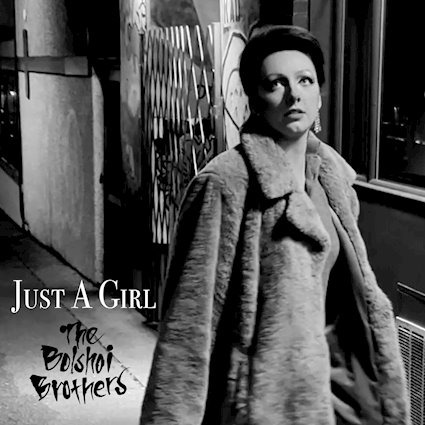
Indie rock duo The Bolshoi Brothers present their new single ‘Just a Girl’, previewing their debut eponymous album, set for release on March 21. The accompanying video is an appealing black and white visual vignette, filmed by Matus Foris and Vegas Storm and featuring Nova Clark as ‘The Girl’.
Now based in the USA, The Bolshoi Brothers is made up of Trevor Tanner and Paul Clark, both original members of legendary Beggars Banquet-signed 80s new wave band The Bolshoi. The two hadn’t recorded or played together since the band’s fateful breakup 35 years ago. Due to working on this album during Covid lockdowns, they recorded the tracks remotely from their respective home studios – Trevor in Florida and Paul in Seattle.
“Working with Trevor again after a significant hiatus was akin to find a little gate behind the bushes at the end of the garden that leads into a whole new world. Within days of passing rough musical ideas back and forth, we were making great music again, created at a time when the world was in lockdown, with a pandemic and all that comes with it, creating fear and confusion,” says Paul Clark.
European post-punk stalwarts Pink Turns Blue present their new single ‘Dancing With Ghosts’ and accompanying video, confronting the agonizing reality of toxic relationships, those soul-draining connections we often share with the people closest to us. It’s a raw exploration of the struggle to escape the "ghosts" of the past and the arduous, but ultimately liberating, journey toward self-preservation.
This is the third offering from their forthcoming album Black Swan, a term used for an unexpected event that, in retrospect, is rationalized as if one could have prepared for it. This record is set for release on limited edition vinyl, CD and digitally via Orden Records on February 28.
Earlier, the band shared ‘Stay For The Night’, a celebration of the postpunk – goth rock – darkwave community, and the lead track ‘Black Swan (But I Know There Is More to Life)’, the album’s only ballad, which delves into profound questions about existence, life’s purpose and the beauty of the world.
Today made up of Mic Jogwer (vocals, guitar), Paul Richter (drums) and Luca Sammuri (bass), Pink Turns Blue – named after a Hüsker Dü song – emerged in 1985 in the first generation of gothic rock. Their debut album If Two Worlds Kiss advanced the darkwave sub-genre while becoming a seminal post-punk album. Emerging from the fear and uncertainty of a divided Cold War Germany and inspired by Joy Division, The Sound and The Chameleons, they have since released a dozen full-length LPs and have become known for their trademark blend of post-punk, alternative rock and new wave.
Mic Jogwer shares, “An exclamation to escape a complicated relationship, ‘Dancing With Ghosts’ is a song about our difficulty of breaking out of an unhealthy bond. Some last a lifetime – and are not good for us at all. They suck all our energy, never give, always take. And whatever we do, it’s never right and never good enough. And since it’s often our best friend, mother, or sister, it feels like we owe them something, but every time we try to do something good for them, we just feel miserable and used. There is no easy way out, because whatever we do, we lose. These spirits will haunt us forever unless we challenge them and eventually manage to leave them behind. We’re Dancing With Ghosts.”
Watch the video for ‘Dancing With Ghosts’ here:
AA
TOUR DATES
Apr 04 Hamburg, Germany @ Fabrik Apr 05 Münster, Germany @ Gleis 22 Apr 11 Leipzig, Germany @ Moritzbastei Apr 12 Cologne, Germany @ GEBÄUDE 9 Apr 25 Stuttgart, Germany @ clubCANN Apr 26 Hannover, Germany @ Musikzentrum Hannover May 09 Rüsselsheim, Germany @ Das Rind May 10 Bochum, Germany @ Bahnhof Langendreer May 16 Bremen, Germany @ Tower Musikclub May 17 Berlin, Germany @ Lido May 23 Nuremberg, Germany @ Club Stereo May 24 Munich, Germany @ Hansa 39, Feirwerk Jun 28 Izegem, Belgium @ Cultuurhuis De Leest Aug 28 – Philadelphia PA @ Milkboy Aug 29 – Brooklyn NY @ AMOC – Brooklyn Made Aug 30 – Boston MA @ Sonia Aug 31 – Montreal QC @ Casa Del Popolo Sept 4 – Toronto ON @ Baby G Sept 5 – Detroit MI @ Smalls Sept 6 – Chicago IL @ Bottom Lounge Sept 7 – Columbus OH @ Rumba Sept 10 – Nashville TN @ East Room Sept 11 – Atlanta GA @ The Masquerade Sept 12 – Charlotte NC @ Snug Harbor Sept 13 – Orlando FL @ Conduit Sept 14 – Miami FL @ Gramps Oct 31 Whitby, UK – Whitby Pavilion Theatre



 Aural Aggravation