Yes, this is indeed different… no commentary – just check it out… recommended:
AA
Yes, this is indeed different… no commentary – just check it out… recommended:
AA
European post-punk stalwarts Pink Turns Blue present their new single ‘Dancing With Ghosts’ and accompanying video, confronting the agonizing reality of toxic relationships, those soul-draining connections we often share with the people closest to us. It’s a raw exploration of the struggle to escape the "ghosts" of the past and the arduous, but ultimately liberating, journey toward self-preservation.
This is the third offering from their forthcoming album Black Swan, a term used for an unexpected event that, in retrospect, is rationalized as if one could have prepared for it. This record is set for release on limited edition vinyl, CD and digitally via Orden Records on February 28.
Earlier, the band shared ‘Stay For The Night’, a celebration of the postpunk – goth rock – darkwave community, and the lead track ‘Black Swan (But I Know There Is More to Life)’, the album’s only ballad, which delves into profound questions about existence, life’s purpose and the beauty of the world.
Today made up of Mic Jogwer (vocals, guitar), Paul Richter (drums) and Luca Sammuri (bass), Pink Turns Blue – named after a Hüsker Dü song – emerged in 1985 in the first generation of gothic rock. Their debut album If Two Worlds Kiss advanced the darkwave sub-genre while becoming a seminal post-punk album. Emerging from the fear and uncertainty of a divided Cold War Germany and inspired by Joy Division, The Sound and The Chameleons, they have since released a dozen full-length LPs and have become known for their trademark blend of post-punk, alternative rock and new wave.
Mic Jogwer shares, “An exclamation to escape a complicated relationship, ‘Dancing With Ghosts’ is a song about our difficulty of breaking out of an unhealthy bond. Some last a lifetime – and are not good for us at all. They suck all our energy, never give, always take. And whatever we do, it’s never right and never good enough. And since it’s often our best friend, mother, or sister, it feels like we owe them something, but every time we try to do something good for them, we just feel miserable and used. There is no easy way out, because whatever we do, we lose. These spirits will haunt us forever unless we challenge them and eventually manage to leave them behind. We’re Dancing With Ghosts.”
Watch the video for ‘Dancing With Ghosts’ here:
AA
TOUR DATES
Apr 04 Hamburg, Germany @ Fabrik
Apr 05 Münster, Germany @ Gleis 22
Apr 11 Leipzig, Germany @ Moritzbastei
Apr 12 Cologne, Germany @ GEBÄUDE 9
Apr 25 Stuttgart, Germany @ clubCANN
Apr 26 Hannover, Germany @ Musikzentrum Hannover
May 09 Rüsselsheim, Germany @ Das Rind
May 10 Bochum, Germany @ Bahnhof Langendreer
May 16 Bremen, Germany @ Tower Musikclub
May 17 Berlin, Germany @ Lido
May 23 Nuremberg, Germany @ Club Stereo
May 24 Munich, Germany @ Hansa 39, Feirwerk
Jun 28 Izegem, Belgium @ Cultuurhuis De Leest
Aug 28 – Philadelphia PA @ Milkboy
Aug 29 – Brooklyn NY @ AMOC – Brooklyn Made
Aug 30 – Boston MA @ Sonia
Aug 31 – Montreal QC @ Casa Del Popolo
Sept 4 – Toronto ON @ Baby G
Sept 5 – Detroit MI @ Smalls
Sept 6 – Chicago IL @ Bottom Lounge
Sept 7 – Columbus OH @ Rumba
Sept 10 – Nashville TN @ East Room
Sept 11 – Atlanta GA @ The Masquerade
Sept 12 – Charlotte NC @ Snug Harbor
Sept 13 – Orlando FL @ Conduit
Sept 14 – Miami FL @ Gramps
Oct 31 Whitby, UK – Whitby Pavilion Theatre

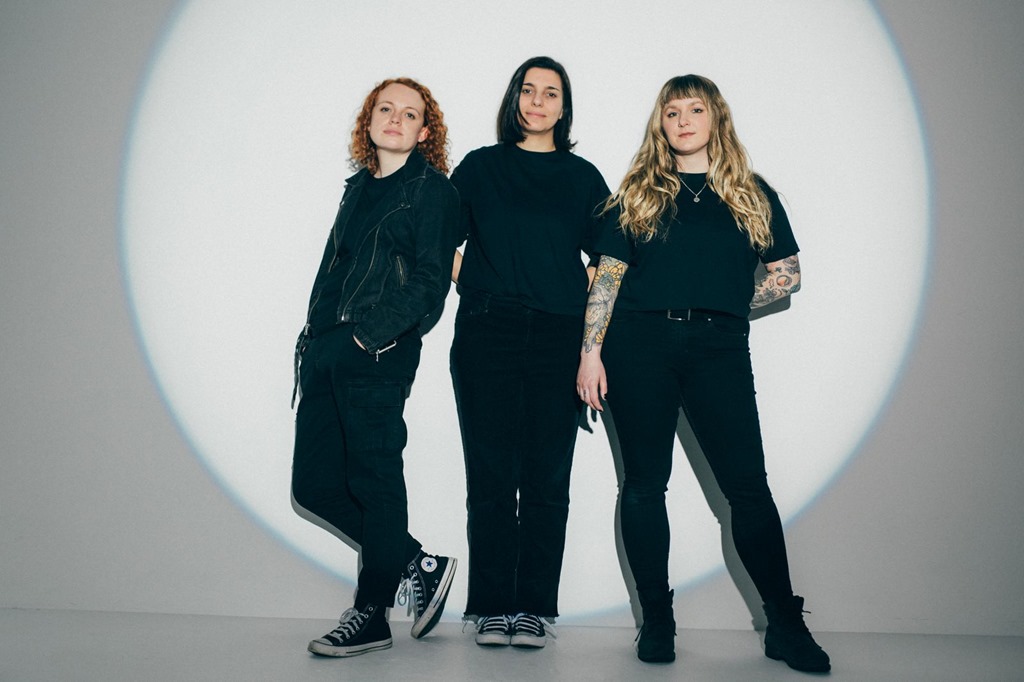
Photo by Daniela Vorndran
XTra Mile Recordings – 18th October 2024
Christopher Nosnibor
Berries have been on our radar since 2017, and now, just over two years on from How We Function, they return with they eponymous second long-player. They’ve done a good job of building the anticipation with a run of well-spaced singles, starting back in the summer with ‘Watching Wax’, before revealing an altogether previously unseen side with the acoustic-led ‘Balance’. So which Berries will we see come to the fore here?
It’s more than a pleasure to report that it’s the very best Berries which manifest across all of the album’s ten cuts, all of them sharp. Ten tracks is in itself significant: it’s the classic album format of old, and all killer, no filler, and no faffing with interludes or lengthy meanderings. The whole album’s run-time is around half an hour: it’s tight, it’s succinct, the songwriting is punchy and disciplined, and has the feel of an album as was in the late 70s and through the 80s, planned and sequenced for optimal effect. But they also manage to expand their template within within these confines: there’s some mathy tension in the lead guitar work, and there are flourishes which are noodly without being wanky, and they serve more as detail rather than dominating the sound.
‘Barricade’ kicks in on all cylinders, uptempo, energetic, post-punk with punk energy amped to the max. By turns reminiscent of early Interpol and Skeletal Family, with some nagging guitar work scribbling its way across a thumping rhythm section, it’s a corking way to open an album by any standard. ‘Blurry Shapes’ is a crafted amalgamation of mathy loops in the verses and crunchy chords in the choruses, all delivered with an indie-pop vibe which is particularly keen in the melodic – but not twee or flimsy vocals. and Berries just packs in back-to-back bangers.
‘Watching Wax’ lands as the third track, a magnificent coming together of solid riffing, chunky bass, and sassy vocals. ‘Balance’ provides a change of pace and style immediately after, and it’s well-placed, wrapping up side one.
‘Jagged Routine’ starts off the second half with a choppy cut that brings in elements of poppy post-punk, math-rock and circa 1987 goth alternative rock. I’m reminded rather of The Kut, but then equally The Mission in the final bars, while ‘This Space’ steps things up with a dash of Gang of Four and a mid-00s technical post-rock flavour compressed into a driving rock tune that clocks in at just shy of three and a half minutes.
On Berries, Berries sound perhaps a little less frantic and frenzied, and maybe less confrontational and driven by antagonism than on their debut, but as a trade-off, they sound more focused and more evolved. The introspective introversion of the form creates an intensity that suits them well.
The guitar riff in the verse of ‘Narrow Tracks’ is so, so close to a lift of ‘When You Don’t See Me’ by The Sisters of Mercy that it makes me feel nostalgic for 1990, but finally gives me cause to rejoice in 2024, as they’ve incorporated it into a layered tune that has many elements and just works. Having waded through endless hours of bands doing contemporary ‘goth’ by making some synth-led approximation of a complete mishearing of anything released between 1979 and 1984 by the bands that would be branded goth by the press, it’s a source of joy to hear an album that captures the essence of that period without a single mention of the G-word.
Berries is a fantastic album. It gets to the point. It has power it has energy in spades – and attitude. They also bring in so many elements, but not in a way that lacks focus. In fact, they sound more focused than I would have ever imagined. This album deserves to see Berries go huge, and it’s got to be one of my albums of the year simply by virtue of being absolutely flawless and 100% brilliant.
AA
AA
AA
Buzzhowl Records – 27th September 2024
Christopher Nosnibor
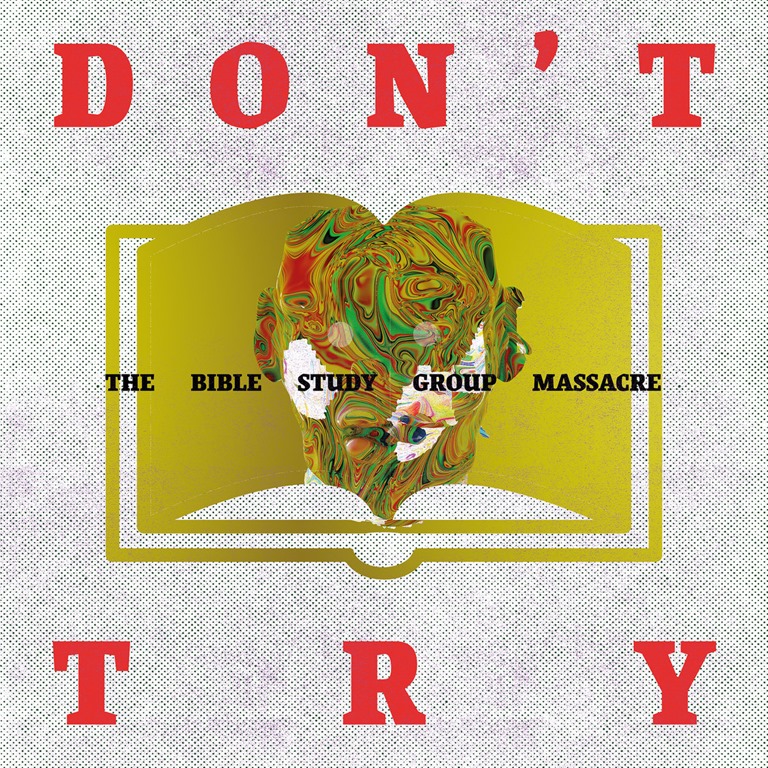
Once again, following the release of a four-way split showcasing local talent a few months ago, Stoke proves the be the spawning ground of more off-kilter noisy noise, this time from no-wave duo Don’t Try with their second EP. As an additional point of note, and also something of a recommendation / hype point, the EP’s artwork is courtesy of Dan Holloway, of USA Nails/Eurosuite/Dead Arms fame, who worked with the band previously on their 2018 single ‘JWAFJ’. To accompany the release, Dan has also realised a video in his own inimitable style.
Like ‘JWAFJ’, their first EP, Elvis Is Dead was released in 2018, meaning it’s been a full six years since they last released anything, suggesting that on the output stakes at least, they’ve been living up to the band’s name.
Lead track ‘my grazed knee’ with its gritty yet poppy synths and urgent, determined beats isn’t actually a million miles from the sound of The Eurosuite. It reminds us of the proximity of new wave to punk, and the reasons why new wave and post-punk are essentially interchangeable terms. And while punk did, undoubtedly, spawn some great tunes (I’d perhaps contend less great bands, in that many punk acts, with a few notable exceptions like The Ruts and Adverts, produced only one or two outstanding or even memorable sings, and were unable to deliver the entirety of a solid album, let alone a career), it was post-punk where things got interesting, after things had evolved from three-chord stomps. If punk was predominantly pissed-off, railing against boredom and just off the rails, what followed explored a greater emotional range, and was more articulate, both musically and lyrically. For all its rebellion and antagonism toward conventions and norms, punk very quickly established its own conventions and norms: post-punk broke down those definitions to explore in myriad different directions, fragmenting and evolving into countless new genres.
It’s been a long time since the advent of both punk and new wave now, and in theory, any contemporary exponent of either is liable to tie themselves to certain tropes. But contemporary punk bands, more often than not, seem to be so limited in their scope, whereas many current acts who align themselves with post punk / new wave offer a broader range – even the ones who have been lazily lumped into the bracket of Joy Division imitators. I mention this as I discovered both Interpol and Editors because they were constantly being compared to Joy Division, and while I came to like both bands very much, my first reaction was dismay laced with disappointment over how unlike Joy Division either act sounded.
And so, circuitously, we arrive back with Don’t Try. ‘my grazed knee,’ as I was starting to say before I embarked on my obligatory and epic detour, is a fuzzy, low-fi keyboard-driven cut that boasts a monstrous throbber of a grindy synth bass groove that lands between Suicide and Cabaret Voltaire’s ‘Nag Nag Nag.’ But it’s a lot harder, harsher, noiser, more aggressive, more antagonised. Punkier? I suppose it’s representative of the point at which that nascent industrial sound began to evolve, but there’s also a manic hardcore edge to it, which is more apparent on the harsh assault of ‘climax in the imax’. Here, everything is ratcheted up in its volume and intensity, there’s a clattering metallic snare sound that crashes like a bin lid through the song’s duration, and about two-thirds in, it sounds like someone’s started up a drill and it all suddenly goes slower and heavier and you start to feel like things are getting dark and tense. This is very much a positive, in case you’re wondering.
There’s a clear trajectory to this EP, a sonic evolution which moved forward with each track, and things turn full-on industrial on the third track, ‘ritual’, which manifests are a monstrous, relentless rhythmic pounding reminiscent of mid-80s SWANS and the heavy grind of Godflesh. The crazed, anguished vocals are howled, yelped, drawled, hinting at the manic howl of the Jesus Lizard (and so, equally, Blacklisters). After hitting what feels like a locked groove around the mid-point, everything explodes and the track – and EP – climaxes in a slamming wall of ear-blasting noise. None of it’s pretty. All of it’s good.
AA
AA
Metropolis Records – 7th June 2024
Christopher Nosnibor
Oi, Nosnibor? Call yourself a goff? Well, yes… and no. Y’see, much as many people scoff at Andrew Eldritch insisting The Sisters of Mercy aren’t goth despite displaying so many of the trappings of goth, he does have a point, and one I’m willing to defend when it comes to my own musical preferences.
The Sisters, The Cure, Siouxsie, Bauhaus, bands I came to quite early in the formation of my musical tastes in my teens, are all largely considered exponents of ‘goth’, but were well-established long before the label existed. Tony Wilson said in an interview that there was something ‘gothic’ about Joy Division, and while they were contemporaries, and similarly dark, and – like the aforementioned acts – emerged from the post-punk scene, along with the likes of Alien Sex Fiend, The March Violets, The Danse Society, but somehow manage to avoid the goth tag. Ultimately, the whole thing was a media construct based largely on a false perception of a bunch of disparate acts who shared a fanbase. Just how much bollocks this was is evidenced by the fact the likes of All About Eve, New Model Army, and Fields of the Nephilim – again, bands who shared nothing but a fanbase, in real terms – came to be lobbed into the ‘goth’ bracket.
But then bands started to identify as ‘goth’ themselves, most likely as a way of pitching themselves in press releases, and things started to head south rapidly thereafter.
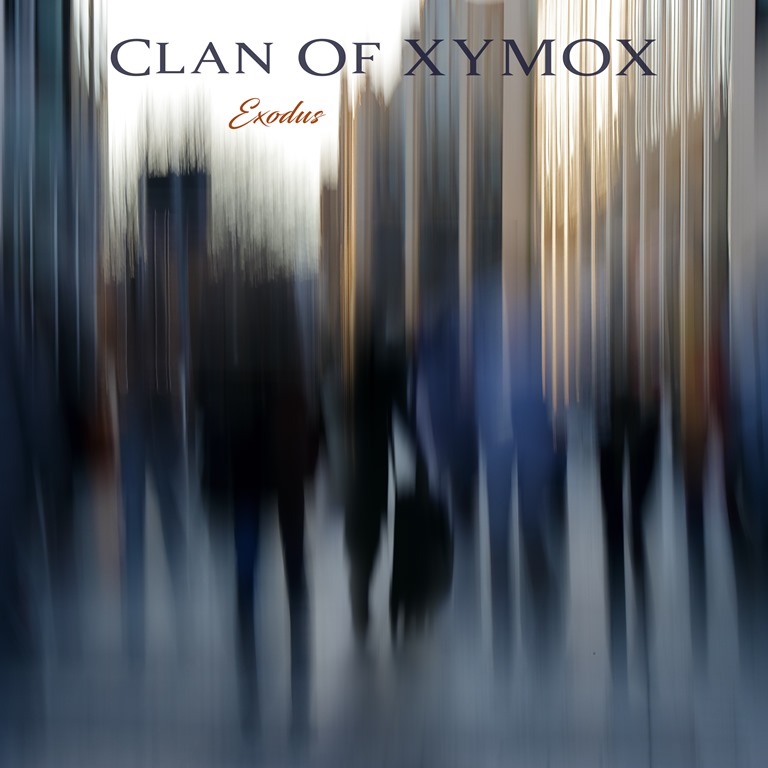
Having formed in 1981 and being signed to 4AD, home of The Cocteau Twins, and releasing their debut album in 1985 – the same year The Sisters released their seminal debut First and Last and Always – Clan of Xymox belong to the initial wave of proto-goth, in the same way X-Mal Deutschland do. Yet for some reason, they’ve bypassed me. Seventeen albums in, I’m perhaps a bit late to the party, and while I can’t claim to be fashionably late, it’s better late than never, right?
This does mean that I’m approaching Exodus with no benchmark in terms of their previous albums, and with the weight of recently-jettisoned preconceptions and prejudices. Perhaps not a strong standpoint for objectivity, but it’s worth getting these issues out of the way first.
It’s amusing to read how retrospective reviews of their debut criticised the fact it sounded cliché and dated, not least of all because of the synth sounds which dominate. What goes around comes around and vintage synths and drum machines, however tinny, fuzzy, basic, are all the rage once more, with people willing to pay crackers prices for the precise purpose of recreating those sounds.
Exodus sounds like an early-to-mid-eighties dark electro album, showcasing all of the elements of goth before it solidified, before the cliches became cliches. The drum machine programming is quintessentially mid-80s, a relentless disco stomp with a crisp snare cracking hard and high in the mix.
They slow things swiftly, with the brooding, moody ‘Fear for a World at War’ – a timely reflection on the state of humanity – landing as the second track. It’s moving, haunting, but drags the pace and mood down fast, samples and twinkling synths hovering and scrapping over a hesitant beat and reflective vocals.
‘The Afterglow’ combines chilly synths and fractal guitar chimes to forge a cinematic song. It’s unquestionably anthemic, and has the big feel of an album closer. Where can they possibly go from here? Well, by pressing on with more of the same… Much of Exodus is reflective, darkly dreamy, vaguely shoegazy, very Cocteau Twins – at least sonically, being altogether less whimsical in content. It’s undeniably a solid album, and one steeped in the kind of sadness and melancholy that’s quintessential brooding gothness. ‘X-Odus’ hits a driving techno goth sound that borders on industrial, but equally owes as much to The Sisterhood’s Gift, which is really the point at which ‘goth’ intersected with dark disco.
Eighteen albums in Exodus sounds predominantly like the work of a contemporary dreamwave / goth act plundering the old-school with some heavy dashes of late eighties Cure, and while many fans will be hard into it, to my ears, it’s good – really good – but much of its appeal is nostalgia and familiarity, and objectively, it’s just a shade predictable and template.
AA
Christopher Nosnibor
Forty-five years on from the release of their debut album, The Crack, The Ruts – or Ruts DC as they subsequently became – as still going, and perhaps unexpectedly, they’ve been more prolific in the second half of their career than the first.
Having released two Electracoustic albums – stripped back versions of material from their back catalogue, they’re back on the road with this format, too. The trio seated in a line on the stage befits a band whose members are in their late sixties / early seventies. They’re done being ‘cool’ or staying ‘punk’: “punk’s dead”, Segs shrugs at one point during tonight’s set. It’s striking just how honest and open they are during the lengthy intros and meandering anecdotes which seem to spring spontaneously, often without punchlines or clear endings. These are off-the-cuff, unrehearsed, down the pub type chats, which provide some real insight into the workings of the band and its members. Unpretentious, grounded, it’s a joy to feel this kind of intimacy with a band of such longstanding who truly qualify – and it’s not a word I use often – as legends.
They’re a band at ease with one another and the audience, Ruffy particularly happy to be back in his home town and regaling us with a lengthy tale about his early life, his father, and shoplifting out of necessity.
Not being able to get out so much lately, I have to pick my nights out carefully and strategically, and I had been in two minds about this one, for a number of reasons. But within minutes, it became apparent that coming down had been the right decision. Y’see, music can reach parts that practically nothing else can. Once comes to associate songs, bands, albums, with people, places, life experiences. They become indelibly connected, for better or worse. And The Ruts are a band who carry substantial emotional, reflective weight for me on a personal level. Of course, this is about me rather than the band, but this is a contemplation on how we engage with music and how songs and bands, become the soundtrack to our lives, and it’s something we only really realise in hindsight. And I feel that sharing the details of this complex and intimate relationship with a band is part of a dialogue we need to open up.
I was around thirteen or fourteen when I began hanging round the second-hand record shop where I would subsequently become the Saturday / holiday staff. The owner was – to me, being fifteen years my senior – an old punk, and he introduced me to a shedload of bands, and would air-bass around the shop to ‘In a Rut’, a song he would also cover with his band. This song – indubitably one of THE definitive punk singles – would become an anthem to me in my life, a song I always play to remind myself to get my shit together when times are tough. If punk has a solid link with nihilism, ‘In a Rut’ provides a counterpoint, as a rare positive kick up the arse. It’s a song I play when I need to remind myself that I need to get my shit together. It must surely be one of the greatest songs of all time. And what a debut! And that was even before ‘Babylon’s Burning’…
The first time I met my (late) wife’s dad – who died in 2003 at the age of 50 – he was blasting The Ruts and Rage Against the Machine on his car stereo, and I knew immediately we’d get on well. And we did. He was a grumpy fucker who hated anything establishment, and had great taste in music.
And so The Ruts and Ruts DC are a band who run a thread through my life. I find it hard to hear them without a pang of sadness, but ultimately, they’re an uplifting experience, and this is so, so true of tonight’s show.
‘Music Must Destroy’ makes for a strong opener and provides an opening for a not-quite anecdote about number-one fan Henry Rollins (another hero of mine and my wife’s, we got to see The Rollins and numerous spoken word performances, including one which included an expansive tale of his obsession with The Ruts and how he came to front the band at their reunion fundraiser for guitarist Paul Fox in 2007), who provided additional vocals to this, the title track of their 2016 album. It provides an early reminder of the fact that they’re more than merely a heritage band, and that they’ve always been, and continue to be, political.
‘West One’ and ‘Love in Vain’ land early, and the range and quality of the material stands out a mile. The set spans punk, reggae, rockabilly, anthems… and they have songs that mean something, too.
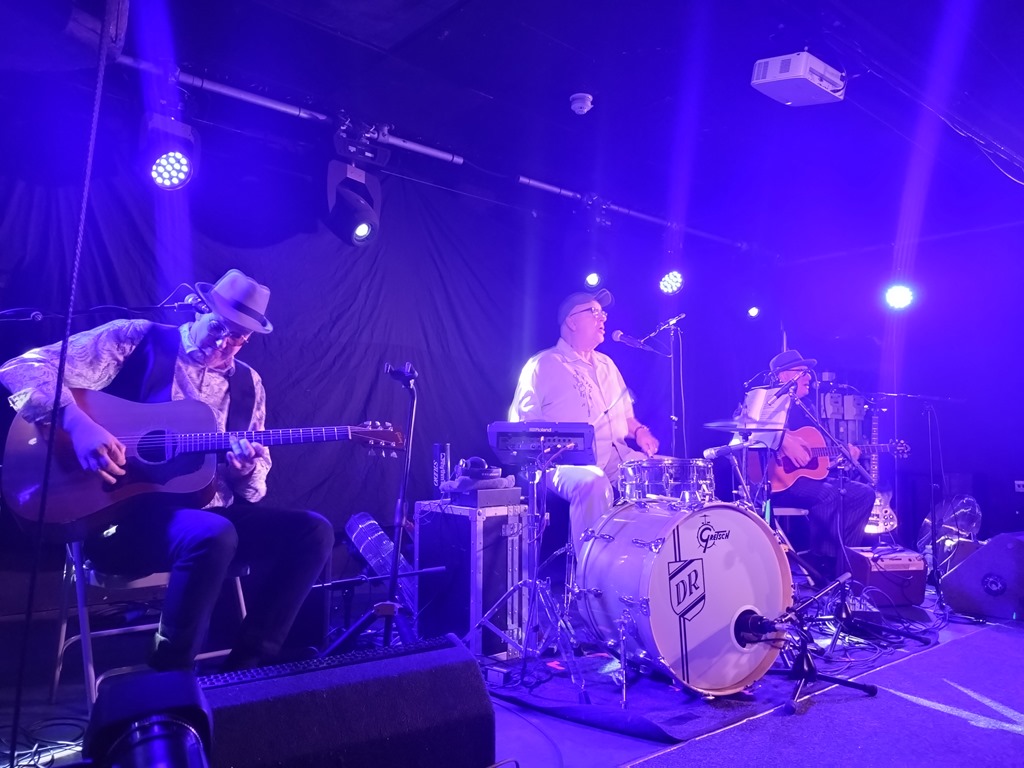
One thing that sets Ruts DC’s acoustic(ish) sets apart isn’t that the lead guitar has some pedals and tweaks and that it’s not a straightforward acoustic strum, but the fact the arrangements rightly bring the details to the fore. Listen to The Crack and it’s apparent that the basslines are special. And paired down, you can really hear everything that’s going on. Their material is so much more than the lumpen three-chord thud of regular pub-rock derivative punk. They switch slickly into dub mode, with echoed rimshots and booming heavy bass, and the sound – and musicianship – is outstanding.
‘Something That I Said’ arrives as the penultimate song of set one, before closing with a new song, ‘Bound in Blood’ that’s a strong new wave cut. And suddenly, with the introduction of an electric guitar, it’s louder, too.
The second set is more electric, but still minimal in terms of arrangement, and stripped back: ‘Dope for Guns’ shows the song’s solid structure. It’s a rapturous experience to hear them powering through ‘Staring at the Rude Boys’ and ‘Babylon’s Burning’ towards the end of the set, and then to hear them segue ‘In a Rut’ with a full-lunged rampant chorus of Neil Young’s ‘Rockin’ in the Free World’ was truly rapturous. Again, there’s a personal element here: a song I associate with my wife, and a song she in turn inherited from her dad, I found myself shedding a tear at hearing a great song well-played. It wasn’t just a token gesture to enhance and pad the set: they meant it and felt the power of the sentiment. And right now, we need to cling to that. These are dark and fucked-up times.
They ramped things up to slam in a fully electric, fully punk rendition of ‘Criminal Mind’ to draw the curtain on the night. And what a night. And what a band.
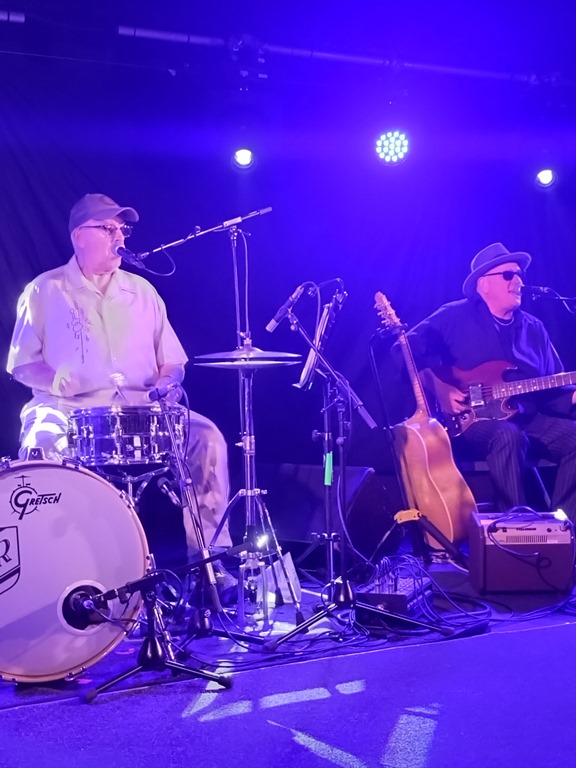
While they do still thrive on their early material, and do it justice, they have so much more to offer, too, and significantly, they’re not attempting to recreate the experience of the late 1970s with some sad old punk nostalgia trip. They’re clearly happy onstage – that is to say, loving the fact they’re up there, still going, and playing these songs. They’ve every reason to be: tonight, they deliver solid gold.
‘Pagan Synth’ duo, ESOTERIK has just unveiled their new single, ‘Mentor’ from the forthcoming EP, Archetypes.
For the next installment of the EP, ESOTERIK explores the insight and experience the ‘Mentor’ has to offer. Get lost in the hypnotic groove but heed the advice of the Mentor for it’s the end of suffering. It’s a beacon in the darkness calling you from the illusive world of form. It’s a voice that’s behind the incessant stream of thoughts; a gentle nudge with a firm but helping hand. The choice has always been yours all along. Will you be a listening ear, or will you flounder in the chaos?
On the upcoming EP Archetypes, the band examines the tropes that have weaved a thread across societies for centuries. “It’s such an interesting topic and really highlights the power of language whether written or passed down via word of mouth. The legends hold a commonality that span through time and culture. Before the world was connected by technology, these stories held the experiences and wisdom for generations to come. Whether they are steeped in symbolism or ritual, the lessons are still infused and if sensational that only ensures the survival beyond our limited life spans.”
Check ‘Mentor’ here:
AA

12th July 2024
Christopher Nosnibor
As genre crossovers go, Post-Punk/Alt Hip Hop is quite a rare one. Perhaps not as radical or as extreme as the kind of crossovers with alternative and metal bands and hip-hop acts that took place on the groundbreaking Judgement Night soundtrack in the early 90s, but at this point in time, where pretty much anything goes, this is unusual. Actually, I’d like to step back from that for a moment. Not so long ago, it felt as if anything went, that postmodernism had truly reached its peak and you could have grindcore with a kazoo and not be too surprised. More recently, while pockets of weirdness are strongly entrenched – as the recent Guardian article on Nerdcore, which managed to mention Petrol Hoers and BxLxOxBxBxY, both vehicles for beardy, ferret-keeping, pant-wearing York legend Dan Buckley (disclosure – Noisenibor performed a one-off collaboration with him in his guise as Danny Carnage, which was everything you’d expect) – things seems to have become more siloed, more set, more fixed, when it comes to genre parameters. Fluidity and crossovers remain, but wild invention seems to have given way to something of a return to convention.
‘Imagine Beck meets Sleaford Mods, meets Slowthai’ the bio says. Only, listening to this, you don’t have to imagine.
What’s noteworthy about these touchstones is that two are very white, and two are very British, the British acts both being overtly political, while all three draw on elements of hip-hop in their work. None of this is to denigrate anything about Oscar Mic or ‘Sun Star’, and nor is it a criticism to comment that it’s a hip-hop tune which is overtly white, as delivered by a pale guy with a vaguely gingery moustache. It’s a true testament to multiculturalism and artistic cross-pollination, and what’s more, ‘Sun Star’ boasts some truly sinister bass frequencies which strike way low and hit hard like subsonic torpedoes beneath the shuffling beat that clatters away nonchalantly all the way. Toss in some Beastie Boys and you’re getting a sense of where this is at.
Then there’s the really melodic indie break, and the thing has something of a quirk / arty / studenty vibe, while the video bursts with experimental oddness. And when you piece it all together… it’s gloriously mismatched and off-kilter. And we should celebrate its non-conformity.
AA

Christopher Nosnibor
Goths are the most knit-picking pedants and harshest critics of their favourite bands of any genre’s fans I know. Actually, that’s not quite true: fans of The Sisters of Mercy are the worst knit-picking pedants and harshest critics of their favourite bands. I preface this review with this observation as a Sisters fan first and foremost, and contestably as a goth second.
Y’see, most of the bands which emerged after that initial post-punk crop which included The Sisters, Siouxsie, The Cure, Bauhaus – disparate bands who have little in common sonically and stylistically beyond reverb, dyed hair, and studded belts – and sure, The March Violets, The Danse Society, UK Decay, and a handful of others, were toss. By the time ‘goth’ was formalised as a ‘genre’ it had gone to shit, mostly with every other band ripping off the guitar and bass for ‘Walk Away’ and diluting it to a pissweak rehash, and all too often with ghastly theatrical booming vocals. And they all started wearing waistcoats and frilly cuffs and appropriating ‘gothic’ imagery to boot. That was circa 86, by which time – that’s which time, not witch time – The Sisters and The Cure and Siouxsie had very much evolved, so we can probably as much blame The Mission for the start of the rather more naff second wave. By the 90s, derivative cack like Every New Dead Ghost was crawling out of the woodwork, amplifying the cliches on top of simply being laughably bad.
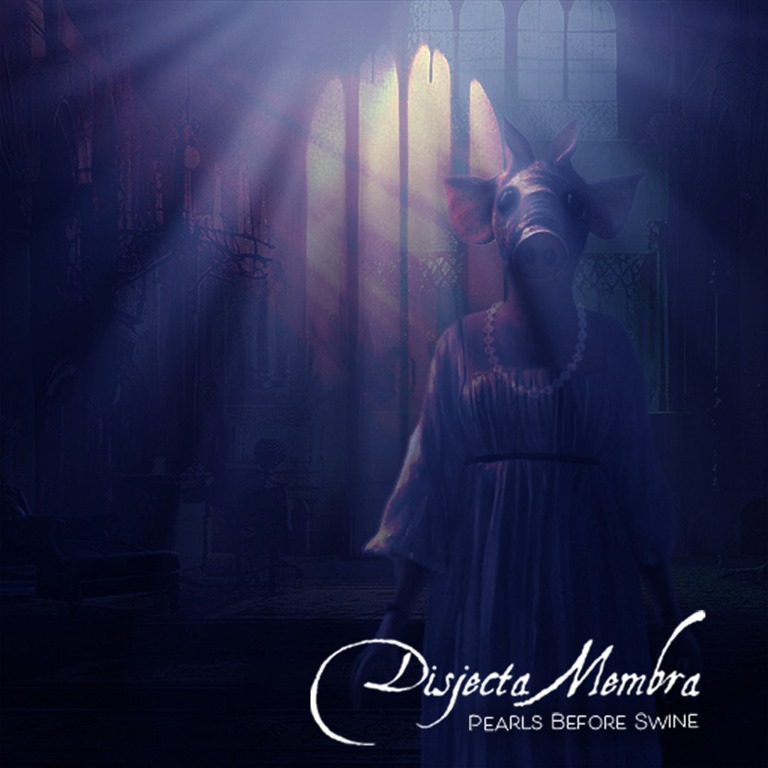
It so happens that Disjecta Membra have been going 30 years, emerging from that early 90s milieu of corny goth revivalism – presumably pining for 1985 and sobbing into their baggy sleeves when The Sisters went cock-rock with Vision Thing. This release is a career-spanning retrospective, which they’re giving away free on their Bandcamp. And this is the first I’ve heard of them.
I kinda wish it had stayed that way. It starts off with the single version of ‘Whakataurangi Ake’, which features Rob Thorne, and it’s a preposterous, pretentious semi-ambient new-age effort with over-the-top dramatic vocals. I mean, fair enough in that it draws on their New Zealand heritage, but it’s pretty obvious and cheesy as. And it’s all downhill from there.
‘Lilitu’ might actually be quite exciting if X-Mal Deutschland had never existed. But as it is, it might as well be a cover of ‘In Der Nacht.’ Talking of covers, there are a few here. And again, after The Sisters broke the ground of taking songs that didn’t obviously sit with the style – like ‘Jolene’, and disco faves ‘Gimme Gimme Gimme’, and Hot Chocolate’s ‘Emma’ and made it their schtick, every other goth band thereafter just had to toss in some quirky covers… and lo, we get a take on Boney M’s ‘Rasputin’ and covers of other goth bands, because they obviously add so much more. ‘Rasputin’ sounds like you’d imagine, of course: drum machine with a head-splitting snare and spindly guitars. It’s cack, but the worst thing is that it doesn’t really bring anything new and doesn’t even sound like it’s done vaguely ironically, meaning it’s neither cool nor funny.
And while we’re in the realms of cliche, what’s the obsession with marionettes in contemporary goth? ‘Antoinette Marionette’ is as obvious as it is lame as wordplay goes., and with its crashing snare and chilly synths and spindly guitars, the best that can be said for it is that it’s uptempo. I did kinda wish that ‘Skin Trade’ was a Duran Duran cover instead of the po-faced and predictable goth-by-numbers that it actually is.
Apparently, ‘Madeline! Madeline!’ and ‘Death by Discotheque’ are both good enough to warrant two versions on a thirteen-track compilation. They aren’t, and it suggests a lack of material of a quality to fill a single album over the course of thirty years. The latter, especially is a derivative disappointment, a stab at rambunctious goth-country in the vein of Fields of the Nephilim while attempting to create their own take on Suspiria’s ‘Allegedly, Dancefloor Tragedy’- one of the few decent songs to come out of the early 90s revival. This isn’t a patch on it, and just seems to think it’s amusing bashing cybergoths. I mean, they have a point, in that cybergoth was a ridiculous thing, but of all the audiences to alienate in their position.
The last track, ‘Walking in Light’ is quite interesting, marking a shift in tone towards droning guitar ambience, at least initially, but then it descends into a glam-infused rock stomp which turns out to be a cover anyway.
30 years, and this is the best they’ve got.
AA
Arriving more than three decades after his first solo album and almost 20 years since his groundbreaking group Telex delivered their final message, Belgian electro-pop musician Michel Moers is finally making a comeback with As Is, his brand new album. To celebrate its imminent release, the synth man has invited iconic vocalist Claudia Brücken from the similarly revitalised Propaganda (now xPropaganda) to guest on its first single, ‘Microwaves’. A 50% electro-pop, 50% new wave anthem, it will delight fans of Ladytron as well as Telex classics such as ‘Moskow Discow’.
“Claudia has a great voice that you recognise from the very first note,” says Moers. “I was thrilled to get the opportunity to work with her and was determined to place her vocal upfront in this song.”
Check ‘Microwaves’ here:
AA
Michel Moers will release As Is in mid-April. Coming 33 years after his solo debut, Fishing Le Kiss, the long-awaited record features ten tracks that showcase Moers’ wisdom and artistic reflection as he offers a blend of thoughtful, electronic music infused with surrealism in his own unique style. It includes contributions from xPropaganda singer Claudia Brücken, who adds her distinctive Teutonic touch to ‘Microwaves’, plus Moers’ compatriot DAAN (Daan Stuyven), whose deep, expressive voice is utilised to full effect on ‘Back To Then’.
Containing songs that have been developed over several years, the album has an intimate, diary-like quality, reminiscent in part of the compositions of Erik Satie. With highlights that include the stridently uptempo ‘Potentially (Love-Hate)’ and ‘Pixels’, plus the lyrically unsettling ‘New Friend’, the album actually opens with an updated version of ‘Les Gens Sont Affligeants’ (People Are Disappointing) from Moers’ debut. It resonates more than ever in today’s individualistic society.
As Is represents a triumphant return for Moers, blending past influences with contemporary sounds and themes, and stands as a testament to his enduring creativity and adaptability in a continually evolving music landscape.
Moers has spent the last three decades working as an architect and photographer while continuing to make music. Involved in the remastering of the Telex back catalogue that was reissued to great acclaim on Mute Records in 2023, this also served to reinvigorate his skills and contributed to the creation of As Is. Belgium’s first electronic band, Telex were influential pioneers, appearing on Top Of The Pops in 1979 and representing their nation at the Eurovision Song Contest in 1980.

 Aural Aggravation