Posts Tagged ‘Live’

16th June 2025

Christopher Nosnibor

Gintas K’s latest offering was recorded live, using computer, midi keyboard and controller in January 2025, and first released by Japanese label Static Disc in May.

It’s worth perhaps mentioning that ‘Breakcore’ is – and I shall shamefully quote from Wikipedia here – ‘is a style of electronic dance music that emerged from jungle, hardcore, and drum and bass in the mid-to-late 1990s. It is characterized by very complex and intricate breakbeats and a wide palette of sampling sources played at high tempos.’ In the main, not really my personal field of expertise, or particularly within the remit of Aural Aggravation.

But this is a Gintas K album, and the nine pieces are typical of his style, combining experimentalism and the application of software and midi / laptop setup, producing a range of glitchy, frothy, gurgly sounds which stop and start intermittently, unpredictably. His live and improvised works always come with a sense of unpredictability, of spontaneity, while bearing his distinctive sounds. One of the key focuses within K’s work is on detail, zooming in on microtonality, granularity. When I say it sounds ‘bubbly’ or ‘frothy’, I mean it’s the sound one might consider the equivalent of the visual experience of slowly swirling a latte or a pint of ale, or hyperfixating on the bubbles in a bath. This is not, however, the gentle swill and flow of currents, but a frenzied effervescence, like the reaction between bicarbonate of soda and vinegar. And look long enough and hard enough, and patterns begin to emerge.

Listening to the bubbling blitzkrieg of digital clicks, beeps, and fizzing of any work by Gintas K can be stimulating to the point of eye-popping discombobulation. It’s almost too much – and this is nevermore true than the experience that is Breakcore. There are beats present – but they’re composed not of beats in the conventional sense, being neither rhythmic nor percussive, either from an analogue source or a digital sampled source or emulation. These are flickers, pulses, rapidfire stutters, hard sounds which replicate the essence of a beat without being a beat, per se. For example, those of a certain age may recall the successive ‘pink-pink-pink’ chattering digital babble of dial-up. Few would necessarily consider those sounds beats in context, but… yes, they have a certain beat-like quality. And this is how the beats often emerge from the clicks and pops, moans and drones or another quintessential Gintas K demonstration of circuit meltdown as an artform.

I had never considered his work in a ‘dance’ context before, and still wouldn’t: one feels as if the title is perhaps a shade ironic. But the tempo is certainly high and the beats are complex and intimate, emerging as they do from the thrum of what sounds like a revving engine, the whirr of an old hard-drive, the click of a CD driver whirring into action. Every second of this release sounds like some kind of digital or mechanical malfunction, as tempos whirl and blur, drawl and slow. Scrunching, crunching, twanging, springing, stammering and stuck, it’s a relentless attack of wrong sounds. But emerging from all of it, there are erratic beats, like a succession of deliberately jarring jazz fills and simply wild judders.

It is relentless, and it’s complete overload. The nine tracks run for a total of twenty-nine minutes: its intensity is such that you feel as if your brain is starting to melt after the first ten. In short, Breakcore is truly wild, and it’s not remotely easy or accessible – but it absolutely encapsulates everything that defines what Gintas K’s does.

AA

AA

cover

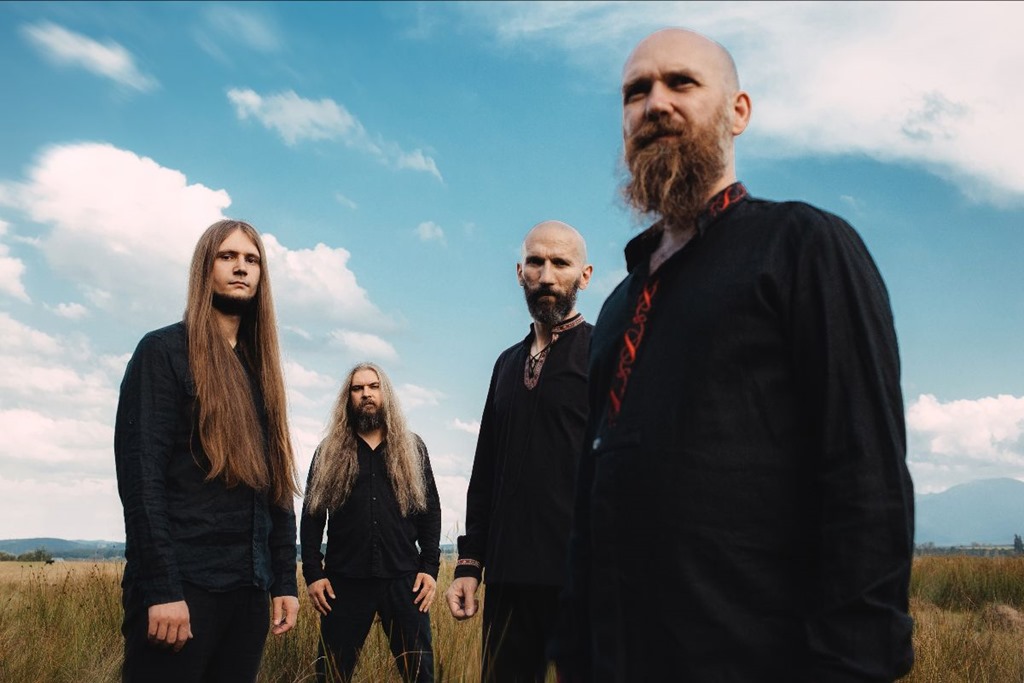
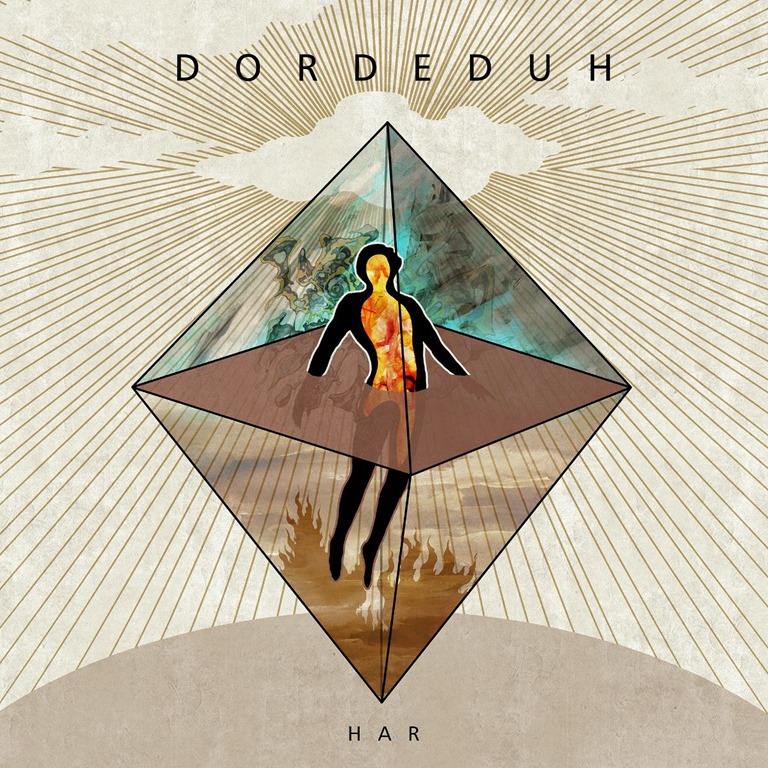
Fascinating metal innovators DORDEDUH have unveiled a new live video for the track ‘Timpul întâilor’, which was recorded during their show at the prestigious ProgPower Europe festival at the Sjiwa in Baarlo, the Netherlands in 2023.

While the Romanians were playing, their compatriot and renowned artist Costin Chioreanu created a live painting at the venue, which was directly inspired by the music. His artistic process was projected onto the backdrop behind the band.

AA

DORDEDUH comment: “First I need to mention that ProgPower is a very special festival with a particularly nice vibe to it”, frontman Edmond “Hupogrammos” Karban writes. “It is very intimate but feels like a big family meeting. There were great shows and great bands, but the afterparty at that castle-like hotel that accommodates both the musicians and the audience is something else entirely. We had a really great time there. Therefore, I am especially glad that we did something special there with our amazing friend of so many years now, Costin Chioreanu. Everybody involved deserves that and we are grateful for this opportunity. This kind of memory, this kind of beautiful moment will stay in our memories. Luckily, this one memory got immortalised for all to see in this video. Hopefully, you will enjoy it, too!”

The track ‘Timpul întâilor’ is taken from the album Har.

AA

c6fcaa41-f30d-43ae-80b9-60da4f4c14057efaf133-8ed1-4fa5-8a67-b2d193356ee0

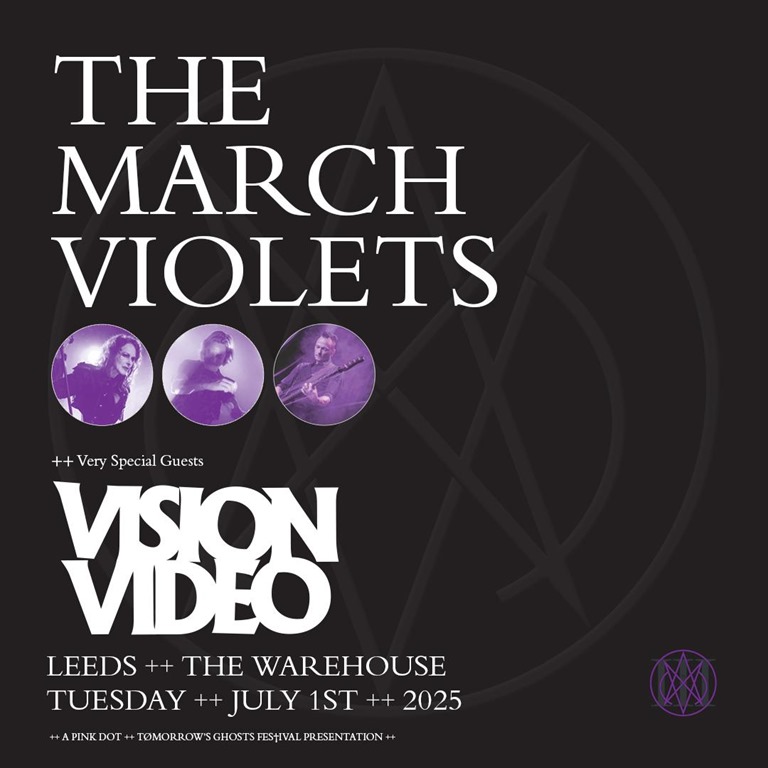
Performing at Warehouse on Tuesday 1st July 2025, the boundary-shredding Yorkshire post/punks continue their epic live comeback with this unmissable gig on home turf.

Following a rapturous reception to what were their first live shows in nearly a decade in 2023, plus high praise for their new studio output including 2024 album Crocodile Promises, which received a double thumbs-up from us at Aural Aggravation, and a reappraisal of their classic works in a series of reissues on the Jungle Records label; the cult band are clearly revelling in their recent revival.

Comprising founding members Rosie Garland (performer, poet and author) and Tom Ashton (Guitarist, producer and studio owner), plus Mat Thorpe on bass, the band are intending the shows to be a celebration of The March Violets’ legacy, while also honouring the irreplaceable contribution of friend and founding member Simon Denbigh.
Speaking about their recent reunion shows, The March Violets explain:

“Since the March Violets tour in 2015 we’ve been shocked at how many musical friends have passed over and out. And after Simon Denbigh’s life-changing stroke, it’s no surprise we all thought that was it for the Violets. When, in 2021, Jungle Records released Big Soul Kiss (The BBC Sessions double album) for Record Store Day 2021 it sold out its entire pressing in 24 hours. We were amazed at the response, absolutely amazed. We faced a choice – to fade away quietly or go out with a celebration.

We feel for Simon, and honour his massive artistic contribution & intense vision as one of The March Violets founding members. He’s irreplaceable, so we’re not going to try. We believe the legacy of The March Violets deserves a far better conclusion than sinking into silence, and now is the right time to do it.”

With their first incarnation described by Sounds magazine as “slinky, savage yet warmly delicate [with a] thirst for mystery, magic and brutal darkness”, The March Violets were a post/punk band cut from a different cloth. Founded in Leeds in 1981, from there the band would initiate an impressive career that would see them navigating all corners of the alternative scene and accrue a longstanding cult following. With their debut EP Religious As Hell released by Andrew Eldritch (frontman of fellow Leeds scene band The Sisters of Mercy), TMV would tally a total of seven successful Indie Chart singles including “Grooving in Green”, “Snake Dance”, “Deep”, and “Walk Into The Sun”, plus their ‘Radiant Boys’ EP, at the height of their powers. With an impeccable John Peel Session also under their belts, the band released two compilation albums Natural History (which peaked at No.3 in the Indie Charts) and Electric Shades in the US, before signing a major deal in 1985 with London Records. Releasing the poppier charms of the hit single “Turn to the Sky”, the track would notably feature in the John Hughes movie Some Kind of Wonderful in 1987, before the band eventually split later that year.

Reforming for a one-off hometown gig two decades later, their 2007 reunion would lead to a flurry of activity in the 21st Century including festival headline slots across Europe & the USA, the brand new studio albums Made Glorious (2013) and Mortality (2015), plus a storming Record Store Day release in 2021’s sell-out double album: Big Soul Kiss.

In 2023, The March Violets confirmed the release of their full back catalogue via Jungle Records for the first time, while releasing two new compilations Play Loud Play Purple and The Palace of Infinite Darkness in the run up. Taking their creative spurt into the studio, the band have also been working on new material and released a new record Crocodile Promises in 2024, via the Metropolis Records imprint.

Most recently, the TMV have been taking their gothic majesties stateside and have completed a triumphant tour of the USA, while also impressing UK audiences last summer with major festival appearances at the likes of Rebellion Festival and Bearded Theory.

Returning to the fore in 2025, The March Violets will be back with a vengeance for what promises to be a very special hometown show strewn with classics and new cuts, surprises and so much more.

On the night, the band will also be supported by one post/punk’s brightest new hopes – Vision Video. Following the release of their new album ‘Haunted Hours’, VV will be making the trip from Athens, GA, for a set of their refreshingly honest and dark gothic pop. Following on from their 2021 debut ‘Inked in Red’ (which told the story of lead singer Dusty Gannon (aka TikTok’s “Goth Dad”) and the darkness he saw as a soldier in Afghanistan), their recent work ‘Haunted Hours’ explores Dusty’s experience as a firefighter and paramedic working on the frontlines of the pandemic that followed his return. Vision Video will soon record their next LP Modern Horror at Maze Studios in Atlanta headed by Grammy award winning producer Ben Allen.

492416558_690408593501263_6222504979864277211_n

TICKETS / DETAILS

Tickets On General Sale Wednesday 16 April

Doors 7.30pm / Curfew 11.00pm

Age Restriction – All ages, under 14 to accompanied by an adult over the age of 18

Available here:
https://pinkdot.seetickets.com/event/the-march-violets/the-warehouse/3385250

3rd January 2025

Christopher Nosnibor

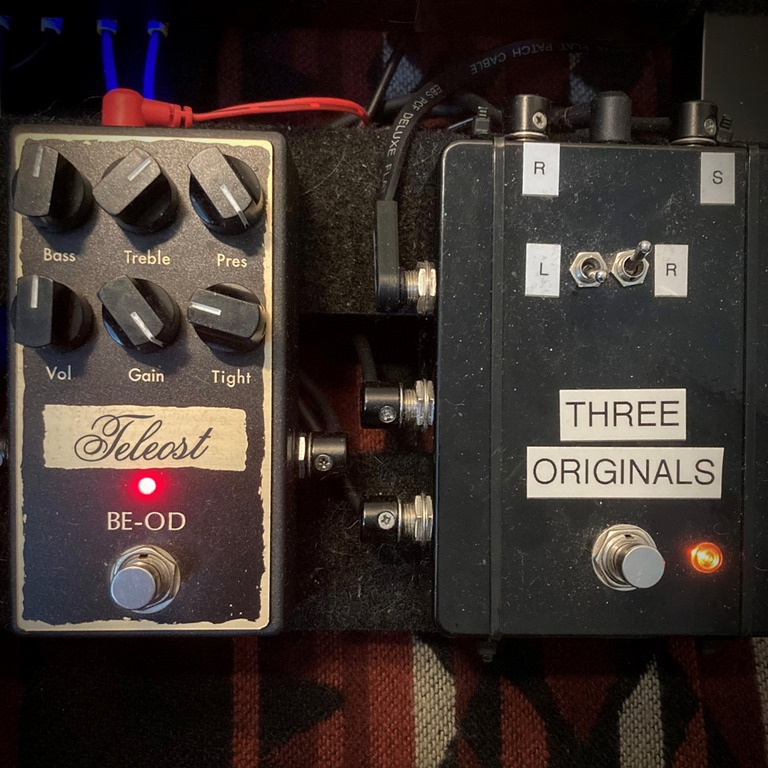
Only the middle of March and I’m running behind on releases, so my apologies to Teleost for letting this one slip down the pile, especially as I’d been looking forward to it for some time. Even their earliest live shows, Before rebranding as Teleost, the duo, consisting of Leo Hancill and Cat Redfern, showed a rare musical chemistry, resulting in music of huge, immersive power. Recent shows, such as their recent York homecoming show with Cwfen, demonstrated that they have reached a whole other level of almost transcendental drone, a place where sound becomes a physical force.

But the challenge for any band who are so strong as a live unit, is how successfully can that be translated via the record medium. To commit the sound to tape – or digital recording – is in some way to compress and contain it, to reduce it to two – or even one – dimension. A recording is essentially a listening experience, without the visual element, without the klick drum or the low frequences vibrating your ribs, and all of the other stuff. So how have Teleost faced up to that challenge? Remarkably well. No doubt recording the guitar and drums live has helped retain the huge sound of the live experience. No slickening, studio polishing, just that huge sound caught in real-time, and Pedro at The Audio Lounge in Glasgow has done a remarkable job, clearly understanding what the band are about.

Three Originals opens with the ponderous grind of ‘Forget’, where a sustained whistle of reverby feedback is rapidly consumed by the first thick, sludgy chord: the distortion is speaker-decimatingly dense, and there’s so much low-end you feel it in the lower colon. It’s pure Sunn O))), of course, but then the ultra-heavy drums crash in and the vocals start… Hancill’s approach to singing is very much about rendering his voice an additional instrument rather than the focal point, and the elongated enunciations convey an almost abstractly spiritual sensation.

The first time I saw Earth was following their return with Angels of Darkness, Demons of Light I, and I spent the entire show completely hypnotised by Adrienne Davies’ slow drumming. It was an experience I shall never forget: it was if time slowed down, and empires could rise and fall between each beat. I haven’t experienced anything similar since, until Teleost. And once you’ve had such a powerful visual experience in a musical context, it’s not only impossible to forget it, but it becomes integrated with hearing the band. And so it is that on listening to Three Originals, I find myself reliving that experience. It’s clear where Teleost draw their influences, but in amalgamating that low, slow drone of Sunn O))) with the more nuanced, tectonic crawling groove of latter-day Earth, they offer something that is distinct and different.

The seven-and-a-half-minute ‘Ether’ blasts in and the sheer density of that guitar is pulverizing. It simply does not sound like two people, let alone that it’s one guitar and no bass. There’s a delicate mid-section consisting of a clean guitar break before the landslide of distortion hits once more. Final track, ‘Throwaway’ is anything but, another sprawling, seven-minute monster dominated by gut-churning sludge and yawning yelps of feedback, while the vocals drift plaintively in the background.

Three Originals is without doubt their strongest work to date, my only complaint being that it simply isn’t long enough. But then, if each track was fifteen minutes long, it still wouldn’t be. In the field of doomy droney heaviosity, Three Originals is in a league of its own.

AA

a1823302603_10

Christopher Nosnibor

On this night twenty-four years ago, I was at Leeds University Refectory, watching The Sisters of Mercy play their tenth anniversary gig. Having previously only seen them once, in November 1990, at Wembley Arena, to be in the front row in a venue so much more intimate was absolutely mind-blowing. This reminiscence has little to no correspondence to tonight’s event, beyond the date, although I recall that it was a bitingly cold night, the kind of seasonal grimness that means it’s a real effort to venture out.

Thankfully, despite it not only being absolutely biting, but being a Sunday, a decent crowd has ventured out for this, the second part of the album launch event for The Illness’ debut album (the first part having been in Liverpool the night before, with the band being split between Liverpool and York). 6:30 doors and the prospect of not only two quality bands and an early finish are likely all contributing factors in terms of incentive.

So what do we know about The Illness? Not a lot. It’s taken them a decade knocking about to get to this point. The notes which accompany the Bandcamp of their eponymous EP, released in 2020 and featuring Steve West and Bob Nastanovich of Pavement, gives a clue as to where the time goes: ‘Following 5+ years of scrapped sessions, line-up changes and other distractions, both tracks were initially recorded in the basement of a former maternity home, Heworth Moor House in York (on Scout Niblett’s old 8-track machine). Steve recorded his vocals at Marble Valley Studio, Richmond, Virginia and Bob in Des Moines, Iowa.’

It’s a tale reminiscent of the likes of The Stone Roses and My Bloody Valentine stalling on their second album… only this is a band that stalled for more than five years without releasing a note. So the fact Macrodosed has arrived at all seems nothing short of miraculous.

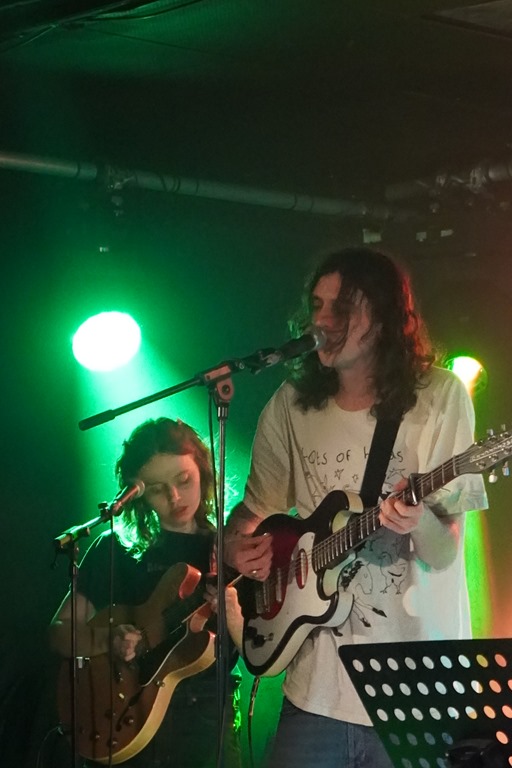
Before they launch the album, Nature Kids – a band who’ve been gigging around York for a while but I have no experience of – warm things up, and they’re nice. That’s not ‘nice’ in the bland, insipid way, but the enthusiastic way. They serve up a set of mellow indie, which is both happy and sad at the same time. There’s some nice twangy country tones and subtle keyboard work, and some saw action, too. ‘Always’ goes a bit post-punk and has a tidy groove to it, and is a standout in a set of consistent quality. The lead guitar is what really stands out – although it’s subtle and understated, to the point that it takes a few songs to realise what it is about their sound that’s so magic. No two ways about it, this is a gem of a band.

DSC01079DSC01082

Nature Kids

The Illness is not so much a band as a collective, and just as the album has a roll-call of guest contributors, so they present an ever-changing lineup on stage. There are never fewer than six of them, but sometimes as many as eight, and there is instrument and position-swapping galore, with vocal and bass duties switching all over.

Much of the time, they have three guitars, bass, drums… but there are some synths happening, and their sound is an immaculate blend of indie, prog, epic psychedelic space rock, all executed, if not with precision, then behind a curtain of shimmering sonic fireworks, from blooming roman candles to the spirals of Catherine wheels.

DSC01087DSC01101DSC01097

The Illness

‘Speedway Star’ is the second song of the set, and it’s laid back but had a certain grip. The album version featured David Pajo, and the question keeps arising: how? Ultimately, it doesn’t matter: what matters is that their set – a mere forty-five minutes – is something special.

The final song of the night is a full-on motorik wig-out, and it’s absolutely magnificent, with two trilling synths and two guitars, it’s equal parts Stereolab and Early Years (do better comparison). Danny (Wolf Solent, etc, a man who’s essentially a one-man scene in York and who I gather is a late addition to the band’s lineup) , who’s been keeping restrained throughout goes all out with a blistering guitar workout

The Illness may be well under the radar and well underachieving – given their connections alone they ought to be massive, never mind the fact they’re uniquely brilliant – but perhaps that will change given the brilliance of the album and superb shows like this. The Illness are totally sick… right?

Norwegian world music collective Wardruna release a live video for the song ‘Heimta Thurs’. The video is a part of the band’s Live at the Acropolis show, which will be released on DVD and Blu-Ray alongside Wardruna’s new album Birna on January 24th.

Originating from Wardruna’s debut album Runaljod – Gap var ginnunga, the song ‘Heimta Thurs’ has grown into one of the group’s most iconic songs and a fan favourite. Set against the backdrop of the world heritage site Odeon of Herodes Atticus, Acropolis, the composition and visual experience reach ecstatic new heights.

The connections between the old and ancient, deeply human and natural at the same time can be felt at every live performance of Wardruna, resounding equally on stage and throughout the audience. Live at the Acropolis is a testament to that.

AA

Wardruna_Athens_Show_24-9903cf045104513c

Photo credit: Sebastian LOM

Gagarin Records – 6th December 2024

Christopher Nosnibor

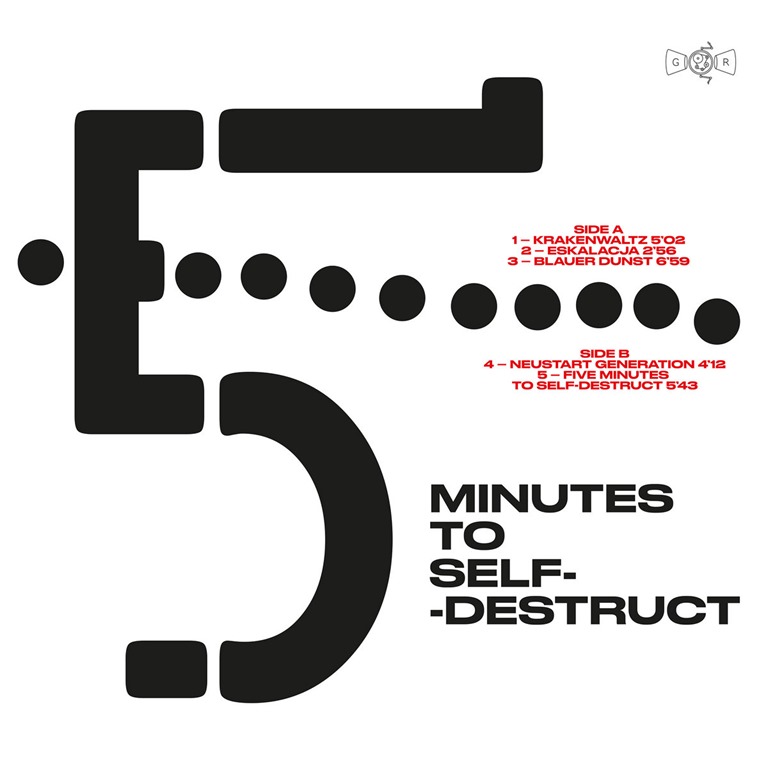
You might be hard-pressed to call CEL a supergroup, but Felix Kubin has been creating sound here, there, and everywhere for a long time now, and Five minutes to self-destruct is definitely a coming together of established creative forces, containing as it does five recordings of live tracks performed by longstanding Kubin and longstanding collaborator Hubert Zemler, remixed by Warsaw sound engineer Jan Wroński.

And the thing about creative collaborations is that they often rely on spontaneity, immediacy, the frisson between the individuals in proximity, feeding off one another in the moment. And so it is here, as the accompanying notes set out: ‘The expressiveness of these recordings is evident not only in their unbridled live energy, which can hardly be reproduced in the studio, but also in a musical nervousness that sets itself apart from the current wellness folklore of the modular community. The pieces gather in their DNA the paranoid plasma of cultural unease, chaos and upheaval.’

To make a small sidestep, we hear endless decrees that employees need to return to the office in order to foster the spirit of collaboration and all the rest. We know that this is bollocks, and is simply about working the instruments of control. Collaboration and the coalescence of energy for creative ends is not something which cannot be forced, and it happens, regardless of distance, time, and space, given the right connection and chemistry. Hearing the performances on Five minutes to self-destruct, it’s immediately apparent that this is not something that could ever be created by desire or will alone.

As the accompanying bio notes, ‘The expressiveness of these recordings is evident not only in their unbridled live energy, which can hardly be reproduced in the studio, but also in a musical nervousness that sets itself apart from the current wellness folklore of the modular community. The pieces gather in their DNA the paranoid plasma of cultural unease, chaos and upheaval.’

The title track ‘Five minutes to self-destruct’ is a quote from Michael Crichton’s sci-fi classic The Andromeda Strain, which describes a research team’s fight for survival against an accidentally triggered self-destruct mechanism, underpinned by trigger impulses and increasing panic.

My own experience of the modular community may not be on quite the same scale or the same higher circles as theirs, but it does feel primarily the domain of the middle-class, middle-aged white male these days, and there’s a certain air of ease and the satisfaction of hobbyism about it. Needless to say, not so here. There’s a tension that runs throughout the entirety of the release. ‘Krakenwaltz’ cartwheels and loops in jittery circles, head-spinning rhythmic cycles with no small degree of attack, with some sharp, aggressive snare sounds and a frenetic, frantic undercurrent which grows increasingly disorientating over its near-six-minute duration.

‘Eskalacja’ is dominated by hectic percussion and a whirl of fairground bleeps and toots running in ever-tighter concentric circles. It some respects, it calls to mind the frenzied looping and wild, vaguely manic excesses of early Foetus 12” singles, seeing just how far they can push the concept, and themselves in the creation of hyperactive sound.

The seven-minute ‘Blauer Dunst’ which sits as the album’s centrepiece marks a distinct shift in tone and texture, a rumbling dark ambient piece that invites comparisons to some of the more abstract works of Throbbing Gristle. It predates the rest of the set by almost four years, having been recorded in October 2020.

It’s back to more upbeat, stomping percussion-led synth work on the DAF-like ‘Neustart Generation’ – but don’t mistake upbeat for uplifting: it clatters and bangs with a clipped, regimented, Germanic feel, and the grooves are taut and tense, and it’s simmering tension which crackles beneath the lumping, shuffling, organic rhythms which underpin the sparse, tetchy title track. A couple of minutes in, a loping percussive cycle breaks out and the repetition of this and the dominant synth motif, amidst a swell of extraneous sounds – samples, sirens – makes this one of those tracks where you can feel your blood pressure increasing as it progresses and the pace quickens to a blur. It ends before reaching the point of inducing an aneurysm, and the assurance to the applauding audience, “We’re still alive, it’s ok,” at the fae injects some unexpected humour to proceedings.

AA

a1852422406_10

True Blanking – 1st December 2024

Christopher Nosnibor

No-one will be surprised to learn that I spend little to no time listening to mainstream or chart music anymore. I say anymore, as growing up, this was my first access to music, just as it was for anyone else growing up in the 80s. Top of the Pops, the top 40 on a Sunday night on Radio 1, The Chart Show (which even had an ‘indie chart’ rundown)… This was a time when ‘alternative’ bands scored top 40 singles. People of a certain age always hark back to the revelation that was seeing Bowie perform ‘Starman’ on Top of the Pops, and seeing Marc Bolan. For me, I have formative recollections of Killing Joke on Top of The Pops… Divine… The Sisters of Mercy. I didn’t necessarily know what to make of these artists at first, but they made an impression. And after the Top 40 in a Sunday, there was the request show with Annie Nightingale, which played all kinds of stuff… and this was, I suppose, a route which led towards John Peel, reading Melody Maker… Now, to find anything different, outside of the mainstream takes effort – but equally, unless you’re already actively engaging with it, one has to actively seek it. Since The Internet became the dominant medium, terrestrial radio has seen its role and reach significantly diminished.

But from the little contemporary pop I have heard in recent years, I’m acutely aware of how songs have got shorter, how intros are abridged to the point of non-existence, how diving straight into the chorus as soon as possible is the objective. Delayed gratification? Forget it. Build-up? Huh? Albums?

Outside the mainstream, in evermore fragmented circles, artists have been pulling in the opposite direction. Albums designed to be played in sequence, containing songs with long intros and slow buildups are actually in favour.

Fear of the Object’s Leaves never fall in vain is an object which would likely strike fear into the heart of anyone unaccustomed to non-mainstream music. It’s a rumbling, dark ambient work, entirely devoid of beats, and almost of vocals (featuring as it does features the poem “Democracy Destruct” by David Henderson, produced by Kjell Bjørgeengen at Harmolodic Studios in 2003), and contains just the one track, which has a running time of over fifty minutes. There’s no ‘getting to the chorus’ on this epic slab of sonic abstraction.

Leaves never fall in vain, which takes its title from Japanese poet Chori (1739-1778), is a live recording, which documents a concert at Kunstneres Hus (Artists ́House) in Oslo October 2023. It features an expanded lineup, featuring original members Aimeé Theriot on electric cello and Ingar Zach on vibrating membrane/transducers, with the addition of Inga Margrete Aas on double bass. Not that you would know from the sound alone that there is a double bass in the mix – or indeed, any single, specific instruments. The instruments all melt together to create a free-flowing – or, perhaps more accurately, free-trickling – babble of sound, which is simultaneously busy, bubbling, with top-end activity frothing and scraping like a mountain stream, but with long, slow currents of droning mid-range flowing sedately beneath. There are passages where, perhaps, the sonorous tones of the cello are discernible, but in the main, it’s a conglomeration of sounds meshing together – layered, certainly ranging in tone and frequency, with a foam of treble which pressures the top-end of the aural spectrum at times, not to mention the nails-on-a-blackboard incidental scrapes. In places, the interweaving feedback takes on a texture like Metal Machine Music on heavy sedatives, and as much as the interplay between the performers is remarkable, so, it has to be said, is their patience. It takes a certain skill to hold your nerve and play a piece out like this. And the longer they maintain this slow-roiling, minimal-yet-dense drone, punctuated by occasional crackles and rips, the tenser it becomes.

Henderson’s poem arrives in the final minutes, a spoken-word piece which stands, stark, dry, crisp, and clear, and unaccompanied, after the instruments have died away and fallen to silence. It’s a powerful work in its own right, and placed as it is, hits with unanticipated impact. As the silence takes over the space occupied by sound for the best part of an hour, you’re left feeling affected, and somehow altered. The power of Leaves never fall in vain lies in is understatement, its subtlety. But also, its duration is a factor, being as if the entire track was an extended intro to the passage of poetry. Buildup, delayed gratification… alien to the attention-deficit age in which we live, Leaves never fall in vain stands out for existing in another world completely.

True Blanking 04 front

Cruel Nature Records – 24th October 2024

Pound Land have become regulars here at Aural Aggravation, essentially because I absolutely love what they do and feel that it’s fitting use of the platform I have to broadcast the fact. They’re clearly not everyone’s proverbial cup of tea, with their overtly dour, dingy, misanthropic racket which provides the sparse backdrop to sociopolitical critique being presented with a grainy, lo-fi production which is absolutely guaranteed to ensure that they’re not going to be all over the radio, or even usurping the popularity of Sleaford Mods anytime soon, or ever. ‘Dour’ and ‘dingy’ hardly sound like strong selling points, but I’m clearly not alone in my appreciation of their work, and it’s been perversely satisfying witnessing the growth of both their reputation and audience.

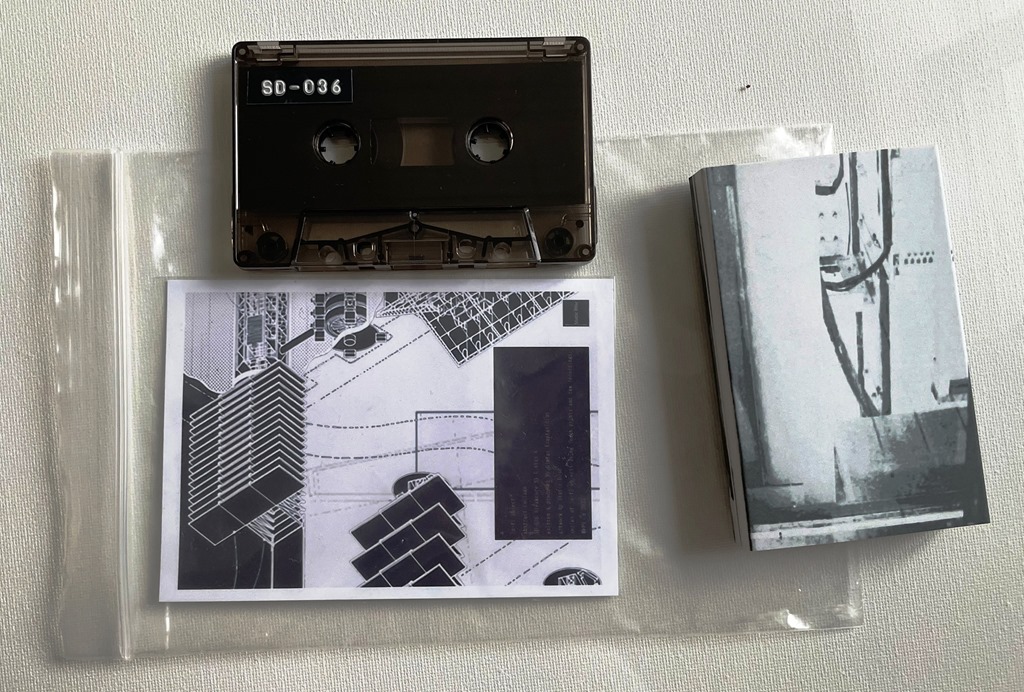
But just to be absolutely one hundred per cent, cast-iron solid in guaranteeing this, their latest album is something of a twofer, a cassette release (of course) with a live set occupying the first side, and a single longform track in the shape of the half-hour long ‘Worried’ filling the other. It’s effectively Pound Land’s Ummagumma.

And while most bands who put out a live release pick recordings which are the most representative, while at the same time capturing them at their best – which is why a lot of live albums tend to be assembled from recordings made over the course of a whole tour, Pound Land are giving us a document of a one-off, as they write: ‘[It’s] a recording of the band playing live at New River Studios in North London in the summer of 2023. This was in the midst of a heatwave, without Nick on guitar, and joined by the good boss of South London DIY label Rat Run Records, Rob Pratt (who organised the gig and opened proceedings that night as his electronic alter-ego Entschuldigung). 35 minutes of dub-inflected psychedelic synth-soaked Pound Land has been captured, improvising through the heat and the alcohol, and laden with BBC Radiophonic-style special effects. Recorded by Tom Blackburn at the desk, then mixed by Tom and finally mixed and mastered by Nick Harris. This is Pound Land live as they’ve never sounded before (and possibly won’t again).’

Yes, it’s been mixed and mastered, but it’s essentially a warts-and-all document of a single moment in time.

Minus the guitar but with the addition of jittery sax, the bass-led rendition of ‘Violence’ reminds me rather of the Foetus track ‘Honey I’m Home’, which foetured on the live album Male and semi-official bootleg, with its simple, trudging chord sequence, especially with the drawling, thick-throated snarling vocal. Brutally atonal, it’s a hell of a set opener, and sounds like they’re on stage trying to see how many people they can drive out of the room in the first five minutes.

Single cut ‘Liar’ is a raw and raucous blast, motoric beats and monotonous bass groove laced with frenzied woodwind and a blitzkrieg of laser synths provide the sonic backdrop to Adam Stone’s ragged hollering, before they dig even deeper with ‘Flies’, which lands somewhere between The Fall and the Jesus Lizard. The eight-and-a-half-minute ‘Brain Driver’ is something of a standout: fully two minutes longer than the studio version, it’s a dirty, bassy, jazzy, reverby spaced-out journey through darkness.

And then there’s the new studio track on the reverse, which they describe as ‘a 30-minute-plus sonic odyssey’, expanding that ‘This mammoth audio-journey was the result of many months of hard work by Nick Harris, joined by Adam Stone on voice and guest-star Adam Pettis (ex-The Ofays/Fuck Fuck) from America, on guitar, electronics and vocals. Arguably some of the best production and sound work Nick / Adam have committed to tape.’

No argument there: it actually sounds produced (which is no criticism of their other work), and is an expansive and explicitly experimental piece with infinite layers of echo and delay giving this tense composition a dubby vibe. In the dark blend are elements of trip hop and late nineties / turn of the millennium apocalyptic hip-hop and nihilist No-Wave spoken word, plus tribal beats and a whole lot more, including a dash of Scott Walker and Suicide. The sound is cleaner – in that it’s not buzzing and fuzzed-out or breaking your guts with booming bass – but still murky, and treble tones and sibilant syllables in the vocals cut through it. It’s clearly a departure from their existing body of work but whether it marks the start of a new direction, or is, like the live set it’s being released with, a one-off, remains to be seen. Whatever happens next, this is a very different kind of offering from Pound Land, and one which proves they’re not moored to a fixed idea of what they are.

AA

cover

Dret Skivor – 7th June 2024

Christopher Nosnibor

Legion of Swine trotted out for a few live exhibitions in the last few months, but Live at Plourac’h documents a show which was something of a one-off among these, with the performance having taken place in a studio (Soundfackery Studios in Brittany) and streamed live, followed by a Q&A, with audio from both featuring here.

Like many noise acts, T’ Swine tends to keep performances brief. The brevity is, in may respects, part of a tradition on the scene, and while Masonna’s explosive three-minute sets take this to an extreme – and why not? Noise is all about extremity, and finding new limits to push beyond. It’s all about the impact of the short, sharp, shock. Leave them wanting more – those who haven’t fled the room, hands clasped to their ears, while holding back the urge to vomit, anyway.

Even in the absence of the old performance aspects of Legion of Swine shows, whereby Dave Procter would be anonymous in a lab coat and latex pig mask, which means we get to witness the bearded, bespectacled northerner looking quite unassuming, sonically, LoS remains a formidable force.

Opening with strains of feedback and scratching buzzes of distortion, the set holds a single, undulating note of wailing, droning feedback noise for what feels like an eternity, the frequencies and tone changing but still offering nothing more than feedback for the first five minutes of the set. The level of strain and the tension builds, but still, holding back, holding back, testing the patience as well as the eardrums. To have been in a room with this, at gig volume would hurt. Then, unexpectedly, things drop in intensity, and it’s a heavy hum, a long, low, whine that nags and throbs.

As a noise sculpture, this is a restrained, patient piece which hovers within the parameters of a very limited range in terms of frequencies and particularly texturally, manipulating feedback in the mid- and lower-ranged for the bulk of the sixteen-minute duration.

Even recorded, with the separation from the actual event, the frequencies and volume are conveyed clearly here, and there’s a gut-trembling grind to the lower-end oscillations. The release notes summarise the kit as a ‘trusty metal roasting tin and a couple of effects pedals’, and whatever the truth of the facts around the gear involved – which I suspect would have been minimal – the racket created is significant.

There’s a long, long fade to nothing.

There is a certain amusement in the fact that the Q&A lasts twice the duration of the set itself. Dave speaks engagingly on the technical processes of his use of contact mics, and, yes a baking tin, and the mechanisms involved in changing pitch and creating feedback, and so on. It’s a nerdfest that Steve Albini would have been impressed by. He discusses room space, PA, body temperature. ‘Every time, it’s a different thing’, he says.

His recollection of room temperatures and their effect on sound is remarkable, and the dialogue is illuminating. Like so many noise artists, there is a yielding to the random, to circumstance, eventuality, accepting that no two performances will be alike as acoustics and the way sounds interact is spontaneous and unpredictable.

The interview is interesting and wide-ranging, but to discuss and dissect it at length here feels like a job for a longer, more academic discursion.

This is a niche release: that’s a given. Side one will inevitably receive more plays. But both warrant same time. Listen, and learn. Enjoyment is probably optional.

AA

a0816152283_10