Posts Tagged ‘Hybrid’

2nd May 2025

Christopher Nosnibor

British-Israeli krautfolk collective staraya derevnya are the epitome of obscure and underground, and it’s precisely for releases like Garden window escape that Aural Aggravation exists. Obscure and underground are not criticisms or judgements here: the world of music is broad and exciting because it affords room for all forms of expression. I’m not going to touch on politics or anything else that may impinge on this as an exploration of a creative work, and suffice it to say that I in no way consider any government to be representative of all of the people, especially not the artists, the creatives. staraya derevnya are the kind of artists who exist not only beyond politics, but simply beyond, and Garden window escape is one of those albums which isn’t only bold in its experimental, but

Precisely what ‘Tight-lipped thief’, the album’s first track expresses, is unclear to me. While containing traditional folk elements, the experimental edge is strong, and it twitters and tweaks, like a squeaky toy for a dog or a baby, over an array of clattering percussion, and the cumulative outcome is a wild, murky, jazzy cacophony, whereby the muttered vocals are largely submerged beneath a discordant tumult.

This isn’t only discordant, but it’s also pretty dark: while ‘What I keep in my closet’ brings a sandpapery scrape and a monotonous vocal yelp, and the effect is cumulative, like sandpaper applied to the skin slowly but steadily, becoming increasingly sore over time, before the woozy, warping, dissonant drone of the twelve-minute ‘Half-deceased uncle’ offers up new levels of discomfiture. It’s a gloopy Krauty swell and surge, combining elements of Suicide and Throbbing Gristle with the electronic pulsations of Chris and Cosey’s Trance, along with some low and heavy drone and tooting horns which evoke the spirit of Joujouka, but with a sci-fi swirl a creeping uneasiness and a tension which pulls away as the chords, the limbs, and ultimately the senses. Noises peel and lurch over a loping rhythm which plugs and plods away relentlessly for quite some minutes. There’s an acoustic guitar strumming away amidst the pings and pows and muffled vocal mutterings which melt together in this lo-fi sonic froth which occasionally calls to mind the breathy discordant tension of Xiu Xiu.

‘Cork flight operation’ grumbles and rumbles on, and on, and constructed around a sparse guitar, it’s faintly evocative of later Earth, but instead of rolling beats, there’s an insistent crunching thud like slow-marching feet and there’s rippling synths and slow drones backing the almost melody of the vocals.

AA

Amidst squealing circuitry and melting synths, ‘Onwards, through the garden window’ emerges, sparse and gloomy. The hushed vocal, thick with a syrupy distortion, is menacing, the instrumentation borders on jazz but with an industrial / dark ambient edge, which is unsettling, uncomfortable, and this is how Garden window escape slowly grows its unsettling sonic tendrils. There is nothing easy or accessible about it, but it is strangely compelling.

AA

AA

a1455615488_10

18th April 2025

Christopher Nosnibor

Eric Quach has been making music – or perhaps more accurately sculpting sound on the fringes of music – as thisquietarmy for over twenty years, amassing a substantial body of work as a solo artist, with an expanded band lineup, and with various collaborations, the most recent being Cîme, his second with Tom Malmendier

We learn that Langue Hybride was written and arranged in less than 4 weeks during thisquietarmy’s music residency at Centre d’Expérimentation Musical (CEM) in the region of Saguenay—Lac-St-Jean, Québec.

The album consists of five longform tracks, which range from seven and a half to sixteen minutes in duration. It’s the shortest work, ‘Les Rayons Cosmiques’ which lifts the curtain the album, with droning, dolorous strings and distant, delicate percussion conjuring evocative atmospherics, coloured with both a simmering tension and an underlying sense of sadness, which, while hard to define, is palpable. Around the midpoint, that distant percussion builds to stand front and centre and a groove emergers, suddenly and unexpectedly, and the whole feel changes towards something that’s a cinematic hybrid of folk and space rock.

‘Respirer l’instabilité’ crashes into altogether darker territory, a gloomy, doomy trudge of slow, deliberate drumming and a low, grinding bass, over which discordant sonic mayhem plays out. After a lull of calm around the mid-point, a pulsating rhythm merges, and things evolve into a strolling wig-out with some strong jazz-funk leanings and already, a pattern is beginning to emerge in terms of compositional structure, in that around halfway, the trajectory shifts, and the piece ends in a completely different place from the one in which it started.

This is confirmed by the pivot which takes place around five minutes into the third track. Reminiscent of latter-day Swans, ‘Les radicaux libres’ is woozy and weird, expansive and haunting, and begins to pick up pace and volume six minutes in, building to a bursting sustained crescendo that’s both hypnotic and tense, and if ‘Organismes en aérobiose’ starts out soothing, the sound of dappled sun through leaves on a summer’s day, it transitions to a fist-waving stomper and concludes as a skyward-facing surge of sonic exultation, via the detour of a post-rock tidal wave, while fifteen-minute closer ‘Solastalgie impalpable’ rides a wave of thick riffage and strings reminiscent of the long play-out on ‘Layla’ – only this is arguably more successful, as it always felt like an epic and overlong anti-climax in the wake of that guitar-line. True to form, ‘Solastalgie impalpable’ does make a shift, tapering into some elongated swirling drones which reverberate and rattle the ribs and taunt the senses, before suddenly bursting into life with a driving rock riff by way of a climactic finale.

Langue Hybride is a wild ride, and while claims for acts producing ‘genre-defying’ works are not just tedious and predictable but usually completely spurious, there’s no neat way of categorising this schizophrenic hybrid, where each track is a work of two halves, presenting almost oppositional styles and characteristics .But this stylistic polarity makes for exciting – if challenging – listening: given that the only thing that’s predictable is that each piece will fly in a different direction at some point, there’s no way one could call this album predictable. The vision – and its execution – are superb, and with Langue Hybride, thisquietarmy offer something which is quite different, and rather special.

AA

a1481414249_10

28th February 2025

Christopher Nosnibor

It seems that the world is devolving, and that stupidity is not only rewarded, but aspired to. It’s been a decline we’ve been witnessing for some time now, and seems to have really become popular currency at an accelerating pace since the advent of ‘reality’ TV. Jade Goody’s career was founded on her complete lack of knowledge of anything, paired with her superabundant willingness to spout her ignorance to the world with pride. The fact she was also an obnoxious racist seems to have been forgiven with her dying young after something of a media rehabilitation. Then we had to endure the moronic pronouncements of Joey Essex, who apparently believed that a turtle’s beak was made of wood, and while some laughed at him and some laughed with him, people lapped up the hilarity of his idiocy and in less than a decade, we ended up in a place where being a fuckwit was cool, and, more significantly, bankable. Because that’s what it all boils down to, ultimately. If you’re wealthy and famous, or infamous, who cares why or how, an if you can get rich and famous simply for being a fuckwit, you’re made. The tide of anti-intellectualism has soared to attain a truly unprecedented peak in the last couple of months, with the drivelling orange imbecile deciding that the way to improve education in the USA – already low-ranking globally – is to shut down the Department of Education and withdraw funding for libraries and anything that may actually enrich and educate the lives of citizens.

And yet, for all this, sometimes, you need music that’s kinda dumb, straightforward, catchy, energetic. This was always the appeal of punk, I suppose. It was rousing, got people pumped up, provided a focus and an outlet for anger and frustration, articulating those feelings in simple and relatable terms. Enter gritty Australian quartet Citizen Rat, who combine dirty punk in the vein of Anti-Nowhere League with a dash of metal rowdy rap and cite The Bronx, Turnstile, and Fugazi as reference points. Australia seems to be particularly good for producing energetic punky grungy acts, from DZ Deathrays to Mannequin Death Squad, and you can add Citizen Rat to the list now.

They describe ‘Shut My Mouth’ as ‘a gut-punching anthem about losing yourself in the struggle to please others, battling self-doubt, and fighting to be heard’, and its power lies in its simplicity and directness. And it’s not an exercise in self-pity, either – more a case of self-realisation, self-loathing, and a desire to do better: ‘I’m a piece of shit / I can’t shut my mouth / seems my life is heading south’, the front rat rants.

Stylistically, it compresses a surprising array into its full-throttle three minutes, going from The Beastie Boys to Motorhead, and packing some heavy-duty riffery, too. Its appeal is twofold: first, there’s a compelling sense of humanity here, the torture of self-flagellation over misspeaks and simply talking bollocks because anxiety or beer or brain disconnect, and second, it’s got a monster chorus and some strong hooks. Yes, it’s brash, it’s dumb, but it’s ballsy and it’s entertaining. And that’s a win.

AA

Screenshot_20250120_190133_Adobe_Acrobat

A track about the last man to insult Stalin to his face and live to tell the tale – left communist Amadeo Bordiga…

It’s a spoken-word groove sensation!

AA

a1502990593_10

1st March 2025

Christopher Nosniboir

Richard Rouska is something of a cult legend in his own lifetime: back in the 80s he was pivotal in the Leeds zine scene, documenting the emerging post-punk movement Leeds remains so renowned for, in real-time, subsequently writing a number of books. Along the way, he’s made some music of his own, recently making Well Martin This is Different his primary focus, with some prolific results. Finding The Ai G-Spot is WMTID’s fifth since their inception in the mid-late eighties, and serves up a set of remixes, with proceeds from any donations going to the Throat Cancer Fund.

And yes, it certainly is different, and that’s clear from the get-go. WMTID’s music is essentially electronica, but draws on a host of elements which have their origins in different decades and different scenes. I will admit that I misread the title as Finding The Ali G-Spot initially. Ai-iit! But while this album draws on a huge array of influences, you won’t find any naff cultural appropriations.

‘The Prince is Dead (Again)’ is a twisted hybrid of lo-fi post-punk, 80s electronic industrial (think Wax Trax! stuff in the late 80s / early 90s), space rock, and Krautrock, a motorik groove stricken through with some wild orchestral strikes and multi-layered vocals – and this is to an extent the template: ‘03:33 Time’s Up’ is exactly the same duration as the original version (‘333’) which appeared on I Know What You Are But Who Am I? in the Autumn of 2024, tweaked to optimise the hypnotic rhythm and detached-sounding vocals. The result is somewhere between DAF and early Human League. ‘Deep Down Low II’ – again reworking a track from I Know What You Are goes full-on techno / cybergoth stomper, with industrial-strength beats pounding away relentlessly. It works so well because it doesn’t take from the original, instead simply rendering it… more. More. MORE! And I want MORE!

There are hints of both KMFDM and very early New Order about ‘It’s (Another) Lovely Day’, but then, it’s as much a work of buoyant lo-fo indie and bedroom pop, while ‘Little Bombshells’ comes on a bit Prodigy, but again, a bit technoindustrial, and a bit kinda oddball, bleepy, bloopy, twitchy, stuttery, the vocals quavering in a wash of reverb as crashes of distortion detonate unexpectedly. Elsewhere, ‘Waiting For The End…’ goes dark and low and robotic, and ‘Three O’Clock Killer’ is hyperactive and warped, and brings menacing lyrics atop a baggy 90s beat.

It really is all going on here, and the end result feels like a wonderfully eclectic celebration of music, articulated through some quite simple compositions, all of which have solid grooves providing the backbone of each.

My general opinion of remix albums is widely documented and not entirely enthusiastic, but Finding The Ai G-Spot is a rare exception, mostly because it doesn’t feel like a remix album an doesn’t offer three or four unnecessary and unrecognisable versions of each song, boring the arse off all but the most obsessive fan. In fact, if you’re not up to speed on WMTID’s output – and there’s a fair chance you may not be, to be fair – Finding The Ai G-Spot offers a neat entry point and summarises the last couple of albums nicely, too.

AA

a2835565654_16

Metropolis Records – 10th January 2025

Christopher Nosnibor

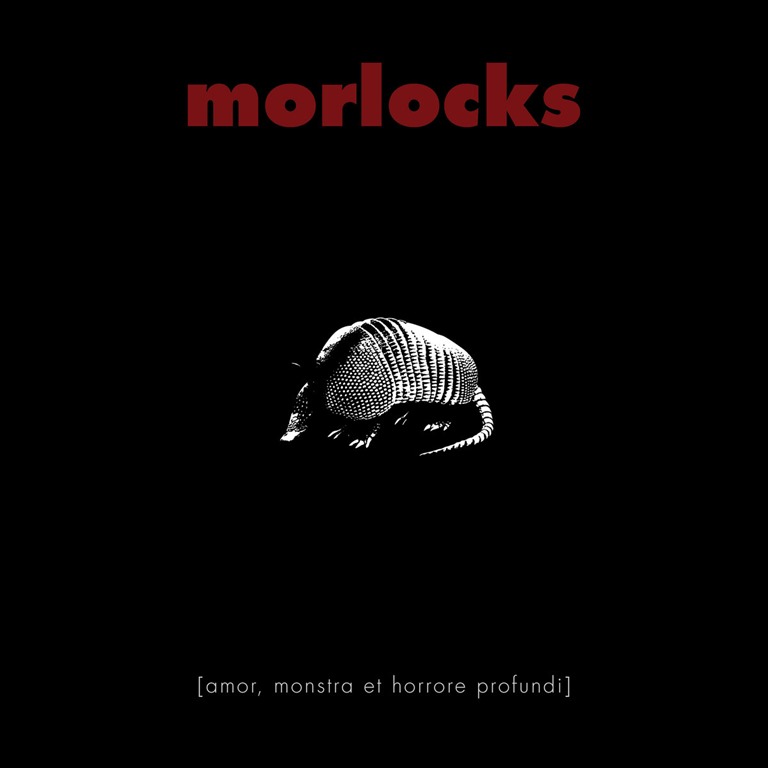
According to their bio, ‘Morlocks are a Swedish act who combine elements of industrial rock, neo-classical, darkwave and metal with epic production values to create an exciting hybrid sound. Having issued the long-awaited and well received album Praise The Iconoclast in late 2023, they subsequently promoted it with two US tours in 2024, both in support of their friends and occasional collaborators KMFDM.’

Asked about the inspiration behind the song, the band state: “Watch the world from a distance. Get angry at first, but also inspired. Take the darkest parts of it and twist them into something weird, beautiful and batshit insane – something that you could either dance to, brood in the shadows to or scream at the top of your lungs at the moon. Preferably all of the above. Everything can be turned into art, and art must hurt. Situation normal: all fucked up.”

‘Everything can be turned into art, and art must hurt’ is a phrase which stands out here. It may seem somewhat dramatic, but to summarise Buddha’s teaching, ‘all life is suffering’, or ‘life is pain’, and the function or art – true art – is to speak in some way of deep truths of what it is to be human. Art must therefore, reflect life and capture something of the existential anguish of the human condition. If it doesn’t, it isn’t art, it’s mere entertainment. And if the idea that ‘Everything can be turned into art’ may superficially seem somewhat flippant, a diminishment of serious matters, if the work is, indeed art, and not entertainment, then the obverse is true: using the pain of life as source material is the only way to interrogate in appropriate depth those most challenging of issues. In other words, making art from trauma is not reductive or to cheapen the experience – but making entertainment from it very much is.

There’s a snobbery around what constitutes art, even now, despite the breakthroughs made through modernism and postmodernism. It’s as if Duchamps had never pissed on the preconceptions of art for the upper echelons of society who still maintain that art is theatre, is opera, is Shakespeare, that art can only exist in galleries and is broadly of the canon. This is patently bollocks, but what Morlocks do is incorporate these elements of supposed ‘high’ art and toss them into the mix – most adeptly, I would add – with grimy guitars and pounding techno beats. Art and culture and quite different things, and those who are of the opinion that only high culture is art are superior snobs who have no real understanding of art or art history.

The five songs on Amor, Monstra Et Horrore Profundi are therefore very much art, although that doesn’t mean they don’t also entertain. ‘The S.N.A.F.U. Principle v3.0’ arrives in a boldly theatrical sweep of neoclassical strings and grand drama – and then the crunching guitars, thumping mechanised drums and raspy vocals kick in and all hell breaks loose. Combining the hard-edged technoindustrial of KMFDM – which is hardly surprising – with the preposterous orchestral bombast of PIG and Foetus bursting through and ascending to the very heavens, it’s complex and detailed and thrillingly dramatic, orchestral and choral and abrasive all at once.

With tribal drumming and bombastic, widescreen orchestration, ‘March of the Goblins’ has a cinematic quality to it, which sits somewhat at odds with the rather hammy narrative verses. It seems to say ‘yeah, ok, you want strings and huge production and choral backing to think it’s art? Here you go, and we’re going to sing about radioactive dinosaurs like it’s full-on Biblical’. It’s absurd and audacious, and makes for a truly epic seven and a half minutes of theatrical pomp that’s admirable on many levels. Ridiculous, but admirable.

‘The Lake’, split over two parts with a combined running time of over ten minutes explores more atmospheric territory, with graceful, delicate strings, acoustic guitar, and tambourine swirling through swirling mists before breaking through into a surging tower of power, melding crunching metal guitars with progressive extravagance, and medieval folk and martial flourishes.

Amor, Monstra Et Horrore Profundi is remarkably ambitious and unashamedly lavish in every way. Quite how serious are Morlocks? They’re certainly serious about their art. But while delivered straight, one feels there’s an appropriate level of knowingness, self-awareness in their approach to their undertaking. And that is where the art lies: theatre is acting. The stories told are drawn from life, and resonate with emotional truth: but the actors are not the action, and there is a separation between art and artifice. Amor, Monstra Et Horrore Profundi is something special.

AA

a2788665137_10

Partisan – 17th May 2024

Christopher Nosnibor

It feels like no time at all since I was reviewing the cassette release of Lip Critic II, and that their ascent from self-released EPs and cassette-only albums on microlabels has been astoundingly rapid, but time has a way of playing tricks when it comes to perception: Lip Critic II was, in fact, released almost four years ago. And now, signed to Partisan and having gained significant traction playing SXSW, with the NME claiming bragging rights for giving them a cover feature a few months ago, as well as a five-star review last November, they’re certainly breaking through. There’s no question that it’s entirely deserved, either: despite being overtly weird and clearly non-mainstream, they’re a quintessential cult alternative band, the likes of which gain substantial hardcore followings and are revered long after their passing.

With a lineup consisting of two drummers and two synths, Lip Critic are no ordinary band, and they produce no ordinary music, and Hex Dealer is a schizophrenic sonic riot. It’s a bit cleaner, the production rather more polished, but fundamentally, it’s the same deranged percussion-heavy cacophony that Lip Critic have always given us, and it’s still true that most of their songs are short and snappy – around two-and-a-half minutes. Consequently, Hex Dealer is aa succession of short, sharp shocks, like poking a socket with a wet finger. The whole thing is a spasm and a twitch.

‘It’s the Magic’ brings together a smooth croon that has hints of Marc Almond and some shouty rap mashed together with some Nine Inch Nails industrial noise and some woozy hip-hop beats and some aggressive drum ‘n’ bass, all in under four and a half minutes.

Lead single ‘The Heart’ is a standout, for is frenetic, kinetic energy, and its hookiness, but it’s a question of context: it’s a blissed-out pop tune in comparison to the blistering percussive onslaught and distorted dark hip-hop blast of ‘Pork Belly’, a cut that takes me right back to the early 90s, specifically the Judgement Night soundtrack. Single ‘In The Wawa (Convinced I Am God)’ is entirely representative of the album as a whole, compressing all of its warped elements into a noisy, spasmodic, hi-NRG two minutes and nineteen seconds. Crazed, hyperactive, it’s explosive and it’s unique.

It’s a rock album with rap trappings. It’s a rap album with rock trappings. It’s a mess and shouldn’t, doesn’t, work. Only, it does. And with ‘My Wife and the Goblin’, they introduce some gnarly noise which isn’t metal by any stretch, but it certainly gets dark near the end. I say ‘near the end’, but it’s only a minute and forty-one and it’s a real brain-melting mess of noise.

If the beats to grow a little samey over the duration of the album, the counterargument is that the thrashing percussive attacks give the set a vital coherence. Packing twelve tracks into just over thirty minutes, and more ideas per minute than any brain can reasonably be expected to process, Hex Dealer feels like Lip Critic’s definitive statement.

AA

a4093774739_10

Exile on Mainstream – 28th March 2024

Christopher Nosnibor

Cutting straight in with a big old guitar chug is a bold and hard-hitting way to open an album. No intro, no preamble, just big, beefy chuggernaut riffery. Bam! I’ve no aversion to a bit of intro a bit of preamble, but it’s refreshing to hit play and be smacked around the chops. The sound – and style – is quintessential grunge, and that grit, that grain, it has a grab that’s more than mere nostalgia, it’s a physical experience. But it very soon becomes apparent that Sons of Alpha Centauri are no generic grunge template rehashers, despite their adept use of the quiet / loud dynamics: ‘Ephemeral’, the opening song, draws in elements of quite blatant prog and classic rock, with melodic vocals and a reflective refrain of ‘Ephemeral… we are ephemeral’ that’s unashamedly prog in its ‘big, deep philosophical contemplations’ approach to lyrics. It’s certainly more ‘Black Hole Sun’ than ‘Smells Like Teen Spirit’.

Pitched as a ‘natural evolution’ to predecessor Push, they proffer ‘a powerhouse of searing post hardcore, alternative metal and progressive hazy rock’, where ‘Across the album, Sons of Alpha Centauri capture both a renaissance of the 90s post hardcore of their Sacramento luminaries, and a contemporary take on atmospheric dream-like rock music.’

Across the album’s nine tracks they straddle genre boundaries in a way that feels remarkably natural. Time was that I would be turned off by an album that was heavy instrumentally but not so heavy vocally – meaning I’d have been a bit hesitant about this. But it’s a mistake to perceive clean, melodic vocals as somehow weak or a detraction, as I discovered from listening to The God Machine and Eight Story Window, and Jonah Matranga packs in some emotional integrity into a strong set of songs.

‘Ease’ brings a watery-sounding bass and big, chunky guitar, and the combination makes for an unusual and interesting textural contrast, while the title track rocks particularly hard, the distorted guitar positively buzzing the speakers, Matranga giving a taut, tense performance.

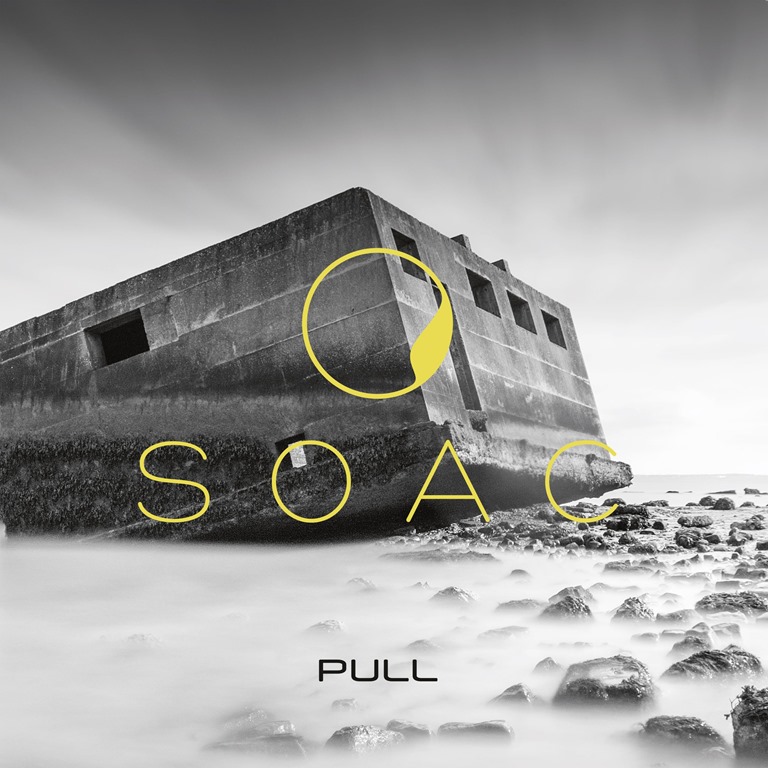
At times I’m reminded of Amplifier, and not only in their incorporation of space themes – only far grungier in their melding of flighty prog and ballsy guitar attack. The chord structures of the aching ‘The Ways We Were’ are reminiscent of Placebo, and while sonically and lyrically there’s no real similarity, something about the dynamics and the heightened tension that defines Pull do warrant comparison, especially the slower, sadder ‘Tetanus Blades’. Sitting in the very middle of the set, it makes for the perfect album structure, and it’s clear that Pull has been created, crafted, curated, as an album rather than just some songs. ‘Doomed’ brings delicacy and introspection, anger and anguish delivered with a downcast sigh and wistful guitars. On ‘Weakening Pulse’ the guitars shudder and shimmer, and there’s a blend of dark aggression and choppy accessibility about ‘Final Voyage’. With its refrain of ‘Regenerate, regenerate, regenerate’ I can’t help but think of Dr Who, but that’s no criticism, and despite the big, bold, ambitious songs and matching production, they manage to steer well clear of going Muse on us.

The songs are pretty concise – mostly sitting around the three-and-a-half to four-and-a-bit minute mark, but have all the hallmarks of bigger, more epic songs. Yes, the vibe is very much rooted in the alternative sound of the 90s, but painted with the broader palette of the twenty-first century, whereby more diverse and eclectic elements have come to be accepted. It seems strange to think in 2024 that back in 1994, rap/rock crossovers were pretty revolutionary, that the soundtrack to Judgement Night was groundbreaking. In time, it came to pass that we discovered more complimentary hybrids, and Pull is a demonstration of this. There’s much detail to absorb and these are very much early impressions – but with so much to assimilate, Pull has everything about it that makes for an enduring album which only digs deeper with repeat listens.

AA

920630

Janka Industries – 3rd May 2024

Christopher Nosnibor

Once again, I find myself tussling with a jazz album and in a quandary as to quite what to make of it. For many, many years, I was absolutely certain I detested jazz. Until, that is, having been introduced in my line of work to acts like The Necks, I came to learn I’d simply been exposed to the wrong kinds of jazz. The weirdy, noisy, cacophonous kinds of jazz made sense in context of my appreciation of mathy noise rock, and wasn’t such an immense leap from Shellac to be incomprehensible. Like any genre, or even tea or coffee, it’s all about finding a point of entry, a flavour that suits your palette. I used to hate both tea and coffee, having been given the former with full-fat milk and sugar and the latter in the form of a fairly weak blend with milk but no sugar, and they only really clicked when I ditched the sugar and discovered Earl Grey, and that you could have really dark-roast coffee with no milk and a shovel-load of sugar. So, you know, you find your thing.

And then along comes Lutebulb, by Blueblut.

The blurb isn’t wrong in describing Blueblut’s lineup as ‘highly unusual, bringing together ‘three musicians acclaimed for exceptional contributions to their respective spheres in experimental jazz, electronica and rock.’ It’s a jazz-centred fusion, for sure, but it’s not jazz fusion as one tends to think of it, and certainly not as I’ve come to understand it. So what is it? As we learn, ‘Lutebulb is the fabulous culmination of ten years of intensive touring, with the Vienna based trio of Pamelia Stickney (theremin, vocals), Chris Janka (guitar, loops, samples) and Mark Holub (drums, vocals, percussion) socking it to global audiences with an international polystylistic musical language which takes in improv, jazz, avant-rock, ska, folk and Krautrock among other elements.’

There’s certainly a lot going on: initially, it comes on a bit laid back, not so much loungey as a smug muso pop collision of jazz and Latin dance, and I suppose the title, ‘Cocktail’ is something of a giveaway as to its swinging party vibes, but then shit happens – particularly some pretty crazy guitar work, and the percussion goes big and suddenly the party’s been crashed by a towering riot of sonic chaos, before suddenly, the entertainers seemingly remember themselves, pull their ties straight again and try to pull together some semblance of a funtime groove.

This sets the album’s template, really. Tracks tend to begin a bit kinda loose, a bit kinda boppable, a bit pool party fun times, albeit with some weirdness in the way the rhythms and the notes don’t quite chime in the conventional ways, and you wonder if it’s maybe the punch or the heat, but the tempo drifts a bit, first one way, then the other, and then maybe something doesn’t quite feel right, and it certainly doesn’t sound right and… what is going on? The room’s spinning and there are all sorts of random noises and you can’t tell if it’s people losing the plot or if some chickens have escaped and the sky’s falling in.

‘Aumba’ starts rather differently, a gentle piece led by acoustic guitar that brings a more reflective atmosphere, but it takes a hard swerve, the pace picks up, there are choral chanting vocals and then a handbrake turn into buoyant math-rock territory before some truly frantic fretwork. And because more surprises are needed, from nowhere, we get a crooning lyrical ballad in the last couple of minutes.

There’s unpredictable, and then there’s Lutebulb, which emerges with a fourteen-minute centrepiece of oddball experimental jazz that mashes absolutely everything together: one minute, I’m reminded of America’s ‘Horse With No Name’, the next, it’s Paul Simon’s Graceland and a Joolz Holland world music extravaganza. Then, somewhere in the midst of it all, we get the jazz breakdown with erratic percussion and space, dogs barking, and then, something else again. Led Zep riffage. Noise. More dogs barking. Every time I leave the house, the streets and parks and fields are like bloody Crufts, and the headfucking noise that’s emanating from my speakers – mostly a horrible conglomeration of barking and a strolling bass is making me angry and tense. And then the last piece, ‘Kaktusgetränk’, incorporates a familiar and popular jazz piece I can’t place or be bothered to research because by now I can’t decide if I need a lie-down or a massive gin.

With Lutebulb, Blueblut have created one of the most wildly varied – and in places, difficult, irritating, random – albums I’ve heard in a long time. I neither like nor dislike it: it has some truly great moments, and it has some not great moments. But when you throw this much into the blender, it’s to be expected, and I’d like to think that this kind of reaction isn’t entirely unexpected. The musicianship is outstanding, and their capacity to switch style, tempo, form, is something else, and the results are enough to leave anyone punchdrunk.

Blueblut – Lutebulb cover 1240px