Posts Tagged ‘Harsh’

29th November 2025

Christopher Nosnibor

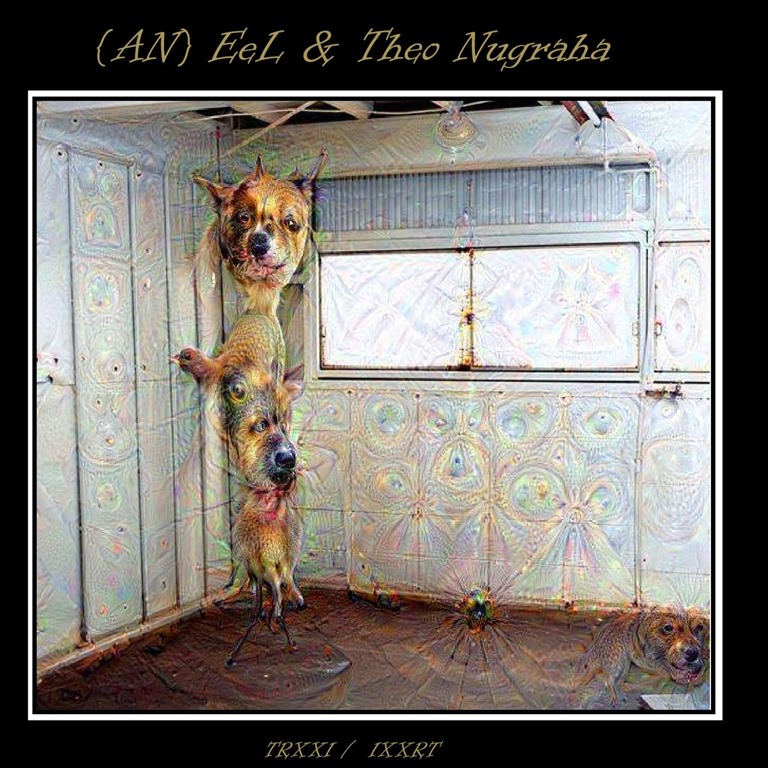
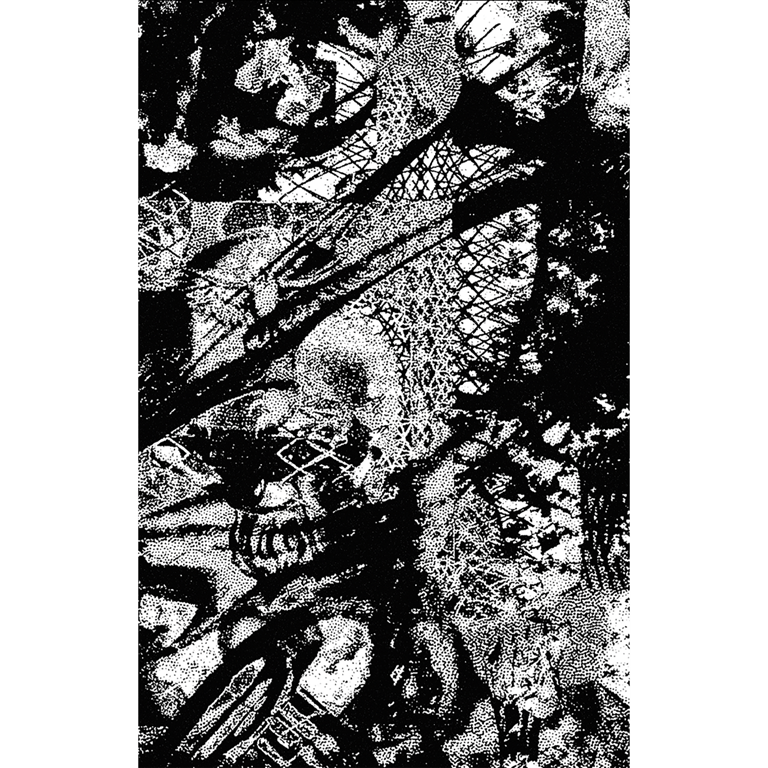
It’s not a good thing to feel nostalgia for something from the recent past which wasn’t even any good to begin with. But on seeing the cover for this split release by Theo Nugraha and {AN} EeL, I’m reminded that Google DeepDream was actually quite fun for about five minutes in 2015. Ah, hindsight… The results DeepDream produced were weird, psychedelic, trippy, and resembled no dream or subconscious thoughts I’ve ever known, its hallucinatory aspects were oft said to share qualities with LSD. But this was part of the appeal: it was novel, silly, with dog faces emerging from inanimate objects, whappy wallpaper, and the like. How many of us knew that it would be a precursor to the AI hell we now find ourselves in? Ten years is not such a long time in the scheme of things, but in the context of the now, it feels like another lifetime. A lifetime when doing daft stuff with digital tools wasn’t annihilating the environment, when it wasn’t stealing the work of writers and artists, when it wasn’t rendering jobs obsolete while creating billionaires at the expense of those losing their livelihood. Arguably, the golden age of The Internet was in the first years post-millennium, when applet-based chatrooms first made it possible to connect in real-time with people around the globe and MySpace was a wild melting pot where people came together through shared interest and communities evolved. This isn’t just some nostalgia wank: these were exciting times, and the world truly began to open up in ways hitherto unseen. These were times when The Internet offered freedom, where, as Warren Ellis’ novel Crooked Little Vein expounded, anything goes and if you could imagine it, you’d find it online. Godzilla Bukkake? You got it.

Everything changed when major corporations realised that they could really, really make on this. But major corporations being major corporations, they didn’t want to participate – they wanted to take over and own it, to wring every penny of profit from every last keystroke. And so now, while Napster and Soulseek were the equivalent of home taping, which didn’t kill music, Spotify and most other major streaming services really are damaging artists’ livelihoods – because unlike small-time peer-to-peer file sharing, this is a multi-billion dollar industry which siphons off pretty much all of the money for owners and shareholders rather than artist – and then you have scums like Daniel Ek using those proceeds to fund war. Something has gone seriously wrong.

Theo Nugraha’s contribution, 1XXTR is a longform work – seconds short of thirty minutes – and while it’s perhaps not quite Harsh Noise Wall, it’s most definitely harsh noise, and there’s not a lot of variation. It may even be that any variation is in the imagination as the mind struggles to process the relentless barrage of sound and seeks tonal changes, details within the texture. It doesn’t so much sound like a cement mixer – more like being in a cement mixer with half a ton of rocks, at the heart of an atomic blast. There are squalls of feedback and mutterings beneath the blitzkrieg, and around ten minutes in, the tempest suddenly begins to rage even harder and it’s like being hit by a train. Twenty minutes in, the relentless roar drops to merely the blast of a jet engine and the sensation is like huge pressure drop, or a fall. It’s impossible to discern what’s going on inside this swirling vortex of noise (there does sound like a vast amount of collaging and random things floating in and out), but it’s a full-on physical assault that vibrates every cell in the body. By the end of this most brutal half hour, you feel battered, bruised, damaged.

‘TRXX1’ by {AN} EeL, which runs for a second over the half-hour mark, is altogether less abrasive, but it’s no more comfortable. At first, it’s a clattering, metallic rattle, like an aluminium dustbin rolling down the street in a gale, accompanied by rattles and chimes. Extraneous noises – twangs and scrapes – enter the mix, and the sound starts to build, like the wind growing stronger at the front-end of a storm. But soon, from nowhere, a squall of static – or rainfall – begins to swell and while off-tune notes reverberate in the background, and a scan of radio stations yields alternately cut-up fragments and random noise, and while it may not possess the same physical force as Nugraha’s piece, ‘TRXX1’presents a disturbing array of frequencies and makes for a particularly tense listen. There’s a thunderous ripple like a freight train a mile long barrelling along, while disjointed voices echo here and there, and as bhangra and old-time brass fade in and out, the collage approach to the track’s creation, harking back to William Burroughs’ tape experiments, and early Throbbing Gristle become increasingly apparent. The Police’s ‘Can’t Stand Losing You’ cuts through what sounds like a snippet from lecture or interview. The repetition of the same fragments becomes difficult to deal with after a time, and you begin to feel like you’re cracking up. The it’s back to the sound of metal buckets being dragged down a cobbled street, with random busts of discordant noise jabbing in for extra discomfort. The final segment is a cacophony of abstract drones and crashing, calamitous racketry – a combination which is uncomfortable and unsettling.

The two pieces are quite different, but equally difficult in their own ways, and as such compliment one another. And if you’re seeking an album that really tests your capacity for abrasion and nauseating noise, 1XXTR / TRXX1 hits the spot like a fist to the stomach.

AA

a2950925012_10

Dret Skivor – 3rd October 2023

Christopher Nosnibor

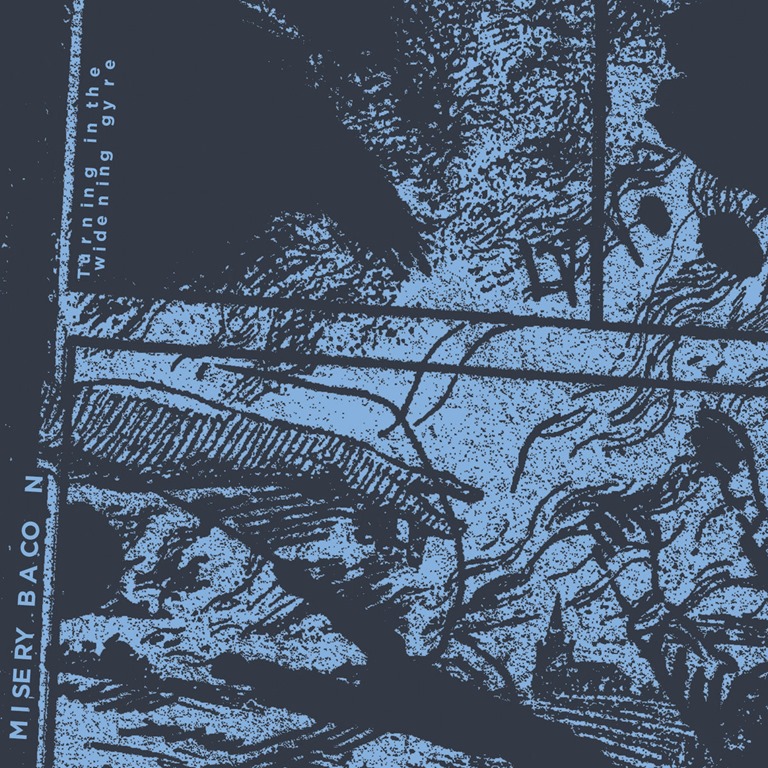
This is proving to be a particularly good week in the world of noise, what with Foldhead’s Paris Braille and this being released on the same day. There’s more information given about this release than most to slip out from Swedish underground label Dret Skivor – in that there is actually some. We learn that the work was ‘Recorded and assembled on residency at Bergen Centre for Electronic Arts, Leveld AIR and Gallery ASK, Norway 2025’, and that the ‘Album and song titles taken from / inspired by WB Yeats ‘The Second Coming’’. We also learn that Misery Bacon is the vehicle of Bergen’s Luke Drozd. It’s not clear if this is one of those monikers that’s amusing because translation, or if it’s a case of humour that doesn’t translate geographically, like Die Toten Hosen. I’m sure dead trousers are a massive wheeze in Germany, but here it’s vaguely surreal but mostly a bit odd. Then again, ‘Misery bacon’ makes me think of all the moaning gammons we have here in the UK, red-faced and chuntering into their Carling about ‘immagrunts’ and how everything’s ‘bloody woke’ nowadays.

It contains two longform pieces, each filling a side of the cassette release – of which there are just six copies – ‘Every finger double crossed as things fall apart’, and ‘Shambling onwards in the shadows of indignant birds’, and neither literary allusions or social commentary are apparent in the work itself.

‘Every finger double crossed as things fall apart’ starts with some sampled dialogue and an array of pops, clicks, whirrs and glops, a swampy collage of seemingly random elements layered across one another. It’s atmospheric, but also difficult to get a handle on any idea of where it’s headed, if there’s any theme or concept that connects the diverse sources. But soon, serrated drones and distortion build to a sustained whorl of noise atop a quivering bass judder. Five minutes in, and it’s an all-out assault worthy of Merzbow or Kevin Drumm. It’s noise, and it’s harsh, but it’s an ever-shifting, seething mass of tinnitus-inducing tones and textures, at time fizzing and crackling in such a way as to give the impression that the sound is actually inside your own head, rather than reaching the brain from an external source. There’s a niggling crackle of static that sounds like there might be a problem withy your equipment. This is most pronounced and unsettling during a quieter spell of jangling metal which sounds like a light metallic object being rattled against a metal fence, or the clattering of cutlery. It’s a piece that slides and slithers hither and thither, and sits well against Throbbing Gristle’s most experimental, abstract works. Towards the end, it does feel like it could be the soundtrack to the collapse of everything. Listening to it while the US government is in shutdown, Israel seemingly continues to level Gaza despite a supposed ceasefire, hundreds of people are arrested in London and other cities for protesting against genocide, and Russia continues to expand its campaign of interference across Europe, it’s hard to feel much positivity.

On a personal level, the present feels overwhelming. The world is at war. The world is on fire, and at the same time that we have drought, we have flooding. But instead of coming together collectively to address this global crisis, as a species, we’d rather bomb the fuck out of one another. And with shootings, mass knife attacks and all manner of savagery taking place daily, it really does feel as if humanity has descended into a spiral of insanity and self-destruction. And there are really no words to articulate the panic and anguish of all of this. Music and literature may provide a certain comfort and distraction, but it’s in sound alone – more specifically, sense-shattering noise – that I find something which articulates the experience of living in these torturous times.

And so it is that ‘Shambling onwards in the shadows of indignant birds’ returns to the sampled dialogue which opens ‘Every finger double crossed as things fall apart’, before plunging into a mess of static cackles and hiss. It’s a Bladerunner world of rust and robotics gone wrong. It’s murky and it’s unsettling. A blast like the roar of a jet engine momentarily hampers the hearing, and we sit, dazed, in the comparative quiet of crackles and pops. There’s a mid-track lull, which feels uncomfortable as whistles of feedback and laser bleeps criss-cross before collapsing into a broken wall of noise on noise.

Turning in the widening gyre is harsh, heavy, bursting with uncomfortable frequencies. The final minutes are nothing short of punishing. And yet, at the same time, that punishment offers vital release. This is where you get to let go. At last.

AA

a2298054435_10

Editions Mego – 10th October 2025

Christopher Nosnibor

This is a monster. A monster that’s been roaring and raging for twenty-three years now. The appropriately-titled noise classic, Sheer Hellish Miasmah, was first released in 2002. It remains a pinnacle of abrasive noise after all this time. To say that Kevin Drumm has released a lot of albums would be an understatement: as is the case with many experimental / noise artists, the likes of Merzbow, and myriad lesser known underground noise acts he’s cranked out multiple albums per year, and the question of quality versus quantity becomes an obvious point of debate, or even potential friction. But when it comes to Sheer Hellish Miasmah, there’s no real debate: the consensus is that it’s a classic in its field.

I step back for a moment to present the summary offered in the press release: The history of Drumm’s Sheer Hellish Miasma is one of resilience to the twists of underground trends that have come and gone since its initial release. Using guitar, tape manipulation, microphones, pedals, analog synthesizers, and subtle computer processing, Sheer Hellish Miasma is an overwhelming experience: a sonic onslaught of storming feedback, fractured textures and an unrelenting energy. At once brutal and meticulously composed, the album offers a singular vision at the outermost edges of sound art.

And here it is, reissued on four sides of vinyl. I assume it’s nice and black and heavy and shiny, because I’m working from an MP3 download, as is the way these days. Does vinyl sound better? It depends on your kit. And your ears.

A lot of extreme noise albums are mercifully brief, presenting a short, sharp shock. Not so Sheer Hellish Miasma, which presents a sustained and truly brutal assault, with five tracks stretching out for well over an hour, some sixty-six torturous minutes. The track sequencing has been altered, with the two longest tracks first, and ‘The Inferno’ is split over sides B and C.

The first, ‘Hitting the Pavement’ is a twenty-minute blast of oscillating, pan-heavy drone and distortion. As grating sinewy nose and distortion riven with feedback hard enough to annihilate even the toughest eardrum, the discomfort levels are high. Sunn O))) may be hailed as pioneers of heavy drone, but Drumm’s activity is contemporaneous, taking electronica to the same extremes and over the same epic durations. The first couple of minutes of ‘The Inferno’ are gnarly, overloading crackle and pop, stutter and static that give you cause to wonder if your speakers are fucked or there’s something wrong with either the recording or your equipment (something I genuinely experienced when I first heard Whitehouse – having downloaded a couple of tracks via Napster back in the day, I deleted the files and searched elsewhere as I assumed the files were corrupted). But no, it’s supposed to sound this fucked-up, and it burrows into your skull in the most intense and uncomfortable way. Over the course of twenty-four minutes, he gives the listener’s ears a proper kicking, and more, seemingly conjuring new frequencies and discovering infinite new angles from which to deliver a truly brutal sonic assault.

At times, it’s like having a road drill applied directly to the head. Full-on doesn’t even come close. It’s not just the frequencies, either: it’s the jagged, abrasive textures that graze hard enough to draw blood. And there is absolutely no respite. Glitching laser bleeps shoot across grinding earthworks. It’s the sound of total annihilation. The album’s title provides the perfect summary of its content: it is absolutely, mercilessly, hellish.

If ‘Cloudy’ offers a momentary pause to breathe and feel the tinnitus, the sawing oscillations of ‘Impotent Hummer’ hit with all the more impact, a persistent buzz that grates away at every sense. The effect is cumulative, and the reaction is physical. The track’s thirteen minutes is a test of endurance. ‘Turning Point’, which now closes the album, leaves the listener with an obliterative thrum, which, while comparatively mild in terms of its attack, is insistent, and again feels like a considered, targeted sensory assault.

Sheer Hellish Miasma is a hard listen – but it’s not hard to understand how it’s come to be considered an outstanding noise album. It’s not for the feint of heart.

AA

eMego053V front

Cruel Nature Records – 12th September 2025

Christopher Nosnibor

Postmodernism, emerging primarily as a product of post-war America was defined by hybridity, the demolition of parameters and distinctions between different cultures, genres, and was, in many respects, tied to the accelerating pace of technological development, in particular the globalisation of communications and beyond. But postmodernism also not only recognised, but celebrated, the fact that originality has finite scope, and that anything ‘new’ will by necessity involve the reconfiguration of that which has gone before. Shakespeare had all the ground to break in terms of the advent of modern literature, and one might say the same of Elvis and The Beatles with the advent of rock ‘n’ roll and pop respectively. The reason the 80s were such a watershed was because technology revolutionised the potentials for music-making, and while this saw a huge refraction in terms of creative directions, from industrial to electropop, one could reasonably argue that the next leap in music after 1985 came with house and techno.

Post-millennium, it feels like there is no dominant culture, no defining movement, underground or overground: the mainstream is dominated by a handful of proficient but in many ways unremarkable pop acts, and notably, it’s largely solo artists rather than bands, and while there are bands who pack out stadiums, they tend to be of the heritage variety. At the other end of the spectrum, the underground is fragmented to the point of particles. There are some pros about this, in that there is most certainly something for everyone, but the major con is that unlike, say, in the mid- to late-noughties, when post-rock was all the rage, there’s no sense of zeitgeist or unity, and right now, that’s something we could really do with.

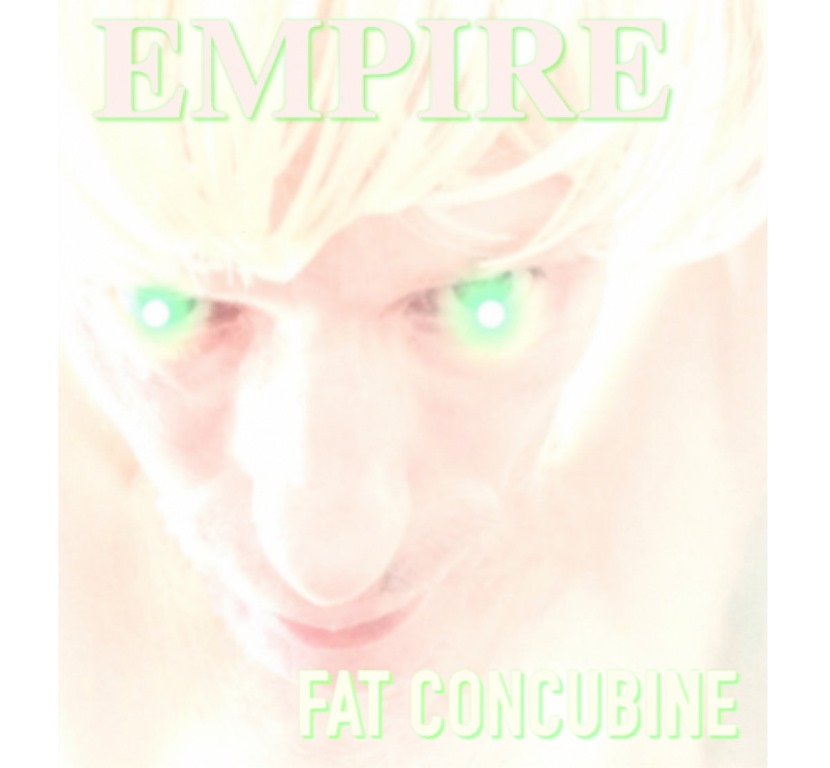
Fat Concubine are most certainly not representative of any kind of zeitgeist movement. With a name that’s not entirely PC, the London acts describe themselves as purveyors of ‘unhinged dance music’, and Empire is their debut EP, following a brace of singles. The second of those singles, ‘for Whom the Fools toll’ (with its irregular capitalisation, which is a bit jarring), is featured here, along with four previously unreleased tracks. This is a positive in my view: so many bands release four, five, or six tracks as singles, and then put them together as an EP release, which feels somewhat redundant, apart from when there’s a physical release.

And so it is, in the spirit of wild hybridisation, that they’re not kidding when they say their thing is ‘unhinged dance music’, or as quoted elsewhere, ‘unhinged no wave ravers’. ‘Feeding off the dogs’ pounds in melding angular post-punk in the vein of Alien Sex Fiend with thumping hardcore techno beats, and it’s not pretty – although it is pretty intense. The snare drum in their first thirty seconds of ‘for Whom the Fools toll’ takes the top of your head off, and the rest of the ‘tune’… well, tune is a stretch. It’s brash, sneering punk, but with hyperactive drum machines tripping over one another and a stack of synthesized horns blaring Eastern-influenced motifs.

There are hints of late 80s Ministry about ‘When we kick Their front door’, another synth horn-led tune that begins as a flap and a flutter before a kick drum that’s hard enough to smash your ribs thuds in and pumps away with relentless force. If the notes didn’t mention that it was a perversion of ‘These Boots We’re Made for Walking’, I’d have probably never guessed. As the song evolves, layers and details emerge, and the vibe is very much reverby post-punk, but with an industrial slant, and a hint of Chris and Cosey and a dash of The Prodigy. If this sounds like a somewhat confused, clutching-at-straws attempt to summarise a wild hotch-potch of stuff, to an extent, it is. But equally, it’s not so much a matter of straw-clutching as summing up a head-spinning sonic assault.

‘tiny pills’ is a brief and brutal blast of beat-driven abrasion, with a bowel-shaking bass and deranged euphoric vocals which pave the way for a finale that calls to mind, tangentially, at least, Cabaret Voltaire’s ‘Nag Nag Nag’.

The version of ‘O so peaceful’ was recorded live, and builds to an abstract chanting drone work. It offers a change of angle, but is no less attacking, its percussion-heavy distorted, shouting racket reminiscent of Test Department and even Throbbing Gristle, particularly in the last minute or so, and you can feel the volume of the performance, too. This is some brutal shit.

Empire is pretty nasty, regardless of which angle you approach it from. It’s clearly meant to be, too. Harsh, heavy, abrasive, messed-up… these are the selling points for this release. And maybe having your head mashed isn’t such a bad thing if you’re wanting to break out of your comfort zone and really feel alive.

AA

a1581875889_10

Foldhead had making noise for some time. Nosnibor had spent the last few months taking steps beyond the staid spoken word scene via a series of ‘versus’ collaborations with experimental artists in and around York. So when Foldhead put out a shout out on Facebook for a collaborator to provide vocals for a set he was booked for, Nosnibor’s name cropped up.

The pair met for the first time on the day. Consequently, no one knew what the fuck to expect, least of all the two guys plugging into the PA. In an instant, a ‘third mind’ moment occurred, yielding noise terror which was infinitely greater than the sum of the parts. In that moment, they knew that this had to be the start of something. And so it was that …(something) ruined was born.

This is a document of that first explosive coming together.

Recorded live at Chunk, Leeds, 1st March 2019.

AA

AA

a0385340140_10

11th June 2025

Christopher Nosnibor

Some artists thrive on collaboration. Deborah Fialkiewicz is one of those. While she’s prolific as a solo artist, the volume of collaborative works in her discography is also noteworthy: when she’s not working as part of SPORE, she’s part of the ever-rotating lineup of BLOOM – and that’s before we touch on the frequent collaborations with (AN) EeL, the most recent of which was only released three weeks ago.

The Improvisation Sessions was recorded live May of this year, with a lineup of Dan Dolby, Deborah Fialkiewicz, and John Koser, marking an expansion from the duo which recorded the trilogy of Parallel Minor, Besides, and Hybrid in 2020. Fialkiewicz is without doubt an artist with range, but one who favours the dark end of the ambient spectrum more often than not, and this is very much the case here.

The Improvisation Sessions features two longform tracks which would quite nicely align with a vinyl release.

‘Chameleon Soul’, which spans a colossal continuous twenty minutes, begins with low, rumbling ominous drones, but soon escalates to a busy, buzzy criss-cross of sounds, interweaving and interlacing, leaving one’s head in a spin as if after trying to trace several flies flitting about the kitchen on a hot summer’s day for any period of time. It’s a morass of warping tones overlaying a ballast of churning noise, and any comparisons to Hull luminaries Throbbing Gristle or Merzbow are entirely justified.

The layers of distortion only grow denser and gnarlier as the track progresses, crashing waves of white noise blast in from one side and then the other as they really push to test the stamina. And then you realise we’re only six minutes in. This is a positive: plenty more left to enjoy… Enjoyment is of course subjective, and enjoyment of this requires being appreciative of a dizzying, disorientating assault simultaneous with a full-on white noise blizzard.

The momentary lulls, the spells where they pull back from the precipice of all-out aural obliteration, are far from mellow, as serrated spurs of hard-edged drones, wails of feedback and brain-melting extraneous noise conglomerate to seismic effect. There are some nasty high-end frequencies knocking about in the mix, moments were one has to check if the whistle is coming from the speakers of if it’s that troublesome tinnitus nagging again, and said frequencies rise from a battery of ugly distortion, bone-shattering blasts of which simple explode around the twelve-minute mark, and from hereon in, things only grow harsher, more corrupted, more intense, more difficult to withstand. We’d be inching into polythene bags on heads territory were it not for the variation, but the last three minutes or so are fractured, damaged, and agonizing – part power electronics, part circuit meltdown.

As the world becomes evermore and increasingly fucked up, I find words fail me more by the day. It’s harder to articulate, and this is where I’ve found that sound has come into its own. Sound as the capacity to convey something beyond words, something that lies in the most innermost parts, giving voice to the subconscious, even. On The Improvisation Sessions, BLOOM convey anxiety, gloom, pessimism.

‘The Dark Room’ is indeed dark, constructed primarily around a fixed but thick, distorted hum. Oscillators whine and whistle, and something about it calls to mind Whitehouse around the time of Never Forget Death, when they discovered low-end frequencies and restraint, the impact of a low undulating wave and subtle tweaks of reverb.

It rumbles and drones on, eddying and bouncing around in a shrilling mesh of dissonance. There isn’t a moment where this is an easy listen, and so often, it sounds as if the equipment is faulty, whether it’s a stuck loop or generating unexpected noise.

This set hangs on the edge of ambience, but be warned, it’s dark, and noisy at times, to the extend that it may shred your brain. For me personally, that’s my idea of fun, so it gets a two thumbs up, but for the more sensitive, this is a release to approach with caution.

AA

a3419622385_10

Panurus Productions – 2nd May 2025

Christopher Nosnibor

Northern noisemongers Belk are no strangers to the virtual pages of Aural Aggravation: I personally first caught them live as a duo back in 2021, when I remarked in my review that as fierce as they were, they might benefit from some bass. I could never have imagined just how much. These days, their sound is dominated by some juddering low-end that’s practically arsequake. It’s as if they thought ‘you want some bass, eh, bastard? Here’s some fookin’ bass. BOWWWWWWWMMMM’. They’ve certainly evolved over the last four years – but what that means, in real terms is that they’ve developed methods of making noise that’s even more nasty and gnarly and generally unkind to the eardrums. This is a good thing, and ‘Flayed’, the first of their two contributions to this split release is a beast. It has a definite and undeniable sense of swing to it, a swaggering groove that’s somewhat unexpected. But what is expected – and delivered – is a crashing riot of noise, a juddering wall of distortion, squalling, dirty guitars, drums blasting at a hundred miles an hour and guttural vocals half-submerged by the swirling chaos, with tempo changes galore and simply all hell happening at once inn explosive, brutal frenzy.

‘Cloak of Bile and Oil’ begins a little more gently – and for a moment I’m reminded of the intro to Fudge Tunnel’s ‘Hate Song’, which inevitably bursts into shards of incendiary sludge and squall – and sure enough, so does this, the extended intro giving the deluge of noise even more impact when it finally does arrive. They describe their style as ‘Blackened Leeds Hardcore’ and this must surely be a definitive example of what that means.

Casing are an unknown quantity, and their two contributions are brief – the longest piece is just over two minutes in duration. The sound they offer is certainly no less abrasive or disturbing. There’s nothing to indicate what the initialisms of the song titles actually mean, but the electronic excursion which is ‘L.U.A.N.L.B.’ begins with some rumbling dark ambience, soon rent with the wail of siren-like feedback, before a wall of harsh noise distortion swells like a tsunami and swallows everything. In contrast, ‘D.T.H.D.T.C.’ launches headlong into a gut-churning blast of manic grind, with a nauseating bass churn to rival that of Belk.

What it lacks in duration (the four tracks have a combined running time of less than eight minutes), this release more than makes up in devastating intensity. Mission accomplished.

AA

cover

Room40 – 9th May 2025

Christopher Nosnibor

Merzbow is an artist who requires little to no introduction, and one with a catalogue so immense – with in excess of five hundred releases credited – it’s beyond daunting for not only a beginner, but even a keen noise-lover. This is the reasons I personally own very few releases, and have only picked up a few incidentally along the way.

As Masami Akita approaches seventy, and Merzbow marks forty-five years of noise, this output shows little sign of abating, but it does seem an appropriate time to reflect on some previous releases which may be considered either ‘classic’ or ‘pivotal’. 1994s Venereology has been receiving some retrospective coverage of late, revered largely on account of its reputation for being the loudest, harshest thing ever, ever.

But here we have a reissue of The Prosperity Of Vice, The Misfortune Of Virtue, released a couple of years later, a much lesser-known work, but still during what’s broadly considered to be the golden era of the 90s, and, as the accompanying notes suggest, it’s ‘one of a series of unique editions from his vast catalogue that reveals a side of his practice often under represented.’

During the late 1980s and into the 1990s, Masami Akita was sometimes working on film and theatre music. In this space he created a series of recordings that capture the full scope of his sound worlds.

Given the nature of these settings, his compositional approaches were varied, seeking to create both intensely crushing walls of sound and more spatial, and at times rhythmic, pieces that plot out an approach to sound making which atomises his universe of sound, and uncovered the singular detail that is often consumed in the whole.

The Prosperity Of Vice, The Misfortune Of Virtue is the soundtrack to the theatre piece Akutoku no Sakae/Bitoku no Fuko by Romantica. Based on Marquis de Sades’s Historie de Juliette ou les Prosperités du vice & Les Infortunes de la vertu, this recording was originally released with limited distribution and remains one of the lesser available Merzbow recordings.

Completely remastered and contains an additional cut from those original sessions, this reissue of The Prosperity Of Vice, The Misfortune Of Virtue presents nineteen blasts of noise and rumbling and shrieking, scraping discord and dissonance. Many of the pieces are brief – a couple of minutes or so – and there is so much texture and tonal rage here, its sonic vision is remarkable. To many, of course, it will just ne noise – horrible, nasty, uncoordinated noise. But listen closer, and there is a lot happening here. The noise is, indeed, nasty, and the output is, brain-blasting chaos, for sure. But what these untitled pieces showcase is an intense focus and an attention to detail which is so much more than brutal noise. The Prosperity Of Vice, The Misfortune Of Virtue is, comparatively speaking, not that harsh – although when it is harsh, it’s absolutely next-level brutal with shards of treble exploding in walls of ear-shredding punishment. It contains a lot of clattering and crashing, like bin lids being dropped, and cyclical, thrumming rhythmic pulsations. There are tweets and flutters, bird-like chirrups flittering above cement-mixer churning grind with gnawing low-end and splintering treble, overloading grind and would oscillations.

The Prosperity Of Vice, The Misfortune Of Virtue is the sound of a man pushing all the buttons and turning all the dials at once and seeing just how far he can tweak them. There are moments of minimalism, of slow, stuttering beats, of mere crackles, passages one might even describe as ambient – a word not commonly associated with Merzbow. But the way in which The Prosperity Of Vice, The Misfortune Of Virtue explores these dynamics, and contains quieter more delicate segments, not to mention some bleepy electronica that borders on beat-free dance in places, is remarkable: while so much noise is simply repellent to anyone who isn’t attuned to it, The Prosperity Of Vice, The Misfortune Of Virtue offers engagement and offers openings to listeners with a broader interest in experimental music.

Eclectic is the word: we hear a chamver orchestra at the same time we hear strings being bent out of shape and what sounds like a Theremin in distress. While a fire alarm squawks in the background. This is everything including the kitchen sink. Imaginative and experimental, it’s noise with infinite dimensions.

AA

RM4195 front

Brooklyn bruisers Cash Bribe are back with their third EP, Demonomics, dropping June 13, 2025, via Futureless. This marks their first release on the label, and they’ve never sounded louder, sharper, or more furious.

Leading the charge is the blistering first single, ‘Death Tax,’ now streaming everywhere.

Listen now:

AA

Of the single vocalist Joe Dahlstrom: says, “’Death Tax’ comes from thinking about entropy and decay. Nature can be cruel, violent, and indifferent — the suffering seems pointless — but accepting and understanding the terms of our existence comes with a certain viriditas, an empowering vitality to approach it head-on.”

Guitarist Kirk McGirk adds, “This one made it into our live sets pretty quickly – people would respond to it pretty well, and we like when we do something that makes people move.”

a0585114272_10