Posts Tagged ‘Groove’

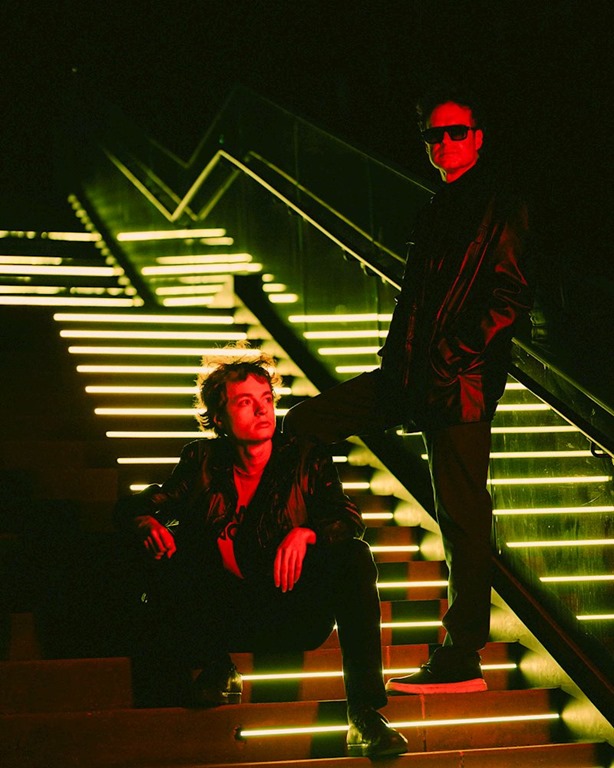
Filmmaker Pavel Vishnevsky returns to collaborate again with Paradox Obscur, bringing a dynamic new visual interpretation to ‘Like A Freak’, an electrifying track from IKONA, the recently released new album by the Greek synth duo.

In a vivid performance, Nicola Di Pierro defies cliché and convention, embodying the song’s spirit of freedom and self-expression – because everyone, regardless of age, has the right to dance. The result is a cinematic celebration of exuberance and individuality, amplifying the pulse of Paradox Obscur’s kinetic sound.

‘Like A Freak’ opens side 2 of IKONA with a wild jolt, pulsing with the edge of the Hexagon house music label’s rebellious spirit. Powered by the Behringer Crave synthesiser, it spits out raw analog grit – the bass growls, the synths snarl – creating a feral, ecstatic soundscape that is as visceral as it is infectious.

Lyrically, ‘Like A Freak’ explores the duality of ego; the composed persona we present to the world versus the wild, unfiltered self that thrives in secret. It is a song for those sweaty, sunrise hours when inhibition fades, judgement dissolves, and you move only for yourself as you ask: Does it make you click? / Now it’s time to go deep. / Way deep. Like a freak. / Taste my analog kick!

AA

0631b1dae417a364c26f8af59510d7ba29ffd0fe

Nocturnal Rainbow Recordings – 5th September 2025

Christopher Nosnibor

One significant downside to digital music formats is that is reduces the dimensions of the experience. With a record, and even a CD, there is a physicality which is in many ways integral to the experience. I’m not here to sell the whole multi-sensory experience and tactility of vinyl line: yes, I grew up with vinyl, and in the 90s, a new LP was maybe £7.50 while a CD was £11, so I would often buy vinyl simply because I could get more music for my money. And records do scratch, sleeves get bent, and generally, vinyl requires more care than a CD, so I’m as much a fan of 5” silver discs as I am 12” black ones. And now, vinyl has become something of a fetishised luxury item: as much as there’s still pleasure to be had from sliding a thick chunk of wax cast in whatever hues from a glossy, heavy card sleeve, there’s sometimes a sense that they’re all trying too hard, and the £30 price tag takes some of the shine off the experience. There are a few exceptions – recent Swans releases have been works of art in every sense, and the physical formats have added essential dimensions to music which is something more than just some songs, recorded.

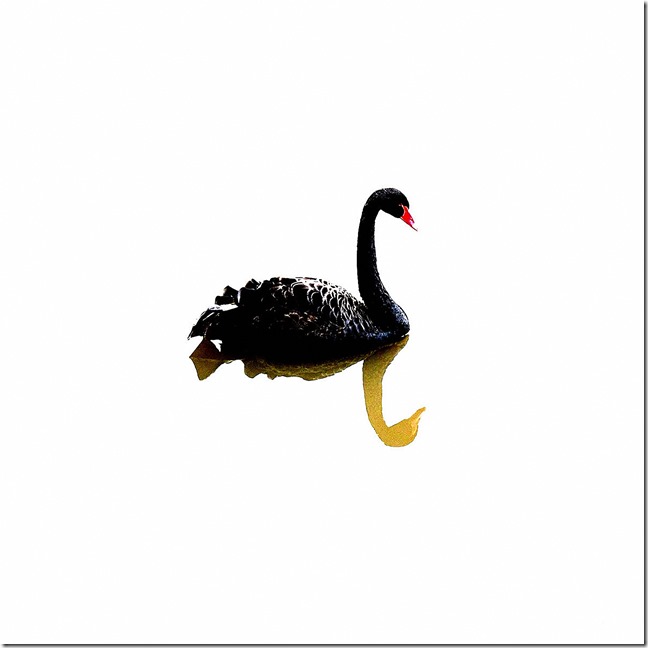
Had Ran Slavin’s latest offering been given a vinyl release, it would have been a triple LP, containing as it does thirty tracks, with a running time of almost two hours. It would have been epic. But despite having released previous albums on esteemed labels including Mille Plateaux, Cronica, and Sub Rosa, it’s unlikely that Ran Slavin has the kind of fan base that could justify, from a label perspective, a triple-vinyl release. But what Nocturnal Rainbow Recordings have done here is interesting, and utilises the digital format in a novel way, by offering alternative artwork in recognition of the album’s multi-faceted nature. Yes, it’s been done by major artists who’ve released physical albums with variant covers, with a view to enticing hardcore fans to buy multiple copies and thus increase sales and enhance the chart position (The Rolling Stones’ Hackney Diamonds probably wins the award for the pinnacle of pisstake on this score), but the idea of buying an alternative digital cover for a nominal price isn’t something I’ve seen before.

As the notes on the Bandcamp page explain, ‘Just as the music migrates across genres, the visuals migrate across states of being, extending the album into a network of parallel identities. Together, they construct a fragmented yet coherent cosmos, where each image is both an entrance and a deviation, multiplying the ways Neon Swans can be seen, heard, and inhabited.’

Appropriately, Neon Swan doesn’t quite sound like anything I’ve heard before, either. To unpack that, it contains many elements which are common and familiar. There’s sparse techno, minimal dance cuts with sped-up vocals and swathes of space between low-key beats and glitchy grooves, as represented by single release and album opener ‘tell///me///now’ – one of many titles which reflect the sense of fragmentation and juxtaposition which define the album (‘s4dert1ac’ and ‘d3xr3rity’ provide other examples, but then there are the likes of which also disrupt the conventions of language in the same way Slavin disrupts the language of genre tropes).

‘audio ease my pain’ plunges into darker territory, while introducing rap vocals atop heavy hip-hop beats (although there’s an instrumental version as well further on, which offers a different perspective again on the same material). Elsewhere, ‘c-r-i-m-s-o-n-schema’ brings spacey, spaced-out bleeps, heavy percussion that has a late 90s feel, a blend of The Judgement Night soundtrack’s melding of rap and rock, and the Wu-Tang Clan.

For all of the space, the reverb, the minimalism, something about tracks like ‘searching_heart’ is quite claustrophobic: the intense repetition and synthetic feel, paired with crackling fizz, brain-melting glitches and some grinding bass tones. It may be constructed using the fundamental elements of dance music, but this is not dance music. Electronic music to induce uncontrolled spasms and twitches isn’t a genre, but if it was, Ran Slavin would be a leading exponent.

It’s a long album, with a lot to digest, and as it thumps and wobbles and glitches away, snippets and fragments collaged across one another, there are times it all feels a but much, a bit bewildering. At times it’s draining, exhausting, at times you simply zone out, and often, I find myself questioning the wisdom of persisting with it. The vibe is that of the kind of underground clubs I never got on with in the 90s and early 00s, and I’m particularly reminded of the time Whitehouse played an Optimo night in Glasgow in 2003: I was there for Whitehouse, who played for forty minutes starting around midnight, and the music being played was rather in the vein of the more groove-centric cuts on here. The people there for the DJs weren’t happy for the low-key electro pulsations to be paused for the noise and antics of Bennett and Best, but for my part, I struggled to get into the low-key electro pulsations. But the other reason I recount this experience, challenging in its incongruousness, is that in places, Neon Swans feels incongruous with itself, an album riven with unreconciled contradictions.

The execution of Neon Swans is hard to fault, and it does cover considerable ground, with range, over its expansive duration. But it is sprawling in its scope, its focus is variable, and it is very long. And it’s maybe better with drugs.

AA
NRR38 art 1

Leeds collective HONESTY have shared a brand new track titled ‘PUSHING UP DAISIES’. George Mitchell takes lead vocal duties, delivering a gentle, intimate performance that contrasts the song’s morbid subject matter. The result is a subtly exhilarating take on club music that’s become HONESTY’s signature and the reason they’re one of the most essential dance acts coming out of the UK. The track was released today in tandem with ‘MEASURE ME (ALT MIX),’ which injects even more rave-fueled vitality into the lead single from their debut album which came out this Feb, this time led by an ethereal performance from vocalist Imi Marston. Listen here:

AA

HONESTY20241119_004-2

HONESTY (Credit Dan Commons)

Limited Edition 7" Dubplate / DL Blank Records – 13th June 2015

Christopher Nosnibor

Tobias Vethake aka Sicker Man has spent a quarter of a century doing things differently – differently from other artists, and differently in terms of his own sound and approach to making music.

As his bio points out, ‘as our world changed a lot during the last 25 years, so did his music. On his last release, KLOTZ WENZEL VETHAKE, the interaction with other musicians and the political dimension of a musical wake-up call became a main focus… The single „Gravy Train / Hollowed“ marks a new and fresh look at both, his musical history and present. It features Sicker Man’s love for dub, noise and electronic music as well his passion for classical composition and spiritual jazz… ‘Stop The Gravy Train / Hollowed’ feels like a collaboration of Moondog and The Bug’

It certainly does. For these two pieces, Sicker Man has enlisted saxophonist Matze Schinkopf, and

How many ideas is it possible to pack into four and a quarter minutes? With ‘Stop The Gravy Train’, Sicker Man manages more ideas per minute than it’s possible to even begin to count. The piece starts with a low, grinding bass and industrial hums, before the saxamaphones enter the mix, interweaving through and across one another. They trickle smoother, teasing with points and counterpoints, laid-back and mellow over the simmering rhythm section, the bass and the beats building currents beneath. Around the midpoint, the piece makes a change of trajectory, the gentle jazz giving way to something altogether more urgent and driving, locking into a robust groove with low saxophone punching rhythmically and in syncopation with the whip-cracking snare and palpating kick drum.

‘Hollowed’ is different again: a swampy surge of seething electronica, a morass of meshing noise – at least to begin, and then it melts into a rather pleasant swaying jazz work, a clip-clip beat nodding along nicely. Swells of noise bubble and surge, but don’t quite break through, and industrial grooves settle in while the saxes tootle off in different directions, hither and thither to brain-melting effect.

‘Genius’ is a word which is chronically overused and often severely misapplied. Is this a work of genius? Maybe not, but it’s got to be close. There’s no question that it’s wildly inventive, and unexpectedly listenable, while challenging every musical preconception.

AA

a1110512025_10

Sister 9 Recordings – 9th May 2025

Christopher Nosnibor

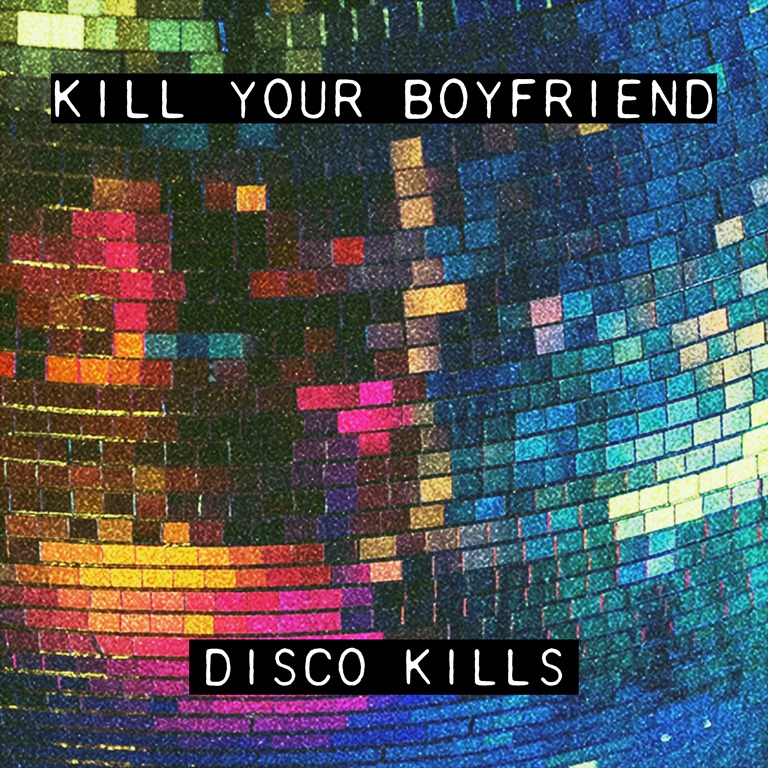
Since showcasing single cut ‘Discretion’ last month, I’ve been totally gripped by this new EP by Italian post-punk electro duo Kill Your Boyfriend.

There’s something about the consistent use of one-word titles that adds punch. The complete catalogue of Foetus albums is a strong case in point: Hole, Nail, Gash Blow… Four letters, forming a single syllable, prove to be powerfully evocative, even when there is no context – or perhaps more so because there is no context.

The titles of the six songs on here are rather less abstract, more descriptive, but still strong and evocative in isolation: ‘Ego’, ‘Obsession’, ‘Apathy’… words with emotional connotations, words which plug straight into the beating heart of the human condition. And, just as ‘Discretion’ threatened, Disco Kills is a full-on sonic kicking that registers blows from every direction.

It’s all about that throbbing, hard-hitting rhythm section, and once again, I feel compelled to sing in praise of the drum machine. Much-maligned and still contentious when used in a ‘rock’ context, the relentless thud and crash of programmed percussion can be so compelling – hypnotic, yes, but also in the way it registers in a purely physical way, the toppy snare explosion sending shockwaves through the nervous system while setting eardrums quivering. From Suicide to Uniform via Metal Urbain, The Sisters of Mercy and Big Black, there’s a rich lineage of bands for whom a drum machine used well – and at an appropriate level in the mix – absolutely defines the sound. It doesn’t work for a lot of rock acts because they’re more about having a certain flexibility, but for absolutely smashing the senses with precision timekeeping, drum machines really come into their own, especially when solid, four-square basslines which follow the beats with equal precision are involved.

And so it is that for all the mesh of treble and distortion, Kill Your Boyfriend structure these songs around a punishing rhythm section. No fancy fills or extravagant bass runs – just hammering, solid grooves, which underscore all the rest. I say ‘all the rest’ as if it’s somehow lesser. It isn’t, not by a long shot. ‘Obsession’ would be dancefloor-friendly – to the point you could imagine people turning and clapping in time with the crispy snap of the vintage Akai snare sound, were it not for its dark, distorted vocal. ‘Apathy’ a bubbling dance banger that’s twisted by some dissonant chord changes and an echo-soaked shouty vocal, the end result sounding like The Prodigy remixing Alien Sex Fiend. Apathetic it is not: a Hi-NRG banger with a dark, serrated edge, it is.

They do trancey / shoegaze / synthwavey lightness on ‘Illusion’, which offers an unexpected – and unexpectedly welcome – pause for breath. But although it pulls back on the breakneck pace and abrasion of the tracks which both precede and succeed it, ‘Illusion’ is still dense, richly textured, and overtly beat-driven, with a thick, churning bass lurking beneath. It just doesn’t drive as hard or as aggressively, with an altogether gentler vocal delivery, and it builds tension with twisty guitars with strong echoes of the sound of 1984. Yes, it’s a bit gothy, and it sits well, and all of this means that the thick, buzzy, echoey electrogoth stomp of ‘Discretion’ hits even harder after the lull, highlighting just what an absolute beast it is. And make no mistake: it’s a pumping, pulverising dark disco monster. It’s brashy, it’s trashy, not so much a car crash as a flaming, petrol-tank-exploding pileup with Sheep on Drugs, Selfish Cunt, KMFDM, and Sigue Sigue Sputnik. It’s an instant adrenaline spike, a rush of pure exhilaration.

‘Youth’ begins darkly but offer something more buoyant as a bookend to the EP, like an electro Sex Pistols, it echoes and bounced its way in a rush to the end. It does feel like a rather flimsy add-on, but works in terms of bringing things down again to wrap it up.

Disco Kills is solid and fierce from beginning to end – and while it’s predominantly electronic in its instrumentation, it’s also very much rock, and it’s pure punk all the way.

AA

052932

Nordic noise-rockers Barren Womb are back with a brand-new video for ‘Bug Out Bag,’ taken from their critically acclaimed fifth album Chemical Tardigrade, which got a  thumbs up from us here at Aural Aggravation.

The video premiered at Decibel Magazine, who praised the band’s sound as “angular and pulsating electronic rock/noise/hardcore that lands somewhere between Refused, Daughters, and NoMeansNo on one end, and the ‘Bigs’ (Business and Black) on the other.”

A chaotic burst of gritty visuals and manic energy, the video perfectly mirrors the band’s twisted blend of punk defiance, sludgy grooves, and raw minimalism. Watch it now here:

AA

Their latest LP, Chemical Tardigrade (Fucking North Pole Records / Blues For The Red Sun), dives deeper into melodic and emotional territories without losing their unhinged core. Tracks like ‘Campfire Chemist’ and ‘Dung Lung’ showcase their evolution while retaining the band’s punchy edge and signature offbeat humor (‘D-Beatles,’ anyone?).

And they’re taking it back on the road with the newly announced More Chemicals 2025 European tour, check out the confirmed dates below.

MORE CHEMICALS 2025
01.05 – CZ Pilsen, Družba
02.05 – DE Leipzig, Zwille
03.05 – DE Bielefeld, Drum Hard
04.05 – BE Licthervelde, PrintbaAr
05.05 – FR Strasbourg, Le Local
06.05 – BE Antwerp, Antwerp Music City
07.05 – DE Osnabrück, Bastard Club
08.05 – DE Braunschweig, Spunk
09.05 – DK Odense, Ilter Festival
10.05 – NO Oslo, Desertfest Oslo
16.05 – NO Trondheim, Pøbelrock
26.07 – NO Hønefoss, Malstrømfestivalen
01.08 – NO Horten, Kanalrock
03–06.09 – SE Örebro, Live at Heart
18.09 – FI Turku, TBA
19.09 – FI Tampere, TBA
20.09 – FI Helsinki, TBA

37ac0235-2354-7d38-98dc-69c18461e7fd

Long Trax Productions – 31st January 2024

Christopher Nosnibor

The brief liner notes are almost as perplexing as the cover art and the rest of Will Long’s Bandcamp page. I mean, you might think that the title is the key here. While clocking in around the eleven-minute mark, these compositions, as much as they’re far from short, well, I’ve certainly heard many longer trax, with many albums featuring a single twenty-minute piece on each side. But of course, it’s a pun. Sort of. Regardless, spreading these four tracks across four sides of vinyl feels somewhat indulgent, although I won’t go quite as far as to say exploitative, despite the temptation.

Will Long has to date created an extensive catalogue of work, both with Celer, since 2004, and as a solo artist – and when I say ‘extensive’, I mean extensive, with Celer having released around a hundred albums (if you include collaborations and compilations), and his solo output is equally overwhelming in volume. The Long Trax releases have arrived sporadically between other releases, and are broadly connected, in stylistic terms. As Long puts it, ‘round 4 of the Long Trax series [is] the pivotal moment of truth. Four new deep cuts spread across 4 sides of vinyl in dual sleeves, and spun onto disc. An all-analog, hardware machine affair, full of glacial pads and icy stabs, rhythm composure (composer) sequences, round booming basslines, and narrators from beyond. It’s the real thing, still chugging along.’

Less than a minute into ‘One in the Future’, I’m feeling late 90s chilled techno vibes, and I’m dragged back to a handful of club experiences where I fucking hated the music and I hated the posers.

I’ll admit, I’ve always had something of a fraught relationship with dance music and its culture. I suppose I’ve generally leaned towards rock, but have found spaces in my head and heart for some dance and adjacent, loving the KLF from the start, and so much of the electronic music from the late 70s and early 80s. Chris and Cosey’s Trance is a straight-up dance album, and I dig it not just because it’s a Throbbing Gristle-related release. But, as I discovered when visiting a club in Brighton on visiting friends in the late 90s, some stuff, I just struggle to connect with. And this is it. To add to my story, I attended an Optimo night in Glasgow in 2004 to see Whitehouse. It was a strange event, in that most were there for the downtempo dance, which was halted for three quarters of an hour while William Bennet and Philip Best cranked out the most punishing, ear-shredding set to the sheer horror of the majority, before smooth beats returned, to their relief. My experience was inverse to the majority. Whitehouse did not go down well: the end of their set did. As the relentless bouncing beats returned, I was happy to leave, as were my whistling, devastated ears.

‘One in the Future’ is the longest eleven minutes of nondescript sonic wallpaper I have had the pain to endure in over a decade. It’s the monotony that hurts. It’s soulless, tedious, and nothing happens. And this is a fair summary of the album as a whole. To my ear, to my mind, to my insides, it feels so devoid of… anything that I can connect to. The samples blare, the squelchy synths blip and bloop and pulsate over tedious beats and maybe I need different drugs or a different brain, but this is relentlessly tedious, monotonous and crushingly dull. Get me out of here!

AA

名称未設定のアートワーク

Electric Valley Records – 31st January 2025

Christopher Nosnibor

The four-piece ‘sludge ‘n’ roll stoner metal band’ from Columbus, OH, come with the description of being ‘the audio equivalent of bong water spilled on a Ouija board’

The Doom Scroll – such an obvious but well-placed piece of punning – is their third album, and lands a full decade after their debut EP – or as they put it, they ‘exhaled a cloud of riffs over the doom metal scene with their debut EP, Stoned to Death… [and] since then, they’ve consistently delivered a steady dose of sludgy, groove-laden stoner doom potent enough to make Beelzebub himself bang his horns.’

For this outing, they promise ‘a reinvention of their signature sludge ‘n’ roll style of doom. Equal parts unrelenting and crushing, yet infused with heavy blues-inspired riffage, this new chapter sees Weed Demon expanding their sonic horizons like never before… Expect doom, gloom, sludge, thrash, death, blues, and even a dash of dungeon synth for good measure.’

That this is an album which contains just five tracks (six if you get the vinyl, which features a cover of Frank Zappa’s ‘Willy the Pimp’) is a fair indication of its form and the duration of said tracks: apart from a couple of interlude-pieces, they’re all six-plus minute sprawlers, with the colossal ‘Coma Dose’ spreading out over more than nine and a half minutes.

And so it is that after the slightly pretentious and proggy-sounding synth-led instrumental intro that is the woozy, wibbly, ‘Acid Dungeon’, they’re thundering in with the rifftastic ‘Tower of Smoke’. It’s a quintessential stoner-doom effort, a mid-paced slab of thick, distorted riffage with a strong Sabbath via Melvins vibe to it. It’s big on excess – of course it is. It simply wouldn’t work without the widdly flourishes that spin their way up from the dense, grainy overdrive that just keeps on ploughing away. And it keeps going on – and on. As it should, of course. It simply wouldn’t be befitting to batter a leaden riff for three or four minutes – you can’t mong out to that.

‘Coma Dose’ starts out gently with some desert rock twangs and a shuffling beat that’s almost a dance on the beach kind of groove, and there are – finally – some drawling vocals low in the mix. A couple of minutes in, of course, the riff lands, and the vocals switch from spacey prog to growly metal, and just like that, things get dark and they get heavy. But for all the weight, there’s still a floaty trippiness about it, a softer, mellowed-out edge: it’s heavy, but it’s not harsh, or by any means aggressive. There are some flamboyant drum fills and a super-gritty bass break over the song’s protracted duration, and at times, it sounds as if the batteries are starting to run low as it slows to a thick, treacly crawl and Jordan Holland’s vocals sound as if he’s being garrotted – and again, this is all on point.

There are elements of hardcore to the shouted vocals and pummelling power of ‘Roasting the Sacred Bones’, while ‘Dead Planet Blues’ brings a quite delicate blues-rock twist and even a hint of Alice in Chains circa Jar of Flies.

Rather than push hard at the parameters of the genre, Weed Demon nudge at the edges in all directions, and this works in their favour. There’s plenty here to keep diehard fans of all things sludgy, stonery, and doomy content without straying into territories that don’t sit well, but then there’s enough to make it different and interesting.

AA

349891

24th January 2025

Christopher Nosnibor

These are dark days. I feel as if I’ve written words to this effect a lot in recent months and years. It would perhaps be rather too much to expect there to be the sunrise of a new, optimistic dawn breaking over the horizon, but when there is nothing but the glow of flames beneath a pall of smoke on so many very real horizons, any sun on the metaphorical horizon is eclipsed by a billowing pother and clouds of ash. And then, last night, I felt my heart sink yet deeper still as Donald Trump signed away the protection of the Arctic in his quest for ‘liquid gold’, and declared a ‘state of emergency’ over the Mexican border and promised mass-deportations – ‘millions and millions’, being his megalomaniacal mantra, while the man who owns him, the richest man on the planet, who seeks not only world domination, but galactic domination, threw Nazi salutes to a huge crowd of fanatics.

Fighting the urge to assume a foetal position on the hearth rug in front of the fire and stay there for the next four years in the hope there may still be a world after that, I poured a strong winter ale and took some time to sift through my submissions for something that might make suitable listening.

Listening to light music in the face of such darkness and despondency feels inappropriate, somehow, so stumbling upon the latest album by Watch My Dying felt fortuitous. Extreme metal has a way of providing a means of escape, sometimes.

According to their bio, ‘Watch My Dying has been a cornerstone of the Hungarian metal scene for 25 years, a hidden gem for international fans of extreme metal. Formed in 1999 in Hungary, the band quickly became a defining force in extreme tech/groove metal throughout the early 2000s… Known for their philosophical and socio-critical Hungarian lyrics, WMD stands out in the extreme metal genre, with excerpts of their work inspiring novels and poetry in Hungary.’

It’s the title track which opens the album, with a slow, atmospheric build, before heavy, trudging guitars enter the fray, and it’s only in final throes that all fury breaks loose.

While there’s no shortage of archetypally death- and black-metal riffs, WMD forge a claustrophobic atmosphere with chunky, chugging segments, enriched by layers of cold, misty synths, and some thick, nu-metal slabs of overdrive, too: ‘Kopogtatni egy tükrön’ is exemplary. ‘Jobb nap úgysem lehet’ provides an interlude of heavy drone and hypnotic tribal drumming before one of the album’s most accessible tracks, ‘Napköszörű’ crashes in. It’s hardly a party banger, but brings together industrial and metal with a certain theatricality, finished with some impressively technical details – but none of it’s overdone. ‘Minden rendben’ is more aggrotech than anything specifically metal, and it’s a banger.

Egyenes Kerőlő isn’t nearly as dark as a whole as the first few songs suggest, but it’s still plenty heavy and leads the listener on something of a sonic journey. They cram a lot into the eleven tracks, especially when considering that the majority are under four minutes, with three clocking in around the minute mark. It’s certainly varied, and while not all the songs have quite the same appeal – the last track, ‘Utolsó Fejezet’, borders on Eurovision folk – the fact that they’re in no way predictable is a strong plus.

So many technical players are so busy showcasing their skills that they forget the value of songs. This is not the case with Watch My Dying: the groove element is strong, and there are melodies in the mix – just not in the vocals. The end result is more accessible and uplifting than I would ever have imagined. I almost forgot that the world is ending for a good twenty minutes.

AA

a1664588283_10

20th December 2024

Christopher Nosnibor

Here we are on the cusp of the second week of January and still mopping up releases from December. And that’s ok. I don’t get why everyone is so hung up on the end of year / new year thing anyway, and I certainly don’t get why so many end of year lists are published in November. It made sense when we were tied to print media, and monthly magazines went to print a good month in advance, meaning the December editions were being written in October to hit the shelves at the end of November, but in the age of the Internet? Nah. And the sheer volume of music being releases means that things often have a slower diffusion, in contrast to the 80s and 90s when people raced to buy 7” and CD singles on the week of release after a big advance push which was essential for that chart placing, which meant Radio 1 Top 40 airplay on a Sunday afternoon and the possibility of being on Top of the Pops.

So, my somewhat belated coverage of this new single by Kent-based alternative act Karobela is anything but an afterthought. Boom.

The song is, they say, ‘a kick back, in your face retaliation to everyone who thought they could just kick you to the curb’. Many of us have been there: left out forgotten, excluded – not necessarily by design, but because ‘oops’. Well, you can tag along if you like, why don’t you? Out of sight, out of mind as the phrase goes.

The band have clearly put plenty of thought into this tune that’s structured around a low-slung bass groove and builds to climactic, impassioned choruses. It does teeter perilously close to classic rock / indie funk in places, but the energy and raw sincerity carry it through, and they sound like a band who will really grab certain demographics in a live setting, while the relatable content of ‘Afterthought’ is also likely to be a winner.

AA

Karobela Promo1Karobela Artwork