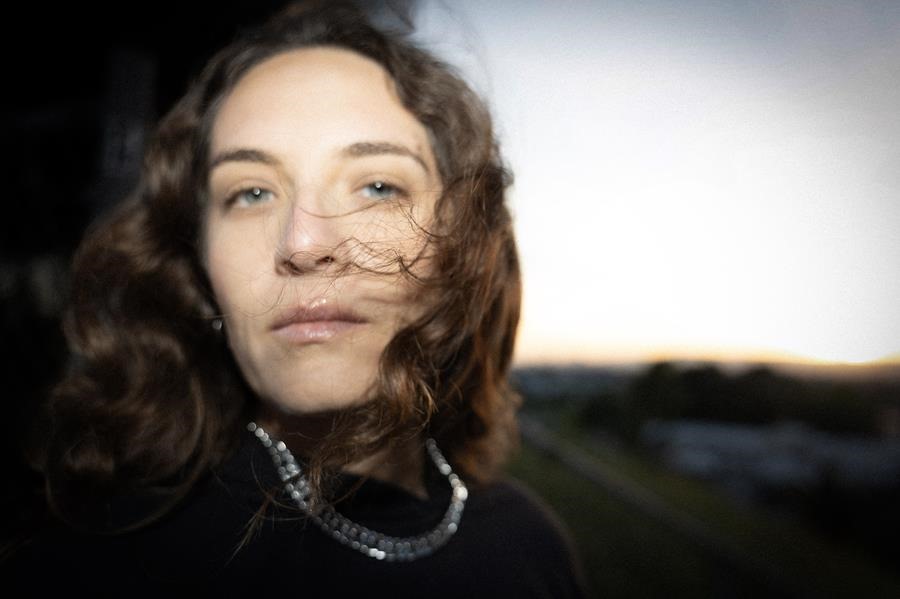
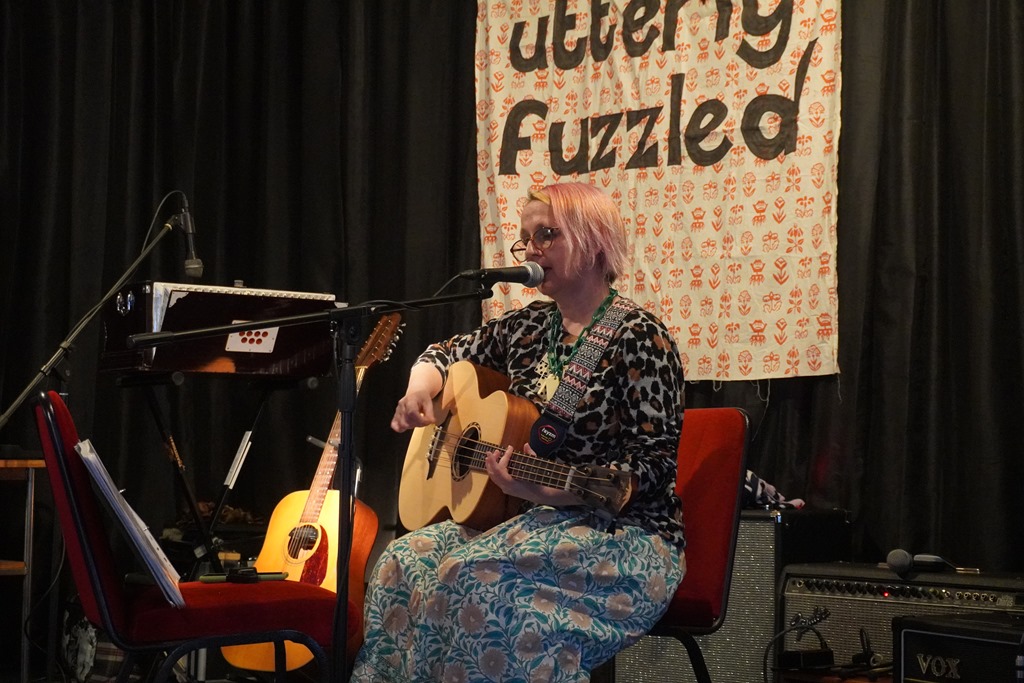
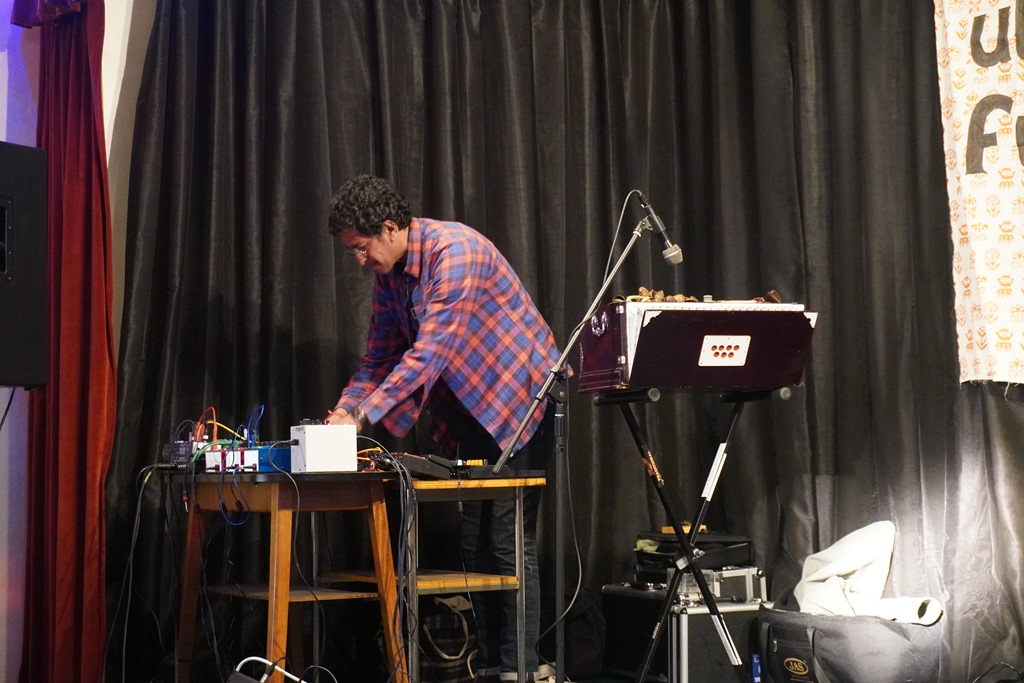
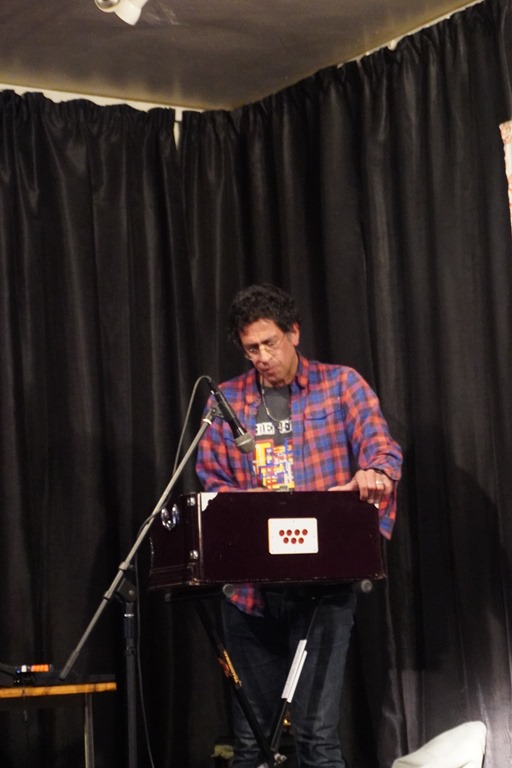
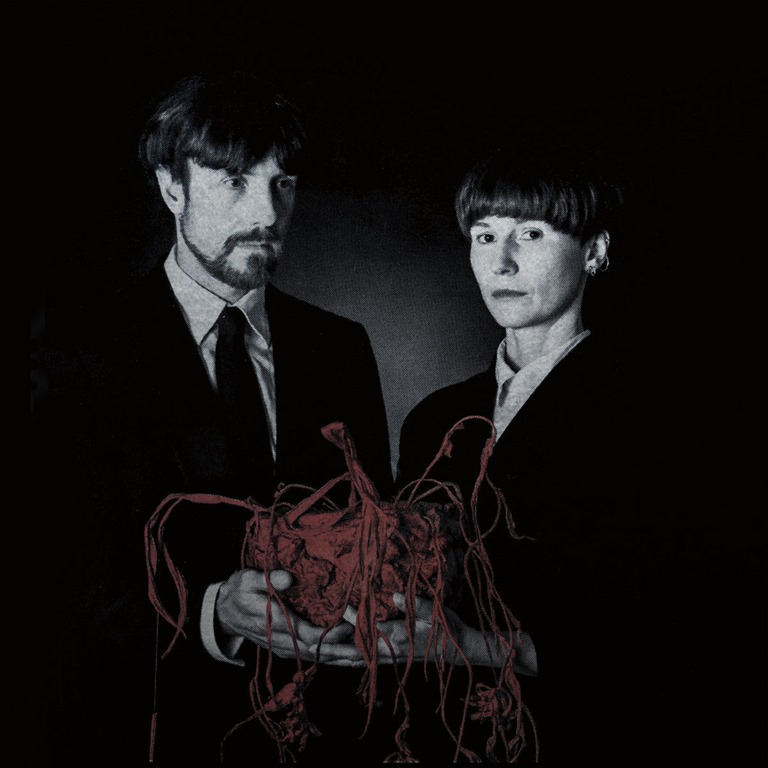
Me Lost Me – the project of Newcastle-based artist Jayne Dent – delights in experimenting with songwriting, creating a beguiling mix of soaring vocals and atmospheric electronics that playfully push the boundaries of genre. She ‘s now shared ‘Ancient Summer’, taken from This Material Moment (out 27th June via Upset the Rhythm), which she describes as “emotionally raw”, and deems it her most honest and vulnerable album yet.
About "Ancient Summer", Jayne comments that "This was the first song I wrote for the album and the first time I’d made a mesostic poem. Taking words from a tourism leaflet for Pont du Gard, a Roman Aqueduct and art museum near Nimes, France, I wrote this song that’s got so much wonderfully hyperbolic and excited language. It reflects quite well how I felt at the time of visiting, I was so moved to be swimming in a river in this beautiful valley under an ancient monument. It’s a song that comes from suddenly noticing your place in time and space, that feeling of being in communion with a past and a future, of being a part of something bigger than yourself. Visiting historical sites is one of my favourite things, and this is a bit of a love letter to the places that I’ve been lucky to visit over the years."
“The music video,” she says, “is a kind of nod to ancient Roman Spring/Summer festivals and the English folk traditions I grew up with, like May Day celebrations, Morris dancing and well dressings. In summer 2024 I worked on some music for a dance project with some incredible performers including Lizzie Klotz, Rosa Postlethwaite and Alys North, which was on the theme Abundance. The process was really beautiful, and I knew I wanted to work with them on this video because it had a similar theme and feeling, plus I knew I could trust them to throw themselves into whatever daft thing I suggested we do! Videographer Amelia Read joined us on Newcastle’s Town Moor to film us dancing and playing games, it was very collaborative and intuitive which was perfect, as I wanted the video for this song to be joyful and light (with a hint of folk horror elements going on too of course!)”
Steve Von Till doesn’t really require any introduction or preamble: the chances are, if you’re reading this, you’re already aware of his work, and if not as a solo artist, then as the guitarist / vocalist with Neurosis, active between 1985 and 2019. As much as Neurosis were labelled a post-metal band, they very much forged their own sound, which has, to an extent, become the house style of Neurot Records.
Von Till’s solo works may lean more toward folk and the gentler side of that style, but nevertheless have significant heft, and Alone in a World of Wounds – his seventh solo album, the follow-up to No Wilderness Deep Enough (2020) is no exception (he’s been busy in the intervening years with a trilogy of Harvestman albums, all released in 2024). The heft here comes from a sense of gravitas, rather than volume and distortion, and continues the softer trajectory of its predecessor, an album ‘initially inspired by the harmonic resonance of piano and synths and his long-standing love of ambient music’.
‘The Corpse Road’ sees Von Till croak and croon in a fashion that could me taken for Mark Lanegan in a blind test, against a sparse backdrop of strings which swell and swoon, heavy with sadness and gloom. There is a sense of times past, not just fading memories and bygone days, but a sense of the creak of wood and worn clothing of harder but simpler times. I find myself unexpectedly transported to a walk my daughter and I undertook from Ambleside to Grasmere in the Lake District a year or so back, via the ‘Coffin Route’. It was winding, and wet, and uneven, not to mention long, and it’s billed as a ‘strenuous’ walk, while still suitable for tourists: as the rain battered the hood of my anorak, I found myself contemplating what it must have been like hauling an actual coffin along that four-mile stretch without the benefit of modern hiking gear. Life must have been tough. Von Till taps into the essence of these past times, and a sense of the elemental.
The mood remains lugubrious on ‘Watch Them Fade’, a song redolent with sadness and reflection, weighted down with the reminder that mortality affects us all and is never far. Despite the fact that life’s only certainty is its expiration, we continue to shy away from the topic. While Alone in a World of Wounds does not confront mortality and death head-on, it’s there at every turn. “Keep on diggin’… dig a little deeper” he implores on ‘Horizons Undone’, and while there are psychological connotations here, it’s hard to ignore images of graves.
The eight-minute ‘Calling Down the Darkness’ is a super-sparse piano-led slow-burner, and confounds any expectation for a surging finish by remaining low-key and minimal to the end, ad something about it is so, so achingly sad.
‘The Dawning of the Day (Insomnia)’ is a brief spoken-word interlude with a moody piano accompaniment, while paves the way – or perhaps scatters woodchips – for the arrival of the swirling atmospheric start of ‘Old Bent Pine’, another song which revels in the forces of nature, before the six-minute ‘River of no Return’ flows toward the finish. It has hints of Slowdive about it. Moreover, its superficial ominousness reminds us that rivers only flow in one direction, and as with rivers, so with life: there is no return, no replay, no turning back. there is no undoing mistakes, only not repeating them.
‘Alone in a World of Wounds’ may be a largely acoustic album, but it is still heavy – really heavy – emotionally more than sonically – and consequently not an easy one to process. It would be impossible to deny the album’s quality. But the weight, the sadness…
Eric Quach has been making music – or perhaps more accurately sculpting sound on the fringes of music – as thisquietarmy for over twenty years, amassing a substantial body of work as a solo artist, with an expanded band lineup, and with various collaborations, the most recent being Cîme, his second with Tom Malmendier
We learn that Langue Hybride was written and arranged in less than 4 weeks during thisquietarmy’s music residency at Centre d’Expérimentation Musical (CEM) in the region of Saguenay—Lac-St-Jean, Québec.
The album consists of five longform tracks, which range from seven and a half to sixteen minutes in duration. It’s the shortest work, ‘Les Rayons Cosmiques’ which lifts the curtain the album, with droning, dolorous strings and distant, delicate percussion conjuring evocative atmospherics, coloured with both a simmering tension and an underlying sense of sadness, which, while hard to define, is palpable. Around the midpoint, that distant percussion builds to stand front and centre and a groove emergers, suddenly and unexpectedly, and the whole feel changes towards something that’s a cinematic hybrid of folk and space rock.
‘Respirer l’instabilité’ crashes into altogether darker territory, a gloomy, doomy trudge of slow, deliberate drumming and a low, grinding bass, over which discordant sonic mayhem plays out. After a lull of calm around the mid-point, a pulsating rhythm merges, and things evolve into a strolling wig-out with some strong jazz-funk leanings and already, a pattern is beginning to emerge in terms of compositional structure, in that around halfway, the trajectory shifts, and the piece ends in a completely different place from the one in which it started.
This is confirmed by the pivot which takes place around five minutes into the third track. Reminiscent of latter-day Swans, ‘Les radicaux libres’ is woozy and weird, expansive and haunting, and begins to pick up pace and volume six minutes in, building to a bursting sustained crescendo that’s both hypnotic and tense, and if ‘Organismes en aérobiose’ starts out soothing, the sound of dappled sun through leaves on a summer’s day, it transitions to a fist-waving stomper and concludes as a skyward-facing surge of sonic exultation, via the detour of a post-rock tidal wave, while fifteen-minute closer ‘Solastalgie impalpable’ rides a wave of thick riffage and strings reminiscent of the long play-out on ‘Layla’ – only this is arguably more successful, as it always felt like an epic and overlong anti-climax in the wake of that guitar-line. True to form, ‘Solastalgie impalpable’ does make a shift, tapering into some elongated swirling drones which reverberate and rattle the ribs and taunt the senses, before suddenly bursting into life with a driving rock riff by way of a climactic finale.
Langue Hybride is a wild ride, and while claims for acts producing ‘genre-defying’ works are not just tedious and predictable but usually completely spurious, there’s no neat way of categorising this schizophrenic hybrid, where each track is a work of two halves, presenting almost oppositional styles and characteristics .But this stylistic polarity makes for exciting – if challenging – listening: given that the only thing that’s predictable is that each piece will fly in a different direction at some point, there’s no way one could call this album predictable. The vision – and its execution – are superb, and with Langue Hybride, thisquietarmy offer something which is quite different, and rather special.
While studying English Literature at university, I undertook a module on Anglo-Saxon literature. It was fascinating to learn the etymology of certain words, and the way in which commonplace phrases came to be, and one thing which struck me was the reverence the Anglo-Saxons held for the bear, with not only words like ‘berserk’ deriving from a fierce, angry bear, with armies placing their berserkers at the front of their lines, foaming at the mouth and gnashing their teeth on their shields to strike fear in the hearts of their opponents, but the phrase ‘lick into shape’ came from the belief that bear cubs were born as balls of fur, and their mothers would literally lick them into the shape of a bear. In so many aspects of life, through history, humans have aspired to be like bears.
It is this which provides the central theme of Wardruna’s sixth album, as the accompanying notes expand upon:
The bear frequently figures in the oldest myths of mankind in the northern hemisphere, and many indigenous people still regard this animal as a totem, honouring it with rites and songs. It was once our respected guardian, our guide to edible plants and berries, a creature we both feared and admired. Although the bear from the very beginning has constituted a threat to our own lives and those of our livestock, humans have always identified with the bear in various ways. If you skin the animal, its body underneath the fur strongly resembles that of man, which may be a reason legend has it the bear in fact originated from humans, and for thousands of years we have strived for its strength and wit. In some cultures, “treading the path of the bear” means pursuing what you’re truly meant to do in life.
Because this is a Wardruna album, it taps into ancient mythologies on a level which goes far deeper than some kind of conceptual cosplay or superficial skirting around the subject. Wardruna has a way of tapping into a spirituality which resides in our very bones, our DNA. Their music resonates, powerfully, in ways which are hard to articulate beyond the fact it stirs something deep inside. Birna is more than an album, it is a force of nature distilled in musical form.
‘Hertan’ begins with a thudding rhythm like a heartbeat which provides the backdrop to a spoken word introduction and, suddenly, a swelling surge of sound, clattering wooden-sounding percussion and bold choral chants. Immediately, it evokes images of a primal heritage, of rituals performed on moorlands around open fires, animal skins, ceremonies exulting pagan spirits, and a connection with the earth which transcends words alone.
Thetitle track is simply immense, a colossal, powerful blast of sound, which conveys the strength – and also the gentleness – of the she-bear. It’s perhaps here where they most successfully articulate the appeal and fascination of the bear, a creature capable of the most divergent behaviours, so caring to its cubs, but would absolutely annihilate anything when threatened. There’s a reason why you don’t, as they say, poke the bear.
The fifteen-and-a-half-minute ‘Dvaledraumar’ (Dormant Dreams) enters rather more ambient territory, lunging into slow droning darkness after a hooting call like that of a conch shell being blown, or similar. Along with ‘Jord til Ljos’ (Earth to Light), it forms ‘a two-song meditation creates a joint hibernation between animal and listener’. It’s somewhat sad, that we haven’t taken cues from the bear to hibernate. It doesn’t feel natural to drag oneself out of bed and trudge to work in darkness, when it’s often cold, wet (or snowy, depending on geography), and windy. Before industrialisation, before electricity, working hours were limited by daylight, and in feudal times, serfs would effectively hibernate, unable to work the field during the winter months. I’m certainly not saying that this was a golden age of any kind, but capitalism and technology have certainly failed to deliver the lives they promised with a wealth of leisure time.
Sitting and reflecting on this, the rippling, repetitive melodies of these two tracks washing over me, I once again find myself envisaging dense, expansive woodlands, a habitat thick with vegetation, and sparse with population, a world before humans lost touch with nature and even humanity, and fucked everything up so badly. And I suppose it’s this desire to rewind the clock, to unfuck the planet, to undo centuries of mistakes to rediscover that which lies subconsciously in our hearts, which Wardruna connect with so perfectly.
Following this extended hibernative segment, they return first with ‘Himinndotter’ which evolves from being sparse and folksy to a frenetic frenzy of tribal percussion and a powerful choral refrain. ‘Tretale’ presents a haunting rumble with a breathy, hypnotic vocal. It’s built around a low, deep-lunged organ-like drone, but cuts back to some hypnotic passages where the insistent beat stands almost alone.
The eight-and-a-half-minute ‘Lyfjaberg’ brings the album – which is epic in every way – to a close with a slow, hypnotic beat and repetitive instrumentation and vocal chorus. It draws you in in such a way as to suspend time and space: it’s hard not to get lost in the moment, but also, ultimately, in time. I suspect I’ve described Wardruna’s music as ‘transcendental’ before, and more than once… but is the word which most accurately describes their music. Yes, THE word – and perhaps the only one. Because this… this is something else.
These are dark days. I feel as if I’ve written words to this effect a lot in recent months and years. It would perhaps be rather too much to expect there to be the sunrise of a new, optimistic dawn breaking over the horizon, but when there is nothing but the glow of flames beneath a pall of smoke on so many very real horizons, any sun on the metaphorical horizon is eclipsed by a billowing pother and clouds of ash. And then, last night, I felt my heart sink yet deeper still as Donald Trump signed away the protection of the Arctic in his quest for ‘liquid gold’, and declared a ‘state of emergency’ over the Mexican border and promised mass-deportations – ‘millions and millions’, being his megalomaniacal mantra, while the man who owns him, the richest man on the planet, who seeks not only world domination, but galactic domination, threw Nazi salutes to a huge crowd of fanatics.
Fighting the urge to assume a foetal position on the hearth rug in front of the fire and stay there for the next four years in the hope there may still be a world after that, I poured a strong winter ale and took some time to sift through my submissions for something that might make suitable listening.
Listening to light music in the face of such darkness and despondency feels inappropriate, somehow, so stumbling upon the latest album by Watch My Dying felt fortuitous. Extreme metal has a way of providing a means of escape, sometimes.
According to their bio, ‘Watch My Dying has been a cornerstone of the Hungarian metal scene for 25 years, a hidden gem for international fans of extreme metal. Formed in 1999 in Hungary, the band quickly became a defining force in extreme tech/groove metal throughout the early 2000s… Known for their philosophical and socio-critical Hungarian lyrics, WMD stands out in the extreme metal genre, with excerpts of their work inspiring novels and poetry in Hungary.’
It’s the title track which opens the album, with a slow, atmospheric build, before heavy, trudging guitars enter the fray, and it’s only in final throes that all fury breaks loose.
While there’s no shortage of archetypally death- and black-metal riffs, WMD forge a claustrophobic atmosphere with chunky, chugging segments, enriched by layers of cold, misty synths, and some thick, nu-metal slabs of overdrive, too: ‘Kopogtatni egy tükrön’ is exemplary. ‘Jobb nap úgysem lehet’ provides an interlude of heavy drone and hypnotic tribal drumming before one of the album’s most accessible tracks, ‘Napköszörű’ crashes in. It’s hardly a party banger, but brings together industrial and metal with a certain theatricality, finished with some impressively technical details – but none of it’s overdone. ‘Minden rendben’ is more aggrotech than anything specifically metal, and it’s a banger.
Egyenes Kerőlő isn’t nearly as dark as a whole as the first few songs suggest, but it’s still plenty heavy and leads the listener on something of a sonic journey. They cram a lot into the eleven tracks, especially when considering that the majority are under four minutes, with three clocking in around the minute mark. It’s certainly varied, and while not all the songs have quite the same appeal – the last track, ‘Utolsó Fejezet’, borders on Eurovision folk – the fact that they’re in no way predictable is a strong plus.
So many technical players are so busy showcasing their skills that they forget the value of songs. This is not the case with Watch My Dying: the groove element is strong, and there are melodies in the mix – just not in the vocals. The end result is more accessible and uplifting than I would ever have imagined. I almost forgot that the world is ending for a good twenty minutes.
They only released their debut single on 1st December last year, and here we are, not quite halfway through January and we’re being presented with single number three.
While Argonaut’s track-a-month schedule for their ‘open-ended’ albumSongs from the Black Hat, matching only that of The Wedding Present in 1992, seemed like the pinnacle of prolific – not to mention the ultimate advertisement for the DIY approach – three singles in six weeks must surely have the makings of a record (pun partly intended). As of this moment, though, we don’t know what their longer-term aim is, or even if there is one, beyond releasing new songs as soon as they’re ready, and if that is their MO, it’s admirable. Without the need to work to the schedules – or budgets – or a label, their only limitation is their own time and energy.
I had initially noted, following ‘Scarlet’, and ‘Amber’, a theme of colours linking their songs, but perhaps it’s female names. Or perhaps it’s pure coincidence, and they have simply plucked one-word titles to denote their songs.
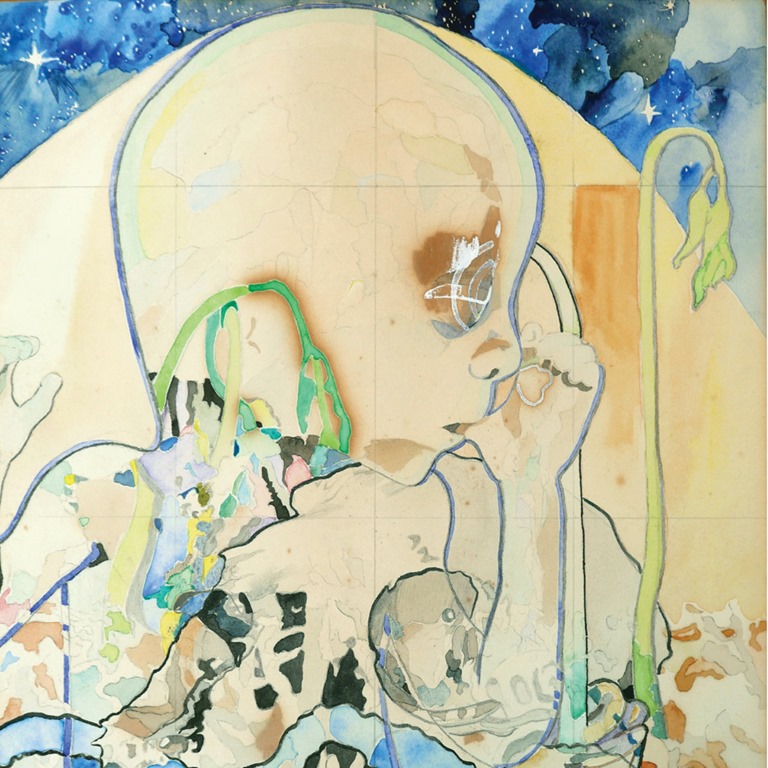
‘Jude’ – which comes with appropriately dramatic artwork, somewhere between swooning gothic drama and pre-Raphaelitism, the source of which I haven’t been able to identify – once again features the voice of poet Monica Wolfe, here whispering, and, as credited, ‘breathing’. These contributions are significant in rendering an atmospheric composition, particularly in the introduction, before the arrival of the piano – of which there are, in fact, two, adding layers to the brooding theatricality of the song, and Stephen Kennedy’s voice.
The feel – particularly in his delivery, with some quavering intonation, and enveloped in a spacious reverb – is very much gothic folk, as he casts introspection, while chasing ghosts.
‘Will the world miss me?’ I whisper
And sigh, as my life drifts away.’
It’s moving, poetic, and powerful, presenting a straight-ahead contemplation on mortality – not in some cheesy ‘romantic’ gothic style, and not in a crass emo way, but a rare sincerity.
Somewhat ironically, in our teens and twenties, we tend to agitate about death, while also treating it with a flippancy, because it’s what happens to old people, but as we grow older, we go out of our way to avoid thinking or talking about it, because as we begin to lose parents, uncles, aunts, and even – increasingly – peers, shit gets more real than we can handle. Invariably, we bury our heads in the sand, shrug off life insurance and toss making wills into the distant future along with pensions, laughing darkly how we never expect to retire anyway.
In the final minute, the song swerves into more electropop territory as the rippling piano combines with a crisp, insistent drum beat. It’s a magical, ethereal moment, which is but fleeting, like dappling sunlight through the branches of trees in a woodland on a breezy day. In many ways, this captures the essence of the song and its sentiment, in its fleeting ephemerality, a metaphor for life itself.
It ends suddenly, with only inaudible whispers fading to the close, and again the metaphor stands. This is perhaps their strongest and deepest release to date, and best absorbed by candlelight, with a large measure of something intoxicating.
Norwegian world music collective Wardruna release a live video for the song ‘Heimta Thurs’. The video is a part of the band’s Live at the Acropolis show, which will be released on DVD and Blu-Ray alongside Wardruna’s new album Birna on January 24th.
Originating from Wardruna’s debut album Runaljod – Gap var ginnunga, the song ‘Heimta Thurs’ has grown into one of the group’s most iconic songs and a fan favourite. Set against the backdrop of the world heritage site Odeon of Herodes Atticus, Acropolis, the composition and visual experience reach ecstatic new heights.
The connections between the old and ancient, deeply human and natural at the same time can be felt at every live performance of Wardruna, resounding equally on stage and throughout the audience. Live at the Acropolis is a testament to that.
According to their bio, ‘Morlocks are a Swedish act who combine elements of industrial rock, neo-classical, darkwave and metal with epic production values to create an exciting hybrid sound. Having issued the long-awaited and well received album Praise The Iconoclast in late 2023, they subsequently promoted it with two US tours in 2024, both in support of their friends and occasional collaborators KMFDM.’
Asked about the inspiration behind the song, the band state: “Watch the world from a distance. Get angry at first, but also inspired. Take the darkest parts of it and twist them into something weird, beautiful and batshit insane – something that you could either dance to, brood in the shadows to or scream at the top of your lungs at the moon. Preferably all of the above. Everything can be turned into art, and art must hurt. Situation normal: all fucked up.”
‘Everything can be turned into art, and art must hurt’ is a phrase which stands out here. It may seem somewhat dramatic, but to summarise Buddha’s teaching, ‘all life is suffering’, or ‘life is pain’, and the function or art – true art – is to speak in some way of deep truths of what it is to be human. Art must therefore, reflect life and capture something of the existential anguish of the human condition. If it doesn’t, it isn’t art, it’s mere entertainment. And if the idea that ‘Everything can be turned into art’ may superficially seem somewhat flippant, a diminishment of serious matters, if the work is, indeed art, and not entertainment, then the obverse is true: using the pain of life as source material is the only way to interrogate in appropriate depth those most challenging of issues. In other words, making art from trauma is not reductive or to cheapen the experience – but making entertainment from it very much is.
There’s a snobbery around what constitutes art, even now, despite the breakthroughs made through modernism and postmodernism. It’s as if Duchamps had never pissed on the preconceptions of art for the upper echelons of society who still maintain that art is theatre, is opera, is Shakespeare, that art can only exist in galleries and is broadly of the canon. This is patently bollocks, but what Morlocks do is incorporate these elements of supposed ‘high’ art and toss them into the mix – most adeptly, I would add – with grimy guitars and pounding techno beats. Art and culture and quite different things, and those who are of the opinion that only high culture is art are superior snobs who have no real understanding of art or art history.
The five songs on Amor, Monstra Et Horrore Profundi are therefore very much art, although that doesn’t mean they don’t also entertain. ‘The S.N.A.F.U. Principle v3.0’ arrives in a boldly theatrical sweep of neoclassical strings and grand drama – and then the crunching guitars, thumping mechanised drums and raspy vocals kick in and all hell breaks loose. Combining the hard-edged technoindustrial of KMFDM – which is hardly surprising – with the preposterous orchestral bombast of PIG and Foetus bursting through and ascending to the very heavens, it’s complex and detailed and thrillingly dramatic, orchestral and choral and abrasive all at once.
With tribal drumming and bombastic, widescreen orchestration, ‘March of the Goblins’ has a cinematic quality to it, which sits somewhat at odds with the rather hammy narrative verses. It seems to say ‘yeah, ok, you want strings and huge production and choral backing to think it’s art? Here you go, and we’re going to sing about radioactive dinosaurs like it’s full-on Biblical’. It’s absurd and audacious, and makes for a truly epic seven and a half minutes of theatrical pomp that’s admirable on many levels. Ridiculous, but admirable.
‘The Lake’, split over two parts with a combined running time of over ten minutes explores more atmospheric territory, with graceful, delicate strings, acoustic guitar, and tambourine swirling through swirling mists before breaking through into a surging tower of power, melding crunching metal guitars with progressive extravagance, and medieval folk and martial flourishes.
Amor, Monstra Et Horrore Profundi is remarkably ambitious and unashamedly lavish in every way. Quite how serious are Morlocks? They’re certainly serious about their art. But while delivered straight, one feels there’s an appropriate level of knowingness, self-awareness in their approach to their undertaking. And that is where the art lies: theatre is acting. The stories told are drawn from life, and resonate with emotional truth: but the actors are not the action, and there is a separation between art and artifice. Amor, Monstra Et Horrore Profundi is something special.
Tout isn’t a seedy guy flogging – or trying to buy, at a cut-price – tickets outside a gig, but a band which, on this, their fourth album (bet you never guessed that) brings together aspects of contemporary classical, jazz and ambient, in addition to the ‘folk and new age traditions’ which influence their previous works. It follows and extends the trajectory of their previous albums, sequentially numbered with the exception of their last Live, released in 2017.
It’s certainly a lot to toss in together, and with no fewer than ten musicians contributing to this release, the compositions certainly afford a considerable amount of layering and offer much to process. Even after a few listens, I’m still digesting and on the fence as to whether the combined elements are appealing or not.
Jazz comes in almost infinite flavours, and it’s not the ‘nice’ jazz to which the cliché of the listener sporting a goatee and cardigan applies which is the strain that tantalises my taste buds – but Tout do sit perilously close to this at times. At others… they’re truly sublime.
One of their habits is to title the tracks – instrumental pieces, all – in such a was as read in sequence, they form a poem, although on Fourth, it ends abruptly, despite the full stop making it clear that this is no accidental cliffhanger.
I rob the rich to feed the poor
Which hardly is a sin
A widow ne’er knocked at my door
But what I let her in
So blame me not for what I’ve done
I don’t deserve your curses
And if for any cause I’m hung.
‘I rob the rich to feed the poor’ makes for an expansive, atmospheric start to the album, slow-swelling cymbals and understated percussion hover in the background while delicate sonic waves rise and fall, while smooth saxophone echoes out atop it all, growing increasingly excited toward the climactic finish.
It’s broad-brushed, sweeping synths and soft strings which provide the backdrop to ‘Which hardly is a sin’, where a strolling bass stumbles and stutters from time to time. ‘A widow ne’er knocked at my door’ marks something of a change in tone, with sparse acoustic guitar mournful strings bringing an altogether folkier feel in contrast to the jazz vibes. At the same time, it’s reminiscent of some of the post-rock which was all the rage circa 2005.
‘So blame me not for what I’ve done’ is truly magnificent: a minimal, piano-centred piece, it’s haunting and melancholy and leaves you feeling somewhat hollowed and bereft, and it’s apparent that – to my ears, at least – the less overtly jazz works are the superior ones on the album. Admittedly, that’s a matter of taste, but, objectively, Tout seem at their most inventive and creatively enthused when venturing into these different territories.
The album ends as abruptly as the poem it spins: one moment, ‘And if for any cause I’m hung.’ after a subtle, sedate start, is jazzing along, the bass strolling and ambling – and then suddenly it isn’t, petering out, unresolved. Et c’est tout. It’s well played, both literally and figuratively.
The new album, Midwinter Swimmers, sounds immediately like an old friend. At the same time, it’s a new kind of adventure for the beloved Pennsylvania band of high school friends Karen Peris, Don Peris, and Mike Bitts, having both an expansive, cinematic quality and the strange, lo-fi beauty of a newly discovered vintage folk/pop album, brimming with melody. Midwinter Swimmers is being released by Therese Records. Check out ‘Your Saturday Picture’ here: