Posts Tagged ‘Experimental’

Ahead of the release of the first compilation on the NIM label – the snappily-titled Deprived of Occupation and Pleasure We Feast Aural Aggravation are immensely honoured to premiere ‘1010’ by Obviate Parade, the exploratory guitar vehicle for Paul McArthur of Damn Teeth.

With lyrics centred around Emily Dickinson’s 1010th poem, it’s a largely spontaneous cut, with all instruments and vocals recorded in a single take (albeit subsequently edited), it’s a magnificent balance of immediacy and controlled manipulation.

Don’t just take our word for it: get your lugs round it here:

AA

a2705195024_16

Demo Records / Crossness Records – 30th April 2021

Christopher Nosnibor

While I’m no fan of remix albums as a rule, the last year or so has clearly made it difficult for artists to create new material, and since touring’s been off the table, options for maintaining profiles – or making sales – have be limited to say the least. And with time to reflect and review, revisiting and revising previous output through fresh eyes seems more than reasonable.

It’s also refreshing to see ‘Could Divine, Remembered’, the release from anrimeal (the recording project of Ana Rita de Melo Alves), described not as a remix album, but a ‘meditative companion piece to her debut album ‘Could Divine’’. As the blurbage explains, ‘‘Could Divine, Remembered’ refuses the limits of the traditional ‘remix album’ – sure, there are remixes here, but amongst them you’ll find demos, reflections, confessions, rituals, and the artist’s own heartbeat. The sum of these parts is an immersive audio documentary about the making of Ana’s debut. For those familiar with ‘Could Divine’, this is a chance to look behind the scenes and magnify its meticulous detail; for those unfamiliar, it allows a first visit to an abundant internal world.’

I fall into the latter camp, although drawing lines across between the tracks on this new reworking and the original proves an informative exercise, and the reworked titles provide some insight into the inspirations or ideas behind these alternative renditions of each song (notably ‘Encaustic Witches’ returns here as ‘Encaustic Witches as an Ambient Track to Help Me Sleep’ and ‘Headrest’ appears as ‘Headrest, A Story About Feeling’. Elsewhere, explanatory or embellishing details appear, as ‘Death’ becomes ‘Death is a Burning Ritual’.

“When I think of nature, nothing happens,” she says at the very start of the album on ‘Hello and a Half’: it’s quite a contrast to the twitter of birdsong and lo-fi acoustic guitar that heralds the arrival of ‘Marching Parades’, the opener on ‘Could Divine’, and immediately we’re parachuted into the documentary aspect of this fascinatingly multi-fascinated work, which lays Ana’s workings out bare. Cars pass as the speech takes on an almost spoken word narrative form – but even that’s not straightforward as delays double-up her voice and as she explains how the album is about her ‘going into the wild’, it seems that some of that wild is more psychological than literal, an exploration of internal territories hitherto uncharted. At times, it ventures into the kind of disorientating cut-up tape works of William Burroughs and Brion Gysin in the late 50s and early 60s, and elsewhere, her monotone voice, against a sift, dappled backdrop is soporific and sedative.

This is an album of ideas and of origins, of snippets and sketches, as well as of reworkings and revisions. It’s bitty, but somehow hangs together remarkably well as an insight into Ana’s creative process. At the same time, in straddling the before and after that sit either side of Could Divine, it questions the notion of the ‘end product’, the idea that there is ever a ‘finished article’.

The demo of ‘Could Flower’ reveals the early shoots of the idea that would become the album’s title track. It’s a haunting acoustic folk piece, which would subsequently metamorphosise into a fragmentary, multi-segmented work that transitions as if through a dream sequence. There’s an ethereal, evasive quality to Could Divine, Remembered, and it places the album in a realm all of its own.

As an aside, all profits from the release will be donated to Plataforma de Apoio aos Refugiados, a Portuguese refugee support organisation. In bleak times, we once again see art being used as a conduit for good – and this, it has to be said, is good art.

AA

a3633893503_10

Christopher Nosnibor

No two ways about it: coinciding with the NIM compilation album Deprived of Occupation and Pleasure We Feast, FEAST 4 offers the most jam-packed and solid quality lineup they’ve put on yet, with sets from a number of acts featured on the album and a stack more besides.

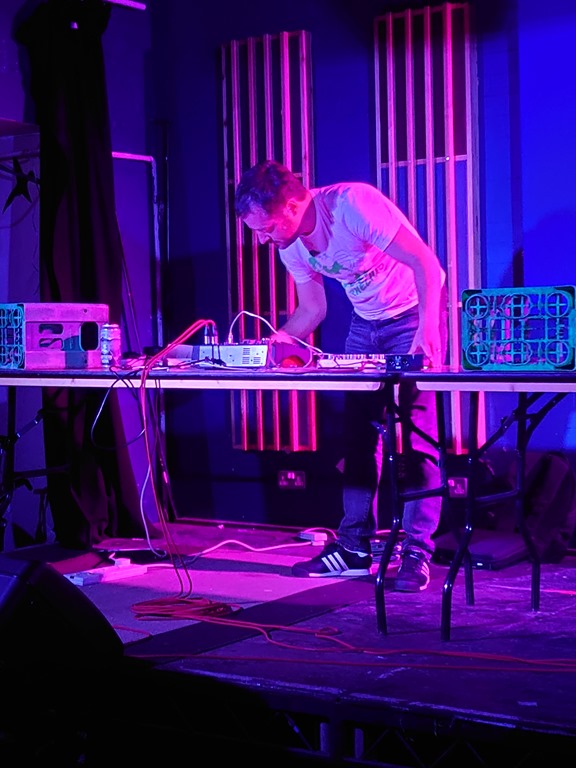
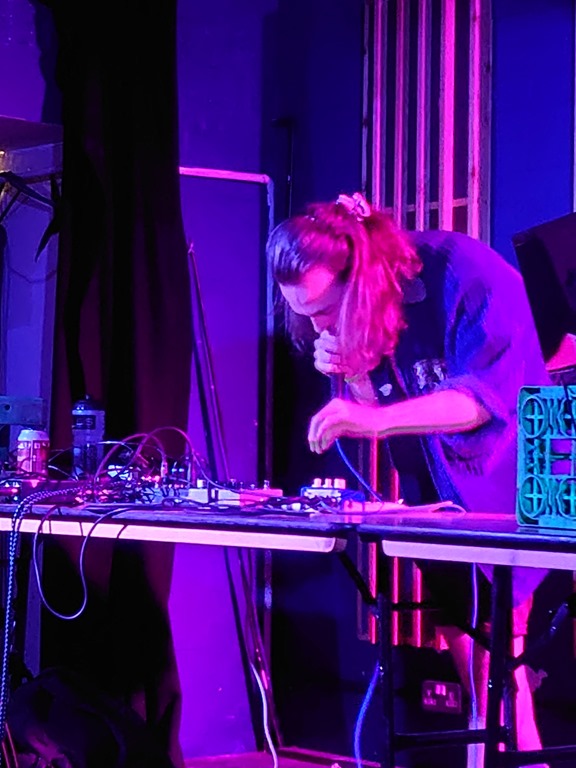
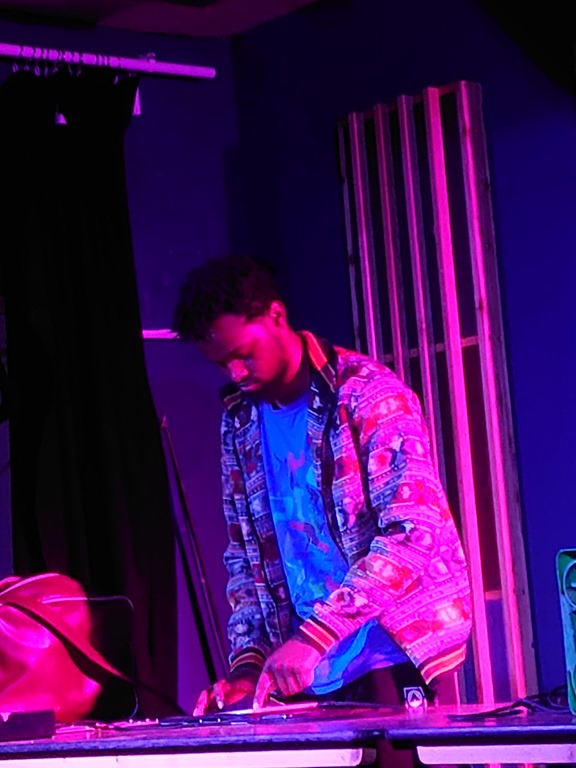
After some weird woozy shit off Territorial Gobbings’ recent Automatic for Nobody album release (which we covered and coveted here), where Theo Gowans hoarsely whispers corruptions of lines from REM, Rejections Ops kick things off early doors with a blitzkrieg of stuttering beats, squalling bass feedback and squealing, crackling synths: the guitarist’s wearing a veil and there are strobes galore. The noise is complete overload, a devastating mass of distortion, and while it would perhaps benefit from a little more contrast – it’s absolutely fucking full-on from beginning to end – it would just be amazing to witness in a small, sweaty room at proper ear-bleeding volume. I could happily go home now – but of course, I’m already home, and am thirsty for what’s to come.

DSC_7128

Rejections Ops

Hubble’s cover of Swans’ ‘No Cure for the Lonely’ from the aforementioned compilation provides a mellow interlude before Omnibael’s set. It’s another intense work, and probably their best yet. Stark, black and white footage accompany the duo’s low-down, dubby industrial scrapings. There are some mangled vocals low in the mix, while the crashing metallic snare is pitched up high, and driven by a relentless sequenced synth bass groove overlaid with explosive noise, the atmosphere is dark and oppressive.

DSCPDC_0003_BURST20210523204013324_COVER

Omnibael

Blackcloudsummoner brings more overloading electronica, dark, dense, story, tense, crunching electrodes crackling distortion, occasionally rent by trills of feedback. And it all sounds as if it’s coming from an immense cavern, about a quarter of a mile underground. The bass sounds like a nuclear experiment, and it’s all going off at once, making for an intense and disorientating experience.

AGED’s sound is rather more ambient, and considerably less abrasive, and it’s well-timed. That isn’t to say that this is in any way soft: there’s a crackling decay at the edge of the sound, and distant samples, barely audible, create a disorientating effect. And it’s over in the blink of an eye.

Making a return for …(something) ruined, the full-tilt, all-out noise abrasion with shouting seemed to hit the spot, and the altogether mellower sounds of Pigsticks and the Wonderbra, making droning harmonica noises in some woods arrives just in time to prevent any aneurysms. This is wonderfully weird, with leaves dropping and being raked creating a ‘field recording’ element to this curious experimental concoction. Birds tweet. A helicopter flies over. Atonal woodwind. Random words. What is it all about? The epitome of avant-garde oddity.

DSC_7133

…(something) ruined

Paired with Pressure Cooker Release valve for a collaborative set, Territorial Gobbing bring all the oddball experimentalism you’d expect. For TG, anything and everything is source material, and on this outing we witness some effervescent vitamin tablets fizzing in bowls, the sound contained by a folded IKEA box. And then they bring on the squeezy sauce bottles, which puff and sigh and gasp in their varying degrees of emptiness. Drainpipe and walkie-talkie, toast, toasters, lighters, phone ring tones, egg slicers, books, paint tube, polystyrene packaging, and kitchen sink also provide sound sources in this bizarre object-led experimental set. It almost feels like we’re watching an album being recorded in real-time. Maybe – and even hopefully – we are. With a track per object, it would work well.

DSC_7134

Territorial Gobbing / Pressure Cooker Release Valve

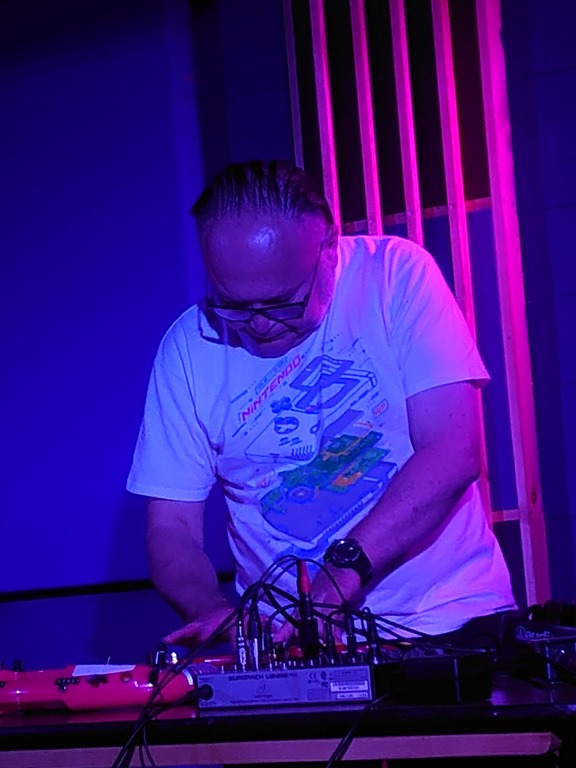
Gintas K’s set is a brain-bending bleepfest, a tangle of jangling synths and collapsing synapses that fray the nerve-endings. Everything squelches and zaps every which way, and we get to watch it all happen in real-time as the notes twitched away on his keyboard are run through software on a dusty Lenovo Thinkpad to create a crazy sonic foam that bubbles and froths all over. But deep, resonant bass tones boom out over the stuttering bleepage and groaning, croaking drones emerge. It all squelches down to a mere drip before finally fizzling out in a patter of rain, and it’s well-received, And rightly so.

DSC_7136

Gintas K

Hubble’s headlining set is accompanied by some eye-opening PoV visuals of a parachute jump and clips of people leaping off mountains, and the footage is so terrifying I actually hope it’s CGI even though it looks like it’s actually real. The freefalling blue sky space is the ideal accompaniment to the disorientating fretwork of the musical accompaniment which sounds like multiple guitars and keys playing interloping lines together and across one another. The rapid ebbs and flows are immersive, hypnotic, and a long, mid-range drone builds and hangs against the dizzying blanket of fretwork that weaves the rich and sense sonic tapestry of this bewildering sound on sound. It couldn’t be more different in sound from Ben’s regular gig as guitarist in NY noise act Uniform, but everyone needs a break, and this is wonderfully, if dizzyingly, realised. It makes for a top ending to a top night packed with all the weird and all the wonderful from the full noise spectrum.

Edelfaul Recordings – 5th June 2021

Christopher Nosnibor

Just as you should – at least ideally – never judge a book – or an album – by its cover, so you should never judge a musical project by its geographical origin, or judge the population by their government. This is particularly important as a point of note right now, and especially in context of this release. At home, we’re often led to believe that arts are of a lesser importance in the face of a pandemic or any other crisis, but history – and social media – will tell you otherwise: the natural human response to any trauma or crisis is to immerse oneself in either the creation or consumption of art or music. When bombs are dropping, people write poetry. It’s both a coping mechanism and a means of documenting events, and there is a clear logic to it: for me, writing helps to order things, both events and my own thoughts. The very act of writing gives mental effluvia a sort of solidity.

Spirit Skinned, the press release informs us, is ‘a duo rooted in the musical underground of Tel Aviv and Jerusalem’ and goes on to note that ‘The area is known worldwide as a high tension zone, and the small musical scene that bred Spirit Skinned enjoys a reputation for an uncompromising and often radical sound approach, paired with a rare level of perfectionism. If anything, their music lives up to that notoriety.’

Watching the news, one would be forgiven for being shocked and amazed that there would be any kind of music scene in Tel Aviv or Jerusalem, let an underground one. But even during sporadic war, life does go on, and citizens are always desperate to maintain some sensed of normality, and this is clearly true of Ben Ronen (aka diburnagua), former vocalist in various punk and noise projects in the Tel Aviv area and Ofer Tisser, producer/instrumentalist and a central figure in Jerusalem’s underground music scene, who have come together as Spirit Skinned.

The pair’s eponymous debut is pitched as ‘spanning the gaps between grime, industrial, hardcore, musique concrete, politics and expressionism’, and across the course of the album’s seven tracks, Spirit Skinned wanders far and wide stylistically. And you can’t criticise an album for any lack of focus when its focus is set so wide.

Many of Ronan’s crazed, yelping, barking vocals are largely impenetrable, and often partially submerged beneath layers of noise, not least of all highly dominant percussion: heavy industrial clanks and cracks dominant, but then again there are swamps of alternative and buoyant indie lurking in the mix.

‘Dry Season’ introduces the album with a slice of minimal DIY that’s brittle, spiky, and more than just a bit quirky, and lands somewhere between Young Marble Giants and Einstürzende Neubauten. Reverb bounces all over the place, while a slow, lowdown bass squirms away. They conjure seme tense and atmospheric scenes, and the claustrophobic, repetitious throb of ‘Leaving Room’ evokes the impotent rage of early Swans: it’s the sound of frustration vented through shouting into the void against a backdrop of music that bludgeons. ‘The Root’ is built around a monotonous pulsation that passes a significant nod in the direction of Suicide, but then there’s braying free jazz sax all over the top of it, and in combination, they’re pretty punishing. There’s a physicality to the music that’s affecting as they lunge from doomy drone to fractured, splintering harsh noise.

The album’s final track, the eleven-minute ‘Once Was Blind’ is sprawling monstrous hybrid of dark hip-hop, jazz, and psychosis. It’s like a beat poetry night on a bad trip. It’s a suitably weird end to a weird album, and one that’s well worth hearing.

EFT003_front

Nomark

James Wells

Stone Giants is Amon Tobin’s new musical vehicle, and marks yet another chapter in the versatile and eclectic electronic innovator’s quarter-century spanning career that’s seen his music feature in films and video games.

‘Metropole’, the second release from forthcoming album West Coast Love Stories, is a bewildering work, with so much happening simultaneously, to the extent that it feels like several different tunes overlaid. A steady, pulsing synth remains a constant throughout, as layers of droning organs, reverbed vocals, yawning synth washes and a meandering baritone melody that’s seemingly wandered in from another track and ambulates around.

The effect is disorientating, but not unpleasant: the confluence of the numerous contrasting and superficially discrepant elements is not so disparate and difficult so as too induce tension or cerebral disharmony, nothing of the gut-lurching bewilderment of something like, say, Trout Mask Replica. More, it draws the listener in to explore the ways in which the different pieces fit together, the ways each layer of this sonic palimpsest ebb and flow and reverberate off one another at varying frequencies.

AA

a2924726865_10

11th May 2021

(kröter) don’t do things by halves. Back in 2018, the landed not just one album, but three, all culled from the same sessions, with two of those albums arriving simultaneously. Fifteen minutes of (kröter) can be quite the headfuck, but three hours? (kröter) are a melting-pot of madness, and how much of their derangement does anyone need?

Well, from seemingly out of nowhere, they’ve dropped a further two albums, *d and *e, again drawn from the epic sessions in 2017-18.

‘avantgarde’, the first piece on *d is typically whacky, and knows it. A picked guitar, hesitant, and sounding more like tuning up than an actual composition, is immediately obliterated with a squelchy squirt of digital diarrhoea. ‘How much water does an avocado need to grow?’ they ponder by way of an introduction to some abstract lyrical ponderances. ‘This is avantgarde’. And yes, it is: and this is also an exercise in avantgarde self-reflexivity, art reflecting on art reflecting on art.

‘soul monkey’ does have that cack pop vibe of associated act Wevie Stonder and Mr Vast’s solo works, white soul played limp and strange, before a really dingy bassline grinds in like a bulldozer and distorted vocals rant and yelp half-submerged in the mix. The ten-minute ‘flattening shades’ marks a distinct shift of style and pace, manifesting as a slow, ponderous, piece with chorus-heavy guitar and a sparse, strolling that combine to create some palpable atmosphere. Despite some odd vocal segments, there are some moments of both menace and beauty, which show that beneath all the zany shit, these guys have some real talent and ability.

Not that you’d know it from the discordant chaos of ‘lambs brain’, which is twelve minutes of demented racket and shouting, and a bunch of twanging and sampling and whatever else happens to be at hand that ended up bring tossed into the blender. Then there’s ‘tomatos’ and ‘omatose’, companion pieces that are daft, quirky interludes. Because.

The album really only has one song that’s recognisable as such, and that’s ‘up to chance’ which incorporates elements of country and prog and autotuned Radio 1 chart pop, and of course, it gets pretty weird pretty quickly.

*e, described as ‘another bucket full of toad spawn fished out of the kröters sessions’ is more of the same, only more, containing four longform tracks that showcase leanings towards more spacey-electro and jazz. Tinkling synths and a wandering horn amble all over an insistent beat that in combination provide the disjointed backdrop to monotone chanting vocals on borehole (prelude), which provides an extended introduction to another aspect of their oddball stylings. It paves the way for the twenty-minute ‘borehole (suite)’, which is both more and the same, an extended drone of froth and foam and bubbling electronics, propelled by a swampy, looping, pulsating bass. It’s certainly darker in hue, and the expansive forms only add to the bewilderment.

The hypnotic weirdness continues through the snickeringly-titled ‘glandfather’, culminating in the eighteen-minute ‘coloumns’, another off-kilter spoken word piece accompanied by minimalist instrumentation that scratches and scrapes

If some of this feels like the whacky weirdness is something they’ve worked on, it’s equally something that they feel comfortable with, as if they derive pleasure from making you feel uncomfortable. As such, while there’s a certain self-awareness about all of this, it doesn’t feel particularly contrived or forced, and we leave this duo of albums with the conclusion that this isn’t a gimmick and that these guys are genuinely fucking barmy. And we should embrace that: while people all around us are losing the plot, (kröter) celebrate the idea that plot is overrated and they never had any grasp on it to lose in the first place. At their best, (kröter) evoke some of Bauhaus’ more experimental moments,, but mostly, (kröter) just sound like (kröter), and utterly deranged. Which is all the reason to like them, even if their music isn’t for everyone.

a1761606725_10

a4069748634_10

SN Variations – 7th May 2021

Christopher Nosnibor

Did downloading really kill physical formats and the music industry? If you believe the media and the major labels, yes, and again, when it comes to non-major artists, it’s clear that the current industry model is not one that benefits them kindly. Then again, streaming services probably did more damage than downloading – or home taping – ever did. But there is also a very definite flipside, in that the cost of producing physical releases on a small scale is phenomenally expensive on a per-unit basis, to the point that it’s often prohibitive, and that’s before one factors in issues of distribution and postage.

There’s also a matter of purpose: conventionally, singles were released to promote albums, and in order to achieve that aim, tended to be the most commercially viable song(s) from said album that radio stations (and, later, blogs and the like) may play and draw potential buyers in. But artists like Adrian Coker don’t make music that has that kind of marketability. You won’t find his music being played on commercial radio, and a single is probably likely to sell a bunch of albums.

No artist makes music for it not to be heard. And so it is that SN Variations release Adrian Corker’s ‘9 Spaces’ single as a download only, and it makes sense, particularly in context, as a musical work that was only possible via digital means, as Corker explains: ‘This piece started quite a while ago in a room with me, Chris Watson and an electro magnetic receiver made in Russia. It ended with the processing of these parts by Takuma Watanabe and a percussive improvisation by Tatsuhisa Yamamoto that left my original demo in his recording worldising my track in Japan. In between over the last year musicians such as Aisha Orazbayeva, the Ligeti Quartet and Pascal Wyse sent me parts remotely from London and various places around Europe. A track that was made in 9 spaces of which I was in 3’.

It’s in this context that the title makes sense also. And the roll-call of contributors is quite something:

Tatsuhisa Yamamoto – percussion

Takuma Watanabe – max

Chris Watson – field recordings

Aisha Orazbayeva – violin

Pascal Wyse – trombone

Ligeti Quartet:

Mandhira de Saram – violin

Patrick Dawkins – violin

Richard Jones – viola

Val Welbanks – cello

The first version, a quite punishing nine-and-a-half-minutes in duration, begins with grating drones and serrated buzzes, somewhere between an electric hair clipper and a palm-sander, before transitioning into trepidatious territory, with skittering fleeting buzzes and swarming sounds creating an unsettling tension atop a sparse, hesitant bass that stops and starts, single notes echoing and halting, And ultimately, it’s quite challenging – but to be clear, that’s no criticism. Art that isn’t challenging isn’t really art, but entertainment.

‘V2’ is subtler, quieter, stealthier, the drones trimmed, more mid-range, cleaner, manifesting as more like organ notes that quiver and quaver into space, disturbed only by the occasional extraneous disruption. As such, it’s more ambient and less upfront. It’s also everything a single should be: a snapshot of the artist, showcasing different aspects of their sound in contrasting and complimentary fashion.

AA

SN10D_art

Miasmah Recordings – 16th April 2021

Christopher Nosnibor

It was the heavyweight score of his debut album, Hold, that provided my introduction to the work of James Welburn, and very much piqued my interest – because in some way, sonically at least, it seems I like to be published. Almost six years to the year on, Welburn delivers another immensely heavy set with Sleeper in the Void.

According to the accompanying blurb, the album ‘feels like a story in two parts, rising lethargically, but with gargantuan power. The second begins with the momentous In and out of Blue, where Juliana Venter’s disembodied, spectral dirge takes center stage among the furious drums and bassy riffs, reaching a full crescendo with seconds to go. Parallel marks a release – Hilde Marie Holsen’s nostalgic soundscapes, pristine as glass, meeting the distant thunder of Welburn’s strings on the horizon. And finally, Fast Moon ends the record in a most surprising way – a tribal industrialized banger, complete with vile distorted beats and every other spice in demand on a blackened dancefloor.’

It’s intense from the outset, and ‘Raze’ is anything but lethargic. It begins with a modestly middling dark ambient drone, but before long, pattering drums are hammering like machine-gun fire and whipping up a frenzy while all around the drones increase in volume and intensity until there’s a veritable cyclone of sound raging all about. The experience is dizzying, suffocating.

The percussion is again punishing on ‘Falling from Time’, but while the sound is still dense and murky, the thundering rhythm, is far more mechanised, more industrial, thudding in a furious frenzy amidst an impenetrable smog of sound. The tempo is fast, and it’s relentless: you could perhaps even dance to it, although that’s not so much my thing: instead, I found my pulse accelerating and a glow of perspiration as the tension grows. Finally, the synths break into a softer swirl, although there are ominous tones eddying around as the drums finally peter out and it’s finally possible to catch your breath and compose yourself. It’s but a brief respite before crushing percussion crashes in on the doomy dirge of the title track: stuttering, stop-start detonations cut through the shoegaze on ketamine crawl of the blurred blizzard of extraneous noise.

Julia Ventner’s vocal on ‘In and Out of Blue’ and ‘Fast Moon’ (the latter of which is a grating, bulbous bass-driven beast of a cut that loops and lunged in a trill of treble and a crackle of fizzing distortion) are haunting, ghostly, and pitched against the lurching cacophony of drums and juddering blasts of noise that hit like a taser to the abdomen, it’s not only a contrast and a change of atmosphere her presence brings, but a new level of trembling intensity.

Sleeper in the Void unquestionably makes an evolution for Welburn: while incorporating many of the same elements fundamentally, their application is quite different on Sleeper in the Void in comparison to its predecessor. The basslines are less overtly structured, and Sleeper in the Void sees Welburn move further from any loose conventions of ‘rock’ toward something more abstract. It may be less direct, less bludgeoning, less reminiscent of early Swans, but it’s certainly no less intense or powerful, and it’s still dense and percussion-driven. If anything, the greater sense of nuance and Welburn’s expanded palette only amplify its menacing resonance, making Sleeper in the Void an album that may be challenging, but achieves optimum impact.

AA

MIA050_front

Wild Goose Chase Records – 27th April 2021

Christopher Nosnibor

Little Musgrave – the vehicle for Brussels-based Joey Wright – was conceived and recorded during the first Coronavirus lockdown, and its homemade, DIY, lo-fi stylings are perhaps representative of the style and form that will, ultimately, prove to define the period from Spring 2020 to Summer 2021 as musicians, twitchy and desperate for release took to recording at home, minus bands, and without access to studios or even half their kit, let along bandmates. Primitive drum machines, apps, recording and even mixing on mobile phones and releasing via Bandcamp has for many been the only way.

Why not wait? You may ask. Because creatives often need to create and to put it out there: creativity is a compulsion, and for many, public reception is validation of their output, even though got many it’s equally a source of anxiety and self-doubt.

‘Matches’ is a no-messing mess of sinewy guitars chopping out some rough and ready post-punk tinged indie that lands, lay-legged and in a heap between The Fall and Pavement. Wright isn’t really a singer in the conventional sense, often adopting a more Sprechgesang mode of delivery – although that isn’t to say he can’t sing, and there are some brief moments of melodic reflection. This is also a fair reflection of the abstract / elliptical lyrical content, which is wildly veering and often abstract, but not without moments of sensitivity.

The lack of polish, while borne out of necessity, is endearing in that it also presents a lack of pretence. And, also of necessity, the fizzing guitars and simple, insistent rhythms that pump away and pin the loosely-played songs together, are found alongside, as the liner notes proffer, ‘sounds which could have been recorded live in the dentist’s chair – we’re talking drills, saws and high-pitched whines’. With trips to the dentist off the table during lockdown, one assumes these extraneous sounds were sourced elsewhere, and primarily around the home. It’s remarkable just how unsettling a blender or electric shaver can sound when recorded and played back out of context, you know.

More often than not distilled into sub-three-minute bursts, clattering percussion and jarring angles are defining features; ‘Your Reputation Precedes You’ pitches a semi-spoken word performance over a clanking industrial-edged backdrop, while elsewhere, ‘Workers’ day’ is dissonant, difficult, and antagonistic, but as a thunking synth bass groove emerges through it all, it takes on an awkward electrofunk vibe that evokes the stylings of early Shriekback – before dissolving into a mess of feedback, whirs, and buzzing, and the scratchy Fall-esque ramble ‘Stick By Stick’ collapses into mangling noise.

And while Matches doesn’t sound like The Fall per se, its wild eclecticism and the levels of discord achieved by the guitars (are they in tune, let alone playing the same key? Just listen to ‘Which of you has done this?’ to get a handle on the stylistic collisions that aren’t just characteristic but define the album.

Weird and wonderful with the emphasis on the latter, Matches is inventive and unusual. At times difficult and brain-bending, it’s also self-aware and interesting, and deserves some time to adjust to. It’s not mainstream, but it’s got real cult potential.

AA

a3799742460_10

Audiobulb Records – 5th May 2021

Christopher Nosnibor

The wonderful thing about stories is that there are no rules – no rules about what they should contain, how they should be told, or whose perspective they should be told from. Even the standard expectations of ‘beginning-middle-end’ are an artifice, and for any convention, there are infinite ways to deviate from it. Linearity is a construct which assists in rendering events more easily navigable, but sometimes, disrupting that linearity is an integral part of the unravelling of events. Stories – be they true or fictional – are often a way of making sense of the world through the construct of narrative. Sometimes, we forge our own narratives from fragments of confusion in order to orientate ourselves, and as such, stories are instinctive and integral to our understanding the world and our place in it.

The fourth album from Quiet Noise, the vehicle of West Wales based producer Adam Wilkinson, is, like so many albums from the last year, the product of lockdown. ‘In a studio that overlooks a valley where the air breathes a lone craftsman sets to work mapping his experience through experiment,’ his biography tells us. Does this mean that Wilkinson was perhaps better equipped than many to deal with the last fourteen months, given his solitary nature? Not necessarily, but while many lockdown musical projects, which have been steeped in an air of claustrophobia, anxiety, and tension, Story Machine is a breath of fresh air that conveys aa sense of – if joy is too strong, then appreciation – of life. Perhaps it’s the fact that after four years being busy producing music for singers and film makers, Wilkinson finally has time out to return to the world of Quiet Noise to explore his own avenues of creativity. Adam explains the limitations that determined the album’s formation, recounting, “stuck at home, sitting with my wife and children while they worked from home, I set myself the challenge of creating pieces using only equipment that could fit in my space on the living room table. Motivated by my game and pleasantly surprised by what I could achieve.”

For the most part, Story Machine is an overtly electronic set that comfortably incorporates a diverse range of styles from across the spectrum – and a large portion is fresh and accessible, danceable even. The range is such that the individual pieces feel as though they each tell their own stories – but then again, taken as a while, perhaps they’re chapters of a longer story that is the album as a whole.

With bold, surging orchestral strikes and tension-building strings, ‘Grand Entrance’ is appropriately titled. ‘Climbing Trees’ is altogether more light-spirited, with a buoyant electro beat and birds twittering – although it suddenly explodes in a surge of light that’s a veritable epiphany. ‘Murmurations’ brings a very different vibe, with a straight-up dance groove. The beats are bold and uptempo, and while the top synths are quite soft and subtle, bringing an expansive but chilled later to the sound, the bass is bouncy and urgent.

In among it all, there are some moments where vast expanses of sound burst seemingly from nowhere, radiating an almost prog-rock grandiosity. These bursts of extravagance are a shade audacious, but somehow, they work. Above all, Story Machine is an uplifting experience, and in the face of so much bleakness, it’s one that’s most welcome.

AA

Quiet Noise Story Machine Cover 12 v2