Posts Tagged ‘Death’

2nd October 2025

Christopher Nosnibor

The context for Ashley Reaks’ sixteenth solo album – and his third in three years (not counting the compilation of demos released earlier this year) – is weighty. He has written openly and extensively of his health issues, while sharing images and commentary nocturnal wanderings, and these both inform At Night The World Belongs To Me, of which he writes:

The looming spectre of death and loss haunt the album: Reaks survived two major health scares and a misdiagnosed terminal illness over the last 18 months, experiences that inform the reflective, poetically gloomy lyrics, and the 4 am downtempo grooves. Adding to the sense of loss, guitarist and long-term collaborator Nick Dunne died suddenly at home just one week after completing his guitar parts for the record.

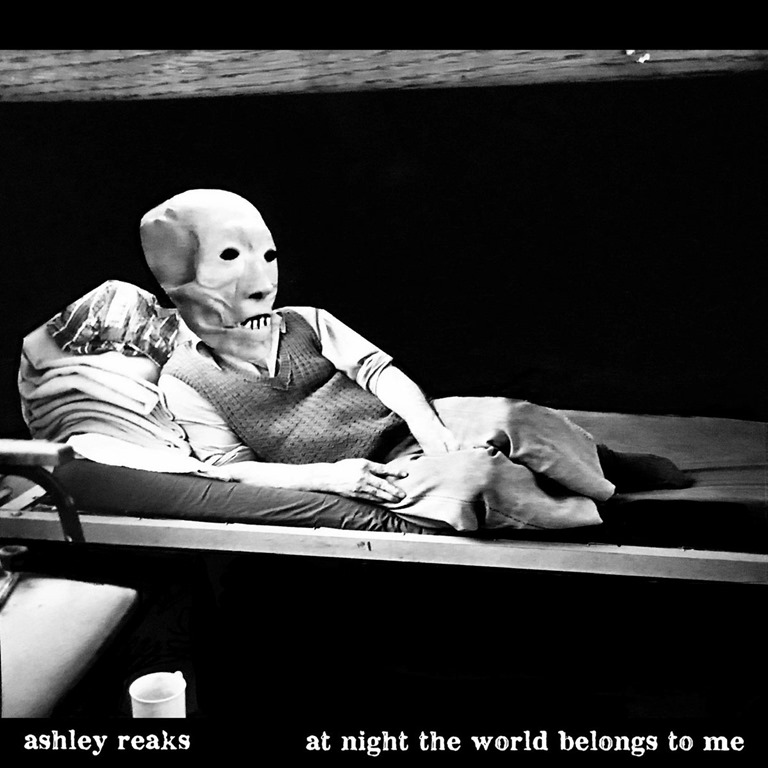
Through all of this, he has continued to collage and write prodigiously, but At Night The World Belongs To Me marks a distinct change of tone from its immediate predecessors, The Body Blow of Grief (2024) and Winter Crawls (2023). The usual elements are all present and correct – the sense of experimentalism, the collaging of genres, melding post-punk, jazz, and dub – but this feels darker, more introspective. The cover art, too, reflects this. While it has the same rather disturbing, grotesque strangeness of his usual work, the grim-looking figure in repose has connotations of ailment, frailty, even the deathbed.

The first track, ‘Playing Skittles With The Skulls and Bones’ has a bass groove that calls to mind The Cure’s early sound, melded to a rattling rhythm reminiscent of ‘Bela Lugiosi’s Dead’. The smooth sax that wanders in around the mid-point provides something of a stylistic contrast, but at the same time, it’s minor-key vibes keep the song as a whole contained within a bubble of reflection, evoking the stillness of night. I know, I’m sort of dancing about architecture here, but something about Reaks’ work prompts a multi-sensory response.

‘Rimmed With Yellow Haloes’ brings soaring post-rock guitars atop of an urgent ricochet of drumming and solid bass. On the fact of it, it’s almost poppy, but it soon shifts to take on a folksy aspect, while Reaks sings of death and funeral pyres, and the refrain, delivered with lilting, proggy overtones, ‘The Lord gave the day to the living, the night to the dead’. In context of the album’s title and theme, there is a tangibly haunting foreshadowing here, a suggestion that Reaks has not only accepted his mortality, but has assumed his place. It’s powerful, and deeply moving. Of course, Reaks can’t help but introduce incongruous elements, with some horns which are pure ska and some super whizzy 80s pop synths providing a pretty wild counterpoint to it all. It’s hard not to smile, because there’s an audacity to this approach to composition and arrangement – a lot of it simply shouldn’t work, but it does, and it’s uniquely Reaks.

The album’s shortest song, ‘Things Unseen’ is snappy, poppy, Bowie-esque, an amalgamation of post-punk and electropop, a standout which is succinct and tight, and consequently, the dark connotations of the bleak shuffle of ‘Life Forever Underground’ – a rippling synth-led tune – are rendered more profound. The sequencing of this album is such that the shifts between songs accentuate their individual impact.

‘Mask the face, unmask the soul…’ he sings softly on ‘Mask The Face’, which has a somewhat spacey Krautrock feel to it – before a guitar solo that worthy of Mark Knopfler emerges most unexpectedly. And as dark as things get here, Reaks never ceases to bring surprises. At Night The World Belongs To Me perfectly encapsulates the reason he’s so respected and critically acclaimed, but orbits light years outside the mainstream. In a world defined by an exponentially reducing capacity for sustained attention, Ashley Reaks makes music that requires real engagement, the musical equivalent of complex carbs and high fibre foods in a processed, white bread culture. But also, contemporary mainstream radio music favours short songs which cut straight to the chorus, where the hook has to land in the first twenty seconds. Here, we have eight songs, all but one of which are over five minutes long. They take their time, they’re expansive and exploratory, there’s atmosphere, there’s depth. And as ‘Eyeing Up The Sky’ tapers away on a buzzing drone, we’re left with much to chew on, much to consider.

AA
a2008509738_10

Floodlit Recordings – 29th August 2025

Christopher Nosnibor

Having discovered Swans in my teens – it was the late 80s and a friend introduced me to their most recent album, Children of God, which swiftly led me, via weekends spent at record fairs, to Cop, whenever I’m forewarned that a new release is ‘heavy’, I invariably find myself thinking ‘really? How heavy? Bring it on!

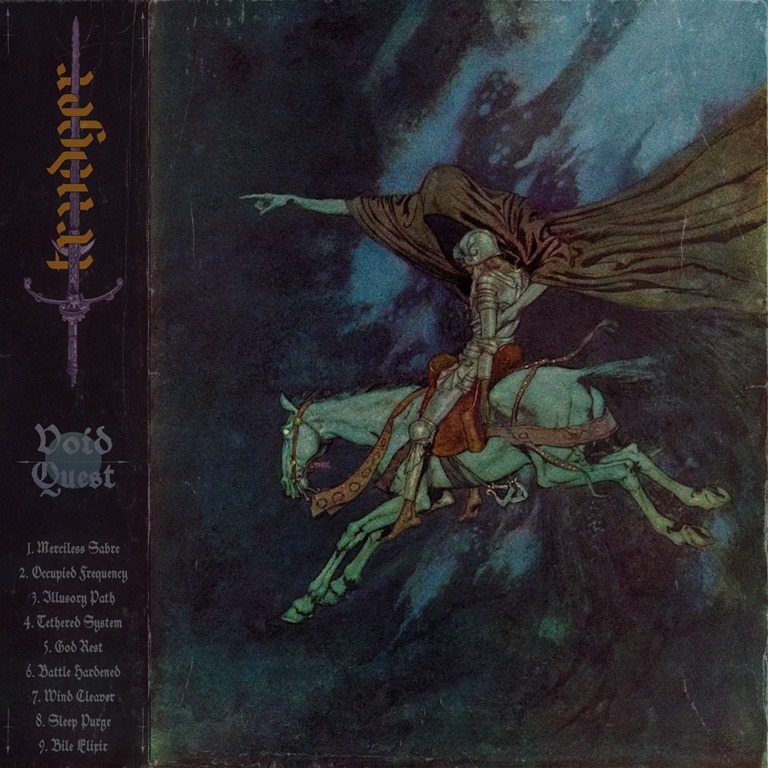
I read – am forewarned – that Trudger’s ‘new album Void Quest… released on August 29th through Floodlit Recordings, a new label venture from guitarist of Pijn and Leeched… [is]

absolutely savage’. I saw Pijn live a few years ago and they slayed, so I consider this a positive in advance. And there’s no question that Void Quest is something of a monster. Arriving a full eleven years on from their debut, it’s as if they’ve distilled all the rage and festering fury of a decade into the nine songs on offer here.

The first track, ‘Merciless Sabre’ is fast and furious, but arrives with a surplus of fast licks and an element of black metal fretwankery that, in my ears, diminishes its weight despite the rampant, rabid ravings of the vocals, the tempestuous blast of the instruments combined to create a thunderous wall of noise.

Things settle to a more organised shape with ‘Occupied Frequency’, where math and metal merge. It seems as if they flung everything into the blender to grab the attention at the start and possibly overdid it, as things aren’t quite as wildly ostentatious thereafter. Sure, the guitar work is fast and furious, and it’s still showy and perhaps a bit over-the-top, but they layer down some magnificent textures and judicious detail amidst the relentless sonic assault, the eardrum-bursting blast.

‘God Rest’ is slower, heavier, and utterly devastating in its driving density. ‘Battle Hardened’ is simply out-and-out brutal, a song that slays all comers. Think you’re hard? Wait for this. This is shit that will slice your head off and ruin your internal organs.

Void Quest is heavy, but what makes it really heavy is its relentlessness. Thirty-five minutes or so of blasting ferocious noise, it leaves you feeling like you’ve just been given a good kicking. I wouldn’t recommend taking a kicking, but I would recommend this.

AA

a2040788392_10

The Helen Scarsdale Agency – 23rd May 2025

Christopher Nosnibor

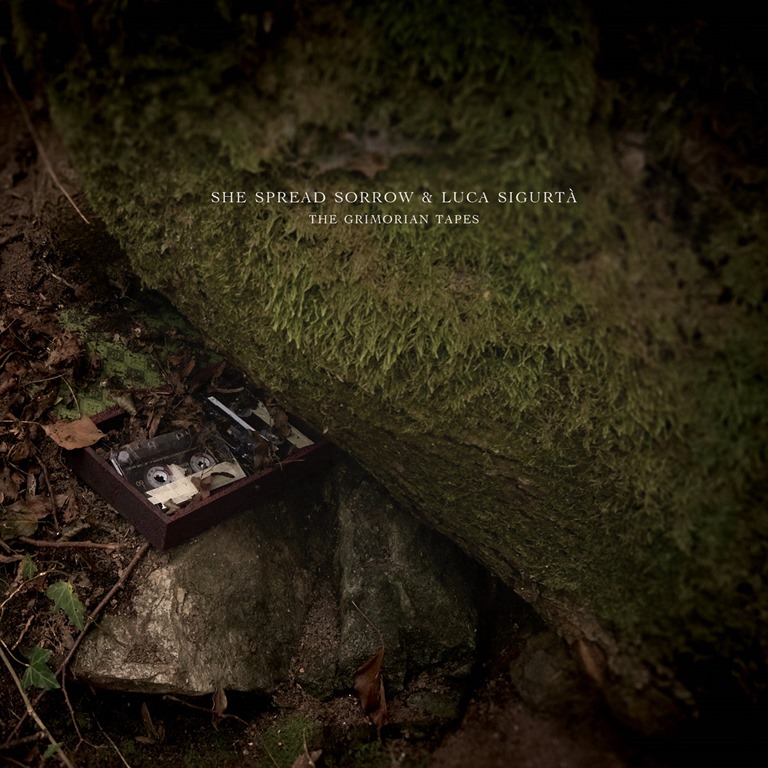
The pitch alone is harrowing: ‘“Don’t be scared by death,” Alice Kundalini (aka She Spread Sorrow) calmly instructs at the beginning of her collaborative Grimorian Tapes with partner Luca Sigurtà. Her words slither from her lips with a subtle, sinister unease, compounded by the unsettling quality of her whisper. The fear of death, this most profound condition, has long been a subject of philosophical, spiritual, and existential inquiry. To fear death is undeniably human; to transcend that fear is often seen as reaching a higher plane of existence. At least, that’s the intention behind the rituals, the spells woven into the fabric of The Grimorian Tapes.”

I myself have spent a lot of time contemplating death, and the fear of death, especially of late. We are all scared of death, particularly in Western culture. When my wife was diagnosed wit stage 4 breast cancer, where it had spread to her bones, I was terrified, not only of losing her, but of waking up to find her dead in the bed beside me. What do you do in that situation? I did not want to see her dead, and she did not want me to see her dead. Thankfully, she made it to a hospice for her last day, but I lived for a year under the shadow of that ‘what if…?’

You might think that her passing brought peace, but it did not: instead, I have spent many mornings twitching and drenched in sweat lest I should die and leave our daughter an orphan, being thirteen. This is not a call for sympathy – simply as summary. It’s hard not to be scared by death, inevitable as it is.

For additional context, it’s worth delving into the details of the album’s inspiration, a large portion of which comes form The Black Pullet, ‘an 18th-century French grimoire filled with instructions for making talismans and magical artifacts’. We learn that ‘Kundalini weaves her own take on the book’s esoteric themes into the shadowy tape loops that comprise The Grimorian Tapes. The Black Pullet is a detailed guide into alchemy, divination, and occult practices, with a particular focus on harnessing hidden forces through the construction of specific objects imbued with magical power. Though Kundalini doesn’t practice these rituals per se, she finds a deep, poetic resonance with these ancient teachings. The allure isn’t in the performative aspect of these rituals but in the seductive power of its symbols and ideas, which speak to a long-forgotten language of metaphysical mystery. It’s this sense of transmutation, hidden knowledge, and occult wisdom that lends The Grimorian Tapes its dark, ritualistic intensity.’

And so it is that ‘grimoire’ introduces the album with a dark etherality, whispered vocals, the words indecipherable. Echoing amidst rumbles and a persistent drone which ebbs and flows. It’s compelling, and enticing, but at the same time, unsettling. It’s the fear of the unknown, of course: the esoteric and other-worldly and anything that speaks of a realm beyond one’s ken is always difficult to assimilate. This, in a nutshell, is the appeal of horror, because a lot of us find entertainment in being scared. It’s the same reason people go on rollercoasters. Being scared half to death reminds you that you’re alive. And The Grimorian Tapes is pretty scary, in the suspense and horror sense.

‘initiatory’ rumbles and hovers dark and murky, sonically entering the domains of Throbbing Gristle, and again, the whispered vocals are menacing, and reminiscent of Prurient’s Cocaine Death, while ‘the stairs’ brings a hint of disturbing playground, psychological derangement, the other ‘other side’ we’re all so afraid of due to a lack of comprehension. And the further this album progresses, the more uncomfortable and unsettling it becomes, the further it extends beyond the domains of the ordinary, the mainstream comprehension.

‘babele’ is a dank, muddy morass of sound over a slow thudding heartbeat rhythm, while ‘kirtan’ brings flickering, stuttering beats, while again leading the listener through hair-prickling terrain, with triffid-like stem-clattering and gloomy swirls and abstract vocals. ‘we worship you’ plunges deeper into a darker space, with sputtering electrostatic sparking, and gargled vocals, deep and robotic, growling, threatening and emanating from another place, another world, one beyond reach. ‘me and I’ churns like slow machinery, and is industrial in the primitive sense. Again, the way we have come to understand ‘industrial’ has evolved: Foetus is a far cry from Throbbing Gristle, and both are a world away from NIN and Ministry. But The Grimorian Tapes takes us right back to the origins of the genre.

This is one dark and difficult album, heavy and suffocating and uncomfortable from beginning to end. Two thumbs up. And now I need to lie down.

AA

a0844152259_10

Negative Gain Productions – 6th June 2025

Christopher Nosnibor

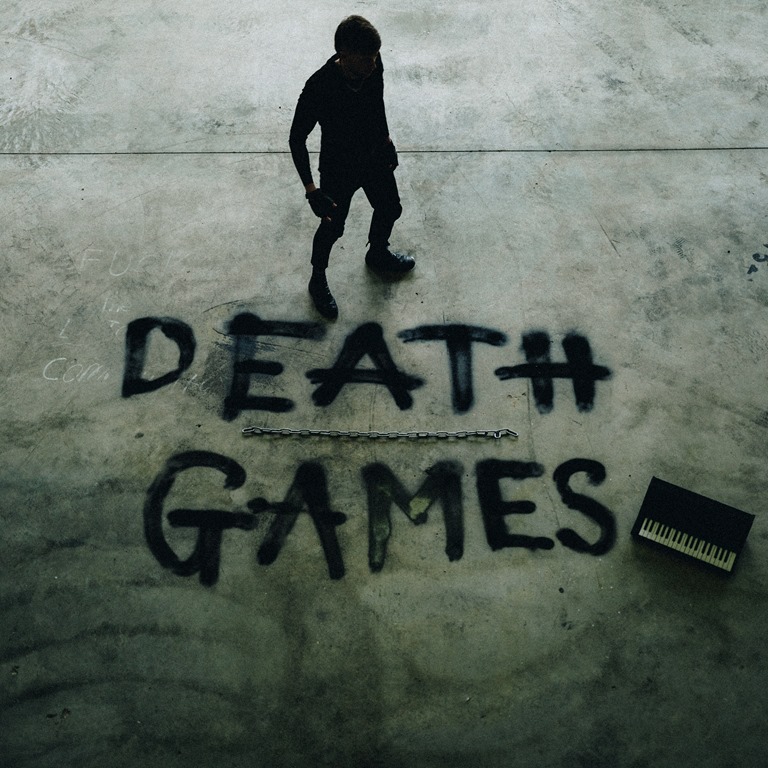
Just as the birds of prey from which they take their name are creatures of the night, so this Irish act – essentially one guy – who draw inspiration from the darker realms of postpunk, goth, and synth-based music are very much dwellers of the dark hours, as debut album Death Games attests, with titles such as ‘Perfect Nightmare’, ‘Tombs’, and ‘Send Me to My Grave’. The album’s themes are timeless and classic, offering ‘a haunting exploration of love, mortality, and the fragile nature of existence,’ while casting nods to touchstones such as Lebanon Hanover, Boy Harsher, and Black Marble.

Lead single ‘Give Me Your Stare’ opens the album in style with a disco beat and throbbing bass giving this bleak, echo-soaked song a dancefloor-friendly groove. The vocals are backed off but ring clear through a haze of reverb, offering a hint of The Cure’s Seventeen Seconds in terms of production values.

AA

The compositions on Death Games are pretty direct: there’s not a lot of detail or layers, and it’s the electronic beats and pulsating basslines which not only define the sound but drive the songs. The sonorous synths which twist and grind over the top of these predominantly serve to create atmosphere more than melody, although haunting, repetitive motifs are commonplace, and the vocals, too, being low in the mix and with a fairly processed feel, are more a part of the overall sound than the focal point.

‘Skin on Skin’ brings a wibbly, ghosty synth that sounds a bit like a theremin quivering over a minimalist backing of primitive drum machine and bass synth, and the likelihood is that they’re going for early Depeche Mode, but the end result is more like a gothed-up Sleaford Mods, although, by the same token, it’s not a million miles away from She Wants Revenge around the time of their electro-poppy debut, and that’s perhaps a kinder and more reasonable comparison. ‘Fevr 2’ brings an increased sense of urgency with skittering bleeps skating around the reverberating drums: it has both an 80s movie soundtrack vibe and a vintage goth disco feel, and despite its hectic percussion and busy bass, ‘Tombs’ conjures a haunting, requiem-like atmosphere.

The ‘death’ thematic may not always be literal, and as much concerned with the death of love and the ends of relationships, but the duality the theme offers serves OWLS well. There’s no denying that it’s both a stereotype and a cliché that an obsession with death is such a goth thing, and OWLS fulfil these unashamedly – but then, why should there be shame? Why is it only goth and some strains of metal which embrace life’s sole inevitability, and explore mortality and the finite nature of existence? Even now, after millennia, we aren’t only afraid of death, but, particularly in Western cultures, we’re afraid to think or talk about it. People passing in their eighties and nineties still elicits a response that it’s a tragedy or that they should have had more time, and I’ve seen it said of people departing in their sixties or even seventies that it’s ‘no age’. We seem to have a huge blind spot, a blanketing case of denial when it comes to death, as if it shouldn’t happen, that it’s an injustice, and that no-one deserves it. But nothing is forever, be it love or life, and while loss – any loss – is painful, it comes attached to inevitability, being a matter of when, not if.

The stark and sombre ‘Send Me to My Grave’ commences a trilogy of dark, downbeat, funereal songs, which grow progressively darker, more subdued, the vocals more swallowed by evermore cavernous reverb. Even when the beats kick in and the bass booms, things warp, degenerate, and seem to palpably decay and degrade. There’s a weight to it, a claustrophobic heaviness, and the kick drum thwocks away murkily as if muffled by earth and six feet under sods. ‘This Must be the End’ is brittle, delicate, the calm that comes with the acceptance of… of what? What comes after the end? It feels like the song, and the album, leave this question hanging with an ellipsis, a suspense mark. It seems fitting, since we simply don’t know. But it does very much leave the door ajar for OWLS’ follow up, and that is something to look forward to.

AA

AAlbum CoverA

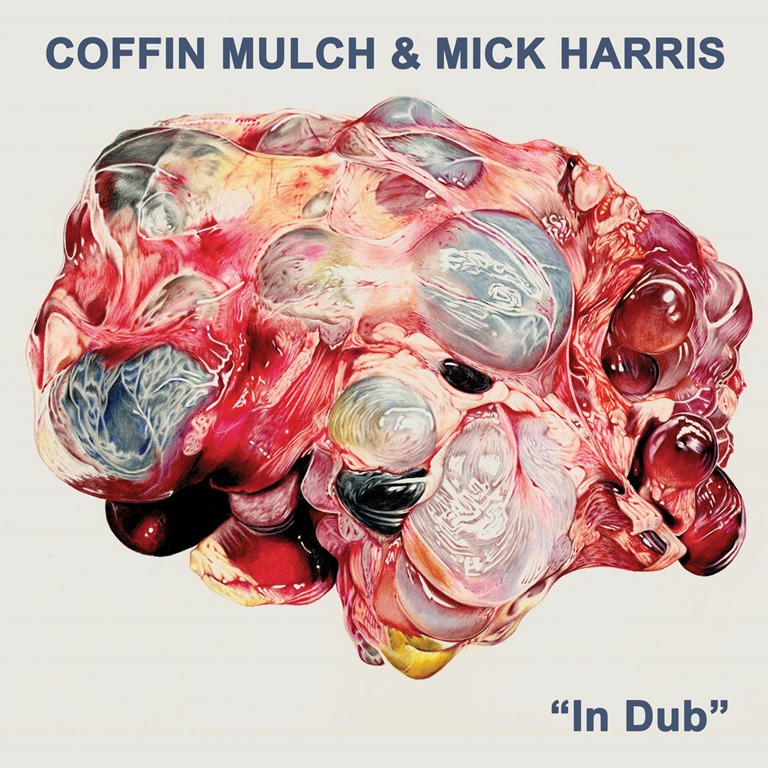
UK death/grindcore act COFFIN MULCH released the new EP In Dub on May 2nd via At War With False Noise. The EP sees Coffin Mulch collaborating with MICK HARRIS – Napalm Death legendary drummer until 1990’s Harmony Corruption album – who remixed two tracks from the British band for the occasion!

They write:

This is kinda neither a death metal record, nor an industrial record, nor a techno record. I don’t know what it is, and that’s what’s cool about it. We live in a world where most folks seem to want to find their niche and exist in that, and it wasn’t sitting right constantly just being thought of as “an HM2 band” I guess. I’d imagine this will probably split a lot of people, but it might gain us some new followers! Honestly, that’s pretty secondary to the thrill of getting to work with one of my heroes and create something that’s turned out to be a really unique, challenging, and DIFFERENT record.

AA

a1514846660_10

ROT ROOM – 6th December 2024

Christopher Nosnibor

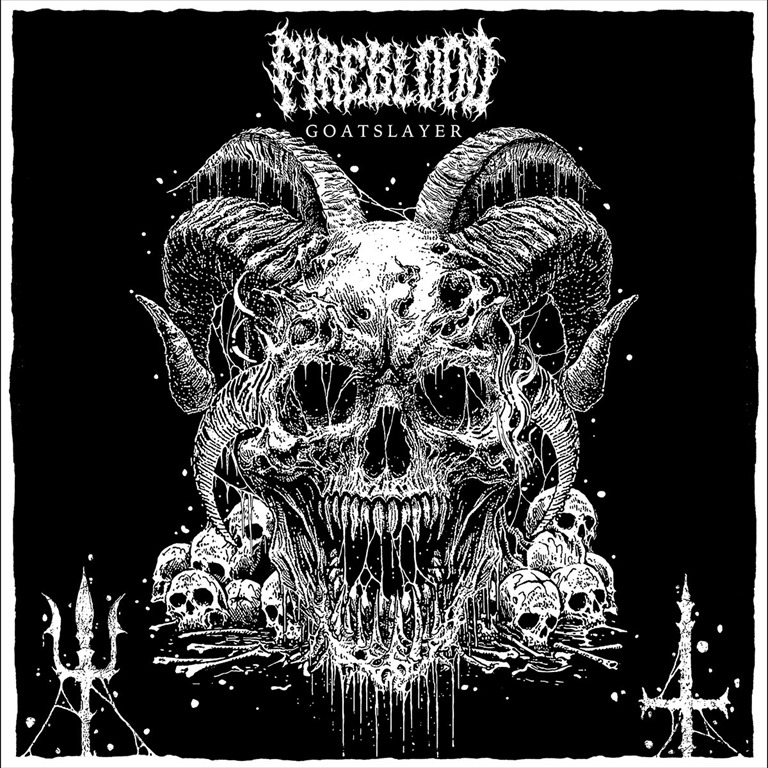
Super-spiky, not-really-legible font? Check. White on black cover art? Check. Goats galore? Check: in the title and on the cover. This is going to be some gnarly metal din, right? Right. Sometimes, you can judge a book – or a record – by its cover.

Goatslayer is the second EP of 2024 for North Carolina ‘southern-fried sludge quartet’ Fireblood, following the Hellalujah EP, released in April.

They promise a work which ‘take[s] the genre in a somehow meaner, more extreme direction, they employ massive atonal guitars, booming drums, and churning low end to create a caustic, thick-as-molasses sound that has a physical weight to its thunderous mid-tempo grooves. Lumbering ever forward, each stomping beat comes laden with the threat of eruption, and when the top does blow it’s an explosion of seething rage.’

While I wasn’t aware that theirs was a specific genre, I’m on board with this, not least of all because the EPs four tracks are magnificently mangled, feedback-strewn heavy as hell riff-fests with an obsession with death.

‘A Perfect Place for Death’ is a lumbering chuggernaut, with overdriven power chords galore and processed, fucked-up vocals which add a deranged psychedelic edge to the purgatorial experience. As much as there are hints of Melvins in the blend, the vocal treatment reminds me of Henry Blacker, knowingly over the top and uncommonly high in the mix, but everything congeals into a thick black tarry sonic soup. ‘Death Comes Rolling’ thunders in hard, beating its chest and stamping its feet against an industrial-strength riff and roaring, glass ‘n’ gasolene gargling vocals. It ain’t pretty: it’s not supposed to be. It’s not subtle, either, but again, it’s not supposed to be.

They slow the pace to a crawl on the trudging ‘Burning Underground’, and it very much feel like being dragged by the collar down an endless staircase hewn in rock, the temperature rising as sulphurous lava and eternal flames draw ever closer, before ‘A.I.G.O.D.’ locks into a relentless and powerful groove, and pummels away at a dingy riff for seven and a half punishing minutes. Around halfway through, something twists and suddenly it seems to get even denser, sludgier, heavier, the guitar overload threatening to do damage to your speakers. The long, slow fade comes almost as a relief in easing the cranial pressure. This is a beast, and no mistake.

AA

a2189145838_10

Fysisk Format Records – 26th January 2024

Christopher Nosnibor

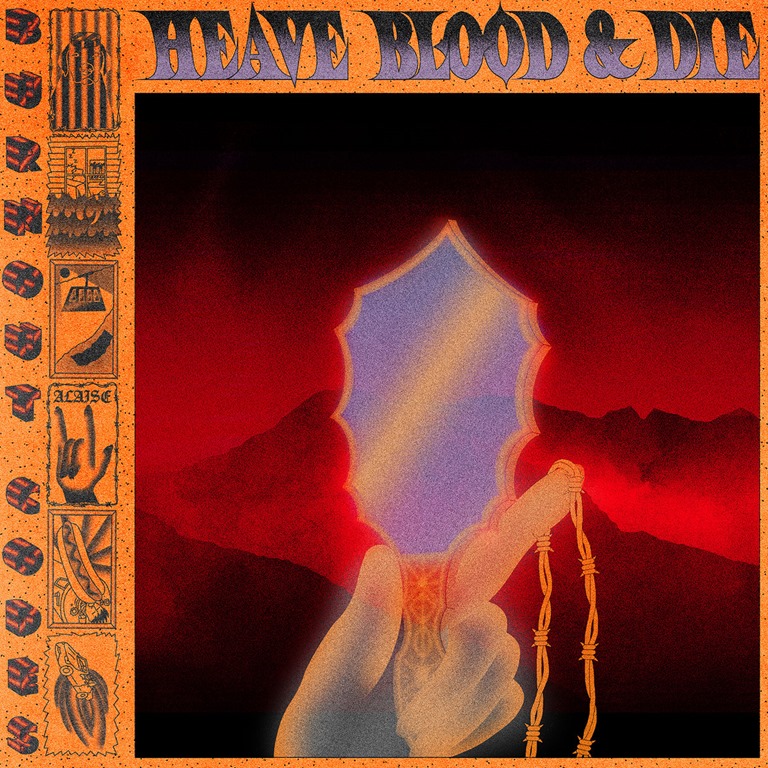
The arrival of single ‘Mjelle’ just the other day provided a strong alert to the imminent arrival of Heave Blood & Die’s Burnout Codes. The band’s name may have a certain comic-book flippancy about it, but their fourth album comes with altogether less cartoony connotations: as the accompanying text explains, ‘Dedicated to bassist Eivind Imingen, who decided to end his life just following the recordings of the album, Burnout Codes is shrouded in sadness and tragedy, and shows the Norwegian collective offering their most textured and innovative album to date.’

It’s not even a mater of English as a second-language: the phrase ‘decided to end his life’ is a difficult one to digest, and one which reminds us that there is no comfortable way to articulate death, and particularly premature death by suicide. Words simply don’t work, they don’t fit, they don’t sound right, they don’t read right. There are no words. But of course, the job of the artist it to find words, and to articulate these essentially unspeakable, incomprehensible things, by various media, be it words alone music, visuals, a combination of any or all of these.

Some albums stand out, at least to me, as being weighted by the perspective of events which would follow soon after: Nirvana’s In Utero and One Last Laugh In a Place of Dying by The God Machine, and, of course, Joy Division’s Closer all resonate with the echoes of foreshadowing deep tragedy, and would also add the altogether lesser known album Nails Through Bird Feet by Chris Tenz – one of the first albums I reviewed on here (positively), to learn some time later that Chris had not only taken his own life just a few weeks later, but did so after visiting York in his final days.

I struggle with the dichotomy between the contemporary dialogue around these things: while there is a huge drive to encourage open discussions about mental health, some feel that anything mentioning anxiety, depression, and suicide should come with a trigger warning and that people should be able to be excused from being confronted with these topics. I do understand that they’re difficult and upsetting, but how does one navigate life by avoiding anything difficult, upsetting, even traumatic? Being recently bereaved myself, I feel I need to front up to one of life’s only certainties, namely that it will end.

Like all of the albums mentioned previously, Burnout Codes is not an album which is about suicide, or grief, but a dark album which explores these challenging themes, and has taken on further dimensions on release due to the addition of unforeseen context. We shouldn’t judge the album within these contexts alone, though.

Sonically, Burnout Codes is a fiery blast of fury out of the traps with the buzzing throb of ‘Dog Days’, a furious collision of grunge and raging hardcore punk which leaves you dazed and breathless, and it’s immediately followed by the sub-three-minute assault that is ‘Men Like You’, which slams in, drums to the fore before locking into a scuzzy wall of guitar and synth, like Girls vs Boys produced by Steve Albini.

‘Hits’ is built around a nagging, throbbing pairing of guitar and synth and a shouty vocal that evokes all the fist pumping. But no, there’s more detail than that. The synths are stark, chilly, droning, the sound of Closer­ era Joy Division, early New Order, The Cure even, but the guitar is positively grungy, and these contrasts create a dynamic tension that serves to sonically articulate a mood of internal conflict, of the experience of feeling jittery, adrenalized, and it’s ramped up threefold on ‘Stress City’, a crackling soundtrack to that sense of feeling overwhelmed, overloaded, overstimulated. If you’ve ever been there, it will resonate deep and hard – and if you haven’t, it’s still a rush of a tune.

Single cut ‘Mjelle’ sits in the middle of the album and marks a shift in placing the synths to the fore and pulling back the guitars, and it’s an obvious single choice with its more clearly-defined chorus and hints of Gary Numan. A slower song, and the album’s longest, extending beyond five minutes, it stands out in the set, but make no mistake that the atmosphere is pretty fucking bleak.

‘Things That Hurt’ races back in with a fierce post-punk darkness, a serpentine synth intertwining with a slippery guitar lead and pounding drums which bring an explosion of energy.

The contrasts and shifts in pace and mood are integral to Burnout Codes, and for this reason, ‘HEATWAVE 3000’ packs a late surprise with its rawness and 80s synth oscillations and strolling bass: it comes on like Killing Joke, with a full, bass-led production.

‘Seen it All’ brings a harrowing conclusion, and bringing the album to a heavy conclusion, Desolate (Keepin) repeats the phrase ‘everything burns’, a crunch of distortion and a rasp of desperation accentuating the pained, ragged appraisal of the mess of life. The statement can be taken metaphorically and literally as we recall how wildfires ripped through Greece last summer in the world’s hottest year on record. The worlds is on fire. Wars rage around the globe. Everything does, indeed, burn… and eventually, burns out.

AA

945712

Icelandic metal trio FORTÍÐ reveal the video single ‘Þúsund þjáninga smiður’ (‘A Man of a Thousand Sufferings’), which is taken from the forthcoming full-length Narkissos. Narkissos is slated for release on October 13, 2023.

The video ‘Þúsund þjáninga smiður’ depicts the endless cycle of bloody feuding that lies at the core of most Icelandic sagas and continues with usually less physical violence until today.

Watch it here:

Parallel to Narkissos, a 3CD artbook entitled Völuspá, which is featuring all three albums of the original trilogy will also be released. Each album comes with three bonus tracks and the book includes among other items introductions by Einar "Eldur" Thorberg Guðmundsson and Kári Pálsson as well as all lyrics in original language and English translations.

FORTÍÐ comment: “The title ‘Þúsund þjáninga smiður’ is a play of words, which is derived from the common Icelandic term ‘þúsund þjala smiður’; but instead of referring to a ‘man of a thousand traits’, we have changed it into a ‘man of a thousand sufferings’ here", mastermind Einar Thorberg Guðmundsson writes. "The lyrics are more abstract than the video. They revolve around mankind’s thin outer layer of civilization and the pure animal instinct that lurks beneath the surface. It takes little effort to reveal our true nature. The clear cut story-line of the video shows Icelandic farmers fighting over a piece of land. Such family feuds have been very common in Iceland throughout the centuries and lie at the core of our saga literature. Coincidentally, the farmer that so kindly lent me his fence for this video also had a very rough land dispute with the neighbouring farmer. I cannot go into the details, because it is still an ongoing court case that will hopefully get settled in a more civilized manner than what you see in this video.”

ed2c65bb-042c-bd83-1640-62385f1dd531

Ipecac Recordings – 21st July 2023

Christopher Nosnibor

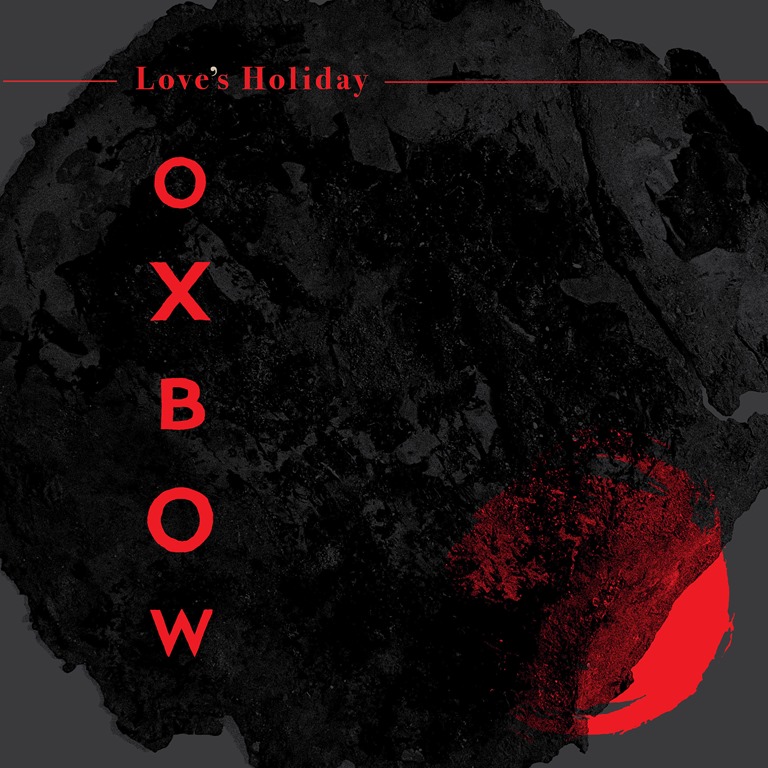
Thirty-five years is a long time. Not jus in cat or dog years, but in human years, too. For many, it’s half a lifespan. Perhaps it’s not so long in the scheme of the existence of the planet or cosmos, but that’s a timespan incomprehensible to most people, for whom the time from lunch till dinner feels like an eternity. But here Oxbow are, marking thirty-five years of existence.

A defining feature of their work has always been its diversity, and Love’s Holiday showcases that in abundance. The three songs released ahead of the album couldn’t have been much more different from one another, from the grainy, pained, and soulful ‘1000 Hours’ to the brooding, contemplative ‘Lovely Murk’ (both concerned with death and dying) via the full-throttle energised grunge-driven poke of ‘Icy White & Crystalline’.

How representative are they of the album? Entirely. Love’s Holiday has range, both sonic and emotional, and Robinson’s lyrics are dense and multi-facteted, and read like poetry. At first you’re struck between the eyes, but them you chew on them, because there’s more than mere impact, with smart wordplay running throughout, and they’ve visual, evocative, charged.

It screeches in with the sinewy discordant noise rock of ‘Dead Aherad’, Eugene S. Robinson hollering hard against scratchy guitar and tetchy drumming – and then, seemingly out of nowhere, everything locks together and brings a melodic chorus that’s somewhere between grunge and prog, landing in what you might call 90s alt-rock territory. Or you might not, but I’d challenge anyone to define it more specifically.

The raw, seething ‘Icy White and Crystalline’ drives in before ‘Lovely Murk’ and ‘1000 Hours’ follow one another in succession, changing the mood, pace, and dynamic of things. This piece of sequencing works well, as the intensity of the opening brace is enough to leave you gasping for breath and experiencing palpitation. Kristine Hayter’s Lingua Ignota choir vocals on the former fill the song with a white light, with something of a Gospel feel, in keeping with the song’s theme of death and ascension, after which ‘1000 Hours’ balances darkness with light.

A choral surge and rolling piano provide the backdrop to ‘All Gone’, and Robinson showcases his vocal versatility to stunning effect; first, a cracked, Bukowski-like drawl, before breaking into barrelling delivery more akin to Tom waits, and then switching to a hushed, intimate croon. The song bristles with tension and oozes soul.

There’s another switch of instrumental arrangement on ‘The Night the Room Started Burning’, with acoustic guitar entering the mix, and things taking a tense post-punk, almost gothy twist. But again, the choral backing adds a haunting dimension to the song, and it’s incredibly powerful. Pushing on with the stylistic collisions that they absolutely own and utilise to optimal effect, ‘The Second Talk’ melds no-wave noise with country-coloured slide guitar, before ‘Gunwhale’ takes leave by the grandest, most theatrical means possible, before slowing to a grinding drone.

If the overall mood of Love’s Holiday is reflective, introspective, there’s so much detail among it all that it’s hard to unpack even after several listens. Herein lies its greatest strength: it’s not an album which conforms to a genre, but an album which serves as a vehicle to convey, not one thing, but a whole spectrum of complexities. Love’s Holiday is not easy to process, but it’s an eye-opening artistic achievement that thirty-five years in, Oxbow are absolutely at the top of their game.

AA

OBLH_cover_final

7th July 2023

Christopher Nosnibor

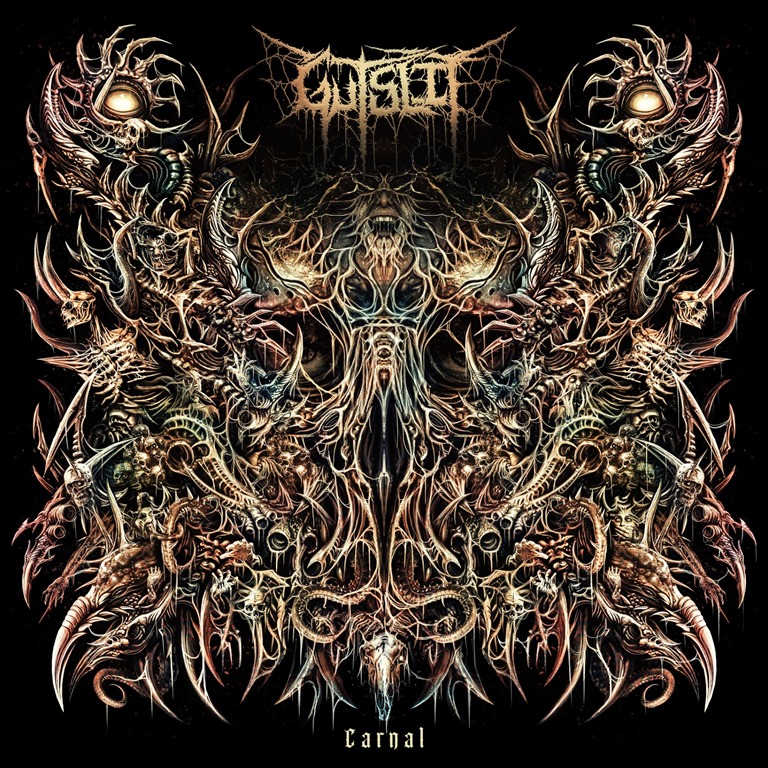
When it comes to band names, metal is one of those genres that has a unique way of throwing out monikers that mean you know it’s a metal band just from the name – unless, of course, you can’t read it because of the unintelligible spiky logo, in which case you absolutely know what to expect without even knowing the name. Indian deathgrind act are a quintessential example. Just look at that cover! It’s all the thorns – and it encapsulates the listening experience perfectly. Yes, it’s sharp, it’s a set of songs that snags and tears at your skin and your psyche.

Fifteen years into their career, Carnal is their third album, and if it sounds like that’s perhaps slow progress, the eight brutal cuts on here suggest that the time goes into compressing everything down to its tightest, densest form, honing it to the point at which its mass and velocity is absolutely optimal.

With the exception of the six-minute epic closer and the forty-one second blast of mid-album track ‘Insidious’, the songs range between around three-and-a-half and four minutes – and they pack everything into these compact sonic slabs. They don’t do fiddly, twiddly stuff, and there are no squealy notes or solos, apart from on ‘Bodysnatcher’ where they work -and wank – all the frets in a frenzy: this is music which sounds like it’s the output of a car-crusher – compacted, mangled, brutally fucked and as dense and weighty as it gets.

The album’s themes are clear from the song titles, with opener ‘Son of Sam’ setting the tone, ahead of ‘Bind Torture Kill’, ‘Body Snatcher’, and ‘Alter of Putridity’, which, like the font and everything else, pretty much speak for themselves. They’re well into their serial killer shit, but as I observed just the other day, this stuff is mainstream now. Pouring over mass murder and serial killing is no longer the domain of trenchcoat-wearing loners who aspire to wreak their own revenge on this cruel world; it’s David Tennent on ITV scoring eleven million viewers per episode.

That doesn’t mean that this kind of brutal tempestuous racket is mainstream, but people can no longer judge the work of a band like Gutlsit as sick or perverse when their subject matter is primetime. We’re all murder junkies.

‘The Killing Joke’ opens with a sample from an interview with notorious sadistic serial killer John Wayne Gacey (who makes Son of Sam with his seven victims look like a mere hobbyist), saying ‘The dead won’t bother you. It’s the living you gotta worry about’. Gracey may have been somewhat flippant in his remarks, but he had something of a point.

Gutslit sound neither dead nor living, their grating attacks sounding more like the undead on EST, a least vocally, and they go all out to deliver punishing intensity on a satanic level. It’s a churning mass of guitars that grinds at your guts as beats blast so fast as to blur to a flickering rattling sound rather than form an overtly structured rhythm. The obligatory guttural vocals growl and snarl, switching between styles fast and often between growl and barks, coughs and vomiting streams of vowels. It’s frenzied, demonic, furious. It sounds murderous, it sounds brutal, disturbed and disturbing.

‘Primeval’ is slow in terms of chords, but countered by a thunderous rush of beats, which renders it disorientating, harsh, and high on impact, and as a whole Carnal is pretty nasty – just as intended.

AA

407112