Posts Tagged ‘Dance’

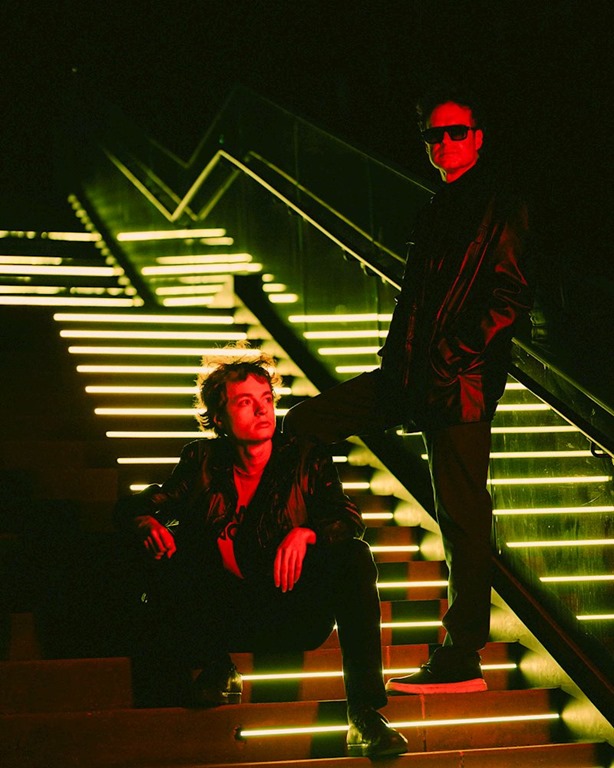
Filmmaker Pavel Vishnevsky returns to collaborate again with Paradox Obscur, bringing a dynamic new visual interpretation to ‘Like A Freak’, an electrifying track from IKONA, the recently released new album by the Greek synth duo.

In a vivid performance, Nicola Di Pierro defies cliché and convention, embodying the song’s spirit of freedom and self-expression – because everyone, regardless of age, has the right to dance. The result is a cinematic celebration of exuberance and individuality, amplifying the pulse of Paradox Obscur’s kinetic sound.

‘Like A Freak’ opens side 2 of IKONA with a wild jolt, pulsing with the edge of the Hexagon house music label’s rebellious spirit. Powered by the Behringer Crave synthesiser, it spits out raw analog grit – the bass growls, the synths snarl – creating a feral, ecstatic soundscape that is as visceral as it is infectious.

Lyrically, ‘Like A Freak’ explores the duality of ego; the composed persona we present to the world versus the wild, unfiltered self that thrives in secret. It is a song for those sweaty, sunrise hours when inhibition fades, judgement dissolves, and you move only for yourself as you ask: Does it make you click? / Now it’s time to go deep. / Way deep. Like a freak. / Taste my analog kick!

AA

0631b1dae417a364c26f8af59510d7ba29ffd0fe

Dependent Records – 3rd October 2025

Christopher Nosnibor

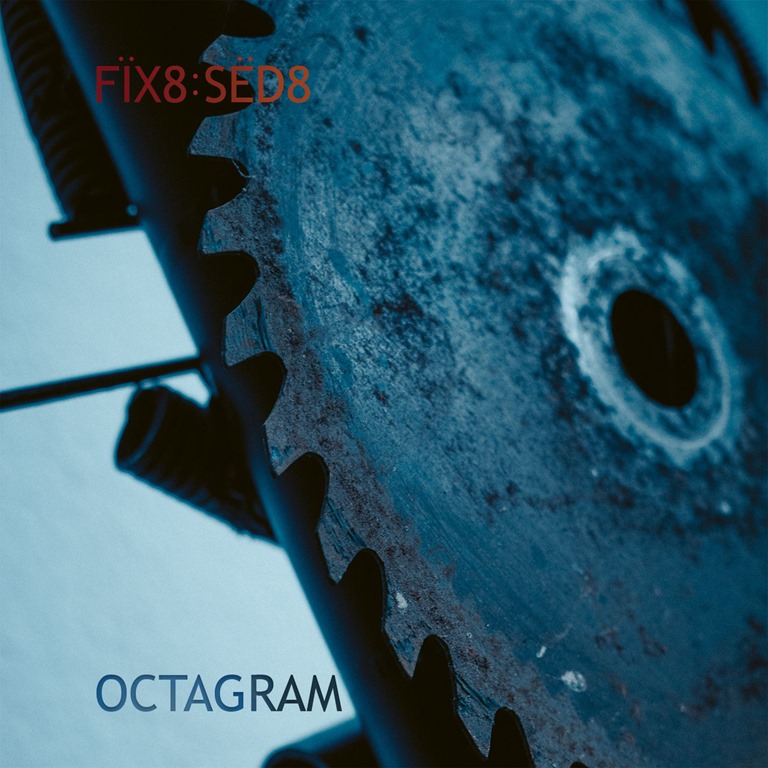
I’ve always favoured words over numbers – meaning, maths was never my strong point, and my qualifications strongly favour the arts. But it doesn’t take a maths genius to deduce that there are some serious numerical gymnastics taking place when conjuring the equation for this release. That Octagram extends the love of the number 8 which is clear from the band’s name to a concept, whereby the album features 8 songs with a playing-time of 8 minutes is logical, but when they try to spin it that ‘when the 8 just turns by a little in the context of the German electro industrial project’s sixth album, it becomes the symbol for infinity’, I’m lost. How does infinity fit in, and how does it all sit with being their sixth album, something which really screws up the whole thematic.

The tracks aren’t all exactly eight minutes in duration, but in the eight-minute span, ranging from 8:11 to 8:58, so it doesn’t feel as if the limitations / constraints of the project are so rigid as to inhibit the creative freedom necessary to explore and interrogate the themes flexibly.

We’ve already aired single cuts ‘New Eden’ and ‘Oathbreaker’ here at Aural Aggravation, and it’s fair to say they’re representative of this expansive, ambitious effort. It’s electronic industrial, with expansive, ambient trance elements woven in, as well as sampled snippets of dialogue. It’s perhaps worth noting that the vocal samples consist mainly of recitations quoting the last words of persons that were about to receive the death sentence. It’s all there on the sweeping, cinematic, dark electronic dance opener, ‘The Unborn’. In terms of texture and production, it’s absolutely meticulous, but a bit predictable and of a form. Three minutes or so in, the tone and tempo changes, the atmosphere darkens and the beats get harder, and the gritty, distorted vocals finally arrive and while it’s still quintessential technoindustrial / dark electro, the switch makes the song work in terms of structure and dynamics. And this seems to the strength to which FÏX8:SËD8 play to on Octagram, blending the trancey ambient dance elements with the driving hard-edged aspects of the genre.

Skinny Puppy are an obvious touchstone, to which they themselves draw attention, they seem to have assimilated the entirety of the Wax Trax! catalogue, while pulling from all aspects of cybergoth, and even Tubular Bells to forge a hypnotic hybrid of techno, electronica, dance, and industrial, taking a number of cues from Ministry’s Twitch. It’s true that I often return to the same sources: Wax Trax!, KMFDM, Skinny Puppy, 80s Ministry… but I feel I should stress that this isn’t entirely a reflection of my limited sphere of reference, but the two inches of ivory on which so much of the electronic industrial scene carves its tales of angst. The use of samples does feel rather cliché, the way the beats build behind fuzzy synths which ebb and slow, the minor-key one-finger synth riffs… And that’s fine: you know what you’re going to get. But at least with Octagram, FÏX8:SËD8 push that envelope a bit.

If ‘New Eden’ represents the more accessible side of all this, ‘Blisters’ goes in hard. ‘Tyrants’, too, brings a heavy Industrial throb with a dominant percussion, led by a powerful bin-lid smash of a snare sound. With the distorted vocals low in the mix, it’s tense, it’s intense, it’s claustrophobic. Taking its title from one of my favourite phrases from Milton, ‘Darkness Visible’ brings an interlude of cinematic serenity, at least initially, before locking into another dark pulsing groove. The darkness has rarely been more visible.

‘An Unquiet Mind’ makes for a slow-simmering, brooding finale, cinematic, atmospheric, expansive, as synth layers and beats build, rising from a montage of samples to stretch out an almost post-apocalyptic landscape. It feels like the end… and it is.

The best electronic industrial has an intensely inward focus, and makes you feel tense, restricted, somehow, and as much as it draws on obvious influences, with its taut, claustrophobic feel and dense production, Octagram sits – shuffling, twitching, crackling with anxiety – with the best electronic industrial.

AA

a1712199305_10

Cruel Nature Records – 12th September 2025

Christopher Nosnibor

Postmodernism, emerging primarily as a product of post-war America was defined by hybridity, the demolition of parameters and distinctions between different cultures, genres, and was, in many respects, tied to the accelerating pace of technological development, in particular the globalisation of communications and beyond. But postmodernism also not only recognised, but celebrated, the fact that originality has finite scope, and that anything ‘new’ will by necessity involve the reconfiguration of that which has gone before. Shakespeare had all the ground to break in terms of the advent of modern literature, and one might say the same of Elvis and The Beatles with the advent of rock ‘n’ roll and pop respectively. The reason the 80s were such a watershed was because technology revolutionised the potentials for music-making, and while this saw a huge refraction in terms of creative directions, from industrial to electropop, one could reasonably argue that the next leap in music after 1985 came with house and techno.

Post-millennium, it feels like there is no dominant culture, no defining movement, underground or overground: the mainstream is dominated by a handful of proficient but in many ways unremarkable pop acts, and notably, it’s largely solo artists rather than bands, and while there are bands who pack out stadiums, they tend to be of the heritage variety. At the other end of the spectrum, the underground is fragmented to the point of particles. There are some pros about this, in that there is most certainly something for everyone, but the major con is that unlike, say, in the mid- to late-noughties, when post-rock was all the rage, there’s no sense of zeitgeist or unity, and right now, that’s something we could really do with.

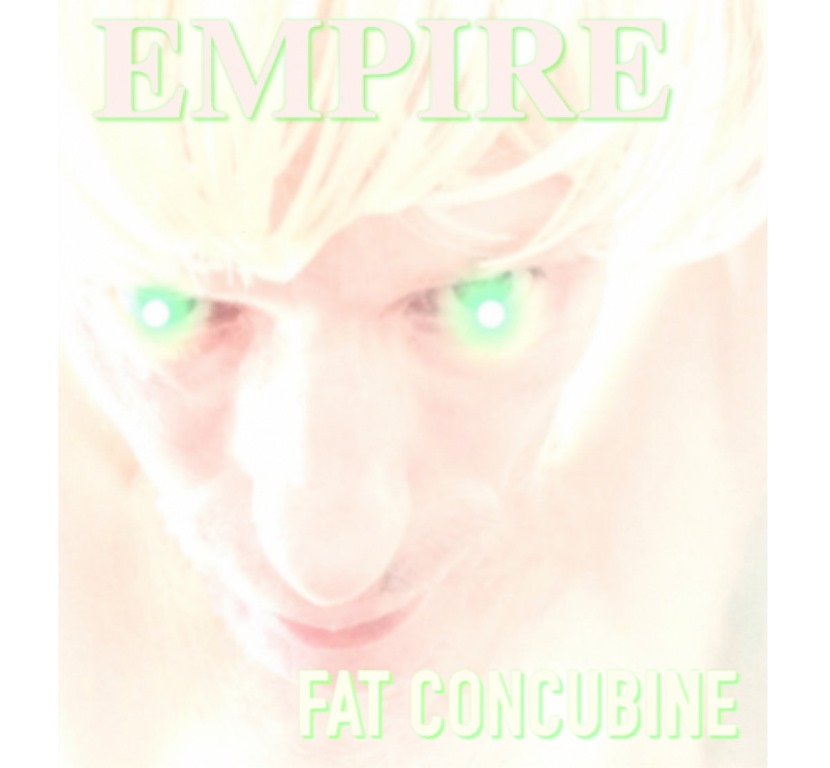
Fat Concubine are most certainly not representative of any kind of zeitgeist movement. With a name that’s not entirely PC, the London acts describe themselves as purveyors of ‘unhinged dance music’, and Empire is their debut EP, following a brace of singles. The second of those singles, ‘for Whom the Fools toll’ (with its irregular capitalisation, which is a bit jarring), is featured here, along with four previously unreleased tracks. This is a positive in my view: so many bands release four, five, or six tracks as singles, and then put them together as an EP release, which feels somewhat redundant, apart from when there’s a physical release.

And so it is, in the spirit of wild hybridisation, that they’re not kidding when they say their thing is ‘unhinged dance music’, or as quoted elsewhere, ‘unhinged no wave ravers’. ‘Feeding off the dogs’ pounds in melding angular post-punk in the vein of Alien Sex Fiend with thumping hardcore techno beats, and it’s not pretty – although it is pretty intense. The snare drum in their first thirty seconds of ‘for Whom the Fools toll’ takes the top of your head off, and the rest of the ‘tune’… well, tune is a stretch. It’s brash, sneering punk, but with hyperactive drum machines tripping over one another and a stack of synthesized horns blaring Eastern-influenced motifs.

There are hints of late 80s Ministry about ‘When we kick Their front door’, another synth horn-led tune that begins as a flap and a flutter before a kick drum that’s hard enough to smash your ribs thuds in and pumps away with relentless force. If the notes didn’t mention that it was a perversion of ‘These Boots We’re Made for Walking’, I’d have probably never guessed. As the song evolves, layers and details emerge, and the vibe is very much reverby post-punk, but with an industrial slant, and a hint of Chris and Cosey and a dash of The Prodigy. If this sounds like a somewhat confused, clutching-at-straws attempt to summarise a wild hotch-potch of stuff, to an extent, it is. But equally, it’s not so much a matter of straw-clutching as summing up a head-spinning sonic assault.

‘tiny pills’ is a brief and brutal blast of beat-driven abrasion, with a bowel-shaking bass and deranged euphoric vocals which pave the way for a finale that calls to mind, tangentially, at least, Cabaret Voltaire’s ‘Nag Nag Nag’.

The version of ‘O so peaceful’ was recorded live, and builds to an abstract chanting drone work. It offers a change of angle, but is no less attacking, its percussion-heavy distorted, shouting racket reminiscent of Test Department and even Throbbing Gristle, particularly in the last minute or so, and you can feel the volume of the performance, too. This is some brutal shit.

Empire is pretty nasty, regardless of which angle you approach it from. It’s clearly meant to be, too. Harsh, heavy, abrasive, messed-up… these are the selling points for this release. And maybe having your head mashed isn’t such a bad thing if you’re wanting to break out of your comfort zone and really feel alive.

AA

a1581875889_10

Nocturnal Rainbow Recordings – 5th September 2025

Christopher Nosnibor

One significant downside to digital music formats is that is reduces the dimensions of the experience. With a record, and even a CD, there is a physicality which is in many ways integral to the experience. I’m not here to sell the whole multi-sensory experience and tactility of vinyl line: yes, I grew up with vinyl, and in the 90s, a new LP was maybe £7.50 while a CD was £11, so I would often buy vinyl simply because I could get more music for my money. And records do scratch, sleeves get bent, and generally, vinyl requires more care than a CD, so I’m as much a fan of 5” silver discs as I am 12” black ones. And now, vinyl has become something of a fetishised luxury item: as much as there’s still pleasure to be had from sliding a thick chunk of wax cast in whatever hues from a glossy, heavy card sleeve, there’s sometimes a sense that they’re all trying too hard, and the £30 price tag takes some of the shine off the experience. There are a few exceptions – recent Swans releases have been works of art in every sense, and the physical formats have added essential dimensions to music which is something more than just some songs, recorded.

Had Ran Slavin’s latest offering been given a vinyl release, it would have been a triple LP, containing as it does thirty tracks, with a running time of almost two hours. It would have been epic. But despite having released previous albums on esteemed labels including Mille Plateaux, Cronica, and Sub Rosa, it’s unlikely that Ran Slavin has the kind of fan base that could justify, from a label perspective, a triple-vinyl release. But what Nocturnal Rainbow Recordings have done here is interesting, and utilises the digital format in a novel way, by offering alternative artwork in recognition of the album’s multi-faceted nature. Yes, it’s been done by major artists who’ve released physical albums with variant covers, with a view to enticing hardcore fans to buy multiple copies and thus increase sales and enhance the chart position (The Rolling Stones’ Hackney Diamonds probably wins the award for the pinnacle of pisstake on this score), but the idea of buying an alternative digital cover for a nominal price isn’t something I’ve seen before.

As the notes on the Bandcamp page explain, ‘Just as the music migrates across genres, the visuals migrate across states of being, extending the album into a network of parallel identities. Together, they construct a fragmented yet coherent cosmos, where each image is both an entrance and a deviation, multiplying the ways Neon Swans can be seen, heard, and inhabited.’

Appropriately, Neon Swan doesn’t quite sound like anything I’ve heard before, either. To unpack that, it contains many elements which are common and familiar. There’s sparse techno, minimal dance cuts with sped-up vocals and swathes of space between low-key beats and glitchy grooves, as represented by single release and album opener ‘tell///me///now’ – one of many titles which reflect the sense of fragmentation and juxtaposition which define the album (‘s4dert1ac’ and ‘d3xr3rity’ provide other examples, but then there are the likes of which also disrupt the conventions of language in the same way Slavin disrupts the language of genre tropes).

‘audio ease my pain’ plunges into darker territory, while introducing rap vocals atop heavy hip-hop beats (although there’s an instrumental version as well further on, which offers a different perspective again on the same material). Elsewhere, ‘c-r-i-m-s-o-n-schema’ brings spacey, spaced-out bleeps, heavy percussion that has a late 90s feel, a blend of The Judgement Night soundtrack’s melding of rap and rock, and the Wu-Tang Clan.

For all of the space, the reverb, the minimalism, something about tracks like ‘searching_heart’ is quite claustrophobic: the intense repetition and synthetic feel, paired with crackling fizz, brain-melting glitches and some grinding bass tones. It may be constructed using the fundamental elements of dance music, but this is not dance music. Electronic music to induce uncontrolled spasms and twitches isn’t a genre, but if it was, Ran Slavin would be a leading exponent.

It’s a long album, with a lot to digest, and as it thumps and wobbles and glitches away, snippets and fragments collaged across one another, there are times it all feels a but much, a bit bewildering. At times it’s draining, exhausting, at times you simply zone out, and often, I find myself questioning the wisdom of persisting with it. The vibe is that of the kind of underground clubs I never got on with in the 90s and early 00s, and I’m particularly reminded of the time Whitehouse played an Optimo night in Glasgow in 2003: I was there for Whitehouse, who played for forty minutes starting around midnight, and the music being played was rather in the vein of the more groove-centric cuts on here. The people there for the DJs weren’t happy for the low-key electro pulsations to be paused for the noise and antics of Bennett and Best, but for my part, I struggled to get into the low-key electro pulsations. But the other reason I recount this experience, challenging in its incongruousness, is that in places, Neon Swans feels incongruous with itself, an album riven with unreconciled contradictions.

The execution of Neon Swans is hard to fault, and it does cover considerable ground, with range, over its expansive duration. But it is sprawling in its scope, its focus is variable, and it is very long. And it’s maybe better with drugs.

AA

NRR38 art 1

British electronic artist Max Rael presents ‘Pressing Against The Glass’, a danceable elegy for the unbelonging. Capturing the deep-seated ache of being on the outside, this is a soundtrack for those who feel eternally separated from the warmth and safety they can only observe.

Based in Hertfordshire, Max Rael is a key creative force in the UK underground through 1990s-2000s electro-goth trailblazers History Of Guns, frontrunners of the Wasp Factory / FuturePunk scene, and Decommissioned Forests. Here, he showcases his singular talents on this record, featuring unique twists on sound design and his acclaimed outsider lyrical perspectives. Musician, writer, actor, engineer and producer, Max Rael has collaborated with Fish (Marillion), Last July, Kommand + Kontrol, Freudstein and Bienheldenschafgegenstand.

“I’ve always been taken by the image of someone being outside alone in the cold looking in through a window to warmth, comfort and safety that’s not for them. I was thinking of Heathcliff looking through the windows of Thrushcross Grange in Wuthering Heights or Frank Abagnale Jr in the film "Catch Me If You Can", outside in the snow at Christmas, unseen looking in through the window at his mother with her new family, happy and warm indoors and realising there is nowhere he belongs, and no one he belongs to,”  says Max Rael.

This is the latest audio-visual offering from his debut solo album The Enemy Is Us, released via London imprint Liquid Len Media. Offering up a dark bouquet of minimalist synth, darkwave and spoken-word electronic pop, this album introduces Rael’s compelling ‘futuretroist’ sound: an alternative sonic universe built on a unique sound design that feels at once familiar and alien.

AA

AA

Rael’s powerful and thought-provoking spoken-word lyrics confronts a world in freefall—its corruption, alienation, and misery. The result seemingly effortlessly conflates a painfully personal portrait of an interior world, with an achingly universal depiction of society and the world outside. He still unearths a resilient core of hope and gallows humour that burns brightly through the darkness, offering a complex and compelling take on the human condition.

Earlier, Max Rael released the poignant shadow-streaked ‘Slightly Less Than Human’, a nervy electronic track with a great hooky synth melody and spoken word vocals. Partly inspired by Japanese author Osamu Dazai. Lyrically, Max Rael relays his feeling of being somehow different from the rest of the human race, while the non-album B-side ‘When the Only Winning Move Is Not to Play’ relates to the 1983 film War Games and the book The Games People Play by Eric Berne.

In April, Max Rael shared his spoken-word electronic pop song ‘Brighter Future’, where he questions avoidant strategies of coping with life in a seemingly increasingly chaotic and unsafe world and queries how can we reverse course from an anticipated dystopian future. The B-side ‘The People We Love Have Won (Persistence Is All)’ is a darker beast, named after Coil’s 2000 London performance at The Royal Festival Hall, which also happens to be tattooed on the inside of Rael’s left wrist.

Spoken word, electronic music and loud drums feature strongly on the 12-track album, produced and mixed by Max Rael with additional mixing by Caden Clarkson and mastered by Pete Maher (U2, Nick Cave, Depeche Mode, Pixies. Nine Inch Nails). Fusing a range of electronic music styles with other genres, Max Rael is a master journeyman of existential exploration into humanity, self, society, reality, psychology, philosophy and the future.

Max R

Leeds collective HONESTY have shared a brand new track titled ‘PUSHING UP DAISIES’. George Mitchell takes lead vocal duties, delivering a gentle, intimate performance that contrasts the song’s morbid subject matter. The result is a subtly exhilarating take on club music that’s become HONESTY’s signature and the reason they’re one of the most essential dance acts coming out of the UK. The track was released today in tandem with ‘MEASURE ME (ALT MIX),’ which injects even more rave-fueled vitality into the lead single from their debut album which came out this Feb, this time led by an ethereal performance from vocalist Imi Marston. Listen here:

AA

HONESTY20241119_004-2

HONESTY (Credit Dan Commons)

Long Trax Productions – 31st January 2024

Christopher Nosnibor

The brief liner notes are almost as perplexing as the cover art and the rest of Will Long’s Bandcamp page. I mean, you might think that the title is the key here. While clocking in around the eleven-minute mark, these compositions, as much as they’re far from short, well, I’ve certainly heard many longer trax, with many albums featuring a single twenty-minute piece on each side. But of course, it’s a pun. Sort of. Regardless, spreading these four tracks across four sides of vinyl feels somewhat indulgent, although I won’t go quite as far as to say exploitative, despite the temptation.

Will Long has to date created an extensive catalogue of work, both with Celer, since 2004, and as a solo artist – and when I say ‘extensive’, I mean extensive, with Celer having released around a hundred albums (if you include collaborations and compilations), and his solo output is equally overwhelming in volume. The Long Trax releases have arrived sporadically between other releases, and are broadly connected, in stylistic terms. As Long puts it, ‘round 4 of the Long Trax series [is] the pivotal moment of truth. Four new deep cuts spread across 4 sides of vinyl in dual sleeves, and spun onto disc. An all-analog, hardware machine affair, full of glacial pads and icy stabs, rhythm composure (composer) sequences, round booming basslines, and narrators from beyond. It’s the real thing, still chugging along.’

Less than a minute into ‘One in the Future’, I’m feeling late 90s chilled techno vibes, and I’m dragged back to a handful of club experiences where I fucking hated the music and I hated the posers.

I’ll admit, I’ve always had something of a fraught relationship with dance music and its culture. I suppose I’ve generally leaned towards rock, but have found spaces in my head and heart for some dance and adjacent, loving the KLF from the start, and so much of the electronic music from the late 70s and early 80s. Chris and Cosey’s Trance is a straight-up dance album, and I dig it not just because it’s a Throbbing Gristle-related release. But, as I discovered when visiting a club in Brighton on visiting friends in the late 90s, some stuff, I just struggle to connect with. And this is it. To add to my story, I attended an Optimo night in Glasgow in 2004 to see Whitehouse. It was a strange event, in that most were there for the downtempo dance, which was halted for three quarters of an hour while William Bennet and Philip Best cranked out the most punishing, ear-shredding set to the sheer horror of the majority, before smooth beats returned, to their relief. My experience was inverse to the majority. Whitehouse did not go down well: the end of their set did. As the relentless bouncing beats returned, I was happy to leave, as were my whistling, devastated ears.

‘One in the Future’ is the longest eleven minutes of nondescript sonic wallpaper I have had the pain to endure in over a decade. It’s the monotony that hurts. It’s soulless, tedious, and nothing happens. And this is a fair summary of the album as a whole. To my ear, to my mind, to my insides, it feels so devoid of… anything that I can connect to. The samples blare, the squelchy synths blip and bloop and pulsate over tedious beats and maybe I need different drugs or a different brain, but this is relentlessly tedious, monotonous and crushingly dull. Get me out of here!

AA

名称未設定のアートワーク

26th November 2024

Christopher Nosnibor

Deborah Fialkiewicz has been keeping busy – as usual. Composer of contemporary classical, ambient, and dark noise works both as a solo artist and in various collaborative permutations and guises, she’s back with a new BLOOM release in collaboration with Daniel James Dolby. And it’s a Christmas single.

I’ve never been rabid about Christmas, and the last three years have seen a succession of difficult Christmases for me personally. In December 2021, my wife was diagnosed with stage 4 breast cancer. We weren’t even sure if she would be home for Christmas. She was, but was incredibly weak after three weeks in hospital, and that she was able to sit at the table for Christmas dinner felt like a miracle. We were in shock, and she was clearly unwell. Having made substantial improvements in rebuilding her strength through 2022, she deteriorated with the onset of winter, and again was weak and struggling over Christmas. It still doesn’t seem real that she only had another three weeks. And so Christmas 2023 was the first with just me and my daughter, aged twelve. We made the best of it, but it wasn’t the same. I detail this not for sympathy, but purely for context. It means that while around this time of year it becomes nigh on impossible to avoid festive fervour, with adverts depicting happy couples and radiant nuclear families, all the usual Christmas tunes and an inbox busting with new ones clamouring for coverage, and Facebook friends and work colleagues are dizzy with excitement over getting their decorations up, sorting secret Santa and planning social activities, I’m not feeling much enthusiasm, concerned primarily with getting through it and hoping distant relatives don’t think I’m rude or twatty for not sending cards out for the second year in succession.

When writing about music, I am often – and perhaps increasingly – aware that how we engage with it, how it affects us, is intensely personal and involves multitudinous factors. Sometimes, it’s something as arbitrary as the mood we’re in when we hear a song that will determine our response. And the chances are – and I’m no doubt not alone in this – hearing chirpy tunes when I’m down isn’t going to cheer me up, it’s going to really piss me off, or set me off. It’s impossible to predict. To be safe, I tend to try to avoid Christmas songs, which involves avoiding TV and radio – which is surprisingly easy if you spend large chunks of your time in a small room reviewing obscure music – avoiding shops – manageable – tacky pubs – easy – and ignore review requests for Christmas singles.

But there is always space for an exception, and Bloom’s ‘The Season’ is it. Deborah may have been posting pics on Facebook of the ‘festive mouse’ in the studio to mark this release, but said mouse is looking over a piece of kit called ‘Psychosis Lab’ made by Resonance Circuits. The cuddly cartoon cover art for this release is misleading, and for that, I am grateful.

It’s five minutes of deep, hefty beats melded to a throbbing industrial synth bass. Atop this thumping dance-orientated rhythm section, there are synths which bring a dark 80s synthpop vibe. In combination, the feel is in the vein of a dance remix of Depeche Mode circa ‘85 or ’86, around the point they began making the transition from bouncy pop toward altogether darker territories. It’s repetitive, hypnotic, pulsating, big on energy. But there are eerie whispers which drift through it all, distant wails like spirits rising from their graves. These haunting echoes are more evocative of Halloween than Christmas – and this is a significant part of the appeal. It’s a curious combination of ethereal mists and hefty, driving dance groove, which is simultaneously uplifting, tense, and enigmatic. It is not schmaltzy, cheesy, twee, or saccharine. It’s the season, alright. The season to be weird, to be unconventional, to accept those darker moods and remember that they will pass. It’s a Christmas anthem for those who aren’t feeling festive. And I will most certainly drink to that.

AA

a3458409831_10

Mortality Tables – 1st November 2024

Christopher Nosnibor

Spoken word is hard. I know. I’ve done it. I’ve been terrible at it. I’ve witnessed countless others be terrible at it, too. Spoken word is even harder as a prose writer. It’s just so difficult to hold an audience’s attention. This is why spoken word events seem to favour poetry: whether they rhyme or not, poems tend to focus on rhythm and to be brief, rarely longer than aa couple of minutes. And a lot of poets manage to memorise their pieces for performance, and poets who ‘read’ tend to be looked down upon in certain circles. It’s rather harder to memorise and recite a three-page slab of prose, and face buries in pages makes performing and engaging altogether harder. But worst of all, people simply don’t seem to possess the attention span.

Reading prose is hard. A segment of a story may not really work outside if its intended context, and a short story that only takes three minutes to read isn’t going to have much substance.

There’s a huge disconnect here: people listen to audiobooks but struggle with spoken word or anything that isn’t a renowned author or a celebrity voicing an accessible, pot-driven narrative.

William Burroughs told Philippe Mikriammos in an interview in 1984 that ‘many poets are simply lazy prose writers.’ He qualified this by explaining, ‘I can take a page of descriptive prose and break it into lines, as I’ve done in Exterminator!, and then you’ve got a poem.’

It’s true.

Chop your sentences down to phrases.

Cut your phrases down,

Down to their component parts,

Capitalise each line

– unless you’re e e cummings –

And lo,

You have a poem.

Burroughs had the advantage of recording his spoken word pieces and performing segments from his books in the 60s, 70s, 80s, when the medium was still comparatively fresh, and people had attention spans greater than goldfish, and had the additional benefits of a remarkable flair for reading and a truly unique voice. Here in the 2020s, it can be hard to attract – and maintain – any kind of attention with an audience. As I say, I know: I’ve done it, and I’ve been terrible at it. I’ve also been alright at it. I’ve driven people from the room, and considered it an achievement, because it’s infinitely better to have an impact of that nature than for audience members to fall asleep, or worse, forget the performance. The challenge for any spoken-word performer, be it in a live setting or in a studio, is how to grab, and maintain, the attention of any audience.

Here, Andrew Brenza reads from his book pod (ghosTTruth, 2023) with accompaniment from sound artist and electronic instrument restorer alka (Vince Clarke’s VeryRecords). Instrumental augmentation is the most obvious and immediate way of grabbing the attention. It transforms a spoken word work into a multimedia project, for a start, and moreover, the moment ‘music’ is involved, a whole new audience – which likely has no interest in spoken word – opens up.

His voice processed with a metallic flanged edge and epic reverb, and against an ominous organ droning ambient hum, Brenza becomes commanding, not to mention eerie in his delivery. This is the fine line all spoken word performers must tread, of course, but here it is felt acutely: The delivery can often overrun the work; style overtakes concept and content.

I find myself drawn into the delivery of pod – the sounds, the delivery. But engrossed in these, the content slips to become secondary, in a way. But perhaps that’s ok. ‘Intermission Meander’ provides a bleapsome interlude, and the narrative segments are vignettes, segmented scenes which are centred around image and concept rather than linear narrative, events, or characters. In this context, this release works. It is not an audiobook, but an audio accompaniment to a book. It’s difficult to absorb, but a successful project.

AA

a0689313884_10

Benefits blast in ahead of another substantial UK / EU tour with the release of the first new material since their debut album, Nails.

‘Land of the Tyrants’ features additional vocals by Zera Tønin of Arch Femmesis.

It may be more overtly dancey than previous outings, hitting an almost trance groove, perhaps even a bit KLF, and the rage is more simmering than roaring in in terms of delivery, but lyrically… as explosive as ever, ‘Land of the Tyrants’ tells it like it is. The video is more overtly produced, but it’s dark and stark. It’s grim up north, right?

Tour dates:

05/10 HUDDERSFIELD Parish

06/10 LANCASTER Kanteena

07/10 GLASGOW The Hug and Pint

08/10 EDINBURGH Wee Red Bar

09/10 ABERDEEN Tunnels

10/10 STIRLING Tolbooth

11/10 MIDDLESBROUGH Play Brew

12/10 LIVERPOOL The Shipping Forecast

13/10 PRESTON The Ferret

17/10 ROTTERDAM Left of the Dial Festival

18/10 UTRECHT ACU

19/10 ROTTERDAM Left of the Dial Festival

20/10 OSTEND Cafe de Zwerver

22/10 SOUTHAMPTON The Joiners 23/10 BRIGHTON Hope and Ruin

24/10 MARGATE Where Else

25/10 LONDON The George Tavern

26/10 NEWPORT Le Pub

AA

Benefits@2000x1270-696x442

Pic: Tom White