Posts Tagged ‘Cruel Nature Records’

Cruel Nature Records – 21st February 2025

Christopher Nosnibor

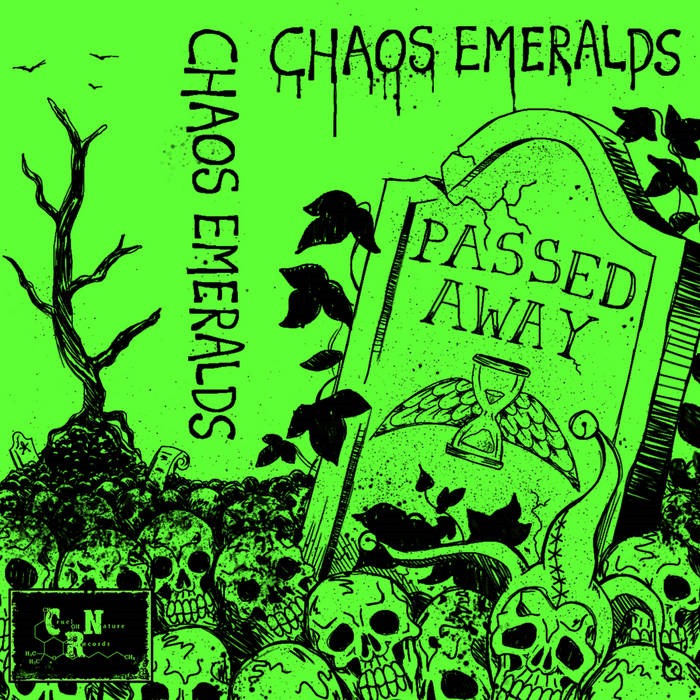
Cruel Nature are delivering a slew of releases on 21st February – an overwhelming volume, in fact. We’ll be coming to a fair few of them in the coming weeks, but first up, is the second album from Lanark / Reading based sludgy shoegaze project Chaos Emeralds, Passed Away, which comes in a hard-on-the-eye dayglo green cover which is catchy and kinda corny in equal measure.

According to the bio, ‘Chaos Emeralds is Formerly the solo project of Charlie Butler (Cody Noon, Neutraliser, Mothertrucker) with releases on strictly no capital letters, Les Disques Rabat-Joie and Trepenation Records, Chaos Emeralds has now expanded to a duo with Sean Hewson (Monster Movie, Head Drop, This) joining on lyrics and vocals.

Passed Away combines the lo-fi slowcore, shoegaze and doomy post-rock sounds of the previous Chaos Emeralds releases with a more song-focused approach to create a set of scuzzy emo gems.’

For some reason, despite ‘sludgy shoegaze’ and ‘lo-fi slowcore, shoegaze and doomy post-rock’ featuring in the above description, I didn’t quite expect the Pavement gone Psychedelic vibes of the title track which raises the curtain on the album. A primitive drum machine clip-clops away, struggling to be heard above a tsunami of feedback and waves of distortion on ‘Count Me Out’, which adopts the kind of approach to production as Psychocandy – quite deft, breezy and ultimately melodic pop tunes almost completely buried in a blistering wall of noise.

‘Juggler’ brings a wistful tone – somewhere between Ride and Dinosaur Jr – amidst ever-swelling cathedrals of sound, a soaring lead guitar line tremulously quivers atop a dense billow of thick, overdriven chords which buck and crash all about. The way the elements play off one another, simultaneously combining and contrasting, is key to both the sound and the appeal. It’s one of those scenarios where you find yourself thinking ‘I’ve heard things which are similar, but this is just a bit different’, and while you’re still trying to decide if it actually works or not, you find yourself digging it precisely because of the way it’s both familiar and different.

The vocals, low in the mix, feel almost secondary to the fuzzed-out wall of guitar, but their soft melancholy tones, sometimes doused in reverb, add a further minor-key emotional element to the overall sound, especially on the aching ‘Matter’.

When they do lift the feet off the pedals, as on ‘Welcome Home’, the result is charmingly mellow indie with a lo-fi sonic haze about it – and a well-placed change in tone and tempo, paving the way for the epic finale that is ‘In Our Times’, a low-tempo slow-burner which evolves from face to the ground miserabilism into something quite, quite magnificent, Hewson’s near-monotone vocals buffeted in a storm of swirling guitars as the drum machine clacks away metronomically toward an apocalyptic finish.

AA

a4117384026_16

Cruel Nature Records – 14th January 2025

Christopher Nosnibor

Released on various formats by various labels in different countries, the latest offering from genre-blasting French instrumental trio Toru is being released on cassette (and download) by Northumberland’s Cruel Nature in an edition of 65. Following on from 2020’s eponymous debut and a split release with Teufelskeller, which saw Toru join forces with CR3C3LL3, this time around, they’re different again, and having been featured as album of the day at Bandcamp Central just the other day, the signs are that Velours Dévorant could see them significantly expand their fanbase – and deservedly so.

Velours Dévorant featires five V-themed tracks defined by some riotous riffmongering and big, dirty, overdriven guitar noise with tempo shifts galore. Blasting in with ‘VHS’, it’s a manic ride through waves of tempestuous, bludgeoning racket from the very start. Trilling feedback fulfils the duty of a lead guitar line, while a shuddering, ribcage-rattling bass tears its way out from the chaos atop some heavy, but highly skilled jazz-inspired drumming.

Some will likely describe their sonic blitzkrieg as ‘experimental’, but that’s something of a misrepresentation, in that it suggests a lack of coherence, a haphazard and unplanned approach. The sudden stops and starts, the moments where a chord hangs, suspended in the air for just the briefest moment before the fractionally-delayed snare smash or cymbal crash, where the three of them simultaneously draw breath in just a split second… those microcosmic moments require remarkable precision – unquestionably, intuition is key, but rehearsal too. The skill is to make it sound haphazard, unpredictable, to keep the listener on the edge of their seat, buttocks clenched, while having it all worked out. Every composition contains moments which feel like the sonic equivalent of watching trapeze artists, where you tense and momentarily stop breathing as they fly through the air, seemingly in slow-motion, tense in case they fail to grab on: will they keep it together, or will everything collapse into a mess of sludge like a sewer rupturing and spewing a fountain of slurry?

These are long tracks – the shortest is over five and a half minutes – with infinite twists and turns. The skewed, surging jazz-grunge of ‘Voiles’ – a whopping eleven and a half minutes in duration – is representative, and encapsulates the essence of the album. The guitars squall and screed in a showcase of noise-rock par excellence, while the bass lurches and snarls, grooves and grinds, and the percussion is simply wild. It’s like listening an instrumental version of every track by the Jesus Lizard all at once. There’s a low-impact, atmospheric mid-section that rolls and rumbles, yawns and splashes… lazily would e the wrong word, but it takes its time, with bent guitar chords twanging like elastic bands, while the sparse percussion meanders seemingly without aim. But then it all reshapes and takes form once more, building, building, and then exploding so hard as to detonate so hard as to blow your eyeballs out of their sockets. Fuck, when these guys hit the pedals, they really do go all out.

I’ve heard a plethora of zany noise-rock acts, and have loved many – most of whom are so obscure that to reference them or draw comparisons would be the most pointless exercise imaginable: ‘hey, wow, this band I’ve not heard of sound like a bunch of other bands I’ve never heard of, that’s informative!’.

On Velours Dévorant, Toru take the tropes of post-rock, with its protracted delicate segments and slow-building atmosphere, and incorporate them within a noise-rock setting, with the result being epic tunes with some incredibly graceful, and ultimately poignant expanses, pressed tight against some of the most explosive overloading, overdriven abrasion going. And then, of course, there are the jazz elements: ‘Volutes’ is the apex of jazz/grunge hybridization, and it works so well. Not sold on Nirvana meets The Necks? Trust me.

The fourteen-minute title track is… special. It is, in many respects, the evolution of post-rock circa 2004. Chiming guitars, infinite space, haunting atmosphere. The intro is magnificent, beautiful. Her Name is Calla’s sprawling ‘Condor and River’ comes to mind. That use of space, that simmering tension, that sense of something growing which is more than… well, it’ s simply more. There are things hidden. When the riffing lets rip, holy shit, does the riffing let rip, fully shredding blasts of distortion tear through with obliterating force. The track feels like an album in its own right.

It seems like a while since I’ve felt compelled to describe an album as ‘epic’ – but this… this is next-level epic.

AA

a0213833004_10

Cruel Nature Records – 6th December 2024

Christopher Nosnibor

The ever-prolific Aidan Baker has been a frequent and recurrent feature on the pages of Aural Aggravation since its inception in 2016, and I’ve been listening to, and covering, his works since a fair few years earlier. He’s an artist who never fails to intrigue, and his manifold collaborations see him revealing new aspects to his creativity.

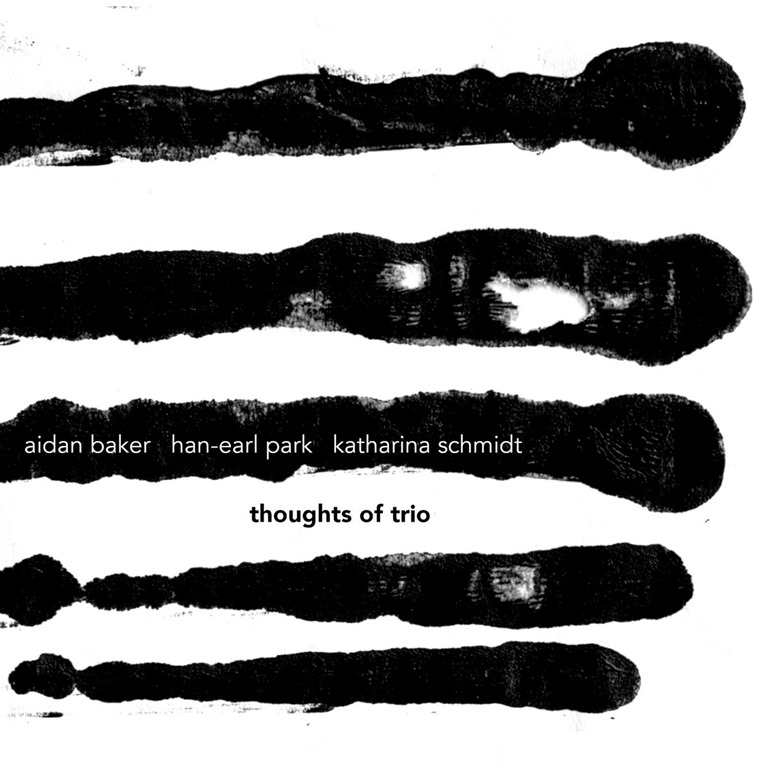
This three-way collaboration was, according to the accompanying notes, ‘recorded live at Morphine Raum in Berlin, Germany on February 21, 2024 by Canadian guitarist Aidan Baker, Korean-American guitarist Han-earl Park, & German drummer/percussionist Katharina Schmidt. The group brings together their respective, disparate musical backgrounds to explore the intersections of ambient music, improvisational (free) jazz, and musique-concrète.’

It’s worth noting just how many live releases of collaborations there seem to have been released recently: in fact, only yesterday I was delving into the dynamics of the latest offering by CEL. This may be a ‘cost-of-living’ matter, in part: economic circumstances really aren’t favouring anyone who isn’t two-homes-and-at-least-one-cruise-a-year rich, and this is a global issue, whereby post-pandemic the disparity between the wealthy and the rest has increased exponentially (a word I’m mindful of tossing about being aware of its actual meaning), and it’s never been a tougher time to be a musician, unless you’re Taylor Swift, or Ed Shearan or Elton John or Coldplay… you get the idea. And it’s certainly not (only) because of the shit streaming revenues paid (or not) by Spotify. Studio time is expensive: getting together for intercontinental collaborations is expensive… and when it comes to it, it’s not always easy, or even possible, to recreate the energy, the frisson, the immediacy of a live performance in the studio.

And so here was have Thoughts Of Trio, which captures a set from the start of the year, mastered as eight segments, simply titled sequentially ‘TOTone’ to ‘TOTeight’. The arrangements are often sparse, and combine nagging, regular repetitions with erratic irreglularities: ‘TOTone’ sounds like a pulsating wave or a slow alarm simultaneous with a game of ping-pong and some urban foxes foraging through bin bags. I mean, it doesn’t really sound quite like that, but the different elements belong to different places, and while it does work, it does not feel like a composition in any conventional sense. And this is very much the form of the album: there are no overt structures, there is no sense of cohesion or linearity.

But where Thoughts Of Trio evades the pitfall of being a discordant disaster is in just how they somehow keep things together, with an absorbing, if loose, sense of rhythm, which is both absorbing and bewildering, but, however subtly, ever-present. ‘TOTthree’ features springing guitar twangs and lurching grumbles, but a distinct sense of almost abstract rhythm. Clanking rattles and slow-bending, woozy drones hover and slowly wilt, with scrapes and subterranean bumps and nudges unpredictably rising and falling.

There’s no obvious shape to any of this, but amidst a set of pieces which are five or six minutes long, the eighteen-and-a-half-minute ‘TOTseven’ stands out a dominant track on the album, although one suspects that for those who were actually there, it was difficult to differentiate the pieces, which tend to bleed into one another. It rumbles and hums, tense and dense, simmering, without ever breaking through the tension that holds down the surface.

There’s little to no audience noise, no applause in the interludes or intersections, which works well in terms of the overall listening experience, but means that this doesn’t sound or feel like a live album. That’s by no means a criticism, and again illustrates how live recordings can replace studio recordings for so artists. This simply doesn’t sound or feel like a live recording, and that’s not only due to the lack of audience noise, but the way everything flows.

For all of the discord, the twists and knots and disparities, Thoughts Of Trio comes together somehow. While it’s is by no means overtly, jazz, Thoughts Of Trio sits between jazz and ambient, with an experimental / avant-garde. Ultimately, it does its own thing.

AA

AA

a4098448952_10

Cruel Nature Records – 25th October 2024

Christopher Nosnibor

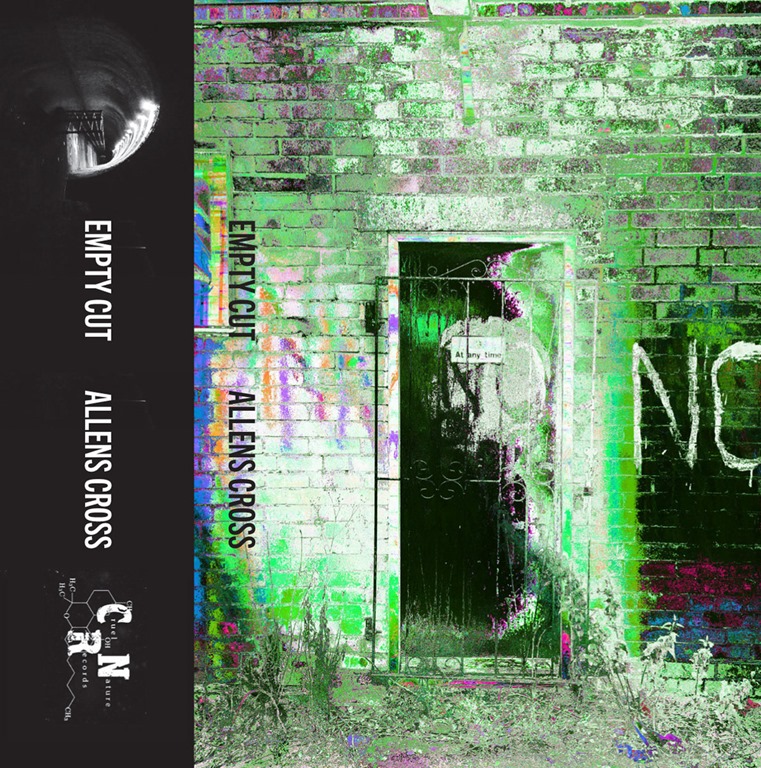
In the debate of nature versus nurture, it’s noteworthy how many artists find themselves influenced in no small way not only by their formative years, but also the place or places where they grew up. There’s an entire thesis to be made from this, but here I make the observation because on Allens Cross, Empty Cut – a duo consisting of Douglas Fielding-Smith and Robert Bollard – have forged a work ‘Inspired by their childhood growing up in Birmingham they blend together all their experience and inspirations to create a noise that holds a heavy solid groove mixed with harsh noise and fuzzed out reverbed bass, topped with psychedelic synths, and chopped and screwed vocals.’

Birmingham, the city which gave us Black Sabbath and UB40, the second largest in England, with a population of over two and a quarter million, and has long been renowned for its diversity, and is a truly multicultural melting-pot. It’s perhaps unsurprising that cities like this – in contrast to so many predominantly white, often middle-class towns – are the source of musical innovation: throw in an element of social deprivation, the frisson of frustration driven by class and cultural disparity, and inevitably, this backdrop will fuel the fires of those with a creative bent.

Allens Cross is exemplary: as the blurbage summarises, ‘mixing together drums, bass, samples, effects and vocals they have created a sound that incorporates punk, hardcore, electronica, jazz, drum’n’bass, experimental-industrial and shoegaze.’ It’s one of those that on paper probably shouldn’t work, but thanks to the dexterity if its creators, works far beyond imagination.

It grinds in on a sample looped and echoed across a dirty bass and slow-building beat… and then everything slides into a doomy, sludgy sonic murk. ‘Bloodline; makes for a dank and difficult opening, five minutes of feedback and dinginess sprawling and lunging this way and that, culminating in a manic howl driven by frantic percussion and driving bass.

‘Fidget’ whips up a howl of feedback against a juddering stop/start bass, and with shouty vocals low in the mix, it brings a quintessential 90s Amphetamine Reptile vibe with a hint of Fudge Tunnel… until things take a detour into dub territory in the mid-section. When the noise blast returns, it hits even harder.

With none of the album’s eight tracks running for less than five minutes and the majority straying beyond six, it feels like there’s an element of slog, of punishment, inbuilt. ‘The Well Beneath’ certainly mines that dark seem of metal that plunges underground, but with the contrast of jazz drumming and some quite nifty bass work, at least until they hit the ‘overload’ pedal and everything blows out with booming distortion.

If ‘Fluff’, by its title sounds cuddly, like a kitten, or a bit throwaway, like that which you’d sweep up from the corner or the room, the reality is quite the opposite: a six-minute seething industrial sprawl, it’s slow-burning, dark and menacing, and a clear choice of lead tune… Not, but then again, with an echo of Eastern promise and a certain ambience, and the strains of feedback a way in the distance, it perhaps is the most accessible cut on the album.

We’re proud to share a video exclusive of ‘Fluff’ here:

AA

Elsewhere, ‘Hymn to Then’ pitches cold synths and rolls of thunder to conjure dark images, a stormy backdrop to an eye-opening hybrid of prog rock, industrial, and krautrock: the result isn’t only epic, but conjures images of Dracula and unseen horrors with its icy atmospherics, while the last track, the eight-minute ‘Shatter’ begins with an eerie take on Celtic folk

Allens Cross is a highly imaginative work, an album that draws together a broad range of styles in a cohesive form. Its impact lands by stealth, building as it does across a range of styles, often creeping under the skin, unexpectedly, to register its effect. Sparse synths laser-cut across distorted, arrhythmic percussive blasts, as a low-level crackle and hum of distortion hovers around the level of the ground. Fractured vocals add to the disorientation, and the experience is uncomfortable. You cower, and will for release, not because it’s bad, but because it’s intentionally claustrophobic, torturous, and so well executed.

This is perhaps a fair summary of Allens Cross as a whole. It is not, by any means, an easy listen. Enjoyable would be a stretch. But it is utterly compelling.

AA

a3947501964_10

Cruel Nature Records – 25th October 2024

Christopher Nosnibor

Mike Vest’s output continues to be nothing short of staggering. He’s played with a host of bands – great bands at that – Bong, 11Paranoias, Drunk In Hell, Blown Out – to name but four, and Discogs records a total of one hundred and sixty credits, with a hundred and nineteen of them being for instruments and performance.

Sear is the latest album from Vest’s ongoing solo project, Lush Worker. The accompanying notes promise a work ‘Blending smouldering guitar explorations with old-school noise psychedelia,’, and an album which ‘showcases Vest’s signature maximalist guitar sound mixed with heavy riffs and drone-rock atmospherics. A blissful yet intense listening experience.’

With stoner doom merchants Bong, Vest explored, in detail, droning riffs over longform formats: 2018’s Thought And Existence contained just two tracks, each just shy of twenty minutes in duration. Around the same time, Vest released Cruise as Lush Worker, a half-hour long behemoth, and he’s continued to pursue epic soundscapes.

Sear is perhaps the most epic yet.

Momentarily, on noting the title, I thought of the Swans album, which spans a full two hours, and its monumental title track. But a single letter makes all the difference. While a ‘seer’ is one who sees, a visionary, with all of the connotations of spirituality and mysticism, ‘sear’ is to scorch, burn, or to fry meat at a high heat. And over the course of thirty-eight monumental minutes, Vest spins forth guitar work which blisters and peels, the sonic equivalent of white-hot sheet metal. At first, drums thump away, almost submerged as if engulfed by a flow of molten lava. The squalling wall of noise heaves and howls, while sibilant sounds like whispering voices of the dead burst like pockets of has rupturing from the seething sonic miasma.

Long, meandering lead work emerges over time, the most spaced-out trippy solo seeping out over a thick, grainy backdrop of droning overdrive, from which strains of feedback break through, before everything gradually sinks into a swirling soup of feedback and distortion, the rhythm having collapsed.

The experience is somewhat akin to listening to Metal Machine Music and Earth 2 simultaneously, but that’s only an approximation of everything that’s going on here. While there’s no overt structure to Sear, there is a strong sense of ebb and flow, and each time the immense sound tapers off for a time, it gradually rebuilds to a point that seems even denser and more intense than before. Around the twenty minute mark, the percussion is back, and there is later upon layer of yawning drone which swirls into an eternal vortex. And the fact that it does go on for what feels like forever is essential to the fullness of the experience. A burst of this may give a flavour, but ultimately, Sear is designed as a fully immersive work, and indeed, it is.

For all the detail here – there are so, so many layers and textures to this – it’s the immense drone that sucks you in and leaves you staring into space. It’s like the cyclical growing hum of ten thousand didgeridoos, amplified and reverbed, and over time, the sounds seems to bend and twist, and it feels as if your very perception is warping as it slowly melts out of shape.

After half an hour, the drums once again stop, and an eight-minute wind-down begins. It’s another lifetime of slow-shifting blurring shades as darkness gradually descends and silence finally follows.

AA

cover

Cruel Nature Records – 24th October 2024

Pound Land have become regulars here at Aural Aggravation, essentially because I absolutely love what they do and feel that it’s fitting use of the platform I have to broadcast the fact. They’re clearly not everyone’s proverbial cup of tea, with their overtly dour, dingy, misanthropic racket which provides the sparse backdrop to sociopolitical critique being presented with a grainy, lo-fi production which is absolutely guaranteed to ensure that they’re not going to be all over the radio, or even usurping the popularity of Sleaford Mods anytime soon, or ever. ‘Dour’ and ‘dingy’ hardly sound like strong selling points, but I’m clearly not alone in my appreciation of their work, and it’s been perversely satisfying witnessing the growth of both their reputation and audience.

But just to be absolutely one hundred per cent, cast-iron solid in guaranteeing this, their latest album is something of a twofer, a cassette release (of course) with a live set occupying the first side, and a single longform track in the shape of the half-hour long ‘Worried’ filling the other. It’s effectively Pound Land’s Ummagumma.

And while most bands who put out a live release pick recordings which are the most representative, while at the same time capturing them at their best – which is why a lot of live albums tend to be assembled from recordings made over the course of a whole tour, Pound Land are giving us a document of a one-off, as they write: ‘[It’s] a recording of the band playing live at New River Studios in North London in the summer of 2023. This was in the midst of a heatwave, without Nick on guitar, and joined by the good boss of South London DIY label Rat Run Records, Rob Pratt (who organised the gig and opened proceedings that night as his electronic alter-ego Entschuldigung). 35 minutes of dub-inflected psychedelic synth-soaked Pound Land has been captured, improvising through the heat and the alcohol, and laden with BBC Radiophonic-style special effects. Recorded by Tom Blackburn at the desk, then mixed by Tom and finally mixed and mastered by Nick Harris. This is Pound Land live as they’ve never sounded before (and possibly won’t again).’

Yes, it’s been mixed and mastered, but it’s essentially a warts-and-all document of a single moment in time.

Minus the guitar but with the addition of jittery sax, the bass-led rendition of ‘Violence’ reminds me rather of the Foetus track ‘Honey I’m Home’, which foetured on the live album Male and semi-official bootleg, with its simple, trudging chord sequence, especially with the drawling, thick-throated snarling vocal. Brutally atonal, it’s a hell of a set opener, and sounds like they’re on stage trying to see how many people they can drive out of the room in the first five minutes.

Single cut ‘Liar’ is a raw and raucous blast, motoric beats and monotonous bass groove laced with frenzied woodwind and a blitzkrieg of laser synths provide the sonic backdrop to Adam Stone’s ragged hollering, before they dig even deeper with ‘Flies’, which lands somewhere between The Fall and the Jesus Lizard. The eight-and-a-half-minute ‘Brain Driver’ is something of a standout: fully two minutes longer than the studio version, it’s a dirty, bassy, jazzy, reverby spaced-out journey through darkness.

And then there’s the new studio track on the reverse, which they describe as ‘a 30-minute-plus sonic odyssey’, expanding that ‘This mammoth audio-journey was the result of many months of hard work by Nick Harris, joined by Adam Stone on voice and guest-star Adam Pettis (ex-The Ofays/Fuck Fuck) from America, on guitar, electronics and vocals. Arguably some of the best production and sound work Nick / Adam have committed to tape.’

No argument there: it actually sounds produced (which is no criticism of their other work), and is an expansive and explicitly experimental piece with infinite layers of echo and delay giving this tense composition a dubby vibe. In the dark blend are elements of trip hop and late nineties / turn of the millennium apocalyptic hip-hop and nihilist No-Wave spoken word, plus tribal beats and a whole lot more, including a dash of Scott Walker and Suicide. The sound is cleaner – in that it’s not buzzing and fuzzed-out or breaking your guts with booming bass – but still murky, and treble tones and sibilant syllables in the vocals cut through it. It’s clearly a departure from their existing body of work but whether it marks the start of a new direction, or is, like the live set it’s being released with, a one-off, remains to be seen. Whatever happens next, this is a very different kind of offering from Pound Land, and one which proves they’re not moored to a fixed idea of what they are.

AA

cover

Cruel Nature Records – 27th September 2024

Christopher Nosnibor

The scene of microlabels will always give you something absent from the mainstream. I mean it’ll give you many things, but I’m talking about variety. We live in the strangest of times. Postmodernism brought simultaneously the homogenisation of mainstream culture and the evermore extreme fragmentation of everything outside the mainstream. And example of that fragmentation is the existence of Cruel Nature Records, who operate by releasing albums digitally and on cassette in small quantities. Further, the second album by Deep Fade, is typical, released in an edition of forty copies. It’s better to know your audience and operate on a sustainable model of what you can realistically sell, of course, but do take a moment to digest the numbers and the margins and all the rest here. It’s clear that this is a label run for love rather than profit.

The sad aspect of this cultural fragmentation is that so much art worthy of a wider, if not mainstream, audience simply doesn’t get the opportunity. Not that Deep Fade have mainstream potential, by any means. As evidenced on the seven tracks – or eight, depending on format – tracks on Further, Deep Fade are just too weird and lo-fi for the mainstream to accommodate them. They simply don’t conform to a single genre, and with tracks running well over eight minutes and often running beyond the ten-minute mark, they’re not likely to receive much radio airplay either.

Opener ‘Tidal’ is exemplary. Somewhere during the course of its nine minutes it transitions from being minimal bedroom pop to glitchy computer bleepage to a devastating blast of messed-up noise. Yet through it all, Amanda Votta’s vocals remain calm and smooth as she breathily weaved her way through the sludge. The twelve-minute title track veers hard into wild Americana, a mess of country and blues and slide guitar, before tapering into fuzzed-out drone guitar reminiscent of latter-day Earth. Amidst trudging drone guitar, thick with distortion, it’s hard not to feel the lo-fi pull.

We’re immensely proud to present an exclusive premier of the video for the mighty ‘Tidal’:

AA

‘Surge’ arrives on a raw metallic blast before yielding to a spacious echo-soaked guitar drift and some dense, grating abstractions. Texture and detail are to the fore on this layered set of compositions are by no means easy to navigate.

As the band explain, ‘The album, influenced by Neil Young and Einstürzende Neubauten, was recorded across various locations including St. John’s, Providence, Liverpool, and Edinburgh. Environmental elements play a significant role, with guitars recorded during a nor’easter and vocals captured at lighthouses, incorporating natural sounds like wind and bird calls… Toronto’s Church of the Holy Trinity and the Cowboy Junkies’ The Trinity Sessions also influenced the album’s sound, adding to its atmospheric and melancholic feel.’

Atmospheric and melancholic it is, although many of the aforementioned touchstones aren’t easy to extrapolate from the mix. Nevertheless, and you feel your stomach enter a slow churn, which is exacerbated by the low-gear drones which sound like low-circling jets – there have been a lot of those lately and the air is filled with paranoia and mounting dread right now. Further, however not only provides a sonic landscape that matches this mood, but runs far deeper into the psyche.

The acoustic ‘Little Bird’ scratches and scrapes over a fret-buzzing acoustic guitar. The fifteen-minute ‘Heartword is simply a mammoth-length surge of everything, occasionally breaking down to piano and deep tectonic grinds.

It’s fitting that Deep Fade should call their second album Further, because this is where they take things. At times it’s terrifying and at times it’s immense.

The lyrics are as breathtaking as the crushing bass on ‘Wake Me’, and the sparse arrangement of closer ‘Fixed and Faded’, with its breathy, folky vocal and crunchy overdriven guitar which drones, echoes, and sculpts magnificent spares from feedback and sustain, brings a sense of finality and offers much to digest.

The digital version includes an additional track, another monumental epic in the form of the eleven-minute ‘Hawk’, a work of haunting, spectral acoustic country: it’s one hell of a bonus worthy of what is inarguably, one hell of an album.

AA

a1741881484_10

Cruel Nature Records – 11th September 2023

Christopher Nosnibor

For those unfamiliar with ShitNoise, their bio describes them as ‘a noise punk band hailing from Monte-Carlo (Monaco). Formed in February 2022, the band has undergone several lineup changes. Currently, it consists of Aleksejs Macions on vocals and guitar, Vova Dictor on guitar, and Paul Albouy on drums.’ What’s more, they reckon their third album, I Cocked My Gun And Shot My Best Friend, ‘showcases their most energetic and mature work to date… Departing from their previous noise-centric style, the band blends grungy guitar riffs, metal-influenced double-kick drums, and a more polished production. The album explores themes of confronting the harsh realities of society and the lasting psychological impact of traumatic events. Through gritty soundscapes and stream-of-consciousness lyrics, it paints a raw portrait of present-day existence and the enduring human spirit in the face of adversity.’

I’m often wary of bands and artists who claim to have matured: all too often it means they’ve gone boring, that they’ve lost their fire and whatever rawness, naivete, edge, that made them stand out, drove them to make music in the first place. But these things are relative, and ShitNoise isn’t just a gimmicky moniker, but a fair summary of what they do. Here, they’ve stepped up from no-fi racket to lo-fi racket and evolved from the trashy punk din with dancey and electronic elements that at times sounded like a Girls Against Boys rehearsal recorded on a Dictaphone, toward a more wide-ranging and experimental approach to noisemaking. As for the album’s title… well. Was the act an accident, one of stupidity, gross negligence, or intentional? Either way, as the adage goes, with friends like these… ShitNoise are certainly not the friend of sensitive sensibilities, or eardrums.

So sure, they’ve ‘matured’ inasmuch as they’ve broadened their palette, but in doing so, they’ve discovered new ways of creating sonic torture.

‘Ho-Ho! (No More)’ launches the album with shards of shrill feedback and distortion: it’s two and a quarter minutes of nails-down-a-blackboard tinnitus-inducing frequencies and deranged yelping that’s somewhat reminiscent of early Whitehouse, minus the S&M / serial killer shit. Not that I have a fucking clue what they are on about, and the noise is so mangled it’s impossible to differentiate any of the sound sources from one another – guitars sound like screaming synths, and there’s so much dirty mess in the mix everything sounds so broken you begin to wonder if your speakers are knackered.

Proving just how much they’ve ‘matured’, ‘Brown Morning’ barrels into churning noise driven by thunderous beats as the backdrop to a rappy / spoken word piece, after which the arrival of the fairly straightforward punk tune ‘Gum Opera’ feels like not only light relief, but somewhat incongruous. But then, in the world of ShitNoise, anything goes, as long as it’s noisy shit. And keeping on with the noisy shit, there’s the gnarly Jesus Lizard meets Melvins gone rockabilly slugging sludgepunkfest of the oxymoronic ‘Pleasant Guff’ to go at, and it’s abundantly clear that they’re absolutely revelling in following their curiosity in every direction when it comes to exploring any and all avenues of racketmongering. I Cocked My Gun is wild, and wildly divergent, stupid, chaotic, and fun.

If the off-kilter grunge of ‘X-Ray Phantom’, with its incidental piano tinkling along behind crunchy guitars hints at something approaching a kind of sensitivity – and a closet ability to write songs – ‘Endless Void’ demonstrates their capacity to step back from noise completely, and venture into near-ambient territories, and with remarkable dexterity.

But mostly, these deviances only serve to bolster the impact of the manic racketmaking which dominates the album, which brings us to the epic penultimate track, ‘Hashish (The Yelling Song)’ – a ball-busting seven-and-a-half-minute stoner-doom slammer that slaloms its way through some heavy drone and some explosive psychotic episodes… and we’re immensely proud to be able to present an exclusive premier of the video which accompanies this mammoth slab of sonic derangement right here:

Get it in your lugs. Let it permeate every cell. Bask in the insanity. With I Cocked My Gun And Shot My Best Friend, ShitNoise have really gone out on a limb, and while teetering on a precipice of madness, have proved that artistic fulfilment lies on the other side of mania. It’s a far more enjoyable place than the everyday in which we find ourselves of late, so why not dive on in?

AA

a2752328939_10

Cruel Nature Records – 26th July 2024

Christopher Nosnibor

Who’s got guts nowadays? Who even talks about guts nowadays? When I was growing up, guts was a big deal. Succeeding or achieving against adversity took guts and the papers would applaud. Now, you’ll occasionally hear of artists giving gutsy performances, but it’s rare.

But Downtime – ‘the dynamic duo of Dave Sneddon and Mike Vest’ – yeah, they’ve got guts. But then, Mike Vest clearly has restless guts, his monumental and ever-evolving CV listing Guitar Oblivions, BONG, Drunk In Hell, Blown Out, Haikai No Ku, Modoki, Depth Charms, Brain Pills, Hollow Eyes, Lush Worker, and 11Paranoias. Collaborations include Mitsuru Tabata (Acid Mothers, Boredoms), Aoki Tomoyuki (UP-Tight), Fred Laird (Earthling Society, Artifacts & Uranium). When does this guy actually sleep?

Anyway: the naming of this project is likely ironic, and Vest’s concept of downtime differs from that of the rest of the world. He calls it downtime: we call it having a night off to sleep after finally taking a piss.

On Guts, Downtime immerse themselves in long, long, guitar and rum noise workouts, exploiting textures to the max.

The album contains but two tracks, each stretching out to the twenty minute mark.

‘Black Cherry Soda’ goes deep into a psychedelic groove, but it’s dominated by layers of feedback and blistering noise. I’m reminded of Head of David’s HODICA unofficial live album, which captured the band intentionally sabotaging a showcase gig that would have landed them a record contract by playing none of the songs and instead blasting out an ear-shredding wall of noise ;aced with a slew of uncleared samples. As middle fingers to the industry go, this stands, even now, as one of the best. The track drives forward and crashes through every fence and gate standing in its way, picking up pace and volume as it careers, out of control, onwards, ever onwards, on a heartstopping collision course towards its final resting place – smouldering in wreckage having slammed headlong against a wall, feedback and howling tones still spewing forth from the calamitous chaos. But we’re still only seven minutes in… and then shir really goes off the rails in a tempest of truly shattering noise. Every minute sounds and feels like the end, and every second is pulverising. The mess of noise, underpinned by a deep, strolling bass, is a chaos of discord, but also a spectacular document of collaborative musical capability. And this sounds like the work of more than two people.

Colossal noise is an understatement, and ‘Blue Dream’ fades in where ‘Black Cherry Soda’ tapers out, on a tidal wave of feedback before locking into a hefty psychedelic groove with thumping percussion, a foot-to-the-floor bass thunder and a blistering guitar racket that’s truly tranportative.

Downtime have no such specific agenda here, but the bottom line is that that they’ve no interest in the machinations of bigger labels and are quite content to have their staunchly uncommercial noise released to a small sliver of ‘the masses’ by a label who actually cares about what they do. If you dig noisy psychedelia, you need this.

AA

a0740017337_10

Cruel Nature Records – 28th June 2024

Christopher Nosnibor

It’s a perennial complaint around the passage of time, an oft-tossed-out remark with each month that everyone churns out as a space-filler, especially when speaking to someone they haven’t seen in a while – ‘I don’t know where’re the year’s going!’ But 2024: what the fuck?

I recently read Four Thousand Weeks by Oliver Burkeman after a friend kindly sent me a copy after I’d been bleating about how I always had too much to do and too little time to do it in. I almost simultaneously had a heart attack and shat myself reading the opening chapters which explained the book’s premise – namely, that the average human lifespan is around 4,000 weeks. Somehow, I’ve blinked and missed about 20 of them already this year. And whenever I receive an album in advance of its release, I add it to the list, and think ‘Hey, I’ve got a while on this one, I can take my time and still get a nice early review in.’ Because getting in early is satisfying – and, being transparent, brings traffic. I don’t make any money from doing this, so hits don’t equal quids, but there’s a certain pride involved – not to mention a sense of duty.

On learning of there being a new release imminent from The Incidental Crack – longstanding regulars at Aural Aggravation, an occasional collective who’ve managed to maintain a steady flow of releases in recent years, I was immediately enthused, but the end of June was a way off, and life… and here we are at the end of June. In no time, it will be the end of the school year, and once we hit August bank holiday the nights are shorter and it’s time to think about jumpers and central heating and the end of another year and being another year closer to death.

The Incidental Crack have a knack of conveying the pessimism that pervades the futility of the everyday, the way in which those small, mundane disappointments mount up and slowly sap your soul. Look no further than titles like ‘The Kettle Broke’, and ‘There Was No Path At the End of This Field’ on this latest offering for evidence of microcosmic gloom and frustration. The impact of small – almost non-events – can never be underestimated in the context of a stressed and overloaded mind. And people aren’t in that headspace simply don’t get it. Kettle broke? Just get a new one, they’ll say. No, no, that’s not the point. The kettle broke, the cat was sick on the rug, the bread went mouldy, I spilled my drink and it’s an absolute disaster and my life sucks.

The fact is that sometimes, when life feels intense, the smallest details count for a lot: it’s not making a mountain out of a molehill when simply getting through a day feels like an epic battle, and walking to the corner shop feels as daunting as a marathon. And No More Bangers – a title which is equally ironic and carries a tone of sadness, of defeat – is detailed, with infinite nuance proving integral to these five minimal – and lengthy – compositions.

The pieces are constructed around nagging electronic loops, scrapes, drones, hums. There’s nothing dominant, sonically, or structurally. Ten-minute expanses of trickling dark ambience create brooding soundscapes and a tension that sets in the jaw, the shoulders. Insectoid chatters and clicks, stutters and scrapes build the fabric of the sound. Clamouring echoes and rapid repetitions evolve internal rhythms without percussion, with surges and swells driving the second half of the twelve-minute ‘The Springtails Love It.’ But it’s a nagging tension and feels more like being poked repetitively while trying to rest than an inspiration to get up and dance.

‘The Kettle Broke; is largely a hum, a room ambient sound which does next to nothing other than play back the sounds in your head and your kitchen when you’re trying a new recipe and find it requires digging the blender out from the back of the cupboard.

Sometimes, late at night – but also during the day, as I work from home – I find myself acutely aware of the quietness. There will be spells with no traffic, no planes or helicopters overhead, no dogs barking, no pings alerting me of new messages, no meetings. During these often unexpected moments, I will become aware of the whir of the laptop fan, the constant hum of the dehumidifier in the bathroom adjacent to my office, my own circulation.

This is the soundtrack that No More Bangers presents. Low-ley, low-level ambience which sounds like the boiler running through a maintenance cycle, like the throb of the fridge, the fizz of extractor fan. Delivering 100% on its title, this album is absolutely banger-free. But more than that, it feels strangely familiar, and yet familiarly strange.

AA

a0749472000_10