Posts Tagged ‘collaboration’

Human Worth – 1st February 2024

Christopher Nosnibor

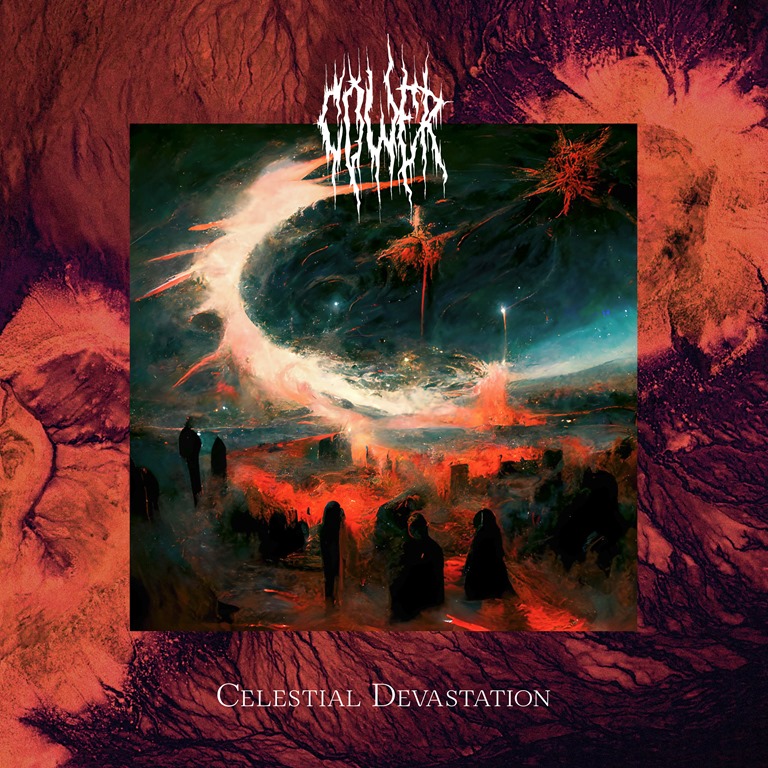
Anyone familiar with the works of William Burroughs will likely be aware of the so-called ‘23 enigma’, which essentially centres around the auspicious frequency of the occurrence of the number 23. It may be a case of confirmation-bias, but once attuned, it’s impossible not to notice, and the fact it’s filtered into mainstream consciousness via the KLF and the 2007 Jim Carey movie The Number 23 is worthy of note, if nothing else. So the fact that catalogue number HW023 has been assigned to the second album by supergroup COWER, featuring members of The Ghost of a Thousand, Petbrick, USA Nails, Yards, The Eurosuite and JAAW is something that may be of no real significance, but then again…

Few would necessarily expect the album to begin with a soft, gentle piano ballad with ‘We Need to Have the Talk’. It’s contemplative, and even if the talk is direct at times lyrically, the mood is low-key and lulls the listener into a sense of false calm. Immediately, ‘Summoner’ crashes in with pounding drums, a snare like smashing a bin lid, and a bass so thick and grimy as to churn your very guts. This broad shift is precisely what you expect from COWER, as they push parameters and do things different; this is what you want from COWER, and this is what they deliver. It’s a rambunctious roar, with an elevated artful tone and all the rage. They pack a lot into a mere three and a quarter minutes – and a lot of what they pack is beefy riffage and furious noise. It’s an instant rush, and at the same time, your muscles tense.

‘Hard-Coded In the Souls of Men’ presents as a downtempo slice of brooding electropop with hints of Depeche Mode, even down to the soulful baritone croon and spacious sound with soft synth interludes. In a parallel universe, this song would get played all over on Radio 1 and would make all of the mainstream radio and Spotify recommended playlists, and people in their tens and hundreds of thousands would love it. And then they would arrive at the album, and wonder ‘what the fuck?’ as they simultaneously shat their pants. This would be the perfect outcome, but is of course, highly unlikely, because acts on small labels just don’t have those opportunities.

The funny thing is that back in the 80s, major labels would back all kinds of bands and would promote – and shift mega-units of – an album based on a largely unrepresentative single. Back then, you couldn’t hear the album online, so would head down to Boots or Woolworths or WHS, or add it to your selection with Britannia Music, and you might love it or you might hate it, but they’d shifted the unit either way and because you only had a handful of records or tapes, you’d play it enough times there was probably a 50% chance you’d come to like it even if you hated it at first.

COWER succeed by being unpredictable, and whichever way they turn, be it noise or electropop, what they deliver is top quality. ‘Buffeted by Solar Winds’ boasts a stalking bassline and brooding vocal, as well as some synths and some circuit-melting overload that shows Nine Inch Nails how it’s done. ‘Deathless & Free’ is pure Depeche Mode circa Songs of Faith and Devotion: soulful, dark, and sonically immense, with percussion that utterly blasts you away. How is this right? And how does it work, when songs like ‘False Flag’ bring the most raging, sinewy punk, half fired-up post-punk, half incendiary grunge, entirely raw, ragged antagonism. The end result is New Model Army meets Big Black, with some wild sax tossed in for good – or crazy – measure.

The tile track is a slow, slow groover, driven by immense, industrial beats. What a contrast the energetic, intense and ultra-tense ‘Bury Me in the Lawless Lands of the West’ which really exploits the tropes of early 80s goth with is throbbing bass and fractured mesh of lattice-like guitars. Celestial Devastation;, however you pitch it, is hefty.

There are many so-called supergroups who aren’t especially super, who seem to trade on their main projects as the selling point. COWER amplify the intensity of their individual main projects to the power of three. Balancing mangled guitar noise and some pretty harsh electronics from beyond, Celestial Devastation is as good as it gets. Celestial Devastation is special.

AA

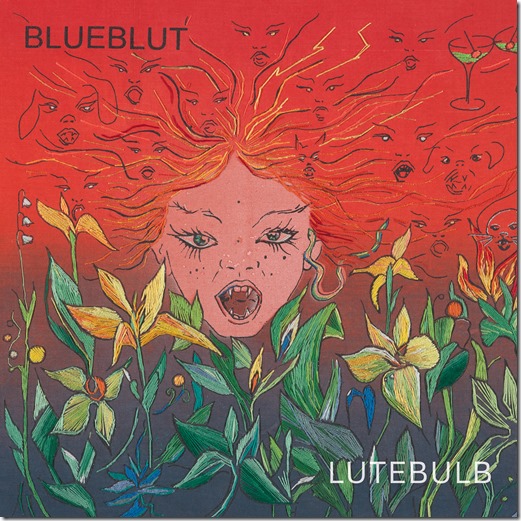
HW023_Cower_CelestialDevastation_CoverArtwork

Ahead of the release of their debut collaborative album Orchards of a Futile Heaven, out February 23rd, The Body & Dis Fig share potent, affecting new single ‘Dissent, Shame.’

The track’s devastating force lies beyond pure noise or abrasive textures, evoking weighty emotions with a minimalist drone dirge that gradually builds into an enchanting choral passage. Suffused with a raw vulnerability and a longing for catharsis, Dis Fig’s voice searches for escape in the midst of oppressive atmospheres as if determined to find relief from guilt. She elaborates on the track: “It’s about the act of abandonment, and the guilt and shame that comes with it. Running away from something, seemingly towards your own safety, but as your conscience picks you apart the entire way.”

Orchards of a Futile Heaven affirms The Body & Dis Fig as skilled sound sculptors who have an exceptional ability to make deeply affecting music, bracing as it is touching, harrowing as it is awe-inspiring. While sampling has long been essential to each, The Body & Dis Fig deftly meld their differing approaches to sampling and creating extreme sounds until the boundaries are entirely blurred. The group transmute weighty emotions into bristling sonic atmospheres, buoyed by Dis Fig’s ethereal vocals. She elaborates: “I love the balance. You could never connect to just a machine as well as you could a human. Which is why the combination is so potent for me. I don’t want to hide. I think nothing connects you more empathetically than another human’s voice.”

The Body & Dis Fig plan to tour throughout the US, UK, and Europe in 2024. Dates and details incoming soon.

Listen to ‘Dissent, Shame’ here:

The Body & Dis Fig are a natural pair. Each has pioneered instantly recognisable worlds of sound all their own that defy any traditional categorisations or boundaries. The Body, Lee Buford and Chip King, continually challenge any conventional conception of metal, collaborating with myriad artists and from the folk-leanings of their work with BIG|BRAVE to their groundbreaking work with the Assembly of Light Choir to the intensity of their collaborations with OAA or Thou.

Dis Fig, aka Felicia Chen, pushes electronic music into dark extremes, from warped DJ sets to avant production, from being a member of Tianzhuo Chen’s performance-art series TRANCE to being the vocalist with The Bug. The Body and Dis Fig find kinship in reimagining what it means to make “heavy music”. Their debut Orchards of a Futile Heaven is the perfect synthesis of two forces, twisting melodicism and intoxicating rhythms, layering a dense miasma of distortion with intense beats and a soaring voice clawing its way towards absolution.

The two found kinship in their desire to find new avenues to make heavy music that looked beyond tropes of metal and electronic music by merging the two. “I always wanted the heavier stuff but I also didn’t really like heavier guitar music,” says Buford. “None of it really felt quite heavy enough to me. A human can’t be as heavy as a machine.”

a0528546945_10

Karlrecords – 21st January 2024

Christopher Nosnibor

Reinhold Friedl’s career has been long and interesting, and continues to be so. The list of collaborations on his resumé is beyond outstanding, and he has taken the concept of the prepared piano, as first conceived by John Cage, to limits beyond imagination. As such, while the idea may not have been his own, Friedl’s advancement over the last twenty years has been the definition of innovation. But what makes Friedl such a remarkable figure is his capacity to explore so many different and divergent avenues, and to turn his hand to so many different projects – and this latest, with Martin Siewert is exemplary. Siewert’s instrument is the guitar, but his style of playing is far from conventional, tending to conjure atmosphere from feedback and sustain and otherwise working the space between the notes instead of blasting chords. As such, this is an inspired pairing.

Lichtung blasts in with a thick, heavy, grindy drone that almost borders on Sunn O)) territory: the twenty-four-minute first track, ‘Genese’ is a journey, which begins with an all-out assault of thick, gut-twisting drone and shards of shrieking feedback which twist into a maelstrom of chaos before receding to reveal altogether more tranquil shores. From this, it builds, a droning, churning wash, buzzing drones and dramatic crashes. And from the rising tempest, lone piano notes rise… These particular notes are identifiable as a regular piano, rather than a ‘prepared’ one – but that’s the nature of the tweaked instrument: random items on the strings create random sounds. It’s a curious array of sounds, and over the course of the track, the sound rises and falls, ebbs and flows, but the water is always choppy, the storm building and rumbling before it rages its full force. ‘Genese’ feels like it could be an album in its own right, but there’s a whole lot more to come.

‘Gedstade’ is a mere interlude at five minutes in duration: with plinking, plonking random twangs and scrapes and woozy drones, not to mention extraneous noise and crashes and more, it’s strong on atmosphere and oddness.

Often when interacting with music, or when critiquing music – and these are two different, if quite proximate experiences – I will ask myself, or otherwise consider, ‘how does this make me feel?’ Because ultimately, music, like any art, is about the experience of the recipient, and that experience defines its success and / or impact. To expand on that, and to clarify, many may dislike and so decry a great work of art on account of their singular experience, because it’s difficult to rationalise or otherwise quantify said work. As a critic, to baldly declare ‘they’re wrong’ would be a mistaken and to devalue the experience of others. But if others share a very different experience… then that is their experience.

And so we arrive at ‘Gestitche’, the album’s third and final track, a fifteen minute exploratory work which begins with crashes of low-end piano which sound like thunder and shake the ground beneath this exploratory composition. It’s heavy, doomy, dolorous. The scratchy, discordant guitar work only accentuated the album’s immensely broad sonic range. Squalling squealing guitar ruckus and feedback riot tears its way through the tempest of noise and plunging piano and sputtering sparks of wires. As the track progresses, things evolve and escalate, the thunder builds to a tempest, and at times you feel thoroughly assailed.

To my ears, then, Lichtungis a compelling experience. Lichtung is unquestionably niche, like all of Friedl’s but that in no way diminishes its value. And the joy of Friedl’s work is its variety, and the way in which he interacts with his collaborators. To this end, this album is a work which brings joy.

AA

a1344738009_10

Fiadh Productions – 15th December 2023

Christopher Nosnibor

My love of a good split release is something I’ve effused about variously here and elsewhere, and in a way, the contents of this particular split is pretty much secondary to the sentiment. The last thirteen years in the UK have been absolutely fucking shit. That’s not an opinion, it’s a fact. We can’t blame the government for the pandemic, but everything was shit a long time before that, and besides, we can blame them for the shitshow handling of everything, and for the way these disaster capitalist cunts milked every last penny of profit from it for their mates and their vested interests, their undisclosed shareholdings and all the rest.

And I’d keep hearing people defending Johnson, saying ‘he’s doing his best’. Only, he wasn’t. The dishevelled cretin would roll out of bed, half-cocked and probably half-cut after one of the lockdown parties he claims he didn’t know about, babbling bollocks, his only interest being self-interest. And the worst of it is that he wasn’t even the worst. And yet still people defend them, still people vote for them.

I remember watching the news after the last election, and a woman in her 70s appeared being interviewed on a street in Peterborough. She went on about how she was ‘thrilled to bits’ to have the Conservatives back and to have a Conservative MP: she ‘turned out in the pouring rain’ to put her ‘little cross’, and tells why she voted conservative, and how pleased she is that they got in:

“Well it’s the education system really. Oh, and the homeless. So many homeless people here, I’ve never seen it like this.”

And why’s that then? After years and years of Conservative government, you actually buy the line that they’re the part of change? When you say ‘the homeless’, what do you expect this government to do about them? Hire 20,000 more street cleaners by actually retaining 10,000 existing street cleaners and hiring 10,000 more over the next 40 years to come and toss them into refuse trucks? Or round them up into camps and line them up for euthanisation? I’m guessing she meant clean up the streets rather than help them, because well, where’s the fiscal value in that? Anyway, good luck with recruiting minimum wagers to dispose of the bodies once you’ve closed the door to all the Poles and other EU nationals who are currently propping the country up by doing the jobs no-one else wants.

I feel the rage. Every single day. And I feel the urge to punch Tories, and their voters, every single day, too. The current crop of Tories are fucking fascists, and anyone who supports them is complicit.

This EP’s three tracks are a head-shredding blast. Tyrannus bring us ‘Bricks And Flesh, Ashes And Iron’, five minutes of blastbeat-driven snarling black metal that’s both fast and furious, not to mention utterly relentless. It gets the pulse racing alright,and as dark and gnarly as it is, it’s pure, it’s raw, it’s exhilarating, and the guitar solo is absolutely wild.

Magicide give us two tracks, each a minute and thirty-nine seconds long. The contrast is the perfect reminder of the joy of the split release: their offerings bring a different shade of brutality, of pulverising pace. It’s a new hybrid, too, combining frenetic drum ‘n’ bass beats and an industrial edge which calls to mind turn of the millennium Pitch Shifter when they moved away from guttural industrial to create a beat-heavy, post-Prodigy Nu-metal hybrid. Black metal with tripping, stuttering rapidfire drumming, this is simply eye-popping. Thick, trudging riffs growl against grinding percussion and explosive breakbeats. There’s a load of shouting and growling, but the only audible lyric comes when everything pauses for a split second, and the line ‘this is Tory punching music’ rings out crisp and clear, in a strong Scottish accent.

And it is. The EP is full-throttle, an adrenaline rush that really gets you pumped. The message is clear and hard to disagree with for anyone with a brain or a soul. Whether you’re on board with new new labour or not, fuck the Tories. And feel the rage through this EP.

AA

a2564810484_10

Following on from Marthe’s incendiary debut Southern Lord full-length, Further In Evil, released this October, she now teams up with †The Lord† (Greg Anderson) to release two brand new collaborative tracks, ‘The Eye Of Destiny’ and ‘Wisps of the Black Serpent’.

Marzia comments on this collaboration:

“Collaborating with The Lord was an exciting challenge, and something new, and stimulating to me. I don’t usually deal with such soundscapes and when Greg asked me to add vocals and drums to ‘The Eye of Destiny’, I accepted. The track was intended by Greg to be a tribute to Quorthon (Bathory), an artist who has been a huge influence on my moods. I had started to add in battle-drum beats, but soon faced the hard task of using words to describe what (to me) is the most talented artist of all time. How to contribute in words what I can’t even process in emotions?”

She continues, “There’s the person behind it, and along with the talent there’s the reality of the loss, since he’s not here anymore to witness the legacy of his sound. What’s left of his feelings on his blog, his emotions, his development as an artist and as a person and that spark in his eyes. The eyes are the mirror of the soul, we say. And I was reading some notes he left on a letter and it went something like "may the eye of destiny be wild with you and show you the right way through life". "The Eye of destiny" was an evocative image to me, to picture in my mind the aura of his memory, as a human being and a musical genius. As words are dominant in a tribute, it was impossible, in the most humble way, to find words for him. So, I took his own words: checked all the lyrics and made a caviardage of words that in the end composed a tribute in what I considered the most honourable way possible. I love the final result, it’s my small tribute to a musical giant.”

Listen to ‘The Eye of Destiny’ here:

AA

a2467399362_10

Dret Skivor – 1st December 2023

Christopher Nosnibor

Yes, that’s fjord, not fox, meaning you won’t find these collaborating sound artists bouncing around the woods dressed as furry animals, making daft, random sounds. Well, you won’t find them bouncing around the woods dressed as furry animals, anyway, although Dave Procter did spend many years performing while wearing a latex pig’s head, but he put a stop to that after David Cameron started turning up at his shows.

This latest collaboration between Martin Palmer and Dave Procter is, in fact, inspired by the site of previous experimental audio tests in 2019, namely the sculpture “what does the fjord say?” in Trondheim harbour. As they tell it in the accompanying notes, ‘Armed with percussive sticks, contact microphones, audio recorders and the occasional toy and synth, they set about a full exploration of the sculpture and their own sonic ideas in and around the sculpture, using created and environmental sounds to answer the question posed by the sculpture. These recordings are Palmer and Procter’s replies.’

The first reply ‘støyende arbeider’ is more of a lecture than a simple reply, with a running time of twenty-one minutes. Consisting of random clatters, crashes, squidges, squelches and shifting hums which ebb and flow amongst an array of incidental intrusions, it’s more of a non-linear rambling explication, and exploration of the rarely-explored recesses of the mind than a cogent conclusion. But then, why should a reply necessarily be an answer. This, then, is a dialogue, a discussion, not an interview constructed around a Q&A format. It’s nothing so formal, and all the more interesting for its being open-ended, evolving organically. There are points at which the thuds, clanks and scrapes grow in their intensity, creating a sense of frustration, as if attempting to unravel a most complex conundrum and finding oneself stuck and annoyed by the fact that there is something just out of reach, something you can’t quite recall. And at times, this is also the listener’s experience. The way to approach this is by giving up on the expectation or hope of coherence, or anything resembling a tune, and yield to the spirit of experimentalism.

‘Moose Cavalry’ and ‘Mock Paloma’ are both significantly shorter pieces, the former being atmospheric and evocative, the animalistic calls conjuring images of beats roaming moorlands in the mist. Plaintive, droning moans and lows transmogrify into warped, pained cries and needling drones. The latter is different again: dark, tense, shrill tones scratch and scrape, flit and fly, reverberating from all directions. It’s unsettling, uncomfortable.

These three compositions are so different from one another, it superficially makes for a somewhat disjointed set, but on deeper reflection, what Palmer and Procter have forged a work which demonstrates how it’s possible, and even desirable, to approach a subject from multiple angles and perspectives. I still don’t know what the fjord says, but I do know that Palmer and Procter have posed some interesting musings in response.

AA

a3551752136_10

Sacred Bones – 16th June 2023

Christopher Nosnibor

They’re the first to admit that this pairing may seem like an unusual one, having first teamed up for a US tour in 2019: as the bio notes, ‘Sure, both bands harness the power of big, blown-out riffs, but Boris’s rock heroics, lysergic sprawl, and monolithic sludge summon a different energy than Uniform’s mechanized bombardments and frenzied assaults.’ But often the most exciting and unexpected results emerge when pairing contrasts rather than sameness. Put two drone bands together, you can predict the outcome will be amplified drone; sludge with sludge equals more sludge, and industrial matched with industrial is unlikely to yield any great surprises. Yes, pairing like with like makes sense, it’s safe, there’s an intuition and interplay that comes from familiarity with the territory and the form, and fans will likely be happy being served a double helping of what they like.

But neither Boris nor Uniform are acts who are overly concerned with appeasement: that isn’t to say they don’t care about their fans, but more that they both trust their fan bases to be broad-minded and accommodating of the idea that creative fulfilment is integral to their existence. Even those more casually acquainted with their respective catalogues will recognise that both Boris and Uniform are driven, not by the desire to entertain, but to follow their creative instincts. The way these manifest musically are very different, but in this context, the parallels become more apparent, and it also becomes easier to understand their mutual appreciation for one another. And neither act is new to the spirit of collaboration, with Boris having have collaborated with the likes of Sunn O))), Merzbow, and Keiji Haino, and Uniform having previously released a blistering collision with The Body back in 2018, as well as remixes with Zombi more recently.

It will be news to no-one that this is big on riffs, that it’s loud and heavy, but this is a collaboration like no other: ordinarily, artists will bring their ‘thing’ to the table, and the songs will represent the meeting in the middle ground. This isn’t so much the case on Bright New Disease: the two acts are given equal billing and play evenly to their strengths and stylistic methodologies: but don’t necessarily play ‘together’ in the conventional sense. But when did either Boris or Uniform do ‘conventional’?

The album’s first track, ‘You are the Beginning’, aired online a few weeks ago, is the perfect combination of the two bands’ individual sounds: hard, heavy, the blistering harsh industrial intensity of Uniform, angular, antagonistic, crackling with the punk-tinged rage of Michael Berden, suddenly melts into a wild blitz of fretwork which paves the way for a monster thrash workout. Even the tone and texture shifts from harsh treble to murky mid-range, and it feels like a song of two halves. Quite unexpectedly, it works. When you weight up the value of any collaboration the question is always ‘is it different from or better than their independent works?’ Bright New Disease throws a curveball in that it’s a yes and a no at the same time, and that’s the genius of it.

The explosive ‘Weaponized Grief’ is a sub-two-minute blast of feedback and fury, and another thing which is notable about Bright New Disease is just how short the songs are. While there are a couple over four minutes and the finale, ‘Not Surprised’ does just creep over five minutes, the majority are significantly shorter, and condense a lot into those brief times, too.

‘No’ goes all-out grindcore / thrash in a two-and-a-half- minute flurry of churning guitars, but at the same time there’s something vaguely Spinal Tap – or Melvins –about its overblown excesses, and this may be a short album, but it’s high impact, and that’s true of much of the album: they slam down riff after riff with relish. ‘Endless Death Agony’ brings together the boldest excess of Boris with the most brutal attacks of Uniform, with a shrieking guitar solo fading out ahead of a most punishing riff with more solo mania blistering and melting on top, before the megalithic slow grind of ‘Not Surprised’ drags its way through the pits of hell.

Apart from the gloomy atmospheric suspense of the intro to ‘The Look is a Flame’ there really isn’t much respite on Bright New Disease. It’s harsh, heavy, relentless, by turns sludgy and slow, or otherwise frantic, frenetic, explosive – and packed with surprises, from the murky ambience of ‘The Sinners of Hell’ to the bubbling electronica of ‘Narcotic Shadow’ that sounds more like DAF collaborating with A-Ha and the straight-up glam pop of ‘A Man from the Earth’. Never could I have anticipated describing anything involving Uniform as ‘glam pop’. But then they kill it hard with ‘Endless Death Agony’, which is some brutal shit. Bright New Disease is everything all at once: it’s often punishing, sometimes spectacularly theatrical, and (almost) always heavy, but it’s smartly realised and expounds the importance of identity as both bands showcase and celebrate theirs in triumphant tandem.

AA

326319

Subsound Records – 10th March 2023

Christopher Nosnibor

It’s easy in the age of the Internet to conduct enough research behind the scenes to present oneself as having an extant k knowledge of a subject. It’s also a huge temptation to do this as a reviewer or critic, because there’s a certain expectation from audiences that if you’re going to proffer opinions on things, you ought to know what you’re talking about. It’s that knowledge and authority that ought to differentiate someone who presents insightful critiques from the boorish tosser down the pub – or, as is more common now, on social media who has an opinion on everything but talks out of their arse because they know nothing.

But life is an open-ended learning experience, and the day you stop learning, you’re effectively dead. And so it is that while I’m familiar with Malcolm McDowell, primarily for his role in A Clockwork Orange, and Massimo Pupillo of ZU, but not the Italian poet and essayist Gabriele Tinti – which is surprising given his prolific output and the immense reach of his work, especially considering that his career hasn’t been without controversy. Still, the fact he is prolific and has immense reach, as well as being a keen collaborator, explains the coming together of these three for a collaborative album, which finds McDowell reading Tinti’s works over music by Pupillo.

McDowell reads five pieces from the 2021 collection Ruins, dedicated to what he calls the “living sculpture of the actor”, ruminating on the distant past as it echoes through to the present. In keeping with the subject matter – where art and mythology of the ages provide evocative contemplation – there are weighty words, formulated with such syntax as to accentuate their gravity and import, and McDowell’s delivery does them admirable justice. As much as Tinti is given to elevated tone, there’s both a resonating sense of spirituality and an earthiness to his words, and McDowell reads with nuance, bringing the more visual aspects to the fore as he speaks of flesh and blood and bones wounds and exploding veins. There’s a physicality to the writing which possesses a rare potency, and as such, the words are well-suited to the context.

Pupillo’s atmospheric score, conjured using ‘a plethora of different sources, various synthesis, samples of eastern European choirs, processing McDowells’ voice,’ lends further layers of depth: at times choral and monastic voices rise and ring out against elongated drones, rich and organ-like, at others billows of sound creep like tendrils of fog.

Songs Of Stone may only be some twenty minutes in duration, with each side working nicely as a single, continuous soundwork punctuated by the spoken segments, but its grave intensity means that any longer would be difficult to digest. As it stands, Songs Of Stone feels perfectly formed.

AA

a3543316873_10

Boris and Uniform might have seemed like a strange pairing when they teamed up for a US tour back in 2019. Sure, both bands harness the power of big, blown-out riffs, but Boris’s rock heroics, lysergic sprawl, and monolithic sludge summon a different energy than Uniform’s mechanised bombardments and frenzied assaults. However, when Boris invited Uniform to team up on a reimagined version of their classic “Akuma no Uta” as a part of their encore, there was an obvious chemistry between the artists. The idea of a collaborative album came up, and the bands spent the next year swapping song ideas and recordings from their home-base studios until Boris and Uniform had an album that captured the fearless exploration and unbridled power of their live performances.

Sacred Bones Records is proud to present the Boris & Uniform collaborative album Bright New Disease on June 16, 2023.

Bright New Disease opens with the collaboration’s first single, ‘You are the Beginning,’ a ferocious thrash-inflected banger concocted by the Boris camp. It was the first piece the band composed during the initial day of their studio session in July 2020. As the title insinuates, the song was written with the idea that it would open the album and, hopefully, open a show one day too. “At that time, we didn’t know when we would be able to resume concerts,” says Boris’ Atsuo, “and our wish became the song directly.”  The uncertainty and anxiety of the early months of the pandemic fuelled Bright New Disease, and “You are the Beginning” sets the stage by stampeding out of the gate with vicious palm-muted riffs, snarling vocals, and dual drum bombardments courtesy of Atsuo and Uniform drummer Mike Sharp. 

Listen here:

AA

“On tour, we learned more about the depth of their musicality, which we felt was compatible with our own expression,”  Boris’s Atsuo and Takeshi say of their tour mates. “They are a band that can be described in many ways—punk, metal, industrial—but they truly excel because they are not locked into any style. They are always experimenting and innovating.” The feeling was mutual.

“Uniform have been longtime fans and admirers of Boris. Supporting them on tour was a dream come true,” says Uniform vocalist/electronics wrangler Michael Berdan. Guitarist and producer Ben Greenberg was equally excited by the opportunity to team up with Boris and shape the recording of Bright New Disease in his studio. “Wata is one of my favourite guitar players ever, so I’m very stoked we got two duelling solo tracks on this record,” Greenberg says, referring to the intertwined guitar leads on “Endless Death Agony.” This isn’t to say there wasn’t also a shared appreciation for certain classics, particularly when it came to Japanese hardcore. “The first time I met Atsuo he was wearing a Gastunk shirt, and Takeshi has schooled me harder on Burning Spirits than any fetishist westerner could ever hope for,” says Berdan.

Members of both Boris and Uniform talk about songs on Bright New Disease in the context of how they’ll play out in a live setting. Under normal circumstances, such considerations are a part of the writing process for any band with an active live presence. But considering that Bright New Disease was written and recorded in the darkest days of the pandemic, it frames the agitated and tumultuous spirit of the album in a new light. Yes, this is the sound of frustration, but it was founded on resilience. “In the end, it sounds like the crystalised essence of both bands at the heights of their creative abilities,” says Berdan. “It is a testament of friendship and hope in the face of a world on fire.”

8Le7_pXw

Möller Records – 23rd March 2023

Christopher Nosnibor

It’s clear that while the pandemic is officially over, collectively, we’re still very much coming to terms with it, and its aftermath. Lockdown, in particular, has had a deep psychological impact, on so many. Everyone’s experience was, and is, different, of course. I have friends who almost deny to themselves that it happened, that it was a dream or something, and for some of us, in some respects, it’s as though it never ended. This is how people deal with shock and trauma.

My Heart of Noise is not a pandemic album, a lockdown album, a post-trauma album, but as Elif explains, the album “began with a collection of studio and concert recordings from my travels north before the pandemic. It became like a puzzle: I could hear something special, but also that the pieces didn’t fit together well or feel complete. The breakthrough came in realising that this project was meant to be more about creation than preservation, and that it didn’t need to be a literal document any more. It could still be faithful, but instead to the spirit that inspired this music and my travels in the first place, instead of a particular recording. I created new musical starting points, and invited artists I met on my travels plus others, asking them to choose one to begin to work with together. Some artists incorporated our previous recordings, others set off in a new direction, while I shaped the pieces and found a way to connect them together.”

Recent history, then, is marked not as BC and AD, but BP and AP – before pandemic and after pandemic, and My Heart Of Noise reflects Yalvaç’s attempts to ‘make sense of a noisy world’. And the world is indeed, noisy, and difficult to articulate. There is simply too much noise too much happening all at once. It’s a perpetual sensory overload.

For this, her debut album, Elif Yalvaç involved a number of the people she encountered along the way of her journey, and the title also references this, the way she became the hub in a collective process.

The collaborative aspect means that each track does have a slightly different feel, despite all being centred around eerie ambient soundscapes.

‘Orchestra of Light’, the album’s first track, is a layered composition of dronies and hums and whispers which drift and swirl around some of the mind’s darker recesses. The textures and tones rub against one another and the edges aren’t all smooth, with buzzes and barbed, drilling sounds grating against the grain, meaning there’s a certain friction, a tension, creating a sense of discomfort.

‘Gate Check’, which follows, is softer, but the notes bend and twist and the supple, mellow tones are spun with a sense of the awkward and the uncanny, but nothing so warped as ‘Mielmaisema’, with its collage of human vocalisations and clunking clumps of thuds and thumps Amid whirls and crackles and hums, from which grinding groans of decaying Krautrock creak. It may be less than five minutes in duration but it packs a lot of shiversome strangeness into its short space, in which even chirruping birdsong feels somehow unsettling.

My Heart of Noise is not an overtly collage-based album, but it does assemble many sources and sounds, and often overlaps and overlays them to disquieting effect, and I’m at times reminded of vintage sci-fi and the BBC Radiophonic Workshop.

‘Cloud Score’ sits somewhere between post-rock and classic drifting ambience, while seven-minute closer ‘Taiga II’ very much feels like the lifting of the clouds and the breaking into light, but at the same time feels like a storm building on the horizon, and ‘Dronasaurus’ indicates that it’s not 100% serious 100% of the time.

My Heart of Noise is a restless work, one which ventures and explores, and never for a moment settles into comfort or conformity. It is not an easy album: whenever things feel like they’re settling into something nice, a cloud of disruption and difficulty will drift over and raise a shiver. You can never really settle or feel at ease with My Heart of Noise – but as a representation off life in the world as is, this is a fair summary. Keep your eyes and ears open: there is always something around the corner.

AA

a3629223309_10