Posts Tagged ‘collaboration’

Front & Follow – 14th April 2023

Christopher Nosnibor

These are shit times to be alive in Shit Britain, UK Grim: having taken back our borders, this green and pleasant isle is floating in a sea of shit – literal shit – that we’ve pumped out onto our beaches for our domestic holidaymakers to swim in, and we have 16-hour quest to leave the country to go on holiday for those who want to escape for a bit – damn those French bastards for checking the passports off non-EU visitors. But hey, at least we got rid of all of those foreigners working on coffee shops and bars for minimum wage and those doctors from overseas, right?

And yet, while the cost of living is spiralling, major corporations – and not just energy providers – continue to push up prices, not to cover the cost of paying their workers, but to preserve profit margins. It’s not that they can’t afford to increase wages, they simply won’t because capitalism is built on maximising profit. Fuck the staff, look after the shareholders. And of course, rent continues to rocket: landlords, too, need to protect their rental yields

An investigation undertaken in behalf of The Guardian late in 2022 found that ‘asking rents on new listings are up by almost a third since 2019, and some people are facing increases of up to 60%. Prices in 48 council areas are now classed by the Office for National Statistics as unaffordable when compared with average wages’.

The trouble is, capitalism is based on exploitation, and invariably, the wealthy become wealthy and grow their wealth through the exploitation of the less wealthy.

There is an irony here: in nature, the most successful parasites achieve a symbiotic relationship with their host. Under capitalism, the parasites seem determined to kill the host (the poor) on the premise that there will always be more. But then, the same is true of the human relationship with the planet: only, the resources are finite and there isn’t another planet, so we’re fucked.

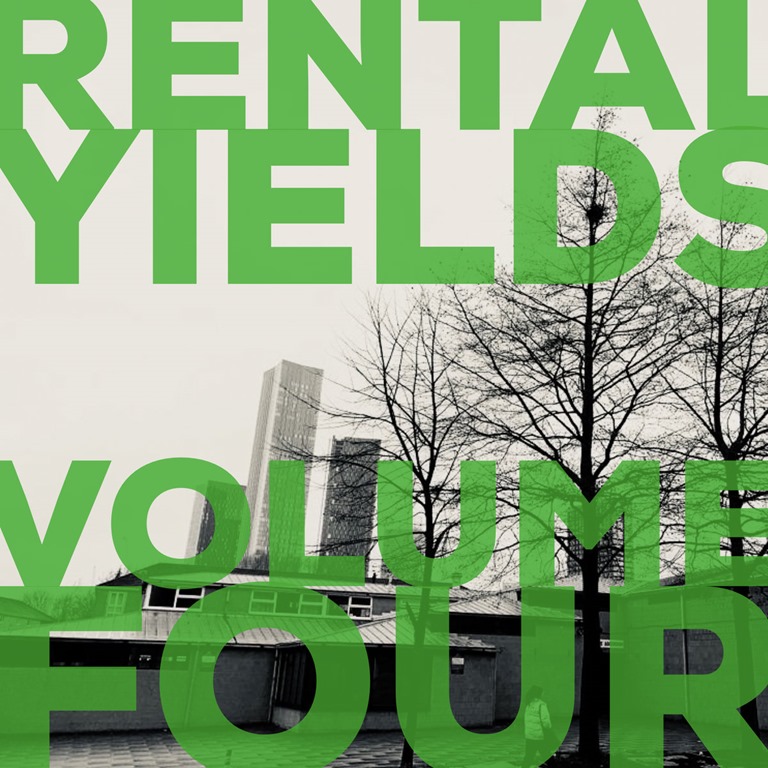
The accompanying text pulls no punches in explaining the context:

“As we travel further into the year of our overlord 2023, the cold snap that had enveloped the country no longer seems to mock us as we struggle to complete the simplest of daily tasks. With public services at a standstill as the people actually doing the jobs fight tooth and nail for honest payment and work prospects, the rest of us eke out a little more of the heat reserve to keep us going as the ice finally begins to thaw. But the Rental Yields do not stop. The opportunity to make hay while the sun refuses to shine carries on as if no one was suffering. The money continues to be made and the towers in space continue to be built. Dark shadows now dominate the skyline of a city that has been forgotten to the wishes and demands of the few. Some will say this is the progress promised by those in charge of levelling up. But many others will suffer as the bankrolls of the rental yielders grow ever fatter. Still, the spring brings promises of its own.”

What makes life in this endless torrent of shit in which we’re all sinking is that there are some people who aren’t cunts, and who go out of their way to make the quality of life better for others, as well as themselves. The guys who run Front & Follow are among them, as are the many, many artists who have contributed to the Rental Yields compilation series, of which this is the fourth, showcasing tracks by myriad underground acts, remixed by myriads more in an exercise in infinite cross-pollination.

Featuring 26 new tracks and 52 artists, all money raised from this release will go to SPIN (Supporting People in Need), whose purpose is to feed, shelter, clothe and generally support the homeless and people in need of Greater Manchester.

As with the previous instalments, Volume 4, is very much geared towards ambient and more sedate electronica. With so many tracks and such an epic duration, and given the nature of the material, Volume 4 is a wonderfully immersive experience.

The overall quality is, again, excellent – meaning it’s consistently great across the duration and there’s nothing that makes you feel inclined to hit skip. There are, as always some names that leap out for a range of reasons: Kemper Norton. Yol, Omnibadger, The Incidental Crack, Field Lines Cartographer, Sone Institute – but the main point of this is not the names, but the merits of collaboration and collectivism.

Some tracks do stand out, notably ‘Acid Bath’ by BMH vs Lenina for it’s pumping beat, and CuSi Sound vs Robbie Elizee’s ‘I’m Not A Tourist, I Live Here’ for its overt wibbly synth weirdness, for starters. ‘The Enamel Hamper’ by Cahn Ingold Prelog vs The Ephemeral Man is a nine-and-a-half-minute dark psychological drift, while Omnibadger vs Grey Frequency’s ‘Speeding Ground (Part iii)’ is a glitchy, collaged morass of disorientation, with layers of noise, tribal drumming, and disembodied vocals, and ‘Home on the Whalley Range’ by Opium Harlots vs Yellow6 combines dark ambient, murky noise, and a hint of The Cure’s ‘Pornography’ to forge something intensely claustrophobic.

Solo1 vs yol’s ‘Black Spoons And Crosses’ is a collision of ambience and noise that will twist your brain, and the sonorous drones of Laica vs Learn to Swim’s ‘High Yields, Low Prospects’ is a doomy post-punk affair with an agitated drum machine hammering away amidst a sea of murk, and both the title and sound encapsulate the sentiment and the message of the album as a whole.

It is, once again, a triumph, not only artistically, but socially: the Rental Yields series is the epitome of community. And while our government speaks of community while acting in every way to destroy it, promoting division by every means, and social media has become a warzone whereby the goal is achieved, musicians are showing the way. This, this is how we will survive the shit and create a better future.

AA

a0601616053_10

2022 has been a phenomenally active year for Greg Anderson as The Lord. Having previously shared standalone track releases, he then released his debut solo album Forest Nocturne in Summer followed by a collaborative album with Petra Haden, Devotional, in October.

Now, he is heard in collaboration with David Pajo in a brand new track, "Nazarite", which sees the two musicians meet over ominous arpeggios and spoken word segments in this new track which Greg suggests is a "gateway" to more collaborations in the future.

Greg says, "I’m beyond honoured to have been able to collaborate with David Pajo for this ever evolving output as The Lord. Slint remains one of the most important bands ever to me. I composed the music for ‘Nazarite’ as a love letter to Slint that exemplifies my obsession and devotion. David’s brilliant response to my humble offering is clear proof of his genius."

David Pajo says, “In Tennessee, I played a bit of acoustic guitar on the Goatsnake song ‘Another River To Cross.’ It was then that I realized we had a perfect working dynamic. We seem to be able to push an idea from nothing into solid shape, without much effort or ego. I trust Greg’s ear and musical sense implicitly—he’s fearless.”

Listen to ‘Nazarite’ here:

a2264078713_10

Composer and experimental filmmaker Christina Vantzou has shared "Kimona I", set to powerful and heart-breaking footage from Lizzie Borden’s 1983 feminist film, Born in Flames.

"Kimona I" is a sparse track with only a piano and one vocal present, echoed and distant as though the song is being performed at the end of a cathedral. Quietly melancholic, the track is somewhat at odds with the footage of smiling women, which makes the ending all the more impactful. Christina Vantzou speaks to the inclusion of the Born In Flames footage;

"Filmed in the early 80’s, mainly in the East Village, largely with friends, non-actors and activists, Born in Flames is a film about work, class & race divisions, and organized revolt. Meanwhile on No. 5, ‘Kimona 1 & Kimona II’ were written for workers, specifically low-wage employees at giant institutions."

About her collaboration with Christina Vantzou Lizzie Borden says;

"I was honored when Christina Vantzou approached me with her beautiful piece of music “Kimona I,” accompanied by scenes from my film Born In Flames. As we collaborated, I was stunned to see familiar images take on new meaning when set against her haunting, elegiac music. Thank you for your exquisite work, Christina."

Watch and listen here:

AA

gaHEv3Ic

Limited Noise – 29th April 2022

Christopher Nosnibor

With a CV that lists near-multitudinous membership and participation in bands (notably his regular gigs with Snack Family and World Sanguine report, but also contributing to Sly ands the Family Drone and countless others), renowned experimentally-minded jazz drummer and percussionist Will Glaser has taken some time out to continue his solo album sequence with the fourth instalment of Climbing in Circles.

Over the course of three previous releases, Glaser has explored jazz, folk, and beyond, through an experimental prism and with a methodology that’s very much about improvisation. This outing features long-time collaborator, Matthew Herd, on saxophones and piano, alongside trumpeter, electronic artist and producer, Alex Bonney, and was assembled over the course of five day. While the album is loosely constructed around two overarching ‘acts’, they consist of eleven separate and distinct pieces, and bookended by ‘Beginnings’ and ‘Endings’, there’s a narrative arc of sorts, here.

It begins with crawing birds and a gentle piano playing what one could readily describe as a charming melody with a quite conventional structure, and ends with a genuinely pleasant lilting piano tune – and yes, I mean tune in that it has all the conventional features of one.

In between, there is slow decay and infinite space. Rumbling, echoes, notes reverberate off one another at distance. Sax and trumpet trill and drone, sometimes at one, at others as if duelling. The percussion rolls and crashes, but more often than not, at distance, and creating texture and atmosphere and colouring the pieces with expression rather than maintaining rhythm.

The combination of instruments is relatively conventional in jazz, and, similarly, there’s nothing particularly radical about the way they’re played and interact on here. But there’s considerable joy to be had in simply listening to the musicianship and the way the musicians themselves interplay on the pieces. ‘Spiral Dance’ is a hypnotic serpentine spin, while ‘Bad Dream Machines’ is a drifting mass of fragmentation, dissonant, discordant, and above all, a work that exists in the spaces between the notes and in the reverb and echoes as in the notes themselves.

There will be some – perhaps many – who are deterred by the very mention of jazz, and there is a perception of there being a certain elitism about jazz – the idea that random notes and borderline unlistenable chaos is somehow a superior art form, and anyone who doesn’t ‘get’ it is clearly a philistine. But Glaser is a remarkably positive showcase for jazz, with a focus on the listener rather than purely the musicianship. Climbing in Circles Pt 4 is about atmosphere, about vibe, rather than indulgent wanking: this is jazz you don’t need to be an aficionado to appreciate. It’s listenable, and it’s varied, too.

On ‘Dead Fly Disco’, he and his collaborators play completely straight, a song with structure and swing, something you could even dance to, or at least nod a long to its toe-tapping groove in a basement bar late at night. ‘Ballad in the Jazz Style’ almost feels like they’re playing with and working within the tropes as an example of discipline, and it’s highly restrained and wonderfully moody in that sad, smoky jazz melancholy way.

There’s plenty going on, and enough to maintain interest, but not so much as to be chaotic or to lose the listener. Whether these things make it a good access point to jazz, it’s hard to say, but what it does mean is that Climbing In Circles pt.4 is a jazz album that’s accessible and enjoyable simply as a musical work.

AA

Climbing In Circles cover 1000px CMYK

Karlrecords – 27th August 2021

Christopher Nosnibor

Well this is an interesting one, and it was, admittedly, Thurston Moore’s name that compelled me to give it some ear time. While listening to the first pounding space-rock psychedelic jazz freakout, it dawns on me that this isn’t actually my first meeting with Turkish free form ensemble Konstrukt, and that I was blown away and bewildered by their 2018 collaboration with Keiji Haino, A Philosophy Warping, Little by Little That Way Ahead Lies a Quagmire (Live).

It’s hard to tell what’s going on and who’s doing what on this first piece, especially what Moore brings to the mess of noise that is, ‘Yapayalnız (Gezerler Sokaklarda)’, which sees a motoric rhythm hold steady amidst a vortex of punk-infused chaos until, ultimately, everything collapses. There are some shouted vocals, but they’re muffled and drenched in so much echo that it sounds more like a riot than a performance, and it makes for an eye-popping, headache-inducing ten minutes. The fact that this was recorded live makes you wonder what it must have been like to witness first-hand: on the one hand, it’s exciting, unpredictable, while on the other, it’s vaguely frustrating, because you don’t know where it’s going – or where it will end.

Turkish Belly is the fifth and latest entry in the ongoing series of collaborations between the four-piece ensemble and an array of guests, and it’s certainly experimental and freeform, to the point at which one could question whether there really is much form at all, and it’s extremely difficult to extrapolate precisely what Moore brings to the chaotic party. Perhaps it’s simply another layer of chaos.

‘Kurtadam’ in two parts is very much percussion-dominated and almost hints at the conventions of rock – but it’s only a hint, and more to do with the solid rhythm section than anything else. It does nail a groove, which is welcome, but everything else especially the horns, are all over and flying every whichway.

The final track, the eleven-and-a-half minute ‘Uğultular’ is a braying beast of a tune – if you can call it a tune as such. The deadened drum beats thwack out a damp rhythm amidst a serpentine sway of seeping discord and disarray. There’s murky bass and some wild, reverb-soaked guitar work, and the whole thing lumbers and lurches, bleats and brays blindly. Wordless vocals growl and grunt amidst a buzz and a howl that yawns and churns and crawls its way to conclusion.

The audience’s applause and cheers after jolt the listener back to reality, and the fact that this a document of a live performance. Maybe you had to be there to fully appreciate it, as it seems those present on the night very much did, but on record, it’s interesting, but at times a bit of a slog.

AA

KR084_front

Anticipating Nowhere Records – 24th September 2021

Christopher Nosnibor

With the colossal five-volume ‘Isolation and Rejection’ lockdown compilation series and the one-off final final FINAL Front&Follow project, the compilation You Can Never Leave released in June, the eternally restless Justin Watson can put his label to bed and resume work with his current musical vehicle, the collective who operate as The Incidental Crack to deliver album number two. After all, it has been more than three months since second album Municipal Music.

The three – Justin Watson, Rob Spencer and Simon Proffitt – are still yet to meet, and their third album, like its predecessors, took form with ‘them exchanging field recordings, samples and random noise between Manchester, Wigan and North Wales’.

As the liner notes recount, ‘Detail contains within three new long-form pieces and a couple of shorter ones filling in the gaps. The adage goes that the devil is in the detail, and Detail brings exactly what the title promises, with the first composition, ‘We Might Bump Into each Other’ beginning with some muffled dialogue and an ominous hum, then hums, bubbles and slurps against a backdrop of echoic reverberations, before ‘Fish Dance Tank Track’ marks a shift in style, with more defined beats – an insistent bass bump occupies a different space from the glitchy fluttering woodpecker-type stammers and stuttering hi-hats which all make for something quite complex beneath the drifting drones and quavering hums. It’s an interesting and complex composition that brings together elements of ambient and minimal techno, and as birdsong flutters in toward the end, the piece takes on new aspects that juxtapose nature and artifice.

That the grating looping throb of the six-and-a-half minute ‘Waterfalls Per Capita’ should be considered a gap-filler is a matter of context, and it comes after the harrowing dark ambient collage of ‘I Lost It’, that is by no means a comfortable or easy listen.

The seventeen-minute ‘Morning Tram’ combines field recordings where the original source remains clear, but with subtle but insistent beats, and it’s perhaps there – the finale – that everything comes together. Fragmented samples and snippets of dialogue collide with tumbling trees and slow-turning washes of ambience to create remarkable depth. Passengers pass on and off, engines rumble past, there is endless chatter and a wall of extraneous sound. Assimilating it all may be difficult, but it’s rewarding. The beat is almost subliminal, but it’s relentlessly insistent and registers almost subliminally as the sound swells and voiced clamour and congeal among a rising tide of horns and other momentous sounds. And then it stops, abruptly.

It may be short in terms of tracks, but Detail has substantial depth – and much detail, all of which is very much worth exploring.

The Incidental Crack - Detail (cover)

Room40 – 3rd September 2021

Christopher Nosnibor

This is a work that connects the event with the memory of the event, and exists in the space in between the actual and the recollection – and specifically, those things forgotten .

The material was recorded when David Toop and Akio Suzuki visited Australia, where Lawrence English resides, back in 2013. The pair engaged in creating a site-specific work during a residency on Tamborine Mountain, and were joined by Lawrence during the project. The release is accompanied by a book containing text written by Toop at the time documenting the visit.

And English writers, ‘Going back to listen again to these recordings of which I was a part with David and Akio, I was surprised by what elements had stayed with me and what others had slipped into the eternal greying of my mind. I have vivid recollections of listening to a Lyre bird before recording the pieces together at Witches Falls. I remember both Akio and David finding musicality in decaying palm fronds. I remember Akio’s voice, amplified through his Analpos, bouncing off the stones and trees. I remember David’s flute, so quiet in the pitch black of the night forest as to appear like a hushed tone of wind or a distant animal calling. I also remember trying to match my modest hand held electronics with the pulsing and pitching of the insects around me.’

Memory fades and distorts over time; but then again, is Toop’s contemporaneous document entirely factual and without bias? Nothing here now but the recordings… surely we can at least trust the recordings to be pure in their capturing of the event? Of course not: there are no facts, only representations, fragments. Everything is subject to some form of filter, and eyewitness accounts to crimes are notoriously unreliable, even immediately after the fact.

The album contains six tracks, each one a collage of sounds captured in and extracted from their environment to exist in distilled detachment in recording. Context counts, and while the drips and trickles, gurgles and chirps all sound familiar in a ‘natural’ setting, when set apart, things become less clear. You see, with the sounds of othjer / unidentifianblee origin blended in, it’s difficult to determine the origins of any of the individual sounds and they twist and blur together.

It sounds like running rivers and splashing waterfalls, merged with extraneous sounds doused in heavy echo. It sounds like finger-drums. It sounds like chattering primates, agitated parakeets. It sounds like barks and grunts and yammers, reverberating into the humidity. Amidst the drift of the breeze on ‘Night Drive’ a springing sound arrives as if from nowhere. It’s one of those cartoonish, novelty spring sounds. Surely it wasn’t in the original recording? There are strains of awkward, infiltered feedback, notes of a flute trilling and warbling without musical focus, as the notes yodel and wobble, or otherwise simply waver as quavering notes trailing in the air.

Ominous drones hover and hum, tweets hover and howl out into the air. There are extensive passages where there is little of note – that is to say, not lonely little remarkable, but few notes to speak of – and sparse sounds buzz and drawl seemingly endlessly, like the agitated bee sound that vibrates hard during ‘Small Holes in the Sky’. ‘Leaving No Trace’ again sounds like running water and returns to the sounds of wildlife and the jungle.

Set adrift, and with only the sounds to interact with, the listener finds their own memory triggered, perhaps first and foremost by sound association, having no likely connection with the location where the recordings took place. Just as distance in time leads to a slow decay, so layering if interpretation and association also diminish the link to the actual event, leaving only thoughts on thoughts.

A handful or sharp, trilling noises penetrate the bibbling babble, and then there is a stillness, and having awoken in Autumn, as night has fallen, it is indeed Winter already. Breathing Spirit Forms is a quite remarkable document – not of the actual event, but of something approximating it.

AA

a0762176011_10

Bam Balam Records –12th June 2021

Christopher Nosnibor

Two names to conjure with collided live in Tokyo on 14th March 2019, with sprawling psychedelic masters Acid Mothers Temple coming together once more, a full decade after the release of the live album Underdogg Express in 2009, with the founder of the legendary Krautrock band Guru Guru. ‘A fiery psychedelic collaboration recorded in the spirit of early Guru Guru’ ensued.

Edited neatly into four tracks – two per side of vinyl – it’s being released on limited edition vinyl for the French ‘Disquaire Day’ June 2021 (French Record Store Day 2021).

In recent years, I’ve come to despise Record Store day: after all, a record store is for life, not just for RSD, and the whole thing reeks of exploitation, from the retail prices being set as a level that means stores themselves make next to nothing from any sales, many fans are priced out – assuming they aren’t geographically advantaged – and then they’re shafted once more when those who had both the benefit of cash and location resell at even more exorbitant prices. Yes, one could discus free markets and supply and demand and how buyers choose to pay those prices – and I personally choose not to – but ultimately, a lot of the fun has gone out of it since the early years.

It doesn’t help that RSD has been swamped by reissues by major labels, meaning completists and hardcore collectors of some very popular acts are climbing over to buy new editions of old records, and none of them really give a fuck about independent stores, labels, or artists.

In this context, this release is a welcome one. It’s also a good one, and finds the collaborators veering from wildly chaotic and discordant free-jazz to muted, atmospheric ambience, with the fifteen-minute ‘Electric Junk’ spanning both, and beyond, exploding as it does into a searing proggy / post-rock crescendo in the closing couple of minutes.

‘The Next Time You See the Dalai Llama’ is built around a cyclical motif that whirls like a kaleidoscope over a throbbing reception of pounding drums and bass that lock into a relentless groove for the first four of is nine minutes. The title track closes with a mash-up of classic rock and wild desert psych, with some wild guitar work going fret crazy over an insistent, monotonous bass groove and thumping percussion that pounds and crashes relentlessly, and it even get on quite a swagger and swings into a full strolling jazz workout in the second half.

Tokugoya doesn’t bring any real surprises, and is, really, exactly what you’d expect – but then it doesn’t disappoint… although its limited availability might (but there is still a CD version).

BBLP085_front

SN Variations – 7th May 2021

Christopher Nosnibor

Did downloading really kill physical formats and the music industry? If you believe the media and the major labels, yes, and again, when it comes to non-major artists, it’s clear that the current industry model is not one that benefits them kindly. Then again, streaming services probably did more damage than downloading – or home taping – ever did. But there is also a very definite flipside, in that the cost of producing physical releases on a small scale is phenomenally expensive on a per-unit basis, to the point that it’s often prohibitive, and that’s before one factors in issues of distribution and postage.

There’s also a matter of purpose: conventionally, singles were released to promote albums, and in order to achieve that aim, tended to be the most commercially viable song(s) from said album that radio stations (and, later, blogs and the like) may play and draw potential buyers in. But artists like Adrian Coker don’t make music that has that kind of marketability. You won’t find his music being played on commercial radio, and a single is probably likely to sell a bunch of albums.

No artist makes music for it not to be heard. And so it is that SN Variations release Adrian Corker’s ‘9 Spaces’ single as a download only, and it makes sense, particularly in context, as a musical work that was only possible via digital means, as Corker explains: ‘This piece started quite a while ago in a room with me, Chris Watson and an electro magnetic receiver made in Russia. It ended with the processing of these parts by Takuma Watanabe and a percussive improvisation by Tatsuhisa Yamamoto that left my original demo in his recording worldising my track in Japan. In between over the last year musicians such as Aisha Orazbayeva, the Ligeti Quartet and Pascal Wyse sent me parts remotely from London and various places around Europe. A track that was made in 9 spaces of which I was in 3’.

It’s in this context that the title makes sense also. And the roll-call of contributors is quite something:

Tatsuhisa Yamamoto – percussion

Takuma Watanabe – max

Chris Watson – field recordings

Aisha Orazbayeva – violin

Pascal Wyse – trombone

Ligeti Quartet:

Mandhira de Saram – violin

Patrick Dawkins – violin

Richard Jones – viola

Val Welbanks – cello

The first version, a quite punishing nine-and-a-half-minutes in duration, begins with grating drones and serrated buzzes, somewhere between an electric hair clipper and a palm-sander, before transitioning into trepidatious territory, with skittering fleeting buzzes and swarming sounds creating an unsettling tension atop a sparse, hesitant bass that stops and starts, single notes echoing and halting, And ultimately, it’s quite challenging – but to be clear, that’s no criticism. Art that isn’t challenging isn’t really art, but entertainment.

‘V2’ is subtler, quieter, stealthier, the drones trimmed, more mid-range, cleaner, manifesting as more like organ notes that quiver and quaver into space, disturbed only by the occasional extraneous disruption. As such, it’s more ambient and less upfront. It’s also everything a single should be: a snapshot of the artist, showcasing different aspects of their sound in contrasting and complimentary fashion.

AA

SN10D_art

Herhalen – H#023 – 21st May 2021

Christopher Nosnibor

The press release for this second album by The Incidental Crack – a collaboration between Justin Watson, Rob Spencer and Simon Proffitt – which follows last year’s Before The Magic describes the trio ‘exchanging field recordings, samples and random noise between Manchester, Wigan and North Wales, culminating in studio sessions focused on detailed processing and sound manipulation. They have yet to meet. Maybe one day when this is all over, in a pub in North Wales, free from this madness’.

As such, it’s a classic lockdown project, a virtual collaboration that proves that when it comes to the making of music, distance doesn’t have to be an object. In fact, it’s probably easier to collaborate without the logistics of brining people together in the same place at the same time. Writing on the project, Justin (one half of The Gated Canal Community and formerly of Front & Follow, a label which will be familiar to regular readers of AA), notes that Municipal Music ‘includes tracks recorded during the same period, using our now foolproof approach of sharing stuff, fiddling with it, sharing some more etc.’, adding, ‘It kept me sane at least during the last year!’

That is something that’s certainly relatable: keeping occupied has, for me, been the only way to keep myself together. I’m not saying it’s healthy, it’s just how it is. And increasingly, I’ve found abstract music easier to manage. Structured music, anything overtly ‘song’ orientated and rhythm driven is, all too often, just so much noise and instead of providing a welcome point of focus, feels just like being smacked from all sides at once. So while there may still be a lot going on in this, it’s not psychologically disruptive, and is suitably absorbing and immersive.

There are three extended-length tracks in all, which exploit the full dynamic range, with a strong focus on texture. The first, ‘The Second Cup of Tea of the Day’ is strong – certainly more English Breakfast or Nambarrie than Earl Grey or anything herbal – and probably inspired by the sound of a boiling kettle that’s been manipulated and fucked around with. However, it sounds at first more like a freight train, an extended continuous roar occupying the first three minutes before it gradually abates in volume and intensity, and gentler, softly-woven ambient drones fade in. there are still rumblings and incidental clatterings, forging a soundscape that never fully reconciles the tensions between the elements of soft and harsh, the light and dark. Bubbling Krautrock with bulbous beats collides with metallic shards of grating noise.

‘Just Passing Through’ is appropriately positioned in the middle, and is altogether gentler, softer, warmer, and pursues a more conventional ambient line. But there are peaks and troughs and ebbs and flows as the sound swells and at times shifts toward more unsettling territory, with some woozy oscillations that tug uncomfortably at the pit of the stomach before receding and allowing calmer vibes to return once more.

The third and final cut, the fourteen-minute ‘Ice Cream at the Pavilion’ starts with what sounds like the crashing of waves against a rocky beach in a storm, which strangely reminds me of a number of occasions we’ve had ice cream at the coast on family outings, because it’s always ice-cream weather for children. Voices chatter and babble and whoop excitedly, while a dolorous church organ begins to while away majestically in the background. Eventually, it’s superseded by a barrelling drone and a throbbing, slow-pulsing sound that swells and surges.

There’s a certain wistfulness and nostalgia to be found in the spaces in and around Municipal Music, although perhaps some of that’s my own reception aesthetic, a response as much to the circumstances of its creation and the allusions of the title, both of which remind me I’ve not left my own municipality in months, haven’t met any of my collaborators or friends in so very long, and yearn for both proximity to (some) people and also the countryside and country pubs. All of these thoughts wash around in my mind as the sounds surround me, and it occurs to me, finally, that Municipal Music is good music to think to.

AA

023 The Incidental Crack - cover

AA

The Incidental Crack - artist photo