Archive for the ‘Reviews’ Category

XKatedral / La Becque Editions – 27th February 2027

Christopher Nosnibor

Not content with the completion of the first new Sunn O))) album since 2014, set for release in the spring on Sub Pop, co-founder Stephen O’Malley has been busy working on a new solo album, which will appear as a rather more low-key (if not necessarily low-frequency) release a couple of months before. Historically, one might have expected this release to have been put out through Ideologic Organ, but then again, when it comes to his solo and collaborative releases, O’Malley operates very much with within the milieu of the experimental artists and labels based in mainland Europe, as his collaboration with François J Bonnet, released in 2021 on Editions Mego evidences.

And while this is billed as an O’Malley solo album, this too is a collaborative work, featuring as it does ‘two long-form compositions for pipe organ by Stephen O’Malley, which he performs alongside the celebrated organist Kali Malone and Frederikke Hoffmeier (Puce Mary)’.

There is something grand and powerful about the pipe organ, the sound of which is capable of stirring something – if not primal, then deep-seated in the emotional psyche. Creating a vast, reverberating sound, it’s capable of triggering something beyond verbal articulation. And for this release, O’Malley found some remarkable organs, and around Christmas 2021 recorded some immense drones on Les Grandes Orgues (Scherrer (1777), Walker (1867), Kuhn (1995)) at Église Saint-François, Lausanne, Switzerland. It seems that this album emerged as a detour from another project, but why not make the most of a recording opportunity?

And so it is that Spheres Collapser consists of two longform pieces, each around twenty-five minutes in length, whereby little happens beyond textural and tonal shifts. It drags heavy, an does so without apology. Rightly do: why should there be any concession here?

There are sounds which are immediately identifiable as emanating from a pipe organ, and then again there are others, which are not always immediately apparent on Spheres Collapser: instead, there is simply the sound of low, swelling, drone. The organ-led nature of the recording only becomes apparent to the ear midway through ‘Phase I Organ’, when the trilling, tremulous tones come to the fore. Twenty minutes in, there are treblesome quiverings which begin to trouble the earsdrums as the sound narrows and becomes more niggling in its nature. But the exploratory nature of this album is what it’s all about, and O’Malley is truly a master when it comes to drawing different kinds of drone from instruments.

‘Phase II Organ’ presents twenty-two minutes of continuous drone, which commences low, resonant, with a comparatively pacey undulation, before a bassier note enters the mix. But still that low drone continues on… and on… and on… Some may pin this as Sunn O))) but on organ, and that summary wouldn’t be entirely wide of the mark. What else would you expect, really? And then the track simply drones out to the end.

What to say of this release? Drones are what they are: immersive, the sound of freedom, in a sense. The sound of escapism, of freedom, of breaking free of the constraints of the now. Spheres Collapser is heavy, dense, suffocating. You feel the air seep front your lungs as the notes merge in a thick, penetrating polyphony, ultimately tapering to a single sustain which feels like an eternity. Somehow, it’s strangely draining, but exhilarating at the same time.

AA

a2263268530_10

Gizeh Records – 27th February 2026

Both A-Sun Amissa and Gizeh Records have sustained their existences while hovering just below the radar, and while it may not be the ideal position in terms of financials, in terms of creative freedom, it undoubtedly has its benefits. Home to the myriad projects centred around label founder Richard Knox, in its early days, Gizeh released the first mini-album by Her Name is Calla. Ever since its inception, the label has devoted itself to quality, and a focus on acts it has close artistic ties with. Featuring both Richard Knox and Claie Knox, A-Sun Amissa meets both criteria.

A-Sun Amissa’s meeting with Lauren Mason – maker of ‘dark and experimental poetics’ is a perfect coming together of sound and word – although as the former bassist and lyricist with the much-missed Torpor, Mason is in her element here, weaving poetry with some dense, dark sounds. Mason’s input ‘explores the curses of corporate extraction and pollution on our planet’s water, and listens in, as water speaks back. Mason is best known as bassist with now-defunct existential sludge band Torpor, where she often wove her spoken word pieces through heavy soundscapes. She has been developing her poetic practice for many years and published her first book Rust Canyon in 2025’.

A-Sun Amissa may not bring the same pulverising weight of Torpor by way of musical accompaniment, but they do create a dark, suffocatingly dense, swirling drone that reverberates around the body in a way which is as physical as it is mental or psychological.

Water Scores takes the form of a single, continuous piece, almost forty minutes in length. It begins with sparse, low, rumblings, subsonic, tectonic drones, and Mason’s words are placed prominent, above this accompaniment. Her tone is even, her delivery clear: the scenes she depicts laying bare the ecological crisis which defines our times.

Her calmness and poise is admirable: in recent years, I’ve personally struggled to maintain a level head in the face of this. In fact, I’ve found it increasingly difficult to articulate. The world is simply overwhelming, and as AI trends of action figures and caricatures, nudifications on X swamp social media, the rivers and lakes are being drained in order to facilitate this – the most insidious datamining operation vaguely disguised as the most puerile, facile shit to have ever swept the globe like a plague. Instead of whooping ‘hell yeah, this is fun’, more people should be screaming ‘this is destroying the planet!’. It’s also diminishing the collective mental capacity at an alarming rate.

Mason skips gently through evolution, celebrates the salmon and the plankton, the things we take for granted on so many levels.

By the eighteen-minute mark, her words are being buffeted amidst a swell of extraneous noise and surging feedback: the ambient drift which lifted the curtain on the album has evolved to a vast blast of sound which is nothing short of an immersive assault on the senses… and it builds, steely walls of sound, sonorous scrapes and howling feedback combining to affect a cranial compression, and as Mason’s words are increasingly submerged beneath this squalling tidal wave of devastating noise, you feel yourself carried away.

From the half-hour mark, the vocals rise again to the fore, being battling against a thunderous cacophony of noise, wails of feedback and a relentless churn which registers in the gut, and registers in the ribs. It’s not pleasant or easy: this is difficult, grey noise. But the detail… the detail makes it. Water Scores is rich in detail, and some may find the level of this difficult to process. But spend some time… this is an album which takes time.

AA

AA

GZH122_A-Sun_Amissa_Lauren_Mason_Water_Scores_Digital

27th January 2026

Christopher Nosnibor

The context for this, the debut release from Ergocaust, is in some ways an uplifting tale, whereby something positive emerges from a bad situation. They explain that the track was ‘Composed the day I got fired and refined until I made peace with reality, this song was forged out of blood, sweat, tears, hunger, and misery.’

The wheels of capitalism drive our lives, and we have simply no choice in the matter. Hate your job? Tough shit. Suck it up. You’re expendable, and easily replaced. Labour is cheap, and so is life, and not just to the highest echelons of society, but even to lower-level management. They’re only interested in the stats, and will do anything to save their own arses when under scrutiny by the next level up… and so it goes on up the hierarchy. The bottom line is about profit, and survival, and the person above you does not give a fuck about how you pay the rent or feed your family. It’s about how they pay their rent and feed their family, and how they can make cuts to boost their own bonus.

As Ergocaust writes, this ‘encapsulates the idea very neatly just by the title’. It’s fairly direct, and puts an emotive, anguish-laden spin on the notion that under capitalism, workers are confronted with the contradiction of producing and reproducing the conditions of their own alienation. Never mind religion: work is the opium of the masses, whereby the workers are too busy earning a crust and too exhausted from doing so to rebel. The reason everyone is trapped on the hamster wheel is that as much as you hate your job, you need to work to survive. You want out of the hellish job, but to be released from the hellish job is to wonder how you will survive. There are no options.

Ergocaust channels a host of conflicting emotions by the medium of a song with a complex, detailed structure, which draws together a range of musical styles, spanning black, thrash, and industrial metal to forge a compelling hybrid. The fact that its instrumental is perhaps an asset. Articulating complicated and conflicting emotions is something which, all too often, words fail to achieve: in such instances, the language of sound and the power of music serves the purpose more effectively.

It may clock in under three minutes, but ‘Souls In Pain At Work’ is dense and it speaks – by which I mean, it howls anguish, rage, pain. But therein lies beauty and joy, in that  from trauma emerges great art.

Clonmell Jazz Social – 13th February 2026

Christopher Nosnibor

1984 has never felt more relevant. In the early chapters, Winston is shown rewriting history, in the form of news articles – something which has become a defining feature of the Trump Administration of late. The quotation ‘The Party told you to ignore the evidence of your eyes and ears. It was their final, most essential command’ has been all over social media in recent weeks. Because we live in a time when a woman in her car calmly saying ‘I’m not mad’, or a medic shielding a woman from assault, can be murdered by the state, the event filmed and broadcast from many angles, and reported as being ‘domestic terrorists’. When news reportage becomes outlandish fiction, there’s a problem of unspeakable proportion. And so it’s become the objective of the media wings of governments – those of America, if Israel, of ours here in England – to preserve fictions and mask facts for their own propagandist, gaslighting ends.

Harry Christelis – whose latest offering features Christos Stylianides (trumpet/effects), Andrea Di Biase (bass/synth) and Dave Storey (drums) – is not seeking to propagate propaganda here, but simply to explore sonic territories, with a album of ‘post-jazz, ambient and folk-inflected improv’, which ‘captures a deep collective instinct – reflective, spontaneous, and richly atmospheric…’ Christelis explains that “in the creative process — as in life — there is never true certainty, never a ‘right way.’ These are simply fictions we hold onto. This realisation inspired the title Preserving Fictions: a reminder to stay present with whatever comes, grateful for each lesson, knowing that something new may be just around the corner, waiting to turn that on its head.”

The album launches with the longest track, the nine-minute ‘Blues of the Birds’, which is, at heart, an ebb-and-flow ambient composition… but then there’s clattering percussion and waves and wisps flittering skywards, before, around the mid-point, it settles into a smooth, strolling, settled feel. Nice. And all that.

The spontaneous nature of the way this album was created is perhaps one of the reasons behind the broad spectrum of the pieces which it comprises, and it’s worth noting that Miles Davis and Talk Talk are cited as central influences, in that they become more apparent once you’re aware of this fact, which roots what is, on first hearing, a nebulous, meandering work. Not that it isn’t nebulous or meandering, or that these are bad things, but there is a solid contextual framework in which these pieces sit.

The title of ‘A Sense of Parrot’ is laced with absurdity, but the sonic actuality is a composition which drifts serenely, underpinned by a strolling bass and some nicely loose-wristed percussion, while ‘Wood Dalling’ (named after the Norfolk village in which it was

composed) has something of a post-rock feel, a sepia-tinted nostalgia augmented with gentle woodwind. The percussion-led ‘Djembe’ is fundamentally self-explanatory, and one of the album’s most explicitly jazz pieces.

‘How old are you?’ is a phrase I’ve often used to disparage people – usually in the workplace – over petty or otherwise juvenile or irritating behaviour. Christelis’ piece by the same title doesn’t convey anywhere near the same sense of frustration at human behaviour, but with bowed low notes scraping beneath ambient undulations, while chirps and chatters of wildlife are just audible in the background behind ringing guitar notes and vast reverberations.

The compositions on Preserving Fictions are sedate, and take their time in unfurling, and it’s a welcome alternative to much of the wilder, more frenetic jazz-leaning releases which have come my way of late. It’s not that I dislike them – far from it – but in stressful times, something gentler and somewhat transportive is most welcome. Preserving Fictions fits the bill nicely.

AA

Press pic 2

Dret Skivor – 6th February 2026

Christopher Nosnibor

Of Dave Procter’s myriad musical projects, Legion of Swine may not be his most endearing, but it’s certainly his most enduring – a vehicle for noise, often at the harsher end of the spectrum – with a highly political angle, and usually involving some form of porcine pun.

One of the orange fascist’s recent outbursts not only created a stir in the media, but gifted LoS with a title for this latest blast of angry noise. The notes which accompany the release make it clear where his thoughts are right now:

‘Who knows how many times that massive arsehole has his name printed in those files? Will we ever see them un-redacted before he threatens to invade everywhere/nowhere/nuke the planet/shit his pants/get bruised from too much handshaking and other bollocks? The soundtrack to the end of the world? Who knows. Enjoy it while we still can.’

To articulate quite how all of this feels in words is difficult. There’s certainly much anger, but also fear and confusion. Lately, the news has been such that had it been pitched as a plot for a movie, it would have been laughed out the door for being so ridiculously far-fetched. As such, there’s an air of unreality to it all. Is this shit all really happening? At once? And this is why everything is so bewildering. It’s not just the Epstein shit – which is even wilder than the wildest conspiracy theories about global elites – but it’s ICE, it’s bombing Venezuela and kidnapping the president, it’s plotting to turn Gaza into a holiday resort, it’s angling to take Greenland, it’s the rewriting of history, it’s the renaming of things, and the endless stream of outright lies and truly insane ramblings.

“quiet piggy!” is twenty-five and a half minutes of obliterative harsh noise, a relentless sonic blizzard, a solid wall that batters every sense, tearing from the speakers with a force that’s positively physical. It’s like standing in a hurricane, or besides a jet engine. The best way to appreciate this is at high volume, to let the ferocious blast immerse your very being. The effect is, seemingly counterintuitively, quite soothing. Like running a marathon or climbing a mountain, it take the focus away from all of the shit swirling around in the ether and crowding the mind, affording mental relaxation, while blasting away the stress and agitation – at least until you realise that it probably sounds remarkably similar to the detonation of a nuclear bomb.

AA

a1695291494_10

16th February 2026

Christopher Nosnibor

Holy fuck. Sometimes, you want a racket, because it blows away all the shit, the, the anxiety, the bewilderment, all the other messy crap that is life right now. And I do mean right now: not ‘the twenty-first century’, not the 2020s – although the last five years has been a relentless pummelling of awful, awful stuff – but this is the immediate present we’re looking at here. ‘Unprecedented’ is a word we hear a lot. But we really do live in times which are unprecedented. Waking up every morning wondering what fresh new hell has happened in the hours since you went to bed, wondering if the world still exists and if you have really woken up or if this is all a hellish nightmare is gruelling.

With UPSIDEYERHEAD, PLQ MRX deliver that racket. Their bio tells it that ‘From the depths of North Philadelphia’s underground comes PLQ MRX, a project operating at the intersection of abrasive noise rock, acid-soaked psychedelia, and warped funk’. Say what? We go on to learn that ‘Beyond the music itself, PLQ MRX cultivate an aesthetic steeped in excess, altered states, and grotesque carnival imagery. Their world is populated by surreal characters and exaggerated rituals, exploring pleasure, debauchery, and sensory overload. The band leans into both the highs and the ugly turns of the trip, embracing chaos as a core element of its identity’.

When we discover that PLQ MRX have emerged from ‘the remnants of the Philadelphia collective Plaque Marks, who first surfaced in 2017 with the EP Anxiety Driven Nervous Worship’ and that the current lineup features current and former members of Author & Punisher, UNSANE and SWANS (having been joined by Vinnie Signorelli for this release), it all makes sense.

And yes, it’s every bit as wild as the amalgamation of ‘abrasive noise rock, acid-soaked psychedelia, and warped funk’ would have you expect.

‘Us V. Them’ crashes in with some wild, frenetic jazz action before a thunderous riff crashes in, drums and bass to the fore, guitar a wah-wah laden blitzkrieg that calls to mind The Stooges. The vocals – half-spoken, half-spat, thick with distortion and swamped in reverb, sit almost on another plane, growling and snarling away amidst the maelstrom. Making out the lyrics isn’t easy, but feeling the vibe zaps straight to the very core instantaneously.

There’s a dirty, low-slung swaggering groove to ‘Gansta White Walls’, which locks into a heavy bass-led workout and grinds away, building layers of depth a couple of minutes or so in before hitting the ‘frenzied, motorik’ pedal, while the eight-and-a-half minute ‘Gentrify My Skull’ is a brawling, squalling sludgy stoner doom monster, littered with scrappy samples and as ugly as hell, with mangled-to-fuck vocals and a relentlessly gut-churning bass, and bursting into a full-throttle blast of black metal at the end.

The final track, ‘Hundred Dollar Hot Dog’ is the album’s shortest, but packs the most into a mere three and a half minutes. It really does seem to be a song about an expensive hot dog, and brings the rage in spades, with a lengthy refrain of ‘Fuck you, fuck you, fuck you, fuck you’ amidst a squall of guitar and an all-pervading dense murk.

It’s rare to hear a release that doesn’t sound like anything else, but with UPSIDEYERHEAD, PLQ MRX have done it. It’s crazed, outside the box racketmongering of the highest order. It might be genius, it might be madness, but it’s absolutely head-spinningly awesome.

AA

6th February 2026

Christopher Nosnibor

GLDN – the musical vehicle of New York industrial / metal artist Nicholas Golden. It’s been a good couple of years since we’ve heard from him, but he’s back with what he’s calling a ‘hard reboot’. And there’s some emphasis on ‘hard’ here.

Of ‘Vessel’, GLDN is up-front, writing of ‘abandoning the organic grit of the First Blood era, this track establishes a cold, clinical architecture. It is an industrial-metal indictment of the “Trauma Economy”— where pain is sold as content…. merging the mechanical dissonance of 90s industrial with the high-fidelity aggression of modern metal.’

The first fifteen seconds alone are a brutal slab of overloading distorted guitar, bringing that nu-metal brick walling, lump hammer-like bludgeoning. The sound is thick and heavy, and when it arrives, Golden’s vocal is menacing and tortured, at first a whisper, then a scream. Amidst a snarling trudge of heaviosity, Golden evokes Trent Reznor circa The Downward Spiral in his vocal delivery, but occasionally veers into raging metal, following the instrumental work into squalling grindcore territory.

Although tightly structured, ‘Vessel’ is not a verse / chorus song: it’s a relentlessly brutal assault of the most devastating order. It’s the sound of extreme emotional violence, it’s having your oesophagus ripped out by a clawed hand, it’s nihilistic rage distilled into less than four minutes. It’s nothing short of devastating.

vessel_singlecoversm

The release of this single is in itself a victory. Last autumn, Tombstones In Their Eyes lost guitarist Paul Boutin to cancer. Such a loss always poses the question of whether the right thing is to call it a day or carry on, and there’s really no right answer, no correct course of action. Things will never be the same again, and drawing the curtain out of respect acknowledges that, while to continue is to acknowledge that the future won’t be the same, but to go forward and carry the essence of that person on in future endeavours. I write this not as someone who has lost a band member, but my wife to cancer in recent years, and as such I find myself faced daily with decisions around transition and continuation, challenges over what feels like sacrilege and respectful accommodation of what once was.

Tombstones In Their Eyes are keeping on, and still count Paul as a member in spirit, which is why they elected to proceed with the release of Under Dark Skies in December last year, and now the release of the album’s third single.

‘You Never Have to Love Me’ is described as ‘occupying the uneasy space between collapse and clarity, tracing a moment where survival demands self-reckoning and the realization that repair begins from within’, and is dedicated to Paul.

‘You Never Have to Love Me’ is a magnificently hazy mid-tempo song that builds layers and blooms gradually, and is more of a work of collectivism than simply a band recording, as John Treanor (vocals and guitar) set out: “There are a lot of musicians on this track, with 3 guitar players, 6 people contributing vocals, 2 bass players and 1 drummer and 1 keyboard player. We split the bass parts as Joel was not longer going to be in the band and Nic was coming back in. I had them both do parts and we used some of each. Phil did an amazing outro guitar part that to me is a highlight of the song.”

The result is a magnificently layered piece that starts of gently and grows and swells to towering enormity, a texture-filled sonic monolith. This is a song that fills you up, then lifts you upwards, in a glorious surge, which arrives almost subliminally: one moment you’re drifting along, and then, before you know it, you’re floating… a beautiful blur.

AA

916340

Dragon’s Eye Recordings – 23rd January 2026

Christopher Nosnibor

The facetious part of me reads the title of this as being a greeting to a pane of glass. I should probably get my coat after such a shameful revelation, but never mind. I’m here with my ears for this complex and detailed release, and will share the standard biographical info to provide much-needed context here:

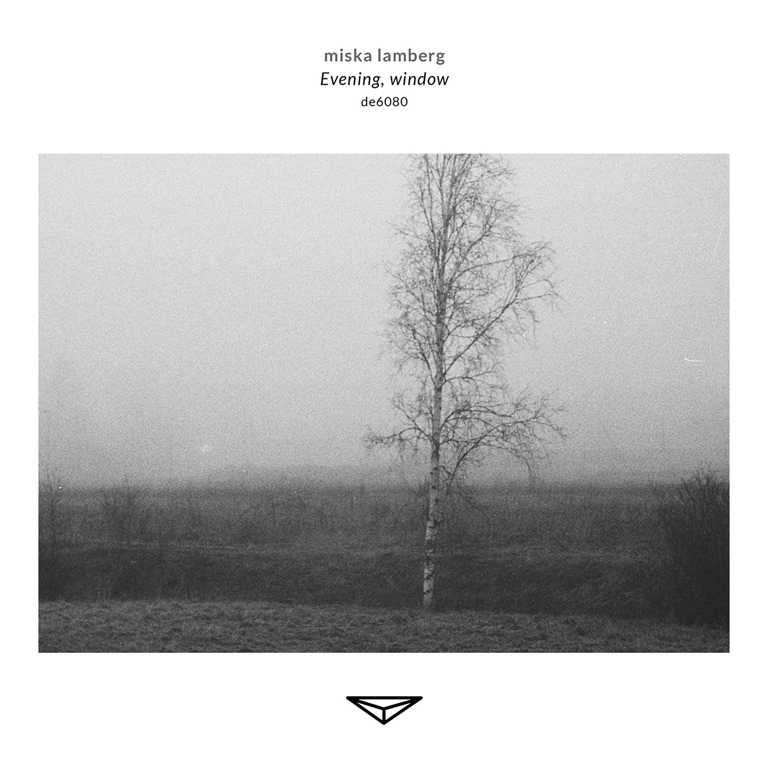
Evening, window is the debut full-length album by Helsinki-based sound artist and ambient composer miska lamberg. Working with intricate field recordings that gather the overlooked moments of daily life – rainfall, distant traffic, animal calls – lamberg threads these textures into compositions that ache with personal memory. On Evening, window, the familiar becomes spectral: fragments of sound blur into melody and mood, capturing the stark melancholy of Nordic winters and the soft violence of remembering.’

The album features some long pieces: four of the six compositions are over eight minutes in duration, and this allows the pieces the appropriate and necessary time to build.

It begins with a metallic clattering. Heavy rain on a tin roof? Perhaps. Then there is a rumble – possibly thunder – but chattering abstract voices and soft, gentle synths drift in a cinematic spatiality and an organ swell gradually comes to dominate as it drifts… Evening, window is a sonic diary of sorts, a compilation of recordings captured in everyday settings as she goes about her life. The nine-minute opener, ‘Half-memories absorb us’ is both immersive and transportative, provoking contemplation. In some respects, the title does more than speak for itself, and also speaks of the way our minds work. And how do our minds work, exactly? Erratically, unpredictably, leaping from one place to another. And we’re thinking one thing while looking at another.

From a certain perspective, Evening, window can be seen to operate within the same field as William Burroughs’ cut-ups, and in particular the tape experiments he made with Iain Sommerville, although the collaging of field recordings and various layers of sound aren’t nearly as extreme here, blending the field recordings and decontextualised samples with carefully-crafted layers of ambience, which maked for a rather more listenable experience. Different objectives through similar intentions, one might say.

There are some haunting, unsettling motifs which cycle through Evening, window: ‘Seeing only faces turned away’ is dark, and listening to the ghostly swathes of ambience which hang dark and heavy is uncomfortable, a repetitive chord sequence conjuring, if not outright fear, then a sense of tremulous trepidation and unease. While Evening, window is a work of lightness and air, it’s also a work of slow, dense weight.

There are children’s’ voices. There are supple strings. At times, the atmosphere is soothing, sedative, but more often than not, there are undercurrents of tension, befitting of a dystopian thriller. Some may consider this to be something of a disconnect from the concept of presenting, or representing, fragments from the everyday life of the artist. But life is strange; the world is strange, and scary.

‘I remember the day the world lost color’ is bleak, barren, conveying the murky gloom of a blanket of fog, while ‘Its monotony is unrelenting’ is the drudgery of life – at least some periods of it – summarised in four words. Anyone who has endured a crap job will likely be able to relate to the sense that life is slipping by while days evaporate trudging through eternal sameness and feeling a sense of helplessness and a loss of identity, a distancing from the self. The sound is muffled, and very little happens over the course of eight minutes of crafted stultification during which the chord sequence of ‘Seeing only faces turned away’ is reprised, only slower, more vague, somehow tireder-sounding. It’s the soundtrack to hauling your living corpse through another dead, empty day – and another, and another, and another.

Evening, window isn’t depressing as such, but it is not light or breezy, and the mood is low and melancholy. It’s a slow, gradually unfurling work which drags heavy on the heart, an album which radiates reflection and low mood. It’s a dose of stark and sad realism, and an album which speaks so far beyond words.

AA

a0509711029_10