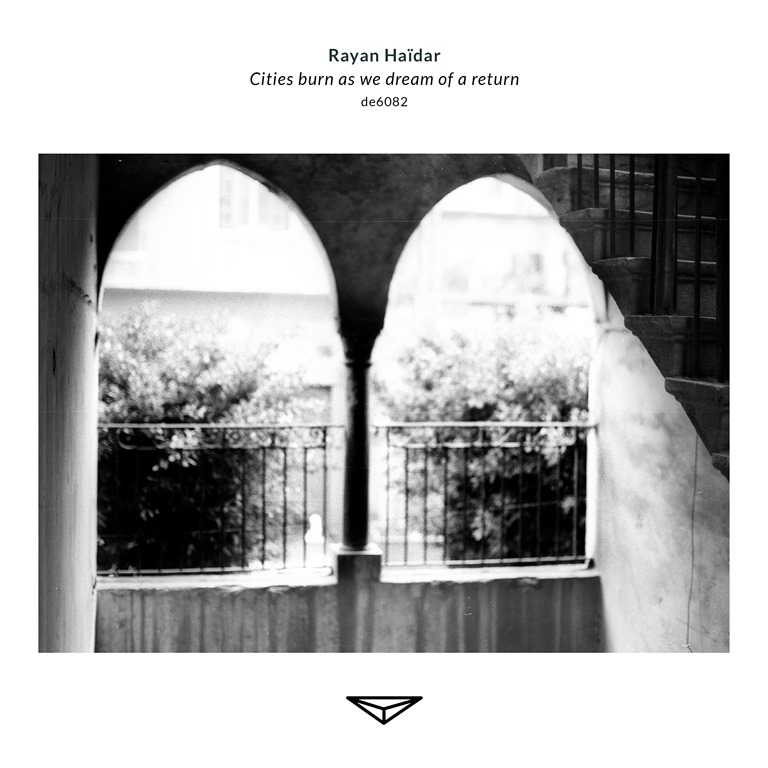
Ivan Pavlov has been releasing music as COH since circa 1997, and in the last twenty-eight years has amassed an immense catalogue which includes some thirty-six albums, often on respected experimental / avant-garde labels like Editions Mego and Raster-Noton. This body of work features a fair number of collaborations. This is his first with ‘the mysterious’ Wladimir Schall, who is no stranger to performing radically overhauled cover versions, not least of all his 2020 release on an endlessly looping cassette with his take on Satie’s Vexations. Suffice it to say, then, that none of the seven pieces on here could be described as ‘straight’ covers. Then again, given the nature of the selected material, how would one go about performing a ‘straight’ cover, and what would be the point, precisely?
As the accompanying notes explain, ‘the two multi-media artists are not content with the mere reinterpretation of their source material, but strive to reimagine it. According to them, the seven pieces on Covers were conceived as “a series of manoeuvres with an ambition to expose the machinery of Music in detail and with utter honesty, without making up for the faults of its traditional instruments or of the compositions themselves.”’
Perhaps the best known and most easily recognisable of the compositions is ‘Merry Christmas Mr Erik’, which opens the album by reworking Ryuichi Sakamoto’s ‘Merry Christmas Mr Lawrence’ as a sparse, almost jazzy work where it’s acoustic guitar which leads before the arrival of piano, which remains at a respectful distance. Not long after, we’re transported into a sparse, foggy trip of piano-led ambience. Perhaps one of the most audacious ‘covers’ is Soii Blanc’, an original COH composition which appeared on IIRON in 2011 – the album which was, in fact, my introduction to the world of COH. This version transforms the sparse electronic piece where experimental synth music meets early industrial grind into a soft piano work that’s as light as a feather but also mysteriously atmospheric through its subtle dissonances which grow with ringing, buzzing tones which gradually disrupt the delicate ripples with digital discord, creating the effect of some form of mechanical breakdown. Then again, ‘Snowflakes’ sees the pair ‘cover’ a ‘non-existent’ original’. It’s evocative: close your eyes and you may well visualise snowfall in your mind’s eye – but then glitches and scrapes cut through the reverie. In the main, it’s subtle, but enough to be disconcerting.
While there’s no clear or specific arc to the album, there is a sense that as it progresses, digital decay and interference gradually erode the graceful atmospheres conjured by piano and acoustic instruments alone – and by the arrival of the final piece, the brief bookend that is ‘Starost ne Radost’ – or ‘Старость не радость’ (joy and sadness), the juxtaposition of scratchy in the vintage sense and scratchy in the ersatz, manipulated digital sense comes to share a meeting and sensation.
Having recently written on the retro qualities of Lowsunday’s latest release, the latest hot landing in my inbox is from another act which is preoccupied with a previous time – and who can blame them? I am painfully aware that old bastards like me constantly bemoan the shitness of the now while reminiscing about the golden era of our youth, and it’s no different from boomers still banging on about The Beatles and the music of the 60s and 70s as if time stopped when they hit thirty or whatever. There is a lot – a LOT – of exciting new music coming out right now, and much of it is pushing boundaries in unexpected directions. I for one will never cease to excited by this. But there is a significant amount of music emerging that draws its primary influences from the eighties and nineties, created by artists who simply cannot be drawn by nostalgia. Falling You are a perfect example.
Metanoia is pitched as being for ‘fans of 1980s 4AD dreampop (This Mortal Coil, Dead Can Dance), ‘90s shoegaze (Slowdive, Lush), or the darkwave / ethereal / ambient-electronic releases of the Projekt label (Love Spirals Downwards, Android Lust). It’s quite a span, but the fact is that this is a release with its inspirational roots well in the past. It pains me to be reminded that 1995 is thirty years ago when it feels like maybe a decade. The cover art of previous releases very much state shoegaze / dreampop, and while this album accompanied by altogether moodier artwork, which may in part serve to reflect the album’s title, it’s nevertheless hazy and evocative at the same time. ‘Hazy and evocative’ would be a fair summary of the album itself, too, and the dreamy / shoegaze elements are countered by some really quite unsettling spells of rather murkier ambience.
It starts strong with the bold swell of steel-stung acoustic guitar and a strong vocal – I’m not talking about a Florene Welch lung-busting bellow, but a controlled and balanced performance that really carries some resonance, and it’s mastered clear and loud… and then things swerve into a more electronic, almost dancy territory. Immediately it’s clear that this is going to be less an album and more a journey, and ‘Demiurge (Momento Eorum)’ immediately affirms this with its spiritual incantations and sonorous, droning rumblings.
‘Alcyone’ is the first of the album’s ten-minute epics, and it uses the time well: that is to say, with shuffling drums, spacious synths and layers of lilting vocals, it’s very much distilled from the essence of The Cocteau Twins, and slowly unfurls with an ethereal grace. A delicately-spun pop song at heart, the extended end section tapers down to a softly droning organ.
While the atmosphere is very much downbeat, downtempo, understated, one thing which is notable is the album’s range: ‘Ari’s Song’ is built around a soft-edged cyclical bass motif, around which piano and synths swirl, mist-like, the drums way in the distance, and even as a disturbance grows toward the end, it’s so far-away sounding, and the song itself, beyond that ever-present bass, barely there, and the same is true of the dank, dark ambient echoes of ‘Inside the Whale’. If ‘Ariadne’ is another shimmering indie tune hazed with fractal electronic ripples, the second ten-minute epic, ‘They Give Me Flowers’ provides a suitable companion piece to ‘Alcyone’, swerving from a brooding country and folk-tinged song with hints of All About Eve, and the album’s final track, ‘Philomena’ effectively completes the triptych, pulsing along gently and dreamily before slowly tapering away to nothingness. It’s a fitting conclusion to an album which at times is so vaporous and vague, it’s barely there – which is precisely the design. But in between the hazy drifts and particle-like waftings, there are some beautifully atmospheric and utterly captivating songs with strong leanings towards the dreamy pop side of indie. In terms of achieving an artistic objective, Falling You have absolutely nailed it with Metanoia.
Woah, wait. 1999 is more than 25 years ago? Logically, I can grasp this. But the fact that lowsunday have existed for some thirty years and have been dormant since 1999 meaning this is their first material in over twenty-five years is still difficult to comprehend. It does very much seem to be a more common occurrence in recent years that bands who existed comparatively briefly in the 80s or 90s are reuniting and returning with not only new material, but strong new material. It may be a rather different league, but the last thing I expected last year was a new album by the Jesus Lizard, and that my first gig of 2025 would involve David Yow flopping off the stage and directly onto my face in the opening thirty seconds of the set. Lowsunday formed in 1994: the year Kurt Cobain died, the year I started university, the year of my first job as a reviewer. It feels like another lifetime. It probably does for them, too.
It may be pitched as a blurring post-punk, shoegaze, dreampop, and darkwave, and also as being for fan of The Chameleons, ACTORS, The Cure, Modern English, Clan of Xymox, Then Comes Silence, TRAITRS, but that thumping bass groove and pumping mechanoid drum beat on the EP’s opener, ‘Nevver’ is as trad goth as it comes. But the squalling noise that envelops the vocals – swathed in echo and low in the mix and taking direct cues from The Cure circa Faith and Pornography – is something else, a melding of My Bloody Valentine and The Jesus and Mary Chain with a dose of early New Order, Danse Society, and The Chameleons swirling around in there. And out of this swampy post-punk soup cocktail emerges a song of quality which really recreates that early eighties dark groove.
‘Call Silence’ goes straight for the sound of The Cure circa ’83, the singles on Japanese Whispers. And that’s cool: if you’re going to lift from early 80s gothy pop, you could certainly do far worse than ‘Let’s Go to Bed’ and early New Order as an inspiration – the bassline is pure Peter Hook. The production – and the strolling high-fretted bass work – really hits the spot, although it should be perhaps noted that they really do sound like a band born in 1982 rather than 1994. I guess they were retro before their time.
Paired with chiming guitars, it’s the monster snare smash that really leads – and grabs the attention on ‘Soft Capture’, a song that unashamedly draws on Ride and My Bloody Valentine, and pairs that wash of sound and monotone vocals with a drum sound straight from 1984. The fall from favour of the dominant snare feels like a loss, but there’s no time for lamentations as they pile in with another claustrophobic read goth groover in the shape of ‘You Lost Yourself’. Here., I can’t help but feel the vibes of late 90s goth acts like Suspiria and the scene around that time. It’s well-executed, with fractal guitars tripping over pumping drum machines and throbbing bass.
Closing with single cut ‘Love language’ sees the band strive for low-key anthemic with dreamiest and most overtly shoegaze song of the set. With the vocals drowning in a sea of reverb amidst a swirl of guitars, its detachment is its emotional power, perversely enough. And then, unexpectedly, it stops.
Everything about the White EP is simply magnificent – the way the songs are composed and played, the production, the overall feel. And while retro is all the rage – and has been for a while now, since postmodernism has eaten itself and the entire world has collapsed into endless recycling and nostalgia for ersatz reimaginings of golden bygone times. But sometimes a release will appear, seemingly from nowhere, that radiates a rare authenticity, and reaches the part others don’t. Lowsunday’s White EP is one of those.
In the last few years, CD box sets have become quite a thing. And I for one am a real fan. It’s not just about ‘fuck Spotify’ or the realisation that stuff has a tendency to disappear from streaming services at no notice – something true of Netflix and other TV streaming services, too. But, it is a fact that if you don’t have something physically, in some form or another, even if it’s only a digital file, you don’t have it, and you certainly don’t own it. But not all CD box sets are equal, and not all serve the same purpose. Much as I’ve come to appreciate the ’five albums’ sets and the like as instant collection fillers when it comes to acts I’ve previously managed to skip for whatever reason, they’re beyond stingy on bonus material. When it comes to releases for fans, releases like the monster boxes with all B-sides and bonuses galore, such as those by Fields of the Nephilim and The March Violets have been far more exciting.
Industrial Overture: Studio & Live Recordings 1982-1985 is definitely exciting. It’s no simple repackage of the albums, and the chances are most people – even the staunchest fans of Test Dept – don’t own the majority of the material on this one, consisting as it does primarily of scarce material, outtakes, and Peel Sessions.
Industrial Overture: Studio & Live Recordings 1982-1985 consists of 42 tracks across 4 CDs and also available digitally. It’s a document of their earliest, most abrasive period – not that they exactly mellowed in the years after, as perhaps their most commercially successful album, The Unacceptable Face of Freedom (1986) attests, and includes a first ever reissue of the group’s 1983 cassette-only debut album Strength Of Metal In Motion, the classic Ecstasy Under Duress and Atonal & Hamburg albums (both unavailable for over three decades), plus a disc of hitherto unreleased studio recordings that incorporate two sessions recorded for the John Peel show on BBC Radio 1.
As the notes inform, ‘In total, 26 tracks are new to CD and digital formats, of which 12 have never been previously available at all. All contents have been compiled by Test Dept and are newly remastered by Paul Lavigne (Kontrast Mastering)’.
Disc one gives us Strength Of Metal In Motion – a collection of raw live recordings. The first five were recorded at Albany Empire, Deptford, in August ’82, and it’s fucking brutal. Even remastered, it has something of a bootleg sound quality about it, that muddiness that’s particular to 80s recordings. In many respects, this adds to the appeal here. It opens with the dissonant blasts of harping faux-brass blasts of ‘Last Rites’ – heraldic, but askew – before giving way to the pummelling percussion and shouting of ‘Shockwork / Workshock’, which is brief but brutal. ‘Prokofiev’s Dream’ is a full-on assault of clanking percussions with occasional horns, before ‘Drum and Body’ drops a shard of industrial punk noise, with rabid vocals-riding a wave of the most relentlessly aggressive beats. The dark ambience of ‘Death of God’ is nothing short of purgatorial, and showcases a different side of the band. Four more of the thirteen tracks were recorded at Temperance Hall, Newbury, four months earlier, and with samples, synths, and drum machines flashing in all directions, their debt to Cabaret Voltaire is clear there – as is the sense of their future direction. That said, ‘Kindergarten’ is pure Throbbing Gristle, laced with heavy hints of Suicide and the bibbling synths of Whitehouse. But the wayward experimental jazz elements are also strong. Overall, this is the sound of punk in a head-on collision with Throbbing Gristle and drumming that sounds like they’re battering the shit out of sheet metal. Unless you were actually there, one can only imagine what it must have been like to witness any of these early shows.
Ecstacy Under Duress was initially released in 1984 and is another (largely) live compilation consisting of recordings which again were captured in ’82 an ‘83, although this time featuring future debut single ‘Compulsion’. The compositions feel more evolved, and perhaps as a consequence, more honed in their attack. ‘Hunger’ builds to a punishing climax and sets the tone. The aforementioned ‘Compulsion’ is relentless. Samples and crashing percussion dominate the stark industrial landscape, and the intensity of these performances translates well despite the separation of time and medium. I suppose it’s here we can really identify the point at which Test Dept carved a path which departed from their industrial predecessors and peers in their pursuit of the most punishing percussion. Only Einstürzende Neubauten really compare, but even they’re not quite as up-front with the hammering beats, despite their love of sledgehammers and metallic objects. The twelve-minute ‘Efficiency’ takes the percussive assault to a whole other level, leaving the listener feeling pounded, pummelled, bewildered.
The third disc offers some respite by virtue of being studio-based and therefore not having that muffled 80s live sound to the recording – although it’s marginal. ‘Blood and Sweat’ – one of three demos from 1982 – is primitive and raw and very, very drum-orientated: the vocals are relegated to the back of the mix, anguished shouting buried in a barrage of noise. It’s cruel and it’s harsh and it’s heavy, and the demo version of ‘Shockwork’, recorded during the same session is similarly hard on the ear, with its combination of machine-gun drumming and squalling avant-jazz tones.
The two Peel Sessions, recorded in ’82 and ’85 shows a honing of the sound: between the two sessions, they would release their debut album proper, Beating the Retreat, which included contributions from F M Einheit and Genesis P. Orridge, as well as Shoulder to Shoulder, with the striking miners choir, and which would finally see the release of an official studio version of ‘Shockwork’ – another version of which featured in the 1983 Peel Session, which comes on as heavy and mercilessly brutal as Swans on Filth – which was released the same year and channels the pain of life enduring the crushing slog of capitalism.
AA
Of the four discs, this perhaps has the greatest impact, and not just sonically. Atonal, anguished-sounding vocals reverberate vast sonic swamps dominated by the ever-present barrage of industrial-strength percussion. It’s relentless in intensity, and the effect is cumulative. Between the pulverizing six-and-three quarter minute ‘Efficiency’ (which feels in some way to be their answer to Throbbing Gristle’s ‘Discipline’), and the six-and-a-half-minute ‘Red Herrings’ version of ‘Gdansk’, with the disorientating mutter of ‘State of Affairs’ in between, this is a sustained assault that hammers blows from every direction.
AA
Disc four, which contains the Atonal & Hamburg album – released in 1992, but documenting two live performances from 1985 marks a significant shift from the earlier live shows. Containing material drawn predominantly from Beating the Retreat and The Unacceptable Face of Freedom, the punishing volume translates well, and the force is more controlled. There is structure, too, building from dirge-like crawls – again comparable with Swans around this time – quickening the pace and the all-encompassing ferocity of the percussion.
Those familiar will likely already know, but in addition to providing a truly magnificent document of Test Dept at their most uncompromising early best, Industrial Overture shows how they were right at the heart of an emerging zeitgeist spawned in the wake of Throbbing Gristle, as represented by the likes of Neubauten, Cabaret Voltaire, Swans… this was not a scene or a movement, but a disparate array of artists channelling frustration at the dark underside of a time when the charts were dominated by the likes of Duran Duran and Culture Club. In pop culture, the early 80s is presented and remembered as being glitzy, aspirational, fun. But that was not the lived reality of many. Test Dept may have been underground not least of all because their racket was largely unpalatable to the majority. But as Industrial Overture evidences, they were providing the soundtrack of the grim realities of working life, drudgery and trudgery. Essential listening.
I’m not being flippant or facetious when I say that we don’t contemplate or discuss death nearly enough. It’s only natural that we – all of us – are scared by the prospect, be it of losing a loved one, or one’s own demise. The concept of no longer existing is beyond comprehension. No-one has ever reported back on what happens afterwards, although the notion of an afterlife is at the core of many faiths and belief systems, and people believe because it gives hope. the alternative, being a definitive end followed by absolutely nothing, is almost too much to bear. And so the tendency is to bury heads in the sand – metaphorically – and to assume – especially in youth – that we’re immortal.
But we are not. I myself began to feel an awareness of death in my youth, quite inexplicably. On reaching twenty-five, I became obsessed with the fact I had attained a quarter of a century and the sheer pace of the passage of time. Since then, I have lost all of my grandparents, an uncle, several friends I was at school with, and my wife. I write this simply as a matter of fact: death is one of the few facts of life, but one we seem programmed to deny the very existence of, let alone its proximity. I see so often, comments on the deaths of people in their sixties, seventies, even eighties, that they were ‘no age’ or ‘taken too soon’. This is outright denial. We consider people in their sixties to be ‘middle aged’. They’re only middle-aged if they’re going to live to a hundred end twenty: for most of us – and again, it’s uncomfortable to accept it – but 37-40 is middle aged.
So, they may be young – still in their early twenties – but Norwegian quartet Fanatisme, who ‘channel the lunatic, forest-worshipping spirit of early Ulver and Darkthrone, merging it with the gothic pulse of Christian Death and The Cure’ are presenting on their debut album ‘a fiercely individual rush of post-punk-infused black metal, a spine-chilling celebration of humanity, the beauty of life, and the inevitability of death.’
And this is interesting: a lot of goth and metal hangs its mood on the death thing, to the extent that death is often romanticised, but without really taking a grip on the reality. On Tro, håp og kjærlighet, Fanatisme explore a vast sonic and emotional range, which seems befitting of the topic. Not that I can comprehend the lyrics: even if they were sung in English, this would be an absolutely impenetrable snarl. But you get the sentiment and the sheer force of Tro, håp og kjærlighet, which is at times rabid.
The first piece, ‘Stannhetens Slor’ is clearly designed as an intro, standing at under three minutes, and it’s a soft, drifting ambient work for the most part – but near the end, it builds and swells and culminates in an anguished scream of treble, a drone that grows to a howl. And then the guitars happen: ‘Nordens Eteriske Sommer’ slams in, a quintessential black metal blast of raw-throated vocals howling in a tempest of squalling sludgy guitars and a ragged, shamelessly underproduced rhythm section. ‘Kjrlightetsbrev til Vren’ actually sees the band find a rare groove, albeit punctuated by rabid, rasping vocals, while ‘Manetroket’ is a full-fat, heavyweight trudger of a riff monster.
Despite the complete impenetrability of the lyrics, this is an album that has impact and has a certain resonance. And it works. I wouldn’t recommend listening to this on your deathbed, but I do recommend listening. The last song finds them really hitting the spot, and hard. ‘Livet r en dans p Posens Tornet’ is one of those colossal epis that impossible to deny. The guitars race hard and fast a streaming metal churn of energy which rushes forward, its urgency dominating the whole blistering maelstrom, bringing an expansive, and heavyweight album to a racing climax. And whatever is lost in translation here, Tro, håp og kjærlighet is a high-impact release.
The Ruts always stood out amongst the class of ’77 for being that bit different. Sure, early singles ‘In a Rut’ and ‘Staring at the Rude Boys’ were quintessential rabble-rousers, although clearly more sophisticated than the standard meat ‘n’ potatoes pub rock turned up loud kicked out by many of their peers, and on their debut album, The Crack (1979), classic punk bangers like ‘Babylon’s Burning’ sat alongside straight-up dub tunes like ‘Jah War’ and moody cuts like ‘It Was Cold’ which were closer to post-punk than punk. Commercially, they’re nowhere near The Sex Pistols and numerous others, and never were, despite ‘Babylon’s Burning’ going top ten in the UK, but that’s likely because they were never as packaged and required that bit more work to fully appreciate.
What’s even more remarkable is that since reforming in 2007, they’ve expanded their recorded catalogue significantly, with the second exploratory dub Rhythm Collision album, the fiery, rockier Music Must Destroy, and, most recently, Counterculture?. They’ve remained attuned to current affairs and done so without falling into that common pitfall of old folks trying to be relevant. But then, this is a band who were staunchly anti-racist and anti-nazi from their very birth, even if not necessarily in the songs themselves – and where we find ourselves now means that their stance is as relevant now as it ever was.
Another thing is that while they tour frequently, they keep things varied: the last time they played York, they were touring Electracoustic Volume One – a collection of not-quite acoustic reworkings of songs from their back catalogue. It was a fairly sedate performance, with Segs and Leigh Heggarty seated, as they played two sets, the second more electra- than acoustic, the songs interspersed with some moderately lengthy anecdotes. It felt fitting for a band who had – shall we say – accumulated some years, forty-five years on from the release of that seminal debut.
Tonight is a very different proposition, and with a very different set-list. For a start, it’s fully electric, and while the obvious songs that simply have to feature in every set are present and correct, there’s a substantial portion of the set devoted to newer material – ‘Psychic Attack’ is a standout – and even a brand new, unreleased song, ‘Bound in Blood’. As a consequence, there’s no ‘H-Eyes’ or ‘This Music Must Destroy’ – but we’re rewarded with rarely-performed deep cuts like ‘Backbiter’ and other classics such as ‘Love in Vain’ instead.
I did feel a niggle of concern when Ruffy shuffled onstage with a stuck and looked awkward getting himself positioned on his stool, but once in place, he was at ease, and his drumming was nothing short of magnificent. An old hand, for sure, he’s laid back and knows his kit like the back of his hand.
There’s significantly less chat this time, too. Ruffy does briefly reminisce about his childhood before the encore – having been born in York, it’s clear he still feels an affinity and affection for the city, and while The Crescent is a top venue that always brings them a voluminous and enthusiastic turnout, one can’t help but wonder if this is also a factor in their tour booking. But less chat equals more focus on packing in the songs, and they play every last one with total commitment. The musicianship is outstanding throughout, again serving as a reminder that The Ruts could always play – I mean really play: not in a wanky way, but the detail to the guitar parts, the basslines, is remarkable, and they’re so, so tight: it’s no overstatement to say you won’t see a better live act. They pack ‘In a Rut’ (still without any debate, one of the best punk tunes ever), ‘Jah War’ and ‘Babylon’s Burning’ Rut’ (also, still without any debate, one of the best punk tunes ever) into the back-end of the set, and after starting the encore with the comparatively gentle ‘Pretty Lunatics’, wind up with a rip-roaring rendition of ‘Staring at the Rude Boys’.
This is one of those shows which is pure quality, and thoroughly uplifting, energising. Yes, they played the hits, but this was more than some nostalgia trip. This was a night seeing a band as good as they’ve ever been. As the lights went up, there was a palpable buzz about the venue. They’ve still got it, alright, and they still matter. Never surrender!
Before we arrive at the present, let’s rewind a bit. Everyone likes some backstory, a hint of prequel, right? So we’re going back to 2018, and the arrival of the Crusts EP by Pak40, a band named after a German 75 millimetre anti-tank gun, and a review which I started by saying that ‘I practically creamed my pants over Pak40’s live show in York, just up the road from my house, a few months back. I didn’t exactly know what to make of them, which was part of the appeal – they didn’t conform to any one style, but they were bloody good.’ 2021 brought the arrival of debut album Bunker, a heavy slugger by any standards.
They’ve always been a band devoted to sonic impact, and since guitarist Leo Hancill paired up with Cat Redfern to form Teleost and then relocated to Glasgow, Pak40 have been resting – but not giving up or growing tame. And more than anything, that time out has been spent in contemplation over intensifying their sound.
It may be that production plays a part, but Superfortress goes far beyond anything previous in terms of density and intensity. This is not to diminish the potent stoner riffery of Bunker, which contained some mammoth tracks with some mammoth riffs, but Superfortress is a major step up. Sure, Bunker was all the bass, but here, they elevate the volume and intensity in a way which replicates the thunderous, ribcage-blasting, ear-flapping force of the live show.
Four years on from Bunker, Superfortress very much solidifies the Sabbath-influenced aspect of their hefty doom / drone sound with the reverb-laden vocals, but also ratchets up the monstrous weight of previous releases by some way.
The first track, the ten-minute megalith that is ‘Old Nomad’ is as heavy as it gets. The drumming is relentless in its weight and thunderous force, but the bass… Hell, the bass. It lands like a double-footed kick to the chest, even through comparatively small speakers, replicating the impact of the live sound on the current tour. ‘Crushing’ may be a cliché but Pak40 deliver a density of sound that just may smash your ribs and smash your lungs. The title track begins tentatively, the riff only forming at first, before the drums and distortion kick in and from then on it’s massive, even before the vocals, bathed in a cavernous reverb arrive. Its low and it’s slow and it’s doomy, but it’s also earthy and rich in that vintage folk horror doom vibe, and it’s the slowed-down Black Sabbath inspired riffing that dominates the third and final cut, the feedback-squalling instrumental ‘Ascend’.
There’s something wonderfully old-school about this – but at the same time, it pushes things further in terms of weight and volume. And in those terms, Superfortress sees Pak40 push those things to an extreme. This is a monster.
Back in September, Navigator Art and Performance hosted ‘A Gig for Gaza’ to raise funds for MAP (Medical Aid for Palestine) and PCRF (Palestinian Children’s Relief Fund). At the time, I wrote, ‘I shouldn’t be here. This event shouldn’t be happening. No, I don’t mean there shouldn’t be a bunch of York acts performing a packed bill on a Sunday evening in front of around two hundred people, but the reason it’s happening, the circumstances meaning we need a gig for Gaza’. But here we are again. The genocide continues. And as the government continue to stifle protest against the genocide– which for some reason they find more problematic than the mass killing of civilians, largely by arresting pensioners with placards, events such as this show that support and solidarity exists in ways which may be less headline-grabbing, but no less significant.
This time around, it’s the curators of the consistently wonderful Utterly Fuzzled events who are doing their bit, this time with a fundraiser for Medical Aid for Palestinians. It can often feel like that as artists, or individuals, we’re powerless in the face of this, and in many ways, we are, but these are the ways we use our platforms and what capacity we have to do something – because something, however, small, is infinitely better than nothing.
It’s a cold and very wet Saturday night in December. The kind of night that would validate the narrative that music venues go bust because they’re not supported, and people want to see bands they know over local acts and so on… yes, it’s been cold and wet in York for a solid month now, and every time I leave the house to go to an event I experience a depressing sense of déjà vu.
One thing that will never engender a sense of déjà vu is the range of acts on offer at a typical Fuzzled event, and this is no exception.
Efemel should have been further up the bill, but the demands of parenting young children don’t sit so easily with being in a band – meaning that anyone who wasn’t down early doors missed out on a treat. On the surface, they’re an indie rock act, who play sad but optimistic and heartfelt songs, with a dash of country in the mix. But that’s only half the story: fairly ordinary on paper, but on stage, they’re rich in quality, with nuanced and well-considered arrangements and a high level of technical proficiency, with a lead guitarist who demonstrates a rare understanding that less is more.
Efemel
Kar Pouzi proved to be an absolute revelation – at least to me. Anyone who is a regular reader will know where I’m coming from here, and I felt a buzz of excitement from early on in her unashamedly strange and arty set. Switching between baritone saxophone and unusual microphone technique, Helen Papaioannou offers a performance that’s captivating – for me – and perplexing for many. Her setup involved laptop and pedals, with undulating oscillators and drum machines accompanying her unconventional approach to music-making. There’s a lot of breath and discord here, and – at times – some blasting noise. Kar Pouzi sits on the fringes of jazz, with the saxophone and vocals channelled through various processors and loops resulting in music that belongs to the early, evolutionary stages of industrial as represented by Cabaret Voltaire and some of Throbbing Gristle’s work.
Kar Pouzi
Landing in the middle of the bill, Raucous Dorks are a bit ramshackle, with their set marred somewhat by a very trebly guitar sound and, despite spending some considerable time passing the tuner back and forth, some serious tuning issues. There were moments which offered glimmers of entertainment, but they really didn’t seem to be firing on all cylinders on this outing.
Raucous Dorks
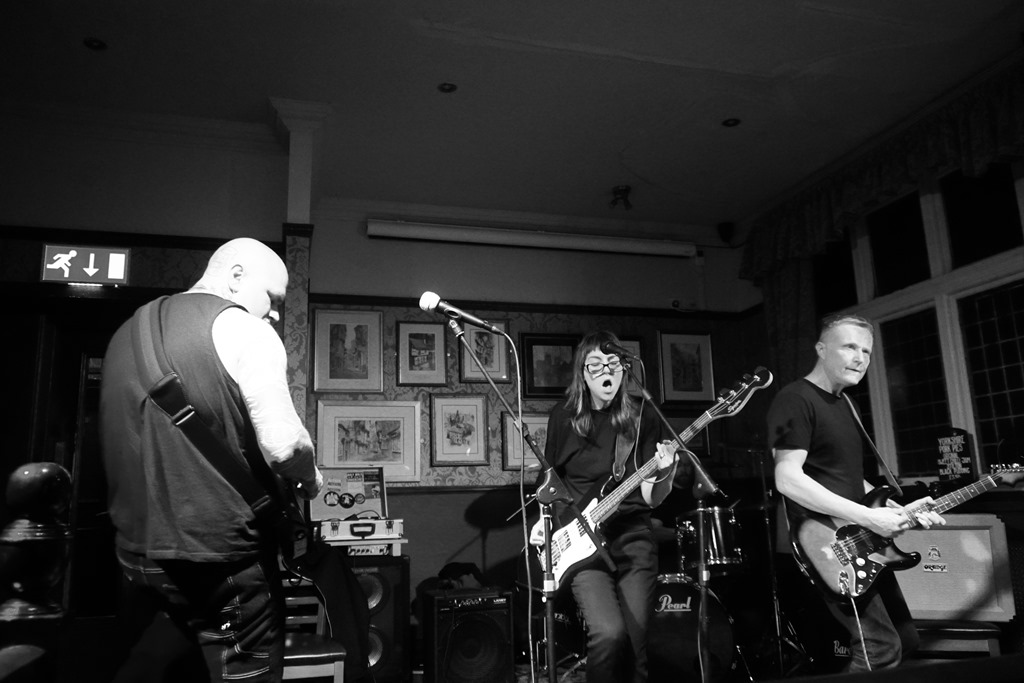
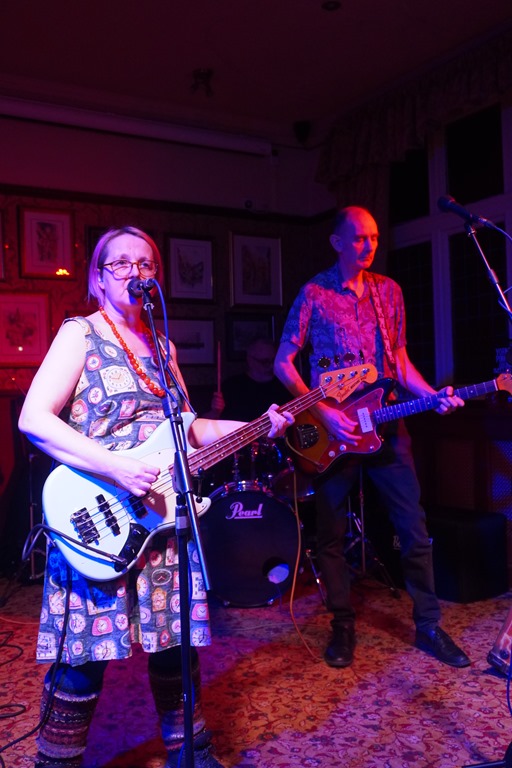
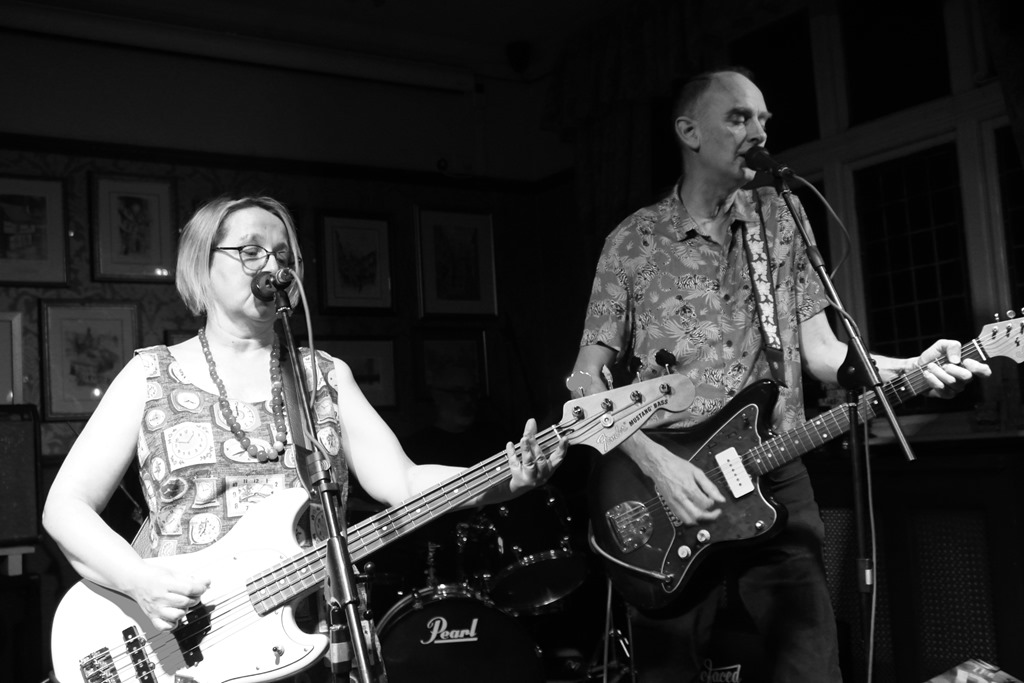
In contrast, Knitting Circle never fail to deliver, and seemingly find additional cylinders to fire every time they play. Even though reduced to a three-piece in recent months, they charge forth, sonically undiminished, Pete Dale’s choppy Andy Gill / Wilko Johnson influenced guitar slicing across Jo’s strolling basslines. Their songs are songs which touch on a swathe of sociopolitical issues and – now (semi) famously, after a BBC feature – issues rarely broached, such as the menopause, the topic of ‘Losing My Eggs’. Because things are running behind time, their set is abridged, but they still manage to open with a new song, closed their set with the rousing and apposite ‘Safe Routes’ and pack in no shortage of established corkers along the way. They’re raising awareness of menopause, they’re anti-fox hunting, they’re opposed to genocide and war in general, and are clearly a menace to society. They absolutely get my backing, and are without question among the finest of the city’s representatives, at a time when York is spawning some fantastic bands.
Knitting Circle
Headliners Fashion Tips aren’t from York, but they’re pretty fucking special, as my coverage of their releases and their last York appearance supporting Thank in April last year attests. They’re presenting a different lineup here, and are stripped back to a three-piece. And tonight’s headlining set is barely half an hour in duration, but it’s a brain-frying frenzy of explosive electronica and instruments that sound plain wrong at times – by which I mean the bass sounds like brain-whizzing scribbling synth overloading with treble on minute before switching to gut-blasting low-end the next while the guitar delivers both shards of trebly distortion and weirdy noises more commonly associated with analogue synths. The chaotic, cacophonous racket is all driven by the most frenetic, spasmodic blasts of drum machine. The band positively crackle with energy, and look like they’re having a blast as they pack the songs so tight there’s absolutely no time to catch a breath. The effect is a short, sharp shock, and makes for a dizzying climax to a stacked lineup – and all in a good cause, too. Free Palestine!
This last week or so has been good for noisy, weird, abstract, experimental stuff. It’s pure coincidence, but these things to very much arrive in waves. There’s no thyme nor reason to it: Some weeks I’ll find my inbox abrim with guttural metal – and I’m by no means complaining – but sometimes I will crave noise, and there is none. Not proper noise, anyway. That said, this isn’t abrasive, full-on noise, but a work of abstract ambience dominated by field recordings, mostly of birds and billowing winds.
The last klôvhôvve release, which came out in the spring of 2024, was recorded live in Nottingham just a few weeks previous, and similarly this one was recorded live in November of this year. That’s about all you’re likely to learn with a dret release, although the accompanying notes are generous in their praise to the album’s contributors: ‘Thanks go to the wonderful animals and nature of Hammarö whose sounds you can hear being manipulated by klôvhôvve’. This is laudable: we don’t thank or celebrate nature nearly enough. There are gulls aplenty here, among other creatures less obvious by their calls (at lest to me).
It begins with the rumble of thunder, and it grows closer and more menacing. And then comes the rain. I assume it’s the rain. I’ve heard enough of it in the last couple of months. It feels like it will never stop raining. Again. Öljud rumbles and creaks and billows: a lot of this sounds like heavy rain and high winds, conditions which simply make me want to hibernate rather than reconnect with nature. There are quack and quarks, and all kinds of trilling sounds. Nothing much happens – if anything, really. It doesn’t need to.
Is it ok to drift off to an ambient work? I would have to argue that when listening to a studio work that’s particularly tranquil, it’s a compliment rather than an insult. Öljudis subtle,rumbling. Not a lot happens, and what does happen takes place slowly. Very slowly.
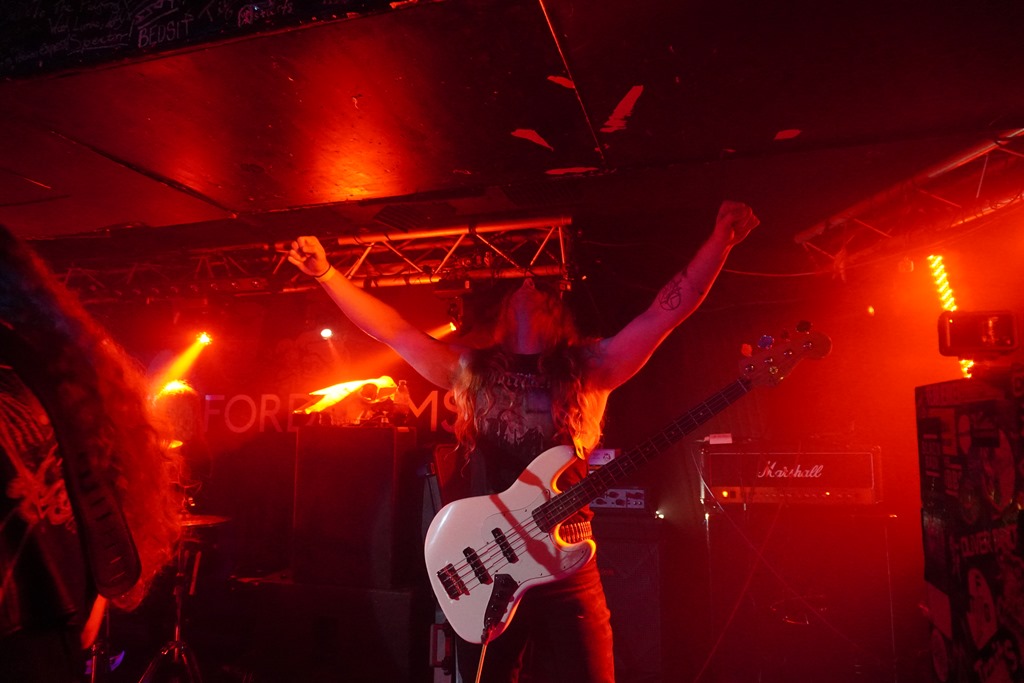
It’s a cold and very wet Thursday night in December. The kind of night that would validate the narrative that music venues go bust because they’re not supported, and people want to see bands they know over local acts and so on – if the place had been quiet. But there’s nothing quiet about tonight., in terms of turnout or decibels. Ok, it’s not rammed, but it’s respectably busy, and as for the volume… These guys take it all the way to eleven.
The promoter’s strategy of booking a local / student / uni band to open up is one that rarely fails, and there’s a significant turnout early doors for ATKRTV. It helps that they’re good, albeit an acquired taste and not your average uni band. Operating in the classic power trio format, their primary inspirations are clearly US noise rock and grunge – there’s a bit of the Jesus Lizard here, a dash of Sonic Youth and Shellac there – as well as UK 90s noise that makes nods to the likes of Fudge Tunnel and Terminal Cheesecake – but there’s a lot going on, with hints of avant jazz in the blend, too. They’re a bit rough round the edges, but there is a musical style which is forgiving of this, and the jagged jarring juxtapositions of squalling guitar work with some meaty bass work evidences a technical ability beneath the surface of the feedback-strewn tempest. And while the banter might need some work, the songs are a glorious angular explosive racket, and they give them a hundred percent. And this is why it’s always worth getting down early doors. Every headliner was a support act once, after all.
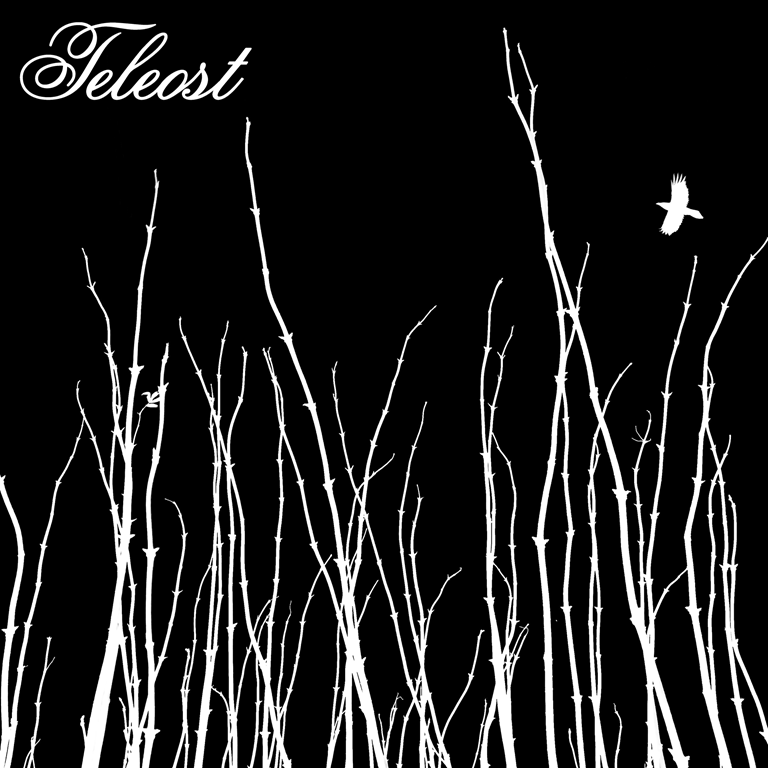
In my recent review of that debut album, Atavism, I commented on how the challenge would be for them to replicate the live sound in the studio. This is because their life sound is simply immense. There really is no other word for it. And this is not volume simply for the sake of it: this is volume as an expression, volume which renders the music physical, volume without which certain frequencies and tonalities, so integral to their sound, would not be achievable. Their performance in this same venue back in February was spellbinding, and I came tonight in the hope of replicating that experience. And oh yes, I did, and then some: Teleost seemed to take things to the next next level tonight.
Theirs is a subtly different take on the whole droning doom / stoner form, incorporating almost folky elements in the way that more recent Earth albums do. And instead of being solely about bludgeoning riffery – and hell, there’s plenty of that – there’s a rare attention to detail, not just in the delicate picking and soft cymbal splashes in the quieter moments, but in the full-spectrum sonic experience they conjure. And yes, conjure is the word: this is a world of magic made with a mystical blend of musicianship, amps, pedals, and something else quite indefinable. The way Leo Hancill uses a standard guitar, played through a substantial but not extravagant pedal set and two amps, to cover the range of both guitar and bass is spectacular in itself, but what really makes their sound unique, and it’s so easy to lose yourself in the timbre and texture, the way the sounds reverberate against one another to create this sensurround experience.
Teleost
Once again, I find myself truly mesmerised by Cat Redfern’s ultra slow drumming. What’s most remarkable is how effortless she makes it appear. Granted, her sticks are batons, but she is still an immensely hard hitter please with absolute precision. Yet she plays with an order of serenity, her expression calm, almost a smile, although it’s clear that’s behind this is intense concentration, and perhaps an element of telepathy between herself and Leo. Certainly the intuition between pair is remarkable, and no amount of rehearsal alone can achieve this level of tightness. The way they navigate the peaks and troughs, spinning elongated quiet passages, where they reduce everything to a hushed hum and the tinkle of a cymbal before bringing in a cataclysmic riff with pinhead precision is nothing short of phenomenal. And for all the noise, the experience is remarkably calming.
Before Teleost, there was PAK40. But with basis / vocalist Andy Glen now resident in Germany, and Leo Hancill living in Glasgow, activity from this former York duo is now extremely rare. That they’re touring with Teleost, having released a new EP simultaneous with the Teleost album makes economical sense, but also represents a significant feat of co-ordination.
It’s not difficult to identify the origins of Teleost when listening to pack 40. They’re certainly slow and heavy. But their style draws more overtly on the Sabbath-based doom sludge template, and there much more overtly metal. In places, they present a sort of blackened New Age metal hybrid. There’s also something more direct about their drum / bass combination. But oh, that bass. The thick, tearing distortion when the riffs kick in are agonisingly close to brown note territory: you feel your ribs rattle and your skin quivering.
In contrast to Cat Redfern’s zen drumming, Leo drums with his face, and in contrast to Hanclil’s slow nodding guitar style, Andy Glen goes all out with some unrestrained headbanging as he unleashes the most pulverising bass riffs. PAK40 are harder, and more abrasive. And this is why the double-header works: for all of their similarities, the two bands bring different shades of heavy. And they’re both intense, physical forces.
PAK40
I babble some shit to people on the way out. I think I got away with it, because everyone is equally dazed. We’ve been blitzed, blown out of our minds and shaken out of our skins tonight by a musical experience that borders on transcendental. It’s a cut above your average wet Thursday night in December, for sure.