Archive for the ‘Live’ Category

Christopher Nosnibor

The Wonkystuff nights to date may have been a shade sporadic, but that’s what happens when the organisers have day-jobs and families, and more importantly, what they’ve lacked in regularity, they’ve more than compensated in quality, and that’s a major reason why there’s such a respectable turnout to a gig midweek, mid-January, in York. There’s also the warm, welcoming vibe: these nights may be musical showcases, but they’re also a coming together of an oddball community, where we’re all misfits together and it feels good and feels like home. Tonight’s lineup – as usual – demonstrates John Tuffen’s skill for bringing together acts who provide a satisfying balance of contrasting and complimentary.

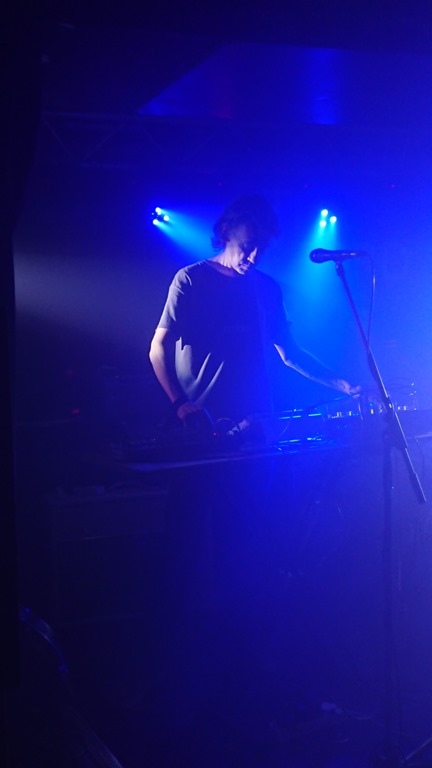
It’s the Wonkystuff House Band – a collective rather than a fixed entity, tonight comprising Tuffen alongside Ash Sagar and Simon Higginbotham – who warm things up with a set consisting of permutational repetitions delivered by multiple vocals, delivered in a drab monotone over repetitive beats. Comparisons to Can, Cabaret Voltaire circa ‘Nag Nag Nag’, The Fall, Flying Lizards, Girls vs Boys, Young Marble Giants, and the more contemporary Moderate Rebels all make their way into my notes as I watch them crank out vintage synth and drum machine sounds. Cyclical bass motifs and whizzing diodes fill the air as they sit and twiddle knobs and read lyrics from clipboards and the historical leaps into the present for a while.

DSC_3198[1]

Wonkystuff House Band

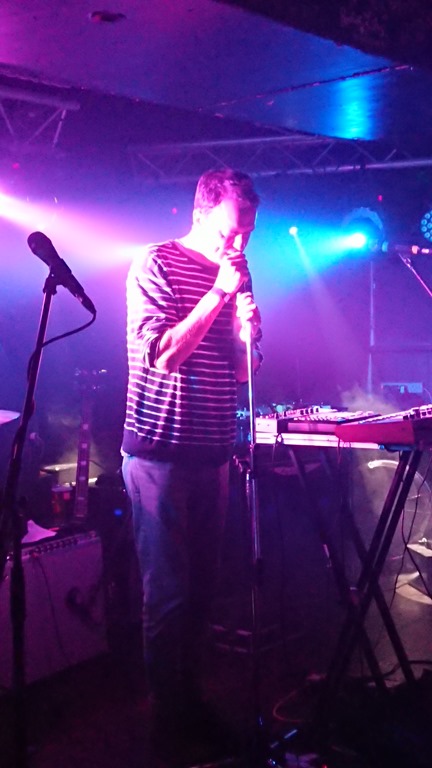
The start of TSR2’s set crackles and pops fireworks. The trio hunch over customised kit with wires all over to create warped undulations and machine gun fire beats that batter the speaker cones. The set builds into a dense, murky trudge. The second track, ‘What will be’ is more co-ordinated than the opener, and is solidly rhythmic, mechanoid and spacious, and metamorphosises into some kind of glam reimagining of Kraftwerk via DAF. Heavy echoes and tribal beats dominate the third track, and they very much find their groove at this point, at least for a spell, before the construction grows shaky despite solid foundations. Perhaps it’s the sheer ambition of layering up so much at once that’s difficult to keep together. Despite this, the discord and dissonance are part and parcel of an intriguing set.

DSC_3201[1]

TSR2

Rovellasca takes the stage, quietly and understated and stands behind a bank of kit. So far, so standard. The set begins with deep, dark, rumblings, and very soon builds into something shatteringly immense. It’s dense. It’s loud, and fills the room like a thick, suffocating smog. The sound is thick, immersive. Time passes. Unexpectedly, elongated mid-range notes sound out and the underlying dense noise builds. I’m no longer listening: my entire body is enveloped. This is the effect of sonic force. Noise wall without the harsh. Burrs of static, pink and brown noise lurk in the immense billowing noise. The shifts are subtle, and gradual, but present over the course of the single, continuous half-hour piece. People start to become visibly uncomfortable after a time others vaguely bored. I’m loving it, and could listen all night. A slow fade to finish. The hush is deafening.

DSC_3204[1]

Rovellasca

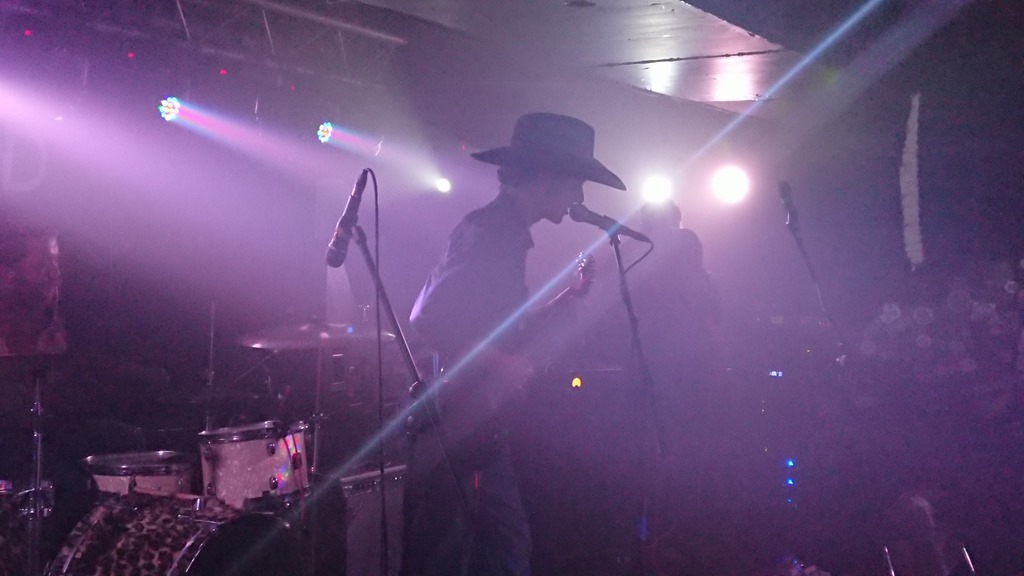
It’s a hard act to follow, but See Monstd – the new musical vehicle of radiofreemidwich’s Rob Hayler is an inspired choice, in that it represents something completely different that thus prevents any risk of comparison. There’s a lot going on here: the set starts with a sample, then breaks into what my notes describe as ‘wtf noise’. It subsequently settles into heavy harsh ambience, with dense, grating drones providing the body of sound, with swerves off trajectory for spells of audience participation, with a phone being passed around for members of the crowd to repeat lines from the sheets circulated prior to the set. This is one of those performances where you never know quite where it’s going to go, and is all the better for the element of unpredictability.

DSC_3212[1]

See Monstd

And this, in a nutshell, is everything that’s great about the Wonkystuff nights.

Christopher Nosnibor

In what has been a difficult time for small venues – meaning it’s also been a difficult time for bands who aren’t massive to get gigs – The Fulford Arms in York has gone from strength to strength and while other venues have – sadly – come and gone in the city they’re not only still here, but have built an admirable reputation.

The fact it’s independent and well-run (that is to say professional but also wonderfully friendly), has great sound, and decent beer at the more affordable end of pub prices counts for a lot. That they cater to a remarkably broad range of audiences is another key: it’s easy to stick to tried-and-tested crowd-pleasers like tribute acts or be a ‘rock’ venue, but often to diminishing returns. It’s the only venue in the city you’ll find oddball electronic nights, big-name acts, local acoustic artists, and spoken word events in a single week. Their accommodating approach to new and unusual acts has made the place a real hub for the city’s music scene.

Tonight’s show marks the sixth anniversary of the venue being taken over by its current owners, Christopher Sherrington and Chris Tuke, and it’s very much a celebration of everything that makes The Fulford Arms a great venue. The lineup is very much focused on local acts, and celebrates the diversity of bands active in and around York right now.

Early doors, Miles. sees multi-instrumentalist Michael Donnelly follow the trajectory of his previous band, Epilogues, to a more minimal end. Oh stage, he’s a striking figure, with floppy fringe, specs, above-ankle trews: he’s an 80s/90s hybrid visually, but musically, his delicately-crafted songs are of no specific time, and are perhaps even worthy of being described as timeless. Subtle ambient drones and throbs provide depth to his understated picked acoustic guitar and magnificent soaring vocals on introspective, emotion-rich songs.

Miles

Miles.

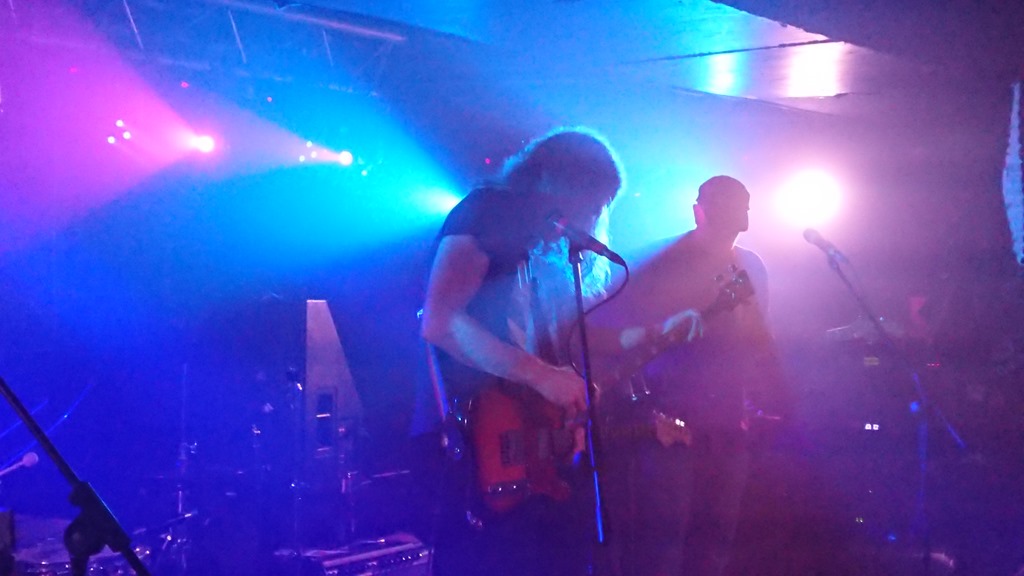
Kids today! With their shit clothes and shit music, not like in my day… You hear it all the time, and not just from crotchety old bastards who remember when punk broke, or even slightly less old bastards who remember when grunge broke, but from people barely in their 30s. That may be true of the crap that gets played on the radio, but beyond the mainstream, we’re in a time where the guitars are getting louder, heavier, denser than ever. And REDFYRN go all out for loud, heavy, and dense, with a breathtaking juxtaposition of floating ethereal folky vocals and punishing sludgy/grunge riffs, with comparisons to Big | Brave and Mammoth Weed Wizard Bastard not being unjustified, although there’s also a more direct grunge-orientated aspect to their sound, which is more than straight stoner / doom / sludge and all the better for it. Apart from the bassist, they look pretty straight, especially the drummer, but looks are deceptive. They’re heavy and mega-riffy from the first chord, and when they announce the third song as being heavier, they’re not wrong: the bass positively barks and snarls its way through a grating grind of guitar before spinning into an extended blues jam by way of a midsection.

DSC_3137[1]

REDFYRN

Percy don’t piss about. They’ve been at it long enough that they can pretty much plug ‘n’ play, and you pretty much know what you’re going to get from one of the most consistent bands on the circuit: workmanlike is by no means an insult in context of their Fall-influenced kitchen sink grouchfests. Does the delivery help or hinder? It’s probably appealing and offputting in equal measure – like they give a fuck. In so many ways, it’s business as usual for them: tight even when loose, scratchy guitars clang over busy rhythms as Andy Wiles, centre stage on bass throws all the Peter Hook poses. And they’ve got some cracking tunes: in fact, the current set is bursting with them, and it’s apparent that something has changed in the Percy camp of late, and they’re producing the best songs of their career right now. They really step up the intensity on the Fall-does-dance Middle Class Revolt style ‘Rubbernecking in the UK’ followed by the fiery politicking ‘Will of the People’, which ends in a squeal of feedback. They seem more energised than at any point in the last 20 years, and this is probably the best I’ve seen them in all the years since I first caught them back in 97 or 98.

DSC_3144[1]

Percy

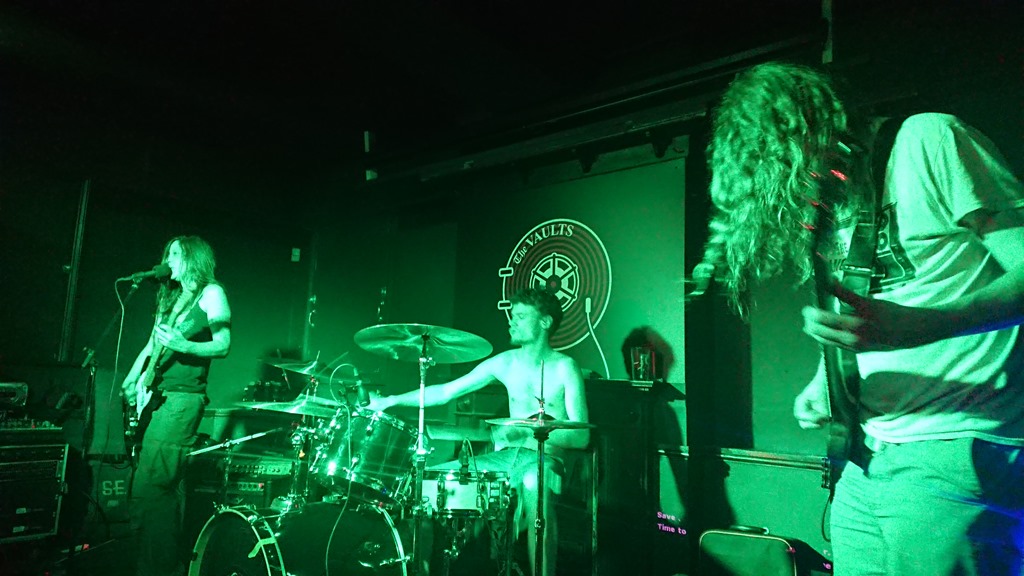
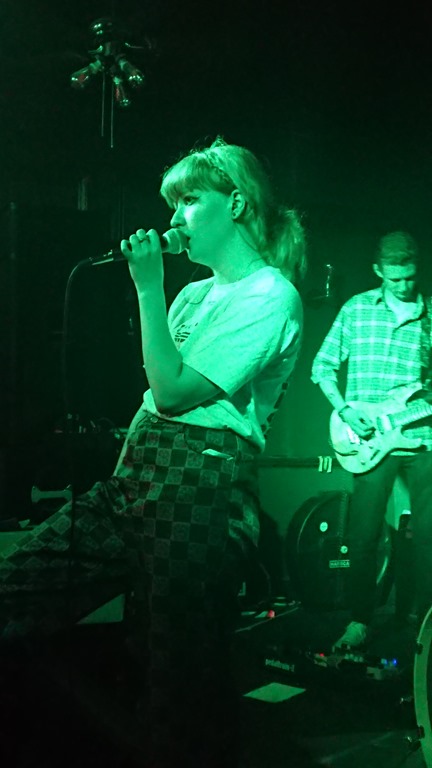
My Wonderful Daze take the stage with the guys looking doomy in smeared makeup. My notes for the evening peter out rapidly at this point as ‘m lost in the performance: the band have an incredible dynamic. Amalgamating some hefty grunge with a deftly accessible side, with bursts of noise and fury erupting from simmering tension they’re in some respects quintessential alt-rock, but don’t sound quite like any other band around. Raw but melodic, and with a compelling focal point in the form of Flowers who channels a gamut of emotional range, they’re solid and exciting at the same time.

DSC_3168[1]

My Wonderful Daze

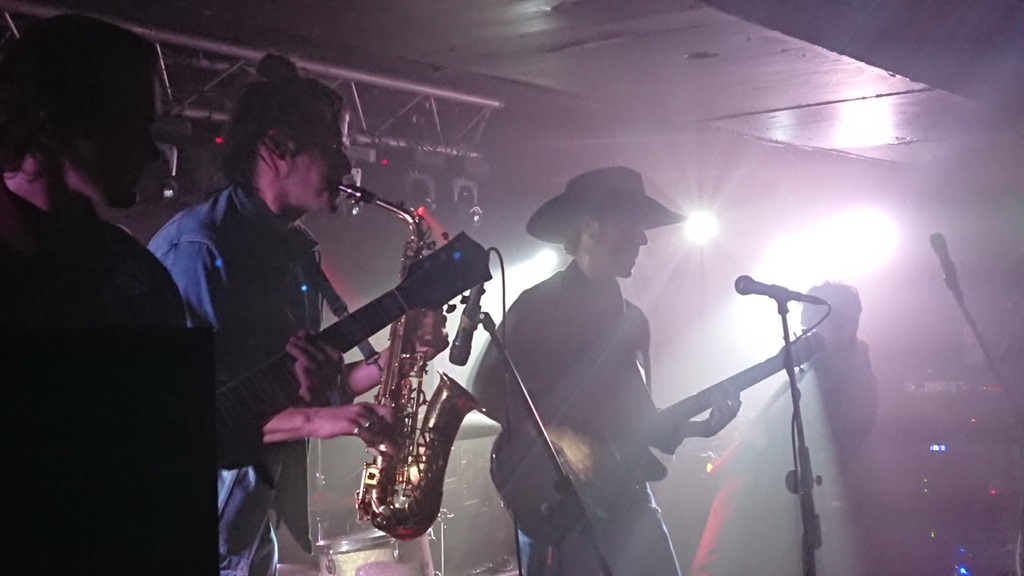
Cowgirl are a fitting headliner, and so very representative of the core of the York scene, featuring the ubiquitous local legend Danny Barton (who must be in or have been in at least two dozen acts who’ve garnered some appreciation in their hometown and beyond) and another former Federal Sam Coates. He’s sporting some heinous tassels on a fawn suede coat, and a bootlace tie. Who on earth wears those these days? The look is somewhat at odds with the band’s Pavementy slacker indie rock, but they’ve got the tunes and the knack of delivery. A lot of it’s the confidence of seasoned performers, but equally, a lot of it’s down to tidy songwriting, and these guys can kick ‘em out effortlessly and copiously. The penultimate song of set is an extended psych workout that’s not only a departure but the highlight of the performance because it’s good to see them cut loose.

DSC_3177[1]

DSC_3181[1]

Cowgirl

What do you say to round off a night like this? There should probably be a pithy one-liner, but I’m all out: the Titanic Plum Porter is top-notch and I tumble out into the cold January night with its full moon, happy that things are good on the scene in York, and that while there may be infinite shit to wade through in life and in 2020, The Fulford Arms will continue to provide an oasis of musical joy.

Words: Christopher Nosnibor

Pics: Chris Power

Sometimes, the everyday and the ordinary are just so difficult to navigate. Stuff that the majority of the time is just what you do becomes suddenly too much. For some, it’s going to work; others, it’s worse even than that, like leaving the house to go to the corner shop. We all have our limits, and they can change unexpectedly, and seemingly inexplicably. For me, the onset of darkness as the clocks changing hurls us into the late autumn / winter spell does it every time and the urge to hibernate or hang myself becomes stronger than the enthusiasm for going out and watching live music.

Sometimes, it’s easier to crawl out to someplace where you know you won’t be known, so it’s possible to concentrate on the music and not have to deal with conversation. But sometimes, there has to be an end to avoidance, and the only way forward is to do the thing, however hard. There’s no snapping out of it, no flicking a virtual or metaphorical switch. There is no one single means of dealing. For me, it’s about a self-created nudge. Because no amount of external nudging has any effect – although, arguably, Hogwash was a successful external nudge here.

Wharf Chambers is one of those places that doesn’t make a twitchy, lone drinker feel awkward, and the vibe is never anything but welcoming and inclusive. This matters, a lot: I don’t feel like anyone thinks I’m a weirdo or inadequate when I fumble around with change, or as I sit in a corner with a pint to read – Lee Rourke’s Vulgar Things – and do the constant phone-checking thing that’s become habitual, by candlelight while waiting for doors.

So why am I here? Well, the Facebook event suggests folk may be ‘baffled and/or enticed by’ the eclectic lineup, consisting of Claus Poulsen // Stuart Chalmers, Eskimoomin, Two’s Company, and Inhuman Resources. I’m here for the music. Also, people: much as I feel a compulsion to avoid them, there’s a comfort in knowing there will be people there that you know, who are there for the same reasons.

The latter is up first, and it’s another of the infinitely-numerous project by event organiser and master purveyor of weird random noise, Dave Procter. Playing in a Parka with the hood up, he churns out a wall of blistering electronic noise that gets louder and more brain-melting as the set progresses. Reminiscent of Whitehouse without the vocals, here’s some classic power posing happening behind the trestle table laden with gear, and it’s a quality example of contemporary power electronics, with a self-awareness that carries an ironic twist in the posturing. Oddly, I find this all a source of immense joy: I find myself relaxing, and smiling to myself. This is exactly what I came for, and this is why live music is a holistic form of therapy: it offers escape, external stimuli suggesting routes inwards to explore and also let go of things.

75220781_540974880031612_4404610269104308224_n

Inhuman Resources

Eskimoomin play warped synth pop. She plays synths and sings. He dances like Bez, wearing shorts, a Hawaiian shirt with some kind of shark design and meerkat mask or something. It’s brilliantly bizarre, visually and sonically, and as quirky as fuck, but also accessible with some pumping beats. Bewildering, baffling, a but wrong, but also a whole lot of fun. The world needs more artists who give this much effort and this little of a shit what you think of it.

75443135_1156956231162197_8258115284250918912_n

Eskimoomin

Claus Poulsen and Stuart Chalmers do what I might reasonably describe – according to what I’ve tapped in onto my phone – as ‘some kind of Eastern / pan pipe percussive string-scraping shit. Bow against the side of a table. Clattering percussion gives way to trilling organ tones’. It’s immersive, although I suspect it’s the beer rather than the music that’s proving soporific. The pair work their respective segments of kit intuitively and coordinatedly, and it’ a pleasure to watch.

73404081_598709020876275_509431852004540416_n

Claus Poulsen and Stuart Chalmers

Headliners Two’s Company deliver fractured, droning noise, and I’m way in the wash of atmosphere. Nothing seems entirely real right now, and I like it like that. I’m, primarily in the moment but if my sketchy notes are to be believed, the ‘synth guy in coat has William Bennett trappings, while guy sitting down has lounging cunt all over. Beat-heavy electro with a hard and challenging edge’. I could, and maybe should, expand on that, and attempt to convey the real, lived experience. But ultimately, you had to be there to fully experience the physical and psychological effects of their textured soundscapes in a darkened room. And being there next time is a must.

75561419_722237111629672_1741998697572466688_n

Two’s Company

Christopher Nosnibor

Some bands, you only dream of seeing. Others, not even that: the possibility doesn’t even exist as a bubble of thought, for one reason or another. As one of the most wilfully obscure acts to emerge from the early 90s scene, Trumans Water have forever existed in the latter category.

After achieving a certain cult cred in the music press with their first three releases after John Peel went ape over their debut, Of Thick Tum, which he played in full in release in 1992, they seemed to deliberately sidestep the limelight with the series of improvised Godspeed albums on minor labels, and after departing Homestead after 1995’s Milktrain to Paydirt album, they more or less seemed to vanish into the underground of their own volition. There’s a certain logic to this: their last album was released nine years ago on Asthmatic Kitty Records, and probably sold about as many cops as my last book., even though Drowned in Sound were nice about it. And so they’re playing at Wharf Chambers in Leeds, which has a capacity of maybe 100 while they tour for the first time in ages to support nothing as far as I can tell. It all seems quite fitting.

It’s a killer lineup, too.

Husband and wife duo Pifco crank out noise that’s pure Dragnet era Fall, and they’ve got the 3R’s (that’s Repetition, Repetition, Repetition) nailed, with dissonance and scratchy guitar clanging over motorik but hectic drumming .

DSC_2524[1]

Pifco

This is the third time I’ve seen Bilge Pump this year after the Leeds legends returned to the fray after some time out. They haven’t been anything less than outstanding on the previous occasions, and it’s a record they maintain tonight. It’s no their first time supporting Trumans Water, and they’re very much a complimentary act that sit between the cyclical repetitions of Pifco and the jarring angularity of the headliners. They also play hard – guitarist Joe’s shirt is saturated by the time the set’s done – and they’re also an absolute joy to watch, a cohesive unit firing on all cylinders.

DSC_2525[1]DSC_2529[1]

Bilge Pump

Trumans Water are also tight and cohesive – remarkably so, in fact. But they hide it well, sounding like they’re completely out of tune and out of key and often playing three different songs at the same time. Some of that’s down to the simultaneous vocals that don’t exactly combine to create conventional harmonies, while a lot of it’s also due to the unusual guitar style: I’m not sure of half the chords are obscure or made-up, but every bar conjures a skewed dissonance. But they are tight: the constant changes in tempo and off-the-wall song structures are brain-melting, and how they not only shift instantaneously, but play an hour-long set of sprawling freeform angularity without a set-list is remarkable.

DSC_2540[1]

Trumans Water

Trumans Water have never really sounded like anyone else. Pavement comparisons don’t really cut it on close inspection: whereas Pavement were genuinely slopping in their playing early on, Trumans Water would probably align more closely to freeform jazz and Beefheart at his oddest.

It’s a riotous blur of jolting, shouty, brain-melting racket that runs into one massive sprawl of crazed anti-music. And it’s an absolute joy.

Christopher Nosnibor

Riff after riff after riff.

Riff after riff after riff.

Riff after riff after riff.

Celebrating their thirtieth anniversary, Helmet are playing thirty-song sets in thirty cities. It feels like an immense privilege that Leeds is one of them, and the fact it’s the 150-capacity Key Club even more so. With only ten tickets remaining for sale on the door, for a cult band who’ve only released two albums in the last decade, they’ve retained a hardcore following, not all of who, are old buggers.

With no support act, they take the stage at eight sharp, and immediately start with the riffs. Not a word at the start, nor between songs for the first half dozen at least. Instead, it’s all about the riffs.

Riff after riff after riff.

Riff after riff after riff.

The extended freeform solos drift into the background while the rhythm section thunder on relentlessly: the floor-shaking, gut-churning bass, the rhythm guitar that blasts out concrete slabs of noise.

Riff after riff after riff.

Riff after riff after riff.

The blunt, bludgeoning weight of thick, stop/start chunks of noise that became the defining feature of Nu-Metal are Helmet’s staple, but they did it first and did it best. Helmet were also one of the first off-the-street jeans ‘n’ T-shirt bands, and Beavis and Butthead were on the money when they observed that “That drummer looks like a regular guy,” and “If you, like, saw these guys on the street, you wouldn’t even know they were cool.” And yes, they are cool. Seriously cool. Their influence clearly extends far, far beyond their fanbase and commercial reach, which peaked in the early ‘90s. But being cool is also about pushing on, and Helmet’s achieving radio play and MTV exposure around this time was a matter of coincidental timing rather than strategized mass appeal.

DSC_2557[1]

There’s no messing, no posturing: Page regales us with an amusing anecdote about being rehearsing in a space next to Buck Cherry, who commented on the fact the band load their own gear, and who they heard rehearsing their between-song banter. But I never mentioned that. It’s one of only a few moments of chat we get but what’s keenly apparent is that these are nice guys, with no pretence or rock-star delusions, and with their major-label years long behind them, no industry bullshit surrounding them.

They play songs in small venues.

They play hard.

Riff after riff after riff.

Riff after riff after riff.

Song number thirty is ‘In The Meantime’. It’s blistering. But then, so were the preceding twenty-nine songs.

And long may they continue to knock out the riffs.