Archive for the ‘Albums’ Category

Cruel Nature – 26th April 2024

Christopher Nosnibor

Just as their album was smashing the charts and the band were riding the crest of the wave, the shit hit the fan for The Last Dinner Party over a quote about how “People don’t want to listen to postpunk and hear about the cost of living crisis any more.” Of course, it was taken out of context, and all the rest, but I’ve got no truck with any kind of critique from a bunch of boarding school poshos: of course they can peddle theatrical escapism, because they’ve spent their entire lives in a Gatsby-like whirl of posh frocks and soirees. The name is a bit of a giveaway: only people of a certain position in the social strata ‘do’ dinner parties, dahling, no doubt sharing culinary delights discovered while trotting the globe on their gap yahh. Meanwhile, half the country is at the point where it struggles to afford a McDonald’s, let alone gastropub grub.

It might sound counterintuitive to those so far removed from the reality endured by the majority – the Jeremy Cunts and Rachel Johnsons of the world who reckon £100K a year isn’t much – but music that reflects the grim realities of life are what people do want. Life juggling work and parenting while struggling to make ends meet can be not only stressful, but isolating, and so music which speaks of the harsh realities serves as a reminder that you are not alone. It’s relatable in the way that soaps are for many.

As an aside, I saw a post from a (virtual) friend on Facebook recently commenting that every time they visited Manchester, it pissed it down, and it so happens that this is my experience also. It’s small wonder, then, that Pound Land are such miserable mofos, and again, contrast this by way of a band name with The Last Dinner Party. This is an act that’s gritty and glum and telling it like it is. And you know how it is – and how bad it is – when stuff in Poundland, the shop, costs £1.50, £2, even a fiver. Back in the 90s, you could got to Kwik save and get a tin of No Frills baked beans for 3p and a loaf of bred for 19p.

It’s perhaps because of just how far downhill and how fast it’s happening – in real time – that with Mugged, Pound Land have delivered their most brutally blunt and utterly squalid set to date.

‘Living in Pound Land’ is a brief blast of an intro, atonal shouty pink with some wild parping jazz tossed in, and it hints at what’s to come: ‘Spawn of Thatcher’ is dirty, disdainful, spitting and snarling vocals hit with a grunt and a sneer amidst a cacophony of jazziness held together by a saw-toothed bass grind.

There are hints of The Fall in the mix, a dash of the raging fury of Uniform, too.

As ‘Flies’ evidences, they’re not all one hundred percent serious: against a pounding drum machine reminiscent of Big Black and a bowel-tensing bass, we get a yelping pseudo-John Lydon vocal going on about flies in his underpants.

The nine-minute ‘Power to the People’ is the album’s centrepiece, literally and figuratively. A slow, groaning behemoth, it thuds and grinds away for nine and a half minutes, coming on like ‘Albatross’ for the 2020s (That’s PiL, not Fleetwood Mac) mixed with a Fall cut circa ‘Slates’ played at half speed, its grinding repetition emerging more at the Swans end of the spectrum. It’s ugly, it’s unpretentious. ‘Power to the people! Make everything equal!’ slides down to a rabid howl of ‘be happy with what you’ve got’, exposing the lie of meritocracy and social mobility. The album’s second ten-minute monster, ‘Shish Doner Mix Apocalypse’ is a brutal shredder – like much of the rest of the album, only longer.

Contextually, one might be inclines to position Pound Land somewhere alongside Sleaford Mods and Benefits, but they’re a very different proposition – sociopolitical, yes, but more overtly rock in musical terms, mashing up punk, post-punk, krautrock and noise rock. And then there’s that manic jazz streak.

The snarling racket of single cut ‘Pistol Shrimp’ is both representative, and as nice as it gets. That is to say, Mugged is not nice: in fact, it’s harrowing, gnarly, overtly unpleasant. But it is also entirely necessary.

AA

cover

Karlecords – 12th April 2024

Christopher Nosnibor

This three-way collaboration promises ‘intense, menacing layers of thick drones and alien sounds,’ and comes laced with sadness in the wake of the recent passing of Phill Niblock.

Karlrecords’ statement around this release and how it came to be is simple, direct, and worth quoting here:

In summer 2022, within just a few weeks and by pure coincidence, 2 proposals regarding Phill Niblock albums arrived: one suggesting an overdue vinyl reissue of a CD release (more on that when the time has come for it), the other email was from Anna Clementi saying she and Thomas Stern were working on new pieces that Phill Niblock has written for her … when Zound Delta 2 was complete, Phill sent photographs for the two artworks, we met twice to discuss details, but unfortunately he died unexpectedly early January this year so the album now is, sad as it is, a posthumous release … an intense goodbye from one of 20th century most iconic composers.

While Niblock departure was sudden and unexpected, it’s remarkable that not only had he enjoyed a career spanning five decades and ranging across minimalist and experimental music, film and photography, but that at the age of ninety, he remained prolific until his final days, as Looking for Daniel, released in February, and representing his final compositions, evidences.

Like Looking for Daniel, Zound Delta 2 contains two longform composition, and, again, it’s a monumental drone-orientated work. ‘Zound Delta 2’ is eerie, other-worldly, haunting and atmospheric. Ethereal voices hum and moan, breathy wordless monastic incantations come together and emanate disembodied exhalations as if calling from the other side. No doubt the actual source sounds and the process was quite banal and workaday, but the effect… the effect sends shovers all over and goosebumps pickle in response to this chilling swell of sound. Beneath the moans and cries are slow-turning rumbles and delicate, wisp-like ambience. Everything sounds slowed down and stretched, sound suspended in time and space as they hang in the air. The layers wrap around one another, and while minimal in form, a density of atmosphere builds which makes it hard to catch your breath.

Sometimes, a dream can affect the shape and mood of the entire day which follows, and this has been one of those days for me. More often than not, it’s simply a hangover of anxiety or a sense of doom which looms, but since my wife died early last year, I’ve dreamed of her only rarely, so when I do, the impact is great, and if feels as if she’s speaking to me, even when there’s no obvious message. Invariably, she’s well again in my dreams, or at least looks healthy again, and sometimes, she imparts words or wisdom. But mostly, it feels a if her presenting in my dreams is a reminder, a kind of haunting. The reason I take this diversion isn’t purely a matter of indulgence, but because it’s relevant to the tone of ‘Zound Delta 2’, which creates the sensation of Niblock pre-empting his departure with a recording which sounds as if it’s being projected from beyond. The abstract voices aren’t tortured hellish howls, but the sound of purgatorial lostness, wandering in between worlds, wanting to communicate, to be heard, but without the capacity for articulation.

Perhaps this isn’t the album I should be listening to tonight – but then again, perhaps it is. Culturally, we avoid talk of death, we shield our eyes from it. As the sole inevitability of life, we need to turn and confront it. ‘Zound Delta 2’ is without doubt one of the most powerful, intense, moving and difficult pieces I can recall hearing. It is so, so sad, so far beyond human, so far beyond this realm. It feels like the purest grief, the deepest of sadness, the ultimate release, the sound of being dragged, unsuspectingly, into the spirit realm. Everything collapses and eddies into a disorientating swirl of sound in the tracks final minutes, growing evermore uncomfortable.

‘Zound Delta 2 (Version)’ is fractionally shorter, but no less comfortable. Again, it begins quite gently, almost delicately and emanating an air of tranquillity – but it’s soon disrupted by creeping undertones of distortion. There’s squelching, trudging, sloshing and rumbling discomfort amidst uneasy drones and heavy flutters, and if it’s momentarily lighter than the ‘original’ version, this alternative or second version swiftly evolves to become pure tension. As it progresses, ‘Version’ become more uncomfortable, more distorted, more strangled, tortured, and asphyxiated. I feel my muscles tighten and my head spin. It’s dark, it’s tense, it’s difficult.

Clearly, it would be erroneous to presume that Niblock was aware of his limited time. But something about Zound Delta 2 feels like a planned exchange from a place beyond our experience and understanding. It’s as if he had stepper over some time before, and brought something back and shared it with his collaborators for this work.

Any response to a musical work is personal, subjective. Perhaps my in-the-moment reaction is coloured by timing, by the moment of the now – bad timing. But – BUT… something about Zound Delta 2 is intrinsically hard to manage, touching a subconscious level that really triggers something. As slops and churns wash and eddy around the eternal drones which form the dominant fabric of the album, Zound Delta 2 tugs at our feet and ankles and disturbs the ground beneath our feet. Dark and dank, Zound Delta 2 is not an album to listen to in the dark.

AA

KR115_front

Kranky – 5 April 2024

Christopher Nosnibor

Stars of the Lid are one of those acts who seem to have spent a – now lengthy – career on the fringe, an ultimate cult act who’ve built a substantial following without ever being well-known. Here in the UK, at least, they’re strictly a 6 Music act. With Brian McBride’s passing last year, their future remains unclear, but in the meantime, Adam Wiltzie, who had already been active for some time as a solo artist, offers up a new set of drifting, dreamy, discombobulating amorphous ambient works in the form of Eleven Fugues for Sodium Pentothal.

Sodium Pentothal is (to quote, unfortunately, Wikipedia), ‘an ultra-short-acting barbiturate and has been used commonly in the induction phase of general anesthesia’ and is also perhaps better known as a ‘truth serum’.

We recently aired the opening track, ‘Buried At Westwood Memorial Park, In An Unmarked Grave, To The Left Of Walter Matthau’ here at Aural Aggravation, and it’s inevitably tempting to infer connotations from this title in context of events – something the album’s title wouldn’t seem to necessarily counter. But Eleven Fugues for Sodium Pentothal seems to be preoccupied with memory and place in a broader sense.

We’re infirmed that the album ‘took shape following a move north from Brussels into the Flemish countryside, although it was initially inspired by a recurring dream wherein “if someone listened to the music I created, then they would die.” The album uniquely evokes and evades the allure of oblivion, keening between beauty and ruin, forever unresolved.”

Dreams have a way of staying with you, and of twisting your psyche in some unsettling way, the more vivid ones lingering and replaying for hours, even days on end, the vaguer ones leaving you feeling somehow disjointed and in a slip from being in step with the world, partially detached, partially disconnected, as if looking at your own life through a window. Recurring dreams can prove particularly unsettling, and have a way of encroaching on your waking hours, assuming a reality of sorts.

The track titles, in the main, tell us very little, presenting mere abstractions, although one suspect they carry significantly greater weight of meaning for the composer. Bereavement and loss has a way of bringing layers of meaning to the slightest things, often unsuspectingly – a sight, a sound, something not even remotely directly related, has the capacity to trigger a memory, which in turn has the capacity to elicit an emotion or some not-quite-definable internal response. It’s often fleeting, or otherwise vague and indefinable, something impalpable and beyond reach, leaving a certain pang of bereftness – in much the same way as if waking from a dream.

Eleven Fugues for Sodium Pentothal is not a dark or heavy album, but one which is dense in its atmosphere and carries a certain air of melancholic reflection in its drifting waves. This melancholy may well be as much a reflection of the way places – even unfamiliar locations – have the capacity to stir memories but indirect association – again, a sound, a smell, a certain shade of lighting, the angle of a tree, a riverbank – prods a deep corner of the memory most unexpectedly, causing memories we didn’t even know we had, or still had, to trickle forth, vaguely, out of focus, out of context, and sometimes you wonder if is really is a memory or a fragment of a dream.

There are some deep, rich, grainy textures to be found here, and ‘(Don’t Go Back To) Boogerville’ brings some dark, heavy strings and sonorous scrapes to close the album – which, incidentally, contains only nine tracks. Loop’s Robert Hampson was an inspired choice for the album’s mixing, bringing the layers of organic-sounding drones to the fore.

Returning to the press notes, ‘Wiltzie cites the barbiturate of the title as both muse and sacred escape: “When you are sitting face forward on the daily emotional meat grinder of life, I always wished I could have some, so I could just fall asleep automatically and the feeling would not be there anymore.”’ With Eleven Fugues for Sodium Pentothal, he has created that perfect escape. This is an album that lends itself well to listening – or half-listening – by candlelight with a slow-sipping drink, and to simply drift and nod to.

AA

547558

Crooked Acres – 29th March 2024

Christopher Nosnibor

Megalithic Transport Network is the vehicle – if you’ll excuse the necessary pun – of Martyn Stonehouse, and as his project’s moniker suggests, Stonehouse has quite a deep-seated interest in transport systems, as well as, more broadly, industrialisation, and what one might call the heritage of production and its progress, with previous works including Excavations On Harthill Moor, and other meditations on geographical / environmental events.

As the accompanying notes outline, ‘Drawing inspiration from the 18th and 19th century mining works at Alderley Edge in Cheshire, Engine Vein explores themes of our industrial past and the myths surrounding the historical site itself, which has been worked since the early Bronze Age up until the 1900s. As well as the mines themselves, the area is full of intriguing features and is steeped in folklore, including the story of The Wizard, The Golden Stone and a Holy Well.’

The tracks titles clearly are directly connected to specific locations, and mark the points at which human geography intersects with physical geography – quite specific instances of man-made interventions imposed upon the landscape, you might say: ‘Descent Assembly’; ‘The Hough Level’; ‘Engine Vein’; ‘West Incline’; Windmill Hollow’. Our relationship with mining has changed substantially over the long centuries. What began as a marvel of development has now become a defining feature of the destruction of the planet by human hands and machinery. But this is how our species is: we always go too far, beyond what’s necessary or sustainable. It’s small wonder there’s a collective nostalgia for bygone days and the deeper recesses of history.

Engine Vein, though, sits in a unique space, between two levels of nostalgia, and the present.

First, as for the method and practicality of its creation, Engine Vein was ‘written as live evolving pieces of electronic sound, each recorded using an AE Modular Synthesiser, Korg MS2000 and Yamaha R100 direct to tape, before being digitally transferred’.

And so it is with Engine Vein that MTN explores a tale of industrial with industrial sounds, and if not necessarily vintage equipment, at least using kit that evokes the spirit and sound of a different kind of industrial, namely that of the late 70s. Engine Vein doesn’t replicate the gnarliest noise of Throbbing Gristle, but the more proto-electro pulsations of cuts from 20 Jazz Funk Greats.

It is, as a listener, difficult to directly correlate the track to their associated locations, for two reasons: first and foremost, there’s no ‘field’ element to the compositions, nothing which is identifiably evocative, nothing which associates the sounds with time or space, period or location. But as much as this, there is the historical gap which sits unbridged – how post-millennial technology emulating the sounds of the late seventies and early eighties connects with the time frame which inspired it.

None of this is to say that Engine Vein is a bad listen: it’s simply better, perhaps, to listen to it separately from its context. It’s rare for a time / place inspired / orientated release to be so overtly beat-driven, and for all the dark shifting ambience which lurks and lingers in the further reaches of the many layers, Engine Vein is a throbbing, pulsating, and quite up-front, energy-strong set which draws as much on 90s dance tropes and rave as it does more primitive 80s forebears.

Of course, for the artist, the experience may be entirely different again: perhaps, for him, this is a listening experience which harks back, back, way back and back further. The title track, with its low, slow pulsations and layered facet, does perhaps speak on another level, and its low, dark throbbing certainly has a resonance which bothers the midriff if not one’s perception of history.

Engine Vein is constructed around a dense sonic haze, throbs and pulses. And at times it’s hard to separate the reality from the recordings, as well as the hazy memories. Dark heavy drones, gouging lines ploughing thick and deep churn the ground to a depth and drag the thick sods over one another. ‘Windmill Hollow’ draws the set to a slow, sludgy conclusion, and leaves you feeling dredged out, tired.

There are manifold depths and layers to explore here, making Engine Vein an album worth spending time with.

AA

a0735635442_10

New Heavy Sounds – 16th February 2024

Christopher Nosnibor

As a label, New Heavy Sounds really do what they say on the proverbial tin – giving a platform to heavy music, while seeking out new forms and styles. Yes, they’ve brought us a slew of stoner doom, but also vintage heard rock with contemporary spins – and, as Mammoth Weed Wizard Bastard and Black Moth, representing each respectively, also illustrate, representing female-fronted acts, too. And so, next up, London-based queercore punk trio, Shooting Daggers.

Having debuted with an EP in 2022, they shared a split single release with intense and fearsome Ukrainian punk labelmates Death Pill last year – and it was a most fitting pairing.

Said single contribution, ‘Not My Rival’ features on this, their debut album, in remastered form, but still clocking in at under two and a half blistering minutes. This version isn’t really different, just cleaned up a bit and mastered at the same volume as the rest of the album. And what a fiery blast of rabid punk fury it is. ‘Give Violence a chance!’ they holler while the bass tears the flesh from your ribs and the guitar burns.

As a title, Love & Rage perfectly encapsulates the pounding ferocity of the album’s nine explosive cuts, the majority of which are comfortably under three minutes in duration. Sal’s vocal delivery is of that circa ‘79 / ’80 vintage, but at the same time contemporary, shouty, spiky, a dash of X-Mal but equally ragged and raw and without stylistic affectation. This is music played with passion, music made because it has to be, an act of catharsis, pure, unbridled venting.

The mid-album slowie, ‘A Guilty Conscience Needs an Accuser’, which closes side one on the vinyl version, not only provides some welcome respite from the incendiary fury, but also showcases their capacity for melody, harmony, and subtlety. There’s certainly not much of that to be found on the rest of the album. ‘Tunnel Vision’ is a gutsy grunger played at double speed, and ‘Bad Seeds’ pounds in a manic hardcore blast which tears your head off and is out the door in a minute and twenty-three.

The title track lands unexpectedly anthemic, energetic but considered, and even a bit Dinosaur Jr. It works, and it works well, and the final track, ‘Caves/Outro’ plays out on a ripple of piano and a note of tranquillity, a calm after the storm. And for all of the ferocity which defines both the album and the band themselves, there’s much positivity in the lyrics and an energy to the performance which is anything but negative.

‘Yeah! Do it! Do it!’ Sal encourages enthusiastically on ‘Dare’; ‘Just have a try’ she sings on ‘Smug’, and on the title track, the message is to ‘Turn the pain into power’. But this is no feeble stab at rabble-rousing or a cliché and ultimately empty bit of tokenistic fist-waving. Shooting Daggers appreciate that anger truly is an energy, and they bring it with full force. The result is an album that packs a punch, and when it comes to punk credentials, this is the real deal.

AA

a2224855558_10

Christopher Nosnibor

They’ve been going since 2013. Emerging from various permutations of solo and band-related projects by front man and songwriter Si Micklethwaite – evolving from his solo wall-of-pedals shoegaze work as Muttley, through the Muttley Crew collective to eventually coalesce as Soma Crew with guitarist Steve Kendra and drummer Nick Barker, with a rotating cast of contributors along the way. I’ve probably seen – and written about – most of these incarnations of both the band and their forebears, and they’ve never failed to provide music of interest. While the core trio means they’ve always retained their distinctive identity in ways which extend beyond Micklethwaite’s distinctive approach to songwriting – minimal, repetitive, cyclical, hypnotic – the shifting lineups have meant they’ve spent their career continuously evolving. It’s true that the evolution has been slow – a tectonic crawl, in fact, and if you ever meet the band, especially Si, it’s obvious why. These guys are as laid back in their approach as the music they make – and the music they make is psychedelic, hypnotic, slows-burning, hazy.

This latest offering – and it’s been a while since the last one – feel different. Strangely, it feels more overtly rocky. Bit it’s also different in other ways, while at the same time delivering everything you’d expect from these guys.

Confused OK is a long, droning, shimmery blissed-out exploration of all of the territories that Soma Crew love to ramble around: krautrock, drone, and here they bring a country twist to this weirdy retro grooveout. The country twist is very much a new addition to their relentless grooves and tendency to hammer away at a couple of chords for an eternity. And once again, on Confused OK Soma Crew Are seemingly content to batter away at a single chord for an eternity. More bands need to get on board with this.

With the slide guitar splattered all over the nagging bluesy honkytonk rhythm of the first song, ‘These Careless Lips’, they come on like The Doors circa LA Woman, at least musically. But whereas Morrison sounded like a roaring drunk spoiling for a brawl on that messy album, Micklethwaite sounds like he’s more likely to nod off than kick off, his vocals a low, mumbling drawl weaving loosely around the key of the guitars. The second song, ‘Tranquillizer’ is appropriately titled and is quintessential Soma Crew: seven and a half minutes of reverb-drenched tripped-out motorik drift. The intro hints at some kind of build, but once all the elements are on board, it’s a magically spaced-out kaleidoscopic spin where relentless repetition becomes inescapably hypnotic.

Flamboyant solos, guitar breaks… they’re so unnecessary, so much wanking. There’s none of that crap here: the extended instrumental breaks plumb away forever and a day, the guitars peeling off shards of feedback and tremulous layers of effects while the drums and bass stick tightly to the same locked groove.

The production on Confused OK is murky, hazy, the separation between instruments is, well, it’s all in the mix, which coalesces to create a fuzzy fog which recreates the sound of the late ‘60s, and it works so, so well.

Expanding their style further, ‘Let it Fall’ is a three-and-a-half minute slice of indie pop with a vintage sixties psychedelic feel, and it’s followed by the downtempo mellowness of ‘This Illusion’, before ‘Another Life’ goes all out for the blues rock swagger with a glammy stomp behind it. With the lyrics so difficult to decipher, it’s impossible to unravel the link between ‘The Sheltering Sky’ and Paul Bowles’ novel, although no doubt there is one, and here, they really cut loose with some wild guitar as Si sings up for a change over this hypnotic throbbing boogie.

Sprawling over seven minutes in a mess of reverb and distortion, ‘Propaganda Now’ closes the album off with a pulsating groove and an effervescent energy, fitting with its call to wake up and small the bullshit. Because it’s time. Sure, the Johnson / Trump ‘post-truth’ era may have given rise to the wildest frenzy of right-wing conspiracy theory, but now we know – we KNOW – that we’ve been lied to and fed a conveyor belt of bullshit… the pandemic was real, the fear was real, but our government partied hard while we were all trapped in lockdown, and their cronies made MILLIONS, nay, BILLIONS from backhanders and dodgy contracts for dodgy kit that never reached a soul. And now, the cost of living crisis, attributed to the war in Ukraine, has seen energy companies and supermarkets record record profits – because among it all, profits have been protected at all costs – namely at cost to customers while CEOs and shareholders rake it in.

Confused OK may sound like a mellow droner of an album on the surface, probably because it is. But is has detail, it has texture, and it has depth. It’s also their strongest work to date.

Soma new

Exile on Mainstream – 28th March 2024

Christopher Nosnibor

Cutting straight in with a big old guitar chug is a bold and hard-hitting way to open an album. No intro, no preamble, just big, beefy chuggernaut riffery. Bam! I’ve no aversion to a bit of intro a bit of preamble, but it’s refreshing to hit play and be smacked around the chops. The sound – and style – is quintessential grunge, and that grit, that grain, it has a grab that’s more than mere nostalgia, it’s a physical experience. But it very soon becomes apparent that Sons of Alpha Centauri are no generic grunge template rehashers, despite their adept use of the quiet / loud dynamics: ‘Ephemeral’, the opening song, draws in elements of quite blatant prog and classic rock, with melodic vocals and a reflective refrain of ‘Ephemeral… we are ephemeral’ that’s unashamedly prog in its ‘big, deep philosophical contemplations’ approach to lyrics. It’s certainly more ‘Black Hole Sun’ than ‘Smells Like Teen Spirit’.

Pitched as a ‘natural evolution’ to predecessor Push, they proffer ‘a powerhouse of searing post hardcore, alternative metal and progressive hazy rock’, where ‘Across the album, Sons of Alpha Centauri capture both a renaissance of the 90s post hardcore of their Sacramento luminaries, and a contemporary take on atmospheric dream-like rock music.’

Across the album’s nine tracks they straddle genre boundaries in a way that feels remarkably natural. Time was that I would be turned off by an album that was heavy instrumentally but not so heavy vocally – meaning I’d have been a bit hesitant about this. But it’s a mistake to perceive clean, melodic vocals as somehow weak or a detraction, as I discovered from listening to The God Machine and Eight Story Window, and Jonah Matranga packs in some emotional integrity into a strong set of songs.

‘Ease’ brings a watery-sounding bass and big, chunky guitar, and the combination makes for an unusual and interesting textural contrast, while the title track rocks particularly hard, the distorted guitar positively buzzing the speakers, Matranga giving a taut, tense performance.

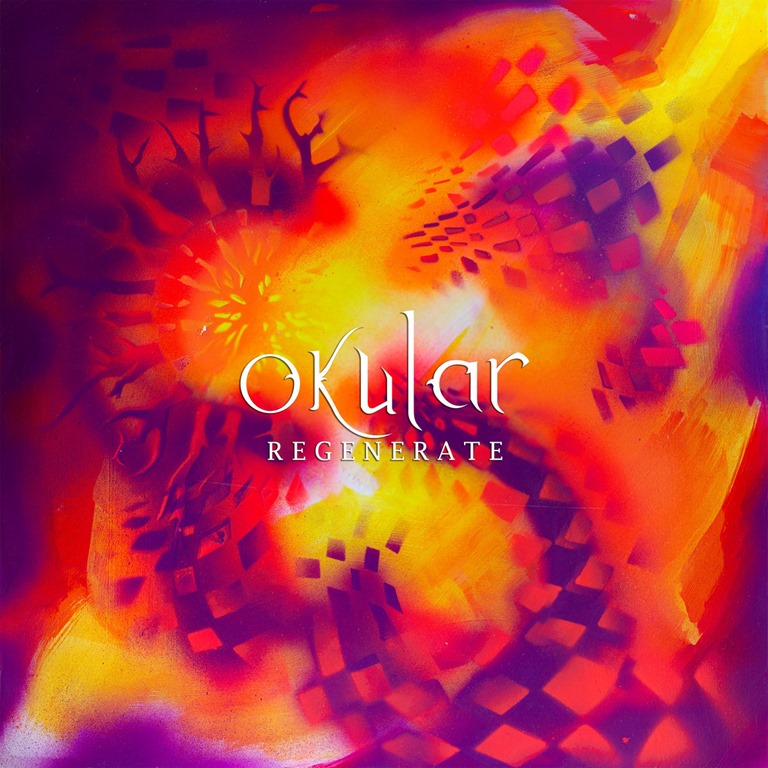
At times I’m reminded of Amplifier, and not only in their incorporation of space themes – only far grungier in their melding of flighty prog and ballsy guitar attack. The chord structures of the aching ‘The Ways We Were’ are reminiscent of Placebo, and while sonically and lyrically there’s no real similarity, something about the dynamics and the heightened tension that defines Pull do warrant comparison, especially the slower, sadder ‘Tetanus Blades’. Sitting in the very middle of the set, it makes for the perfect album structure, and it’s clear that Pull has been created, crafted, curated, as an album rather than just some songs. ‘Doomed’ brings delicacy and introspection, anger and anguish delivered with a downcast sigh and wistful guitars. On ‘Weakening Pulse’ the guitars shudder and shimmer, and there’s a blend of dark aggression and choppy accessibility about ‘Final Voyage’. With its refrain of ‘Regenerate, regenerate, regenerate’ I can’t help but think of Dr Who, but that’s no criticism, and despite the big, bold, ambitious songs and matching production, they manage to steer well clear of going Muse on us.

The songs are pretty concise – mostly sitting around the three-and-a-half to four-and-a-bit minute mark, but have all the hallmarks of bigger, more epic songs. Yes, the vibe is very much rooted in the alternative sound of the 90s, but painted with the broader palette of the twenty-first century, whereby more diverse and eclectic elements have come to be accepted. It seems strange to think in 2024 that back in 1994, rap/rock crossovers were pretty revolutionary, that the soundtrack to Judgement Night was groundbreaking. In time, it came to pass that we discovered more complimentary hybrids, and Pull is a demonstration of this. There’s much detail to absorb and these are very much early impressions – but with so much to assimilate, Pull has everything about it that makes for an enduring album which only digs deeper with repeat listens.

AA

920630

17th February 2023

Christopher Nosnibor

I can’t really type, or hype,  that Gintas K is back, when he’s not been away for five minutes. But in the world of the indefatigable avant-garde improvisationalist, being away for ten minutes is the equivalent of being away for a decade by the standards of many acts.

But then, what does ‘being away’ actually mean? And by what standard should this be judged?

Daniel Ek is of the opinion that artists should be more productive if they want to get paid. But what he really means is that artists should be more productive so that he can get paid – more. The current model is centred around maintaining the attention of an audience with the attention span of a goldfish by pumping out new product every other week, and if you’ve got no new songs, then it should be a behind the scenes recording videos or somesuch, anything to maintain a constant level of contact, of output. This is all about gouging money from fans, and nothing to do with art.

The point is, every artist produces at a different rate. Sometimes it takes five, even ten years, to assemble and release an album, due to multiple factors. Dayjobs, for many. Families, life. Headspace: creativity isn’t something you just churn out like a conveyor belt, necessarily. Opportunity: labels have release cycles, which may affect when there’s a window – and budget – to release an album.

Gintas K is a high-output artist, but not because he’s on the treadmill of social media engagement and chasing streams for fractional cents of royalties: he’s a creative whirlwind, spewing new material like a volcano which never stops erupting, and he never ceases to arrive from different angles. I had initially wondered if ‘broken kontrol’ was a reference to some damaged kit which was used in the making of this album, or if it’s perhaps an allusion to the crumbling, fragmenting structures of ‘democracy’ around the globe. Ultimately, I’m not so sure: the accompanying notes drive in hard from the left in terms of an unpredictable swing which throws us headlong and quite unexpectedly into academic territory, and as such it’s worth quoting for context: ‘

Uncertainty and surprise are in fact key components of an influential predictive-coding model of neuronal message-passing across the cortical hierarchy [16, 20, 45]. Music may therefore elicit pleasure by encouraging the listener to continuously generate and resolve expectations as the piece unfolds in time [16, 20]. Musical pleasure depends on the dynamic interplay between prospective and retrospective states of expectation. Our fundamental ability to predict [16, 20] is therefore an important mechanism through which abstract sound sequences acquire affective meaning and transform into a universal cultural phenomenon that we call “music” [15].’ There are extensive quotes and hyperlinked references, and once upon a time, I’d get excited by footnotes by volume and all the rest.

Once again, Gintas K has produced a work which was entirely spontaneous, ‘played, recorded live, at once without any overdub; using computer, midi keyboard & controller’.

It’s another squelchy, dribbly, drippy, dribbly effervescent slice of chaos. It’s a bubbling, frothing, brain-melting froth, an attack of gurgling electronics and beeps, and it’s pure Gintas K.

AA

a2244536590_10

Mille Plateaux – 22nd March 2024

Christopher Nosnibor

What’s often fascinating to me as someone who writes about music quite extensively, is to observe the avenues other writers explore, particularly when engaging with music that’s ambient, obscure, or otherwise difficult to take a hold of and to pin down. This fascination is amplified when the music, either by its inherent nature, or by virtue of explanatory words from the artist, has a foundations in a theoretical or conceptual context.

Achim Szepanski has been tasked with a challenge when it comes to the notes to accompany

Oolong: Ambient Works, which is the 17th studio album from multi disciplinary artist Ran Slavin, which is pitched as ‘a 74 min drone-ambient-minimal-symphonic infused LP that takes after various teas in the far east.’ To heighten the experience, each track is accompanied by ‘a slow and atmospheric visual journey shot by RS in East Asia and the total can be experienced in total and joined as an immersive 74 minute journey.’

Szepanski helpfully explains the layered meanings in the translations of the word ‘oolong’, and expounds the complex interconnections of tea and dragons through a filter of Felix Guattari (which isn’t entirely surprising, given the label releasing it). He grapples with ‘the minimalist concept of tea architecture’ and the way in which ‘Not only the centripetal, but also the centrifugal orientation of the sound is imaginary.’

While the visuals clearly form an integral pat of the project overall, I shall preserve my focus exclusively on the audio release, and in advance of this draw the distinction between audio created to provide a soundtrack, and visuals created to accompany an audio work, because while Szepanski discusses at length the relationship between the visuals and the tea path and the simultaneous limitations placed on the work by the visuals and their capacity to enhance the experience, Oolong: Ambient Works is an audio release or an ambient persuasion, as the title suggests.

The seventy-four minutes is divided into eight individual pieces, with titles such as ‘Grand Jasmin’ and ‘Assam Jungle; as well as others which are less overtly tea-derived, like the first composition, ‘Time Regained’. It’s fifteen minutes of slow-simmering ambience, the levels of which fluctuate and catch, the glitches rupturing the smooth surface of the soft sonic fabric.

Szepanski makes an important point when he writes ‘It is impossible to know exactly what the individual sounds signify. Sometimes it might be the intention to hear the sounds of nature. But it’s not a question of identifying its source and its effect.’ And so we come to what is, for me, the crux of the ambient listening experience, whereby the source of the sounds is far less significant than what the listener hears. Not even what I hear as a listener, although I can only speak and interpret for myself, and the beauty of this experience is that however much Slavin strives to imbue this work with meaning, it cannot be imposed. Slow pulses bring a rhythmic element to this otherwise abstract piece, which is deeply calming, but occasional warps jolt the listener from their state of tranquillity like a prod.

‘Butterfly of Ninh Binh’ flits by with crackles and scratches by way of disturbance, and the introduction of static and ersatz surface noise to recordings is a curious one, as something which only became a feature with the advent off digital audio. Those who have come to vinyl since the renaissance are less likely to relate, since vinyl is now a plush commodity and not something people leavy lying around or use as a coaster or whatever as was commonplace in the sixties, seventies, eighties. But such interference is integral here: Slavin’s approach to ambience on Oolong is subtly different, and introduces just enough dissonance and discomfort for it to be not entirely comfortable.

The ten-minute ‘Ruby Ceylan’ is soft and ripping repetitive and hypnotic, but something – perhaps the abstract moans, perhaps something else – is just off.

Iroh, in Avatar: The Last Airbender, is a keen advocate of the calming properties of Jasmine tea, and I get a far stronger Jasmine connection from this – the original animates series, that is – than from ‘Grand Jasmin’ here – the album’s shortest track is subtle and soothing, but also marks a change of texture with a thumping beat which echoes away hard and fast beneath its slow-swelling outer layers.

‘Himalayan Flower’ unfurls slowly and with pronounced percussion, before the ten-minute ‘Summer Monsoon’ brings the album’s conclusion. A slow, mesmeric, soporific cloud of ambience passing by, with occasional clangs and abstract interruptions which echo through the drift, this is a real; eyelid-drooper which suggests it’s time to sleep, or time for a coffee.

AA

MP69_front

Distortion Productions – 8th March 2024

Christopher Nosnibor

Metamorph have made their way onto these virtual pages a couple of times with previous single releases, most recently ‘Witchlit’ just over a year ago to the day as I write this. And, it turns out, this single was the very long lead-in for this long-player, which comprises seven new tracks which follow ‘Witchlit’, augmented by three remixes.

I’m going to park the remixes to save retreading territory that’s growing tedious and focus on the album proper, which kicks off in solid style with the pumping dark disco of ‘Veridia’ which blends surging dance pulsations with 90s enigma music and a dash of eastern mysticism to conjure a compelling hybrid or esoteric origins that lands with a dancefloor-friendly immediacy and energetic beat and throbbing bassline – and packs it all into just two pumping minutes.

There’s a lot to be said for starting an album strong and going straight in and hitting hard over the slow-build, and in today’s attention-deprived climate, it really does seem like the way to go – and Metamorph nail it here. They want your attention, and they’re bold about it.

‘Witchlit’ is up next, and it’s perfectly placed as a shimmering slice of dark electropop, sultry but lively, like Siouxsie gone electro. This is Metapmorph at their best – haunting, gothy, a little bit twisted. The title track crashes in next, bursting with flamboyant Europop vibes counterbalanced by darker shades – and once again, they pack it all into two and a half minutes.

Casting an eye down the tracklist, the majority of the songs on HEX are under three minutes in duration, and the album showcases a real economy of songwriting – no expansive mid-sections, no extravagant solos. They really do keep it tight.

‘Woo Woo’ is perhaps the album’s weakest track , not only with its mundane lyrics – ‘I won’t lie / I’m gonna get real high’ and unimaginative efforts to be sexy – but its wholesale immersion in commercial pop stylings. It feels like a stab at mainstream accessibility which is beneath them and isn’t particularly successful; in contrast, the mid-tempo brooder, ‘Raining Roses’ is brimming with dark, doomed romanticism , and ‘Broken Dolly’ borders on industrial and steps over the edge into a darker shade of darkness. ‘Wasteland Witch’ is well placed, a glammy industrial stomper that pumps up the tempo just when it’s all getting a bit dark and moody.

‘Whore Spider’, the last album track proper, could reasonably describes as an electropop anthem – mid-tempo, building, and unexpectedly hooky, while unexpectedly bringing back the wild woodwind. You can almost smell the incense as it spirals thickly to its finale.

AA

a0251618540_10