Archive for the ‘Albums’ Category

28th February 2025

Christopher Nosnibor

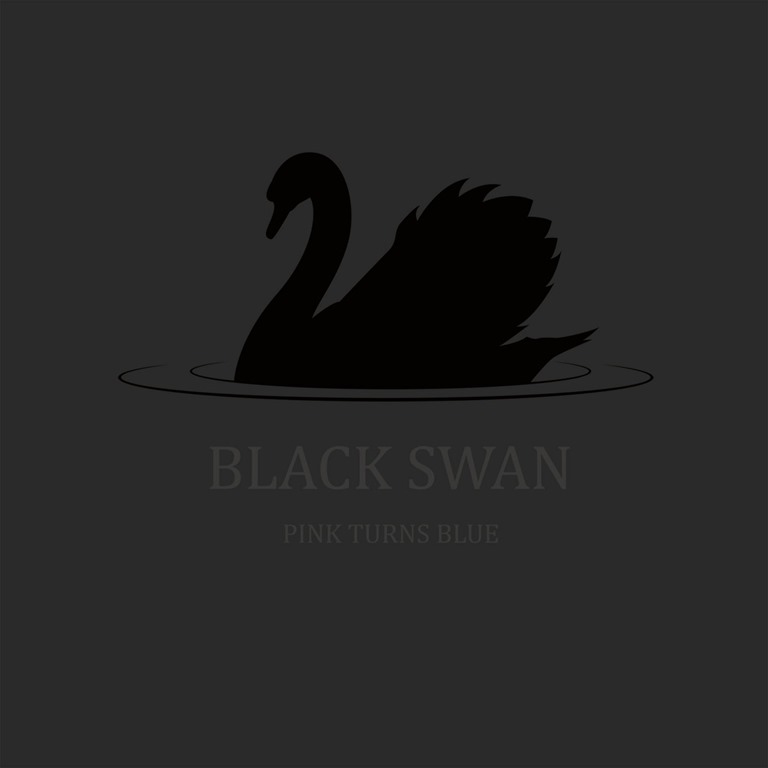
It seems quite remarkable that Pink Turns Blue are still going a full forty years on from their formation in Berlin in 1985. Starting out as a duo consisting of Thomas Elbern (vocals and guitars), Mic Jogwer (vocals, bass and keyboards) and a drum machine, they’re considered a part of Germany’s first wave of gothic rock.

The history of goth is certainly a divergent one: the hotbed of dark post-punk that was Leeds in the early 80s spawned a host of bands approximately simultaneous with the emergence of The Cure and Siouxsie and the Banshees, and Germany latched on to them and The Sisters of Mercy early on – so in relative terms 1985 feels like being late to the party. But at the same time, this was a peak year for goth across the continent.

As a personal aside, despite being deep into my goth once I discovered The Sisters and The Mission in 87/88 (late? I was 12/13 and simply too young to be into anything other than Duran Duran and Madness in 84-85) my introduction to Pink Turns Blue was 1994’s Sonic Dust, which was floating around at the second-hand record shop I worked at on weekends. It very much sounded like the indie stuff of the time, but perhaps with a dark edge, but gave no hint of the band’s history.

Since then, they’ve returned to their roots somewhat, and Tainted (2021) was a dark, brooding masterpiece which largely went under the radar, largely like the band’s output as a whole. But while latter-day acts like Editors and Interpol draw the media and commercial attention, Pink Turns Blue just keep on. And Black Swan is a classic addition to their catalogue.

The chiming, picked guitar of ‘Follow Me’, brings an instant pang of melancholy. The rippling synths and crisp drums make everything tight and the sadness begins to permeate. It’s a wistful, reflective sensation: this is where Pink Turns Blue excel. Their songs are drenched with an aching weight.

Jogwer’s clipped vocal delivery sits perfectly with the rolling bass and insistent rhythms, which underpin guitars which wash and chug in neatly-orchestrated duels. And so it is that Pink Turns Blue make music that’s dynamic, exciting, and sad, at the same time.

Single cut ‘Can’t Do Without You’ is simultaneously perfect pop and melancholy indie, and ‘Dancing Wirth Ghosts’, another single, brings the jangle of The Sisters’ First and Last and Always in a style that’s reminiscent of ‘Walk Away’ and ‘No Time to Cry’. Because it’s still possible to be pop and intense and claustrophobic. ‘Fighting for the Right Side’ steps things up and punches hard.

‘Why Can’t We Just Move On’ reminds me more of Slow Readers Club, dark-inflected indie / alternative, with a vibe that balances mellowness and melancholy with a certain tension, and this is really where Pink Turns Blue excel. The title track – by far the album’s longest song, clocking in at nearly six minutes – really taps into emotional undercurrents with its downtempo, reflective styling. There’s no one thing that one can identify as the thing – it’s all about the mood, the delivery. It goes beneath the surface, resonates on a level that’s beyond the articulation of cause and effect: it’s simply achingly sad, but at the same time, utterly beautiful.

Pink Turns Blue have a quite unique take on mid-80s post-punk / goth, and unlike many of the bands which emerged from the class of ‘85-’87, they don’t conform to the clichés to the tropes, the template which became predictable and tedious so quickly, and yet has endured, with every other band doing doomy baritone, aping Craig Adams’ bass pinned to a thumping drum machine. And this is integral to their enduring appeal. They don’t carbon copy The Sisters of Mercy, they’re not another Rose of Avalanche. Yes, they do incorporate certain elements, as ‘Please Don’t Ask Me Why’, with its thumping bass groove and chorus-heavy guitars evidences, but at the same time, they do something different and sound uniquely Pink Turns Blue, and it’s not only the German inflection. Again, it’s not easy to pinpoint the difference: the simple fact is that it’s tangible. Black Swan is a great album: it’s consistent, it’s got mood and feeling, and has something that’s just beyond reach, and that is magic.

AA

a3699160702_10

1st March 2025

Christopher Nosniboir

Richard Rouska is something of a cult legend in his own lifetime: back in the 80s he was pivotal in the Leeds zine scene, documenting the emerging post-punk movement Leeds remains so renowned for, in real-time, subsequently writing a number of books. Along the way, he’s made some music of his own, recently making Well Martin This is Different his primary focus, with some prolific results. Finding The Ai G-Spot is WMTID’s fifth since their inception in the mid-late eighties, and serves up a set of remixes, with proceeds from any donations going to the Throat Cancer Fund.

And yes, it certainly is different, and that’s clear from the get-go. WMTID’s music is essentially electronica, but draws on a host of elements which have their origins in different decades and different scenes. I will admit that I misread the title as Finding The Ali G-Spot initially. Ai-iit! But while this album draws on a huge array of influences, you won’t find any naff cultural appropriations.

‘The Prince is Dead (Again)’ is a twisted hybrid of lo-fi post-punk, 80s electronic industrial (think Wax Trax! stuff in the late 80s / early 90s), space rock, and Krautrock, a motorik groove stricken through with some wild orchestral strikes and multi-layered vocals – and this is to an extent the template: ‘03:33 Time’s Up’ is exactly the same duration as the original version (‘333’) which appeared on I Know What You Are But Who Am I? in the Autumn of 2024, tweaked to optimise the hypnotic rhythm and detached-sounding vocals. The result is somewhere between DAF and early Human League. ‘Deep Down Low II’ – again reworking a track from I Know What You Are goes full-on techno / cybergoth stomper, with industrial-strength beats pounding away relentlessly. It works so well because it doesn’t take from the original, instead simply rendering it… more. More. MORE! And I want MORE!

There are hints of both KMFDM and very early New Order about ‘It’s (Another) Lovely Day’, but then, it’s as much a work of buoyant lo-fo indie and bedroom pop, while ‘Little Bombshells’ comes on a bit Prodigy, but again, a bit technoindustrial, and a bit kinda oddball, bleepy, bloopy, twitchy, stuttery, the vocals quavering in a wash of reverb as crashes of distortion detonate unexpectedly. Elsewhere, ‘Waiting For The End…’ goes dark and low and robotic, and ‘Three O’Clock Killer’ is hyperactive and warped, and brings menacing lyrics atop a baggy 90s beat.

It really is all going on here, and the end result feels like a wonderfully eclectic celebration of music, articulated through some quite simple compositions, all of which have solid grooves providing the backbone of each.

My general opinion of remix albums is widely documented and not entirely enthusiastic, but Finding The Ai G-Spot is a rare exception, mostly because it doesn’t feel like a remix album an doesn’t offer three or four unnecessary and unrecognisable versions of each song, boring the arse off all but the most obsessive fan. In fact, if you’re not up to speed on WMTID’s output – and there’s a fair chance you may not be, to be fair – Finding The Ai G-Spot offers a neat entry point and summarises the last couple of albums nicely, too.

AA

a2835565654_16

Reinhold Friedl & Costis Drygianakis – ta amfótera en / two into one

zeitkratzer productions – 28th February 2025

Christopher Nosnibor

Reinhold Friedl has been a significant contributor to the world of avant-garde music for a long time, not only as a leading explorer of the potentials of the prepared piano, as pioneered by John Cage, but in excavating the works of historical composers and reconfiguring those of more contemporary ones, leading the zeitkratzer ensemble through performances of Metal Machine Music and selected cuts from Whitehouse’s catalogue.

This particular collaboration coalesced during the pandemic, after which, as we learn, ‘Costis Drygianakis recorded Reinhold Friedl’s special piano sounds on a Blüthner grand piano with a bunch of extremely diverse microphones, ranging from a beautiful old Neumann U67 to a cheap tape cassette machine and even a Dictaphone. The resulting recordings have been classified, selected and processed at his home studio in Kritharia, Greece. No other sounds have been used.’

ta amfótera en is one continuous piece, just over an hour induration, and it’s a journey, to say the least. By ‘journey’, I mean torturous experience. It’s dark, punishing, pulverising, scraping, nightmarish. The first two minutes alone are a soundtrack to extreme horror – fear shaking amidst tremulous piano, heavy discord rumbling low and disconcerting to the point of spiking anxiety, after which there are protracted warped drones and rumblings which drag on, scraping and twisting, sonorous and uncomfortable. Amidst rolling, swirling, churning ambience and awkward, uncomfortable noise, random piano notes spike, seemingly at random. Gongs chime, crash, and clash.

When I was a child, the warping, discordant intro to ‘Rio’ by Duran Duran intrigued me. It created a palpable tension which affected me inexplicably at the age of nine. Perhaps this brief snippet of sound, dissonant, metallic, paved the way to my later obsession with musical otherness. The specific reason I reference this formative experience is that lengthy segments of two into one sound almost exactly like those opening bars of ‘Rio’ – scraping, discordant, a little like twisting metal.

two into one warps and hums, scrapes and drones, and occasionally plonks and thunks, the sounds rising from a random and seemingly unarranged twisting spill of sonic strangeness. There are chimes, and chsllenges.

There is much space – just as there are whistles and feedback – on two into one. The experience is, perhaps inevitably, disorientating, vaguely bewildering, even. There is something about this work which lifts you off the planet: to attempt to pin it to the particulars of contemporary rock music seems to be missing the point. Explore this release… and discover.

AA

Friedl 2

Metropolis Records – 7th March 2025

Christopher Nosnibor

As Metropolis continue with their run of PIG reissues, the arrival of the remastered Wrecked reminds us of the run they had in the 90s. Having hardened up the sound showcased on debut album A Poke in the Eye… and follow-up Praise the Lard, and having toured with Nine Inch Nails in the Downward Spiral tour, PIG found themselves signed to Trent Reznor’s Nothing label for the release of Sinsation (1995), which melded the more experimental aspects of The Swining and Red Raw & Sore from a couple of years previous and cranked up the guitars – and the sleaze and depravity – to eleven. And after Sinsation came Wrecked, and having returned to Wax Trax!, in the US at least, the album was released first in Japan in ’96 and the US a year later with a substantially different tracklisting – and was an absolute bastard to get here in the UK in either form.

This version brings together the tracks which featured on both the original Japanese edition – which was criminally missing ‘No One Gets Out of Her Alive’ and ‘Contempt’ – and the American edition, which brought ‘The Book of Tequila’ and ‘Fuck Me I’m Sick’ in their place.

Wrecked very much represented PIG at their wildest, most wide-ranging, and arguably their heaviest. The title track drifts in on some mellow steel guitar country vibes and ambient chilling… and then gets gnarly with gritty industrial rigging and snarly vocals that are quintessential PIG. Raymond Watts may not have been in the best place during this period, but creatively… the music he was making was something else, and Wrecked stands up just as well now as it did on release. I’ve mentioned previously that PIG stand apart from their contemporaries, and while Watts was a touring member of Foetus in the late 80s and worked with JG Thirlwell when PIG was born, as well as being a member of KMFDM for a time, as much as those elements of aggrotech and industrial metal are core to the sound, Watts took it somewhere else entirely. Where? It’s hard to say: PIG’s work simply doesn’t conform to any genre forms or models – PIG just are PIG. While a couple of tracks had been previously released in different forms – the original versions of ‘Find It, Fuck It, Forget It’ and ‘Blades’ appeared on The Swining, released only in Japan in 1993 (prior to a 1999 US reissue) – it would be wrong to suggest that their inclusion on Wrecked suggested a lack of material, given just how radically different these versions are. The same is true of the reworked version of ‘My Sanctuary’, which appeared on Praise the Lard: expanded, more grandiose, more everything, the ‘Spent Sperm Mix’ taking the track to preposterous heights while audaciously combining industrial, techno, and gospel with orchestral strikes galore.

Since the US and Japanese editions included various alternative mixes, it would have been nice to see this version feature all sixteen tracks featured on the 2017 tour edition, which is arguably the definitive edition. But what we learn here is that you can’t have everything, and this edition at least has the majority of the prime cuts. Sequentially, it follows the Japanese edition, with the tracks which featured on the US release at the end.

The drumming on this album is brutal, choppy, the guitars cutty, stuttering, heavily distorted, but with a bright, clear, digital crispness that really slice hard. Watts growls, snarls and sneers, dark and salacious, and everything about Wrecked is harsh and ugly. ‘Find It, Fuck It, Forget It’ is a full-throttle beast of a track, with a sample-laden breakdown in the mid-section, with snippets of reports on American obesity and the like (in place of the sped-up snippet of ‘The Dance of the Sugar Plum Fairy’ on the original), and it’s pretty dark and unforgiving.

‘Blades’ is one of the greatest tracks ever recorded by PIG or anyone – it’s one of those songs that just does something to you. The ‘Slash Mix’ on here may not be the best version – for my money, I prefer the more orchestral original, but this rendition is dense and girthy, and fits with the sound of Wrecked. Then there’s ‘Save Me’, the album’s slowie, and so, so powerful. It takes ‘anthemic’ in a whole new direction.

Watts has always made music with a boldly theatrical approach to the industrial template – and Wrecked really turns up the dial on everything – density, volume, aggression, intensity, and this expanded reissue is an essential document in the broader industrial oeuvre. It’s also an outstanding album in its own right.

AA

67fd98d7819df26e756c1ecba56842acbbd35016

Cruel Nature Records – 21st February 2025

Christopher Nosnibor

This split release has a lengthy backstory, which is given in full on the label’s Bandcamp page – but the short version is that when York’s Neon Kittens (how had I not heard (of) them, given that they appear to be from round my way and absolutely my bag? I feel ashamed, and fear I cannot even remotely claim to have the finger on the pulse of my local scene right now – but still, better late than never, right?) approached The Bordellos about a collaboration, the latter, having taken an eternity to only half-finish their current album-in-progress, some ten years after the release of will.i.am, you’re really nothing, offered everything they had for a split release. And lo, this is it.

I suppose the eight songs Neon Kittens have contributed here provide a solid starting point to their rapidly-expanding catalogue, and being paired with The Bordellos works a treat. Both espouse the same lo-fi DIY ethic, with a certain leaning toward indie with a trashy punk aesthetic.

That the cassette edition sold out on advance orders hints at the anticipation for the release: for, as The Bordellos describe themselves as being ‘ignored by millions, loathed by some, loved by a select few’, when you’ve got a small but devoted following, they get pretty excited for new material.

‘Set Your Heart to the Sun’ is perfectly representative of their scratchy, harmony-filled indie – kinda jangly, a tad ramshackle, but direct, immediate. Dee Claw’s airy vocal contributions really lift the sound and raise the melodic aspects of the songs. Not all of the songs have full drum-kit percussion, often favouring tambourine or bongos or seemingly whatever comes to hand, and more than any other acts, I’m reminded of Silver Jews or really, really early Pavement – those EPs that sounded like they were recorded on a condenser mic from the next room with more tape hiss than music, but still undeniably great tunes. And yes, they really do have great tunes – overall, they’re pretty laid-back in their approach to, well, everything: remember when ‘slacker; was a thing? Yeah. In place of polish, they have reverb, and these songs tickle the ears with joy.

Neon Kittens bring a rather denser sound and a greater sense of urgency with the buzzy, scuzzy ‘Better Stronger Faster’. A hyperactive drum machine stutters and flickers away beneath a sonic haze of fuzzy guitar: there are hints of Metal Urbain crossed with The Fall and Flying Lizards in the mix, while ‘All Done by Numbers’ brings Shellac and Trumans Water together in a head-on collision – and one suspects any similarity to Shellac’s ‘New Number Order’ is entirely intentional from a band who recently featured on a Jesus Lizard tribute. ‘Cold Leather’ presents a spoken word narrative over a lurching, lumbering morass of discord, held together by the whip crack of the snare of a vintage-sounding drum machine.

The majority of their songs are around the two-minute mark, and crash in, slap you round the chops, and are done before you really know what’s hit you. ‘Deaf Metal’ is a work of beautiful chaos, constructed around a thick, rumbling bass and rolling drums., while the rather longer ‘White Flag’ is almost a stab at a grunge-pop song, while the discordant clang of ‘Sailing in a Paper Boat’ is absolutely The Fall circa Hex Enduction Hour: lo-fi post-punk racket doesn’t get much better than this.

AA

a3951021685_10

Majestic Mountain Records – 28th February 2025

Christopher Nisnibor

Kodok, the third album from The Grey, is pitrched as ‘a masterful fusion of raw energy, deep emotion, and undeniable artistic growth… carv[ing] a new narrative, guiding listeners through an intricate yet comforting journey of power, pain, and catharsis.’ They’ve also put a lot of work into broadening their range, or, as they put it, ‘Kodok expands the band’s sonic palette, offering a richly varied tonal composition. The album is further elevated by collaborations with an incredible roster of guest artists, including Will Haven, Ace Skunk Anansie, Ricky Warwick, fattybassman, and dARKMODE, bringing unexpected depth and fresh musicality to the project.’

The album contains only six tracks, but there are some bona fide epics here, in particular the first piece, ‘Painted Lady’, which extends to almost twelve minutes. It begins with dark, thunderous rumblings, and then the guitars crash in, and the riff GOES. It’s a slow, pummelling brute of a tune, with rolling drums and weighty bass, but the guitar has an unexpected brightness to it… and over it’s expansive duration, we’re lead through an array of soundscapes – sometimes rolling hills, others gathering storms over exposed rock summits, and around the eight-minute mark it goes full riff juggernaut.

It’s metal, it’s post-metal, it’s stonerish, it’s wide-ranging musically articulate. And it feels like an album. They explain how it’s ‘Designed as a sequential body of work—with a clear beginning, middle, and end’ and that ‘Kodok invites listeners to fully immerse themselves in its journey’, and it certainly does feel like a journey,

The seven-minute ‘La Bruja (Cygnus)’ really goes all out on the weight, the heft of the guitar churning out a supremely girthy riff is powerful, but the second half switches to amore ethereal sound, with subtly chiming guitars and atmospheric synths, and – for the first time – vocals, before a crushing flange-soaked riff assault by way of a finale. ‘Sharpen the Knife’ goes darker and heavier, with a grainer, sludgier feel and invites reference to Neurosis in its thick, dense, earthy churn… and then things get heavier still on the nine-minute ‘CHVRCH’, which is simply immense in every respect, its dynamics evoking not only Neurosis but Amenra. There is delicacy, grace, elegance here, and you feel yourself ache inside, and then the pedals are on and immediately it’s a tempest.

By rights, I should be yawning at another nine-minute riff-driven workout with dynamic, prog-influenced breakdowns, but there’s something in that wait, the suspense, then the release when it finally drops that’s exhilarating, and ultimately a source of joy. I suppose that just as some people get a huge buzz and the big laugh from the sitcom or comedian with a catchphrase or quintessential punchline that really is IT, the anticipation of the riff landing followed by that BOOM! moment is similar, only more cathartic. It’s not easy to articulate to anyone who hasn’t experienced that specific rush just how powerful it can be, and how it’s a multisensory explosion, something that’s physical, emotive, almost euphoric, as well as simply something you hear with your ears.

During the course of Kodok, The Grey deliver these moments with frequency and precision, with maximum impact. When there are vocals – as on the simple, acoustic ‘Don’t Say Goodbye’ – they’re compellingly melancholy, and it provides welcome transition ahead of the soaring epic that is ‘AFG’, a cut whereby its five-minute running time is simply nowhere near enough.

The download features a couple of extra cuts, but in terms of maintaining the album’s integrity, no extras are required.

AA

a3706604145_10

Kranky – 21st February 2025

Christopher Nosnibor

One thing you have to say about Tim Hecker is that his output has been varied, and his career interesting. This isn’t a case of damning with faint praise: it’s very much about highlighting what makes him such a remarkable artist – the fact he doesn’t simply mine the same seem in perpetuity. The difference between the organ-based compositions of Ravedeath, 1972 (2011) and the dark ambience of No Highs (2023) is vast, and is emblematic of an artist who simply cannot be confined within narrow constraints. Electronic music is an immensely broad church, and Hecker’s output ventures the field far and wide.

This is perhaps exemplified no more clearly than on Shards, ‘a collection of pieces originally written for various film and TV soundtracks Tim Hecker has scored over the last half decade. These compositions were originally written for scoring projects including Infinity Pool, The North Water, Luzifer, and La Tour.’

The album’s seven compositions highlight Hecker’s capacity to mould mood.

‘Heaven Will Come’ evolves and expands over the course of its four minutes and forty-eight seconds, growing from delicate but expansive elongated organ-like notes to a swirl of anxiety, with dank, rumbling bass lumbering around, as if without direction, amidst warped, bending undulations, an uneasy discord. ‘Morning (piano version)’ is very pianoey… but also brings booming bass resonance, and slight, flickering, glimmers of sound, almost insectoid, and mournful strings which bend and twist and ultimately fade… to be replaced by a deathly bussing drone and distortion which fills your head in the most uncomfortable way.

The hectically scratchy plink and plonk and looping delirium of ‘Monotone 3’ hints at the trilling of woodwind-led jazz, but there are menacing drones and weird shapes being sculpted here.

Hecker specialises in the disorientating, the unheimlich: the majority of the pieces here are superficially calm, tranquil – even the more brooding ones. But something about each isn’t quite right – there are dark undercurrents, or there is a twist, from out of nowhere. And herein lies Hecker’s unique skill as a composer.: he can twist ambience into discomfort, and at the most unexpected times and in the most unexpected ways. Consequently, Shards brings many twists and turns: at times soothing, at others tense, and at others still claustrophobic and even almost overwhelming, and it completely take you over as you feel this range of different sensations.

Shards – appropriately titled in that it draws together splinters of Hecker’s diverse  and divergent output is an exercise in depth, range, and magnificence. Sit back, bask, and take in the textures.

AA

a3720420051_10

Intervention Arts

Christopher Nosnibor

While eponymous debuts are commonplace, apart from artists who name all of their albums eponymously, it also seems to be a thing for long-established bands to release a self-titled album well into their career, and, to my mind, it seems somewhat strange. Nevertheless, Killing Joke have in fact done both, and Interpol have also managed two eponymous albums (if you count album number five, the anagrammatic El Pintor). Have you run out of ideas or something?

The Awakening has been a thing for a good quarter century now, during which time Ashton Nyte has also released a number of solo albums, a brace of books, and been a constant feature in the lineup of industrial / goth collective Beauty in Chaos. He’s a busy man.

The twelve tracks on The Awakening represent something of a revisiting of the classic goth template, and in this context, the title makes perfect sense. It’s a return to the beginning, treading the ground where it all began, and feeling that spark once again: an awakening, indeed.

‘Shimmer’ creates the atmosphere with dolorous bell chimes and slow, deliberate, ceremonial percussion, before single cut ‘Mirror Midnight’ thumps in with a sturdy bass groove melded tight to a relentless, solid drum machine beat. Laced with delicate traces of brittle, chorus-laden guitar, it provides the backdrop to a crooning baritone vocal delivery. Lyrically, it’s rich in esoteric imagery and it’s classic goth – mid-80s in style, md-90s in production. And this is essentially The Awakening: it’s dark, brooding, espousing the doomed romanticism that was central to The Sister of Mercy’s genre-defining debut album, First and Last and Always.

‘Through the Veil’ goes epic, and if its arena aspirations seem somewhat removed from the claustrophobic confines of the first phase of goth, it likely owes something of a debt to Floodland, while the acoustic-led ‘Your Vampire’ evokes The Mission circa Children (I’m thinking ‘Heaven on Earth’, but perhaps a little less bombastic), although ‘Island in a Stream’ is an equally valid reference point.

‘Haunting’ – also a single – and an obvious choice, it has to be said, is a burly burst of muscle-flexing guitar propelled – again – by a throbbing bass and pumping drum beat, draped with cool Cure-esque synths, culminating in a climactic rush of a finale. ‘See You Fall’ stands out as another quintessential goth banger: the instrumentation again is reminiscent of early Mission songs, and the drumming, with its dominant snare is absolutely cut from the same cloth as The First Chapter, although Nyte’s vocal reminds me – quite happily – of Andrew Eldritch demoing vocals on ‘Garden of Delight’.

Things take a turn for the heavy – and the political – on ‘Fallout’. It’s a reminder that the music of the 80s emerged from a time of terror, a political lurch to the right, and living under the shadow of the bomb. And here we are again. We can never escape history: it simply repeats. And so, it stands to reason that music is also cyclical.

‘Not Here’ hints at Bauhaus, while the thunderous ‘Cabaret’ – which seems to take certain cues from ‘Dead Pop Stars’ by Altered Images and The Psychedelic Furs’ ‘Soap Commercial’ in terms of its spindly lead guitar line – is a modern goth classic.

The Awakening mines a seam of trad goth which straddles the first wave and the 90s revival, or second wave – which is precisely the starting point of The Awakening. This album feels rather like time travel, in the best possible sense, and, in context, it’s less a case of homage as revisitation and renewal.

AA

AA

The Awakening 1 - photo by Ashton Nyte

Editions Mego – 21st February 2025

Christopher Nosnibor

Russell Haswell and Florian Hecker are both prolific as solo artists, each with numerous collaborations with other artists to their respective credits, Haswell also having been a contributor to and touring member of Consumer Electronics. The UPIC Diffusion Sessions are a long-running collaborative project which began in the early 2000s, exploring Iannis Xenakis’ UPIC system as the sole instrument.

As the accompanying notes outline, ‘The UPIC is a computer music system that generates sound from visual input. The original intention of the system developed by Xenakis was to make a utopian tool for producing new sounds accessible to all, independent of formal training. One can locate footage of Xenakis and a group of children making drawings for the system in the 70’s.’ They continue, ‘The duo set off experimenting with a diverse array of hand-drawn images to feed the UPIC system including news photographs of disasters and atrocities, “food porn” through to depictions of the natural world and microscopic images of molecular structures (including ‘the blackest ever black’). The resulting eccentric audio from these images is claimed by the artists to heighten synaesthesia and is as mysterious as it is baffling.

I suppose the potential outputs for the UPIC are as infinite as the inputs, and this alone makes for a fascinating project, and the results here are, indeed, mysterious and baffling. The recording from this session is represented by a single track, just over half an hour in length.

Immediately, trilling oscillator tones rise in pitch – and keep rising, until you feel the pressure build inside your skull. There are glitching spasms of sound which flash across like subliminal messages. The pressure drops and the siren wails fade out, before scuttering blasts of seemingly random noise collage and intersect across one another, buzzing and fizzing, humming and thrumming… the forms move quickly, and shift from dark to light, hard to soft instantaneously. Shimmering sprays of abstract sound burst like fireworks, short interludes of harsh noise wall, microtonal bubbles and ZX Spectrum like babbles and bleeps all intersect or pass within mere seconds of one another. It is, very much, a sonic collage, the audio equivalent of William Burroughs’ cut-ups, an aural articulation of the simultaneity of experience of life in the world. Burroughs’ contention was that linear narrative is wholly inadequate when it comes to representing the real-world, real-time lived experience, whereby overheard conversations, snippets of TV and radio, and all the rest, not to mention our thoughts and internal monologues, overlap, and to present them sequentially is not true to life.

Leaping disjointedly from one fragment to the next at a bewilderingly rapid pace, listening to this is rather like the way the mind, and often conversations, skip from topic to topic without ever seeing any single train of thought to a defined conclusion, bouncing hither and thither in response to triggers and associations which often seem to bear no logic whatsoever.

There are thick, farting sounds, buzzes like giant hornets, choruses of angry bees, weird sonic mists and transcendental illuminations… of course, these are all conjured in the mind in response to these strange, sometimes otherworldly, sci-fi sounds, part BBC Radiophonic Workshop, part tinnitus and nightmare of imagination. Unpredictable isn’t even half of it as alien engines and spurs of 80s laser guns crossfire against earthworks, roaring jets, explosive robotics, skin-crawling doom drone, whispers and whistles, proto-industrial throbs…it’s a relentless blizzard of sound.

‘Experimental’ has become something of a catch-all for music that draws on eclectic elements or perhaps incorporates a certain randomness: this, however, is truly experimental, given that there is no way of knowing how the programme will interpret the input provided. And as much as the output involves oscillatory drones and the kind of synthy sounds associated with analogue, and with woozy, warping tape experiments, it evokes the drones of collapsing organs, wild sampling and everything else your brain could possibly conjure.

At once exhilarating and exhausting, UPIC Diffusion Session #23 is… an experience.

AA

eMego316V front

Canadian blackgaze solo-project UNREQVITED unveils the acclaimed new seventh full-length A Pathway to the Moon in full.

UNREQVITED comment: “This album represents the most significant sonic evolution in my journey thus far”, mastermind 鬼 writes. “With A Pathway to the Moon, I have embarked on a daring and novel exploration into a predominantly lyrical realm, diverging from the traditional Unreqvited sound. As we evolve into a touring band, this album was carefully crafted with the live performance in mind. These new compositions further elevate Unreqvited’s expansive soundscape, infusing it with grandiose anthemic refrains and vibrant, expressive lyricism.”

AA

af19ac22-d776-a893-33f9-469695aca701