Archive for the ‘Albums’ Category

Everyday Life Recordings – 8th December 2017

Christopher Nosnibor

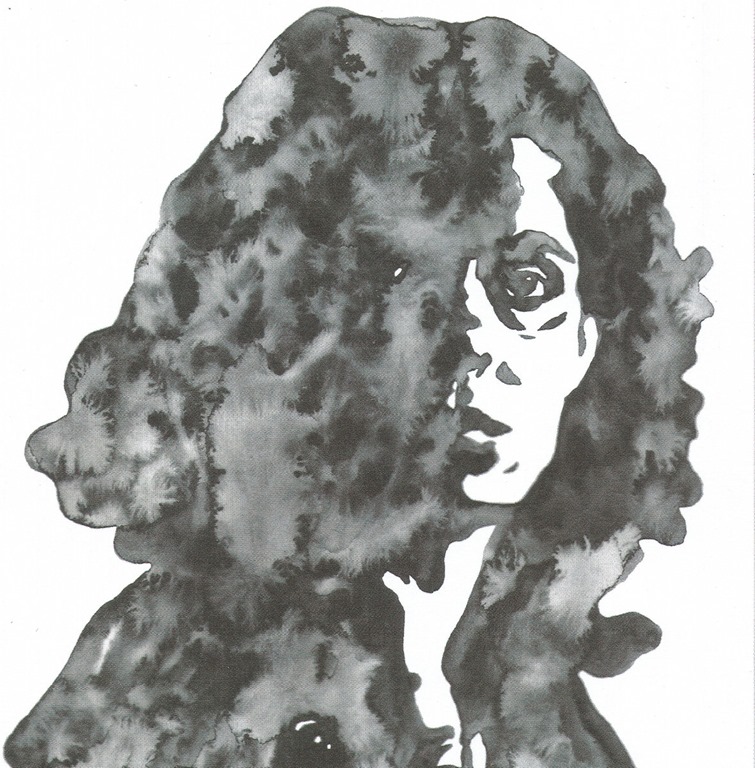
They’re described as ‘motorik-punk outsiders’. Something about those three words grabbed me. Individually, they’re words I read several times a day in reference to bands being thrust in y direction for a critical appraisal. The world of music PR and criticism – not that many critics seem to be especially critical these days – is awash with cliché. And cliché begets cliché: no-one’s interested in inventing the next big thing: it’s far safer all round to recreate the last big thing in an infinite loop of regression. Punk never died, it just got diluted and turned into guitar-pop for teens too sappy to handle anything heavy. But when did the Krautrock revival begin? When The Fall emerged with their Can-influenced repetitious racket in the second half of the 70s, acts like PiL and Joy Division may have cited leading exponents Can and Kraftwerk as a touchstone, but few really embraced the now-ubiquitous ‘Apache beat’ innovated by Neu! And it is ubiquitous, and has been for some years now.

Still, few punk bands of any strain incorporate relentless, repetitive 4/4 rhythms in an overtly Krautrock way. Moderate Rebels, however, have really made this their signature (if you’ll pardon the pun). Not that they’re ‘punk’ in the sense it’s commonly perceived, nor in any of its contemporary revisions: Moderate Rebels have very much taken the spirit of The Fall as their template, and having set the template, they work the absolute fuck out of it over the course of the thirteen tracks on this, their debut album.

There’s certainly something Fall circa Bend Sinister or Frenz Experiment about the chugging ‘Extraordinary’ with its drawling, monotone an almost off-key multiple vocals, repetitious lyrics and endlessly looping chord sequence and beat. It should be as tedious as hell, but the longer it stretches out, the more it drags you in, and it’s a killer earworm. The only criticism is that it simply isn’t long enough. It’s a trick they repeat on a number of occasions, with guitars that jangle and scrape at skewed angles over strolling basslines and pulsing synths. And all the while, the rhythms hold steady, mid-tempo, stomping along with minimal fills. These aren’t songs that follow verse / chorus structures, evolve, build, or ‘go’ anywhere. The effect is simply cumulative. And that’s only amplified over the album’s duration: dipping in’s fine, but it’s best played as a whole, and better still, on repeat for a full afternoon, to achieve optimal enjoyment and appreciation.

Moderate Rebels are by no means one-trick ponies, though, and there is more to The Sound of Security than calculated monotony and the ploughing of sonic furrows that dig into the psyche by virtue of sheer tenacity.

There are pieces which work spacious atmospherics, with sputtering vintage drum machines bursting through elongated e-bow drones and rippling piano. Elsewhere, the laid-back and loose ‘Waiting for the Water to Clear’, and the slacker country of ‘I’m Feeling the Deep State’ showcase a more indie, Pavement-y vibe.

But mostly, it’s about plugging away, chugging and thumping. The reverb. The repetition. And the repetition. And not to forget the repetition. There is no such thing as too much of a good thing.

AA

Moderate Rebels – The Sound of Security

Metropolis Records – 13th October 2017

Christopher Nosnibor

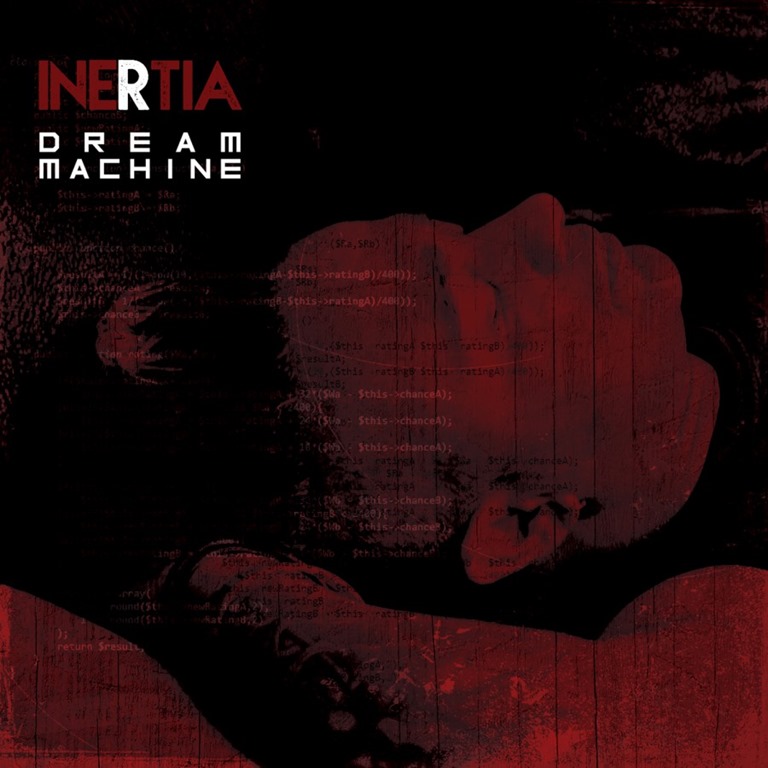
I’ve lost count of how many bands and songs I’ve encountered that reference ‘dream machine.’ The first was perhaps back in maybe 1992, aged seventeen, on purchasing Scenes from the Second Story by The God Machine. Although I had read Naked Lunch, Junky, and Queer (which was the limit of William Burroughs material available in my local Waterstones), I had yet to discover the weirder and more wonderful, experimental side of Burroughs, let alone his accomplice Brion Gysin, who was as responsible for the advent of the cut-ups as Burroughs himself. It was electronics technician, computer programmer, and peripheral Beat Generation associate, Ian Sommerville who invented the stroboscopic device know as the Dream Machine in 1960. I do sometimes wonder how many of those references to Dream Machines are aware of its origin and history, but given Burroughs’ popularity in industrial / related circles, the chances are probably fairly high. Which then leads to the question – just how much is this about trip, and how much about hip?

Inertia have been kicking out technoindustrial tunage for almost two and a half decades now. Over that time, they’ve acquired a respectable fanbase and released a slew of albums. As is always the case with the ‘goth’ scene, it’s all happened more or less invisibly, underground, and internationally rather than domestically.

Dream Machine is very much an album which follows established templates: insistent, bubbling synths heave and grind over thumping sequenced beats with a toppy edge and hard dancefloor edge. It’s solid, and it has tunes. It’s got the right balance of attack and melody, edge and groove. In fact, it’s pretty much back-to-back tracks you could get down to on the dancefloor at a goth night, and steel toe caps would be recommended.

The drum pattern at the start of ‘Only Law’ is a near-lift of the intro to ‘Burn’ by The Sisters of Mercy, before it all goes Music for the Masses Depeche Mode. It’s not just the insistent synths and jittery sequenced bass, or the hard-edged beats, but the soulful, melodic, backing vocals. Elsewhere, ‘Thorns’ goes Ministry circa Twitch. But for the most part, as is so often the case with longstanding technoindustrial acts, I hear Depeche Mode, with a dash of early Nine Inch Nails. I’m by no means averse to the sound, the style, or the influences: in fact, I’m a huge fan of both DM and NIN and have more Wax Trax! 12” than I could play in a week.

So where’s the beef? It’s all a bit samey. I feel like I’ve been listening to the same hardfloor techno-driven industrial-strength electro grooves for more than twenty-five years. Cybergoth, Darkwave, EBM, Aggrotech, Industrial Dance Music… the terminologies matter not. Some came, some went, but musically, it’s much of a muchness and I’m not up for debating the semantics of microgenre aesthetics.

Dream Machine is ok. It’s got some decent tunes. And it sounds like countess albums I’ve heard before.

AAA

Intertia - Dream Machine

Unknown Pleasures Records – 14th February 2018

Christopher Nosnibor

Given the band’s name and that of the label they’re signed to, it’s only fitting that they’re exponents of bleak synth-driven post-punk. Sure enough, as the Italian five-piece’s biography notes, Stefano Bellerba (vocals, guitar), Leonardo Mori (synth), Matteo Luciani (bass), Saverio Paiella (guitar), and Daniele Cruccolini (drums) formed in 2010, and united over their love of Joy Division, The Cure, Nine Inch Nails, and Depeche Mode. The bio adds that ‘their music is also strongly influenced by Bauhaus, Siouxsie and the Banshees, Yeah Yeah Yeahs, Japan, The Damned, Interpol, Suicide, CSI, CCCP, and Massimo Volume.’

One of my favourite poems of all time is Philip Larkin’s ‘This be the Verse’, and the fact they put it to music for single release in the summer of 2017 -and made a decent job of it – got me on-side ahead of the new album.

The album in question, Santa Sangre is a lot more guitar-orientated and edgier: while the synths are still very much in the mix, the sound is dominated by brittle, metallic-edged guitars drenched in reverb and flanged hard. It’s the sound of 1982-1985. I’d be hesitant to use the term ‘gothic’ or any variant, despite the snaking atmospherics of tracks like ‘Rejoice’, with its strolling bassline and vocals all but lost in an ocean of echo, which allude to the likes of The Danse Society and acts of similar vintage.

I make no apologies for being an old goth (although I’m not nearly old enough to be a proper old goth, having been born in 1975 and only discovered alternative music in any form in 1986/7). Similarly, I make no apologies for not being a purist, or for my knowledge of second-wave and beyond bands being limited. There’s so much else out there in the musical sphere. Yet, at the tail end of the year, feeling weary and wintery and withdrawn, I find myself here – as I did late last year, and the year before – with a crop of albums which betray gothier leanings which leap out as among the strongest and most compelling releases I’ve received all year.

Lead single, ‘Circle’ was a blast of buzzing bass and squalling guitars, with elements of The Jesus and Mary Chain and A Place to Bury Strangers, pitched with chilly synths and vocals with a grippingly desperate edge. It’s placed up front in the track listing, and serves the purpose of demanding the attention with its urgency and serrated edges.

Snaking basslines, choppy guitars and tribal drumming abound, but there’s a pop edge to a number of the songs: ‘Blown Away’ melds fractal guitars to an insistent flanged bassline that’s as pure Cure as the synths which eddy at a respectful distance in the background. There’s a certain bounce – and even catchiness – to the richly-layered shoegaze-goth of ‘For Every Flaw’.

When they do lugubrious, it’s as sparse and bleak as anything on Faith, and when they do slow-build, they really go for delayed gratification, forging a dense atmosphere along the way.

Santa Sangre is taut, tense and crackles with dark energy.

AA

Japan Suicide - Santa Sangre (cover)

20th December 2017

There’s something uniquely enjoyable about watching a band develop from their most formative stages to become the act they aspired to be, and showed the potential to be. I first encountered Seep Away on a bill of noisy shit around Christmas in 2015, soon after they came into existence.

They describe their sound as ‘raw and punkish,’ and not that ‘there’s not too much melody, a lot of anger and a tonne of noise’. Their performance was ragged, and it was clear they were very much in development, both musically and as an act. But the sheer passion and raw energy they poured into that set was something else. They would stop and gasp for breath between songs, having played each one like it was the last song they would ever play.

Over the course of the next two years, they didn’t just get better, they got awesome. Tighter, louder, harder, harsher. Jay Sillence swiftly evolved into one of the most compelling front men you could hope to see: fearlessly in your face, anarchic and unpredictable, and it was clear watching them play that they were loving every minute.

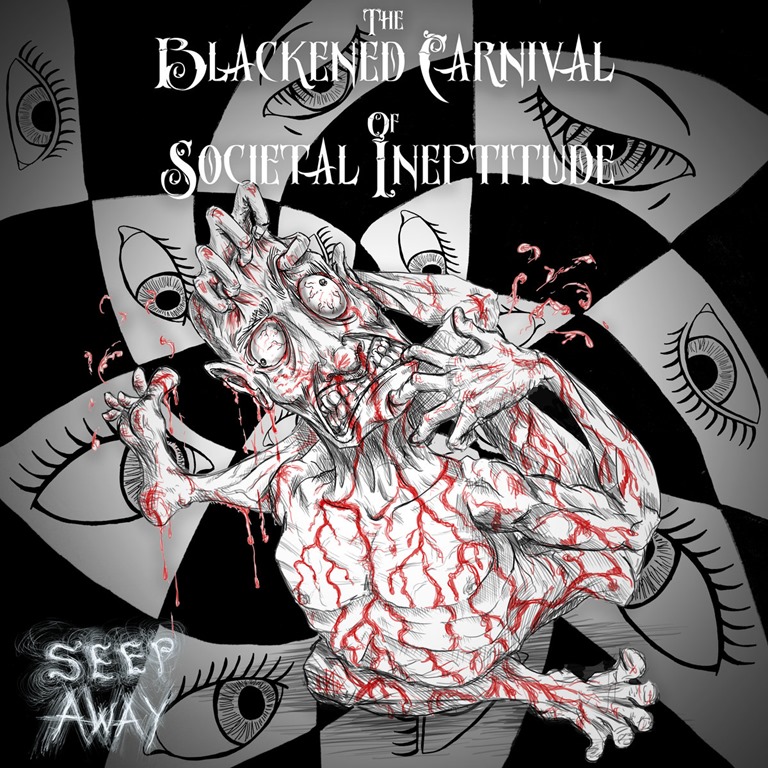
It’s therefore sad that The Blackened Carnival of Societal Ineptitude is a parting gesture. But it’s also a cause for elation that they’re signing off with a collection of songs that encapsulate the sound – not to mention the brutal, ferocious, energy of those later live shows. Circumstance and geography may be behind the band’s demise, but better that than acrimony or creative collapse, and they’re departing on a high. The Blackened Carnival of Societal Ineptitude contains eight tracks and clocks in at around twenty-two minutes and condenses all elements of the essence of Seep Away into that.

‘Rot’ is all about the churning, pulverizing riffage, the ribcage-rattling bass and snarling vocal attack. For dingy, murky, metal-done-dirty, it’s up here with Fudge Tunnel at their best. Single cut ‘Matchstick Man’ throbs and rages. Their rendition of Ol’ Dirty Bastard’s Shimmy Shimmy Ya’ has long been alive favourite, and the studio version captures the spirit of their interpretation perfectly. You’ll be leaping round the house hollering ‘baby I like it rrrrrrrrrrroooooaaaaawwwwww!’ for a week after hearing it just once.

The album’s second cover, a take on Minnie Riperton’s ‘Loving You’ sees Sillence come on full Marilyn Manson, and they ratchet up the sneering sleaze to eleven. It’s a showy, metallic-grinding wheeze, brimming with sadistic malice. It’s also a sackful of deliciously manic and suitably irreverent fun.

‘Joie de Vivre’ returns to the snarling, churning, grunt and chug of the heavy grindy / metal / hardcore amalgam that defines the band’s sound, and it’s hard-edged and gnarly in the best possible way. It packs in all of the band’s intensity and full-throttle attack into under four minutes (and is the longest track here).

Closing the album (EP. whatever) in quirky and irreverent style, ‘The Awkward Handjob’ is a piece of silly fairground japery about, er, wanking, of course. It’s fitting that of any band, Seep Away should end their all-too-brief career with a toss-off track about tossing off.

Instead of bemoaning unfulfilled potential or mourning their departure, we should focus on the positive: Seep Away have delivered a blinder of a set here.

AA

Seep Away - Blackened

Malignant Records – TUMRCD117 – 8th January 2017

Christopher Nosnibor

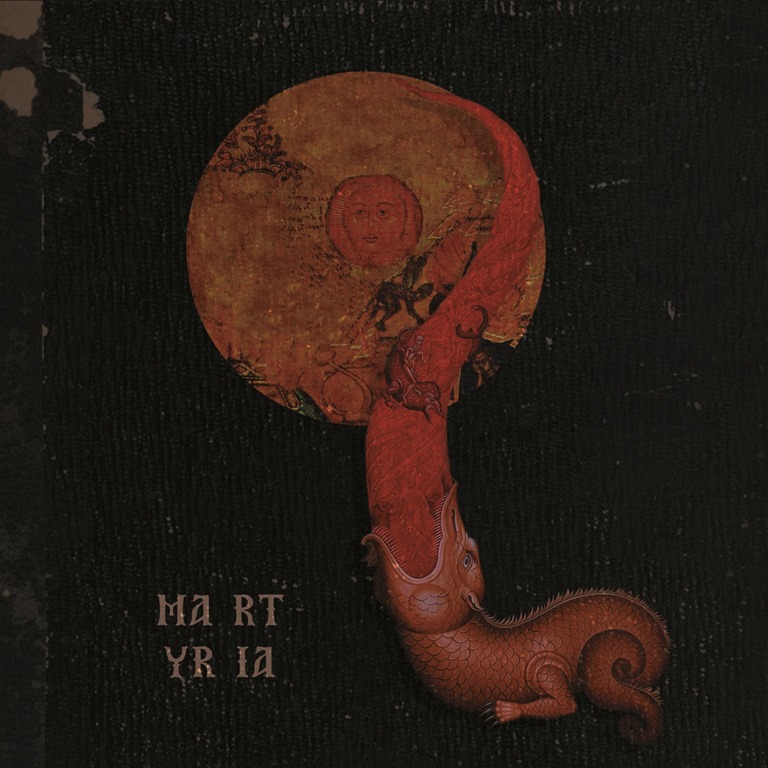
Greek ritual ambient duo, Martyria promise ‘5 stunning tracks of textural depth, sepulchral darkness, and exotic, richly detailed atmospheres’, and are pitched for fans of Dead Can Dance, Funerary Call, Voice of Eye, and Shibalba. I’m not going to feign superior knowledge: I’m only aware of Dead Can Dance from that list, but I have a hunch I know what’s reasonable to expect here. I’m braced for dark, haunting, atmospheric. I’m anticipating compositions which emanate subterranean spiritualism and mystery. And this is precisely what Martyria deliver.

This is dark. Dark in the sense of ominous, eerie. Dark in the sense of foreboding. Dark in the sense of the occult and the otherworldly. Dark in the sense of the unheimlich. Rhythms clatter and patter as wordless invocations float and drift above eternal drones. Dolorous bells herald the arrival of an elongated drone and an ethereal, choral female voice. Bells chime in a whorl of what sounds like didgeridoo as heaving chants and vocalisations conjured from the depths of the diaphragm in monasterial intonations.

At the mid-point of the album, ‘Nekron’, plunges into deeper, darker depths: dank rumblings and distant thunder which registers low on the sonic spectrum, churning at the gut, conjure dark, shadowy visions. It bleeds into the even longer darker, more sinister ‘Nyx’, dominated by cavernous percussion, muffled by distance and depth. It evokes flickering images of candlelit rituals held in carved temples far beneath the surface in secret cave networks.

The final composition, ‘Eschaton’, stretches out over some twelve and a half minutes with wordless vocal evocations and intimations of ancient occultism. It’s not music you can readily understand or cognise: it registers on a level far, far beneath the surface of comprehension. It’s the calling of the earth, the rocks, the trees. It registers and calls to a part of the psyche long-buried. Martyria speaks to the resonant brain, to genetic imprints, to the soul as conveyed through generations of heredity. It speaks to ancient history, knowledge buried through centuries of ‘progress’. Martyria is not a work to comprehend, but to allow to bury its way into the canals of the mind devoted to instinct. Its impact is difficult to quantify or even to explain on a rational, scientific level. And yet, it has impact and resonance – deep, slow-register resonance.

AAA

Martyria – Martyria

6th June 2017

Christopher Nosnibor

Mention Surrealism and the chances are Dali will be the first – and perhaps only – name mentioned by many. Breton, Ernst, Magritte may follow, but the chances are few would likely mention Beat luminary Brion Gysin, who was ejected from the Surrealists on the eve of a major exhibition. The fact of the matter is that Surrealism covers a broad territory, and is represented by myriad lesser known – although by no means lesser value – artists in all media. Leonara Carringon may be competitively obscure – as, indeed, are most women in Surrealism – but the English-born Mexican artist was both a painter, and novelist, who not only received an OBE but is also notable as being one of the last surviving members of the 1930s Surrealist movement, living until 2011.

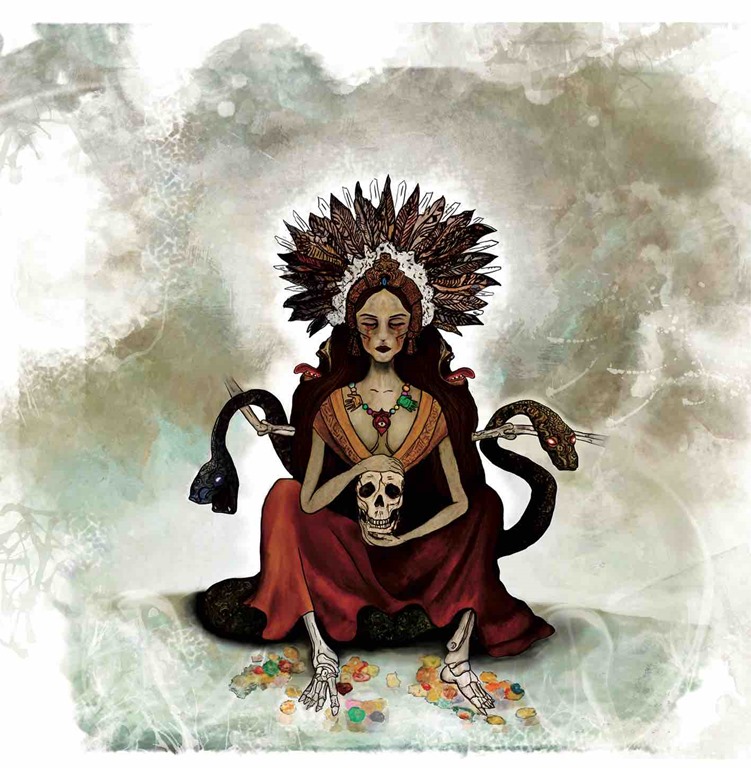
This album (originally released by Wist Rec) is based on Carringon’s works, and the accompanying text quotes lines penned by Carringon: ‘Ice ages pass, and although the world is frozen over we suppose someday grass and flowers will grow again. In the meantime I keep a daily record on three wax tablets. After I die Anubeth’s werecubs will continue the document, till the planet is peopled with cats, werewolves, bees and goats. We all fervently hope that this will be an improvement on humanity, which deliberately renounced the Pneuma of the Goddess.’

Clara Engel, meanwhile, has built quite a body of work, and has also featured on a number of other works, including Aidan Baker’s Already Drowning in 2013. This is album is not overtly Surreal in its sound or delivery, but then again, it does forge an atmospheric depth that reaches into the subconscious and the further reaches of the listener’s psyche.

From the chiming minimal post-rock leanings of ‘Birdheaded Queen’ to the delicate, almost folky ‘Anubeth’s Song (Burn Eternally)’ (although it’s more the arboreal, ancient folk patina of latter-day Earth than anything most would recognise as ‘folk’), the album’s five compositions explore the spaces between the notes and use them to pull the listener in almost imperceptibly.

Soft piano notes and delicately-picked guitar are the primary instruments which provide the backdrop to strong imagery of animal devourment, transformation, and otherworldliness, not to mention infinite intangibles depicted in the most visually engaging of ways. Engel draws together a mesmerising, magical vocal style with compelling yet understated approach to arrangement and lyrical composition. Simple motifs and structures accrue power through repetition.

‘Microgods of the Subatomic Words’ is a splendorous work, brimming with rippling, shimmering electronic atmospherics over a solid but restrained rhythm. ‘The Ancestor’ is slow and sparse and ponderous: echo-laden guitar notes ring out into the thick air and hang, slowly resonating.

Engel’s voice conveys emotional depth, is rich and possesses an ethereal otherness, a kind of disembodied, abstract spirituality that’s haunting and deeply evocative. Exquisitely played and beautifully nuanced, it all combines to make for an album which is subtly strong.

AAA

Clara Engel – Songs for Leonora Carrington

Ripple Music – 19th January 2018

James Wells

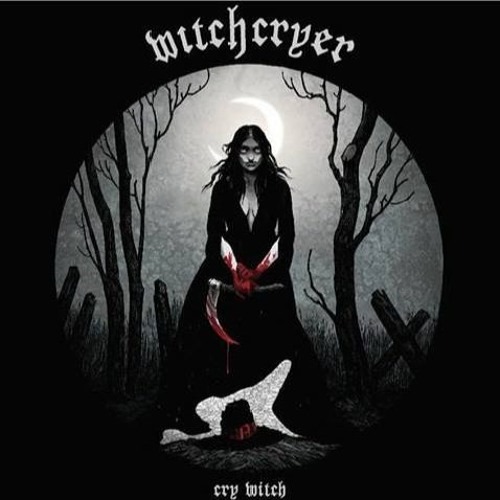
Maybe it’s just me – and it’s quite possible – but many of the current crop of so-called doom-metal bands are pretty tame, and are little more than Sabbath-inspired hard rock bands lacking in inspiration and keen to jump on the metal zeitgeist of circa 2015.

I’m not intentionally singling out female-fronted doom acts, but I was recently appalled by Jess and the Ancient Ones for reasons which really ought to be apparent, and those reasons aren’t a million miles away from the anguish on being presented with Witchcryer’s latest offering.

Cry Witch is better, less cliché and less Jeffersone Airplane meets The Doors, which is a relief. A major fucking relief. But it’s still so steeped in cliché and heritage as so be not so much so last year and so ersatz retro bullshit and to be deeply uncomfortable. And it’s not especially doomy.

There are some ok riffs and the thumping bass embarks on some neat little runs, and the title track, which is also the opener makes for a strong enough start, and sonically, stylistically, it’s representative of the album as a whole. So what’s the problem? Actually, that’s precisely the problem. Against, say, Black Moth, who are also of a similar ilk Witchcryer sound tame, and while there’s not much different in the two band’s approaches, the lack of real bite could be forgiven if the hooks were sharper. But the preoccupation with mining the vintage seam has apparently eclipsed any quest to forge their own identity.

AAA

Witchcryer – Cry Witch

Dependent

Christopher Nosnibor

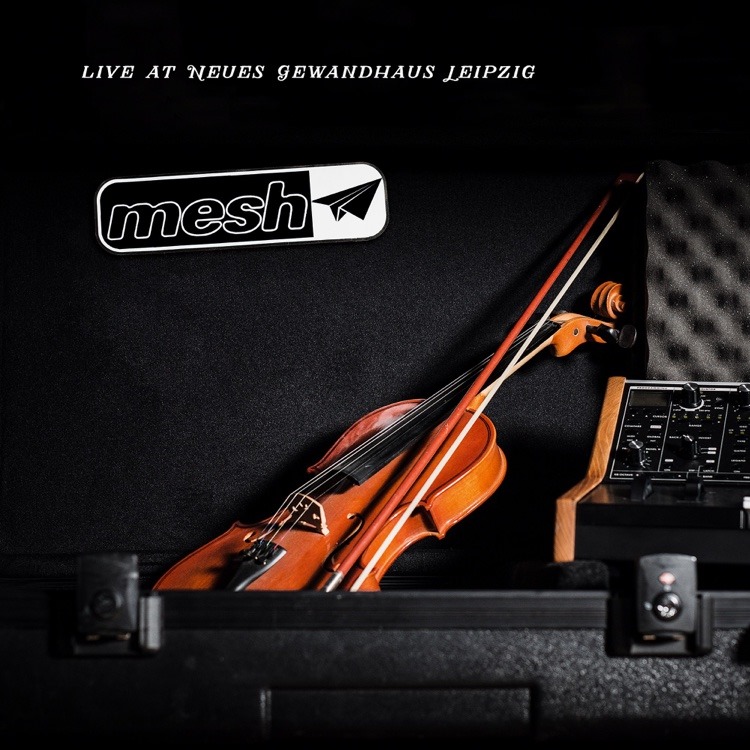
Bristol synth-pop duo Mesh are a classic example of an act underappreciated in their domestic territory but who have found a fan-base in mainland Europe and who are particularly appreciated in Germany. It may be that there’s a sense of the grass being greener, but even taking into account scale and catchment, I can’t help but feel that Germany has a better appreciation for certain strains of ‘alternative’ music. For example, can you think of anywhere else that The Sisters of Mercy still regularly headline festivals? And so it’s in this context that Mesh performed a one-off with the Philharmonie Zielona Gora to a sold-out audience at Neues Gewandhaus in Leipzig. Live at Neues Gewandhaus Leipzig is a document of the occasion, augmented with three new orchestral-based compositions

‘Just Leave Us Alone’ from 2013’s Automation Baby is the first song of the orchestral set, and it’s striking just how Depeche Mode it feels. The soulful richness of Mark Hockings’ voice is the key, but what’s equally striking is just how subtle and nuanced the arrangement is. The 65-piece orchestra contrive to build drama without at any point overstretching into extravagance.

They reach further back into to catalogue for ‘Only Better’, here led by a skipping piano and plucked strings, and the vocal harmonies work well alongside the layers of brooding theatricality, while ‘Save Everyone’ is simultaneously deep yet sparse. The fact the live orchestral show featured just five songs and ran for half an hour – and is captured in its entirety here – is admirable. So many acts, when presented with the opportunity to perform with an orchestra, will splurge, with overblown renditions and overlong performances. That Mesh keep it concise and keep a tight rein on the material, which, if anything, intensifies the effect and the emotional layers imbued therein. ‘Taken for Granted’ is the last of the live songs, and it broods through dark tension and builds to a soaring finale which utilises the dramatic and layered instrumentation to the max.

As a necessary aside, the audio quality is exceptional, and does the performance justice. Every detail is perfectly captured, as it should be. And there is a lot of detail; the songs are played with real nuance, and while the performances are powerful, there’s a palpable emotional depth that’s intrinsically linked to the subtlety and multi-dimensionality of the instrumentation.

The three new studio tracks compliment the live set very nicely indeed: recorded with a stripped-back orchestra, they still explore the same emotional terrain as the material chosen for the live set, and because the sound quality of the live recording is so god, they flow into one another rather than feeling like appendices which have been bolted on.

There isn’t a weak song in the new recordings, although ‘Can You Mend Hearts’ is a standout, being delicate and fragile, the surging builds bringing depth and resonance to Hockings’ affecting vocal delivery.

Live at Neues Gewandhaus Leipzig is one of those albums that could so easily be a drag, and fall to cliché, but instead offers a set of strong reworking of songs which lend themselves to the orchestral treatment, and as such, it’s not only successful, but an impressive release.

AAA

Mesh - Live

Cold Spring Records – 23rd January 2018

Christopher Nosnibor

Never mind the cat, listen to the whale! There’s a rather trippy, dubby crossover feel to the trilling new-age rhythmic bass-led groove of ‘Thee Whale’, one of the three tracks on the second disc of this two CD plus DVD extravaganza of a release, which includes the film Dead Cat, which was released in 1989, and shown only at a handful of cinemas that year, including once at the infamous Scala Cinema in London. According to the accompanying blurb, ‘it was never issued on general release and has only recently been uncovered by David Lewis (writer & director).’ This release finally presents the full film, re-authored from the original source. The film itself features unique starring roles from cult film director Derek Jarman (who also worked with TG on In the Shadow of the Sun back in 1980), Andrew Tiernan (The Pianist, 300, The Bunker, and Derek Jarman’s Edward II) and Genesis P-Orridge. The film features the music of Psychic TV, included here on CD1, in its complete form.

On the one hand, it’s classic Psychic TV. On the other, I’m reminded why I parted ways with Psychic TV and much of the industrial movement, when, post-TG, everyone seemed to disappear up their own arses, otherwise ceased making music that felt either challenging or essential. It’s not that none of the members of Throbbing Gristle made any decent music after the initial split, because they clearly did, and early PTV and Chris and Cosey releases are proof of this. But at what point is enough enough? At what point does it all become so much indulgence?

That the material here is lifted from the archive provides only so much justification or defence. There’s very much a sense that all of the early groundbreakers have been surpassed, and that the myriad artists they’ve influenced have advanced far beyond the parameters their forebears pushed to new places. And they were already pushing on in 1989. Listening now, in 2017… ‘Dead Cat’ is a gnarly mess of humping and pumping, grind and drone, a seemingly formless throb of grating dissonance, and it sits well enough as a soundtrack. As a musical piece, the short (23-minute) version which closes CD2 is preferable: the plaintive mewlings stretched across the shuddering scrapes, punctuated by obliterative detonations, are challenging to the ears, but in some respects it feels all rather predictable. Whereas Throbbing Gristle still sound dangerous and deranged, ‘Dead Cat’ sounds like a safe assimilation of the template.

‘Thee Whale’, recorded on 23rd January 1988, is the soundtrack to the film Kondole, which was never made, although if it had been, it would have been 23 minutes long. ‘Thee Shadow Creatures’, the track which sits between ‘Thee Whale’ and the short ‘Dead Cat’ is also 23 minutes in duration. It’s dank and ominous, muffled rumblings and disembodied voices buried amidst swampy echoes. And way off in the distance, low in the mix and submerged by the distorted tribal rhythms, tortured jazz horns honk their anguish into the subterranean depths. While recorded some years later than the other tracks – in 1993 – it’s arguably the most successful, not least of all by virtue of being the most menacing, sustaining its atmosphere to the end.

As a whole, it is a nice set. As unsettling and noisy dark ambient works go, it delivers precisely what you would expect. And, regardless of my opinions as to whether or not it’s essential on any level, it is, unquestionably, a valuable and intriguing archive document. And on that basis, it’s very much worthwhile as an addition to the PTV catalogue.

AAA

PTV - Kondole

Klangbad Records – 20th October 2017

Christopher Nosnibor

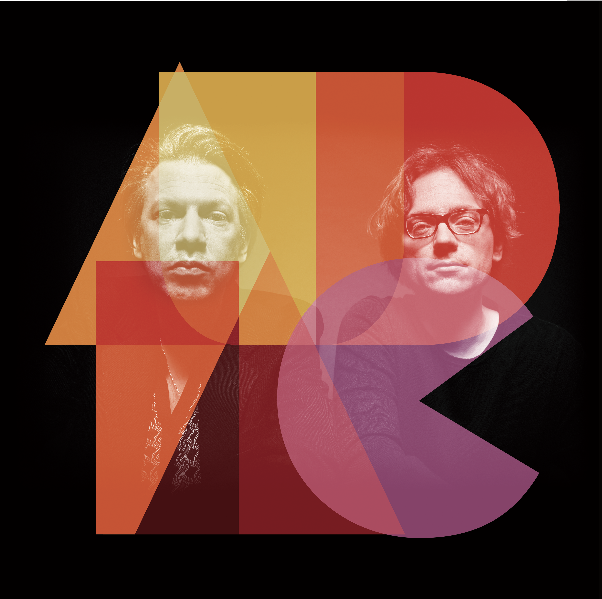
This is one difficult album to digest. It’s hard to assimilate, or even comprehend precisely what Audiac are aiming to achieve here. At first, the title track comes on like some kind of electro-soul effort with a soft-focus, analogue-hued retro vibe, augmented by some doodlesome 80s synths. But then everything goes haywire with eternal delay overlaps and there are overloading circuits and the soul turns to strain and… oh, it’s bending my brain.

Thankfully, the album’s second song, ‘People Going Places,’ is a relatively conventional piano-led post-rock ballad, with heartfelt vocals and soaring, quasi-operatic backing vocals. It perhaps goes without saying, then that conventionality is relative. It’s brimming with theatricality and bombast, a wildly extravagant composition

And back and forth it goes, alternating between weirdy and vaguely fucked-up experimental electronica and relatively straight piano songs with odd twists. There are moments of absolute beauty here, moments which not only tug on the heartstrings but nag at the corners of the soul. Audiac’s website places them as having ‘roots in the German Romantic Lied, chansons, theatre music traditions and the burlesque’.

‘Not Bound to Anything’ is scratchy and soulful: grandiose and , and there are hints of Scott Walker circa Tilt on ‘Doberman’, a bleak, piano-led piece that’s less post-rock drama than a warped and intense sonic smorgasbord, while the soft-edged ‘Dreamadream’ borders on the dreamy lounge side of synth pop. And then there’s ‘When You Say My Name’, which is subtle and sensitive, with its acapella opening and soft piano that gives way to brooding atmospherics before things get dramatic and a bit odd. JG Thirlwell’s post-millennium Foetus releases are something of a touchstone here.

Audiac could only ever hail from Germany. There’s something about the way they’re unbound by convention, about the undocumented, unspoken undercurrents of their sensibilities which belongs to Germany. Ultimately, though, So Waltz is an album that exists out of time and stands free of geography.

AAA

Audiac – So Waltz