Archive for April, 2026

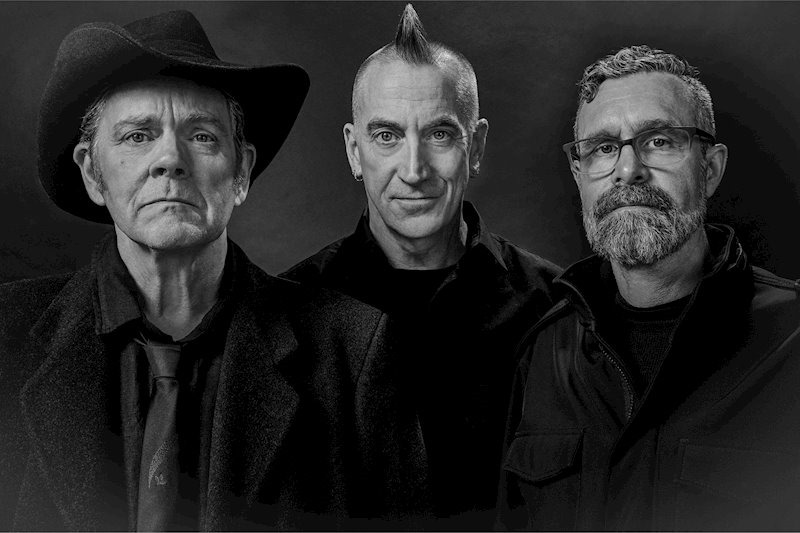
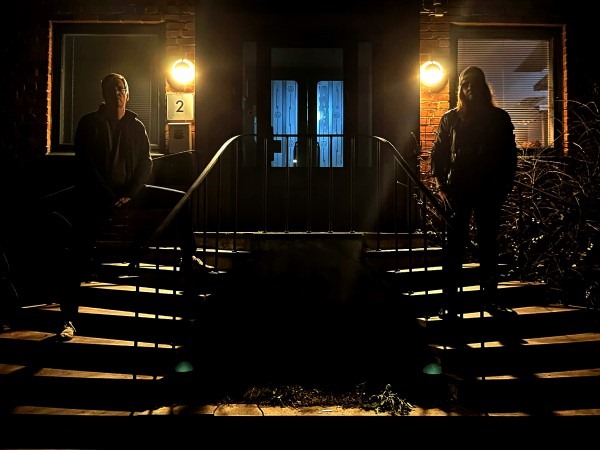
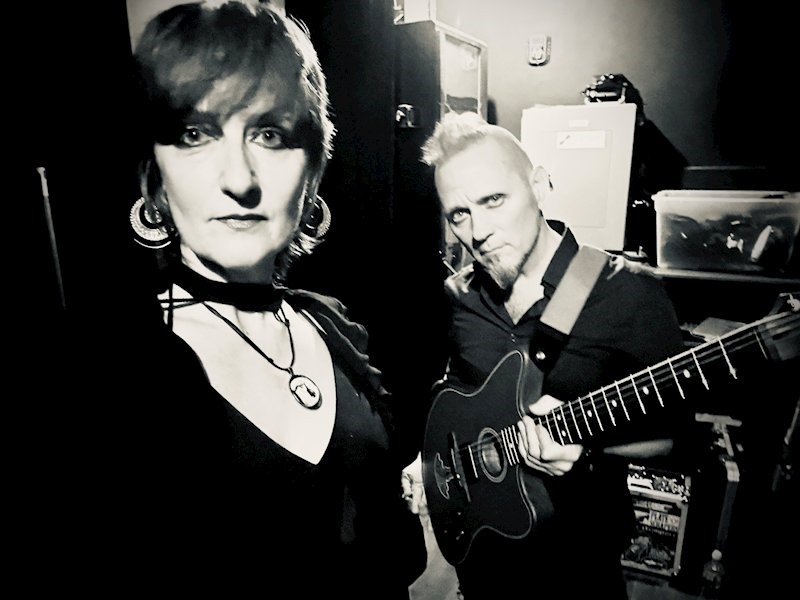
Post-Punk duo Frenchy and the Punk present their new video for the powerful and compelling single ‘War on War’, along with an announcement of spring 2026 tour dates. Playing up to 100 shows a year, the duo thrives on the road. Now they are set to bring that energy to dozens of cities across the Midwest and East Coast before heading overseas for select UK dates.

Torchbearers of a new era in post-punk, Frenchy and the Punk was formed in 2005 by vocalist, percussionist, keyboardist and lyricist Samantha Stephenson and guitarist-composer Scott Helland, co-founder of Deep Wound (with Dinosaur Jr. icons J Mascis and Lou Barlow) and Outpatients, and also known for his exceptional solo music project Guitarmy of One.

Frenchy and the Punk, listed in the ‘Top 25 US duos’ by Yahoo! Music, is a powerhouse duo with a distinct sound, blending post-punk with a touch of new wave by way of electro-acoustic hybrid guitars, loop pedals, fiery live acoustic and electronic percussion, synth and rich commanding vocals.

The powerful video for ‘War on War’ was filmed and edited by Samantha Stephenson in New York State. The single itself was mixed and mastered by William Faith (The Bellwether Syndicate, Faith and the Muse) at William Faith Music Production, with vocal recording and production at Kale Shelter Studios by Hillary Johnson, known for her work with Jeff Buckley, The Misfits, Rufus Wainwright, The Ramones, Nile Rodgers, Vernon Reid and more.

Following ‘Not Under Your Spell’, released at the end of 2025, this is the band’s second release through Distortion Productions, having signed to the label after label-head Jim Semonik saw their performance at Dark Force Fest, in New Jersey last summer.

“This song is not only about war but also the deterioration of truth and destruction of progress. It’s the belief that the majority of people in this country and the world do not want to go backwards and do not want to see bloodshed,” says Samantha Stephenson.

“It is the frustration that the few, fueled by greed and lust for power, who manipulate for their and their cronies’ advantage, cause such grief and destruction for the many. It is a call to voice opposition to the chaos and insanity. It is a call for unity beyond borders.”

A veteran of the US hardcore punk scene, Scott Helland has spent years honing a dynamic, high-impact performance style that now drives Frenchy and the Punk’s electrifying live presence and genre-blurring sound. Over the course of his music career, he has shared the stage with Black Flag, Husker Du, GBH, C.O.C, Agnostic Front and CroMags, in addition to performing with Dinosaur Jr. on occasion.

Samantha’s artistic expression came from a completely different place, having started in dance, piano and the visual arts. These two worlds collided forming a musical incarnation that moves effortlessly from bombastic and driving songs to atmospheric and almost transcendent soundscapes.

AA

FatP

Christopher Nosnibor

Much as the whole ‘sounds like’ and ‘for fans of’ thing has become a standard shortcut which is, all too often, reductive and plays into the algorithmic feeding of artists by streaming platforms, it can be useful, at least when the references are accurate. Sometimes, a misrepresentative comparison can come to define an act’s entire career. I can’t be the only one who investigated Interpol because of the endless comparisons to Joy Division – and while I quickly grew to love Interpol, they’re as much like Joy Division as Suede are The Smiths. Sometimes these disparities are the result of poor journalism or sloppy PR, others they’re the consequence of a band’s own lack of self-awareness, confusing the input from their influences with what their music actually sounds like. Nevertheless, when a band is pitches as being ‘for fans of Faith or Disintegration-era Cure, and Closer-era Joy Division’, the connotations of glacial synth-orientated bleakness suggest they’re worth investigating.

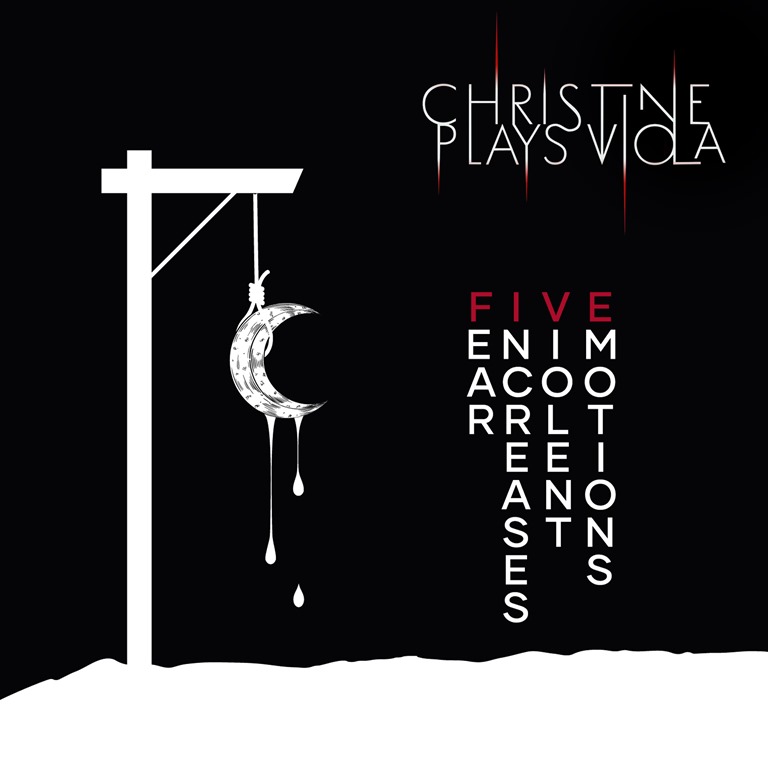
And so I arrive at F.I.V.E. Fear Increases Violent Emotions (released in January), by Italian dark / new wave band Christine Plays Viola via the album’s fourth single, ‘Desolate Moments’ – in an example of an old-school promo cycle, where a single or two in advance would hype the album, and a trailing single or two would sustain momentum and (hopefully) grab some people who’d missed the initial build-up and release. This one’s had a long run-up, with ‘Jackie’s Curse’ surfacing way back in 2024.

AA

AA

‘Desolate Moments’ is a spacious slow-builder, and fulfils the promise of some cold synths, the brooding vocals paired with some rolling percussion and throbbing bass. In many respects, it’s a quintessential slice of modern goth, in the vein of Corpus Delicti, with some hints of Depeche Mode swirling around in the mix. That’s not all that’s swirling around: the video, which is designed to replicate their live performance, finds the band members partially obscured by billowing smoke, clearly taking cues from The Sisters of Mercy’s seminal stage shows.

AA

AA

It turns out that ‘Desolate Moments’ is representative of the album, too, certainly in terms of quality (one thing about old-school promo before the advent of the Internet is that you’d often rush to buy an album based on the lead single, only to find that it was the only decent track, and that the rest of the album was turd… this was particularly prevalent in the ‘80s, but I’d venture that Depeche Mode’s Ultra would have been better whittled down to an EP of the singles). And it’s an album that radiates darkness and classic goth vibes and sounds.

Opener ‘Sprout of Disharmony’ is nothing short of an instant classic in the vein of Rosetta Stone and Susperia, with spindly guitar work, sturdy on-the-beat bass grooves and metronomic percussion, and with a seven-minute run time, it certainly qualifies as epic. ‘My Redemption’, released as a single six months ago goes darker, more overtly electro, and brings in elements of industrial while still reflecting the goth sound of the late 90s and the turn of the millennium, and packing some strong hooks, too.

There’s a keen sense of theatre about Christine Plays Viola’s sound: they’re certainly not afraid to go big and play up the drama with finesse. ‘Confession’ lands with a sense of urgency, and is again driven by bold tribal beats reminiscent of vintage acts like Danse Society and Skeletal Family, while ‘There’s No Going Back’ swerves into early Nine Inch Nails territory, only more overtly gothy. While operating around elements taken from some well-established blueprints, Christine Plays Viola manage to offer no shortage of variety on F.I.V.E., the jittery ‘Black Noise’ changing tack halfway through, and the seven-and-three-quarter-minute ‘The Crypt of Mystery’ explores altogether more expansive territory which teeters on the progressive.

As an album, F.I.V.E. feels like a big work: it may only contain ten songs, but a fair few run well over the five minute mark, and the variety is indicative of the scale of the band’s ambition to articulate and explore the theme of ‘fear not as weakness, but as a force that shapes who we become’ in multi-faceted detail. And they succeed in their objective, with some great songs, too.

AA

AA

cover

UK-based industrial/electronic artist j:dead continues his 12 singles in 12 months campaign with the release of ‘Silence Calls,’ available now on Infacted Recordings.

The track is a meditation on the difficult yet necessary act of shutting down, withdrawing, and stepping into silence. At first, the silence is described as dark, cold, and unforgiving; a space filled with unease and fear. Yet as the song unfolds, its message deepens; the absence of noise brings clarity, truth, and a renewed sense of wholeness. In the end, though silence remains a challenge, it becomes a source of strength and balance, offering perspective that cannot be found in constant noise.

Musically, ‘Silence Calls’ weaves together influences of darkwave, synthpop, and industrial rock, creating a rich, layered soundscape that mirrors its emotional journey. The track moves between atmospheric textures and driving electronic power, underscoring the tension between fear and clarity. As always, Jay Taylor’s commanding vocal performance is central to the song; shifting through vulnerability, intensity, and resolve, capturing the full spectrum of emotion embedded in the lyrics.

With this fifth release, j:dead reinforces his distinctive blend of dark electronics, anthemic hooks, and emotionally charged songwriting. ‘Silence Calls’ stands as both a deeply personal reflection and a compelling addition to the campaign’s expanding sonic world; a reminder of the necessity and challenge of finding stillness in a chaotic landscape.

Hear it here:

AA

j dead Photo 1

Futura Resistenza  – 24th Match 2026

Christopher Nosnibor

Well, it is Good Friday, so it seems an appropriate time to settle down with a large whisky and some candles to engage with an album of funeral procession music from Ryfylke, Norway. And as the title suggests, this is actually what this collaborative album contains:

Rooted in the bygone custom of ‘Liksong’ (literally ‘corpse song’) that was once sung by small groups of singers who guided rural funeral processions, Janvin and Joh tap into its uncanny, unbearably slow intervallic structures, reanimating the practice as a kind of ancient electronic microtonal devotional music. Voices and vocal effects, synths and melodic percussion seep into the cracks between major and minor, and the whole thing carries the creaking weight of ceremony, yet glows with an otherworldly modernity, as if a forgotten liturgy had been retuned for a dimly humming chapel of circuits.

The duo, with Janvin on vocals and electronics and Joh on synths, tape machines, and percussion, also enlisted Lucy Railton (cello) and Jules Reidy (electric guitar).

The nine tracks present a remarkably structured, linear funeral journey – and while the premise of the album is already most uncommonly literal, so is the linear structure, which begins with ‘Leaving Home’ and concludes with ‘Postlude’, which it arrives at via ‘Pasing neighbours’, ‘Before the burial site’, ‘By the grave’, ‘Lowering the coffing’, and ‘Processing grief’, among other almost instructional titles.

The pieces them selves are quite minimal in their arrangements: drones, hums and haunting, folk-inspired vocals, bathed in reverb and surrounded by echo come together to create soundscapes which are haunting, and, at times, other-wordly. ‘Pasing Neighbours’ is a slice of detached, rippling electronica, which on the surface couldn’t be further removed from ancient Nordic rituals… and yet Janvin and John succeed in subtly manipulating the sounds to conjure something which reaches deep into the psyche with its rippling dissonance.

There’s a gravity to this album which underlies the twisting, processed electronic experimentalism which is befitting of the subject and the context, and while ‘Passing neighbours’ does amalgamate shoegaze with robotix 80s electro, it doesn’t feel disrespectful to the source.

‘Rest – Bordvers’ which features Jules Reidy) is a sliver of ghostly folk which sounds like spirits ascending over an early Silver Jews outtake, and ‘Before the burial site – Jeg Raader Eder Alle’ is a heavily processed, almost space-age reindentation of a folk incantation – but it’s the haunting, eight-minute ‘By the grave – Akk, Mon Jeg Staar I Naade’ which really grips the attention with its ghostly wails and insistent pulsations and expansive, arcing drones. The dronerous ‘Lowering the coffin’ features vintage spacemuzak ripples and reverberating ululations contrasts sharply with ‘Processing grief’, which begins hymn-like, before swiftly transitioning to shuffling, fractal synthiness reminiscent of Tangerine Dream.

One suspects that in this modernisation, in this translation, something has been lost. But at the same time, this interpretation serves to keep an ancient heritage alive. And this is the sound of dark woodland, of glaciers, of spartan spaces – ice-dusted woodland. Often, it’;s trult beautiful, and this is nbowhere more clear on ‘Acceptance – Kom, Menneske, At Skue Mig!’, another piece which is more than seven minutes in duration.

The final track, ‘Postlude’ is gentle, and even alludes to a brighter future on the horizon. For mem it feels a little soon, although there s no use of timescale by which to orientate oneself available in the immediate entrance of the accommodation.

Having spent the last three years processing – and documenting – grief following the loss of my wife, Or Gare: Funeral Procession Music from Ryfylke, Norway is a difficult album to approach on a personal level. But there are times in this expansive, exploratory work, that death, in all its suffering, has been muted and spun into niceness – if not a palatable, packageable sound.

AA

AA

a1717757498_10

Christopher Nosnibor

Since starting out with Horsemusic last year, these nights – hosted at a pub (a classic boozer that for some years was a Tap and Spile before reverting to its previous name) just outside the city walls on the first Thursday of the month – have become rapidly established as showcases for local and regional talent, focusing primarily on York acts, but also providing a platform to emerging talents from places like Hull and Leeds. This, their seventh event, perfectly encapsulates their approach to curation and once again highlights the depth of quality acts knocking around in the locality right now.

Small Guage, from Leeds, are relative newcomers, but they’re clearly well-rehearsed and tight with some sharp endings played with precision. Pitched as ‘Leeds post-punk’, their sound is more mid-80s indie. There’s debate after their set as to which bands they’re actually reminiscent of, and while the whole C86 sound and 4AD are floating into my mind, I run into a friend at the bar who makes a spirited comparison to The Monochrome Set, while agreeing that there’s not just a slew of bands but a whole era that seems to have been absorbed into their sound, which is melodic and jangly, with two interweaving guitars and a singing female drummer with minimal kit – bass, snare, floor tom, no cymbals. The songs are held tightly together by some solid note-on-the-beat basslines. They’re also quite gentle…

DSC08678DSC08688.2

Small Gauge

The same can’t be said of JUKU. Discussing them beforehand, I summed them up to someone as ‘loud’. “C’mon,” was the reply, “That’s not a style, or what they sound like.” Ordinarily, I’d agree, but the description on the flyer simply states ‘bring earplugs’, and I pity anyone who didn’t. This band is nothing short of a rabid riff monster. They play big, dumb riffs, reminiscent at times of The Stooges, The Ramones… with everything cranked up to eleven… They play hard and fast and with a frothing intensity. Naomi sings and whacks her bass and spends the set willing her glasses to stay on her face to the end of each song. They have a few issues with feedback from the mics tonight, which have likely been turned up to compete with the blistering volume of the backline. But if the result is chaos, it’s utterly compelling and immensely powerful. Brittle surf-goth lead guitar lines echo through the squalling wall of noise, and it’s wild to see a band of this calibre – and of this volume – for free in a York pub with a capacity of maybe seventy-five, when they’re worthy of headlining at The Brudenell in Leeds.

DSC08720DSC08709DSC08703.2

JUKU

Knitting Circle may not be as punishingly loud, but their busy live schedule means that they’re super-tight, and looking and sounding confident. As well they might: they’re on fine form, and in terms of performance, tonight is a couple of steps up from when they played on the other side of town at The Fulfordgate WMC in February. While the vocals are a bit muddy-sounding, and Pete’s guitar is a little more midrange in tone than usual, muffling the Andy Gill-style trebly chop, but it still cuts through against Jo’s bass, which is nicely up in the mix and positively throbs.

AA

DSC08745DSC08768.2

Knitting Circle

The ultra-succinct ‘Create, Don’t Destroy’ (which may be a recent addition to the set, if I’m not mistaken) is a standout among a set of more established standouts, including ‘Safe Routes’, which (sadly) remains ever relevant, ‘The Fox’, and closer ‘Losing My Eggs’. The crowd want more, though, and manage top coax them to deliver an encore – and the unplanned and seemingly unrehearsed instrumental sound like Shellac, thunderous drumming exploding behind a rumbling bass groove and mathy guitar line. It’s a great finish to another great night. 

Electronic artist SINE (aka Rona Rougeheart) has today released ‘Cruel’ as a new single on Metropolis Records. It follows the recent ‘Blood + Wine’ as her second self-produced track of 2026, with Rougeheart stating that the song “about people who purposefully choose to be cruel to others. The words are both sarcastic and serious and I like the contrast of the lyrical content against the upbeat nature of the music, which otherwise makes it a fun dance track.”

Mastered by Mark Pistel (Meat Beat Manifesto, Consolidated), ‘Cruel’ remains true to Rougeheart’s ‘electronic boom’ style while remaining modern and club-ready. It is the final single to be issued from La Mordre, a brand new SINE album out on 22nd May that also includes the previously issued ‘Trauma Bondage’

AA

a2018662743_10

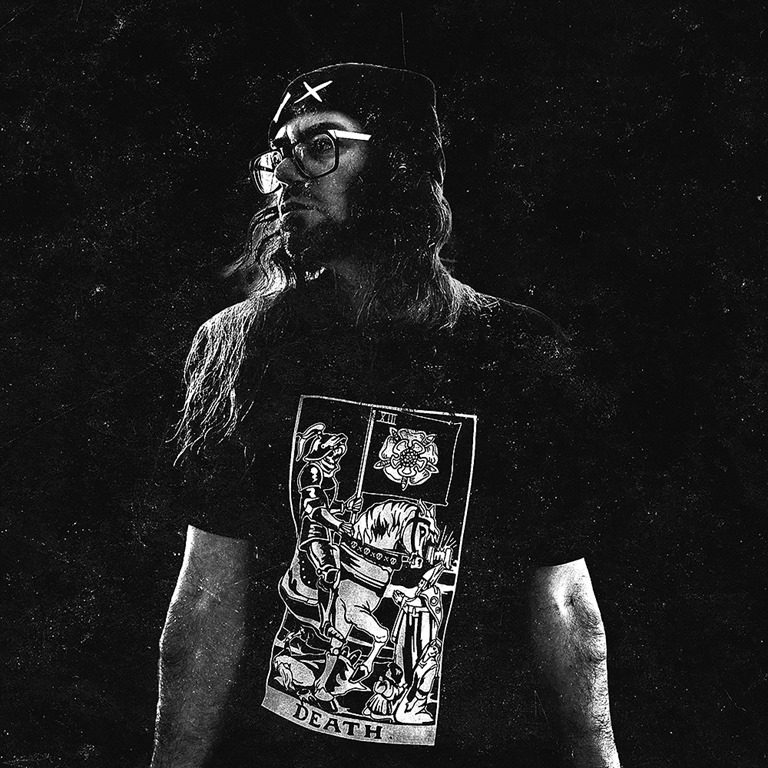
Iconic Norwegians TRELLDOM, founded by legendary vocalist Gaahl, unveil the visualiser single ‘Folding the Mind’ as the next advance track selected from their forthcoming new full-length: …by the word…

AA

With …by the word…, TRELLDOM are pushing forward hard into their new musical era that was ushered in by the previous full-length …by the shadows… (2024), which ended a 17-year hiatus of the Norwegian band.

Mastermind Kristian Eivind Espedal aka Gaahl and his diligently selected collaborators have gone even beyond the complex yet sinister sound that they established with  …by the shadows… The exponentially grown confidence and hard-gained experience of joining together seemingly quite different musicians is reflected clearly in each track of …by the word…

TRELLDOM have concluded the process of escaping the narrowest definition of black metal without compromising their artistic mission. Their music does not only stay loyal to the spirit of their black metal roots, but the Norwegians are making a solid point that their new sound is even more dark and fierce than ever before – just in more twisted and unhinged ways.

…by the word… is the result of Espedal expanding the immense range of his vocals even further into unexplored territories. And it should be noted that this was partly achieved by his return to the famous Grieghallen Studios in Bergen to work again with legendary producer Eirik Hundvin aka Pytten, who was instrumental in the creation of the ‘Norwegian black metal’sound.

Although Espedal remains firmly at the helm of TRELLDOM, the current line-up plays a massive part in the fresh exploration of musical extremes. Guitarist Stian “Sir” Kårstad (formerly also in DJERV) guarantees a form of continuity as he already contributed to the second and third album of the band. Furthermore, the new constellation features renowned percussionist Kenneth Kapstad, formerly of MOTORPSYCHO and hammering the drums in SPIDERGAWD, MØSTER!, and THORNS. Kapstad brought the internationally acclaimed jazz musician and saxophone player Kjetil Møster (MØSTER!, RÖYKSOPP, THE END) along. Bass player Eirik Øien is the latest addition to the cast of characters.

AA

e1c8c041-93da-2940-be29-7d33ac7aca79

6th March 2026

Christopher Nosnibor

Matt Wand is best known for his work as a founder member of experimental samplists Stock, Hausen & Walkman between 1989 and 2001, although his body of work in collaboration with other artists, and under numerous pseudonyms, and as a solo artist is extensive. His latest project came to my attention via a friend, and a tape, and suddenly it felt like the 90s again, when word of mouthy was the most likely source of introduction to new music – alongside the weekly inkies and John Peel. Not that I’m about to harp on about the good old days, particularly as I have the good fortune to be fed a constant stream of music that never fails to amaze and confound, but it does highlight and remind just how limiting the force of the algorithm is, the endless conveyor belt of ‘if you like this…’ and services simply lining up the next track in an eternal playlist which subscribers tend to passively permit to pass into their ears, and how the cultural relationship has changed over time. And yes, something has been lost: endless streaming music on tap isn’t the boon it’s often hailed as. Spotify and the like delivers sonic wallpaper. How many of its users will listen to an album end-to-end and multiple times in sequence over the course of a week and a month, really engaging and excavating every last detail while it beds in?

I’ve begun with a digression, but the joy of music – for me, at least – is the way in which it inspires trajectories of thought, often in the most unexpected directions. It’s as if it has the capacity to unlock doors to forgotten recesses within the mind. Anyway, to shift focus specifically to the album at hand, while credited to Small Rocks, the album’s cover (the artwork of which is almost as disturbing as that of the first Toe Fat album) appends this with the words ‘in dub’, and this very much gives a clue to the contents – that is, fourteen instrumental compositions centred around dense, strolling basslines and sparse, echo-soaked beats.

A number of the tracks on here – ‘A Lung Full Of Woofer Gas’, ‘Give Me Back Me Bucket’, and ‘Blind Mute Specialist’ – date back to 2002’s three-way split album Dub TribunL, which featured Small Rocks alongside Atom™ and The Rip-Off Artist. This is an album which has been a long time in its gestation.

Leisurely grooves and rippling reverberations abound, with puns and wordplay making for an added bonus – ‘Curlew Curfew in Corfu’, anyone? On ‘Bassically Unsettled’, the thick, rubbery bass bounced its way through subtle and mildly disorientating tempo changes, while ‘Mirror Sigil Manoeuvre’ is sparse and spacey, the beats landing like drips from stalactites in an immense cavern. And yes, as minimal as it is, the sounds are mentally and visually evocative.

Landing in the middle of the album – or the end of side one on the cassette – ‘The Moss Veil’ is less dubby and more a work of dark ambience with hints of Dr Who amidst the dank swampiness and sporadic whirrs and bleeps. It calls to mind the weirdy sci-fi sounds of soundtracks of the late 70s and early 80s and the BBC Radiophonic Workshop.

The title track, which raises the curtain on side two, is more uptempo and verges on being some mutant drum ‘n’ bass, before the multi-00layered ‘Keep Quiet & ROT (mit bADbLOOD JA Kötting) ‘, which takes a swerve into more industrial territory, while hinting at the cut-up tape experiments of William S. Burroughs and Brion Gysin, conducted in the later ‘60s and early ‘70s, while at the same time coming on like a reggae Butthole Surfers. It really is all going on here on The Future in a Rearview Thumbnail. ‘a Lung-full of Woofer GAS’ is a hybrid of dub with minimal techno, and ‘Give fe me back Me BUCKET’ brings an industrial-strength percussive clatter that owes as much to Test Dept as any other act, while ‘The Custodian’ closes the set with a warping, glitchy tension that’s again infused with a more retro vibe, although the distant snare which lurks in the background is swamped in reverb and vocal fragments float around in a dubby fashion.

The Future in a Rearview Thumbnail is a rare expression of experimentalism, an album which dares to venture in different directions, and celebrates its strangeness.

AA

a2839687999_10

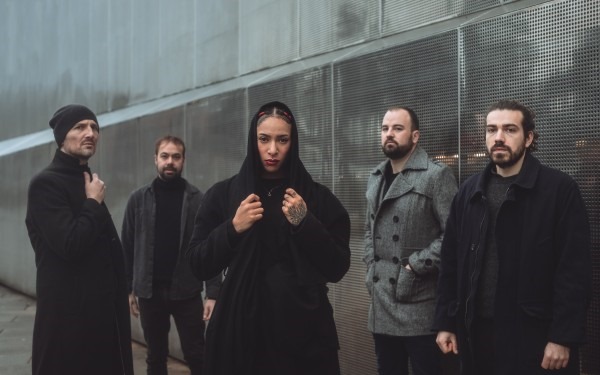
Deeply rooted in industrial experimentation and the rawness of black metal, French avant-garde collective Non Serviam have forged a singular style that blurs the boundaries between extreme genres while preserving their intensity through a radical and uncompromising artistic approach.

The collective now announces their third full-length album, La Lune Dont Mon Âme Est Pleine, set to be released on June 12 through a new alliance between Non Serviam and Lay Bare Recordings. Alongside the announcement, the band unveil the video for the new track ‘Abject Sacrifice’.

AA

Five years after Le Cœur Bat (2021), and more than a decade after Un Petit peu d’amour Pour la Haine, this new album stands as a major step forward in the band’s evolution. After a prolific run of EPs, splits, and mini-albums, Non Serviam return with a full-length work that pushes further the sonic and aesthetic direction unveiled on Le Cœur Bat, now refined through experimentation and artistic evolution.

La Lune Dont Mon Âme Est Pleine is a symbolist concept album centered on the myth of Diana and Actaeon, exploring themes of the desire for the absolute, the violence it engenders, and the melancholy that follows. These ideas permeate the album’s compositions, shaping both the music and the lyrical narratives. Beyond the metamorphosed and tormented figure of Actaeon, the album also draws on historical and mythological figures such as Émile Henry, the late-19th-century French anarchist, and the apocalyptic goddess Kali, invoked through a powerful vocal appearance by Mirai Kawashima (Sigh).

With La Lune Dont Mon Âme Est Pleine, Non Serviam continue their artistic trajectory, delivering a work that is ambitious, confrontational, and emotionally intense, further pushing the boundaries between extreme music, experimental composition, and avant-garde art.

AA

d45ecc66-f1d9-6433-2920-6ffd387c8fb5