Posts Tagged ‘The Cure’

7th April 2023

Christoper Nosnibor

In their native Scotland, The Twilight Sad are fucking massive, capable of selling out two consecutive nights at 1,900 capacity Glasgow Barrowlands. South of the border, they have a deeply devoted fanbase, but are more of a niche act. It may be the fact that they are so overtly Scottish, with James Graham’s unapologetically strong accent sometimes rendering the lyrics rather hard to decipher, but the raw emotional impact of their songs transcends language.

This is something that’s long been recognised by Robert Smith, who recorded a cover of ‘There’s a Girl in the Corner’ in 2015, and first took them out on tour with The Cure the following year. There can be few higher compliments for a band whose love of The Cure is evident in their catalogue, and there have been several tours since.

Ahead of their most extensive US tour to date with The Cure which runs through May and June and into July, they’ve released a live EP via BandCamp, which was recorded across three nights at Wembley Arena during our tour with The Cure in December 2022, and as with all of their live EP’s this is a Bandcamp exclusive on a Pay What You Can basis.

They’re a band who excel live – their intensity is a rare thing indeed, James Graham is beyond compelling, and steps into a zone onstage while Andy MacFarlane whips up a maelstrom of sonic sculptures that push guitar playing in a direction not heard since Bauhaus’ Daniel Ash. Someone once left a one-word comment – ‘cunt’ – on a live review I posted of the band where I suggested that the experience was akin to how I expect it would have been to have seen Joy Division in their prime, but I stand by the comparison having first heard the debut album and thought it was ok, to being blown always by both the volume and intensity of a live performance.

As such, this EP is a well-timed and savvy promotional tool, as well as a nice stop-gap for fans home and away, since it’s evident they won’t be doing much recording of new material in the coming months.

It’s an interesting – but also representative – selection of songs, opening with ‘There’s a Girl in the Corner’. The guitar is right up front, mangled and messy, a mesh of treble and distortion over the sombre drums and spacious synths. Most live arena recordings sound a bit distant, a bit clinical, but this, this slays. It’s noisy, full-on. The guitar absolutely fucking shreds. And James’ vocals… he’s not holding back. He’s still living every line.

But consider this for a second: it’s a stop-gap live EP recorded live at fucking Wembley arena. How many bands get to do that?

There are two songs from the debut album which remain live staples and are undeniably absolute classics. ‘And She Would Darken the Memory’ is a monster swirl of the most anguish-laden shoegaze ever committed to tape, and the altered lyric which offers the reassurance that ‘the rabbit won’t die’ dies little to diminish the kitchen sink trauma or the impact of the squalling guitar racket that occupies the final three minutes, against a backdrop of relentless drumming. The other track from Fourteen Autumns & Fifteen Winters, ‘That Summer, At Home I Had Become the Invisible Boy’ remains untouchably strong. ‘The cunt sits at his desk, and he’s plotting away… the kids are on fire in the bedroom’ James sings to twelve and a half thousand people as that guitar tears in, twists, warps, melts.

‘Wrong Car’ is something of an outlier: released as a standalone single after the second album, it’s been in and out of the setlist and not always an easy fit on account of its near-seven-minute duration. But this EP captures a strong performance of an underrated song, and if the balance of the EP is geared toward earlier material, it’s perhaps the material they’re most confident with, but also suggests they’re keen to both give something to longstanding fans while connecting new converts with the early songs that made them.

They deserve world domination after this next tour.

AA

Tour dates

MAY 2023

10 NEW ORLEANS, LA SMOOTHIE KING CENTER

12 HOUSTON, TX TOYOTA CENTER

13 DALLAS, TX DOS EQUIS PAVILION

14 AUSTIN, TX MOODY CENTER

16 ALBUQUERQUE, NM ISLETA AMPHITHEATER

18 PHOENIX, AZ DESERT DIAMOND ARENA

20 SAN DIEGO, CA NICU AMPHITHEATRE

21 SAN DIEGO, CA NICU AMPHITHEATRE

23 LOS ANGELES, CA HOLLYWOOD BOWL

24 LOS ANGELES, CA HOLLYWOOD BOWL

25 LOS ANGELES, CA HOLLYWOOD BOWL

27 SAN FRANCISCO, CA SHORELINE AMPHITHEATRE

31 PORTLAND, OR MODA CENTER

JUNE 2023

01 SEATTLE, WA CLIMATE PLEDGE ARENA

02 VANCOUVER, BC ROGERS ARENA

04 SALT LAKE CITY, UT VIVINT SMART HOME ARENA

06 DENVER, CO FIDDLER’S GREEN AMPHITHEATRE

08 MINNEAPOLIS ST. PAUL, MN XCEL ENERGY CENTER

10 CHICAGO, IL UNITED CENTER

11 CLEVELAND, OH BLOSSOM MUSIC CENTER

13 DETROIT, MI PINE KNOB MUSIC THEATRE

14 TORONTO, ON BUDWEISER STAGE

16 MONTREAL, QC QC BELL CENTRE

17 MONTREAL, QC BELL CENTRE

18 BOSTON, MA XFINITY CENTER

20 NEW YORK, NY MADISON SQUARE GARDEN

21 NEW YORK, NY MADISON SQUARE GARDEN

22 NEW YORK, NY MADISON SQUARE GARDEN

24 PHILADELPHIA, PA WELLS FARGO CENTER

25 COLUMBIA, MD MERRIWEATHER POST PAVILION

27 ATLANTA, GA STATE FARM ARENA

28 ATLANTA, GA STATE FARM ARENA

29 TAMPA, FL AMALIE ARENA

JULY 2023

01 MIAMI, FL MIAMI-DADE ARENA

a3345480844_10

17th March 2023

Christopher Nosnibor

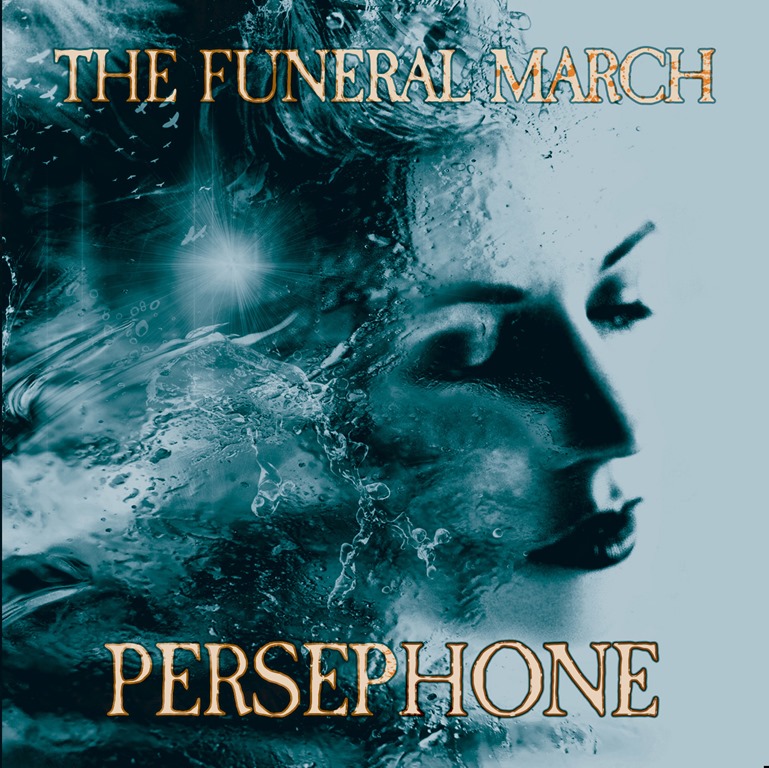
This new EP from the bleakly-monikered The Funeral March is described as offering five tracks which ‘whisper of dreams, murmur of despair, cry out in madness, and reflect on hope and loss’, inspired by the Greek queen of the Underworld, Persephone, reflecting on the ‘transition between death and rebirth’.

We’re deep into the realms of heavy concept here, and such weighty topics warrant weighty music. The Funeral March certainly do themselves and their subject matter justice here.

It begins with pounding percussion and heavily effects-laden bass and guitars. I’m instantly reminded of Pornography-era Cure. It’s dense, heavy, intense. Hell, the first time I heard that album I could hardly breathe. It’s liked having your ribs stood on. The first time I heard music so suffocating was on being passed a tape of The Sisters of Mercy’s First and Last and Always and I was still indifferent to The Cure. It was Pornography that really hit me.

It’s that seem that The Funeral March are mining here. With that tumultuous drumming paired with a thick, thunderous bass, and the dark, murky theatricality of early Christian Death – completed with a dark and dirty production that sits between early 80s goth demo and black metal dirt – it’s a compelling and intense listening experience, with ‘Two As One’ proving particularly hellish in its claustrophobic density and ‘Kiss Me’ channelling the synth drone of ‘A Strange Day’ and doomy atmospheric of ‘Siamese Twins’.

The atmospheric ‘Nite Nite’ brings synths to the fore over the trebly mesh of guitar, providing variety of tone and texture not to mention a classic 80s feel, and drenched in reverb, J. Whiteaker’s vocals sound lost as if trapped between two worlds.

The final track, ‘Wasted Moon’, is again driven by a supremely thick bass and trudging beat that echoes beneath the murk. Whiteaker sounds desperate and anguished and you feel the pangs of panic rising.

Listening to Persephone is like being wrapped in a carpet and tossed in a car boot to be buried – not that I have first-hand experience of this, but it’s how I imagine the experience – and that sense of panic and entrapment, of feeling lost and alone is palpable, is real. It leaves you feeling tense, and hollowed out, emotionally drained. Powerful music isn’t about making you feel good, it’s about making you feel. Persephone is powerful and drives straight to the heart.

AA

357743

The latest single by Swedish post-punk/darkwave act A Projection sees the Stockholm-based quartet maintain their recent move towards a more electronic sound with a new single entitled ‘Anywhere’ that has a distinct mid-80s electro-pop vibe. Out on 30th September, a video for the song has been made available a day ahead of its release.

The group’s upcoming fourth album, In A Different Light, has already had the songs ‘Darwin’s Eden’, ‘No Control’, ‘Careless’ and now ‘Anywhere’ lifted from it as singles. Encompassing both ‘80s post-punk and electronic elements, it will be their second full-length record released on Metropolis Records and follows 2019’s ‘Section’. Further details will follow shortly.

Initially inspired by the dark post-punk/proto-goth of The Cure, Sisters Of Mercy and Joy Division along with the electronica of Depeche Mode, the band are also known for their compelling and dynamic live shows.

The video for ‘Anywhere’ has been made by Ukrainian filmmaker and artist Shorkina Valeri, who also shot the recent promo clip for ‘Careless’.

Watch the video for ‘Anywhere’ here:

AA

821489e926ede9b0f37379ef04989dcb254772ce

4th August 2022

Christopher Nosnibor

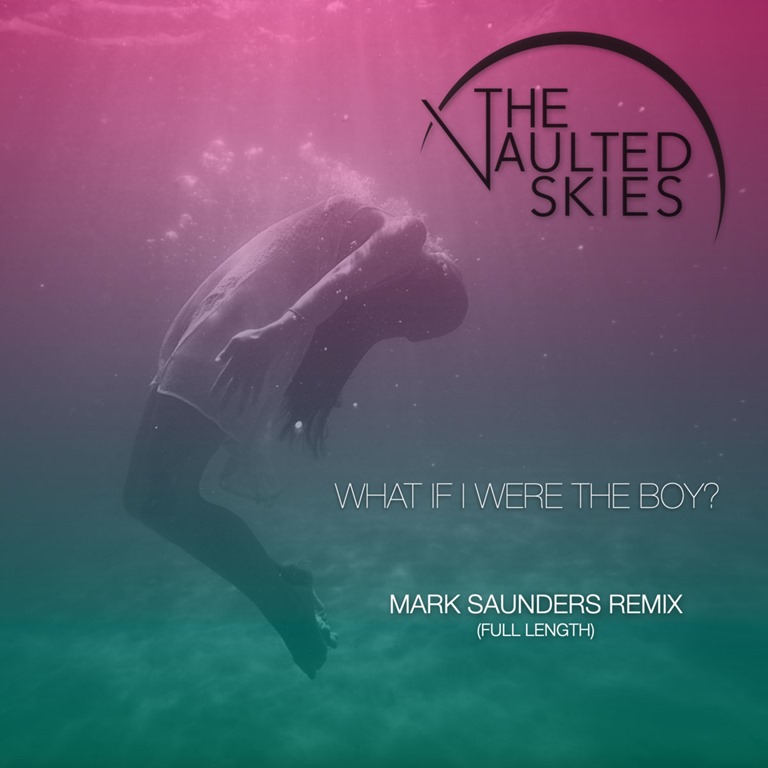
Back in November of last year, I gave ‘What If I Were the Boy?’ by The Vaulted Skies a massive double-thumbs up, having previously raved about their debut EP, No Fate back in 2018. And now ‘What If I Were the Boy?’ has been rereleased, this time as a remix courtesy of Mark Saunders, whose eye-poppingly extensive discography includes work with The Cure, Lloyd Cole, Depeche Mode, Siouxsie and the Banshees… and many others, including some truly huge names like David Bowie, but those I’ve picked out are relevant is they’re illustrative of his longstanding links with post-punk, of which The Vaulted Skies are emerging contemporary exponents. But Saunders also has a long history of wording on radio-friendly and more dance-orientated material, and it’s fair to say that his remix of ‘What If I Were the Boy?’ brings these two threads together very neatly.

The song itself draws on contrasts in its take on a ‘nostalgic tale that is filled with reflection and regret’, inspired by an encounter experienced by vocalist/guitarist, James Scott., who recounts how “In college, I was paired up in an acting assignment with one of the popular girls. She propositioned me and in doing so, verbally and indirectly alluded to a very troubled home life. I wish I’d recognized the cry for help underneath it all. This song captures the desperation I have felt when wondering what became of her.”

Saunders sensitively preserves the stark, haunted angst of the original, but subtly packs some extra oomph and wraps it in a dark disco groove. The chunky gothy bass of the original is smoothed into a more dancefloor-friendly sound, the drumming – the cymbals in particular – is slickened down and given a more buoyant disco twist. If the original sounded in some way tentative, despite its solid assurance, then the remix rolls it all out and effortlessly stretches it past the seven-minute mark in vintage 12” single style.

If the grit and flange of the driving guitar in the chorus is backed off a bit in favour of a more even sound, well, it works, as does the cleaner vocal treatment. In short, this version may lack the ragged punch of the original, but it by no means does The Vaulted Skies a disservice, and will likely be a major step toward connecting the band with the larger audience they so richly deserve.

AA

a0476272310_10

Christopher Nosnibor

Having just spent a depressing afternoon hearing the new Interpol album for the first time, I decided I needed cheering up. Scanning my immense backlog of releases for review – and, with new submissions landing faster than I can open emails, let alone download and listen to albums, I realise that Hanging Freud’s album has been lurking unplayed for far too long for an album I’d been excited to hear since ‘Antidote/Immune’, released as a taster of album number six, Persona Normal back in June last year, landed in my inbox.

The release / review cycle is in itself a pressure we would all do without, since albums by their nature have a slow diffusion. In an accelerated world, PR campaigns are over a month or so after release, and I suspect that under the current model of pre-release hype followed by a rapid burndown, most releases shift 90% of their units within the first months of release, before things taper off and pretty swiftly drop off a cliff. But I digress, as I’m prone to doing.

Persona Normal is not the kind of album you’d expect to provide joy, but, in context, it’s a welcome reminder that there are still bands who are at a more advanced stage in their career delivering albums that channel difficult emotions and explore them in real depth.

‘Cureseque’ is a term that’s passed into parlance to make a shorthand reference to anything that draws inspiration from The Cure, but it’s trouble some and rather inadequate given the band’s range. More often than not, it seems to translate as ‘lots of layered synths like Disintegration’. Not so Persona Normal, an album that condenses the style and atmosphere of the unparalleled trilogy of Seventeen Seconds, Faith, and Pornography into a single set. The atmosphere is bleak, and the production sparse, but there’s some monumental percussion that’s more akin to Pornography.

It opens with the droning, wheezing synth of ‘Too Human’. It’s pitched against a trudging, monotonous drum beat with a dominant snare, and this provides the backdrop to a gloomy yet elegant vocal that aches with resignation, before ‘We Don’t Want to Sleep’ pounds in on a rhythm reminiscent of ‘A Strange Day’, and this is around the level of the bleak, brooding atmosphere. It’s thick and heavy with angst.

But then, amidst the doomy, droning synths and metronomic, motorik drum machines, Paula comes on with the sass of Siouxsie, with her enunciation and her glacial cool post-punk intonations. And as such, while Persona Normal really is pretty fucking bleak, dense, and dark, it’s uplifting to hear an album that so perfectly captures the spirit of the bands from which it draws unashamed influence. Elsewhere, I’m reminded of Chelsea Wolfe and Pain Teens; ‘Is This Why?’ may be sparse in its arrangement, but the sound is full, expansive, epic, and there’s something graceful and plaintive in its inward searching. An in an album of wall-to-wall quality, ‘Immune’ stands out as a snarling post-punk beast with the sharpest of hooks – and it’s all in the delivery.

More often than not, the sounds and overall sound and delivery convey so much more than words alone – and the production only enhances the experience. It’s dense, dark, drum-heavy, and even in the middle of a heatwave, it’s an album that will chill you to the core.

AA

a3740242382_10

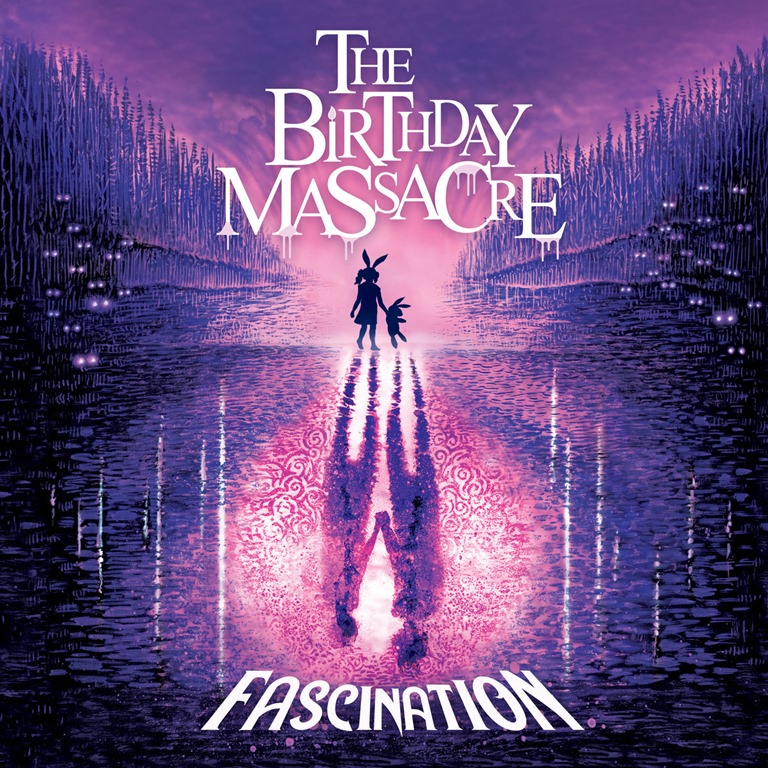
Over twenty years and a dozen albums, The Birthday Massacre have become prime exponents of goth synth pop. They describe Fascination as ‘at once the most fully realized album with the bands signature blend of haunting vocals, captivating electronica and aggressive guitars and their most accessible’.

It’s this accessibility that immediately announces itself from the outset. The title, ‘Fascination’, immediately makes my mind leap to the song by The Human League, and this is unquestionably poppy, but this is in a different league instead. It’s the title track that opens the album and it’s a colossal anthem. It’s in the slower mid-pace tempo range, and the production is so immense as to be arena-worthy, the slick synths drifting over big, bombastic guitars. Some may baulk at the notion, but it’s pretty much a power ballad. It paves the way for an album that’s back-to-back bangers.

I mean, make no mistake, this is a pop album in a pure 80s vein, and pushes tendencies that were always in evidence in BM’s work. People often seem to forget just how dark a lot of mainstream pop was in the 80s, but listen to A-Ha, even Howard Jones or Nik Kershaw objectively and the currents of darkness are clearly apparent amidst the clean lines of the clinical synth pop production of the day. It’s perhaps time to re-evaluate what actually constitutes ‘cheesy’ – an adjective so often pinned to the 80s with no real consideration – and cast aside the idea of ‘guilty pleasures’ when it comes to a lot of music of the era.

‘Stars and Satellites’ is bold and brooding, and probably the most overtly ‘goth’ track of the album’s nine, although ‘Like Fear, Like Love’ grabs bits of The Cure and tosses them into a stomping disco tune. But those drums… they’re great, they’re huge, but they really are the epitome of the 80s sound. Elsewhere, the guitar line on ‘One More Time’ actually goes 80s U2 with heavy hints of Strawberry Switchblade (and they weren’t goth either). Step too far? Maybe for some craving the chunky chug of industrial guitars, because this is fundamentally a riff-free zone, but Fascination works if you embrace the spirit of its being easy on the ear and accessible.

It feels fresh for the band, but also feels like a relatively safe step in the direction of commercialism. It’s ok, and the songwriting and performances are solid throughout, that much is undeniable. It’s one of those albums that may take some time to sink in, in the way that Editors’ On This Light and on This Evening and The Twilight Sad’s Nobody Wants to be Here, Nobody Wants to Leave, felt just that bit mainstream initially. Digesting an overtly ‘pop’ album or a change of direction – and while the direction of Fascination is something that’s always been a part of The Birthday Massacre’s sound – hearing it placed front and central inevitably feels like a shift. And it is a shift, of course, just not one of seismic proportions.

‘Is anyone real anymore?’ they ask on ‘Precious Hearts’ before the final cut, ‘The End of All Stories’ goes Cure again, only this time with monster power chords that border on metal to fill out the mix.

Dig it, soak it in, play it a few times. You’ll probably like it, even if not on first listen.

AA

a2672010454_10

14th February 2022

Christopher Nosnibor

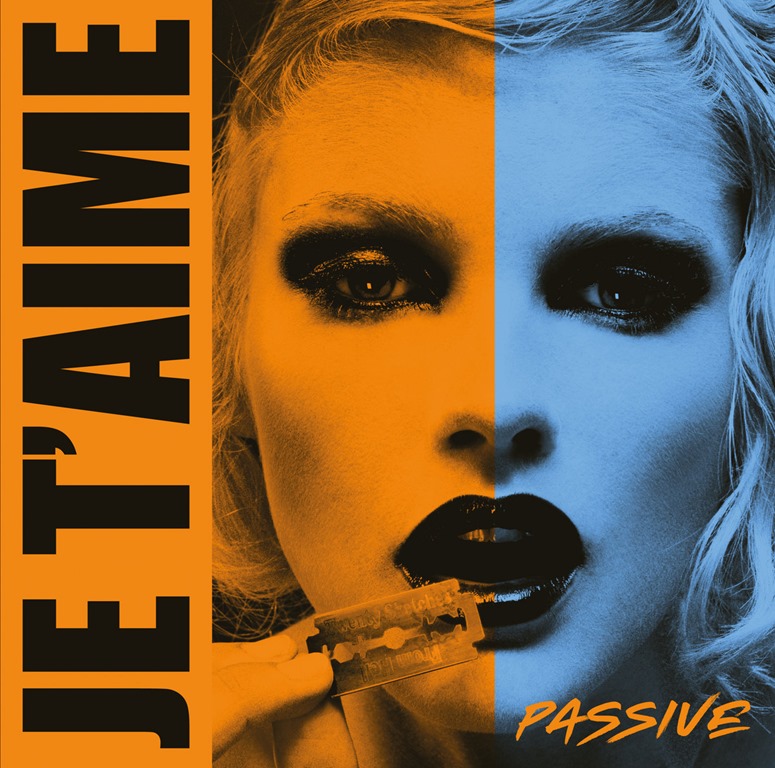
Passive is the second album from French post-punk band Je T’aime, and is the first of a two-part set, which will be completed with the release of Aggressive in the not-too distant future.

The album continues where its predecessor left off, and marks the development of a theme as part of an extended concept work, where we ‘follow the evolution of the same antihero; a common avatar of the three musicians. The tone hardens, the atmosphere becomes more melancholic, and the lyrics embrace bitterness and anger.’ The liner notes explain that Passive ‘continues the theme about the difficulty of growing up. Our main character is constantly caught up in the past, repeats the same mistakes and ends up not being able to move forward in his life. It is no mystery that the band’s music constantly looks for influences in the past 80’s for that reason’.

So many people do get hung up on the past, and seem to hit a point in their life – usually around their early 30s, in my experience – where they simply stop evolving and reach a stasis, a brick wall where they conclude that no good new music has been released since they were in their early 20s and nothing is as good as it used to be. It’s not all memberberries and memes, but there are many agents at play driving an immense nostalgia industry. And it’s easy money: no development required for new ideas when there’s a near-infinite well of past movies and music to plunder and rehash or at least lean on. Would Stranger Things have been the smash that it was if it was set in the present? However great the script, plots or acting, much of its appeal lies in its referencing and recreation of that intangible ‘golden age’. While that ‘golden age’ may depend on when an individual was born, the acceleration of nostalgic revivals and recycling means that kids who weren’t even born in the 80s or 90s are nostalgic for synth pop and grunge by proxy.

Passive is anything but. But what it is, is a dark, heavy slab of dark, bleak, brooding, a mix off sinewy guitars and icy synths with rolling bass and tribal drumming that lands in the domain of early Siouxsie, Pornography­era Cure and The Danse Society around the time of Seduction. The instruments blur into a dense sonic mesh. There’s a tripwire guitarline on ‘Another Day in Hell’, which kids off the album with a gloriously dark, stark, intensity that’s Rozz William’s era Christian Death as if played by X-Mal Deutschland. And if I’m wanking nostalgia over this, it’s less because I miss 1983 (I was 8) than the fact they capture the energy and production of that groundbreaking period with a rare authenticity.

‘Lonely Days’ is a bit more electro-poppy, but has a guitarline that trips along nicely and throws angles and shade. ‘Unleashed’ reminds me more of The Bravery and their take on 80s pop, but then again, The Cure’s influence looms large again, and elsewhere, ‘Stupid Songs’ goes altogether more New Order / Depeche Mode, but then again, more contemporaneously, it’s not a million miles off what Editors were doing on In This Light and On This Evening – and album I found disappointing at first because it felt like derivative 80s electro fare, before the quality of the songs seeped through to convince me.

One thing that’s often overlooked about 80s pop is that dark undercurrents ran through even the most buoyant of tunes from the most chart orientated acts; Duran Duran and Aha, even the music of Nick Kershaw, Howard Jones, A Flock of Seagulls, was cast with shadows flitting beneath that veneer of production. So when they go bouncy disco on ‘Givce Me More Kohl’, the parallels with The Cure’s ‘Let’s Go To Bed’ and ‘The Walk’ are apparent, with a lost and lonely aspect to the vocals, and they go full Disintegration on ‘Marble Heroes’. And that’s cool. It’s poignant, sad, wistful, an emotional cocktail. On Passive, Je T’aime revel in all of those elements of influence and pack them in tight, and they do it so well and with such discipline. They really know what they’re doing: the sound and production is class, and the songs and classic, and the sum of the parts is a truly outstanding album.

AA

a3347450970_10

Southern Lord – 25th February 2022

For many, the days of the longest, hardest lockdowns are, it would seem, behind us. And yet the shadow of the pandemic continues to hang long as dark; it’s hard to move on and truly put it behind us when life continues to be anything but normal; signage and masks and booster reminders are the new normal, and we face a new normal carrying scars of a personal nature, each and every one of us. Successive lockdowns, periods of isolation, have all affected us in different ways, and we’ve all suffered some form of trauma or psychological damage in living through conditions we’re simply not equipped for.

For many creative types, working through the experience has manifested in new artistic output. There’s something about channelling that anxiety into something, even if not direct or specific in addressing the issue, that helps to somehow minimise, contain, or otherwise manage it. Thurston Moore’s latest project, like so many was born out of a lockdown environment, and it’s an exploratory work, in so many ways. A series of instrumental guitar pieces recorded during the summer of 2020, it’s a document of, as the liner notes outline, a period where, ‘as the world confronted the pandemic shutdown and as the people of good conscious stood up against the oppression of racist police oppression and murder.’ It goes on to ask, ‘How much screen time does a parent allow a child? How much screen time does a child need to realise a world which has the means to coexist as a community in shared exchange?’

This feels like numerous issues, simultaneous but separate, have collided to inspire this album, and raises as many questions as answers. Moore is clearly placing his flag alongside Black Lives Matter, and it struck me – and surely many others – that the protests should have taken place when the world, pretty much, was in lockdown. How could this be? This was a moment in time when protest felt impossible. In fact, anything felt impossible. But the murder of George Floyd was a trigger and it marked a tipping point of something far, far bigger for so many. This was about centuries of oppression and division. The scenes aired over the news channels, globally, were electrifying. But how does this relate to monitoring the screen time parents should grant their children? Surely it’s less about the amount of time, but parental control, and the extent to which parents grant their children exposure to current affairs? That said, it’s something I’ve wrestled with myself. As a child, I had no interest in anything on the news; my own daughter, aged 10, is genuinely interested and has her views on our prime minister, our government, and the pandemic, and more. While I feel a duty to protect her from scenes of violence and endless report of rape, murder, abduction, and brutal crimes against women and children, I also feel that a certain degree of exposure to ‘the real world’ is beneficial, just as I’ve come to see that many computer games encourage problem-solving and eye-hand co-ordination. Screen time isn’t all bad if you can get over the generational differences. But.. but… no doubt, it’s a conundrum.

Screen Time offers no answers. As is often the case with instrumental works, there is little to be gleaned from them in and of themselves, and the titles offer little by way of interpretive guidance. The only thing that really struck me about the titles, in fact, is that several share their with cure songs: ‘The Walk’; ‘The Dream’. ‘The Upstairs’ feels like an allusion to ‘The Upstairs Room’ (the title of the 12” EP version of ‘The Walk’; but then again, all of the compositions are ‘the’ something: ‘The View’, ‘The Neighbour’, and these reflect the shrunken worlds we inhabited during this time: four walls, the view from the window, and the TV as the window to the world. There was nothing else but to look, and to ponder. Screen Time is a work of ponderance. It doesn’t have to be coherent, because coherent thought isn’t the state of the world right now. Show me someone who has a firm handle on everything that’s going on and I’ll show you a bullshitter. No-one knows anything, and we’re all just fumbling, stumbling through.

Many of the pieces on Screen Time are short, fragmentary, and sparse, only half-formed, but evocative and atmospheric: ‘The Walk’, a minimal piece consisting of a heavily chorused and echoed guitar trickling a cyclical motif for a minute and fifty-one seconds is exemplary. Elsewhere, ‘The Upstairs’ is a haunting piece led by disorientating, discordant piano that tumbles along.

At times reminiscent of Earth, or more specifically Dylan Carlson’s more recent solo work, Screen Time borders on ambience in its slow, soft unfurlings. The final piece, the nine-minute ‘The Realization’ is almost hypnotic; slow, with deep, resonant notes that reverberate and hover while harmonics chime and soar.

As a listening experience, Screen Time is pleasant, absorbing. I like it. But what does it say? It speaks for Thurston Moore alone, just as any such release can only speak for its composers and performers. That’s ok. When stitched together, in time, all the voices will combine to present the full picture. For now, what simply matters is that each voice keeps adding to the tapestry of documenting the present, a time unlike any other.

AA

LORD283_tp0001c_LPtipon_jacket_cover_rev011217 [Converted]

26th January 2022

Christopheer Nosnibor

Elkyn first came to my attention – and, quite frankly, blew me away instantaneously – in his previous iteration as elk, in the spring of 2019, an appreciation that was cemented with the release of the ‘beech’ EP that summer. Since then, Leeds based multi-instrumentalist Joey Donnelly has become elkyn and gone on to craft not only more remarkable songs, but also something of a rarefied space artistically.

In many respects, there’s very little of Joey out in the public domain: press shots tend to be similar in style, and unassuming, and interviews, while interesting in themselves, and while he comes across well, reveal little about the man behind the music. In contrast, his songs are so intensely personal that there’s likely little need to elucidate further: the songs really do speak for him.

Those songs have already earned him airplay on BBC 6Music, BBC Introducing and Radio X, and deservedly so, and now, with a debut album, holy spirit social club, due for release in the spring, elkyn is sharing ‘talon’ as a taster.

Fuller in sound and more up-tempo than previous singles ‘something’ and ‘everything looks darker now’, it’s more akin to ‘found the back of the tv remote’, which found him flexing new muscles and venturing into Twilight Sad kitchen-sink melancholia.

It’s a(nother) magnificently-crafted tune, and it’s clear by now that Joey has a real knack for bittersweetness. The guitar is melodic and imbued with a wistfulness that’s hard to define. There’s a Curesque lilt to it, in the way that when the Cure do pop, it’s somehow sadder and more emotionally touching than then they do gloomy – or is that just me who experiences that sensation where a certain shade of happy just makes me want to cry inexplicably? But more than anything, when Donnelly’s voice enters the mix, I’m reminded of Dinosaur Jr. Joey’s a better singer than J Mascis, but his voice has that same plaintive quality that tugs away and evokes that emotional hinterland between gloom, resignation, and hope.

Donnelly deals in self-doubt, self-criticism and articulations of inadequacy, and this is why his songs are so affecting and relatable. But it’s the hope that shines through on ‘talon’ – thin rays of sun through the closed curtains of despair perhaps, but with a tune this breezy it’s hard to feel anything other than uplifted by the end.

Live dates:

18/03/22 Hyde Park Book Club Leeds

19/03/22 Fulford Arms York

20/03/22 The Castle Manchester

24/03/22 Scale Liverpool

25/03/22 JT Soar Nottingham

26/03/22 The Flapper Birmingham

27/03/22 Duffy’s Leicester

29/03/22 Strongrooms London

30/03/22 Folklore Rooms Brighton

01/04/22 Clifton Community Bookshop

02/04/22 Tiny Rebel Cardiff

Elkyn_@StewartBaxter-98

Pic: Stewart Baxter

Texas-based darkwave band SEVIT have just unleashed their single & video for the song, ‘It Can’t Rain All The Time.’ This is a conceptual song inspired by James O’Barr’s comic and the movie, The Crow, the character of Eric Draven and his fictional band, Hangman’s Joke.

“I always wanted to embody myself into the character’s mindset and finish the lyrics the way I always wanted to hear them in their entirety. I started to imagine the words I would have written if I was Eric Draven. The Crow was a beautiful film – so much sadness and so much longing, so much heart… When I decided to write this song, I wanted to revisit my hearts emotional vault and I wanted the words to belong to the film’s character, Eric Draven, who I imagined to be dark, poetic, theatrical, daring, passionate and beautiful."  – (Jackie Legos – Vocals/Guitar)

With hints of The Cure and New Order’s ‘Ceremony’ it’s a dark pop cracker driven by the thumping great snare sound. Watch the video here:

AA

7dbbe155-4277-b9da-3c06-a642321d77c3