No words… Just watch, and listen…
AA
No words… Just watch, and listen…
AA
The Devil’s Door sees And also the trees (AATT) present a quiet storm of an album. At times filmic, poetic and intense, with an undercurrent of dark psychedelia, it follows The Bone Carver (2023) and Mother-of-pearl-Moon (2024) in completing a trilogy of releases by the current line-up of one of the original UK post-punk acts.
The new record features signature AATT tropes that include poetic lyrics, orchestral guitar and soundtrack influenced songs inspired by newsreel, oil paintings and folklore. However, it also adds some surprising instrumentation – including guest violinist Catherine Graindorge – that skews the album towards a soundworld where John Barry meets Béla Bartók.
Ahead of the album, they’ve unveiled a video for the song ‘The Silver Key’. Watch it here:
AA
AATT formed in 1979 in rural Worcestershire, an environment that has provided a constant inspiration to a group whose music has often explored the dark underbelly as well as the beauty of the British countryside. AATT are renowned for their captivating live performances, a unique style of mandolin-like electric guitar, evocative lyrics and dark jazz rhythms – not to mention a creative independence fiercely preserved for over four decades.
The group have a long standing relationship with the Cure and have both played and worked together since the early ’80s. As part of AATT’s 2026 touring schedule, they will be special guests of the Cure for three shows at the Festival de Nîmes in southern France in late July. These will be preceded by early spring dates in Belgium, France and Greece:
7th March NAMUR (BE) La Nef De L’Eglise Notre Dame D’Harscamp
18th March TOURCOING (FR) Le Grand Mix
19th March ANGERS (FR) Joker’s Pub
20th March LORIENT (FR) Hydrophone
21st March CHERBOURG (FR) Espace Culturel Buisson
22nd March PARIS (FR) La Gaité Lyrique
4th April ATHENS (GR) Death Disco Indoor Festival 2026
24th July NÎMES (FR) Festival de Nîmes
25th July NÎMES (FR) Festival de Nîmes
26th July NÎMES (FR) Festival de Nîmes
Founded by singer Simon Jones and his guitarist brother Justin, AATT have maintained a continuous presence on the post-punk and alternative rock scenes worldwide. The group have released sixteen studio albums to date.
AA

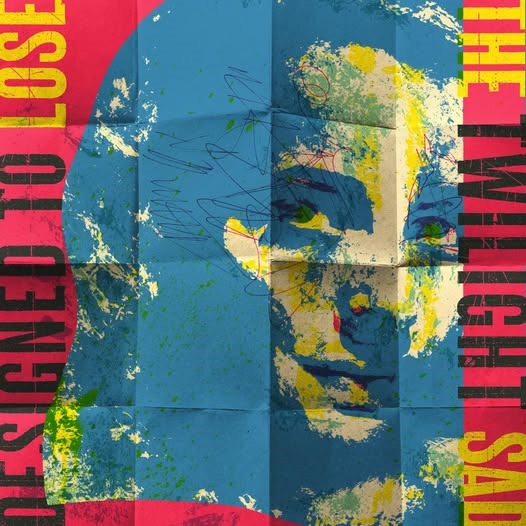
The Twilight Sad seem to be one of those bands that remain niche and somewhat divisive. But those who are into them are really into them, and with good reason. They’ve been long championed by Robert Smith and have access to a huge, huge audience following epic tours supporting The Cure, but they obstinately refuse to tone down their overt Scottishness, and they stubbornly refuse to bend to any kind of commercial leanings, or to cheer the fuck up. They’re also one of the most emotionally intense bands around: their live shows are quite simply something else.
‘Designed to Lose’ is the second single from their next album, and simultaneously harks back to the blistering welter of noise that was their second album No One Can Ever Know, while pushing forward on the trajectory of their last album, It Won/t Be Like This All The Time, which was both glorious and harrowing as fuck.
It Won/t Be Like This All The Time was released in 2019, so it’s been a long wait for new material. Oh, but this is worth it. The Twilight Sad aren’t a band to rush-release something sub-par, and ‘Designed to Lose’ is classic Sad on first listen, and just gives more with each play.
AA
Projekt Records – 9th December 2025
Christopher Nosnibor
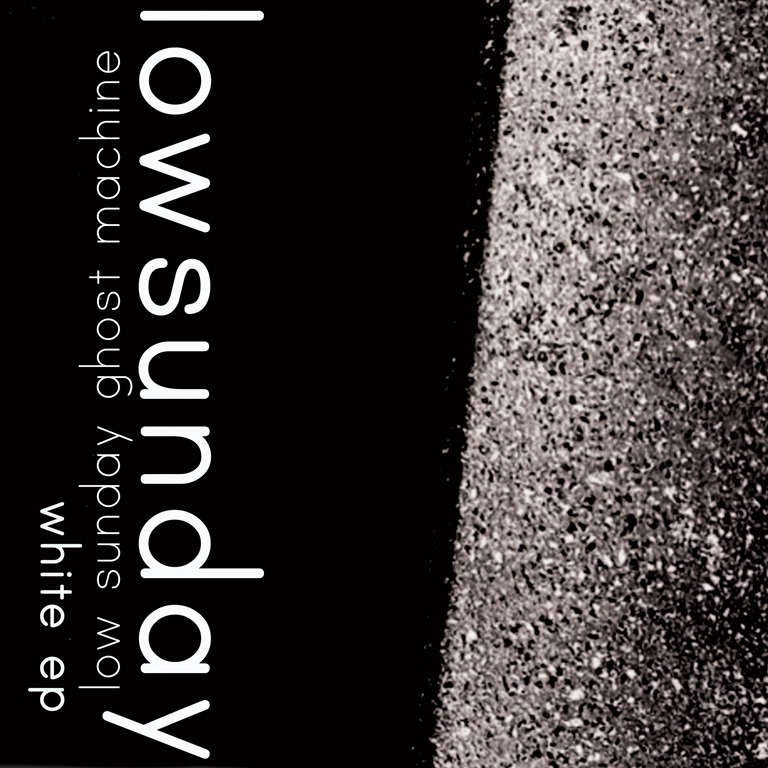
Woah, wait. 1999 is more than 25 years ago? Logically, I can grasp this. But the fact that lowsunday have existed for some thirty years and have been dormant since 1999 meaning this is their first material in over twenty-five years is still difficult to comprehend. It does very much seem to be a more common occurrence in recent years that bands who existed comparatively briefly in the 80s or 90s are reuniting and returning with not only new material, but strong new material. It may be a rather different league, but the last thing I expected last year was a new album by the Jesus Lizard, and that my first gig of 2025 would involve David Yow flopping off the stage and directly onto my face in the opening thirty seconds of the set. Lowsunday formed in 1994: the year Kurt Cobain died, the year I started university, the year of my first job as a reviewer. It feels like another lifetime. It probably does for them, too.
It may be pitched as a blurring post-punk, shoegaze, dreampop, and darkwave, and also as being for fan of The Chameleons, ACTORS, The Cure, Modern English, Clan of Xymox, Then Comes Silence, TRAITRS, but that thumping bass groove and pumping mechanoid drum beat on the EP’s opener, ‘Nevver’ is as trad goth as it comes. But the squalling noise that envelops the vocals – swathed in echo and low in the mix and taking direct cues from The Cure circa Faith and Pornography – is something else, a melding of My Bloody Valentine and The Jesus and Mary Chain with a dose of early New Order, Danse Society, and The Chameleons swirling around in there. And out of this swampy post-punk soup cocktail emerges a song of quality which really recreates that early eighties dark groove.
‘Call Silence’ goes straight for the sound of The Cure circa ’83, the singles on Japanese Whispers. And that’s cool: if you’re going to lift from early 80s gothy pop, you could certainly do far worse than ‘Let’s Go to Bed’ and early New Order as an inspiration – the bassline is pure Peter Hook. The production – and the strolling high-fretted bass work – really hits the spot, although it should be perhaps noted that they really do sound like a band born in 1982 rather than 1994. I guess they were retro before their time.
Paired with chiming guitars, it’s the monster snare smash that really leads – and grabs the attention on ‘Soft Capture’, a song that unashamedly draws on Ride and My Bloody Valentine, and pairs that wash of sound and monotone vocals with a drum sound straight from 1984. The fall from favour of the dominant snare feels like a loss, but there’s no time for lamentations as they pile in with another claustrophobic read goth groover in the shape of ‘You Lost Yourself’. Here., I can’t help but feel the vibes of late 90s goth acts like Suspiria and the scene around that time. It’s well-executed, with fractal guitars tripping over pumping drum machines and throbbing bass.
Closing with single cut ‘Love language’ sees the band strive for low-key anthemic with dreamiest and most overtly shoegaze song of the set. With the vocals drowning in a sea of reverb amidst a swirl of guitars, its detachment is its emotional power, perversely enough. And then, unexpectedly, it stops.
Everything about the White EP is simply magnificent – the way the songs are composed and played, the production, the overall feel. And while retro is all the rage – and has been for a while now, since postmodernism has eaten itself and the entire world has collapsed into endless recycling and nostalgia for ersatz reimaginings of golden bygone times. But sometimes a release will appear, seemingly from nowhere, that radiates a rare authenticity, and reaches the part others don’t. Lowsunday’s White EP is one of those.
AA
New Reality Records – 7th November 2025
Christopher Nosnibor
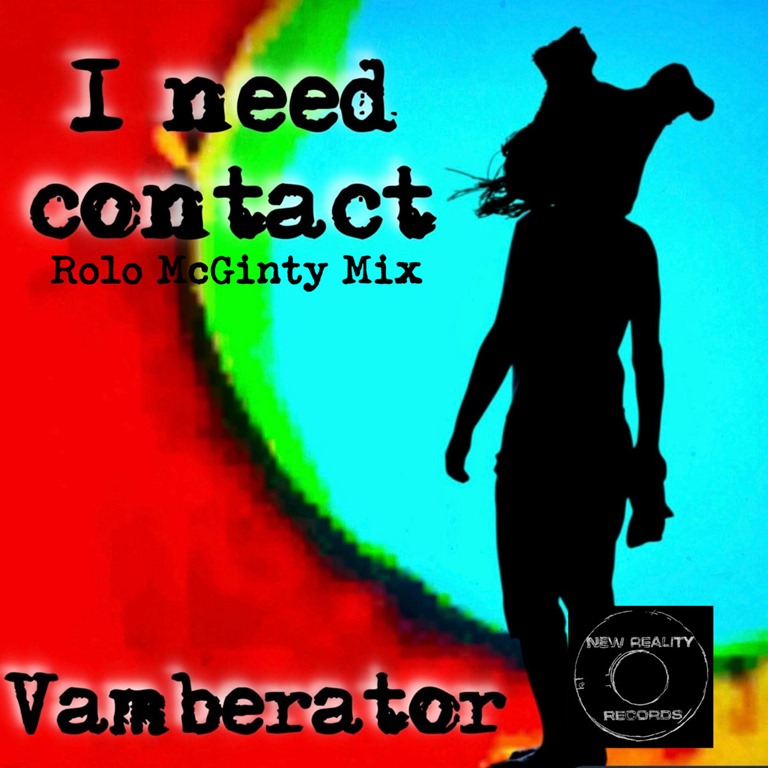
Almost a year to the week on from the release of their dark, emotionally powerful album, Age of Loneliness, Vamberator – the duo consisting of Jem Tayle, formerly of Shelleyan Orphan, and former drummer with The Cure, Boris Williams – have given a welcome poke to remind us of their existence with the release of a new single, in the form of a remix of ‘I Need Contact’, courtesy of Rolo McGinty of The Woodentops. The pedigree is rich here, and so is the quality.
McGinty’s reworking is sensitive, subtle, and what is adds is very much attenuated to the themes and underlying concept of the song, and, indeed, the album as a whole. Yes, the title renders these concepts self-evident, and while the project was spawned during the pandemic, when solitude and loneliness reverberated around the lives of so many in ways which had been hitherto unimaginable, where we find ourselves now often feels little better, with social fragmentation, social division, and the whole equation of work / life balance and all the other endless shit raining down day after day, maintaining connections – real connections, not those false connections of yelling into the void on social media – has never been more difficult. The things which were supposedly designed to bring people together – from open-plan workspaces to instant messaging and social media – have, in reality, trashed the threads of real-life social interaction. Millennials no longer meet down the pub after work or on a Friday night, and kids watch YouTube Shorts instead of going down the park. Gen X and older… who knows? We’re all lost, drifting.
‘I Need Contact’ captures that sense of desperate anguish, and McGinty adds something else – not least of all an enhanced sense of sadness and poignancy, with the addition of cellist Asakura Momoka and a field recording of an old diesel train engine. These add, respectively, shades of brooding and nostalgia (and who would have thought, not so long ago, that a diesel train would be a source of nostalgia? Time marches on, and at pace, and leaves us all behind eventually). But these additions are made subtly, keeping the soulful vocal to the fore of a minimal arrangement.
AA
The release is augmented by another Rolo McGinty remix, also lifted from the album. Here, ‘Creature in my House’ is stretched from its original five-and-a-half-minute duration to closer to double that. Pumped along by a retro ‘baggy’ beat (I can’t but be transported back to the 90s, as well as being reminded of the vibe of The Cure’s Mixed Up), and it does offer up a very different side of Vamberator. While the original version blends a mid-pace glammy stomp with hints of The Cure at their more playful, this lifts both the tempo and the spirits, and slings in some zany guitar breaks. Funky isn’t quite the word, but groovy might well be, and one might add ‘buoyant’, too, although it ventures into more experimental, and even dubby territory during its second half.
These are quite different versions, and make for a great single in the classic sense of A and B-side contrasting. They work well, and provide a well-timed reminder that the album’s out and well worth investigating – or giving another spin.
AA
AA
Mortality Tables – 25th September 2025
Bryan Alka’s brief post on Facebook sharing the news of his new release, is revelatory: ‘Today we release my 5th full length on Mortality Tables. After a series of breakdowns… The Magnitude Weighs Heavy.’
The Magnitude Weighs Heavy is the third and final instalment of a of dark and brooding albums, the first two parts of which – The Colour Of Terrible Crystal and Regarding The Auguries – were released by Vince Clarke’s VeryRecords. Alka, and particularly Bryan Michael, has no small back story: ‘a Philadelphia-area artist who has collaborated with Vince Clarke (Depeche Mode / Erasure / Yazoo), Roger O’Donnell (The Cure), Christian Savill (Slowdive / Monster Movie) and Michael Textbeak (Cleopatra Records). alka was formed around 2000 as a return to his bedroom producing days, and as a cleansing of his disappointing experience within the Philadelphia indie rock scene.’
This thirteen-track album is epic, grand, expansive. It’s also an exercise is taut electropop with a decidedly early 80s bent. Because what goes around comes around, the whipcrack snare and noodly electronic drift which defines many of the tracks, despite being pure 1989, have a contemporary feel, too.
‘Soliloquiy’ drifts into dreamy electro shoegaze, mellow and atmospheric, rippling, and soaked with a certain sadness, however sturdy the beats remain. Elsewhere, as on ‘Creeps; its clearly an attempt to lock things down with pinging robotic beats
This feels like quite departure for Mortality Tables, given their learning toward abstraction an ambience, but they’ve always leaned toward the different, and this is a work which is unashamedly different. ‘Unravel’ is exemplary here: it’s got groove, and is ostensibly a bopping dance cut, and a far cry from the implications of the album title. But everyone deals with trauma, grief, and distress differently, and we all articulate our internal strifes by different means. ‘enchanté’ locks into a hypnotic groove, the likes of which I haven’t been so immersed in since I discovered The Dancing Wu Li Masters by 25 Men back in 2008.
For all that, there are large, ambient expanses, passages of stuttering electro which draw together elements of industrial alongside the layered dance beats. The ten-minute ‘an attempt to conjure quiet’ feels like it’s quite willing to delve deeper into noise, the very opposite of the quiet it claims to seek, and the duration of this album feels like a teetering on edge. I’m reminded of how my late wife would hassle an and harangue over details, over chores, and the tense, jittery tone which leads n this album at times tales me there. But if the dark mutter of ‘thee individual visions ov jhonn’ is dark with resonating melancholia, The Magnitude Weighs Heavy brings things back to the light. ‘Whatever Will Become’ is a hybrid of pop and bubbling electronica, busy but mesmerising in its concentric circles of sound, its abrupt ending jolting the listener back to the moment.
The magnitude may weigh heavy, but this album has a remarkable lightness, delivered with a deftness of touch.
AA

2nd October 2025
Christopher Nosnibor
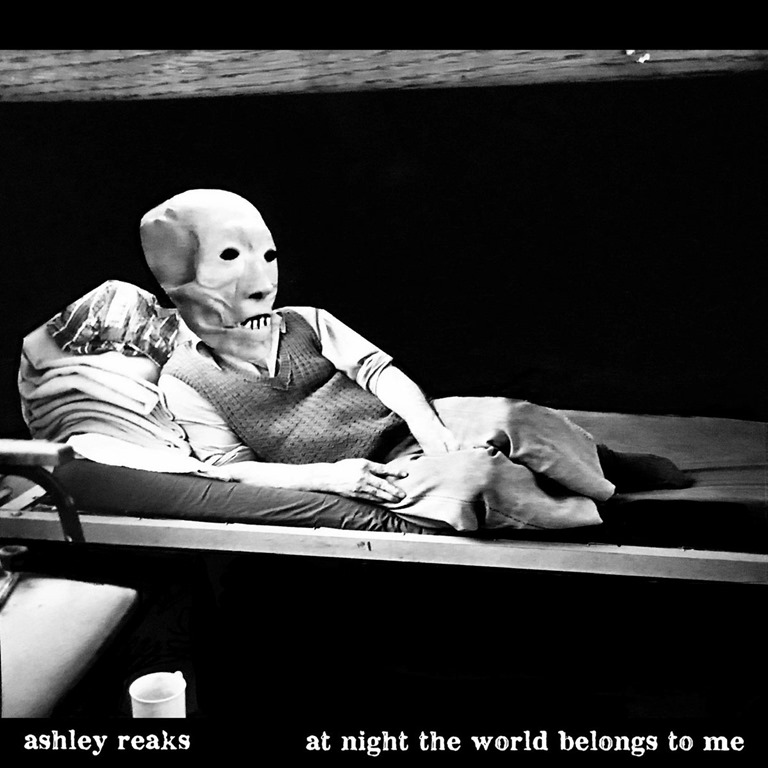
The context for Ashley Reaks’ sixteenth solo album – and his third in three years (not counting the compilation of demos released earlier this year) – is weighty. He has written openly and extensively of his health issues, while sharing images and commentary nocturnal wanderings, and these both inform At Night The World Belongs To Me, of which he writes:
The looming spectre of death and loss haunt the album: Reaks survived two major health scares and a misdiagnosed terminal illness over the last 18 months, experiences that inform the reflective, poetically gloomy lyrics, and the 4 am downtempo grooves. Adding to the sense of loss, guitarist and long-term collaborator Nick Dunne died suddenly at home just one week after completing his guitar parts for the record.
Through all of this, he has continued to collage and write prodigiously, but At Night The World Belongs To Me marks a distinct change of tone from its immediate predecessors, The Body Blow of Grief (2024) and Winter Crawls (2023). The usual elements are all present and correct – the sense of experimentalism, the collaging of genres, melding post-punk, jazz, and dub – but this feels darker, more introspective. The cover art, too, reflects this. While it has the same rather disturbing, grotesque strangeness of his usual work, the grim-looking figure in repose has connotations of ailment, frailty, even the deathbed.
The first track, ‘Playing Skittles With The Skulls and Bones’ has a bass groove that calls to mind The Cure’s early sound, melded to a rattling rhythm reminiscent of ‘Bela Lugiosi’s Dead’. The smooth sax that wanders in around the mid-point provides something of a stylistic contrast, but at the same time, it’s minor-key vibes keep the song as a whole contained within a bubble of reflection, evoking the stillness of night. I know, I’m sort of dancing about architecture here, but something about Reaks’ work prompts a multi-sensory response.
‘Rimmed With Yellow Haloes’ brings soaring post-rock guitars atop of an urgent ricochet of drumming and solid bass. On the fact of it, it’s almost poppy, but it soon shifts to take on a folksy aspect, while Reaks sings of death and funeral pyres, and the refrain, delivered with lilting, proggy overtones, ‘The Lord gave the day to the living, the night to the dead’. In context of the album’s title and theme, there is a tangibly haunting foreshadowing here, a suggestion that Reaks has not only accepted his mortality, but has assumed his place. It’s powerful, and deeply moving. Of course, Reaks can’t help but introduce incongruous elements, with some horns which are pure ska and some super whizzy 80s pop synths providing a pretty wild counterpoint to it all. It’s hard not to smile, because there’s an audacity to this approach to composition and arrangement – a lot of it simply shouldn’t work, but it does, and it’s uniquely Reaks.
The album’s shortest song, ‘Things Unseen’ is snappy, poppy, Bowie-esque, an amalgamation of post-punk and electropop, a standout which is succinct and tight, and consequently, the dark connotations of the bleak shuffle of ‘Life Forever Underground’ – a rippling synth-led tune – are rendered more profound. The sequencing of this album is such that the shifts between songs accentuate their individual impact.
‘Mask the face, unmask the soul…’ he sings softly on ‘Mask The Face’, which has a somewhat spacey Krautrock feel to it – before a guitar solo that worthy of Mark Knopfler emerges most unexpectedly. And as dark as things get here, Reaks never ceases to bring surprises. At Night The World Belongs To Me perfectly encapsulates the reason he’s so respected and critically acclaimed, but orbits light years outside the mainstream. In a world defined by an exponentially reducing capacity for sustained attention, Ashley Reaks makes music that requires real engagement, the musical equivalent of complex carbs and high fibre foods in a processed, white bread culture. But also, contemporary mainstream radio music favours short songs which cut straight to the chorus, where the hook has to land in the first twenty seconds. Here, we have eight songs, all but one of which are over five minutes long. They take their time, they’re expansive and exploratory, there’s atmosphere, there’s depth. And as ‘Eyeing Up The Sky’ tapers away on a buzzing drone, we’re left with much to chew on, much to consider.
AA
8th August 2025
Christopher Nosnibor
The seventh single released by the Papillon de Nuit project / collective / ensemble centred around Stephen Kennedy is perhaps the most ambitious yet. It’s clear that Kennedy, who has for a number of years, operated as a live music promoter under the guise of The Velvet Sheep, is an irrepressible creative, a restless spirit never content to do or be any one thing. In Papillon de Nuit, he’s songwriter, arranger, vocalist and multi-instrumentalist, bringing to this track vocals, found-sounds, additional percussion, additional piano. And here, in just three and a half minutes, he and his collaborators have produced a song which is many things at once. They’ve also got Steve Whitfield, known for his work with The Cure and The Mission (admittedly, some of my least favourite works by The Mission, but that’s more a matter of material than production) in as producer again.
Being drawn to certain names because of songs is, I suppose, only natural: favourite songs create images and associations which in some way we use to orientate ourselves within the world, internally. And there’s no doubt that Charlotte, like Alice, is a name with special resonance to those with musical tastes which lean towards the gothier domains. That Robert Smith’s inspiration for ‘Charlotte Sometimes’ was inspired by Penelope Farmer’s haunting 1969 novel of the same title was reason enough for me to track down and read a copy of the book, and in context, the doubling / overlapping of the vocals can be seen to represent the parallel / interchangeable lives of the lead character.
‘Frozen Charlotte’ is also a work of a historical persuasion, described as ‘a dark Victorian morality tale about the folly of vanity.’ And it is, indeed, dark. It arrives with a sharp squeal of feedback and the crunch of feet on gravel, before a low but springy – classic goth – and ultimately stealthy bass strolls in and completely shapes the song’s framework. Rolling drums – a minimal, Mo Tucker style, which adds to the stark, brooding atmosphere. The addition of cello and piano builds things further ahead of the arrival of the vocals. It is all about the intro and the build here, but Kennedy gives a magnificent performance. It’s not the overdone booming baritone goth cliché, but a rich, soulful delivery which imbues the lyrics with meaning, in what I can perhaps best describe as a ‘literary’ sense. What I mean by this that while studying English literature at university, some lecturers had the ability to get you completely hooked in a writer because the way they delivered the quotations had impact: they felt the words, and could convey them in a way that opened your eyes to the fact the word on the page contained so much more depth when orated with passion.
The chorus here is understated, the emphasis very much on the dark atmosphere, although the vocal melody does still provide a clear and vital hook, and the ultimate result is alchemical.
AA
AA

Negative Gain Productions – 6th June 2025
Christopher Nosnibor
Just as the birds of prey from which they take their name are creatures of the night, so this Irish act – essentially one guy – who draw inspiration from the darker realms of postpunk, goth, and synth-based music are very much dwellers of the dark hours, as debut album Death Games attests, with titles such as ‘Perfect Nightmare’, ‘Tombs’, and ‘Send Me to My Grave’. The album’s themes are timeless and classic, offering ‘a haunting exploration of love, mortality, and the fragile nature of existence,’ while casting nods to touchstones such as Lebanon Hanover, Boy Harsher, and Black Marble.
Lead single ‘Give Me Your Stare’ opens the album in style with a disco beat and throbbing bass giving this bleak, echo-soaked song a dancefloor-friendly groove. The vocals are backed off but ring clear through a haze of reverb, offering a hint of The Cure’s Seventeen Seconds in terms of production values.
AA
The compositions on Death Games are pretty direct: there’s not a lot of detail or layers, and it’s the electronic beats and pulsating basslines which not only define the sound but drive the songs. The sonorous synths which twist and grind over the top of these predominantly serve to create atmosphere more than melody, although haunting, repetitive motifs are commonplace, and the vocals, too, being low in the mix and with a fairly processed feel, are more a part of the overall sound than the focal point.
‘Skin on Skin’ brings a wibbly, ghosty synth that sounds a bit like a theremin quivering over a minimalist backing of primitive drum machine and bass synth, and the likelihood is that they’re going for early Depeche Mode, but the end result is more like a gothed-up Sleaford Mods, although, by the same token, it’s not a million miles away from She Wants Revenge around the time of their electro-poppy debut, and that’s perhaps a kinder and more reasonable comparison. ‘Fevr 2’ brings an increased sense of urgency with skittering bleeps skating around the reverberating drums: it has both an 80s movie soundtrack vibe and a vintage goth disco feel, and despite its hectic percussion and busy bass, ‘Tombs’ conjures a haunting, requiem-like atmosphere.
The ‘death’ thematic may not always be literal, and as much concerned with the death of love and the ends of relationships, but the duality the theme offers serves OWLS well. There’s no denying that it’s both a stereotype and a cliché that an obsession with death is such a goth thing, and OWLS fulfil these unashamedly – but then, why should there be shame? Why is it only goth and some strains of metal which embrace life’s sole inevitability, and explore mortality and the finite nature of existence? Even now, after millennia, we aren’t only afraid of death, but, particularly in Western cultures, we’re afraid to think or talk about it. People passing in their eighties and nineties still elicits a response that it’s a tragedy or that they should have had more time, and I’ve seen it said of people departing in their sixties or even seventies that it’s ‘no age’. We seem to have a huge blind spot, a blanketing case of denial when it comes to death, as if it shouldn’t happen, that it’s an injustice, and that no-one deserves it. But nothing is forever, be it love or life, and while loss – any loss – is painful, it comes attached to inevitability, being a matter of when, not if.
The stark and sombre ‘Send Me to My Grave’ commences a trilogy of dark, downbeat, funereal songs, which grow progressively darker, more subdued, the vocals more swallowed by evermore cavernous reverb. Even when the beats kick in and the bass booms, things warp, degenerate, and seem to palpably decay and degrade. There’s a weight to it, a claustrophobic heaviness, and the kick drum thwocks away murkily as if muffled by earth and six feet under sods. ‘This Must be the End’ is brittle, delicate, the calm that comes with the acceptance of… of what? What comes after the end? It feels like the song, and the album, leave this question hanging with an ellipsis, a suspense mark. It seems fitting, since we simply don’t know. But it does very much leave the door ajar for OWLS’ follow up, and that is something to look forward to.
AA
A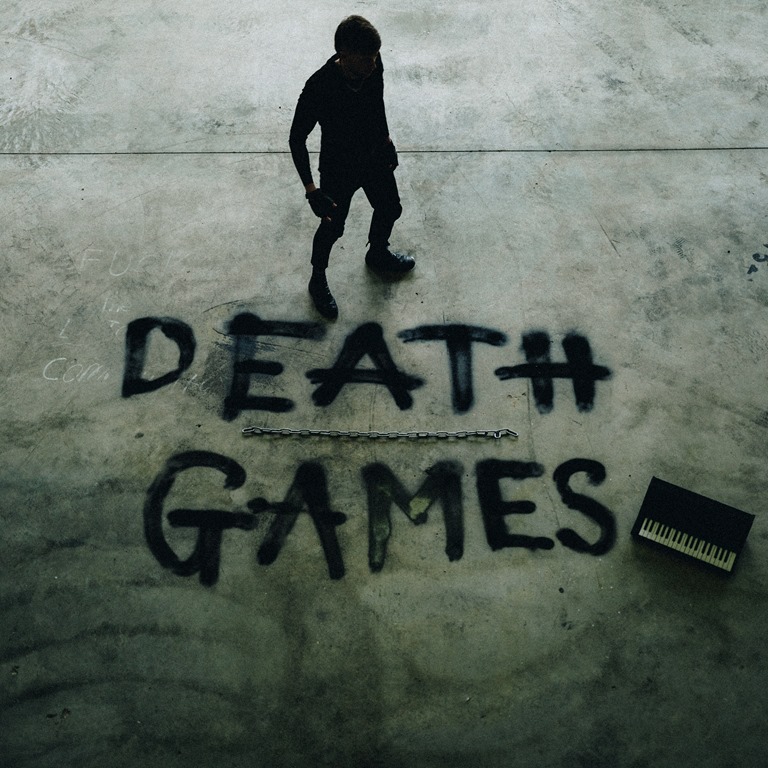 A
A
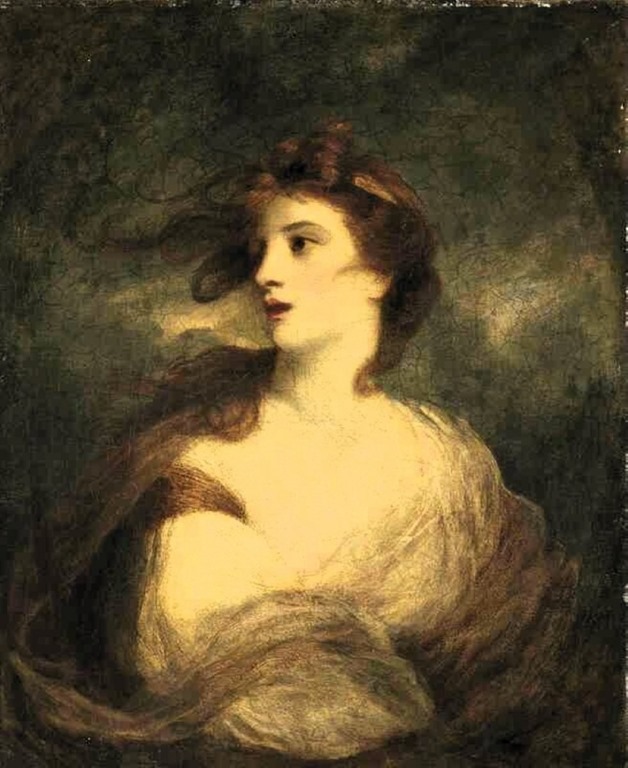
Having completed a trilogy of experimental songs, Papillon de Nuit begin a new cycle, reaching for the epic, and with a more structured (but no less adventurous) approach. With Steve Whitfield on board (The Cure, The Mission) as Producer, and an array of incredibly talented, diverse musicians and singers, Ariadne is the first release in this phase. We are delighted to share it with you.
Continue with us on our journey….
AA
 Aural Aggravation