Posts Tagged ‘Synths’

Ipecac Recordings – 28th April 2023

Christopher Nosnibor

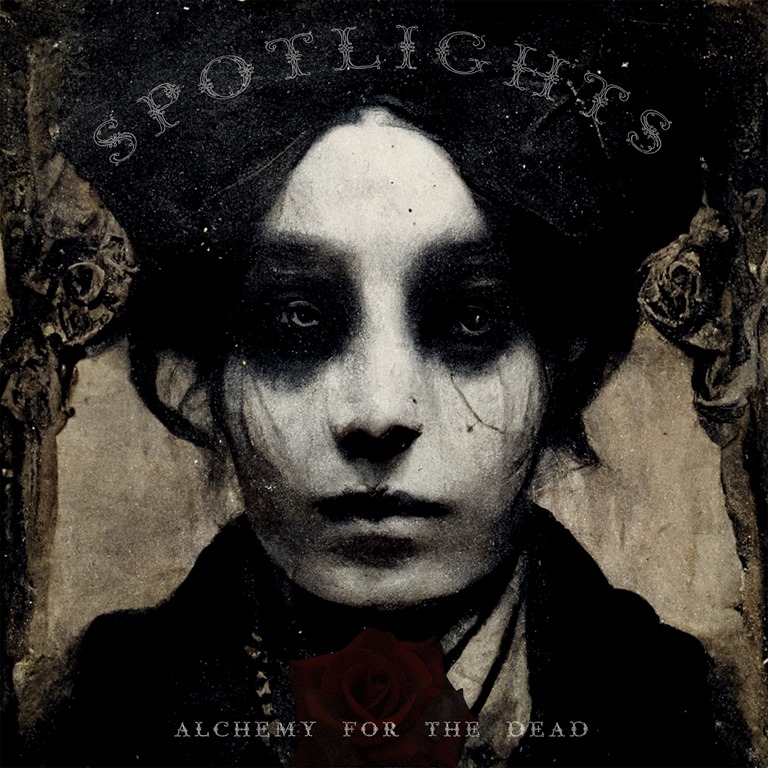
As their bio explains most succinctly, ‘Spotlights occupy the space between a push-and-pull of jarring metallic catharsis and sweeping distortion. Even as either side vies for supremacy, neither extreme ever completely tightens its grip, allowing waves of melodic vocals and expressive sonic sorcery to breathe in the middle. This deft balancing act has enabled the trio—husband-and-wife Mario Quintero [guitar, vocals, keys] and Sarah Quintero [bass, vocals] joined by Chris Enriquez [drums]—to carve a singular lane. Armed with an uncanny ability to wield darkness or light, the trio’s fourth full-length offering, Alchemy for the Dead [Ipecac Recordings], finds them exploring something we all face, yet few embrace…’

Expanding on this, Mario explains the album’s overarching theme, which the title alludes to: “One of the major parts of our lives, is the fact we’re all going to die,” he says “Most people are terrified of it, some people learn to look forward to it, and some see it as a way out of their misery. Various cultures view it differently. There isn’t necessarily a story to the album as a whole, but each song deals with the theme of death. It could be fantasy such as bringing a loved one back to life or darker moments like suicide and deep depression.”

It’s a fact that, at least in Western culture, death remains perhaps the last taboo, something of which even the dying tend not to talk about, not properly.

It was back in 2018 that I first encountered Spotlights: their cover of ‘Faith’ by The Cure from their Hanging by Faith EP was an instant grab. This was a band that really ‘got’ the atmospherics of the track and captured the essence of what, for many, myself included, remains as an untouchable trilogy of albums, 17 Seconds, Faith, and Pornography.

Alchemy For The Dead doesn’t sound like any Cure album specifically, but still takes cues in terms of weighty atmosphere. Following a gentle introduction that borders on dark synth pop, it’s not long before the blasting power chords crash in, thick and dark and heavy. And the thick, processed bass on ‘Sunset Burial’ blends with a rippling guitar that’s richly evocative and reminiscent of Oceansise at their best. But when they break into monolithic crescendos of distortion, I’m reminded more of the likes of Amenra, of BIG ¦ BRAVE.

There are some extravagant guitar breaks, but somehow, they’re as forgivable as the more processed prog passages, which in the hands of any other band would likely sound pretentious: Spotlights sound emotionally engaged and sincere without pomp or excessive theatricality: this isn’t something that’s easy to define, not least of all because it’s such a fine line when weighing up musical that’s so reliant on technical proficiency and very much ‘produced’. And the production is very much integral here: the arrangements require this level of separation and clarity. But this is where it’s important to distinguish between production and overproduction, and it’s testament to Mario’s skills at the desk that he’s realised the band’s vision so well. The bass really dominates the sound, which is so thick, rich, and textured, and also explores a broad dynamic range: the quiet passages are delicate, the loud ones as explosive as a detonation at a quarry.

Similarly while the songs tend to stretch beyond the five-minute mark, there’s nothing that feels indulgent or overlong here. ‘Repeat the Silence’ builds on a simple repeated sequence almost reminiscent of Swans’ compositions, but thunders into a bold, grungy chorus that’s more Soundgarden.

The album’s shortest song, the three-and-a-half-minute ‘Ballad in the Mirror’ is also the most overtly commercial, a straight-up quiet/loud grunge blast, and the riffage is colossal.

‘Crawling Towards the Light’ marries monster riffage with Joy Division-esque synths, and somewhere between Movement-era New Order and Smashing Pumpkins, but rendered distinctive by the propulsive drumming which drives the track which builds to a roaring climax.

The seven-minute title track is sparse and suffocating. It has a nostalgic quality that’s hard to define, and it’s perhaps something that’s only likely to punch the gut of nineties teens in this specific way, but it’s understated and emotive, and then the guitars crash in and it’s fucking immense and… well, what a way to conclude an album.

Alchemy For The Dead is a huge work, an album that draws its own parameters and digs new trenches around genre definitions before bulldozing them to the ground with riffs. Complex, detailed, and unique, Alchemy For The Dead is something special.

AA

SPOTLIGHTS_AFTD_LP FULL.png

Christopher Nosnibor

I get a lot of weird shit come my way. I guess it’s to be expected: I review a fair amount of weird shit and it just snowballs: weird shit finds me. And this is very much weird shit. Despite some serious deliberation, I can’t decide where the emphasis lies in that statement.

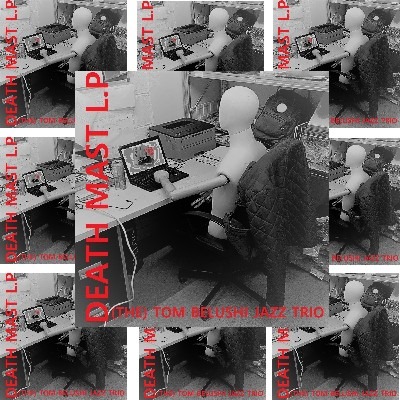
Details about the artist or the release are practically non-existent, but it doesn’t take too much digging to establish that the Tom Belushi Jazz Trio aren’t a trio and they don’t play jazz.

Having released an EP (also entitled Death Mast) and deleted it almost instantaneously, Tom Belushi Jazz Trio seem determined to render themselves as evasive frustratingly obscure as is conceivably possible. But this is clearly not simply a musical project, so much as an exercise in postmodernism that revels in ephemerality. With CD copies of this release being limited to single figures, I’m reminded of various crackers projects by Bill Drummond and The KLF, among others, whereby the objective seems to be to create an objet d’art that’s so scarce it’s beyond reach even before it’s released, essentially only existing in legend.

Slapping synths, gloopy stuttering beats, warping irregularities and groaning keys redefine the sound, along with snippets of robotic, autotuned vocals. Oriental motifs are dominant in this instrumental album’s ten exploratory tracks, which appear to be largely AI in origin. Because yes, it’s taking over the world. Think you can hide or linger on the peripheries now? You’re simply deluding yourself.

There are some nice sounds – and some naff ones – all balled together in an eclectic hotchpotch of ersatz electronic collaging. ‘Traitor’s Gate’ is a droning shanty that’s actually got human vocals; it’s woozy, disorientating in an uncanny sort of a way.

The titles are daft, absurdist, Dadaist or abstract, and littered with references, many of which are obscure – ‘Luke Haines. I Have Your Hat’; ‘No Mark Wynn’;(a particularly cheesy and overly synthetic slice of r ‘n’ b); ‘Stairwell Crooks Shutterstock Dust Jacket’ but ultimately seem to present as little true meaning as the music itself (and I can’t ever recall having experienced any dilemmas over purchasing avocados).

Death Mast is one of those albums that was probably more fun to produce thana it is to listen to. It does have considerable novelty value, and it does have lots of ideas, but few seem to be explored in any real depth or fully realised, and as such, the main idea seems to be the concept for the creative process – or should that be ‘creative’ process?- rather than the end product. But with the ideas and even the passages within the tracks being as fleeting and as ephemeral and impossible to locate as copies of the album itself, what are we really left with? Ultimately, Death Mast presents more questions than answers, a point of discussion more than a musical project. But, if there is one conclusion we can draw from this it’s that there is no need to worry that AI will bring about the end of music as we know it. At least, not this week. Welcome to the post-postmodern age.

AA

54d90880-c561-48af-aa9e-fda70c47391e_thumb_400

24th February 2023

Christopher Nosnibor

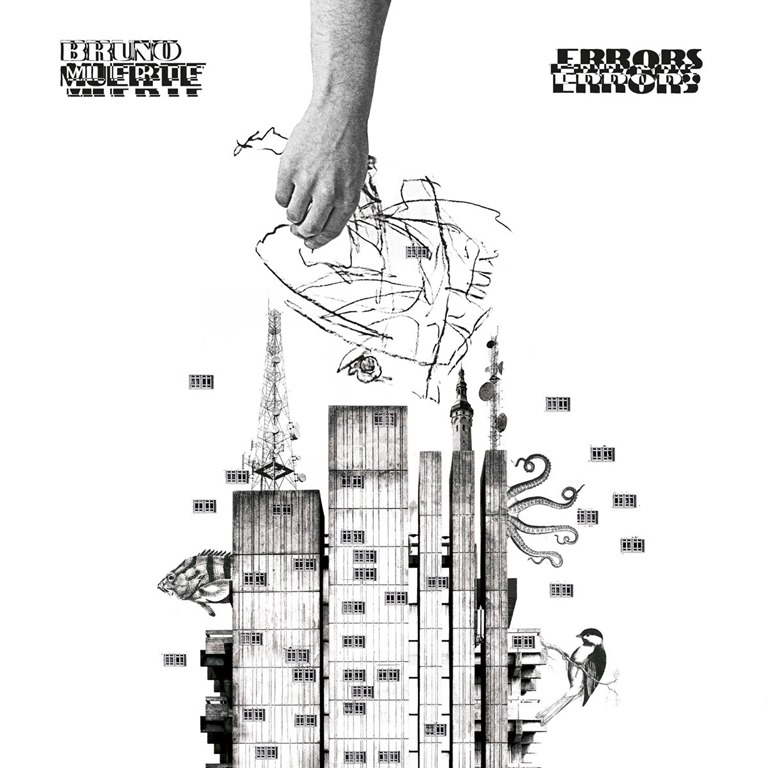
This Oxford based act describe themselves as ‘Techno Western New Wave Electroclash’ and ‘Synth lovers’. Unfortunately for me, this description conjures images of moustachioed hipsters circa 2009. The pair may well, be, choosing to keep their mugs off the record, and I’m all too aware of just how the field of instrumental electronic music is very much the domain of middle-class white guys tinkering with expensive toys. This lack of cultural diversity may be a leading factor in there being so much sameness stylistically.

Sameness isn’t really a criticism one could level at this album, for while it does assimilate many common tropes of contemporary synthesizer music – in that its inspirations are often retro in origin – stylistically, Errors offers a broad range.

‘Science of Errors’ is a punchy piece of electropop with some big, bold proggy sections that surge along in a rush, and it’s a strong start. ‘Conga Cop’ is very much a tune of 80s TV show vintage style. It’s extremely busy in terms of arrangement, stabby synths shooting over a hectic rhythm and samples flying around there and there, before going altogether more minimal on ‘Phil D’Ophear’, a much darker slice of techno where the dense bass dominates. Elsewhere, ‘Wibli Wobli’ packs a driving, energetic groove.

Errors is big on ideas: it’s positively bursting with them, and consequently, there is a lot happening, sometimes, if not all at the same time, then densely packed together, to the point that sometimes it feels as if there’s too much happening. And not all of the ideas necessarily work perfectly: the Clangers whistling over a microtonal waltz on ‘Satomi’ is novel and fun, but little more, but it’s Bruno Muerte’s willingness to experiment and the mix-and-shake approach to making music that’s a large part of the album’s appeal.

As they write in the accompanying notes, ‘One of the basic rules of the universe is that nothing is perfect. Perfection simply doesn’t exist without errors.’ It’s refreshing to hear: Errors, then, is not a quest for perfection, but a celebration of imperfection and the joy of being creative. And ultimately, it’s joy that Errors brings.

AA

a2776445249_10

Panurus Productions – 2nd December 2022

Christopher Nosnibor

Panurus Productions are renowned for their favouring of pop and jaunty indie on their catalogue, but as the title suggests, they’ve really excelled with the saccharine-sweet, shimmery Christmas bauble stylings on this December release by Distant Animals, the vehicle for Daniel Alexander Hignell.

The accompanying blurb sets the pitch for ‘A scuzzed out synth/noise/punk affair… straddling a range of genres but never settling on any one of them for long, shifting around with an angry, anxious energy directed at our bleak status quo.’

Granted, this does mean it’s nowhere near as abrasive as recent releases from Trauma Bond or as dark as Carnivorous Plants, this is a hybrid form that coalesces to convey the sound of post-industrial nihilism.

The synths drive and dominate the sound, and they’re layered into thick, foggy swirls pitched against grinding, fuzzy-as-fuck sequenced bass and a drum machine that’s largely submerged beneath the swelling squall. The opener, the eight-and-a-half-minute ‘Greetings from the MET Office’ builds and builds into an immense wall of sound, the guitar adding layers off noise and feedback rather than melody. There is a tune in there, somewhere, and vocals, too, buried in a blitzkrieg that sounds like Depeche Mode covered by My Bloody Valentine and then remixed by Jesu or Dr Mix and the Remix.

‘Phase Down and Sweat to Death’ gets dubby, with samples and snippets cut in and out of the mix, and actually finds a murky, echo-drenched groove in places, before veering off on myriad detours.

As titles such as the title track and ‘Panning For Shit In The Shallow End’ intone, this is far from a celebratory collection, with the delicate and brittle-feeling ‘Hegel’s Violin’ sounding like it could have been penned by The Cure circa Seventeen Seconds, and yes, it’s fair to say that there are what some may refer to as ‘gothic’ elements to the brooding sound.

If songs titles like ‘Fondly Remembering When Primark was a Woolworths’ and ‘They Didn’t Have Snowflakes In 76’ might suggest that Hignell’s been gorging on the Memberberries, but on the evidence there is, buried away in trudging industrial sub-zero trudges and stark, oppressive abstraction, this couldn’t be further from the truth, and we can appreciate these compositions as critiques of the multi-billion-pound nostalgia industry and Brexit Britain, where narrow-minded twats get dewy-eyed all over social media reminiscing over false memories of a golden age that never was. ‘They don’t make ‘em like they used to…’ It’s patent bullshit of course, but so many subscribe to this that, well, it must be true that The BBC haven’t screened Monty Python in decades because they’re woke lefties (and nothing to do that after airing it in 2019 for the fiftieth anniversary, the rights were purchased by NetFlix), and Stranger Things is only good because, well, it’s like The Goonies, isn’t it?

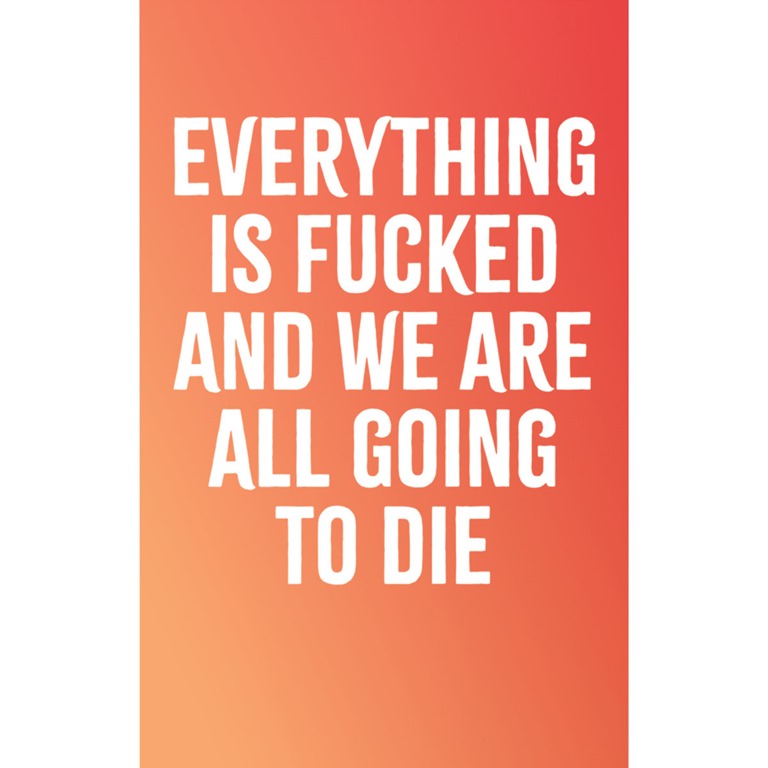
‘Panning for Shit’ is sparse, minimal electro that borders on Krautrock, and is the sound of drowning, not waving from our turd-encircled island, and there are many elements of this album which seem to align with the bleak perspectives and sounds of early industrial acts like Throbbing Gristle. But, to be clear, these are simply touchstones, rather than direct comparisons. Everything Is Fucked And We Are All Going To Die may evoke a sense of familiarity and a strange sense of déjà-vu, but ultimately presents a unique view and amalgamation of influences and stylistic references, and herein lies its true strength.

AA

a0758660749_10

Before we wave adieu to 2022 – IST IST – pause for reflection with the philosophical: ‘Mary In The Black And White Room’.

This new single arrives as the Manchester post/punk frontrunners also confirm a series of UK headline shows for April 2023, with dates in Glasgow, Newcastle, Nottingham, Birmingham, Bristol and London. Tickets will be on sale this Wednesday (7t December) at 10AM here.

A reminder of their keenly-anticipated third album ‘Protagonists’ (slated for Spring 2023 via Kind Violence Records), the track finds the band revealing one of its most cerebral, synth-driven moments.

With shades of classic OMD, The Cure and New Order, ‘Mary In The Black And White Room’ effervesces in the darkness with its potent blend of layered synthesisers, darting basslines, and labyrinthine lyrical intrigue.

“Mary…” is inspired by a thought experiment proposed by the philosopher Frank Jackson that has since become known as ‘the knowledge argument’ (or ‘Mary’s room’). Hypothesising the work of a scientist called Mary, who exists in a black and white world where she has extensive access to physical descriptions of colour, but no actual human perceptual experience of colour; Jackson’s theory wonders whether Mary will gain new knowledge if she actually experiences seeing colour.

Speaking about the track, IST IST’s  Adam Houghton says:

“Mary in the Black and White Room is about trying to figure out if experience trumps knowledge. See ‘the Knowledge Argument’ where the subject, Mary, exists in a black and white world but has extensive descriptions of colour, but you don’t know if she knows what they actually look like until exposed to it. Really interesting stuff.”

Absorbed by themes explored in Jackson’s theory of physicalism, IST IST create an unconventional love-song-of-sorts. As if reaching out from another dimension, frontman Adam Houghton delivers a cascade of cryptic couplets and non sequiturs in his rich baritone, looking to add colour to a world that could be so much more than monochrome.

The single arrives with an official lyric video created by Shaolin Pete, which elegantly reflects the themes explored in ‘Mary in the Black and White Room’. Watch it here:

AA

IST IST

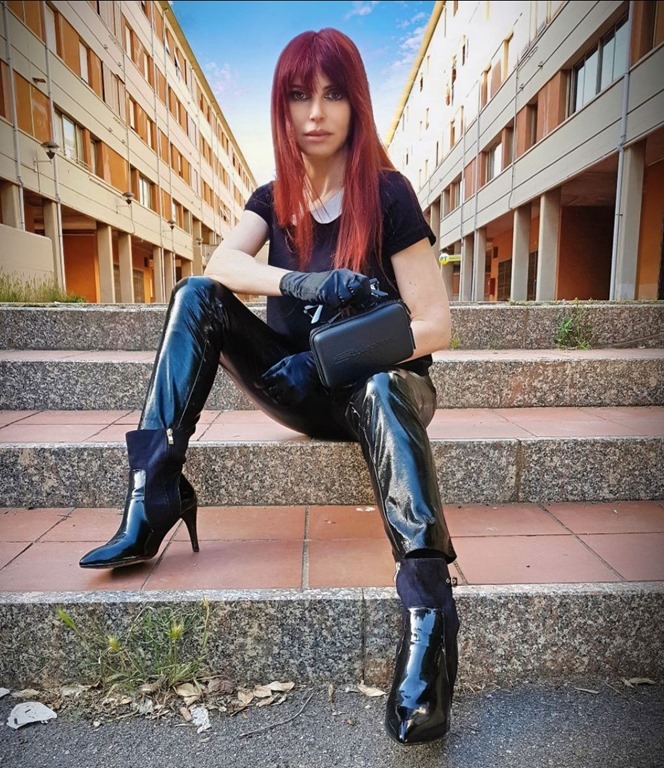
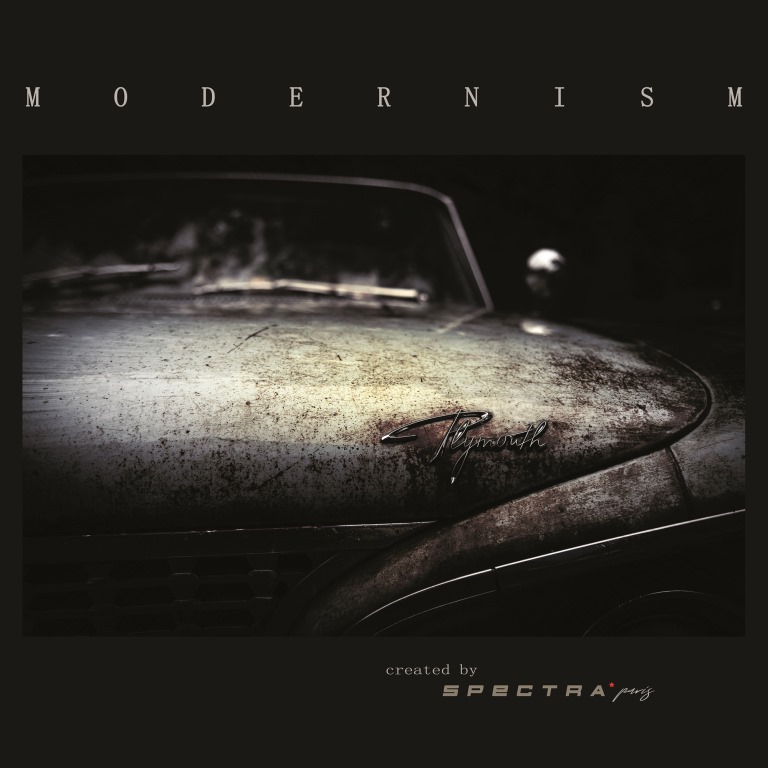
Enigmatic Italian singer Elena Alice Fossi has released the next fascinating single, ‘Indigo Cypher’, which is taken from the forthcoming new full-length of her dark electro project SPECTRA*Paris. The fifth album of that band is entitled Modernism and has been scheduled for release on August 26.

Watch the seductive and deceptively gentle electro track ‘Indigo Cypher’ here:

AA

“Memories of a life that does not belong to you”, singer, composer, and lyricist Elena Alice Fossi muses. “If you don’t feel at least a bit like a fish out of water in this grotesque theater that is humanity, then this song is not for you! We were born in deception and there we stay until we realise that real life is running elsewhere. ’They’ shape us in order that we make our own lives and that of others worse. ‘They’ mold us to obey slaves and to become slaves ourselves. ‘They’ shape us so as to love our family even when it has nothing to do with us.”

1d8bbaf0-d471-0a26-3812-e34ebd719b54

3rd June 2022

Christopher Nosnibor

My partner in power electronics, the man behind the white noise aspect of the ‘white noised and shouting’ equation that is …(something) ruined, Paul Thingumy (he has more pseudonyms and variant monikers than the devil himself, or even JG Thirlwell), has gone and self-released another EP. Well, less of an EP than an LP: it may only contain four tracks, but with a duration of almost an hour, it’s a very long play.

Residing in Mirfield, Kirklees, West Yorkshire – or, objectively, the arse-end of nowhere, where trains are infrequent and tend not to visit after 9pm – is probably very like any other Little Britain backwater with a Tory MP. And it’s so often from our immediate environs we draw our inspiration, as the album’s title indicates. For reasons I can’t fathom, the title reminds me of Peter York’s strange book Dictators’ Homes and some TV show I can’t quite recall – probably because I never watched it – about celebrity pads. Or perhaps I’m confusing it with Pimp My Ride or some other wank. Because it all blurs, and fast. Mirfield Pads is blurry, but in a different way: everything melts together to create an ambient wash.

In something of a departure from much of Paul’s previous work – and there’s a lot of it – Mirfield Pads is surprisingly mellow, melodic, accessible. There’s a hypnotic Krautrock vibe about the shuffling oscillations, with sampled vocal snippets buried low in the mix in places. It’s an overtly synth work with a vintage leaning that’s strongly rooted in the late 70s and early 80s. If there’s a debt to Kraftwerk here with elements of Mike Oldfield and Harold Faltermeyer, then equally, Mirfield Pads is Paul’s nod to Tangerine Dream, perhaps in part spurred by the recent passing of Klaus Schulze. You wouldn’t necessarily call it a tribute, but an inspiration, almost certainly.

Tapering tones interweave and turn, glistening, fractal, kaleidoscopic, like beams of light dancing on an illuminated surface, dancing lightly across a millpond or flickering on a wall. Not a lot happens, and it doesn’t need to: the sounds turn slowly on an axis that exists in a space of its own.

‘Crystal Airfield’ – a title that evokes the spirit of JG Ballard – hits the numerical sweet spot of 23:23, and with additional guitar work courtesy of Neil Campbell, longtime collaborator and one half of another project, Early Hominids, it’s a richly atmospheric piece that rounds off the experience nicely in a wash of elongated droning feedback paired with bubbling analogue sounds.

It’s the attention to detail, to the vibe and sensation that really makes Mirfield Pads intriguing. It feels more like a document from a past time more than a nostalgia piece, and this is a good thing, because nostalgia has become dreary and weary very quickly indeed – probably because the smell of cash is so unappealing.

AA

a3443859683_10

Enigmatic Italian singer Elena Alice Fossi, best known for being a member of Kirlian Camera, has released the first single, ‘Devious’, which is taken from the forthcoming new full-length of her dark electro project SPECTRA*Paris. Her fifth album under that moniker is entitled Modernism and has been slated for release on August 26.

“What’s the moral conduct to follow?”, singer, composer, and lyricist Fossi asks. “This song certainly won’t teach us any morals! With a decidedly noir matrix and via its gloomy lyrics, it lets itself be crossed by a glamorous imprint where the blood goes to be combined with the enchanting reflection of a bewitching shadow. God’s body has indeed been invaded by his servants.”

Watch the video here:

AA

SPECTRA*Paris was conceived as an electronic rock oriented project in the wake Elena’s previous project SIDERARTICA. In 2007 she self-released the ultra-rare promo 3" CD-R limited to 25 copies "Spectra Murder Show" and immediately got picked-up by a label, which led to the acclaimed first album Dead Models Society (Young Ladies Homicide Club) hitting the streets in the same year. The debut reached the charts in many countries and went up to gold. Elena followed-up with two successful albums in 2010, License to Kill and Christmas Ghouls. Tracks from these recordings as well as the latest album Retromachine Betty (2017) have been used in tv and catwalk soundtracks.

With Modernism, SPECTRA*Paris chronicle Elena Alice Fossi’s musical prison-break into the freedom that only true art can grant. Aided by her accomplice and long-time friend Angelo Bergamini, who co-produced and supervised every sound in this chapter, the composer and singer has delivered a fascinating personal statement via a wide range of electronic music.

AA

SPECTRA-Paris_000_cover_Modernism

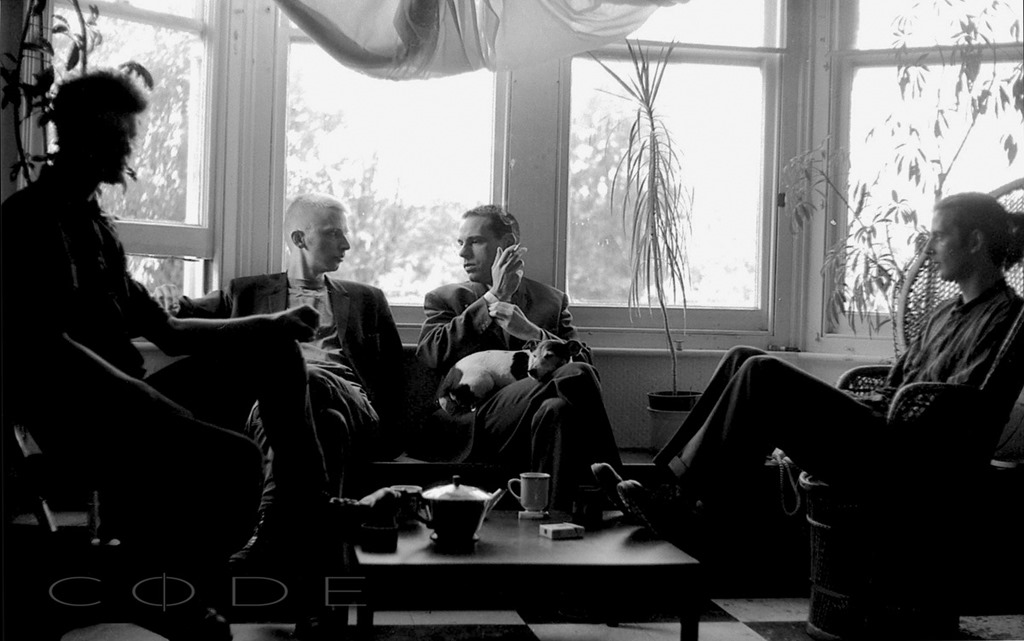
UK electronic quartet CODE earned their stripes in the electronic scene of the early 1990s and were championed by the likes of John Peel, John Digweed and Kiss FM presenters Colin Dale and Colin Faver. Their debut album, The Architect, was issued on the Third Mind label in 1995 just as that company folded, but has often been cited as a cult classic. Its follow-up, Ghost Ship, finally arrived in late 2020 after a 25 year journey and was enthusiastically received by critics and fans.

Like that album, Continuum has been assembled by remodelling material from archived studio sessions and sounds like it could have been made yesterday. Emotionally engaging and exquisitely produced, it is timeless music that, although carrying traces of influences such as Kraftwerk, The Blue Nile, Talk Talk, David Sylvian and Depeche Mode, also has a romantic techno intensity all of its own.

‘Acheron’ is the second single to be teased ahead of the album. An instrumental, it sits in contrast to its predecessor, ‘Pleasure’, which was a slinky slice of pop existentialism. Acheron is known in Greek mythology as the ‘river of lost souls’, although sci-fi fans are likely to be more familiar with ‘Acheron LV-426’, one of three moons orbiting the gas giant Calpamos. It was here that a crew member of the USCSS Nostromo first discovered the eggs of a species of alien that would go on to spawn a highly successful movie franchise.

CODE had embraced the tactile nature of analogue tech from the outset and often jammed ideas as their DAT machine recorded, with each band member presiding intently over one or more pieces of kit, including their pre-MIDI SH101 and Korg PolySix synths, slightly newer Roland drum pads, guitar, 16 channel mixing desk and cassette deck. One of these sessions saw them focus on a version of an existing piece entitled ‘Atlantic’, with the resulting new track being entitled ‘Acheron’.

The band explain that “the challenge was to retain the warmth and idiosyncrasies of the original recording whilst subtly enhancing definition and clarity. This primarily involved reshaping the original nine minute jam into a more concise form whilst enhancing key elements to create a more dynamic soundscape.”
‘Acheron’ appears on the CD and digital formats of Continuum, with the 2xLP release featuring a remixed/remastered version of ‘Atlantic’, which had been included on their debut album.

Watch the video here:

AA

fac0974c27ee288fc93c1e5f929c789fddc655ff

11th March 2022

Christopher Nosnibor

When it comes to goth, you might say that the apple never falls far from the tree: there’s a long history of references and recycling, with bands often taking their names from songs or otherwise referencing other bands, and there is, or at least should be, a goth band name generator somewhere on the Internet, with ‘Children’, ‘Sisters’, ‘Grooving’, ‘Dead / Death’ and ‘Ghost’ featuring prominently in the not-so random permutatable word selections. Funerals and marionettes are pretty popular, too, from as far back as 1986, when The Marionettes began life as The Screaming Marionettes.

Taking their name from the Charles Gounod composition of the same name, best known as the theme music for the television program Alfred Hitchcock Presents. The Funeral March of the Marionettes go back to that mid/late eighties heyday (broadly 84 or 85 to 87 or 88) that saw ‘goth’ solidify from being a nebulous array of post-punk bands (The Sisters of Mercy, Siouxsie and the Banshees, Bauhaus, Alien Sex Fiend) being lumped under an umbrella by a lethargic press into an actual genre with more defined stylistic boundaries, typically drawing on the aforementioned acts, but with more indie-leanings typical of The Mission and the style of guitar Wayne Hussey introduced to The Sisters on his arrival in 1984

The Funeral March of the Marionettes, from Rockford, Illinois, cite The Cure, Bauhaus, Joy Division, Siouxsie and the Banshees, and others among their influences, and while they describe their latest offering as something of a departure, it’s still dense with latter-day gothic tropes, albeit leaning more towards the atmospheric post-punk/industrial crossover space, whereby you’ve got Depeche Mode covering Joy Division, a brooding atmosphere as cool synths drift in an ocean of reverb while angst oozes from every corner of the dense, gloomy production.

Yet for all its adherence of those tropes, for all its stylistic familiarity (just look at that cover art, that’s The Sisters of Mercy / Merciful Release meets Joy Division via Rosetta Stone), ‘Slow’ hits a spot, because it’s dark, dark, dark, and the execution is spot on, sending a shiver of torment down the spine that entices you to bask in the gloom.

AA

203094