Posts Tagged ‘Sparse’

Gizeh Records – 28th March 2025

Christopher Nosnibor

I sometimes wonder if Aidan Baker has secretly mastered cloning, since he has seemingly pursued multiple careers simultaneously. He’s been active for some time, it’s true, but even the compressed version of his bio makes for quite the read:

As a member of Nadja, Hypnodrone Ensemble, Noplace Trio, Tavare and a host of other projects and solo endeavours, Baker’s prolific output remains vital as he continues to explore a vast terrain of sounds and genres across a 30 year musical career.

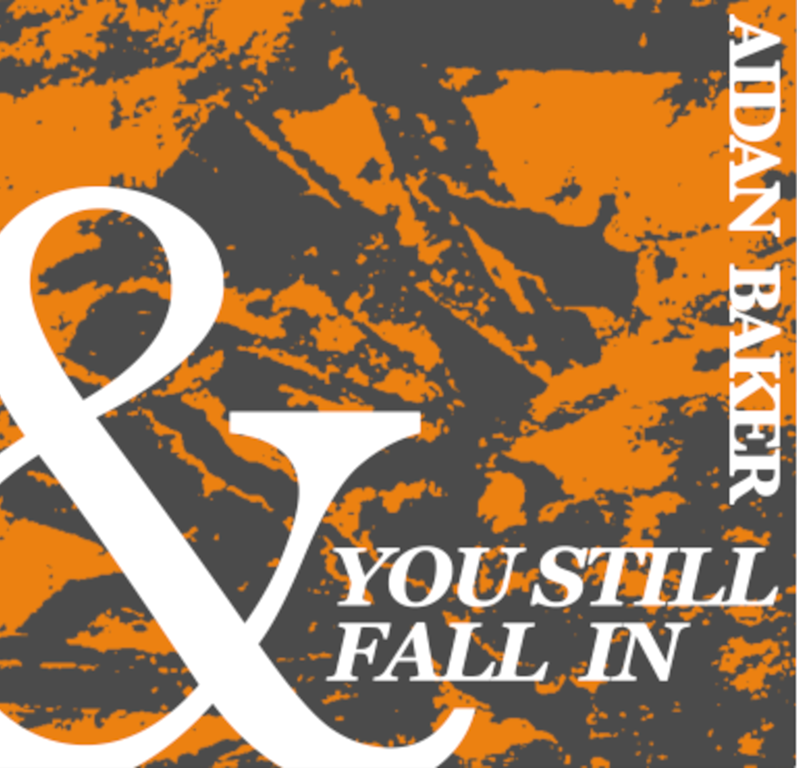
His latest work, & You Still Fall In, we learn, was recorded at Baker’s home studio in Berlin, and ‘hints at the mood and songcraft of the likes of Midwife, Hood, Stina Nordenstam and Movietone. The album is a compelling listen, stripped down to mostly electric guitar and vocals and moving at a distinctly glacial pace. The intimacy of the hushed tones and muted textures lean into a dark, hypnotic and gentle stillness that lingers in the air…’

That fact that this is a truly solo work, with Baker taking care of guitar, bass, drum machine, and vocals is perhaps key to its low-key, introspective atmosphere. Intimate is the word: on the title track which raises the curtain on this soporific sequence of compositions, the acoustic guitar strum hovers to a drone, wavering in volume, seeming to drift, seeming to warp, to fade, you can hear fingertips swiping on strings between frets, and Baker’s vocal is but a mumble; you hear sound, but the words don’t fall free to clarity.

‘Drowning Not Waving’ blends rumbling bass distortions with glitching drum machine and an air of uneasiness: the experience is every inch the struggle the title suggests. And that title… the phrase may have become a popular adaptation of the line from Stevie Smith’s 1957 poem and a metaphor for depression, but to momentarily reflect on the actuality of this all-too -common experience is to recognise the extent to which we, as a society, still – STILL – fail to identify a person in crisis. ‘Cheer up, it might never happen’, we hear often. But it does happen. Even well-meaning friends will diminish the spasms of crisis with ‘well, my life’s shit or probably worse, actually’ type responses. And each such response is like a hand on the head, pushing down. And yes, I speak from experience, and not so long ago I was out for a walk in an attempt to find some tranquillity, some headspace, some time with my thoughts. A dog, off lead, ran up to me and began barking and hassling. Its owners called it back and then groused at me for my failure to smile and thank them. “Ooh, someone’s lost their smile,” the guy said loudly, purposefully so that I could hear. No fucking shit. But you know nothing about my life. My wife died recently and I am not in the mood for being hassled by dogs, and I owe you twats nothing, least of all a smile. I continued on my way without a word, let alone a smile, and there was no point in waving. I was simply drowning. The moral? People may have stuff going on you know nothing about, so don’t be a twat. And anger is only a few degrees along from depression. Music has a boundless capacity to inspire the most unexpected responses.

Things stray into even more minimal, lo-fi territory with ‘You Say You Can See Inside Me’, which captures the spirit of Silver Jews and the soul of some of Michael Gira’s solo recordings. It’s muffled, droning, barely there, even. And yet, somehow, its sparsity accentuates its emotional intensity. There’s almost a confessional feel to this, but it’s a confession so mumbled, either through shame, embarrassment, or plain unwillingness.

On the surface, & You Still Fall In is a gentle work, defined by mellow, picked acoustic guitar and vocals so chilled as to be barely awake – but everything lies beneath the surface. And the surface isn’t as tranquil as all that: ‘When The Waves They Parted’ may be defined by a rippling surge but there’s discomfort beneath the ebb, and the reverb-soaked crunch of ‘Still Cold from the Rain’ is bleak and lugubrious.

Although presented as two separate pieces, ‘Thin Film Interface’ is a continuous thirteen-minute expanse of murky ambience with lead guitar work which soars and echoes over a shifting sonic mist. It hovers in the background, yet simultaneously alters the texture and colour of the air, relaxing but with an unresolved tension beneath.

& You Still Fall In is a difficult album to place – but why should that be necessity? A lot happens, an at the same time, it doesn’t. & You Still Fall In is sparse, drifting between acoustic and altogether simpler acoustic instrumentation. But instead of dissecting the details or reasoning, I’m going to point to the album, and simply say ‘listen to this’. Because it’s simply incredible.

AA

cover

Yes, this is indeed different… no commentary – just check it out… recommended:

AA

0028575631_10

Bearsuit Records – 31st January 2025

Christopher Nosnibor

It’s been a while since we’ve heard form Bearsuit Records, and from Eamon The Destroyer, too, with Harold Nono’s The Death of Barra slipping out quietly in October, and the last ETD release being the Alternate Piranhas EP last April. Ok, so it’s not so long in the scheme of things, but in recent months, while the world has spun into new realms of insanity, the wonderful wibbly weirdness this label specialises in has been sorely missed.

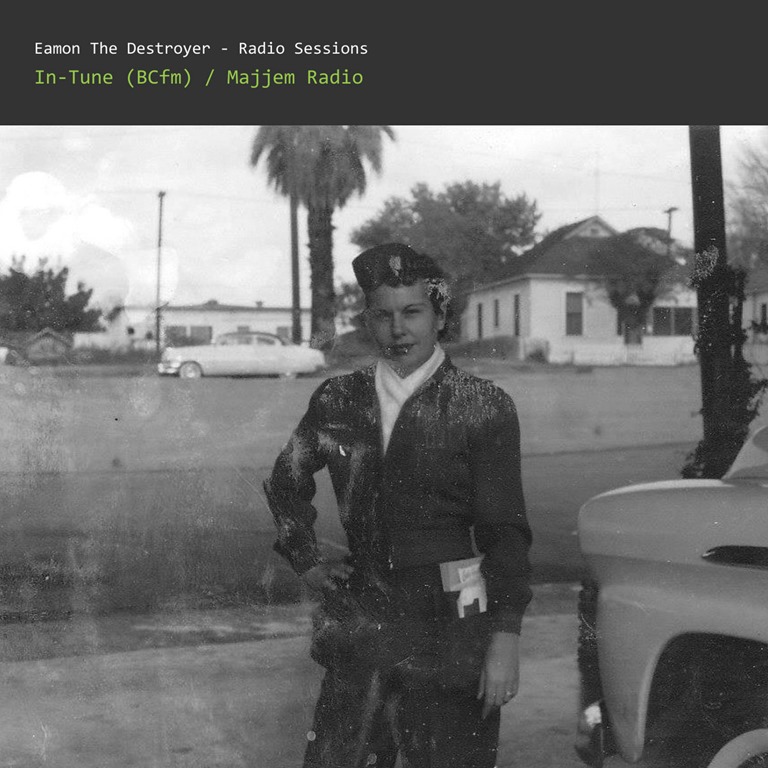
As the factual, functional title suggests, this release features tracks recorded for radio sessions, recorded for In-Tune (BCfm 93.2 FM), broadcast in September of 2024, and Majjem Radio, broadcast at the tail end of the year. And if another release with no new material seems like overkill, since the last ETD was a set of remixes from second album We’ll Be Piranhas, which came out in October 2023, then it’s pleasing to be able to report that, no, while this may well be something of a stop-gap release, it’s a worthy addition to the catalogue. It not only provides some insight into what one may call the ‘promo cycle’ of an album, particularly for a DIY act, but also casts a different light on the songs, being stripped-back acoustic guitar-based renditions of the songs – which are a 50/50 split of choice cuts from We’ll Be Piranhas and its predecessor, A Small Blue Car.

The original versions may be sparse and lo-fi in their production, but that production, and the prominence of droning, wheezing synths is what really defines them. That’s not to detract from the songwriting or performance at all, but the downtempo, downcast mood is heightened significantly by the execution, and that thick, hazy sound is integral to that.

However, hearing these songs played straight, as it were, is something of a revelation. The parts are essentially unchanged, but apart from a bit of reverb, and some vocal layering, these takes are more live-sounding, as could be performed by one man with a guitar and a pedalboard or synth with a few loops.

A far shorter rendition of ‘Underscoring the Blues’ still packs in the magnificent oddness that encapsulates everything that’s special about both Eamon and the whole Bearsuit aesthetic, suddenly spinning off from a sparse picked folksy guitar into a fantastical fairground of whirling, waltzing organ.

I’ve written previously that Eamon The Destroyer’s songs have a certain quality which casts a long, bleak shadow of lugubriousness over the soul, and how the effect is, for me, at least, similar to listening to Leonard Cohen’s Songs of Love and Hate. It’s an outstanding album, but it’s dark in a way which goes beyond the crushing lyrics of ‘Avalanche’, ‘Dress Rehearsal Rag’, and ‘Famous Blue Raincoat’. What I’m trying to articulate here is that there’s a special place for sad songs, songs which have a mood-altering effect, and this is Eamon The Destroyer’s strength. The lyrics are largely abstract and often difficult to decipher, but the feel is inescapable.

The ‘Avalanche’ on here, which first appeared on A Small Blue Car isn’t a cover of the Leonard Cohen song, but the stark atmosphere hits just as hard. It’s all about the minor chords, and the monotone croon. ETD adds layers of extraneous noise way down in the mix which adds tension to an already tense soundtrack.

Not because it sounds in any way similar, but ‘The Choirmaster’ calls to mind Chris Rea’s ‘On the Beach’ with its wistful tones and twisted hints of flamenco, and wraps the release with a vibe that’s almost uptempo, despite the heavy undercurrents of melancholy.

It’s the end of one of the longest, darkest, bleakest Januaries in living memory: we’ve been battered by storms, by global politics, by relentlessly traumatic news of war, of.. of… you name it. If you’re looking for a lift, steer clear of Eamon the Destroyer. But The Radio Sessions is nevertheless essential listening, showcasing the quality of the songwriting which lies beneath that fuzzing haze and reverb, and remember: it’s ok not to be ok.

AA

a4026067221_10

Sound in Silence – 5th December 2024

Christopher Nosnibor

As my final review of the year, what could be more fitting than a work, the title of which, suggests an element of reflection on the recent past. Businesses provide regular reports, people and musical ventures tend not to, with perhaps the notable exception of Throbbing Gristle, but then, they were an exception to more or less everything before or since. Their debut album proper, The Second Annual Report, which followed a brace of cassettes, The Best of Throbbing Gristle Volume I, and The Best of Throbbing Gristle Volume II, set new precedents in so many ways.

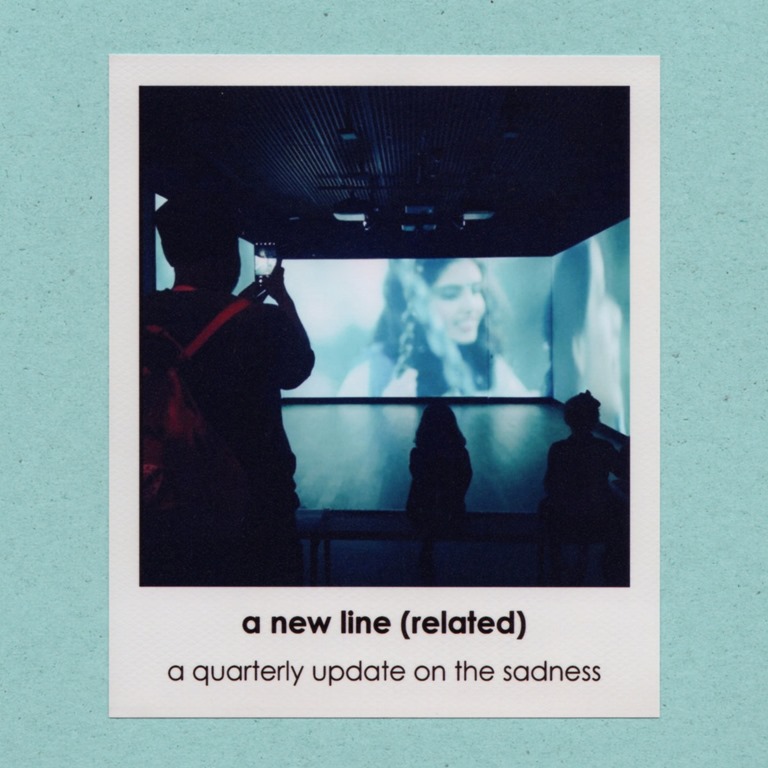
Arriving to the latest release from A New Line (Related) – the solo project of Andrew Johnson, who has previously released music as a member of bands such as Hood, The Remote Viewer, and Famous Boyfriend among others, one feels compelled to wonder ‘just how is The Sadness, and how has it been of late?

This is his third album, which we’re forewarned is an ‘immersive’ work, which ‘balances between minimal techno, dub house and ambient pop.’

‘Calapsis’ drifts in with low-key beats pulsing beneath delicate waves which ebb and flow subtly, gusts of compressed air which build to a hypnotic close. It’s not until the glitchy, disjointed groove of ‘3AM Worry Sessions’ arrives that we begin to get a sense of The Sadness. Stress and anxiety manifest in many ways, and while worry and panic may manifest differently their cousinly relationship It heaves, jittery unsettled and tense, conveying an uncomfortable restlessness.

The globular grumblings of ‘The Ballad of Billy Kee’ emerge from a rumbling undercurrent or mirk to glitch and twitch like a damaged electrical cable sputtering and sparking. Elsewhere, there’s a certain bounce to ‘Only Star Loop’ which gives it a levity, but the scratchy click of cymbals which mark out the percussive measures feels somehow erratic and the time signatures are apart from the bubbling synths and the distant-sounding, barely-audible vocal snippets, which give echoes of New Romanticism. Overall, the track has an elusive air of whispering paranoia.

In many ways, not a lot happens on A Quarterly Update On The Sadness, and the sparse and repetitive yet curiously dynamic title track is exemplary. It leaves you feeling strangely disconsolate, bereft, not only as if you’ve perhaps missed something, but that you’re missing something – not from the music, but from your own life. It seems, in conclusion, that The Sadness is thriving in its own, understated way.

AA

a0970760296_10

Coju Recordings – 1st April 2024 (CD & digital)

Cruel Nature Records – 29th April 2024 (Cassette)

Christopher Nosnibor

Letters and things lost have an almost mythical status in the field of literature. So many volumes are dedicated to the reproduction of exchanges between authors of revered status, and are poured over, clawed over, by both fans and academics. Many writers of great novels were also great letter-writers, and the letters often serve to build not only biographical depth and detail but also shed light on the development of the novels, that mystical ‘creative process’. Much of history exists in letters – the rich primary source material from which we piece together the picture and assemble a coherent narrative. It may be a construct, but it’s a necessary one when it comes to understanding the world and how we collectively came to arrive at the present.

The fact no-one writes letters anymore is a great loss. The same thought and effort simply doesn’t go into emails, and they tend to be considerably shorter, too, especially in the last decade or so. In fact, the quality of communication has slumped through the floor in recent years. Emails volumes – at least, ones that aren’t transactional in some way, have plummeted in favour of WhatsApps and messenger missives via FaceBook, Twitter, etc. It’s hard to really articulate just what’s been lost over the last few years, besides simply the art of in-depth, detailed longform communications, but with anything more than five lines long likely to be dismissed as TL;DR, it’s significant. I digress… because there are rare avenues open to expand on these matters.

Benjamin Heal, one of those multi-faceted, polyartistic individuals who is hard to pin down due to the sheer range of his output, has, through the years, pursued an academic career with a focus on William S. Burroughs – a prodigious writer of letters – and performed experimental noisy indie under the guise of Cowman, sharing stages with the likes of Trumans Water and Gum Takes Tooth, as well as his more electro-centric vehicle Coaxial.

Now resident in Taiwan, his latest project seems to bring together these elements of a diverse life. The material on this, the debut release from The Lost Letters – which finds Heal working with Fulia, is a calm and calming collection of delicate songs. The duo offer a quite gentle and melodic set of tunes in which is mostly centres around mellow acoustic-led indie, and slow, sparsely-arranged, soporific shoegaze and it’s not merely projection on my part in detecting a wistful, vaguely nostalgic air permeating the songs. The songs effortlessly drift and weave, Fulya’s vocals adding a layer of sound rather than easily audible lyrics.

The seven-minute ‘Cecille’ has, by its trilling gentility, nothing to do with The Walking Dead: it’s a graceful exploratory work which is mellow, melodic, and carries heavy hints of The Cure circa Disintegration thanks in no small part to its fulsome, airy bass sound and crystalline guitars, and it’s fair to reference Cocteau Twins at this juncture, too.

Things take a turn for the darker and more discordant on the lugubrious, plodding ‘Cut’, which scrapes and scratches for another seven minutes. With its muttered, monotone vocals and insistent sparsity, it offers hints of Shellac and latter day Band of Susans, in contrast to the soft acoustic instrumental work of ‘Route Rute’. These songs are on the longer side by necessity: repetition has greater impact over duration, and if the literary allusions and lifts by means of the deployment of the cut-up technique devised by Burroughs and Gysin are largely lost in the mix, the overall effect of discomfort and disjointedness remains strong throughout the set. ‘Crystal Skies’ is murky, with a drifting ambience spun through with a softly picked guitar, before ‘Sails and Sou’wester’ brings the album full circle to its nautically-themed beginning. While inviting comparisons to Slowdive and Cranes, it cascades dreamily into a mesmerising sea of sound, so richly evocative that you ache as it drifts on toward the horizon, leaving you reaching for something intangible.

Critics often write of craft, but the most moving music often comes from intuition and feeling, and this is moving in the subtlest of ways. Quite simply, The Lost Letters is a beautiful album.

AA

a3976784992_10

15th December 2023

Christopher Nosnibor

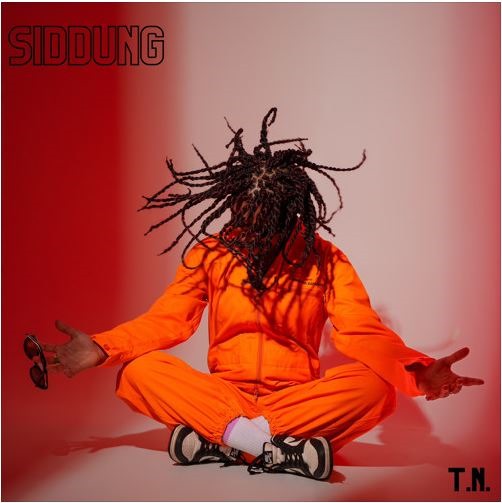
This is an odd one which will likely baffle and bewilder many of those who encounter it – which will likely be far fewer than it deserves. It’s rare for a track that isn’t thrash or grindcore to run to less than a minute and a half, for a start. I know absolutely nothing about T.N. beyond that they’re from Spain, but T.N.’s ‘Siddung’ is a sliver of minimalist hip-hop that sends a shiver down the spine.

If commercial hip-hop has come to be synonymous with bragging and banging, flashing cash and blades, it’s worth remembering that its roots were a different kind of ‘street’, and with acts like Last Poets emerged from spoken word, the jazz and beat scene of the late 50s, giving a voice to black culture and the civil rights movement.

This track is something of a hybrid – it’s ‘street’ but it’s introspective and uncomfortable, and after an atmospheric introduction, halts just as it seems to be finding its groove. It’s difficult to unravel the track’s meaning or intent: ‘siddung’ is patois for ‘sit down’ – as the cover art relays in a literal sense – but beyond that…?

It feels more like a sketch than a complete song, but one could imagine an album containing maybe twenty or so of these vignettes would add up to paint a quite compelling picture.

Spleen+ (Alfa Matrix) – 1st December 2023

Christopher Nosnibor

Christmas has come early this year, with an absolute deluge of releases landing on1st December, many from acts I like or am otherwise keen to hear. Hanging Freud are in the former bracket, and Worship marks their seventh album release, following 2021’s Persona Normal.

The duo have established themselves as purveyors of premium-quality dark, stark, gothy electro, and with Worship, they solidify their position with aplomb. Persona Normal was recorded at a leisurely pace between 2018 and-2020, and, like so many other releases in the last couple of years, Worship was written and recorded during the pandemic and under lockdown conditions, and the accompanying notes lay out both the contents and context in further detail:

‘The 10 songs featured on this album literally come from a place of contradiction hanging somewhere between courageous vulnerability and fearful resilience, and deal with themes such as collective distress and loss, finding beauty in tragedy or yet questioning about what makes us human in the symbolic contrasts of life and death…. It’s no surprise to hear that this “less is more” introspective ode to melancholia was written in particular claustrophobic circumstances during the pandemic lockdown. “Because of what was going on, we were essentially stuck in temporary accommodation in Scotland, away from our studio and forced into a period unexperienced before. The songs that came out therefore come from a different place. Everything was done within a laptop and is proudly 100% digital. It was recorded and mixed while literally sitting on the side of a bed in a mouse infested apartment…” explains Paula Borges.’

If it sounds like a grim and oppressive set of circumstances for creating art of any kind, then the singles which prefaced the album have set the tone and expectation, while affirming the claustrophobic intensity of the music which emerged from these challenging conditions.

The result is a hybrid of Siouxsie and 17 Seconds era Cure with a hefty dose of New Order’s Movement and dash of Editors circa On This Light and On This Evening. Reference points may be lazy journalism, but they serve a purpose. While this album stands alone like an icy obelisk, singular and a monument to the darkest introversions, some musical context is probably useful for discursive purposes.

The stark ‘Falling Tooth’ is as bleak and haunting as it gets: Paula’s vocals are breathy but theatrical, pitched over a strolling squelchy synth bass and a vintage-synth sound that wanders around over just a few notes, while ‘I pray we keep the world’ is low, slow, sparse, and lugubrious, as well as emotionally taut, and dominated by a truly thunderous drum sound. ‘This Day’ is particularly drum-heavy, withy only gloomy, droning synths sweeping through a heavy mist of atmosphere.

There are some who bemoan the use of drum machines, and who complain that they lack the vibe of a live drummer. Hell, there are contributors to forums and groups devoted to The Sisters of Mercy who question why they don’t get a real drummer, some forty-two years on from their inception. These people are missing the point. Drum machines can do things that human drummers can’t, and one of those is how drum machines can be louder, heavier, more monotonous than a live drummer. And in context for certain music, this can be a real asset, accentuating the sensation of dehumanised detachment of synth music that sits at the colder end of the spectrum. And Worship is one of those albums which will leave you with chapped lips.

It’s against brittle snare cracks and sweeping synths that Paula claws her way through complex emotions, and where the lyrics aren’t immediately decipherable, the haunting vocal delivery is heavy with implicit meaning. It resonates beyond words alone. Everything is paired back to the barest minimum, exposing the darkest recesses of the psyche.

Standing alone as a single, ‘A hand to gold the gun’ was bleak and heavy. Sitting in the middle of the album, this sensation is amplified, accentuated, and the gracefulness of the vocals as they drape around the broad washes of sound which surge and well is that of a dying swan.

‘Her Joy’ is perhaps the least joyful thing you’re likely to hear in a while, and if ‘Beyond’ feels somewhat uplifting, it’s only because it’s a flickering candle flame in an endlessly dark tunnel, as devoid of air as light. The mood is heavy, and presses on the chest, slowly pressing the air out and crushing the spirit, and as the album progresses, the effect is cumulative. By the time we arrive at the piano-led ‘Don’t save yourself for him’, I feel my shoulders sagging and my back hunched forward from the endless weight of this.

Worship is a masterful exercise in poise and restraint, a work which conveys the purest essence of isolation, of desolation.

AA

HFreud

ME LOST ME shares the video for ‘Festive Day’, from her upcoming album, RPG (due 7th July via Upset The Rhythm). A selection of dates in support of Richard Dawson throughout May have also been announced, more details below.

Songwriter Jayne Dent comments on the track;

“’Festive Day’ is a song about being overcome by intense sensory experiences, of nature, the elements and desire. It’s inspired by spending a midsummer festival in Denmark, when the huge bonfires lit along the coast stayed alight through torrential rain and dense sea fog, which left a massive sensory impression on me. It’s about the coming together of all these elemental forces, feeling connected to this seasonal ritual, and connecting it to the English folk traditions around the same time of year, explored in May carols and similar songs, which often celebrate desire, lust and love alongside celebrations of nature and the land. The music video is an overload of artefacts, it’s fast paced and intense in terms of the editing but I wanted to contrast the emotional intensity of the song by framing it almost as an archive or museum of the future, that is documenting folk traditions and trying to reconstruct them and understand them, but missing that vital emotional component. I worked with folk musician and dancer Mark Insley, who choreographed a dance in the Cotswold Morris tradition, to be featured as part of the music video, and made handkerchiefs in the Morris style featuring elemental symbols.”

Watch the video here:

AA

A prolific writer, ME LOST ME has released two crowdfunded albums: Arcana (2018) and The Good Noise (2020), which was included in Electronic Sound Magazine’s Album of the Year list. These in addition to her latest EP The Circle Dance (2021), which was described as “her most textural and sonically adventurous music to date” by NARC Magazine, and an extensive touring schedule around the UK DIY scene, has won her unique sound much support across the musical spectrum. Dent has notably performed live for BBC Radio 3’s After Dark Festival and as part of the 2022 BBC Proms alongside Spell Songs, Royal Northern Sinfonia and the Voices of the Rivers Edge Choir. She recently received the prestigious Paul Hamlyn Foundation Award for Composers and was 2020-2021 Artist in Residence at Sage Gateshead.

ME LOST ME LIVE DATES:
03/05 – The Gate Arts Centre, Cardiff, UK w/ Richard Dawson – tickets

04/05 – St George’s Bristol, Bristol, UK w/ Richard Dawson – tickets

05/05 – Barbican, London, UK w/ Richard Dawson – tickets

06/05 – The Bradshaw Hall, Birmingham Conservatoire, UK w/ Richard Dawson – tickets

07/06 – London – EartH Theatre w/ Xiu Xiu

30/06 – Hyper Inverter Festival, Ulverston, UK

15/07 – The Lubber Fiend, Newcastle, UK (ALBUM LAUNCH)

YEi1gOlg

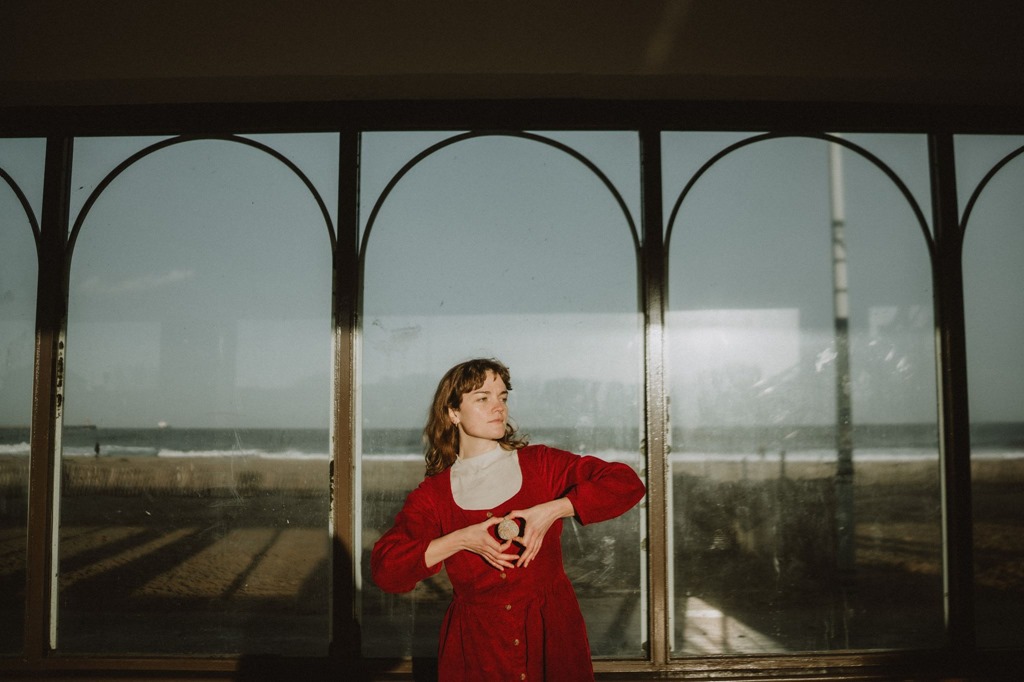
Photo credit: Amelia Read Photography

10th December 2022

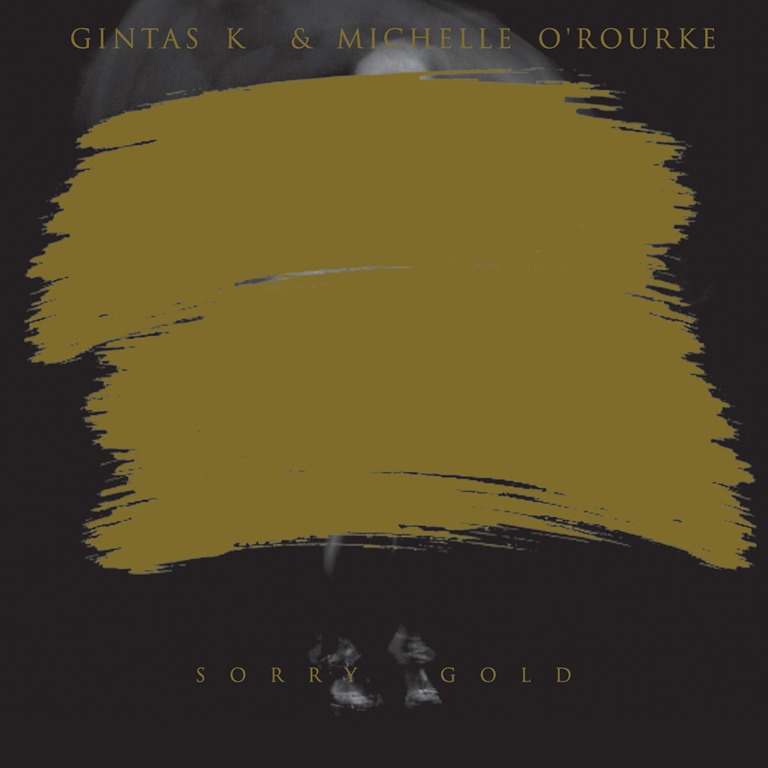
Gintas K wraps up a(nother) truly prodigious year with a collaboration – and an apology. The Lithuanian sound artist hasn’t strayed so far from his experimental electronic roots, at least fundamentally, but at the same time, Sorry Gold does mark something of a substantial and significant departure.

As the accompanying text explains, ‘this recording was made on stage at the Project Arts Center in Dublin, during the making of the film Sorry Gold Emily Aoibheann. The artists improvised to the visual landscape of the rehearsal space, stage design and dancers…’ it was funded by the Arts Council / An Chomhairle Ealaíon and Dublin City Council, supported by Dublin Fringe Festival, add the performances premiered as a part of Dublin Fringe Festival at Project Arts Centre in September 2019.’

With additional production and resigned from the original project, the album is only sort of a soundtrack, and the track numbering is both confusing and frustrating, with #1, #2, #4, #3, being followed by #4 #2, #2 #2, #4 #3 and #3 #2 before the more sequentially logical #5 and #6 conclude this most eclectic listening experience.

Replacing the glitching frenzy of bubbling, frothy digital frenzy that is Gintas K’s trademark is a much sparser, more minimal approach to composition, with single notes that sound like ersatz strings being plucked, atop quivering drones and low-rumbling organ sounds that fliker erratically like gas lights and resonating out into a spacious room. It has an almost orchestral feel, albeit distilled to absolute zero. The notes are a little fuzzy and ring out into emptiness, while the haunting vocals of Michelle O’Rourke are utterly mesmerising and border on transcendental. In combination, the atmosphere is deeply absorbing and heavily imbued with a spiritual, other-worldly element.

The first piece introduces us to a strange, haunting space beyond the familiar, and while it’s not by any means unpleasant, it is disconcerting, and sets the tone, ahead of ‘Sorry Gold #2’, which is melancholic, brooding, spaced-out notes hovering while O’Rourke ventures into almost operatic territories. It’s a not only a different atmosphere, but a different mood when placed alongside K’s other works: it feels a lot more serious, and has a different kind of energy, a different kind of intensity. I’m accustomed to feeling bewildered by the frenetic kineticism and abundant playfulness of his work. Sorry Gold isn’t entirely without joy, but it is much darker and much, much slower-paced, delivering a different kind of intensity.

It’s not until ‘Sorry Gold #4’ that things even hint at K’s more characteristic and overtly electronic noodling, and as the album progresses, we do encounter more of his feverish electronic tendencies, notably on the grinding ripples of ‘Sorry Gold #3’, but they’re much more restrained. ‘#4 #2’ brings a surging swampy wash of noise that’s a buzzing, grinding industrial blast of fizzing distortion. O’Rourke, barely audible in the sonic storm, sounds lost, detached.

Of the ten tracks, only two are under four minutes in length, and the pair use these extended formats to really push outwards: the ten-minute ‘Sorry Gold #4 #3’ brings helicoptering distortion that crashes in waves, at times low and rumbling, at others, crackling and fizzing with treble, and it creates a different kind of disturbance. Dissonance howls desolately on ‘#3 #2’, and so does , wracked with pain and spiritual anguish.

By the time we arrive at the brief and delicate bookend that is ‘Sorry Gold #6’, one feels inexplicably drained. The experience is somewhat akin to wandering ancient tunnels by flickering candlelight, observing ancient wall art while a subliminal mind-control experiment blasts random frequencies directly into your brain. You’re left feeling somehow detached, vaguely bewildered and bereft. And you feel deeply moved. Sorry Gold is special: Sorry Gold is bleak and harrowing, but it’s solid gold.

cover

Cruel Nature Records – 2nd December 2022

Christopher Nosnibor

Seems I’ve blinked and missed a while slew of releases from Ontario experimentalist Clara Engel since writing about Hatching Under the Stars in the spring of 2020. Then again, the spring of 2020 doesn’t so much feel like a lifetime ago, as much as it does another life. Released on 5th April 2020, we were only just over a week into the first lockdown here in England, and we had no sense of what was to come.

As the blurb outlines, the album was ‘recorded entirely at home / solo’ and ‘Their Invisible Hands presents 13 tracks of subtle dream-like beauty… A mystical work, mixing classical and dark folk wanderings with misty soundscapes, which creates an abstract, new world atmosphere.’ Self-released in April digitally and on CD, Cruel Nature are giving it a cassette release.

In a way, returning to Clara’s work now is a powerful, and grounding experience. What has happened in the space between? Everything…and nothing. As they explain in the accompanying text, replicated on their Bandcamp, “I’m not writing the same song over and over so much as writing one long continuous song that will end when I die.”

If the last couple of years or so have reminded us of anything, it’s our mortality. And the sound of Their Invisible Hands is both spiritual and earthy. To unpack that, the sparse instrumentation, which consists predominantly of creening woodwind, chiming, picked strings, and hand percussion, has a simple, primitive aspect to it, and the slow, rhythmic undulations are attuned to elements of nature, as grounded as the act of breathing. ‘Dead Tree March’ is exemplary, a long, expansive drone that pulses in and out, repetitively, hypnotically, a sparse guide to a meditation.

Engel’s vocals, meanwhile, are ethereal and other-worldly, with a primal folk leaning that moves effortlessly between narrative and incantation, both of which tap into that subconscious part of the mind that it seems only music and nature can reach.

These themes of nature and of the ancient, of thoughts and tales lost in time, are constants in Engel’s work, giving credence to their comment about writing one long continuous song. In this context, it’s easy to see their entire catalogue as an interrogation and exploration of a quite specific field. Engel’s world is one full of magic and mystery, cryptids and magic beans and magnificent birds which sing. These songs are steeped in atmosphere and wonderment.

‘Ginko’s Blues’ is perhaps the most overtly classical piece on the album, a sparse composition led by picked acoustic guitar that calls to mind a stretched, dispersed rendition of Beethoven’s ‘Ode to Joy’, as it’s slowly dragged into a sea of scratched strings and gauze-like reverb.

Dissecting Their Invisible Hands too hard is to misunderstand its nature. It’s not an album to pick apart for the various elements, or even to comprehend its structures, origins, or meanings: any attempt to do so is to demystify its resonance. ‘It’s all fun and games ‘till somebody shows you their heart.. on a platter on a stake on a riverbed rusted…’ they sing on ‘High Alien Priest’. The metaphorical and the literal blur unsettlingly.

You shiver and find yourself mute as Engel leads you through an array of evocative soundscapes. All you can do is let go, and to explore them.

AA

a0799919546_10