Posts Tagged ‘Shoegaze’

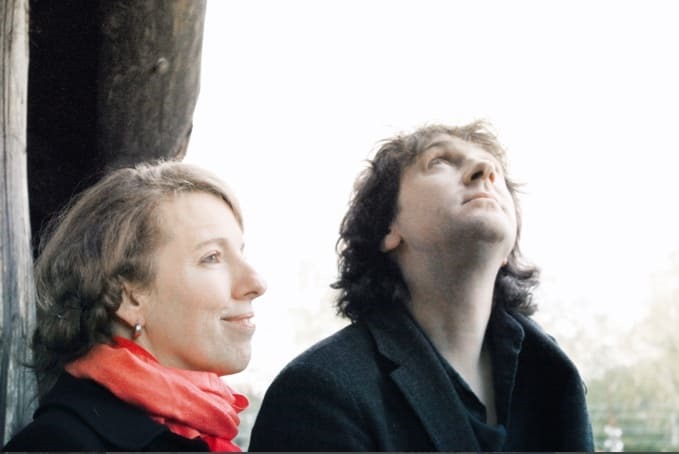
Alex Kretov and Shauna McLarnon are Ummagma. We like their dreamy brand of shoegazey pop here at Aural Aggro.

Since their inception in 2003, the duo have given birth to 3 albums (2 from Ummagma and 1 collaboration with Sounds of Sputnik), 4 EPs, many videos and remixes, as well as one awesome daughter (now 11 years old). ‘Music continues to be the glue that keeps us together, providing us symmetry and fuelling our dream machine’, they write.

In the past few years, they’ve worked with some really amazing producers and musicians – genuine icons in the field of dream pop and shoegaze – including Dean Garcia (CURVE and SPC ECO), Robin Guthrie (Cocteau Twins), Rudy Tambala (A.R.Kane, M/A/R/R/S), Malcolm Holmes (Orchestral Manoeuvres in the Dark), and Graham Bonnar (Swervedriver, BJM).

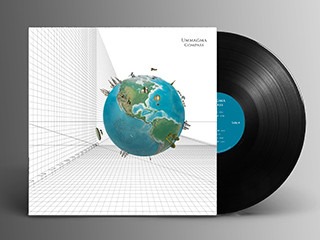
Compass finds them back out on their own: ‘Once again, we return to this fine place of equilibrium for this album, which will feature 12 original tracks’.

Compass has been five years in the making,  and their Indiegogo campaign has stacks of packages – which start from a credit for just a dollar. You can chip in here.

AA

Ummagma

AA

Ummagma Band

Avalanche Recordings – 17th November 2017

Christopher Nosnibor

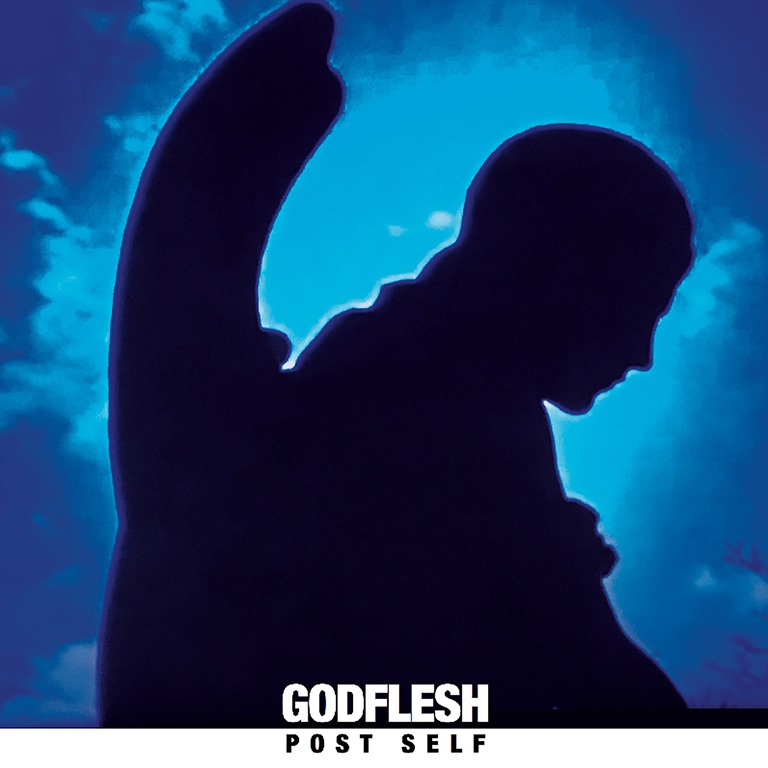
We’re used to press releases gushing with superlative verbiage, so the short statement which accompanies the second post-return Godflesh album stands out by virtue of its brevity and factuality. It simply reads: ‘Over two years in the making, Post Self explores a different side of Godflesh, taking in their formative influences to conjure something informed by late 70’s/early 80’s post-punk and industrial music. The album deals with themes of anxiety, depression, fear, mortality, and paternal/maternal relationships’.

It’s entirely fitting. Godflesh require little introduction as pioneers of stark, brutal music, paired with lyrical brevity.

We live in a post-everything world, and Justin K Broadrick has long crated music that’s post most things. His solo album, Post-Human, released under the JK Flesh moniker, saw Broadrick draw together various threads of his extant output into a ferocious sonic assault. Post Self­ manifests as a different kind of post-dissection from the solo release, and also brings a different shade of grind from A World Lit Only by Fire. Post Self is unmistakeably Godflesh, and incorporates all of the elements that make Godflesh Godflesh. Thudding, mechanical percussion, snarling bass, lead-guitar motifs built on feedback and minimal, repetitive riff structures and relentless brutality define the album. And in contrast to the certain sameness that overarched its predecessor in terms of texture and tempo, Post Self­ has all the dynamics and attack of much earlier works, as the thick sludge ‘n’ scrape pounding is replaced by space, a greater separation of top and bottom, and altogether more diverse sounds and structures – and with serious impact.

The title track is he first cut, and booming, dubby bass and mechanised percussion pound beneath squalling guitars, with murky rhythm juxtaposed with super-toppy lead. The vocals are practically impenetrable, throaty, splenetic snarls drawled out over a full bar. The relentless thud of ‘Parasite’ again explores tonal range and difference, a mangled interloping treble-edged lead threading a spindly web of pain over a bowel-churning bottom-end. ‘No Body’ has all of the vintage Godflesh tropes, with brutal digital percussion and trudging riffing dominating everything. ‘Be God’ is a sonic bulldozer, the bass grind an earthmoving shovel and scrape which yields to gentle musicality, the strum of a reverby, indie guitar into the fade before ‘The Cyclic End’ washes into dystopian shoegaze that’s more reminiscent of Jesu than Godflesh, but for the booming bass throb and creeping darkness. Combining glacial coldwave synths, mangled vocals, and a grating, trudging bass, ‘Mortality Sorrow’ is as unrelentingly stark and unforgiving as it gets.

I constantly find myself facing the question about the balance of objectivity and subjectivity. Objectively, Post Self is painful, breathtaking to the point of discomfort brutal, punishing. Of course it is: it’s a Godflesh album. But subjectively, it feels both more vital and equally more bleak than its predecessor. There’s a passion here, but the mechanical, dehumanised detachment that characterises Godflesh is equally present. Subjectively, I’ve always been drawn to Godflesh because of just how removed from human input they’re capable of sounding, forging a sound that emanates rage and despair while stripping every last sinew of humanity from the end result.

And buried and largely indecipherable as the vocals are, the themes are less conveyed by the lyrics than the delivery. The atmosphere is intense, claustrophobic, oppressive, and every inch of the album is imbued with implications of depression, anxiety, fear and self-loathing. It gnaws away cerebrally, while working away at the pit of the stomach and kneeding away at the intestines.

Post Self is Godflesh on form: nihilistic, pulverizing, and ploughing their own deep furrow of dark, furious despair. No other band can create work quite like this, and rejuvenated, reinvigorated, they continue to push the parameters.

AAA
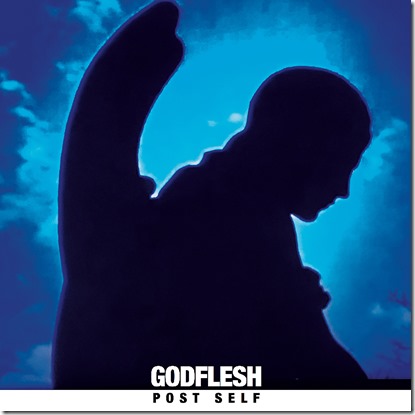
Godflesh - Post Self

22nd September 2017

Christopher Nosnibor

Ummagma really do have some impressive friends and fans. The Canadian dreampop duo’s lush, textured shoegaze has garnered them not only and admirable fanbase and favourable critical reception, but has placed them into direct contact and collaboration with a number of their heroes.

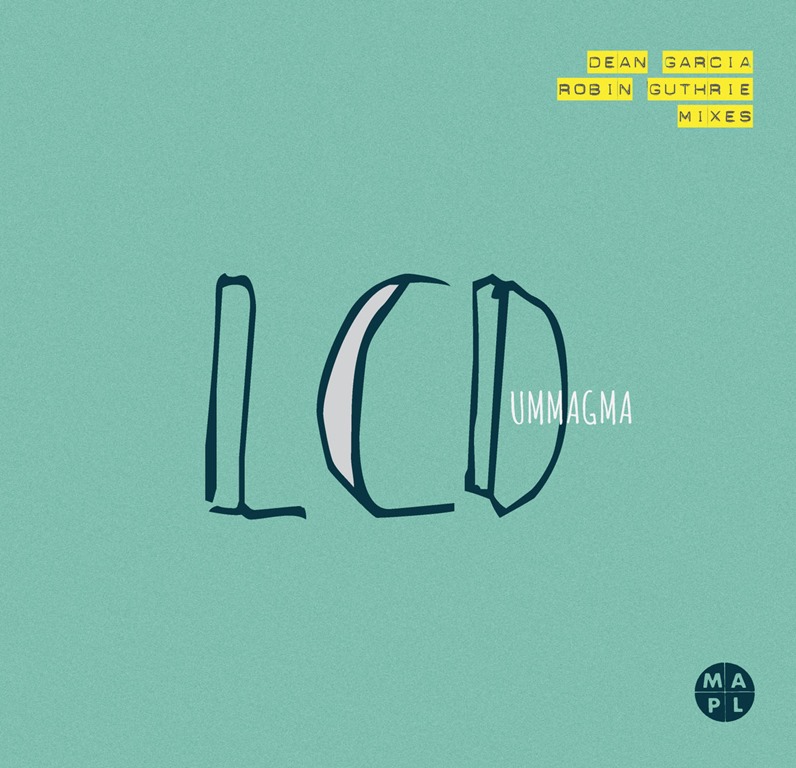
The ‘LCD’ EP, which follows up their ‘Winter Tale’ maxi-single with 4AD dream pop pioneer A.R.Kane earlier this year, features four tracks, including the new original title track ‘LCD’, and reworkings of Ummagma songs two legendary British musical figures in the form of Cocteau Twin Robin Guthrie, and Dean Garcia of Curve and, latterly, SPC ECO.

The lead track is a classic slice of 90s-tinged dreampop with tangents ago-go: a slippery funk-infused groove envelops what sounds like two independent drum tracks which interlace and intertwine, while synths bubble and grind. It all comes together to create something strangely nebulous and at the same time compellingly propulsive despite its lack of obvious form.

Dean Garcia’s SPC ECO mix really accentuates the spaciness of the track, stripping it back to a sparse frame around which echoed notes and voices drift. Gloopy beats reverberate around dripping synths and elongated drones to conjure a rich atmosphere. Garcia takes a similar approach to the minimal drift of ‘Back to You’, which takes a turn for the darker as its resonant bass tones hang in a rarefied air, cloud-like and barely tangible yet present.

What Robin Guthrie brings to ‘Lama’, which originally featured on their debut album, is a real sense of appreciation of the original, and an accentuation of the nuance. He also provides not only a new arrangement and mix, but additional guitar work, which renders it more of a collaborative piece than a straight remix. There’s something magically organic about it, and as Shauna McLarnon’s soaring vocal tops off the sonic soufflé perfectly.

AA

Ummagma – LCD EP

Fire Records – 15th September 2017

Christopher Nosnibor

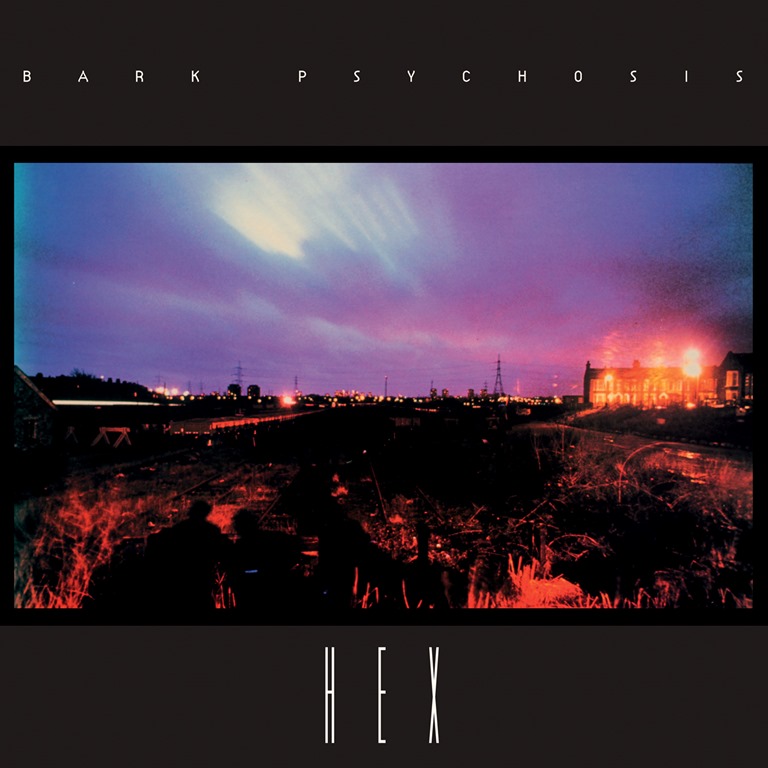
There’s a segment that starts around the six-minute mark on ‘Absent Friend’ where the guitars, soaked in reverb, chime and interweave, forming a delicate latticework of notes which is the very quintessence of post-rock. Hex was released in 1994. While much of the album isn’t quite post-rock as we now know it here in 2017, listening back to the debut album by the band which saw Simon Reynolds famously apply the term ‘post-rock’ (although often cited as marking the term’s coinage, this is as much-debated as what actually constitutes post-rock), it’s not hard to identify this as the definitive moment at which the tropes which define post-rock as we broadly recognise it began to coalesce.

The intense and arduous work that went into Hex would ultimately lead to the band’s disintegration, and it would be a full twenty years before Graham Sutton would reconvene Bark Psychosis to deliver a second album in the form of ///Codename: Dustsucker. But one could reasonably argue that with Hex, Bark Psychosis achieved more than many bands could even aspire to over the course of ten albums.

The delicate, evocative piano of ‘The Loom’, accompanied by soft strings arguably set a certain corner of the blueprint acts like Glissando and Her Name is Calla would come to place at the centre of their sound, and the meandering melodies would subsequently be developed by the likes of Oceansize – admittedly, more neoprog than post-rock, but this only highlights the range of Hex and the far-reaching vision it demonstrates. ‘Big Shot’ boasts a strolling bass and warping, dreamy atmospherics over a rolling glockenspiel and a semi-ambient breakdown in the middle. ‘Finger Spit’ may not feature the kind of epic crescendos which characterise a lot of ‘classic’ post-millennium post-rock, but its hushed, quietly intense space clearly explores surging dynamics. The gloomy discordant brass of ‘Eyes and Smiles’ prefaces the early sound if iLiKETRAiNS. And so on.

Across the course of the seven tracks (these are long expansive compositions), Hex weaves cinematic soundscapes and wring all shades of emotion not from the lyrics and vocals, which are largely secondary, but from the music itself. It has texture and depth, and at its best, possesses a transportative, almost transcendental quality that goes beyond mere music. This, it’s fair to say, has been the ambition of the acts which have come to stand as synonymous with post-rock, disparate and different as they are, from Godspeed You! Back Emperor’s immense, surging soundscapes, to the chiming crescendo-orientated compositions of Explosions in the Sky via the twee elvin twinkles of Sigur Rós.

Hex was certainly not an album of its time. 1994 was the year of In Utero, and Live Through This, Sixteen Stone by Bush, and Weezer’s eponymous debut, as well as Dookie, Smash, and Parklife, and Definitely Maybe, His and Hers, and The Second Coming¸ as well as Dog Man Star. As grunge jostled with Britpop in a divided musical landscape, and in a year which also delivered Pavement’s Crooked Rain, Crooked Rain, The Beastie Boys’ Ill Communication, and Manic Street Preachers’ The Holy Bible. Put simply, Hex did not fit. Amongst broadly contemporaneous works, it does share more commonality with The God Machine’s Scenes from the Second Storey (1992), Slowdive’s Slouvaki (1993) and Rosa Mota’s Wishful Sinking (1995) (all unappreciated at the time and still criminally underrated) than anything that could be considered zeitgeist.

Now seems an appropriate distance to re-evaluate Hex. And even now, despite so many of its tropes having been absorbed, assimilated and endlessly replicated, it sounds beyond contemporary. It possesses so much depth and range, and conveys a close, personal intensity which has absolutely nothing to do with raging volume. Within or without context, Hex is a remarkable album. Yes, it effectively spawned a genre, and yet, it still stands apart. And that’s every reason to sit back and enjoy Hex not as an influential album, but simply on its own merits, of which there are plenty.

Bark Psychosis - Hex COVER

Schoolkids Records – 2nd June 2017

Christopher Nosnibor

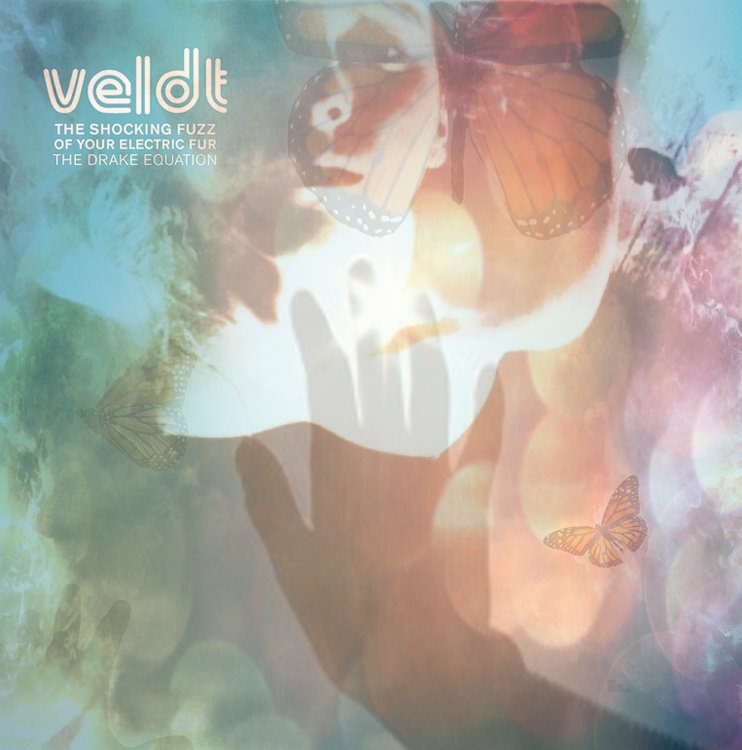
The blurb tells me that ‘On the trail of their successful Record Store Day 7” single ‘Symmetry / Slow Grind’, Raleigh-based Schoolkids Records have announced the coming release of ‘The Shocking Fuzz of Your Electric Fur: The Drake Equation Mixtape EP’ by alternative soul and shoegaze pioneers The Veldt.’

The Veldt have been around for a very long time, now – always on the peripheries, but wholly ingrained in the same milieu as The Cocteau Twins, The Jesus and Mary Chain, et al, as well as sharing stags with an impressive roll-call of acts spanning The Pixies to Echo and the Bunnymen via The Manic Street Preachers.

The EP’s title is (in part) lifted from a poem by e.e.cummings, while ‘The Drake Equation’ is a sort of punning gag that’s both intellectual and spectacularly . Cumbersome as it is, it’s quite a tidy literary allusion, and one which illustrates both the band’s overtly arty leanings the and the immense breadth of their spheres of reference: this is, after all, a band whose name derives from a story by Ray Bradbury. If the idea of high modernism coming together with slick 21st century r‘n’b seems like an improbable and unlikely recipe for success, then it’s all down to the execution.

The five tracks on this EP may or may not ‘rage’ with ‘a sound influenced equally by emotional soul of Marvin Gaye, free jazz warriors Sun Ra and Pharaoh Sanders, various Drake hip-hop tracks, long-term musical kin Cocteau Twins, and their own fertile electric imagination.’ But what they do achieve is a compelling hybrid of styles.

Stuttering beats, somewhere between hip-hop, jazz and drum ‘n’ bass jitter and twitch beneath draping, rifting layers of sonic mist define the multifaceted ‘Sanctified’, which glides he EP into a smooth yet detailed launch. It’s the progressive soul element of their expansive shoegaze-orientated sound which renders The Veldt most distinctive:

‘In A Quiet Room’ simmers and chimes, a laid-back rhythm contrasting against the swirl and eddy of layered, FX-drenched blankets of guitars. The tom-orientated drumming on the dreamy ‘One Day Out of Life’ has echoes of early New Order about it, before a rising swell of a drifting sonic cloud.

The EP ends on a super-mellow soul trip in the shape of ‘And It’s You’: with a melody that evokes Bread’s ‘Make it With You’. Perverse as it may sound, it not only works well, but seems entirely fitting, the smooth soul vibes entwine with a slick hip-hop beat to forge a loved-up groove that’s sort of slanted, but at the same time, kinda natural. Nice.


Veldt EP

Sub Rosa – 6th March 2017

Christopher Nosnibor

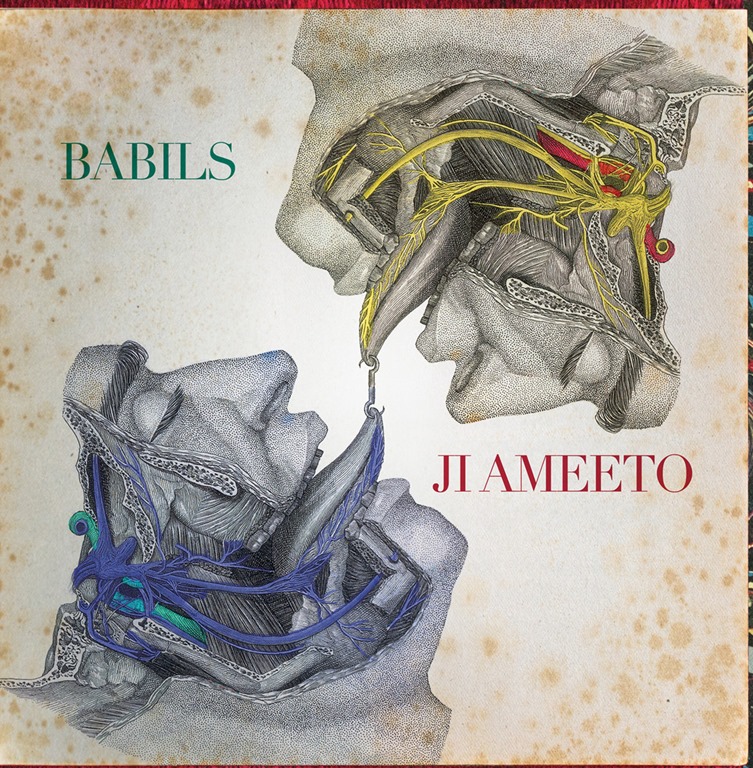
Hey, I’m a sucker for any band who mixes rock, new wave, psyche, kraut, experimental and repetitive music. Consequently, I was sold on the pitch or Babils’ fourth album even before I’d slipped the disc into the player. Reduced to a five-piece following the passing of co-founder Michel Duyuck in November 2014, Ji Ameeto represents the first release of the Brussels-based collective without Duyuck.

The album contains just two tracks, each around the sixteen-and-a-half minute mark. The title track is one of those swirling psych-hued expanses which find layer upon layer of sound emerge, converge and diverge at an infinite array of angles. And all the while, the rhythm section keep on plugging away, thumping out a hypnotic, motoric beat and locked-in bass groove. If my opening sentence reads sarcastically or as being somehow facetious, that’s only partly the case. There is something about long songs that go on and on and on that I find hard to resist. Perhaps it’s an extension of Henri Bergson’s theories on comedy, whereby he suggested that repetition was a key facet of successful comedy, to music that render such heavily repetitious grooves so compelling. Or perhaps it’s the fact there are effectively two songs going on here: the unstinting, relentless rhythm section which hammers on down an unswerving path, countered by everything else, not so much a hotchpotch of incidentals but a succession of fragments and slivers of songs overlaid in top of said rhythm section.

‘C’est la raison pour laquelle nous ne cesserons jamais de recommencer’ throws together a spaced out baggy bassline and shoegaze guitars – and production values – with dark, gothic overtones. Honking horns bleat wildly at incidental junctures, while spiralling guitar breaks rupture from the vast foggy vistas conjured from the swirling sonic depths. At times a cross between The Cure’s Carnage Visors and early Ride, but at the same time altogether more immersive and ‘druggy’ sounding, it’s a disorientating composition which not only celebrates but positively hinges on the contrast between the dissonance and weirdness of the lead lines, and the consistent solidity of the bass and drums as they drive onwards towards the horizon, holding down the same grove for an eternity and more.


Babils

With Observed in a Dream, Norwegian purveyors of  psychedelic post-punk / shoegaze, Mayflower Madame, delivered one of our favourite albums of 2016. While their second album is unlikely to see the light until late 2017 or even early 2017, they’ve unveiled ‘Drown’ by way of a taster now. It’s by no means a mere stop gap: to say the signs are good for the next album would be an understatement. A whirl of echo-heavy gutars and even more echo-heavy baritone vocals, ‘Drown’ has an aching melacholy emotional pull. Watch the video and get your lugs around it here:


Clue Club

The other day, I chipped in on a debate over split releases, which essentially revolved around the question ‘yay or nay?’ Personally, I like split singles. I commented that I would usually purchase a split release for one of the bands, but, often, subsequently get into the other.

It so happens that the first release by Clue Club, a subscription-based aspect of Clue Records  features two bands I’ve seen, heard, and enjoyed immensely in the last year. Split-singles-based projects seem to be popping up with increasing frequency (see, for example, the excellent Come Play With Me), and this represents a belting start to this one.

Fighting Caravans were up there with my favourite discoveries of 2016, and probably one of the best live acts I caught all year, on all three occasions I saw them. ‘It’s a Nice Ride (To be Fair)’ is entirely representative of their brand of fucked-up gospel-tinged desert country. Over a spacious, bittersweet guitar, Daniel Clark visits the classic themes of death and hell with a delivery that treads the thin line between psychopathy and self-destruction.

Similarly, the drifting, dynamic shoegaze of ‘Frail’ is exemplary of Colour of Spring’s sound, and provides a perfect stylistic contrast, too its counterpart, too. It’s a dense yet delicate song which conjures a heady atmosphere of blissful melancholy by means of understated vocals and bold, swirling guitars.

Clue Club subscription is available here.

10th February 2017

Christopher Nosnibor

If dreampop has overbearing connotations of weak and wispy, vague and ethereal, then the slant on the genre VEYU bring on ‘Where Has The Fire In You Gone?’ a taster of their forthcoming EP, ‘Underbelly,’ will likely confound the expectations of many. The chiming guitars and layered atmospherics are all present and correct, but they’re married to a hard-driving and insistent rhythm track that owes more to the conventions of rock.

Chris Beasley’s vocals are distinctive and commanding. Shifting effortlessly from a delicate, haunting falsetto to a strong, emotionally forceful tenor, comparisons to Morten Harket are perhaps obvious but entirely justified. But then, A-Ha were fantastic at penning pop songs which are both gripping and moving – a fact perhaps eclipsed by their biggest hits – and with elements of early New Order also in the mix, VEYU look capable of marking out their own territory in the contemporary musical landscape.


SpaceFest presents a brief documentary about the latest experience with Pure Phase Ensemble. In its current incarnation, the collective is led by a true legend: Anton Newcombe of The Brian Jonestown Massacre, along with with Emil Nikolaisen of Scandinavian rock band Serena Maneesh.

Filmed by RSU / Agencja Vizualna, this film presents a sneak preview of what is to come on the ‘Live at SpaceFest!’ album and the story behind Pure Phase Ensemble 6. Every December during Gdansk’s illustrious SpaceFest!, an eclectic group of musicians from across Poland are joined by a guest curator from abroad to form Pure Phase Ensemble. The group’s makeup constantly changes, guided by the artistic vision of a new curator every year and directed by Karol Schwarz of Nasiono Records who has been responsible for its musical cohesion from the very outset.

Through improvisation at a workshop organized by Nasiono Records and SpaceFest!, the musicians produce a set of unique songs during a week-long workshop ahead of the festival at the Laznia 2 Centre for Contemporary Art in the city’s Nowy Port district, seeking inspiration amidst its post-industrial atmosphere. The festival then culminates in this music being performed and recorded in real time for the inevitable album release.

Anton Newcombe espoused one rule for this experiment – that there are no rules when making music… and one standard… “get weirder… be heavy. and dreamy. but not pointless”.
Pure Phase Ensemble 6 is comprised of 8 musicians, including six from emerging Polish alternative bands: 
Karol Schwarz (7faz, KSAS) – guitar, vocals
Olga Myslowska (Polpo Motel) – vocals, keyboard
Maciej Karminski (Jesien) – drums
Marcin Lewandowski (Judy’s Funeral, Castlings, Soon) – bass guitar
Jakub Zwirello (Oslo Kill City, Szezlong) – guitar
Kacper Graczyk (Aiodine, coding) – electronic beats, synths, backing vocals

“I prefer to hear the sound bouncing off the walls and most festivals are outside and have time limits and various handicaps…I am more or less a jazz folk guy, I’m not an entertainer there to jump up and down and get you pumped…I just do as I feel…,”says Anton Newcombe. “I see myself as an idea person. I play like 80 instruments in as many ways as I can reinvent them because I am not a virtuoso… I want to contribute to Polish culture by writing at least one song that is worth listening to.”

In past incarnations of Pure Phase Ensemble, the group was curated by Mark Gardener (Ride), Laetitia Sadier (Stereolab), Ray Dickaty (Spiritualized), Steve Hewitt (Placebo), Jaime Harding (Marion), Chris Olley (Six By Seven), and Hugo Race (The Bad Seeds, The True Spirit). Nasiono Records’ very own Karol Schwarz (7faz, KSAS) has been responsible for the Ensemble’s musical cohesion from the very outset.

You can watch a preview of the forthcoming documentry here: