Posts Tagged ‘Shoegaze’

No Sleep Records – 16th September 2016

Christopher Nosnibor

I have to admit, I’d been wondering what was happening with Battle lines. Following the single releases ‘Colonies’ and ‘Hunting’ (split with Post War Glamour Girls), and a storming set at the Brudenell to launch it, there was talk of an album when I chatted with the band afterwards, and then… Well, they seemed to drop off the radar. Carly had mentioned work and all of the things that get in the way of doing things, although it was some time ago, and I’d had a few pints during the evening and what with work and an endless stream of new releases demanding my attention… well, I sort of forgot about things. I’m sorry for the fact that this makes me the same as pretty much everyone else: I blame the ‘net age, the insane pace of our post-postmodern culture, where memories are overlaid and replaced in an instant, buried in the endless blizzard of shiny new things, images, sounds, more bad news and another media frenzy over the latest celebrity scandal. And so, a guilty late review of an album by a band I’m a big fan of.

While I’m looking around at intangibles to blame, I’m also aware that I’m feeding my own anxieties and understanding more the pressure on any artist, in any medium, to devote as much time to promotion as to the production of actual art. It’s all about the momentum! Paradoxically, to weather the storm that is the blizzard of social media, one is required to contribute to it further, and constantly. If you’re out of the public eye, you’re forgotten in a flash. It’s an absurd situation, of course: artists need to retreat in order to produce. In an over-loud world, silence is good, and importantly, silence from a band means they’re likely holed up working on material.

Battle Lines, individually and collectively, have been getting on with their lives, and thankfully, have been doing the things that are important, instead of fretting over their public profile. The press release apologises for their apparent absence, but is matter-of-fact about things:

It’s not a secret that we’ve been very quiet over the last year… There’s no big story, we love each other, we’re as good friends as we’ve ever been. Life has moved on for all of us, and we now reside in New York, London, Brighton and Leeds, geography prevents us from touring, but it can’t prevent us from releasing new music.

And so, while I was busy being distracted, Battle Lines slipped out their debut album, a record I’d waited more years than I care to count for: having first discovered them in their previous guise as Alvin Purple, I’d been captivated by the quality and richness of their dark, post-punk influenced material and the incredibly assured live performances they gave so consistently.

The switch to Battle Lines marked a refocusing: the energy which effused from their earlier songs was directed more inward, and the material displayed an almost ascetic discipline in its execution on those first single releases and in the live shows, more clinical, more icily intense than their previous incarnation.

This is all captured perfectly on Primal. The sparse title track and album opener hints equally at The XX and Closer era Joy Division. But then, glacial electropop undercurrents and thunderous tribal drumming also define the sound. And the sound… the fact they’ve taken their time over this means that the sound is honed to perfection. There isn’t a note out of place. That isn’t to say it’s overproduced within an inch of its sterile life or stripped of its soul: they’ve pulled everything to tight as to render it almost claustrophobically dense, a work which offers an insight into a near-obsessive control over the output. In context, it makes sense:

There’s an honesty about the notes which accompany the release which is at once uncomfortable and refreshing:

Lyrically this was an incredibly dark place to go to, I had come out of a relationship that became mentally abusive; looking back I wondered who I had become in excusing that kind of behaviour. This is what drove me in the album, those darkest moments became a journey of self discovery and a realisation of who I really am and what I deserved.

When life is out of control, what can you do but obsess about the things you can control – your art? But from darkness comes light, and creativity can be so cathartic. As dark as Primal is, it contains some truly beautiful and magnificently uplifting musical moments. Carly’s vocals at times soar so high as to disappear from the register of the average human ear, but ‘Sea of Fear’ is a swelling anthem of a track, and the sunburst shoegaze of ‘Smother’ ripples with the joy of drinking in clear air and rediscovering the potentialities of life.

‘Outsider’ is built around an insistent motoric beat and exploits the quiet / loud dynamic, bursting into explosive shoegaze wall-of-FX guitars which call to mind Ride in their early years, but as is always the case with Battle Lines, Carly’s ultra-high-frequency vocals means they don’t really sound like any of their forebears, or their contemporaries.

Of their single releases, only ‘Hunting’ has made it to the album. This is a bold and admirable choice, and one which makes a statement: a statement which says that \Primal is an album proper, a document, and not a ‘Hunting’ is, of course, a belting wall of noise driven by a twitchy disco beat and shuddering synth with metallic screeds of guitar peeling off a Donna Summer groove, over which Carly comes on like Siouxsie Sioux, breathy and intense.

The album concludes with ‘Riot’, a richly-layered and uplifting song which blossoms in a screed of guitar noise over an insistent rhythm section, the drums and bass tight and locked into a sedate groove.

Primal displays remarkable poise, and as much as its architecture is concerned with the turbulence which inspired its lyrics and overall tone, its coherence and control are remarkable. But rather than feeling soulless in its clinical execution, there’s a clear sense that Primal is about holding it together and showing just what can be achieved through sheer will and determination and the exertion of mind over matter. Despite the obstacles, personal and geographical, Battle Lines have (meticulously) produced a powerful album that was more than worth the wait.
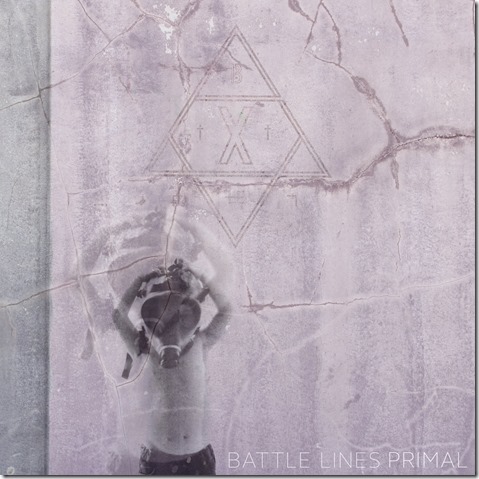

 

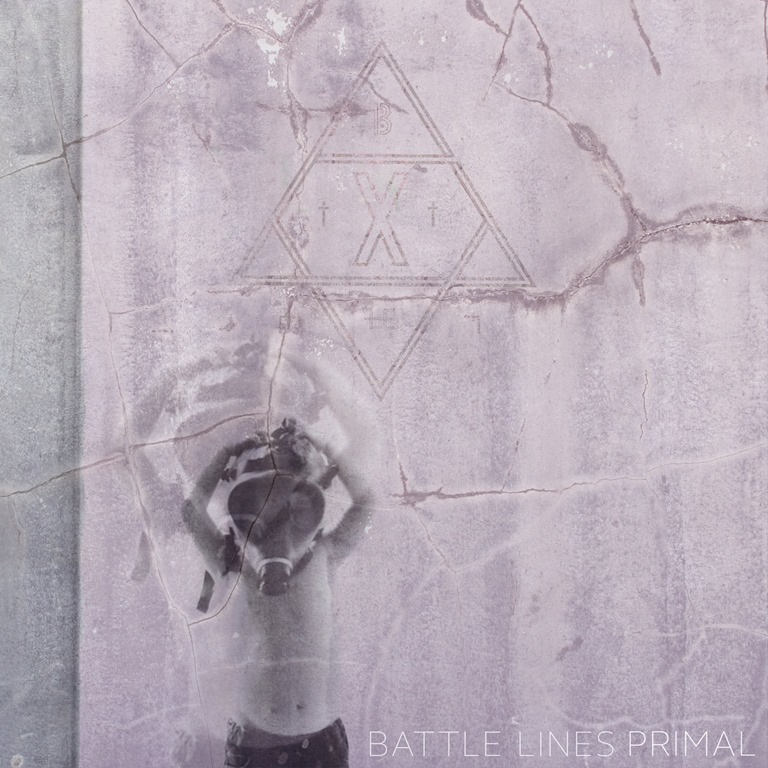
Battle Lines - Primal

12th January 2017

Christopher Nosnibor

Ummagma have been making quite a name for themselves, and have done a great deal in revitalising the shoegaze / dreampop crossover style characterised by early 4AD releases. This release finds the Ukranian/Canadian act join forces with dreampop pioneers A.R. Kane (who also released music as half of M/A/R/R/S) and who have been silent since the 90s.

To try to get to the root of what it is about dreampop’s capacity to touch the listener is, indeed, akin to trying to locate the source, and subsequent emotional resonance of a dream. Waking up at 5am – as I often do – I was groggy with the images of dreams melting from my mind as I made the uneasy transition from unconscious to conscious. Some of the scenes clung, but their significance, which had been immense whist in sleep, swiftly evaporated as I rose to the surface. There was a logic to some of the more anxiety-inspired elements of the dream – desperately trying to send a text message while trapped in an eternal office meeting held in a room with no windows, for example – required little unravelling, but others subscribed to a dream-logic which only sustains any sense of coherence while in a dream-state.

Dreampop, at its best, suspends the listener’s connection with the concrete world and transports them into a mental zone somewhere in between realities. For the three to five minutes the song plays, the sound occupies the mind completely, and conjures a rarefied emotional state, a distillation of a deeper inner self that’s only partly accessible at any given time. This is why, in order to fully appreciate the cream of dreampop, it’s necessary to fully surrender oneself to the music. Anything else is likely to leave the listener feeling very much on the outside, looking in, and completely untouched.

‘Winter Tale’ is a song by Ummagma, featured here in its original form and subject to a substantial reworking by A.R.Kane, and accompanied by an abridged radio version of the A.R. Kane interpretation.

The original is a dainty, delicate ditty, wistful, softly blurred, a lightly skipping vocal melody careening its way over a sparse backing of simple percussion and cloud-like synths, and it’s full of wintry imagery and a pervading sense of suspense. Shauna McLarnon’s vocal is delicate, airy, and floats mellifluously on the breeze.

The alternative version is quite different. A.R.Kane’s primary addition, however, is an overloading guitar. It’s kept at a respectful distance and doesn’t submerge the entire frame of the underlying original, but crashes like waves and breaks into howls of feedback, bringing textural layers and additional depths to the song, accentuating the darker aspects. The absence of percussion somehow abstracts the song in some way, and the gently rising bubbles of synth bring a sense of colour.

But when it ends, it’s hard to recall exactly what it was about it, like a cloud that’s changed shape and the rabbit is now just a streak in the sky.


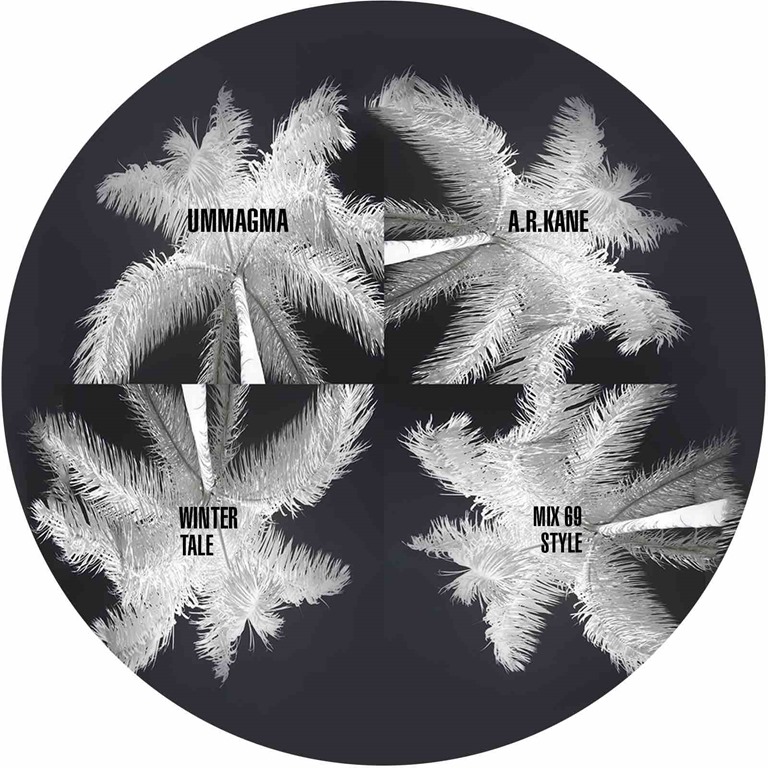
Ummagma   A.R.Kane - Winter Tale (cover artwork)

Tavern Eightieth (TVEI) – 31st October 2016

Christopher Nosnibor

Don’t read too much into the Hallowe’en release date for this solo offering from Matt Christensen, who is more usually found lending his voice to Chicago genre-straddling guitar-based act Zelienople. There are no guitars to be found here, or vocals, and despite the album title’s connotations of the predatory, the sinister and the dangerous, this is no haunting horrorshow or ultra-dark ambient work coughed up from the bowels of the earth, although the five tracks on Prowl are certainly strong on atmospherics.

The title track sets the mood, a murky groove softly bounces along, the insistent beats largely submerged by a thick, opaque subaquatic sonic murk which strangely deadens the sound and creates a sensation that’s almost physical rather than simply auditory. When the rhythms are completely absent, as on ‘Mountains of Fire (Remix)’, Christensen glides effortlessly into what one may reasonably call ‘pure’ ambience: the forms are vague, intangible, with no discernible sense of structure as the soft and slowly-drifting washes of sound shift and turn gradually.

‘Spending It’ is perhaps the most haunting track on the album, crackles and pops – somewhere between the click and clatter of worn vinyl and the cracks and snaps of burning wood – form the distant rhythmic undercurrents which echo through the warping tones before being carried away into silence on a long, low wind-like drone. In contrast, ‘Junk Test’ is altogether more buoyant, bubbling beats flit beneath rippling Tangerine Dream synth motifs.

Everything is kept low-key, the sounds dissolving into one another and in a slow but continual evolution. It’s a radical departure from Christensen’s work with Zelienople, but, as one may expect, it’s an album that demonstrates a keen awareness of the dynamics of texture and tone. In the context of Prowl, these elements are explored in their most delicate and subtle forms, and in its field, it’s an accomplished and enjoyable work.


Matt Christensen – Prowl

Alrealon Musique – ALRN072 – 31st October 2016

Christopher Nosnibor

New York underground act The Strange Walls aren’t conformists or readily categorised: previous releases have been called shoegaze, darkwave, post punk, art punk, experimental, outsider. I’m not even sure what ‘outsider’ is supposed to sound like, but they’re big into their pseudonyms, thus cultivating an air of mystery around the band and their music. Emerging from an ever shifting lineup, core trio of the class of 2016, consisting of Jon V. Worthley, Dan Drogenous and Regna Yates, assisted by Jimmy Ayatollah and John Spreaders have whipped up something appropriately esoteric and wide-ranging for this release.

More significantly, …Won’t Last straddles many genres and yet subscribes wholly to none. A slow, ominous echoey bassline rent with shrieking, ghostly incidentals provide the musical backing to Regina’s vocal, which sings a vaguely familiar melody. But then it’s straight into a squalling lo-fi post-punk racket reminiscent of The Jesus and Mary Chain and A Place to Bury Strangers crossed with The Pop Group. It’s hard on the ears, and the contrast is almost schizophrenic. When an album’s tracks are as diverse as this, spanning psychedelia and folk and sometimes incorporating elements of at least two or three within a single song, it’s inevitable that some tracks will appeal more than others, and this is something which is wholly subjective. Yet the fact that there are some clear standout tracks is an objective observation, and the sequencing of the tracks accentuates this fact. The bleak electro sound of ‘In Time’ combines steely synths with a dash of dark pop sensibility which calls to mind early 80s Cure, and with its primitive, distant drum sound and reverb-soaked synth oscillations, ‘White’ lands somewhere between Cocteau Twins and Silver Apples, and these tracks inevitably sound stronger against the softer, less structured folky strummers. ‘Snow Day’ leans heavily on early New Order, while ‘Yawdons’ fulfils the criteria for obligatory droning experimental piece.

The ramshackle production equally works both for and against the album as a whole. Being better suited to some tracks than others, at times adding space and partially obscured sonic depths, at other simply sounding messy. The result, then, is an album that’s a bit hit and miss. Not bad, and in places brilliant, but a few tracks that will likely become skippers after a while.


The Strange Walls

Wrong Way Records – 16th September 2016

Christopher Nosnibor

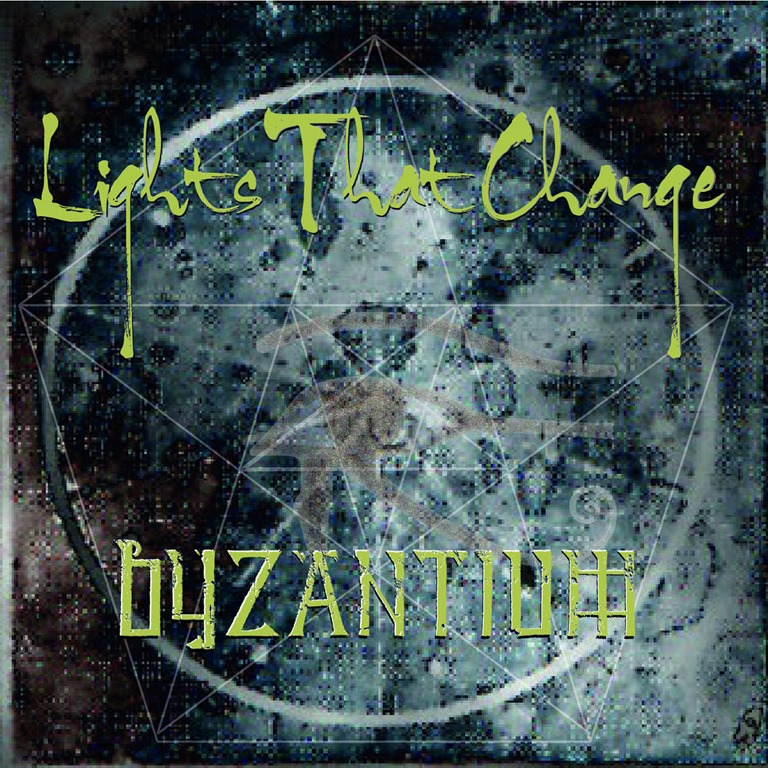
Described as ‘full to the brim with blood, sweat and tears and intertwined intricacies of the history of the known world’, Byzantium is the debut album from Welsh trio Lights That Change. The title itself brings with it immediate suggestions of ancient history and classical antiquary, while the band’s name is a fair representation of their shimmering, lustrous sound. These are not songs concerned with the everyday or the contemporary, but with timeless themes. Laced with an abundance references and invocations of classical deities and elements and intangibles woven into the lyrical fabric, the songs transcend the lives of mere mortals, conjuring ancient mysticism and long-lost myths and legends. 

It’s an album that doesn’t readily fit into any direct lineage: it’s certainly not in the folk style, traditional or contemporary, and nor is it strictly shoegaze or dreampop, but draws on aspects of them all. The execution is exquisite. The delicate arrangements and washes of reverb which surround Mandy Clare’s magical vocals imbue the album’s opening song, ‘Again’ with an air of mysticism. The guitars remain at a respectful distance, interweaving detailed latticeworks of texture.

‘Dea’ (on which OMD’s Mal Homes, who lends his drum programming skills to the album receives a co-writing credit) is fragile and sparse, with the layers of vocal harmony hinting not only at Slowdive but also Ultraviolet-era All About Eve. There are very few acts which could pen a song which calls to Greek goddess Athena and also quotes from the Latin hymn ‘Dies Irae’ without sounding affected or pretentious: this is intelligent, artful songwriting, evocative and contemplative.

If ‘Voices’ offers a more robust sound, driven by a strolling bass and rolling rhythm, it’s still characterised by fractal guitars that flicker and turn. Elsewhere ‘Golden City’ tells of fallen empires and builds drama and majesty over a Curesque bassline, while ‘Union (For Louise)’ is a perfect dreamy pop song which radiates a sense of joy.

Balancing delicacy and depth, Byzantium is an album not shackled by earth or time, floating in the stratosphere.


Lights That Change - Byzantium

Racing Glaciers return with a stellar new single ‘Samadhi (So Far Away)’, out this June, and ahead of their debut album release through Killing Moon this August.

With well over 2million Soundcloud plays on just their first four tracks, their track ‘First Light’ featured on the Transformers 4: Age of Extinction movie and won the band support from BBC Radio 1 and BBC 6Music DJ’s including Annie Mac, Huw Stephens, Greg James, Fearne Cotton and Steve Lamacq.

The band have also performed at the BBC Radio 1 Big Weekend, Liverpool Sound City, The Great Escape Festival, Secret Garden Party, London Calling in Amsterdam, Berlin Music Week, Y Not Festival, Wakestock and Beacons, as well as a 35-date UK tour late last year.

Racing Glaciers will release this new single ‘Samadhi (So Far Away)’ this June, the first exciting glimmer of what is to come from their debut album release ‘Caught In The Strange’ this August, and a track that pulls together all that is great about the 5-piece from Macclesfield, as gloriously cinematic, inventive and essential as we need right now.

Racing Glaciers release their debut album ‘Caught In The Strange’ on August 5th 2016 through Killing Moon.


Get your lugs round he psychdelic-tinged shoegaze belter that  is ‘Samadhi (So Far Away)’ here:


Humpty Dumpty Records – HMPTY030 – 5th February 2016

James Wells

Sometimes, there is simply no substitute for volume. Marking something of a change of direction from his previous Amute albums, Jérome Deuson has embraced something that could be considered more of a ‘rock’ aesthetic in cranking everything up to 11. But this isn’t a question of indulgence. It’s about the transformative nature of volume. It’s the volume of the sounds which determine the way the notes and tones interact on the pieces on Bending Time in Waves. The dominant instrument is guitar, bathed in reverb and pushed to the max to forge vast cathedrals of sound. You might loosely call it shoegaze, or slacker indie, or simply ‘alternative’, as we did back in the 90s. And there’s very much a 90s feel to Bending Time in Waves, an album capable of the same kind of temporal discoordination as induced by My Bloody Valentine’s Loveless.

Beneath the tumults of guitar, there are some pounding drums, but like everything else, they’re partially obscured, semi-submerged amidst a tidal wave of treble, a screed of overloading sound that fizzes and crackles and fuzzes. Winsome slacker introspections played delicately and ponderously are transformed by the ear-splitting volume, crackles, and pops of cracking transistors and hisses of feedback. Soft swathes of soaring strings cascade in and out again on tsunamis of reverb-soaked guitar. Quiet moments of reflection, hushed and sincere swell outwards exponentially, threatening to obliterate Deuson’s fragile psyche.

It’s disorientating, bewildering, overwhelming. But there are some nice songs to be discovered, underneath it all.

Amute

Amute Online