Posts Tagged ‘Post-Punk’

Christopher Nosnibor

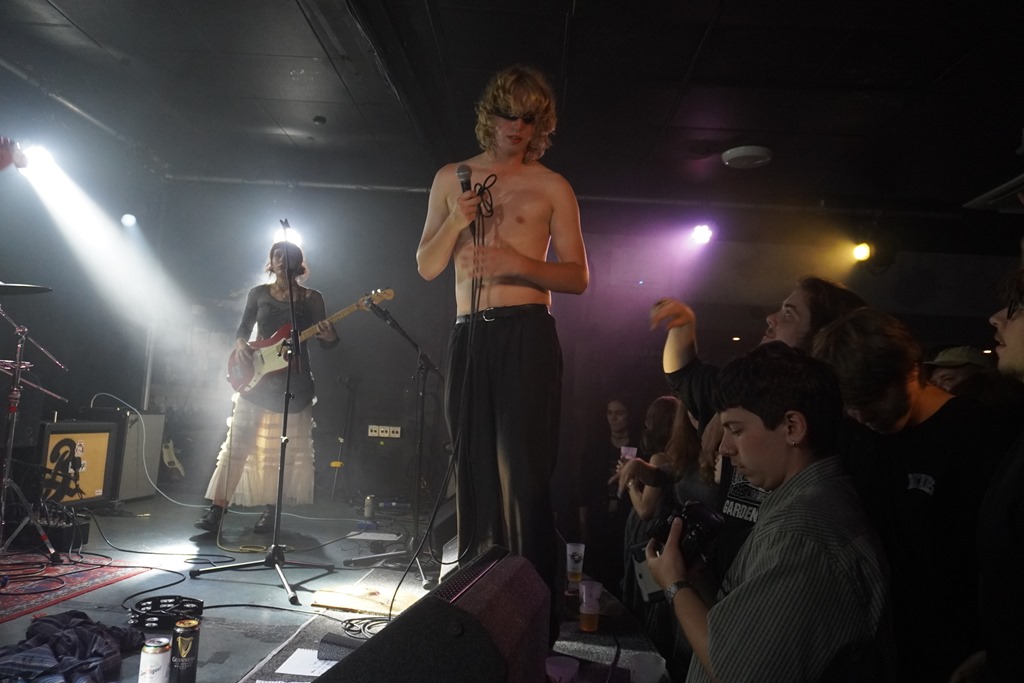
In terms of goth history, The Warehouse is pretty much ground zero. Synonymous in particular with The Sisters of Mercy in their early days, it was this milieu which also spawned The March Violets, making their return to the venue for the first time since 1983. I missed that one myself, having been seven at the time, but a fair few of the songs played that night are in tonight’s set list, too, and one suspects they probably sounded better this time around.

Early doors, there’s an almost 50/50 split of old goths and twenty-somethings, who really do seem to have embraced the original 80s dark punk look (as opposed to the ersatz emo stylings that passed as goth in the 90s). The Psychedelic Furs and Christian Death and Strawberry Switchblade are blasting over the PA as we wait for Vision Video, and I make myself comfortable with a pint of Weston’s Vintage at a reasonable £5.80 for a pint.

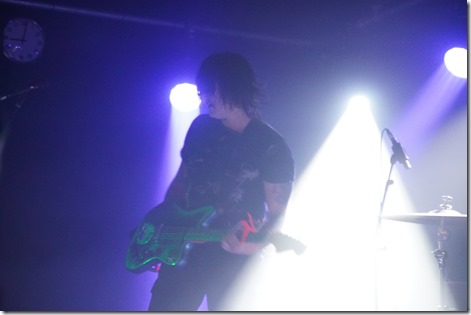
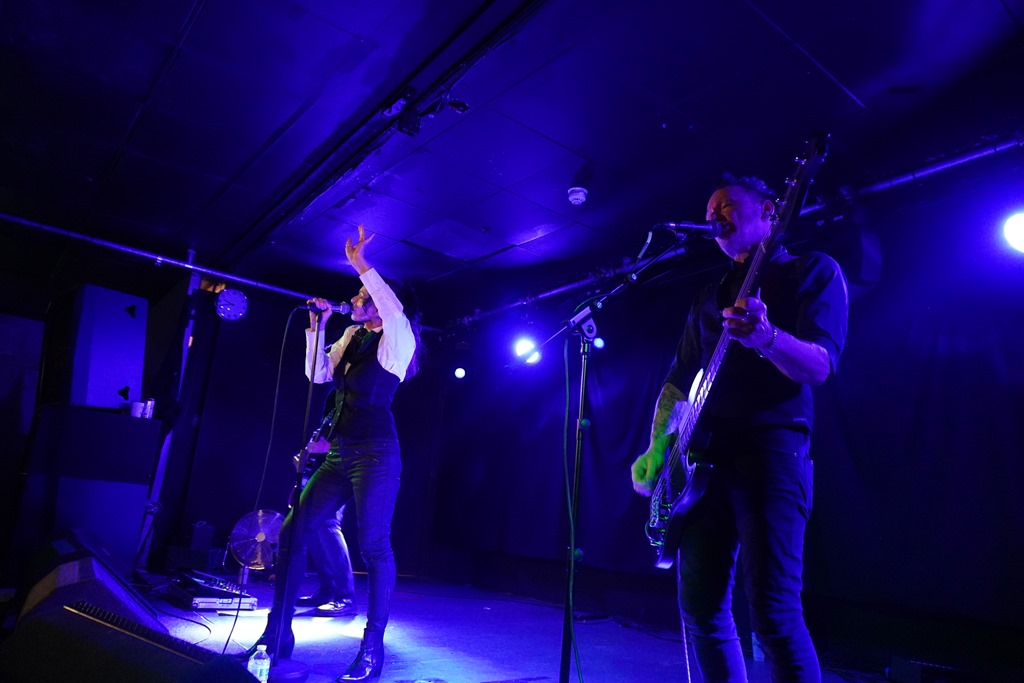
Vision Video have a long-established relationship with the Violets, with Tom Ashton having produced their first two albums. Stylistically, they’re at the rocky, post-punk end of the goth spectrum, who clearly take their cues more from ‘our’ brand of goth rather than the US ‘death rock’ scene (a mid-set cover of The Comsat Angels’ ‘You Move Me’ is illustrative).

DSC02498

Vision Video

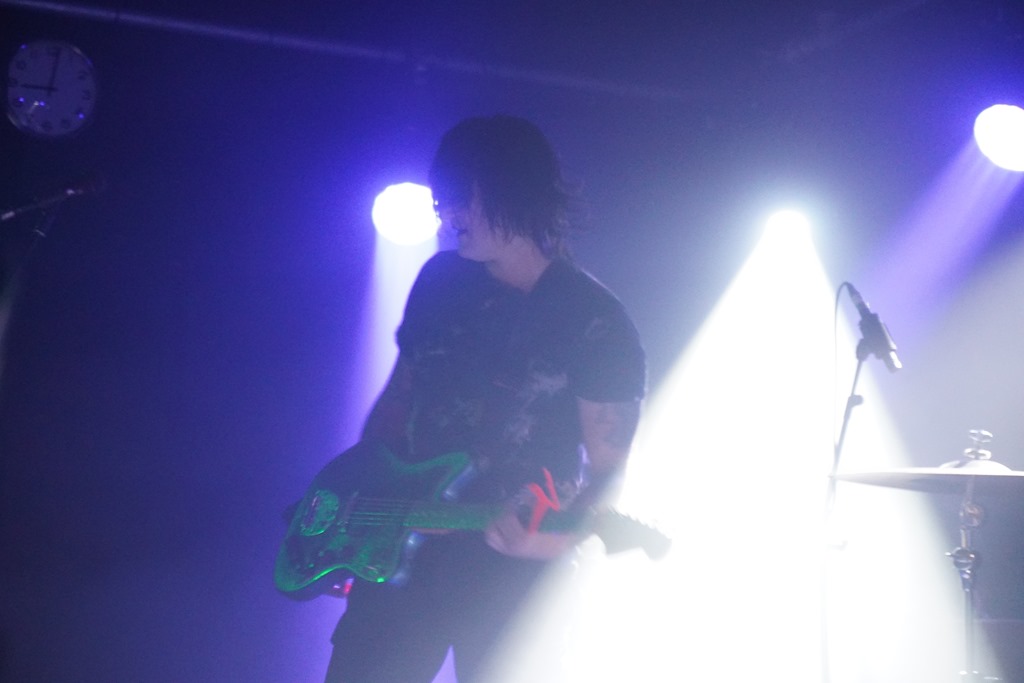
A three-piece with guitar, synths and live drums, the sequenced bass is really solid and sounds… real, with proper low-end frequencies delivered at appropriate volume that make your nostrils vibrate. They’re over here from Athens, Georgia, with a message: they’re anti-fascist, anti-war, anti-capitalist, anti-Trump and anti-dickhead. And as guitarist / vocalist Dusty Gannon is a veteran and ex-firefighter, this is a message that’s delivered with sincerity from a place of experience, and a message which informs the songwriting as much as a vintage record collection. He speaks at length in between songs: none of is it preachy, but it is passionate, and the crowd warms to them (and judging by the clamour front centre, a fair few had warmed to them and learned the words in advance).

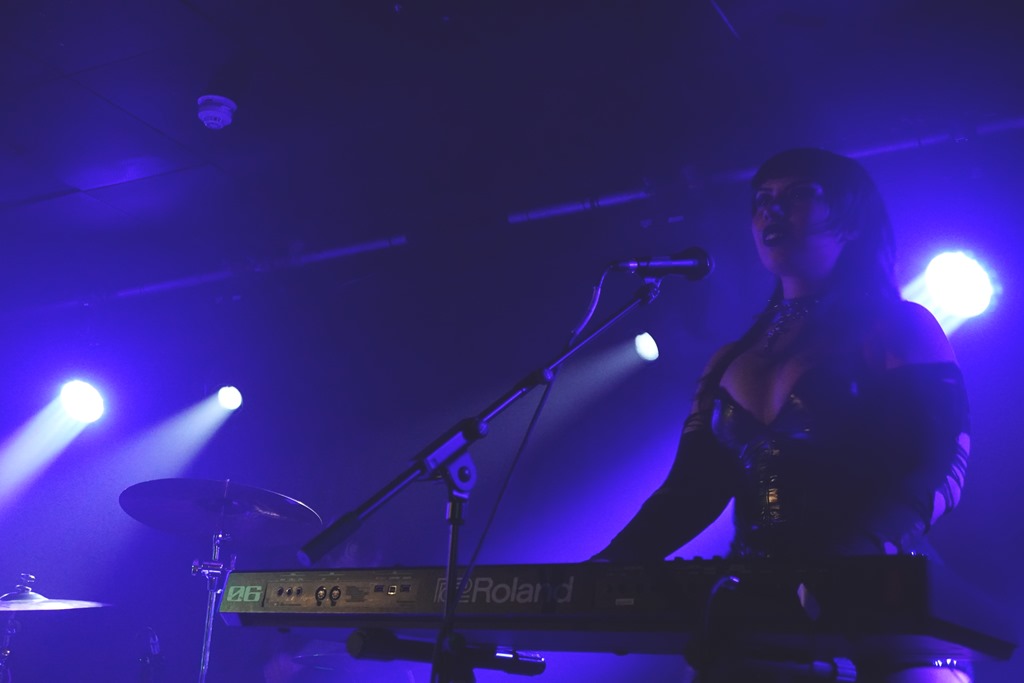
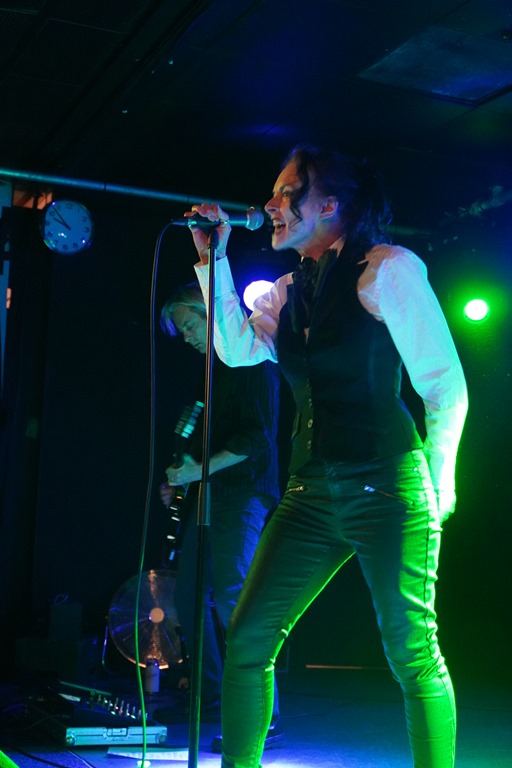
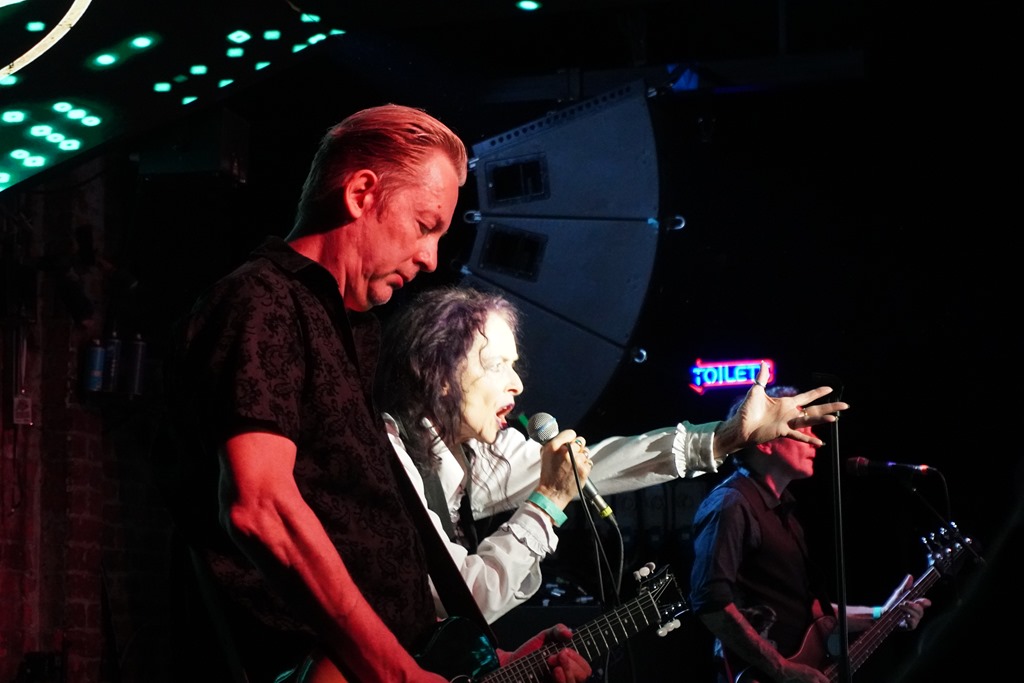
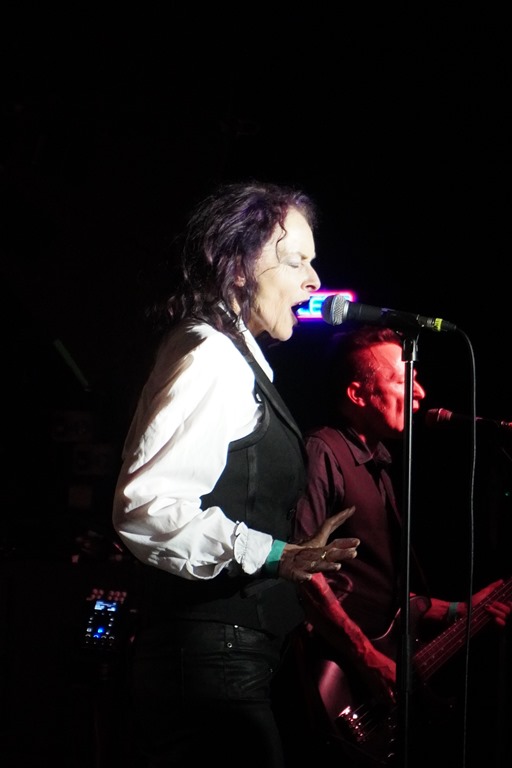
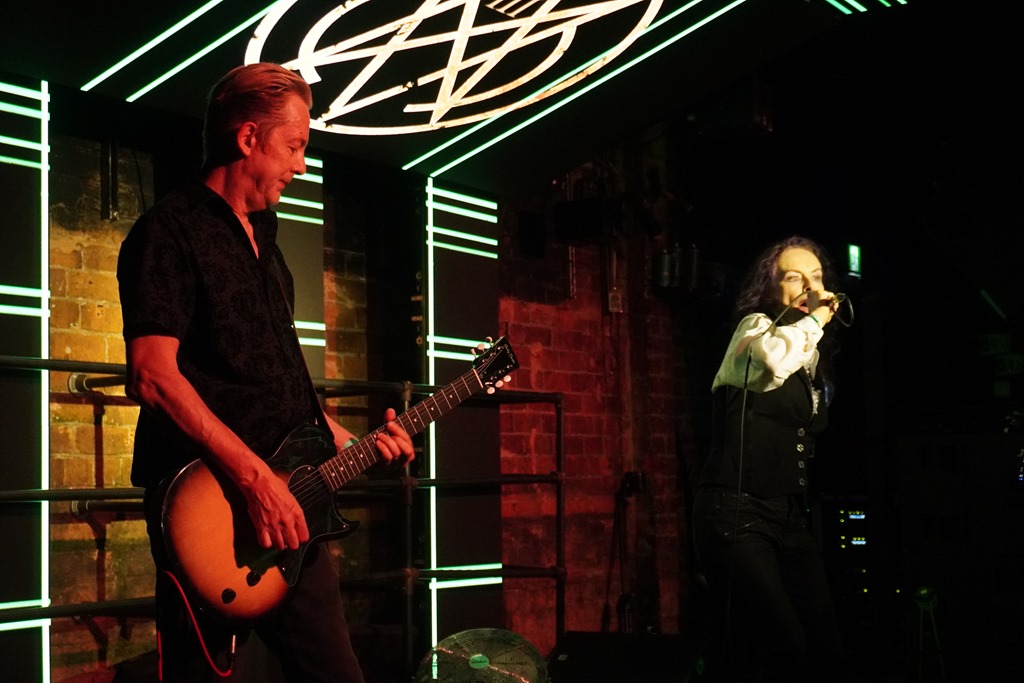
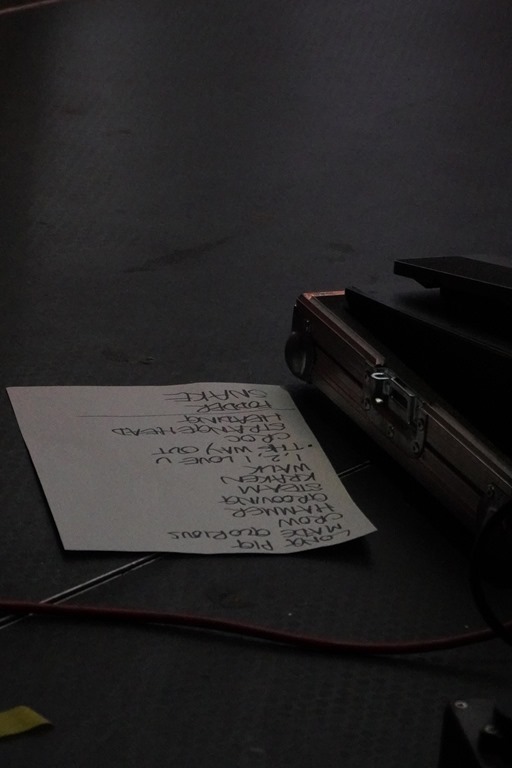
The March Violets take the stage as The Sisters’ ‘Marian’ comes on, and it’s a swift fade as they’re straight in with ‘Long Pig’, with a barrage of squalling guitars and stuttering beats. It’s immediately apparent that they’ve still got it, and pleasingly, they haven’t faffed about with the arrangements of the old songs, right down to the hyperactive drum machine programming which defined their early sound. ‘Crow Baby’, dispatched near the top of the set is still wild and sounds like nothing else.

Reminding us that they didn’t release their first album proper until after their post-millennium return, they give us ‘Made Glorious’, from their epic 2014 debut, followed by ‘Hammer the Last Nail’, lead single from recently-released follow-up Crocodile Promises.

DSC02543DSC02539

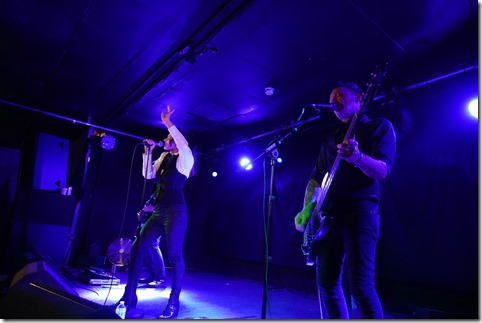
The March Violets

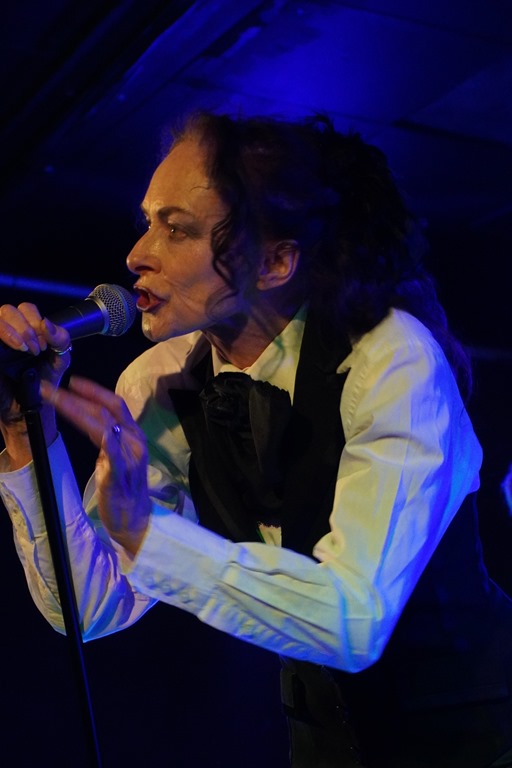
Playing ‘Grooving in Green’ and then ‘Steam’ replicates the running order of their 1982 single, and the interplay between the different elements comes through clearly: first, there’s that unique Leeds sound, with a thick, chunky bass welded to a thunderous drum machine, juxtaposed with a guitar style that draws at least a certain degree of influence from Gang of Four – scratchy, trebly, choppy, with some unconventional use of harmonics – and then there are the songs themselves, which are the product of distinct personalities. Bassist Mat Thorpe, who joined for the new album provides the more shouty male vocal counterpoint to Rosie Garland’s clean, theatrical enunciations, and as such, the essence (no, they don’t play that) of the old classics is retained. Meanwhile, ‘Kraken Awakes’ and ‘Crocodile Teeth’, lifted from the new album from new album sits comfortably alongside the older material.

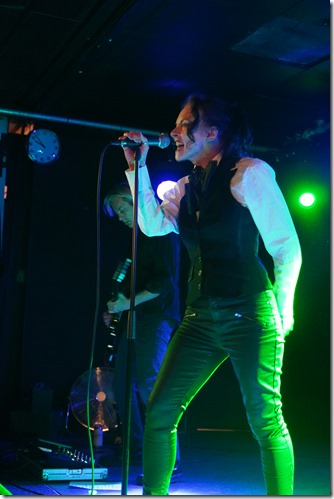
The sound seems to get louder and brighter (and probably purpler) about halfway through the set, and they take things up a notch, Rosie confessing that they’re having a blast up there – although, truth be told, it’s pretty obvious: she’s in fine voice, and busting moves all over, and Tom spends half the set with a massive smile on his face. They know they’re sounding good, and they know we’re loving it, too.

DSC02556

The March Violets

Towards the end of the set, ‘Strangehead’ is particularly wild and wonderful. They encore with a blistering ‘Fodder’, and there is simply no way they could leave without giving us ‘Snake Dance’, which is one of the definitive anthems of goth – the Violets’ ‘Temple of Love’, if you will.

Tonight, we’ve seen a band on peak form, and proving that they’re a lot more than simply a heritage act, too. Long may they continue.

DSC02535

Saccharine Underground – 1st July 2025

Christopher Nosnibor

This one hell of a hybrid. Just when you think post-punk has been explored to the point at which it has been hollowed out, exhausted, and has only well-worn and instantly recognisable tropes to offer, along come Washington DC’s Zabus, purveyors of avant-garde post-punk with an EP which is something of a ‘best of’ with tracks from their two recent albums, Automatic Writhing (September 2024) and Floodplain Canticles (January 2025), plus a new track which paves the way for their next offering Whores of Holyrood (due in August).

With its immense, reverb-laden sound and expansive, drifting desert-like soundscape ‘Grafhysi Fyrir Alla’ makes four and a quarter minutes feel like a hypnotic span of double that duration. The shuffling bass and big, booming bass are pure dub. The guitar chimes and floats into the ether as everything swashes around in a huge echoic pool.

Of ‘Grafhysi Fyrir Alla’, lifted from last year’s Automatic Writhing, project founder and focal member Jeremy Moore says it’s about “the societal imposition of unobtainable standards of beauty, and our obsession with physical perfection at the expense of true happiness”. This is certainly not a case of style over substance, but a coming together of musical inventiveness with a level of intellect which is rare. “Psychopathologies like body dysmorphic disorder, at the extreme, can lead to a path of ruin, if most of your life is spent chasing a ghost—what you believe the world wants you to be. Death doesn’t discriminate. The end is always the same.”

This is some pretty heavy – and dark – philosophy on offer here, and it’s welcome: as much as there is much to be said for the benefits of the escapism music can offer, there’s equal solace to be found in art which articulates one’s own world view. And so it that that Zabus portray contemporary dystopia from a range of camera angles.

‘Orphalese’ is more uptempo and is decidedly cinematic with its broad-sweeping layers of synths driven by propulsive, rolling drums. There’s no verse / chorus structure, but instead a hypnotic expanse of sound, the aural equivalent of standing on a summit and looking out at a three-sixty horizon through a heat haze. It’s immersive, utterly absorbing, and transportative.

The first of the tracks lifted from Floodplain Canticles is the six-minute ‘Tearful Symmetries’, which is low and slow, Jeremy Moore’s reverb-drenched baritone croon approximating the late, great, Mark Lanegan against a dubby backdrop punctuated the clangs and scrapes of guitar drones and sculpted feedback. ‘This is the end….’ He reflects, but not with sadness or panic, but a sense of inevitability.

‘Golden-rot’ goes all out for the theatrically gothic experience: it’s as big on drama as it is on sound, as an insistent mechanised drum beat pounds away, cutting through a smog of murky guitar and thick, booming bass, and if I wasn’t already perspiring hard from the humidity and thirty-degree heat, this would make me sweat, with its tension and crackling energy.

And so we come to the title track, the first taste of Whores of Holyrood. It’s different again, although the cavernous reverb is a constant. This cut is a brooding piece that borders on country, once more evoking the spirit of Lanegan. It’s spacious, but its intensity brings an almost suffocating weight.

Shadow Genesis provides a perfect introduction to Zabus, and at the same time whets the appetite for what’s to come. And let me tell you, it’s something to get excited about.

Zabus - Shadow Genesis cover art

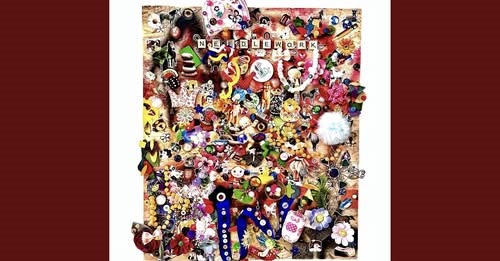
Needlework caught our attention a few months ago when they supported Aural Aggravation faves Soma Crew.

They’ve just dropped the track ‘Saddle Rash’, and we dig. Check it here:

AA

13838193987112654144

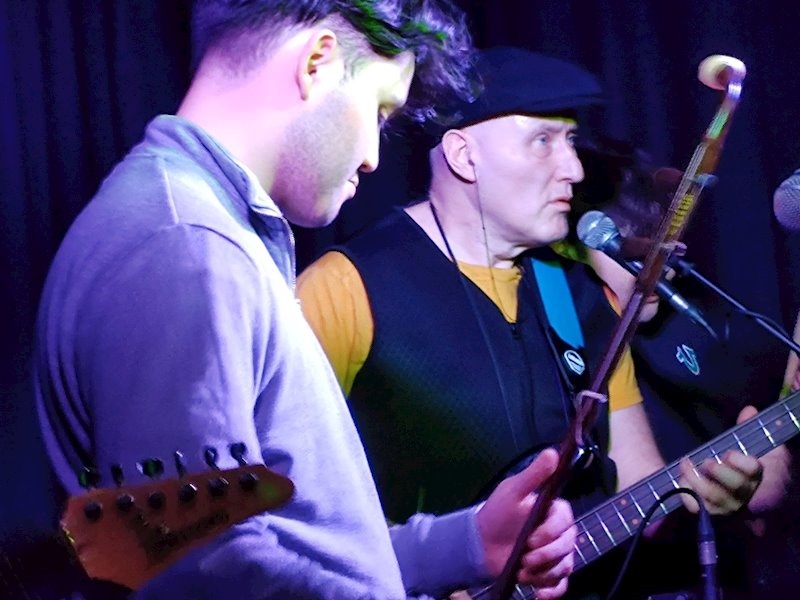
Genre-defying UK-based music outfit Tian Qiyi presents their impressive new single ‘Dharma’ featuring the legendary Jah Wobble on bass. This is the final single to be released ahead of their sophomore album Songs For Workers, out June 27 via Pagoda Records.

Tian Qiyi is more than just a band, bringing together brothers John Tian Qi Wardle and Charlie Tian Yi Wardle with their father, Jah Wobble (John Wardle). Their unique sound reflects their rich family heritage, blending their father’s pioneering work in post-punk and dub with the Chinese cultural influences of their mother, Zilan Liao.
’Dharma’ flows with a captivating blend of Eastern psychedelic melodies and Charlie’s ethereal vocals, all underpinned by a hypnotic fusion rhythm and beautifully primordial percussion. As groovy as it is addictive, the trio serve up a truly grounding experience here.

This new offering follows their stunning lead track ‘Watch The Sunrise’ and Bandcamp exclusive  ‘Mongolian Dub’, a fascinating ethno-psychedelic initiation into this 10-track musical journey. Like much of the goodness found on this album, Tian Qiyi’s music bridges generations and cultures, blending deep dub grooves with Eastern traditions.

“‘Dharma’ is a track that brings together our Irish, Chinese, and Mongolian roots. It features flowing, psychedelic melodies, with Charlie’s otherworldly vocals adding to the vibe. The rhythm section, anchored by a laid-back, hypnotic pulse from me on percussion and my dad on bass, creates a psychedelic dub fusion”, says John Tian Qi Wardle.
”And Songs For Workers is an album where we have moved away from influences and inspiration, instead embracing instinct and familiarity. Our background played a crucial role, from the traditional Chinese music we learned with our grandad and mum, to the improvisational, instinctive playing we developed from performing and recording with our dad.”

AA

Tian953964

Christopher Nosnibor

When it comes to formats and the strategies for marketing new releases, it’s clear – particularly in hindsight – that the 90s was the peak period for milking fans with myriad formats, each featuring different mixes or edits, B-sides, and artwork. Now, I am by no means a nostalgia nut, but as a collector, part of me does miss this – particularly when most releases aren’t even available physically anymore, and some aren’t even downloadable. Adding a track your playlist is… nothing.

The latest offering from Glasgow’s wonky lo-fi maestros, Dragged Up, sees a different approach, at least, with an edited version of the A-side being released to streaming platforms but a full-length version available to download via Bandcamp, with the B-side being released a week later, followed by a physical release via the ever-innovative label Rare Vitamin.

You really need the full five-minute version of ‘Blake’s Tape’ to take it all in, to bask in the glory of the epic intro of churning feedback and rumbling discord which eventually gives way to a stomping, rambunctious indie tune which brings in elements of post-punk and folk, a collision of UK 80s and US 90s, and with the verses and choruses sounding like they belong to different songs, the dynamic is strong, switching as it does from nonchalance to pumping energy. And both are magnificently executed.

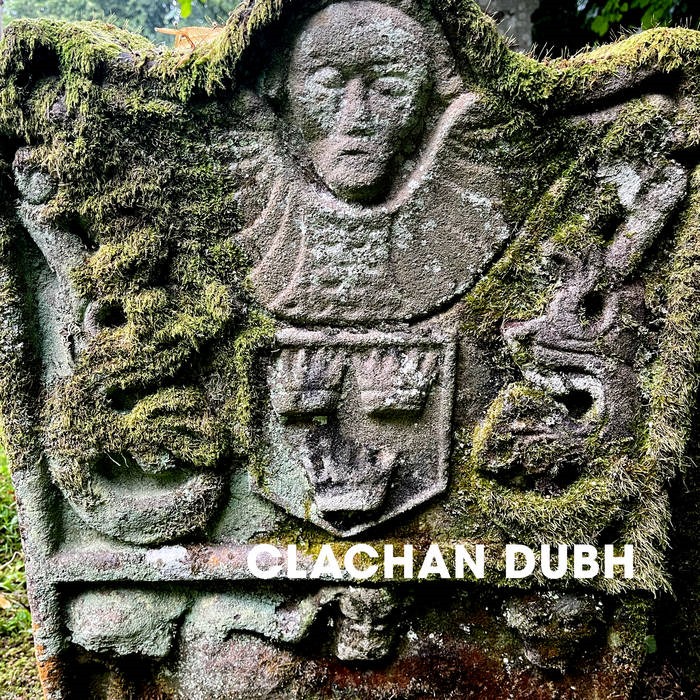
‘Clachan Dubh’ is a fast-paced, high-energy blast of fizzy guitars and blissfully loose interswitching vocals, and again it’s a collision of Pavement and The Fall plus all the scuzzy indue acts you’d read about in NME and Melody Maker in the early 90s. It’s less a case of them sounding like this band or that band, and more about the way they distil these various zetigeists and amalgamate them into a magnificent alt-rock hybrid which sounds like so much that’s gone before, and at the same time completely unique.

Oh, and they’ve got songs. Great songs. Get stuck in. And maybe go and see them on tour in a small venue in August, because after touring as the support for Steve Malkmus’ new band in the summer, there’s a fair chance they’ll be playing bigger places by this time next year.

AA

a3966480230_16a1631882881_16

“I see too many echoes of the 1930s in what’s going on in the world, which I see as being extremely dangerous both for the country I’ve chosen to live in and the Western world in general,” says vocalist/bassist Vox (Mark Burgess) of Chameleons when talking about his band’s brand new single, ‘Saviours Are A Dangerous Thing’. 
Out today (29th May) via Metropolis Records, the song is taken from their recently announced and long-awaited album Arctic Moon.

“It was the last song to be completed for the album,” he continues. “I’m particularly pleased with the way it turned out, because it was our guitarist Stephen Rice who initially brought the rough idea to the table and we all then collaborated on it to produce the final song.”

Capturing Chameleons’ innate flair for crafting exquisite guitar textures and merging them with Vox’s tight grasp of melody and wordplay, ‘Saviours Are A Dangerous Thing’ harbours a dark message about the current political climate amid its thoroughly engaging sound. Further enforcing this theme, an accompanying video splices live performance footage with kaleidoscopic images of war and its effects, as well as the propaganda surrounding it, making for a compelling statement overall.

“The lyrics came to me quite quickly,” Vox explains. “They reflect what has been happening globally and how senior officials line up to kiss the rings of clowns who regard themselves as self-proclaimed kings rather than elected statesmen.”

AA

16a3dadc1931f1b075a5d3bb3b0fcf0a6aa4bbb7

21st May 2025

Christopher Nosnibor

Ashley Reaks first came to the public’s attention under the guise of Joe Northern, fronting promising turn-of-the-millennium dark synthpop act Younger Younger 28s, a head-on collision between The Human League and Clock DVA, who released their sole LP, Soap in 1999. Since then, the Harrogate-based Reaks has expanded his field and is now as known for his disturbing collages as he is for his eclectic musical output, which spans dub, postpunk, and whatever other genre concepts come his way. Reak’s creative diversity, while very much an artistic strength, has likely been an obstacle to his achieving more commercial success, because the sad fact is that polyartists who venture into the domains of oddness are extremely difficult to market, because, well, how to you pigeonhole or genre categorise someone who works not only in a host of media, but does stuff which is, at times, quite disturbing and impossible to place in a given bracket? Of course, another likely, and more obvious, obstacle to commercial success is that the fact that a lot of his work is what a lot of people would likely consider plain fucking weird.

But even before Younger Younger 28s, Reaks – whose appreciation of The Sisters of Mercy and the like is widely-stated on his social media – was dabbling with the gothier aspects of post-punk, and would continue to do so for some time. His decision to release Ancient Ruins may only be for the sake of posterity, as a document, but here it is, and it’s not bad either.

Because this is Ashley Reaks, it’s not a set of songs which adhere to straight-up genre conformity, as is immediately apparent from the first track, ‘A God in the Devil’s World’, which has a certain swagger and a swing to it, the female vocals not only providing a counterpoint to the growling baritone Reaks adopts, but also a pop shimmer that’s still more Human League than The March Violets.

‘No Man’s Land’ offers picked guitar and jittery synths melded to an insistent drum machine, and comes on with the trappings of mid-80s rock, and a bit Prefab Sprout. ‘Disconnected’, however, plunges into darker territories, an echo-heavy bass-driven blast of angst that’s more the sound of the underground circa 1983. And it’s good, but then you realise how anachronistic it is for the time it was recorded.

Between 1997 and 2002, Britpop died a slow and painful death and Nu-Metal exploded. The post-punk revival was still some time off, and simply no-one was making, or listening to, anything that evoked the spirit of The Batcave. But then, they weren’t really digging 80s synth pop, other than the original stuff in a kitsch or nostalgic way, and the much-touted 80s revival hadn’t really gained any traction. To top it, in keeping with Reeks’ other output, thew songs on here are littered with lyrical observations and kitchen sink vignettes, pithy pairings, and couplets which are wilfully wordy and awkward.

‘Christiane’ is a campy goth pop effort that’s wistful and theatrical, with hints of late 80s Damned woven into its fabric, while ‘I Always Wanted to be You’ brings some indie jangle and… brass. Then again, there’s the chugging industrial blast of ‘Swimming Against the Tide’ which sounds a bit like Therapy? circa Nurse but with an overtly ‘baggy’ beat and a Prodigy-influenced midsection. Oh yes, it’s all going on here.

If nothing else, Ancient Ruins provides some insight into the evolution of Reaks’ compositions, from oddball pop to off-the-wall melting-pot madness, with loads of ska brass and a whole lot more besides. The dubby closer ‘Ghost Town In My Heart (Version 2)’ is particularly illuminating.  If only all history lessons were this interesting.

a3128964198_10

Negative Gain Productions – 6th June 2025

Christopher Nosnibor

Just as the birds of prey from which they take their name are creatures of the night, so this Irish act – essentially one guy – who draw inspiration from the darker realms of postpunk, goth, and synth-based music are very much dwellers of the dark hours, as debut album Death Games attests, with titles such as ‘Perfect Nightmare’, ‘Tombs’, and ‘Send Me to My Grave’. The album’s themes are timeless and classic, offering ‘a haunting exploration of love, mortality, and the fragile nature of existence,’ while casting nods to touchstones such as Lebanon Hanover, Boy Harsher, and Black Marble.

Lead single ‘Give Me Your Stare’ opens the album in style with a disco beat and throbbing bass giving this bleak, echo-soaked song a dancefloor-friendly groove. The vocals are backed off but ring clear through a haze of reverb, offering a hint of The Cure’s Seventeen Seconds in terms of production values.

AA

The compositions on Death Games are pretty direct: there’s not a lot of detail or layers, and it’s the electronic beats and pulsating basslines which not only define the sound but drive the songs. The sonorous synths which twist and grind over the top of these predominantly serve to create atmosphere more than melody, although haunting, repetitive motifs are commonplace, and the vocals, too, being low in the mix and with a fairly processed feel, are more a part of the overall sound than the focal point.

‘Skin on Skin’ brings a wibbly, ghosty synth that sounds a bit like a theremin quivering over a minimalist backing of primitive drum machine and bass synth, and the likelihood is that they’re going for early Depeche Mode, but the end result is more like a gothed-up Sleaford Mods, although, by the same token, it’s not a million miles away from She Wants Revenge around the time of their electro-poppy debut, and that’s perhaps a kinder and more reasonable comparison. ‘Fevr 2’ brings an increased sense of urgency with skittering bleeps skating around the reverberating drums: it has both an 80s movie soundtrack vibe and a vintage goth disco feel, and despite its hectic percussion and busy bass, ‘Tombs’ conjures a haunting, requiem-like atmosphere.

The ‘death’ thematic may not always be literal, and as much concerned with the death of love and the ends of relationships, but the duality the theme offers serves OWLS well. There’s no denying that it’s both a stereotype and a cliché that an obsession with death is such a goth thing, and OWLS fulfil these unashamedly – but then, why should there be shame? Why is it only goth and some strains of metal which embrace life’s sole inevitability, and explore mortality and the finite nature of existence? Even now, after millennia, we aren’t only afraid of death, but, particularly in Western cultures, we’re afraid to think or talk about it. People passing in their eighties and nineties still elicits a response that it’s a tragedy or that they should have had more time, and I’ve seen it said of people departing in their sixties or even seventies that it’s ‘no age’. We seem to have a huge blind spot, a blanketing case of denial when it comes to death, as if it shouldn’t happen, that it’s an injustice, and that no-one deserves it. But nothing is forever, be it love or life, and while loss – any loss – is painful, it comes attached to inevitability, being a matter of when, not if.

The stark and sombre ‘Send Me to My Grave’ commences a trilogy of dark, downbeat, funereal songs, which grow progressively darker, more subdued, the vocals more swallowed by evermore cavernous reverb. Even when the beats kick in and the bass booms, things warp, degenerate, and seem to palpably decay and degrade. There’s a weight to it, a claustrophobic heaviness, and the kick drum thwocks away murkily as if muffled by earth and six feet under sods. ‘This Must be the End’ is brittle, delicate, the calm that comes with the acceptance of… of what? What comes after the end? It feels like the song, and the album, leave this question hanging with an ellipsis, a suspense mark. It seems fitting, since we simply don’t know. But it does very much leave the door ajar for OWLS’ follow up, and that is something to look forward to.

AA

AAlbum CoverA

To coincide with the release of Disco Kills via Sister 9 Recordings, Italian post-punk duo Kill Your Boyfriend have unveiled ‘Youth’.

We raved about the EP here. Hear the track here:

AA

The EP sees Kill Your Boyfriend experimenting with new sounds that lean towards electronic music, creating a more rarefied space for the guitars while maintaining the dark atmospheres that distinguish them. It features 6 songs drawing inspiration from past greats such as Kraftwerk, Moroder, and New Order, while also keeping an eye on artists like the Chemical Brothers, Daft Punk, and Paul Kalkbrenner.

Kill Your Boyfriend have confirmed a series of European live dates in May and September this year, with more to be announced soon.

Fri 30 May -  PMK – Innsbruck, Austria w./ New Candys

Sat 31 May -  Rockhaus – Salzburg, Austria w./ New Candys

Fri 12 Sept – Kampus Hybernska – Prague, Czech Republic

Sat 13 Sept – UV Klub – Lodz, Poland

Sun 14 Sept – Chmury – Warsaw, Poland

Wed 17 Sept – Kult 41 – Bonn, Germany

Fri 19 Sept – Parkside Studios – Offenbach, Germany

Sat 20 Sept – Kradhalle – Ulm, Germany

AA

5tqs_KillYourBoyfriendDiscoKillsPromo3copy

Photo credit: Alice Lorenzon

Christopher Nosnibor

With grassroots venues closing at an alarming – and depressing – rate, there are fewer and fewer places for bands with a smaller draw, and new acts, to play. Meanwhile, particularly since the pandemic, Working Men’s Clubs have also been in decline or otherwise struggling. But as The Brudenell in Leeds and The Crescent in York have demonstrated, WMC make ideal gig venues, with a well-appointed room with a stage which is simply ideal. And so it is that the organisers of previous all-dayers in York at the now-closed Vaults have scoured the city for a new home, unveiling a brand new ‘Utterly Fuzzled’ stage banner to mark simultaneously a fresh start and a rebirth of sorts.

The advertised lineup included a number of acts who are no strangers to the York scene, or to these virtual pages – certainly solid enough to get me and plenty of others to an out-of-town venue before 4:30pm on a broiling hot Saturday afternoon.

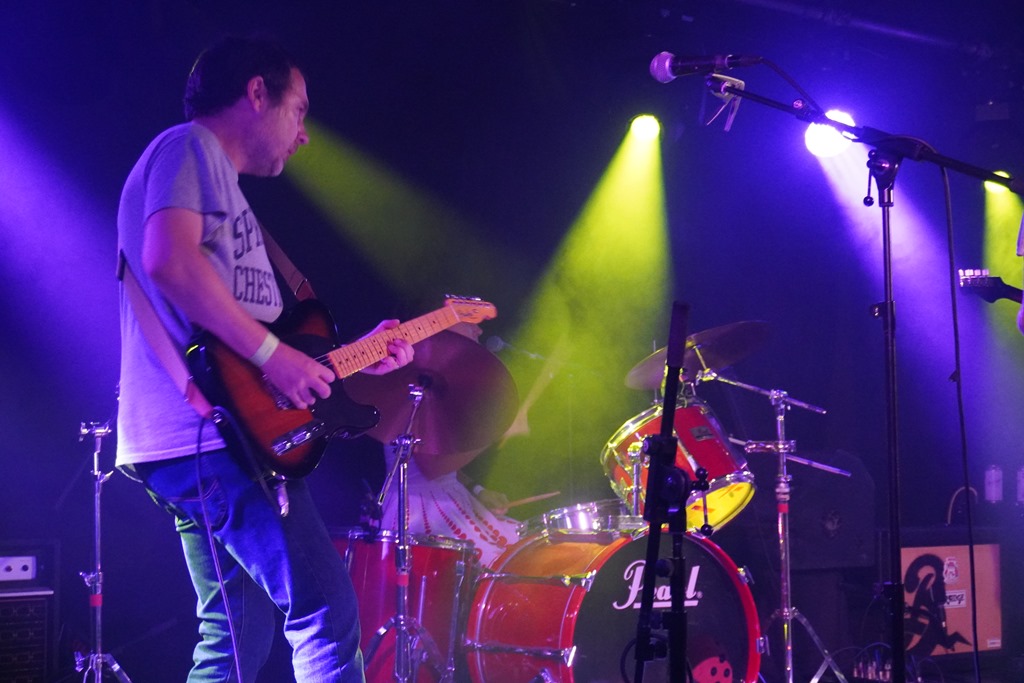
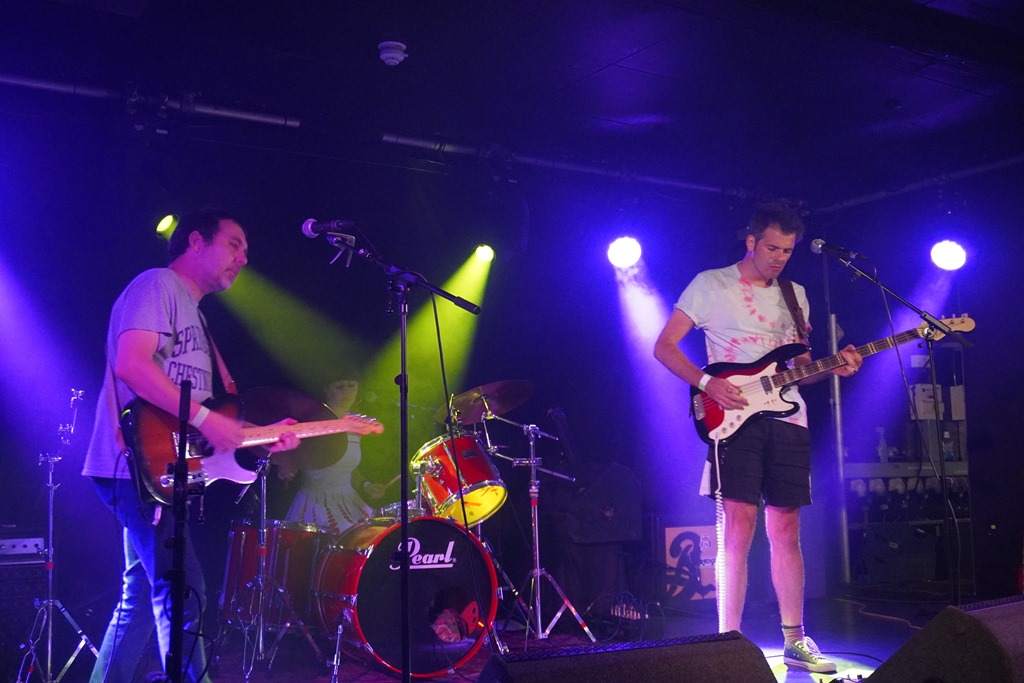
Pete Dale, who also happens to be the guitarist in Knitting Circle, got things going with a solo set of Milky Wimpshake songs, with a couple of covers tossed in for good measure, before Fat Spatula stepped things up with the first full-band set of the occasion.

Every time I see Fat Spatula it’s like experiencing a different band, with different facets of their sound seemingly presenting themselves and pushing through to the fore. Going for a set of high-energy roustabout songs, they’re good fun, and some people dance.

IMG20240216-222204-27

Fat Spatula

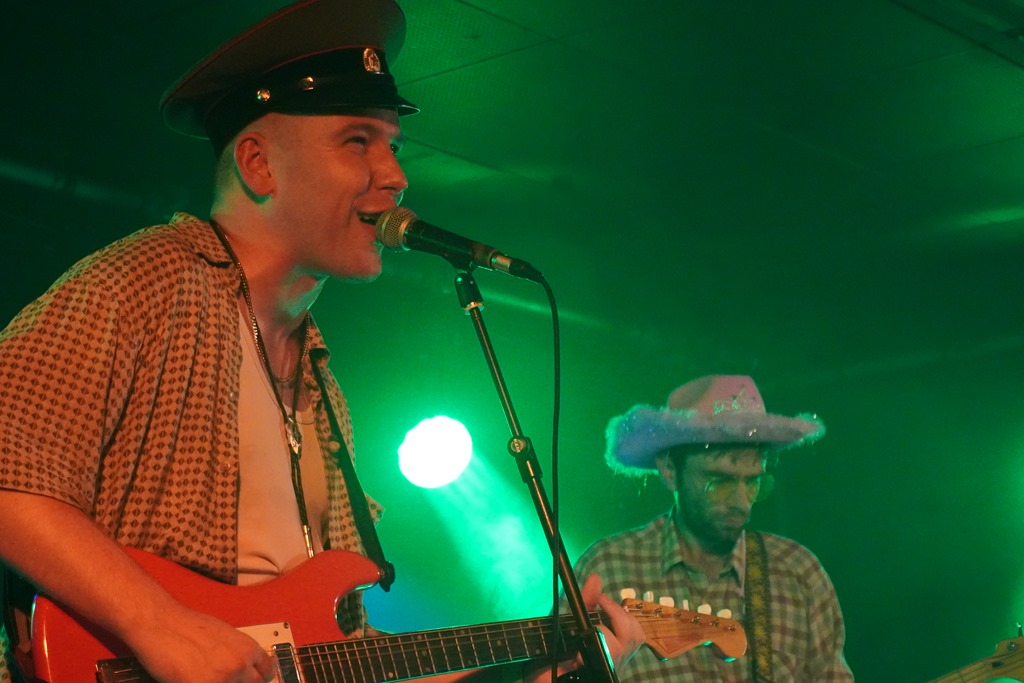
Soma Crew start slow with ‘Hey Sister’, and it’s a set that focuses on the mellower, gentler stuff. You never know what you’re going to get with Soma Crew, from lineup to set, but one thing is always assured, and that’s drummer Nick’s T-shirt. About halfway through they finally kick things up a notch with their first Motorik groove, when they come on like Hawkwind playing Sister Ray. It’s not until the last track that they pick up the tempo and let the drone diffing spin out. People don’t dance. It simply wasn’t that kind of set.

IMG20240216-231318-29

Soma Crew

In these troubling times, Knitting Circle’s commitment to being an issues-driven band is something I find both stirring and in no small way quite moving. It shouldn’t seem like a bold thing to be staunchly anti-war and sing about it, but this is seemingly where we are now, and the fact they have some cracking tunes with two and three-way vocals and choppy Gang of Four style guitars makes seeing them an uplifting experience – and they’re consistently good, too.

IMG20240217-001104-40IMG20240217-000508-35

Knitting Circle

The next couple of acts aren’t local, but they are both absolutely outstanding. Glasgow’s Slime City bring energetic punky tunes, matching zipper tops, and a size nine shoe with knobs on that does something to the guitar. They have a few gimmicks, but they’re worked into the set in a way that’s knowing and humorous without being cringey. And they have TUNES. Said tunes are led by some outstanding drumming – tight, crisp, a bit disco in places. ‘Never Stop Giving Up’ goes a bit poppy, a bit Prince, but more oftentimes, they’re rather reminiscent of Future of the Left.

IMG20240217-010603-53IMG20240217-010506-49.BW

Slime City

Irked take things to a whole other level: fierce, ferocious, tight, they’re blistering from beginning to end. I didn’t really take any notes during their set. But what’s to say about a band with such a fearsome frontwoman who charges about the room howling a fill-throated roar against a full-throttle twin-guitar attack interspersed with some good-natured between-song banter with a strong North-Eastern twist from the guitarist. The vitriol is real, but so is the fact they have a clear sense of humour.

IMG20240217-015255-84IMG20240217-014749-66

Irked

Now, the last time I saw Crumbs was a rather difficult night, when they supported Dream Nails. They were great, although their performance was rather eclipsed by subsequent events. It’s a pleasure to see them under more friendly circumstances: they’re good fun, and worthy headliners. There’s more inter-band crossover, as Jamie Wilson who does guitar / synths / vocals for Knitting Circle is also Crumbs’ bassist, and paired with Gem’s easy drumming style. with minimal kit – bass, floor tom, snare, hi-hat – they play straight-up indie that’s accessible and quite simply great fun.

Crumbs

Crumbs

And ultimately, fun is what this is all about. The sense of community is heartwarming. A lot of those present are in bands – and not the bands playing – but there are also plenty of faces often seen at local gig, as well as many who aren’t, but hopefully events like this will entice them out more often. And with a decent enough range of bottled beers at £3.70 ago, and good quality sound throughout, Fulfordgate WMC has strong potential to become a more regular venue. Real credit has to go to Jo Dale, bassist with Knitting Circle, for her curation, organisation, and promotion of such an adventurous DIY event. Here’s to much more Fuzzlement in the future.