Posts Tagged ‘Post-Punk’

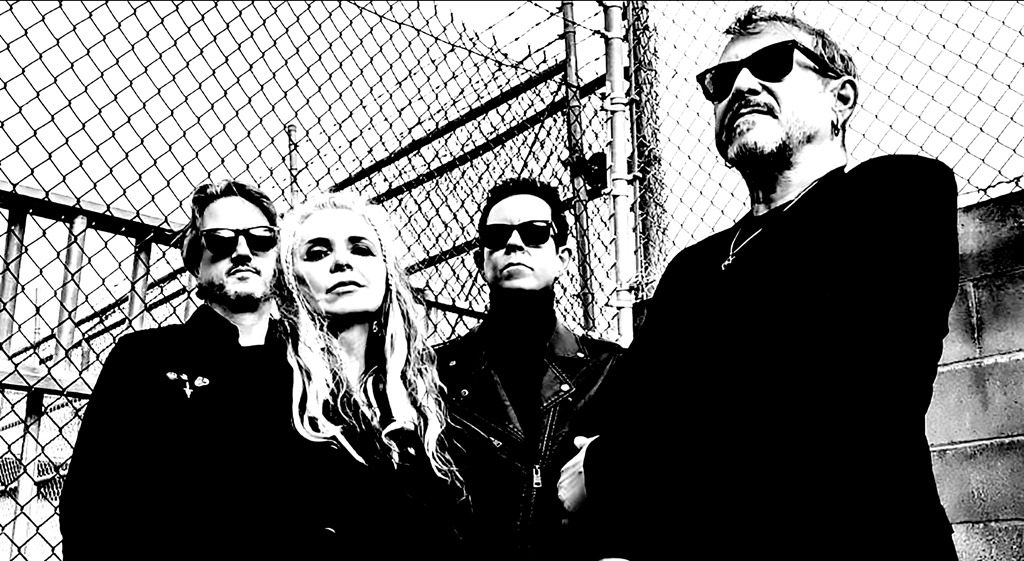
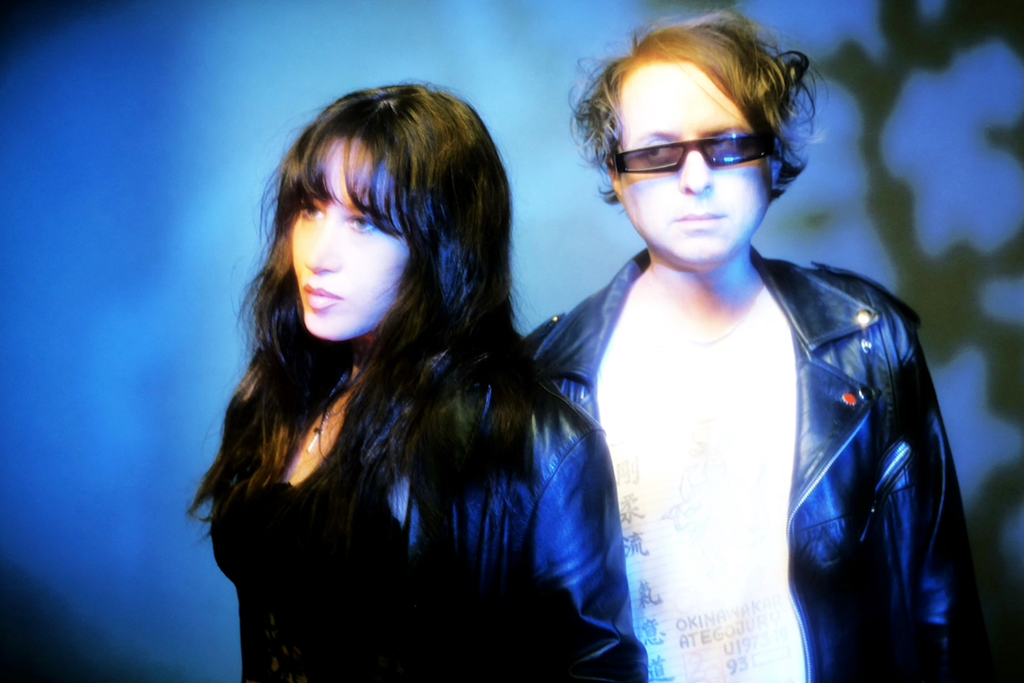
US dream-pop duo Magic Wands have released a brand new single, ‘Wishing Well’. With an insistent rhythm and swirling guitars, plus a vocal that adds to its hazy atmosphere, the song sounds like an immediate post-punk meets shoegaze classic.

“The lyric came to me when I was a guest of a guest at a wedding one summer,” explains vocalist Dexy Valentine. “There was an obvious sense of excitement at the event, but I didn’t really know anyone there so I snuck off outside and sat by a wishing well fountain and started writing on a napkin. When we came up with the music for this song I thought these words would fit perfectly.”

Co-written and produced by Dexy with her partner Chris Valentine, ‘Wishing Well’ is the title song of an EP scheduled for late April. It follows the January release of ‘Sacred Mirrors’, a collaborative single with Psychedelic Furs guitarist John Ashton.

AA

78f5a760fb01f8feef8af985ac8fe18070f0e7de

MAGIC WANDS | photograph by John Charter

24th February 2026

Christopher Nosnibor

Jeremy Moore – aka Zabus – continues his phenomenal creative run with the release of Avoidance Moon, another wildly inventive melding of myriad forms. And with Avoidance Moon, Moore pushes the established elements of the Zabus sound still further, cranking up the distortion and reverb to insane levels. It’s gothic, but it goes beyond. The theatricality is off the scale, but the feel is also very, very old school, and while it evokes the spirit of Dance Society and early X-Mal Deutschland and the like, it also calls to mind early Christian Death, and The Damned, with a bit of The Jesus and Mary Chain tossed into the blender for extra feedback spice.

The title track, which opens the album, is sparse and lo-fi, as quavering analogue synths hover their way through a crashing tube-crunched guitar, the gruff vocal and extraneous noise which runs in the background all bouncing around in a cavernous reverb with additional layers of murk. But something about it carries a certain, indefinable emotional resonance.

‘Theoretical Jesus’ brings reverb-soaked shoegaze and thunderous percussion – and splintering discord in the vein of A Place to Bury Strangers. Elsewhere, the heavy vibe with all the reverb is reminiscent of Modern Technology, perhaps because the baritone vocals share a common ground, too.

Avoidance Moon presents an uncompromising sonic swamp: on ‘Baited Idyll’, the thick, murky sound is cut through by the sharpest cymbal splashes, harsh treble clashes which strike like blades. ‘Punishment to Extinction’ melts together the warping wall of noise of My Bloody Valentine with the drama of Nick Cave: amidst the chaos, Moore casts his dark, theatrical incantations.

Avoidance Moon is a riot of late 70s / early 80s post punk, dark, attacking, dingy, lo-fi, analogue to the end. It’s likely too primitive for many ears, but it’s precisely the primitive nature of it all that appeals. So many acts pretend to draw inspiration from post-punk, but Zabus lives it. Avoidance Moon, then, is dense, suffocating, intense.

AA

cover

Argonauta Records – 13th February 2026

Christopher Nosnibor

A little over two years on from the short film, Mill Session, Abrasive Trees have made another leap in pairing with Argonauta Records, a label which specialises in stoner, doom, sludge, and post-metal, and have unveiled ‘Carved Skull’ as a taster for upcoming album Light Remaining.

At first glance, having been variously described as Post-Punk/Post-Rock/Post-Folk, Abrasive Trees are a strange fit for the label, but with this seven-and-a-half-minute epic, it makes sense.

The intro is a slow-build, with echoes of latter-day Swans in the insistent percussion, repetitive jangling guitar and wordless droning vocals which pave the way for a spectacular sustained crescendo which introduces the riff which provides the track’s recurrent motif, and it’s almost two minutes before we arrive at the lyrics, in which Matthew Rochford reflects on the times in which we find ourselves and yearns for something better – a return to, if not necessarily simpler times, then honesty and humanity.

Can we write a eulogy, for this current age?

And leave the lies behind

Our fears are carved upon our skull

Our pain marked on our skin

The undercurrents reach back into dark folk imagery, and this is mirrored in the sound, too. Sonically, it’s rich and layered, simultaneously weighty but uplifting – which is perhaps a foreshadwing of the album’s thematics as alluded to in the title Light Remaining, which implies looming darkness, and yet., still some light – light synonymous with hope. These are dark times. But we must have hope. Without hope, what do we have?

With ‘Carved Skull’, Abrasive Trees have conjured a big sound, as is befitting of a big tune, which is bold and impactful, and likely an indication of what’s to come.

AA

AA

634454884_1510979514369641_6670880441943899981_n

Christopher Nosnibor

People are unpredictable. The world is unpredictable. And just when we think we’ve seen it all, a couple of days ago, US Attorney General Pam Bondi testified before the House Judiciary committee, making for TV the likes of which few of us have ever witnessed. We’ll return to this in due course, as it’s relevant beyond the fact that gig-going tends to provide respite and time out from all the madness.

And so it is that it’s hard to predict gig attendance, particularly when ticket availability is being touted to the thirteenth hour. But with a last-minute surge in attendance – seemingly because Flat Light (is that a pun?), playing their debut show, had managed to coax everyone they’d ever met out to see them – the place was packed early doors, which was unexpected for a cold dark night on Valentine’s weekend during the wettest and most depressing February in history.

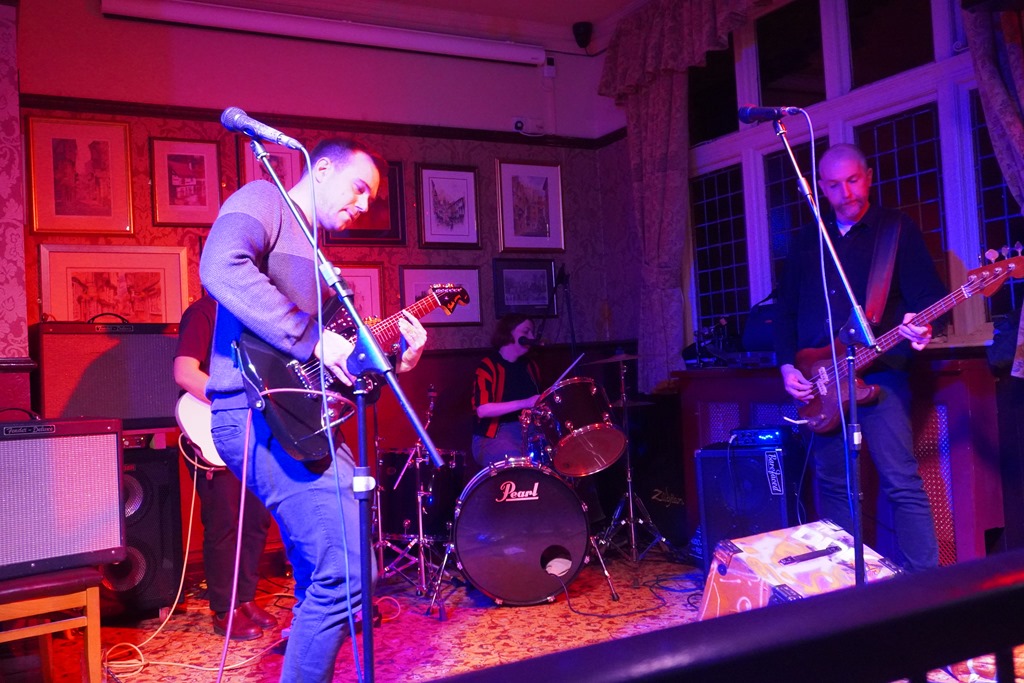
Flat Light are up first. They’re five white office-type guys playing pedestrian indie. They were together enough, went down well, but apart from the last song – where they upped the tempo and came to life a bit, and in fairness, sounded really good – it was a pretty tepid, inauspicious start.

DSC07201

Flat Light

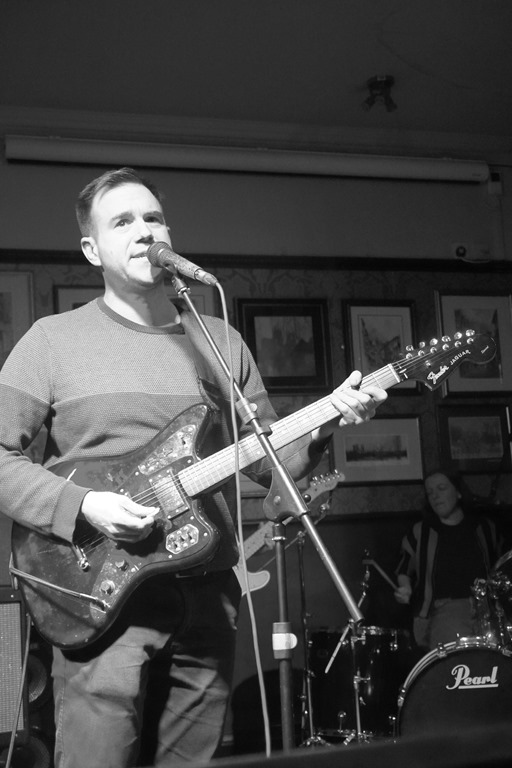
Suffering from the lack of a soundcheck, Knitting Circle spend the first couple of songs working on their levels, and even then, the sound is a bit muffled – specifically the vocals and guitar. But given that guitarist Pete is also the sound engineer, the fact that they pull it together is beyond admirable, and closer to heroic. Since whittling down to a three-piece, they’ve really focussed their sound, and following a spell of pretty intense gigging, they’re well-honed, and as always, an absolute joy to watch. As is often the case when Knitting Circle play a hometown show, there’s a new song: this time, it’s ‘Witch Folk’ which speaks of the thousands of women persecuted for witchcraft, forgotten by history. It boasts a particularly angular guitar jangle. They close with a quickfire ‘Losing My Eggs’, and while fluffing the false ending / intersection, recover with grace and good humour. Mistakes happen: it’s how an act deals them which counts, and Knitting Circle very much rose above and came out on top of all of the challenges presented to them tonight, proving that DIY is not a synonym for amateur.

DSC07221DSC07225.2

Knitting Circle

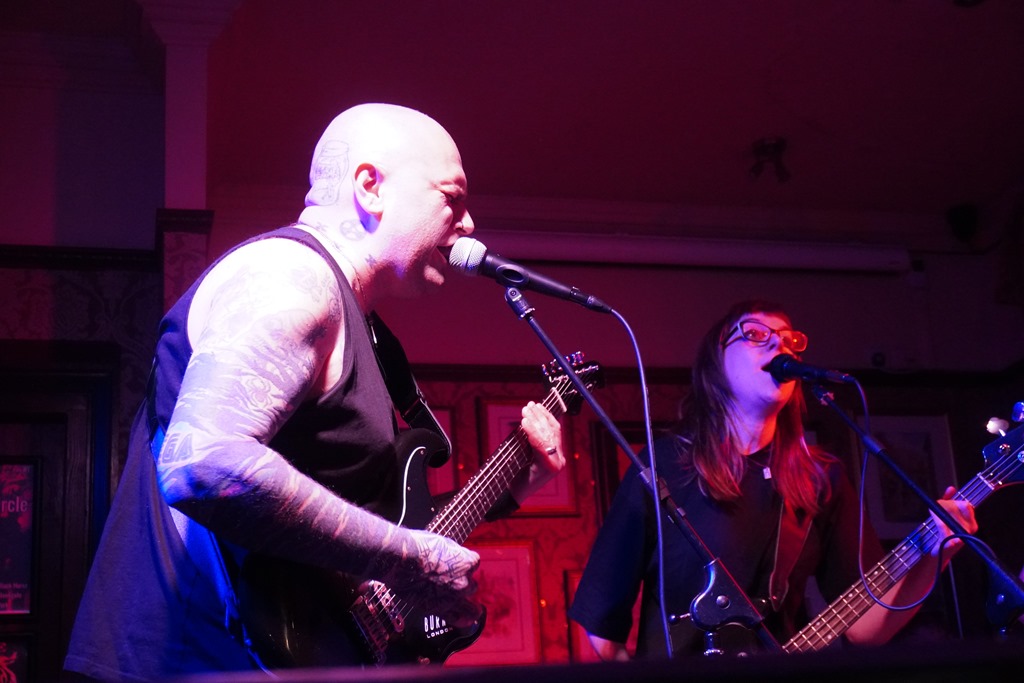
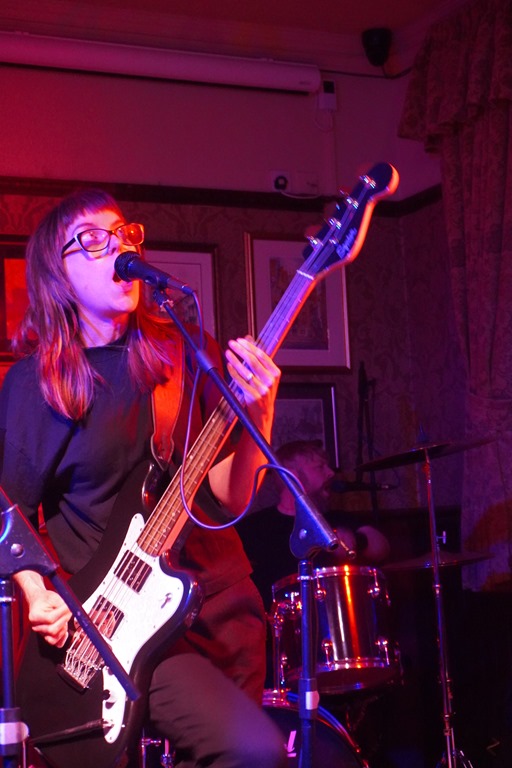
The Unit Ama clearly spent some time on their soundcheck: they sound absolutely fantastic from the first note. On their last visit to York in the summer of 2024, they played a short set around the middle of a bill which also featured The Bricks and Teleost, as well as Objections and Cowtown (I clock a couple of Objections T-shirts tonight). Here, with room for a more expansive set, they seem simultaneously relaxed and energised. Their set is tight, but in disguise as something loose, improvised. It’s apparent, thought, that as much as there’s a keen intuition between the three of them, they’ve put some rehearsal time in.

Jason Etherington’s basslines are hypnotically cyclical, and paired with Christian Alderson busy jazz drumming, played with frayed drumsticks (and, at one point, a bow applied to cymbals), when they break out of the stuttery meandering segments to hit a groove, it’s blissful.

DSC07257DSC07267

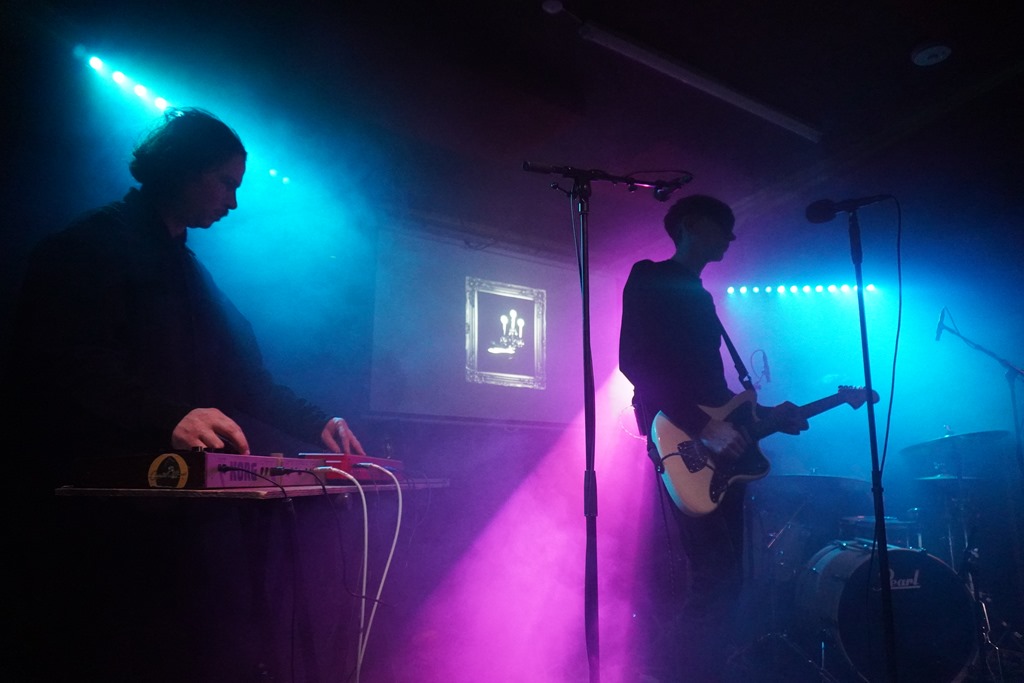
The Unit Ama

They’re by no means a band who do chat or bantz, instead conjuring epic expanses of quiet improv while tuning up and reconfiguring – in such a way that the actual songs seemingly emerge from nowhere, rising out of swampy expanses of discord and drift, of clattering cymbals and a general sense of slow-swirling chaos. But before playing the penultimate song of the set, a new one called ‘In Your Shoes’ being aired for the first time, Steve Malley pauses things to rant about the insanity of Bondi’s testimony: he was visibly shaken by what he’d witnessed, and I felt it in my chest. He blurted rage about Bondi’s ‘blatant fucking cunting lies’, before apologising for his choice of language, amending it to ‘blatant fucking cunting mistruths’. He’s absolutely spot on, and this leads the charge into a full-throttle blast that’s punk rock – Unit Ama style (perhaps with a heavy hint of Shellac by way of a touchstone – and very much a departure. It’s ace, too.

DSC07262

They’d planned to leave it there, but the audience convince them to give us an encore, which topped things off nicely. It seems that one thing you can predict is that a Fuzzled event at the Fulfordgate is guaranteed to be a good night.

Christopher Nosnibor

It might have been a result of the inclement conditions, but setting foot in Huddersfield for the first time in my life, I’m struck by how incredibly quiet the streets are for a Friday night, and it’s far from packed in the upstairs room at The Parish when The Shakes take to the stage at 8:15. Now, I am a strong advocate of checking out support acts, and have discovered some outstanding bands by getting down early doors. This isn’t one of them. Musically, they’re competent players, but the material is very middling rock, the kind that’s easy to take or leave, but the singer thinks he’s some kind Bono meets Michael Hutchence rock star. It’s not a good look, and even if it were, it would require some serious charisma and immense talent to pull it off, and this fella has neither. The No Great Shakes, you might say. The room is considerably busier half an hour later. It’s almost as if people knew.

DSC07029DSC07048

The Shakes

Having joined Skeletal Family in 2021, replacing Hannah Small after a brief tenure, and making her the band’s fourth vocalist, Anneka Latta has not only settled in nicely, but brings her own presence and a wonderful dynamic to the unit. Having recorded Light From Dark, released in 2023, their first album since 2009’s Songs of Love, Hope & Despair, her place feels not just solidified, but integral.

DSC07145DSC07118

Skeletal Family

Tonight’s set draws substantially on Light From Dark, as well as featuring a new and unreleased song, which they’re planning to record in the coming months, indicating that as much as they’re a ‘heritage’ band, they’re still very much creatively active as well as keeping busy on the live circuit. And not only are they sounding fantastic, but there’s a real energy about their performance tonight. Anneka is all the energy, relentlessly bouncing, bounding, swinging and swaying about the stage, but the rest of the band are well animated, too: Ian “Karl Heinz” Taylor is particularly ambulant when switching synths for sax and adding some nice groove to the solid rhythm section, with stand-in drummer doing a superb job of delivering those quintessential rolling tribal rhythms paired tightly with Trotwood’s solid, urgent basslines. It’s all topped with Stan Greenwood’s spindly guitar lines – very much a defining feature not only of the Skeletal Family sound, but representative of that early northern goth sound. It’s clear they’re having a great time, and their collective enthusiasm is infectious.

DSC07128DSC07072

Skeletal Family

And as much as the set showcases their current creativity, it does, essentially, contain a respectful share of their definitive early 80s back-catalogue, busting out the rambunctious sax-blasting ‘Move’ up front and an extended ‘She Cries Alone’ landing in the first third of the set. Non-album single ‘Just A Minute’ gets an airing, too, representing their poppier mid-80s sound (as was the direction of the scene around Leeds at the time, as output from this period by The March Violets evidences, and one can’t help but feel that major labels picking up the top-selling ‘alternative’ acts may have been a factor). The sole cut from debut Burning Oil is ‘Someone New’, meaning the spiker, punkier songs like ‘So Sure’ don’t make the set, but might not have been such a good fit with the rest of the songs or Anneka’s more conventionally ‘rock’ vocal style. That, and the fact they keep it tight with a punchy set of around fifteen songs, packed into a little over an hour, with no encore.

They leave us with ‘Promised Land’, which is without doubt one of the best singles of that ‘first wave’ of goth era, with its nagging guitar and driving bass. They perform it with gusto, and it sounds as fresh and exciting now as ever, topping off a set that’s both entertaining and exhilarating.

The iconic Jah Wobble has teamed up with guitarist Jon Klein on Automated Paradise, their third collaborative album and debut album as a duo with Dimple Discs. Out March 27th, this eight-track collection is previewed by the invigorating lead track ‘Fading Away’, a track that pulsates with motorik drive and the raw electrical tension of British post-punk and new wave, its shimmering progressive layers seemingly surging through the circuits of life itself.

The pairing of post-punk legends Jah Wobble (Public Image Ltd.) and Jon Klein (Specimen, Siouxsie & The Banshees) is no coincidence. Initially combining forces on the Metal Box – Rebuilt In Dub album, released in 2021, they continue to collaborate – both live and creating music in the studio.

“Jah Wobble and I share a mutual desire to keep a momentum going at the centre of the creative process. So we keeping it moving and trust our instinctive decisions and ideas. Automated Paradise is essentially a collection of jams and sketches, all made very spontaneously. We’d made several albums together previously, starting with 2021’s Metal Box – Rebuilt in Dub, so he had a wide range of experiences and strategies to draw from,” says Jon Klein.

“‘Fading Away’ is an end-of-civilisation story, echoing one of the earliest themes of human literature and reflecting a persistent human anxiety about the fragility of social order.”

Jah Wobble adds, “Making this record with Jon Klein was (as ever) an absolute buzz . Totally in the moment. Proper post punk. Angry and humorous. ‘Fading Away’ was the first track we finished from this album. We did this record in a handful of very intense, spontaneous sessions. Right place, right time sort of thing”.

AA

This album follows two 2025 albums for Wobble -  Dub Volume 1 (Dimple Discs) and the expanded reissue of the 2017 album The Usual Suspects, featuring 25 career highlights, re-recorded and including some of Wobble’s finest material, alongside tracks by Invaders Of The Heart and PiL.

This is Jah Wobble’s first post-punk album in recent years, following an array of travel and dub records. The brash guitar-driven tracks reflect his continuing preoccupation with the declining state of the nation. Driven by his experience working weekly at a music-based community project in Merton, along with Jon Klein, this record recalls the spirit of Mark Stewart – angry in an empathetic, constructive way. Like much of his recent work, the lyrical content was often inspired while traversing London’s transport system.

Jon Klein is a guitarist and producer best known as a member of Siouxsie and the Banshees from 1987 until 1994, which saw the release of the albums Peepshow, Superstition and The Rapture. Originally in the Bristol band Europeans, he then formed the glam-goth act Specimen and relocated to London, where he co-founded The Batcave nightclub. He has worked with Talvin Singh and Sinéad O’Connor, and co-produced a string of No. 1 albums for Warner-signed Spanish band Fangoria, fueling a decade-long streak of chart-topping success in Spain. His most recent work being as co-producer and guitarist with Jah Wobble.

Jah Wobble (born John Wardle) is a bass guitarist and vocalist from East London, whose career encapsulated genres from post-punk, dub and world music to experimental rock and electronic music. An original member of Public Image Ltd (PiL) from 1978-80, he made two groundbreaking albums with the band, which included the iconic Metal Box.

Wobble n Klein

Christopher Nosnibor

Ashley Reaks is an artist who has very clear creative cycles, releasing, as standard, an album a year, and sometimes two, which make the fallow periods more conspicuous. This is not one of those fallow spells: Nature Reversed arrives just four (dark, cold, wet, gusty, wintery and generally depressing) months after At Night the World Belongs to Me, released at the end of September last year. And it marks something of a shift, and even ventures into the realms of what one might consider a ‘concept album’.

Reaks describes the album as ‘a stark, hallucinatory journey through the Yorkshire Dales and the inherited wounds of a father–son lineage. Mixing messed-up jazz fragments with rural, almost medieval folk textures, the album follows a narrator who must invert his own nature to survive the authoritarian “Old King” and then claw his way back to himself through wildness, shame, desire, and the raw, cyclical violence of the natural world.’ That’s a lot to unpack. If it was the plot for a novel, it would be a twisty-turny work, rich in allusion and haunting imagery – but likely jazz-free. But to compress all of this into nine songs and forty-five minutes… Ambitious would be one word for it.

The album’s first piece, ‘I Don’t Like The Old King’ does very much explore the expansive fields of folk, but through a proggy filter, performed with synths, and underpinned by a strolling bass – somewhat reminiscent of the Bauhaus song ‘Part of the Third Part’, at least at the start – and a beat that both shuffles and swings. It’s the bass that defines ‘We Forage in the Gutters’, going full Jah Wobble in its dubbiness. But at the same time, there’s a sparseness, an introspection which is different here. The elements we’ve come to expect from Reaks are all present and correct, but Nature Reversed takes those elements to another place, and it feels like the freneticism has been turned down in favour of a more focused approach.

As with everything Reaks releases, Nature Reversed is interesting… by which I mean it’s a collage of weirdness that draws together a host of disparate elements. Just as Reaks’ artworks are crazy collages, so his music is relentlessly unpredictable. ‘The Desire to Seduce Euphoria’ is perfectly representative: it brings together some moody, melancholic postpunk, with chiming, reverby guitar… there are some processed vocals and there’s some jazz in the mix… I say ‘some’, but the mid-section is a massive blast of horns, before it careens into a heavy prog synth workout What the fuck IS this? This is no criticism: Reaks relentlessly challenges the borders, and does his own thing.

AA

Nature Reversed gives us all of the conventional Reaks elementsbut the wild jazz is dialled back significantly. He describes it as ‘cut-up jazz, awkward Eastern folk, medieval motifs, old ghosts, and new life pushing through ancient stone walls — music about inheritance, rebellion, and what survives when you break things wide open’, and so it’s no surprise that William Burroughs features in the list of inspirations, ‘ranging from ‘nature poet’ John Clare and William Burroughs to Rip Rig + Panic, Talk Talk, PJ Harvey, Robert Wyatt and Captain Beefheart, Nature Reversed fuses literature, music, and visual art into a chaotic, lyrical, and intimate landscape. Ultimately, it’s a meditation on survival, rebellion, and renewal — the feral life that surges when you break open your origins.’

As is always the case with Reaks’ work, Nature Reversed is a huge intertext, and it would be reasonable to describe him as a classic postmodernist, celebrating and revelling in multitudinous sources, plundering his influences and inspirations openly and emphatically. This feels more restrained, more contemplative, and lyrically there’s a proliferation of images drawn from nature – but then again, there’s no shortage of sharp-edged, darker stuff, as on ‘Picking on the Meat Membranes’, and ‘Swan in a Womb’ brings together post-punk grooving bass, sprawling jazz, glittering prog synths and vocal processing – and this is point of definition for Nature Reversed, really. It’s everything, all at once, but at a sedate pace. Don’t be fooled by the gentler, more introspective sound: Reaks stull pushes experimentalism to the absolute limits, and Nature Reversed is the singular sound of creative freedom.

AA

AA

a0782818268_10

The Devil’s Door sees And also the trees (AATT) present a quiet storm of an album. At times filmic, poetic and intense, with an undercurrent of dark psychedelia, it follows The Bone Carver (2023) and Mother-of-pearl-Moon (2024) in completing a trilogy of releases by the current line-up of one of the original UK post-punk acts.

The new record features signature AATT tropes that include poetic lyrics, orchestral guitar and soundtrack influenced songs inspired by newsreel, oil paintings and folklore. However, it also adds some surprising instrumentation – including guest violinist Catherine Graindorge – that skews the album towards a soundworld where John Barry meets Béla Bartók.

Ahead of the album, they’ve unveiled a video for the song ‘The Silver Key’. Watch it here:

AA

AATT formed in 1979 in rural Worcestershire, an environment that has provided a constant inspiration to a group whose music has often explored the dark underbelly as well as the beauty of the British countryside. AATT are renowned for their captivating live performances, a unique style of mandolin-like electric guitar, evocative lyrics and dark jazz rhythms – not to mention a creative independence fiercely preserved for over four decades.

The group have a long standing relationship with the Cure and have both played and worked together since the early ’80s. As part of AATT’s 2026 touring schedule, they will be special guests of the Cure for three shows at the Festival de Nîmes in southern France in late July. These will be preceded by early spring dates in Belgium, France and Greece:

7th March  NAMUR (BE) La Nef De L’Eglise Notre Dame D’Harscamp
18th March  TOURCOING (FR) Le Grand Mix
19th March  ANGERS (FR) Joker’s Pub
20th March  LORIENT (FR) Hydrophone
21st March  CHERBOURG (FR) Espace Culturel Buisson
22nd March  PARIS (FR) La Gaité Lyrique
4th April  ATHENS (GR) Death Disco Indoor Festival 2026
24th July  NÎMES (FR) Festival de Nîmes
25th July  NÎMES (FR) Festival de Nîmes
26th July  NÎMES (FR) Festival de Nîmes

Founded by singer Simon Jones and his guitarist brother Justin, AATT have maintained a continuous presence on the post-punk and alternative rock scenes worldwide. The group have released sixteen studio albums to date.

AA

02010dbdd415a34b78e2b3d5d831e14f7ffa7b46

Christopher Nosnibor

I find it most disconcerting shopping in my local Co-op. The self-service checkouts film you, and you can see yourself on the screen above your head while you scan your items. Surveillance and facial recognition is everywhere now. The other day, I passed a venue where a guy in a flat cap was ordered my security to remove his hat and “look into that camera” before being told he could replace his cap and enter the venue. We really have come to this: you can’t go shopping or go for a drink without a capture of your visage ‘for security’. I appreciate that shoplifting is at a record high and violent crime is rife, but is this really the solution? How about asking why we have these issues? And what happens with these captured images? Who views them? How long are they stored, and where? Are they being passed off to train AI?

The ‘if you’ve got nothing to hide, you’ve got nothing to worry about’ argument is missing the point, and no longer holds water. The state of things in America with brutal ICE raids where countless American citizens have been mauled, detained, and even murdered (because regardless of the official line, Renee Nicole Good was murdered: those shots were not fired in self-defence, and we live in a horrible, brutal, fucked-up world). And this shit affects you. Well, it certainly affects me, and I know I’m not alone in feeling jumpy, on edge, endlessly anxietised by the prospect of what may happen next, the prospect of waking up to discover that WWIII has broken out while asleep.

This new single by 311 touches on this, significantly, as it happens. as their bio notes summarise: ‘Propelled by discordant guitars and thunderous offbeat rhythms, ‘Leach’ is an abrasive dystopian statement on surveillance, data harvesting and the quiet unease of modern digital life; both a rallying cry against the advancement and negative impacts of big tech, and an honest admission of powerlessness and inevitability in the face of it all.’

It’s a killer single and yet again evidence of just how fertile Leeds is as a spawning ground for fantastic bands. London, Manchester, even Sheffield receive so much hype, but despite being the epicentre of goth in the early 80s and the place for post-rock in the mid 2000s, Leeds seems to be criminally lacking in recognition for its contribution to music, despite Blacklisters, despite Pulled Apart by Horses… and 311 are another bands that should be flagging the city on the national – and international – radar. Because ‘Leach’ brings it all, from churning math-rock, angularity and anguish, colliding post-rock with post-punk and huge energy, they pack menacing and searing riff energy and… and… yeah. This is good.

It’s worth remembering punk and post-punk emerged from terrible times, where it felt like music offered a rare escape, both for those who created it and attended shows. And here we are again.

AA

Portland alt-rock / post-punk outfit Rayon present their latest single ‘Running, a propulsive exploration of the anxiety that comes with watching loved ones struggle with cycles of addiction that they can’t shake – and the sound of a tape echo that’s about to stop working. Intentionally preserving the noise of pausing, rewinding, and fast-forwarding to heighten the song’s frantic pace, its sound can be considered a study in tension and tape, the video conveying a sense of lo-fi capers involving a Citroen Wagon.

Found on the flip side of the single ‘Shopping / Running’ (also available on 7” vinyl via Little Cloud Records), ‘Running’ is perhaps even more stunning than the whacky A-side ‘Shopping’, a tongue-in-cheek ode to consumerism and travel, written by someone who happens to travel and consume a bit.

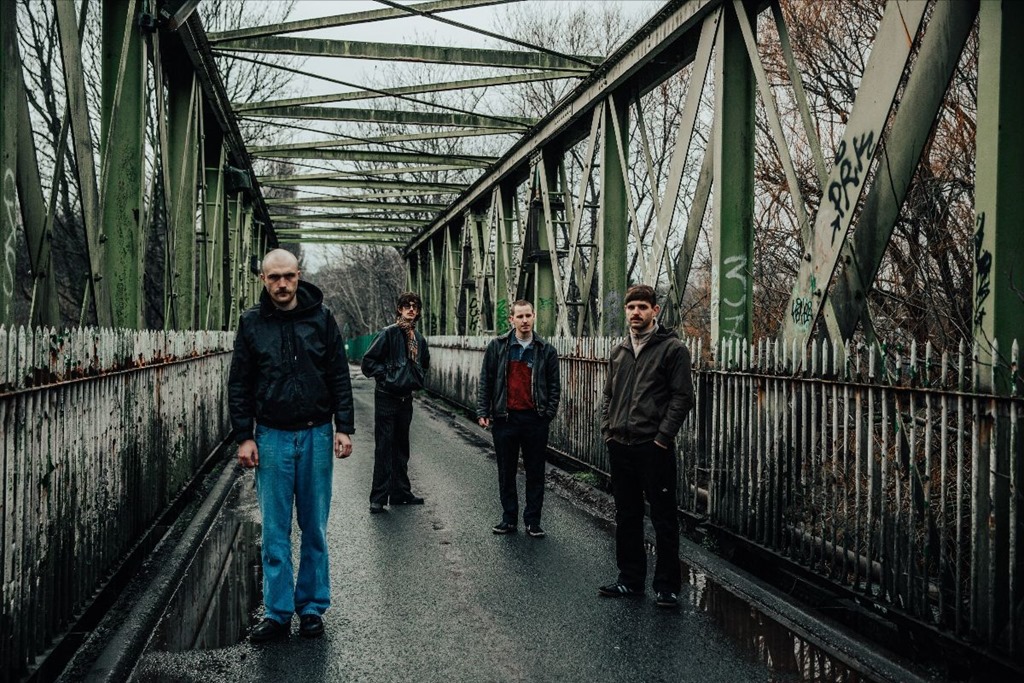
Founded by long-time North Portland resident and Detroit-area native Eric Sabatino, Rayon now also involves members of other notable Portland bands – Sun Atoms, Yuvees, Pastilla and Martha Stax – namely Anna Sabatino, Riley McLaughlin, Eric Rubalcava and Derek Longoria-Gomez.

‘Running’ is based on a relentless bass and drum groove that lived in Sabatino’s head for months before finally taking shape in the studio. To capture the song’s unsettled emotional landscape, the band leaned into the mechanical unpredictability of a dying Dynacord tape echo. By funneling guitars and vocals through the aging machine, they achieved a haunting, warped soundscape where the pitch and speed constantly bend and shift. Feeling as though it is physically straining under its own weight, this song mirrors the very themes of instability it describes.

“’Running’ was built around a bass and drum groove I was kicking around in my head for months. The guitars and vocals are the sound of a tape echo called ‘dynacord’ that’s barely working, bending and moving the speed and pitch of everything we run through it. Those parts wouldn’t have come out like that if I wasn’t trying to write a guitar part while plugged into that machine.” says Eric Sabatino.

The video for ‘Running’ offers a gritty, nostalgic look at the band’s world, captured entirely on a vintage Handycam, following the band in their meticulously restored Citroen wagon. Embracing the track’s jerky energy, their journey concludes with a grainy, evocative sequence of freeway signs leading into Seattle—a slow-burn outro that grounds the video’s high-energy antics in a sense of place and movement.

“The video was shot on an old handycam camcorder we found in the back of a closet. The battery miraculously held a charge. It came with a tape of someone’s school play, which we taped over (sorry to whoever’s family that was). It features the Citroen wagon from the ‘Shopping’ video. I worked on that car for months. So glad it didn’t break down during these two long video shoots,” says Eric Sabatino.

“We drove around all day picking everyone up at their home, work, local bar, favorite little shop, and went to band practice. We filmed the antics and capers along the way. Sometimes we let friends and strangers hold the camera and film us. I transferred and edited it over 2 late nights, trying to capture as much pause, rewind, and fast-forward noise as I could, timing the cuts to capture the jerky energy of the song. I love the outro and the slow noisy shots of the freeway signs leading to Seattle.”

AA

Rayon