Posts Tagged ‘Piano’

Sound In Silence – 5th December 2024

Christopher Nosnibor

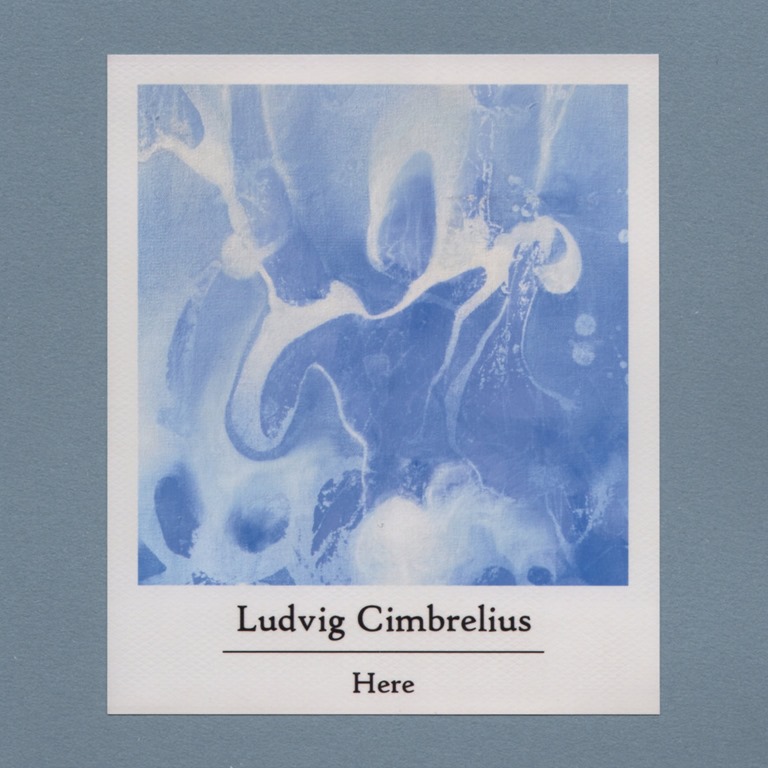
Ludvig Cimbrelius has been around for some considerable time now, and the label bio outlines how the Swedish musician – now based in Turkey – has, for over a decade, been producing music ranging from ambient and modern classical to deep electronic and minimal dub techno, under his own name and many different aliases such as Eternell, Purl, Illuvia, and others. His latest offering incorporates sound sources such as ‘calm acoustic piano, ethereal vocal spheres, atmospheric electric guitars and field recordings’

Despite containing only six tracks, Here has a running time of almost fifty minutes. These are expansive, contemplative works, and offer more than a hint of neoclassical gentility. Hearing ‘Left But Never Left’ is a wonderfully calming experience. It’s true, of course, that any individual’s response to anything musical or otherwise creative is entirely personal, but Cimbrelius transcends the layers of atmosphere between floating adrift and arriving in layers of mist and haze. The notes flow with space in between, and this space provides a lull in which to exhale, and to reflect. This piece, at just under four minutes in length, is just a prelude to the immersive soundscapes which follow.

‘When Warm Tears Fell from the Sky’ is a composition of the kind of ambience which evokes the soft wash of diluted watercolours spreading on paper to conjure, as if by some form of magic, a sky, a sea, fields, with just a few simple brush strokes, whereby the effect is greater than the input, at least to the eye. This is the sound of currents in the air, of mist, of cloud drifting, evaporating, reforming, changing shape as it moves through the sky.

The fourteen-minute ‘These Flames I Gently Let’ encapsulates the essence of the album in its entirety within its parameters. It begins with lilting, light-as-air piano and gradually melts into a soft swash which includes what sounds like rainfall and wordless vocalisations which slowly run into the broad flow of non-specific sound which slowly slips from being the focus of your attention into the background. It is, in this sense ambient in its purest form, falling into the background. ‘Lost in the Mists at Dawn’ is the soundtrack to the narrative vignette contained in the title: haunting, evocative, it conjures the scene in your imagination without actually saying anything, and its power lies within the depths of its wispy vagueness.

The execution of Here is magnificent. The tracks trickle into one another imperceptibly, creating a seamless sonic flow. The layers are interwoven so as to meld into a finely-textured gauze, and everything is so smooth, so soothing and soporific.

AA

a2808403183_10

10th December 2024

Christopher Nosnibor

Less than a fortnight after Yorkshire-based collective Papillon de Nuit unveiled their first track, ‘Scarlet’, they present to the world the second fruits of their recent recording sessions, mastered by none other than Tom Woodhead, formerly of ¡Forward Russia! at Hippocratic Mastering. While ‘Amber’ continues the colour-themed song titles, they promised something different, and, indeed, that’s precisely what they’ve given us.

‘Scarlet’ was a somewhat folk-infused tune with a rolling rhythm: in contrast, ‘Amber’ sits more in neoclassical territory, in terms of composition and arrangement, with a lone piano providing the primary instrumentation; around the sung segments are spoken-word poetical passages. Again, Stephen Kennedy leads, but there is a counterpoint in words composed and spoken by Edinburgh-based polyartist Monica Wolfe, and the interaction between the voices and modes of delivery is engaging. This is not rock, or pop, or folk, but unashamedly music as art, and as compelling as it is beautiful.

AA

a1612744261_10

For Malcolm Pardon, there’s beauty in our universal, inescapable demise. Like the romantic notion of the orchestra on board the Titanic playing their repertoire as the ship went down, on his second solo album Pardon looks past the bleak or macabre to observe death as a multi-layered, lifelong acquaintance.

“It’s not meant to be threatening or horrific in any way,” says Pardon of The Abyss. “There’s this constant dialogue we have with ourselves about how we’re going to die at some point. It’s like a constant companion, so you might as well get to know it, and befriend it.”

As one half of Roll The Dice, Pardon worked alongside fellow Stockholm resident Peder Mannerfelt on brooding fusions of electronica and classical composition. By contrast, his 2021 solo debut Hello Death saw him take a much more stripped-down approach, placing the emphasis on plaintive piano composition with only the subtlest of sonic treatments in the space around the notes. Without intentionally setting out to record a conceptual follow up, as he developed the sketches which would become The Abyss, Pardon found himself contemplating unknown futures and the artists’ quest into unexplored territory.

“For me, on a musical level The Abyss represents exploring your own capabilities,” he says, “Starting from an empty canvas, then slowly finding the way forward by connecting the right notes. It’s almost a subconscious experience. I sit down by the piano, and if I’m lucky I find something that takes me down the vortex.”

The lilting romanticism of ‘Enter The Void’ serves as a perfect distillation of Pardon’s approach, balancing a delicate piano refrain with a low, rumbling blast of noise before being carried aloft by swooning strings that echo down a distant hall. There’s beauty and hope shot through with foreboding in the particular treatment of each sound, the harmonic interplay between the musical elements and the gentle rise and fall of the arrangement.

Hear the track and watch the video here:

The album is out on 20 September.

ENTER_THE_VOID_MAIN_STILL

12th July 2024

James  Wells

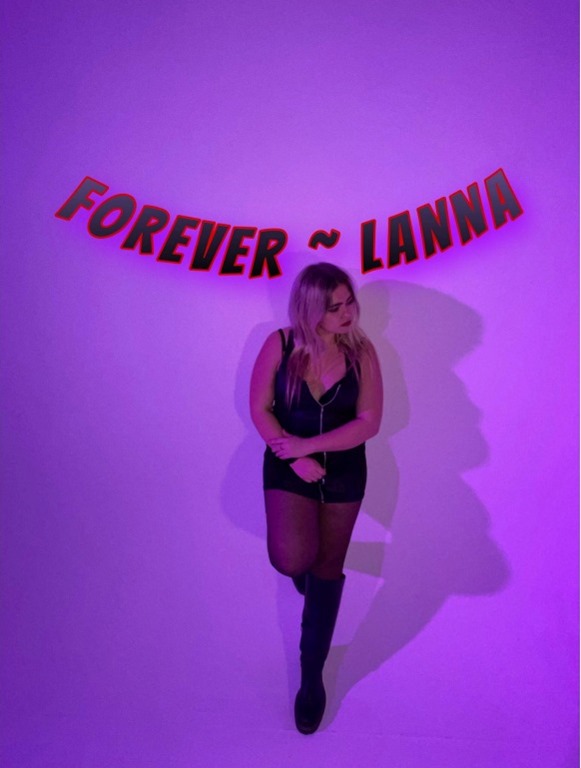
This may be Lanna’s debut single, but she’s by no means new to the industry, and has featured a couple of times here at Aural Aggravation with her band Miss Kill, who have garnered some thumbs up for their feisty grungy / alt rock sound.

Initially, I felt a sense of disappointment, assuming – erroneously, as it turns out – that the duo had parting and would never fulfil the early promise and future potential. It came as a relief to discover that Miss Kill are thriving, and have an album out soon, but in the meantime, Alanna is launching a parallel solo career. It’s a twofer!

But what’s interesting about Lanna’s debut single is that while her bio indicates a continuation of Miss Kill’s energetic flight, their emotive grunge stylings, again referencing inspiration from ‘Alternative, Garage and Pop artists like The Kooks, Hole, Cherry Glazerr, Chris Isaak, Placebo & Pearl Jam’, this feels like quite a departure. The premise is that, ‘rather than whine about breakups and having your heart broken’, ‘Forever’ ‘is all about the amazing feeling you get when you’ve found your special one.’

But for a song that’s so much about an effervescent emotional state, it’s remarkably subdued, with a soft, delicate piano, introspective vocal and backed-off drums with a hushed rimshot keeping slow and steady time. It may be a million miles wide of the mark, but this debut sounds for all the world like Lanna is pining for the thing she’s lost, a sad celebration for the loss of a special one as she finds herself bereft and alone.

That doesn’t mean that ‘Forever’ isn’t true to those principles of grunge and alternative rock, but probably feels more like a mid-album slowie than a lead single, and is more Chris Isaak than Pearl Jam or Hole. Still, it’s a well-realised song with an emotional weight that’s conveyed with sincerity, and leaves many doors open for future releases.

AA

Lanna image 1

Composer and experimental filmmaker Christina Vantzou has shared "Kimona I", set to powerful and heart-breaking footage from Lizzie Borden’s 1983 feminist film, Born in Flames.

"Kimona I" is a sparse track with only a piano and one vocal present, echoed and distant as though the song is being performed at the end of a cathedral. Quietly melancholic, the track is somewhat at odds with the footage of smiling women, which makes the ending all the more impactful. Christina Vantzou speaks to the inclusion of the Born In Flames footage;

"Filmed in the early 80’s, mainly in the East Village, largely with friends, non-actors and activists, Born in Flames is a film about work, class & race divisions, and organized revolt. Meanwhile on No. 5, ‘Kimona 1 & Kimona II’ were written for workers, specifically low-wage employees at giant institutions."

About her collaboration with Christina Vantzou Lizzie Borden says;

"I was honored when Christina Vantzou approached me with her beautiful piece of music “Kimona I,” accompanied by scenes from my film Born In Flames. As we collaborated, I was stunned to see familiar images take on new meaning when set against her haunting, elegiac music. Thank you for your exquisite work, Christina."

Watch and listen here:

AA

gaHEv3Ic

Alternative music legend Chris Connelly has announced he will be releasing a long-player paying tribute to the iconic Nico. Originally planned as 10 tracks featuring Connelly’s versions of her songs, once recorded, he decided to write a parallel album of his own compositions, spanning the life of one of the most unique, tragic and misunderstood female artists in the history of music. The result is the 24-track Eulogy to Christa: A Tribute to the Music & Mystique of Nico, to be released in late autumn.

Ahead of this, the Chicago-based Scottish counter-culture artist presents the album’s first single ‘Eulogy to Lenny Bruce’, heralded by some as Connelly’s finest vocal performance. Appearing on Nico’s 1967 album Chelsea Girl, this song was penned by the tragic Tim Hardin about the equally tragic Lenny Bruce with the lyrics slightly altered, Nico describing her sorrow and anger at Bruce’s death.

Listen to ‘Eulogy to Lenny Bruce’ here:

AA

Connelly once again worked with producer and long-time Connelly collaborator Chris Bruce, a band member of Meshell Ndegeocello, who has also worked with Seal, Aaron Neville, Bob Dylan, The Waterboys, My Brightest Diamond, Cheryl Crow and Sam Phillips.

Eulogy to Christa sees Connelly purposefully adopting the personas of Nico, Lou Reed and John Cale – even Andy Warhol makes a cameo!

Connelly speaks of these early influences: “I was not a stranger to her music, I had been playing The Velvet Underground & Nico to death for about a year, but knew nothing of her solo work until Cosey Fanni Tutti played me ‘Desertshore’ whilst I was visiting her in London in the summer of 1980… Nico’s output was spartan, at that age, I didn’t know why, but I was drawn in deep to the myth, as well as the myth of Lou Reed, The Velvet Underground and the concentric rings of influence in their wake, like so many musicians.”

The album was inspired by the brilliant book You Are Beautiful and You Are Alone by author Jennifer Otter Bickerdicke, who contributed to the liner notes for the album. She writes, “This is a record to be played at full blast, all the way through, as a commemoration not just to Nico the person, the musician, but to art for art’s sake, for making something because it is important and needs to be done – an idea that is as rare and precious as Nico herself.”

AA

a1617829032_10

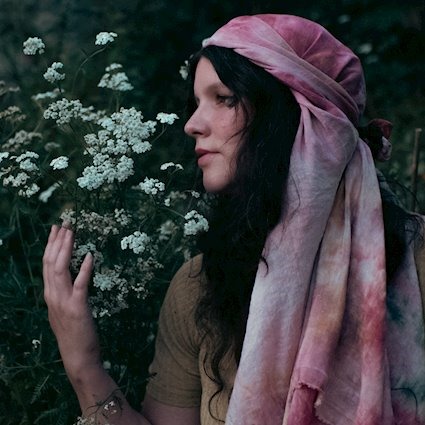
Edinburgh born Kendall based artist Celestial North has shared ‘Yarrow’, a haunting atmospheric ‘botanical’ soundtrack.  For fans of Nils Frahm, Olafur Arnalds or Sigur Ros, this reflective and meditative piece gently sways with a wash of pianos and sighing melodies. It’s a tantalizing other side of Celestial North’s artistry and a teaser for her album released later this year. 

Watch the video for ‘Yarrow’ here:

AA

She says of the song:  “I often think in ‘music’. My thoughts are usually awash with colours and sounds. I was sitting trying to meditate, or contemplate, beside the yarrow patch in my garden. I was finding it difficult to articulate how I was feeling and started to feel a bit frustrated. I decided to sit quietly and start again. I realised that I didn’t really have any words to write down as such but I did have a tune playing in my head. I decided to record this tune on my piano and added some other elements that I felt benefitted the song — a bodhran drum, a choir, the rustling of the yarrow patch and the roses recorded from my garden and some simple electronic sounds.  This botanical soundscape is representative of how I felt whilst I was sitting with the yarrow and the tune played on the piano is the tune that was playing in my head whilst sitting with the plant."

473734

Christian Death – Quicksand

10th January 2022

Christopher Nosnibor

Christian Death have long shown a love of Bowie, which has subtly permeated their work but was rendered concrete with their version of ‘Panic in Detroit’ in the Rage of Angels album. But anyone who would think that the Bowie fandom was specific to the Rozz Williams era of the band would be mistaken: Valor has long embraced androgynous elements in his style, and never shied away from pop / art rock elements within the music itself.

There have, of course been numerous covers of ‘Quicksand’, and the one thing that’s apparent from all of them is that a great song is a great song, whoever’s playing it, even Seal. If Dinosaur Jr’s cover was a brilliant example of reconfiguring the song into a slacker anthem, Christian Death’s take, which stretches the original five-minute song well past the seven-minute mark is remarkably faithful to the original and doesn’t goth it up in the slightest. This isn’t a complete surprise: their previous covers, from Garyn Numan’s ‘Down in the Park’ to Jimi Hendrix’s ‘Angel’, which appeared on All the Love, were straight and sensitive, even reverent in their approach.

Performed by Valor and Maitri, it’s predominantly acoustic guitar and piano, but there’s a full backing with drums, bass, and sweeping string sounds, making for a take that’s bold, theatrical, and yet, at the same time, intimate, and fitting at a time when Bowie covers and links to his songs are proliferating on social media: it may be the fifth anniversary of his death, but the week also marks what would have been his 75th birthday, and it’s fair to say few, if any artists have had quite the impact he did. Elvis, The Beatles, The Stones, may have all broken immense ground, but Bowie was an entirely different proposition, on so many levels, and it’s clear the shock and grief are still strong for so many. This, then, is a fitting and well-executed, heartfelt tribute.

AA

129354

23rd July 2021

Christopher Nosnibor

The new release from Dutch duo Vaselyne, consisting of singer Yvette Winkler and musician and producer Frank Weyzig is sold as a maxi-single, and sure enough, with the track accompanied by instrumental and demo versions, it does replicate the feel of the old 12”, which in time became the CD single.

If I’m habitually ambivalent about versions and remixes, it’s because they often feel like it’s an attempt to eke out a limited amount of material over the most space, and back in the day – the day being the late 80s and through most of the 90s – as a completist collector of a number of bands, I’d feel a bit swizzed over B-sides consisting of acoustic versions etc spanning multiple formats, and much preferred the first half of the 80s when the 12” single often meant no more than an additional B-side not on the 7”, or at most, an extended version, and there as only a 7” and 12” on offer, rather than a 7”, 12”, limited 12” and likely a standard and limited CD, all with different tracks, plus a cassette single that was likely the same as the 7” but well, you couldn’t just leave it, could you? Especially if it was in a nice card slipcase or a cover like a cigarette packet.

I digress, just a little. Firmly rooted in the brooding corners of theatrical gothic rock, the piano-led ‘Waiting to Exhale’ is six minutes of poised, dramatic splendour, a work of melancholic beauty. Yvette’s vocal are rich, bordering on the operatic in places, although never overdone: there’s no bombastic emoting here, just controlled reflection. The production is full, but again, uncluttered, not over the top. In this respect, there isn’t much difference in the song’s evolution from the demo to the final version, other than the fact that the final version is fuller, more polished, but with no loss of resonance.

And if it invites comparisons to Evanescence, this is perhaps the key difference: Vaselyne keep things real and resist the overblown, and in doing so, render the more understated emotional qualities more sincere-sounding. A mournful string scrapes across the layered vocal and carries the listener into a space of aching reflection.

AA

542687