Posts Tagged ‘Noise Rock’

Human Worth – 11th July 2025

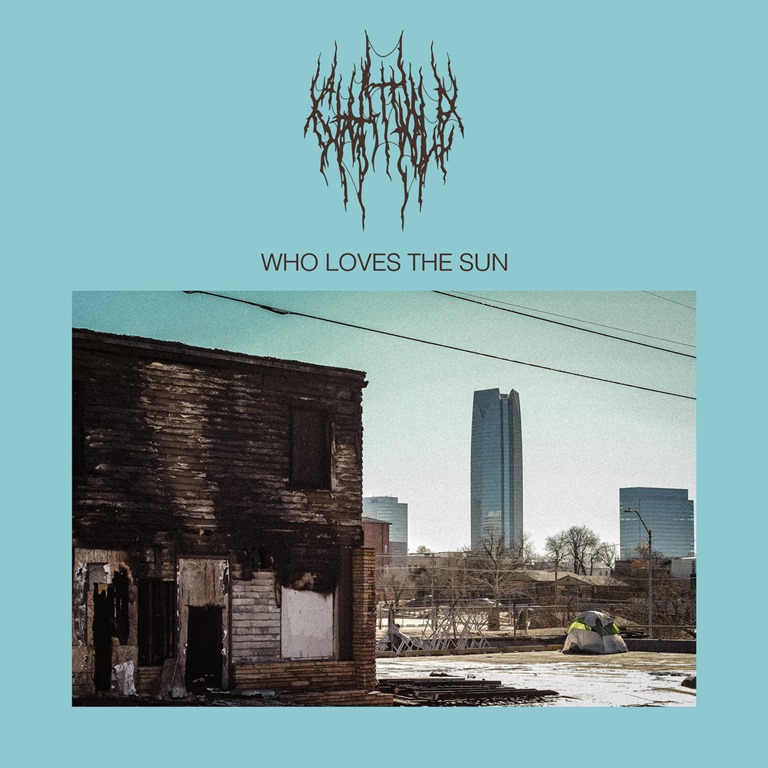
Why Patterns’ latest offering marks something of a shift from Regurgitorium, released back in 2022. I say ‘back’ in 2022 because it feels like a lifetime ago. Some of that is, admittedly, due to personal circumstance, but for most, 2022 was a very different time. We still weren’t all that long out of lockdown, for a start. We were still coming up for air, and finding our way – and likely crawling our way back to the office, while a lot of shops still had their Perspex screens in place. I remember in the checkout queue in Aldi just willing these weird cunts who had seemingly either forgotten the preceding year and a bit, or had lost all sense of how to engage, by looming and leaning over and pressing too close would fuck off. I revisit the context of the last album because it somehow managed to capture the mood in some obtuse way, and when I wrote ‘It’s fucked up. It’s deranged. It hurts,’ I could as easily have been referring to life itself at that point in time.

Screamers is different again. Or, if not so much, different, compressed, compacted, distilled, the intensity amplified by the concision of the tracks.

The crunchy, gnarly bass still dominates, and it’s snarling away and tearing strips straight out of the traps on the frenzied ‘After the Bullfight’. Clocking in at a mere minute and forty-seven seconds, it’s noise rock smooshed down to the tight parameters of grindcore, and with insane amounts of reverb, the stuttering, stammering vocal yelps from Doug Norton, the man behind the ‘Mouth Sounds’ owe an equal debt to Suicide and The Cramps, and this may be the spawning of industrial psychobilly as a new genre. Everything is overloading, the speakers are crackling with megawattage overload, and when ‘Clown in a Housefire’ blasts in, you actually begin to wonder if it’s supposed to sound like this of it your gear’s fucked.

One may cling in references to the Jesus Lizard and all the rest, but really, this sounds like a psychotic reimagining of early Blacklisters – specifically early because of THAT bass racket. But whereas Blacklisters were, and remain, quite song-orientated, at least structurally, Screamers sees Why Patterns take their template and smash the living fuck out of it by throwing it against a brick wall and stomping on it until there is nothing but splattered pulp. None of the songs – I mean, they’re not really songs, more demented blasts of discord played at three hundred miles an hour, all of the instruments playing at angles against and across, rather than with one another, the vocals the sound of a breakdown in real time. And listening to this as bombs and missiles are going off everywhere and no-one knows what is going on anywhere, I fin myself listening to this tumultuous mayhem and thinking ‘yep, they’ve done it again. This is the closest I’ve heard anyone articulate this moment.’ I mean, they don’t really ‘articulate’: as the title suggests, Screamers is a raw, primal scream. It’s a frenzied, lurching, gut-punching racket that rattles the bibs and kicks the balls, hard. Pleasant, it is not. Especially that grungy bass that churns the stomach.

There aren’t really any riffs: it’s just a relentless assault of jarring noise. ‘Nervous Laughter’ brings hints of the latest mclusky album, but does so with menace, malice, and a hint of the unhinged, and following on ‘Wind Up Chattering teeth’ is a minute and six seconds of rabid raving. It’s almost enough to make you want to puke.

Then there’s ‘Club Foot By Kasabian by Blacklisters’. It extends the joke of the original – since the Blacklisters song, ‘Club Foot By Kasabian’ wasn’t a cover, and had nothing to do with Kasabian, and so it is that ‘Club Foot By Kasabian by Blacklisters’ is a minute and a half of squalling, brawling, guitar-led abrasion. It’s somewhat reminiscent of Castrovalva in its deranged intensity, and frenzied, squawking disregard for decency. The title track is fifty-two seconds long. It’s rabid. It has to be heard to be comprehended.

The last track, ‘Buffoons and Barel Organs’ is both the longest and most structurally coherent. ‘Why do I cross the road? Why do I cross the road? Because I’m a fucking chicken!’ Norton hollers amidst a raging tempest of bass and drums.

Screamers is certainly appropriately titled. Every song is a brief but blistering assault. It’s full-on, and will melt your face, and as such, I wholeheartedly recommend it, unless you’re a wuss.

AA

AA

a3117811268_10

Ipecac Recordings – 9th May 2025

Christopher Nosnibor

mclusky was one of those bands which built a cult following without ever really breaking through in the period they were active, in the period which spanned from 1996-2005. None of the greats are ever appreciated in their time, of course. Their albums would fetch premium prices second-hand, in the years after they called it a day, and my local Oxfam had prohibitively-priced copies of a couple of them for a while, which got progressively more tired and shelf-worn. With Future of the Left, Andrew Falkous found a wider audience while still doing much of the same, but as loved as they became, there was always a sense among fans that ‘they’re bloody brilliant… but they’re not mclusky’.

Of course, nostalgia has a large part to play here, and it’s almost inevitable that practically no second or subsequent band, however popular or successful, will experience the same affection as their forebears, unless, perhaps, they’re The Foo Fighters, in which case that affection is misplaced anyway.

mclusky flirted with occasional comebacks, while Falkous would release solo work as Christian Fitness. But, somewhat unexpectedly, the Wikipedia note on Mcluskyism (2006) that ‘This compilation is, without doubt, the final chapter in Mclusky’s nine-year saga, as Falkous informs in the Mcluskyism liner notes, “that’s it, then. No farewell tour… no premature deaths (at time of writing), no live DVDs…”’ First, there was the EP unpopular parts of a pig in 2023, and now, here we have it: their first full-length album in a full two decades. What has happened? I really don’t know, but seemingly from nowhere, a stack of bands from the Jesus Lizard to Red Lorry Yellow Lorry, have re-emerged with their first new albums in twenty years or more, and they’ve not been some second-rate, tepid late- (or even post-) career cash-ins, but up there with the best of their work.

‘Is it any good?’ people will be asking. ‘Is it as good as the old stuff?’ Anyone who has heard lead single, ‘way of the exploding dickhead’ will probably already be thinking that the answer to both of these questions is in the affirmative, and they would be right. the world is still here and so are we is indeed up there. As they put it, ‘it was important not to cos-play the past but also not to flubbity-flub over everything like a gang of big stupid flubs.’ Yeah,. There’s definitely no flubbing, or flab here. This is lean and full-on, and sheer quality.

It’s ‘unpopular parts of a pig’ which launches the album in a scratchy blast of cutty treble, a skewe(re)d tumult of stop / start angular punk which is frantic and irreverent, compressing elements of Nirvana and Shellac and Butthole Surfers, Dead Kennedys, and the Jesus Lizard into a manic two minutes and twenty-one seconds.

It was often the case, especially in the 70s, 80s, and 90s – before streaming, essentially, but while record company exploitation and the industry gravy train was racing at a seemingly unstoppable pace – that the singles, which would lure you in to buy an album, were the only decent songs on it, and you’d feel pretty bummed and short-changed at having forked out £7.50 for an LP or cassette – unless if had been one of your bonus purchases through Britannia Music – when you might as well have just paid 99p for the 7” and not bothered with the album. This may still be the case in some instances, now that the album format is supposedly dead in the world of the mainstream, where people only stream the songs they know already as part of the playlist they’ll loop for weeks, but beyond the mainstream, it feels like the album is stronger than ever, and acts are committed to making albums which are 100% quality from beginning to end. This certainly rings true for the world is still here and so are we.

Of the album’s thirteen songs, only three are over three minutes in duration, and it feels like there’ve compressed and distilled everything to achieve peak intensity. The bass is absolutely immense, a thunderous boom that dominates the sound, leaving room for Falkous’ guitar to wander and explore sinewy tripwire picked lead parts and discordant textures.

‘people person’ also released as a single, lands with a swagger and showcases a gutsy bass-led groove, while also highlighting the sarcastic, ironical humour and misanthropy that’s integral to both mclusky and FOTL: bursting with pithy one-liners and sharp commentary, it’s everything that makes them so loved and so bloody great. Elsewhere, the more overtly mathy ‘not all the steeplejacks’ channels the spirit of Shellac rather nicely.

the world is still here and so are we is gritty, unpretty, full-throttle, and fiery. It’s a racket. And yes, it’s fucking mint.

AA

Print

Interview: John Wisniewski

Introduction: Christopher Nosnibor

It’s fair to say that Mars was a band ahead of its time. Formed in 1975, they were early to land on the No Wave noise-rock scene, and they’d called it a day before the scene really broke, and with only a handful of performances under their belts.

The history goes that Mars played live about two dozen times, and never ventured beyond Manhattan. Their first show was at CBGB’s in January 1977; their last one was at Max’s Kansas City on December 10, 1978. Their sole release during their brief existence was a seven inch single, plus a track on the influential No Wave New York compilation, produced by Brian Eno, although a live EP would emerge shortly after they called it a day, and their entire recorded output – which totalled half an hour’s music – would be released a couple of times in the mid ‘80s and in the ‘00s.

As is often the case, the legacy and influence far exceeds their brief history and scant catalogue, no doubt enhanced by the fact they never reformed. However, while most of the band’s members have disappeared from view, and both co-founder Nancy Arlen (drums) and vocalist Sumner Crane died in the early 2000s, since the end of Mars, bassist Mark Cunningham has remained active, and very much forward-facing in his musical output, most recently with solo albums Odd Songs (2020) and Blue Mystery (2023)

John Wisniewski caught up with Mark Cunningham to ask about Mars and their legacy, his recent releases, and plans for the future.

JW for AA: How did you get involved with music, Mark?

I’ve been playing since I was a kid. my uncle was a jazz drummer and he hooked me up with my first horn, and I played in the school band growing up. and as a teen I picked up guitar and bass to play in cover bands, but when I learned to really play and improvise was at college, surrounded by likeminded rock, free jazz and acid freaks studying avant-garde movements and playing all the time.

Any favorite music artists?

Lots, I grew up in the 60s, out in Jersey, and started going to shows at the Fillmore East in 68. saw a lot of the greats there, as well as little known strange psychedelic bands. I ate it all up, not discriminating too much, but of course Hendrix, The Doors, Jefferson Airplane, Zeppelin and a few others were extra special, and Electric Miles, who I first saw in 69 and showed me the future. Later at college I discovered the Velvets, Eno, Bowie and all the free jazz greats. I still followed Miles though.

0018927842_10

When did you join MARS, and what was the idea for how MARS should sound? Did you improvise?

Mars came together in late 75, a chance meeting that led to a year of working out our own way of expression before playing shows. At first we took the Velvets as a model, even jammed on some of their songs, and from there started making our own, somewhat similar frameworks and improvising on them. But we weren’t free improv. The character of the song and lyrics always came first. This has stayed with me through all my bands, although i do play 100% free in some duos and trios dedicated to that.

Why did you want to form your own record labels?

The first and most serious venture was Hyrax Records, which I managed to make happen in 1980 to release the John Gavanti LP and a Don King cassette. In those days it was possible to get distribution in the States and we sold quite well. But it still became a hassle and an expense to keep it going. DIY labels started getting popular in the 80s, when cassette recording and reproduction got cheap and easy. And in the 90s with CDRs. So I did some of that, especially with our duo Convolution, with my partner Silvia Mestres. We put out all our albums on CDR. Of course streaming killed that off completely. Nowadays all you have to do is put it out on Bandcamp and / or use the streaming platforms, which suck but do get it out there. So I do that with the more experimental stuff which we record on the cheap.

What were audience reactions to the music of Mars?

We had a pretty loyal and very vocal fan base in the city, which you can hear on some of the live stuff I’ve curated through feeding tube records and bandcamp. We always managed to draw enough of a crowd to keep things moving, even playing once or twice a month in the same clubs, which we did in Manhattan for two years, in *77 and *78. Unfortunately we never made it out of the city. Sometimes we got on bills with some more conventional bands and a mixed crowd, which provoked some interesting reactions. When we opened for Patti Smith at CBGB Theater, we had screamers both for and against, it was great!! We certainly were extreme, but never for its own sake, for us it was always about the music.

Mars,_12__EP_cover

What did you think of the No Wave New York scene?

That’s quite a question. At the time it was mainly a lot of work and fun. all of those bands worked hard to make their own music and sound. Mars rehearsed at least 5 days a week and sometime more. Something that could never happen later, when life became too expensive and distracted. So we were really a product of a time and place very special, with a lot of music and art movements sharing the same neighborhoods. It was a 70s phenomenon, which continued into the 80s but wasn’t the same as everything else was changing too quickly. It was over for us by the mid 80s, when I was working with my band Don King and started going to Europe, and in 91 I moved to Barcelona. Another thing altogether is the echo it’s had over the years, which keeps expanding, especially for Mars.

What was it like working with Brian Eno?

We got on really well. in fact we’d become quite good friends in those months he was in the city, I was living with Arto Lindsay at the time and he used to come over and listen to our records, as we had a lot of African and Asian stuff. So actually working with him was great though it was only a couple days, one for recording and the other for mixing. Recording he just let us get on with it, but then he was really hands on with the mixing, and had great ideas.

Tell us about your latest Blue Mystery album, and Odd Songs, your 2020 release? What was it like recording these albums?

Odd Songs, which came first, was half collaborations which I’d recorded over the previous few years and the other half playing everything myself, and on Blue Mystery I got deeper into that, plus it was during the Covid lockdowns, so it was really easy to spend all day working at home. Now I’m working on the third volume, Asombra7, which I’m recording at a rehearsal space I have in an arts factory in Barcelona, and some of the other residents are helping me out. Promising stuff, which I hope to finish by end of summer or so. I like taking my time and going as deep as I can, songwise and soundwise.

AA

Any future plans and projects?

I have lots of other projects already, some full time like my band Blood Quartet. which is marking 10 years now, others occasional, duos and trios with improvisers mostly. I have two recent LPs out, one, Infini with Marc Hurtado, formerly of the French industrial band Etant Donnes, the other Next, also a duo, with Jørgen Teller, a Danish experimental guitarist.

Nordic noise-rockers Barren Womb are back with a brand-new video for ‘Bug Out Bag,’ taken from their critically acclaimed fifth album Chemical Tardigrade, which got a  thumbs up from us here at Aural Aggravation.

The video premiered at Decibel Magazine, who praised the band’s sound as “angular and pulsating electronic rock/noise/hardcore that lands somewhere between Refused, Daughters, and NoMeansNo on one end, and the ‘Bigs’ (Business and Black) on the other.”

A chaotic burst of gritty visuals and manic energy, the video perfectly mirrors the band’s twisted blend of punk defiance, sludgy grooves, and raw minimalism. Watch it now here:

AA

Their latest LP, Chemical Tardigrade (Fucking North Pole Records / Blues For The Red Sun), dives deeper into melodic and emotional territories without losing their unhinged core. Tracks like ‘Campfire Chemist’ and ‘Dung Lung’ showcase their evolution while retaining the band’s punchy edge and signature offbeat humor (‘D-Beatles,’ anyone?).

And they’re taking it back on the road with the newly announced More Chemicals 2025 European tour, check out the confirmed dates below.

MORE CHEMICALS 2025
01.05 – CZ Pilsen, Družba
02.05 – DE Leipzig, Zwille
03.05 – DE Bielefeld, Drum Hard
04.05 – BE Licthervelde, PrintbaAr
05.05 – FR Strasbourg, Le Local
06.05 – BE Antwerp, Antwerp Music City
07.05 – DE Osnabrück, Bastard Club
08.05 – DE Braunschweig, Spunk
09.05 – DK Odense, Ilter Festival
10.05 – NO Oslo, Desertfest Oslo
16.05 – NO Trondheim, Pøbelrock
26.07 – NO Hønefoss, Malstrømfestivalen
01.08 – NO Horten, Kanalrock
03–06.09 – SE Örebro, Live at Heart
18.09 – FI Turku, TBA
19.09 – FI Tampere, TBA
20.09 – FI Helsinki, TBA

37ac0235-2354-7d38-98dc-69c18461e7fd

Exile On Mainstream – 21st March 2025

Christopher Nosnibor

Noisepicker get a pass for a rather lame name by virtue of being absolutely phenomenal purveyors of noise rock, and that they are absolutely phenomenal purveyors of noise rock is a fact, not an opinion.

It’s also a fact that the album’s title, The Earth Will Swallow The Sun, is factually inaccurate. But again, they get a pass, not least of all because without Earth, there would be no Sunn O))) and the whole world of drone metal was born from Earth and the sun, or at least Sunn O))) revolve around that… but I digress. The Earth Will Swallow The Sun marks the return of Noisepicker after a seven-year break following the release of their debut, Peace Off, in 2018, because… life, apparently. This seems to be how it goes. Stuff happens, you get busy dealing with it, and simply doing everyday stuff, like laundry and life admin, and before you know it, shit, five years have evaporated, and that’s half a decade.

‘Do not expect neat, polished, note perfect, carefully constructed sound. Noisepicker are loud and abrasive. They pay homage to the genres which made them fall in love with music in the first place – doom, punk and blues – and bring it all together in a hearty and heavy concoction that is all their own.’, they forewarn, and yes, it’s all true. The Earth Will Swallow The Sun places texture and impact and density over palatability and accessibility. And that’s for the good: the world is engulfed in slick digital mass-produced music, and there seems to be something of a rebellion against it in underground circles, with artists with nothing to lose going all-out to splurge their souls with unapologetically raw output. And this is something that feels relatable, it’s music to connect with, because it’s real, immediate, direct, and without compromise. To listen to something so unfiltered is to feel alive.

The album starts sparse, with strong hints of Mark Lanegan, with Harry Armstrong delivering a heavy-timbred vocal croon that emanates from the chest and crackles in the throat, over a simple guitar strum and some anguished drones, until finally, almost two minutes in, it all kicks in with some big guitars, thudding drums, booming bass. It’s a hint at the potential energy that Noisepicker offer, and if opening an album with a slow-paced dredger of a song seems like an odd choice, it paves the way for some high-octane, high-impact racket, sliding immediately into the darkly chaotic snarl of raging riff-out roar of single cut ‘Chew’, which lurches and lumbers between grunge and metal and heavy psychedelia.

Things only get more intense from hereon in. ‘Tomorrow Lied the Devil’ is built around a solid blues-based boogie, but with everything cranked up to eleven and Armstrong giving it some gravel-throated grit while the guitars chug hard against thunderous percussion. ‘Leave Me the Name’ sees them coming on like Chris Rea not on the road to hell, but dragged up, charred and rotting from the depths of hell, and ‘What Did You Think Was Going to Happen’ is dense, dark, gnarly, menacing and lands like a punch to the gut. The riff is actually a bit Led Zep, but with so much distortion and a vocal that sounds like a death threat, it all takes on a quite different dimension, while ‘The End of Beginning’ is simply a slow but blistering assault. None of this is pretty, and none of this is gentle. All of it is strong, and rabid in its intensity. ‘Start the Flood’ offers some wild bass runs amidst the raving riff-driven mayhem – because we need for there to be more happening here. There’s some rabid raving about supernovas, and then the title track comes on like some deranged stoner rock blitzkrieg that has hints of Melvins and a megadose of daftness. We need that daftness as much as we need the guitar carnage. There’s a smoochy swagger to the blues / jazz-hued ‘Lorraine in Blood’ that’s like Tom Waits narrating a pulpy crime novel, before ‘Lunatics’ brings the album to a more experimental conclusion with its dominant crowd noise backing.

It’s rare for a side-project to stand above the main band, but Armstrong has his fingers in many pies beyond Orange Goblin, and Noisepicker are a rare entity in every way. The Earth Will Swallow The Sun is something else. It’s the sound of a pair of extremely capable musicians really testing themselves, and having fun in the process. It’s fun to listen to, too. Hard, and harrowing at times and in places, but ultimately fun.

AA

AA

420726

Neurot Recordings – 7th March 2025

Christopher Nosnibor

If a release is on Neurot, there’s almost a guarantee that it’ll pack some heft, and that it’s likely to be good. And so it is with the debut album from Guiltless, who feature members of A Storm of Light, Intronaut, Generation of Vipers, and Battle of Mice and were ‘born from a love of experimental rock, noise rock, early industrial, sludge, and doom’. Their bio describes their first release, the EP Thorns as ‘crushing and cheerless’, adding that ‘it seemed to welcome the apocalypse looming on our collective horizon.’

The horizon is feeling closer than ever, the Doomsday Clock now set to just 89 seconds to midnight, reported as being ‘the closest the world has ever been to total annihilation.’ Teeth to Sky is a worthy successor to Thorns, and while it may not be quite as unutterably bleak, it sure as hell isn’t a laugh a minute, or even a month. And if anything, it’s heavier, denser, and it’s more layered, more exploratory.

‘Into Dust Becoming’ crashes in on a howl of feedback before the riff comes in hard. No delicate intro or gradual build-up here: just full-on, balls-out explosive power. It’s a veritable behemoth, dragging a megalithic weight and a brutal rawness as it churns away with devastating force. It’s one hell of an ear-catching way to open an album, and serves as a statement of intent.

‘One is Two’ barrels and lurches, the bass booming low while the guitar slices and slews across at jagged angles, and with the roaring vocal delivery, it’s dark and furious, as is fitting for a song that explores human behaviour and the fact that as a species we seem utterly hell-bent on destroying our own habitat. It’s a perverse contradiction that as the most advanced species to have evolved on earth, we have seemingly evolved to bring about the hastening of our own extinction, but then again, perhaps it’s for the best. But considering this, and the state of everything, brings a range of complex emotions which aren’t necessarily easy to articulate through language, or language alone – and this is when one comes to really appreciate the catharsis of visceral noise. And it’s a crushing force that blasts from the speakers on ‘In Starless Reign’; the guitar tone rings a squalling dissonance, and there are some deft tempo changes which accentuate the textural detail and enhance the impact.

They slow things to an eerie crawl on the epic ‘Our Serpent in Circle’ to round off side one, and although it doesn’t exactly offer respite, it does provide some variety ahead of the assault which ensues with the title track at the start of side two, followed by the utterly merciless ‘Lone Blue Vale’, a track of staggering density. Combined, they deliver a relentless sonic barrage. ‘Illumine’ closes the album with slow-paced precision, a harrowing seven-minute dirge designed to snuff the faintest glimmers of hope in your soul.

It’s a significant achievement that Guiltless manage to maintain such a punishing level of intensity for the duration of the whole album: Teeth to Sky will leave you feeling utterly pounded, breathless, and dazed.

AA

160821

What’s that? A new song from the Jesus Lizard that isn’t on RACK?

‘Cost Of Living’ is out now on streaming platforms.

“Simply because I wrote the words to ‘Cost of Living’ doesn’t mean that I know exactly what it’s about. I think it has to do with the dread and self-loathing that addicts experience on a very regular basis. You can pick whichever type of addict you choose.” – David Yow

“A friend asked me if we had any tricked-out, odd timing type things with twists and turns, and I said ‘Yeah, I think so….’” – Duane

Hear it here:

AA

a0590213148_10

Overdrive/SKiN GRAFT – 15th November 2024

Christopher Nosnibor

When it comes to writing about bands who clearly function as a collective unit, it usually feels wrong to focus on any one member. But Eugene S Robinson is someone who stands out, not only in his singularity as a member of any band he plays with but within the alternative scene more broadly. The fact of the matter is that there aren’t many suit-wearing, bespectacled black men in noise rock, and this is a man who has blazed trails and then some. Famously founding Oxbow in 1988 as a means of recording his ‘suicide note’ before departing the band this year due to “the weight of irreconcilable differences, none of them aesthetic or musical.” It’s perhaps an understatement to remark that this is a man who has carved a unique path in music, and Mansuetude marks something of a shift for Buñuel following the trilogy of albums comprising A Resting Place for Strangers, The Easy Way Out and Killers Like Us.

Mansuetude is a whole lot more direct, less experimental, than any of its predecessors.

The album comes in hard: ‘Who Missed Me’ crashes in with an ear-shredding squall of feedback and distortion – that bass! And you’re swimming in noise before the crunching riff slams in… and then there’s the beat and… fuck. It’s too much! It’s brutal, launching between frenetic hardcore and pure mania. By the end, it feels like three songs playing at once and I’ve got heartburn before it collapses into a simmering afterburn. And then the blistering mathy blast of single cut ‘Drug Burn’ roars in with the deranged, lurching intensity of the Jesus Lizard at their fiercest.

There is absolutely no let-up: ‘Class’ is led by a big, dirty bass and hits with a density which hit around the solar plexus.

Just two songs in, you feel punch-drunk, breathless, weak at the knees. And they’re only just getting warmed up.

‘Movement No. 201 broods and skulks in a sea of reverb, and offers brief respite and alludes the kind of spoken word /experimental pieces on previous albums, but the explosions of noise hurt. ‘Bleat’ gets bassier, dirtier, heavier, more suffocating., the warped and twisted layering of the vocals intensifying the experience, the sensation of everything closing in.

It’s the relentlessly thunderous percussion that dominates ‘A Killing on the Beach’, but then the guitars roar in like jet engines and holy shit. Again, the multi-layered vocals raining in from all sides sting like the tasers referred to in the lyrics and everything is fizzling and sizzling in the most intense way. And then they crash in with ‘Leather bar’: it’s s seven-and-a-half-minute monster, a droning colossus and a true megalith of a track. As much as it recalls Sunn O))), I’m reminded of a personal favourite, ‘Guitars of the Oceanic Undergrowth’ by Honolulu Mountain Daffodils. It culminates in a thick wall of distorted guitars, the kind you can simply bask in. It borders on the brutality of Swans circa ’86. It’s harsh, it’s heavy it’s punishing.

The high-paced alt-rock, hardcore-flavoured frenzy that is ‘High. Speed. Chase’ is heavy and puns at a hundred miles an hour, and ‘Fixer’ is a tempest of raw energy, bleeding into the sub-two-minute gut-churner that is he blistering hardcore grind of ‘Trash’. ‘Pimp’ collides punishing repletion with skull-crushing weight, while the last track, the six-minute ‘A Room in Berlin’ finally brings an experimental edge and a spoken-word element to the soundtrack to a nuclear winter, with the most harrowing effect.

Everything about Mansuetude is dense, dark, and raging. It’s relentless in its ferocity, its raging intensity, an album that never lets up and is truly punishing at any pace. It’s an outstanding album, but it hurts.

AA

a1827083267_10

Norwegian hardcore/noise-rock innovators Hammok have just released the video for their latest track, ‘One Minute.’ Known for their explosive energy and genre-pushing sound, Hammok takes a step in a different direction with this release, offering a moment of calm after the storm that was their debut album, Look How Long Lasting Everything Is Moving Forward For Once.

‘One Minute’ is a collection of thoughts, feelings, and observations from the past two years of traveling and playing shows. Written early in the process of creating Long Lasting, the song didn’t quite fit with the rest of the album but always felt like it deserved to be heard. Now, presented in isolation, this track stands as the odd one out—an introspective piece devoid of screams, offering a different side of Hammok’s musical journey.

The band comments: “The calm after the storm that was Long Lasting. This is one of those songs that just slips out of you when you least expect it.  While writing the Long Lasting album this song was finished early in the  process but never really fit the album but  there was always a feeling the song deserved to be put out for people  to hear. The song is a collection of thoughts, feelings and observations  throughout traveling and playing shows the past two years. Both the  good and the bad. So here it is, presented in isolation, the odd one out. NO SCREAMS THIS TIME!!!!!!!!”

Watch the video here:

AA

21b099ef-b29c-164d-b727-5769174a8fb4